ARAB AND WORLD

Sat 30 Mar 2024 3:24 pm - Jerusalem Time

US State Department welcomes the formation of the Palestinian government

The US State Department welcomed the formation of the nineteenth Palestinian government, headed by Muhammad Mustafa.


US State Department spokesman Matthew Miller said: “We welcome the Palestinian Authority’s formation of a new government that serves the Palestinian people, and the United States looks forward to working with it to promote peace, security, and prosperity.”


PALESTINE

Sat 30 Mar 2024 3:04 pm - Jerusalem Time

west Bank: Israel arrests 16 Palestinian citizens in the vicinity of Al-Aqsa Mosque

Today, Saturday, the Israeli forces arrested 16 citizens in the occupied city of Jerusalem, and from within the territories of the year 1948, as they were leaving the blessed Al-Aqsa Mosque.


Local sources reported that the Israeli forces deployed in the vicinity of Al-Aqsa, checked the immigrants’ cards, and arrested 16 citizens, the majority of whom were in their twenties.


PALESTINE

Sat 30 Mar 2024 1:15 pm - Jerusalem Time

An Israeli settler kidnaps a Palestinian teenager west of Bethlehem

A Palestinian official reported that a colonist kidnapped a Palestinian boy on Saturday morning from the village of Husan, west of Bethlehem in the West Bank.


Today, the official agency (Wafa) quoted the director of the Housan Village Council, Rami Hamamra, as saying, “A colonist from the colonial outpost “Sidi Boaz,” which is located on citizens’ land and located between the town of Al-Khader and Husan, kidnapped a 17-year-old child while he was herding sheep in the Al-Sharafa area in the village.” .


The agency indicated that “the colonists, accompanied by the Israeli forces, stormed the village yesterday evening, specifically the Al-Muteena and Al-Sharafa area, using tractors, amid provocative actions against citizens.”


PALESTINE

Sat 30 Mar 2024 1:11 pm - Jerusalem Time

The mediators present a new proposal to complete the prisoner exchange deal

The Hebrew channel Kan said that the United States, Egypt and Qatar will present in the coming days, and perhaps tomorrow, Sunday, another settlement proposal to advance the prisoner exchange deal between Israel and Hamas.


The channel added, quoting an Israeli source, that this initiative is important at the present time in light of the stalemate that the talks have reached.


Yesterday, Friday, Yedioth Ahronoth newspaper said that Israeli occupation Prime Minister Benjamin Netanyahu granted Mossad chief David Barina an additional mandate for the Doha negotiations at the beginning of this week.


The newspaper added that the new mandate is broader than the previous one, and the Mossad chief could have negotiated a change in the number of prisoners who would be freed in the first phase.


It indicated that the mandate also includes powers regarding the return of the displaced to the northern Gaza Strip, including their number, age, and gender, and regarding the deployment of Israeli army forces during the ceasefire.


Indirect negotiations between Hamas and Israel continue in the Qatari capital, Doha, in conjunction with the ongoing battles throughout the Gaza Strip.


The negotiations resumed a few days ago in all their tracks, and moved to the stage of technical meetings, as Qatari Foreign Ministry spokesman Majid Al-Ansari said last Tuesday.


Hamas's vision in the negotiations is based on five main points: a ceasefire, an unconditional return of the displaced, the withdrawal of the Israeli occupation army from Gaza, the entry of aid and relief materials, and reconstruction.


PALESTINE

Sat 30 Mar 2024 12:24 pm - Jerusalem Time

Israeli analysts: The Rafah invasion has lost its legitimacy and is fading

Israeli military analysts estimated, on Friday, that the possibility of an Israeli invasion of Rafah is fading, especially due to the presence of approximately 1.4 million Palestinian civilians in the Rafah area. One analyst pointed out that the Israeli Prime Minister, Benjamin Netanyahu, was the first to realize this situation, but because he adhered to his coalition and ensured the survival of his rule, he repeated the phrase “absolute victory” in the war on Gaza.


According to the military analyst in the Yedioth Ahronoth newspaper, Ron Ben Yishai, there is “grave fear” in the Israeli security apparatus and army, “and not only in Washington,” of a complete ground invasion of Rafah before the displaced people are evacuated from it. “A scenario like this would very likely develop into a humanitarian catastrophe, the size of which no one can predict, and into a political catastrophe that Israel and we as citizens will have difficulty dealing with morally and militarily.”


He added, "It is now clear to the Israeli army, Shin Bet, and the security apparatus that the main obstacle to a decisive operation in Rafah is humanitarian and political, not military."


Ben Yishai considered that the Israeli army should transfer Palestinian civilians from Rafah to the Khan Yunis area, claiming that they are “safe areas.” According to him, Israel informed the American administration that it would carry out this evacuation in order to launch the invasion of Rafah, which was approved by the war cabinet, “to quickly dismantle the Rafah Brigade affiliated with Hamas.”


However, he indicated a shift in the American position, two weeks ago, and the administration moved from telling Israel, “Enter Rafah, but,” to “Do not enter,” after the American administration became certain that such an invasion would claim the lives of a huge number of civilians, and informed Israel that “we saw the destruction.” What you caused in Khan Yunis, even though you pledged that you would act with greater caution in the northern Gaza Strip. We fear that this is exactly what will happen in Rafah as well.”


According to Ben Yishai, the American administration threatened that an invasion of Rafah would push it to take tough steps against Israel, which would cause “a rift with the United States that will take years to heal. We may not only lose the military and political aid that we receive from our greatest sponsor, but also the ethical alliance with it as well. He pointed out that the leaders of countries friendly to Israel are threatening it with sanctions directly or through the United Nations, in the event of an invasion of Rafah.


For his part, the military analyst on Channel 13, Alon Ben David, pointed out in his weekly article in the newspaper “Maariv”, that “Netanyahu realized before everyone else that the world would not allow us to occupy Rafah, so he turned it into the Holy Grail without which there would be no 'Absolute victory'.


Ben David considered that "the artificial crisis he created against the United States this week, due to the UN Security Council resolution, revealed that Netanyahu is the last person concerned with the occupation of Rafah. He only wants to chase 'absolute victory' and for it to never end."


He added, "If Netanyahu really wanted to win over Hamas, he would have adopted the UN Security Council resolution and announced a ceasefire for two weeks remaining until the end of the month of Ramadan, as a deadline for the return of all the kidnapped. And at the same time announced that if the UN resolution is not implemented and all the kidnapped are not returned, "Israel will see itself free to continue the military operation as it pleases."


However, Ben David pointed out that “the unnecessarily long period of our stay in Khan Yunis changed the circumstances. As the situation appears now, Israel has no legitimacy to occupy Rafah.”


According to him, if a prisoner exchange deal is not reached soon between Israel and Hamas, “this means that we are heading to a battle in the north. This requires the best brains in the Israeli army as well as a general staff that is respected by field military commanders and is not afflicted by the failure of October 7.” The exchange of strikes that we have been engaged in with Hezbollah for half a year has led to tactical achievements, but the strategic achievement belongs to Hezbollah, which is the removal of the residents of northern Israel from their homes.


PALESTINE

Sat 30 Mar 2024 11:47 am - Jerusalem Time

Israeli estimates: Half of the 134 hostages are not alive

Negotiations on a prisoner exchange deal between Israel and Hamas, which includes a ceasefire in the war on Gaza, are still stalled, while the widespread belief in Israel is that its Prime Minister, Benjamin Netanyahu, does not want to stop the war and is delaying reaching a deal, because that would lead to the collapse of the war. His government is therefore forced to submit to the dictates of the extreme right, represented by Itamar Ben Gvir and Bezalel Smotrich, who demand the continuation of the war and settlement again in the Gaza Strip.


Yesterday, Friday, Nahum Barnea, a political analyst at Yedioth Ahronoth newspaper, revealed that the latest estimates in Israel indicate that nearly half of the 134 Israeli hostages in Gaza are “not alive.” He added, "If there is someone on the Israeli side who is procrastinating, he is a criminal."


According to Barnea, there is a dispute within the Israeli negotiating delegation, between the head of the Mossad, David Barnea, and the person responsible for prisoners and missing persons in the army, Nitzan Alon. "The assessments they make in closed deliberations indicate severe disagreements that are difficult to resolve. The mystery of Netanyahu's personality hangs over these disagreements. He is a promising personality in the eyes of the one, and an obstructionist in the eyes of the other."


The head of the Mossad believes that the head of Hamas in the Gaza Strip, Yahya Sinwar, is "procrastinating and is not interested in reaching an agreement." But Barnea pointed out that the Hamas delegation in the Doha negotiations expressed a willingness to advance, “and Israel cannot say no, not in exchange for an American request and not in exchange for the families of the kidnapped.”


Netanyahu granted the Mossad chief a mandate for the Doha negotiations, at the beginning of this week, broader than the previous mandate, according to Barnea. "The Mossad chief could have negotiated a change in the number of prisoners who would be freed in the first phase, and the return of the displaced to the northern Gaza Strip, including their number, age, and gender, and the deployment of Israeli army forces during the ceasefire."


According to Barnea, Hamas insisted on canceling the inspection of the displaced upon their return from the south of the Gaza Strip to the north, and on international guarantees to stop the war and the withdrawal of the Israeli army from the entire Gaza Strip, and demanded the release of the number of prisoners that it demanded in the Paris meeting, last month.


The head of the Mossad considered that the Israeli army's operations in the Gaza Strip would make Sinwar retreat, but "this did not happen, because the army does not succeed in the meantime in reaching points that would influence Sinwar, and also because it is immune from being influenced by him."


ARAB AND WORLD

Sat 30 Mar 2024 11:32 am - Jerusalem Time

Hebrew media claims that there has been “progress” in talks to deploy an international force in Gaza

Israeli media claimed that Defense Minister Yoav Galant informed Prime Minister Benjamin Netanyahu yesterday, Friday, of “progress” in talks with the United States regarding a proposal to deploy a multinational force in the Gaza Strip.


The private Hebrew Channel 12 reported that Gallant “held talks with American officials, during his visit to Washington a few days ago, regarding the formation of a multinational force and its introduction into Gaza to be responsible for the security of the region, the entry of humanitarian aid, and the organization of its distribution.”


The channel claimed that these talks resulted in “progress” that it did not clarify, pointing out that “the elements of this force will be from 3 Arab countries,” without naming them, adding that it is not yet certain whether this force will include American soldiers or not.


ARAB AND WORLD

Sat 30 Mar 2024 11:02 am - Jerusalem Time

Washington believes that famine in northern Gaza is looming

A senior US State Department official said on Friday that famine poses a danger and possibility, at least in some areas of the northern Gaza Strip.


He added, "Although it has not yet occurred in the areas of southern and central Gaza, it still poses a potential danger, attributing this to the limited number of trucks loaded with humanitarian aid at the present time, in addition to the difficulty of distribution capacity (in southern and central Gaza).


The official stressed that “the United States is strongly focused on mobilizing the efforts of the international community and partnerships to help the United Nations obtain additional trucks to assist Gaza,” stressing that the number of aid trucks distributed in southern and central Gaza is close to 200, and more are still needed.


As for the naval pier, the official indicated that the United States hopes to open the sea aid corridor between mid-to-late next April.


Regarding Rafah, which Israeli Prime Minister Benjamin Netanyahu insists on invading (perhaps after the end of the Eid al-Fitr holiday), the official said that the United States has reviewed some aspects of the “Israeli humanitarian plan” for its possible military attack on Rafah, but “a comprehensive attack has not yet been seen” from Before the American administration.


The United States opposes its ally Israel, which supplies it with all the weapons and ammunition it has used and uses in its ongoing war on Gaza for about 6 months, such an attack (which seems inevitable), saying that such an attack “without there being a clear plan to evacuate the 1.5 million people.” Citizens of those besieged in Rafah will cause great harm to civilians, most of whom have taken refuge in the city according to the instructions of the Israeli army.


Israel says it is planning to launch a ground attack on Rafah, in the far south of the Strip, indicating that it believes that most Hamas militants are taking shelter there.


It is noteworthy that during two days of meetings between the Israeli Defense Minister, Gallant, and senior officials in the White House and the Pentagon, discussions about the planned Israeli military operation in southern Gaza did not focus on how to stop it, but rather on how to protect civilians during the start of the operation, according to a report by the Wall Street Journal published Thursday.


The practical tone of the talks was marked by a departure from the tone of previous weeks, when senior American officials bluntly warned Israel against launching a comprehensive attack on Rafah - where more than a million displaced Palestinians have taken refuge - while the Israeli Prime Minister pledged to defy the administration to move forward.


According to experts, the operation (how) to invade Rafah lies at the heart of the growing dispute between Israeli and American political leaders. These tensions escalated on Monday when Israeli Prime Minister Benjamin Netanyahu canceled a visit by his senior aides to Washington to discuss American concerns about the planned attack according to the claims of the Israeli Prime Minister, who says there are 5 Hamas brigades in the city, and culminated in Netanyahu canceling the visit, in response to the United States abstention from voting on a UN Security Council resolution that called for an immediate ceasefire while also demanding the release of the hostages.


More than five months after the war waged by Israel against Hamas, a global body concerned with food security warned in a report that famine was imminent in areas of Gaza, where more than three-quarters of the population were forced to leave their homes.

OPINIONS

Sat 30 Mar 2024 11:00 am - Jerusalem Time

America Has Pressured Israel Before—and Can Do It Again

Foreign Policy

Foreign Policy

Opinion Writer

By Alia Brahimi, 

In 1991, President George H.W. Bush outraged Israeli leaders by conditioning aid and placing U.S. interests first.

On March 25, the United States took the highly unusual step of abstaining in a vote at the U.N. Security Council that called for a cease-fire in Gaza after six months of a relentless Israeli military campaign. However, immediately and controversially, the U.S. ambassador to the U.N. made sure to deem the resolution “nonbinding.” Other Biden administration officials have also taken pains to “talk down” the significance of the vote.

The curious imbalance in the U.S.-Israel relationship has come into focus in recent weeks as the Biden administration slowly sharpens its criticism of Israel—and Israeli Prime Minister Benjamin Netanyahu remains defiant. Israel continues to restrict aid trucks carrying water, food, and medicine to the 70 percent of Gazans facing a catastrophic, man-made famine.

Despite representing the world’s preeminent military power, on whom Israel depends for weapons, funds, and diplomatic cover, U.S. President Joe Biden and Secretary of State Antony Blinken have resorted to performative workarounds, airdropping aid and building a floating pier off the shores of Gaza.

But there is an alternative. Rather than undertaking symbolic half-measures, the Biden administration could draw upon vast U.S. leverage and take its cue from a Republican Party predecessor: former President George H.W. Bush. In 1991, Bush Sr. and his secretary of state, James A. Baker III, made it clear that if Israel wanted to receive an aid package of $10 billion in loan guarantees, it had to stop using U.S. money to build Israeli settlements on Palestinian land.

The ensuing faceoff between the White House and the Israeli government, involving presidential veto threats and furious congressional lobbying from the American Israel Public Affairs Committee (AIPAC), was one of the most fraught periods in U.S.-Israeli relations.

  Of course, the starting points of the two cases are different, in that Israel was not engaged in a full-scale war in 1991. However, political courage in Washington is arguably more necessary in wartime—particularly as charges of war crimes, including genocide, are taken seriously by the International Court of Justice and even in U.S. courts.

But unlike Biden and Blinken, Bush Sr. and Baker were firm in conditioning aid to Israel on respect for international law. The president told journalists in 1992 he would “not give one inch.” Washington should summon similar resolve today.

THE FRAYING TIES BETWEEN THE TWO NATIONS—which then-Israeli Prime Minister Yitzhak Shamir would later describe as a “major explosion”—began in May 1991, when Israel’s ambassador to Washington warned the Bush administration that Israel would soon be requesting $10 billion in loan guarantees. The money would be used primarily to help Israel in its absorption of Soviet Jews, a task that would inevitably involve building more housing in the occupied territories as part of the Shamir government’s hardline settlement expansion policy. However, Baker believed that providing loan guarantees to Israel at that time, for that purpose, would be detrimental to U.S. interests.

A $400 million U.S. loan had been agreed the year before on the condition that it would not be used to build settlements on Palestinian land, but the Israelis violated this commitment as soon as the loan was released. Indeed, Israel’s settlement policy was moving forward at breakneck speed; in 1990 alone, under Housing and Construction Minister Ariel Sharon, between 6,000 and 7,000 Israelis settled in the occupied territories.

But Baker was also diligently laying the ground for a Middle East peace conference to be convened in Madrid that October—and he knew the prospect of billions of dollars of U.S. aid funding illegal Israeli settlements would certainly alienate the Arab delegates.

Baker called Shamir on Sept. 1, asking him to delay his request for the $10 billion. Shamir said no—and that he would continue to expand settlements as well. Bush Sr. then called a press conference to announce that he would ask Congress to defer action on any Israeli loan request for 120 days. Immediately, the Israelis put in the loan request. Simultaneously, pro-Israel organizations went into overdrive, mobilizing a thousand AIPAC supporters to march on Capitol Hill.

PALESTINE

Sat 30 Mar 2024 10:50 am - Jerusalem Time

Land Day: What happened in Palestine in 1976?


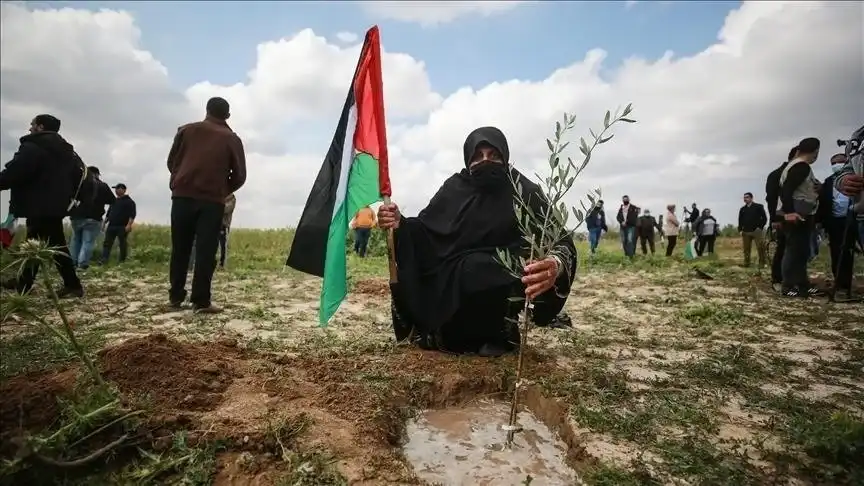
Every year on March 30, Palestinians hold protests and vigils and plant olive trees to reaffirm their connection to the land.


Every year on March 30, Palestinians observe Land Day, or Yom al-Ard, recalling the events of March 30, 1976, when six unarmed Palestinians were killed and more than 100 injured by Israeli forces during protests against Israel’s confiscation of Palestinian land.

INTERACTIVE Palestine Israel what is Land Day-1711525002

How much land did Israel confiscate?

Israel ordered the confiscation of 2,000 hectares (4,942 acres) of land belonging to Palestinian citizens of Israel in the Galilee. These plans were part of Israeli state policy to Judaise Galilee following the creation of the state of Israel.

The confiscated land is roughly the size of 3,000 football pitches or the area from the tip of Manhattan to Central Park in New York, US.

What do Palestinians do on Land Day?

Palestinians, both inside Israel and across the occupied territory, mark this day by holding protests and vigils and planting olive trees to reaffirm their connection to the land. The protests are often met with brutal use of force by Israel.

A woman raising the Palestine flag

Um Ahmad al-Banna was wounded in the protests of March of Return and joined Land Day commemorations in Gaza in 2022 [Abdelhakim Abu Riash/Al Jazeera]

Is Israel still seizing land?

Yes, Israel has continued to seize large swaths of Palestinian land, designating them as military zones, state land and other labels.

Most recently, on March 22, 2024, Israel’s Finance Minister Bezalel Smotrich declared Israel was seizing 800 hectares (1,977 acres) in the occupied West Bank, in a move that would facilitate building more illegal settlements.

“While there are those in Israel and in the world who seek to undermine our right to Judea and Samaria and the country in general, we promote settlement through hard work and in a strategic manner all over the country,” Smotrich said, using Biblical names for the area that are commonly heard in Israel.

Settlements – illegal under international law – are Jewish-only communities built on Palestinian land in the occupied West Bank and East Jerusalem.

On March 6, Israel’s settlement-planning authority announced it had approved the construction of some 3,500 new housing units in Maale Adumim, Kedar and Efrat within the occupied West Bank.

INTERACTIVE Israel approve new housing units settlements-1711620519

From November 1, 2022 to October 31, 2023, Israel has approved at least 24,000 illegal housing units to be built on Palestinian land.

Earlier this month, the United Nations’ High Commissioner for Human Rights Volker Turk said settlements had expanded by a record amount and risked eliminating any possibility of a Palestinian state.

SOURCE: AL JAZEERA


PALESTINE

Sat 30 Mar 2024 10:48 am - Jerusalem Time

On the anniversary of Land Day: Israel seized 27 thousand dunums after October 7th

The Israeli authorities seized 27 thousand dunums of Palestinian land, after the Israeli aggression against our people on the seventh of last October, including 15 thousand dunums under the name of amending the boundaries of natural reserves in Jericho and the Jordan Valley, and 11 thousand dunums through three orders declaring state land in Jerusalem and Nablus governorates, and 230 dunums through 24 seizure orders, for military purposes, preventing citizens’ access to thousands of dunums in the future.


The Wall and Settlement Resistance Commission explained, in a report issued today, Saturday, on the occasion of the forty-eighth anniversary of Immortal Land Day, and half a year after the terrible aggression launched by the occupying state’s agencies against places of Palestinian presence, especially in the Gaza Strip, that the area of Palestinian land controlled by the occupying state and subject to For many occupation measures, it amounted to 2,380 km2, equivalent to 42% of the total territory of the West Bank, and 69% of the total areas classified (C), which are areas subject to occupation military rule.


The head of the commission, Minister Moayed Shaaban, pointed out that the occupying state had actually begun to establish buffer zones around the colonies, through a series of military orders, starting with the “Rifafa” colony established on citizens’ lands in Salfit Governorate, and preventing citizens’ access to 384 dunums, then in the “Harasha” outpost. ", built on citizens' lands in the Western Mazra'ah in Ramallah Governorate, and preventing citizens' access to 252 dunums, then in Deir Dibwan, east of Ramallah, specifically around the "Mitzpe Danny" colony, and preventing citizens' access to 320 dunums, warning against extending this plan to include Other colonies, thus isolating more lands and preventing citizens from accessing them under military and security pretexts.


He added that, after the occupation's aggression against our people, the planning authorities in the occupying state studied a total of 52 structural plans, for the purpose of building a total of 8,829 colonial units on an area of 6,852 dunums. The approval process took place on 1,895 units, while 6,934 new colonial units were deposited.


These plans were concentrated in the Jerusalem Governorate with 13 structural plans, most of them in the “Maale Adumim” colony, including the approval of a structural plan that followed the approval of the occupation “cabinet” to “legitimize” a colonial outpost under the name “Mishmar Yehuda”, which is located between the two established “Efrat” colonies. On the lands of the Bethlehem Governorate, and the “Kedar” colony established on the lands of the Jerusalem Governorate, followed by the Bethlehem Governorate with 9 structural plans for colonies established on its lands, most of which are concentrated in the “Beitar Illit” and “Efrat” colonies, followed by the Salfit Governorate with 8 structural plans for the colonies, Most of them are for the benefit of Ariel Colony, then Ramallah Governorate, with 7 plans for various colonies distributed throughout the governorate.


The colonists established 11 colonial outposts, in addition to constructing 5 roads, to facilitate the movement of the colonists and to connect the outposts to existing colonies.


Shaaban added that, since October 7, the occupation army and the colonialist militias have carried out a total of 9,700 attacks. These attacks were concentrated in the Jerusalem Governorate with 1,592 attacks, then the Nablus Governorate with 1,471 attacks, then the Hebron Governorate with 1,436 attacks, while the colonists carried out a total of 1,156 attacks, concentrated In the Nablus governorates, there were 388 attacks, and the Hebron governorate, with 276 attacks. These attacks caused the martyrdom of 12 Palestinians at the hands of colonists.


While the number of attacks carried out by the occupation army reached a total of 8,545 attacks, and it provided protection to the colonists in 194 terrorist incidents.


Shaaban added that, shortly after the terrible aggression, the occupation measures and the terrorism of the “colonist militia” led to the displacement of 25 Palestinian Bedouin communities, consisting of 220 families, including 1,277 individuals, from their places of residence to other places, the most recent of which was the displacement of the Al-Sukhn community in the Central Jordan Valley and the terrorist colonists’ control of the site.


He stated that the measures of the occupation authorities and the attacks of colonialists prevented citizens from accessing more than half a million dunums of agricultural land, especially those planted with olives in the last olive harvest season, which led to a decrease in the season’s production to its minimum levels, in addition to indicators of systematic targeting of the Palestinian tree. Especially the olive tree, as the Commission’s crews monitored attacks on more than 9,600 Palestinian trees by destroying, uprooting, and poisoning, most of them olive trees.


According to the report, the number of permanent and temporary checkpoints (gates, military or dirt barriers) that divide the Palestinian territories and impose restrictions on the movement of individuals and goods to date has reached a total of 840 military checkpoints and gates, including more than 140 gates that were installed shortly after the 7th of October.



OPINIONS

Sat 30 Mar 2024 10:38 am - Jerusalem Time

Stop Criticizing Hezbollah and Hamas!

Hazem Saghieh

Hazem Saghieh

Opinion Writer

As some voices call on Hezbollah and Hamas to become more open to criticism, increasing numbers are demanding that no criticism be made of either groups while they fight Israel in Gaza and Lebanon.

Faced with such an appeal, one would assume that one of two things has happened: 


● Either the matters of dispute with the two militant groups (democratic change in Syria, reform in Lebanon, and decisions of war and peace being returned to the state's hands) have been resolved and these demands shared by the majorities of both countries have been achieved, 

● or the militant groups have changed, walking back on the stances behind the antagonism in parallel with the struggle they have waged against Israel. 

However, neither of these things has occurred; what has occurred is that the status quo, in its worst possible fashion, has prevailed, even before accounting for the Gaza war, which cannot be seamlessly associated with anything the region has witnessed in recent decades and the immense costs that have been paid over these decades.

It is probably the critics calling on us to reconcile with Hamas and Hezbollah who have changed. Rather, they have reverted back to the easy, inherited, and familiar stance that they deludedly convinced themselves they had abandoned in 2005 or 2011. Their “awakening” has rekindled a zealous fervor that fills the void entirely and leaves no room for anything else. As we all know, when it is time to get serious, frivolous matters fade into the background.

Indeed, the previous issues, which had once been thought to be important, are irrelevant: they have been raised louder than the cry of battle. Those issues are not a Principal Contradiction, as the immortal revolutionary martyr Mao Zedong would have put it, anymore.

Three interrelated factors have led us here: on the one hand, there is the genocidal brutality of Israel’s assault on Gaza, and as all know, the Jewish state’s munificence in reinforcing the worst in us has always been part of modern Arab history. On the other hand, we have the defeats of every attempt to bring about change in the region and the despair and frustration that sprouted from these defeats. The last factor is the astonishment engendered by the October 7th attack, which can only be compared to the astonishment with 9/11. In both instances, the prevailing narrative became that "what comes after" ruptured completely with "what came before,” or in the language of believers, a chasm with the past had emerged.

More profoundly, however, the laxity and weakness towards a culture that was built, and then consolidated, by the broad Arab pattern, not only our political regimes, seems to have had the most consequential implications. This pattern has magic that allows for sticking everything together in the face of the "enemy," who is "foreign" one time, "imperialist" another, and "demonic" a third. It also has magic that erases differences between eras, countries, and generations. At the same time, this way of life gives us - we who have been defeated by trivial, oppressive forces - the sense of grandiosity that comes with belonging to the "Global South," elevating us above trivial local and parochial matters. Anyone defeated in a particular place will triumph everywhere, that is, across the world, after withdrawing from this chunk of it that they had reluctantly operated in, to sit atop the tower of universality.

However, this detachment from every location and exclusively clinging to this supposed global podium from which rhetorical missiles are launched at the “white man" could ultimately lead nowhere. It could lead only to utopia, which is another word for nowhere here.

Thus, for instance, it stops concerning us that Hezbollah could, at a whim, lead us, with our eyes wide open, into a war of its choosing on its terms. As for us, we have no choice but to pledge our allegiance and grant it the mandate to do so, as our local struggles with it are petty and have become obsolete with the passage of time, while in reality, time has changed nothing. Indeed, "he who has died is dead, and all that is coming will come," as a pre-Islamic orator would say. Utopia strikes in many directions, but, despite the breadth of its movement, remains no less innocent than innocence itself. At a recent conference in which he had been invited to speak, a former leader of a Syrian revolutionary institution, with overwhelming enthusiasm, declared that "the West popped Syria." He seemingly endorsed the Syrian regime's argument that the country had been perfectly fine until a Western conspiracy doomed it to ruin. With his claim, our friend has apparently given cause for accusations of high treason being raised against him, since he had supposedly colluded with the West against a state and regime that deserve nothing less than roses thrown at its feet.

In fact the Syrian revolution was not an idle endeavor pursued before things got serious, nor were the successive Lebanese uprisings since 2005 cries that were raised louder than the sound of battle. That would be the case even if we were on the verge of liberating Palestine, and we are in the midst of what some are calling a “second Nakba."

From Alsharq Alawsat


ARAB AND WORLD

Sat 30 Mar 2024 10:34 am - Jerusalem Time

Eisenkot Presents New Plan for 'Day after Hamas'


Member of the Israeli War Command Council Gadi Eisenkot has put forward a plan for the next day after the Hamas rule in the Gaza Strip, to be an alternative to the strategy proposed last month by Prime Minister Benjamin Netanyahu, which was met with wide rejection by the Palestinians, the United States, and the international community.

Eisenkot’s plan came in parallel with attempts by the right-wing Israeli government to implement a policy aimed at expanding the occupation and settlements, and imposing a new fait accompli on Gaza that hinders a political solution to the conflict.

Although details of the Eisenkot plan fall within the framework of internal Israeli negotiations about the fate of the Palestinians, they present temporary solutions aimed at stopping the deterioration taking place in the Palestinian areas due to the actions of the government and settlers.

However, his proposals exclude Palestinian ambitions to end the occupation and establish an independent Palestinian state. He proposes postponing the implementation of the permanent solution for five years, during which Israel will test the Palestinian leadership’s commitment to what he called “the fight against terrorism and incitement against Israel.” The Israeli security services will be in control of security from the sea to the river, while the process of destroying Hamas’ military capabilities will continue.

The Eisenkot document was prepared with the participation of a senior strategic security team from the Mind Israel Institute, headed by Amos Yadlin, former head of the Military Intelligence Division.

The plan proposed near term goals, which include seeking to dismantle Hamas, by maintaining operations to undermine the group’s military capabilities and its ability to govern, for the purpose of creating pressure that will lead to concluding a deal for the release of the kidnapped and preventing the threat to Israel from the Gaza Strip in the long term.

Moreover, Eisenkot called for forging an American-Israeli-Arab alliance and transferring the management of civilian affairs in the Gaza Strip to a local Palestinian component, with international and regional monitoring in coordination with Israel.

Other short-term objectives include ending the confrontation with Hezbollah in Lebanon in a way that ensures the safe return of evacuated citizens, strengthening relations with countries seeking peace, advancing ties with Saudi Arabia and other Arab and Islamic countries and preparing to confront all threats coming from Iran, with a focus on its nuclear program and activity in the region.

In the medium term, Eisenkot’s plan seeks to maintain Israel’s freedom of operation and security responsibilities in the Gaza Strip to prevent the growth of a terrorist base.

It also calls for complete disarmament in the Gaza Strip, which is implemented by Israel by reducing the enemy's capabilities, adhering to its growing security responsibility, and building a local disarmament system under the supervision of the United States. A military force is established for the sole purpose of ensuring the rule of law.

According to the proposed plan, the civil-economic affairs of the people of Gaza are managed by a technocratic Palestinian entity, subject to the supervision of a group of the Five Arab Countries, the United States, and the international community.

Other medium-term goals include ending UNRWA’s mission and gradually transferring its responsibility for schools to the entity that manages the affairs of the Gaza Strip and the Palestinian Authority in the West Bank, in parallel with handing over the agency's services to other international bodies.

In the long term, the plan proposes settlement between Israel and the Palestinians through direct negotiations between the two parties, which will be implemented after five years, during which the Palestinians’ ability to adhere to comprehensive reforms, disarmament, and rebuilding the Gaza Strip will be tested, based on international and regional monitoring.

No Israeli commitment will be given in the next five years to establish a Palestinian state, as something like this will be understood as a gift to Hamas, according to Eisenkot.


PALESTINE

Sat 30 Mar 2024 10:28 am - Jerusalem Time

Israeli army admits killing two Palestinians and burying their bodies with a bulldozer

The American CNN network quoted a statement by the Israeli army admitting to the killing of two Palestinians and burying their bodies with a bulldozer, after Al Jazeera published a video clip showing the details of the killing.


The Israeli army justified in its statement that the killing of the two Palestinians occurred after they approached what it called the area of operations in central Gaza in a suspicious manner and did not respond to warning shots.


The statement indicated that they were killed and their bodies were swept away for fear that they were carrying explosives.


ARAB AND WORLD

Sat 30 Mar 2024 10:23 am - Jerusalem Time

Netanyahu Approves New Gaza Ceasefire Talks


Prime Minister Benjamin Netanyahu has approved a new round of Gaza ceasefire talks to take place in Doha and Cairo, his office said, days after the negotiations appeared stalled.

Since the UN Security Council adopted a resolution on Monday demanding an "immediate ceasefire", Hamas and Israel have traded blame for their failure to agree a deal.

Mediator Qatar said that talks between Hamas and Israel on a Gaza truce and hostage release were continuing, but the warring sides and mediators have offered little information since.

Netanyahu's office said the premier spoke to Mossad chief David Barnea about the talks.

The war began when Hamas launched an unprecedented attack on Israel on October 7.

Israel's military has waged a retaliatory offensive against Hamas that has killed 32,623 people in Gaza, most of them women and children, according to the Hamas-run territory's health ministry.

Palestinian militants seized about 250 Israeli and foreign hostages during the attack, but dozens were released during a week-long truce in November.

Israel believes about 130 remain in Gaza, including 33 who are presumed dead -- eight soldiers and 25 civilians.


PALESTINE

Sat 30 Mar 2024 10:17 am - Jerusalem Time

West Bank: Israeli forces kill a young teenager Palestinians in Qabatiya

A child was killed and two young men were injured, one of them seriously, during the Israeli forces’ raid at dawn on Saturday into the town of Qabatiya, south of Jenin.


The director of Al-Razi Hospital in Jenin, Fawaz Hammad, confirmed the death of the child Moatasem Nabil Abu Abed (13 years old), and the serious wounding of a young man, noting that the child and young man arrived at Al-Razi at dawn today after being hit by Israeli soldiers in Qabatiya.


PALESTINE

Sat 30 Mar 2024 10:12 am - Jerusalem Time

Biden: Saudi Arabia and other Arab countries are ready to recognize Israel for the sake of peace

US President Joe Biden stressed the necessity of having a plan to achieve peace in the Middle East after the war that Israel is waging in Gaza, adding: “There must be a path that leads to a two-state solution.”


This came in statements he made away from the cameras during a ceremony attended by former presidents Barack Obama and Bill Clinton, yesterday, Thursday, according to American media. He indicated that Biden spoke about the readiness of Saudi Arabia and other Arab countries to recognize Israel in order to achieve peace, provided that there is a plan for after the Gaza war.


Biden did not provide further details in this regard, but he said: “I was working with the Saudis and other Arab countries, including Egypt, Jordan, and Qatar, and there is preparation for that, and I believe it is something that can be achieved,” adding: “More food, medicine, and supplies must be delivered to the Palestinians.”


Biden said: “Israel’s existence is at stake. We must not forget that,” but we call on it to increase its efforts to protect Palestinian civilians in Gaza.


Saudi Arabia repeatedly confirms that its position on Israel is linked to a complete solution to the Palestinian issue and the establishment of a Palestinian state with East Jerusalem as its capital on the borders before June 5, 1967.

PALESTINE

Sat 30 Mar 2024 10:04 am - Jerusalem Time

Politico: Washington is close to agree with Palestinian Authority to stop allocations for martyrs and wounded

The American newspaper Politico reported, citing American officials, that Washington is close to reaching an agreement with the Palestinian Authority to stop martyrdom allowances “for people who commit acts of violence against Israel.”


According to the newspaper, “This would be a major win for the multi-faceted American push to reform the Palestinian Authority - from establishing anti-corruption measures to improving basic services - so that it can take over governance of the Gaza Strip when the war between Israel and Hamas ends.”


The Biden administration considers the Palestinian Authority, which oversees parts of the West Bank, the best option to govern Gaza in the future, but the Palestinian Authority is hated by many Palestinians, as well as Israelis and Arab leaders, who consider it corrupt, ineffective, and out of touch with reality.


The “Allocations for Martyrs and Wounded” program supports Palestinians and their families financially in the event that they are injured, imprisoned, or killed by Israeli forces. The move has long angered Israelis, who say it "incentivizes terrorism and calls it pay to kill," and many Palestinians say it "provides crucial support to people standing up to Israel's oppressive occupation."


Draft plans to reform payments to the Palestinian Authority seen by US officials indicate that Palestinian leaders will replace the current scheme with a public welfare program.


A senior US administration official said: “There has been a great deal of work on this matter behind the scenes, and progress is encouraging.” Another official confirmed that changes to the system are expected soon. However, the emergence of obstacles is not excluded.


Politico also indicated that although Abbas rejected, at the beginning of the war on Gaza, the idea of the Palestinian Authority ruling the Strip after the end of military operations, he seems more open to the idea now.


Israeli Prime Minister Benjamin Netanyahu opposes the Palestinian Authority's role in Gaza, despite the US insistence that no other institution can do the job if Israel does not want to occupy the Strip.


Netanyahu has often said that the Palestinian Authority is not much different from Hamas, and that it promotes hatred against Israelis. But Netanyahu's political future is ambiguous given Israeli anger over the security failure that allowed Hamas fighters to attack Israel on October 7, 2023.

PALESTINE

Sat 30 Mar 2024 9:27 am - Jerusalem Time

The death toll in the Gaza Strip has risen to 32,705 since the start of the war

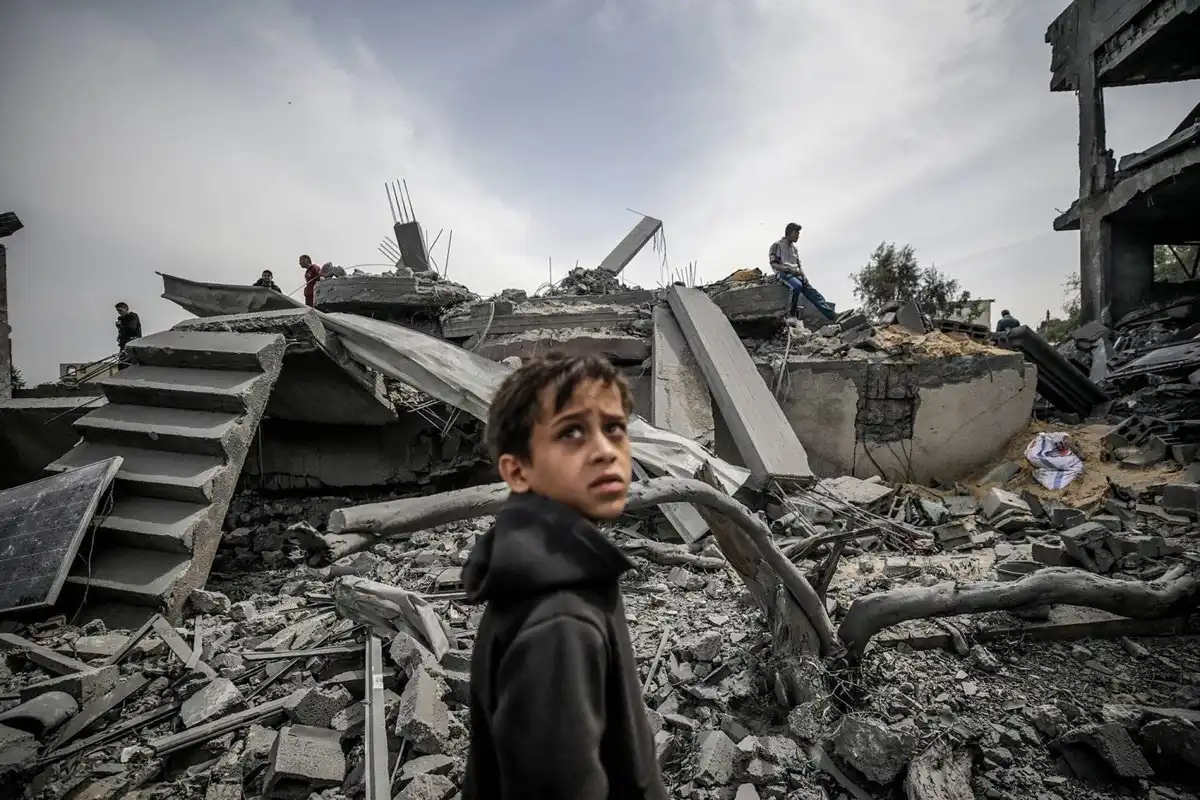
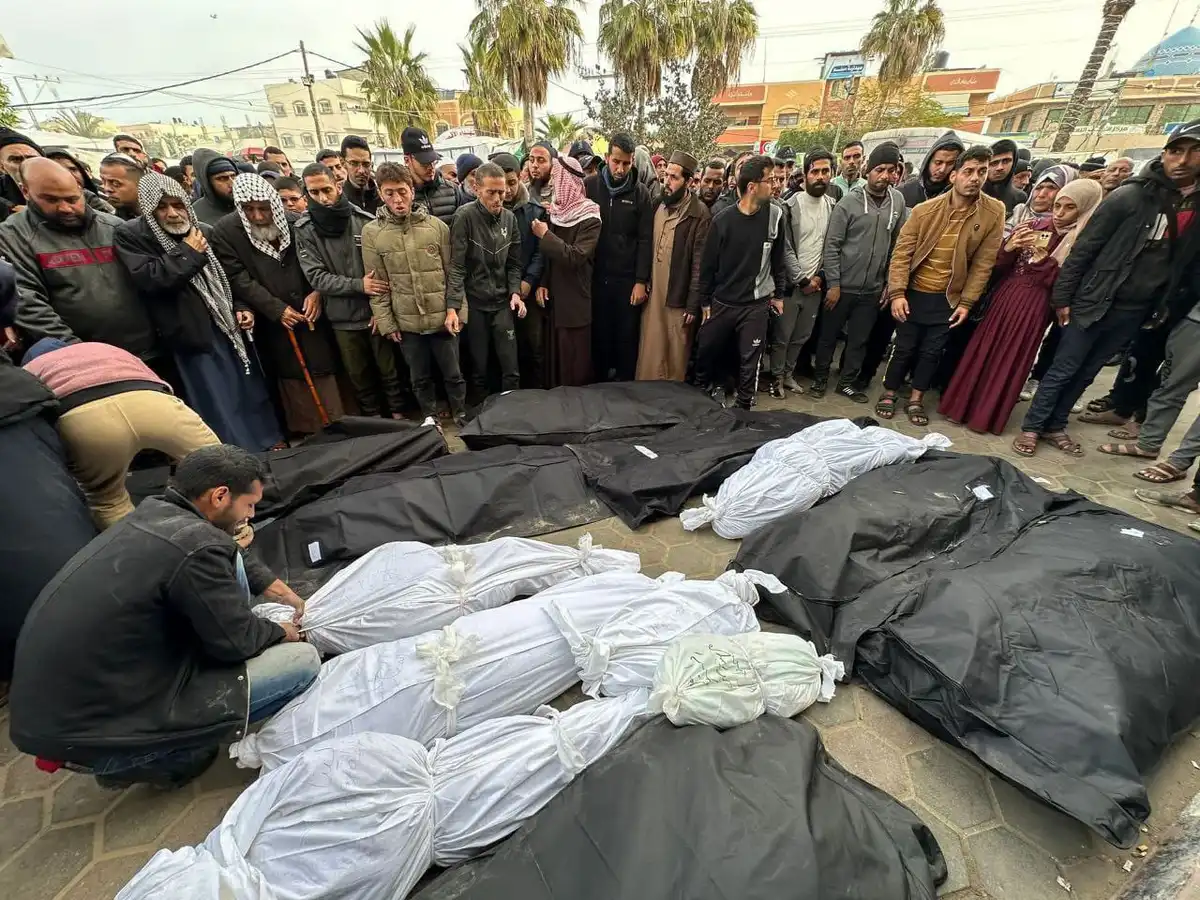
Medical sources announced today, Saturday, that the death toll in the Gaza Strip has risen to 32,705, the majority of whom are children and women, since the start of the Israeli occupation aggression, on the seventh of last October.
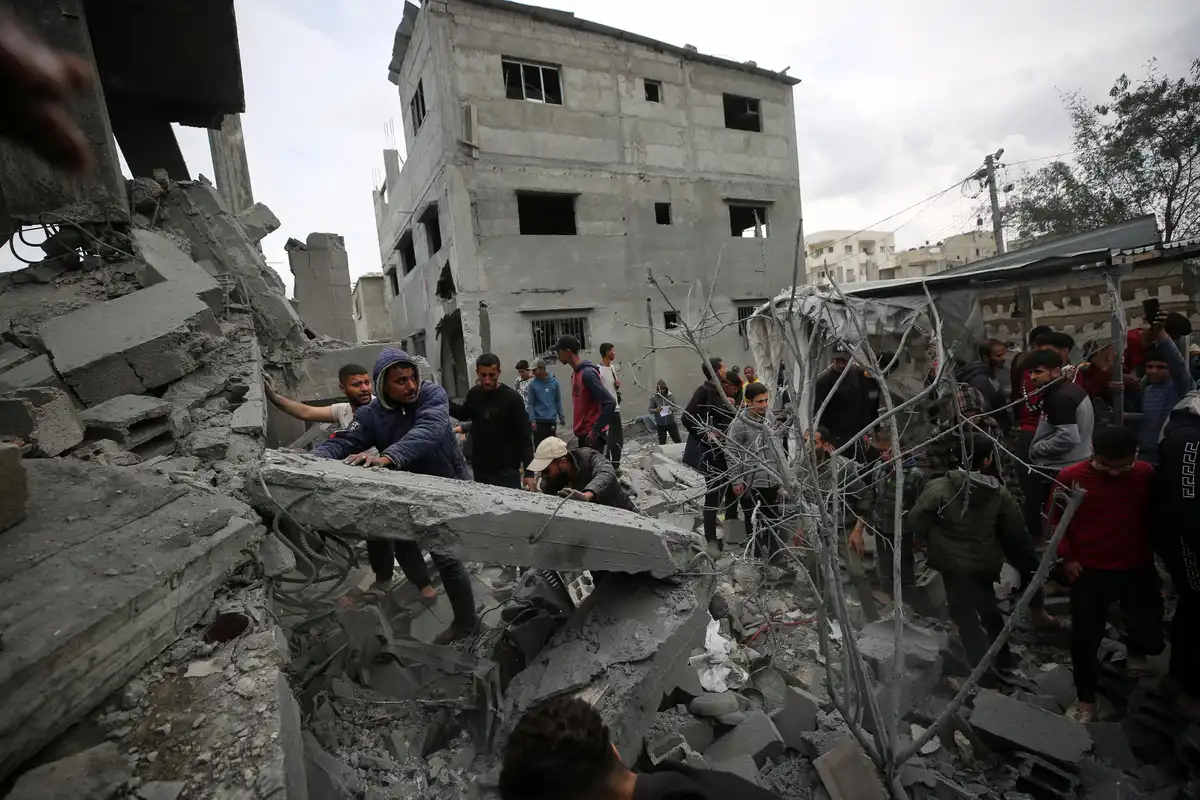

The same sources added that the death toll has risen to 75,190 since the start of the aggression, while thousands of victims are still under the rubble.


It pointed out that Israeli army committed 8 massacres against families in the Gaza Strip, of which 82 killed and 98 injured were brought to hospitals during the past 24 hours.


The aggression is on its 176th day... Israeli bombing does not stop on the Gaza Strip


The Israeli war on the Gaza Strip has continued unabated for more than 176 days, leaving thousands of killed, wounded and missing, while diplomatic efforts continue to reach a truce agreement in the Strip.


Israel continued its air and ground bombardment on various areas of the Gaza Strip, which led to the death of dozens of Palestinians amid the intensification of fighting in the vicinity of Al-Shifa Hospital in Gaza City.


According to Reuters, in the past few days, the United States has authorized sending billions of dollars worth of missiles and fighter planes to Israel, despite Washington declaring its fears of a possible Israeli invasion of the city of Rafah, south of the Gaza Strip.


For his part, on Friday, Israeli Prime Minister Benjamin Netanyahu gave the green light to hold new talks with the aim of reaching a truce in the Gaza Strip, which is subject to continuous Israeli bombing.


Netanyahu's office reported after his meeting with the heads of the Israeli intelligence "Mossad" and "Shin Bet" that he "agreed to a round of negotiations in the coming days in Doha and Cairo."


The International Court of Justice ordered Israel to "ensure the provision of urgent humanitarian assistance" to the Gaza Strip without delay, stressing that "famine has occurred."


The World Food Fund, via the “X” platform, summarized the situation by saying: “There is no other place in the world where so many people face the imminent threat of famine.”


The Commissioner-General of the United Nations Relief and Works Agency for Palestine Refugees (UNRWA), Philippe Lazzarini, said that Israel must "allow UNRWA to deliver food convoys to the northern Gaza Strip daily and open other land crossing points."


It is expected that a ship loaded with humanitarian aid will leave Cyprus today, Saturday, heading to Gaza, after the first ship departed in mid-March.


ARAB AND WORLD

Fri 29 Mar 2024 11:03 pm - Jerusalem Time

Washington agrees to provide Israel with more bombs and fighter jets

Despite recent disagreements between Washington and Tel Aviv over the war in Gaza, the administration of US President Joe Biden agreed in recent days to transfer billions of dollars worth of bombs and fighter planes to Israel, according to a recent report by the Washington Post.


The new weapons packages include more than 2,300 MK84 bombs of varying weights, according to Pentagon and State Department officials familiar with the matter. These bombs have been linked to previous events that led to catastrophic casualties, throughout the Israeli military campaign in Gaza.


Washington provides annual military aid worth $3.8 billion to Israel, its long-time ally. Support despite the dispute. News of American military support for Israel comes in contrast to the recent dispute between the two governments.


Israeli sources had indicated a change in US President Joe Biden's tone towards Israel, whether regarding the faltering hostage deal or the introduction of aid into the Gaza Strip, which indicates his "exhaustion of patience."


The Israeli "Walla" website considered that Biden's order to the US army to establish a temporary port in Gaza in order to speed up the delivery of humanitarian aid and "not to wait for Israel", as further evidence of his change in his approach to dealing with the crisis.


Biden's union speech indicated a change in his position toward the war in Gaza, and impatience in the White House toward the behavior of the Israeli government, according to Walla.


The website added, "The humanitarian crisis in the Gaza Strip played a central role in the US President's speech, especially his initiative to build a temporary port in Gaza."


Biden's advisors briefed reporters on Monday that the president had instructed his team to move forward with establishing the port.


The US President also used the term "ceasefire" in his speech, which his administration had avoided using.

PALESTINE

Fri 29 Mar 2024 9:50 pm - Jerusalem Time

West Bank: Israeli forces arrest 25 Palestinian citizens, including children and a woman

From yesterday evening until Friday evening, the Israeli forces arrested at least 25 citizens from the West Bank, including a woman and children, in addition to former prisoners.


The Prisoners' and Ex-Prisoners' Affairs Authority and the Prisoners' Club said that the arrest operations were concentrated in occupied Jerusalem, after hundreds went to perform Friday prayers at the blessed Al-Aqsa Mosque, while the rest of the arrests were distributed among the governorates of: Hebron, Nablus, Tulkarm, and Qalqilya.


Thus, the total number of arrests after October 7 rose to about 7,870 arrests, including those who were arrested from homes, through military checkpoints, those who were forced to surrender themselves under pressure, and those who were held hostage.


The Commission and the Club reported that the ongoing and escalating arrest campaigns in an unprecedented manner come within the framework of the comprehensive aggression against our people and the ongoing genocide in Gaza, after October 7, which targeted all groups of children, women, the elderly, and the sick.

PALESTINE

Fri 29 Mar 2024 9:41 pm - Jerusalem Time

West Bank: Israeli forces close agricultural roads and bulldoze lands west of Nablus

On Friday evening, Israeli forces closed agricultural roads and bulldozed lands west of Nablus.


Local sources said that Israeli bulldozers closed the dirt entrance to the Masoudiya area and the road leading to the village of Burqa and the town of Sebastia, which leads to the Ramin Plain and Tulkarm area.


The sources explained that the Israeli forces bulldozed agricultural lands near the Deir Sharaf checkpoint, west of the city of Nablus.

PALESTINE

Fri 29 Mar 2024 9:26 pm - Jerusalem Time

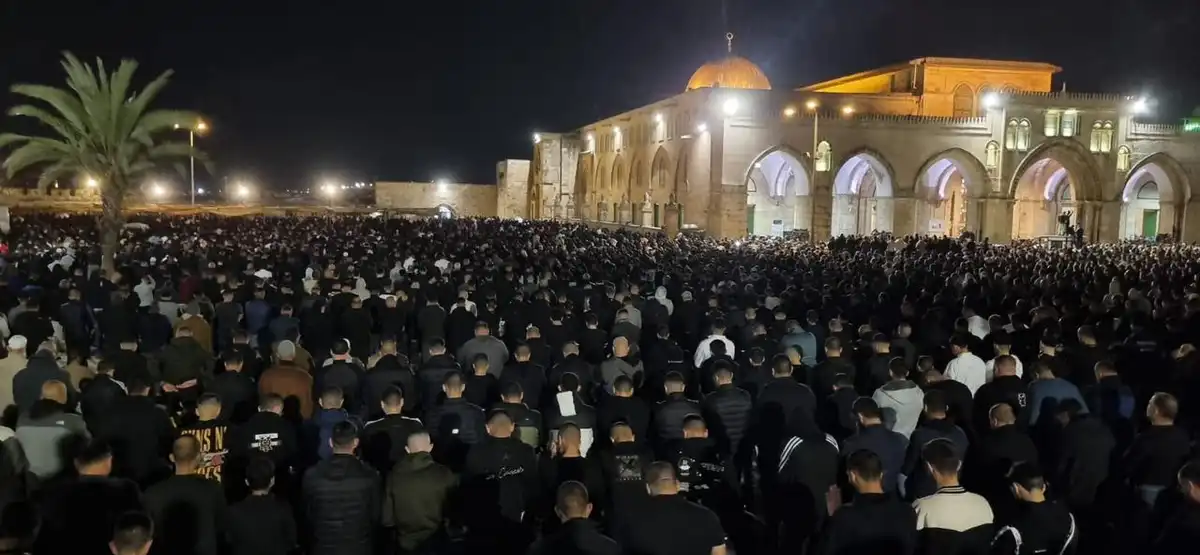
Occupied Jerusalem: 150 thousand worshipers perform night prayers in the Al-Aqsa Mosque

On Friday evening, about 150,000 worshipers performed the evening and Tarawih prayers in the blessed Al-Aqsa Mosque in the occupied city of Jerusalem.

The Islamic Endowments Department said that about 150,000 worshipers performed Isha and Tarawih prayers in the blessed Al-Aqsa Mosque, despite the strict Israeli measures preventing the entry of thousands of citizens from the West Bank, and preventing hundreds of young Jerusalemites from praying in the mosque.


The Israeli forces were deployed at the gates of Al-Aqsa and in the Old City, and searched a number of young men and checked their identities, coinciding with the arrival of worshipers to Al-Aqsa Mosque.


A number of those deported from Al-Aqsa Mosque performed prayers on the Mujahideen Road near Lions Gate, in the Old City of occupied Jerusalem.

PALESTINE

Fri 29 Mar 2024 8:33 pm - Jerusalem Time

War on Gaza: 8 people killed as Israeli army bombed citizens’ homes in the Strip

Eight citizens were killed this Friday evening, as a result of Israeli aircraft bombing homes east of Gaza City.


The Israeli aircraft launched a raid on the house of the Eliwa family, east of the Shujaiya neighborhood in eastern Gaza, resulting in 3 dead and a number of wounded.


Five citizens were also killed, and others were injured, as a result of Israeli warplanes bombing citizens’ homes near the prisoner towers, west of Nuseirat, in the central Gaza Strip.


In this context, artillery shelling targeted citizens' homes in various areas in the Al-Zaytoun neighborhood in Gaza City, while aircraft continued to launch violent raids on the central governorate in the Strip.

ARAB AND WORLD

Fri 29 Mar 2024 6:35 pm - Jerusalem Time

An Israeli soldier was killed and 16 others were injured by an anti-armor shell in Khan Yunis

The Israeli army acknowledged the killing of a soldier from the "Egoz" unit of the commando battalion and the serious wounding of 6 others from the same unit in battles in the southern Gaza Strip.


It stated that 10 other soldiers sustained various injuries in the same battle. It did not provide additional details about how they were injured.


It said that the injured soldiers were taken to the hospital for treatment.

According to Israeli reports, “at approximately 10:00 a.m. today, an anti-armor shell was fired at a house in which soldiers from the ‘Egoz’ unit were present, near Nasser Hospital in Khan Yunis.”


It added that the incident resulted in the death of a soldier and the injury of 16 others, including 6 in serious condition and 5 in moderate condition, while the others’ condition was described as minor.


It is evident from the details that the soldiers were present on the upper floor of one of the buildings in the Al-Amal neighborhood in Khan Yunis, and after the shell was fired towards the upper floor, the walls of the building collapsed on the soldiers.

Reports described the operations to extricate the soldiers from the scene as “complex and rapid,” as it took 55 minutes to transfer the soldiers to the hospital since the explosion occurred.


Meanwhile, a force from the Givati Brigade and Air Force aircraft secured the area, while it was reported that a number of soldiers underwent field surgery.


Thus, the death toll of Israeli soldiers and officers since the start of the war on the Gaza Strip on October 7, 2023, rises to 598 dead.

PALESTINE

Fri 29 Mar 2024 3:56 pm - Jerusalem Time

Yedioth Ahronoth: Washington has lost confidence in Netanyahu's ability to lead the Rafah operation

Yedioth Ahronoth newspaper revealed that Washington has lost confidence in the ability of Israeli Prime Minister Benjamin Netanyahu to lead a complex operation in Rafah, south of the Gaza Strip, that begins with the evacuation of hundreds of thousands of refugees.


The newspaper said that the administration of US President Joe Biden concluded that Netanyahu is administratively shackled or that he does not want to do what is required.


The Hebrew newspaper quoted an American official as saying that a country that fails to bring 50 food trucks into northern Gaza will not be able to evacuate and shelter about a million people.


In the same context, Yedioth Ahronoth newspaper revealed that Defense Minister Yoav Galant heard harsh words from senior officials in the US administration about Israel.


Netanyahu's insistence

Netanyahu reiterated his intention to launch a ground operation in Rafah, despite American warnings and demands from various parties to avoid carrying out the operation, which might result in huge human losses.


Netanyahu said, "We will enter Rafah and achieve comprehensive victory," and pledged to eliminate the head of the Islamic Resistance Movement (Hamas) in Gaza, Yahya Sinwar.


Netanyahu's statements came despite increasing warnings issued by the United States, which provides Israel with the strongest military, intelligence, and diplomatic support since the beginning of the war.


US Vice President Kamala Harris said, "I do not rule out that there will be American consequences for Israel if it proceeds with the invasion of Rafah."


US Secretary of State Anthony Blinken had also previously warned the Israeli Defense Minister during a meeting of the dangers of invading Rafah.


US State Department spokesman Matthew Miller said in a statement that Blinken "reiterated the United States' support for ensuring the defeat of Hamas, including in Rafah, but reiterated his opposition to a large-scale ground operation in Rafah."


The spokesman added that the American minister "stressed the existence of alternatives other than a large-scale ground invasion of Rafah, which would better guarantee Israel's security and protect Palestinian civilians," he said.

PALESTINE

Fri 29 Mar 2024 3:31 pm - Jerusalem Time

The Pentagon is in early talks about funding the "peacekeeping" force in Gaza

US officials are holding preliminary talks about ways to stabilize Gaza after the war, including a proposal for the Pentagon to fund a “peacekeeping” force, Politico reported.


American officials told the newspaper that the proposal does not include the presence of American forces on the ground, but rather it could be a multinational or Palestinian-led force. Officials said it could take weeks or months before any plan is approved, but it could take longer because there is no end to the Israeli blockade in sight.


The report said that any regional country that might participate in the multinational force would want Israel to commit to the two-state solution before seriously discussing Gaza's post-war plans. But Israeli Prime Minister Benjamin Netanyahu, his government, and the Israeli Knesset also expressed their strong opposition to the establishment of a Palestinian state.


That being said, I will not speak in private diplomatic conversations or address what appears to have been reported — anonymous comments from reported officials within the United States government. What I will say is that what the United States has made clear - and the Secretary made this clear for the first time in a speech in Tokyo last November - is that there are some principles that we want to see applied when the conflict is over. One of these is that the Palestinian Authority should govern both Gaza and the West Bank. We want to see the West Bank and Gaza Strip united and governed by the Palestinian people through the Palestinian Authority.


In turn, the official spokesman for the Ministry of Foreign Affairs said in response to a question about explaining the administration’s position in this regard by saying: “We have engaged in talks with partner countries in the region, and we have participated in talks with the Palestinian Authority about what exactly this might look like. There are a number of different proposals put forward to "I won't go into these matters here for perhaps obvious reasons. But yes, we have engaged with the Palestinian Authority and with countries in the region on the full range of post-conflict issues that Gaza will face."


Netanyahu also revealed a post-war plan for Gaza that includes Israel retaining freedom of action in the Strip without a time limit, which would require a long-term military occupation. The United States claims that it opposes the Israeli occupation, but it continues to support the Israeli army in its implementation of a plan to create a “buffer zone” along the border that will occupy 16% of Gaza’s territory.


The Politico report said that Israel is “reluctant” to hold talks on the future status of Gaza while it continues its military operations, which have resulted in the deaths of more than 32,000 Palestinians, including more than 13,000 children. Both figures are considered low estimates as there are still thousands more buried under the rubble.

PALESTINE

Fri 29 Mar 2024 12:05 pm - Jerusalem Time

Member of the negotiating team: The deal is stuck... and the ball is in Tel Aviv’s court, not Hamas’

The Hebrew Public Radio quoted a professional source involved in the exchange deal negotiations, criticizing the Israeli government sharply, saying that the ball is now in Israel’s court, not in Hamas’ court.


The source said that the Israelis must go out of their way to get these detainees out of hell, as they are dying every moment.


On Friday, Hebrew Radio revealed that members of the Israeli negotiating team requested broader authorization in order to advance the negotiations, but they were met with rejection by the political level. It confirmed that some of these Israeli negotiators demanded to study a fundamental settlement regarding the most important point of disagreement with Hamas, which is the return of Gazans to the northern Gaza Strip, but they were met with rejection here as well.


The Hebrew radio adds: “Informed sources confirm that some leaders of the security establishment have joined Netanyahu and Gallant’s opposition to the return of Gazan civilians to their homes in the northern Gaza Strip. Israel has not yet crystallized other methods of action, and the discussion within the last meeting of the War Council ended without decisions. As for the War Council meeting, which was scheduled for last night, it was canceled half an hour before it was scheduled to meet, without revealing the reason for the cancellation, while the expanded Ministerial Council met as usual.


On the other hand, Hebrew Public Radio quoted a political source who spoke about the decision to return the negotiating team from Doha a few days ago, saying that Hamas’ requests are “fake.” They refuse to address the gradual proposal and the keys to releasing the kidnapped people, and are demanding the removal of Israeli forces from Gaza. “All these requests perpetuate terrorism and the security threat.” Noting that despite the aforementioned decision, a number of members of the technical negotiating team remained in Doha.


The Hebrew radio quoted Palestinian sources as saying that the negotiations will be renewed within a few days to discuss proposals presented by the head of the American Intelligence Agency, William Burns, with the aim of reducing the differences between “Hamas” and Israel.

In this context, Hebrew Public Radio also revealed informed sources saying that, during the war council meeting, Benny Gantz and Gadi Eisenkot blamed Netanyahu and accused him of deliberate procrastination and the lack of progress in the negotiations as a result of a loss of initiative on the part of Israel.


Zahava Galon: We have to go back to the streets


In a related context, the head of the “Meretz” party and its former deputy, Zahava Gal-On, launched a campaign against Netanyahu, and said, in an article published today, Friday, by the “Haaretz” newspaper, that Israel, during Netanyahu’s rule, lost the friendship of the state that threatened to fight on our side if the “party” attacked us. God,” which is now fighting the Houthis.


She continued in her campaign: “America decided to demarcate the borders, and Netanyahu accused the White House of harming the war effort, but what harmed him was Netanyahu, because the war effort interested him much less than the internal coalition-factional effort.” Netanyahu threw Israel’s interests into the trash, and we all watched him do that within months, and if we want our future in this country, we must return to the streets and to widespread protests.”


Leave

This is what Haaretz newspaper confirms, in its editorial today, calling, in the last line, for the departure of Netanyahu and his government. It says that Netanyahu continues to push Israel to the abyss, and records failure in every possible arena, noting that, this week, he succeeded with both hands in producing a diplomatic crisis with Israel’s most important ally, after leaving it no choice but to refrain from imposing a veto in the Security Council. She considers that Netanyahu’s response, which included canceling the travel of an Israeli delegation to Washington, was a frustrating symptom of the lack of self-awareness of Israel’s strength and status in general, and at this point now in particular.


Left-wing political commentator Gideon Levy confirmed that the naked truth is that Israel wants war, and as many wars as possible.


Halevy says that the days when they used to deceive us that Israel's goal of peace are over and gone.


PALESTINE

Fri 29 Mar 2024 12:00 pm - Jerusalem Time

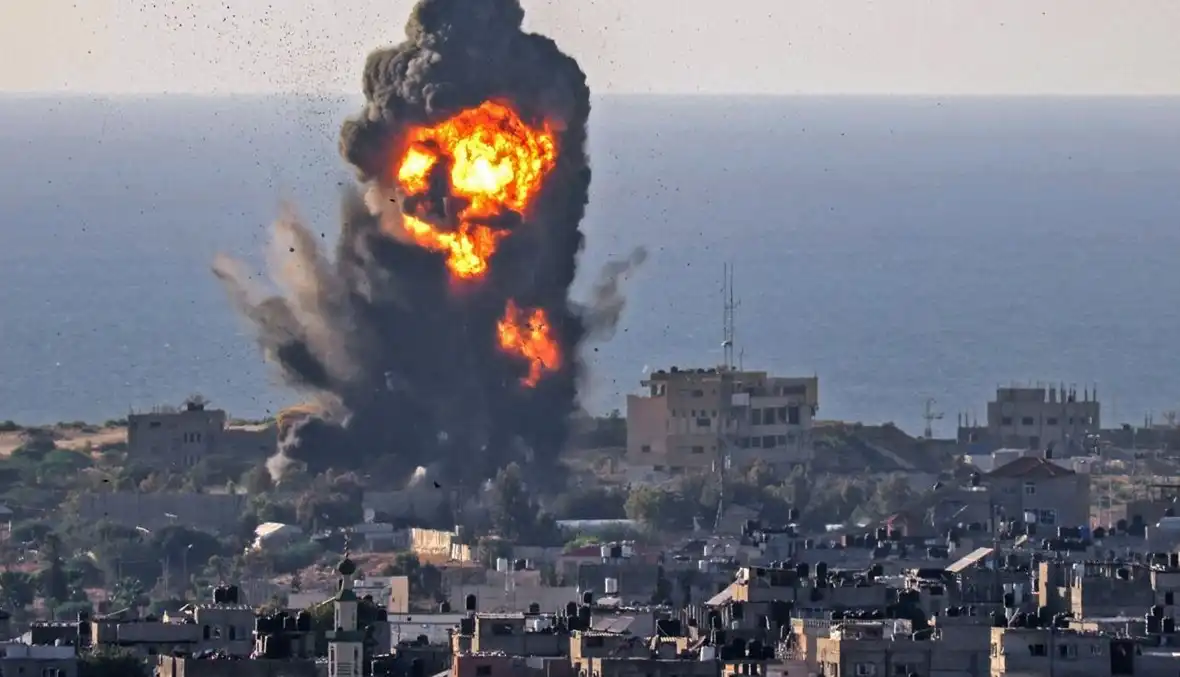
Gaza Health: 71 dead and 112 injuries during the past 24 hours in Gaza

On Friday, the Ministry of Health reported that the Israeli army committed 7 massacres against families in the Gaza Strip, including 71 killed and 112 injuries to hospitals during the past 24 hours.


The Ministry of Health indicated, in a brief statement, that a number of victims are still under rubble and on the roads, and ambulance and civil defense crews cannot reach them.


The Ministry of Health announced that the toll of the aggression had risen to 32,623 killed and 75,092 injuries since the seventh of last October.


PALESTINE

Fri 29 Mar 2024 11:52 am - Jerusalem Time

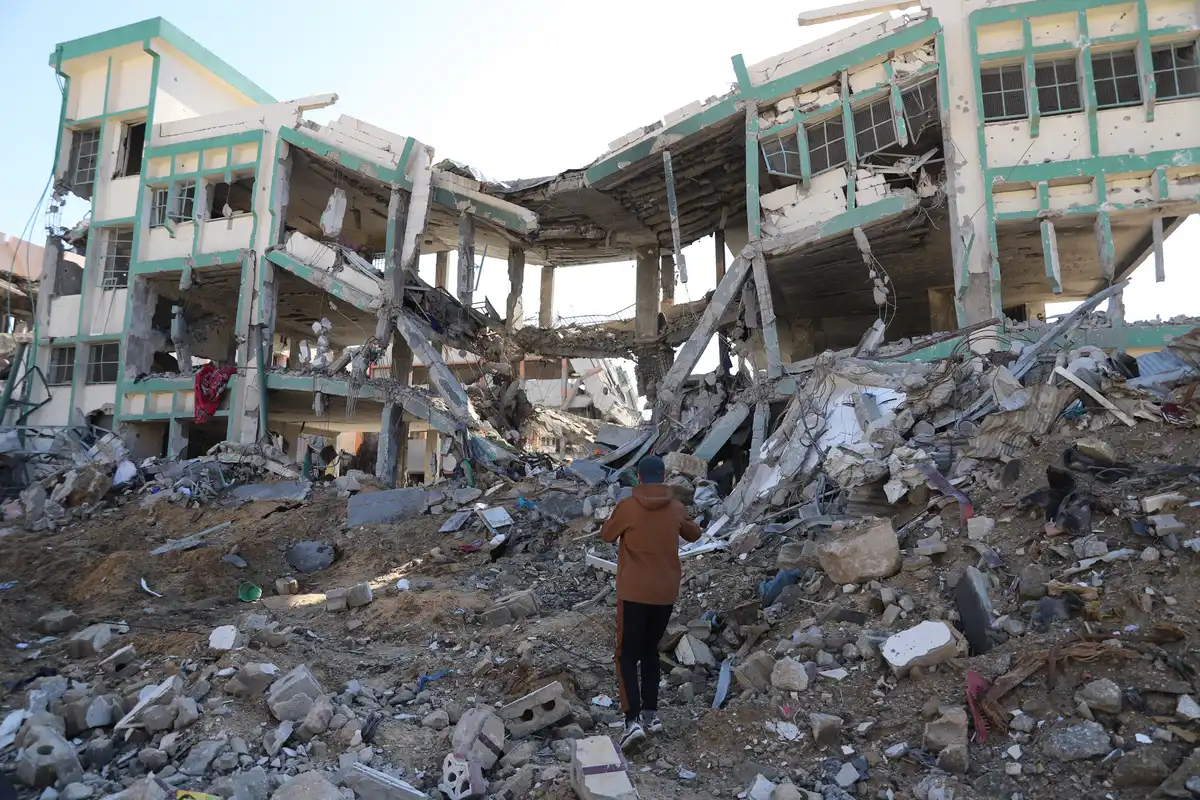
Israeli forces obstruct citizens’ access to Al-Aqsa and harm a number of young men

The Israeli forces continued to impose severe restrictions and restrictions on citizens’ access to the occupied city of Jerusalem, to perform the prayers on the third Friday of the month of Ramadan, in the blessed Al-Aqsa Mosque.

The Israeli forces reinforced their presence at the military checkpoints leading to the city of Jerusalem, checked the identities of citizens, and prevented hundreds of them from reaching the city to perform Friday prayers at Al-Aqsa Mosque, under the pretext of not obtaining the necessary permits.


According to local sources, the Israeli forces prevented hundreds of elderly West Bank residents with permits from entering Al-Aqsa Mosque, through their checkpoints spread around the Holy City, specifically the Qalandiya, Bethlehem, and Zaytouna checkpoints.


Inside the city of Jerusalem, eyewitnesses said that the occupation forces deployed iron barriers in the path of worshipers, especially at the entrances to Al-Aqsa Mosque, on Al-Wad Road, and near Bab Al-Sahira and Al-Asbat, and obstructed their movement and access to the mosque.


Video clips published by activists showed the Israeli forces ghosting young men on the walls of the Old City of Jerusalem, searching them and harassing a number of them.