ARAB AND WORLD

Tue 05 Nov 2024 8:27 pm - Jerusalem Time

Who is Gideon Sa'ar, the new Israeli Foreign Minister in Netanyahu's government?

In a significant move within the Israeli occupation government, Israeli Prime Minister Benjamin Netanyahu announced the appointment of Gideon Sa'ar as Minister of Foreign Affairs, succeeding Yisrael Katz, who was appointed Minister of Defense of the occupation in his new government.


Gideon Sa'ar's upbringing and qualifications

After receiving his law degree, Sa'ar began his career as a lawyer, before entering politics in the late 1990s.


Sa'ar is a member of the Likud party and is considered one of the most prominent figures in the far-right movement in the occupation.


His political career

Sa'ar first entered the Knesset in 2003, after winning a seat in the Israeli general elections. Since then, he has built a strong reputation in the political arena, holding several important government positions:


Minister of the Interior (2013-2014): Sa'ar served in this position in Netanyahu's second government, where he led several reforms in the field of immigration and internal affairs. Minister of Education (2009-2013): Under his leadership, the occupation witnessed several reforms in the educational system, including updating the educational curriculum and strengthening programs for students in certain areas. Minister of Internal Security (2003-2004): Sa'ar assumed this position during a sensitive period for the occupation's internal security, where he worked to strengthen security measures. His disagreement with Netanyahu and the establishment of his party


In 2020, Sa'ar decided to leave the Likud party after growing differences with party leader Benjamin Netanyahu over leadership policies.


Sa'ar founded a new party called "Tomnei" (Decision), which attempted to be an alternative to the larger party, but this party did not achieve the expected success in the elections.


However, after a period of political fluctuations, Sa'ar decided to return to the Likud, to strengthen his political role within the party, where he expressed his support for Netanyahu on many important files, such as security and foreign policy.


His political positions

Sa'ar is known for his consistent, far-right positions on domestic and foreign policy issues.


He supports a strict national security policy, believes in the importance of continuing Israeli settlement in the West Bank and Jerusalem, and rejects any concessions regarding the security of the occupation.

ARAB AND WORLD

Tue 05 Nov 2024 8:14 pm - Jerusalem Time

Putin: Achieving peace in the Middle East depends on the two-state solution

Russian President Vladimir Putin stressed on Tuesday that peace will not be achieved in the Middle East without implementing the United Nations resolution to establish an independent Palestinian state and implementing international resolutions in this regard.


Putin said while accepting the credentials of ambassadors of a number of foreign countries: "Russia is convinced that the parties can only be brought back to the path of reconciliation, to achieve a sustainable and long-term settlement on an international legal basis. The basic condition for restoring peace in the region will be the implementation of the two-state formula approved by the resolutions of the Security Council and the General Assembly of the United Nations."


He expressed his country's readiness to mediate to stop the current escalation in the region.

PALESTINE

Tue 05 Nov 2024 8:10 pm - Jerusalem Time

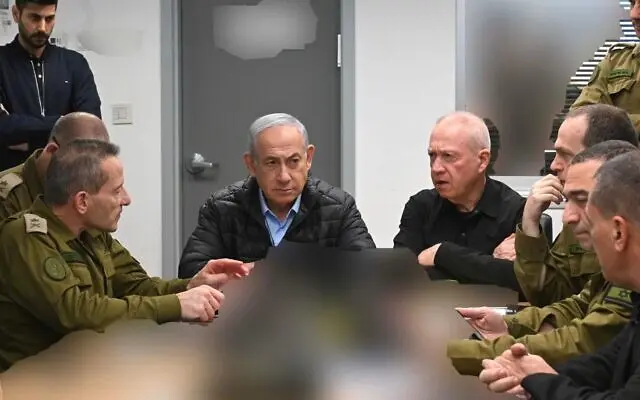
Netanyahu fires Defense Minister Galant

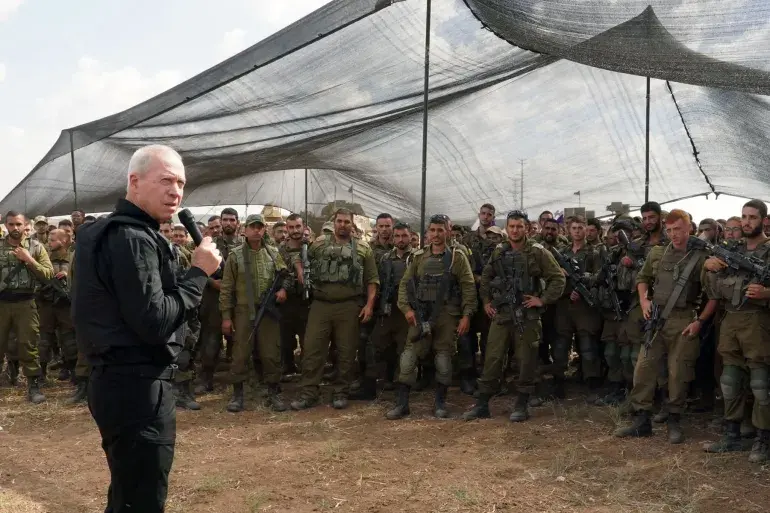
Israeli Prime Minister Benjamin Netanyahu announced the dismissal of Defense Minister Yoav Galant, and Foreign Minister Yisrael Katz will take his place, while Gideon Sa'ar will take over as Foreign Minister.


"My greatest duty as prime minister is to maintain Israel's security and achieve complete victory," Netanyahu said. "In the midst of war, complete trust between the prime minister and the defense minister is needed more than ever."


He added: "Unfortunately, although there was such trust in the first months of the campaign and there was very fruitful work, during the last months this trust has cracked between me and the Minister of Defense."


He added: "Large gaps were discovered between me and Galant in managing the campaign, and these gaps were accompanied by statements and actions that contradicted the government's decisions and the decisions of the Cabinet."


"I made many attempts to close these gaps, but they kept expanding and came to the enemy's attention - our enemies enjoyed this. Many benefited from it," he continued, adding that the crisis of trust that gradually opened up between him and Galant became public and did not allow for the proper continuation of the war's management.


"In light of this, I decided today to end the term of the Minister of Defense. I decided to appoint Minister Israel Katz in his place. Israel Katz has already proven his abilities and contribution to national security as Minister of Foreign Affairs, and as Minister of Intelligence for five years. He brings with him an impressive combination of rich experience and operational ability," he said.


ARAB AND WORLD

Tue 05 Nov 2024 7:01 pm - Jerusalem Time

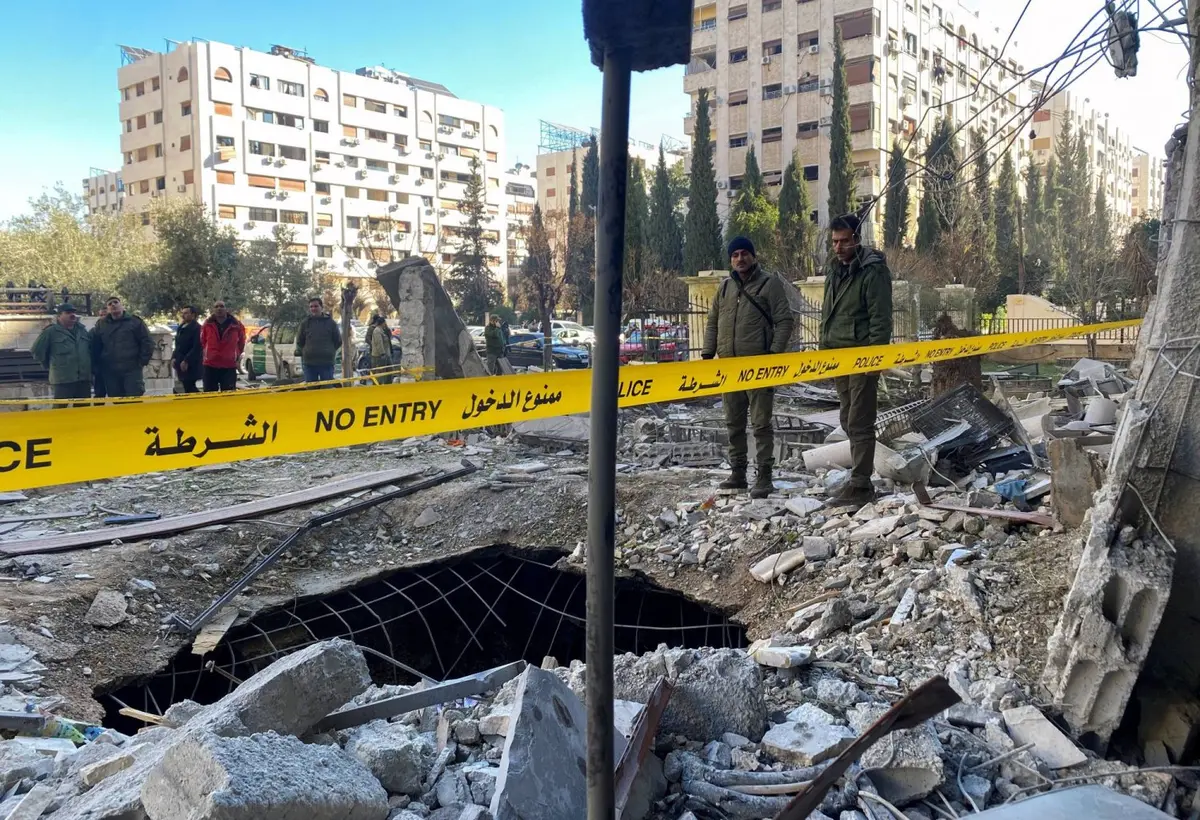
Israeli aggression targets the Syrian city of Al-Qusayr

Syrian state television said that an Israeli aggression targeted an industrial area and some residential buildings in the Syrian city of Qusayr on Tuesday evening.


Official media reported that the Israeli aggression also targeted some residential buildings surrounding the industrial zone in Al-Qusayr.


The Syrian Arab News Agency (SANA) reported that a number of civilians were injured and material damage occurred as a result of the Israeli aggression on the Qusayr area.

ARAB AND WORLD

Tue 05 Nov 2024 5:33 pm - Jerusalem Time

US election results announcement date

Elizabeth Melimopoulos writes for Al Jazeera English explaining how the US election results are being tallied today, how they could unfold, and the likely timeline. Here are 10 questions and answers to explain the process:


1- When does voting start?

Polling stations will be open between 07:00 and 09:00 a.m. local time. Given the multiple time zones in the United States, this will be between 10:00 and 15:00 GMT.


2- When does the voting end?

Voting deadlines vary from state to state, and sometimes from county to county.


3- When does counting of votes begin, and when can we expect the results?

Just hours after the first polls close at 19:00 ET (00:00 GMT), results are expected to start coming in. However, some states will be counting votes more quickly than others. With polls ending several hours later in Western states than in Eastern states, their first results will only start coming in later, when some Eastern states have already declared their results for Harris or Trump.


In a tight race between them, the counting could continue after election night, and we may not know the winner for days.


“The competition is really intense,” says Raymond J. Larraga, a professor of political science at the University of Massachusetts Amherst.


According to the 538 National Poll Tracker, Harris has maintained a narrow national lead of about 1.2 points since Friday.


However, Larraga explained that the polls may not accurately capture some groups of voters, which could lead to surprising results for either candidate. “If the polls are wrong and the race is not as tight as expected, we will know very quickly, but my guess is we won’t know in the first few days,” he added.


"The gap is so narrow that the losing candidate may not even concede. So I'm going to get out enough coffee and tea, because it's going to be a long evening, and it may take a few days for the final results to come in," he added.


4- What do we know about the swing states?

Seven swing states are expected to be key in determining the outcome of the presidential race.


These key states include Pennsylvania (19 electoral votes), North Carolina (16), Georgia (16), Michigan (15), Arizona (11), Wisconsin (10), and Nevada (6), for a total of 93 Electoral College votes.


A candidate needs at least 270 of the 538 electoral votes to win the election.


Voting in these states will end between 19:00 and 22:00 Eastern Time (00:00 to 03:00 GMT).


Some of the first results are likely to come from Georgia, where state law requires all early votes to be counted and reported by 8 p.m. ET (01:00 GMT) on election night.


Next up is North Carolina. In this case, votes will be counted and reported throughout the evening, with full results expected by midnight (04:00 GMT).


5- In Nevada and Pennsylvania, results may appear after days.

In 2020, Nevada was slow, with the state’s results not being announced until five days after Election Day. The rules have since changed, and the process is expected to move faster this time. However, the results may not be known on Election Night. The state allows late mail-in ballots, so it could be days before we know the final results.


Pennsylvania, a key battleground state, did not have a clear winner in 2020 for four days after Election Day. The state is one of the few that does not allow election workers to start counting mail-in ballots until Election Day, meaning it could be several days before results are known.


6- In Michigan and Arizona, results will appear quickly.

In Michigan, the count may be faster than in previous elections, as officials are now allowed to begin counting mail-in ballots before Election Day, but we don't yet have a clear timeline for when the state's results will be announced.


In Arizona, officials can begin counting mail-in ballots as soon as they are received. The first results are expected to be reported around 22:00 ET (03:00 GMT), one hour after polls close.


Finally, in Wisconsin, poll workers can't start counting ballots until Election Day, meaning there could also be delays, similar to Pennsylvania. Results aren't likely to be in until Wednesday, CNN reported.


7- What happens if there is a tie?

If there is a 269-269 tie or a third-party candidate wins electoral votes, preventing any candidate from reaching 270 votes, the next step is known as a "contingent election."


A contingent election is the process that occurs when the U.S. House of Representatives decides who wins. Each state's delegation in the House of Representatives casts one vote, and a candidate must receive a majority of the votes of the state's delegation to win.


The Senate then chooses the Vice President, with each senator casting one vote and a simple majority (51 votes) required to win.


8- Emergency elections

There have been three emergency elections in the United States, in 1801, 1825 and 1837. The closest in recent years was the 2000 presidential election, when George W. Bush won 271 electoral votes—just one more than he needed—after a controversial recount in Florida. Outgoing Vice President Al Gore had 266 electoral votes.


9- Is there any concern about a possible delay this year?

If the results are delayed, “it certainly increases the sense of fraud and illegitimacy,” La Raja said, “and the longer we wait, the more people will start saying, ‘What’s going on behind those closed doors? How are they counting the ballots? Who is lying?’”


According to him, it is better to hold highly competitive elections and reach the "final result quickly."


These fears and doubts arose in 2021, when thousands of then-President Trump’s supporters stormed the Capitol, attempting to overturn his 2020 election loss and force lawmakers to flee for their own safety after he told his supporters to “fight like hell.”


10- What happened in previous years?

In the last election in 2020, the results were announced 4 days after the election on November 3, once the Pennsylvania results were confirmed. In the previous election in 2016, Hillary Clinton conceded to Donald Trump the morning after the election.


In the 2020 election, some states experienced what is known as a “red mirage,” the color of Republicans, where Trump appeared to be leading when the initial votes were counted on election night. Then, a shift to blue—the color of Democrats—happened as additional mail-in votes were counted, and President Joe Biden took the lead.


PALESTINE

Tue 05 Nov 2024 5:11 pm - Jerusalem Time

West Bank: Three dead shot by the occupation forces south of Jenin

Three young men were killed today, Tuesday, by Israeli occupation forces in the town of Qabatiya, south of Jenin.


The Ministry of Health said that 3 young men were killed by the occupation forces' bullets in the town of Qabatiya, south of Jenin.


The Palestinian Red Crescent Society said that its crews transferred two martyrs from inside a vehicle after the occupation forces shot them to the medical complex in the town of Qabatiya.


The third victim was on the roof of his family's house in the town when the occupation soldiers shot him. He was transferred with serious injuries to Al-Razi Hospital in the city of Jenin, where he was declared dead. 


The occupation soldiers had fired live bullets at a car after it had deliberately collided with a military vehicle, to force it to stop.

ARAB AND WORLD

Tue 05 Nov 2024 5:00 pm - Jerusalem Time

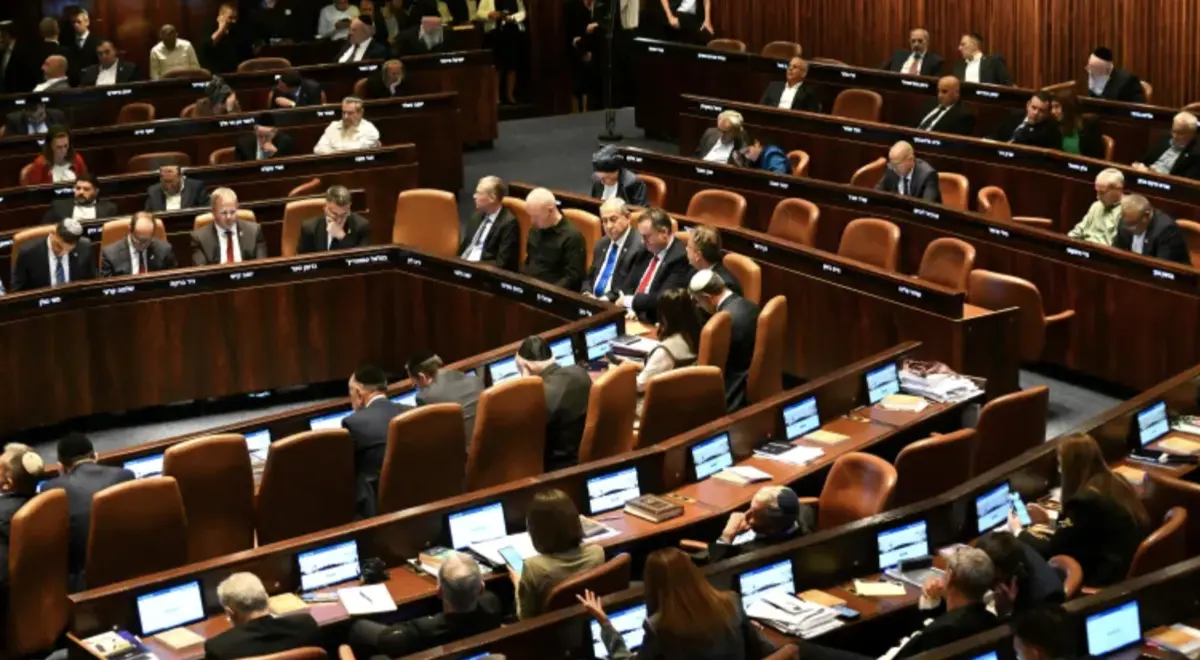
New Israeli law allows Arab teachers to be fired without prior notice

The Israeli Knesset (parliament) approved a law on Monday evening that allows the expulsion of Arab teachers without prior notice, if they sympathize with operations targeting Israelis or with the perpetrators.


The law, introduced by MK Tzvika Fogel of the far-right Jewish Power party, stipulates cutting budgets for Arab educational institutions that sympathize with operations targeting Israelis or their perpetrators.


There is talk that the law, which was approved by the Knesset late Monday evening, includes educational institutions inside Palestine and occupied Jerusalem.


The Knesset said that its plenum approved in second and third readings yesterday, Monday, a proposal to ban the employment of education workers and withdraw budgets from educational institutions due to solidarity with a terrorist act or with a hostile organization, as it put it.


He added in a statement: "The law was supported by 55 members of the Knesset, while 45 others, who attended the voting session out of a total of 120 members of parliament, opposed it."


He pointed out that the law authorizes the Director General of the Ministry of Education to dismiss - administratively and without prior notice - an employee of the education sector who is a government employee who has been convicted of a serious security violation, or who has expressed "solidarity with a terrorist act in public", or who has published a direct call "to carry out a hostile act".


The Knesset added: "The proposal also authorizes the Director General of the Ministry of Education to refuse to grant an employment permit to an education worker in the aforementioned circumstances, all on condition that an investigation is conducted."


It is noteworthy that the Israeli police - which is under the responsibility of the leader of the far-right Jewish Power party, Minister of National Security Itamar Ben-Gvir - has escalated since the beginning of the war of extermination on Gaza, pursuing Arab students and teachers on the pretext of broadcasting posts on social media networks in support of the Palestinians in the Strip.


PALESTINE

Tue 05 Nov 2024 4:40 pm - Jerusalem Time

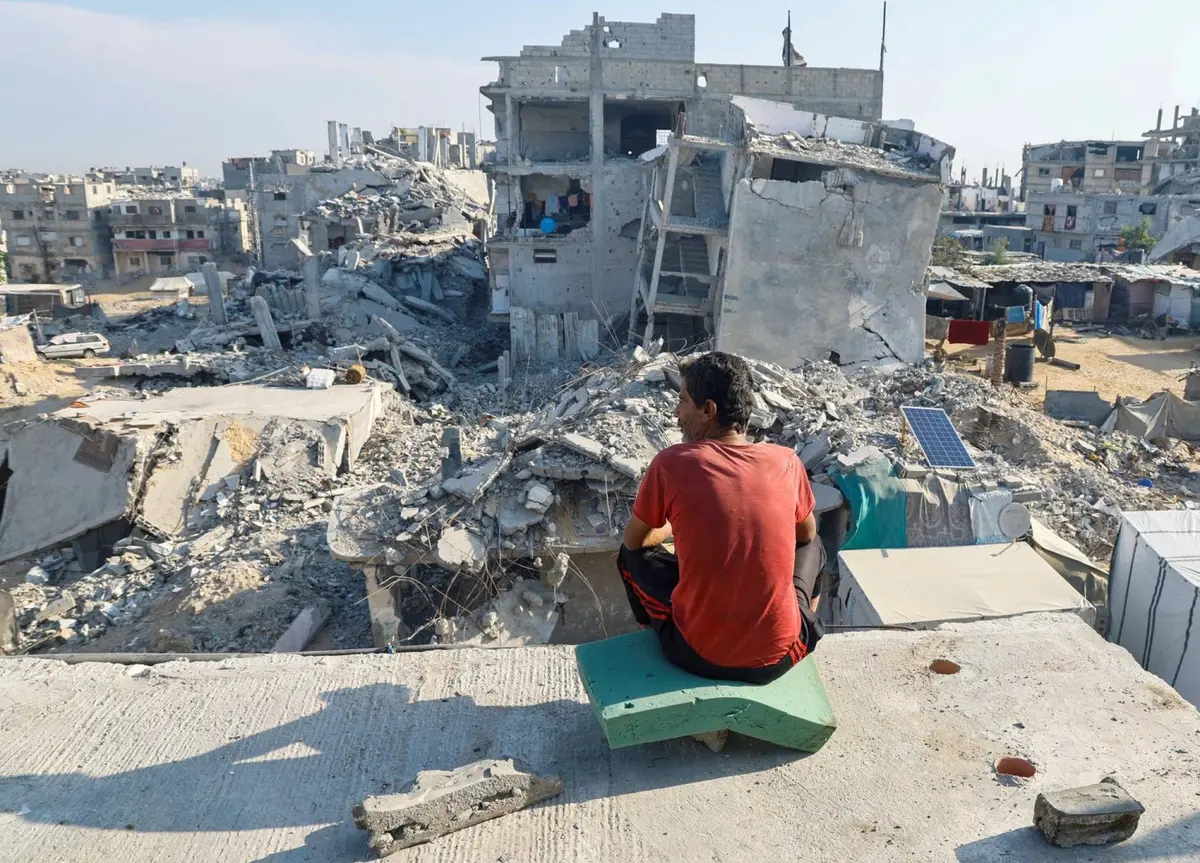
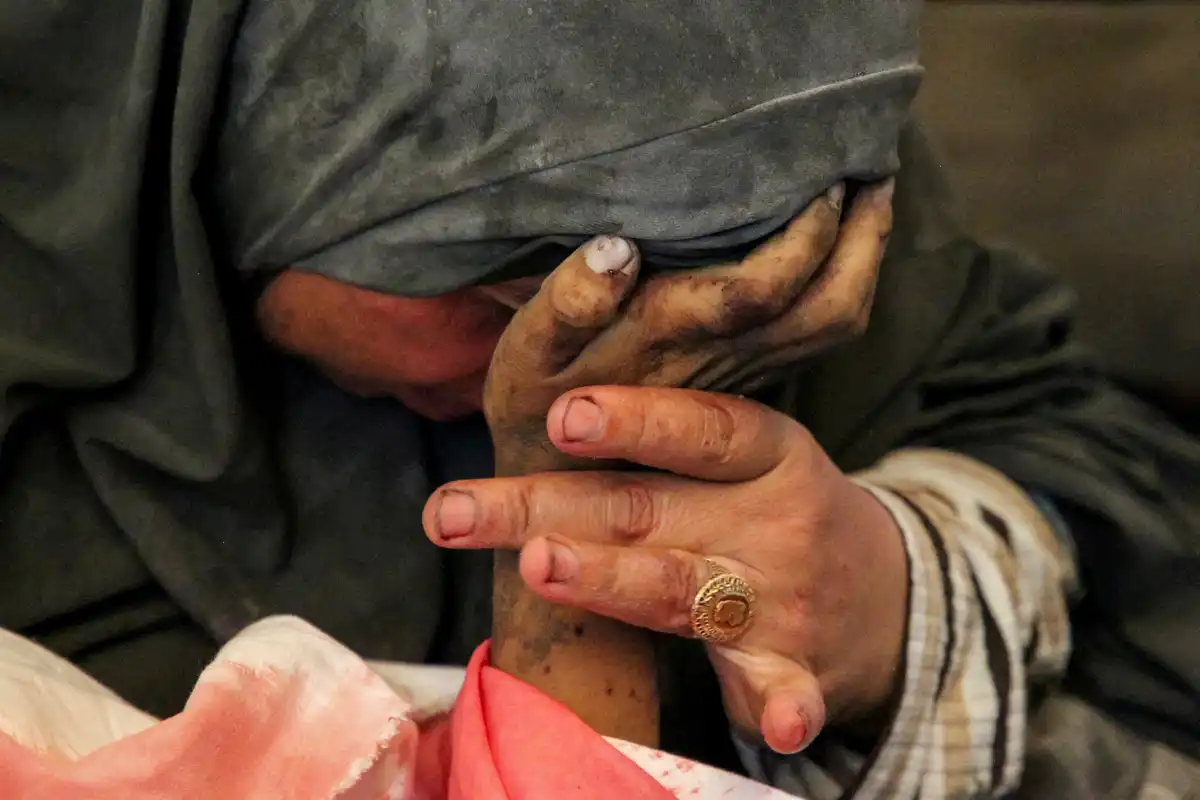
33 citizens killed in Israeli bombing of displaced people from Gaza

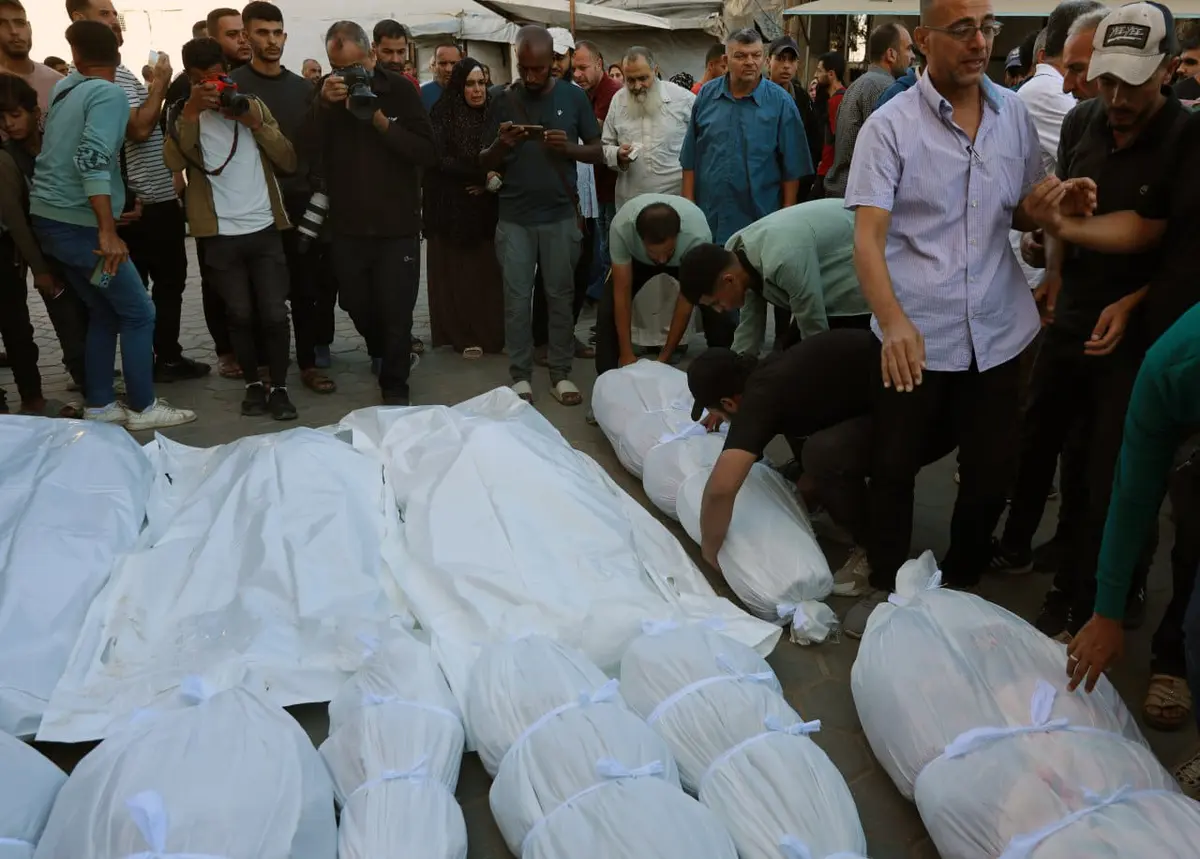
At least 33 Palestinians were killed and others were injured on Tuesday when Israeli aircraft bombed homes and tents housing displaced people in various areas of the Gaza Strip.


The Palestinian News and Information Agency (WAFA) quoted medical sources as saying that 4 citizens were killed and others were injured when “the occupation targeted a house on the old Gaza Street in the Tuffah neighborhood east of Gaza City, and they were transferred to the Baptist Hospital in the city.”


According to the agency, 20 citizens were killed as a result of violent shelling that targeted a house that was sheltering displaced people in Beit Lahia in the northern Gaza Strip, while the occupation's shelling of a displaced people's tent in Deir al-Balah in the central Gaza Strip resulted in the death of two people and the injury of others, including children.


Wafa said: "Four citizens were killed and others were injured as a result of the bombing of a tent for displaced people in the Al-Zawaida area," noting that "three citizens, including a child, were killed as a result of targeting a tent sheltering displaced people in the Ma'an area, east of Khan Yunis."


Local sources reported that "a number of citizens were injured as a result of the shelling of a house in the town of Abasan al-Kabira, east of Khan Yunis. The vicinity of the Shuhada al-Zaytoun clinic in the al-Zaytoun neighborhood also witnessed artillery shelling, coinciding with heavy gunfire from occupation vehicles."

PALESTINE

Tue 05 Nov 2024 4:08 pm - Jerusalem Time

WHO: More than 100 patients and injured people will be evacuated from Gaza

The World Health Organization said that more than 100 injured and sick people, including children, suffering from serious injuries and chronic diseases, will be evacuated from Gaza tomorrow, Wednesday.


"These are temporary measures. What we have repeatedly asked for is a sustained medical evacuation out of Gaza, as 12,000 people are waiting for transfer for treatment abroad," said Rick Peeperkorn, WHO representative in Palestine.


He said that the patients and injured "will travel in a convoy through the Kerem Shalom crossing."

ARAB AND WORLD

Tue 05 Nov 2024 2:28 pm - Jerusalem Time

Galant approves new orders to call up thousands of Haredim for draft

Israeli Defense Minister Yoav Galant has approved new conscription orders for 7,000 ultra-Orthodox Jews, amid growing pressure on reservists a year after Israel's war on the Gaza Strip following Operation Protective Edge.


The Israeli army said in a statement that the defense minister approved a recommendation to issue 7,000 new orders after reviewing the lists of individuals eligible for recruitment, in addition to 3,000 orders issued last July.


Israel Hayom reported that Galant agreed to this step after meeting with officials in the General Staff, led by Chief of Staff Herzi Halevi.


Real and urgent need

The newspaper revealed that Galant said during the meeting that "the war and the challenges we face demonstrate the Israeli army's need for more soldiers, and this is a real operational need that requires broad national mobilization from all segments of society."


In turn, Yedioth Ahronoth newspaper said earlier on Monday that the Israeli army "desperately needs" 7,000 soldiers.


The Haredim constitute about 14% of the population in Israel (about 1.3 million people). They have their own customs and rituals and refuse to integrate into “secular society” because they believe that this “threatens their identity and religious privacy.” They consider that studying the Torah “protects the country and the army.”


Since the declaration of the establishment of Israel in 1948, the army has not called up Haredi Jews for conscription due to political arrangements that were agreed upon to leave them to devote themselves to studying the Jewish religion and deepening their understanding of the texts of the Torah.


In June 2024, the Israeli Supreme Court ordered the conscription of Talmudic school students, ruling that the government could not exempt them “in the absence of an appropriate legal framework,” and ordering that financial aid be withheld from religious institutions whose students refuse military service.


Increased tensions in the government

Observers believe that the move to call up 7,000 ultra-Orthodox Jews for conscription may increase tensions within the ruling party coalition led by Prime Minister Benjamin Netanyahu, which includes ultra-Orthodox parties demanding that religious Jews continue to be exempted from conscription.


The Israeli opposition says Netanyahu promised the Shas and United Torah Judaism parties to pass a law exempting the Haredim from military service to prevent them from withdrawing from his government and thus bringing it down.


Leaders of the religious parties in the government coalition had demanded that the Israeli parliament (the Knesset) pass a new military service call-up law that exempts Haredi students from conscription, before the cabinet votes on the so-called austerity budget for 2025.


The religious parties are still holding out for a bill to exempt full-time Jewish seminary students from military service, but have agreed to drop their threat to vote against the budget after securing a promise from the government to fund daycare centers for Haredi children whose mothers work.


In Israel, there are about 63,000 ultra-Orthodox students eligible for conscription, and the army sent recruitment notices to 3,000 of them over the summer, but only about 900 showed up, according to Israeli media.


PALESTINE

Tue 05 Nov 2024 2:16 pm - Jerusalem Time

17 dead arrived at hospitals, and the death toll from the aggression rose to 43,391

The Ministry of Health in Gaza announced today, Tuesday, that the death toll in the Gaza Strip has risen to 43,391 and 102,347 injuries, the majority of whom are children and women, since the start of the Israeli occupation aggression on October 7, 2023.


The ministry explained in a brief statement that the Israeli occupation committed 3 massacres against families in the Gaza Strip, resulting in 17 dead and 86 injuries arriving at hospitals during the past 24 hours.


She pointed out that a number of victims are still under the rubble and on the roads, and ambulance and civil defense crews cannot reach them.


In the latest developments: Medical sources reported that 4 citizens were killed and others were injured when the occupation targeted a house in the Al-Alami area in Jabalia camp, north of the Gaza Strip.


PALESTINE

Tue 05 Nov 2024 1:52 pm - Jerusalem Time

Updated: The occupation forces besiege a house in Qabatiya and arrest a young man in Meithalun

Israeli special forces surrounded a house in the town of Qabatiya, south of Jenin, on Tuesday.


According to local sources, a special Israeli force surrounded a house in the town, and forced the citizens in the nearby houses to leave their homes, while sending military reinforcements to the town from the Dotan military checkpoint.


In the same context, the occupation forces arrested the young man, Muhannad Ghassan Rabaya (22 years old), after raiding his house, detaining his mother, and blowing up his vehicle in the town of Meithalun, southeast of Jenin.

PALESTINE

Tue 05 Nov 2024 1:27 pm - Jerusalem Time

Updated:: Deliberate medical neglect of prisoners and catastrophic conditions suffered by female prisoners

The Commission of Prisoners' Affairs and Liberated Prisoners said that the policy of deliberate medical neglect against injured and sick detainees in the occupation's prisons has worsened after the start of the aggression against our people on October 7, 2023.


The Authority explained in a statement issued on Tuesday that the prison administration uses medical negligence as a weapon of revenge against our detainees, by depriving them of medical care and treatment, even those who suffer from chronic diseases and serious injuries that could lead to their death, in addition to what they are exposed to in terms of beatings and abuse without taking into account the sensitivity of their situation, which has led to the martyrdom of a number of them, and this is likely to increase with the continuation of Israeli violations during detention and inside prisons.


In this context, the Authority’s lawyers visited several prisons and inspected the conditions of sick detainees, and the medical neglect, malnutrition, and physical violence they face, which negatively affected their bodies, which lost a lot of weight and became emaciated and unable to resist diseases.


The detainee Hussam Zahdi Zahayqa “Shaheen” (52 years old) from the town of Al-Sawahra/Jerusalem, was suddenly transferred to the hospital and underwent surgery as a result of the severe inflammation that affected his feet, due to the disease of sciatica, and the neglect of his treatment for a period of more than two months, which led to him losing the ability to stand, so he moved around in a wheelchair.


The detainee said: “On 9/30/2024, during the session, the prison guard asked me to stand up, but I told him that I couldn’t because of the severe pain in my foot. He attacked me and stepped on the inflamed area with his military boot. A few days later, I was subjected to another attack, which worsened the situation, leading to a significant deterioration in my health. I was then transferred to the prison clinic, and they transferred me directly to surgery to clean the inflammation, without giving me anesthesia. I suffered greatly as a result of the deadly pain I felt.”


Shaheen adds: "One month in detention after the war on the Gaza Strip is equivalent to 20 years in detention."

It is worth noting that the detainee is being held in Nafha Prison, and was arrested on 01/28/2004, and was sentenced to 22 years in prison.


As for the detainee Muhammad Abu Adi (50 years old) from Ramallah, who is in the Negev prison, his health condition is very difficult, as he suffers from a number of diseases (diabetes, heart disease, high blood pressure, hernia, stomach ulcers, and scabies), in addition to being beaten at the beginning of his detention, which led to fractures in his spine and ribs, in addition to severe and rapid weight loss due to malnutrition.


It is noteworthy that he was arrested on 10/20/2023, and a 6-month administrative prison sentence was issued against him, which was renewed twice, and he is expected to be released on 12/19/2024. He is married and has 5 children.


Regarding the detainee Jawad Ishtiya (50 years old) from Nablus, the Commission’s lawyer noticed during his visit that he could barely see and was able to reach the room with great difficulty, and with the help of another detainee, as he suffers from severe visual impairment and can only see a few centimeters in front of him, and this poses a great danger to his life.

It is worth noting that Shtayyeh was sentenced to 30 years in prison, and was arrested in 2003. He holds a master’s degree in Israeli affairs.


Among the difficult cases is the case of the detainee A.S. (72 years old) from the city of Jenin, who is being held in the Negev prison, and who suffers from partial memory loss, a vision problem, and a urine bag permanently attached to his body to relieve himself. His condition has deteriorated significantly recently after he was diagnosed with scaphoid fever.


In another statement, the Prisoners Authority said, “94 female prisoners in Al-Damon prison are tasting the bitterness of Colocynth, and according to their testimony, their rooms are subjected to arbitrary searches on a daily basis at dawn, where the administration storms the section, chooses one or two rooms, takes them out of them, and detains them for an hour or more during the break.”


She added: "This includes the female prison guards strip-searching them, in addition to confiscating their simple belongings, such as an empty plastic box that they use instead of cups, and the confiscation of threads that they pulled from blankets to use to make bracelets for entertainment during the long hours of the day inside the rooms."


She explained that even repairing their torn clothes, which they have no other clothes, has become impossible after the confiscation of the last needle they own, as each prisoner has only one change of summer clothes and the prison administration refuses to give them warm or extra clothes. Also, each one of them has one towel that turns into half a towel if a new prisoner enters the prison, as one of them shares her towel with the new prisoner because the prison administration does not provide her with a new towel. They are forced to borrow shoes from each other when they go out for a break, the clinic, or to visit the lawyer, as a result of the confiscation of their shoes by the prison guards in unjustified retaliatory measures.


The Commission reported that the Damon prisoners suffer from a severe shortage of personal and room cleaning materials, and a shortage of blankets, coinciding with the drop in temperatures with the onset of winter, as they suffer from the onset of a severe cold wave at night and early in the morning, which causes them to contract many diseases.


The Commission added in its statement that the administration of Al-Damon Prison deliberately installed lighting switches outside the prisoners’ rooms two weeks ago and cancelled the internal switches to allow the prison guards to control the lighting times according to their mood.


The Commission’s lawyer reported, quoting the female prisoners who were visited, that the starvation policy pursued by the prison administration against them has led to hormonal changes and side effects in their bodies for months.

PALESTINE

Tue 05 Nov 2024 1:20 pm - Jerusalem Time

By its decision to allow banks to deduct all loans... Has the Monetary Authority lost its authority?

Mohammad Manasra: The Monetary Authority’s decision came after the government succeeded in paying full salaries to more than 72% of employees.

Ayham Abu Ghosh: The government does not want to bear more debts and left the employee to settle his loan with the bank

Dr. Sameh Al-Atout: A measure to help banks in light of their difficult circumstances, and middle-income employees are the most affected

Dr. Thabet Abu Al-Rus: The return of full discounts will lead to a decline in purchasing power and will negatively affect the markets

Talat Alawi: The Monetary Authority and banks are dealing with employees as if the economic situation has returned to normal

Firas Yaghi: Support for the banking sector at the expense of employees and no signs of economic or political stability


Salary deductions are knocking on employees’ doors again, after the Monetary Authority announced the decision to resume those deductions, in light of difficult economic and political circumstances. However, this resumption of deductions may aim to allow banks to catch their financial breath in light of the decline in their profits.


Analysts and specialists, in separate interviews with “I”, agree that this decision increases the pressure on the already shrinking Palestinian economy, and may have negative effects on the level of consumption, which deepens the state of economic recession in the West Bank.


Analysts and experts call on the government to take effective steps to support the banking sector and ensure the continuity of banks’ operations, in parallel with supporting and backing employees, and cooperation between all concerned parties to achieve financial and economic stability that helps improve living conditions in the West Bank.


The Monetary Authority explains the reasons for the decision


Mohammad Manasra, Deputy Governor of the PMA, explained that at the beginning of 2024, the PMA issued Instructions No. (2024/2), which included granting borrowing public sector employees a ceiling for a current account/commodity Murabaha financing with the aim of enabling employees to receive the salary payment in extremely complex circumstances, especially after the seizure of clearance funds following the war waged by the occupation on the Palestinian people, where the government was forced to pay 50% of the salary at the time. The decision to grant the current account to employees also contributed to pumping additional liquidity into the market. Recently, the government succeeded in paying a full salary to more than 72% of employees and raising the minimum salary to 3,500 shekels. Therefore, the PMA decided to resume work on Instructions No. (2021/25) and resume deducting installments from public sector employees starting from the current month’s salary.


Manasra confirms that if the entire salary is transferred, the full value of the installment due from the employee will be paid. However, if a percentage of the salary is transferred, the installment will be paid as a percentage and proportion of the value of the transferred payment, not exceeding 50% of it or the value of the installment - whichever is less. Employees who wish to reduce the value of the monthly installment can reschedule their loans and process the installments due from them by going to the bank branches and requesting a loan rescheduling.


Regarding the defaulting employees, Manasra explains that they must visit the banks to organize their debts in order to benefit from the transferred portion of the salary.


Regarding the banks’ follow-up on their commitment to the new decision, Manasra confirmed that the Monetary Authority will examine the extent of banks’ commitment to the discount rates specified in the instructions, both in the office and in the field, and will deal with any complaints or objections received from public sector employees who are borrowers regarding the banks’ non-compliance, and the necessary legal action will be taken against the violating banks and the amounts deducted in violation of what the instructions stipulated will be returned to the employee.


The government is in a difficult situation.


The journalist specializing in economic affairs, Ayham Abu Ghosh, explains that the recent decision of the Palestinian Monetary Authority to resume deducting loans from salaries obliges public sector employees to return to the original contractual formula with banks after the end of the exceptional period during which employees’ loans were allowed to be rescheduled until the end of last September, which came as a result of the events of October 7, the subsequent economic deterioration, and the deepening of the financial crisis of the National Authority, which is no longer able to pay more than a certain percentage of the salary as a result of the occupation’s piracy of more clearance funds.


Abu Ghosh points out that this new decision applies only to employees in the West Bank, and it means that banks will return to deducting the full installments from employees’ salaries as agreed upon contractually, which will lead to the cancellation of the exception that was granted to employees, which stipulated the deduction of a portion of the installment value according to specific percentages.


Abu Ghosh points out that the Monetary Authority stipulated that the deduction percentage should not exceed 50% of the employee’s income, but it did not clarify how it would be dealt with if the full percentage did not cover the installment, suggesting that the matter would be left to arrangements between the employee himself and the bank, either by deducting the full amount, or granting the employee what is known as (overdraft), or rescheduling the loan by extending the repayment period in exchange for additional interest.


This decision, according to Abu Ghosh, was based on the fact that the Palestinian government considered that about 70% of employees receive their full salaries, and therefore the banks have the right to regain their right to the full deduction of installments.


Great impact on middle-income employees


Abu Ghosh believes that this trend may have a significant impact on the middle-income employee segment in particular, whose salaries range between 5,000 and 6,000 shekels, and they are the most affected because they will not be able to repay the loans in full. As for the group with the highest salaries, they receive about 70% of their salary, which makes them relatively able to commit to paying the installments due to the high value of their salaries. However, the lower categories of employees will not be affected by the decision, because this group receives their full salaries, and they obtained the loans based on their fixed income.


Abu Ghosh confirms that banks are forced to recover their dues based on the previously agreed contractual formula, as paying these loans on time is financially binding so that they are not considered in default according to international accounting standards, which spares them further financial allocations that will burden them financially.


Abu Ghosh points out that one of the proposals put forward was for the government to seek a combined loan, as the previous government did at the end of last year, to pay off part of the debts accumulated by employees. However, the current government did not resort to this step for fear of increasing the public debt and its inability to increase the value of the monthly installment to repay the loan, which may affect its ability to pay the current percentage of salaries. It left the matter to be settled directly between employees and banks, which indicates its unwillingness to bear more debts or reschedule employees’ loans in light of the difficult financial circumstances.


Abu Ghosh believes that the new decision reflects the critical situation facing the government, as it appears unable to pay employees’ dues or oblige banks to provide additional facilities, which they also have financial obligations to fulfill.


Abu Ghosh points to the embarrassment and distress that banks are suffering from if these loans are deemed non-performing, which means that they will resort to increasing risk reserve allocations, which weakens their financial capacity and increases the severity of the economic crisis.

Abu Ghosh stresses that the current phase highlights the urgent need for more comprehensive financial solutions that help employees and affected groups mitigate the repercussions of the current crisis, instead of leaving the employee to struggle with the crisis with the banks.


Negative repercussions


Abu Ghosh points out that the repercussions of the recent decision will be very negative for employees, especially those in the middle class who will be obligated either to pay the full value of the loan installments, which will be at the expense of their livelihood, or to reschedule the loans according to a formula agreed upon with the banks, which will burden them with additional interest.


Abu Ghosh explains that the decision will also affect the level of liquidity in the markets, which means further contraction and decline in the economic cycle, and the resulting increase in unemployment and poverty rates, and perhaps more closure of economic facilities.


The decision comes at a critical time financially for banks.


Financial and economic expert and professor of accounting sciences at An-Najah National University, Dr. Sameh Al-Atout, explains that the Monetary Authority is closely following the conditions of local banks, and that the decision to resume deductions from employees’ salaries for the loans owed by them came as a measure to help banks in light of the difficult financial circumstances they are going through.


Al-Atout stressed that this decision comes at a critical financial time for banks that are suffering from a difficult financial situation and losses incurred over more than a year, and the crisis has deepened over the past months, which requires taking urgent measures to strengthen their financial position.


Al-Atout points out that the timing of resuming deductions came after a careful assessment by the Monetary Authority, which saw that the banking sector, with the end of the fiscal year approaching, is in dire need of support and assistance, and this step aims to restore the protection of the banking sector and improve its sustainability, especially in light of the current economic conditions.


Regarding the financial performance of banks, Al-Atout explains that there are large losses that have been incurred by banks as a result of the decline in profits, which will appear clearly in the last quarterly report of the fiscal year.


Al-Atout believes that these losses reflect the state of instability that the banking sector is suffering from, which raises concerns about the future of liquidity and the ability to meet market needs.


Regarding the return of salaries, Al-Atout believes that the size of the debt owed by the Palestinian Authority is very large, which negatively affects the government’s ability to pay its obligations. Despite the possibility of some financial improvements, he does not expect any fundamental changes to the financial reality in the West Bank during the current period and until the next few months. Moreover, the rates of salary disbursement will remain close to what they were in previous months, which contributes to deepening the state of economic recession in parallel with the resumption of salary deductions.


Great impact on the living conditions of citizens


Al-Atout points out that the Monetary Authority’s decision will greatly affect the living conditions of citizens, as it is expected to lead to a reduction in spending and consumption, and as a result the market will witness a recession in purchasing activity, which will negatively affect the percentage of available liquidity, and the poverty rate in the West Bank may increase if these conditions continue.


Al-Atout stressed that these data require the government to take balanced measures between maintaining employees’ salaries and supporting banks to ensure their continued operation, which requires careful planning for important measures that contribute to enhancing the sustainability of the banking sector and ensuring the continuity of banks’ operations. The government must seek to take effective steps to support this sector, in a way that enhances its ability to confront the financial challenges that are plaguing it.


Al-Atout points out that the current time requires all concerned parties to cooperate to achieve financial and economic stability in the West Bank, which will help improve the living conditions of citizens and enhance confidence in the banking sector. These steps must be taken in a thoughtful and coordinated manner to ensure achieving the desired results, enhance the financial system’s ability to face future challenges, prevent market stagnation, and reduce the poverty rate.


Different trends in the financial and banking policies of the authority


Writer and economic analyst Dr. Thabet Abu Al-Rus believes that the Monetary Authority’s decision to resume full deductions on loans owed by public sector employees, which came after a suspension that lasted nearly ten months, reflects several implications and indicators that may carry within them accurate economic and political analyses.


Abu Al-Rus explains that this decision expresses different trends in the financial and banking policies of the Palestinian Authority and the banks operating in the Palestinian territories, in light of the difficult economic conditions and increasing financial pressures on the government and citizens.


Abu Al-Rus believes that this decision by the Monetary Authority suggests that there is a vision among the official authorities towards a gradual return to the usual financial activity within the Palestinian Authority, and that the situation may move towards relative stability that allows room for the return of discounts on loans.


Abu Al-Rus explains that this step suggests that there is pressure from banks, which believe that continuing to not fully discount may negatively affect their investment strategies and weaken their ability to draw up clear financial plans.


Abu Al-Rus points out that banks rely heavily on fixed cash flows, and continuing to refrain from full discounting puts their financial interests at risk, and may push them to reconsider their future plans if these policies continue.


According to Abu Al-Rus, the Monetary Authority based its decision on studies indicating that about 70% of public sector employees are now receiving full salaries, which makes it difficult to continue granting exceptions, especially with regard to deducting outstanding loans.


Abu Al-Rus points out that as a result, it seems that the Monetary Authority believes that public sector employees are able to meet their obligations to banks, especially in light of raising the minimum exchange rate, which now stands at 3,500 shekels per month, in addition to the government’s efforts to rationalize government consumption and achieve relative financial balance by seeking to obtain external financing, which has helped improve its cash liquidity.


Abu Al-Rus explains that this decision may be linked to the banks’ need to increase their cash flows as the end of the fiscal year approaches, as this is an appropriate time for banks to secure their profits and increase their liquidity, which is in line with their desire to recover employee loans.


Abu Al-Rus points out that foreign banks operating in Palestine attach special importance to future financial trends linked to the political situation, and consider that increasing their cash flows gives them greater flexibility to deal with economic events that may arise.


The decision serves the banks and not the employees


He points out that the timing of the decision may have served the banking sector, but it may not directly serve the interests of employees, especially in light of the high rates of poverty, high prices, and deterioration in the standard of living as a result of the erosion of the value of salaries due to inflation.


Abu Al-Rus explains that employees’ commitment to paying all deductions on their loans may greatly affect their ability to provide for their basic needs, as their consumption levels are expected to decline significantly, and some of them may be forced to give up necessary expenses to pay their loan installments to banks, which will lead to a decline in personal and public consumption levels.


Abu Al-Russ confirms that the return of full discounts will undoubtedly lead to a decline in the purchasing power of employees, as the employee will face an additional burden on his monthly budget, which may negatively affect local markets and lead to a decline in demand for goods and services.


Abu Al-Rus believes that this decision, despite its necessity to maintain the integrity of the banking system, reflects the challenges facing citizens, especially with the rise in poverty rates as a result of the complex economic and political conditions.


Abu Al-Rus points out that the Palestinian government, despite its attempts to improve the financial situation, is still facing difficulties in providing full and stable salaries to all employees. However, the current decision will pave the way for a gradual return to better financial stability, as the Ministry of Finance and the Prime Ministry are working to secure more external financial support, which could contribute to providing relative financial stability in the medium term, and allow employees to cover their basic expenses and pay their debts at the same time.


Abu Al-Rus believes that this decision represents a step towards restoring the usual financial system, but it carries negative effects on the standard of living of employees, especially the middle class, which bears the greatest burden in covering its loans and financial dues.


Despite the efforts of the government and the Ministry of Finance to improve the level of liquidity, Abu Al-Rus believes that the decision to fully deduct poses major challenges for employees, and requires a delicate balance between the interests of banks and the protection of citizens’ financial and living rights.


Banks' efforts to improve their financial results for the year 2024


Journalist and economic media figure Talat Alawi explains that the Monetary Authority’s decision to resume deductions on public sector employee loans returns the system to the old contractual formula before October 7, 2023, which follows the previous financial and legal rules, after the exceptions prevented deductions of loans following the events of October 7, at certain rates, and this continued until the end of last September.


Alawi explains that the decision does not include Gaza Strip employees, who were not included in these measures in the first place, stressing that the wording of the decision restores the situation to what it was before October 7, 2023, which is a step that reflects the Monetary Authority and banks’ treatment of employees on the basis that the economic situation has returned to normal, even though the situation is no longer as it was, and the crisis is still ongoing and intensifying.


Alawi points out that approximately 70% of employees receive their salaries in full, however he wonders about how deductions will be applied to some categories that receive incomplete salaries or are more affected than others, pointing out that this type of decision needs clarification and clear implementation mechanisms, because some may find themselves unable to bear the burden of deductions due to the lack of clarity in the mechanism for dealing with loans, whether they are calculated on a current and debit basis or not.


Vague decisions allow banks flexibility in their implementation


Alawi explains that such decisions are usually vague, as they allow banks flexibility in implementing them, which may lead to problems for employees in the coming days.


Alawi stresses that the resumption of deductions cannot be considered an indication of the return of full salaries to employees, as the government suffers from heavy debt burdens, as the public debt is estimated at approximately 14.5 billion shekels according to the announced data, which is open to debate.


Alawi points out that the heavy monthly obligations and the government's obligations towards employees and the private sector, amounting to about 11 billion shekels, impose additional pressures, noting that paying salaries in full is not an option in the near term.


Alawi points out the government’s obligations regarding its loans from the banking sector, which exceeded $2.5 billion, and the resulting interest, which is at the expense of the general budget, basic services, and the citizen’s budget.


Alawi believes that the government is trying to cover its financial deficit through international and Arab grants, but these temporary solutions do not address the roots of the crisis, especially in light of the unfair distribution system of the general budget, which has been an imbalance since the establishment of the Palestinian Authority and everyone is paying the price for it today.


Sensitive timing as the end of the fiscal year approaches


Alawi believes that the resumption of deductions comes at a sensitive time with the end of the fiscal year approaching, as banks seek to strengthen their financial position, noting that the current fiscal year was full of challenges, as banks’ profits declined significantly during the past period, and therefore banks need to collect as much as possible of their dues from employees and the government.


Alawi stresses that this decision to resume deductions from employees will have an impact on living standards, as the employee will bear more financial burdens, which will further deteriorate the purchasing power of citizens, which has already witnessed a significant decline, especially in some governorates where the decline has exceeded half, as employees in Ramallah face additional challenges due to the high cost of living there.


Alawi believes that the roots of the problem go back to the era of the thirteenth government headed by Salam Fayyad, which encouraged unprecedented borrowing instead of improving the conditions of employees, considering that borrowing was not a sound solution.


Alawi points out that encouraging borrowing among public sector employees has led to a significant accumulation of debts, as figures indicate that more than a third of employees rely on bank loans, which he considers a major flaw in the economic structure of Palestinian society.


Alawi points out that this increasing reliance on loans makes the Palestinian economy more fragile and vulnerable to political and financial fluctuations.


Alawi believes that these economic policies that enhance the role of loans without real solutions reflect a structural defect in Palestinian financial and economic policies.


Alawi confirms that the return to resuming deductions may represent an indication of a harsh economic and financial confrontation, accompanied by the continuation of economic crises and the rise in public debt.


Direct support to the banking sector at the expense of employee rights


Writer and political analyst Firas Yaghi considers the decision to resume deductions from employees’ salaries to pay off their loans as direct support for the banking sector at the expense of the rights of small employees, describing the decision as a disregard for employees’ rights.


Yaghi points out that the decision to deduct came under the banner that 70% of employees receive their full salaries, but Yaghi wonders, saying: “If this is the case, why are employees not given their full entitlements without any deductions?”


Yaghi bases his criticism on the deteriorating economic situation of Palestinian employees, as many of them are drowning in debt due to the irregularity of receiving their full salaries during the past periods.


Yaghi points out that it would have been more appropriate for the Monetary Authority and the government to first provide the accumulated dues of employees, so that they would be a source of repayment of the loans owed to them, stressing that this accumulation is what has burdened the employees and deprived them of the ability to live with dignity in light of the increasing economic pressures.


Yaghi believes that this decision will increase the economic burdens on employees, which will lead to more poverty and oppression of a large segment of citizens, which Yaghi considers unfair and does not contribute to creating balance or stability on the social level, stressing that it affects civil and societal peace, which may explain dangerous implications on the levels of social tension.


Yaghi points out that this requires employees to protest peacefully in accordance with the law, as any decision that would increase the burdens on them without providing the minimum of their legitimate rights must be rejected.


Yaghi stressed that employees deserve to receive all their accumulated dues, pointing out the importance of linking salaries to the cost of living index to ensure a standard of living that is in line with the difficult economic conditions.


deepening social gaps


Yaghi points out that this trend of resuming deductions will deepen social gaps and the poor Palestinian people will pay the bill, wondering how a decision can be made in this form in light of the huge debt that burdens the government for the benefit of employees.


He wonders about the basis on which this decision was based, pointing out that if the government had based its decision on data indicating the return of financial stability and the end of the salary crisis, then it must announce this officially.


Yaghi doubts the existence of actual stability, whether political or economic, saying: There are no clear indications that the salary crisis will end under the current circumstances.


Yaghi points out that the Israeli occupation government, despite American and European pressure, only extended the banking relationship for a month via a phone call, without signing a written agreement, stressing that the occupation government refused to extend for a year as demanded by the United States, which shows the financial instability facing the Palestinian Authority.


Yaghi wonders: “What financial stability are we talking about to make a decision like this that burdens employees, especially the younger ones who constitute the majority?”


Yaghi points out that this decision does not reflect any indicators of economic or political stability, noting that the steps taken may lead to more pressure on the segment of low-income employees, which increases the severity of the crisis and increases the difficulty of achieving real economic stability.



ARAB AND WORLD

Tue 05 Nov 2024 12:32 pm - Jerusalem Time

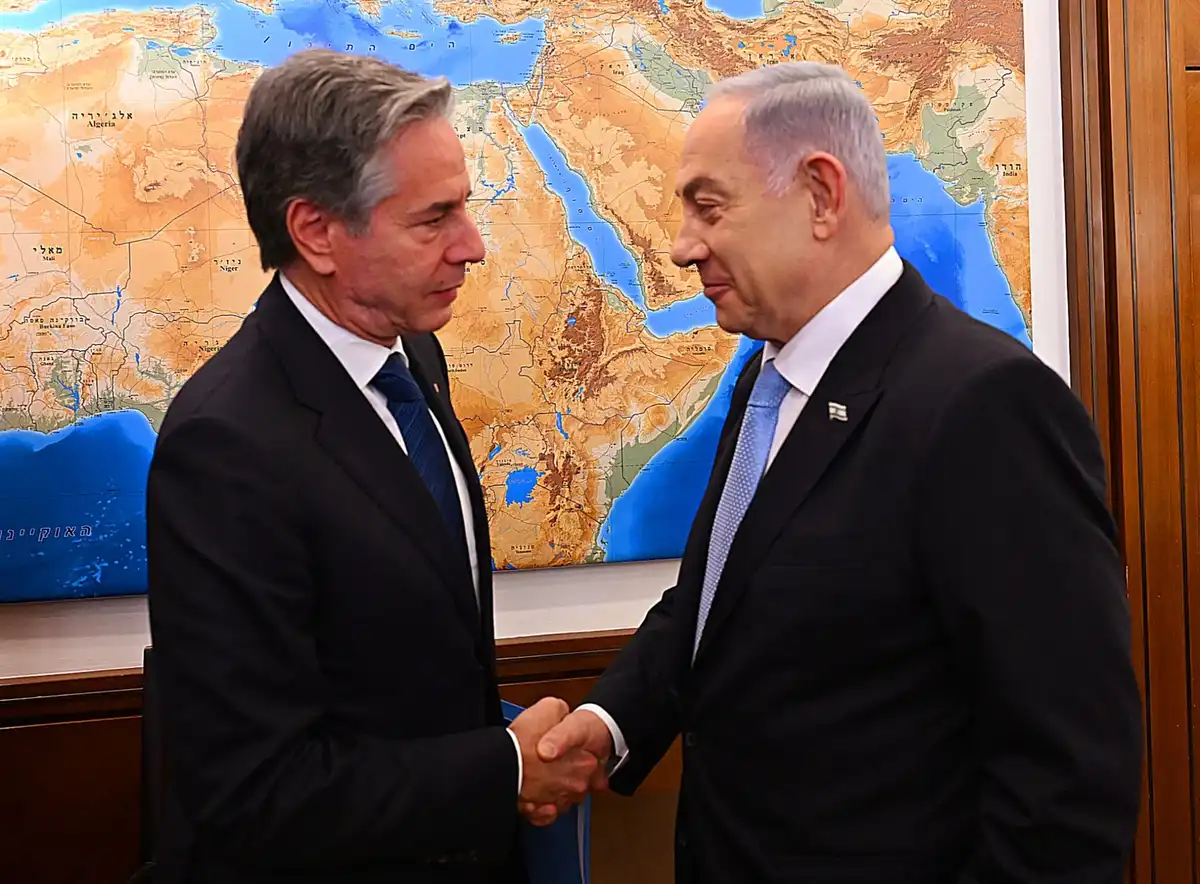
Blinken urges Israel to increase humanitarian aid to Gaza


US Secretary of State Antony Blinken spoke with Israeli Defense Minister Yoav Gallant on Monday and urged further action to significantly increase humanitarian assistance in Gaza, the State Department said in a statement.


The US administration warned in a letter dated October 13 that Israel had 30 days to take specific steps to address the horrific humanitarian crisis in Gaza, which has been under continuous bombardment for more than a year.


Aid workers and U.N. officials say humanitarian conditions are dire in Gaza, where the war has displaced nearly 2.3 million people and triggered a hunger crisis. It has also led to allegations of genocide against Israel at the International Court of Justice, which Israel denies.


The State Department said in a statement, a copy of which was received by Jerusalem, that Blinken "urged (Galant) to take further action to significantly increase and sustain humanitarian assistance - including food, medicine, and other essential supplies - to civilians throughout Gaza."


"The Secretary (Blinken) stressed the importance of ending the war in Gaza and returning all hostages to their homes, as well as charting a path forward in the post-conflict period that allows the Palestinian people in Gaza to rebuild their lives and strengthen governance, security, and reconstruction," the State Department said in a statement.


The US State Department statement quoted Blinken as saying, "Hamas has once again refused to release even a limited number of hostages to secure a ceasefire and relief for the people of Gaza."


The American website "Axios" had previously quoted Israeli sources as saying that Egypt had submitted a "mini" proposal for a hostage exchange deal with Hamas, which included a limited ceasefire in the Gaza Strip.


The website quoted Israeli officials as saying that the new director of the Egyptian General Intelligence Service, Hassan Mahmoud Rashad, presented the head of the Israeli Shin Bet, Ronan Bar, with an idea for a “mini” deal to exchange hostages and cease fire in Gaza, which could pave the way for negotiations on a broader agreement.

PALESTINE

Tue 05 Nov 2024 12:31 pm - Jerusalem Time

Israeli occupation takes escalatory steps against the prisoners in the "Etzion" detention center

The Prisoners and Freed Prisoners Affairs Authority revealed today, Tuesday, dangerous escalations adopted by the occupation soldiers in dealing with detainees in the Etzion detention center, as there are new methods aimed at inflicting physical and psychological harm on them.


According to the last visit of the committee’s lawyer to the detention center, she showed that detainees are brought to the visit with their hands and feet tied and blindfolded, in addition to plastic bags covering their heads completely, and this is a reminder of the harsh interrogation scenes that were used at the beginning of the first and second intifadas.


The report described the plastic bag covering the detainee’s face, wrapping his entire head around it, tightening it and tying it back, pressing on the mouth and nose, creating difficulty in breathing. This was clear during the visit to all the detainees without exception, and they seemed to be psychologically affected by this new method of torture and humiliation.


The Commission’s lawyer explained that the detainee was brought for the visit and there was no chair for them to sit on, and the nature of their being taken to the visitation room was very terrifying, in terms of how they were transported and surrounded, in addition to many attempts to disrupt the visit, by searching the notebook that was in her possession, or by demanding that she end the visit.


The Commission's lawyer indicated in her report that all the prisoners who were visited were subjected to beating and torture, and the bruises were clearly visible on their bodies, as their rooms were subjected to four raids during the past few days without any justification for that.


It is noteworthy that the Etzion detention center is located between the governorates of Hebron and Bethlehem, and is managed and supervised by a unit of the occupation army. Today, approximately 120 prisoners are being held there, most of whom are detained or have administrative detention orders issued against them. The total number of visits by prisoners to the detention center since the resumption of visits at the end of last year has reached (916) visits.

ARAB AND WORLD

Tue 05 Nov 2024 12:31 pm - Jerusalem Time

Frantic final moments in the race for the White House

On the eve of Election Day in the US presidential election, the two candidates, US Vice President and Democratic candidate Kamala Harris, and Republican Donald Trump, were active in several rallies, seeking to win the largest number of votes, especially in the swing states.


On this latest tour, Harris, a former attorney general and former California senator born to a Jamaican father and an Indian mother, will visit Scranton, the birthplace of current President Joe Biden, then Pittsburgh and Philadelphia, Pennsylvania's largest cities.


Harris held a rally in Pennsylvania on Monday morning, while Trump kicked off his final campaign day with a rally in North Carolina.


The two candidates are focusing their efforts on Pennsylvania, which is considered pivotal in the presidential race, as it provides 19 electoral votes.


For his part, former President Trump addressed a crowd of his supporters in Raleigh, North Carolina, optimistically saying: “North Carolina has always been mine,” before continuing with three more rallies in pivotal states, most notably Pennsylvania.


During his rally in Raleigh, Trump stressed his immigration policies and criticized his Democratic rivals.


After visiting Pittsburgh, the two candidates will wrap up their campaigns in crucial battlegrounds: Trump will head to Michigan, as he did in previous elections, while Harris will end her Pennsylvania tour with a stop in Philadelphia, the state's largest city, which both candidates see as key to victory.


About 75 million citizens have already cast their votes on early voting days.


The elections are likely to be decided in seven states: Arizona, Georgia, Michigan, Nevada, North Carolina, Pennsylvania, and Wisconsin.


According to opinion polls, the race is closer in more US states than in any other election in memory.


A candidate needs to get 270 votes out of 535 in the Electoral College to win the presidency.


In averages of polls conducted by The Hill and Decision Desk, the margin between the candidates is less than 2 percentage points in six of those seven states.


Here's a look at where these seven states stand according to the latest polls:


1- In Arizona, which has 11 electoral college votes, polls close at 9 p.m. ET.


Polls show Donald Trump has stronger support in Arizona than in any other state, The Hill reported, leading Harris by about 2.5 points. President Biden won the state by less than half a point in 2020.


Early voting numbers don't look very promising for Kamala Harris, though there's always a danger in extrapolating too much from these statistics.


In the latest figures from the University of Florida Elections Lab — which specializes in tracking early voting — Republicans cast 41 percent of the vote and Democrats 33 percent.


During early voting in 2020, registered Democrats and Republicans each cast about 37 percent of the votes, with the rest coming from people registered in minor parties or unaffiliated.


2- In the state of Georgia (southern), which has 16 electoral votes and was an important location in Biden’s (narrow) victory in 2020, the numbers are still mercurial, and it will be a major blow to Trump if he loses this state, as polls show that he is ahead by 1.8 points.


There is also hope for Harris’s campaign because of a good poll released Sunday. The New York Times/Siena College survey gave the vice president a one-point lead over Trump among likely voters.


3- In Michigan, which has 15 electoral votes, Harris leads by about two points. One important aspect to watch is whether Harris shows weakness with Arab-American voters in Detroit and Dearborn, where the Biden-Harris administration’s policies toward Israel and Gaza have been deeply divisive in a state with the highest concentration of Arab Americans in the country.


4- In Nevada, which has 6 electoral votes, the smallest of the seven battlegrounds, but could be decisive depending on the results of the elections elsewhere. Trump is ahead by 1.3 points.


Early voting is often crucial in the state, and registered Republicans appear to have erased the advantage Democrats enjoyed four years ago.


5 - In North Carolina, with 16 electoral votes and one of the most interesting battlegrounds, the signs are giving mixed signals.


North Carolina was the only swing state Trump won in 2020, so it would be a shock for him to lose it.


The latest New York Times/Siena College poll showed Harris leading by three points among likely voters, boosting her campaign's hopes of flipping the state for the first time since former President Obama won it in 2008.


6- Pennsylvania, with 19 electoral votes, is the largest battleground state in the election. The state has seen numerous rallies by candidates in the closing days, as well as hundreds of millions of dollars in television advertising throughout the campaign. The state still looks very close with just a few hours to go before the polls open, though some polls give Trump a one-point advantage.


In Wisconsin, which has 10 electoral votes and is one of Harris’s strongest battlegrounds, it is one of the “blue wall” states, along with Pennsylvania and Michigan, and no Republican candidate has won it in the last four decades, except for Trump in 2016. According to experts, Harris will face an inevitable defeat if she loses in the state.

PALESTINE

Tue 05 Nov 2024 12:25 pm - Jerusalem Time

West Bank: Israeli settlers burn a vehicle and write racist slogans east of Ramallah

Today, Tuesday, settlers burned a vehicle belonging to a citizen in the Bedouin community of "Al-Ras" east of the city of Ramallah.


Local sources reported that a group of settlers infiltrated the Bedouin community in the "Al-Ras" area between the villages of Al-Mughayyir and Kafr Malik, burned a vehicle belonging to citizen Mustafa Muhammad Kaabneh, and wrote racist slogans.


ARAB AND WORLD

Tue 05 Nov 2024 12:24 pm - Jerusalem Time

Israel continues its aggression on Lebanon, leavingdead and widespread destruction in the infrastructure

The Israeli occupation continues its aggression on various areas in Lebanon, leaving dozens of dead and widespread destruction to the infrastructure.


Press information reported that nine citizens were killed as a result of raids on the towns of Maaroub, Baflieh, Deir Kifa, and Haris, in southern Lebanon.


The Lebanese National News Agency reported that within the framework of the destructive war that the occupation is waging against Lebanon in general, and the south in particular, and the raids and destructive acts, its army is booby-trapping and destroying entire neighborhoods in cities and towns, such that more than 37 towns have been wiped out, their homes destroyed, and more than 40,000 housing units have been completely destroyed.


It is clear that this is happening in an area three kilometers deep, extending from Naqoura to the outskirts of Khiam.


The occupation aircraft and artillery bombed the towns of Joya, Yahmar al-Shaqif, Toul, Deir Antar, al-Qasiba, Sayr al-Gharbiya, al-Kharayeb, Maroun al-Ras, al-Khiam, Bint Jbeil, and al-Tayri in southern Lebanon.


In a related context, a Red Cross convoy, in coordination with UNIFIL forces, is preparing to head to Wata al-Khiam to complete the recovery of the bodies of 15 dead who are still under the rubble, as a result of the occupation’s aggression that targeted their home 8 days ago.

PALESTINE

Tue 05 Nov 2024 12:20 pm - Jerusalem Time

War on Gaza: 25 dead in tIsraeli bombing of a house in Beit Lahia, north of the Gaza Strip

The number of persons killed by the Israeli occupation forces' bombing of a house in the town of Beit Lahia, north of the Gaza Strip, since dawn on Tuesday, has risen to 25.


Medical sources reported that the death toll from the bombing of a house belonging to the Al-Masry family has risen to 25, including 13 children, and there are still missing people under the rubble.


The occupation forces have continued their aggression by land, sea and air on the Gaza Strip since October 7, 2023, which has resulted in the death of 43,374 citizens and the injury of 102,261 others, while thousands of victims are still under the rubble and on the roads, and ambulance and civil defense crews are unable to reach them.

PALESTINE

Tue 05 Nov 2024 12:16 pm - Jerusalem Time

Updated:: Israeli forces demolish a house and arrest a young man in Silwan, Jerusalem

Today, Tuesday, the Israeli occupation forces demolished a house in the town of Silwan in occupied Jerusalem.


Local sources reported that the occupation forces, accompanied by a bulldozer, stormed the Al-Bustan neighborhood in Silwan, south of Al-Aqsa Mosque, and began demolishing a house belonging to the Ayed family, which consists of one floor and houses 6 citizens.


The occupation sent army and police reinforcements to the town, and imposed closures, coinciding with the demolition operation.


The Jerusalem Governorate stated that this house is the seventh to be demolished by the occupation forces in the Al-Bustan neighborhood in Silwan since October 7, 2023, while about 120 other houses are threatened with demolition, leading to the forced displacement of 1,500 Jerusalemite citizens in Silwan.


In the same context, an occupation army force arrested the young man Khaled Al-Zeer after storming his house in the Abbasiya neighborhood in the town of Silwan.

PALESTINE

Tue 05 Nov 2024 12:08 pm - Jerusalem Time

Israeli forces besiege Tulkarm and Nour Shams camps amid bulldozing

This morning, Tuesday, the Israeli occupation forces stormed the city of Tulkarm, and besieged the Tulkarm and Nour Shams camps, amidst bulldozing operations.


Local sources reported that a number of occupation military vehicles exited the gates of the racist separation wall west of the villages of Al-Shaarawiya, north of the governorate, passing through the towns of Attil, Deir Al-Ghusun, the Allar and Qaffin triangle, Al-Jarushiya, and the Shuwaika suburb, until they reached the Alimi roundabout (the courts), west of the city.


She added that the occupation forces fired tear gas bombs at citizens in the vicinity of Al-Younis roundabout in the northern neighborhood of the city, and imposed a siege on the Tulkarm and Nour Shams camps, and deployed snipers in the surrounding high buildings, while sending more of their machinery and bulldozers, accompanied by the destruction of the infrastructure in their vicinity.


She stated that four military bulldozers are currently leveling and destroying the infrastructure on Al-Muqata'a Street adjacent to the eastern entrance to Tulkarm camp, the vicinity of the Martyr Saif Abu Labda roundabout, and Nablus Street adjacent to the entrances to Nour Shams camp, amidst the sounds of explosions being heard in these areas.


Earlier, the occupation forces and bulldozers roamed the streets of Tulkarm city, obstructing the movement of vehicles and citizens, causing traffic jams in the city's main streets.

OPINIONS

Tue 05 Nov 2024 10:52 am - Jerusalem Time

So that we do not shoot at the head of our national project

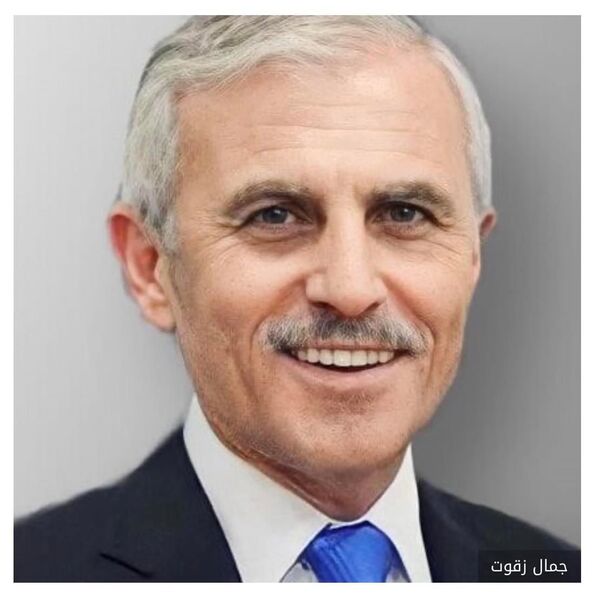
Jamal Zaqout

Jamal Zaqout

Opinion Writer

Last July, the Palestinian factions and forces were able to agree on what became known as the Beijing Declaration, which constitutes the necessary and most important gateway to reorganizing the internal house. The declaration, which was signed by the Fatah and Hamas movements, and all other factions within and outside the framework of the Palestine Liberation Organization, included unifying national efforts to confront the Zionist aggression, stopping the war of genocide carried out by the occupying state and the settler gangs, forming a temporary national unity government with the agreement of the Palestinian factions, and activating and regularizing the work of the temporary unified leadership framework for partnership in political decision-making.


It is very unfortunate that this declaration was placed in dark drawers, instead of expediting its immediate implementation, the provisions of which constitute an existential need for our people in the face of the crimes of genocide and ethnic cleansing that are spreading from the Gaza Strip to the rest of the West Bank, and threaten the danger of mass displacement. Not to mention that it constitutes a salvation network for the possibility of preserving the achievements of the national movement, and the enormous sacrifices of our people over the course of a century of struggle that has never stopped, in addition to being a necessary entry point for rebuilding the political system on consensual foundations until the holding of comprehensive general elections.


It goes without saying that the absence of a unified political reference at the level of the organization and the authority was and still is a strategic political vacuum, especially since the beginning of the Israeli aggression in October of last year, which puts the sacrifices and achievements of our people at risk, and deprives our struggling people who are holding on to the embers of achieving political achievements of the size of these sacrifices, foremost of which is ending the occupation and seizing the right to self-determination, not to mention holding Israel accountable for its ongoing crimes, which are becoming increasingly violent and bloody, especially in the northern Gaza Strip.


It is worth noting that the top priority of our people and their various political and social components, along with all the forces of freedom and justice in the world, is to immediately stop the crimes of genocide and ethnic cleansing against our people in the Gaza Strip, and to ensure the provision of humanitarian relief in the face of the policy of killing, starvation and siege, and to give hope for the possibility of achieving urgent shelter and reconstruction. Unifying the comprehensive national institutions and formulating a vision, a strategy of action and a unified leadership, at least in accordance with the Beijing Declaration, was and still is able to contribute effectively, not only to achieving these top priorities for the interests of our people, but also to transforming their unprecedented sacrifices into a national and diplomatic lever that opens the possibility of addressing the roots of the Palestinian issue, in a way that guarantees the attainment of dignity, freedom, self-determination and the embodiment of national sovereignty.


The question that comes to mind for every Palestinian citizen, and for every person who has broken his silence around the world, is in whose interest are such existential issues being put aside, while the insistence on not implementing them continues, even though this provides Netanyahu's gang with an opportunity to escape punishment and continue to carry out the open massacre against our people. It has been clear for many years, and not only since the aggression of genocide and annexation, that the strategy of the political system in Israel seeks to tear apart the national entity, separate the Gaza Strip from the West Bank to prevent the Palestinians from determining their fate in an independent, fully sovereign national state, and to proceed with annexation plans and seize more land. It has also become clear that the destruction of refugee camps in the Gaza Strip and some camps in the occupied West Bank, and preventing UNRWA from continuing to provide its services, clearly aims to erase the refugee issue and their right to return to their homes from which they were displaced, all within the framework of liquidation plans that are proceeding at full speed without a unified Palestinian plan to confront them, except for the resistance to the aggression in the Gaza Strip and some pockets of resistance in the occupied West Bank.


Despite the clarity of the occupation's plans, the horror of the sacrifices, the bloodshed and the destruction, the leadership that dominates the national decision-making process continues to turn its back on all the requirements of the required political confrontation, foremost of which is the unity of the national entity and its comprehensive institutions according to the national consensus expressed in the Beijing Agreement. It is almost slipping into Netanyahu's strategy in a separate discussion of the so-called future of Gaza after the war. Limiting the discussion to forming a mere committee in the Gaza Strip, under the pretext of ensuring the delivery of relief to our people in the Strip, and the risks that this carries of slipping not only into a state of destructive division, but perhaps demarcating the separation, which will encourage the occupation government to set additional conditions and proceed with its plans to prevent the unity of the national entity in preparation for a complete assault on all the rights of our people and the liquidation of their just cause. All of this is without any clear or convincing answer as to whether this adventurous step will provide a guarantee to stop the bloody aggression and crimes of genocide, and even what it may provide as a cover for the occupation to remain in the Strip and not withdraw from it, and a series that begins and does not end with conditions that aim to impose the surrender that it failed to achieve through its horrific crimes. This is at a time when the safe and mandatory path that constitutes an existential need not only to ward off corruption, but also to reap political benefits, is known and clear, and most importantly, it constitutes the necessary national step that responds to the popular will and national consensus, and provides hope for our people in the Gaza Strip and the West Bank, including occupied Jerusalem, and enhances the elements of their steadfastness and ability to survive, and mobilizes their collective energy to thwart the occupation's liquidation plans. Without that, especially if we slide towards further fragmentation of the comprehensive national institutions, instead of restoring their unity, regardless of the pretexts that are presented or the goals behind that, which are not far from the traps of the ruling gang in Tel Aviv, we will be like someone shooting himself in the head, and even at the heart of the entire national project for many generations to come. This is what all political forces that are now at a historical test will bear responsibility for, between doing their duty in confronting these looming dangers, and not continuing to remain silent about them.

PALESTINE

Tue 05 Nov 2024 10:47 am - Jerusalem Time

11,923 students were killed and 19,199 were injured in the West Bank and Gaza since the beginning of the war

The Ministry of Education and Higher Education said that 11,923 students were killed and 19,199 were injured since the start of the Israeli aggression on the Gaza Strip and the West Bank on October 7, 2023.


The Ministry of Education stated in a statement on Tuesday that the number of students who were killed in the Gaza Strip since the beginning of the aggression has reached more than 11,808, and those who were injured are 18,596, while in the West Bank 115 students were killed and 603 others were injured, in addition to the arrest of 450.


It pointed out that 561 teachers and administrators were martyred and 3,729 were injured in the Gaza Strip and the West Bank, and more than 148 were arrested in the West Bank.


It pointed out that 341 government schools, universities and their buildings, and 65 affiliated with the United Nations Relief and Works Agency for Palestine Refugees (UNRWA), were subjected to bombing and vandalism in the Gaza Strip, which led to 138 of them being severely damaged and 77 being completely destroyed. In addition, 84 schools and 7 universities in the West Bank were subjected to storming and vandalism.


The Ministry of Education confirmed that 788,000 students in the Gaza Strip are still deprived of attending their schools and universities since the beginning of the aggression, while most students suffer from psychological trauma and face difficult health conditions.


It pointed out that the repeated occupation raids on the Jenin and Tulkarm governorates caused terror among students in their schools.

PALESTINE

Tue 05 Nov 2024 9:31 am - Jerusalem Time

Death of an American soldier injured in the Gaza seaport operation

The US military announced last night the death of a soldier who was in critical condition after being injured during a non-combat mission while supporting an army pier off the coast of the Gaza Strip.


Sergeant Quandarius Devon Stanley, who recently retired from the Army, was seriously injured in May while supporting operations at sea on a U.S.-built pier aimed at increasing humanitarian aid flows into the Gaza Strip.


The US military confirmed in a statement that Stanley had died but did not specify when. Stanley had been receiving treatment at a long-term care medical facility.

OPINIONS

Tue 05 Nov 2024 9:20 am - Jerusalem Time

Harris and Trump are two sides of the same coin

op-ed - Al-Quds dot com

op-ed - Al-Quds dot com

Opinion Writer

Whoever wins the US president in light of the elections that will start Tuesday morning, Washington time, the US strategic policy towards the Middle East will not change. On the contrary, US support for Israel will remain the same, whether the next president is Donald Trump or Kamala Harris, as they are two sides of the same coin.


The history of the United States confirms its support for Israel, its backing and development of its military capabilities, and its strengthening of its occupation of Palestine. It is full of unforgettable evidence and events. The US administration is keen to strengthen strategic partnership relations with the Israeli entity, starting from 1948 when the occupying entity was established on the land of Palestine. The United States was one of the first countries to recognize Israel, and relations between the two countries have been the best over the years. The United States supported Israel in the tripartite aggression in 1956, the June 1967 war, and the October 1973 war with money and weapons during its wars against the Arab countries, all the way to supporting Israel with all its strength during the current ongoing aggression on the Gaza Strip, the West Bank, Lebanon, and Iran, and the attacks launched by Israel on Iraq and Syria, and close cooperation in targeting Yemen, where the United States supports most of Israel’s steps, due to the strength of the Jewish lobby in the US government, as it shares Israel’s refusal to recognize the State of Palestine, and it is with Israel in its opposition to the Iranian nuclear project.


US foreign aid to Israel is considered one of the most important pillars of relations between the two countries. Since 1985, Israel has received about three billion dollars annually from the United States, which has put Israel on the list of countries that have received the most aid from America since World War II, with an amount of about 121 billion US dollars. The latest aid was revealed by the American newspaper (Washington Post) that the United States has concluded more than 100 arms sales deals to Israel since the start of the Gaza war on October 7, 2023, while it has only announced two deals.


The American role, which is completely biased towards Israel, is evident in its rejection of international resolutions, the latest of which is the non-binding resolution passed by the UN General Assembly, which called for a ceasefire for humanitarian reasons, to allow aid to reach Gaza. In the most influential UN Security Council, Washington used its veto power against a resolution similar to this one, knowing that the history of the Americans is full of many practices through which the United States played the role of the faithful guardian and trustee of Israel, to provide it with a protective fence through which the latter continued its aggression against the Palestinian people, and went beyond that to play the role of arrogance throughout the Middle East, and it is considered responsible for destabilizing the region through its constant tendency towards war.


Israel has thwarted all attempts to reach a prisoner exchange deal, a ceasefire and an end to the aggression on the Gaza Strip. Despite the United States’ awareness of this fact, it has tried to turn the facts upside down in an attempt to hold Hamas and the Palestinian resistance responsible, which explains its position that is completely biased in favor of Israel and its unwillingness to end the war.


All the American statements before the elections, which are headed by the headlines of keenness to stop the war on the Gaza Strip, as the Democratic candidate Kamala Harris says, who called for stopping the killing of Palestinian civilians, and Donald Trump, the Republican Party candidate, believes that he is able to end the wars in the Middle East within four years, are statements for electoral consumption and propaganda campaigns. The United States is an official partner of Israel in the war of extermination against our people, and their strategic partnership proves this, and both bear responsibility for the tension and escalation in our region.


Trump and Harris are two sides of the same coin: a diplomatic policy that is biased toward Israel par excellence.

OPINIONS

Tue 05 Nov 2024 9:16 am - Jerusalem Time

If Trump wins, Netanyahu will tell him what Sharon told Bush: Principles won.

Hamdy Farag

Hamdy Farag

Opinion Writer

Who would have thought, in his worst nightmares, or in his most glorious manifestations, that the “war” on Gaza would end a full year of its life, or that it would touch the date of the American elections? And here it has actually done so, and here it is necessary to point out almost one person, to whom credit is due, if there is any credit for that, and he is the veteran Israeli Prime Minister Benjamin Netanyahu.


He is a veteran in two respects: on the one hand, he has been prime minister since 1996, despite being accused of inciting the assassination of his political rival in the Labor Party, Yitzhak Rabin. On the other hand, in his “veteranship,” he is officially accused of committing crimes of breach of trust, bribery, and corruption before the Al-Aqsa Intifada. Thousands of Israelis demonstrated for 39 weeks, demanding his dismissal, arrest, or trial, until the International Criminal Court came to pursue him on charges of committing a war crime against the Palestinian people in Gaza, along with his Defense Minister Yoav Galant. Today, a case is being raised against him for leaking serious information, the publication of which is still prohibited by the judiciary, but publication was permitted about the arrest of four members of his presidential office.


This criminal, or more precisely, this man accused of criminality, is responsible for prolonging the war for this long and bringing it to the US elections. If his friend and ally Donald Trump wins, this will mean a new momentum in his criminal career, which will turn into a struggle, patriotism and morality, despite the blood of tens of thousands of children and innocents staining his forehead and hands.


But there is some injustice in attributing all these shortcomings "credit" to one criminal, even if he is a prime minister, because there are certainly those who helped him in that, first of all the Democratic US President Joe Biden, the Zionist, as he likes to boast, and with him Congress, the oasis of democracy in the world, which has turned into an arena for shouting, applause, embracing and kissing the beard of this criminal. They applauded him 56 times in about 50 minutes, meaning that they applauded him on and off occasion, every sentence or two once.


There are those among us Arabs who helped him, either silently or in collusion, because it is unreasonable for this nation to stand helpless in bringing bread, just bread, to the starving displaced, while they are being bombed while they are in international shelters, or medicine, any medicine, to the sick and wounded who are being tortured, while they are being bombed while they are in hospitals. It is also unreasonable for the demonstrations of the world's "infidels" to take place in the cities, streets, squares and universities that are the most ancient in history, while the brothers, family, quarters, support and clan in the capitals of the Arabs and Muslims do not come out and prove the saying of the noble Arab prophet that they are nothing more than "scum on a flood". As for the "kidnapped" prisoners, for whom the war was waged to return them, they are still being held, and the memory of the "brave hero" Netanyahu and his chosen people has almost folded them into the category of neglect and oblivion.


In 2004, Sharon won the Israeli prime ministership and Bush Jr. won the American presidency, so the former said to the latter: Principles have triumphed.


OPINIONS

Tue 05 Nov 2024 9:10 am - Jerusalem Time

US Policy in the Middle East... Is It Changing?

James Zogby

James Zogby

Opinion Writer

The Middle East conflict and this year’s U.S. presidential election are intertwining in important ways. We are witnessing an internal debate unfolding within the Democratic Party, as well as a hardening of positions on the Republican side.


As a result, there is little hope of any major change in US policy toward the Middle East, regardless of who wins the election. Israel’s war in Gaza has caused a split within the “Democratic” coalition.


Over the past decade, several mass movements have emerged in the United States in response to women’s rights, Black Lives Matter, immigration, and gun control. All of these issues have emerged as partisan issues pitting Democrats against Republicans. The mass movement in support of Palestinian rights and the ceasefire in Gaza is the latest of these changes. It is made up of the same core progressive constituencies. The main difference between the pro-Palestinian movement and the others is that it is not a purely partisan effort, but rather an internal affair pitting key elements of the Democratic coalition against the party leadership.


Polls show that for the first time, most Democrats sympathize more with the Palestinians than with the Israelis, want an immediate ceasefire, support a suspension of military aid to Israel, and are less inclined to see the United States militarily involved in Middle Eastern and world conflicts.


These attitudes are particularly pronounced among young and nonwhite voters—a core component of the Democratic coalition. The tension within the Democratic Party is real, and it may cost the party votes in some states. While the shift in Democratic attitudes over the war has led some members to distance themselves from the party’s historical ties to Israel, the shift is also beginning to affect policy.


A record number of Democratic members of Congress have signed bills and letters urging a ceasefire or calling for restrictions on U.S. arms shipments to Israel. Republicans, on the other hand, remain dominated by the Christian right and the remnants of the neoconservative movement, both of which espouse a Manichean worldview that unconditionally supports Israel’s role in the region and the world. Despite the human, material, and prestige losses resulting from the disastrous wars in Iraq and Afghanistan, these ideological currents continue to view the United States as a major force for good in the world. Regardless of the election outcome, the rift will continue—both within the Democratic Party and between the two parties. I do not expect a Harris administration to make any immediate or radical shift in its approach.


The “Democratic” foreign policy and political consulting establishments remain aloof and out of touch with the changing dynamics of the electorate and the diminishing power of the United States in the world, but I expect that they will eventually have to recognize and respond to the political pressures that are growing from below and offer some accommodation.

But Trump, on the other hand, is Trump. I expect his administration to be as unconventional and unpredictable as ever. Yet, despite his desire to avoid foreign wars, he will not deviate from, or challenge, his supporters’ beliefs in U.S. hegemony and Israel’s righteousness. But the complexity and growing tensions in the Middle East will require him to make some concessions.


But I’m not sure he, or for that matter, the “democratic” foreign policy establishment, can meet this challenge. They will have to think about more than just “trying to calm things down” in Lebanon, Syria, Iraq, Iran, Sudan, Libya, and Yemen. They must recognize that the United States cannot effect change without addressing historical grievances. And they must deal with the new realities transforming the region.


Clearly, despite the changes in American policy and the dynamics unfolding across the Middle East, new thinking and innovative leadership are needed. This new thinking seems to be developing more in the Middle East than in the United States, which remains stuck in the old post-Cold War mindset of seeing the United States as the “indispensable nation,” the “shining city on a hill,” or the “beacon of freedom.”


While I am encouraged by the continued heated debate on the Democratic side about the United States’ role in the region and the world, I am not confident that the Republican Party, as it stands, will be able to engage in the kind of self-criticism necessary to make change possible. The result will be partisan tension and gridlock that will make the United States, in the short term, unable to play a meaningful role in contributing to peace and stability in the Middle East.


This has led many key US allies to move independently to secure themselves and ease regional tensions.

PALESTINE

Tue 05 Nov 2024 9:04 am - Jerusalem Time

Guerrilla!

The crime of settler gangs burning citizens' cars and homes in Jabal Qaratis in Al-Bireh, yesterday morning, should not pass without lighting the red light and ringing the alarm bell in all decision-making circles. The crime carries the signs of a premeditated, feverish lust, driven by dreams of expansion and desires for control and revenge, without the need for pretexts that are sometimes brought up, and sometimes created by motives of revenge to produce scenes copied from the war of extermination in Gaza.


The driving doctrine, the tools used, the incubating biblical fundamentalism, the crumbling Arab situation, and the complicit international positions constitute the appropriate environment and the favorable moment to commit such a crime, where the aggressors exchange roles with the occupation soldiers, and practice functional division in spreading terror and intimidation, to achieve the declared and implicit goals, derived from the decisive plan whose spark was ignited and whose first bullet was fired by Smotrich in Huwara about two years ago, for its burning tongues to extend to Gaza.


What happened at dawn on Monday, November 4, 2024, in the Jabal Qaratis area in the city of Al-Bireh, will be recorded in the calendar of genocide as the day on which the first shot was fired in the settlers’ guerrilla war against the indigenous people of the West Bank, in a manner no less - if not similar - to the bloody chapters taking place in every house, neighborhood, and street in the Gaza Strip.


What is being written is not pessimism, but rather a necessary warning and a knocking on the walls of the tank, regarding the upcoming policies of erasure, burning, and displacement that are being declared and bleeding with blood and destruction in Gaza, amidst an extremely fluid and negative international situation.


Stop the war of extermination in Gaza and the crimes of the settlers in the West Bank..!

OPINIONS

Tue 05 Nov 2024 9:00 am - Jerusalem Time

TRUMP THE ANTI-PALESTINIAN…

Haaretz

Haaretz

Opinion Writer

Linda Dayan 


Let's remember: Under Trump, the U.S. recognized Jerusalem as the capital of Israel, announced that it no longer views Israeli settlements in the West Bank as illegal and the closure of the Palestinian Diplomatic Mission in Washington, and said that it would shield Israel from any ICC probes


Republican presidential candidate Donald Trump meeting with Prime Minister Benjamin Netanyahu at Mar-a-Lago last Friday.

At every moment, a person is making a choice: while waiting at a crosswalk, they can decide to jaywalk, or to start picking their nose, or to smile at the person waiting next to them, or to yodel. Some choices are easier than others, and some will have more productive consequences. But all choices are actively made.

For Americans, voting is a choice. It isn't mandatory, and if you're working long hours, lacking transportation or are an expat like I am, it can even be a hassle. But this year, it's a pretty powerful choice – as is deciding not to vote at all. The results of my decision, and that of the about 200 million eligible U.S. voters, will have a massive impact on the lives of Americans. And considering how tightly the fate of this region is tied to the United States' wants and whims, it'll have a big effect on Israelis and Palestinians as well.

There is a subset of the progressive movement that has held President Joe Biden and the Democratic Party accountable for the unconscionable destruction in Gaza. They see Biden's steadfast support of Israel and the U.S. weapons sales and military maneuvers for Jerusalem as aiding and abetting the war crimes that are playing out on our computer screens on a daily basis.

Their grievances are legitimate. If it were my family members livestreamed while burning alive in tent camps, I would never be able to forgive anyone in power who sanctioned it. But they still have a choice: vote for a candidate from that party whose statements on the Palestinians have been flawed, or vote for a candidate who, when he was in office, took active steps to embitter the lives of Palestinians.

Let's remember: Under President Donald Trump, the United States recognized Jerusalem as the capital of Israel and moved its embassy there, an act of recognition of Israeli sovereignty over an area the Palestinians claim for a future capital of its own. His administration announced that it no longer views Israeli settlements in the West Bank as illegal.

In 2018, it announced the closure of the Palestinian Diplomatic Mission in Washington, and said that it would shield Israel from any attempts at investigation in the International Criminal Court. Long before Israel outlawed it, the Trump administration ended funding for UNRWA, the United Nations agency for Palestinian refugees – a large amount of the organization's budget. And lest we forget, he said that Israel should "finish the job" in Gaza.

With the tightness of the race and the way the U.S. electoral system is built, not voting is as consequential a choice as voting, and for progressives who would have otherwise voted for Kamala Harris, it is indistinguishable from a vote for Trump. So is a vote for Jill Stein, who has built her campaign on the back of the Palestinian plight, hoping to siphon votes from disillusioned would-be Democrats.

Americans who care about Palestine have a clear, binary choice: cast your vote for Kamala Harris, who wants the war to end, has called the loss of Gazan lives "unconscionable" but has not pledged to cut Israel off; or throw your support behind a man who, when given power, has done all he could to abase the Palestinian people and will do so again.