ARAB AND WORLD

Tue 19 Nov 2024 6:37 pm - Jerusalem Time

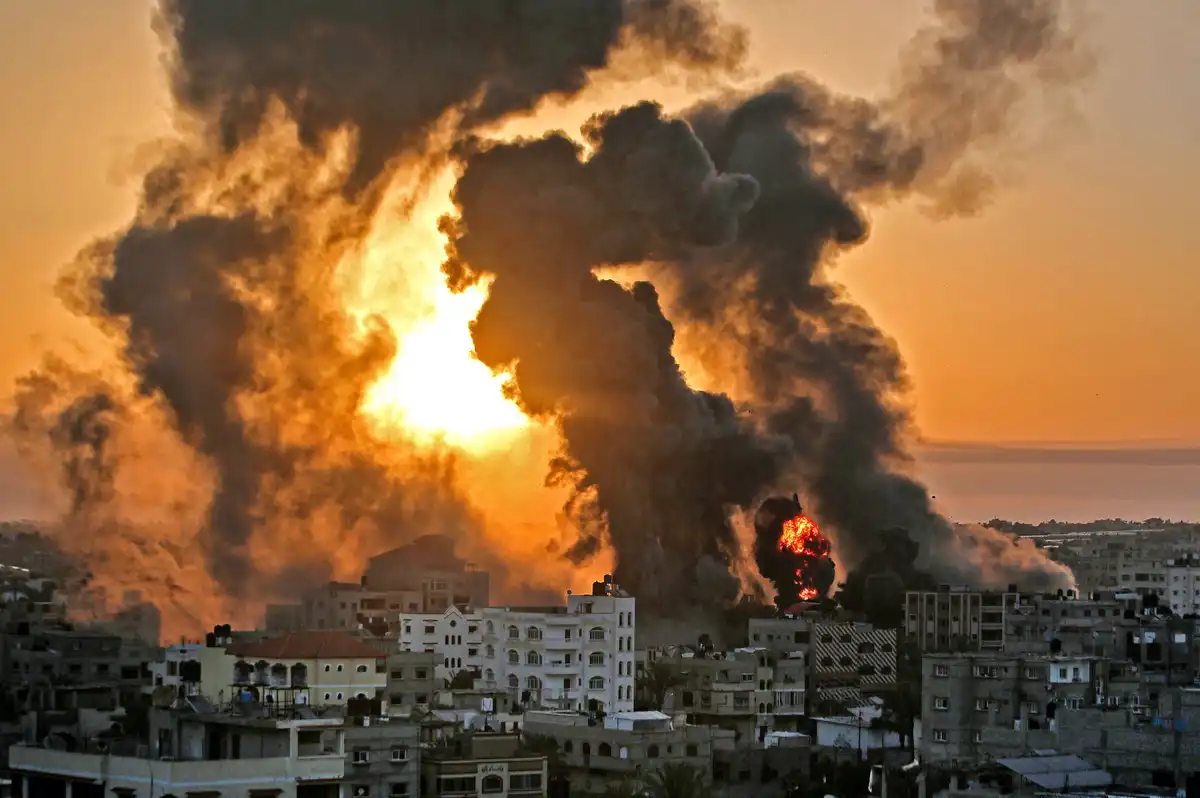
The Israeli occupation army advances on the coast of southern Lebanon to cut off the Naqoura road

The Israeli occupation army expanded the scope of its operations in an attempt to cut off the coastal road south of Tyre at the Al-Bayada point, and isolate the Naqoura area and its surroundings, along a 9-kilometer stretch on the far southern coast, from the Lebanese interior, in parallel with attempts to advance on the Khiyam front, and mobilize in the central sector in preparation for an incursion into the interior of the city of Bint Jbeil.


The Israeli occupation army launched a new ground attack from the towns of Tyre Harfa and Shamaa, located south of Tyre, to the west in an attempt to reach the seashore at the point of Bayada, a path of 5 kilometers. Lebanese sources following the military operations taking place in the south said that the attack did not succeed in reaching the hill overlooking the coastal road known as the Tyre-Naqoura road, adding that the Israeli forces were exposed to a barrage of anti-tank missiles, which resulted in the burning of 3 tanks, one of which was in the vicinity of the site of the Italian battalion affiliated with UNIFIL in the town of Shamaa.


The sources said that reaching the sea point "will mean that the Israeli army will tighten the noose around the party fighters who are still in the interior forests east of Naqoura between Hamoul and Labbouneh." They pointed out that the Israeli army "is combing the front on both sides starting from its advance positions," referring to combing the southern side located in Hamoul and the valleys extending to the border, and the second from the direction of Zebqin, Qleileh, Majdal Zun and Beyout al-Siyad, reaching east towards the Yatar forests and the mountains of al-Batm.


The sources said that the Israeli artillery "did not stop shelling the Lebanese interior with incendiary shells, and targeted the mountains of Batm, Majdal Zun, and Zebqin, reaching Al-Bazouriyeh inside Lebanese territory," which was confirmed by the official "National News Agency", which spoke of shelling with phosphorous the outskirts of Zebqin, Al-Qalila, and Majdal Zun, in an attempt to advance towards Al-Bayada.


Hezbollah, for its part, announced that its fighters had shelled a gathering of Israeli army forces on the southern outskirts of the town of Shama with artillery shells. It also announced that another gathering on the southern outskirts of the town of Bayada had been shelled with a rocket salvo.


In the eastern sector, Israeli forces renewed attempts to penetrate the border town of Khiyam from the eastern and southern sides. Al-Manar TV, the mouthpiece of Hezbollah, reported “the intensification of air strikes and the continuation of artillery shelling on the center and outskirts of the southern and eastern outskirts of Khiyam city,” noting that “the sounds of machine guns in the southern and eastern outskirts confirm that no breakthrough has been achieved in the targeted center for 72 hours,” adding that fighters are facing attempts to penetrate into the city, in addition to “rocket attacks from outside the city on Israeli support and reinforcement movements coming from Wazzani, Ain Arab, and Mazraat Sarda.”


While Khiyam was subjected to phosphorous artillery shelling and airstrikes, Hezbollah announced that it had targeted Israeli gatherings at the Al-Omra Gate on the southern outskirts of Khiyam City, and on its eastern outskirts, with rocket salvos.


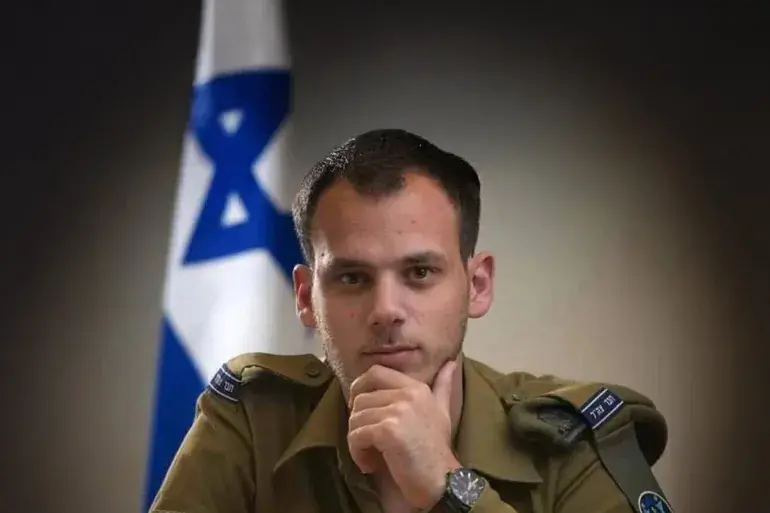
After taking control of the border strip on the villages of Al-Hafa, the Israeli army spokesman, Avichay Adraee, appeared on a media tour in the south, and said that he took pictures of himself in the towns of Adaisseh and Kfar Kila in southern Lebanon.


At the same time, Hezbollah announced that it had targeted gatherings of Israeli soldiers on the southern and northern outskirts of the town of Maroun al-Ras, three times during Tuesday.


Rocket attack

In addition, Israeli raids continued deep inside Lebanon, and Hezbollah continued to launch rockets towards the Israeli interior.


The party said that its fighters launched “an air attack with a squadron of suicide drones on the Ramat David base (a major air base in the north that includes combat squadrons) 50 km from the Lebanese border, southeast of the city of Haifa.” It also indicated that its fighters launched “an air attack with a squadron of suicide drones on the Beit Lid base (a military base that includes training camps for the Nahal and Paratroopers Brigades) 90 km from the Lebanese border, east of the city of Netanya.”


He also said that his fighters targeted the "Glilot" base (headquarters of Military Intelligence Unit 8200) 110 km from the Lebanese border, on the outskirts of Tel Aviv, with a salvo of high-quality missiles. He announced the targeting of 5 border settlements in the north, and the downing of a "Hermes 450" reconnaissance plane and another aircraft.


In contrast, the Israeli army announced in a statement that it had "eliminated the commander of the medium-range missile system belonging to the Hezbollah organization."


He stated in a statement that “Air Force warplanes carried out an attack on Monday in Kfarjouz in southern Lebanon, under the direction of the Military Intelligence Service and the Northern Region Command, and eliminated the commander of Hezbollah’s medium-range missile system, Ali Tawfiq Duwaik.”


The statement added that Dweik "had been in charge of the medium-range missile system since September 2024, succeeding the previous commander of the system who was eliminated, and was responsible for launching more than 300 missiles towards the territory of the State of Israel, including the Haifa area and the center of the country."

PALESTINE

Tue 19 Nov 2024 6:11 pm - Jerusalem Time

Dead and wounded in Israeli occupation's bombing of Al-Bureij and Al-Nuseirat camps

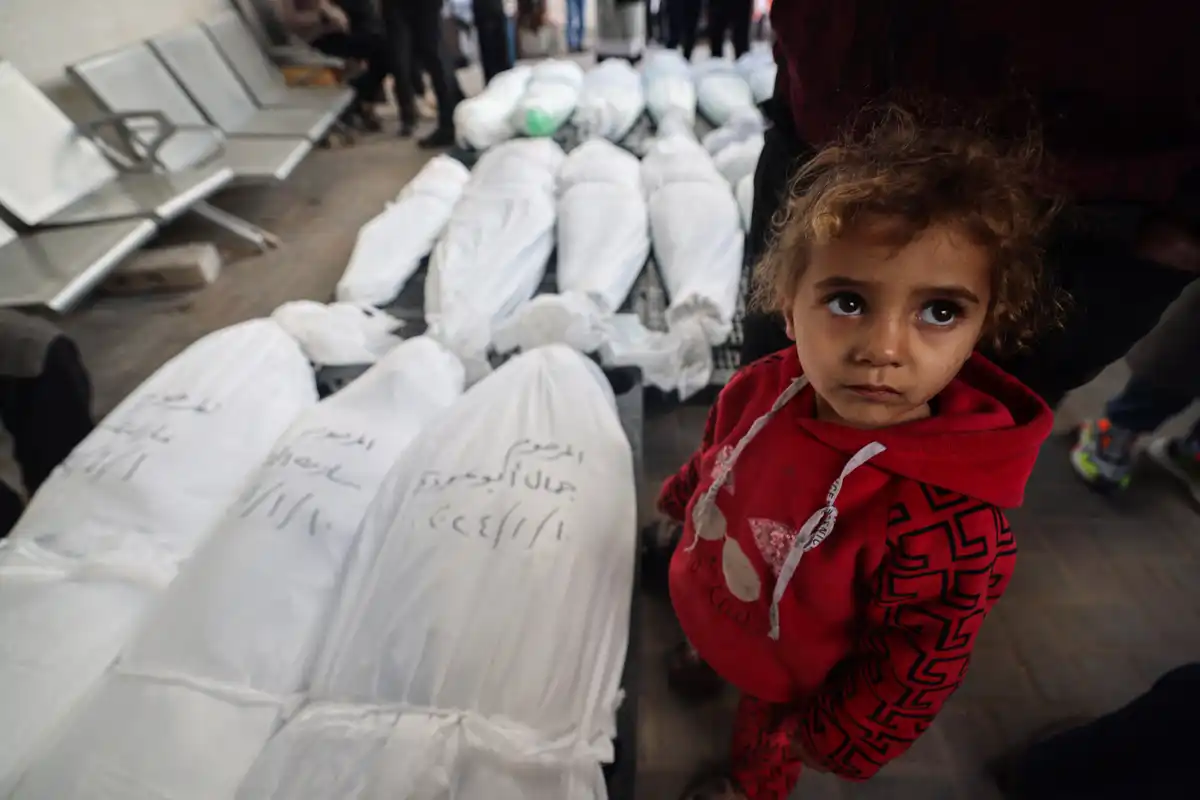
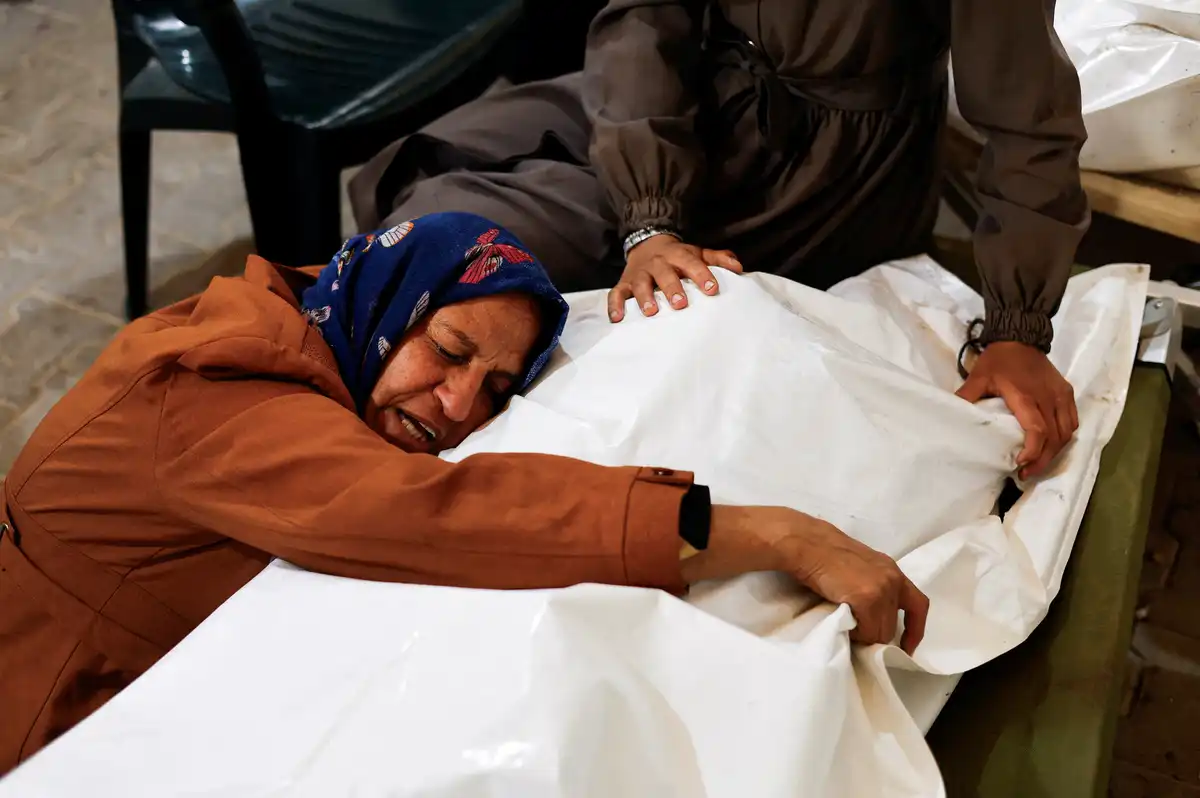
At least 4 citizens were killed, and others were injured and missing, Tuesday evening, in an Israeli occupation bombing of the Al-Bureij and Al-Nuseirat camps in the Gaza Strip.


The occupation aircraft targeted a residential area in Al-Bureij camp in the central Gaza Strip, which led to the martyrdom of three citizens.


At least one citizen was killed and others were injured when the occupation forces bombed the Abu Jalala family home in the Nuseirat camp in the central Gaza Strip.


Citizens were also able to retrieve a martyr and body parts, in addition to a number of injuries that were transferred to the Al-Aqsa Martyrs Hospital in the neighboring city of Deir al-Balah, while the fate of citizens missing under the rubble remains unknown.


The occupation forces continue their aggression on the Gaza Strip, by land, sea and air, since October 7, 2023, which resulted in the martyrdom of 43,972 citizens, the majority of whom are women and children, and the injury of 104,008 others, in an incomplete toll, as thousands of victims are still under the rubble and on the roads, and ambulance and civil defense crews cannot reach them.

ARAB AND WORLD

Tue 19 Nov 2024 5:00 pm - Jerusalem Time

Before the G20 Summit, Xi Calls for a Multipolar World and Comprehensive Globalization

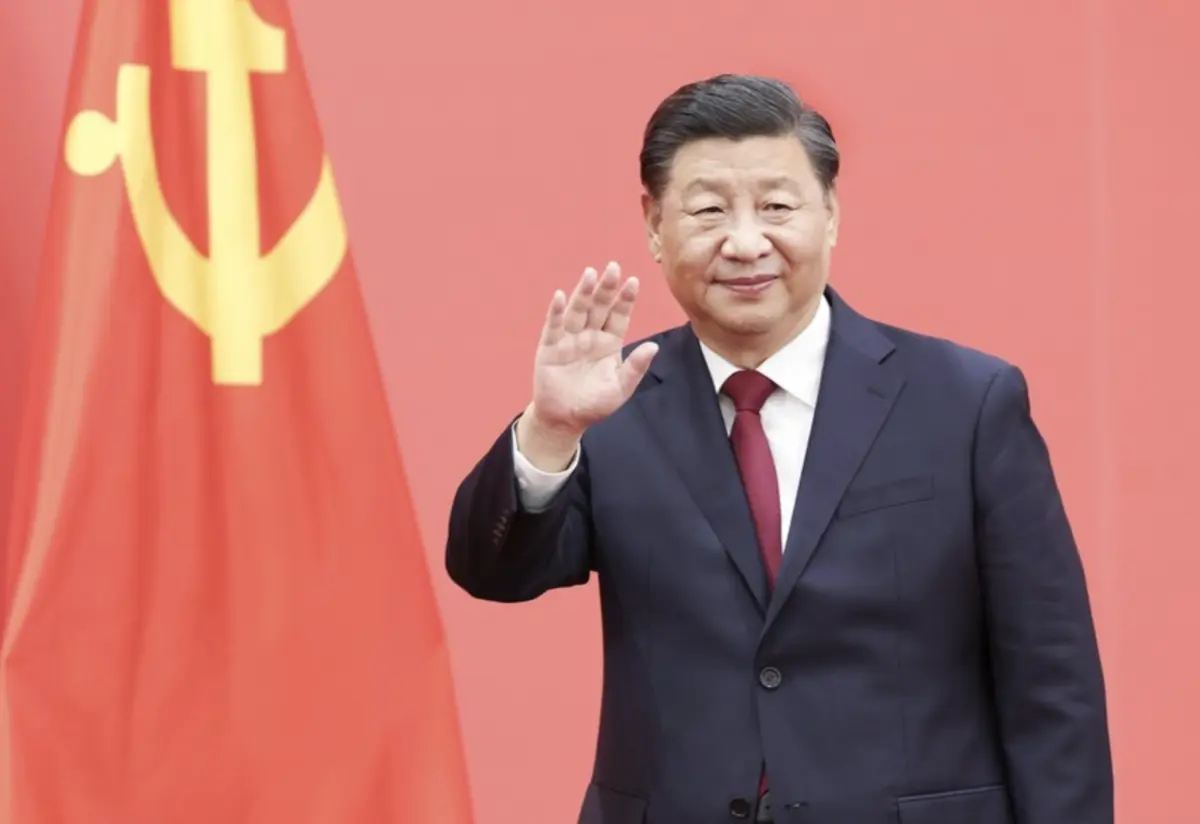
Chinese President Xi Jinping, upon arriving in Rio de Janeiro on Sunday for the 19th G20 Summit, expressed his willingness to work with all parties to realize a multipolar world based on equality and order, and inclusive economic globalization that benefits all.


In a written statement, Xi expressed hope that the G20 will play a greater role as an important platform for international economic cooperation.


This year’s G20 Leaders’ Summit, scheduled for November 18-19, is the first meeting of its kind since the African Union joined the group as a full member, a historic event that strengthens the voice of the Global South.


Javier Miranda, former president of Uruguay's Broad Front party, expressed hope that this summit would be a major step towards building a multipolar world - a world that promotes dialogue.


In remarks to Xinhua, Miranda said that in a world plagued by wars and conflicts, commitment to dialogue is one of the goals of this G20 meeting.


As president of the G20, Brazil has set the theme of the summit as “Building a Just World and a Sustainable Planet.” Among the main priorities identified by the Brazilian government are combating hunger, poverty and inequality, promoting sustainable development, and advancing reforms in global governance.


"Building a just world requires the G20 to adhere to the principles of mutual respect, equal cooperation and mutual benefit, as well as support countries of the global south in achieving greater development," Xi said in a signed article published in Brazilian newspaper Folha de S. Paulo on Sunday.


“Building a sustainable planet requires the G20 to promote sustainable production and sustainable lifestyles as a means of achieving harmony between people and nature,” he added.


The Chinese president also pledged China's active support for the "Global Alliance Against Hunger and Poverty" initiative proposed by Brazilian President Luiz Inacio Lula da Silva.


“As we gather at the G20 to discuss critical global issues such as governance, hunger, sustainability and the environment, we recognize the critical role of our partnership with China,” said Rodrigo Castro, Deputy Secretary of Major Events and Promotions for the Rio de Janeiro State Government.


Castro added that many solutions to the challenges facing developing countries stem from ideas and practices already implemented by China.


"For us Brazilians who are hosting the G20... we feel very proud to receive the Chinese president and the entire Chinese delegation," he continued.


In addition to attending the G20 summit, Xi will also pay a state visit to Brazil, which this year marks the 50th anniversary of the establishment of diplomatic relations between the two countries.


During the visit, Xi will have an in-depth exchange of views with the Brazilian president on bilateral relations and international and regional issues of common concern.


Brazil is the second leg of Xi's two-nation tour, which also began with Peru. In Lima, Xi had a busy schedule, attending the 31st APEC Economic Leaders' Meeting, paying a state visit to Peru, and holding a series of bilateral meetings, including a meeting with his U.S. counterpart, Joe Biden, on the sidelines of the APEC meeting.

ARAB AND WORLD

Tue 19 Nov 2024 4:50 pm - Jerusalem Time

Xi, Biden meet in another step to stabilize ties

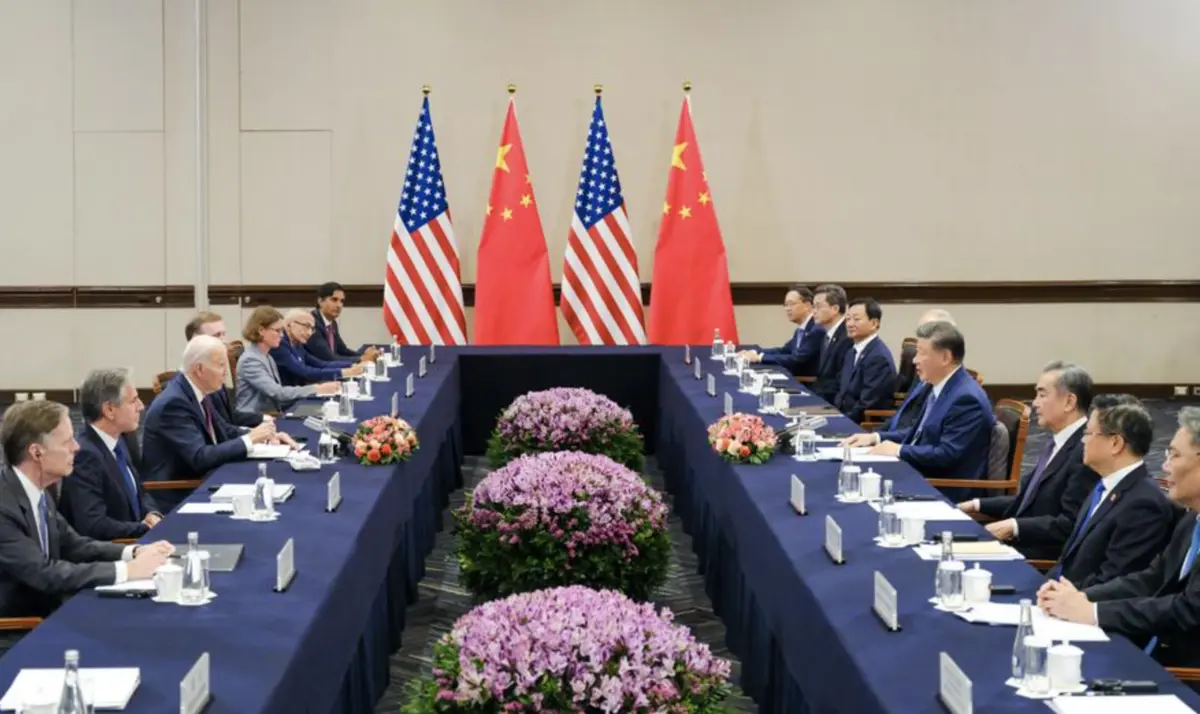
In a momentous meeting on Saturday, Chinese President Xi Jinping and his US counterpart Joe Biden reaffirmed their commitment to maintaining dialogue, enhancing cooperation and avoiding conflict.


In recent years, relations between China and the United States have been through ups and downs. In Washington, the widespread zero-sum mentality against China has turned into policies to thwart the Asian country’s development.


"There is a bipartisan consensus (in Washington) that strategic competition with China must continue, even if there is little agreement on America's ultimate goal for this strategy," Yilong Zhang, associate research fellow and director of the trade and technology program at the Institute for China-US Studies, said in a written statement to Xinhua.


From tariffs to restrictions on semiconductor technology, these measures have not only weakened bilateral relations but have reverberated across global supply chains.


At the same time, China and the United States hold divergent worldviews. China has championed a vision of a more equitable, sustainable, and inclusive global society, while Washington has sought to maintain its long-standing hegemonic status.


Despite these deep differences, Saturday's high-level engagement underscored a shared understanding: With the stakes so high, neither side can afford to risk confrontation.


Xi said during the meeting that the two sides should continue to explore the right path to achieve good consensus between the two major countries and achieve long-term and peaceful coexistence on this planet.


"The Thucydides Trap is not a historical inevitability. A new Cold War should not be fought and cannot be won," the Chinese president said during the meeting, which took place on the sidelines of the 31st Asia-Pacific Economic Cooperation (APEC) Economic Leaders' Meeting in Lima, Peru.


Chinese President Xi Jinping meets with U.S. President Joe Biden in Lima, Peru, Nov. 16, 2024. (Xinhua)


In recent years, some politicians, academics, and media outlets in the United States have clung to a zero-sum mentality, warning of the so-called "Thucydides Trap" -- the idea that an emerging state inevitably raises concerns in an established state, leading to conflict or war.


However, China has consistently rejected this premise. In a globalized world where nations are deeply interconnected and their interests are intricately intertwined, China believes that the old models of power politics and survival of the fittest must yield to a more cooperative vision that seeks to build a community with a shared future for mankind.


“The United States can save itself the high costs of fighting China on key issues by taking a win-win approach,” said Dennis Simon, a veteran expert on U.S.-China relations and former executive vice chancellor at Duke Kunshan University.


“Mutual respect, increased sensitivity to multiculturalism, and enhanced reciprocity can lead to win-win outcomes,” Simon added.


At the meeting on Saturday, Xi called on the US side to have a correct strategic conception of China and treat each other as equals.


Xi stressed that China's goal of establishing stable, healthy and sustainable China-US relations has not changed, adding that its commitment to mutual respect, peaceful coexistence and win-win cooperation as principles in handling China-US relations has not changed.


For his part, Biden stressed that the relationship between the United States and China is the most important bilateral relationship in the world.


Biden said the United States does not seek a new Cold War, does not seek to change China's regime, does not seek to direct its alliances against China, does not support "Taiwan independence," has no intention of entering into conflict with China, and does not view its Taiwan policy as a means of competing with China.


Over the past four years, the two presidents have jointly put China-US dialogue and cooperation back on track. More than 20 communication mechanisms have been resumed or established, and positive achievements have been made in such areas as diplomacy, security, economy and trade, finance and finance, military, anti-drug and law enforcement, agriculture, climate change, and people-to-people exchanges.


"The urgent need now is to maintain, strengthen and consolidate communication between the two countries," Zhang said.


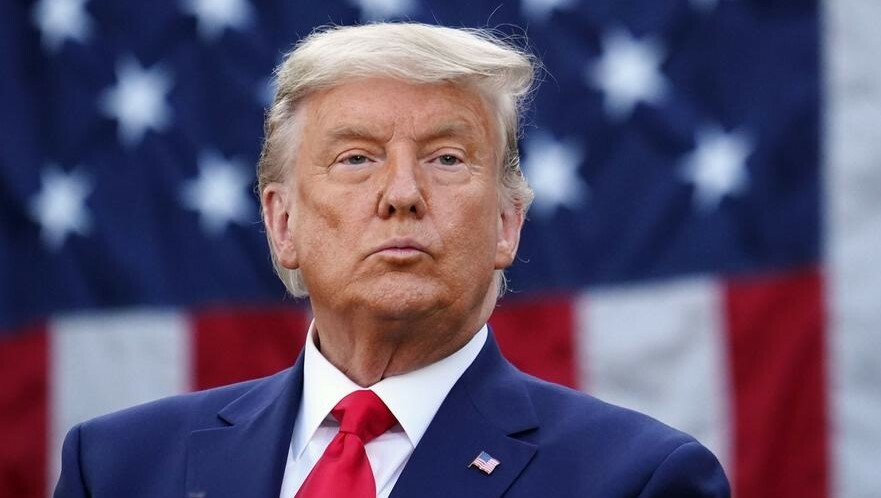
"As the political dust settles from this election cycle, people-to-people exchanges will be as important as diplomatic exchanges," he added, referring to the just-ended US presidential election, in which former US President Donald Trump won the race.


"The next generation must continue to engage with each other, not only to reduce misunderstandings but also to deepen the pool of expertise on China affairs within the United States," he added.


During his first term, the Trump administration embraced an “America First” doctrine that saw sweeping tariffs imposed on U.S. trading partners. Following his victory, concerns about increased protectionism have once again spread globally.


“We hope that China will continue to defend the message of keeping the global trading system open,” said Carlos Aquino, director of the Center for Asian Studies at the National University of San Marcos in Peru.


"It is important for President Xi to continue to uphold the message of (protecting) a free and open trading system," he added.

ARAB AND WORLD

Tue 19 Nov 2024 4:34 pm - Jerusalem Time

Israel welcomes EU decision to expand sanctions on Iran

Israel welcomed on Tuesday the European Union's decision to expand its sanctions on Iran, during a meeting of foreign ministers yesterday in Brussels to discuss regional and international issues.


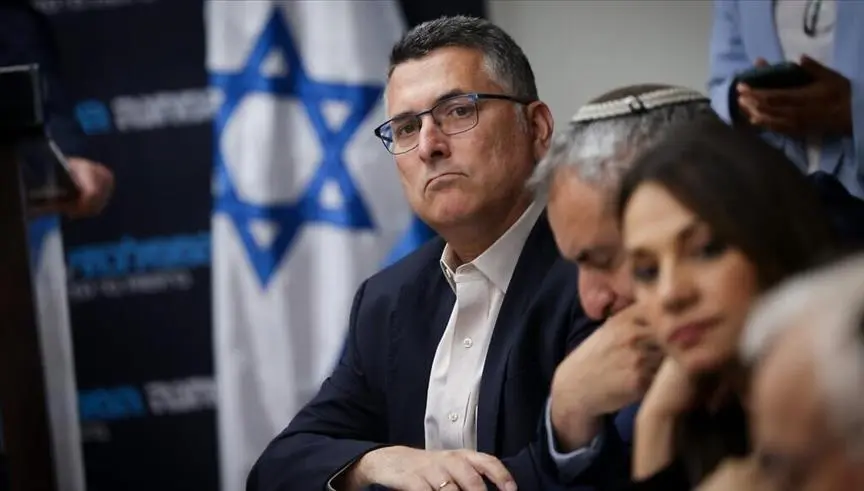
“I welcome the decision yesterday by the EU foreign ministers to impose tough sanctions on the Iranian regime,” Israeli Foreign Minister Gideon Sa’ar said in a post on the X platform.


He believed that "these sanctions will harm Iran's missile and drone production operations, make it difficult to distribute Iranian weapons by ship to combat zones, and increase economic pressure on the Iranian regime."


Sa'ar considered that "these are necessary steps in the international community's war against the Iranian threat, which poses the greatest danger to the security and stability of the Middle East, Europe and the entire world," he claimed.


Yesterday, Monday, the European Union Commission announced the expansion of its sanctions imposed on Iran to include a ban on the export of equipment used in the production of missiles and drones.


The Commission explained that it had included an Iranian person and an institution on the sanctions list due to "military support to Russia and armed groups and organizations in the Middle East and the Red Sea region."


She added that accordingly, "the export, transfer, supply or sale of equipment used in the development and production of missiles and drones from the European Union to Iran has been prohibited."


The sanctions also include any transactions with ports owned, operated or controlled by persons and entities listed on the sanctions list.


On October 14, the European Union decided to impose sanctions on some individuals and organizations in Iran, including airlines, on the grounds of transferring drones and missiles from Iran to Russia.

PALESTINE

Tue 19 Nov 2024 4:02 pm - Jerusalem Time

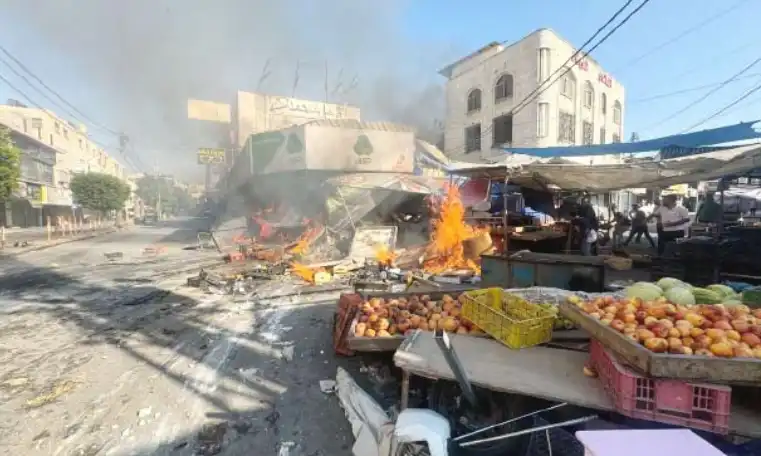
4 citizens injured, 3 houses and a shop burned in Jenin camp

Four citizens were injured by Israeli occupation forces' bullets this afternoon, Tuesday, in Jenin camp, during its ongoing aggression on the camp and the city since the early hours of today.


The Palestinian Red Crescent Society said that its crews dealt with an injury to a citizen in the thigh area, and 3 others with shrapnel from a bomb launched by a drone towards citizens in the eastern neighborhood of Jenin.


The occupation forces burned 3 houses inside the camp, and a commercial store at the entrance to the camp, which was completely engulfed in flames, before the civil defense crews were able to extinguish the fire.


Civil defense crews reached two houses in the camp, while the occupation forces prevented them from reaching the third house and dealing with the fire there.


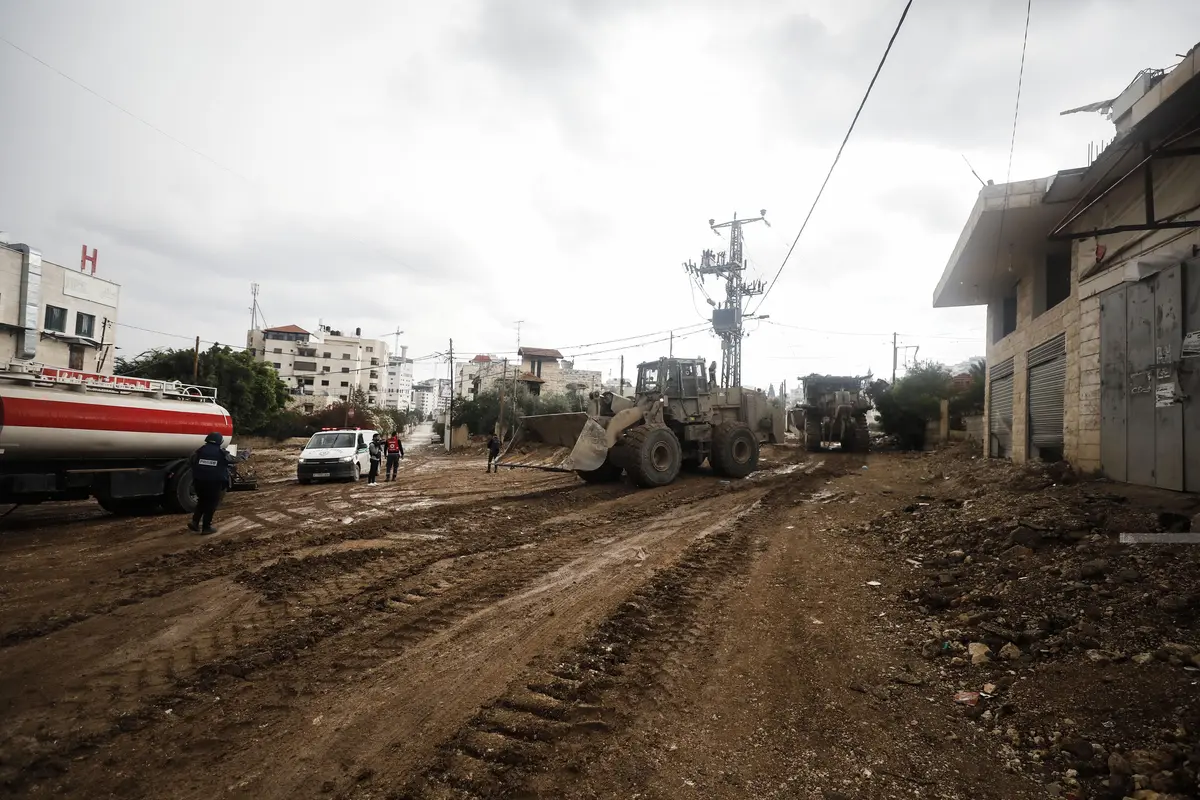
The occupation forces cut off electricity and some water lines inside the camp's neighborhoods after bulldozing the streets and infrastructure.

PALESTINE

Tue 19 Nov 2024 2:32 pm - Jerusalem Time

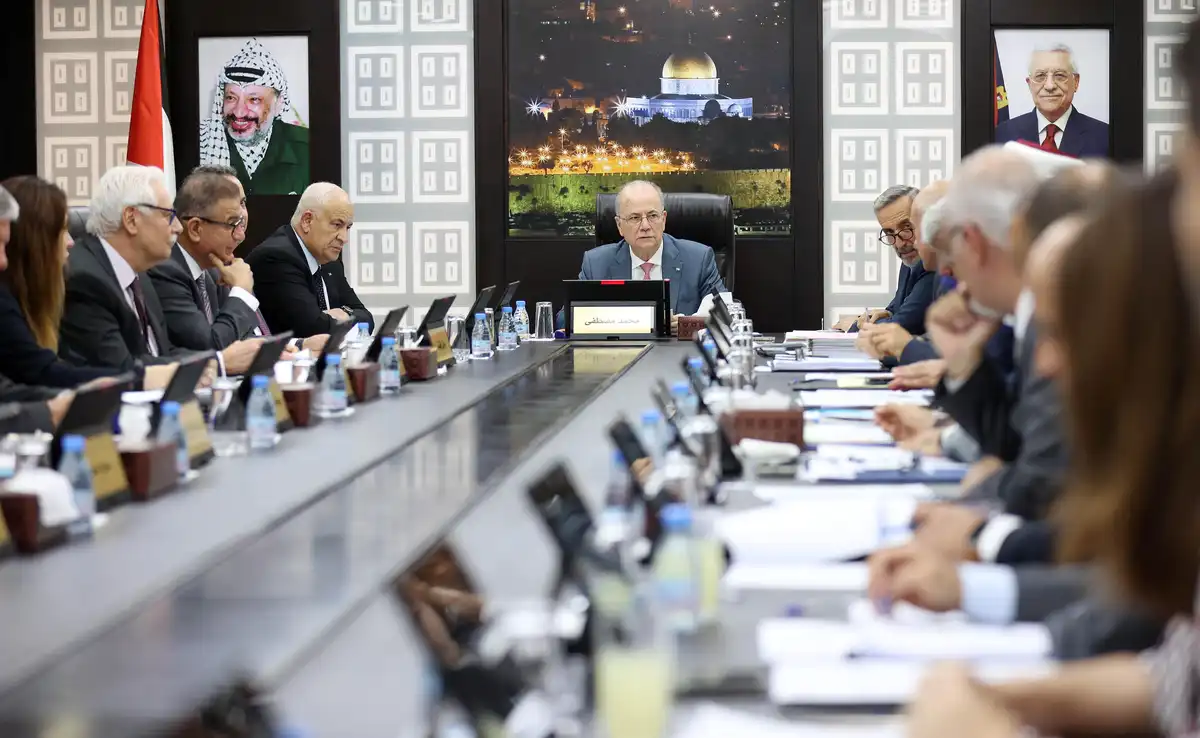
Palestinian Government: New deductions from the clearing are part of the war on our people

The government has renewed its rejection of Israeli deductions from Palestinian tax revenues, including a recent court decision to make new deductions for Jewish families, claiming that members of them were killed in attacks in the West Bank.


Director of the Government Communications Office, Muhammad Abu al-Rab, said that these deductions are “illegal and part of the comprehensive war on our people, in Gaza and the West Bank, including Jerusalem, and aim to undermine the work of Palestinian institutions, especially with the accumulation of these deductions to exceed 7.5 billion shekels since 2019.”


Since February 2019, the occupation government has begun deducting about 53 million shekels per month from Palestinian clearance funds, claiming that they are equivalent to the Palestinian government’s payments to the families of martyrs, wounded and prisoners. Since October 2023, it has added to this the deduction of about 275 million shekels equivalent to the government’s expenses in the Gaza Strip, then a new law was enacted in the Knesset last June with new deductions under the item of compensating the families of individuals killed or injured in attacks carried out by Palestinians.


Abu al-Rub said: "This law came to complete the seizure of Palestinian tax funds once and for all," stressing that the government is continuing its efforts and international contacts to pressure the Israeli government to release the frozen Palestinian funds.


He added: There is understanding from many countries of the Palestinian position, including European countries, and there is pressure already being exerted on the Israeli government, and we hope for a quick breakthrough in this file.


The occupation court in Jerusalem had ruled that the Palestinian National Authority and four Palestinian detainees must pay financial compensation to three families of Israeli settlers whose sons were killed in a shooting attack in 2001 near Ramallah.


Israeli media reported that the decision was taken on November 17, during the final hearing of the case filed by the families of the slain settlers.


According to the decision, 62 million shekels ($18 million) will be paid to the families of the three settlers, of which 24.8 million (about $7 million) will be paid by the Authority, 37.2 million shekels will be paid by the four detainees, and the remaining amount will be paid by the defendants (the Authority and the prisoners) for legal expenses and lawyers’ fees.

PALESTINE

Tue 19 Nov 2024 1:39 pm - Jerusalem Time

Israeli occupation demolishes two rooms and uproots dozens of trees in Nablus

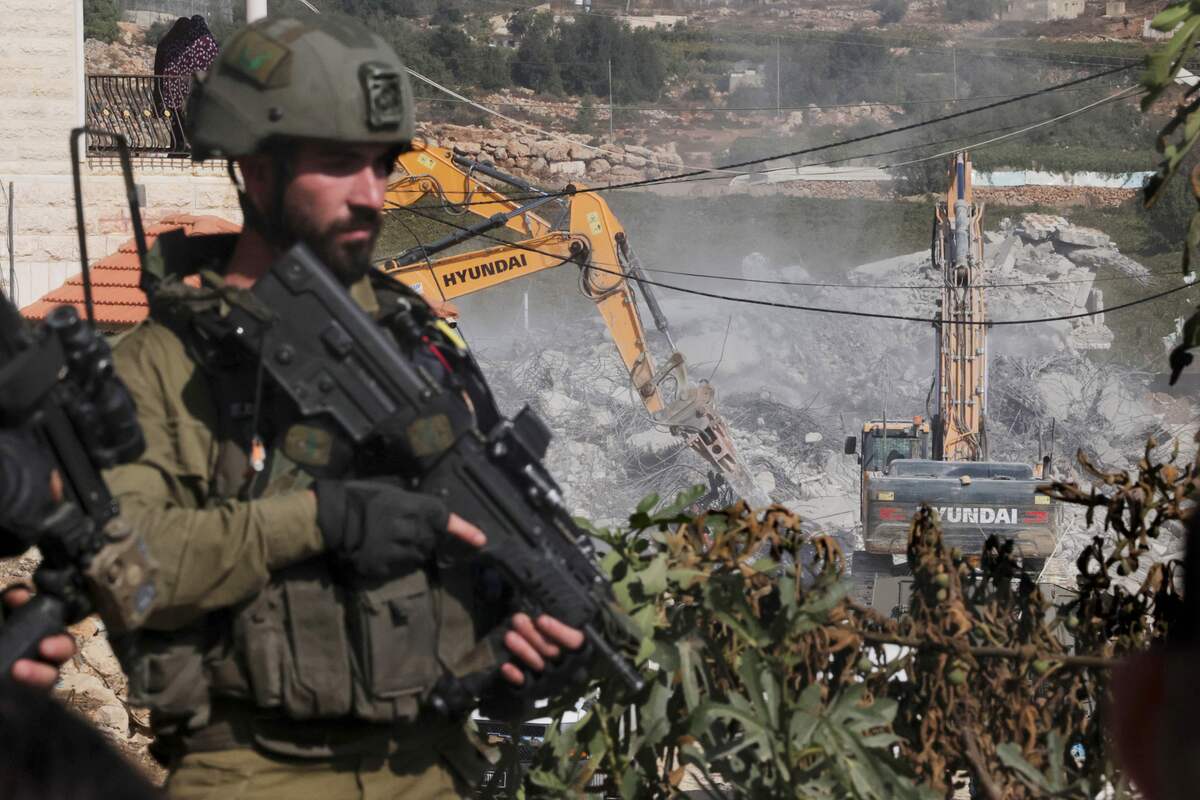
Today, Tuesday, Israeli occupation bulldozers demolished two rooms and uprooted dozens of trees in the New Nablus area.


Local sources reported that the occupation forces, accompanied by a bulldozer, stormed a land belonging to citizen Hamza Al-Hamami in the New Nablus area, with an area of 500 square meters, and demolished two rooms and uprooted 42 fruit trees, beehives, walls and stone chains, under the pretext of building without a permit.


She pointed out that Al-Hamami had built the two rooms on his land since 2014, and was using it as a summer resort for his family, but the occupation handed him a notice to stop construction at the beginning of the war on the Gaza Strip, and a second notice seven days ago to stop construction, under the pretext of building in Area C, classified according to the Oslo Accords.

ARAB AND WORLD

Tue 19 Nov 2024 1:18 pm - Jerusalem Time

Two dead in Israeli bombing of the southern suburb of Beirut

Two Lebanese citizens were martyred today, Tuesday, in an Israeli airstrike on the Shiyah area in the southern suburbs of Beirut, amid widespread destruction of buildings, facilities and infrastructure.


The occupation aircraft and artillery bombed the city of Tyre and the towns of Deir Amas, Mazraat Mashraf, Ansariyah, Al-Bissariyeh, Al-Bayada, Adloun, Al-Khiam, Deir Qanoun, Ras Al-Ain, Al-Bazouriyeh, Barish, Maaroub, Al-Rayhan, Kounin, Hanin, Al-Sawana, Al-Samaiyeh, Al-Jumaijmeh, Shaqra, Majdal Salm, Labaya, Zalaya, Al-Ghandouriyah, Shama, Yahmar Al-Shaqif, Deir Mimas, Ainatha, Shebaa, Al-Qalaa, Al-Tayri, Hanin, Beit Yahoun, Qabrikha, and Barashit in southern Lebanon and the Bekaa.

PALESTINE

Tue 19 Nov 2024 1:16 pm - Jerusalem Time

A young Palestinian was injured by the occupation forces’ bullets north of occupied Jerusalem

A young man was injured on Tuesday afternoon after the Israeli occupation forces opened fire on him in front of the military checkpoint at the Shuafat camp, north of occupied Jerusalem.


Video clips showed the young man lying on the ground covered in blood, without knowing his identity or health condition.


The occupation forces closed the military checkpoint, prevented the movement of citizens through it, and stormed the Shuafat camp.

PALESTINE

Tue 19 Nov 2024 1:12 pm - Jerusalem Time

50 dead in 24 hours, the death toll rises to 43,972

The Ministry of Health in Gaza announced today, Tuesday, that the death toll in the Gaza Strip has risen to 43,972, the majority of whom are children and women, since the start of the Israeli occupation aggression on October 7, 2023.


The ministry added in a brief statement that the number of injuries has risen to 104,008 since the start of the aggression, while thousands of victims are still under the rubble.


She pointed out that the occupation forces committed 3 massacres, which resulted in the death of 50 citizens and the injury of 110 others.

PALESTINE

Tue 19 Nov 2024 11:21 am - Jerusalem Time

Israeli occupation forces demolish a mosque in occupied Jerusalem

Today, Tuesday, the Israeli occupation forces demolished a mosque in the town of Jabal al-Mukaber in occupied Jerusalem.


The occupation forces stormed the town with military reinforcements, surrounded the Al-Shiyah Mosque, and imposed a cordon around it, before starting the demolition process.


About two weeks ago, the occupation municipality in Jerusalem delivered a final notice to demolish the mosque, which was built twenty years ago on an area estimated at 80 square meters, and consists of one floor and an external courtyard.

OPINIONS

Tue 19 Nov 2024 10:19 am - Jerusalem Time

What's behind Netanyahu's miserable speech?

op-ed "AlQuds" dot com

op-ed "AlQuds" dot com

Opinion Writer

With the continued bleeding of dignity and honor, and the war of pride that bleeding Gaza is confronting, and amidst the massacres of genocide committed by Israel and its criminal army, the language of diplomacy emerges in an attempt to beautify the Israeli aggression, by proposing initiatives and deals that Israel rejects time and time again, to prove to the world that it is a stumbling block on the path to ending the war, whether in the south or the north (Gaza and Lebanon), and all of that was clear in Netanyahu’s miserable statements that he repeated yesterday, using as usual his no’s and claims that have become like a broken record, that the Israeli street has grown tired of listening to for more than a year.


What did Netanyahu say? And what lies behind his miserable speech, as he repeats from every platform that the efforts to return the kidnapped soldiers have not stopped even for a moment, claiming that Hamas is the obstacle to completing an exchange deal, and that it rejects negotiations, in response to the recommendations of the senior leaders of his security apparatus from the Shin Bet, Mossad and the General Staff, that Israel must show flexibility if it wants to reach an exchange deal?


Netanyahu said (No to Hamas, no to the Palestinian Authority, no to ending the war, no to withdrawing the army from Gaza, no to a swap deal, and no to the United States, which threatened to stop supplying us with weapons if we entered Rafah), and he says: We entered it without looking back.


Netanyahu's renewed voice against Hamas, Hezbollah and Iran was not a coincidence, but rather the real motives behind this Israeli war, which seeks to establish a new status quo in the Middle East with American support, under the pretext of eliminating the resistance, activists and the Iranian axis of evil, as Netanyahu claims.


The most eloquent responses to Netanyahu came from within Israel. Opposition leader Yair Lapid is the one who set the record straight and crossed the i’s when he declared last night that the prime minister does not believe in his supreme duty to return the kidnapped soldiers, and that he is not prepared to sacrifice government seats for their return. He explained that Netanyahu is not worthy of the trust of the Israelis, and that he supports the clown Ben Gvir on electronic platforms, concluding that Netanyahu does not want a deal for political reasons.


Netanyahu's goals are becoming clearer day after day, as he lays out justifications to continue the aggression on the Gaza Strip. It seems that his recent threats against the leadership of Gaza and its replacement provide more justifications for committing massacres, as these statements give his army the green light to continue the war and aggression, according to what Netanyahu announced from the platform of the Knesset's Foreign Affairs and Security Committee, when he said that the war will not end, that the army will not withdraw, and that it will continue to control the main axes in the Gaza Strip. He is also seeking to scatter the papers of the imminent agreement with Lebanon through new conditions that he has set, including freedom of military action for Israel in Lebanon, and monitoring the Syrian-Lebanese border. He realizes that Hezbollah will reject these conditions, and all of this is because Netanyahu and his right-wing clique are seeking to prolong the war.


Netanyahu did not achieve the goals he announced at the beginning of the war, and hence he repeatedly appears to blame Hamas and the resistance, trying to direct his speech that appears miserable, but the Israeli street, which no longer needs additional evidence, is well aware that Netanyahu is the first and last person responsible for obstructing all efforts and endeavors aimed at reaching agreements, and that the war will continue without achieving the goal of returning the detainees, because that is not considered a basic goal for Netanyahu, who considers that his highest goals are to remain in his position and maintain the existence of the ruling far-right coalition, in order to continue the war of revenge against the Palestinian people.


OPINIONS

Tue 19 Nov 2024 10:16 am - Jerusalem Time

Consequences of Hezbollah's approval of America's malicious card

Hamdy Farag

Hamdy Farag

Opinion Writer

If Hezbollah agrees to the American paper "Amos Hochstein", Netanyahu's Israel will not agree to it, and this is what happened with the paper that Hamas agreed to regarding Gaza last July. Netanyahu's journey in Lebanon, which has barely begun yet, is a long, complex and ambitious journey, at the very least for him to seize the south of the Litani and establish settlements there.


Before Hezbollah agrees to this malicious paper, it must change its name from Hezbollah to any other name, or to any party other than Hezbollah; the party of Muhammad, Ali, or Hussein, because it is not permissible to change its combat doctrine, which is based on a divine doctrine, from one extreme to the other. Here we mean the issue of abandoning Gaza and supporting it and evading linking its agreement to cease fire to a ceasefire on it. It is true that its Secretary-General, who announced this more than once, was assassinated, but aren’t there those who still believe in him, his principles, and his positions, so that he and them can be abandoned with such simplicity and smoothness? This, after such a short time since his martyrdom – less than two months – is tantamount to shedding Nasrallah’s blood again, especially since he has not yet been buried.


The party's division is one of the goals of the American-Israeli card, which will drag with it two other divisions, the first with the allied Amal Movement led by Nabih Berri, who seems to be encouraged to identify with it, especially in the issue of separating the arenas, especially the Palestinian arena, for old reasons dating back to the days of the civil war about fifty years ago. As for the second division, it will be with the axis of resistance in Gaza, Yemen and Iraq, which is the axis that the party formed after great effort and a long time, and even stood at its head as its leader and manager. It is no secret that this axis has put in its urgent practical calculations the land of the West Bank, especially the northern regions through the resistance factions, including the Fatah-affiliated Al-Aqsa Martyrs Brigades. Today, the West Bank faces a grave danger represented by its annexation to Israel, which was officially announced as soon as Trump arrived at the White House in two months from now, and actual preparations have begun to do so. It is true that the official Palestinian counter-preparations have not gone beyond some statements, but the essence of the position is still betting on America, including the administration hostile to everything Palestinian headed by Donald Trump and his son-in-law of Lebanese origin, Massad Boulos.


There is no single reason that would make Hezbollah agree to such a malicious card, except that it was defeated in this confrontation, but even the defeat of a resistance party in one of the many confrontations makes it withdraw "quietly", as they say, and rebuild its identity anew. Accordingly, there is one case that makes us understand the party's approval of the card; a superficial, formal approval, reflecting a comprehensive and categorical rejection of principle, inspired by what Netanyahu did with Hamas during the past year in Gaza, and with the Palestinian Authority regarding the independent state during the past thirty years.

OPINIONS

Tue 19 Nov 2024 10:09 am - Jerusalem Time

How do we thwart the next annexation?

 Hani Al Masry

Hani Al Masry

Opinion Writer

After the appointments made by President-elect Donald Trump, it has become clear that the worst that we and others warned about is coming with force.


The worst means resuming normalization and integrating Israel into the region at the expense of the Palestinian cause, continuing the genocide and displacement in the Gaza Strip, working to re-engineer the Strip geographically and humanely, and crystallizing a Palestinian administration under actual occupation and Israeli control with apparent Arab, regional, and international supervision, in addition to continuing the gradual nibbling, creeping annexation, and joint aggression between the occupation army and armed settler groups on the West Bank.


In addition to this, the revival of the Deal of the Century or a worse version of it, where the reference to the Palestinian state is deleted (or not deleted). However, with a guarantee that it does not possess the components of a state except in name, while the settlements, settlement blocs, and the Jordan Valley are cut off from it, and control over water sources, vital, strategic, and archaeological sites, and nature reserves is taken away; that is, all or most of the areas classified as (C), which constitute more than 60% of the area of the West Bank, in addition to the deportation of hundreds of thousands of our people inside to the lands of the future state, as stated in the text of the Trump deal.


The essential and fateful question: Is the success of this plan inevitable and inevitable, and that all that can be done is to fall under it, or coexist with it and seek to obtain crumbs under the name of improving the standard of living of the Palestinians?


Or is there another option based on the fact that annexing the West Bank or large parts of it and displacing millions of Palestinians is not an easy goal to achieve? For the simple reason that most of the 15 million Palestinians around the world will reject this fate, and half of them are steadfast and clinging to their homeland, and are ready to continue the struggle and resistance in all forms and to make the most precious sacrifices no matter how long it takes, as has been proven since the emergence of the Palestinian cause until now, because they believe that they are right and that they have a message, and that their cause is just and morally superior and enjoys broad support from world public opinion and most countries of the world, especially in the East and South.


Even if we assume for the sake of argument that the occupying state has annexed Area C or large parts of it, and that the Trump administration has blessed this step as it did during his first term in office, through the Trump deal, recognition of the annexation of Jerusalem, the transfer of the US embassy to it, and the rest of the known steps it has taken, this will not be the end of the road. Rather, the resistance will continue, and the annexation will be illegitimate and illegal, just as colonial settlement, occupation, and apartheid are illegitimate and illegal. This will open the doors of conflict in the region wide open, because the American-Zionist plan includes fueling the conflict between Arab countries, especially in the Arabian Gulf, and Iran, and milking Arab wealth through arms purchase deals and lowering oil prices, in addition to tightening the region’s economies more closely to the American and Western economies.


These American-Israeli steps will also, at the appropriate time, open the doors to the displacement of millions of Palestinians to the surrounding countries, especially Egypt and Jordan, and this constitutes a threat to the security and stability of these countries, and to the normalization of relations between the occupying state and the Arab and Islamic countries, and the integration of Israel into the region and making it a central, dominant state, and this inflicts the most serious damage to the interests, goals and rights of the peoples and countries of the Arab region, and the Middle East as a whole.


The dilemma we face is that some influential Palestinians and Arabs believe that they have no choice but to wait and see what we will do after Trump’s policy becomes clear, or else to engage in the scheme, due to the lack of the ability to confront it, and under the pretext of saving what can be saved, and obtaining the crumbs that they see as better than nothing.


Some of these people go too far, wanting to convince themselves or mislead others that there is a new Trump who is different from the old Trump, because he is stronger after winning the popular vote and the Electoral College, and after his party obtained the majority in the Senate and the House of Representatives, and in light of his control over the Supreme Court, and because he does not need the votes of the Zionist pressure groups because he will not run again, or that he will take revenge on Netanyahu due to his betrayal of him and congratulating Biden... etc.


They repeat these nonsense despite the fact that the appointments made by Trump do not leave room for error in assessments, and that he will continue with his previous policy, perhaps in a worse way and more quickly if he does not find someone to stop him, and through the emergence of sufficient indicators that he will lose if he returns to liquidating the Palestinian cause, he, despite his doctrine, connections and madness, believes in making profitable deals and avoiding losses away from institutions, values and ethics, and this requires taking immediate measures and determining a list of measures that will be taken by the Palestinians, Arabs, regionally, Europeans and internationally if the annexation is implemented, and this includes the occupying state, the United States and all those who stand with them.


The response begins with a correct diagnosis of the reality, challenges, risks and opportunities. The correct diagnosis is half the cure. There is a difference between seeing that the new Trump is bad and perhaps worse than the previous one, and those who consider him good and will stop the wars and solve the Palestinian issue with a fair or balanced solution.


The other required step is to put the Palestinian house in order, based on a realistic national program that embodies common denominators, and achieves unity of authority, political system and leadership, and the subordination of weapons and all forms of work and struggle to a single agreed-upon national strategy, and through the implementation of the Beijing Declaration, and focusing on stopping the genocide, relief, withdrawal and reconstruction, and opening a political horizon capable of ending the occupation and achieving independence, because stopping the aggression alone, despite its importance, without reconstruction opens the doors to displacement that will take the name of immigration.


It is not the way to escape to say that the Palestinian leadership has chosen a policy of waiting and distancing itself to avoid genocide, and that it will not put its head under the guillotine alongside Hamas’s head. The plan to liquidate the Palestinian cause began before October 7 and will continue after it if the requirements to thwart it are not available. Therefore, we see the leadership evading completing the end of the division and restoring unity, and aiming through internal communications and meetings to convince Hamas to give up everything, even any real participation from above or under the table; this is by not participating in the national consensus government, which is a matter of national consensus, nor in anything, including the formation of the administrative committee or the community support committee, which is supposed to be formed by President Mahmoud Abbas alone by presidential decree and its reference and budget are from the disputed government, without activating the temporary leadership framework on the path to rebuilding the institutions of the PLO, and even without compensation or the approval of the occupying state or guaranteeing Washington’s approval, especially the new Trump administration.

There is absolutely no need to form an administrative committee or community support, but forming it before or without forming a national unity government is a grave mistake, as it creates a governmental framework separate from the authority after the president issues a decree regarding it, and it is intended to be an alternative to Hamas and Abbas and under Arab, regional and international supervision (guardianship) and under Israeli control.


The policy of disassociation and not giving priority to achieving unity will not save the leadership, will not preserve power, will not prevent the revival of the Trump deal, and will not prevent the annexation and even the coming genocide and displacement in the West Bank if the plan is successful. Rather, it will help the leadership achieve it quickly and at the lowest cost.


The Palestinian role required of the current leadership, American and Israeli, is that of the male bee; that is, pollination and then getting rid of it. The Authority is not wanted to return to Gaza, nor is there a single authority in the West Bank, nor does it want to lead a state, because the Israelis do not want any embodiment of a single national identity that keeps the road to establishing a Palestinian state open.


Steps required to confront Trump and Israel:


First: Withdraw recognition of the occupying state that does not recognize any Palestinian rights and is committing genocide in Gaza and creeping annexation and gradual extermination in the West Bank, within a real unity based on a new comprehensive approach that includes changing the balance of power to pave the way for a political process that is radically different from the previous one, and begin forming a unified Palestinian delegation to negotiate the cessation of aggression, the prisoner exchange deal, and everything else. This is a war on all Palestinians, and Hamas should not negotiate alone. This will reduce the pressure on Hamas and strengthen the Palestinian negotiating position. If any party fails to do so, unity and joint action must begin between all those who believe that unity is a necessity and the law of victory for any national liberation movement.


Second: Building a comprehensive Arab position that defends Palestinian and Arab rights, especially the Saudi role, because the focus will be on dragging Riyadh into normalization, and blocking the path to integrating Israel into the region by skipping the Palestinian issue. If this happens - that is, integrating Israel - it will dwarf Saudi Arabia, fragment the Arabs even more, and cause the most serious damage to Arab interests and rights.

This common Arab position is based on the fact that a new world is advancing, albeit slowly, and an old world is collapsing, and that the Arab countries, especially the Gulf countries, are now in a better position, and that they have economic relations with China, Russia, and Iran that are much greater than their relations with America.


Third: Building an alliance, or at least good neighborly relations and Arab-Iranian-Turkish cooperation, to block the blackmail of the Gulf states and milk their wealth, under the pretext of protecting them from the Iranian threat that portrays Tehran as an enemy of the Arabs, by continuing the path of improving Saudi-Arab-Iranian relations that began with the Beijing Declaration in March 2023. Perhaps the improvement in relations between a number of Arab countries and Iran, and what was stated in the statement of the recent Arab-Islamic summit regarding condemning the aggression against Iran, and the readiness, as reported in the news, for a joint Iranian-Saudi military maneuver are indications of this path.


Fourth: Establishing a global alliance that includes Europe, China, Russia, and the countries of the South, which will all be harmed by Trump’s “America First” policy, as well as all supporters of the Palestinian cause, in order to end the occupation and achieve the independence of the State of Palestine on the 1967 borders with Jerusalem as its capital, as a step towards a radical and historic solution that achieves justice. A comprehensive solution to all dimensions of the Palestinian cause, based on defeating the colonial-settler project and dismantling the apartheid system.


Let us begin taking the necessary steps immediately, and determine and prepare to take the necessary steps if the Trump deal is re-introduced, or if the genocidal war continues and annexation is implemented, and we ask the Arabs, the region, Europe and the world to follow suit.

OPINIONS

Tue 19 Nov 2024 10:07 am - Jerusalem Time

Is there a chance to survive?!

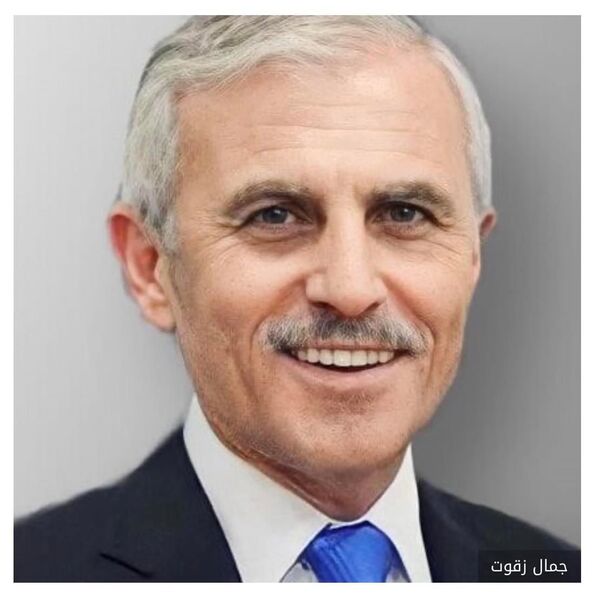
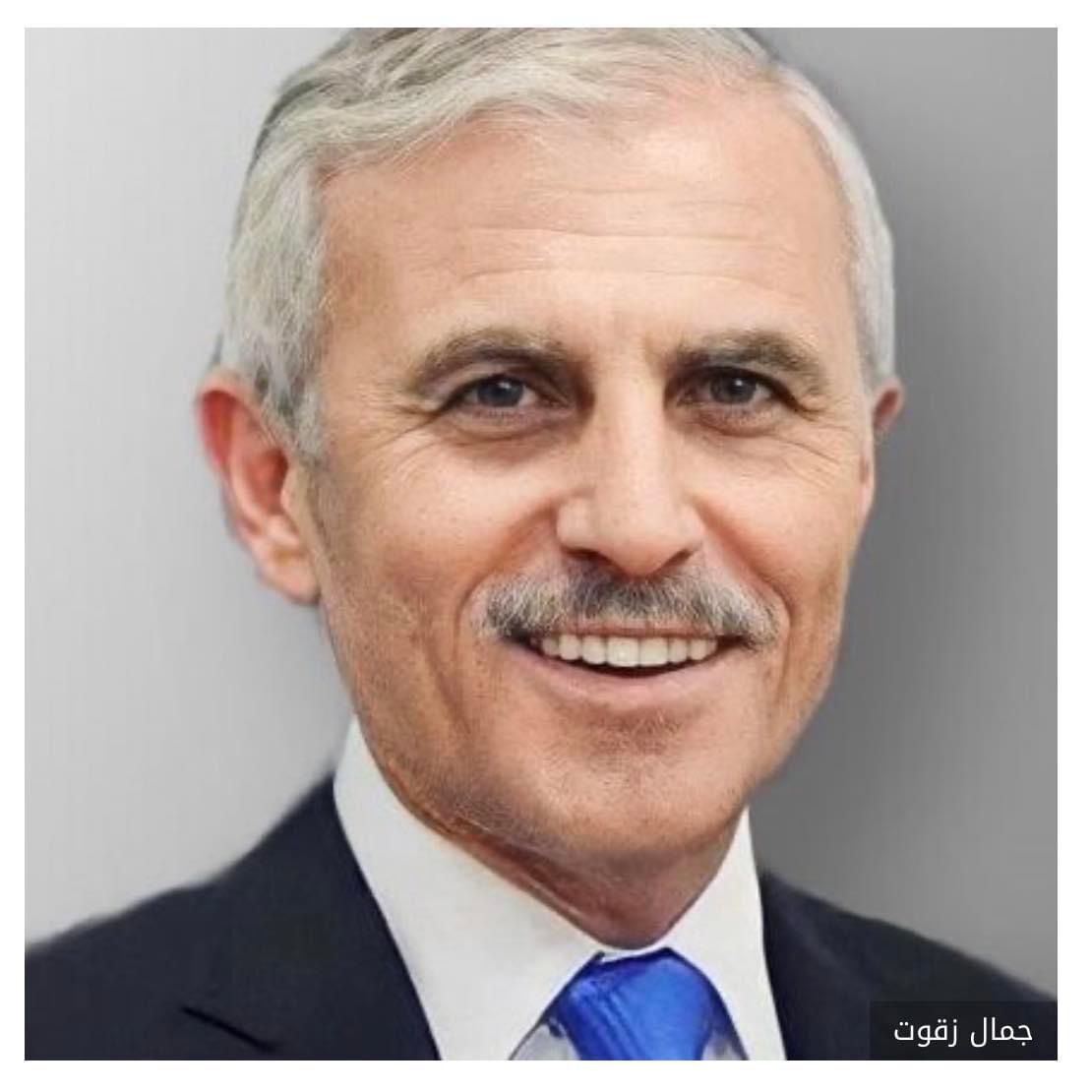
Jamal Zaqout

Jamal Zaqout

Opinion Writer

The human massacre that our people are being subjected to in the Gaza Strip, and the acceleration in implementing a plan for a political massacre in the West Bank, including occupied Jerusalem, clearly does not only aim to undermine the political system and continue to engineer it to adapt to the plans of the fascist right-wing government in Israel. Rather, in light of what the results of the war of extermination on the Gaza Strip will lead to, this government believes that international developments, and not just Trump’s return, will not constitute an obstacle to plans to liquidate the Palestinian cause, including ethnic cleansing and mass displacement in the context of the plan to eliminate the Palestinian presence, which may expand to include the masses of our people inside the land occupied since the Nakba of 1948. The hard-line thinkers of the right, and not just Netanyahu’s thugs “Smotrich and Ben-Gvir,” have always called for correcting what they call the historical mistake of 1948, by not displacing those who held on to their land in the Galilee, the Triangle, the Negev, and the rest of the land of historical Palestine, i.e. the West Bank and the Gaza Strip. This is the essence of the racist Zionist project, and the strategies of uprooting, dissipation and liquidation that it is based on.


However, despite the Israeli racism's ability to commit genocide crimes to implement these strategies, due to the military, political, economic and legal support it receives from the makers of the Hebrew state, especially in Washington, London and other Western capitals, and the unprecedented complicity and inability of the official Arab regime, which brings back memories of the Arab and regional situation on the eve of the Nakba. Despite all of this, this Israeli ability is not absolute, especially since the Palestinian people have acquired, through their experience that they paid for with their blood and not only with their land and sources of livelihood, that their strongest weapon is their adherence to their land and their ability to survive and endure. This is simply because they are fully aware that the price of defeat or surrender to defeat, as some promote, is immeasurably higher than what they are being subjected to today in terms of genocide and war to control their land and future.


The question that we will keep asking, so that Ghassan Kanafani's question is not repeated: "Why did Abu Qais, Asaad and Marwan not knock on the walls of the tank, while they were suffocating in a closed tank in the desert maze of the Nakba?" And what if they had knocked on the walls of that tank? It is: Will the Palestinian people, after all these sacrifices and the path of resistance that has extended since the Nakba, and the high prices they are paying today in confronting the racism of the Zionist project, and the dangers threatening their national destiny, allow the tragedy of the Nakba to be repeated and to be lost in the desert maze of asylum and displacement?! Here lies the bet first and last.


It is true that the crimes of genocide against our people in the Gaza Strip, and the accompanying groans of the souls of children, women and elderly whose blood is being shed under the destruction of their homes and the ashes of their tents, bleed the hearts of our people and all the peoples of the world who are biased towards the values of justice and humanity. However, until now, they have not been able to change the reality of silence and helplessness resulting from the state of division, or to force international decision-makers to back down from continuing to cover up these crimes. However, this is not the only picture in the general scene, despite its bleak pessimism. The mere continuation of the ability to resist confirms that Israel is incapable of subjugating our people, which confirms time and again the failure of the military options that have always aimed to extinguish the spirit of revolution and resistance in preparation for liquidating our people’s national rights and just cause. Israel has not yet succeeded in achieving any of the goals of its criminal war on our people, except for the shame of genocide that has exposed its moral downfall and abhorrent racism before the peoples of the world. It certainly realizes that its continued failure means the defeat of its political project, betting on the possibility of overcoming this failure by preventing our people from addressing the weaknesses that the Palestinian situation suffers from, especially with regard to the continuation of the state of division, and separating the fate of the Gaza Strip from the national entity, and in a way that enables it to tear apart not only this entity, but also the unified national representation that the Palestine Liberation Organization has always expressed, which previously led the national struggle as a broad, united national front, and with this role it extracted the legitimacy of its sole representation of our people, and succeeded in accumulating the achievements it made. So where are we today in this role?! Did any of our people imagine, even in their worst nightmares, that their leadership would continue, despite the ugliness of the unprecedented genocide they are facing since World War II, to prefer following the mirage of a settlement that Israeli racism is trampling over the corpses of our people’s victims, over responding to the popular will and national consensus calling for confronting the war of genocide and liquidation by returning to the position of the PLO as a unified national leadership for our national struggle, and as a broad national front that previously led this struggle with distinctive models in the path of our people, perhaps the most prominent of which was represented by the Great Intifada in 1987 and its unified national leadership, which placed the Palestinian cause at the top of the priority list of international attention, and even corrected the position of the PLO and the entire national struggle, including within Israeli society itself, as a liberation struggle, and not terrorism, as the occupation governments have been accustomed to stigmatizing it.


The international and regional variables are not entirely in favor of the Zionist project. The crime of genocide and ethnic cleansing has created a major breach in the wall of the Zionist project. The question directed to those dominating the national scene and decision-making is: Can the continuation of the situation that has become impossible, in light of the announced liquidation plans, and even being implemented on the ground, save our cause from liquidation, protect the achievements and safeguard the enormous sacrifices made by our people?! Or, as the national experience itself has confirmed, does it require a return to the formula of the unified national front within the framework of the PLO as expressed in the Beijing Agreement, and providing hope to our people for the precise and immediate implementation of this agreement, and assigning a national consensus government supported by the popular will and national consensus. Then we may be able to lead our people’s cause towards salvation, and move forward to mobilize its full energy, in a way that preserves its sacrifices and achievements, and enhances its unity and national immunity on the path to freedom, return and self-determination?

ARAB AND WORLD

Tue 19 Nov 2024 9:48 am - Jerusalem Time

On the cusp of Trump’s second term… Israel is busy proving that it is US “indispensable asset”

Donald Trump's victory in the US presidential elections held on November 5th continues to give Israeli Prime Minister Benjamin Netanyahu's mouthpieces an incentive to fly high in everything related to Israeli expectations of him during his second presidential term, which will begin on January 20th, 2025.


Perhaps the important thing when reading these expectations is to probe the desires that this flight entails regarding the reality related to the fate of the war on the Gaza Strip, the future of the Palestinian cause, and other regional issues, foremost among which is the conflict with Iran.


From the flood of comments that resulted from this flight, we can point out the most prominent of these desires: The first desire is that Trump, during his second term, which will be free from many controls and restrictions in light of the fact that he cannot run for another presidential term, will return to pursuing a foreign policy that was described during his first presidential term (2020-2026) as being outside the box of American foreign policy. Some even went so far as to imagine the scenario that could have been achieved in reality if Trump had managed to defeat current US President Joe Biden and continued in his second presidential term directly from his first term. According to this scenario, Trump would have continued to exert enormous economic pressure on Iran and its agents, to turn his back on the United Nations institutions, to punish the Palestinians for their traditional rejection of the dictates of peace with Israel, and to advance the path of normalization with Arab countries according to the model of the "Abraham Accords."


Those who support this scenario assert that the Democratic administration of President Joe Biden has put an end to all this deviation from the usual American foreign policy box that Trump adopted, and quickly returned to flirting with the Iranian regime and its agents, especially in Lebanon, as well as flirting with the Palestinians.


Pro-Israel Management

It is also noteworthy that there is a focus on the list of key appointments announced by Trump regarding the composition of his administration, which, according to Amnon Lord, chief political commentator for the newspaper "Israel Hayom" (11/15/2024), indicates a new American administration that is, to say the least, pro-Israel. Most of those appointed are people who support Israel ideologically, stand in solidarity with it, and want to provide it with the utmost support. Accordingly, Israel expects this new American administration, which supports it, according to Lord, to take the initiative to implement two immediate tasks: canceling the sanctions imposed by Washington on elements of the Israeli right, and neutralizing the United Nations institutions in The Hague (meaning the International Court of Justice and the International Criminal Court), and then confronting Iran and its nuclear program and attempts to expand its regional influence.


A quick rundown of Netanyahu’s comments on Trump’s appointments suggests that most are favorable, with the two governments likely to see eye to eye on many issues of common interest. In particular, the incoming secretary of state, Marco Rubio, is seen as a pro-Israel figure. Rubio will work with new national security adviser Mike Walz, a Florida congressman who has taken a tough line on China. Also on the foreign policy team is Alice Stepanek, the incoming U.S. ambassador to the United Nations.


Stepanek has become famous in the hearings that major American universities such as Harvard, Pennsylvania and MIT have undergone, following the demonstrations against the war of genocide in Gaza. There are expectations that Stepanek will continue the pro-Israel approach, as Nikki Haley did in the previous Trump administration.


Mike Huckabee was also appointed US ambassador to Israel. Huckabee has a close relationship with Israeli Prime Minister Benjamin Netanyahu. He has repeatedly expressed support for Jewish settlers and for Israel to annex parts of the West Bank. In 2019, he said he believed Israel had the right to annex parts of the West Bank. Steven Witkoff, a Jew and close Trump confidant, was appointed US envoy to the Middle East, John Ratcliffe was appointed CIA director, and Fox News host Pete Hegseth was appointed defense secretary.


US interests first

However, in contrast to these trumpets, Israeli experts on American affairs stress that it is necessary to remember that Trump is still Trump, he cares about the interests of the United States, first and foremost. He will stand by Israel as long as it is an asset to his goals. One of these experts (Professor Yossi Shain) said that it is important to remember that in his previous term, Trump presented the “Deal of the Century” plan prepared by his son-in-law Jared Kushner, which ultimately spoke of a two-state solution for two peoples. In addition, in the new Middle East that Trump seeks to promote, there are other friends of the United States, and they too have their own interests.


Meir Ben-Shabbat, former head of the National Security Council and current head of the Misgav Institute for National Security and Zionist Strategy, summed up the matter by saying that the new appointments in the upcoming Trump administration carry good news for all those who see Iran as a threat to peace and stability in the world and the root of all evil in the Middle East. They also indicate an intention to return to the approach of confronting the Iranian regime and its followers by adopting a firm policy of confrontation against it based on interests, power and influence.


Ben Shabbat stressed at the same time that in order for such a policy to prevail, Israel must achieve victory in the war it is currently waging in order to prove to the new American administration that it is still a security, technological and economic asset for it in the Middle East region (“Israel Hayom,” 11/15/2024).


one-sided relationship

At this point, we should remember that Benjamin Netanyahu’s tenure as Prime Minister of Israel has been characterized throughout, in terms of bilateral relations with the United States, by seizing any opportunity to showcase what a “gold mine” Israel represents for the United States, beyond the prevailing belief that the special relations between the two countries are one-sided, meaning that one party, the Israelis, benefits from them almost completely, while the benefit of the other party, the Americans, has been and continues to be minimal, if at all.


In this context, memory was periodically refreshed of the "security services" that Israel provides to the United States, which remain the best guarantee for maintaining the special relations between the two countries. In the opinion of circles close to Netanyahu, it is more appropriate to say that the United States no longer provides foreign aid to Israel, but rather invests in it, which return annual profits of hundreds of percent. Not to mention that Israel has become a low-cost laboratory for the American security industries, in which more than 4 million Americans work, and this is in ideal conditions, since this "laboratory" is engaged in real combat on more than one front, and is used in both economic and operational aspects, as it also improves the performance of American forces. The most prominent example of this is the Israeli Air Force’s use of the F-16 and F-35 aircraft produced by the American company Lockheed Martin. According to several experts, the force sends daily reports to this company and the US Air Force that include lessons learned from military operations and maintenance and repair work. These reports contribute to the development of these two aircraft models and the improvement of the next generation of them, and the US Air Force benefits from them in its operations.


Israel.. the largest aircraft carrier


To complete the circle in this regard, we note that from time to time, signals are issued by senior officials in the United States that confirm this Israeli narrative from the point of view of Washington’s benefit. Among these is the consideration by former Speaker of the US House of Representatives, Nancy Pelosi, from the Democratic Party, during a visit she made to the Israeli Knesset several years ago, that the establishment of the State of Israel constitutes the greatest political achievement of the twentieth century, and that the security bond between Israel and the United States is very close and the friendship between them is eternal. Among the previous signals that are difficult to enumerate is the statement by General Alexander Haig, who served as the Supreme Commander of the North Atlantic Treaty Organization (NATO) and US Secretary of State during the Cold War, that Israel “is the largest aircraft carrier in the world that has no American soldiers on board, cannot be sunk, and is anchored in a sensitive security and economic region.


Israel also saves the United States tens of billions of dollars annually in expenses related to the production and installation of aircraft carriers and additional military brigades in the Indian Ocean, the Middle East and the Mediterranean.


At the height of the Cold War in 1986, General George F. Keegan, who served in US Air Force intelligence, said that he would not have succeeded in gathering the intelligence he obtained from Israel even if he had five CIA agencies at his disposal. His statements were made in the context of a press interview at the height of the Cold War, during which he added: “The ability of the US Air Force in particular and the Army in general to defend their position in NATO owes more to the intelligence provided by Israel than to any other intelligence source!”


What we can conclude from what these people say is that the security relations between the United States and Israel are characterized by a special nature that no change in American administrations can change.

PALESTINE

Tue 19 Nov 2024 9:11 am - Jerusalem Time

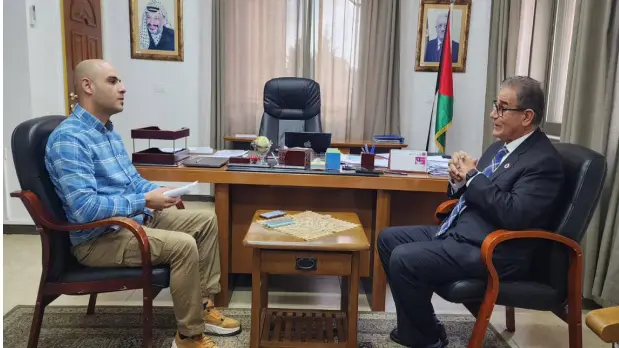
Zaqout in a comprehensive interview with "Al-Quds" .. A government plan to lay the foundations for building an independent state

* Our success or failure in this government depends on our ability to strengthen the steadfastness of citizens and the survival of our youth in their homeland.

* We have developed a short-term relief plan for the first year after the war and another for comprehensive reconstruction of Gaza in cooperation with international bodies.

* Our slogan at the Ministry of Planning is: “We promise Hind Ragab and all children to rebuild the sector and restore hope for a better future.”

* We made intensive efforts to enhance international support, and the European Union alone provided support worth 400 million euros in just 3 months.

* Any development project by ministries or government agencies must be consistent with the comprehensive plan “Build Palestine”.

* 30 years of work at the World Bank, during which I helped 40 countries develop development projects.


Palestinian Minister of Planning and International Cooperation Dr. Wael Zaqout confirmed in an exclusive interview with "Al Quds" that his international experience gained from working at the World Bank contributed to formulating his reform and development vision, stressing the importance of focusing on development and reform plans to meet urgent needs and sustain development. He also stressed that this vision must be adapted to the complex Palestinian reality.


Zaqout spoke about the economic and social crises that have worsened due to the Israeli occupation and aggression on Gaza, explaining that the government is working on two plans: the first, short-term, to contain the humanitarian disaster, provide relief to the displaced, and resolve the financial crisis resulting from Israel withholding a large portion of the clearance revenues, and the second, long-term, to rebuild Gaza, strengthen the economy, and create job opportunities, in cooperation with donor institutions and countries.


He pointed out that the government launched a comprehensive plan entitled "Build Palestine", which focuses on four main pillars, including the reconstruction of Gaza, the unification of Palestinian institutions, administrative, financial and economic reform, and the promotion of job opportunities.


He also referred to seven major initiatives aimed at enhancing development, most notably renewable energy, digital transformation, localizing health services, developing the education and agriculture sectors, and empowering local government, stressing the importance of partnership with the private sector as part of the national strategy to provide job opportunities and strengthen the economy.


Zaqout stressed that Palestinian steadfastness depends on the government's ability to provide a decent life and the means for citizens to remain in their homeland.


The following is the text of the interview:


Extensive experience in leading institutional reform and dealing with governments


*You worked at the World Bank before assuming the Ministry of Planning and International Cooperation. How did these international experiences affect your vision of the role of the ministry? What lessons did you learn that can be applied to the current Palestinian reality?


- I worked at the World Bank for nearly 30 years, during which I helped about 40 countries develop agricultural, urban, and water projects. I held several leadership positions, including the position of Sector Manager at the World Bank for the Eastern Europe region, where I was responsible for water and urban development projects. I also worked as the World Bank’s Regional Director in Yemen during the critical period between 2012 and 2015, which witnessed major challenges due to the Arab revolutions.


Through my long career at the World Bank, I have gained extensive experience in leadership, professional work and dealing with governments, as most of our projects focused on cooperation with government institutions. More importantly, I learned how to work on developing government institutions and reforming their financial and administrative systems, which is a fundamental factor for the progress of countries. This process is a goal that all countries strive for.


In my career, I have worked with several countries, such as Indonesia, Vietnam, Turkey and Greece during their severe economic crises, and I participated in developing Saudi Arabia’s Vision 2030, and participated in reforming the land and real estate sector in Egypt. These experiences gave me a deep knowledge of how to formulate development and institutional reform programs, drawing on global expertise.


However, I have learned that the process of development and reform is not easy. Despite the clarity of the vision and plan, it is necessary to determine what can be implemented in the short, medium and long term. The challenges lie in the increasing demands of the people that every country faces, in addition to the need to understand the political and institutional structure of the country and overcome the obstacles that may stand in the way of implementation.


We work non-stop to prepare for the day after war.


* Your appointment as Minister of Planning comes amidst a legacy of difficult financial and administrative crises, the accumulation of public debt and entitlements on the government, and the crises resulting from the war on Gaza, and the challenges it creates that will actually begin with the end of the war. How do you, as a Palestinian government, work to manage these crises in these two directions?


- The current situation is extremely difficult, and is an extension of the suffering we have been experiencing since the Nakba of 1948, as we have been facing an ongoing occupation for 76 years, during which we have gone through extremely harsh stages. But what is happening today in Gaza goes beyond all those stages, from killing, destruction, starvation, and genocide. In the West Bank, too, Israeli violations are escalating from repeated aggression to stifling economic restrictions; Israel is withholding 60% of the monthly clearance funds, preventing our workers who work for it from reaching their places of work, and imposing severe restrictions on freedom of movement through the widespread checkpoints, which exacerbates the challenges facing our government work.


Despite these circumstances, we are doing our best to raise the voice of our people in Gaza, where I meet with ambassadors from countries around the world to talk about the suffering of our people there, and to convey clear messages with the aim of mobilizing international support for a ceasefire, and ending the policy of starvation, displacement and genocide practiced by the Israeli occupation.


At the same time, we are working on preparing plans to rebuild Gaza immediately after the war ends, to ensure that we are ready for the day after the war. In cooperation with the World Bank, the United Nations, and the European Union, we have developed two basic plans:


The first plan: A short-term plan for the first year after the war. This plan focuses on providing relief to our displaced people and helping them overcome emergency conditions. It includes providing temporary homes and tents for the displaced, and restoring partially damaged homes, in addition to restoring the educational process for our people in Gaza, by providing temporary housing for the displaced people who are currently in schools, which allows education to gradually return to normal.


The second plan: A comprehensive reconstruction plan for Gaza. This plan includes extensive international efforts in cooperation with the World Bank, the United Nations, the European Union, and friendly countries such as Germany, Britain, Belgium, and Italy, in addition to other countries that we seek to include in an international coalition led by the Palestinian government to rebuild the Gaza Strip. The scale of destruction in Gaza exceeds our capabilities as a Palestinian people and state, so we rely on international partnerships to rebuild the Strip and restore hope.


Our slogan at the Ministry of Planning and International Cooperation is clear: “We promise Hind Rajab, and all the children of Gaza, to rebuild the Strip and restore hope for a better future.”


A plan based on an integrated partnership between the government, the private sector and the community.


* How does the Ministry reformulate development plans in response to current challenges, so as to meet urgent needs and enhance the resilience of Palestinians in various social, economic, spatial, and cultural sectors, with a focus on rebuilding Gaza and the affected areas in the West Bank, especially in the northern regions?


The nineteenth Palestinian government launched a document entitled “Build Palestine,” which is a plan through which we are working to establish the foundations for building a future independent Palestinian state, to be self-sufficient to care for our Palestinian people. There are four foundations:


1- Rebuilding Gaza: Rebuilding Gaza is a top priority as a fundamental step towards building an independent Palestinian state, and for the new Gaza to be more beautiful and modern than it was before, in a manner befitting the steadfastness and sacrifices of its people.

2- Unifying the institutions between the two parts of the homeland: It is important to work to achieve national unity between the Gaza Strip and the West Bank, and to work to unify the institutions between the southern and northern governorates under the framework of one state and one government. The plan includes mechanisms to integrate all state institutions and employees, including the security services, to ensure the unity of institutional work.


3- Development and reform: Developing Palestinian national institutions is a pivotal element in the plan, as efforts include modernizing the administrative, financial, and judicial systems with a focus on judicial independence. Reforms also include strengthening the Palestinian economic system to become independent from economic dependence on Israel, as Palestine currently depends on Israel for electricity, water, goods, and fuel. The plan sets out a comprehensive vision for administrative, financial, and economic reform to reduce this excessive dependence on the occupation.


4- Developing the economy and creating job opportunities: Developing the national economy is a fundamental goal for building the state, with a focus on providing job opportunities for the Palestinian people. The government’s role is to ensure security and provide basic services such as health and education, but the state cannot employ all citizens. There is the private sector, which is the main driver for providing job opportunities. We will work in the government to establish laws and regulations that encourage the private sector to be a real partner in economic development, which will allow the Palestinian people, including those working in Israel and the settlements, to move to work in Palestinian institutions, companies, factories and farms.


Our plan is based on an integrated partnership between the government, the private sector and society, to secure a better future for our people and build an independent Palestinian state capable of achieving the aspirations of its people.


Palestinian Initiatives towards Sustainable Development


* The ministry’s slogan is “Towards sustainable and comprehensive development.” What efforts are you making to achieve this vision in light of the occupation and repeated wars, and how do you respond to those who see this vision as unrealistic in the current circumstances?


The current Palestinian government has developed comprehensive development plans to chart a better future for the Palestinian people, most notably the “Build Palestine” plan, which provides a strategic vision for the medium and long-term future. The government has launched seven major initiatives under the auspices of the Prime Minister, aiming to develop vital sectors that can be worked on away from the interference of the Israeli occupation.


1- Renewable Energy Initiative: This initiative seeks to expand renewable energy production to meet the needs of government institutions, schools, universities, mosques, and others. This initiative is not linked to the occupation, which allows it to be developed flexibly and independently.


2- Digital Transformation Initiative: The current government seeks to enhance digital transformation in all sectors of Palestinian society, to facilitate the communication process between citizens and the government, and between citizens and private companies, which contributes to improving services and enhancing efficiency.


3- Localization of Health Services Initiative: The Palestinian government spends about $400 million annually on medical transfers to Israel, Jordan and other countries, due to the shortage of medicines, medical equipment and beds in hospitals inside Palestine. This initiative aims to develop the local health sector to provide these services internally, which contributes to saving this huge amount and enhancing health independence. These efforts do not face obstacles from the occupation.


4- The Agricultural Sector Initiative: This initiative aims to exploit Palestinian lands for agriculture, which contributes to enhancing national production, providing job opportunities, and strengthening the steadfastness of the Palestinian people on their land.


5- Initiative to improve the quality of education: The Palestinian education system suffers from poor quality compared to neighboring countries according to international standards, as the government is working on a comprehensive plan to develop education.


6- Local Government Empowerment Initiative: The government works to empower local councils to provide the best services to Palestinian citizens by increasing the powers of local councils.


7- Focus on possible sectors: The government is working to identify sectors that can be developed and worked on without obstacles from the occupation, focusing its efforts on achieving progress in these areas to enhance the steadfastness of the Palestinian people and achieve comprehensive development.


We are working to employ all available capabilities to build a better future for our people, based on a clear vision and specific goals that we can achieve, despite all the challenges.


Increasing international support to boost the Palestinian economy


* Despite the obstacles, the government was able to mobilize significant international support this year. How important is this support in light of Israel’s piracy of clearance funds? Are there promises of continued support, especially after promises of the return of American aid?


- Since taking office, we have made intensive efforts to enhance international support from various donors. In this context, the European Union has provided support worth 400 million euros in just three months. We are also currently working on a comprehensive program for institutional development and reform, which is expected to receive EU support, and we will continue discussing it in the coming weeks.


In addition, we were able to increase the annual support provided by the World Bank from $75 million to $300 million annually. We also received promises of increased financial support from other countries, including Germany, Britain, and the United States. These efforts are part of our plans to strengthen the national economy and achieve sustainable development despite the challenges.


Special Department to Enhance Public-Private Cooperation


* You are trying to strengthen partnership with the private sector as a partial alternative to international support. What is your strategy to achieve this goal in light of criticism that partnership may be conditional, and do you believe that the private sector can provide a real window of hope for development?


- The Palestinian private sector is an integral part of the Palestinian economy and society, and is a key partner in achieving development. Global economies typically consist of three main components: government, civil society, and the private sector, none of which can succeed alone. The role of government is to set public policies, provide basic services, enhance security, and create an attractive investment environment that enables the private sector to operate and compete, not to control it.


In most countries of the world, the private sector contributes between 70% and 80% to providing job opportunities, which highlights its importance as a fundamental pillar for stimulating the Palestinian economy. For this reason, the government is working to strengthen partnership with the private sector to provide job opportunities and support development.


We have established a special department in the Ministry of Planning and International Cooperation to enhance cooperation between the public and private sectors, and we will soon set clear laws and standards to regulate this partnership. The goal is to provide an investment environment that encourages the private sector to innovate and compete locally and internationally, which contributes to supporting the steadfastness of our people and achieving sustainable development.


Criteria for selecting development projects


* What are the criteria adopted by the Ministry to select development project priorities, especially after emergency events such as war? Do these priorities change according to changing needs on the ground?


- The Ministry of Planning and International Cooperation prioritizes development projects based on three main criteria. First, the submitted project must be consistent with the comprehensive plan “Build Palestine” approved by the Council of Ministers. Any project from ministries or government agencies must be consistent with the priorities of this strategic plan.


Second, the project’s integrity is assessed, meaning that it has moved beyond the initial idea stage to the full planning stage. The project plan should include clear objectives, performance indicators, a detailed implementation plan, and the project’s beneficiaries. These details are essential to ensure that the project is effective in achieving its goals.


The third criterion is based on the previous performance records (track record) of the ministry or agency that submitted the project. If the institution has shown good performance in previous years, its project will be accepted, but if there are problems in implementing previous projects, the new project will not be approved.


These criteria ensure the selection of sustainable and effective development projects that meet the needs of Palestinian society in light of current challenges.


Ministry strategies under harsh conditions


* How does the Ministry deal with the challenges of movement restrictions and destroyed infrastructure in Gaza and the West Bank, and what innovative solutions does it implement to ensure that development projects there are implemented effectively?


The Ministry of Planning and International Cooperation does not implement projects directly, but rather cooperates with the relevant ministries to ensure their effective implementation. Part of the Ministry’s role is to review the project plan and communicate with donors to secure the necessary funding.


In Gaza, the humanitarian situation is extremely complex, with the most significant challenges being restrictions on movement and frequently destroyed infrastructure. The most important thing we can do is to make our children’s voices heard, demanding that countries with strong influence in the international community use their influence to pressure the Israeli occupation to stop the aggression and the ongoing destruction in Gaza. We also demand increased humanitarian assistance to meet the needs of the affected population.


On the other hand, we are working with some international institutions to provide basic services such as electricity and water to the accessible areas, despite the occupation’s continuous attempts to destroy what is being repaired.


In the West Bank, especially in the north, we have witnessed repeated destruction of infrastructure, with roads and water lines repeatedly damaged more than six times during the recent incursions. In order to address this quickly, a government committee was formed to assess the damage after each incursion and work to repair it immediately.


Institutional Development and Reform Plan


* There is undoubtedly criticism of the current government, and of a number of decisions it has taken in light of the crises and talk about the institutional development and reform plan. Civil society institutions also issue reports and studies that go beyond criticism to proposing formulas for reform and procedures to overcome crises. How do you deal with this criticism in light of what we have heard about your continued keenness to listen to citizens’ opinions and monitor different points of view?


- I respect the opinions of others, and I believe in the importance of listening to different points of view. I have held many meetings with civil society organizations and youth to listen to their opinions and comments. We have also developed a reform plan and have already started implementing part of it, but we have not started working on the largest part of the comprehensive plan yet. We are about to start implementing the rest of the plan after completing internal discussions within the government about it.


It is natural for opinions to differ on any development and reform program, but we are still at the beginning of the road. We are in the first six months of the new government’s term, which is a very short period to work on development and reform issues, especially in light of the difficult circumstances we face in Palestine.


I call on our generous people and the institutions of the international community to give us an opportunity to prove ourselves and work to implement the plans we have set for the long term.


Our steadfastness means our ability to provide a decent life for our people.


* How does the Ministry assess the Palestinian economic performance in light of the successive crises, and what interventions do you intend to implement to deal with the impact of international and regional variables on the national economy?


- The Palestinian national economy has faced major challenges in recent years, with a contraction of 35%, and we have lost about 500,000 jobs since October 7, which is a very high percentage. Today, we are in the midst of a devastating war that history has never seen before, and these are huge challenges by all standards. But the most important thing in any future strategy is to strengthen our steadfastness on the ground.


The government is currently working on implementing the plans I mentioned earlier, with the aim of getting out of this crisis. Our steadfastness means our ability to provide a decent life for our people, and provide them with basic services, which contributes to people’s attachment to their land and their refusal to leave it.


Israel is trying by all means to displace as many Palestinians as it can, but we are working to provide opportunities for our youth to remain in their homeland and contribute to building the institutions of the Palestinian state. Our success or failure in this government depends on our ability to strengthen the presence of our youth in their homeland.


Big challenges and promising plans


* In light of these escalating challenges, how do you see the future of development in Palestine, and what is your strategy for achieving the United Nations Sustainable Development Goals under these conditions?


- First, we developed the “Build Palestine” plan, along with the Economic Development and Recovery Plan, and the Institutional Development and Reform Programs Plan, all of which are interconnected and provide us with a comprehensive vision for the future. The most important thing in ensuring this future is the youth, who are the future pillar of our society.


Today we live in the shadow of the Israeli war, but I believe that if the plans I spoke about are implemented, we will witness a dramatic transformation in the Palestinian economy. However, there are major challenges, such as the continuation of the war and extremist Israeli policies, which put us in serious difficulties.


But our plan must be clear, and our path defined, in order to move forward in implementing our goals. We hope that we will be able to overcome these obstacles, and that the future will be better, which is what we all aspire to.


PALESTINE

Tue 19 Nov 2024 9:05 am - Jerusalem Time

Arrests in the West Bank

The Israeli occupation forces arrested two citizens in the West Bank at dawn and this morning, Tuesday.


In Qalqilya, the young man Adnan Majed Qaraan was arrested after his house was raided and searched.


In the same context, the Israeli occupation forces stormed the town of Azzun, east of Qalqilya, and drove their vehicles through its streets and fired sound and gas bombs randomly without any injuries or arrests being reported.


In Ramallah, forces arrested the boy Muhammad Ashraf Hamed (17 years old), after raiding his family’s home and ransacking its contents in the town of Silwad.


In Hebron, the occupation forces raided Al-Arroub camp and arrested three young men: Zahdi Muhammad Mahfouz, Ammar Abu Ghazi, and Nour Ahmad Jawabreh. They also arrested Adel Abu Asaad from the town of Idhna, west of Hebron, and transferred them to an unknown location.

PALESTINE

Tue 19 Nov 2024 9:03 am - Jerusalem Time

More than 400 days and Israel continues its aggression on the Gaza Strip

On the 410th day of the aggression on the Gaza Strip, the Israeli raids and massacres continued, as a citizen was martyred after the occupation aircraft bombed a group of citizens west of the Nuseirat camp in the middle of the Strip, while the Israeli warplanes raided the vicinity of the Toba area in the Jabalia camp in northern Gaza.


The occupation forces also blew up a number of residential buildings around the camp, and artillery targeted citizens' homes in Beit Lahia, north of the Strip.


On the other hand, Civil Defense teams announced that the tents of the displaced in the Gaza Strip were flooded as a result of a wave of heavy rain, which exacerbated the suffering of thousands of families displaced by the bombing.


The death toll from the ongoing Israeli aggression on the Gaza Strip has risen, according to the Ministry of Health, to 43,922 dead and 103,898 wounded, with 76 martyrs and 158 wounded recorded in the past 24 hours alone.

ARAB AND WORLD

Tue 19 Nov 2024 8:58 am - Jerusalem Time

Van Hollen Joins Sanders in Trying to Block US Arms Sales to Israel

Support for U.S. Sen. Bernie Sanders’s resolutions that would block U.S. arms sales to Israel continued to grow on Monday, with Maryland Democratic Sen. Chris Van Hollen issuing a letter to his colleagues urging them to join him in trying to pass the measures later this week.

Sen. Bernie Sanders (I-Vt.) — backed by Sens. Peter Welch (D-Vt.), Jeff Merkley (D-Ore.), and Brian Schatz (D-Hawaii) — introduced “joint resolutions of disapproval” (JRDs) last September, and announced last week that he would bring them to the floor for a vote.

Sen. Elizabeth Warren (D-Mass.) supported the joint resolutions of disapproval last week, citing the Biden administration’s failure “to follow U.S. law and suspend arms shipments” after Israeli Prime Minister Benjamin Netanyahu’s government warned last month that U.S. arms could be cut off without serious action to improve humanitarian conditions in Gaza.

Sen. Van Hollen followed suit on Monday, releasing his letter and saying in a statement that “American taxpayer-funded aid should not come in the form of a blank check – even to our closest partners. We need assurances that American interests, values, and priorities will be respected by foreign governments that receive American support. This principle should apply to everyone, including the Netanyahu government.”

“But even as the United States provides billions of dollars in taxpayer-funded bombs and other offensive weapons systems, we have seen Prime Minister Netanyahu repeatedly violate the terms of U.S. security assistance, ignore U.S. priorities, and ignore our requests, only to be rewarded by President Biden,” he continued. “This pattern undermines U.S. credibility and must not continue.”

Van Hollen noted that he has “repeatedly supported Israel’s right to defend itself and end Hamas’s control of Gaza” since the Palestinian movement’s October 7, 2023, attack — including his vote on an aid package in April — but also claimed that “a just war must be waged justly.”

“That’s why recipients of U.S. weapons must comply with U.S. laws and policies. Recipients of security assistance must facilitate, not restrict, the delivery of humanitarian assistance to war zones where U.S. weapons are used, and U.S.-supplied weapons must be used in accordance with international humanitarian law. The Netanyahu government is violating both of these requirements in Gaza,” he explained. “It also rejects a host of other priorities the United States has put forward, and yet President Biden has failed to hold Netanyahu accountable—ignoring U.S. law and undermining his stated policies as well as America’s interests and values.”

“Doing so undermines American global leadership and is a disservice to the American people, the people of Israel, and the people of the Middle East,” the Maryland senator warned. “That is why I have repeatedly stated that the United States must stop delivering offensive weapons to the Netanyahu government until it complies with U.S. law and policy and so that we can advance the security interests, priorities, and values of the American people.”

While he stressed his support for “transferring defensive systems, such as Iron Dome,” and his opposition to the arms embargo, which many human rights groups have called for, Van Hollen concluded that he would vote for the JRDs this week because “partnership should be a two-way street, not a one-way blank check.”

The bills must pass through the Democratic-controlled Senate and Republican-controlled House of Representatives to reach Biden’s desk. They would require a two-thirds majority in both chambers to override a presidential veto. The push to pass comes as lawmakers prepare for Republican control of Congress and the White House next year after the elections earlier this month.
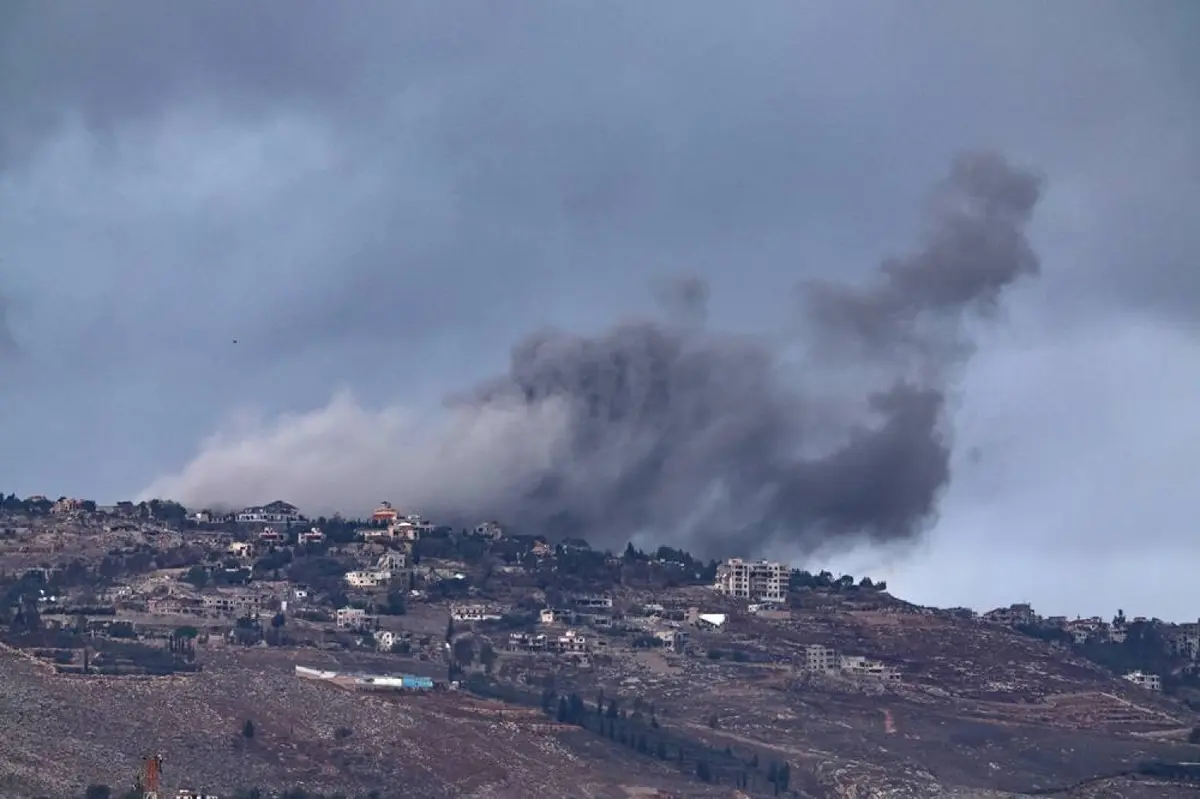
“The United States government must stop blatantly violating the law with regard to arms sales to Israel,” Sanders wrote in the Washington Post on Monday. “The Foreign Assistance Act of 1961 and the Arms Export Control Act are very clear: The United States cannot provide arms to any country that violates internationally recognized human rights. Section 620I of the Foreign Assistance Act is also explicit: No U.S. assistance may be provided to any country that ‘directly or indirectly prohibits or restricts the transfer or delivery of U.S. humanitarian assistance.’”

The resolutions are also supported by more than 100 organizations, including the Center for Civilians in Conflict and the Friends Committee on National Legislation (FCNL), which led a letter to senators last month.

For his part, Hassan Eltayeb, legislative director for Middle East policy, described the upcoming vote as “historic,” telling Al Jazeera on Monday: “The fact that this is happening really sends a political signal that this is not what it was before.”

"There is no military solution to the conflict in Gaza - only a diplomatic solution that addresses the root causes of the violence," Tayeb told Al Jazeera, as the death toll in the Palestinian enclave approached 44,000.

“Instead of sending more weapons, Congress and the administration should leverage military aid with Netanyahu and the Knesset to finally get them to accept a ceasefire in Gaza and Lebanon. I think that is a much better strategy for securing Israel’s defense and protecting Palestinian human rights,” he added.

PALESTINE

Tue 19 Nov 2024 8:51 am - Jerusalem Time

..And if he puts out the fire with gasoline!

"What cannot be achieved by force is achieved by more force," this is the doctrine of the "Führer" who continues to commit massacres in Gaza and Lebanon, without the slightest consideration or regard for international laws or humanitarian laws, or even establishing any weight to activate his summons to appear before the "Criminal."


Poor "wolf", he will fight with his nails if he runs out of ammunition, and the natural wet nurses carry out their threats to stop breastfeeding him with lethal weapons, so he can continue the slaughter against children and women in Gaza and Lebanon.


It is the “war of rebirth” led by the “king” against the descendants of the Amalekites, invoking biblical fundamentalism that feeds on the instrumental narrative of existential fear, the secret weapon for drawing in Western arms and sympathy.


The Wolf challenges the president who is about to leave, denies him the favor, and pins his hopes on his friend who showered him with gifts during his first term, promising him more.


Since Benjamin climbed on Rabin's body, he has been drawing Israel's dreams and borders "Under the Sun," the book in which he placed his ideas that inspired his loyal disciples, starting with Yigal Amir and not ending with Smotrich and Ben-Gvir.


His stay in "Al-Karya" will not be long, no matter how much he tries to justify his failures and overthrow his opponents and critics. The countdown to his downfall has begun, even if he continues his rhetoric of pricing and putting out fires with gasoline.


Stop the war of extermination now...!

PALESTINE

Tue 19 Nov 2024 8:48 am - Jerusalem Time

Israeli forces besiege a house in Jenin and raid the home of a captive Hamas leader

The occupation army continues its storming of the city of Jenin and its camp in the occupied West Bank, and is besieging a house in the village of Al-Shuhada, south of the city, amid armed clashes between resistance fighters and the occupation army. Its forces also raided the house of a captive leader of the Islamic Resistance Movement (Hamas) in Nablus.


The Al-Quds Brigades - Jenin Battalion, the military wing of the Islamic Jihad Movement, said that its fighters, along with other formations, were clashing with the invading forces, and confirmed that they detonated homemade explosive devices on the occupation military vehicles, achieving direct hits. The Jenin Battalion also targeted an occupation military bulldozer in the cemetery axis with a highly explosive device.


Local sources said that special forces are besieging a house in the village of Al-Shuhada, south of the city, after the occupation forces raided and searched a number of houses, and turned some of them into military barracks. They also deployed snipers on the roofs of a number of buildings inside the city and the camp.


The same sources reported that clashes broke out around the besieged house. For its part, the Israeli army radio said that "Israeli forces fired missiles at a house where two wanted men were holed up in Jenin and killed them."


At the same time, sources said that the occupation forces stormed the town of Salem and the village of Sakaka in Nablus, north of the West Bank, and raided the home of the imprisoned Hamas leader Hussam Harb.


Eyewitnesses said that the Israeli army also stormed the village of Burqa, northwest of Nablus, and Beita and Qabalan, south of the city, without reporting any injuries or clashes.


The Israeli occupation forces also closed all entrances leading to the village of Tabqa, south of the city of Dura in Hebron, and prevented citizens from moving.


Posters were hung on the walls containing threatening messages, and eyewitnesses confirmed that the occupation forces arrested one of the children while he was going to school and that he was injured in the head.


In other developments, the official Palestinian news agency, WAFA, said late Monday evening that a number of citizens suffered from suffocation "during the Israeli occupation forces' storming of the town of Al-Khader, south of Bethlehem (southern West Bank)."


The agency added that "the occupation forces stormed the town of Al-Khader, firing sound bombs and toxic gas at homes and shops, which led to a number of citizens suffering from suffocation."


In the same context, sources told Al Jazeera that the occupation forces stormed the Deheishe refugee camp in Bethlehem, south of the West Bank, and surrounded it, deploying large forces in its neighborhoods. They also raided homes and arrested a number of young men, in addition to raiding a printing press in the camp.


In the central West Bank, Wafa News Agency confirmed that the Israeli army stormed the village of Kafr Ni'ma, west of Ramallah, and "clashes erupted between citizens and the occupation forces, during which bullets and sound bombs were fired at the citizens, without any injuries being reported."

The agency confirmed that the Israeli army arrested 3 Palestinians in the Wadi al-Maleh area in the northern Jordan Valley.


She added that "the occupation forces arrested Ibrahim Salman Raheel Najada, Burhan Ali Zamel Daraghmeh, and Ahmed Abdel Rahman Rashid, and they were taken to an unknown location," without giving details about their ages.


In parallel with the genocide in the Gaza Strip, the Israeli army and settlers expanded their attacks in the West Bank, including occupied Jerusalem, resulting in a total of 785 martyrs and about 6,300 wounded, according to official Palestinian data.

Source: Al Jazeera + Agencies


OPINIONS

Tue 19 Nov 2024 7:37 am - Jerusalem Time

The Three Pillars of Trump’s Middle East Policy

Nadim Koteich

Nadim Koteich

Opinion Writer


Three documents offer the only window that grants us a glimpse into what the Middle East policy of President-elect Donald Trump's administration could look like. "The Trump Peace Plan" (also known as the "Deal of the Century") for resolving the Palestinian-Israeli conflict, the "Abraham Accords" that allowed for Arab-Israeli normalization, and the "nuclear deal" with Iran that President Barack Obama's administration and the other members of the "P5+1" concluded in the summer of 2015, which "the first Trump" withdrew from in the spring of 2018, claiming to have a vision for a stronger and better alternative agreement.

The Deal of the Century: The peace plan proposed by Trump that its architect and the president's son-in-law, Jared Kushner, named "Deal of the Century". sought to leave the possibility of a two-state solution, the establishment of a Palestinian state alongside Israel, open. The plan imposed significant restrictions on this Palestinian state, which the Palestinians saw as nothing more than a fragmented and demilitarized state. Meanwhile, it granted Israel the right to annex large parts of the West Bank and maintain full security control over the Palestinian state, including its borders.

Although the plan was preceded by unilateral American recognition of Jerusalem as the capital of Israel, the proposal seemed to disregard, despite including a $50 billion economic incentive package, every other historical peace plan, as well as the requisites for Palestinian sovereignty and the fulfillment of Palestinians’ aspirations for national independence. Indeed, the emphasis of Trump’s plan on economic incentives and security guarantees, instead of taking traditional paths toward peace, made drawing Arab and international support for the deal impossible.

In the first call between Palestinian President Mahmoud Abbas and President-elect Trump, the latter said he was committed to ending the war and achieving peace, meaning that the priority of the US, the goal that the president wants to invest his effort and time into achieving, will be ending the war.

Trump spoke, on several occasions during the campaign, of his deep skepticism about the feasibility of the two-state solution, indicating that he was more inclined to support alternative frameworks to contain the conflict by focusing on stability and development. Due to the catastrophic results of the war, there seems to be fertile ground for a solution founded on "prosperity for peace." This prospect seems more plausible than many might expect, in light of the setbacks suffered by the Palestinian national project and the catastrophic costs of pursuing the resistance project.

The Abraham Accords: This second pillar also encompasses non-traditional frameworks for resolving the Palestinian question. To the president-elect, broadening the scope of peace is crucial for creating a new strategic framework in the Middle East that reshapes the region's economic and political landscape.

At the core of this vision is Trump's push for a comprehensive peace effort led by the Kingdom of Saudi Arabia.

The way Trump sees it, this development, if it occurs, would help create a climate that allows for major economic shifts crucial to shaping the future of the Middle East and the world. Trump is betting that the "peace for prosperity" framework will allow him to hit two birds with one stone: first, enhancing the economic situation in the Palestinian territories through massive investments in infrastructure, employment, healthcare and education; second, creating frameworks that ensure interest-based cooperation and Israel’s integration into the political, economic and social fabric of the region.

The nuclear deal: Trump’s Iran policy is not expected to be radically different from the one he adopted in his first term, which balanced severe economic sanctions with direct surgical military pressure, such as the assassination of Qassem Soleimani, and avoiding direct and open warfare. Nonetheless, Trump's withdrawal from the nuclear deal in 2018 and the re-imposition of sanctions on Iran through the "maximum pressure" campaign should not blind us to the fact that the president-elect is open to negotiating a new agreement with Tehran - a stronger and more comprehensive agreement with his name on it.

If Trump remains determined to prevent Iran from acquiring nuclear capabilities, and since Iran has not publicly said it seeks to produce a bomb, there is ample room for compromise between the two sides, especially given the decline in Iran’s regional influence following the severe blows suffered by its proxies, Hamas and Hezbollah.

These three agreements outline the broad framework of Trump’s Middle East policy, and he will not deviate from it significantly. At its core are: first, growing skepticism that the two-state solution is the sole framework for resolving the Palestinian-Israeli conflict; second, achieving comprehensive peace in the Middle East through the prioritization of mutual economic gain; and third, a strong stance on Iran’s behavior that also keeps the door open to a political understanding with Tehran that serves regional security and US interests.

While critics have called him temperamental and unpredictable, Trump's Middle East policy has been consistent and coherent. It is rooted in explicit pragmatism and practical American national interests rather than ideological or ethical commitments. This could present the Middle East with an unprecedented opportunity.

Source: Al Sharq Al Awsat

ARAB AND WORLD

Tue 19 Nov 2024 7:33 am - Jerusalem Time

Lebanon, Hezbollah Agree to US Proposal for Ceasefire with Israel, Lebanese Official Says

Lebanon and Hezbollah have agreed to a US proposal for a ceasefire with Israel with some comments on the content, a top Lebanese official told Reuters on Monday, describing the effort as the most serious yet to end the fighting.


Ali Hassan Khalil, an aide to Parliament Speaker Nabih Berri, said Lebanon had delivered its written response to the US ambassador in Lebanon on Monday, and White House envoy Amos Hochstein was travelling to Beirut to continue talks.


There was no immediate comment from Israel.Iran-backed Hezbollah endorsed its long-time ally Berri to negotiate over a ceasefire."Lebanon presented its comments on the paper in a positive atmosphere," Khalil said, declining to give further details. "All the comments that we presented affirm the precise adherence to (UN) Resolution 1701 with all its provisions," he said.He was referring to UN Security Council Resolution 1701, which ended a previous war between Hezbollah and Israel in 2006.Its terms require Hezbollah to have no armed presence in the area between the Lebanese-Israeli border and the Litani River, which runs some 30 km (20 miles) north of the frontier.Khalil said the success of the initiative now depended on Israel, saying if Israel did not want a solution, "it could make 100 problems".Israel has long claimed that Resolution 1701 was never properly implemented, pointing to the presence of Hezbollah fighters and weapons along the border. Lebanon has accused Israel of violations including flying warplanes in its airspace.


Khalil said Israel was trying to negotiate "under fire", a reference to an escalation of its bombardment of Beirut and the Hezbollah-controlled southern suburbs. "This won't affect our position," he said.

ARAB AND WORLD

Tue 19 Nov 2024 7:30 am - Jerusalem Time

Israel is angry about the Saudi-Iranian rapprochement and Bin Salman removed Tel Aviv from the agenda..

When Benjamin Netanyahu formed his sixth government in December 2022, he announced that one of his foreign policy goals would be to sign a normalization agreement with Saudi Arabia, and at the same time expressed his optimism that the agreement would be implemented in a short time, but events on the ground blew up Netanyahu's ideas, and some Israeli analysts, specialists and experts even went so far as to confirm that Hamas's surprise attack on October 7, 2023 was also aimed at preventing the normalization process between Riyadh and Tel Aviv.


Last month, according to the Hebrew media, when Iranian Foreign Minister Abbas Araqchi arrived in Saudi Arabia, he was not satisfied with his meeting with his Saudi counterpart Faisal bin Farhan, but was transferred to a private meeting with Crown Prince Mohammed bin Salman, and behind the scenes, Beijing was the one that mediated and led to the renewal of relations between Tehran and Riyadh last year.


Israeli orientalist Smadar Perry said in an article published in the Hebrew newspaper Yedioth Ahronoth that China does not stop mediating, and has pressured the two countries to bring the Saudi Chief of Staff Fayyad al-Ruwaili to Tehran.


Perry, who relied on political and security sources in the entity, added that “the relations, which have begun to be rebuilt after seven years of estrangement, including an Iranian attack (which denied its role) on oil facilities in Saudi Arabia, are now focused on preparing for joint military maneuvers in the Red Sea and economic cooperation with Saudi Arabia, while Riyadh has taken it upon itself to deliver to Iran the basic products that the American embargo prevents from being traded and sold.”


She continued, “The emergency summit in Riyadh, which was held a year after the Arab-Islamic summit held in Saudi Arabia in 2023 on the same date, was attended by all the heads of the Arab and Islamic world, with the exception of Iranian President Masoud Peskov, and although he apologized in advance for his inability to attend due to urgent internal matters, referring to preparations for an attack on Israel, he did not leave the Iranian seat empty, and sent his first deputy, Mohammad Reza Aref, with a letter of apology to the host in Riyadh.”


She explained that “the statements made by Crown Prince Bin Salman at the opening of the summit were difficult and unusual for the Israeli ear, and the American efforts to sit senior representatives from Saudi Arabia and Israel in the same room and hold talks on improving the relationship were pushed deep into the drawers of Bin Salman’s office, and he is now fiercely attacking Israel only, calling for a complete withdrawal from Gaza and the West Bank, and a complete cessation of Israeli army activity in Lebanon, and expanding the talk about attacks in Iran and other places, referring to Syria, Lebanon and the Iraqi-Syrian border linked to Iran.”


The writer stated that “Bin Salman’s frank speech directly addressed Israeli behavior, following the army’s actions in Gaza, the West Bank, Lebanon, Syria, Iran, and even in some parts of Iraq. The Houthis in Yemen were not mentioned at the Riyadh summit, and it is no coincidence, for Saudi considerations.” According to Dr. Yoel Guzansky, a senior researcher at the Institute for National Security Studies, “The Saudis want an effective rapprochement with Iran in order to try to stay out of the line of fire, because they expect that in the coming months, even before Trump enters the White House, there will be a flare-up between Iran and Israel, and they want to stay out of the line of fire. The pro-Iran statements are intended to serve this purpose, to show the Iranians that they are not in a state of normalization with Israel and that its attack on Iran does not please them, and there is definitely reconciliation with Iran here.” He added: “It is important to note that the Americans are no longer criticizing Saudi Arabia’s internal affairs or human rights. The most important thing for the Saudis is that Trump, for them, is able to pressure Netanyahu to end the war quickly, in Gaza and Lebanon, and he can be pressured to make progress on the Palestinian issue, and this, from the Saudi point of view, is a facade for progress to the two countries,” the researcher said.


The orientalist also said that “it is important to note that today, Bin Salman is no longer the de facto ruler of Saudi Arabia four years ago, and has since gained power and leadership, and his positions are clearer, and he still casts a sceptical eye on Iran. Trump promised that when he enters the White House he will stop the wars, and Saudi Arabia, followed by Egypt, Jordan and Lebanon, is waiting for a change in the administration in Washington and is demanding an American arms embargo on Israel to stop further fighting on the Israeli side.”


She concluded, “The issue of Hezbollah was not discussed at the summit, and Hamas was rebuffed, and in both cases, the Saudi crown prince is ready to work with President Trump, and is keen to present a tough image to stop all wars.”

Source: Sama News

PALESTINE

Tue 19 Nov 2024 7:25 am - Jerusalem Time

G20 backs two-state solution, calls for ceasefire in Gaza, Lebanon

The leaders of the Group of 20 major economies expressed their deep concern in a joint statement issued at their summit in Brazil on Monday over what they described as the catastrophic humanitarian situation in the Gaza Strip and the escalation in Lebanon.


The joint statement stressed the urgent need to increase the flow of humanitarian aid to the Gaza Strip and Lebanon and enhance the protection of civilians, and called for the lifting of all barriers to the provision of humanitarian aid in Gaza.


The leaders said in the statement that they were united in supporting a comprehensive ceasefire in Gaza and Lebanon, and affirmed their “steadfast commitment” to the two-state solution.


On the other hand, the leaders welcomed every “constructive initiative” aimed at achieving a “comprehensive, just and lasting peace” in Ukraine, in line with the principles of the United Nations and promoting “peaceful, friendly and good” relations between neighboring countries.


The leaders of the world’s 20 largest economies pledged to cooperate to impose an “effective tax on the world’s richest people,” an initiative strongly supported by the summit host, leftist President Luiz Inacio Lula da Silva.


The summit had opened earlier on Monday with the launch of a global alliance to combat poverty and hunger, which 81 countries agreed to support.


Source: Al Jazeera + Agencies

ARAB AND WORLD

Tue 19 Nov 2024 7:21 am - Jerusalem Time

The scandal of secret leaks is escalating in Israel, with accusations against Netanyahu of being behind it

Occupied Jerusalem - The issue of leaking secret documents from the military intelligence unit "Aman" has returned to escalation in Israel, after the Magistrate's Court allowed the lifting of the publication ban on a large part of the leaks that were behind Eli Feldstein, the spokesman for Prime Minister Benjamin Netanyahu.


The issue of stealing secret documents from the Israeli army and transferring them to Netanyahu's office and then leaking them to foreign media outlets has sparked widespread controversy in Israel, after it was revealed that the goal of stealing the documents, manipulating their content and leaking them was to influence Israeli public opinion to reject accepting a swap deal, and to create an atmosphere hostile to the protest movement against Netanyahu's government, claiming that the protests strengthen the power and position of the Hamas movement.


According to the information that the court allowed to be published, secret documents were transferred last April from a reserve officer in military intelligence to Netanyahu's spokesman, via social media, and in September Feldstein sought to publish the content of the document via Israeli media outlets, with the aim of negatively influencing Israeli public opinion regarding the negotiations related to the prisoner exchange and return deal.


Top Secret

After Israeli media outlets refused to publish the secret documents in response to the ban imposed by military censorship, Feldstein turned to foreign media outlets with the help of another person, which published them. After the leak raised doubts about the credibility of the documents whose content had been manipulated, Feldstein requested an original copy from the officer in the intelligence unit to prove its authenticity.


Despite the publication ban by military censorship, the officer continued the leaking process, and handed the original document to Netanyahu's spokesman, as well as other copies of documents and papers that military intelligence classified as "top secret", as these documents were stolen from the 8200 electronic eavesdropping unit in military intelligence, while the General Security Service (Shabak) continues to investigate the circumstances of the theft of the documents and the leak of information.


The investigator in the case said during the court session to extend the suspects' detention that "there is no dispute that the transfer of classified material and information was for the benefit of the Prime Minister's Office," noting that the Shin Bet has arrested five people suspected of involvement in the leak, and the Israeli Attorney General's Office is preparing to file indictments against them.


Advertisement

According to the deliberations to extend the detention, Feldstein asked the intelligence officer for classified information for "supplementary material" for the prime minister's speech, where Feldstein presented himself as very close to Netanyahu and that he holds a "security classification." To clarify this, he also presented a draft of a planned speech to Netanyahu.


Network of Agents

“The right-wing media’s attempts to downplay the scandal of leaking classified documents are doomed to failure,” says Amos Harel, a military analyst for Haaretz. He adds that lifting most of the gag orders in the case of Feldstein’s arrest and officers and soldiers from the Military Intelligence Unit reveals that the leak is part of a campaign to influence Israeli public opinion, a campaign that was prepared by Netanyahu’s inner circle.”


The military analyst pointed out that what was allowed to be published in the investigation file shows that Netanyahu’s spokesman – who the Prime Minister’s Office tried to disavow at the beginning of the scandal – was running a network of agents who, through his position, passed him classified documents and information from the Military Intelligence Unit during the war.


According to Harel, the information accumulated from the investigation file showed that the documents stolen from the IDF’s intelligence unit were apparently transferred to Netanyahu and his team, who reviewed them, and then Feldstein leaked them to foreign media outlets with the help of at least one other partner, bypassing military censorship.


“None of this reaches Netanyahu himself at this stage,” he says. The military analyst added that throughout the more than 13 months of war, the prime minister not only remained in power and prevented the formation of a commission of inquiry into the failures of October 7, 2023, but also succeeded in turning the issue of the kidnapped soldiers into a political issue that divides the public and deepens the rift in Israeli society.


Serving interests

The same readings were reviewed by the political analyst in the newspaper "Maariv" Ben Caspit, who seemed more critical of Netanyahu, and held him fully responsible for the scandal of leaking secret documents and accused him of being behind it, in order to serve his personal and political interests by refraining from concluding an exchange deal, to avoid the disintegration of his government coalition and continuing the war without end, to ensure remaining in the prime minister's seat.


The political analyst strengthened his position through the narrative being promoted by the right-wing camp supporting Netanyahu, which is that they "hid important secret materials from the prime minister, and he was not aware of the matter," noting that this narrative aims to distance Netanyahu from the issue of stealing secret materials from the Israeli army and leaking them to foreign media outlets while bypassing military censorship.

Ben Caspit described Netanyahu's attempt to evade the scandal of leaking secret documents and manipulating their content as "a mockery of reason," noting that the documents reached Feldstein's hands last April, but were not used until after August 31, when 6 detainees were killed in Gaza and widespread protests erupted in Israel. At that point, it was decided to leak them in order to "convince the general public to oppose the demonstrations demanding the return of the detainees."


A fraud operation

The Israeli writer Avi Issacharoff also described the issue of leaking the documents as "dangerous from a security and moral standpoint," as it caused serious damage to the intelligence sources of the Israeli security establishment, and aims to blackmail the Israelis who took to the streets to demand the release of the detainees held by Hamas.


In an article in the Yedioth Ahronoth newspaper, he pointed out that the most dangerous thing about the leaks scandal, which is considered the first of its kind in Israel's history, "is that the person behind it is an official in the Prime Minister's Office, whose job was to manage the relationship with military correspondents."


He pointed out that the main suspect - Netanyahu's spokesman - exploited his position to leak secret documents that he carefully selected and manipulated their content, with the intention of weakening the position of the families of the detainees, and inciting Israeli public opinion against the protests calling for a prisoner exchange deal, in order to ensure the stability of Netanyahu's government coalition.


Issacharoff said, "This is an unprecedented fraud, and it is still hard to believe that someone on behalf of the prime minister is participating in such a campaign at the height of the war, and why? Because of the fear of the end of the war, and the agreement to release the kidnapped and a temporary or long-term ceasefire, which will perhaps lead to the dissolution of the government."


The Israeli writer explained that Netanyahu and his men are betting on the short memory of the Israeli public, which has almost forgotten who was in charge of the government when he recorded the worst intelligence failure in Israel's history, saying that "the prime minister is trying to eliminate his opponents and everything that connects him to the failure of the events of October 7, and the question is whether the public in Israel will allow him to continue doing so."


Source: Al Jazeera

PALESTINE

Tue 19 Nov 2024 7:07 am - Jerusalem Time

Joseph Burrell meets Ehud Olmert and Nasser Alkidwa

EU High Envoy Joseph Burrell hosted israel former Prime Minister Ehud Olmert, former Palestinian Foreign Minister Nasser Alkidwa, Gershon Baskin and Summer Sinjalawi for a meeting with the EU Foreign Ministers (27 EU countries) ahead of the FAC meeting today, November 18. At the center of the discussion, the peace plan proposed by Olmert and Alkidwa on July 17 and what the European Union can do more to support an immediate ceasefire, end the war in Gaza, release the hostages and restart the political process towards a two-state solution.

“Despite the humanitarian catastrophe in Gaza, the rapid deterioration of the situation in the West Bank and the israel government’s inability to engage in a political process, we cannot stop our efforts. On the contrary, we must enlist all the tools at our disposal and unite forces for concrete proposals. "That's why I invited today the former prime minister Olmert and the former foreign minister Alkidua," Burrell said.

"For this to succeed, we need the public support from both parties and relevant governments. We especially need the involvement of European countries," Alkidua said

"The war in Gaza must end today, the hostages must be returned, Gaza must be rebuilt, and Israel and Palestine must start negotiating for a two-state solution," stressed former Prime Minister Olmert.

OPINIONS

Tue 19 Nov 2024 6:56 am - Jerusalem Time

Trump’s unfinished business for ‘Greater Israel’

972+ Magazine

972+ Magazine

Opinion Writer

By Jonathan Adler


From annexation to UNRWA, Trump’s Israel advisors should be taken at their word — and Democrats won’t stand in their way, says Lara Friedman.

On Nov. 5, former president Donald Trump secured a resounding victory over Vice President Kamala Harris in the U.S. presidential elections, winning all seven battleground states in the electoral college, as well as the popular vote — the first for a Republican candidate in two decades. It’s clear that discontent with the Biden-Harris Gaza policy wasn’t the deciding factor in Harris’s loss that many had predicted, given the margins of Trump’s win. But it did play a significant role, and Democrats will need to make a meaningful investment to win back Muslim and Arab American voters, in particular, in future election cycles. Trump’s victory, on the other hand, doesn’t seem to be evidence of a popular shift to the right on U.S. policy toward Israel, even though that may well be the result of his return to office.

To unpack the election results and understand the implications of a second Trump term for U.S. policy on Israel-Palestine, +972 Magazine spoke with Lara Friedman, president of the Foundation for Middle East Peace (FMEP) and a longtime expert on American and Israeli politics (full disclosure: FMEP is a funder of +972 Magazine). For Friedman, last week revealed the consequences of Democrats’ failure to take the concerns of its base seriously — simply assuming that they would turn out to support Harris — and of trying to outflank Republicans on their pro-Israel bona fides as part of their appeal to the so-called centrist voter. This was a lesson, as Friedman points out, that Democrats could have learned from their Israeli counterparts in the Labor Party, which has rendered itself obsolete by failing to offer a real alternative to the Israeli right.

After a year of devastating war in Gaza, aided and abetted by a Democratic administration unwilling to impose any red lines on the Israeli government, Trump made a cynical yet effective last-minute appeal to disaffected voters, pitching himself as the “anti-war” candidate who could secure a quick and lasting peace. Friedman, however, suggests that we should not look to Trump but to those around him — to figures like former ambassador David Friedman, Jason Greenblatt, and others who pledge to continue the unfinished work of Trump’s first term. These are the people who will be at the center of what Friedman calls a “Greater Israel” period in U.S. policy: supporting Israeli annexation and ethnic cleansing in the West Bank, Gaza, and parts of Lebanon; lifting sanctions on settlers; and preventing any bans on weapons transfers. “They have lists of things that they are ready to do,” Friedman says, warning that we should take them at their word.

Sign up

Friedman is also one of the foremost analysts of Congressional legislative developments relating to Israel-Palestine — an aspect of U.S. policy toward the region that often flies under the radar of mainstream media coverage, but is essential to help understand what we should expect when Trump returns to office in January. On many issues regarding Israel-Palestine, from advancing the International Holocaust Remembrance Alliance (IHRA) definition of antisemitism to sanctioning the International Criminal Court (ICC) for taking action against Israel, there is longstanding and bipartisan pro-Israel consensus in Congress. And there is no reason, Friedman argues, to believe that many Democrats will grow a backbone under Trump.

The interview has been edited for length and clarity.

What are your main takeaways from last week’s election results?

This is obviously a moment of reckoning for Democrats, and Gaza did play a role. If you look at Senator [Bob] Casey’s loss in Pennsylvania, for example, where the amount [of votes] he lost by is smaller than the number of people who voted for the Green Party candidate, who’s a Palestinian American, that seat alone is clearly Gaza-impacted. 

And one can argue that it’s impacted even more by the fact that people didn’t show up. If the normal number of voters had shown up, then [anger about Gaza] probably wouldn’t have mattered. The percentage of the [vote for] Green Party [candidates] isn’t greater than in previous years. But this year, it had a definitive impact. 

We’re still waiting to see final numbers, but I think turnout is a big piece of it. And to the extent that the Democratic Party assumed that they would have a similar turnout to the last Biden election [in 2020], where you had a really energized base, I think they assumed wrong. Gaza is a piece of the disillusionment of this base: the cynicism, the sense that “this party doesn’t care about me and isn’t reflecting me.” A lot of people either didn’t show up, voted for a third-party candidate, or voted for Trump. And we have clear evidence of this where, down ballot, the Democrats outperformed Harris: [in Michigan], a state where Harris lost but Rashida Tlaib won, or [in Minnesota], where Harris did worse than Ilhan Omar.

There are some very simplistic arguments [about the election outcome being a result of] the fact that [Harris] is a woman or that she’s black. We actually had significant successes for female candidates and women of color in this election, where they did better on the same ticket than she did. Even [Rep. Elissa] Slotkin, a Jewish woman, won a Senate seat in Michigan while Harris lost. So no one can say this is about antisemitism. And Slotkin differentiated herself from Harris: she actually spoke in terms that expressed compassion, empathy, and care for Palestinians. Did it go as far as some of us would have liked? No. Did it go far enough [for constituents] to say, “I believe you, I think you care”? Apparently it did. And that makes a difference.
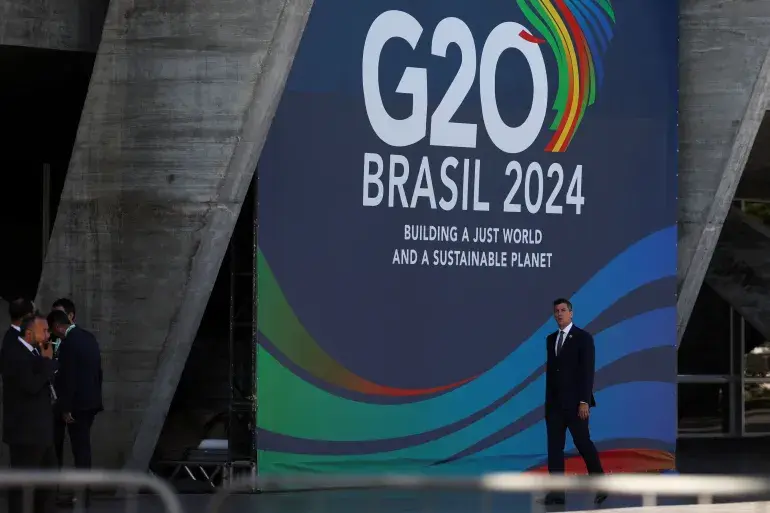
 

For years, I’ve been saying to friends in the Democratic Party that if you want a warning for what can happen [here], look at the Labor Party in Israel. If your strategy [to win] is consistently to try to attract people from the right and center right, taking for granted your own base — assuming that “our own base will vote for us no matter what, and that we can win without the people on the far edges of that base” — the Labor Party is a really good example of where that takes you.

Years ago, in the period after the Second Intifada, I was talking to a friend in a Labor Party leadership position. This was when [the party] was saying, “We can’t touch the Palestine issue — it’ll destroy us. We have to keep leaning to the center.” I told them, “You can either wear this issue as a crown and own it and be proud of it and have a clear agenda, and then if you win you’ve got a mandate and if you lose you can criticize the other [party] for not doing what they should have done. Or you can wear it as a heavy chain that will drag you to the bottom of the sea in every election.” 

And that’s where we are today: the Labor Party has moved to the right and [as a result] almost out of existence, because the [Israeli] right doesn’t vote for it — they’re not going to vote for “Likud lite,” they’re going to vote for Likud. And we essentially have an Israeli political spectrum that is a battle between parties from the center-right to the far-right and some vestigial left-wing parties. So there’s something for Democrats to learn from the Israeli experience.

So looking at Slotkin’s reelection, or races like Summer Lee’s in Pennsylvania, do you see any new openings for Palestinian rights advocacy — or at least a reflection of the fact that taking a strong, pro-Palestine stance is not an electoral liability?

That’s going to depend fundamentally on the Democratic Party and who it decides to listen to when it learns the lessons of this election. We already saw learned pundits on TV during the election saying Democrats were losing because they weren’t pro-Israel enough. We’re seeing analysis that if they attacked more in the pro-Israel direction, they would have captured whatever part of the Jewish community didn’t vote for them, which is ridiculous — there’s a certain percentage that always votes Republican. 

The bottom line is that you’ve had clear messages from the Democratic electorate that there is a broad spectrum of views on Gaza and on Israel, which precedes this election, and that there is a lot of space to be more even-handed. 


Since the Oslo Accords, the Democratic Party has chosen to continually move further and further to the right [on Israel], and from the Obama era onward, to the [position of] no daylight [between the U.S. and Israel], shoulder-to-shoulder; they are not just with the Republicans, they’re to the right of the Republicans on this. And [that comes] with a clear statement to the base: “We simply don’t care about you, or maybe we consider you a liability and would rather have you mad at us because we think we can gain more from the right than by actually keeping our left. We’re so convinced that you’ll vote for us no matter what, or that we can win without you.”

We saw this a little bit with the Bernie [Sanders presidential] campaign [in 2016]. I remember talking to someone on the Clinton campaign after Bernie dropped out, and they were still showing open contempt for Bernie [supporters]. This person looked at me and said, “We don’t need them. We can win without them.” If you have contempt for your base, at some point your base is going to have contempt for you.

When a significant, decisive portion of your base either casts a protest vote or stays home — effectively saying, “I can’t support you at this point,” or “I’d rather let you lose and learn a lesson than continue to be implicated in policies that are anathema to my values” — does that lesson get learned?

I want to shift from the election results to discussing more about what we expect when Trump takes office in January. To start, could you outline the anticipated policy priorities of a second Trump administration toward Israel-Palestine?

Israel-Palestine has never been central for Trump personally, but it is central for a number of the people who he feels accountable to or cares about — starting with Miriam Adelson, who was one of his top donors.

It’s useful to look at what’s unfinished from [the first Trump administration’s] agenda. The selection of Mike Huckabee as ambassador to Israel [who denies that Israel is even occupying the West Bank] proves that Trump intends to advance and claim credit for achieving the “Greater Israel” dreams of messianic Zionist Jews and evangelical Christians. With Gaza, Hagit Ofran from Peace Now was quoted in Haaretz saying she thinks there are going to be settlements before inauguration.


I think we’re in a “Greater Israel” policy period. They’ve already talked about Israel’s right to gain territory that is taken in self-defense, which of course is an outright repudiation of international law. That was the framing of the statement when [the first Trump administration] recognized Israel’s annexation of the Golan [Heights], and I think it’s going to be applied to Gaza. I think the annexation of the West Bank is on the table, and annexation of parts of Lebanon is on the table. Don’t listen to me, listen to them.

Eugene Kontorovich [of the infamous right-wing Israeli think-tank Kohelet Policy Forum] laid out his list of things that the Trump administration should do to undo all the evils that were done by the Biden administration — starting with ending sanctions on settlers, which they consider a form of BDS. That effectively means a policy of greenlighting settler terrorism.

By the way, Kontorovich is also calling for the Trump administration to actively support the ethnic cleansing of Palestinians from Gaza by helping them flee the war. His framing is that the Trump administration needs to treat the Gaza border the way Biden treated the Mexico border, [which was supposedly] an open border. So you should force Egypt to open the Gaza border, and then incentivize or compel people to cross it and leave once and for all.

If you look at Jewish-American groups, the number one agenda item on almost all of their wishlists is [codifying into law the] IHRA definition [of antisemitism]. They make it clear that, as we’ve always known, that’s really about quashing criticism of Israel and Zionism, particularly on campuses, but also beyond. And that agenda item already has momentum in Congress and it’s largely bipartisan: Republicans are leading it, but Democrats have done nothing to stand in the way, and in most cases have joined in — because who doesn’t want to be in favor of fighting antisemitism, even if that now is code for shutting down free speech, free thought, free academia.

I think what you’re going to see [under Trump] is an absolute undoing of anything that is in any way framed as a Biden anti-Israel gesture, which will include giving Israel any weapons it wants, support for annexation, and support for continued war with a call not for a ceasefire but for “victory.” There’s speculation on whether there [will be] some limits because Trump doesn’t like the U.S. to be engaged in foreign wars, or he’s annoyed with [Israeli Prime Minister Benjamin] Netanyahu’s personality. That all may be true, but I tend to [focus on] the forces inside his team, which really see this as “Israel’s policy is our policy and there shall be no distinction.”


The big question for me is Iran — whether or not a president who’s been elected on an agenda of not getting involved in foreign wars ends up being led into one with Iran by his own people and by Netanyahu, which I think is a very high possibility.

As you pointed out, all these ways that people like Kontorovich frame the Biden years as somehow “anti-Israel,” even in a limited sense, belies the unconditional support that Israel has received under this Democratic administration. And on that point in particular, are there ways that you see Biden’s unconditional support for Israel — and the affirmation that there are indeed no “red lines” when it comes to Israel’s war in Gaza and now Lebanon — as having paved the way for a Trump administration assault on international law, institutions, and diplomacy?

Yes – there’s no question. Democrats are already on board with sanctioning the ICC, shutting down UNRWA, and not allowing the world to hold Israel accountable under international law for anything it does. And this is already bipartisan. [There’s] this idea that now that Trump is doing it, maybe more Democrats will stand up and oppose it, and that’s possible. Republicans will then call them hypocrites and they won’t be wrong. [But] I don’t see that [happening] — I don’t suddenly see a backbone emerging from people who had none for the past year.

The people in [Trump’s first] administration who are focused on Israel, or people around this administration like Kontorovich, or even people who are close to [Trump] in Congress, some of whom may end up with cabinet positions — they have lists of things that they are ready to do. Ending UNRWA is one of them.

In his piece, Kontorovich not only talks about ending UNRWA, but also about the U.S. government actually erasing the agency’s diplomatic immunity so that Israel can start suing UNRWA officials for terrorism. If people who work for the UN can be sued by individual states for terrorism for having carried out the humanitarian work of their agency, this is the end of the UN system. People ask why can’t UNRWA still operate in Gaza without Israel’s permission: if Israel is going to treat people who are in UNRWA convoys as people who they can bomb at will, nobody can work there.


On Nov. 4, Senator [Ted] Cruz and 10 other Senate Republicans, all of whom will be [in Congress] next year, wrote a letter in response to an effort to get Israel suspended from the UN General Assembly for systematically violating international law, violating UN Security Council resolutions, and committing genocide. They basically say that if the Palestinians pursue this, we’re going to open the drawer and pull out every possible sanction against Palestinians and any states or organizations that work with them. It’s essentially a recipe to not just erase the Oslo Accords, but to set us back to pre-Madrid [in 1991] — to a period when the U.S. position is that any form of Palestinian organizing or public speaking or political activity is terrorism and anyone who touches it is tainted by terror.

We have to be really honest with ourselves about what door is being opened here. And if they move forward with that in law, I don’t think Senate Democrats are going to oppose it. It is almost an article of faith in our Congress — House and Senate — that the UN doing anything on Israel is illegitimate and antisemitic, and that it is a U.S. obligation to block it, even if that potentially means taking down the UN. We have legislation that dates back decades before Madrid and Oslo, which is still in force, [saying] that if the Palestinians are admitted as a full state, we exit the UN and defund it, which effectively brings it down: if the United States isn’t there, there is no UN. Nobody, not even Democrats, are ever willing to reexamine that piece of law.

On UNRWA in particular, I assume we’ll see a permanent funding ban that was initially “punted” until March 2025, as you put it when the temporary ban was passed, as well as other attacks on the agency.

I should say that [the Trump administration] doesn’t need Congress to do that. I think it’s worth remembering what they did last time in office, and the Republican framing since then, because people don’t remember. Last week, I published a database that I’d compiled months ago in my obsessiveness and frustration, because I kept hearing people from the Trump administration [criticize] Biden when he resumed aid to UNRWA, saying [that under Trump] they cut off aid because they knew it was a terrorist organization. I pulled up every statement made by any Trump administration official, including people who were being nominated for positions — these are official statements of policy — and none of them mentioned terrorism.

They were targeting UNRWA because they wanted to take [the question of Palestinian] refugees off the table. They also wanted to stop paying for it; [they wanted] Gulf countries or someone else to do so. But fundamentally, it’s about refugees: we’re going to define refugees out of existence by getting rid of UNRWA. It’s inconceivable to me that, regardless of what Congress does, the Trump administration wouldn’t reinstate that policy [of cutting aid to UNRWA]. The question is, does Congress put it into law to make sure that no president ever again can come back and change it? I think that’s quite plausible, and given the way Congress works, my guess is that we’re going to see anti-UNRWA legislation that has consequences attached to it: [for instance,] saying if the UN doesn’t dissolve UNRWA, then there are going to be sanctions.


There are Democrats like Rep. Josh Gottheimer and others who are totally on board and involved with the anti-UNRWA onslaught. But besides those people, do you see this anti-UNRWA crusade under Trump and in a Republican Congress as one place that Democrats could try to push back?

Maybe. We had some Democratic pushback already — some big letters and the UNRWA Restoration Act and all that. 

I will say that one of the things that concerns me, having seen various versions of those letters and bills before they went up, is that even among Democrats who are standing up for UNRWA, a lot of them are using language like, “for now, there’s no alternative,” or “for the time being.” Many Democrats who have defended UNRWA so far have done so on the grounds that this is a humanitarian issue in Gaza. They don’t understand the political reasons why people are trying to destroy UNRWA. Yes, we’re in the middle of a genocide and humanitarian catastrophe, so humanitarian aid is absolutely the driving factor why people will intervene. But this isn’t merely about humanitarian aid. 

Israel and the Trump administration may successfully [convince Democrats] that there’s another way to get humanitarian aid [into Gaza]. But I don’t think they will, because [Israel] is not trying to get humanitarian aid in. The Israeli government wants to clear people out of Gaza; they’ve been quite explicit about that. And I think the Trump administration would be perfectly happy with this policy. 

At the beginning of the war, we saw Israelis framing the clearing of Palestinians out of Gaza as a humanitarian measure, [and suggestions] that they were going to set up camps in the Sinai desert where people could get all the aid they need [once] they leave. I think that’s where we’re headed: a game of humanitarian aid being code for ethnic cleansing. And it’s going to be interesting to see whether Democrats who have stood up for UNRWA are captured by that.

I keep hearing well-intentioned people trying to get policymakers to understand that ending UNRWA, including in the West Bank and East Jerusalem, will be a humanitarian catastrophe so they can’t let it happen. But humanitarian catastrophe is the point. It is a feature, not a bug. Humanitarian catastrophe is a tool of ethnic cleansing. 


If [the situation in Gaza] becomes so bad that the international community finally acquiesces to [the idea that] everybody must get out of Gaza to receive aid, that’s a win for Israel. If the situation in Shuafat refugee camp, which was already dire before this, becomes truly unlivable, and we have a polio epidemic [that requires] moving people across the Jordan border to get them the health care they need, it’s a win for Israel. Israel would love to see the refugee camp removed: there are settlements all around it that would love to expand into that space. 

I’m not trying to be cynical or hyperbolic; this is the reality [of what Israeli officials] are saying.

I want to shift back to the domestic implications of Trump’s return to office and the likelihood of a crackdown on pro-Palestine activism in the United States, which we’ve seen most recently outlined in places like the Heritage Foundation’s Project Esther. Could you explain how these plans are tied to a longer history of legislative developments that you and FMEP have been tracking, which may have gone under the radar over the past few years but will certainly accelerate if Republicans maintain control of the White House, Senate, and House — or even if Democrats control the House, and there are enough pro-Israel Democrats willing to work with Republicans?

The [rhetoric] of “We are the people fighting antisemitism” has proven incredibly valuable to Republicans, both in Congress and at the grassroots [level]. It is a standard flag that they fly as they target anything they view as woke or otherwise hostile to a very hardline illiberal agenda — and academia is at the top of this.

This started before October 7, but the surge in activism in support of Palestinian lives and rights really fueled the Republican anti-woke agenda, under the guise of fighting antisemitism. We saw this earlier when the anti-BDS legislation started being repurposed as anti-CRT [critical race theory] and anti-DEI [diversity, equity, and inclusion] and anti-ESG [environment, social, and governance]. You’ve got these laws that use state contracts as the hook to punish people for BDS, and then you just edit it slightly, and now you can use it against the entire [list] of things you don’t like.

In terms of where this goes now, I am of two minds. On the one hand, I think it would be inconceivable that this [cynical weaponization of antisemitism] will not continue and expand. This is a powerful weapon for the far right: it aligns with Christian evangelical views and the views of a lot of the messianic Jews in Trump’s orbit, those who have accepted Christ as their Lord and Savior but still identify as Jews. It’s been really effective at either bringing Democrats on board or at least making it hard for them to protest because as soon as [they do], that proves they don’t care about antisemitism.


At the same time, some of this depends on how much the public narrative ends up hitting a wall with reality, or whether reality gives in to the public narrative. I’ll cite two pieces of legislation where I think this is important.

One is a bill that was passed by the House earlier this year that would give the Secretary of Treasury nearly unfettered authority to strip the nonprofit status from any U.S. organization that that secretary decides, just by fiat, has links to terrorism. There is no oversight and virtually no meaningful recourse. That passed the House, and then it got stuck. The other bill is the Antisemitism Awareness Act, which various Jewish groups have been pushing for years and would codify the IHRA definition into law. It passed the House earlier this year, and then it, too, hit a wall.

Both of them hit a wall not simply because progressives pointed out that they were dangerous, illiberal, and a threat to free speech, but also because the right wing considered them to be an overreach. On the NGO bill, [right wing] people recognized that it could be used by a Democratic president to target all of their organizations. They saw how this could be expanded to allow the IRS to tell NGOs what they can and can’t do.

The NGO bill finally went up for a vote yesterday [Nov. 12]. But it failed because Republican leaders brought it to the floor under a rule that requires a two-thirds majority to pass. If it had come to the floor under normal order — which it still can — it would have easily passed. And the fact that 52 Dems voted for it, notwithstanding the election of Trump, really says it all.

On the IHRA bill, Axios reported recently that [Sen. Chuck] Schumer has promised to move the bill in the Senate during the lame-duck [period]. The article framed it as a controversial bill among Democrats — as if it’s the Democratic Party giving in to its far-left base on a bill that everybody else agrees should be passed. Except that’s total bullshit: just look at the record when it passed the House. There was an outpouring of opposition to this bill from the entire right wing — from the crazy “we can’t pass this because it’ll make antisemitism illegal,” to the free speech absolutists, to the libertarians, to a whole set of people who argued that this was stealth DEI.

Somehow, we now have a narrative that it’s the left that’s preventing the bill, when in fact it was the right that stopped it. And we have papers like Jewish Insider that, at the time, reported it accurately, but now is enabling this narrative that the left is in the way. We’re going to know soon; we’re now in lame duck. Does Schumer bring it up? And all of those people on the right who cried foul when it passed the House, do they stay silent? I don’t know. When the public narrative meets reality, which one gives? And given current politics in the United States, I don’t know.