PALESTINE

Wed 20 Nov 2024 12:35 pm - Jerusalem Time

Israeli forces arrest 15 citizens from the West Bank

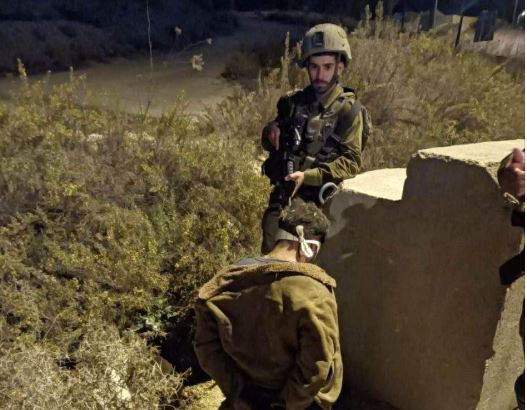
Since yesterday evening until Wednesday morning, the Israeli occupation forces have arrested at least 15 citizens from the West Bank, including a child, a woman, and former prisoners.


The Commission of Prisoners' Affairs and the Prisoners' Club noted, in a statement, that it was not possible to verify the actual cases of arrest in Jenin and its camp, due to the ongoing occupation aggression and the ongoing field investigations of dozens of citizens.


They added that the occupation forces arrested a child and former prisoners in the governorates of Ramallah, Hebron, Bethlehem, Nablus, and Tulkarm.


It is noteworthy that the number of arrests since the beginning of the ongoing war of extermination and comprehensive aggression against our people has reached more than 11,700 citizens from the West Bank, including Jerusalem.


It is worth noting that the occupation continues to escalate field investigation operations in towns and camps, which have escalated in an unprecedented manner since the beginning of the ongoing war of extermination, as a retaliatory operation that falls within the framework of the crime of (collective punishment), which targeted all segments of Palestinian society.

ARAB AND WORLD

Wed 20 Nov 2024 11:26 am - Jerusalem Time

Dead and wounded as a result of the ongoing Israeli aggression on Lebanon

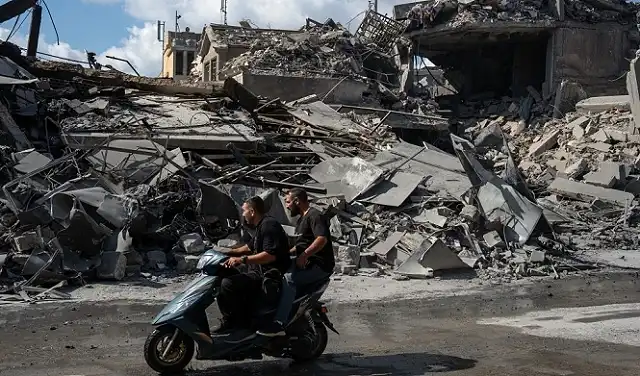
Dozens of Lebanese citizens were killed and injured on Wednesday as a result of the ongoing Israeli occupation aggression on Lebanon, amid widespread destruction of buildings, facilities and infrastructure.


An occupation raid targeted a military vehicle belonging to the Lebanese army, resulting in one martyr and two wounded on the Burj al-Muluk-Qalaa road in southern Lebanon, while three army personnel were killed last night as a result of the occupation targeting a Lebanese army center in the town of Sarafand in the south.


Five citizens were also killed as a result of the occupation's raids on the towns of Ma'arka and Zifta in the south.


The occupation raids on the towns of Kafr Malki, Ein Qana, Haboush, and Zutar al-Sharqiya last night led to thedeath of more than 10 citizens, according to press information.


The occupation warplanes and artillery bombed the towns of Kfar Shuba, Khiyam, Shebaa, Ain Baal, Deir Qanoun, Ras al-Ain, al-Jabin, al-Mansouri, Qana, Aitat, and Zebqin in southern Lebanon.

PALESTINE

Wed 20 Nov 2024 11:15 am - Jerusalem Time

West Bank: Israeli forces injure 4 Palestinians and demolish a house and a commercial facility in Salfit

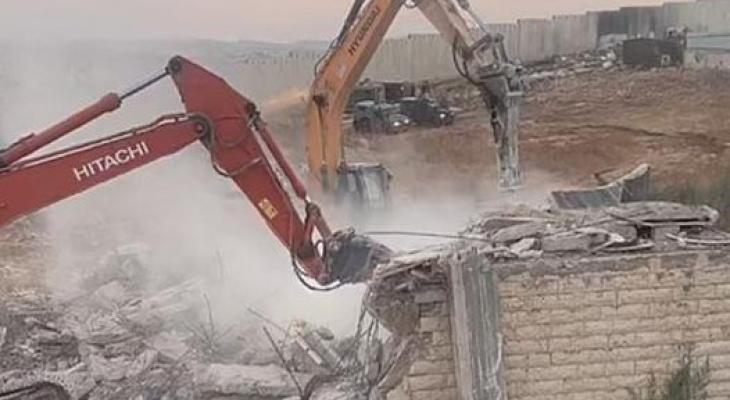
Four citizens were injured today, Wednesday, when the Israeli occupation forces demolished a house and a commercial facility in the town of Deir Ballut, west of the city of Salfit.


The mayor of Deir Ballut, Samir Nimr, told the official news agency, WAFA, that the occupation forces began demolishing a house inhabited by residents in the “Al-Mureij” area, consisting of one floor with an area of 150 square meters, and a commercial facility (a carpentry shop) on an area of one dunum, owned by the citizen Adel Yousef Abdullah.


He pointed out that the occupation demolished the house and the commercial facility without prior warning, as citizen Abdullah was unable to empty their contents before the demolition.


Nimr reported that the medical teams dealt with 4 injuries, one of which was caused by live bullets to the foot, and three injuries caused by sound bombs to the face and shoulder area. The injured were transferred to the Martyr Yasser Arafat Hospital and the medical centers in the towns of Deir Ballut and Al-Zawiya.


According to the Salfit Governorate, the occupation authorities demolished 19 homes and facilities in the Salfit Governorate during the current year.

During last October, the occupation authorities carried out 34 demolition operations that affected 45 facilities, including 12 inhabited homes, 6 uninhabited ones, and 19 agricultural and other facilities. They also notified 38 other facilities of demolition.

PALESTINE

Wed 20 Nov 2024 11:13 am - Jerusalem Time

After its seizure: Israeli settlers rehabilitate a water spring in the northern Jordan Valley

Today, Wednesday, settlers began rehabilitating a water spring in the northern Jordan Valley.


The head of the Al-Maleh village council, Mahdi Daraghmeh, reported that a number of settlers began reclaiming a water spring in Umm al-Jimal, after seizing it about three months ago.


Two days ago, the occupation forces demolished the homes of citizens in the area, after they had left them months ago, due to the escalation of settler attacks against them. Later, settlers established a colonial outpost near those homes.


The area is witnessing a continuous presence of settlers, with fears of seizing the region's lands.


According to the Wall and Settlement Resistance Commission, “there are 9 settlements in Tubas and the northern Jordan Valley, and 7 colonial outposts spread on mountaintops.”

According to the Authority, since the beginning of 2024, settlers have committed more than 1,732 attacks on Palestinians and their property.

OPINIONS

Wed 20 Nov 2024 9:34 am - Jerusalem Time

Israel exacerbates humanitarian catastrophe in Gaza

op-ed "AlQuds" dot com

op-ed "AlQuds" dot com

Opinion Writer

The humanitarian tragedy in the Gaza Strip will certainly worsen further, in light of Israel’s insistence on continuing its aggression and controlling all aspects of Palestinian life, including humanitarian aid, which Israel is trying by all means to restrict, and using the weapon of starvation to force citizens to leave their tents and homes and flee the northern Gaza Strip.


Yesterday, the Israeli government informed the Supreme Court that it does not have effective control over the Gaza Strip, and therefore will not allow aid trucks to enter, and will not agree to the entry of food supplies into the Strip through independent traders.


It is clear that Israel exploited the incidents of theft of some aid by gangs, to cling to this illusory justification, because in reality it can control the issue of aid, and it can allow international organizations, bodies, associations and individuals to deliver aid trucks to Gaza, but the writing is clearly read from the title of the Israeli rejection.


Pictures of Gazans standing in long queues and waiting for hours to get bread are passing by, and they convey scenes of sadness, pain and grief. What is the state that the people of Gaza have reached, as they are mortally struck by hunger?


The images of the detainees in front of Kamal Adwan Hospital, which was destroyed, in their underwear only, under the rain and the biting cold, which Israel seeks to broadcast constantly in an attempt to break the will of the citizens and discourage them, are a true translation of the extent of the crimes committed by Israel in Gaza, its violation of all standards of humanity, and its treatment with unprecedented brutality in history, in addition to the images of the refugees in Beit Lahia who are being displaced under the threat of death, and what was issued by the Civil Defense, which announced yesterday that most of its vehicles have stopped working due to the lack of fuel and water, and that its crews are unable to respond to citizens’ calls due to Israel’s refusal to allow fuel and rescue equipment into Gaza.


These scenes and many others do not pass a day in the Gaza Strip without seeing them top the pages, platforms and engines of electronic media, and in contrast, the Hebrew media brags and publishes through its television channels the data that the army is pumping out about the arrest of 1,300 Palestinians in Jabalia, the assassination of more than 1,350, and the displacement of about 60,000, boasting that this is a military achievement for Israel, on the assumption that these are activists and resistance fighters, while the truth is that most of the martyrs are children and women.


A number of Israeli military officials have made recommendations to Netanyahu stating that the military operation in the northern Gaza Strip has achieved its goals, and that its continuation puts the detainees at risk. However, Netanyahu and his new Minister of Defense refuse to deal with this information and insist on continuing the aggression. Even the proposals of the leaders of the Israeli negotiating team to expand the parameters and scope of this file were not approved by Netanyahu, who insists on continuing the war to achieve his political and partisan goals.


Israel is exacerbating the humanitarian catastrophe and consecrating it as a reality in the Gaza Strip, and is persisting in committing more massacres against our defenseless Palestinian people, thus violating international humanitarian law. There is no one to deter it or stop it from this aggressive criminal behavior. The question is: How long, and what is the fate of the people of Gaza who are besieged by disasters from every side?

OPINIONS

Wed 20 Nov 2024 9:25 am - Jerusalem Time

The brutality of the occupation between international silence and American support

Sari Al Kidwa

Sari Al Kidwa

Opinion Writer

What is happening in the northern Gaza Strip and the Nuseirat camp is unimaginable to the human mind, and constitutes a catastrophe against humanity, and is evidence of the injustice inflicted on the Palestinian people. The massacre committed recently by the occupation in Beit Lahia and the Nuseirat camp using explosive barrels, which resulted in the martyrdom of more than 90 citizens, is a war crime. These massacres come in light of the Israeli occupation authorities translating the continuous American military, financial and political support into genocidal massacres that claim the lives of dozens of children and women, as happened in Beit Lahia and other cities in the Gaza Strip, in addition to continuing attacks on cities, villages and camps in the West Bank and terrorizing the settlers.


The Israeli occupation force’s bombing of the Abu Asi School, affiliated with UNRWA, in the Shati refugee camp in Gaza City, and a house in Beit Lahia in the Gaza Strip, constitutes a flagrant violation of the rules of international law, specifically the Geneva Convention relative to the Protection of Civilian Persons in Time of War of 1949, and an escalation in the systematic targeting of civilians and centers for sheltering displaced persons.


The international community cannot continue to remain silent in the face of Israel’s continued violations of international law, which reflects the absence of an effective international response that would restrain the occupation government and force it to respect international law, and stop its aggression against Gaza and the killing, destruction and unprecedented humanitarian disaster it is causing.


The US administration bears full responsibility for the continuation of this bloody aggression, as it has protected the occupation and provided the occupation authorities with political cover at the international level to escape punishment and defy international legitimacy decisions, the latest of which is the UN General Assembly resolution to implement the advisory opinion of the Hague Court, to stop the aggression and end the occupation.


It has become necessary for the US administration to review its positions and it cannot continue its aggressive policy. It must work to force the occupation authorities to stop its aggression and crimes of genocide and submit to international legitimacy resolutions, most notably Resolution 2735, which calls for an immediate ceasefire, the entry of aid into the Gaza Strip, and the necessity of ensuring the protection of civilians, vital facilities that provide basic services, humanitarian facilities, and shelter centers in accordance with international law and international humanitarian law. Otherwise, the cycle of violence and instability will increase, threatening to burn the entire region, and no one will enjoy security and stability.


International inaction, neglect of what is happening, and failure to take a position to stop these massacres is considered a green light for the criminal occupation government to continue its crimes. The bias of the American administration and the harnessing of its military, political, and security capabilities to support the occupation and its denial of its commission of genocide, ethnic cleansing, and forced displacement is evidence of this administration’s partnership in violating humanitarian laws and international law.


The international community and the Security Council must intervene to stop the massacres, ethnic cleansing and siege imposed by the Israeli occupation forces on the northern Gaza Strip, and to save more than 60,000 citizens who are being subjected to genocide in those areas. The Security Council must assume its responsibilities and compel Israel to stop its aggression against Gaza and its ongoing and continuous violations of international law and international humanitarian law, and to hold those responsible accountable.


It is time for Britain, major countries and international organizations to act and work to put an end to the war targeting Gaza and Lebanon, and the necessity of stopping the brutal crimes committed by the occupation forces and causing thousands of victims, in addition to the danger that the continuation of the war represents to the security and stability of the region and the world.

OPINIONS

Wed 20 Nov 2024 9:23 am - Jerusalem Time

Hochstein came up with a Lebanese version of the Oslo Accords!

Mohammed Alnobani

Mohammed Alnobani

Opinion Writer

As leaked from the news, the goal of the shuttle visit that began yesterday, Tuesday, by the American envoy Amos Hochstein to Beirut and Tel Aviv, is not to reach an agreement for a ceasefire based on the literal, balanced and mutual implementation of UN Resolution 1701, but rather to introduce unannounced amendments to it, in a way that ensures its transformation into a Lebanese version of the Oslo Accords.


He wants to remove Hezbollah forces from the border beyond the Litani, deploy the Lebanese army on the border with a functional role to serve Israeli security, establish a buffer zone 5-8 kilometers deep, impose Israeli and NATO control mechanisms on Beirut airport and port and on the border crossings with Syria to prevent Hezbollah from rearming, and also guarantee the freedom of the Israeli Air Force to operate in Lebanese airspace whenever it deems appropriate.


Before all of that, it is to enable Israel to achieve its most important goal from the recent military operation in Lebanon, which is to separate the Lebanese front from the Gaza front, and to destroy the concept of the unity of the arenas.


I believe that such an agreement will not see the light of day, because first, it would destroy all the sacrifices that the party has made to support Gaza, second, because it would enable Israel to achieve what it failed to achieve through war through politics and diplomacy, and third, because it would hold the party, in front of its audience in particular, and the Lebanese people in general, responsible for all the destruction and devastation that has befallen Lebanon, as it has involved Lebanon in a futile war with no benefit behind it, which will lead to weakening its role in Lebanese political life, and giving a strong push to those demanding its disarmament.


Based on the above, I can assert that the Hochstein round will fail to impose a ceasefire, while the military confrontation will remain the master of the situation, until the conditions ripen either to a destructive regional war, or to a compromise settlement acceptable to both parties.

PALESTINE

Wed 20 Nov 2024 9:19 am - Jerusalem Time

Dead and wounded in the Gaza Strip

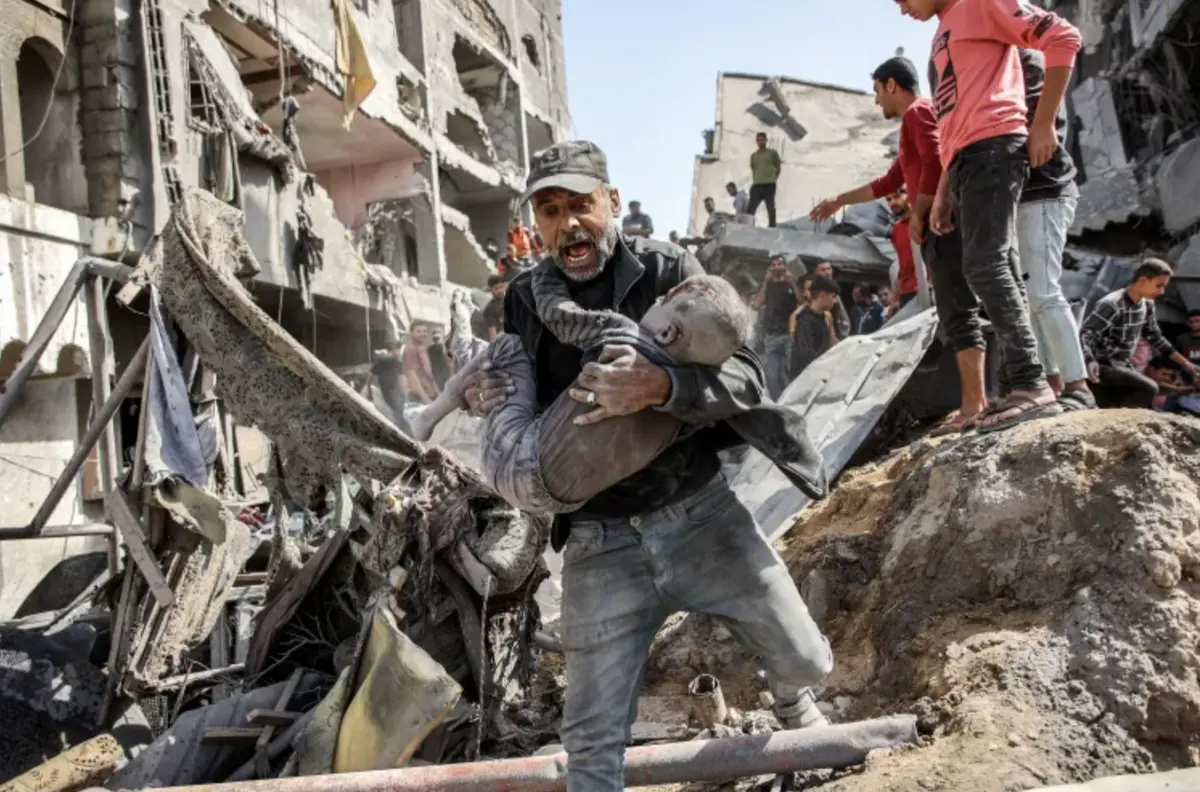
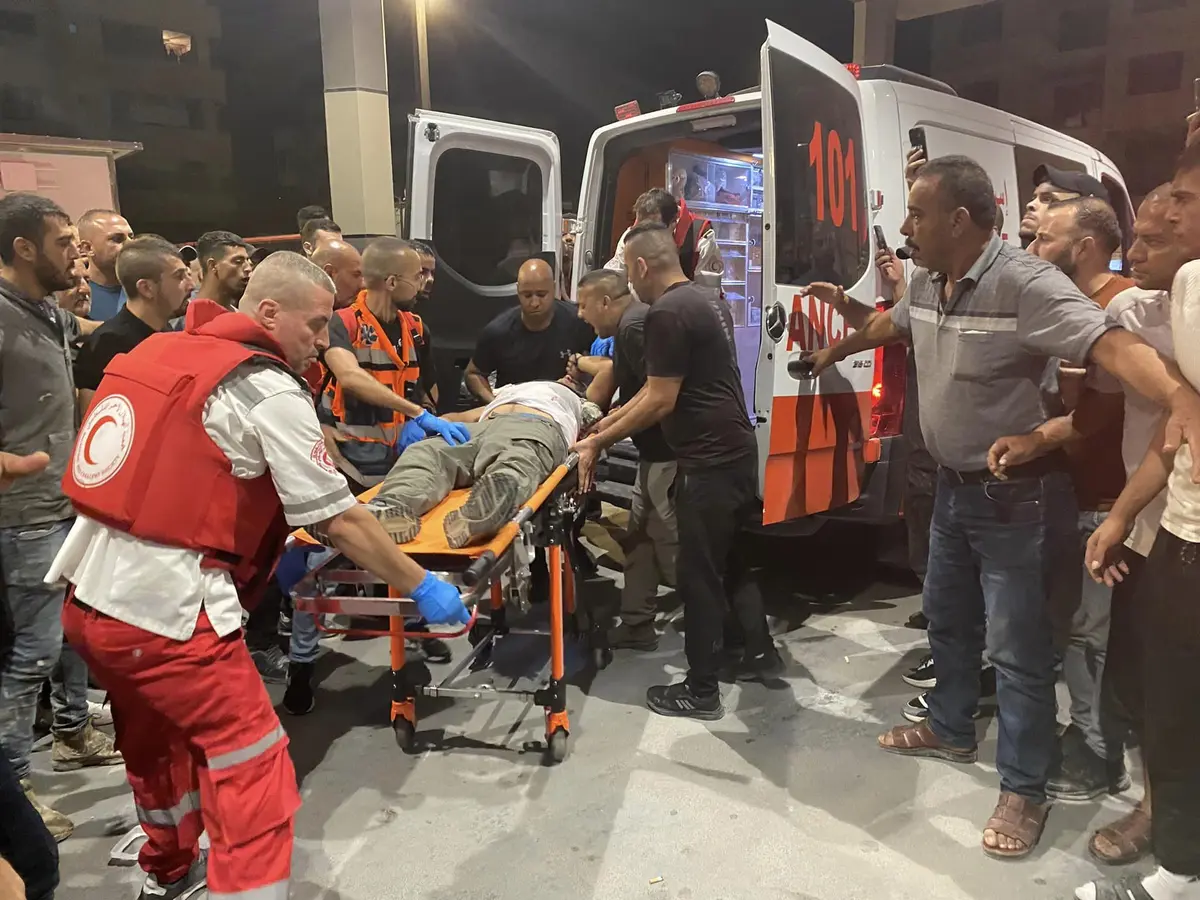
A number of citizens were killed and others were injured last night and this morning, Wednesday, as a result of the Israeli occupation's continued aggression on the Gaza Strip.


Two citizens were killed and others were injured in the bombing of the occupation warplanes in the north and south of the Gaza Strip.


Medical sources reported that a citizen was killed in the occupation's artillery shelling of Jabalia Al-Nazla.


The same sources added that another citizen was killed in the bombing of the Khirbet Al-Adas area, north of Rafah, by the occupation forces.

She pointed out that shrapnel injuries were recorded, as a result of an occupation drone throwing a bomb at citizens near the entrance to Nuseirat.


The occupation aircraft also bombed a populated house opposite Sultan Bakery in Al-Sabra neighborhood, southwest of Gaza City, which resulted in the death and injury of a number of citizens.


The occupation aircraft launched a series of violent raids on the town of Beit Lahia, north of the Gaza Strip.


Earlier, the occupation aircraft bombed a house inhabited by citizens and displaced persons belonging to the Kahlout family, near the electricity company in the Beit Lahia project, which led to the martyrdom of eight citizens and the injury of others.


The aggression on the Gaza Strip enters its 411th day, leaving 43,972 dead, the majority of whom are women and children, and injuring 104,008 others, in an incomplete toll, as thousands of victims are still under the rubble and on the roads, and ambulance and rescue crews are unable to reach them.

PALESTINE

Wed 20 Nov 2024 9:14 am - Jerusalem Time

Israeli forces launch arrest campaign in the West Bank

This morning, Wednesday, the Israeli occupation forces launched an arrest campaign in the West Bank.


In Ramallah, the occupation forces arrested citizen Mahmoud Munir Shalabi (40) years old, and his son, the child Taym (11) years old, during a raid on his home in the town of Mazra’ al-Nubani.


In Turmus Ayya, the occupation forces arrested citizen Naji Montaser Salama, after raiding his house. They also arrested citizen Ahmed Khazna, who is from Silwad, east of Ramallah, and works as an imam at the Kafr Malik Mosque, east of Ramallah.


In the Umm al-Sharait neighborhood in the city of al-Bireh, the occupation forces arrested the young man Muhammad al-Azhari, and raided the homes of the al-Shani and Nakhl families in the Jalazone camp, north of Ramallah, and arrested the young man Osama Fatah Allah al-Shani. In Abu Falah, northeast of Ramallah, the occupation forces seized a vehicle belonging to the citizen Majid al-Naasan and raided several homes and destroyed their contents.


In Bethlehem, the occupation forces arrested Ghaith Ibrahim Musa Nawawra (24 years old) and his brother Muhammad (20 years old) during the storming of the town and the firing of sound bombs and toxic gas at citizens’ homes.


In Hebron, the occupation forces arrested the two young men, Abdul Majeed Abu Taima and Ahmed Younis Al-Najjar, after raiding and searching their homes.


These forces also searched houses in the camp, detained citizens from the Abu Ta'ima, al-Tayti, al-Najjar families, and others, and interrogated them before releasing them.


The occupation forces also raided the town of Dura, the villages of Tabqa and Khursa, and Khirbet Salama south of Hebron, and searched several homes, the owners of which were identified as: Eichmann Abu Atwan, Izzat, Ayman and Muayad Izzat Odeh, Humam Hantash, Jihad al-Shahatit, and Raed Badawi Hamdan, and wreaked havoc on their contents.

PALESTINE

Wed 20 Nov 2024 9:12 am - Jerusalem Time

Israeli forces begin demolishing a house in occupied Jerusalem

Today, Wednesday, the Israeli occupation forces began demolishing a house in the Shuafat camp, north of occupied Jerusalem.


Local sources reported that the occupation forces stormed the Ras Khamis neighborhood in the camp, accompanied by a bulldozer, and demolished a house belonging to citizen Alaa Saleh Matar.


During last October, the occupation authorities carried out 34 demolition operations that affected 45 facilities, including 12 inhabited homes, 6 uninhabited ones, and 19 agricultural and other facilities. They also notified 38 other facilities of demolition.

PALESTINE

Wed 20 Nov 2024 9:06 am - Jerusalem Time

West Bank: Israeli settlers burn two vehicles in Ramallah

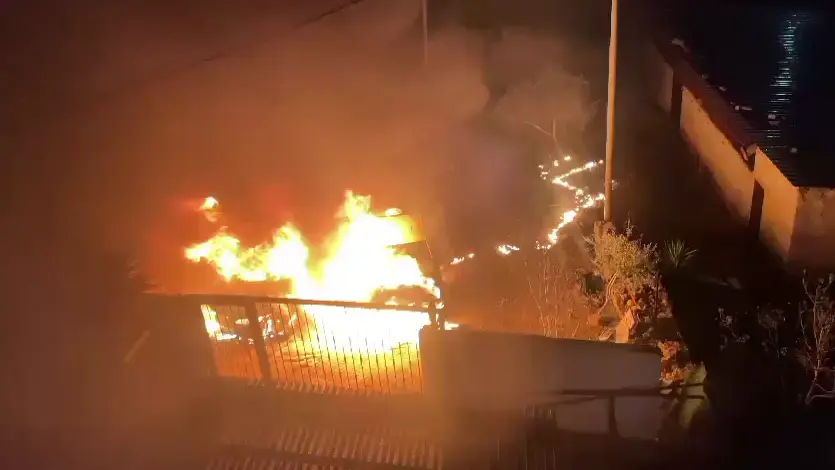
Settlers burned two vehicles at dawn on Wednesday after infiltrating the village of Al-Mazra'a Al-Gharbiya, northwest of Ramallah.


Local sources reported that the two vehicles belong to citizen Hassan Rajab Sandouqa.


Video clips circulated by activists on social media showed two vehicles on fire in front of the house of citizen Sandouqa in the western farm.


On November 4, settlers attacked the industrial zone in the city of Al-Bireh and burned 20 vehicles.

PALESTINE

Wed 20 Nov 2024 9:03 am - Jerusalem Time

Israel continues its aggression on Jenin and its camp for the second day in a row

The Israeli occupation forces continue their aggression on the city and camp of Jenin, for the second day in a row.


Local sources reported that the occupation forces arrested a number of citizens in the city of Jenin and its camp at dawn on Wednesday.


She added that the occupation forces raided a large number of citizens' homes in Jenin camp, and arrested a number of them, including a woman, while conducting a field investigation with a number of others, inside their homes.


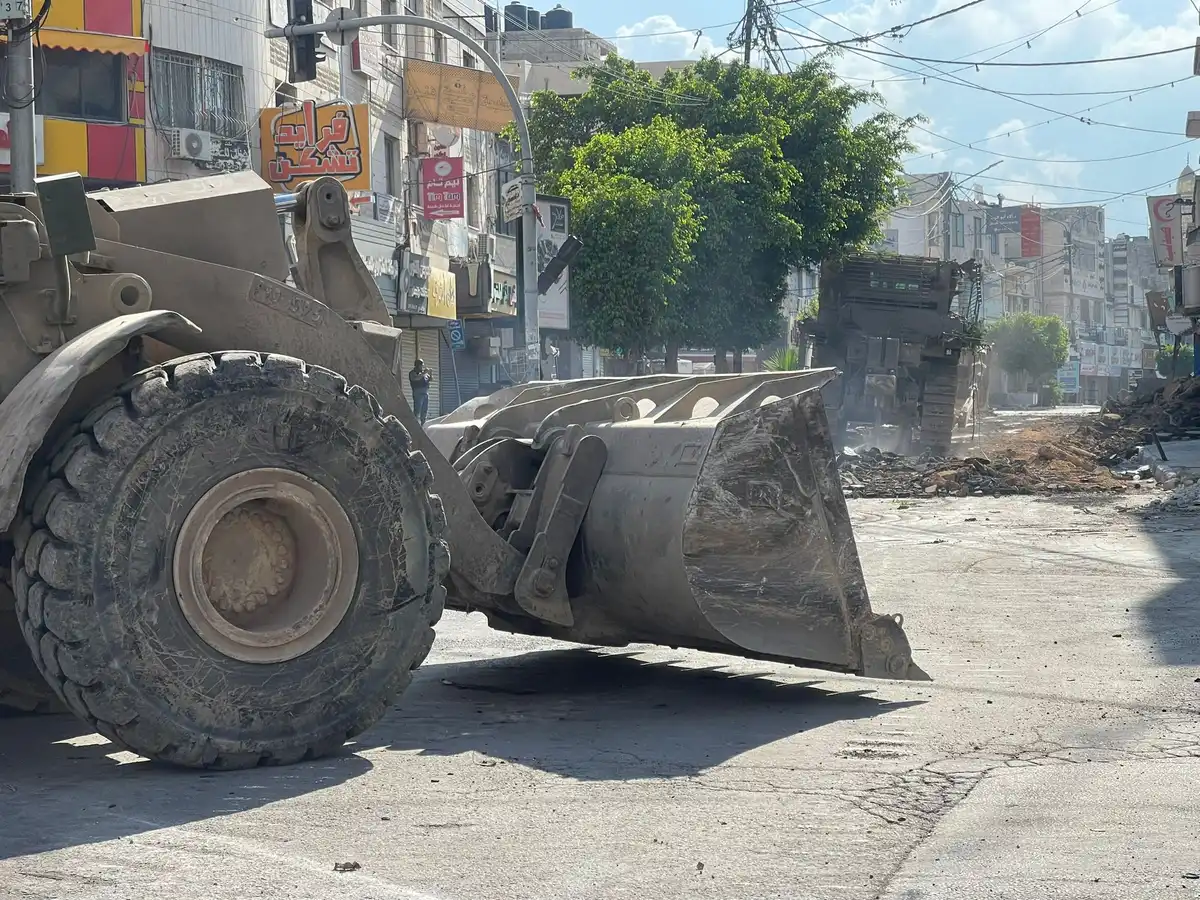
As the aggression on Jenin entered its second day, the occupation sent military reinforcements accompanied by bulldozers to the city of Jenin and the outskirts of its camp, while violent confrontations continued in the eastern neighborhood and neighborhoods of the camp.


The occupation bulldozers destroyed the power lines, which led to a complete power outage in the city of Jenin since dawn today.


In Jenin camp, the occupation soldiers turned some houses into military barracks, especially in the Abdullah Azzam and Jourat al-Dhahab neighborhoods, while drones continued to fly.


The occupation forces destroyed parts of the municipality stadium in the eastern neighborhood of Jenin, in addition to completely bulldozing Al-Madaris Street.


The Jenin Education Directorate announced the suspension of public and private schools and their conversion to electronic schools in the city of Jenin and its camp, due to the ongoing aggression.


The number of killed has risen since yesterday, Tuesday, to five, namely: Rami Al-Huwaiti, Firas Al-Jasser, Raed Abdul Rahman Sadiq Hanaysha, Anwar Nidal Tawfiq Saba’neh, and Adnan Suleiman Tazaz’a, while 9 others were injured by live bullets and shrapnel from a shell fired by an occupation drone.

ARAB AND WORLD

Wed 20 Nov 2024 8:57 am - Jerusalem Time

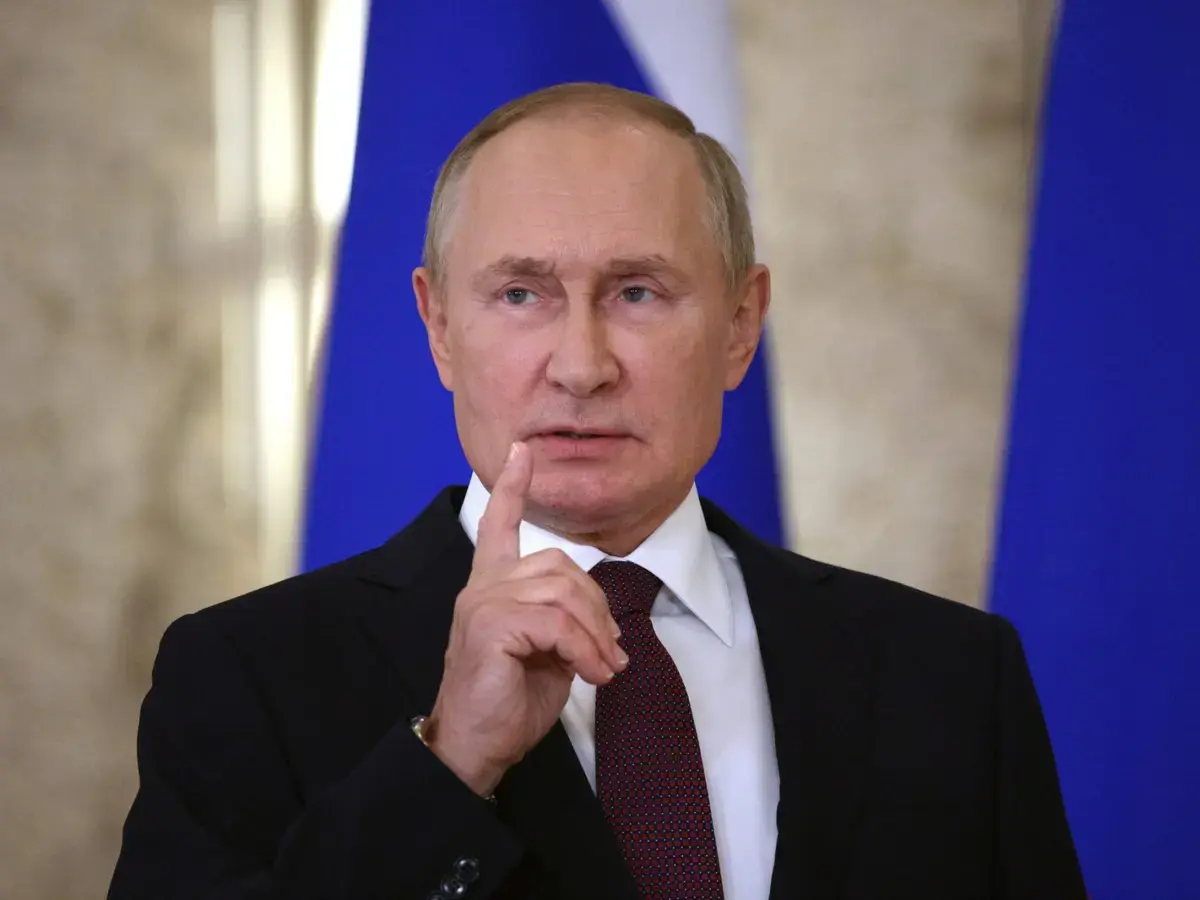
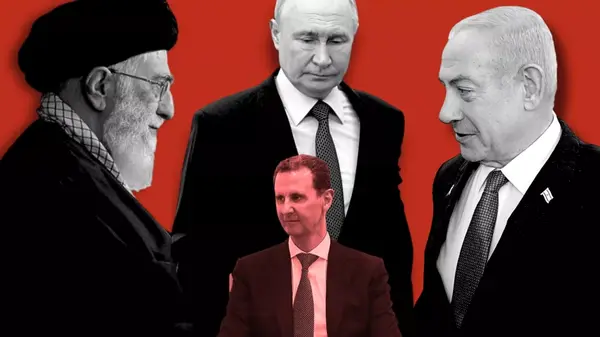
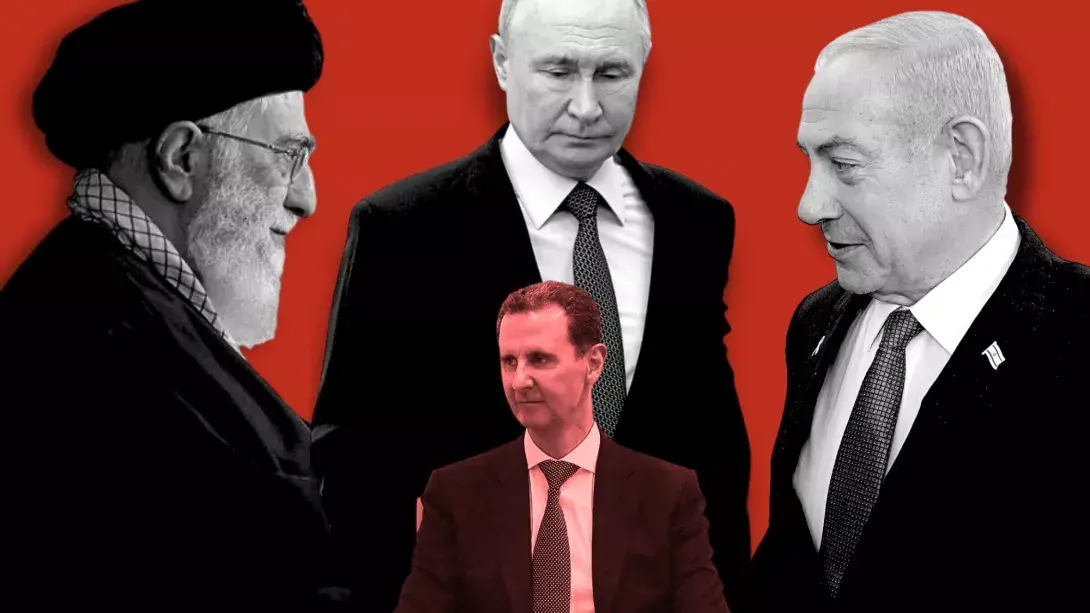
After Putin's decree... Is the world on the nuclear brink?

Professor Jamal Harfoush: President Putin’s signature on the possibility of using nuclear weapons is a dangerous shift in the rules of international deterrence

Talal Okal: Netanyahu will not back down from striking the Iranian nuclear program and may receive support and participation from the Trump administration

Dr. Dalal Erekat: Wars end at the negotiating table, and tensions usually precede diplomatic and political solutions

Nizar Nazzal: The world is approaching a dangerous scene that may lead to the use of "nuclear" and the possibility of slipping into a third world war

Dr. Raed Abu Badawi: The Biden administration wants to prepare Ukraine for a stronger negotiating position in preparation for Trump’s rule after supporting it with missiles

Dr. Saad Nimr: Nuclear threats, despite their seriousness, will remain part of the deterrence discourse and will not become a reality


International tensions and warnings of the world sliding towards a nuclear confrontation are escalating, due to the Russian-Ukrainian war and the escalation between Israel and Iran.


In separate interviews with “I”, writers, political analysts and university professors believe that fears are increasing about the effects of this complex crisis on global security and stability, stressing that the declared positions reflect a turbulent international reality, where nuclear threats have become part of the new deterrence game, at a time when major powers are competing for regional and international influence.


They point out that Russian moves, manifested in President Vladimir Putin signing a decree allowing the use of nuclear weapons, are an indication of dangerous changes that threaten the international system based on old balances.


On the other hand, the book and university professors point out that Israel stands at a strategic crossroads with the escalation of its threats to strike Iranian nuclear facilities, which could ignite a large-scale regional conflict.


In contrast, writers and university professors believe that diplomacy, despite the great challenges, remains the most appropriate way to ease tensions and prevent the world from sliding into an uncontainable third world war.


A global crisis of strategic dimensions characterised by nuclear threats.


Professor Dr. Jamal Harfoush, Professor of Scientific Research Methods and Political Studies at the University of the Academic Research Center in Brazil, believes that the world today is facing a complex and intertwined crisis with strategic dimensions characterized by direct nuclear threats and systematic regional escalation.


Harfoush asserts that Israel's repeated threats to strike Iranian nuclear facilities are not just passing statements, but rather come within a long-term strategy aimed at undermining and restricting Iran's growing influence in the Middle East.


Harfoush believes that this Israeli escalation increases the possibility of a large-scale regional conflict, especially in light of the increasing turmoil in international alliances and the divergence of interests between the great powers.


On the other hand, Harfush refers to the decree issued by Russian President Vladimir Putin regarding the possibility of using nuclear weapons, describing it as a dangerous shift in the rules of international deterrence.


Harfoush explains that the world is witnessing a transition from a stage in which nuclear weapons were considered a last resort to a new stage represented by the actual threat of nuclear escalation.


This shift, according to Harfoush, reflects the erosion of the international system based on the principles of the United Nations Charter, as legal rules are no longer able to control the behavior of major powers, which increases the complexity of the international scene and threatens the stability of the global system.


He believes that the continuation of the regional war for a long period may be part of an implicit American strategy, aiming to use the current conflicts as a political pressure card.


Harfoush points out that the US administration may benefit from prolonging these crises, especially in light of the internal political division that the country is witnessing, while some parties are counting on a transitional phase between the administration of President Joe Biden and the return of President-elect Donald Trump, who may seek to invest in the next phase to achieve strategic gains, which complicates diplomatic efforts and delays reaching peaceful solutions.


Regarding the issue of using nuclear weapons, Harfoush confirms that this option is not excluded, but it is subject to complex military and political calculations. From a military perspective, the use of nuclear weapons requires the availability of targets of decisive strategic value, and the ability to achieve a relative balance after executing the strike, which makes it difficult to resort to it even in the most severe scenarios.


Legally, Harfoush stresses that the use of nuclear weapons represents a flagrant violation of the principles of international humanitarian law and the United Nations Charter, as it leads to widespread destruction and leaves behind catastrophic human losses.


Exploiting legal loopholes or claiming “self-defense”


But Harfoush warns that some major powers such as Russia or the United States may resort to exploiting legal loopholes or claiming “self-defense” as an excuse to justify the use of this type of weapon.


Politically, Harfoush believes that resorting to nuclear weapons will lead to a major turning point in the international system, as it will redraw international alliances and weaken international institutions, such as the United Nations, which could push the world into a state of unprecedented chaos.


Harfoush points out that signs of a third world war are looming on the horizon, but questions remain about the form of this war in the modern era, which no longer depends only on traditional military confrontations, but also includes economic, cyber, and information wars.


Harfoush believes that the simultaneous escalation between major powers in multiple geographical theaters, such as Ukraine and the Middle East, increases the risk of a comprehensive conflict.


Harfoush believes that the frantic race to strengthen nuclear arsenals further complicates the situation, while Trump’s statements on these issues reflect an awareness of the nature of geopolitical transformations, as competition between the great powers revolves around resources and strategic regions, at a time when the world is sharply divided between East and West.


Despite the importance of diplomacy as a tool to reduce tensions, Harfouch points out that it faces major challenges due to the erosion of trust between the actors.


The current crises, according to Harfoush, require a new negotiating framework that goes beyond traditional models, and requires the availability of real political will, supported by effective international guarantees.


However, Harfouche stresses that diplomatic solutions will not be effective unless the international system is reformed to become more just and transparent, with the need to involve regional parties in decision-making.


The world is living in the atmosphere of a third world war


Writer and political analyst Talal Okal believes that the world is practically living in the atmosphere of a third world war, the features of which began to take shape with the Russian war on Ukraine, which came as a result of a series of American moves and provocations that threaten Russia's strategic security.


The United States, according to Awkal, has spared no effort in mobilizing NATO's economic and military capabilities with the aim of defeating Russia, and in the face of this challenge, China, North Korea, and Iran have shown their explicit support for Russia, thus forming a strong opposition front.


Awkal points out that US President Joe Biden, taking advantage of his remaining time in the White House, gave Ukraine the green light to use long-range US missiles to bombard the Russian interior, which is considered a crossing of Russian red lines. This prompted Russia to amend and activate its nuclear doctrine, which threatens an unprecedented escalation of the conflict in the European arena, in an attempt to block the promises of President-elect Donald Trump, who pledged to stop the war if he returns to power. Thus, the tension between the policies pursued by Biden and those that Trump might adopt if he wins the elections again is highlighted.


Regarding the situation in Asia, Awkal points out that Taiwan remains an explosive hotbed, especially since Trump promises to put competition with China and containing it at the top of his foreign policy priorities.


Awkal believes that this dynamic in Asia poses a constant threat, and keeps the situation explosive at any moment.

As for the Middle East, Awkal explains that the situation represents another episode in the new world war, embodied in particular in the struggle over who controls the region, which explains the intense Western support for Israel.


In this context, Awkal believes that Israeli Prime Minister Benjamin Netanyahu will not back down from his dream of striking the Iranian nuclear program, a goal that may receive support and participation from the Trump administration after his return to power. However, the question hanging over him here is: Will Israel dare to implement this plan during Biden’s term, or will it wait for the Trump administration?


Awkal also points out that launching a military strike against Iran requires, in return, neutralizing the fronts currently open against Israel, especially in light of the enormous pressure exerted by the axis of resistance, which directly threatens the Israeli home front.


Despite the potential role of diplomacy in achieving tactical truces, Awkal believes that the conflict in the region will not subside, stressing that the Palestinian cause, with its land and people, will remain at the heart of this escalating conflict.


The secret of nuclear balance is crossing international red lines


Dr. Dalal Araikat, Professor of Diplomacy and Conflict Resolution at the Arab American University, believes that the world is going through a dangerous phase that is witnessing an unprecedented entanglement of regional and international crises, warning that escalating tensions on multiple fronts threaten global stability.


Erekat specifically highlights the repeated Israeli threats to strike Iranian nuclear facilities, along with the continued Russian escalation in Ukraine, noting that this prolongs the war and reflects a decline in commitment to international laws, amid an increasing focus on military options.


According to Erekat, the major powers are seeking to change the balance of power in their favor, which increases the likelihood of major clashes. If the parties continue with this approach, we may find ourselves facing a catastrophic scenario that requires intensive global action to limit escalation and prevent a slide into a large-scale direct confrontation.


Despite the escalating threats to use nuclear weapons, Erekat points out that actually resorting to this option would be devastating for everyone, as nuclear deterrence is based on the concept of mutual fear of the collapse of the global order and the annihilation of humanity.


Erekat believes that breaking the nuclear balance means crossing international red lines, which will lead to the complete isolation of any party that uses nuclear weapons.


However, Erekat believes that the ongoing threats put the world on constant alert and raise growing concerns about the possibility of escalation.


Erekat stresses that the danger of a third world war still exists, although it is not certain, in light of the current situation.

Erekat explains that the parties involved in the conflicts are aware of the magnitude of the catastrophe that could result from a comprehensive escalation, noting that the provocative statements, whether from US President-elect Donald Trump or other world leaders, may reflect part of the global political game, but at the same time highlight the growing concern about the accumulation of crises and conflicts.


Erekat stresses the importance of seeking diplomatic solutions and rebuilding trust between the conflicting parties, as diplomacy is still a possible option, but it faces major obstacles in light of the military escalation and political stubbornness.


Erekat points out that history confirms that wars eventually end at the negotiating table, and tensions usually precede diplomatic and political solutions, which requires the international community to intensify efforts to open channels of dialogue, even if they are indirect, and to work hard to calm the escalating tensions.


Erekat believes that the international community cannot stand idly by, but rather must activate the role of international institutions such as the United Nations, to intensify pressure to resume negotiations before reaching the point of no return.


Erekat points out that Trump's statements about establishing a world free of wars are based on a vision that focuses on prosperity and investment, through profitable scenarios that can satisfy the various conflicting parties, but they remain part of a political discourse that may be far from the crisis-ridden reality.


Tactical nuclear strikes with limited impact over a narrow geographical area


Nizar Nazzal, a researcher specializing in Israeli affairs and conflict issues, warns that the world is approaching a dangerous scene that may lead to the use of nuclear weapons, but not in the broad strategic sense that destroys entire cities, but rather through tactical nuclear strikes with limited impact on a narrow geographical area, pointing to the possibility of slipping into a third world war.


Nazzal explains that these developments come against the backdrop of the escalation of the conflict between Russia and Ukraine, as the United States has given Ukraine the green light to use missiles capable of striking deep inside Russia, in a clear escalation that threatens to turn the conflict into dangerous levels.


On the other hand, Nazzal warns that Israel may exploit the regional chaos to carry out an attack on Iranian nuclear facilities.


"This is the golden moment for Netanyahu, who is trying to exploit the instability extending from Gaza to the West Bank and the stalled negotiations in Lebanon, to strike Iranian nuclear facilities," Nazzal said.


Nazzal believes that the tension on the northern front, and the increasing talk about an Israeli desire to expand the scope of its operations to southern Syria, reflects Israeli preparations for the possibility of targeting the Iranian nuclear program, with possible American assistance.


Regarding Iranian reactions, Nazzal explains that Tehran may have reconsidered any preemptive attacks on Israel, and that it is preparing for the repercussions of any potential attack on its nuclear facilities.


“Having Trump in power gives the Israelis greater comfort and clear support, which increases the chances of carrying out such a strike,” Nazzal says.


Nazzal warns that any Israeli attack on these facilities could cause massive chaos in the region, and may lead to the leakage of nuclear radiation and widespread chaos in the Middle East.


As for the possibility of a third world war breaking out, Nazzal believes that this scenario may be imminent if the conflict escalates, whether on the Ukrainian-Russian front or if a conflict breaks out between the United States and China, something Trump has warned of more than once.


"Russia is a major power with enormous potential, and if it is exposed to Ukrainian attacks that hit the Russian depth, things may move towards the use of tactical nuclear weapons, and thus the possibility of expanding the conflict," Nazzal said.


On the other hand, Nazzal points out that the world is witnessing changes in the balance of power that do not please the United States, as there is the rise of new powers such as China and Russia, which seek to reshape the global order in a way that reduces American hegemony.


In this context, Nazzal points out that these complex dynamics increase the chances of a third world war, especially with the continuation of tensions in other regions such as the two Koreas, Iran and Israel.


"It has become difficult to find comprehensive diplomatic solutions that satisfy all parties, which increases the chances of a comprehensive military escalation," Nazzal says.


Nazzal expresses his pessimism, saying: “I believe that the world is moving steadily towards a third world war. We are witnessing a narrowing of options for political solutions, and military escalation has become the most likely possibility.”


Possible modification of Russian nuclear doctrine


In turn, Dr. Raed Abu Badawiyya, professor of international law and international relations at the Arab American University, believes that the circulating reports about a possible amendment to the Russian nuclear doctrine, which has not yet been officially approved, came as a Russian response to the American move that allowed Ukraine to use long-range missiles to strike deep inside Russia. However, Kiev has not used these missiles yet, which leaves the door open to other interpretations about the context of this escalation.


Abu Badawiya believes that there is a development in the escalation between Moscow and Washington, as the administration of US President Joe Biden is working to encourage Ukraine to direct painful strikes at Russia, with the aim of improving Kiev's position in any future negotiations.


Abu Badawiya believes that the matter is not related to a military escalation following America’s quest to support Ukraine with missiles; rather, the Biden administration wants to prepare Ukraine for a stronger negotiating position in preparation for the rule of Trump, who has repeatedly announced that he intends to end the war after winning the US presidential elections.


Abu Badawiya points out that this American strategy comes as expectations indicate that President-elect Donald Trump will push to put an end to this Russian-Ukrainian war after taking over the reins of power in the White House.


Preparing the ground for diplomatic solutions


Abu Badawiya believes that these political dynamics seek to prepare the ground for diplomatic solutions, with the possibility of starting informal talks driven by international initiatives.


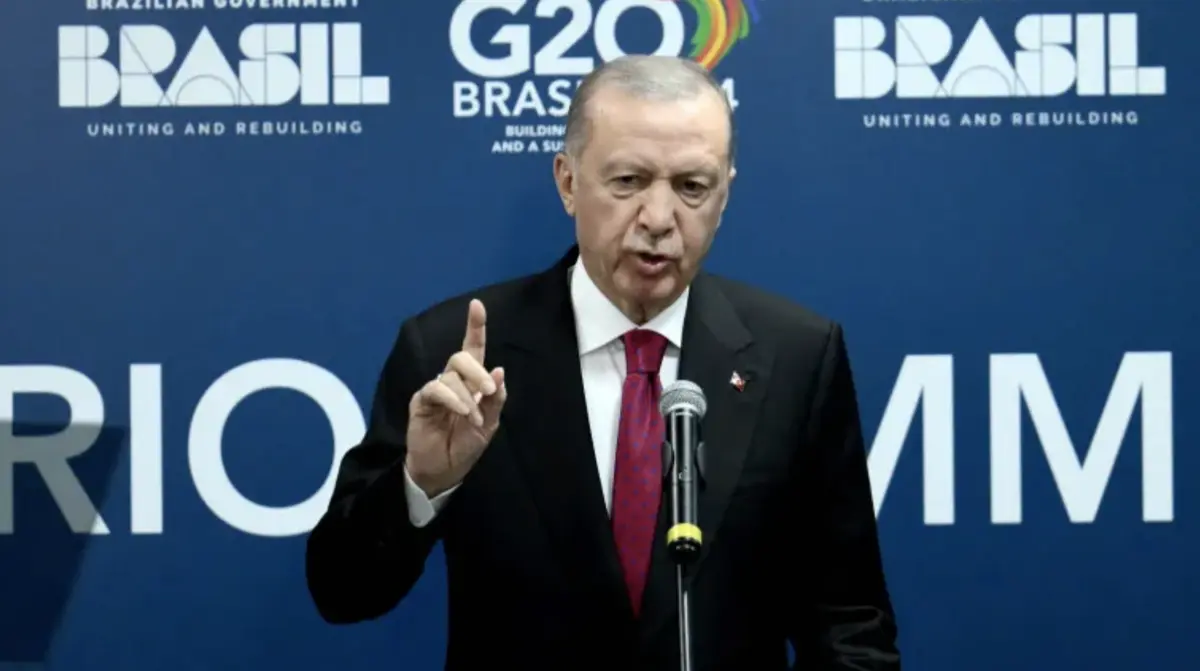
It refers to the Turkish proposal, in which Türkiye, led by President Recep Tayyip Erdogan, seeks to provide a solution to the conflict during the G20 summit.


Abu Badawiya explains that the Turkish proposal includes halting military operations, establishing an international buffer zone, and postponing Ukraine’s accession to NATO for at least ten years, noting that some American circles are suggesting up to 20 years as a possible postponement.


Abu Badawiya points out that this proposal has begun to gain increasing acceptance among some European countries, which realize that Trump's return may mean forcing Ukraine to sit at the negotiating table.


Abu Badawiya points out that Europe is the most affected by this conflict, as European countries may not be able to support Ukraine independently of the United States, which makes the future of aid dependent on shifts in American policy.


Abu Badawiya believes that Trump, after taking power, will not stop military support for Ukraine directly, but may keep it in place in one way or another until the negotiating table is secured.


The Turkish proposal is the basis for any possible settlement.


According to Abu Badawiya, the near future is likely to witness tangible steps towards ending the conflict through international mediation, which will not allow a diplomatic victory for any party without balanced gains.


At the same time, the Turkish proposal, according to Abu Badawiya, remains the basis for any possible settlement, while ensuring that Ukraine's defensive capabilities are enhanced with advanced weapons to ward off any subsequent Russian threats.


Abu Badawiya points to essential details including negotiating the areas controlled by Russia, freezing military action, and establishing a buffer zone under international supervision. In return, Ukraine could obtain agreements to enhance its defensive capabilities with qualitative weapons that would guarantee its protection from any future Russian advance. This reflects the current escalation of tensions and talk of mutual nuclear escalation, which remains an unlikely possibility, but keeps everyone on alert.


In general, Abu Badawiya asserts that all current scenarios are moving towards peaceful solutions driven by changing international circumstances, and that diplomatic efforts will play a major role in the near future. The war may not end quickly, but the acceleration of events indicates upcoming negotiations, driven by changes in the White House and increasing international pressure on the parties to the conflict.


Use of nuclear weapons as a deterrent message


Dr. Saad Nimr, Professor of Political Science at Birzeit University, believes that Russian President Vladimir Putin’s recent signing of the possibility of using nuclear weapons comes as a deterrent message directed primarily at Western powers, specifically those allied with the United States of America.


Nimr explains that the Russian move is based on Washington's decision to allow Ukraine to use long-range missiles capable of reaching deep into Russia, which prompted Moscow to resort to nuclear threats as a means of pressure and a means of deterring any escalation attempts.


Nimr believes that with the escalation of global tensions, fears are growing of the possibility of a third world war, especially with the dangerous developments and controversial statements by the leaders of major countries, and the possibility of using advanced nuclear weapons.


On the other hand, Nimr points to the Israeli dimension in this tense scene, as Israeli Prime Minister Benjamin Netanyahu sees the current circumstances as an irreplaceable opportunity to carry out strikes against Iranian nuclear facilities.


"In normal times, it would be very difficult to launch such attacks, but with tensions in the region running high, Netanyahu believes this may be the right moment to deliver a fatal blow to the Iranian nuclear project," Nimer says.


Nimr points out that Netanyahu's calculations depend largely on the possibility of extending the war, and taking advantage of the tension between Iran and Israel, to create a wider space for potential Israeli plans in the region.


Regarding developments related to the United States, Nimr explains that American policy towards these crises is largely dependent on the positions of President-elect Donald Trump.


He says: "Trump previously stated during his election campaign that he would work to end the war in Ukraine, and he does not prefer to engage in long-term wars, but everything depends on how the situation develops on the Ukrainian and Middle Eastern fronts."


Netanyahu will try to influence Trump's policies


Nimr points to Netanyahu's expected attempts to influence Trump's policies, as Netanyahu may seek to convince him of the need to continue supporting Israel, and perhaps try to pressure him to launch attacks against Iran and its allies, under the pretext of eliminating the resistance forces supported by Tehran.


"Despite these mutual threats, the actual resort to nuclear weapons is still far away," he added.


“Even if Russia threatens to use this type of weapon, the situation will remain within the framework of threats only, and the use of nuclear weapons will drag the whole world to the brink of the abyss, and will pose a great danger to Europe and the American bases deployed there. Modern nuclear weapons have enormous destructive capabilities, and if they are used, the catastrophe will be devastating for large parts of the world, including Russia, Europe, and the United States,” he says.


Nimr stresses that nuclear threats, despite their seriousness, will remain part of the deterrence discourse and will not become reality.


Regarding regional scenarios, Nimr stresses that the tension after October 7 has become worrying and has paved the way for the possibility of a regional war. He says: “The world is now facing strong winds of regional war, and the escalation in the Middle East may extend to take on more dangerous dimensions if the United States decides to intervene militarily against Iran. In the event of a large-scale conflict, the American bases in the Arabian Gulf region will be a potential target, which will lead to other interventions and perhaps a new world war.”


Nimr believes that an accurate reading of the situation requires daily and careful monitoring of the actions and field movements of major countries, and not just the statements of their leaders.


Diplomatic path still an option


As for possible solutions, Nimr believes that the diplomatic path is still an available option if the United States has the political will to limit the escalating wars.


Nimer points out that Trump promoted himself during the election period as a peacemaker who would end crises in Ukraine and the Middle East, and if he succeeds in doing so, it could be a major diplomatic move, but it depends on his willingness to put pressure on Netanyahu.


“The relationship between Trump and Netanyahu may seem good, but if Netanyahu violates any of Trump’s demands, it may turn into a hostile relationship,” Nimer says. “Trump is a person who does not follow traditional strategies, but is often influenced by his personal inclinations in dealing with crises.”


Nimr believes that the future of the situation depends on the US administration led by Trump and its ability to read developments accurately, as the diplomatic scenario and military escalation remain open, and the path the world will take depends on the nature of relations between the major international powers and the extent of their commitment to peaceful solutions.


PALESTINE

Wed 20 Nov 2024 8:54 am - Jerusalem Time

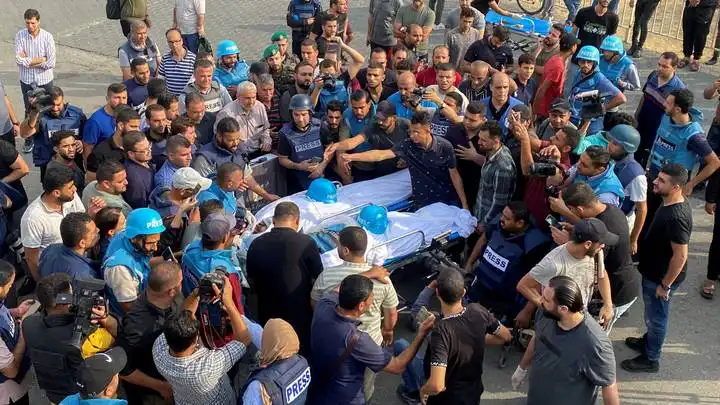
Targeting journalists with killing and arrest...an attempt to cover up the resounding crime

Shorouk Al-Asaad: Israel's continued targeting of journalists is due to the absence of real international accountability for its crimes

Suleiman Basharat: Targeting Palestinian and Lebanese journalists because they are a fundamental reference in conveying the true image to the world

Murad Al-Sabaa: Israel could not completely cover up the truth, and electronic media has begun to play a pivotal role in conveying the narrative

Nujoud Al-Qassem: Targeting journalists hinders documenting events from different angles, such as conveying human stories that affect the public.

Nabhan Khreisha: Israel is waging a massive media battle aimed at spreading misleading information and influencing Western public opinion

Majed Hadeeb: Israel seeks to prevent its true face from being revealed...and the Palestinian media message has not stopped despite the killing and destruction


Amidst the escalation of the Israeli occupation forces’ targeting of journalists, the latest of which was the assassination of Hezbollah spokesman Mohammed Afif, and before that the martyrdom of a number of journalists in the Gaza Strip, ongoing Israeli efforts are emerging to silence the truth that exposes the occupation’s crimes against the Palestinians and the Lebanese, in order to establish Israel’s official narrative.


The Palestinian Journalists Syndicate, journalists and writers, in separate interviews with “I”, confirm that the absence of international accountability, and the satisfaction of symbolic condemnations, fuels the continuation of Israeli violations and crimes against journalists, and that the international community bears responsibility for the continuation of these crimes, due to the continued silence and the absence of serious punitive measures against Israel.


They stress that the Israeli motives behind targeting journalists are constant, both before and after the ongoing war, in an attempt to intimidate them and suppress any voice that opposes the Israeli narrative, but the efforts of Palestinian and Lebanese journalists remain vital in exposing these violations, despite the enormous risks they face.


Israel's attempt to silence any other narrative that challenges its own


Shorouq Al-Asaad, a member of the General Secretariat of the Journalists Syndicate and a journalist at Monte Carlo International Radio, explains that the motives behind Israel’s targeting of journalists remain constant before and after the war, and are represented in its attempt to silence any other narrative that might challenge its official narrative.


Al-Asaad asserts that Israel's primary goal is to terrorize journalists, without distinguishing between their nationalities or identities, and that this targeting is a crime, from a humanitarian and journalistic perspective, and is a war crime that requires punishment.


She believes that Israel's continued targeting of journalists is due to the lack of real international accountability, noting that condemnations alone are not enough.


“Condemnations without actual punishment or legal accountability for those responsible for these crimes before international courts are not enough,” says Al-Asaad. “Israel continues its crimes because it knows that the international community is content with condemnations and does not take binding steps to hold it accountable, which gives it a green light to continue its violations.”


Al-Asaad explains that Israel is sending a message that the condemnations do not concern it, and that it will continue its actions without deterrence.


Al-Asaad points out that the international community bears a great responsibility for the continuation of these crimes, as it allows Israel to act without accountability, despite the world’s countries signing human rights conventions.


Al-Asaad stresses that merely condemning makes the international community a partner in the crime, because it did not impose sufficient sanctions or pressure to stop the Israeli violations.


Despite the escalation of Israeli attacks against journalists, Al-Asaad asserts that Israel has not succeeded in silencing the Palestinian narrative, praising the courage of journalists who report events from Gaza, the West Bank and other contact areas.


Al-Asaad points out that the journalistic work carried out by journalists in the field is heroic, because thanks to them the world has learned the truth about what is happening. Despite the deliberate targeting of journalists, which in many cases led to their physical and psychological harm, and the killing of some of them, Palestinian journalists continued to perform their duty to convey the Palestinian narrative to the world.


Al-Asaad stresses the need for the international community to take serious steps to stop the genocide against Palestinians, including journalists, and to assume its responsibilities by holding Israeli war criminals accountable.


She stresses that the world must abandon the policy of double standards and adhere to the values of international law and human rights that it claims to believe in, warning that failure to implement these values encourages Israel to continue its violations.


According to the Journalists Syndicate, 180 journalists have been martyred since October 7, 2023, including 179 journalists who were martyred in the Gaza Strip and one martyr in the West Bank, in addition to about 400 journalists who were wounded, 135 cases of arrest were recorded, and 88 institutions were targeted, including 73 institutions in Gaza that were completely demolished and the rest were closed in the West Bank.


The occupation uses the narrative to try to establish its presence


Writer and political analyst, journalist Suleiman Basharat, explains that the Israeli occupation, since the establishment of its state in Palestine, has relied essentially on narrative and storytelling as a basic tool to consolidate its existence and justify its practices.


Basharat asserts that the occupation is focusing on the fact that what is happening is not just a military and political conflict, but also a conflict over public awareness, and on trying to engineer peoples’ perceptions and establish the idea that the Israeli presence is not alien or colonial, but rather authentic and rooted. This strategy dates back to the period before 1948, specifically since the Balfour Declaration was announced in 1917, when the Zionist movement tried to evoke history, religion and culture to link its existence to this land.


According to Basharat, the Israeli project seeks to integrate the religious narrative with the historical and cultural narrative, reinforced by values and principles to form the civilizational basis of the occupation. This connection is not arbitrary; for every state or empire that seeks to assert its identity, there must be a narrative that makes it acceptable and understandable to societies. The Israelis strive, through these means, to present their entity as a rooted project and not an alien one, which explains the importance of creating a positive and organized image in the minds of the masses, whether through the media or educational institutions.
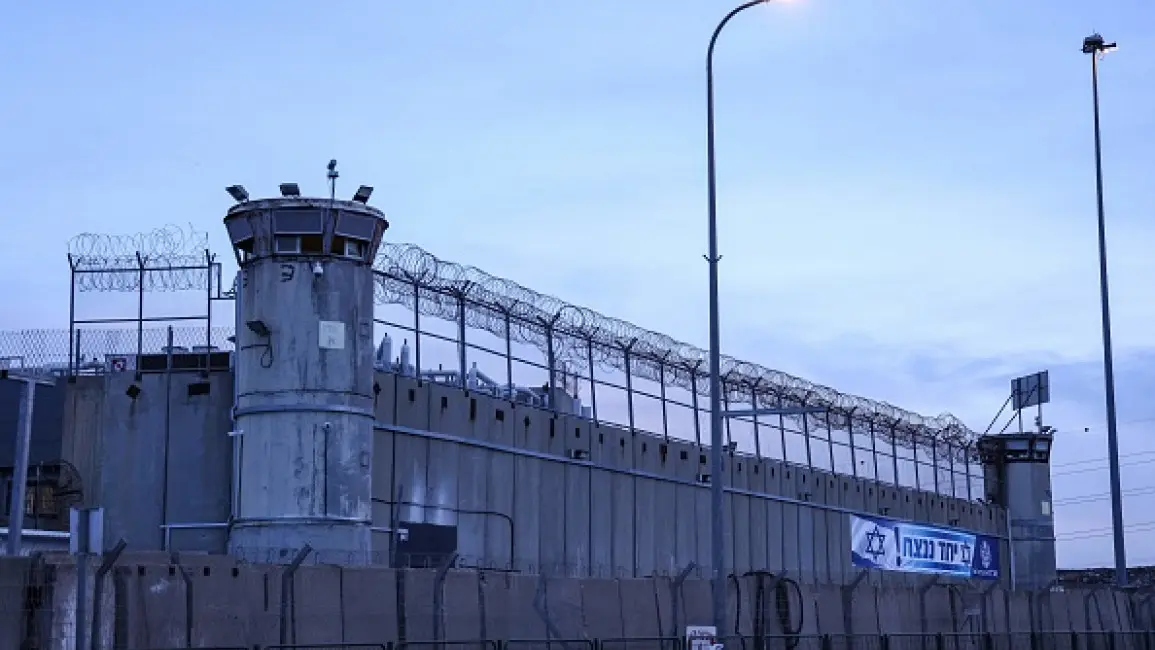

In this context, Basharat stresses that any threat that exposes the falsity of the Israeli narrative becomes a direct target, whether through international institutions that document the occupation’s violations or media outlets that reflect the reality of what is happening in the Palestinian territories or Lebanon.


Basharat points out that the Israeli occupation does not hesitate to cast doubt on the reports of these parties, accuse them of misleading or attempt to demonize them, and if these methods fail, it turns to besieging their activities with the aim of reducing their influence, and even targeting and killing journalists.


Basharat stresses that Palestinian and Lebanese journalists constitute a basic reference in conveying the true image to the world, hence, the Israeli occupation works to target them through killing, arrest, threats, or distorting their image.


Basharat stresses that the ultimate goal of the Israeli occupation is to silence voices opposing its narrative and prevent the publication of facts that undermine its project. In this way, the occupation creates an information vacuum that it fills with its narrative.


According to Basharat, the occupation also relies on the tactic of repeating lies until they are believed. By presenting half-truths, the minds of recipients are manipulated, as many fall into the trap of false information mixed with a part of the truth. Herein lies the secret of its success in building its narrative among the masses, as this narrative is linked to huge promotional mechanisms funded by media empires subject to global Zionist influence.


Basharat expresses his regret that some media outlets sometimes fall into the traps of Israeli propaganda, either because of the rush to transmit the news or because of the lack of alternative sources, and thus the Israeli narrative becomes the primary source of information, which enhances its spread without refutation or doubt.


Basharat points out that this raises important questions about Israel’s targeting of official spokesmen, such as Hezbollah in Lebanon or journalists in Gaza. The Israeli occupation does not want strong voices to appear that contradict its narrative, but rather always seeks to promote a single narrative that imposes itself on the world. By controlling the media, the occupation can control information and turn it into a tool that serves its interests.


Basharat believes that international support for the occupation’s practices, or at least the complete silence towards its crimes, is explained as part of international hegemony. The United States and Western colonial countries such as France, Britain and Germany control international institutions, and even when these institutions try to document the occupation’s violations, they remain unable to take effective measures because of their connection to the interests of the major powers.


Basharat points out that political hegemony is governed by strategic considerations, especially those related to the justifications of “self-defense” promoted by the occupation, or to allegations of “anti-Semitism” that prevent it from being held accountable.


Israeli focus on military and media power


Journalist Murad Al-Sabaa points out that Israel is focusing in this war on the Gaza Strip and Lebanon on two main forces: military and media power.


Al-Sabaa highlights how the Israeli media relies on addressing the interior only, as the Israeli public is isolated from any source of information other than the Hebrew media, which only conveys what the occupying state wants. Despite the failures of the Israeli army and the losses it suffers, the Hebrew media remains a means of planting the misleading official narrative in the minds of Israelis, even with the difficulties in concealing the numbers of dead and the security problems.


Al-Sabaa believes that Israel is aware of the danger of the global media and its influence on international public opinion. For this reason, it follows a strategy to prevent the publication of facts documenting its crimes in the Gaza Strip and Lebanon. It fears the impact of this coverage on Western peoples, especially in Europe and the United States, where strong pressure campaigns may be formed on their governments.

Al-Sabaa asserts that Israel is wary of the media being able to expose its crimes that it wants to commit in secret, such as genocide and punitive practices against civilians, including the policy of starvation.


Regarding the assassination of Hezbollah's media spokesman, Al-Sabaa believes that his statements enjoy credibility among the people, based on the history of trust built by the former Secretary-General, the martyr Hassan Nasrallah, which is something Israel does not want in the context of obscuring the facts.


Al-Sabaa asserts that Israel targets journalists in Lebanon and Gaza under the pretext that they work with or support the resistance, and seeks to give journalists a military character to justify killing and targeting them.


This strategy, according to Al-Sabaa, comes within the framework of Israeli efforts to erase the narratives conveyed by the press, and present them as part of the war on terrorism.


Al-Sabaa reiterates that Israel does not care about international condemnations, and despite the continuous statements from international human rights and press institutions, it knows that its military and media power exceeds any possible pressure.


Al-Sabaa expresses his lack of confidence in the ability of the international community to take effective steps against Israel, explaining that Israel, with the support of its influential media, is able to pressure major countries and present itself as a victim.


But Al-Sabaa believes that the international community can take important measures, such as declaring Israel a state that does not respect freedom of the press and human rights, although these measures will not prevent the occupation from continuing its crimes.


On the other hand, Al-Sabaa points out that, despite everything Israel does, it has not been able to completely obscure the truth, as electronic media has come to play a pivotal role in conveying the narrative, as it makes it easier for the “citizen journalist” to take photos and videos and send them via applications such as WhatsApp and Telegram, which allows professional journalists to access, verify and publish these materials.


Al-Sabaa believes that electronic journalism, supported by artificial intelligence technologies, helps verify the credibility of media materials and ensure that they are not tampered with, which ensures the continued transmission of Israeli crimes.


The nature of the war affected the nature of the coverage.


Journalist Nujoud Al-Qassem believes that the real motives behind Israel’s targeting of journalists, and specifically the spokesman for Hezbollah in Lebanon, or journalists in the Gaza Strip, are the same ones that drive it to target civilians in Lebanon and Gaza.


Al-Qassem explains that these motives are no different from those behind the bombing of hospitals and medical staff, targeting civilians in their homes, launching raids on camps in the West Bank, and persecuting displaced persons in refugee camps.


Al-Qassem points out that Israel is targeting everything without international deterrence, taking advantage of the absence of any decisive global action, which encourages it to persist in its aggressive policies.


Al-Qassem points out that the world is not content to stand by and watch what is happening, but rather some international powers are providing direct support to Israel, which strengthens its insistence on continuing the war of extermination in Gaza and Lebanon.


Al-Qassem confirms that Israel's strategic goal in this fierce war is to destroy the infrastructure that supports the Palestinian and Lebanese resistance.


Al-Qassem says: “Israel wants to make civilians pay the price for their support of the resistance, and seeks to instill fear among them to dissuade them from supporting the resistance in the future. This is an old policy that it has followed since the establishment of the occupying state.”


She points out that the occupying state has always considered civilians as legitimate targets, but today Israeli violence has become more ferocious and brutal, as the Palestinian civilian is now viewed as a military threat, including the journalist who conveys the Palestinian story and contradicts the occupation’s narrative.


Al-Qassem points out that Israel is also seeking to send a clear message that it has the upper hand and that it can reach anyone and anywhere, whether in Gaza or Beirut.


Despite the repeated international condemnations of the occupation’s crimes, Al-Qassem believes that these condemnations are insufficient and lack seriousness. She says: “The condemnations cause some discomfort to Israel, but they quickly fade away. In fact, these statements are not worth the ink they are written with, and they seem as if they are ready to be distributed after every crime against Palestinian or Lebanese journalists.” Al-Qassem asserts that these condemnations have not stopped the occupation from targeting civilians, journalists, and media institutions, as part of the ongoing war of extermination.


Al-Qassem stresses that what is needed are practical steps such as prosecuting and holding Israeli war criminals accountable, and working to freeze Israel’s membership in the United Nations and international institutions, including the International Federation of Journalists.


“Without real measures and effective accountability, the occupation will continue to commit crimes against journalists, and may even go further,” Al-Qassem said.


On the other hand, Al-Qassem explains that the impact of this war on conveying the truth in Gaza and Lebanon is clear, as the deliberate targeting of journalists hinders the documentation of events and conveying them from different angles, such as conveying human stories that leave an impact on the public, despite the importance of the coverage that journalists do under very difficult circumstances.


Al-Qassem says: “Through these attacks, Israel wants to prevent the transmission of what is happening, because it realizes that documenting crimes constitutes an important tool for prosecuting war criminals before international courts.”


However, according to Al-Qassem, Palestinian journalists continue their work bravely, braving the dangers to document Israeli massacres.


“Brave journalists don’t give up, but their work in these circumstances becomes difficult, and the nature of the war affects their work and the nature of what they report, which limits their ability to highlight moving human stories that can shed light on the extent of the suffering more than breaking news,” Al-Qassem says.


Al-Qassem confirms that media coverage under bombardment lacks diversity, as it focuses mainly on breaking news.


“This situation makes journalists’ coverage similar in content, which reduces its impact on the audience and makes it less attractive,” Al-Qassim says.


Al-Qassem points out that the ongoing Israeli war on Gaza for years, and the targeting of media offices, has caused a delay in the arrival of accurate information, which negatively affects the documentation of events and their use as evidence against the occupation.


A broader plan to conceal the facts and cover up crimes


Journalist Nabhan Khreisha said that targeting journalists, whether in Gaza or Lebanon, the latest of which was the targeting of Hezbollah spokesman Mohammed Afif, represents a new episode in a long series of Israeli attacks against Palestinian and Arab media professionals and journalists, as part of Israel’s efforts to dominate international narratives and exclude the Palestinian and Arab narrative.


Khreisha points out that Israel has, for decades, targeted hundreds of journalists to keep its narrative influential and dominant in the international media scene, while deliberately concealing narratives that reveal the crimes and violations it commits against Palestinians and Arabs.


Khreisha explains that the recent Israeli aggression on Gaza witnessed the assassination of 180 Palestinian journalists and media professionals, in addition to the injury of hundreds since the beginning of the war on the Strip more than a year ago.


Khreisha asserts that this deliberate targeting of media crews comes within a broader plan to conceal the facts and cover up crimes, and is clearly evident in the criminal operations that targeted journalists who covered events in the Gaza Strip, as well as in the policies implemented by Israel against Arab and international journalists alike.


Khreisha points out that Israel does not care about the repeated international condemnations that denounce the targeting of journalists, but rather continues these practices because it realizes that the battle of narratives is no less important than military confrontations.

Khreisha asserts that Israel is striving to manage a massive media battle, investing hundreds of millions of dollars through a huge network of websites and social media accounts. This network aims to spread misleading information and influence Western public opinion through visual, audio and written media, and from here, in parallel, it targets journalists in an attempt to obscure the truth and show the false narrative.


However, Khreisha asserts that Israel lost the public relations battle, as videos and texts exposing its crimes in Gaza were widely circulated through these media outlets, sparking a wave of international condemnation and unprecedented solidarity with the Palestinian people.


Khreisha explains that Israel is working hard to conceal the facts, as is evident in its decision to ban Al Jazeera and other channels, in addition to imposing strict military censorship on foreign and even Israeli journalists, to prevent the publication of reports on Israeli army losses and mislead global and local public opinion.


Regarding the issue of international pressure to protect journalists, Khreisha calls on international journalists’ unions, especially the International Federation of Journalists, to play a more effective role in exposing Israeli practices.


Khreisha stresses the importance of launching international campaigns to raise awareness about these violations, and submitting documented complaints to the International Criminal Court with direct testimonies from media professionals and their institutions.

Khreisha explains that the international community, through its press unions, must provide the necessary means to protect Palestinian and Lebanese journalists, in addition to intensifying training and guidance programs related to the safety of journalistic work in conflict zones, to ensure greater protection for them in light of the complex circumstances they face.


The greatest responsibility lies with the International Federation of Journalists.


Writer and political analyst Majed Hadeeb asserts that Israel’s policy of targeting journalists in Palestine and Lebanon reflects its ongoing efforts, since its inception, to prevent its true face from being revealed to the world. It is not only afraid of being accused of war crimes as much as it is afraid of being compared to German Nazism, especially when demands for international documentation of its crimes escalate.


Israeli attacks against journalists, according to Hadeeb, are not new, but rather follow repeated targeting of anyone who reports or documents its violations, which was evident in the war on Lebanon in 2006 when Israel bombed the Al-Manar channel affiliated with Hezbollah, as well as the destruction of Al-Aqsa TV in 2014 during the aggression on Gaza.


"Israel's assassination of Hezbollah spokesman Mohammed Afif was not just an accident, but part of efforts to silence voices that reveal the truth on the fronts, whether in the military arena or the effects of the battle on Israeli society," Hadeeb says.


Military media, according to Hadeeb, has a central role in exposing facts and revealing Israeli losses, and for this very reason Tel Aviv seeks to bomb media institutions and kill journalists.


Hadeeb explains that journalists working in the resistance media boost the morale of the Palestinians and convey what is happening on the battlefields, which embarrasses Israel and increases pressure on its leadership, especially Prime Minister Benjamin Netanyahu, in light of the escalating popular discontent with him and his government.


According to Hadeeb, the resistance media has a great ability to strengthen the Palestinian internal front and create a state of national solidarity around the resistance. Therefore, Israel sees the Palestinian and Lebanese media as a direct threat to its military policies, and works to strike these media outlets to affect the morale of the Palestinians and attempt to weaken the unity of the ranks.


Hadeeb points out that despite Israel's ongoing attempts to eliminate the role of the Palestinian press, journalists in Gaza have continued to courageously convey the truth.


On the other hand, Hadeeb recalls what happened to the Palestinian-American journalist Shireen Abu Akleh, a correspondent for Al Jazeera, who was killed in cold blood while covering events in Jenin, citing what this crime showed of Israel’s insistence on targeting journalists despite international condemnations, and even ignoring and disavowing the issue.


Hadib believes that international efforts to confront Israel's crimes against journalists are still below the required level, attributing this to the difference of opinions and the weakness of human rights positions in international institutions.

“Without forming a pressuring public opinion, the international community will remain unable to pressure Israel to stop targeting journalists,” Hadeeb says.


Hadeeb believes that the greatest responsibility lies with the International Federation of Journalists and the Palestinian Journalists Syndicate, calling on them to mobilize efforts and communicate with all global unions to launch solidarity campaigns and sit-ins aimed at pressuring Israel.


On the other hand, Hadib explains that the Palestinian media message has not stopped despite the killing and destruction. The Palestinian journalist, who faces the daily dangers of killing, continues to perform his duty to convey the facts even while he is searching for safety for his family.


Hadeeb believes that the Palestinian journalist remains targeted by the occupation because he documents crimes and exposes violations, stressing the importance of achieving justice and protecting journalists in conflict zones. However, Hadeeb acknowledges the difficulty of this in light of the occupation’s intransigence and its disregard for international law decisions, which stipulate the protection of journalists and consider targeting them a war crime.

PALESTINE

Wed 20 Nov 2024 8:39 am - Jerusalem Time

It was a fantasy!

It was a beautiful Arab dream that was sung one day, in which the voices of singers from the Levant to Baghdad, from Najd to Yemen, to Egypt and Tetouan intermingled. It was a hope and a wish that opened the doors of certainty in an Arab time that resembled a beautiful dream.


The lyrics of the song mended broken hearts, healed deep wounds, and, through the voices of dreamers, raised the level of hope and certainty in the hearts of the desperate, by affirming the inevitability of the victory of truth over falsehood, the homeland over occupation, and established facts over elements of arrogance.


As much as the dreams that turned into a edifice of imagination, hopes were disappointed and fell due to the state of helplessness and lack of resourcefulness that afflicted the best nation that became insignificant to the people.


Is there a greater humiliation than the nation losing its ability to stop the aggression that has been ongoing for more than a year on Gaza, the harvest of which is people and stones, and not being able to bring a piece of bread, a sip of water, or a pill of medicine to the suffering and hungry?!


Prolonging the aggression reveals the plans that have been hidden for a long time in drawers and in minds, waiting for the pretext that the “wolf” came with, eagerly, to put what the dreams of expansion and the tendencies of arrogance had formulated on the ground, to correct the “mistakes” that began with the assassination of Rabin and the escalation of Benjamin.


Dreams of expansion will not stop at the borders of Gaza and the West Bank, but will gradually move to create a new Middle East in all the capitals of the nation, to dismantle them into sectarian and geographical identities, and weak entities, to force them to wash their hands of the faltering issue.


Stop the war of extermination now..!

PALESTINE

Wed 20 Nov 2024 7:52 am - Jerusalem Time

Washington insists on dropping any reference to Article 7 of the draft resolution for a ceasefire in Gaza

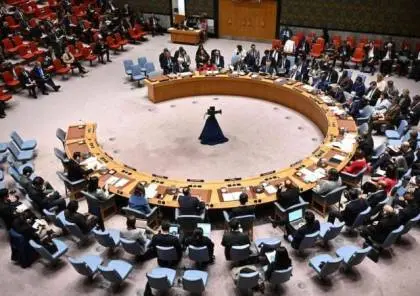
The Security Council held a closed session on Tuesday morning to consult on the text of the draft resolution calling for an immediate ceasefire in the Gaza Strip, which was drafted by Algeria, Guyana, Switzerland, Japan, South Korea, Sierra Leone, Mozambique, Malta, Ecuador, and Slovenia, which are the elected countries in the council (non-permanent), but Japan later withdrew from the list of sponsors of the draft resolution.


Al-Quds Al-Arabi learned that the United States threatened to use its veto against the draft resolution, despite the language being significantly softened and any reference to Chapter 7 or sanctions and accountability being dropped.


The draft text has been subject to several amendments, as it was put in its fourth form last Sunday since it was distributed to the council members on November 4, in its draft called “draft zero,” meaning subject to amendments and negotiations. It is expected to be voted on on Wednesday.

The non-permanent member states had agreed on the need to adopt a new resolution that goes beyond previous drafts, calls for an immediate ceasefire, reflects what is happening on the ground, and states that the situation “has become a threat to international peace and security,” a reference to Chapter VII, “without mentioning it in order to avoid an American veto so that the draft resolution does not repeat the four previous resolutions that remained on paper.”


The United States set a number of red lines in its negotiations, most notably the reference to Chapter VII of the United Nations Charter, which stated that the situation in Gaza and regional developments have become a threat to international peace and security. This was deleted in later drafts and the language was softened to be more “moderate” and less direct in an attempt to win over the United States, while the non-permanent member states insisted that the draft should at least continue to call for an immediate, unconditional ceasefire and the unconditional release of hostages.
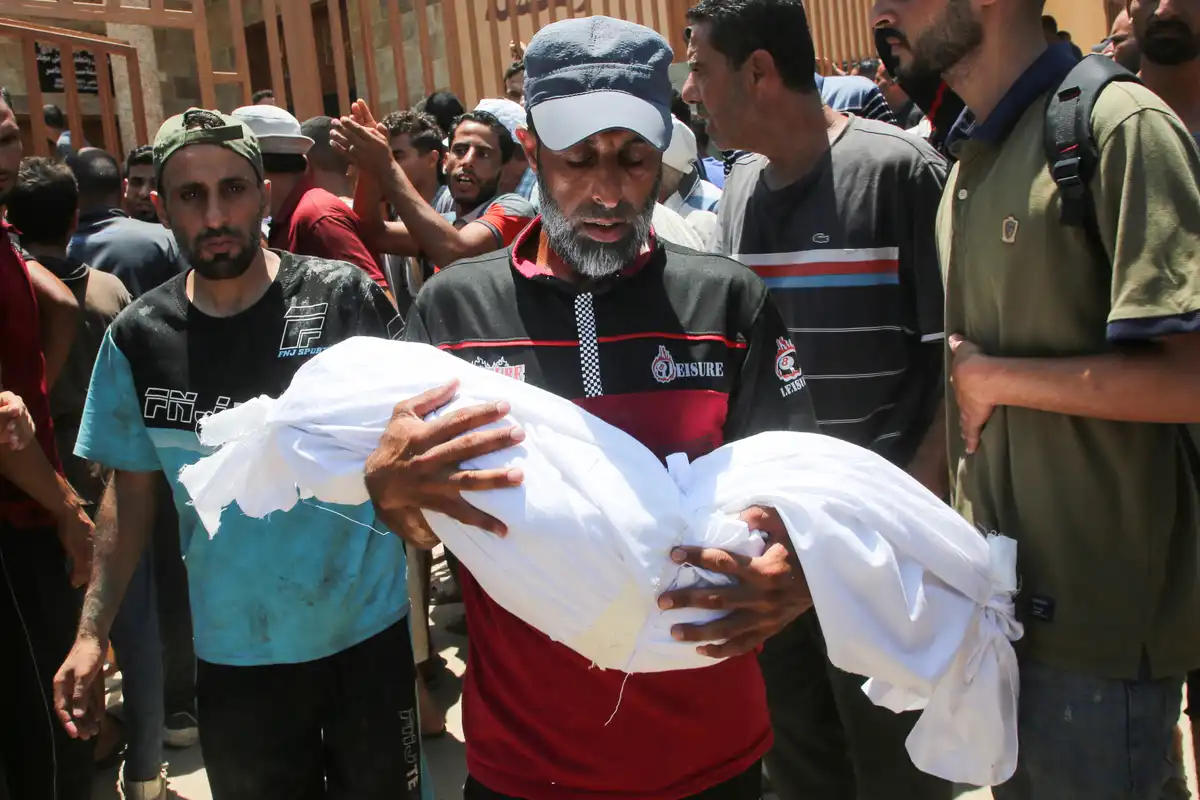

The first draft of the draft resolution stated that the Security Council “determines that the situation in the Gaza Strip and the regional escalation constitute a threat to international peace and security, and demands an immediate, unconditional and permanent ceasefire to be respected by all parties.” The new paragraph became: “The Security Council recalls the primary responsibility to uphold international peace and security, and demands an immediate, unconditional and permanent ceasefire to be respected by all parties.” This emptied the paragraph of its most important part, namely “recognition of the existence of a threat to international peace and security” and the consequences of resorting to Chapter VII of the United Nations Charter, which means that failure by the parties to abide by the resolution could open the door to various possibilities, including imposing sanctions on the parties to the conflict for their failure to comply with the provisions of the resolution. The first draft also stated that the Security Council referred “to the interim orders issued by the International Court of Justice in the case of the Application of the Convention on the Prevention and Punishment of the Crime of Genocide in the Gaza Strip (South Africa v. Israel) of 26 January, 28 March and 24 May 2024.” Here, too, the paragraph was amended, also due to American objections, as the paragraph became general and loose without mentioning Gaza to state, “The Security Council affirms that respect for the International Court of Justice and its functions, including the exercise of its advisory jurisdiction and its order to take provisional measures, is fundamental to international law, justice and the international order based on the rule of law.”

The American objections included the sixth operational paragraph related to the United Nations Relief and Works Agency for Palestine Refugees (UNRWA), which stated, after affirming the role of the Agency and its importance to the humanitarian response, that the Security Council “rejects measures that undermine the implementation of the Agency’s mandate, and welcomes the commitment of the Secretary-General and the Agency to fully implement the recommendations of the independent review of mechanisms and procedures to ensure UNRWA’s commitment to the principle of humanitarian neutrality. It calls on all parties to enable UNRWA to implement its mandate, as adopted by the General Assembly, in all areas of operations, with full respect for the humanitarian principles of humanity, neutrality, impartiality and independence, and to protect United Nations and humanitarian facilities, all in accordance with international humanitarian law and the Charter of the United Nations.”


When comparing the zero draft with the leaked draft and amendments, it is noted that the sentence in the aforementioned paragraph, which states that “the Security Council rejects measures that undermine the implementation of the Agency’s mandate due to US objections,” has been deleted. The significance of the deleted sentence, although it does not name Israel, is that it refers indirectly to the law recently passed by the Israeli Knesset that will halt UNRWA operations in the occupied territories by the end of January 2025. It seems that the non-permanent member states have reluctantly agreed to “soften” the language of the draft resolution in order to avoid a US veto, which has greatly weakened it and undermined the principle for which they took the initiative to draft a draft that would raise the Security Council to the level of responsibility and reflect what is happening on the ground, which undoubtedly constitutes a threat to international peace and security. Despite all these amendments and mitigations, US Ambassador Linda Thomas-Greenfield may end her term as US Ambassador to the United Nations under President Biden by using her veto again to protect Israel from any accountability or real pressure, according to some indications from some diplomats at the United Nations.

OPINIONS

Wed 20 Nov 2024 6:57 am - Jerusalem Time

Syria: Bashar Al-Assad trapped in the heart of the Iran-Israel-Russia triangle

Translation for "Alquds" dot com

Translation for "Alquds" dot com

Opinion Writer

By Eva Koulouriotis

Syrian President Bashar Al-Assad inherited the alliance between Damascus and Tehran from his father. Over time, this alliance has become a necessity, particularly with the outbreak of the Syrian revolution in March 2011. But in the context of the current war in the Middle East, it has become a disturbing burden.


The image depicts several important political figures. It shows portraits of leaders such as the Iranian supreme leader, the Russian president, the Israeli prime minister, and the Syrian president, grouped together on a red background. The various members appear to be engaged in some kind of interaction or reflection, highlighting complex geopolitical relationships. The atmosphere of the image evokes themes of power and diplomacy in a context of international tensions.


On September 17 and 18, 2023, more than 3,000 pagers and walkie-talkies used by Hezbollah exploded. Particularly shocking in their scale, these events were the prelude to the Israeli military operation against the Lebanese militia, and sounded the alarm in both Beirut and Damascus.


A month earlier, the director of the General Intelligence Department of the Bashar Al-Assad regime, Major General Houssam Louqa, had made a secret visit to Beirut, where he met with Hezbollah Deputy Secretary General Naim Qassem. Louqa had asked Hezbollah to reduce the escalation and not fall into the Israeli trap, given the military risk for both the Lebanese militia and the Syrian regime. Qassem had highlighted Hezbollah’s carefully thought-out, phased strategy and Israel’s weariness after a year of war in the Gaza Strip.


Naim Qassem and Hassan Nasrallah had in fact erred in their judgment by dismissing the risk of an Israeli offensive. The latter was assassinated on September 27, and the Assad regime found itself facing its most complex challenge since the outbreak of the Syrian revolution in March 2011, with the stakes being control of the Syrian-Lebanese border, which is of strategic importance to Hezbollah and the Iranians, but also to Israel.

Hezbollah’s central role

Iranian leaders believe that a crushing defeat of Hezbollah would have negative consequences for their own national security. The Lebanese group’s existence has until now provided a deterrent to Iran and its nuclear program, serving as a frontline of confrontation and a tool for Tehran to blackmail Israel and the United States. The militia has also played a role in providing technical and logistical support to Iranian-backed militias in Iraq and the Houthis in Yemen. Hezbollah also helped save the Assad regime in the early years of the revolution against him, especially between 2012 and 2015. Tehran therefore considers that the defeat of Hezbollah would pose a risk to its national security and, in particular, to its nuclear program vis-à-vis Israel. This is why continuing to support Hezbollah via the Syrian-Lebanese border is a strategic priority, whatever the cost. A cost that particularly worries Bashar Al-Assad, whose eyes are fixed on Israel.


On the Israeli side, two issues are priorities in the Syrian theater. The first concerns the Syrian-Lebanese border and the second the militias supported by Iran in Syria. These concerns could become more intense given Tehran and Hezbollah’s refusal to accept defeat and make concessions that would encourage the Israeli government to end its military operation in Lebanon. Tel Aviv is, however, aware of the difficulty of continuing its offensive in the short term, after the American presidential election, despite the re-election of Donald Trump. Hence the decision to attack the porosity of the Syrian-Lebanese border, as evidenced by the recent statement by Israeli Prime Minister Benjamin Netanyahu: "We will cut Hezbollah's oxygen pipeline that connects Iran to Syria1."


Three military scenarios

In practice, three military scenarios are on the table of the Israeli government to obstruct this border. The first consists of extending the Israeli military offensive on land on Lebanese territory towards the Bekaa Valley, the regions of Baalbek and Hermel, to control the border. This scenario appears very costly and complex.


The second consists of launching a new land offensive in the southwest of Syrian territory, towards Quneitra, then towards the west of Damascus, towards Qalamoun and Homs, in order to close the border on the Syrian side. This scenario is constrained by the Russian presence in Syria and its costs would be high due to the strong presence of militias supported by Iran.

The third would be for Israel to intensify its airstrikes on both sides of the border. Since the beginning of the operation against Hezbollah, the Israeli air force has carried out dozens of airstrikes targeting official and unofficial crossing points on the Syrian-Lebanese border. Israel has also assassinated three leaders of Unit 4400, affiliated with Hezbollah and responsible for financing and supplying the group from Syrian territory, the most important of whom, Muhammad Jaafar Qasir, was a close personal friend of Bashar Al-Assad. But the effectiveness of these strikes seems to have been limited.


Based on this observation, Israel warned Assad of the need to take the decision to close these borders. But the latter has not yet responded to this warning, and for good reason.


The Syrian archipelago

The image shows a geographical map of Syria and its neighboring regions. The country’s borders can be seen, with colored areas that could represent different territorial controls or groups. The red part seems to indicate a main territory or one under the control of a certain group, while the yellow and green could symbolize other areas of control or influence. There are also Arabic inscriptions on the map, probably indicating cities or governorates. The geographic labels are arranged in such a way as to give an overview of the regions and important roads in this area.

Caption:


At Tehran’s mercy

After the outbreak of the Syrian revolution, Iran intervened militarily and directly protected Assad. With its support for military figures running for important positions and its relations with the leaders of the security services, its influence has grown within the Syrian regime itself. Tehran has also expanded its relations with major Syrian businessmen close to the regime. This interference has occurred in parallel with the deployment of thousands of Iranian-backed militia fighters from Iraq and Lebanon. Thus, Iran has gradually moved from being an ally protecting Assad to a partner in managing the territory. This reality forces Assad to think carefully before taking any steps that would thwart Iranian interests, including in areas under his control. A possible conflict over a strategic issue with the Iranian leadership could have serious repercussions on the security and economic situation in Syria and, possibly, on Assad himself. Based on these concerns, Assad is knocking on Russia’s door.

This is not the first time that Damascus has asked for Moscow’s help in a crisis involving Tehran and which poses a threat to the stability of the Syrian regime. In his book The Lost Novel, the former Syrian Vice President responsible for foreign affairs, Farouk Al-Charah, evokes the reaction of Hafez al-Assad after the outbreak of the first Gulf War between Iraq and Iran (1979-1989):


Hafez Al-Assad rushed to sign the Treaty of Friendship and Cooperation between Syria and the Soviet Union on October 8, 1980, which he had always hesitated to sign. This move is a response to this new variable.


During a surprise visit to Moscow in July 2023, Bashar Al-Assad met with Russian President Vladimir Putin, who told him that the regional situation was deteriorating and that Syria was directly concerned. Yet Russia, despite the war in Ukraine and strategic cooperation with Tehran, still maintains close relations with Israel. Hence the fundamental question for Assad in his dilemma over the Syrian-Lebanese border: Will Moscow side with Tehran, Tel Aviv, or Damascus?


On September 8, in the Masyaf region, Israeli helicopters conducted a military operation against an installation of the Islamic Revolutionary Guard Corps, presumably manufacturing warheads for ballistic missiles. At the Russian base of Hmeimim, located just a few kilometers from this area, a cautious calm reigned. The base’s S-400 air defense batteries, although having identified the Israeli kinetics, showed no reaction. This is in line with Moscow’s historical tolerance of Israeli airstrikes against Iranian interests in Syria. The Russians distinguish their interests in this country from those of Tehran, with the priority being the maintenance of the Syrian regime, and the preservation of their military bases on the Syrian coast, their only outlet to the Mediterranean Sea. Hence the absence of any notable reaction from Russia.


The Kremlin’s maps

The Soviet Union was not on the list of Iran’s allies before Ayatollah Ruhollah Khomeini came to power or after. During the first Gulf War between Iran and Iraq, the Soviet Union did not supply equipment to Tehran, but supported Baghdad, supplying it with fighter planes, missiles and munitions. It now appears that Moscow and Tehran have a more complex relationship than their politicians let on. Putin claims that the Islamic Republic is a strategic ally of Russia, and the Leader of the Revolution Ali Khamenei emphasizes the friendship with Moscow as well as their rapprochement with “the West.” However, behind these statements, contradictions emerge. For example, regarding the Russian invasion of Ukraine, Tehran supports Moscow significantly, by supplying medium and long-range missiles, drones, and ensuring the transfer of technology to manufacture these drones in Russia. But in Yemen, this alliance differs in nature. Despite repeated requests from the Iranians and the Houthis for the supply of Russian-made Yakhont surface-to-sea missiles, Moscow is still hesitant. This hesitation is also reflected in the supply to Tehran of the S-400 system, which the Iranians still hope to obtain from the Kremlin urgently, particularly after the Israeli airstrike of October 26. Russia justifies its position by the complexity of the situation. Relations between Russia and Iran therefore change depending on the issue, including in the Syrian theater, where Moscow remains in retreat on the Iranian-Israeli conflict.

By connecting the wires coming from Tehran, Moscow and Tel Aviv to Damascus, Syria finds itself facing an equation that threatens the stability of the Muhajirin Palace (the Syrian presidential palace). The Iranians believe that obstructing the Syrian-Lebanese border will accelerate the defeat of Hezbollah and threaten their national security. For their part, the Israelis know that in order to weaken Hezbollah and prevent it from restoring its military capabilities, Assad must close its border with Lebanon. The Russians are not ready to intervene in this conflict. So they are at least trying to understand the intentions of each of the two parties without taking concrete measures, whether to serve as a mediator or, if necessary, to support one of the parties against the other. Assad finds himself alone between an ally who is pushing him into the abyss, another who is observing the scene from a distance and a neighbor who is resolutely serious in his threats.


Assad's Syria is trapped between these three parties. The assassination of Hassan Nasrallah by the Israelis and that of former Yemeni President Ali Abdullah Saleh on December 4, 2017, by the Houthis—probably with Iranian approval—fuel the latter’s fears. Not to mention that the Israelis consider Assad more than ever, not as a president useful to their interests, but as a threat to their national security and their regional projects. But the decision to get rid of him is only possible with the approval of Russian President Vladimir Putin.

Source: ORIENT XXI


OPINIONS

Wed 20 Nov 2024 6:55 am - Jerusalem Time

As U.S. ambassador, Rev. Mike Huckabee will push for ‘end times’ in Palestine

Mondoweiss

Mondoweiss

Opinion Writer

By Rev. Graylan Scott Hagler   


As U.S. ambassador to Israel, Mike Huckabee will likely go further in advocating for the destruction of Palestine, stepping up the holocaust in Gaza and pushing for the annexation of Gaza and the West Bank.

“Genocide Joe” was an accurate descriptor for Joe Biden, however no matter how bad Biden was on Palestine, and he was horrible, early signs are that Donald Trump and his cronies are going to be a million times worse. This is most clearly seen by the appointment of Rev. Mike Huckabee as ambassador to Israel.

Huckabee is a former presidential candidate and governor of Arkansas. But those things are not the problem. The problem is that Huckabee is a Christian Zionist and believes in “End of Times” prophecy, namely that Jews must be established in a sovereign state of Israel to usher in the Second Coming of Jesus Christ. In this theology, Jesus will come again and reign over Israel and the world, and he will create a new age where all will be called to worship Christ. Christ will sit in judgment separating the righteous from the unrighteous – believers from nonbelievers. Those who believe will be welcomed into his kingdom and graces, and those who don’t will be condemned into Hell and torment. 

Mike Huckabee is a Southern Baptist minister. The Southern Baptist Church was founded as a break from the Baptist movement over the issue of slavery in 1845. The Southern Baptist Church on its founding supported slavery, and after the Civil War were ardent supporters of the politics of the “Lost Cause,” which included segregation. It wasn’t until 1995 that the church formally apologized for its support of slavery. And to right its historical wrongs in 2017 condemned white supremacy. However, the church recently voted in 2023 to ban women from serving as Pastors in its churches. In 2024 a proposal was put forth to affirm the 2023 decision, but that vote failed narrowly missing the 2/3rds required to pass. Some proponents of the ban suggested that there were already ways to remove churches from its ranks that had women pastors, so the proposal was not necessary. This is relevant because this is the denominational and theological/ideological base of Mike Huckabee, and as a Minister of the Southern Baptist tradition he brings these predilections into public life.    

You can sometimes catch Huckabee on late night or early morning TV raising funds or engaging in his monologues on the Trinity Broadcasting Network (TBN). TBN billed Huckabee as “America’s favorite front porch” talk show. His show is described as “the hour-long program…a down-home slice of wholesome Americana in all of its patriotic, God-honoring, and family-friendly glory.” But what signals his bias towards Israel are his appeals on behalf of the International Fellowship for Christians and Jews (IFCJ) whose agenda is to support Israel, offer assistance to indigent Jews, and assist with Aliyah (financially assisting Jews to make a home in Israel). This fits with his theological agenda of bringing Jews to Israel in fulfillment of his understanding of prophecy where the sovereignty of Israel as a Jewish “homeland” is a prerequisite for the Second Coming of Christ. IFCJ’s website reads, “As the war shows no signs of slowing down, many Jewish people are struggling. “YOU can give hope today with your best gift. Donate to provide food, medicine, and other necessities. “I will bless those who bless [Israel]”, citing Genesis 12:3.

Huckabee shortly after the announcement of his ambassadorship to Israel spoke to Israel’s Army radio stating “of course” annexation of the West Bank is a possibility. This is his latest statement in a litany of other problematic statements. As a candidate for President in 2008 Huckabee stated that Palestinian identity was “a political tool to try and force land away from Israel.” Huckabee has maintained throughout his years in ministry and public life that the West Bank belongs to Israel, rationalizing it in this way, “the title deed was given by God to Abraham and to his heirs.” Furthermore, Huckabee believes that there is no such a thing as a Palestinian – “There really isn’t such a thing,” he said earlier on this year. There is a lot to be concerned with in the appointment of Huckabee as the point person in Israel.

In response to the news of the Huckabee pick Luis Moreno, a former Chief of Mission to Israel and former Ambassador to Jamaica wrote on Twitter, “I unfortunately was exposed to him during his visits to Israel back in the day. Full blown (and knowledgeable) fanatic of the End of Times, Apocalypse, Israel’s destruction, etc. A true and utter nut case. Couldn’t be a more dangerous selection.”

Yet this is the choice that is before us, and his influence in the Trump administration will not fare well for the Palestinians of Gaza or the West Bank. The fact is that Mike Huckabee is going to go further in advocating for the destruction of Palestine than the Biden administration has, offer justification for stepping up the holocaust in Gaza, and push for the annexation of Gaza and the West Bank. Huckabee obviously believes that God is hate-filled and delights in the murder and genocide of men, women, and children. He believes that God is a homicidal maniac that only wants to have God’s agenda addressed as interpreted by those steeped in religious bias and coming from a historical framework of slavery, misogyny, and white supremacy. This pick will make things a million times worse for the cause of a free Palestine. 

This means that those of us in the Palestinian Justice Movement must double our efforts of agitation and education. We must push these next four years for Palestinian self-determination and to dismantle the Israeli apartheid system. We must show up and speak out. We must challenge Congress, and politicians at the local level to keep Palestine on their lips and in the consciousness of the public. Trump and Huckabee will seek to erase Palestine along with the crimes of the West Bank and Gaza (and now Lebanon), and it is up to us whether they succeed in this erasure or not.

OPINIONS

Wed 20 Nov 2024 6:49 am - Jerusalem Time

Turmoil at the ICC as fears rise over Israel and the U.S. interference

Mondoweiss

Mondoweiss

Opinion Writer

By Craig Mokhiber 

The delay in issuing ICC warrants for Benjamin Netanyahu and Yoav Gallant, followed by the replacement of the presiding judge, has raised serious concerns about the court's functioning and possible machinations behind the scenes. 


On May 20, 2024, the Prosecutor of the International Criminal Court (ICC), Karim Khan, submitted a request to the ICC for warrants to arrest Israeli leaders Benjamin Netanyahu and Yoav Gallant for war crimes and crimes against humanity, including extermination. 

In the same statement, he included an extraordinary warning, saying “I insist that all attempts to impede, intimidate or improperly influence the officials of this Court must cease immediately. My Office will not hesitate to act pursuant to article 70 of the Rome Statute if such conduct continues.”

The Prosecutor did not elaborate on the source of the threats against the ICC officials. 

The Court, in accordance with its established procedures, then assigned the case to a three-judge, pre-trial chamber, presided over by Judge Iulia Motoc.  

Only eight days after the Prosecutor announced the warrant requests and his warning about intimidation of Court officials, the Guardian and +972 Magazine published an exposé revealing a decade of interference, pressure, and threats by notorious Israeli intelligence agencies against personnel of the International Criminal Court in order to derail investigations of Israeli crimes. 

But by then the Court had gone silent on the Palestine file- a silence that would last for five months. Court watchers were left to wonder, and worry, about the unprecedented delay in the issuance of the warrants. 

And then, as if on cue, sometime around early October, pro-Israel publications began circulating anonymous allegations accusing the ICC Prosecutor of harassing a female staff member. 

Just days later, on October 20, 2024, the ICC announced that Motoc, the Presiding Judge of the three-judge pre-trial chamber assigned to decide whether to issue arrest warrants for Israel’s Prime Minister and Defense Minister, had suddenly stepped down. 

Citing unspecified “health reasons,” the Court provided no further information. Motoc was replaced by Slovenian Judge Beti Hohler, with French Judge Nicolas Guillou now Presiding over the chamber. 

In ordinary times, these developments might hardly be noticed. But these are not ordinary times, and this is no ordinary case. 

Israel, a state that had enjoyed 75 years of Western-backed impunity, was finally, it seemed, being called to account for its crimes. Already on trial for genocide in the International Court of Justice (ICJ), and the subject of a series of provisional orders there, Israeli leaders received notice in May from across town in The Hague that the net was continuing to close. 

The request submitted in May by the prosecutor to the ICC for warrants to arrest Benjamin Netanyahu and Yoav Gallant brought a predictable response from Israel, which launched angry recriminations, invective, and the usual tactical smears against the Court. 

It was instantly joined by its Western government allies in attacking the Prosecutor’s request, with U.S. officials going so far as to threaten the Court itself. 

Now, the delay in issuing the warrants, followed by the announcement of the replacement of the presiding judge, has raised serious concerns about the functioning of the Court, and about possible machinations behind the scenes. 

Interference and delays

The situation of this five-month delay coming within almost a full decade of stalling since the first preliminary investigation of Israel’s crimes in Palestine was opened has only exacerbated those fears. 

By comparison, a request for a warrant for Russian President Vladimir Putin was fulfilled by the ICC in three weeks. And in its other cases, the Court has on average taken about eight weeks to issue warrants. 

The coming of these latest developments on the heels of revelations of years of threats and harassment of judges and court officials by Israeli intelligence operatives and Western government officials has put the followers of the Court and opponents of Israeli impunity on heightened alert. 

In one case, the head of the Mossad himself threatened the previous ICC Prosecutor Fatou Bensouda and her family. (To her credit, Bensouda resisted the attacks and, acting with exemplary courage and principle, proceeded to open an investigation on Israeli crimes). 

The change in Judges in this case is expected to further prolong the decision on the warrants in an already inordinately delayed process. And the unprecedented (and now compounded) delays have raised questions about whether there are “behind the scenes” factors at play. 

But Israel is not the only state interfering with the work of the ICC. Acting on Israel’s behalf, U.S. legislators, the State Department, and U.S. National Security Council officials have joined forces to pressure, threaten and try to derail the case against Israeli officials, even threatening sanctions against the Court. 

Substantive risks

While it is impossible to know how these judges will ultimately rule, and there is nothing in the public record that would call into question their judicial integrity, changes in the chamber’s composition could also have important substantive implications. 

For example, new Judge Hohler published an article in 2015 (long before joining the ICC) in which she suggested that complementarity may bar scrutiny of Israel because “Israel in general has a well-functioning legal system headed by a respected Supreme Court.” 

Leaving aside the broad international criticism of the Israeli Supreme Court (already evident in 2015) for its long record of approving apartheid policies and state crimes against Palestinians, and for its long record of tolerance of Israeli war crimes, it has since become clear that Israel has no intention of investigating or prosecuting Netanyahu or Gallant for the crimes alleged in the ICC Prosecutor’s request for arrest warrants. 

We must hope that Judge Hohler will by now realize that any complementarity objections (i.e., that Israel will investigate itself) are entirely without merit, as the ICJ has already found. But her earlier deeply distorted assessment of the Israeli justice system is nevertheless cause for concern. 

And, in the same article, Judge Hohler also implied that external political considerations may influence Court decisions because “the ICC is heavily dependent on the support of its states parties, including for any type of enforcement as well as for actually ensuring the attendance of suspected perpetrators at The Hague.” 

While that may be true, and many parties to the (Rome) statute of the ICC are Western allies of Israel, concerns about implementation should play no role in decisions of the Judges on the merits. 

For his part, new Presiding Judge Guillou of France came to the Court with a strong “counterterrorism” profile. He served previously as the Chef de Cabinet for the President of the Special Tribunal for Lebanon, which convicted a member of Hezbollah in the 2005 assassination of Rafik Harri, and as a former Liaison to the U.S. Justice Department where he worked with the U.S. on (inter alia) counterterrorism prosecutions in the height of the highly abusive U.S. “war on terrorism.”  

Judge Guillou has also (before joining the Court) argued publicly for the prosecution of non-state “terrorism” in international tribunals (which has only ever happened in the Lebanon Tribunal which he served), despite the lack of a definition of terrorism in international law and over the objections of human rights defenders and others concerned about the corrosive legal effect of “War on Terror” framings in criminal matters and in situations of armed conflict. 

None of this proves any irregularities in the change of composition of the chamber, nor suggests any evidence of anything unethical on the part of the judges. But neither is the law a machine in which decisions are reached based on the neutral application of law to the facts. The opinions, experiences, predispositions, and biases of judges matter. Anyone seeking to influence the court will know this. 

And this fact does not even factor in the corrupting influence of the Israeli threats and the U.S. pressure campaigns against ICC personnel. 

Human rights defenders remember well how a similar pressure campaign launched by Israel against Judge Richard Goldstone, who headed the UN Fact Finding Mission on Gaza in 2009, compelled Goldstone to essentially recant the findings of the Mission, effectively destroying his reputation in international legal and human rights circles after a decades-long and storied career in the law. 

Accusing the Prosecutor

Adding to worries about attacks on the Court’s independence, in October a small, anonymous X account tweeted unsubstantiated third-party allegations that ICC Prosecutor Karim Khan had harassed a female staff member. 

Somehow, the Daily Mail, a right-wing, pro-Israel English tabloid (that had become notorious for publishing Israeli disinformation, and that has been banned by English Wikipedia for its unreliability and fabrications) found this small X account and reprinted the allegations. From there, the story was repeated by pro-Israel news sites across the West.   

While it is impossible to know if there is any truth to the allegations, Khan has denied them and said they are part of the campaign of threats and harassment against he and the Court for their work. 

For her part, the alleged victim filed no complaint, and neither she nor the Court’s Independent Oversight Mechanism (IOM) saw fit to proceed with any investigations or charges. 

What is clear, however, is that this anonymous accusation quickly became fodder for a campaign of delegitimization against the Prosecutor and, by extension, the ICC. 

Pro-Israel media and proxy groups, seeing the propaganda value of linking the allegations to the case against Netanyahu and Gallant, reported them with headlines like “War Crimes Prosecutor Who Charged Netanyahu Accused of Sexual Misconduct”, in a clear attempt to discredit the charges against the Israeli defendants. 

Hustling the Hague

What we do know is that (1) the Court, either out of fear or favor, has long been reticent to move forward on cases against Israelis, (2) Israeli and Western intelligence agencies and government actors have been working to pressure ICC judges and court officials, and (3) the delays on the Palestine file are already unprecedented.

With this knowledge, we must at least ask three questions:

First, whether Judge Motoc’s “health grounds” were contributed to or were cover for something more sinister. 

Secondly, whether the subsequent replacement appointments were at all influenced by the substantive positions of the judges, presumed or real.  

And third, whether the changes were designed to justify further delays in the proceedings, thereby benefitting Israeli defendants and providing more time for backroom manipulation. 

Barring further leaks or revelations from the ICC, we may not know the answer to these questions until the gavel has banged, if at all. 

But knowing the fact that the judicial delays continue to grow even as extermination in Palestine continues unabated, coupled with the knowledge that nefarious actors have been targeting the Court to obstruct justice, public vigilance is imperative. 

Both the ICC and those who would seek to corrupt it should be on notice that the world is watching. 

Reputational risk

Indeed, the reputations of the ICC, its judges, and its current prosecutor are already badly tattered, owing not only to a decade of delays on the Palestine file but also to a dramatic imbalance in action globally. 

The Court has focused almost entirely on the global South, and on presumed adversaries of the West. To date, perpetrators from Israel and all other Western countries have enjoyed complete impunity under the Rome Statute of the ICC. 

For States in the Global South, and justice advocates around the World, the ICC is increasingly suspect. A failure to deliver justice in the current case, and any perception of bias on behalf of Israel, any concession to U.S. pressure, or to the Court’s Western sponsors, will almost certainly represent the beginning of the end of the ICC. 

Prosecuting offenses against the administration of justice

But Israel and the U.S. should take particular note. The risk they face goes beyond mere reputational risk. The kind of interference in which they have been involved is not only a moral outrage but also a breach of international law. 

And some of the acts revealed could be subject to criminal prosecution by the Court itself. 

Article 70 of the Rome Statute of the ICC codifies crimes against the administration of justice, and, importantly, grants the Court jurisdiction to prosecute these crimes. 

These include “impeding, intimidating or corruptly influencing an official of the Court for the purpose of forcing or persuading the official not to perform, or to perform improperly, his or her duties”, and “retaliating against an official of the Court on account of duties performed by that or another official” (among other offenses). 

Those convicted of these offenses can be imprisoned by the ICC for up to five years. 

Additionally, every State Party to the Rome Statute would be legally obliged to prosecute any such offenses if they are committed by its nationals or on its territory. While the US and Israel are not parties to the ICC, most of its closest Western allies are and would be compelled to cooperate. 

And the Netherlands, in which the ICC is situated, is obliged under a host country agreement with the Court to ensure the safety and security of Court personnel and to protect the ICC from interference. 

Indeed, Dutch prosecutors are now considering legal action against senior Israeli intelligence officials for their pressure and threats against ICC officials in the Palestine cases. 

Last chance for justice

The risks to the ICC are real. 

Both Israel and the U.S. have demonstrated that they have no respect for the rule of law, and no qualms about threatening or otherwise corrupting the Court. 

And the ICC itself has a long way to go to prove to the world that it is committed to its mandated role of universal justice rather than serving as a mere selective arm of Western power. 

But the strength of the case against Netanyahu, Gallant, and other Israeli leaders, in the world’s first live-streamed genocide, and under the glare of unprecedented public attention, gives reason for hope. 

Today, Israel is on trial, its leaders are on trial, and the system of international justice itself is on trial.

Nefarious actors are working both publicly and in the shadows to obstruct the course of justice. 

If justice is to prevail, we must all remain vigilant.

PALESTINE

Wed 20 Nov 2024 6:47 am - Jerusalem Time

New report tells chilling details of Israel's torture, killing of Gaza doctor Adnan al-Bursh

A new report has emerged detailing the last disturbing moments of Dr Adnan Al-Bursh's life, with the surgeon having been tortured in Israeli detention.


A new report on Thursday revealed chilling new details of the circumstances surrounding the killing of the famous Gaza surgeon Adnan Al-Bursh in an Israeli prison in May.

A captive at Israel’s Ofer Prison in the occupied West Bank told Sky News how Israeli forces left Dr Al-Bursh, who had been severely tortured, to die alone in agonising pain and naked from the waist down in the prison’s yard.

The captive, who previously knew Dr Al-Bursh in Gaza, provided details in a deposition to lawyers from the Israeli human rights organisation HaMoked.

"In mid-April 2024, Dr Adnan Al-Bursh arrived at Section 23 in Ofer Prison. The prison guards brought Dr Adnan Al-Bursh into the section in a deplorable state. He had clearly been assaulted with injuries around his body. He was naked in the lower part of his body.

"The prison guards threw him in the middle of the yard and left him there. Dr Adnan Al-Bursh was unable to stand up. One of the prisoners helped him and accompanied him to one of the rooms. A few minutes later, prisoners were heard screaming from the room they went into, declaring Dr Adnan Al-Bursh (was dead)."

Dr Al-Bursh was widely regarded as one of the best qualified and well known surgeons in the Palestinian enclave, with a picture of him in 2018, covered in the blood of a victim of Israeli bombing, going viral and catapulting him to a grim form of fame.

When Israel’s war on Gaza broke out in October of last year, Dr Al-Bursh worked at al-Shifa hospital as the head of orthopaedic surgery. By November, Israel had the hospital under siege forcing Dr Al-Bursh, along with all the staff and patients, to flee.

After serving at the Indonesian hospital in Bait Lahia and documenting Israeli forces besieging and firing indiscriminately at patients and staff, killing 12, he was once again ordered to leave as Israel systematically destroyed Gaza’s health system.

Dr Al-Bursh then moved to Al-Awda hospital in Gaza’s north, where Israeli forces familiarly surrounded and besieged.

It was here that Al-Bursh was taken by Israeli forces.

"[The director] told us that the [Israeli army] have full data of all males aged between 14 and 65 at Awda hospital," his colleague Dr Mohammad Obeid told Sky News,. "They told him that if all men do not come down… they will destroy the Awda Hospital with all the women and children in it," he added.

After Dr Al-Bursh left he hospital, Israeli soldiers "called his name out" and then “roughly” took him away, according to Obeid.

Dr Al-Bursh was then taken to the notorious Sde Teiman detention facility in the Negev, which whistleblowers and former inmates have likened to a concentration camp.

Reports of physical, mental, and sexual abuse are widespread at Sde Teiman, with instances of rape so severe that prisoners have been died and seriously injured.. Dr Khalid Hamouda, a former inmate of the Sde Teiman camp, told Sky News that many of the prisoners held there were medical professionals.

It is here that Al-Bursh underwent brutal torture, being viciously beaten by Israeli guards. The full extent of his torture is not known.

"He thought he may have broken ribs," Dr Hamouda said. "He was unable to even go to the toilet alone."

It was after this that Dr. Al-Bursh was sent to Ofer Prison where he would die within weeks.

Israel has accused Dr Al-Bursh of being a “terrorist”, yet, like most of the captives in both Sde Teiman and Ofer prison, he was never charged with any criminal offenses.

Dozens of Palestinian captives have been killed in Israeli detention since 7 October, with numerous cases of them having been subject to extreme torture.

At least 43,764 Palestinians have been killed by Israel since it launched its war on Gaza.

OPINIONS

Wed 20 Nov 2024 6:43 am - Jerusalem Time

Israeli Newspaper: Why is Netanyahu prepared to accept a cease-fire with Hezbollah but not Hamas?

Haaretz - "Al-Quds" dot com

Haaretz - "Al-Quds" dot com

Opinion Writer

By Amir Tibon 


Despite the fact that Israel has eliminated almost all of Hamas' senior leadership, and the urgency of securing the hostages' release – it is actually Gaza where Netanyahu and his allies reject a cease-fire agreement


Prime Minister Benjamin Netanyahu, National Security Minister Itamar Ben-Gvir and Finance Minister Bezalel Smotrich during a Knesset session in Jerusalem on Monday.

The biggest news story in the Middle East this week has been the unmistakable momentum behind a cease-fire agreement between Israel and Hezbollah. The war between the Israel Defense Forces and the Lebanese terror group continues to rage on, with daily Israeli bombings in different parts of Lebanon and rockets being launched deep into Israeli territory. Still, diplomatic efforts to put an end to the fighting seem to be gathering steam.

U.S. envoy Amos Hochstein is displaying optimism that a deal to end the northern front of Israel's more-than-yearlong war can be reached within days, and implemented before President Joe Biden leaves the White House exactly two months from tomorrow. Biden's successor, President-elect Donald Trump, has voiced his support for a cease-fire after promising Lebanese-American voters ahead of the election that he would bring peace to their homeland.

Israeli Prime Minister Benjamin Netanyahu and his far-right coalition partners also seem willing to reach a war-ending deal in the north, which would be based on UN Security Council Resolution 1701, and include the withdrawal of Hezbollah forces from the border with Israel. Trump's push for a deal is probably having an impact on Netanyahu: the last thing he needs is to annoy the incoming president by prolonging a war Trump pledged to finish.

But all of that raises one unavoidable question: Why are Netanyahu and his allies showing relative flexibility in negotiations over a Lebanon cease-fire, but refusing to do the same with regards to Gaza?

No one in Israel believes that a cease-fire agreement with Hezbollah will mean that the powerful terror group is no longer a threat to Israelis citizens. Yes, Hezbollah suffered devastating losses in recent months, starting with the exploding pagers operation and followed by a breathtaking series of assassinations of its senior leadership. But even after all these blows, the organization continues to fire hundreds of rockets into Israel on a daily basis, and has successfully utilized drones to strike deep into Israel and overcome the country's aerial defense systems.

Hezbollah will still be capable of doing all of these things after a cease-fire, and will remain an important, powerful player in the Lebanese political arena. No one in Israel will be able to argue that the organization had been completely decimated.

Yet in Gaza, an agreement that would lead to the release of Israel's approximately 100 hostages from the hands of Hamas, in return for a cease-fire that would end the war there, is treated by Netanyahu and his allies as a form of blasphemy. The same logic that guides the Lebanon negotiations – Israel's enemy has been crippled and weakened but not totally destroyed, and now it's time to end the fighting, allow Israeli communities evacuated from the border area to return home, and avoid further Israeli casualties – is just as relevant in the case of Gaza.

Yet despite the fact that Israel has eliminated almost all of Hamas' senior leadership, and the urgency of securing the release of the hostages – who are still being held by terrorists, facing daily threats of hunger, rape and torture – it is actually Gaza where Netanyahu and his allies reject a war-ending cease-fire agreement.

It is hard not to suspect that the reason for the differentiation between Lebanon and Gaza has to do with the wishes of the Israeli far-right to construct settlements in the Strip, mostly in its northern part which Israel has been trying for the past two months to empty of all Palestinian civilians. There is no similar demand from the far right to build settlements in Lebanon.

The dismal result is that while the war in Lebanon seems to be moving toward a resolution, the fighting in Gaza continues and the lives of the hostages are in extreme, immediate danger.

ARAB AND WORLD

Tue 19 Nov 2024 10:26 pm - Jerusalem Time

Erdogan accuses Israel of terrorism, vows to stand with the oppressed


Turkish President Recep Tayyip Erdogan accused Israel of "practicing state terrorism," stressing that his country will continue to stand with the oppressed.


In a press conference held by the Turkish President on the sidelines of his participation in the G20 summit in Brazil, Erdogan said that "the human cost of state terrorism practiced by Israel in the region with the support of Western powers is increasing day by day."


He added that "the world has not yet taken the position we were waiting for against Israel's injustice," stressing that Turkey will continue this struggle in cooperation with its friends, stressing that Turkey will continue to stand by the oppressed even if it remains alone in this.


The Turkish President stressed that "his country's problem is with those who are dragging the region into chaos and instability through the policy of occupation and invasion."


He pointed out that as a result of Türkiye's initiative, strong phrases regarding Gaza were included in the G20 leaders' declaration.


He stressed the importance of more countries recognizing the State of Palestine during this period.


He pointed out that "history will not forgive those who remain silent, under any pretext, regarding this violence and this escalating pace of brutality."


Erdogan explained that "the UN Security Council has turned into an elite structure that serves the interests of only 5 permanent members instead of protecting the rights of 193 UN member states."


He expressed his hope that the new US administration would take bolder, wiser and more supportive steps towards peace.


Regarding Russia's updating of its nuclear doctrine, Erdogan said, "We cannot say that a war in which nuclear weapons are used has a positive side."


"We hope to reach a final ceasefire between Russia and Ukraine as soon as possible and provide the peace the world is waiting for," he added.

ARAB AND WORLD

Tue 19 Nov 2024 10:12 pm - Jerusalem Time

China continues to support Saudi-Iranian agreement

Saudi Arabia and Iran affirmed yesterday (Tuesday) their full commitment to implementing the agreement they reached on March 10, 2023, expressing their appreciation for the important role played by Beijing, while China affirmed its readiness to continue supporting and encouraging the steps taken by the two countries towards developing their relations in various fields.


Twenty months after the historic reconciliation was announced and relations resumed under Chinese auspices, the Saudi and Iranian sides renewed their commitment to implementing the Beijing Agreement in all its provisions, and to continue their efforts to strengthen good-neighborly relations between their two countries by adhering to the United Nations Charter, the Organization of Islamic Cooperation Charter, and international law, including respect for the sovereignty, independence, and security of states. This position was issued shortly after the second meeting of the Saudi-Chinese-Iranian Tripartite Joint Committee to follow up on the Beijing Agreement was held in Riyadh yesterday, headed by Saudi Deputy Foreign Minister Walid Al-Khuraiji, with the participation of the Chinese delegation headed by Chinese Deputy Foreign Minister Deng Li, and the Iranian delegation headed by Iranian Deputy Foreign Minister for Political Affairs Majid Takht Ravanchi.

PALESTINE

Tue 19 Nov 2024 9:42 pm - Jerusalem Time

UNICEF: More than 200 children killed in two months due to the occupation's aggression on Lebanon

The United Nations Children's Fund (UNICEF) announced on Tuesday that more than 200 children have been killed in Lebanon in nearly two months since the start of the Israeli occupation escalation, at a rate of more than three children per day.


“Despite the large number of children who have lost their lives in such a short period of time, there is a worrying trend of indifference to these deaths by parties capable of de-escalating the situation,” said James Elder, a spokesman for the organization, in a press statement.


"We must all strive to ensure that humanity never again witnesses such a massacre of children as happened previously in the Gaza Strip, and what is unacceptable should not become acceptable," Elder added.


He called for immediate action to stop targeting children and ensure their protection in times of conflict.

ARAB AND WORLD

Tue 19 Nov 2024 9:29 pm - Jerusalem Time

UAE, Qatar discuss intensifying efforts to prevent expansion of conflict in Middle East

On Tuesday, UAE President Sheikh Mohammed bin Zayed Al Nahyan and Qatari Prime Minister Sheikh Mohammed bin Abdulrahman Al Thani discussed intensifying efforts to cease fire and reach a comprehensive truce in the Middle East region.


This came during Bin Zayed's reception of the Qatari Prime Minister, on Tuesday, at Al Shati Palace in Abu Dhabi, according to the official Emirates News Agency, "WAM".


The agency reported that the two sides discussed "relations between the two countries and various aspects of their cooperation and joint work in a way that contributes to achieving their mutual interests and enhancing security and stability in the region."


The two sides discussed a number of regional and international issues and developments of common interest and exchanged views on them, according to the same source.


The UAE President and the Qatari Prime Minister stressed the "importance of intensifying efforts towards a ceasefire and reaching a comprehensive calm in the Middle East region, in addition to intensifying efforts to prevent the expansion of the conflict in a way that preserves regional security and stability," according to WAM.


The Qatari Prime Minister and his accompanying delegation arrived earlier on Tuesday at Al Bateen Airport in Abu Dhabi, according to WAM, which did not specify the duration of the visit.

ARAB AND WORLD

Tue 19 Nov 2024 9:11 pm - Jerusalem Time

Biden envoy Hochstein hints Israel-Hezbollah truce 'within our reach'

US envoy Amos Hochstein said there was a "real opportunity" to end the conflict between Hezbollah and Israel as he visited Lebanon to discuss a ceasefire agreement.


Hochstein made the comments in Beirut on Tuesday after what he described as "very constructive talks" with Nabih Berri, the Lebanese parliament speaker who has been backed by Hezbollah to negotiate a deal.


"This is a decision-making moment. I am here in Beirut to facilitate this decision, but ultimately it is up to the parties to decide what to do with this conflict. It is now in our hands," he said, according to CNN.


The Biden administration is making a last-ditch effort to broker a truce as fighting between Hezbollah and the Israeli military escalates.


Israeli Prime Minister Benjamin Netanyahu vowed on Monday to continue "systematically operating" against Hezbollah even if a ceasefire agreement is reached.


“This is unworkable for Lebanon. They see it as a violation of the country’s sovereignty,” Al Jazeera’s Zeina Khodr reported from the Lebanese capital.


“Since the window is now open, I hope the coming days will bring about a decisive decision,” Hochstein said, but he would not answer reporters’ questions about the talks so as not to “negotiate this publicly.”


"I am committed to doing my utmost to work with the governments of Lebanon and Israel to bring this all to an end," he added.


US State Department spokesman Matthew Miller said Monday that Washington had shared the proposals with Lebanon and Israel, and both sides had responded to the plan. Miller said the United States was pushing for “full implementation” of UN Security Council Resolution 1701, which was adopted following the last war between Israel and Hezbollah in 2006. The resolution calls for Hezbollah to withdraw north of the Litani River — about 30 kilometers (18.6 miles) from the border demarcation line between Lebanon and Israel — and for Israeli forces to withdraw from Lebanese territory and deploy the Lebanese army in the south of the country alongside UN peacekeepers.


Reuters quoted an aide to Berri as saying on Monday that the Lebanese government and Hezbollah had agreed to the US proposal, which was submitted in writing last week.


During a visit to Beirut in October, Hochstein said commitments to the UN resolution were insufficient because it had failed to be implemented since it was adopted 18 years ago. He called instead for a new enforcement mechanism.

PALESTINE

Tue 19 Nov 2024 8:49 pm - Jerusalem Time

Two Palestinians shot dead by Israeli forces in Jenin, raising the number of martyrs in the governorate today to five

Two young men were killed by Israeli occupation forces on Tuesday evening in the eastern neighborhood of Jenin.


According to the Palestinian Red Crescent Society, the occupation forces released its crew, which they had besieged inside a house in the eastern neighborhood of the city, and handed over to them the bodies of two dead who were inside the house, and they were transferred to Jenin Governmental Hospital.


The occupation forces had shot two young men during their raid on the eastern neighborhood of the city, leaving them bleeding and preventing ambulance crews from transporting them, which led to their martyrdom.


The occupation forces have continued their aggression on the city of Jenin and its camp since the early hours of today. During this aggression, 9 citizens were injured by live bullets and shrapnel from a shell fired by an Israeli drone, amidst the destruction of the infrastructure, which caused power and water outages in large neighborhoods in the city and the camp.


With the martyrdom of the two young men in the eastern neighborhood of Jenin, the number of dead in Jenin Governorate today rises to five, as three young men were martyred by the occupation forces’ bullets earlier today in the village of the Martyrs’ Triangle, south of the governorate. They are: Raed Abdul Rahman Sadiq Hanaysha (24 years old), Anwar Nidal Tawfiq Saba’neh (25 years old), and Adnan Suleiman Tazaza’a (32 years old).

PALESTINE

Tue 19 Nov 2024 8:06 pm - Jerusalem Time

Netanyahu refuses to expand the powers of the negotiating team with Hamas

Israeli Prime Minister Benjamin Netanyahu rejected a request from the negotiating team to expand its powers to enable it to reach a prisoner exchange agreement with Hamas, according to Hebrew media on Tuesday evening.


For months, the Israeli negotiating team has been complaining, according to media reports and opposition leaders, about the lack of powers granted to it by Netanyahu, which prevents reaching an agreement through indirect negotiations with Hamas.


Yedioth Ahronoth newspaper said on its website that Netanyahu met earlier this week with the negotiating team.


She continued: Netanyahu and Defense Minister Yisrael Katz rejected "the proposals of the negotiating team leaders regarding a deal to return the kidnapped (Israeli prisoners in the Gaza Strip), as they sought to expand the scope of the powers to conduct the negotiations and bypass the issue of ending the war."


Netanyahu insists on continuing to occupy the Netzarim Corridor in the middle of the Gaza Strip, the Philadelphi Corridor, and the Rafah Crossing (south), and refuses to stop the war as part of any prisoner exchange deal, while Hamas insists on ending the war and the complete withdrawal of the Israeli army.


During the meeting, Mossad chief David Barnea and Major General Nitzan Alon, the army's representative on the negotiating team, "requested more room for negotiations and stressed that without additional room for maneuver in the terms, it would not be possible to move forward," according to the newspaper.


The newspaper quoted unnamed informed sources as saying that Netanyahu, with the support of Katz, rejected the request.


"Unfortunately, there are no negotiations and everything is collapsing. We are talking to ourselves. There is no progress," the sources added.


In response to a request for comment from the newspaper, Netanyahu's office called the story a "false and biased leak," and claimed that it "aims to subject Israel to Hamas's dictates."


Tel Aviv is holding no less than 9,500 Palestinians in its prisons, and estimates that there are 101 Israeli prisoners in Gaza, while Hamas announced the killing of dozens of them in random Israeli raids.


The Israeli opposition accuses Netanyahu of refusing to end the war and withdraw from Gaza for fear of collapsing his government coalition, in light of extremist ministers threatening to withdraw from it.


ARAB AND WORLD

Tue 19 Nov 2024 7:53 pm - Jerusalem Time

6 UNIFIL soldiers injured in attacks on southern Lebanon

UNIFIL peacekeeping forces were hit by three separate incidents in southern Lebanon on Tuesday, injuring six of their soldiers, amid rising tensions in the region.


Four Ghanaian peacekeepers were injured when a rocket - likely fired from non-state actors inside Lebanon - targeted their base "UNP 5-42" east of the town of Ramyeh. Three of them were transferred to a hospital in Tyre for treatment.


UNIFIL’s Sector West Headquarters in Shamaa was hit five times, hitting a maintenance workshop inside the base. Despite the extensive damage, no peacekeepers were injured. This is the second attack on the base in less than a week, after a 155mm artillery shell hit it on 15 November.


A UNIFIL patrol northeast of Khirbet Selem village came under direct fire from an armed man. No casualties were reported among the troops as a result of this incident.


UNIFIL announced that it had launched investigations into the three incidents and reported them to the Lebanese Armed Forces. It called on all parties to respect the sanctity of its forces and installations, stressing that the repeated attacks - direct and indirect - against peacekeepers constitute a flagrant violation of international law and resolution 1701.


UNIFIL stressed that any attack on peacekeeping forces threatens the stability of the region, affirming its commitment to remain in its positions and continue its tasks of monitoring and reporting violations in an impartial manner, despite the increasing challenges.


ARAB AND WORLD

Tue 19 Nov 2024 6:59 pm - Jerusalem Time

Trump presses Senate to pass his appointments

As he tapped former congressman and TV host Sean Duffy to be transportation secretary, President-elect Donald Trump pushed to confirm his nominees for top posts in his incoming administration, including his ethics-plagued attorney general, Matt Gaetz, in what promises to be an early test of strength in the Republican-controlled Senate.


CNN reported that Trump is in contact with senators “to pressure them” to confirm Gates early next year, despite “increasing counter-pressure” from Republican senators who want to see the House Ethics Committee’s report on Gates’ conduct regarding an intimate relationship he had with a minor. The controversy took another turn when the attorney for two women who appeared before the Ethics Committee, attorney Joel Lippard, revealed that they had testified that they had received money in exchange for “sexual favors” with Gates. One of them was quoted as saying that she had seen Gates in an intimate position with her underage friend in 2017.


Given this information, the president-elect has acknowledged in private conversations recently that Gates has a slim chance of being confirmed by the Senate. But he has shown no sign of withdrawing the nomination. He has seemed confident that his other, more questionable nominees will hold their ground, including Robert Kennedy as secretary of health and human services despite his skepticism about vaccines and common treatments; Fox News host Pete Hegseth, whose suitability for the job of defense secretary is questionable; and Tulsi Gabbard, a favorite of Russian media, as director of national intelligence. All of them have in common that they are staunch Trump loyalists to his “America First” and “Make America Great Again” slogans, as well as hardliners on China, Iran, Cuba, and Venezuela.


Senators split

The ethics committee report has become a major crisis for the second Trump administration, as it could lead to a defection of a handful of Republican senators who oppose Gaetz’s nomination. House Speaker Mike Johnson insisted before a meeting of the ethics committee that the report should not be released, because Gaetz resigned from his congressional position last week and therefore no longer falls under congressional rules.


But that justification hasn’t convinced some senators, who are under pressure from Trump to support his pick. It’s possible that enough senators would be willing to risk their careers to oppose Gaetz’s nomination, though it’s unclear what Trump’s backup plan would be if Gaetz falters. The New York Times reported that Trump’s personal lawyer, Todd Blanche, could be a backup.


Trump has threatened to retire or defeat most of the congressional Republicans who opposed him in his first term. Since the defeat of Vice President Kamala Harris, Trump has made clear that he will not tolerate any significant opposition from the GOP majorities in the House and Senate.


However, Gaetz could also be confirmed, along with the other three candidates who have caused such a stir in Washington. Trump has wasted no time in moving forward and personally lobbying senators, but one thing is certain: his four choices would have had almost no chance of being confirmed in the Republican-controlled Senate in Washington, which was in place before 2024.


Controversial appointments

In addition to Gates, Hegseth faces allegations that he also assaulted a woman. Hegseth, a veteran of Iraq and Afghanistan, also faces questions about whether he has the experience to run a Defense Department with an annual budget of $850 billion, three million employees and 750 military bases around the world.


Trump’s choice of Kennedy also raised questions, not only because he is a vaccine skeptic but also because he supports abortion rights and has declared war on the pharmaceutical and food industries that have long funded the Republican Party. His choice of Gabbard cast a heavy shadow because she blamed the United States and NATO for “provoking” Russian President Vladimir Putin’s invasion of Ukraine.


Hegseth could lead Trump’s efforts to remove generals and other senior Pentagon leaders he sees as impediments to his policy agenda. Reuters reported last week that Trump’s transition team was preparing lists of Pentagon officials to be fired. The team is also considering whether to try some current and former officers who were directly involved in the 2021 U.S. withdrawal from Afghanistan in a military tribunal, NBC News reported.


Trump's White House press secretary, Carolyn Leavitt, said the president-elect had won "a resounding mandate from the American people to change the status quo in Washington," adding that he had selected "highly respected, brilliant outsiders to serve in his administration, and he will continue to stand behind them as they fight back against all those who seek to derail the MAGA agenda."


Davi for the Ministry of Transport


Meanwhile, the president-elect has chosen Sean Duffy as transportation secretary, a job that comes with a huge budget and sweeping safety responsibilities, and plays a key role in overseeing companies run by billionaire Elon Musk.


Duffy was an early reality TV star in the 1990s. He then served as district attorney for Ashland County, Wisconsin, before being elected to Congress in 2010, resigning his seat in 2019 after learning that his youngest child was due to be born with health problems.


Duffy was an early supporter of Trump, urging him in 2021 to run for governor of Wisconsin, saying he “would be great!”


Trump said in a statement Monday that Duffy “will prioritize excellence, efficiency, competitiveness and beauty when rebuilding America’s highways, tunnels, bridges and airports,” and “will ensure that our ports and dams serve our economy without compromising our national security, and will make our skies safe again.”