ARAB AND WORLD

Thu 28 Nov 2024 7:46 pm - Jerusalem Time

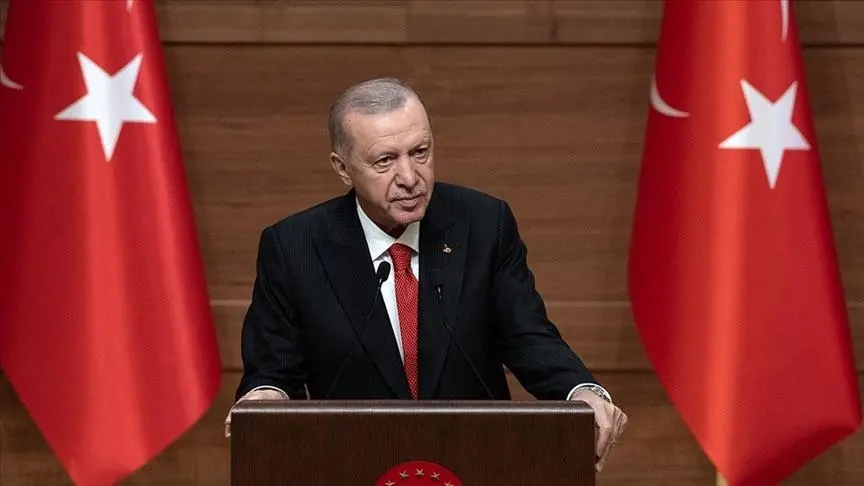
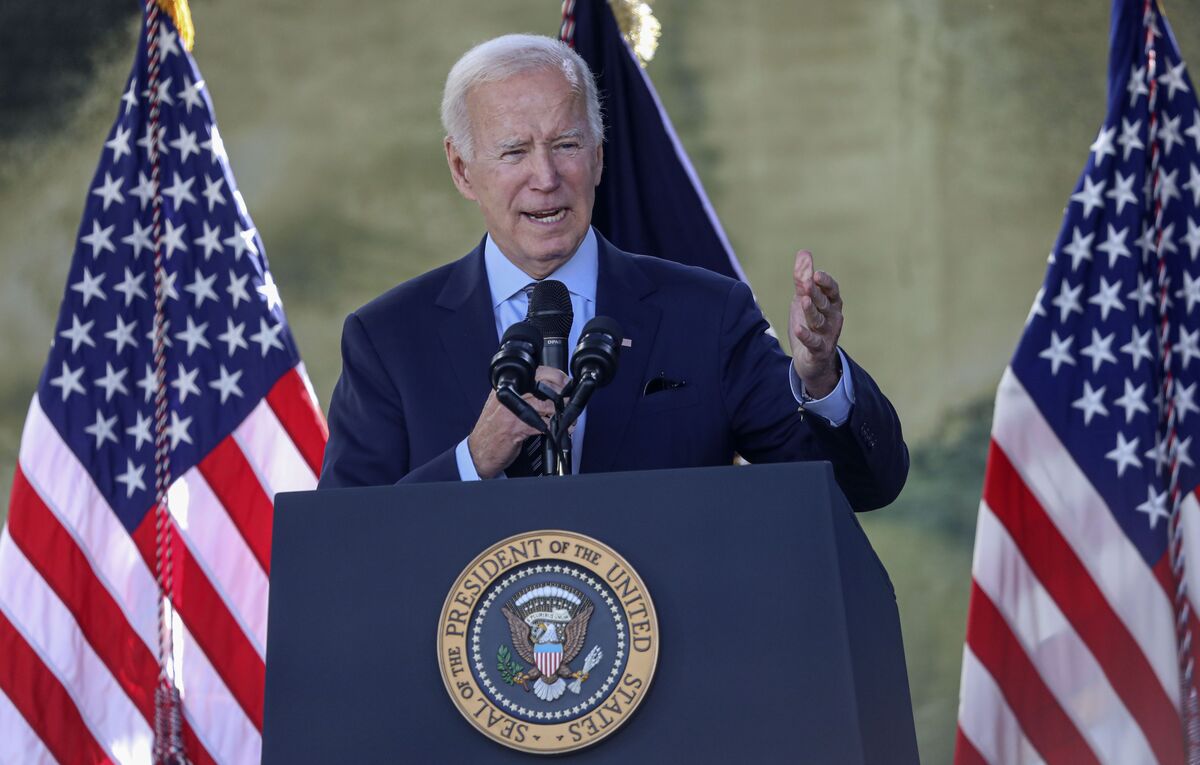
Erdogan: Biden's new Gaza ceasefire initiative is late but important

Turkish President Recep Tayyip Erdogan said that US President Joe Biden's announcement of a new initiative to cease fire in the Gaza Strip is "a very late, but important step."

This came during a press conference, Thursday, held with Sultan of Oman Haitham bin Tariq, at the Turkish Presidential Complex in the capital, Ankara.


Erdogan explained that it is not possible to achieve regional and global peace unless an immediate, just and permanent ceasefire is achieved in Gaza.


He added that Türkiye will not hesitate to do everything in its power to achieve calm and peace in Gaza.


PALESTINE

Thu 28 Nov 2024 6:42 pm - Jerusalem Time

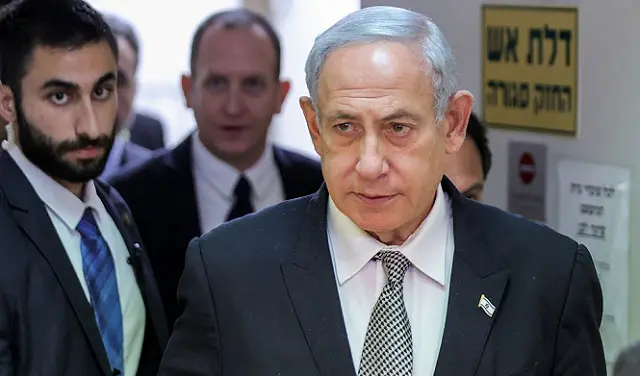
New York Times: Netanyahu not interested in making concessions on Gaza

The New York Times quoted American officials as saying that Israeli Prime Minister Benjamin Netanyahu is waiting for President-elect Donald Trump to take office before changing his position on talks with the Islamic Resistance Movement (Hamas).


The newspaper added, citing Western officials, that Israel does not seem interested in making concessions and is skeptical of American and Arab ideas for managing Gaza.


Officials said Netanyahu believes the Palestinian Authority's administration of Gaza is doomed to fail, and that Hamas will quickly reassert control over the Gaza Strip after the war.


ARAB AND WORLD

Thu 28 Nov 2024 6:27 pm - Jerusalem Time

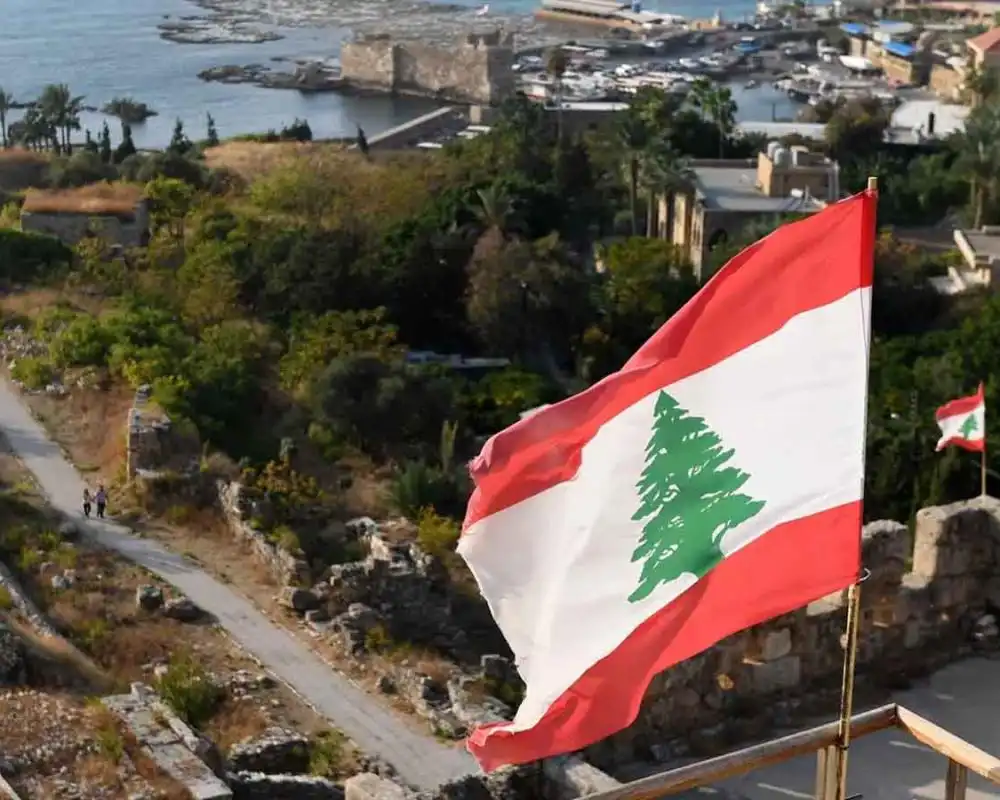
Lebanese Army: Israel violated the truce agreement several times

The Lebanese army said that the "Israeli enemy" violated the ceasefire agreement several times yesterday and today, and targeted Lebanese territory with various weapons.


The Lebanese army confirmed that it is following up on the Israeli army's violations in coordination with the relevant authorities.


Axios newspaper quoted an Israeli official as saying that Tel Aviv informed the United States in advance of the airstrike that targeted a Hezbollah site near Sidon.


The Lebanese Ministry of Health announced the number of victims of the Israeli aggression, which amounted to 3,961 dead, in addition to 16,520 wounded, since the beginning of the aggression.


The ministry explained that the number of victims last Tuesday reached 78 dead and 266 wounded.

ARAB AND WORLD

Thu 28 Nov 2024 6:02 pm - Jerusalem Time

Trump got rid of the burden of the Lebanon war, but the possibility of the agreement cracking remains

Experts believe that the Biden administration has removed a major geopolitical headache from President-elect Donald Trump’s to-do list in securing a ceasefire in Lebanon. But the incoming Trump administration will not be able to completely ignore the tensions between Hezbollah and Israel as they pursue larger goals in the Middle East.

Aaron David Miller, a veteran Middle East peace negotiator who has worked with both Democratic and Republican administrations, told NatSec Daily that ceasefire violations are likely to occur and it will be up to all parties involved — Lebanon, Hezbollah, Israel and Iran — to “reduce this confrontation and conflict to a situation where you have periodic violations.”

“It will be a test of whether each side believes that preserving this deal is more in their interest or theirs than letting it fundamentally collapse,” said Miller, who is now a senior fellow at the Carnegie Endowment for International Peace.

Blaise Misztal, vice president for policy at the Jewish Institute for National Security of America, told the same site that it is unclear how the agreement’s enforcement mechanisms will be used to respond to alleged violations of the ceasefire. The United States now chairs the “trilateral mechanism” designed to sort out complaints about adherence to the ceasefire, but no information has been provided on how real-time monitoring will take place on the ground.

Many are wondering how we will determine if there is a ceasefire violation? How will we establish oversight, detection and integration so that we can quickly get this information to the Lebanese Armed Forces.

Other questions remain – will the Lebanese army be able to keep Hezbollah out of southern Lebanon and prevent the Iranian-backed group from rearming? Will there be problems with the 60-day implementation window, with the IDF withdrawing and the Lebanese army deploying in its place? Can the UN Interim Force in Lebanon be trusted as a stable presence, given its mixed record in stopping violence?

However, the agreement appears to be holding for now. The fighting stopped at 4 a.m. Lebanon time in accordance with the agreement and Lebanon and Israel appear to be complying with its terms.

There is little risk that Trump will upend the agreement. Trump’s incoming national security adviser, Rep. Michael Waltz (R-Fla.), praised the ceasefire, saying he was “pleased to see concrete steps toward de-escalation in the Middle East.”

“Trump has been very clear that his support for Israel and his commitment to peace in the Middle East is unwavering,” a transition official for the incoming Trump administration, who was granted anonymity to speak freely, told NatSec Daily. The official claimed that Trump’s victory brings adversaries like Hezbollah back to the negotiating table.

Moreover, a senior administration official told reporters on Tuesday that Trump's "senior national security team" had been briefed on the details of the deal and that the Trump and Biden camps were in agreement.

“They agreed that this is good for Israel, as Prime Minister Netanyahu just said, it is good for Lebanon, as their government said, and it is good for the national security of the United States,” the official, who spoke to reporters on condition of anonymity, said. “And most importantly, doing this now rather than later will save countless lives on both sides.”

ARAB AND WORLD

Thu 28 Nov 2024 4:20 pm - Jerusalem Time

Washington gave Israel the right to take action against Hezbollah under the ceasefire agreement


The United States has given Israel a message of assurance that Israel may strike Hezbollah in Lebanon if it deems the group violating a ceasefire that went into effect early Wednesday morning.


Under the agreement, Hezbollah has 60 days to withdraw its heavy weapons north of the Litani River, and Israel must withdraw from southern Lebanon during that time period as the Lebanese army sends more troops to the area to monitor the ceasefire.


A senior US official told Middle East Eye that the US message to Israel stressed that it could strike Hezbollah if the group reconstituted itself in southern Lebanon, imported weapons, or if Israel said Hezbollah was positioning itself in a way that Israel viewed as a threat.


Israeli Prime Minister Benjamin Netanyahu claimed he had reached an understanding with the United States that Israel would maintain "complete military freedom of action" in southern Lebanon.


“If Hezbollah violates the agreement and tries to arm itself, we will attack. If it tries to renew terrorist infrastructure near the border, we will attack. If it fires a rocket, if it digs a tunnel, if it brings a truck loaded with rockets, we will attack it,” Netanyahu said.


Two US officials, in comments to Axios, disputed Netanyahu's portrayal of the guarantees, but also stressed that the United States is giving Israel a lot of leeway.


“While the deal gives Israel freedom of action to respond to threats from southern Lebanon, such as preparations for a missile attack or the construction of Hezbollah positions near the border, Israel will only be able to respond to less urgent threats — such as Hezbollah rebuilding military infrastructure north of the Litani River — after consulting with the United States, and if the Lebanese military does not deal with the threat on its own,” the Axios report says.


The US guarantees appear to mean that the stability of the ceasefire depends largely on Netanyahu’s perspective. The Middle East Eye website noted that it is unclear whether the presence of members of Hezbollah’s military wing living in southern Lebanon would be sufficient justification for Israel to launch a strike. It is estimated that around 35,000 Hezbollah fighters live in the area.

PALESTINE

Thu 28 Nov 2024 3:57 pm - Jerusalem Time

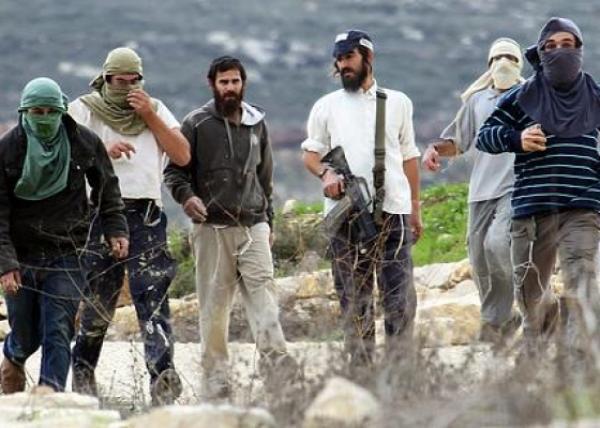
Injuries during settlers' attack on olive pickers east of Nablus

A number of citizens suffered bruises and suffocation during clashes with the Israeli occupation forces and settlers in the village of Salem, east of Nablus.


Local sources said that a number of citizens suffered minor bruises and wounds after confronting an attack by settlers on olive pickers in the village of Salem, under the protection of the occupation army, which fired tear gas bombs intensively, which led to a number of citizens suffocating.


The sources reported that the farmers went to pick olives in the lands they are forbidden to enter in the eastern part of the village, and were attacked by dozens of settlers under the protection of the occupation army, which closed the road to prevent the residents from reaching the farmers to support them.

ARAB AND WORLD

Thu 28 Nov 2024 3:15 pm - Jerusalem Time

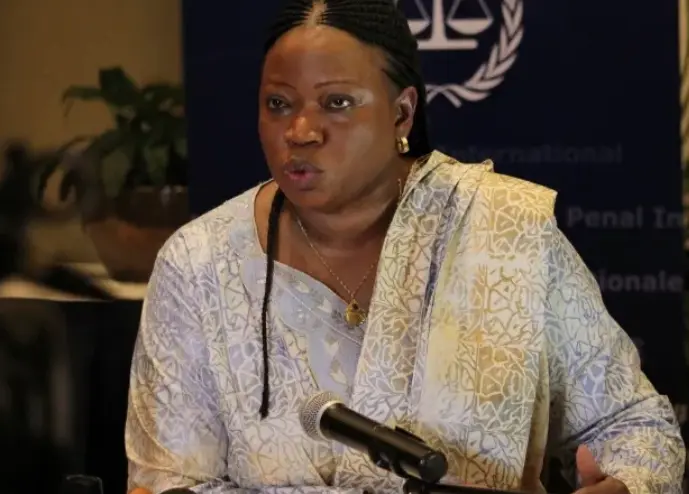
Former ICC prosecutor reveals she was subjected to a “direct threat”

Former International Criminal Court prosecutor Fatou Bensouda has complained that she and her family have been "directly threatened" while working on sensitive cases, and called for the court to be protected from "political pressure and manipulation".


This came at an event in the British capital, London, in which she addressed some of the threats and provocations she was subjected to during her work as chief prosecutor between 2012 and 2021, according to what was reported by the British newspaper The Guardian.


Prominent Gambian lawyer Bensouda said she, her family and her advisers had been threatened over sensitive cases they were working on, but had not succumbed to the threats.


Noting that the ICC must continue to do its work without political interference, she said: “Political calculations should not be allowed to influence decision-making processes.”


She explained that the support of the signatory states to the Rome Statute, which established the International Criminal Court, is essential to protect the court from all kinds of political pressure and manipulation.


The Rome Statute was adopted in 1998 in the Italian capital, and entered into force in 2002, thus announcing the establishment of the first permanent international criminal court, which is responsible for holding accountable the wars and conflicts witnessed in the world, which include clear violations of the basic rights guaranteed by international humanitarian law.


In 2021, Bensouda began an investigation into Israel's commission of war crimes and crimes against humanity in the Palestinian territories.


Last May, the Guardian reported that the former head of the Israeli intelligence agency Mossad, Yossi Cohen, held secret meetings with Bensouda before starting an investigation against Israel, and threatened her to force her to stop the investigation.


The report indicated that Cohen told Bensouda: “You have to help us, so that we can take care of you. You do not want to get involved in things that will put your safety and the safety of your family at risk.”


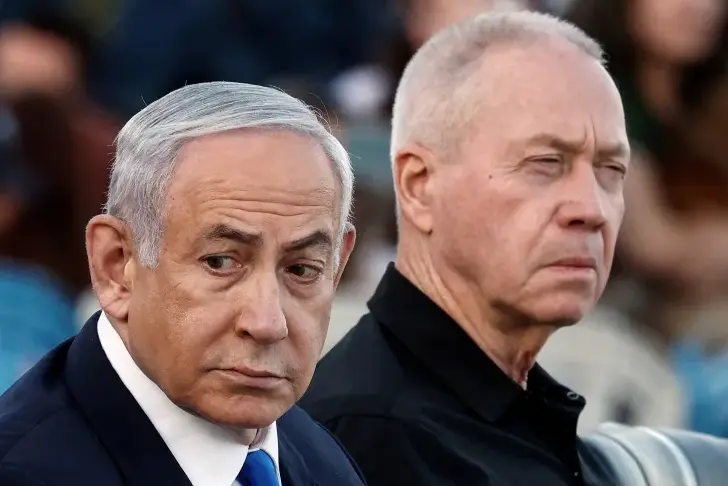
It is noteworthy that on November 21, the International Criminal Court issued two arrest warrants against Israeli Prime Minister Benjamin Netanyahu and his former Defense Minister Yoav Galant for committing crimes against humanity and war crimes in Gaza.

PALESTINE

Thu 28 Nov 2024 3:14 pm - Jerusalem Time

EU Commission: All EU countries are obliged to implement the arrest warrants issued against Netanyahu and Galant

The European Commission said it supports the International Criminal Court, and that all EU countries are obliged to implement the arrest warrants issued against Israeli Prime Minister Benjamin Netanyahu and former Defense Minister Yoav Galant.


Commission spokesman Peter Stano said in a press statement on Thursday that the European Union and its member states are strongly committed to international criminal justice and to the fight against impunity.


"We support the International Criminal Court and the principles set out in the Rome Statute. The European Union respects the independence and impartiality of the Court," Stano added.


He explained: "The European Union recalls that the International Criminal Court is an important and independent international institution, whose mission is to prosecute the most serious crimes under international law."


He continued: "All countries that have ratified the Rome Statute, which includes all EU member states, are obligated to implement arrest warrants issued by the International Criminal Court."

ARAB AND WORLD

Thu 28 Nov 2024 2:56 pm - Jerusalem Time

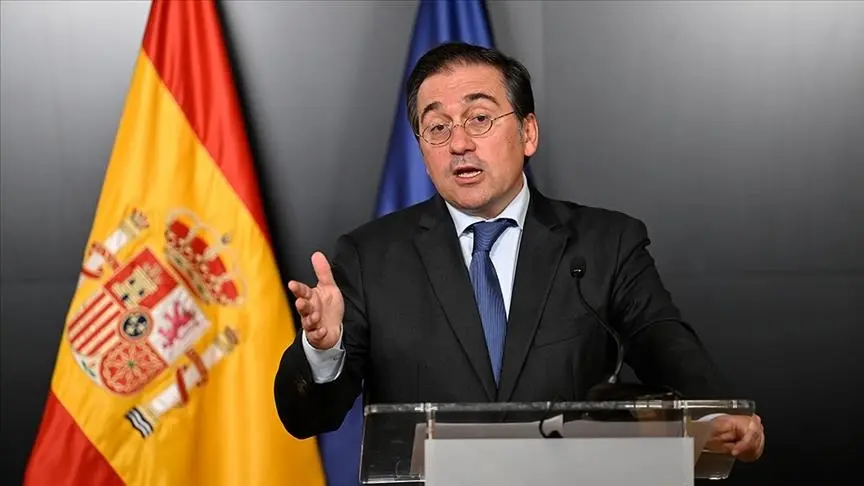
Spain calls for ceasefire in Gaza similar to Lebanon

Spanish Foreign Minister José Manuel Albares said the ceasefire agreement between Israel and Lebanon was "good news and a first step towards a permanent ceasefire," calling for the same step to be taken in Gaza as well.


In his speech before the Spanish Parliament's General Assembly on Thursday, Baris condemned the attacks that took place in Gaza and Lebanon this week, and indicated that the situation in the region is "unsustainable and intolerable."


"The ceasefire agreement reached between Israel and Lebanon is good news. It is a first step in supporting the very difficult situation in the region, but a ceasefire in Gaza must also be declared immediately. Only diplomacy can bring peace," he said.


"We cannot achieve peace with the unbearable destruction in Gaza and Lebanon. Now we must work to keep the suffering as low as possible," the minister added.


He continued: "That is why we will continue to insist and work for a permanent ceasefire, unhindered delivery of aid to civilians, the unconditional release of hostages and a two-state solution."


The minister called on Israel again to "abide by UN resolutions, withdraw from the occupied Palestinian territories, and respect international law and human rights."


"The two-state solution is an irreversible step and it is our definite goal. There can be peace in the Middle East and it will come. Freedom and peace are built with others, not by eliminating the other," he said.


Albares confirmed that Spain has not granted any new licenses to sell arms to Israel since October 7, 2023.


He said: "Misleading information must be prevented. Spain does not sell weapons to Israel, and ships loaded with weapons and military materials whose final destination is Israel are not allowed to stop in its ports."


After 66 days of fierce battles between Hezbollah and the Israeli army, international efforts led to a ceasefire agreement between Lebanon and Israel, which went into effect at dawn on Wednesday.

PALESTINE

Thu 28 Nov 2024 2:35 pm - Jerusalem Time

Gantz: Israel must remove the kidnapped soldiers from Gaza, not bring in settlers

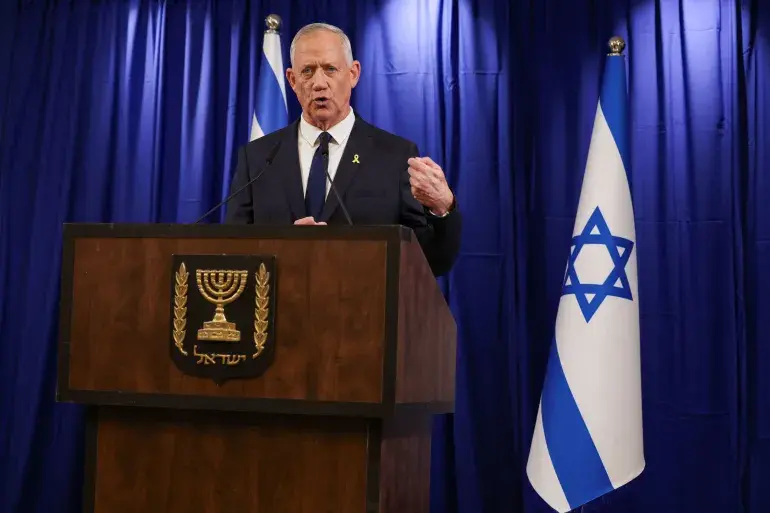
The leader of the Israeli opposition party, the "State Camp", Benny Gantz, called on the Israeli government to return its prisoners from the Gaza Strip and not to allow settlers into the Strip.


"We must get the kidnapped soldiers out of Gaza and not allow other settlers to enter the Strip," Gantz said in radio statements. "We have blessed settlements in Judea and Samaria (a term Israel uses to refer to the West Bank), so let us preserve them."


Gantz believes that Israel has "nothing to look for in the Gaza Strip other than the prisoners held by the Palestinian factions for 14 months and security," calling on the Israeli government to reach a ceasefire agreement in Gaza in order to ensure the return of the Israeli prisoners.


He continued, "I say to Prime Minister Benjamin Netanyahu: Make a plan and start suspending the fighting until this plan is achieved. Netanyahu must have enough courage - if he intends to release the kidnapped soldiers, let him do so, and if he thinks he cannot do so and does not intend to do so, let him say so."


It is noteworthy that Israeli right-wing parties that are partners in the government call for occupying the Gaza Strip, re-settling it, and voluntarily displacing its population.


Prisoner exchange negotiations between the Islamic Resistance Movement (Hamas) and Israel have faltered due to Netanyahu's insistence on setting conditions that include continued control over the Philadelphi Corridor on the border between Gaza and Egypt, the Rafah crossing, and preventing the return of Palestinian fighters to northern Gaza.


For its part, Hamas insists on a complete Israeli withdrawal from the Strip and a complete cessation of war to accept any agreement.


Israel estimates that there are 101 prisoners in the Gaza Strip, while Hamas announced that dozens of them were killed in random Israeli raids.


Since October 7, 2023, Israel, with American and Western support, has been committing genocide in the Gaza Strip, leaving more than 149,000 Palestinian martyrs and wounded, most of them children and women, and more than 10,000 missing, in one of the worst humanitarian disasters in the world.

ARAB AND WORLD

Thu 28 Nov 2024 2:11 pm - Jerusalem Time

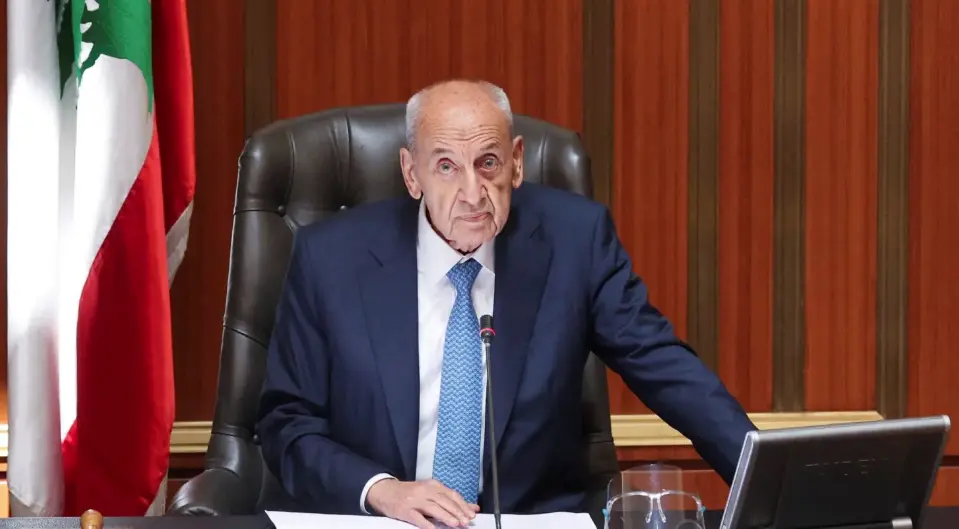
Berri calls for a session to elect a president in January

The Lebanese News Agency revealed today, Thursday, that Parliament Speaker Nabih Berri has set January 9th as the date for holding a session to elect a president for the republic.


The agency quoted Berri as saying: “I had vowed to myself that immediately after the ceasefire, I would set a date for a session to elect a president for the republic. I am announcing from now on that a session will be set for January 9.” The term of former President Michel Aoun ended on October 31, 2022, and Lebanon entered a period of presidential vacancy, and the parliament was unable to elect a new president for the country.

ARAB AND WORLD

Thu 28 Nov 2024 1:34 pm - Jerusalem Time

Ceasefire agreement in the north.. What are the goals behind disengaging from open areas?

Dr. Bilal Al-Shoubaki: Israel’s success in temporarily separating the arenas does not mean that it will be permanent and will allow it to continue its hostile policies in Gaza and the West Bank

Antoine Shalhat: Israel has achieved success in disengaging from the Gaza and Lebanon arenas, but the other arenas remain open to the possibility of escalation

Dawoud Kuttab: The possibility of the agreement collapsing in the long term, and escalation may return to the forefront if real political breakthroughs are not achieved

Dr. Amr Hussein: The agreement with Lebanon increases the possibility of Israel escalating its aggression on Gaza and Netanyahu continuing his strategies towards regional hegemony

Nabhan Khreisha: Israel will escalate the war of extermination against civilians and has actually begun building infrastructure in the Strip that reflects its intention to occupy it for a long time

Majed Hadeeb: The next stage may witness transformations in the relations between Lebanon and Israel due to external pressures that may reach the point of normalization and treaties without Hezbollah’s objection


The ceasefire between Israel and Lebanon appears to reflect complex developments in the regional scene, as some consider it an Israeli attempt to sever the ties between the various resistance arenas, especially between Gaza and Lebanon, amid questions about whether the agreement will hold and be the beginning of successive solutions, or whether it will be the beginning of a rolling escalation.


Despite describing it as a strategic achievement by Israel, analysts, specialists and university professors, in separate interviews with “Y,” believe that this agreement carries many challenges and questions about its sustainability and impact on the ongoing conflict dynamics in the region, considering that the agreement will lead to reducing military pressure on Israel on the northern front, allowing it to focus on the Gaza Strip.


The agreement will lead to more pressure on Gaza.


Professor of Political Science at Hebron University, Dr. Bilal Al-Shoubaki, believes that the recent agreement between Israel and Lebanon aims to disengage the southern and northern fronts, and constitutes a strategic step from both the American and Israeli perspectives to try to weaken the Hamas movement and put double pressure on it.


According to Al-Shobaki, the agreement is presented as an Israeli achievement that reflects the disengagement between the resistance arenas in Gaza and Lebanon, which Israel considers a blow to one of Hamas’s pillars of strength, represented by the Lebanese support front.


It is believed that the United States and Israel see that Hamas has become weaker after losing the support of the Lebanese front at the current stage, and accordingly, they believe that this stage may be the most appropriate to push the movement towards making concessions, even if these concessions will not exceed a limited formula represented by a prisoner exchange deal.


Al-Shoubaki confirms that the American and Israeli talk about a deal does not include a comprehensive agreement related to the general situation in Gaza, nor does it include issues of Israeli withdrawal or ending the war permanently, but is limited to the exchange of prisoners only.


Al-Shoubaki points out that implementing this vision depends on multiple pressure tools; the first is pressure towards a prisoner exchange agreement, the second is the continuation of military operations in Gaza, and the third is intensifying international pressure on Hamas leaders abroad.


Al-Shoubaki points out that these three tactics are not new, but rather come as an extension of the pressures that have been ongoing since October 7, whether on the military level inside the Gaza Strip, or politically and internationally by targeting the movement’s leaders abroad, or through efforts to separate the arenas and reduce Hezbollah’s support for the Gaza front.


In the short term, Al-Shoubaki believes that the agreement will lead to more pressure on the resistance factions in the Gaza Strip, and perhaps to a state of frustration among some Palestinian parties. It will also allow Israel to devote itself to continuing its hostile policies in the West Bank, especially with the desire of Israeli Finance Minister Bezalel Smotrich to exploit this agreement to implement his plans against the Palestinians in the West Bank.


As for the medium and long term, Al-Shoubaki confirms that the interconnectedness between the components of the axis of resistance is not only linked to the current circumstances of the war.


Al-Shoubaki says: “This connection will remain in place by virtue of reality and due to common ideological and political factors.”


Al-Shoubaki explains that Israel's success in temporarily separating the arenas does not mean that this separation will be permanent, because the nature of the conflict and the common issues between the components of the resistance make reconnection a matter of time.


Al-Shoubaki believes that the agreement signed by Israel and Lebanon includes many points that make it fragile and vulnerable to collapse. The most prominent of these points are the clauses that are open to interpretation, which were placed in a way that allows one of the parties, especially Israel, to exploit them to its advantage.


Al-Shoubaki points out that, for example, the agreement includes a clause granting both parties the right to self-defense, which raises questions about who will determine the legal justifications for either party to use this right.


Al-Shoubaki explains that this clause gives Israel cover to violate the agreement under the pretext of self-defense, which is something that has been repeated in previous agreements, such as UN Security Council Resolution 1701, which Israel did not fully adhere to. He points out that the new agreement includes the establishment of a “quintet committee” that includes the United States of America, which he considers an Israeli attempt to establish an advanced presence inside Lebanon under the cover of the agreement.


Al-Shoubaki points out that the Lebanese side may view the agreement as the “lesser of two evils,” especially in light of the great pressures the Lebanese people are facing from Israeli displacement and targeting.


The future of the Gaza Strip faces great uncertainty in light of the developments


Writer and political analyst Antoine Shalhat believes that the future of the Gaza Strip faces great ambiguity in light of regional and international developments. This ambiguity stems from the Israeli plans announced by Israeli Prime Minister Benjamin Netanyahu, who considered the disengagement between the Lebanese and Gazan arenas a “great achievement.”


Shalhat points out that according to Netanyahu, this achievement enables Israel to focus on Gaza, which reflects an intention to intensify the military campaign on the Gaza Strip, and continue a “war of annihilation and comprehensive destruction” whose end does not seem imminent.


Shalhat points to two main issues that cast a shadow over the future of the war. The first concerns the fate of the Israeli prisoners held in Gaza, which is a political and security priority for Israel. The second is the absence of a political plan for the so-called “day after the war.” Despite the existence of Arab and international proposals on the management of Gaza after the fighting ends, Israel has not agreed to any of them.


Shalhat confirms that there are voices within Israel pushing for the direct reoccupation of the Gaza Strip and encouraging settlers to return to it, which increases the chances of the war continuing unless serious international pressure is exerted, especially from the United States of America.


It is believed that the ceasefire on the northern front with Hezbollah has direct effects on the Gaza Strip, as the continuation of the truce in Lebanon allows the Israeli army to transfer more of its forces to Gaza, which will increase military pressure on the Palestinian resistance.


Shalhat explains that the escalation on the northern front had contributed to reducing the number of Israeli ground forces in Gaza, but any stability in the north could open the door to a greater escalation in the Gaza Strip.


Despite the intense military pressure, Shalhat points out that the Palestinian resistance in Gaza has resorted to “partisan warfare” strategies, which inflict tangible damage on the Israeli army.


Starvation and destruction in Gaza may affect resilience


However, Shalhat warns that the systematic use of starvation weapons against the people of the Gaza Strip, in addition to the comprehensive destruction, may affect the resistance and the people’s ability to withstand in the future.


Shalhat confirms that the picture will become clearer with developments in the field and what Israel will decide regarding its military strategy in Gaza.


Shalhat believes that Israel has achieved limited success in disengaging the resistance arenas, as it has so far been able to separate Gaza and Lebanon. However, other arenas, such as Iraq and Yemen, remain open to the possibility of escalation.


Shalhat points out that there are serious questions about the nature of the Iranian response to the Israeli attacks, which makes the regional scene more complicated.


Shalhat believes that Israel and Hezbollah benefit from maintaining the ceasefire in the north. The Lebanese resistance, which has received blows described as “painful,” needs time to reorganize its ranks and strengthen its capabilities. In contrast, the Israeli military establishment is facing a crisis in human resources and a shortage of ammunition, which has prompted the army to pressure the political leadership to reach an agreement. The American and Iranian positions are additional factors in strengthening this relative calm.


Shalhat asserts that Israel’s success in disengaging the northern and southern arenas represents a temporary gain, but he stresses that the regional landscape remains full of complexities, as other arenas, including Iraq and Yemen, remain combustible, and although the Lebanon agreement may hold for a while, future developments depend on the extent to which regional and international factors influence the dynamics of the conflict.


Any ceasefire agreement contributes to enhancing the confidence of the conflicting parties.


Writer and political analyst Daoud Kuttab believes that any ceasefire agreement contributes to strengthening the confidence of the conflicting parties, and restores part of the role of the major powers, especially the United States, in managing the conflict.


Writers believe that Israel's acceptance of the ceasefire principle may accelerate the end of the war on the Gaza Strip, pointing out that the current circumstances are pushing towards calming the situation, at least in the short term.


He points out that the future of the Lebanese resistance faces increasing challenges, especially with the price it will pay in the framework of the prisoner exchange deal and the resulting problems related to the right of unofficial parties to bear arms. Despite these pressures, writers confirm that the agreement did not cancel the role of the Palestinian resistance, or end its ability to achieve its goals.


Writers explain that through this agreement, Israel was able to achieve its goal of separating the arenas between Gaza and Lebanon, but this separation came at a great cost, both on the military and political levels.


Regarding the broader axis of resistance, writers stress that Hezbollah has paid a heavy price for its attempt to maintain the cohesion of the arenas, especially in light of the difficult economic and social conditions that Lebanon is suffering from as a state.


Writers explain that the continuation of this linkage seems difficult in the long term, given the burdens Lebanon bears, which cannot be increased without threatening internal stability.


Writers believe that the current agreement will hold in the short and medium term due to the lack of desire on both sides for further escalation.


However, writers warn that there is a possibility that the agreement will collapse in the long term if real political breakthroughs are not achieved, such as reaching settlements on border demarcation or ending the war on Gaza.


Writers stress that without these steps, escalation may return to the forefront, but they expect that the agreement will continue for several months to come, given the increasing international and regional pressures on all parties to calm down, especially with the end of the US elections and the passage of a relatively long period since the beginning of the war.


Netanyahu's government is moving to consolidate the occupation in Gaza


The Egyptian writer, political analyst and specialist in international and strategic relations, Dr. Amr Hussein, believes that Israeli Prime Minister Benjamin Netanyahu, before signing the ceasefire agreement in Lebanon, faced major challenges represented by the escalation of the resistance in southern Lebanon, and the increased pace of missile launches towards the Israeli depth, where vital cities such as Haifa and Tel Aviv were targeted with strikes that he described as influential, which is one of the most prominent reasons that prompted him to accelerate the agreement.


Hussein explains that Netanyahu seeks, through the agreement, to separate the Lebanese front from Gaza, and then move towards a broader plan known as the “Generals’ Plan,” which aims to dismember the Gaza Strip and gradually reoccupy it, while imposing complete military control over it.


Hussein points out that these moves come in the context of the vision of the extreme Israeli right, which is racing against time to liquidate the Palestinian cause, especially in light of unlimited American support.


Hussein points out that the Israeli government sees the end of the current war, "the day after the war," as an opportunity to consolidate the occupation in Gaza, not to withdraw from it.


Hussein believes that the ongoing resettlement operations in northern Gaza, in addition to the strengthening of the military presence in the areas of the Netzarim and Philadelphi axes, confirm that Israel does not intend to end the war soon, but rather seeks to establish a long-term presence in the Strip.


He points out that these plans are accelerating with the approach of Donald Trump's return to the White House, as this may lead to settlements that serve the Israeli agenda, without withdrawing from the Strip.


Hussein believes that the agreement with Lebanon increases the possibility of Israel escalating its military operations against Gaza, taking advantage of the dismantling of the concept of “unity of arenas,” as Israel views this dismantling as an opportunity to intensify its targeting of the Strip and implement its plans there.


Hezbollah was forced to agree to the agreement to spare Lebanon from destruction


In contrast, Hussein believes that Hezbollah was forced to agree to the agreement to avoid comprehensive destruction in Lebanon, especially after a series of qualitative Israeli attacks that included pager device bombings, assassinations of first- and second-tier leaders in the party, and targeting the southern suburbs and Beirut.


Hussein believes the Israeli agreement with Lebanon will likely hold, as Netanyahu seeks to calm the northern front to return residents of northern settlements displaced by the escalation of shelling, and avoid further damage inflicted by Hezbollah rockets and Israeli attack aircraft over the past 14 months.


Hussein believes that the next stage will witness a new escalation, including Israel targeting other resistance fronts in Yemen, Iraq and Syria, and cutting off Hezbollah’s supplies, which reflects Netanyahu’s continuation of his strategies towards regional hegemony to achieve his political and military goals.


Israel will not be able to crush the resistance in Gaza


Journalist Nabhan Khreisha believes that the ceasefire agreement between Israel and Lebanon may open the way for the Israeli army to transfer its forces stationed on the northern front to the Gaza Strip, which would enhance military operations there.


Khreisha points to the absence of real military targets in the Gaza Strip, noting that Israel will continue to implement its plans against the Palestinian people by escalating the war of extermination, which mainly targets civilians, and includes killing, forced displacement, and home demolitions, especially in the northern Gaza Strip, to expand the buffer zone.


Khreisha asserts that Israel has actually begun to build an infrastructure in Gaza that reflects its intention to occupy the Strip for a long period, with the paving of roads and the establishment of camps, noting that these moves coincide with increasing Israeli governmental support for settlement plans, which have gone beyond being mere proposals from settlers to becoming part of the policies of the current right-wing government.


Among the most prominent projects linked to the occupation’s plans in Gaza, Khreisha points to the “Ben Gurion Canal” project, which aims to connect the Red Sea to the Mediterranean Sea, ending at the coast of Gaza. This project, which dates back to the 1960s, has been revived today to be part of Israel’s future plans to control the Strip.


On the resistance front, Khreisha explains that the southern Lebanon front has been a support factor for Gaza since the beginning of the war, more than it is an embodiment of the “unity of arenas” strategy.


Khreisha points out that the Palestinian resistance, despite its losses, including the assassination of a number of its prominent leaders, continued to confront the Israeli aggression using guerrilla warfare, which reflects its ability to adapt to the conditions of war and the tactics of the occupation.


Khreisha believes that the impact of the ceasefire between Israel and Lebanon on the resistance in Gaza will be limited, because it is adopting different combat strategies, which enables it to continue to exhaust the Israeli occupation forces for a long time.


Khreisha points out that Israel has so far succeeded in achieving its goal of separating the Lebanon front from the Gaza front, which was confirmed by Israeli Prime Minister Benjamin Netanyahu and a number of military leaders.


This separation, according to Khreisha, reduces the burden on the Israeli army, which is suffering from great pressures in terms of mobilizing reserves and providing resources, and also contributes to reducing the economic damage resulting from the war on multiple fronts.


However, Khreisha believes that this separation will not achieve the greater goal of crushing the Palestinian resistance in Gaza, as the resistance is still capable of waging a long-term war of attrition.


Khreisha points out that the occupation will escalate its brutality against Palestinian civilians through killing and starvation, in an attempt to displace them and weaken the environment of popular resistance.


Khreisha expects that the ceasefire agreement in Lebanon will hold for a while, but he acknowledges the difficulty of determining the duration of this hold.

Khreisha believes that there are several factors that support the continuation of this agreement, including: the decline in Hezbollah’s power after the assassination of a number of its first and second-tier political and military leaders, in addition to the terms of the agreement that serve Israel’s interests.


The most prominent of these conditions, as Khreisha explains, is the prevention of armed attacks from Lebanese territory, with a gradual withdrawal of Israeli forces from southern Lebanon within two months, and the provision of American guarantees to Israel, along with an international mechanism to monitor compliance with the terms of the agreement. The agreement also gives Israel the freedom to carry out military operations in Lebanon in the event of violations by Hezbollah.


Khreisha points out that the Iranian position is a decisive factor in the agreement’s survival, as Iran, the main supporter of Hezbollah, has strategic interests that push it to avoid escalating the confrontation with Israel. He points out that with the election of Donald Trump as US president and the escalation of his threats to Iran, Tehran may seek to make concessions to avoid harsher sanctions, and restricting its support for Hezbollah may be one of these concessions.


Differences in the objectives of the wars on Gaza and Lebanon


Writer and political analyst Majed Hadeeb believes that the ceasefire between Hezbollah and Israel does not have direct repercussions on the situation in the Gaza Strip, pointing out that this is primarily due to the absence of real unity between the field arenas.


Hadib explains that if there had been an effective unity of arenas that included practical and field coordination between the resistance factions in Palestine, Hezbollah, and the rest of the resistance axis, this truce could have been considered a devastating blow to the Palestinian resistance, especially the Hamas movement.


Hadib points out that the difference in the objectives of the wars on Gaza and Lebanon reinforces this separation. The war on Gaza aims to subjugate the Palestinian people and force them to accept political solutions imposed by Israel, while the war on Lebanon focuses on ending Hezbollah’s military capabilities and working to diminish its influence on the Lebanese scene in preparation for the post-war phase on Gaza and Lebanon.


He points out that the Israeli goal in Lebanon is not to destroy the Lebanese infrastructure or the capabilities of the Lebanese people as is happening in Gaza, where the capabilities of the Palestinian people were destroyed, but rather to eliminate the military capabilities of Hezbollah to prepare Lebanon for normalization with Israel.


Regarding the future of Gaza, Hadeeb stresses that the fate of the Strip is not determined by the developments of the ceasefire in Lebanon or its continuation, but rather by the main players in the scene: the American administration, Israel, and some Arab regimes.


Hadeeb believes that the Palestinians, including the resistance and Hamas, are not among the players who have a significant impact on determining the future of the Gaza Strip, due to the division and contradiction in strategies and programs, and due to the absence of an Arab incubator that seeks to protect the political rights of the Palestinians. In addition, the Arab regimes, which are well aware of the position of the Palestinians and what their conditions will become after the recent war on Gaza, play a pivotal role in this context.


The concept of "unity of arenas" has not been practically achieved.


Hadib criticizes the concept of "unity of arenas," explaining that it is a slogan that was launched after the 2021 war, but it was not practically achieved. Rather, this slogan was stillborn, due to the lack of factors for its continuation that would ensure the achievement of its goals.


Hadib points out that even during the confrontations in 2022, this unity was not embodied even at the level of the Palestinian arena, as the Islamic Jihad movement confronted Israel alone, without support or backing from Hamas, despite the existence of what was known at that time as the joint room.


Hadib believes that this term was an attempt by Iran to link its various regional arms, such as the Houthis, the Iraqi and Syrian factions, in addition to the Hamas and Islamic Jihad movements.


Hadeeb stresses that Israel, for its part, does not pay attention to such slogans, but rather works according to clear strategies aimed at ensuring its national security and the safety of its settlers, whether in the north or the south.


Hadeeb stresses that Israel's priorities lie in eliminating any threat that affects its settlements or destabilizes its security.


Regarding the ceasefire agreement between Hezbollah and Israel, Hadib expects that it will hold, pointing out that Lebanon in the next stage will not be the same as it was when Hassan Nasrallah was at the head of Hezbollah.


Hadib explains that Hezbollah, under the leadership of its current Secretary-General, is going through a phase of gathering its cards internally and externally, whether from a military, political or social perspective.


He believes that the current Secretary-General of Hezbollah faces different challenges compared to his predecessor, although the general strategies have not changed. Among these challenges is rebuilding the party’s position in the Lebanese political scene, as Hezbollah was one of the most prominent players influencing the country’s domestic and foreign policy before the war on Lebanon.


Hadib points out that Hezbollah is now forced to make concessions on multiple levels, including resolving the pending crises related to the prime minister and the Lebanese republic.


Hadib points out that the next stage may witness transformations in relations between Lebanon and Israel under external pressures that may reach the point of normalization and signing treaties without objection from Hezbollah, as Saudi Arabia will return, with the United States’ push, to formulate political balances in Lebanon by reconsidering the Taif Agreement that Saudi Arabia had previously formulated according to the equations of party power at that time, as Saudi Arabia will work to formulate a new agreement for Lebanon, in which there is no place for Hezbollah’s power.


Hadib points out that Lebanon, in the post-Hassan Nasrallah era, will become closer to the American and Gulf spheres, in light of international and regional attempts to reformulate the political scene in Lebanon in line with these trends.


Hadib asserts that Hezbollah's declining role will leave a vacuum that will be filled by regional and international powers seeking to rearrange the situation in a way that serves their interests, away from Iranian influence, which has declined with the absence of Hassan Nasrallah as one of Iran's most important arms in the region.


ARAB AND WORLD

Thu 28 Nov 2024 1:18 pm - Jerusalem Time

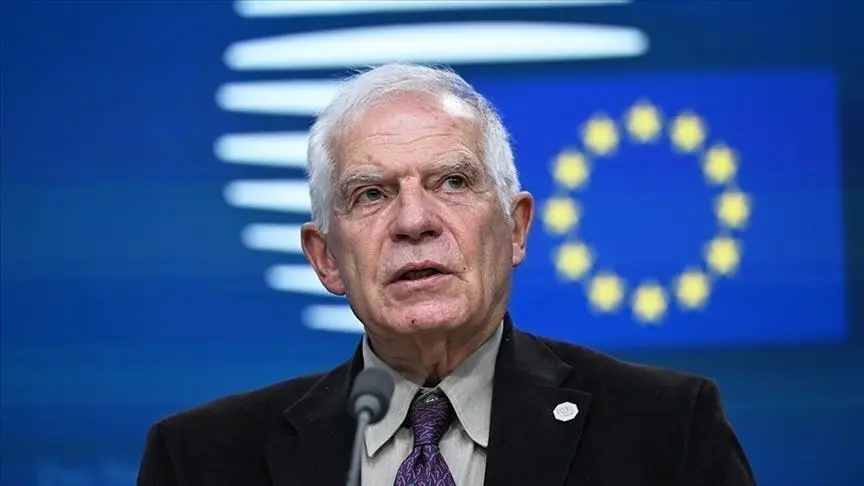
Borrell calls for not undermining the International Criminal Court

The High Representative of the European Union for Foreign Affairs and Security Policy, Josep Borrell, called on the international community, especially the European Union, not to undermine the International Criminal Court.


This came in press statements, Thursday, before the second meeting of the "Global Alliance for the Implementation of the Two-State Solution (Palestinian and Israeli)" initiative by the European Union and Belgium.


The European official said he wanted to hold the meeting on his last day in office before handing over Kaya Kallas.


"I did not want to leave my job in Brussels without holding this meeting, tomorrow I will leave, but I ask everyone who works to support the two-state solution to continue working hard, because without this there will be no peace in the Middle East," he said.


He stressed that the instability in the Middle East will affect Europe closely, adding: "I would like to appeal to all members of the international community, especially members of the European Union, we cannot undermine the International Criminal Court."


He added: "This is the only way to achieve global justice and implement accountability, and the International Criminal Court will be of no use if Europeans do not provide it with their full support without delay."


It is noteworthy that on November 21, the International Criminal Court issued two arrest warrants against Israeli Prime Minister Benjamin Netanyahu and his former Defense Minister Yoav Galant for committing crimes against humanity and war crimes in Gaza.

ARAB AND WORLD

Thu 28 Nov 2024 1:09 pm - Jerusalem Time

ICC: Political pressure will not affect Netanyahu, Galant arrest warrants

The Israeli Broadcasting Corporation quoted the spokesman for the International Criminal Court, Fadi Al-Abdallah, today, Thursday, confirming that the arrest warrants issued by the court against Israeli Prime Minister Benjamin Netanyahu and his former Defense Minister Yoav Galant can only be cancelled with strong arguments, stressing that political pressure will not affect the court’s decision.


Al-Abdullah told the Broadcasting Authority that Israeli political threats and news of US sanctions on the court would not affect its decision-making, stressing that the judges are independent and will only decide according to evidence and the law.


He pointed out that judges cannot cancel the arrest warrants unless they present arguments that he described as very strong, adding that even if Israel forms a special investigation committee, the International Criminal Court must investigate whether Netanyahu and Galant will be tried on the war crimes charges they are accused of.


He also pointed out that the court is investigating whether the two defendants committed crimes during the war in the Gaza Strip, saying, "Not everything is permissible during war."


He stressed that Netanyahu and Galant are expected to appear before the International Criminal Court, noting that all their rights will be preserved, including the presumption of innocence.


The ICC spokesman rejected accusations of bias against Israel, saying the court was discussing legal and legitimate issues to protect "those who have been harmed or could be harmed."


It is noteworthy that Israel informed the International Criminal Court yesterday, Wednesday, that it will appeal the arrest warrants issued against Netanyahu and Galant.


The court issued arrest warrants last Thursday against Netanyahu and Galant, accusing them of committing war crimes and crimes against humanity in Israel's war on the Gaza Strip, along with a warrant against the military commander of the Islamic Resistance Movement (Hamas), Mohammed Deif.

ARAB AND WORLD

Thu 28 Nov 2024 12:57 pm - Jerusalem Time

International newspapers: Biden has a historic opportunity to implement the two-state solution

Newspapers covered developments in the ceasefire in Lebanon, which some see as reflecting global and regional fatigue with the war, noting that there is a historic opportunity for US President Joe Biden to implement the two-state solution.


The French newspaper Liberation confirmed that the ceasefire came as a result of global and regional fatigue with the conflict in Lebanon and the Gaza Strip, because it "contradicts the goals of the right-wing movement that runs the Israeli government."


The newspaper said that both sides of the conflict had justification for the move, as the people of Lebanon had endured two full months of violent bombing, and that the painful blows that Hezbollah received did not prevent it from boasting about its ability to attack until the last moment.


As for the Israeli government, it can say that it has set Hezbollah back years and paved the way for the return of the residents of the north. The newspaper also indicates that the agreement’s continuity “depends on the policy of the Donald Trump administration.”


Embarrassing decision for the Israeli right

In Haaretz, an opinion piece said that reactions within Benjamin Netanyahu's coalition government to the ceasefire agreement with Lebanon "reflect a sense of embarrassment, because it contradicts the principles of the right-wing movement and the mood of its popular base."


The article added that separating the northern and southern fronts (Gaza and Lebanon) may be considered an achievement for Israel, but the big difference between them should not be forgotten, stressing that "the ambitions of Netanyahu's partners in Gaza are completely different from those in Lebanon."


In the British Financial Times, a report said that news of President Joe Biden’s approval of a $680 million arms deal for Israel “comes as Netanyahu puts delayed arms shipments at the forefront of his justifications for supporting a ceasefire with Hezbollah.”


The report noted that US officials were quick to deny any deliberate delays in arms deliveries to Israel. It said that US weapons “continued to flow to Tel Aviv even as the amount of aid directed to Gaza declined to levels unacceptable to the Biden administration itself.”


Biden can implement the two-state solution

Foreign Affairs magazine said that Biden should seize the opportunity to salvage his balance in the Middle East during the remaining days of his rule, adding, "Biden can make the two-state solution possible, especially after he is freed from all pressures. It is an opportunity that was not available to his predecessors."


An article in the newspaper suggested that Biden “recognize a Palestinian state, sponsor a Security Council resolution on a two-state solution, and apply US law regarding arms supplies,” saying that these measures “would be easy for Biden to reverse.”


In the Wall Street Journal, a report discussed France's position on the International Criminal Court's decision against Netanyahu and his former defense minister, Yoav Galant, noting that Paris' talk about the possibility of Israeli officials benefiting from immunity "raises questions about the court's jurisdiction around the world."


The report said that this French talk "raises further questions about whether France will adopt the same standards when it comes to Russian President Vladimir Putin, for example, for whom the same court has issued an arrest warrant."


PALESTINE

Thu 28 Nov 2024 12:42 pm - Jerusalem Time

Israeli settlers attack Palestinian farmers east of Nablus

Today, Thursday, settlers attacked farmers while they were picking olives in the village of Salem, east of Nablus.


Local sources reported that settlers from the "Alon Moreh" settlement attacked farmers in the Khallet al-Musa area north of the village, assaulted them, destroyed the olive crop and bags, and stole the olive picking machine.


This year, the olive harvest season in the West Bank is witnessing repeated attacks by settlers and occupation forces, which have reached the point of killing, burning and cutting down olive trees, stealing the crop, and preventing farmers from reaching their lands.

PALESTINE

Thu 28 Nov 2024 12:37 pm - Jerusalem Time

Israeli forces demolish two Palestinian facilities between Beit Anan and Beit Liqya

Today, Thursday, the Israeli occupation forces demolished two agricultural facilities between the towns of Beit Anan, northwest of Jerusalem, and Beit Liqya, west of Ramallah.


Local sources reported that the occupation demolished two agricultural facilities on the "Al-Khunideq" road between the two towns, owned by citizens Jamil Muhammad Rabi' and An'ad Daoud Hamid.

ARAB AND WORLD

Thu 28 Nov 2024 12:15 pm - Jerusalem Time

Maariv: The Israeli Air Force is in a difficult situation

The Jerusalem Post reported - quoting its Hebrew-language colleague Maariv - that the Israeli occupation army needs to restore its military capabilities by embarking on massive purchases of weapons systems, fighter jets, helicopters, tanks, artillery, missiles and various types of ammunition.


It said the condition of the army's helicopters is the worst, especially the Apache squadrons. As for ammunition, the army is constantly checking its stocks of surface-to-air bombs.


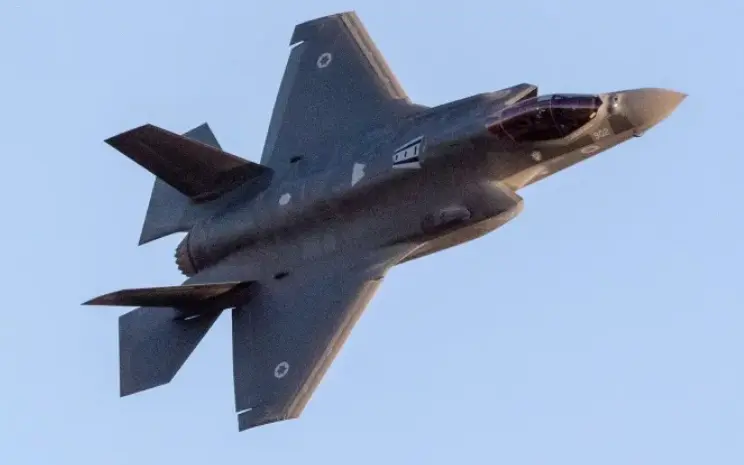
It added that the Air Force's fighter jets have far exceeded their service life after each plane accumulated thousands of hours of flying during the war, which caused all the fighter jets to become obsolete, which will require Israel to quickly purchase new squadrons of aircraft, especially the F-35 and F-15.


What makes matters worse is that the US administration recently increased restrictions on aid to Israel, according to the newspaper, and postponed the provision of heavy air-to-ground bombs and air-to-ground missiles from helicopters, and temporarily prevented the supply of used Apache helicopters to assist the air defence system.


The IAF's fighter jets have far exceeded their service life, with each aircraft having accumulated thousands of hours of flight during the war, causing all fighter jets to become obsolete, which will require Israel to quickly purchase new squadrons of aircraft, especially the F-35 and F-15.


But the newspaper believes that the diplomatic "crisis" between the US administration and Israel is not everything in its quest to obtain the weapons it needs; as the world is currently witnessing an arms race. In light of the war in Ukraine and the tensions between China and Taiwan, all of Europe is racing to acquire weapons.


It quoted a senior official from one of the world's largest arms suppliers - whose identity was not disclosed - as saying, "What is happening in the world today is crazy. It is not the world we knew two or three years ago. The whole world is buying weapons, everything from everything."


"We are in a race, arms companies can't keep up with demand, and the delivery queue is getting longer," he added.


Reflecting the situation within the occupation army, Israeli Prime Minister Benjamin Netanyahu announced yesterday, Wednesday, that one of the factors that forced him to take the decision to cease fire with the Lebanese Hezbollah was the need to renew ammunition and equipment.


Senior arms company official: What's happening in the world today is crazy, it's not the world we knew two or three years ago. The whole world is buying weapons, everything from everything


However, The Jerusalem Post believes that the ceasefire was not only to allow for the renewal of the munitions arsenal, but also to purchase new systems now, with a focus on fighter jet squadrons, refueling planes and transport helicopters.


She revealed that the condition of the Apache helicopters in the Air Force is the worst, and that their level of readiness at the beginning of the war was low, and the situation worsened as the fighting continued.


One option the IAF is currently considering is to use several Black Hawk transport helicopters (called Yanshov), which are used for transporting and evacuating casualties, and to install weapons systems such as air-to-ground missiles, cannons, and additional systems. These helicopters will serve as an aerial means of border defense and slightly reduce the need for Apache helicopters.


She noted that shipments of heavy and semi-heavy bombs are stuck in Boeing warehouses in the United States due to President Joe Biden’s decision. The same applies to the Hellfire missile produced by Lockheed Martin, as Israel lacked these munitions when the fighting began.


According to the newspaper, Israel is counting on US President-elect Donald Trump to immediately release the shipments to Israel.


A senior security official, who was not named, was quoted as saying that the big problem now is that the budget is limited, and Israel must work “magic to be able to meet these needs,” adding that the second problem is related to the lists of buyers waiting for the production lines to provide them with their orders as quickly as possible.

PALESTINE

Thu 28 Nov 2024 11:54 am - Jerusalem Time

UNICEF: 2,500 children in Gaza Strip need medical evacuation

UNICEF spokesman Kazem Abu Khalaf announced that 2,500 children in the Gaza Strip need urgent medical evacuation.


He added in a press statement, today, Thursday, that "the situation in the northern Gaza Strip is extremely difficult and tragic and is getting worse."


He pointed out that "30% of children in the Gaza Strip suffer from severe malnutrition."


He revealed that "95% of the schools housing displaced people in the Gaza Strip were completely destroyed."

PALESTINE

Thu 28 Nov 2024 10:33 am - Jerusalem Time

UNRWA: Survival conditions are deteriorating for about 75,000 in northern Gaza Strip

The United Nations Relief and Works Agency for Palestine Refugees (UNRWA) said that the survival conditions are dwindling for the estimated 65,000 to 75,000 people still in the northern Gaza Strip.


UNRWA explained in a post on the X platform, today, Thursday, that estimates indicate that between 65 and 75 thousand people are still in the besieged northern Gaza Strip, and for more than 50 days they have been facing deteriorating conditions for survival.


She noted that the areas of Jabalia, Beit Lahia and Beit Hanoun have been largely cut off from receiving humanitarian aid for weeks amid ongoing violent hostilities.


UNRWA pointed out that the past three days witnessed heavy rainfall and a noticeable drop in temperatures, while thousands of families displaced from the besieged areas are now facing the cold and rain of winter without blankets, mattresses or shelters to protect them from the water.


She continued: “From October 6 to November 25, 2024, the United Nations made 91 repeated attempts to reach these three areas to provide life-saving humanitarian assistance, but 82 of these attempts were categorically rejected, while 9 of them were obstructed.”

ARAB AND WORLD

Thu 28 Nov 2024 9:58 am - Jerusalem Time

The Israeli occupation army warns the residents of 10 villages in southern Lebanon not to return to their homes

The Israeli occupation army issued a warning to the residents of Lebanon today, Thursday, not to return to their homes in 10 villages or their surroundings in the south, a day after the ceasefire agreement between Israel and Hezbollah came into effect.


Army spokesman Avichay Adraee warned, on his account on the “X” platform, against moving to the line of the villages of Shebaa, Al-Habbariyeh, Marjeyoun, Arnoun, Yahmor, Al-Qantara, Shaqra, Barashit, Yatar, and Al-Mansouri.


Addressing the residents of Lebanon, he added: “You are prohibited at this stage from returning to your homes from this line south until further notice... Anyone who moves south of this line exposes himself to danger.”

OPINIONS

Thu 28 Nov 2024 9:28 am - Jerusalem Time

Gaza remains the greatest pain

op-ed "AlQuds" dot com

op-ed "AlQuds" dot com

Opinion Writer

With the return of the Lebanese displaced to their villages and towns that they were forcibly displaced due to the Israeli aggression on southern Lebanon, the stage of breathing the oxygen of return, despite the massive destruction, gives the Lebanese a glimmer of hope to move towards rapid reconstruction in an attempt to spread stability factors and restore calm and tranquility after continuous anxiety.


While the Palestinian resistance leaders congratulated their brothers in Lebanon for their steadfastness, solidarity and cooperation in order to repel the aggression and remove it from Lebanese land and sovereignty, the greatest pain remains the Gaza Strip, where the Israeli aggression continues with ferocity, including massacres and slaughters, in addition to the deadly war of starvation.


After more than 420 days of massacres, starvation, killing, severe siege and violent bombardment in the Gaza Strip, Gaza remains the greatest pain, as it contains all the stories of pain that pages cannot contain to tell and publish, and this pain will not end if the aggression ends, but will start again after the end of the aggression, due to the enormous size of buildings and facilities that the occupation destroyed.


The pain is inevitably renewed when the displaced people of the Strip return to what were called their completely destroyed homes, as they no longer exist. If they want to return to memories and nostalgia, the temporary tent will not help them, as it is a treatment for a period of time only, and will not contribute to solving all their problems in the face of the cold, rain, wind and humidity in the winter and the blazing heat of the sun in the summer. Therefore, the historical home of every Gazan citizen remains a story of hope and a remembrance of past days, but dreams collapse when the stones of the houses mix with the dust of the roads and merge with the remains of the martyrs.


Gaza's pain is in how to regain the taste of life, if that is possible after long years of reconstruction, rehabilitation and attempts to restore the construction of historical landmarks such as mosques, churches, schools, colleges, universities, centers, clubs, cultural and social headquarters and stadiums.


Gaza is looking forward to stopping the unjust aggression against it, and pins great hopes on the calls of the resistance leaders for the international community to move urgently to save our people there from the war of extermination and starvation, and the continued pressure of international and humanitarian organizations to bring aid into the Strip.


New initiatives are looming on the horizon led by Turkey, Qatar and Egypt, with the possibility of an Egyptian security delegation arriving in Tel Aviv in the coming days to meet with Israeli officials to discuss and move the exchange deal file forward, all amidst the ongoing daily massacres.


Gaza is a pain that has begun and will not end, even if an agreement or prisoner exchange is reached. The martyrs, women, children and men, are a pain. The destroyed facilities and homes are a pain. The roads and streets that are no longer fit for use are a pain. The tents and shelters are a pain. The hospitals and health centres that the occupation has put out of service are a pain. The sick, wounded, disabled and injured are a pain. The detainees are a pain. The missing and the bodies trapped under the rubble are a pain. The families erased from the civil records are a pain. The shortage of food, water, medicine and electricity are a pain. The displacement and expulsion are a pain.


It's a pain that has no end.. May God help Gaza.

OPINIONS

Thu 28 Nov 2024 9:27 am - Jerusalem Time

Non-final agreement

Hamada Faraana

Hamada Faraana

Opinion Writer

No matter how much Netanyahu brags about achieving some of his goals, foremost among which is separating the Lebanese confrontation front from the Palestinian confrontation front, he has been, and will continue to be, morally defeated. Had it not been for the support of the United States of America, which imposed a ceasefire agreement between the colony and Hezbollah, he would not have achieved what he seeks, what he wants, what keeps him superior, militarily through the air force and electronic technology, in particular.


The fourth Palestinian struggle station was created on October 7, 2023, through the qualitative operation that shocked the Israelis, after the three stations: 1- The birth of the PLO and the launch of the Palestinian revolution, before, during and after 1967, 2- The first intifada in 1987, which forced Yitzhak Rabin to recognize the three titles: the Palestinian people, the PLO and the political rights of the Palestinian people, and accordingly the gradual Israeli withdrawal from the Palestinian cities took place, 3- The second intifada, which forced Sharon to leave the Gaza Strip after dismantling the settlements and removing the occupation army bases, 4- The fourth station, as a result of October 7, created a positive, cumulative transformation in favor of Palestine, at the forefront of which is the position and decision of the International Criminal Court, and here are the seven industrialized countries:


Italy, Canada, France, Germany, Japan, and Britain, which are members of the International Criminal Court, except for the United States, announced on Tuesday, 11-26-2024, after their meeting through the "Organization of Industrialized Countries", that they will act in accordance with the arrest warrant issued by the International Criminal Court in The Hague against the head of the colony's government, Netanyahu, against the background of the membership of the six countries in the International Criminal Court, without the United States, which is not a member of the court, and announced that it will respond to the Criminal Court, the judges, and the Public Prosecutor by taking punitive measures against them, but it does not have the power to oblige other countries to follow its directions, and prevents them from implementing the decision of the Criminal Court to arrest Netanyahu.


Hezbollah, which stood in solidarity with Palestine, and with the people of the Gaza Strip in particular, paid a heavy price with the assassination of most of its political and military leaders, and the Lebanese people in the southern suburbs of Beirut, and in the cities of the Bekaa and southern Lebanon paid a heavy price with more than four thousand martyrs, more than 15 thousand wounded, and the destruction of more than 270 residential buildings, and the losses are estimated at more than a billion dollars, until the Lebanese people became partners in paying the price and making sacrifices with the Palestinian people, and for this reason Hezbollah agreed to the ceasefire agreement, in light of the human and material losses, and out of concern for its people, due to the absence of parity and balance of power between it and the forces of the colony supported by America with all the tools of military and electronic superiority.


Hezbollah held out, but did not achieve victory, and the colony failed to achieve all its goals, but it was not defeated, and therefore a ceasefire agreement was signed through American and French mediation, after the colony revealed its aggression, extremism and failure, and proved that it is the national, pan-Arab, Islamic, Christian and humanitarian enemy, which is an important and useful conclusion on the strategic level, perhaps the aspirations of the United States to re-impose Arab normalization with the colony will recede, retreat or freeze.


The battle to confront the enemy will not end, despite its military, intelligence and electronic superiority, but it has become closer to isolation despite all the means of normalization, imposing hegemony and domination, and attempting to expand at the expense of the Palestinian people and neighboring Arab countries.

OPINIONS

Thu 28 Nov 2024 9:23 am - Jerusalem Time

Which East do we want?

Abdullah Janahi

Abdullah Janahi

Opinion Writer

(Questions by writer Abdullah Janahi in response to Dr. Iyad Barghouti’s article published in Al-Quds)


An article that addresses the Arab trinity: first, Arab regimes, second, national movements and parties, and third, intellectuals, whether elite or organic intellectuals in the style of the theories of the Italian Antonio Gramsci and the Moroccan Mohammed Abed al-Jabri.


The first question posed to this Arab trinity: What is the project of each party of this trinity regarding the future of the Arab homeland? The Zionists and the West have their project for the “New Middle East,” which means a new geography, new demography, new international relations, new policies, new axioms, a new prevailing culture, and new educational curricula. It is a re-arrangement of the region in which the Zionist entity is the only one qualified to expand.


The second question before two of this Arab trinity - the national liberation movements, and the intellectuals, and we exclude the Arab regimes because they have decided to support the Zionist-Western project for the region. This question is: Is there seriousness on the part of these two parties in an intellectual and political review, and an organizational return to the unifying Arab identities, and the concept of joint national security. That is, to make mistakes in the decisions to separate the Arab arenas, and to theorize about the "national state" and its priority and isolation, and to "trivialize" any unifying action that thinks about "gathering" the elements of power. In other words, to return to the unity of the Arab arenas organizationally, partisanly, intellectually and politically, that is, to return to the idea of the "Arab Nationalist Movement" before the organizational separations that occurred in the movement's branches, where organizational independence was achieved for each of the Arab countries?


That is, returning to the Arab slogan (O sons of the Arab nation, unite), in the same vein as the beloved international slogan in its first stage (O workers and peasants of the world, unite).


The third question for the duo mentioned in the previous question from the Arab trinity is: the position on the Islamic religion in national and Arab political work? At this stage - and perhaps decades before - the great "service" provided by a group of modernist intellectuals to the Western Zionist project and the new Middle East - mostly unintentionally and indirectly - was that in the midst of these people carrying out their "revolutionary" work against the "reactionary" culture, which they classify "religion" as one of its most important elements, they got closer to the "state" institution (hostage and mortgaged) which was part of their modernization project to destroy it and build a modern civil state, and they contributed to the dismantling of society through their "chastity" in dealing with "Islam" which they considered an "incubator" for backwardness, so they facilitated its presentation to imperialism and Zionism to use it against the "nation" in the form of ISIS sometimes and the Abrahamic project at other times. Is there a critical review of this important issue by all modernist political forces with all their classifications with the aim of reconciling with the revolutionary and resistance dimensions in the movements of political Islam. On the other hand, the Islamic political forces, with all their sectarian diversity, are undertaking critical ideological and political reviews with the aim of reconciling with the components of intellectual and political modernity, leading to the construction of the “historical bloc” in the Gramsci and Al-Jabri concepts. At that moment, I remembered my book entitled (The Historical Bloc from Gramsci to Al-Jabri, and its Relevance to Bahrain), which I published during a historical period that was pivotal for Bahrain, as it was supposed to create a single historical bloc to achieve the desired true civil democratic political, social and economic transformation, an opportunity that was lost for personal reasons related to some parties of the political forces!


The fourth most important question facing the duo - and some of the ruling parties - of the Arab trinity is: Is there really only one power in our region that has its own project for a new Middle East? As Barghouti's article explains. I agree that the Arab trinity does not have its own project. So where does this trinity place its foot? Is it with the Zionist-Western project for the new Middle East, as is currently happening by the majority of Arab regimes and a segment of "elite" intellectuals? Or with Iran as a Middle Eastern power? The researcher confirms that we do not need to make much effort to acknowledge that Iran (and its allies) is the "essential" power that stands in the way of the Zionist imperialist version of the new Middle East project, not only because it has a different vision for the future of the region, but because it is the only one that has a comprehensive project that opposes it. The Iranian project is based on two issues: the first, the inevitability of liberating Palestine, considering that the Zionist entity is a strange "cancerous tumor" in the region. The second is the necessity of withdrawing all foreign forces, fleets and bases from the region and leaving them to their owners to determine the form of their presence and their mutual relations.

The Iranian project considers the Zionist entity and foreign bases a direct threat to Iranian national security. Therefore, we must understand that Iran's abandonment, or more precisely the abandonment of (the Islamic Revolution in Iran) of Palestine is an abandonment of its own project before it is an ideological or moral position in solidarity with the Palestinian people. Therefore, the Iranian project can be judged as an Eastern liberation project, Eastern in the sense that it is not designed to position itself within the interests of any of the major powers, especially the United States. It is a completely Iranian project. It is a liberation project in the sense that its declared goals are summarized in "purifying" the region (the East) or (West Asia) from all foreign powers present in it and controlling its fate.


This is simply it, and there is no need to go too far into the "alleys" of ideology and the "conspiracies" of history. With the right to strictly criticize and present reservations for any Iranian sectarian or religious deviations that lead to distorting the Middle East liberation project from the hegemony of Western powers and the future of the Zionist entity in the region. Without placing the Iranian project in the category of equality with the Zionist project, but rather by appreciating it as a liberation project for the region and working to "develop" it through interaction and dialogue between all parties whose interest is to be liberated from Western hegemony.

Arabs.. between two projects

It has become clear that the Arabs, both official and unofficial, do not have any project or even any special vision for the future of the region (the East), and they are basically and based on the above, not in a position that allows them to think about any such project, neither now nor in the foreseeable future. We are faced with two projects to reshape the future of the region, and there is no third: the American-Zionist New Middle East project, which is confronted by the Iranian project. We are also faced with official Arabs who comply without hesitation to engage in the first project, despite some of them realizing its direct danger to them and their regimes. And elites (primarily intellectuals), some of whom are indifferent on the pretext that they do not see a difference between the two projects, and some of whom pray to God to preserve the old (existing) one.


In conclusion: If the peoples of the East do not unite to create their “East” according to their own measurements, then the Zionist entity is ready to create for it and for them the “New Middle East” that is always renewable according to the Zionist measurements.


These are the most important questions that came to my mind after reading Dr. Iyad Barghouti’s article in the Palestinian newspaper Al-Quds. We need an Arab brainstorming session when deconstructing each of the four questions mentioned above.

ARAB AND WORLD

Thu 28 Nov 2024 9:22 am - Jerusalem Time

50%: The war with Hezbollah has not been resolved.. 37% support the agreement with Lebanon and 32% oppose it

An Israeli public opinion poll published by Channel 12 following the ceasefire agreement on the northern front showed that if the Knesset elections were held today, the following parties would win seats: Likud - 25, HaMahneh HaMelechti - 18, Yesh Atid - 15, Yisrael Beiteinu - 14, The Democrats - 12, Shas - 9, Otzma Yehudit - 9, United Torah Judaism - 8, Joint List - 5, United List - 5.


Thus, the opposition parties will get 64 seats (including the Joint List), the government coalition parties will get 51 seats, and the Joint List will get five seats.


The agreement with Lebanon was supported by 37% of the survey participants, opposed by 32%, and 31% did not disclose their views. 50% believed that the war with Hezbollah was not resolved, 20% said that Israel won, 19% said that it was defeated, and 11% did not disclose their views.

24% said the agreement would last for years, 28% said it would last for several months, 30% said it would collapse after a short period, and 18% did not express their opinion.
ARAB AND WORLD

Thu 28 Nov 2024 9:15 am - Jerusalem Time

Israeli channel reveals "secret clauses" in Lebanon agreement

An Israeli channel revealed the existence of secret clauses in the American document that paved the way for the agreement in Lebanon, which entered into force at dawn yesterday, Wednesday, to put an end to the confrontation between Hezbollah and Israel.


Channel 12 Israel said that the document related to Lebanon includes a clause on cooperation between Washington and Tel Aviv regarding Iran.


The same channel quoted an Israeli minister who had seen the document, saying that Tel Aviv had succeeded in actually bringing Washington into Lebanon as a major official, and this was a "great achievement," as he put it.


Channel 12 reported that another document addressed the responsibility of the United States as head of the oversight mechanism in Lebanon, and indicated that Washington would direct the Lebanese Armed Forces to prevent and respond to violations effectively.


A ceasefire agreement between the Lebanese Hezbollah and the Israeli army came into effect at dawn yesterday, Wednesday, after months of mutual military operations between the two parties due to Hezbollah’s support for the Gaza front after Operation Flood of Al-Aqsa.


The aforementioned agreement was reached through American mediation, in which the United States presented a proposal stipulating a period of 60 days to end the fighting that had continued for more than a year, in an operation that Hezbollah called “The Battle of the Brave Ones,” and which Israel called “Operation Northern Arrows.”


US President Joe Biden announced the agreement, saying it aimed to permanently halt hostilities. It was approved by the Israeli security cabinet and Hezbollah leadership, and welcomed by Lebanon’s caretaker government headed by Najib Mikati.


Announced items

Reuters quoted a senior Lebanese political source who said he had direct knowledge of the negotiations as saying that the agreement, which was supervised by the US envoy to Lebanon, Amos Hochstein, consists of 5 pages including 13 sections. The following is a summary of its most important provisions:


The cessation of hostilities begins at dawn on Wednesday, November 27, 2024.


Israel will cease "carrying out any military operations against Lebanese territory, including targeting civilian and military sites, and Lebanese state institutions, by land, sea and air."


All armed groups in Lebanon (i.e. Hezbollah and its allies) cease their operations against Israel.


The Israeli army will gradually withdraw from southern Lebanon, and will complete its withdrawal within a period not exceeding 60 days.


Displaced civilians from both sides begin to return to their homes.


The agreement also included texts that preserve the right of Lebanon and Israel to self-defense.


Hezbollah withdraws to the north of the Litani River, which is about 30 kilometers north of the border with Israel.


The Lebanese army deploys its forces south of the Litani River (about 5,000 soldiers), including 33 sites on the border with Israel.


It is noteworthy that since September 23, Israel has expanded the scope of its aggression against Lebanon, which began in October 2023, to include most areas of the country, including the capital Beirut, through air strikes, and it also began a ground invasion in the south.


Hezbollah responded daily with missiles, drones and artillery shells targeting Israeli military sites and settlements, and shelling areas and targets in central Israel.


The Israeli aggression resulted in a total of about 3,800 deaths and more than 15,000 injuries, including a large number of children and women, in addition to about 1.4 million displaced persons, according to official Lebanese data.

PALESTINE

Thu 28 Nov 2024 9:08 am - Jerusalem Time

International Day of Solidarity with the Palestinian People

Hatim Abdel Qader: The Palestinian issue is going through its most dangerous phase, and the division must be ended and a new confrontation strategy must be agreed upon.
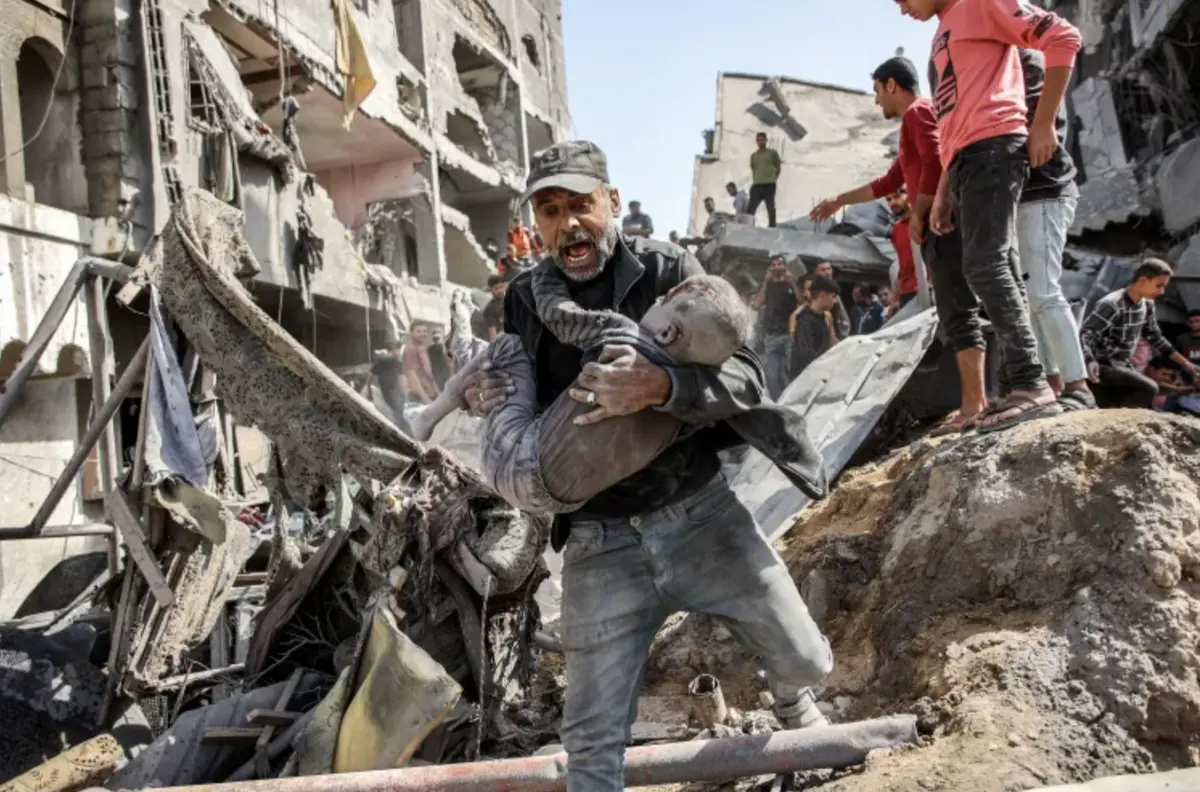
Dr. Abdul Rahim Abu Jamous: The West adopts double standards, where decisions that serve Israel are implemented and those that concern the Palestinian people are suspended

Fadwa Khader: We must unify the Palestinian discourse and build strong alliances with countries that have recognized the State of Palestine and those who stand in solidarity with us

Ismail Muslimani: The International Day of Solidarity with the Palestinian People is an Opportunity to Highlight the Justice of the Palestinian Cause on the International Stage

Dr. Mukhaimer Abu Saada: The Palestinian cause will remain alive and standing as long as there is a Palestinian people struggling for their legitimate rights

Manal Qadri: Arab and international solidarity with the Palestinian people has remained formal and more like soft solidarity that is neither fattening nor satisfying

Osama Al-Sharif: The world will not return to what it was before October 7, and it is no longer acceptable for Israel's crimes to continue without accountability or punishment.


There seems to be a vast difference between the reality of the Palestinian people now and the circumstances in which the United Nations General Assembly decided in 1977 to consider November 29 a day of solidarity with the Palestinian people, the day on which the resolution to partition Palestine was issued in 1947. What the Palestinian people are currently being subjected to, especially in the Gaza Strip, does not require mere solidarity, but rather a real international stance that stops the war of extermination waged by the occupying state, without the slightest regard for international, humanitarian and human rights laws, or for the international community itself.


The raging war on the Gaza Strip, with its massacres, mass killings, displacement, starvation and destruction, has been reaching the world moment by moment, live, in sound and image, for fourteen months. It has made the injustice of the Palestinian people the number one issue in various international forums, and is not suitable for a single day of solidarity, as resolutions have been issued by the highest UN bodies, but Israel, supported by the United States, has not adhered to any of them, while the countries of the world are divided between those who stand in solidarity with the Palestinian people and call for lifting the injustice against them and giving them their legitimate rights to freedom, and other countries that stand with the occupying state and provide it with ammunition and political support to continue its massacres and crimes against the Palestinian people.


Writers and analysts confirmed in interviews with “I” that the Palestinian issue is now going through its most dangerous phase, stressing the importance of putting the Palestinian house in order and adhering to the Arab and Islamic depth, in addition to relying on international legitimacy as a means of preserving Palestinian rights. They said: “The Palestinian issue will remain standing and alive as long as there is a Palestinian people struggling for their legitimate rights.”


Liquidating the Palestinian issue and undermining the two-state solution


Hatem Abdel Qader, a Jerusalemite politician, said: The Palestinian cause is currently going through its most dangerous phase since the beginning of the conflict with the Israeli occupation more than seven decades ago.


He explained that the war waged by Israel on the Gaza Strip, including the brutal crimes of genocide, in addition to the settlement expansion and criminal attacks by settlers in the West Bank, and the systematic Israelization and Judaization operations taking place in Jerusalem, all aim to liquidate the Palestinian cause and undermine the two-state solution.


Abdul Qader pointed out that Israel, despite all the crimes it commits, has failed to achieve its goals of displacing the Palestinians and uprooting them from their land.

He added: "The legendary steadfastness of the Palestinian people, especially in the Gaza Strip, has proven the impossibility of liquidating the Palestinian cause."


He stressed that the occupation will not succeed in its attempts, no matter how brutal, to break the will of the Palestinians or impose its project to liquidate the cause.


Abdul Qader stressed the importance of consolidating Palestinian national unity and ending the division at this critical stage.

He called for agreeing on a new strategy to confront the occupation, which would ensure the protection of the Palestinian national project and invest in the international and humanitarian momentum that the Palestinian cause gained as a result of the criminal aggression on the Gaza Strip.


Abdul Qader concluded by sending a message to the Israelis, stating that peace and stability in the region will not be achieved except by recognizing the legitimate national rights of the Palestinian people, most notably the establishment of an independent Palestinian state with Jerusalem as its capital.


The international community is responsible for ending the occupation.


In turn, writer and political analyst Dr. Abdul Rahim Abu Jamous said: November 29 of each year has become a symbol of global solidarity with the Palestinian people. This day comes to commemorate the partition resolution No. 181 issued by the United Nations General Assembly in 1947, which stipulated the establishment of two states in Palestine: one Jewish and one Palestinian. However, the resolution was not fully implemented, as Israel was established, while the Palestinian state has not been established to this day.


Abu Jamous pointed out that the United Nations General Assembly decided in 1977 to consider November 29 as a day of solidarity with the Palestinian people, based on the recommendation of the Committee on the Rights of the Palestinian People. This day is celebrated annually to affirm the inalienable rights of the Palestinian people, including the right to return, self-determination and the establishment of their independent state.


Abu Jamous explained that the Israeli occupation remains the biggest obstacle to establishing the Palestinian state and extending its sovereignty, whether on the basis of Partition Resolution 181 or other international legitimacy resolutions such as 242 and 338.


He stressed that the occupation's practices, with the support of the United States of America, prevent the implementation of the two-state solution principle, despite the international consensus on the necessity of establishing an independent Palestinian state on the borders of June 4, 1967.


Abu Jamous criticized Western policies, especially American ones, which adopt double standards in dealing with the Palestinian issue, implementing decisions that serve Israel and obstructing those that support Palestinian rights.


He pointed out that this colonial approach contributes to the continuation of occupation, settlement and aggression against the Palestinian people.


Abu Jamous stressed that the Palestinian people will not stop their struggle for their rights, pointing out that the Palestinians have built governmental and civil institutions that pave the way for the establishment of their independent state. Despite all the obstacles, the Palestinians possess all the components of a state, and they are worthy of their right to self-determination and the right to return to the homes from which they were displaced.


He called on the international community to assume its responsibilities, end the Israeli occupation and enable the Palestinian people to establish their independent state.


Abu Jamous stressed that regional stability can only be achieved by achieving justice for the Palestinian people, hoping that international positions will soon mature in a way that achieves the aspirations of the Palestinian people for freedom and independence.


Solidarity activists around the world have exposed the true face of Israel and should be honored.


For her part, the Jerusalemite feminist activist Fadwa Khader said: The steadfastness of the Palestinian people, especially our people in Gaza, in the face of the brutal genocide and fascist crimes committed by the far-right Israeli government, represents a symbol of steadfastness and dignity.


She added: Despite the arrests, killings, displacement and systematic starvation, the Palestinian people continue to defend their rights with indomitable determination, inflicting heavy losses on the occupation army and its mercenaries.


Khader stressed the need to unify the Palestinian discourse at this sensitive stage, and to work on building strong alliances with countries that have recognized the State of Palestine and those who stand in solidarity with the national project.


She stressed that these alliances must be based on credibility and clarity, far from the influences of imperialism and Zionist capitalism that aim to thwart the Palestinian national project and displace its people.


Khader called for honoring literary and artistic figures, student movements, and solidarity committees around the world who supported the Palestinian cause and fought for it.


She stressed that these activists revealed to the world the true face of fascist Israeli policies, and bravely stood by the rights of the Palestinian people, which requires appreciation of their efforts through Palestinian embassies abroad.


Khader pointed out the necessity of immediate leadership action with unity of ranks and a common national interest, away from bets that might thwart the Palestinian national struggle.


Criminalizing the Israeli occupation and its leaders


She stressed that investing in the Day of Solidarity with the Palestinian People must go beyond slogans to concrete actions, including demanding that the international community assume its responsibilities towards criminalizing the Israeli occupation and its leaders for their ongoing crimes.


Khader called for urgent action to enforce the decisions of the International Criminal Court against the leaders of the occupation, such as Benjamin Netanyahu and Yoav Galant, and to work to demand compensation for the losses incurred by the Palestinian people over decades, especially in Gaza, Jerusalem, and the West Bank, in addition to the suffering of the Palestinians in the diaspora.


She warned against the occupation's attempts to destroy the United Nations Relief and Works Agency for Palestine Refugees (UNRWA) and close its offices in Jerusalem, as this would have a serious impact on the refugee issue and the right of return in accordance with UN Resolution 194.


Khader stressed the rejection of the policy of double standards, as racism and discrimination against Palestinians cannot be allowed to continue, while full rights and privileges are granted to whites in a duality that the world has come to reject in a time when the era of slavery has ended.


The hottest year for the Palestinian cause


For his part, Jerusalemite political analyst Ismail Muslimani said: The International Day of Solidarity with the Palestinian People, which falls on November 29 every year, represents an opportunity to highlight the justice of the Palestinian cause on the international stage.


He added: This solidarity reflects a growing recognition of the Palestinian people's narrative as the owners of the right and the land, in the face of the false Zionist narrative that is based on lies and deception.


Muslimani explained that this year is the hottest for the Palestinian cause, especially in light of the genocide that the Gaza Strip has been subjected to, from bombing, siege and starvation using advanced American weapons.


He explained that these Israeli practices, which include killing women and children and starving the population, represent ethnic cleansing that the world is following with silence and helplessness.


Muslimmani pointed out that recent events, especially after October 7, 2023, have placed the Palestinian issue at the heart of international discussions, as Palestinian justice is now mentioned in every European and international home.


He stressed that the arrest warrant issued by the International Criminal Court against Israeli officials is not merely a condemnation of individuals, but rather holds Israel as a whole responsible for the crimes committed.


Muslimani stressed that the Palestinian people are still recording heroic stances and legendary steadfastness, especially in the Gaza Strip, where the Palestinian cause is still alive in the global conscience.


He added: The Palestinian issue is troubling the entire world, and despite the inability of international legitimacy to implement its decisions to establish a Palestinian state, the steadfastness of the Palestinian people will remain the key to self-determination soon.


Muslimani criticized the silence of the Arab regimes and their inability to support the Palestinian cause, saying: “The Palestinian people are facing the occupation alone, as Mahmoud Darwish said: Why did you leave the horse alone?” However, he praised the support that the Palestinians receive from the free peoples of the world, who continue to stand by them with all their strength and determination.


Analyst Muslimani stressed that the Israeli occupation will not enjoy security and stability as long as the rights of the Palestinian people are not achieved, pointing out that the Palestinian cause will remain a symbol of freedom and struggle, and that victory is coming, God willing.


The Palestinian issue is going through difficult and complex circumstances


For his part, Dr. Mukhaimer Abu Saada, Professor of Political Science at Al-Azhar University, said that the Palestinian issue is going through difficult and complex circumstances on the 77th anniversary of the issuance of the partition resolution.


He explained that the Palestinian people are facing a war of extermination, starvation and displacement, which was clearly expressed in the statements of the extremist Israeli Finance Minister Bezalel Smotrich, in addition to the escalation of settlement in the West Bank and annexation projects.


Abu Saada pointed out that the re-election of former US President Donald Trump could lead to further deterioration in the Palestinian issue, pointing to the danger of his public statements calling for the expansion of Israel as a "small state."


He added: "Despite these challenges, the Palestinian cause cannot be liquidated. The Palestinian people are not like the Red Indians, and as long as there are Palestinians living on the land of historical Palestine and around the world, the Palestinian cause will remain alive."


Abu Saada stressed the need to work hard to preserve the Palestinian cause, pointing out the importance of arranging the internal Palestinian house and adhering to the Arab and Islamic depth, in addition to relying on international legitimacy as a means of preserving Palestinian rights.


Regarding the possibility of establishing a Palestinian state under the current circumstances, Abu Saada said that this is not currently possible due to regional and international circumstances, but he stressed that this reality does not mean abandoning the right of the Palestinian people to self-determination and the establishment of an independent state on the basis of international legitimacy resolutions.


Abu Saada stressed that the Palestinian cause will remain alive as long as there is a Palestinian people struggling for their legitimate rights.


November 29th is a platform to remind the world of the Palestinian cause


As for Manal Kadri, a professor of sociology at the University of Tunis, she confirmed that the Day of Solidarity with the Palestinian People, which has been observed annually on November 29 since 1977, was supposed to be a platform to remind the world of the Palestinian cause as a humanitarian cause that goes beyond the borders of Palestine, but this solidarity has often become formal and ineffective.


She said: “It was called the International Day of Solidarity with the Palestinian People, a day of solidarity and remembrance of a humanitarian cause, not a purely Palestinian one. It is an opportunity for the Palestinians to draw the attention of the international community and raise public awareness of the fact that the Palestinian cause is still pending and has not been resolved despite the passage of decades and the issuance of relevant international resolutions, and that the Palestinian people have not yet obtained their human and societal rights.”


She added: "Despite the denunciations, demonstrations and slogans, Arab and international solidarity with the Palestinian people remained formal, and became more like soft solidarity that is neither fattening nor satisfying."


Qadri pointed out that true solidarity with the Palestinian cause is created by peoples with their blood, while it is met with official silence from governments.


She said: “Solidarity is created by the people and crushed by the ruler’s decisions. It is solidarity that the ruled arranges and expresses in various forms. In return, the ruler has the decision to express solidarity in actual decisions and legislation, but he is better off and prefers to be content with following up and praising the efforts without seeking to create legislation or laws that do justice to the Palestinian cause and dwarf that enemy – the occupation.”


Attempts to liquidate the Palestinian issue once and for all


Qadri said: “This is a stage unlike any other that the Palestinian cause has gone through. Defeated international decisions have become merely decorative. In the face of this abhorrent picture that we live in, what about annual international solidarity by simple peoples who roam the streets or remind people of the Palestinian cause in universities or cultural clubs... Is that still useful?”


She stressed that the Palestinian cause is going through an unprecedented phase, characterised by attempts to liquidate the cause and resolve the conflict once and for all. She said: “With or without solidarity, and far from those resonant humanitarian slogans, what solidarity are we talking about?”


Rather, what human principles are we talking about in the face of bleak images that the world has never witnessed before? Today, we are facing a stage of resolving the conflict and liquidating the Palestinian cause, not because public opinion has risen up or because the streets are filled with demonstrations and unprecedented raising of the Palestinian flag, or because it is our duty to stand in solidarity with the Palestinian people, but because we are in a stage in which the makers of this war have seen that we have reached liquidation because the goals have been achieved and the developments desired internationally from the Al-Aqsa flood have occurred.


Qadri said: “The Palestinian cause has always had complex humanitarian and political dimensions. When the goals are achieved, talk begins about liquidating the conflict. This is how wars are managed, and the basis of managing the Palestinian cause is the goals that are sought after and intentions that are achieved, no matter the cost, whether human or natural.”


The Gaza war posed an unprecedented challenge to the international system.


In turn, Jordanian political analyst Osama Al-Sharif said: All attempts aimed at liquidating the Palestinian cause will fail and will not succeed in ending the Palestinian-Israeli conflict.


He pointed out that the administration of former US President Donald Trump gave Israel the green light to annex the West Bank or parts of it, but this measure will not lead to ending the conflict, but will create ongoing legal and political crises.


Al-Sharif added: “Trump violated international law in his first term by recognizing Jerusalem as the unified capital of Israel and recognizing its annexation of the occupied Syrian Golan. However, these moves did not change the reality of the Israeli occupation or the right of the Palestinian people to self-determination on their land.”


He explained that the results of weakening the Palestinian Authority, escalating settlement operations, killing Palestinians, seizing their lands, demolishing their homes, and arresting thousands, were clearly evident in recent events.


Al-Sharif pointed out that the world today stands at a dangerous crossroads due to the repercussions of the Gaza war and the continuation of the Palestinian issue.


He said: "Either the international community will comply with international law and the decisions of the United Nations institutions, or the existing international system and its institutions will collapse, which will lead to the end of the unipolar system, which has proven to be a disastrous failure."


He stressed that the Gaza war posed an unprecedented challenge to the international system prevailing since the end of the Cold War, as the United States, with its policies biased towards Israel and arrogance in crisis management, became a major cause of the destruction of this system.


Al-Sharif concluded by saying that the world will not return to the situation it was in before October 7, 2023, stressing that it is no longer acceptable for Israel's crimes to continue without accountability or punishment.

PALESTINE

Thu 28 Nov 2024 8:58 am - Jerusalem Time

Number of Palestinian deaths in the war on Gaza

A number of citizens were killed and injured in Israeli raids on various areas in the Gaza Strip.


In the middle of the Gaza Strip, the Israeli occupation committed a massacre against the Salem family, killing 9 martyrs and wounding dozens.


The occupation artillery also bombed the north and northwest of Nusairat in the central Gaza Strip.


In Khan Yunis, the occupation's drones targeted a group of citizens near a camp for displaced persons in Abasan, which led to the martyrdom of 4 citizens and the injury of others.


She added that the occupation blew up residential buildings in the Al-Janina neighbourhood east of Rafah city and others in Jabalia to the north.


The occupation forces have continued their aggression on the Gaza Strip, by land, sea and air, since October 7, 2023, which has resulted in the death of 44,282 citizens, the majority of whom are women and children, and the injury of 104,880 others, in an incomplete toll, as thousands of victims are still under the rubble and on the roads, and ambulance and rescue crews cannot reach them.

PALESTINE

Thu 28 Nov 2024 8:57 am - Jerusalem Time

Standing on the ruins!

Yesterday morning, with the break of morning, the Lebanese breathed a sigh of relief and fired their guns into the air, rejoicing at the end of the calamity and the disappearance of the affliction. They flocked in groups and individually, grieving and afflicted, to their cities, towns and villages, over which the crows had flown, turning them into mounds of rubble.


The Lebanese brothers have the right to rejoice at the end of the massacre with a wounded joy, for they have paid the bills in full with the blood of their sons, the pain of their suffering, the bleeding of their wounds, the hardship of their lives, their fear and cold, their hunger and terror, throughout the days and weeks in which their homeland was lying under the fangs of the flying beasts.


All that the people of Gaza wish for is to have the same opportunity that their brothers in the square that opened up to them in October to support them, even though what happened to them happened there. An opportunity they wish for to stand on the ruins of their homes, before they also stand on the reasons that led to their drowning in a flood that turned against them.


The scenes emerging from Gaza and Lebanon make it naive and politically charlatan to claim victory, by claiming to be patient in the face of the tragedy, which has expanded to the point of crucifixion on the stakes of the Holocaust.


If there is a lesson that rises from the ashes of the brazier in the open squares: without a protected sky, all your wars today are lost.


Stop the genocide now..!

ARAB AND WORLD

Thu 28 Nov 2024 8:48 am - Jerusalem Time

Biden promotes Lebanon ceasefire, outlines vision for permanent US-Israeli aggression

President Joe Biden on Tuesday announced a 60-day ceasefire between Israel and Hezbollah that would end more than a year of fighting across the Lebanese-Israeli border. Violence has reached catastrophic levels since October 1, when Israel intensified its strikes on Lebanese civilian areas and launched a ground invasion that has displaced more than a million people.


In unveiling the truce, which came into effect after a last-minute Israeli bombardment of Lebanon, President Biden proudly claimed that Hezbollah had been dealt a devastating blow.


Biden declared: “What remains of Hezbollah... will not be allowed to threaten Israel’s security again.”


According to experts, Hezbollah has suffered heavy losses. The group’s top leadership has long been eliminated, and the party has failed to stop Israel’s genocide in Gaza—the goal that prompted the party’s late leader Hassan Nasrallah (who was assassinated by Israel on 27/10/2024) to intervene against Israel in the wake of October 7.


Despite claims by President Biden and Benjamin Netanyahu that it was the defeat on the battlefield that forced Hezbollah to retreat, experts say the opposite is true.


“Even with military support from its American patron, Israel was unable to stop Hezbollah strikes on Israeli territory, and it suffered heavy losses when it invaded Lebanon,” says Aaron Mati, a researcher and historian at The Grayzone website and program. “Hezbollah’s ability to survive yet another punishing war—not just the 2006 conflict, but also years of fighting U.S. and Israeli proxies in the dirty war in Syria—defeated Washington and Tel Aviv’s extreme goal of destroying the group.”


“Apart from killing Nasrallah and other Hezbollah leaders,” notes Matti, the son of a Jewish Holocaust survivor, “Israel’s main strategic achievement in Lebanon was to terrorize the country’s civilian population enough that Hezbollah eventually agreed to mediate an end to the destruction. Meanwhile, the long-awaited indictment of Israeli Prime Minister Benjamin Netanyahu and former Defense Minister Yoav Galant by the International Criminal Court may have helped force Israel to act.”


It is noteworthy that France announced that it would not arrest Netanyahu on its territory, which raised speculation that Netanyahu had replaced French mediation in Lebanon with a pledge not to implement the ICC warrant.


Because the United States is committed to defending Israel’s “aura of power,” it cannot “allow” Israel’s monopoly on aggressive capability to be deterred, Biden said Tuesday. Israel will therefore reserve the right to continue violence at the earliest opportunity—a threat that will only strengthen Hezbollah’s resolve and its ability to recruit members, Mattei said.


With his blind devotion to Israel’s aggression in Gaza, Lebanon and the region, Biden also claimed that the ceasefire in Lebanon “brings us closer” to what he called his “distinctive vision for the future of the Middle East…in peace and prosperity.” At the heart of this effort, Biden said, is “a set of historic deals with Saudi Arabia” in which the Gulf kingdom would normalize relations with Israel in exchange for incentives including a security agreement and “a credible path to Palestinian statehood.”


Biden’s team is so enthusiastic about its “vision” that it believes, as one senior U.S. official put it, that “the political and geopolitical stars are aligned” for a normalization deal between Israel and Saudi Arabia, though it is likely to be finalized under the next administration. To that end, U.S. envoy Amos Hochstein briefed the Trump camp and “came away feeling that the incoming team was supportive,” the New York Times reported.


“Outside of Biden and Trump’s mutually supportive circles, the rest of the world sees only one credible path to Palestinian statehood—and the United States and Israel are the only obstacles,” Mattei says. “That universally recognized path was expressed this month at the United Nations General Assembly, when member states renewed a decades-old tradition of voting on “the right of the Palestinian people to self-determination.” The measure called on Israel to end its now 57-year occupation of the West Bank and Gaza, followed by the establishment of a Palestinian state there—a major compromise for the Palestinians, who accepted only 22 percent of their stolen homeland and ancestral homeland. The resolution passed by a margin of 170 to 6, with the United States and Israel casting their traditional opposing votes.”


It is noteworthy that in rejecting the Palestinian people's right to self-determination, Biden also agrees with his future successor, Trump, who has appointed a government of pro-Israel hardliners who do not bother to pretend that they accept a Palestinian state.


Biden’s stated belief that there is a “path” to a Palestinian state is a carbon copy of his approach to the Gaza ceasefire. He spent more than a year pretending to broker a truce in Gaza while facilitating Israel’s destruction of the besieged territory, slaughtering tens of thousands of its besieged Palestinian residents. The same duplicity recently prompted Secretary of State Antony Blinken and Defense Secretary Lloyd Austin to threaten Israel with punitive measures unless it allowed more aid into Gaza, only to do nothing when the deadline passed and Israel’s blockade and deliberate starvation continued.


It is noteworthy that the official spokesman for the US State Department, Vedant Patel, said in response to a question from the Jerusalem correspondent on November 12 that the United States feels that punishing Israel is ineffective, and that he - the Biden administration - feels that Israel has shown flexibility in allowing some aid in, noting that the "US Development Organization" said that the entry of aid has declined significantly during the period cited by the administration.


“The same is true of other aspects of the Israeli occupation regime,” Mattei says. “Biden has sat idly by amid Israel’s largest theft of West Bank land in decades, all while fanatical Israeli settlers and law enforcement have carried out escalating violence against their besieged Palestinian subjects. Nor has the Biden-Trump camp said anything about the public calls from Netanyahu’s allies to return illegal settlers to the Gaza Strip.”


It is noteworthy that in his statements on Tuesday (26/11), Biden pledged to use his remaining weeks to "work tirelessly to advance this vision of an integrated, secure, and prosperous region... all of which enhances American national security."


“Biden, who was so devoted to US-Israeli hegemony that he was willing to prioritize genocide over winning an election, has actually done more harm to the cause of regional peace than any of his predecessors, including George W. Bush, who invaded Iraq,” Mattei says. “Whatever Biden manages to accomplish in his remaining days, any further steps toward his ‘vision’ for the Middle East will only undermine peace and security for all.”