PALESTINE

Mon 23 Dec 2024 9:17 am - Jerusalem Time

Israel demolishes a house and injures a Palestinian citizen north of Hebron

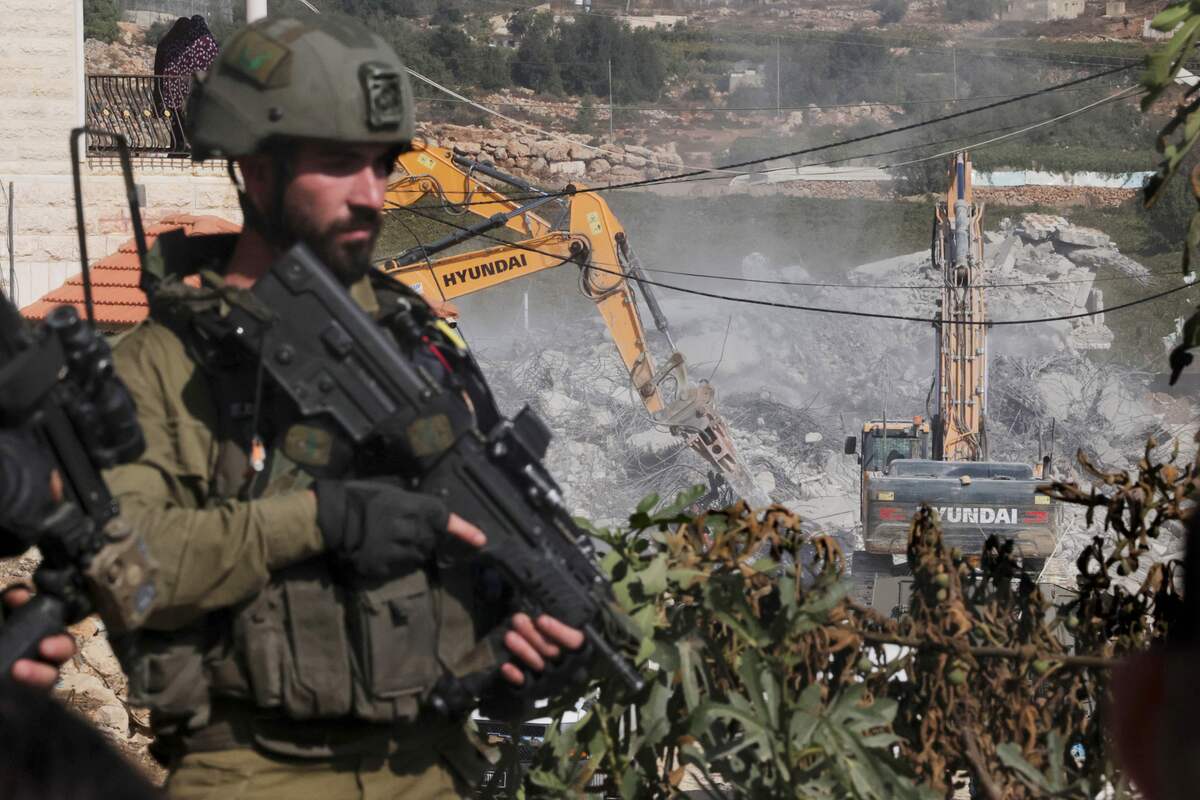
Today, Monday, the Israeli occupation forces stormed the village of Shuyukh al-Arroub, north of Hebron, demolished a house, and shot a citizen.


According to local sources, these forces demolished a house belonging to citizen Muhammad Haroun Halayqa, which houses seven people. He explained that the occupation had notified the halt of work and construction there four months ago, under the pretext that construction is prohibited in the “Al-Bass” area.


She reported that a citizen was injured by live bullets in the thigh during the clashes that erupted after the house was demolished.

PALESTINE

Mon 23 Dec 2024 9:04 am - Jerusalem Time

Israeli Peace Now Org.: 7 Israeli colonial outposts in the West Bank during the past six months

Peace Now said that settlers have established seven colonial outposts in the occupied West Bank.


The organization explained in a press release published on its website that the seven colonial outposts were established in Area B during a period ranging from two to six months in the past.


She explained that 5 of these outposts are located in a large area of land east and southeast of the city of Bethlehem, and that one of the other two colonial outposts was established east of the "Ofra" settlement in the middle of the West Bank, on lands owned by the village of "Ein Yabrud".


The other outpost is located to the north, near the Shilo settlement, south of the Adei Ad settlement outpost, which was built on lands belonging to the village of Turmus Ayya.


The organization indicated in its statement that some citizens were displaced from these areas for fear of attacks by the settlers, who later seized their homes.


The United Nations considers Israeli settlements illegal and calls for their cessation, warning that they undermine the chances of resolving the Palestinian-Israeli conflict in accordance with the principle of a two-state solution.


Settlement in the West Bank, including East Jerusalem, has witnessed a significant increase since the current right-wing government headed by Benjamin Netanyahu came to power in December 2022.


According to the Wall and Settlement Resistance Commission, the occupation army and settlers carried out 16,663 attacks on Palestinian lands and properties from October 7, 2023 to October 7, 2024, taking advantage of the circumstances of war and aggression against our people in order to impose new facts on the ground.


During the same period, settlers, under the protection of the occupation army, established 29 colonial outposts, concentrated in the Hebron Governorate with 8 outposts, Ramallah with 6 outposts, Bethlehem with 4 outposts, and 3 in Nablus, in addition to paving 7 roads to facilitate the movement of settlers and connect outposts to existing settlements.


The occupation authorities legalized 11 colonial outposts and transformed them into colonies or settlement neighborhoods affiliated with existing colonies, and referred a total of 9 other outposts to legalization procedures.

ARAB AND WORLD

Mon 23 Dec 2024 9:03 am - Jerusalem Time

Israel slams Pope Francis for condemning bombing of Gaza children

Pope Francis condemned the bombing of children in Gaza as "cruelty", sparking criticism from Israel.


Pope Francis on Saturday condemned the bombing of children in Gaza as "cruelty", sparking a sharp response from Israel which accused him of "double standards".

The pontiff made his remarks a day after the rescue agency in Gaza said an Israeli air strike had killed seven children from one family.

"Yesterday they did not allow the Patriarch (of Jerusalem) into Gaza as promised," the pope told members of the government of the Holy See.

"Yesterday children were bombed. This is cruelty, this is not war," he said. "I want to say it because it touches my heart."

In a statement, an Israeli foreign ministry spokesman described the pope's remarks as "particularly disappointing", adding: "Enough with the double standards and the singling out of the Jewish state and its people."

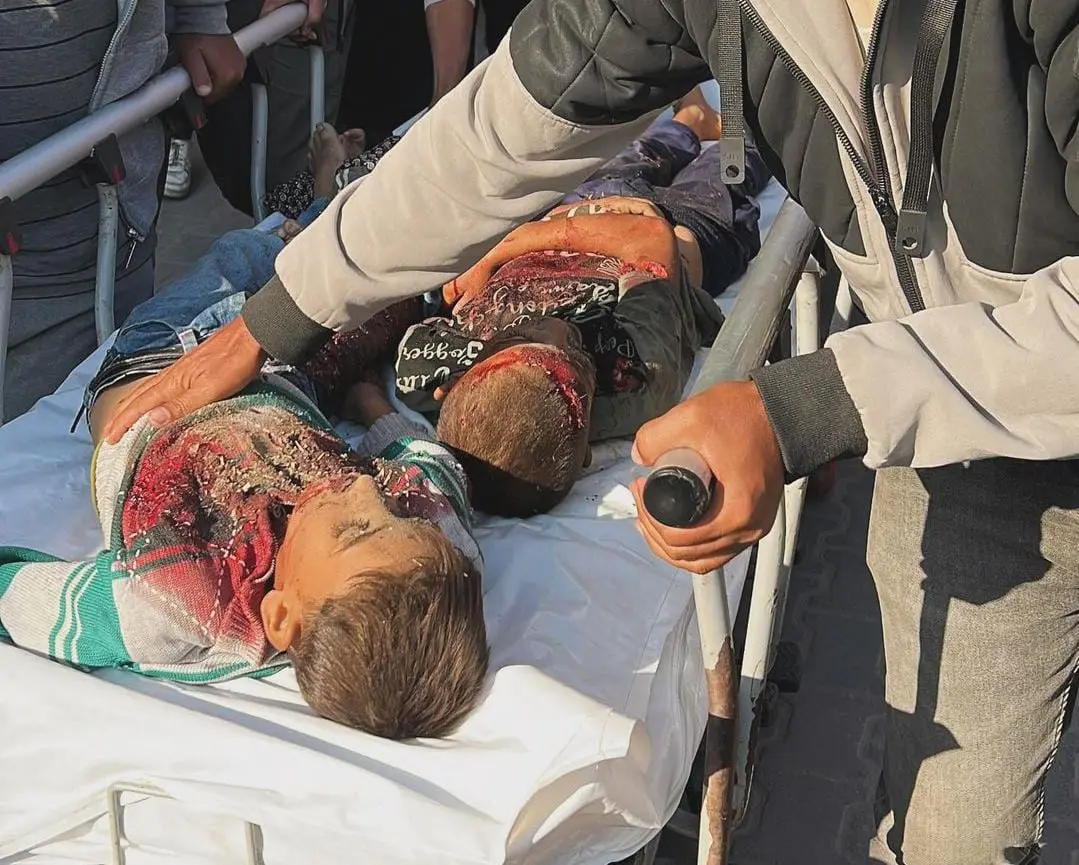
Gaza's civil defence rescue agency reported that an Israeli air strike had killed 10 members of a family on Friday in the northern part of the territory, including seven children.

Israel's offensive on the besieged enclave continues to rock the territory more than 14 months into the war, even as international mediators work to negotiate a ceasefire between Israel and Hamas.

Francis, 88, has called for peace since Israel's war on Gaza began on 7 October 2023. In recent weeks he has hardened his remarks against the Israeli offensive.

In late November he said "the invader's arrogance... prevails over dialogue" in "Palestine", a rare position that contrasts with the tradition of neutrality of the Holy See.

In a recently published book the pope called for a "careful" study as to whether the situation in Gaza "corresponds to the technical definition" of genocide, an accusation firmly rejected by Israel.

Since 2013 the Holy See has recognised the State of Palestine, with which it maintains diplomatic relations, and it supports the two-state solution.


PALESTINE

Mon 23 Dec 2024 9:02 am - Jerusalem Time

Within two and a half months, 12 trucks distributed food and water in northern Gaza

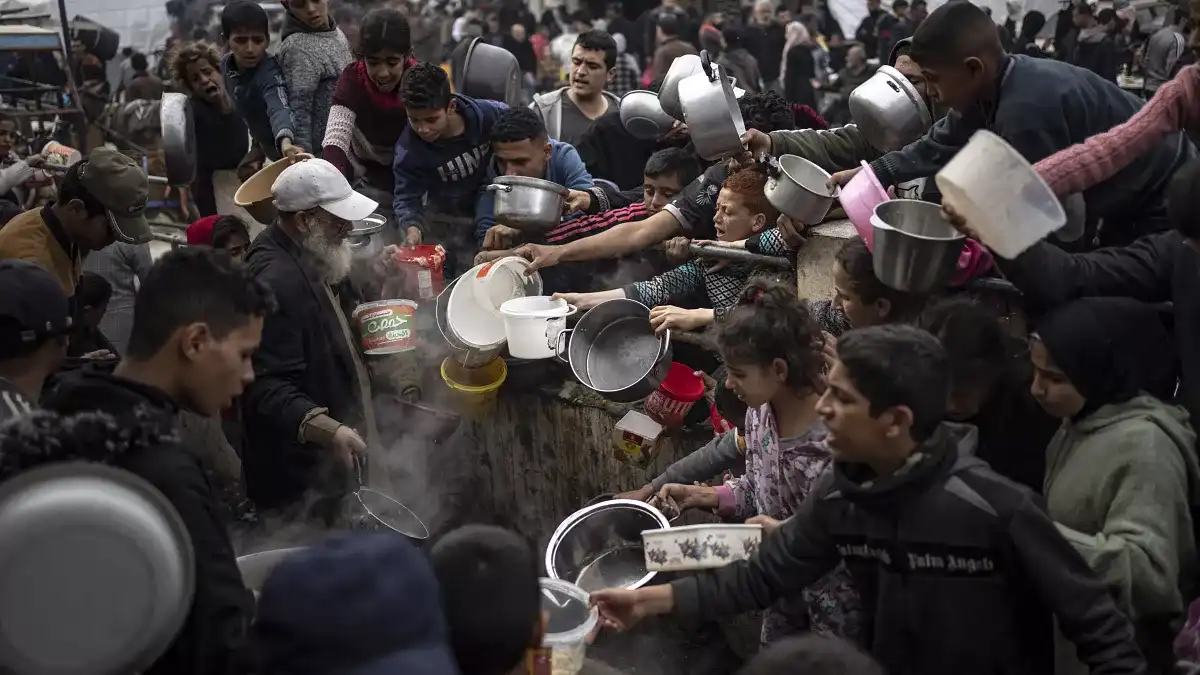
Oxfam, a non-governmental organization, announced that only 12 humanitarian aid trucks distributed food and water in northern Gaza in two and a half months, sounding the alarm about the deteriorating situation in the besieged Strip.


“Deliberate delays and systematic obstruction by the Israeli military have meant that only 12 trucks have been able to deliver aid to starving Palestinian civilians,” including deliveries, “out of the 34 trucks carrying food and water allowed into North Gaza Governorate over the past two and a half months,” Oxfam said in a statement on Monday.


She pointed out that "in the case of three of them, as soon as food and water were distributed to the school where residents had taken refuge, it was subsequently evacuated and bombed a few hours later."


The occupation has imposed strict control over the arrival of international aid, which is essential for the 2.4 million people of Gaza, since the beginning of the war on the Gaza Strip on October 7, 2023.


Oxfam said it and other international humanitarian organisations had been "continuously prevented" from delivering vital aid in northern Gaza since October 6, when Israel intensified its bombing.


Oxfam estimates that "thousands of people remain isolated, but with humanitarian access blocked, it is impossible to accurately count them."


“At the beginning of December, humanitarian organizations working in Gaza were receiving calls from vulnerable people trapped in homes or shelters, who had run out of food and water,” she added.

OPINIONS

Mon 23 Dec 2024 8:52 am - Jerusalem Time

The Revealing and Shocking in an Israeli Vision of the West

New Arab

New Arab

Opinion Writer

By Mamdouh Al-Sheikh


No fair-minded person denies that the global system, which was born from the womb of World War II, is a global system that has established the centrality of the West and made it codified inside and outside the Security Council. With the delay in the birth of a multilateral global system, the difference between our awareness of the extent of the West’s influence in international political reality, and our vision of the West theoretically and morally, is the difference between “what we can adopt” and “what we wish for.” The direct political assessment of what is happening in our region cannot ignore the “Western actor,” especially in light of the appalling Arab inability.


In the conflict—explicit or implicit—over Western support, which we have never received, for our just causes, questions arise: values, interests, and the extent of our accurate knowledge of the official, elite, and popular West. Exploration is not without paradoxes and shocks (and sometimes pleasant surprises), and what is happening today is an example of that.


One important piece of literature in this context is a policy paper titled “Geostrategic Factors, Not Humanitarian Considerations, Shape Public Opinion in the West” (Jerusalem Institute for Strategy and Security, November 25, 2024) by Professor Hillel Frisch, professor of political science and Middle Eastern history at Bar-Ilan University. The most important point of the paper is that, contrary to what the American “progressive” media (such as CNN) would have us believe, “the educated English-speaking public is more interested in the geostrategic aspects of the conflict than in the humanitarian plight of the Palestinians.” The Zionist researcher based his paper on Google search statistics during the war, focusing heavily on the terms “Iran” and “Israel” rather than “Gaza” and “Palestinians,” especially among the American public. This finding proves that the Western public is more focused on the danger of regional turmoil and the possibility of a wider regional war than on human rights and humanitarian issues. The powerful liberal progressive media outlets (CNN, The New York Times, The Washington Post) would have us believe that they view the conflict through a humanitarian and progressive lens. According to the Zionist researcher, these “progressive” outlets’ coverage of the humanitarian plight in Gaza is based on the assumption that the massive death toll outweighs geostrategic concerns. The researcher’s analysis of the statistics shows that “progressive and humanitarian concerns play a secondary role.” Even in November 2023, for every six searches related to Israel or Iran, there was only one search for the terms “Palestinians” or “Gaza.” If Google searchers actually focused on “humanitarian” issues, the ratio would be reversed. Western audiences focus on the danger of regional unrest and the possibility of a wider regional war, more than on human rights and humanitarian issues.. This is what one study concluded


The most important and dangerous conclusion written by the Zionist researcher is that this reflects the fact that "international politics in America is primarily the work of the elites." For Israel, these results are useful, and show that "contrary to the portrayal of the war in the leading "progressive" media, most educated English speakers around the world and America view the conflict through a realistic lens." The conclusion of the conclusions reveals the brutal nature of the researcher's moral vision, as he says that the results indicate that "Israel actually enjoys a greater degree of freedom in dealing with its enemies than is usually imagined."


The analytical methodology used by the researcher is not without weaknesses that can be examined in detail, and its author ignored reactions that contradict the statistics on which he relied (individually), and that the Gaza war actually affected the concept of the elite and its limits. After the conclusion of the study and my comment on it, and the cognitive (and moral) lessons remain, the perspective is purely Darwinian, and it reminded me of two incidents: a dialogue with the Zionist war theorist Martin van Creveld, in which he told his interlocutor that brutal crimes are part of the structure of history, and that Israel must strike the Palestinians with a terrible blow that will kill thousands to ensure Israel's security for years to come, and he stressed that this will not lead anyone to any international justice, as the West will turn a blind eye, as long as it is a crime aimed at preventing a greater crime! In the second incident, the former Secretary-General of the United Nations Boutros Boutros-Ghali strongly urged the use of lethal force against the "Arab Spring" to save the "national state", stressing that the West will forget... and the Zionist researcher, in the end, "preachs" to the Zionist decision-maker that the ceiling of brutality that the West can accept is much higher than it seems!

ARAB AND WORLD

Mon 23 Dec 2024 8:26 am - Jerusalem Time

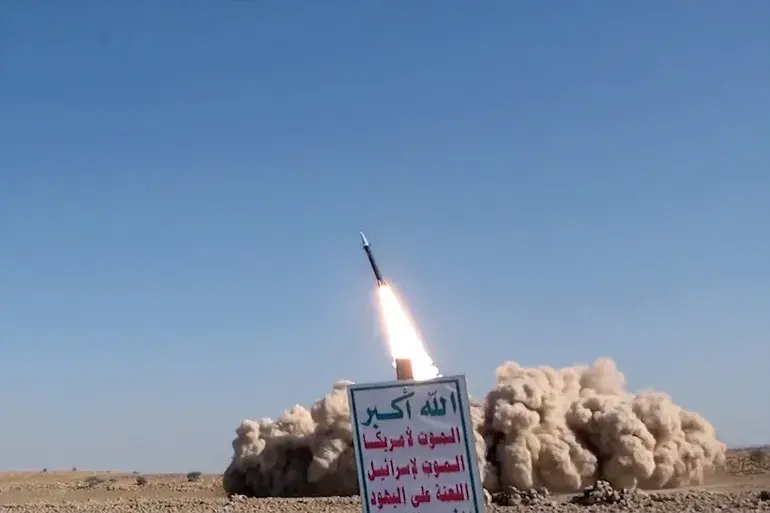
Houthi strikes deep inside Israel.. Iranian “hypersonic” warning messages

Dr. Ahmed Rafiq Awad: Hypersonic missiles carry clear messages warning against targeting Iranian nuclear facilities

Akram Atallah: Houthi attacks reflect a real crisis in the Israeli strategy for dealing with distant threats

Antoine Shalhat: A turning point in the conflict that goes beyond the traditional regional confrontation and an Israeli failure to deter the Houthis

Dr. Tamara Haddad: Iran is using the Houthis as a key card to improve the terms of negotiations with America, especially with Trump approaching his assumption of power

Nabhan Khreisha: The Yemeni front is a “dilemma” that hinders Netanyahu’s vision of achieving “absolute victory,” especially after his claimed achievements in Lebanon and Gaza


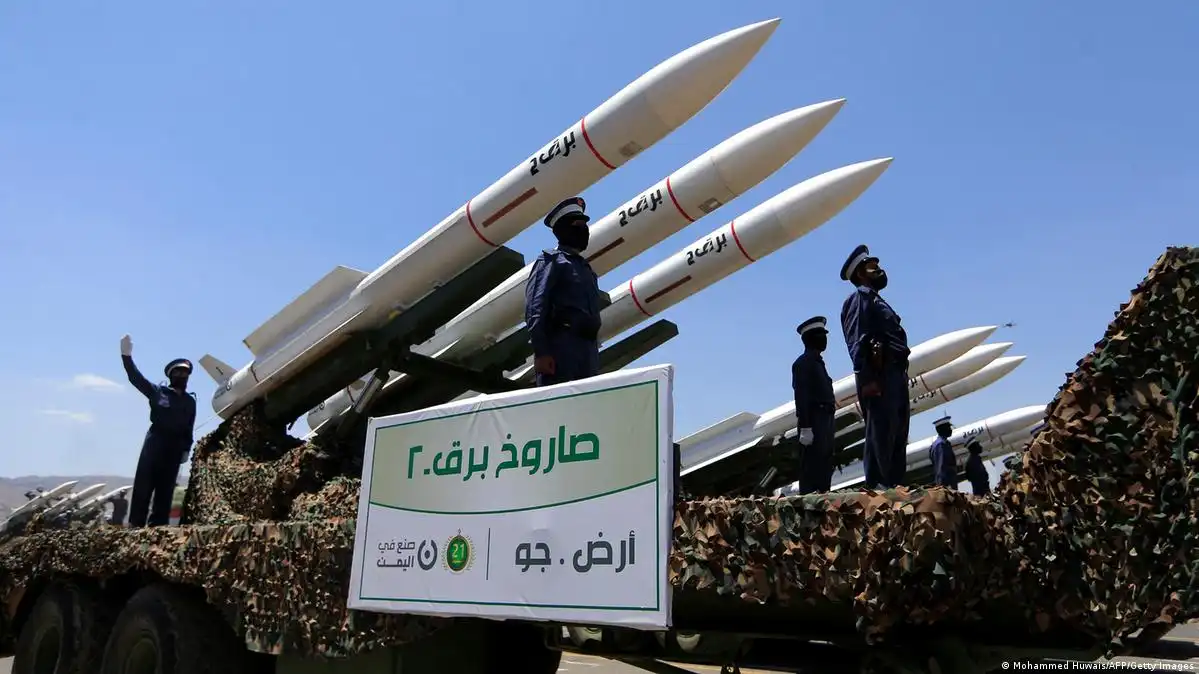
In light of the regional transformations, the Houthis launched a hypersonic missile attack the day before yesterday, Saturday, targeting the Israeli depth, which could put Israel before difficult options to respond in the Yemeni depth, especially since these hypersonic missiles are viewed as a preemptive Iranian threat message to Israel to dissuade it from attempts to target its nuclear facilities.


In separate interviews with “I”, writers, political analysts and specialists believe that these attacks by the Houthis are part of an indirect Iranian escalation against Israel, especially since the recent attack bypassed advanced Israeli defense systems, and opened the door to questions about the Israeli response options and the extent of its impact on the regional balance of power.


They point out that Israel faces a new strategic challenge in confronting a long-term threat, directly linked to Iranian policies, where the response options available to Tel Aviv range from intensifying air strikes against the Houthis, cooperating with the US-led international coalition, ending the war on the Gaza Strip to end the Houthi attacks, or even political negotiations with Iran to reach a broader settlement that includes sensitive files such as the Iranian nuclear program. However, the geographical distance and rugged terrain of Yemen represent an obstacle to Israel carrying out direct and effective military operations.


Writers, analysts and specialists believe that the continued Houthi attacks on Israel may come as Iranian messages aimed at improving Tehran's negotiating terms with the United States, especially with the approach of a new US administration.


Israel under Netanyahu faces multiple options in response


Writer and political analyst Dr. Ahmed Rafiq Awad believes that Israel, led by Benjamin Netanyahu, has multiple options in its response to the attacks launched by the Houthis, the latest of which was on Saturday with a hypersonic missile, noting that these options vary in terms of effectiveness and strategic impact.


Awad explains that one of the options available to Israel is to continue bombing Houthi sites using Israeli aircraft. Although this option is difficult and does not guarantee decisive results, it remains on the table. Israel may find it difficult to achieve major strategic gains through these air strikes, but it may seek to weaken the Houthis’ military capabilities.


Awad points to the second option, which is that Israel may rely on the international coalition led by the United States and the United Kingdom to intensify air strikes on Houthi sites. Indeed, there have been American strikes targeting the Houthis, which shows the coalition’s role in supporting Israel and its strategic interests.


Awad addresses the third option, which is that there should be an Israeli settlement with the Palestinians, which could be a fundamental step to end the Houthi attacks, as the Houthis have explicitly declared that their attacks will continue as long as the war on Gaza continues, which makes stopping this war and settling the situation in the Strip a logical option if Israel wants to reduce tensions with the Houthis and their allies.


The fourth option, according to Awad, is that Israel could seek a political or even military settlement with Iran that includes controversial issues, such as the Iranian nuclear program and regional influence. Such a settlement could lead to calming the situation with the Houthis, who are considered one of Iran’s most important allies in the region.


Meanwhile, Awad points out that the Houthi attacks, especially the hypersonic missiles, carry clear messages from Iran to Israel and the West, as the ballistic missile attacks, which Israeli defense systems failed to intercept, reflect the development of Iranian missiles, which have become a strategic weapon capable of bypassing traditional defense systems.


Awad believes that these messages include a warning to Israel against targeting Iranian nuclear facilities, and an emphasis on the ability of Iran and its allies to respond forcefully.


Dr. Awad stresses the difficulty of a comprehensive war breaking out between Israel and Yemen due to the great geographical distance, as more than 2,000 kilometers separate the two parties.


However, Awad points out that limited confrontations between the two sides may continue in the future, especially if Israel does not reach a settlement with the Palestinians or the Iranians.


Awad asserts that the Houthis represent a strong ally of Iran, given their ability to launch ballistic missiles and control vital waterways such as Bab al-Mandab, through which about a fifth of global trade passes. This Iranian-Houthi alliance is not as fragile as one might think, but rather represents a major strategic challenge to Israel and the Western coalition.


Awad believes that the continuation of Houthi attacks on Israel depends on the continuation of the war in Gaza, and that reaching regional political settlements remains the most effective option to calm the situation and end tensions.


Hypersonic missiles: a new and complex challenge


Writer and political analyst Akram Atallah believes that Israel faces a new and complex challenge in the form of hypersonic missiles launched by the Houthis from Yemen. Although the Israeli Arrow missile defense system, which is one of the most prominent achievements of the Israeli defense industries, has shown great effectiveness against other threats, it has failed to confront these advanced missiles, which reflects a real crisis in the Israeli strategy for dealing with distant threats.


Atallah stresses that the Houthi threat poses a new challenge to Israel that may last for a long time, especially since its regional roots are linked to Iran.


Atallah points out that Israel has achieved tangible successes in confronting it on the fronts of Gaza, Lebanon and Syria, but Yemen, despite its geographical distance and the lack of a common border with Israel, is now emerging as a new threat, especially after the Houthis launched missiles that proved their ability to bypass Israeli defense systems. This development places Israel before a different equation that requires a re-evaluation of its military and security strategies.


Atallah believes that Israeli Prime Minister Benjamin Netanyahu has options to deal with this threat, either intensifying air strikes against the Houthis with the aim of exhausting them or pushing them to surrender, or perhaps Israel seeks to mobilize countries such as the United States and its allies to strike the Houthis more effectively, or targeting Iran, as the primary sponsor of the Houthis, and it may be a strategic option to end the threat from its roots, as Netanyahu believes that the “driving head” is Iran, which is still able to influence all its allies, including the Houthis.


Atallah points out that the Houthi attacks may carry Iranian messages aimed at confirming the strength and solidity of the resistance axis, and its ability to disrupt Israeli military plans.


Regarding the possibility of a confrontation between Israel and Yemen, Atallah believes that the geographical distance makes any direct war difficult to implement, as this confrontation will remain within the framework of “remote warfare” and will depend on air and missile attacks without the ability to use ground forces or tanks, which makes it a war of limited impact.


A turning point... and a long-term Israeli goal


The writer, political analyst and specialist in Israeli affairs, Antoine Shalhat, believes that the Houthis’ launch of a missile at the Gush Dan area in Tel Aviv on Saturday, without the Israeli defense system being able to intercept it, constitutes a turning point in the conflict that goes beyond the boundaries of the traditional regional confrontation.


Shalhat explains that this development highlights Israel's failure to impose a deterrent policy against the Houthis, despite the repeated air strikes it launched on infrastructure sites in Sanaa and Hodeidah.


Shalhat points out that the Houthis' continued launching of missiles and drones and targeting ships passing through Bab al-Mandab and the port of Eilat reflects Israel's failure to stop this threat.


Shalhat believes that this situation is pushing the Israeli security and political establishments to acknowledge the futility of current tactics, which increases pressure to find more effective solutions.


Shalhat believes that the most likely scenario for the Israeli response to these attacks is the continuation of Israeli cooperation with the United States and Britain, in line with the Israeli desire to eliminate the Houthi infrastructure.


Shalhat points out that Israel has a long-term goal, which is to overthrow the Houthi regime in Yemen.


However, according to Shalhat, this goal remains dependent on the extent of the United States’ willingness to commit to implementing it, especially in light of the need for clear American support to implement any large-scale operation.


Israel seeks to exploit the Houthi file as a means of pressuring the US administration, according to Shalhat, noting that Israel promotes the Houthi threat as a danger that goes beyond the borders of the Israeli conflict, and includes international maritime lanes in the Red Sea. Through this narrative, Israel hopes to obtain American and international support for a military operation aimed at reducing the capabilities of the Houthis, or even overthrowing their regime.


Shalhat links the Houthi attacks against Israel to the Israeli escalation against Iran, and believes that these attacks represent direct messages from Tehran, indicating that any Israeli attack on Iranian nuclear facilities will not pass without widespread reactions, including the Houthis.


Shalhat explains that Iran's provision of advanced military technologies to the Houthis, such as ballistic missiles and drones, aims to demonstrate the weakness of the Israeli defense system and target strategic sites, including the port of Eilat.

Shalhat believes that the decision to launch an Israeli war on Yemen does not fall within Israel's jurisdiction alone, but rather depends on the approval of the United States.


Shalhat explains that Israel may consider a large-scale military operation against the Houthis, but it will not do so without an American green light.


Shalhat points out that the imminent entry of a new American administration, more friendly towards Israel, may provide the appropriate conditions for implementing this scenario if the Houthi threat continues.


Shalhat believes that the future of the war with the Houthis depends largely on the American-Israeli consensus, and on Israel’s ability to benefit from the changes in the next American administration. If the Houthi threat continues, Israel may seek to carry out a military operation in cooperation with its international partners, targeting the Houthi infrastructure, in an attempt to change the balance of power in the region. However, the question of the success of these efforts remains open to regional and international developments.


The last card as a strategic arm for Iran in the Red Sea


Writer and political researcher Dr. Tamara Haddad explains that the Houthis, or what is known as "Ansar Allah", represent the last card as a strategic arm for Iran in the Red Sea region.


Haddad points out that Tehran provides the Houthis with financial, military, logistical and intelligence support, including ballistic missiles and hypersonic missiles of Iranian origin, despite what is promoted in the Yemeni media that they are locally manufactured.


Haddad points out that the Houthis benefit from intelligence information provided by Iran in cooperation with Russia, including ship traffic routes in the Red Sea, which allows them to target shipping vessels with precision.


Haddad points out that what the Houthis are doing has led to an economic crisis in the region, which has affected global maritime companies, even Chinese companies.


Dr. Haddad believes that Iran is using the Houthis as one of its main cards to improve the terms of negotiations with the United States, especially with the approach of US President-elect Donald Trump taking office in January 2025.


Haddad points out that Tehran seeks to achieve gains in any new nuclear agreement or reduction of US sanctions imposed on it, and Iran also aims to improve its negotiating position by keeping the region in a state of security tension, through supporting factions loyal to it in Iraq and Yemen.


Haddad points out that the Houthis declare their support for the Gaza Strip in light of the Israeli aggression, but this support has not made any significant change in the course of the war or stopped it. Instead, Iran is using the Houthis as a threatening message against Israel and the international community, confirming their continuation as a strong arm of Tehran in the region.


Regarding the Israeli response to the Houthi attacks, Dr. Haddad explains that Israeli Prime Minister Benjamin Netanyahu is considering several options.


The first option, according to Haddad, is to carry out direct strikes on the Houthis, but this option faces major challenges due to the geographical distance between Israel and Yemen. Haddad points out that the second option, which may be more realistic, is to use the international coalition led by the United States and Britain to launch powerful strikes on the Houthi front, ensuring that its capabilities are significantly reduced.


The third option, according to Haddad, includes Israel using sites near the Red Sea, such as some military bases in Eritrea or other areas, in order to target Houthi bases.


Haddad confirms that Israel is currently working to mobilize intelligence and logistical support from the regional and international coalition to ensure accurate strikes.


Haddad believes that the Houthi attacks on Israel using hypersonic missiles are a direct Iranian message, and this message aims to confirm Iran's ability to target the Israeli depth through its regional arms, which places Israel in front of increasing security and economic challenges.


Haddad points out that the Houthis, through their control of the Bab al-Mandab region, pose a direct threat to international navigation, taking advantage of Yemen’s mountainous terrain that allows them to hide and transport weapons easily.


Haddad pointed out that Israel, in cooperation with the United States, seeks to end all of Iran's arms in the region as part of its plan to restructure the Middle East.


Haddad explains that this plan includes eliminating the Houthis through direct military strikes and funding armed groups opposing them, similar to what happened in Syria. The plan also includes igniting a civil war in Yemen with the aim of weakening the Houthis internally.


Haddad believes that Israel will not stop at the current escalation, but rather seeks to achieve a comprehensive victory, not only in Gaza, but at the level of the region as a whole.


Haddad asserts that Israel's strategic goal is to end the Iranian nuclear project and eliminate Tehran's arms, including the Houthis, in order to enhance its regional influence and subjugate the remaining parties to accept its terms.


Haddad points out that Israel considers eliminating the Houthis a pivotal step in its plan to end the Iranian-backed “Shiite Crescent,” paving the way for reshaping the region in line with its interests.


Haddad stresses that the continuation of Houthi attacks will further complicate the regional scene, but at the same time it gives Israel an opportunity to mobilize broad international alliances to confront the Iranian threat.


Haddad stresses that the confrontation in Yemen will remain open to all scenarios, including intensive international interventions, and the creation of a new political and security environment that contributes to rearranging the region's priorities in a way that serves the powerful parties on the international and regional scene.


Two scenarios for response and excluding direct confrontation


Journalist Nabhan Khreisha points out that the exceptional event of the Houthis launching a hypersonic missile from Yemen towards Tel Aviv, bypassing Israeli air defenses, causing material damage and injuries, has prompted voices in Israel to demand a large-scale attack on the Houthis in Yemen to eliminate their threat.


Khreisha points out that implementing this scenario is more complicated than Israel's operations against Hezbollah in Lebanon or Hamas in Gaza, due to several geographical and military considerations.


Khreisha explains that the distance with Yemen is more than 1,500 kilometers, in addition to the diverse Yemeni terrain and vast area, which makes any direct Israeli military operation complex and difficult to implement compared to Lebanon or the Gaza Strip.


Khreisha stresses that any Israeli response to the Houthis will require drawing an accurate intelligence picture of Yemen, including missile sites, military technology factories, and Houthi command centers, if Israel decides to carry out operations beyond the limited air strikes that previously targeted areas such as Sanaa and Hodeidah.


According to Khreisha, the Israeli leadership believes that the Houthi missiles that hit Tel Aviv with precision and were able to bypass air defenses constitute great pressure on the security and political establishment.


Khreisha describes the Yemeni front as a "dilemma" that hinders Prime Minister Benjamin Netanyahu's vision of achieving "absolute victory" for Israel, especially after what it claims of achievements on other fronts such as southern Lebanon and Gaza.


Khreisha believes that there are two possible scenarios for Israel's response to the Houthi threat, one of which is successive air strikes, where Israel could launch a series of air strikes in response to Houthi attacks.


The second option, according to Khreisha, is to resort to a regional and international alliance, as Israel seeks to form an alliance that includes the United States, European countries, and Arab countries such as Saudi Arabia and the Emirates, which are still at war with the Houthis, but the option of direct confrontation with Yemen is currently ruled out due to logistical and geographical challenges.


Khreisha believes that Iran may see the Israeli attacks on Yemen as part of Israeli military training to prepare for an attack on its nuclear reactors, as the distance between Israel and Yemen is close to the distance between it and Iran, and Israeli aircraft need to refuel in the air and maneuver across wide areas, which are the same challenges that Israel would face if it decided to strike Iran.


Khreisha points out that Iran, which has lost its direct confrontation with Israel in Syria and Lebanon, considers the Houthis an important arm of the “axis of resistance,” and for this reason it has provided the Houthis with advanced military technology, including hypersonic missiles and drones capable of hitting targets in the Mediterranean, in an attempt to deter Israel and prevent it from targeting Iranian nuclear facilities.


Khreisha points out that Israel believes that it cannot coexist with the Houthi threat in the long term, especially after what it considers to be “victories” it achieved in Lebanon and Gaza, and forcing Iran to retreat, but carrying out a military operation against the Houthis requires accurate intelligence information and great logistical preparation.


Therefore, Khreisha rules out that Israel will launch a unilateral war on Yemen, suggesting that it will seek to form an international and regional coalition that includes America and European countries, in addition to Saudi Arabia and the Emirates, to ensure the achievement of its goals and reduce risks.


PALESTINE

Mon 23 Dec 2024 8:21 am - Jerusalem Time

Updated: Israeli forces injure three young Palestinians and arrest others in the West Bank and Jerusalem

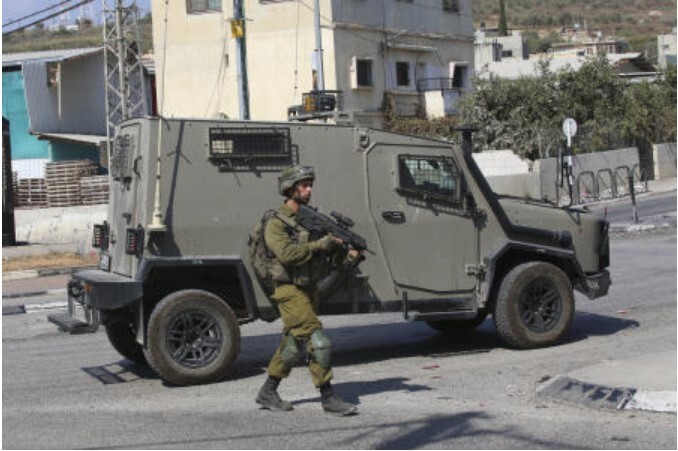
The Israeli occupation forces shot and wounded three citizens at dawn and this morning, Monday, while arresting others.

In the West Bank and occupied Jerusalem.


In occupied Jerusalem, the Red Crescent reported that three young men were shot during the occupation forces’ storming of Qalandia camp and Airport Street, amid clashes.


In Bethlehem, the occupation forces stormed the town of Tuqu’, raided and searched dozens of homes, and arrested the following: Yassin Yousef Sabah, Ahmad Awda Allah Al-Amur, Sufyan Awda Allah Al-Amur, Adi Muhammad Al-Amur, Ahmad Issam Al-Amur, Muhammad Mahmoud Al-Amur, Sand Yousef Jabreen, Qassam Nidal Al-Amur, Muhammad Riyad Al-Amur, Muhammad Khaled Al-Amur, Ahmad Issa Jabreen, Zakaria Ahmad Jabreen, Ali Yousef Jabreen, Muhyi Ahmad Al-Amur, Samih Salim Sabah, Mamoun Salim Sabah, Ayoub Suleiman Sabah, Ahmad Ali Sabah, Muhand Sami Sabah, Mu’ayyad Abdullah Al-Amur, Muhammad Jamil Al-Amur, Munir Jamal Abdul Khalil Sabah, Hamada Yousef Al-Amur, Ahmad Kamal Al-Amur, and Daoud Hussein Al-Amur.


In Qalqilya, the occupation forces arrested the two brothers, Ghassan and Thaer Hassanein, after raiding their family's home in the Shuraim neighborhood in the center of the city.


In Nablus, the occupation forces arrested the freed prisoner Younis Sabri Al-Fani, after raiding his family’s home and searching it in the village of Kafr Qallil.


These forces also raided a number of houses in the village, searched them, and wreaked havoc.


In Ramallah, the occupation forces arrested the young man, Muqdad (35 years old), after raiding his house in the town of Birzeit.


PALESTINE

Mon 23 Dec 2024 8:15 am - Jerusalem Time

Dead and wounded as a result of the ongoing Israeli aggression on the Gaza Strip

A number of citizens were killed and injured at dawn on Monday as the Israeli occupation continued its aggression on the Gaza Strip for the 444th consecutive day.


In the latest developments: Two citizens were killed and 19 others were injured, one of them seriously, when an occupation drone bombed a group of citizens in the Mawasi area of Rafah city, in the southern Gaza Strip.


Meanwhile, two citizens were killed and several others were injured in an occupation bombing that targeted a civilian vehicle in the Al-Mawasi area, west of Khan Yunis Governorate.


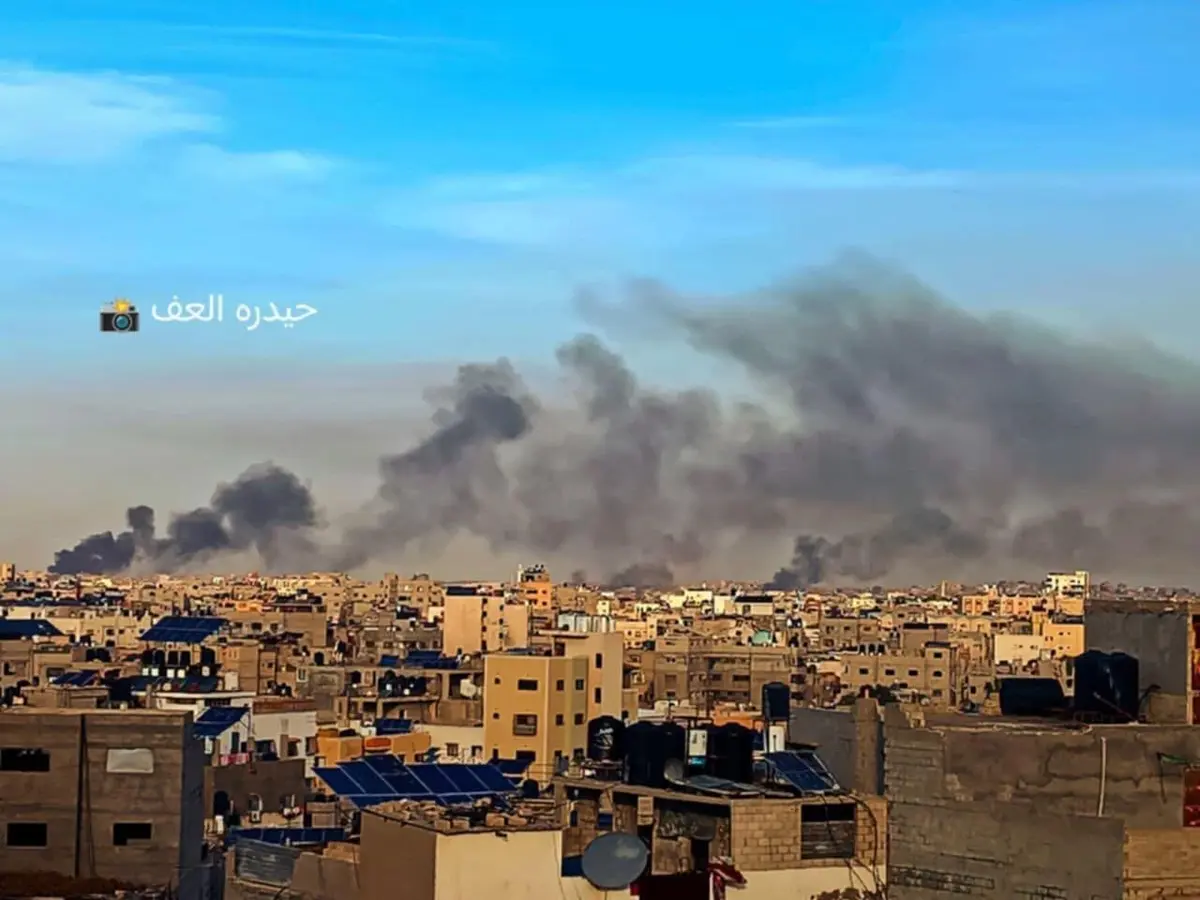
A citizen was also killed when the occupation targeted the home of the Al-Jundi family in the Al-Shaaf area, east of Gaza Governorate.


Al-Awda Hospital received 4 martyrs and 3 injuries as a result of the Israeli occupation's aggression on the new camp area, northwest of the Nuseirat camp in the central Gaza Strip.


A citizen was also killed and others were injured when the occupation forces fired live bullets at a school housing displaced persons northwest of the camp.


The occupation forces carried out bombing operations against residential buildings in Beit Lahia, north of the Gaza Strip, coinciding with gunfire from military vehicles stationed in the Saftawi area, in addition to continuous air strikes north and south of the Gaza Strip.


The occupation forces also blew up a number of houses in Jabalia camp, north of the Gaza Strip.


The Israeli occupation committed a new massacre tonight in the Al-Mawasi area west of Khan Yunis in the southern Gaza Strip, where Israeli warplanes targeted several tents for displaced people near the British Hospital, resulting in the death of 5 citizens and the injury of dozens with varying injuries, according to an incomplete toll.


Eyewitnesses reported that the bombing caused huge fires in the tents that were housing displaced families, amid screams and cries for help from the residents.


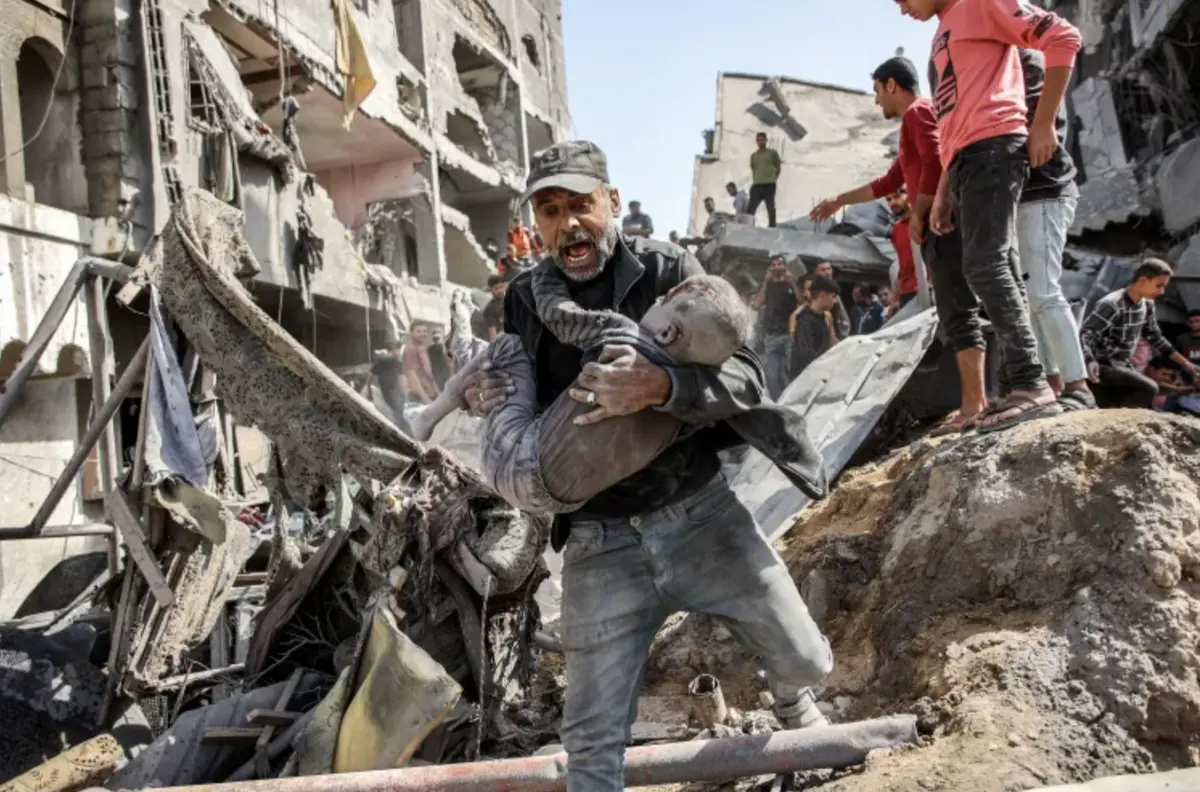
The Israeli occupation continues its aggression on the Gaza Strip, by land, sea and air, since October 7, 2023, which resulted in the death of more than 45,259 citizens, most of whom are women and children, and the injury of more than 107,627 others, and thousands of victims are still under the rubble and in the streets.

PALESTINE

Mon 23 Dec 2024 8:13 am - Jerusalem Time

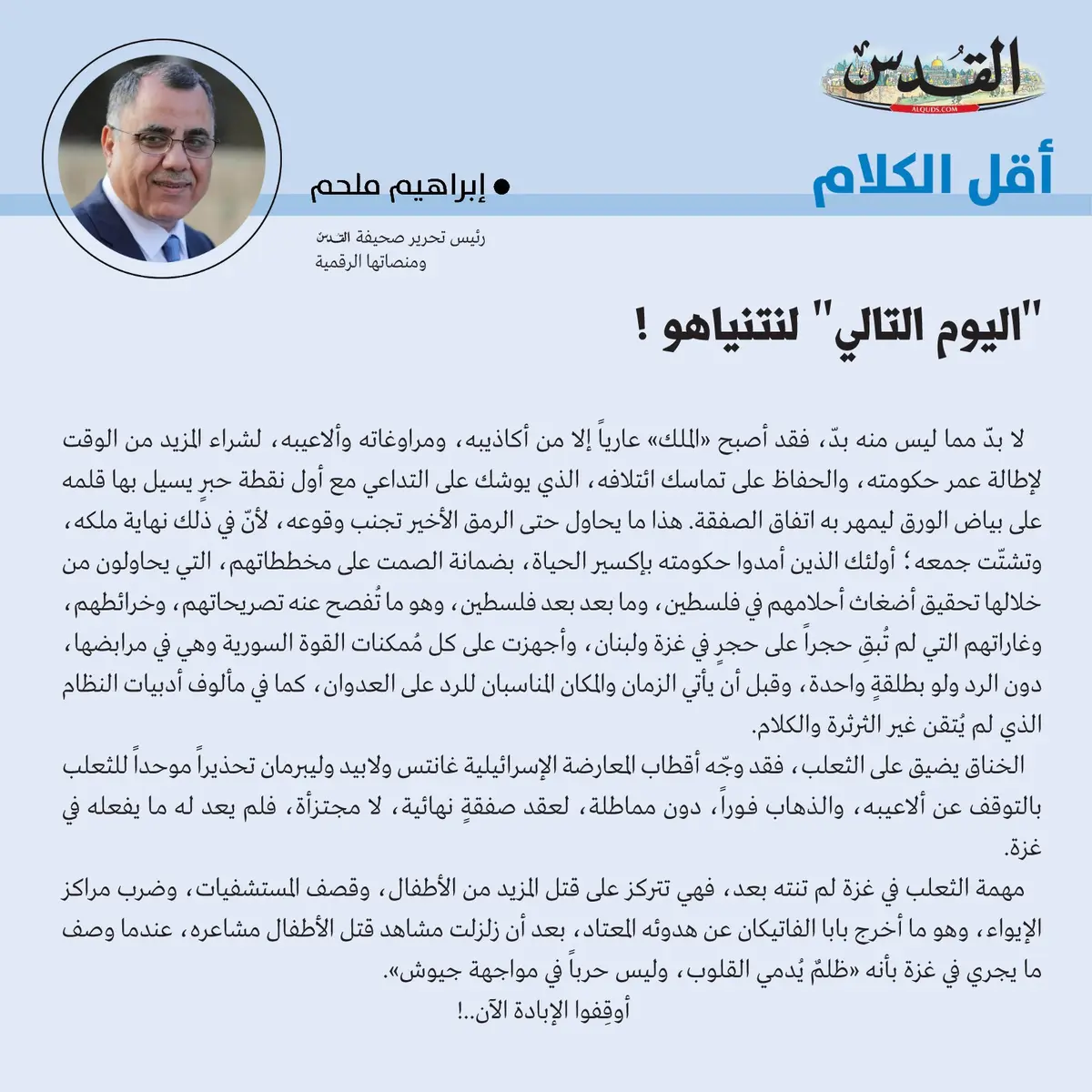
"Netanyahu's day after !

The inevitable must happen, as the "king" has become naked except for his lies, evasions and tricks, to buy more time to prolong the life of his government, and to maintain the cohesion of his coalition, which is about to collapse with the first drop of ink that his pen sheds on the white paper to stamp the deal agreement. This is what he is trying to avoid until his last breath, because in that would be the end of his kingdom, and the dispersion of his group; those who provided his government with the elixir of life, with a guarantee of silence on their plans, through which they are trying to achieve their nightmares in Palestine, and beyond Palestine, which is what their statements, maps and raids reveal, which left no stone unturned in Gaza and Lebanon, and destroyed all the potential of the Syrian force while it was in its strongholds, without responding with even a single shot, and before the appropriate time and place came to respond to the aggression, as is the usual literature of the regime that has only mastered chatter and talk.


The noose is tightening around the fox, as the leaders of the Israeli opposition, Gantz, Lapid and Lieberman, issued a unified warning to the fox to stop his tricks and go immediately, without procrastination, to conclude a final deal, not a partial one, as he no longer has anything to do in Gaza.


The fox's mission in Gaza is not over yet, as it focuses on killing more children, bombing hospitals, and hitting shelters, which is what made the Pope of the Vatican lose his usual calm, after the scenes of killing children shook his feelings, when he described what is happening in Gaza as "injustice that bleeds the heart, and not a war against armies."


Stop the genocide now..!

PALESTINE

Mon 23 Dec 2024 8:01 am - Jerusalem Time

The Promised Deal: Far Away... But We See It Near!

Dr. Rafat Sayed Ahmed: What is happening now is just a game to buy time and is not an indication that the end of the war on Gaza is near

Aziz Al-Assa: Reaching a truce in the coming few days is an urgent need for the two major parties in the United States

Dr. Hossam Al-Dajani: Recent political developments greatly support the possibility of reaching a prisoner exchange deal

Wadih Awawdeh: Reports related to the deal contain exaggerations and some of them aim to meet internal Israeli needs

Thaer Abu Ras: Netanyahu is caught between the hammer of American pressure and the anvil of the extreme right, and this explains his hesitation in making decisions

Osama Al-Sharif: Netanyahu is monitoring the internal scene and seeking to secure his government coalition after reaching a ceasefire


There has been much talk recently about an imminent agreement regarding a prisoner exchange deal between the Israeli occupation state and the Palestinian resistance in Gaza, through mediators, which has revived hope in the souls of the people of the Gaza Strip that the war of extermination, whose woes they have tasted in death, terror, destruction, hunger and displacement, will soon end, as has never happened to any people on the face of the earth.


But the deal, as it seems, is stuck at a station it will not leave, the station of procrastination and stalling by the head of the occupation government, Benjamin Netanyahu, who is, as some analysts see it, between the pressures being exerted on him on the one hand by the incoming US President Donald Trump, who wants to start his term in the White House without any troubles, but rather with achievements that he attributes to himself, even if they began during the term of his predecessor Joe Biden, who is preparing to leave, and on the other hand, his partners in the ruling far-right coalition, Ben Gvir and Smotrich, and others.


Writers and analysts who spoke to Al-Quds considered what is happening to be a game of buying time by Netanyahu, and not an indication of the imminent end of the war on the Gaza Strip, as long as his government is not exposed to real pressures that force it to stop the war.


They attributed the delay in completing the deal to the Israeli government’s hesitation and inability to make a final decision, and its fear of the day after the war. Some believed that the Israeli government played a role in exaggerating these reports that talk about an imminent agreement, with the aim of easing internal pressure from the Israeli street and the families of the prisoners, especially with the escalation of external pressure on Israel.


Israel does not face a real threat to stop the war


The director of the Jaffa Center for Studies and Research in Cairo, Dr. Rifat Sayed Ahmed, considered that what is happening now is just a game to buy time, and not an indication that the end of the war on the Gaza Strip is near.


He stressed that Netanyahu does not face a real threat, and that the Israeli extremist government is not under pressure to make any deal at the present time.


Ahmed explained that Israel is working to exploit the transitional period between the current US administration and the next administration led by Trump, as it aims to buy time until next January, the date when Trump officially assumes the presidency.


He pointed out that this Israeli strategy is not affected by any external pressures, whether Arab, regional, or international.


He added: "Netanyahu continues the policy of killing and refusing to make deals, which reflects the lack of seriousness in ending the aggressive war on Gaza."


Ahmed considered that Netanyahu is playing with the time factor in coordination with the US administration, hoping that there will be a possible deal after the new administration takes office, pointing out that this waiting may be accompanied by more killing and destruction of Palestinians, especially innocent civilians.


Sayed Ahmed concluded by saying: “What we are witnessing now is nothing but buying time, not an end to the conflict or war.”


Ensuring absolute security for Israel


For his part, Jerusalemite political analyst Aziz Al-Assa said that reaching a truce in the coming few days represents an urgent need for the two main parties in the United States.


He explained that the current ruling Democratic Party seeks to end the war in Gaza in a way that preserves Israel's security, which strengthens its position in the upcoming presidential elections, while the Republican Party, which will soon assume power, is interested in discussing the post-aggression file on Gaza in a way that guarantees absolute security for Israel.


He added: The party coming to power (the Republican Party) is also concerned with discussing the issue of what comes after the aggression on Gaza, in a way that preserves absolute security for Israel.


Al-Assa stressed that between these and those American goals stands the strong and solid Palestinian will, which has proven its presence in the military field, and which has been sealed with the blood of nearly fifty thousand martyrs - most of whom are children, women and the elderly - and almost four times that number of wounded, disabled and missing. It will have the final say at the negotiating table.


He explained that in all cases, the most important strategic question remains: What about the day after the cessation of aggression on the Gaza Strip? This is a question that will be answered after the end of the first stage, and what measures will be taken on the ground, in terms of the precise and serious implementation of what is signed by all parties.


Israel and the Question of the Day After War


Al-Assa said: “On the ground, there is something that dispels these plans, according to the deception, procrastination and breaches enjoyed by the Israeli right-wing government, in comparison to what it did in Lebanon after the ceasefire agreement, pointing out that this is due to the fact that this government, which raised a dual slogan of “subjugating the Palestinian people and achieving absolute victory over them,” lives with an obsession that worries it, and even makes it revolve around itself in a state of extreme fear and anxiety about the day after the war, when the Gaza Strip emerges victorious with its steadfastness and refusal to surrender - according to the Israeli vision - despite the destruction and the smell of death spread everywhere by the Israeli occupation forces, which has stigmatized Israel and its leadership with the shame of genocide and ethnic cleansing.


He stressed that the threat to all cities of the occupying state, which is still coming from Yemen, adds a security and political burden on the shoulders of the occupying government, which cannot be ignored.


He pointed to the state of security, economic, political - and to some extent social - confusion that the occupying state will suffer from the day after the war, which will burden the Israeli leadership that promised its society an absolute victory that will make the Israeli sleep in honey happily and contentedly.


The stick concluded by stressing that the current right-wing government will squander any solution unless it is imposed on it and forced by the American sponsor to accept it.


Israel and the United States' Priorities


In turn, political analyst Dr. Hossam Al-Dajani said that recent political developments greatly support the possibility of reaching a prisoner exchange deal.


He explained that Donald Trump's rise to power, along with the ceasefire agreement in Lebanon and what happened in Syria, showed the Israeli military establishment's awareness of the futility of military action as a means of liberating Israeli prisoners.


Al-Dajani pointed out that the arrangement of priorities for Israel and the United States in the next stage, where the Iranian nuclear program file, the annexation plan in the West Bank, and the promotion of the Abrahamic peace are at the forefront of the political scene, affects other issues and pushes towards concluding a deal.


He added: "The increasing pressure from the families of Israeli prisoners on their government is an additional factor that reinforces this trend."


Information about progress in negotiations


Al-Dajani confirmed that the leaked information indicates some progress in the negotiations, as Israel is demanding a list of the names of the living prisoners, while the resistance is stipulating a one-week truce to list the names or obtain the full list without announcing their fate.


Al-Dajani explained that the political changes internally and externally pushed the negotiations forward, despite the obstacles placed by Israel on the negotiating table, such as its rejection of the temporary truce and its insistence on searching the displaced and revealing the names of the prisoners.


"Despite Israel's attempt to buy time, the mediators are working diligently to push the process forward, which increases the chances of achieving the deal," he said.


Al-Dajani stressed the importance of popular pressure from Israeli society on Israeli Prime Minister Benjamin Netanyahu to push him to overcome the challenges of the extreme right, which seeks to thwart any progress in the negotiations, which is necessary to complete the deal.


Relieving internal pressure from the Israeli street


Israeli affairs expert Wadih Awawdeh said, "From the beginning, he was skeptical about the credibility of the reports related to the prisoner exchange deal, stressing that these reports contain exaggerations and rumors, and some of them aim to meet internal needs."


He added: "The Israeli government played a role in exaggerating these reports with the aim of easing internal pressure from the Israeli street and the families of the prisoners, especially with the escalation of pressure on Israel.


Awawdeh pointed out that there is a large gap between the Palestinian and Israeli positions on some key points in the deal, such as the number of prisoners to be released, the fate of the Palestinians who will be exiled, in addition to Israel’s commitment to complete the second round of the deal and not back down from it. He also mentioned that there are internal doubts in Israel about whether Prime Minister Benjamin Netanyahu will continue with this humanitarian deal or back out of it at the last moment.


Israeli fear of the scene of the released Palestinian prisoners


Awawdeh explained that there is a fear within the Israeli government, especially among Netanyahu, that the image of Palestinian prisoners who will leave the occupation prisons with their heads held high may be “unbearable,” in light of the optimistic statements about the victories and gains that have been achieved.


He said: "The release of hundreds of Palestinian prisoners in one batch could change the picture significantly and leave an impact on the Israeli, Palestinian and global consciousness, which contradicts the desires of Netanyahu, who seeks to appear as the "Churchill of Israel" and ensure his historical status.


He added: "Netanyahu may seek to postpone the deal repeatedly until he finds a major event that will help him pass the deal, balancing the image that may be established about the Palestinians and the prisoners."


He pointed out that the Israeli project includes normalization with Saudi Arabia and striking Iran, which makes the deal a postponed issue until the president changes in the White House, considering that any talk about a real deal will remain within the framework of chatter until this change occurs.


Pressure from the Trump administration on Israel


For his part, Thaer Abu Ras, a researcher specializing in American and Israeli affairs, said that the Israeli government's hesitation reflects its inability so far to make a final decision regarding moving toward a prisoner exchange deal.


He explained that there is tremendous pressure being exerted on Israel by the Trump administration to push it to accept the deal, as Trump wants the deal to start during Biden's term, but to continue and be completed in his next presidential term, so that it is recorded as a political achievement for him with the release of detainees holding Israeli or American citizenship from Gaza.


Abu Ras pointed out that Netanyahu realizes that it is not in his interest to anger Trump, but at the same time he faces strong opposition from his allies on the far right, such as Itamar Ben-Gvir and Bezalel Smotrich, who refuse to cease fire or end the war without achieving tangible political gains.


He explained that these allies are pushing towards building settlements in the Gaza Strip, specifically in the north of the Strip, as a symbolic step towards returning to Gaza.


Disagreements over Palestinian prisoners hinder deal


Abu Ras added: Netanyahu finds himself between the hammer of American pressure and the anvil of the demands of the extreme right, which explains the state of hesitation that dominates his decisions.


He stressed that this hesitation is primarily aimed at buying time rather than reflecting an approach to a clear end to the crisis, especially with Trump's insistence on achieving a political accomplishment through the prisoner swap deal.


Abu Ras pointed out that the issue of Palestinian prisoners remains a major obstacle to completing the deal.


He explained that Israel is demanding the deportation of prominent leaders such as Marwan Barghouti, Abbas al-Sayed and Abdullah Barghouti to third countries, such as Qatar, which Hamas rejects. Researcher Abu Ras confirmed that the pending issues and current differences reflect an Israeli attempt to buy more time in light of the pressure of the Trump administration to complete the deal.


Netanyahu delays improving terms of deal


In turn, Jordanian analyst Osama Al-Sharif said that the decision is up to Israeli Prime Minister Benjamin Netanyahu, who is trying to procrastinate while seeking to improve the terms of the deal.


He pointed out that Netanyahu is closely monitoring the Israeli domestic scene, especially his partners in the government coalition, and he is seeking to ensure the survival of this coalition after reaching a ceasefire.


Al-Sharif explained that it is not unlikely that Netanyahu will try to jump forward and enter into new electoral calculations if his current government collapses.


He pointed out that Netanyahu is fully aware that there is a specific date set by the next US President, Donald Trump, to complete the deal, and this date is very close, only days away, not weeks.


The Jordanian analyst said: "From here, the agreement becomes a matter of time, and Netanyahu is thinking about what comes after the agreement and how he can circumvent it after achieving it."


He pointed out that this includes thinking about his future options regarding Gaza, and the day after the deal.


Al-Sharif added: "Even completing the deal will not be in the interest of Hamas or the people of Gaza in general, even if a ceasefire is reached, explaining that the challenges will remain, whether in terms of reconstruction or improving living conditions, which requires a clear vision and international will to support the sector.

PALESTINE

Sun 22 Dec 2024 10:35 pm - Jerusalem Time

Allowing publication of details of Israeli failed rescue attempt for female prisoner in Gaza

Channel 12 reported that the military censorship allowed the publication of details of a failed rescue attempt for a prisoner in Gaza about a year ago.

According to the channel, "About a year ago, a special military force set out on a mission to free the captive Noa Argamani (whom the army announced last June that it had recovered along with 3 Israeli captives after a military operation in the Nuseirat camp). The special unit's fighters thought they were going to rescue Argamani, but it later turned out that the intelligence information they had obtained was wrong, and that the captive in the place was a captive named Saher Baruch."

She added: "The fighters reached the building, opened the entrance door, and immediately at the first moment the gunmen opened fire on them with a heavy barrage of bullets, and the rescue operation suddenly turned into an operation to evacuate the wounded, as a number of members of the special unit were seriously injured during the confrontation."

After that, the channel says: "The fighters returned after many hours, and at that time the Military Intelligence Service (Aman) received intelligence information that shocked everyone, as it turned out that the person who was in the building was not Noa Argaman, but the prisoner Sahar Baruch, who was captured from his home in Be'eri."


She continued: "During the rescue operation and the fierce battle that took place inside the building, Sahar was killed by a gunshot to the head, and to this day, it remains unclear whether he was killed by the militants or was accidentally hit by the forces' fire."

The channel quoted the Baruch family as saying, "The military pressure may lead to the deaths of the prisoners. We hope that no more deaths of this kind will occur, and that all the prisoners will return as soon as possible through a deal."

ARAB AND WORLD

Sun 22 Dec 2024 10:03 pm - Jerusalem Time

Trump: I will stop the chaos in the Middle East and prevent the outbreak of World War III

US President-elect Donald Trump made a number of controversial statements on Sunday that clearly reflect the extent of the difference in US domestic and foreign policies with outgoing Democratic President Joe Biden.

On the foreign policy front, Trump said he would stop what he described as chaos in the Middle East, stop the war in Ukraine, and prevent the outbreak of World War III, without explaining how he would do all of that.

Trump reiterated his previous statement that the events of October 7 (Operation Flood of the North) and the war between Russia and Ukraine would not have happened if he were President of the United States.

Since October 7, Israel has been waging a genocidal war on the Gaza Strip, with full American support, in which more than 153,000 Palestinians have been killed and injured, most of them children and women, and more than 11,000 have gone missing, amidst massive destruction and famine that has killed dozens of children and elderly people.

Trump threatened earlier this month that if the captives in the Gaza Strip were not released before his inauguration on January 20, there would be “hell” in the Middle East, saying officials would be “hit harder than anyone in the long and storied history of the United States of America has ever been hit. Release the captives now.”

PALESTINE

Sun 22 Dec 2024 8:39 pm - Jerusalem Time

Lazzarini: All rules of war are violated in the Gaza Strip, which is subjected to Israeli genocide

The Commissioner-General of the United Nations Relief and Works Agency for Palestine Refugees (UNRWA), Philippe Lazzarini, confirmed today, Sunday, that all the rules of war are being violated in the Gaza Strip, which has been subjected to an ongoing Israeli genocide for more than 14 months.


In a post on the X platform, Lazzarini said: “All wars have rules, but all these rules have been violated in Gaza. Attacks on schools and hospitals have become commonplace, and the world should not get used to this.”


"The ceasefire in Gaza is long overdue," he added.

ARAB AND WORLD

Sun 22 Dec 2024 8:38 pm - Jerusalem Time

Houthis announce downing of F-18 aircraft and targeting of destroyer

Houthi military spokesman Yahya Saree said they had succeeded in thwarting an American-British attack on Yemen.


Saree revealed that they shot down an F-18 aircraft while trying to confront American and British aircraft, and they also targeted the aircraft carrier USS Harry Truman and a number of its destroyers.


He stressed the group's readiness for any "American or British foolishness," warning against aggression against Yemen.

PALESTINE

Sun 22 Dec 2024 7:42 pm - Jerusalem Time

Israli Settlers establish a new outpost in the northern Jordan Valley

Today, Sunday, settlers established a new colonial outpost in the Qaoun Plain, west of the village of Bardala in the northern Jordan Valley.


The official in charge of the settlement file in the Tubas Governorate and the Northern Jordan Valley, Moataz Basharat, reported that a number of settlers brought an agricultural tractor, a water tank, fodder, and about 30 heads of cattle, and began building a new outpost west of Bardala.

He added that the settlers established the outpost near a military checkpoint of the occupation forces, which was established about two months ago.


There are more than 8 colonial outposts spread throughout the northern Jordan Valley, most of which are agricultural, through which the settlers seize thousands of dunams of pastoral land, assault Palestinian shepherds, steal their livestock, and raid their tents, in an attempt to force them to leave the pastures.

PALESTINE

Sun 22 Dec 2024 5:32 pm - Jerusalem Time

Gaza ceasefire 'closer than ever'

There are increasing indications that a ceasefire agreement is close, amid cautious optimism from the US administration, which is seeking to achieve a breakthrough before the end of Joe Biden's term on January 20, and the Palestinian factions' announcement that the agreement is "closer than ever."


Talks to reach a ceasefire in Gaza and a prisoner swap between Hamas and Israel were mostly complete, but key issues still need to be resolved, reports said Sunday. One major sticking point is Israel's continued military presence in the Philadelphi Corridor, a strategically important strip of land in southern Gaza along the border with Egypt.


The talks include the creation of a possible buffer zone several kilometers wide along Gaza's border with Israel, with Israel maintaining a military presence within this area.


According to reports, with these issues resolved, a three-stage ceasefire could be agreed upon within days.


Hamas, Islamic Jihad and the Popular Front announced, after their meeting in Cairo, that reaching a ceasefire agreement in Gaza is "closer than ever," provided that Israel does not set "new conditions."


In a statement on Telegram on Saturday, the group said it held a meeting in Cairo on Friday regarding ongoing negotiation efforts with representatives from the Palestinian Islamic Jihad movement and the Popular Front for the Liberation of Palestine.


The deal includes the exchange of 20 Palestinian prisoners for every female soldier released in the first of three phases of a ceasefire.


The names of the prisoners have not yet been agreed upon but they will be chosen from among about 400 names serving sentences of 25 years or more in Israel.


These are not believed to include prominent Fatah leader Marwan Barghouti, who Israel is expected to release.


The Israeli hostages will be released in stages, as Hamas is believed to still need to locate some of the missing hostages.


Of the 96 hostages still being held in Gaza, Israel assumes that 62 are still alive.


Civilians in Gaza will reportedly be able to return to the north, under an Egyptian/Qatari-supervised system, and there will be about 500 trucks a day carrying aid into the Strip.


In the final stage of the three-stage plan, which will see the end of Israel's more than 14-month war on Gaza, Gaza will be overseen by a committee of technocrats from the Strip, who will have no previous political affiliations but will have the support of all Palestinian factions.


In recent weeks, the United States, Qatar and Egypt have resumed mediation efforts and reported greater willingness on both sides to strike a deal.


A round of talks in mid-October failed to reach an agreement, with Hamas rejecting a short-term ceasefire proposal.


Hamas carried out an unprecedented attack on the Gaza envelope area in southern Israel on October 7, in which 1,200 Israelis were killed, including 311 soldiers, and 251 others were captured, according to official Israeli statements.


More than 100 hostages were released during a temporary ceasefire in the last week of November 2023.

PALESTINE

Sun 22 Dec 2024 5:12 pm - Jerusalem Time

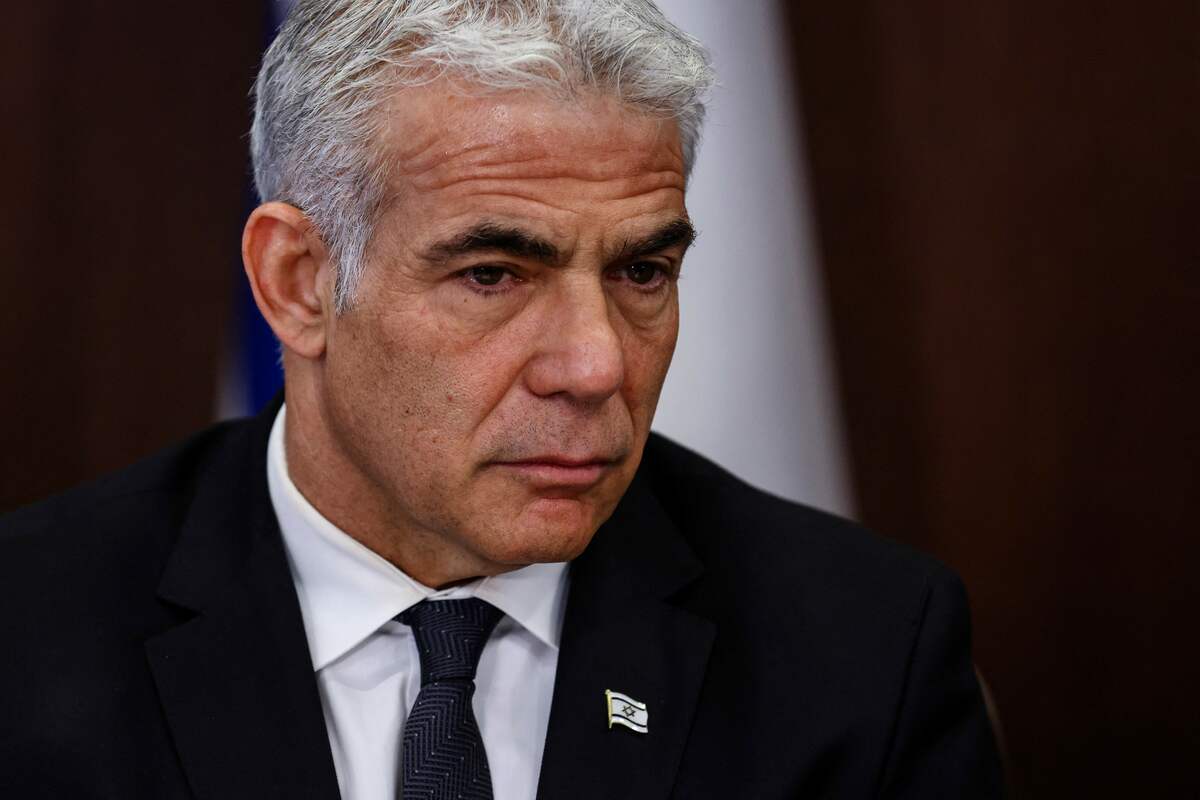
Lapid: Netanyahu prioritizes political considerations over returning kidnapped soldiers from Gaza

Israeli opposition leader Yair Lapid on Sunday accused the government of thwarting a prisoner swap deal in Gaza, saying Prime Minister Benjamin Netanyahu was "putting political considerations ahead of returning the kidnapped (Gaza prisoners) and Israel's security."

"I hope that what happened several times before, in April and July, will not happen, that whenever we got closer to a deal, the Netanyahu government set new conditions and thwarted the process," Lapid said in an interview with the official Israeli Broadcasting Authority.

He added: "I don't understand the whole talk, about a partial deal, why don't we go to a comprehensive deal, why don't we return all the kidnapped and stop the war."

"We have nothing to look for anymore in Gaza, and we must start preparing for the day after the war, and bring 100 kidnapped people home," Lapid said.

He continued: "We will always be able to enter the Gaza Strip after the end of the war and do whatever we want... Now the war must be stopped, a deal must be concluded and all the kidnapped must be returned."

ARAB AND WORLD

Sun 22 Dec 2024 5:10 pm - Jerusalem Time

Pope Francis again condemns the "cruelty" of Israeli raids on the Gaza Strip


Pope Francis on Sunday again condemned the "cruelty" of Israeli airstrikes on the Gaza Strip, after doing so on Saturday, sparking protests from Israel, which accused him of "double standards."


“With pain I think of Gaza, of all this cruelty, of children being shot at, of the bombing of schools and hospitals. What cruelty,” the pontiff said after the Angelus prayer.

PALESTINE

Sun 22 Dec 2024 5:07 pm - Jerusalem Time

Three dead as a result of Israeli bombing of the vicinity of Kamal Adwan Hospital

Three citizens were killed and others were injured on Sunday evening, when the Israeli occupation forces targeted the vicinity of Kamal Adwan Hospital, north of the Gaza Strip.

Since yesterday evening, the occupation forces have continued to bomb and target the Martyr Kamal Adwan Hospital in the town of Beit Lahia, north of the Gaza Strip, amid calls for the necessity of intervention to save patients and medical staff.

According to medical sources, the occupation forces continued to bomb the hospital with bombs and artillery shells, and to target the women, maternity and newborn departments with sniper fire, causing severe damage, while communication with the medical team inside was cut off.

The same sources explained that the medical crews present in the hospital gathered in one place between the corridors and departments, in an attempt to protect themselves from shrapnel and bullets. Electricity was also completely cut off from the hospital today after Israeli drones targeted the electricity generators and fuel tanks in it.

The Israeli occupation continues its aggression on the Gaza Strip, by land, sea and air, since October 7, 2023, which resulted in the death of 45,259 citizens, the majority of whom are women and children, and the injury of 107,627 others, in an incomplete toll, as thousands of victims are still under the rubble and in the streets, and ambulance and rescue crews cannot reach them.


ARAB AND WORLD

Sun 22 Dec 2024 3:47 pm - Jerusalem Time

Jumblatt from Damascus: We hope that Lebanese-Syrian relations will return to normal

Lebanese political leader and former head of the Socialist Party, Walid Jumblatt, expressed his desire on Sunday for Lebanese-Syrian relations to return to their "normal diplomatic origins" following the fall of the Baath Party rule this month.


This came during his meeting at the People's Palace in the Syrian capital, Damascus, with the leader of the new administration in Syria, Ahmed Al-Sharaa, at the head of a delegation from Lebanon, according to what was reported by the Lebanese News Agency.


Jumblatt said: "We salute the Syrian people for their great victories, and we salute you for your battle that you waged to get rid of oppression and tyranny."


He continued: "The road is long, and we and you are suffering from Israeli expansion, and I will submit a memorandum in the name of the representatives of the "Democratic Gathering" parliamentary bloc regarding Lebanese-Syrian relations."


The leader, who belongs to the Druze sect, added: “We hope that Lebanese-Syrian relations will return to normal through diplomatic relations, and that all those who committed crimes against the Lebanese will be held accountable. We hope that fair trials will be held for those who committed crimes against the Syrian people, and that some of the detention centers will remain museums of history.”


Jumblatt visits Syria after 13 years, accompanied by members of the Progressive Socialist Party and the Sheikh of the Druze community, Sami Abu Al-Mona.


On Thursday, Jumblatt announced that he would head to Damascus during his online meeting with representatives of the Council on Arab-American Relations, in which he said, “Stability in Syria is necessary for stability in Lebanon, and it needs an opportunity and help.”


On December 12, Jumblatt made a phone call to Sharaa, congratulating him and the Syrian people on the “victory over the oppressive regime,” making him the first prominent Lebanese figure to call Sharaa to congratulate him on the overthrow of the Assad regime, and the first to go to Damascus.


On December 8, Syrian factions took control of the capital Damascus and other cities before that, with the withdrawal of regime forces from public institutions and streets, thus ending a 61-year era of Baath Party rule and 53 years of Assad family rule.

PALESTINE

Sun 22 Dec 2024 3:11 pm - Jerusalem Time

Israel demolishes two Palestinian apartments in occupied Jerusalem

Today, Sunday, the Israeli occupation forces demolished two apartments in the town of Beit Safafa, southeast of occupied Jerusalem.


Local sources reported that the occupation forces demolished two apartments belonging to a citizen and his son from Beit Safafa, which had been standing since the 1970s.


According to the sources, the two apartments belong to citizen Mohamed Salah and his son Salah, and were housing 15 people. They were demolished under the pretext of paving a road on the site.

PALESTINE

Sun 22 Dec 2024 2:44 pm - Jerusalem Time

Settlers attack citizens' property south of Hebron

Today, Sunday, settlers attacked citizens' property in the Umm al-Simsim area in the town of Adh Dhahiriya, south of Hebron.


According to local sources, settlers destroyed an agricultural room belonging to citizen Samer Abu Sharkh, uprooted its windows, contents, and water tanks, and attacked all of his property in the area.


It is worth noting that the colonists have intensified their attacks on citizens' property in several areas south of Dhahiriya and have attempted to seize agricultural and pastoral lands for the purpose of colonial expansion.

ARAB AND WORLD

Sun 22 Dec 2024 1:46 pm - Jerusalem Time

Iraq, Oman discuss Gaza war of extermination, developments in Syria

Iraq and the Sultanate of Oman discussed, on Sunday, regional conflicts, most notably the Palestinian issue, the Israeli war of extermination on Gaza, and Syrian developments, in addition to bilateral relations.


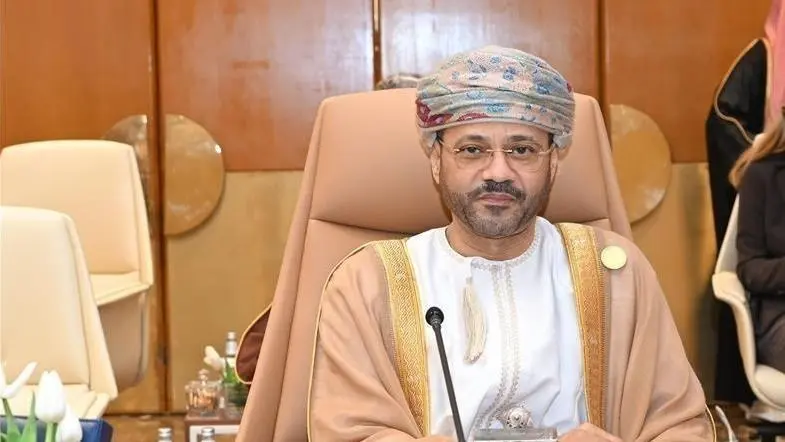
This came during the meetings of the Iraqi-Omani Joint Committee in its ninth session in Baghdad, headed by the Iraqi Foreign Minister Fuad Hussein and the Omani Foreign Minister Badr Al-Busaidi.


A statement by the Iraqi Foreign Ministry stated that the committee's meetings discussed regional conflicts, most notably the Palestinian issue, the Israeli war on Gaza, and Syrian developments, in addition to bilateral relations between the two countries.


According to the statement, Al-Busaidi praised Iraq's efforts in supporting regional stability, praising its "effective" role in security issues in the region.


He also pointed out the Iraqi role in supporting the Palestinian people, especially in Gaza, by providing humanitarian aid and contributing to alleviating the suffering of civilians, in light of the ongoing Israeli war.


The two parties agreed to enhance cooperation in the economic, trade and cultural fields, in addition to facilitating academic and scientific exchange between the two countries.


The importance of cooperation in the field of energy and environment was also emphasized, which contributes to enhancing sustainable development for both countries, according to the Foreign Ministry statement.


In statements by the two ministers following the joint committee meetings, published by the Iraqi News Agency (INA), Hussein said, "Relations with the Sultanate of Oman are historic, and we have signed a number of memoranda of understanding with Oman," without specifying the areas of those memoranda.


He pointed out that there is joint work to cancel the entry visa between Iraq and the Sultanate of Oman.


Hussein continued: "We support the Palestinian cause and the ceasefire in Gaza, and we are studying the Syrian situation (..)"


He continued, "We hope that the political process in Syria will be comprehensive and lead to its stability."


On December 8, Syrian factions took control of the capital Damascus and other cities before that, with the withdrawal of regime forces from public institutions and streets, thus ending a 61-year era of Baath Party rule and 53 years of Assad family rule.


Meanwhile, the Omani Foreign Minister stressed their intensification of diplomatic efforts to resolve conflicts, according to "WAA".


Al-Busaidi arrived in Iraq on Saturday on an official visit of an undisclosed duration, during which he met with Prime Minister Mohammed Shia al-Sudani and delivered an invitation from Sultan of Oman Haitham bin Tariq to visit the Sultanate.

PALESTINE

Sun 22 Dec 2024 1:06 pm - Jerusalem Time

Israeli forces arrest a young man west of Salfit

Today, Sunday, the Israeli occupation forces arrested a young man from the town of Deir Ballut, west of Salfit.


Local sources reported that the occupation forces arrested the young man, Baraa Zahdi Abdullah, while he was working in his house under construction in the southern area of the town, under the pretext that he works in the area called “C.”

PALESTINE

Sun 22 Dec 2024 12:42 pm - Jerusalem Time

32 dead in 24 hours, the death toll from the aggression rises to 45,259

The Israeli occupation committed 4 massacres against families in the Gaza Strip, resulting in 32 dead and 54 injuries arriving at hospitals during the past 24 hours.


The Ministry of Health in Gaza confirmed, in a brief statement today, Sunday, that the death toll from the Israeli aggression has risen to 45,259 dead and 107,627 wounded since October 7, 2023.


It pointed out that there are still a number of victims under the rubble and on the roads, and ambulance and civil defense crews cannot reach them.

PALESTINE

Sun 22 Dec 2024 11:40 am - Jerusalem Time

A member of Palestinian security forces was killed during the ongoing events in Jenin

Today, Sunday, a member of the security services killed First Assistant Saher Farouk Jumaa Arheil during the ongoing events in Jenin.


In turn, the official spokesman for the Palestinian security forces, Brigadier General Anwar Rajab, said in a statement, "The security forces mourn their heroic martyr, and confirm that this heinous crime will only increase their determination to pursue those who violate the law, and impose the rule of law, in order to preserve the security and safety of our people."


He called on all citizens to cooperate with the security services in confronting this deviant group, which is tampering with the security and stability of the country, stressing that the hand of justice will reach anyone who dares to tamper with the lives of our people, according to the statement.


He pointed out that this unfortunate incident resulted in the injury of two other members of the security services, who are currently receiving the necessary treatment.

PALESTINE

Sun 22 Dec 2024 11:37 am - Jerusalem Time

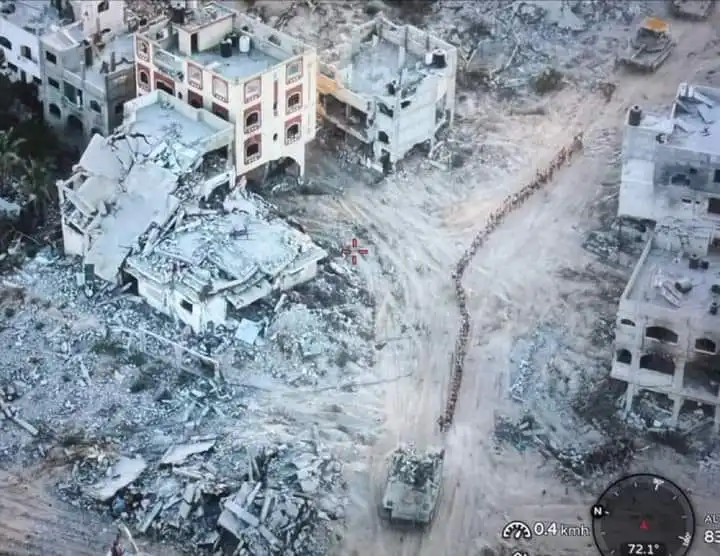
Haaretz: Israel destroyed 70% of the buildings in Jabalia camp and turned it into a "ghost town"

The Israeli newspaper Haaretz said on Sunday that the Israeli occupation forces completely destroyed about 70% of the homes and buildings in the Jabalia refugee camp in the northern Gaza Strip, likening it to a "ghost town", after it was "one of the most crowded places in the world" before the war of extermination.


The newspaper indicated in a report on its website that "the Israeli army completely destroyed about 70% of the buildings in the Jabalia camp, during its military operation that began there on October 5, 2024."


This is the third time that the Israeli occupation forces have invaded Jabalia camp. The first was in December 2023, and the second was last May.


The newspaper pointed out that the few remaining buildings in the camp had sustained significant damage, indicating the severity and scope of the widespread destruction that had befallen the camp, likening Jabalia to a "ghost town."


Haaretz reported that what is happening in Jabalia camp comes against the backdrop of the "generals' plan", which aims to displace Palestinian citizens from the north and south of the Strip to the Shuhada Junction (Netzarim) in Gaza City.


According to the plan, the entire area north of the "Netzarim Barrier", which the occupation army established in the middle of the Gaza Strip to separate its north from its south, i.e. Gaza City and all its neighborhoods, will become a closed military zone, thus displacing all citizens in the area.


Since October 7, 2023, the Israeli occupation has been committing genocide in Gaza, leaving nearly 153,000 martyrs and wounded, most of them children and women, and more than 11,000 missing, amid massive destruction and famine that killed dozens of children and elderly people.


Israel, the occupying power, continues its massacres, ignoring two arrest warrants issued by the International Criminal Court on November 21 against its Prime Minister Benjamin Netanyahu and his former Defense Minister Yoav Galant, for committing war crimes and crimes against humanity against the Palestinians in Gaza.

PALESTINE

Sun 22 Dec 2024 10:56 am - Jerusalem Time

82 dead and 290 wounded in occupied Jerusalem since October 2023

The Jerusalem Governorate documented the death of 82 citizens and the injury of 290 others with live and rubber bullets, since the beginning of the comprehensive Israeli occupation aggression against our people on October 7, 2023, until December 21 of this month.


The governorate reported in statistics issued by the Public Relations and Media Unit, today, Sunday, that 2,032 cases of arrest were recorded from the governorate, and the occupation authorities issued 474 actual prison sentences against detainees from the governorate, and 115 house arrest decisions, in addition to issuing 11 travel ban decisions, and 127 deportation decisions from the city of Jerusalem.


The governorate documented the storming of Al-Aqsa Mosque by 66,916 settlers, in addition to 423 demolitions and bulldozing of homes and facilities.

OPINIONS

Sun 22 Dec 2024 10:45 am - Jerusalem Time

To the People of Israel, to the People of Palestine

Gershon Baskin and Samer Sinijlawi

Gershon Baskin and Samer Sinijlawi

Opinion Writer

These have been fourteen of the worst months in the history of both of our people for the past 76 years. We have killed and wounded so many of each other that it is hard to imagine how any of us can ever overcome the pain and the trauma of this war. None of us are new to this, let’s face it, Jews and Palestinians have been killing each other over the land, that we both claim as our own, for more than 100 years. As national groups, we have been willing to fight, to die, and to kill over a territorial expression of our identity. We both, Israeli Jews and Palestinian Arabs, claim that we take our national-ethnic-religious identity from this land and we give our identity to it. We claim that only our side has the right to national identity on this land. The map of this narrow land for Israelis and for Palestinians is almost identical and since the war began last October many of our young people adorn that map on a chain around their necks. From the River to the Sea is the same river and the same sea for seven million Israeli Jews and seven million Palestinian Arabs. And the land in-between the river and the sea is soaked with too much of the blood of both peoples. If there is any lesson to be learned from the past 14 months it is this: This must be the last Israeli-Palestinian war; we cannot continue doing this.


October 7, 2023 will be marked in the history of Israel and the Jewish people as the day of awakening from the (mis)conception that you can occupy and control another people for 56 years and expect to live in peace. It should be the wakeup call that you cannot put 2.3 million people under blockade living in abject poverty for 20 years and expect to have quiet. Eventually people rise up and say no more. No Israeli would ever agree to live as Israel has subjected the Palestinian people to live over decades of control, domination, discrimination, confiscation of land and dignity and denial of national rights. Yet Israel has believed for years that this must continue to be the policy of the State of Israel because if not, the Palestinians will rise up and kill us.


Palestinian resistance movements, including those motivated by distorted versions of Islam rose up and gained support amongst the Palestinian people initially out of rejection of the recognition of the right of the Jewish people to establish their state on the land that they believed was only theirs. This land that we share had a large Palestinian Arab majority prior to 1948. But Palestinian have to come to terms with the fact that Jews have been present in this land for thousands of years. The Holy Quran is a testimony to the Jewish presence in this land. With that understanding, Palestinians can easily remind their Jewish neighbors that they were never alone in this land. There have always been others in the land, and today the Palestinians are the others. There is no exclusive right of one of these two peoples to the land between the River and the Sea. Until we all absorb that basic truth, we will continue to hate each other and to kill each other.


We have lost too much of our humanity in this war between us. The Palestinian people, under the leadership of Hamas crossed red moral lines on October 7, 2023. Hamas and other Palestinian groups and non-affiliated individuals committed crimes against humanity and war crimes on October 7, 2023. Hamas has claimed that its actions were justified in order to free the Palestinian people from Israel’s occupation, instead they have subjected the Palestinian people with a catastrophe worse than the Nakba of 1948. The State of Israel, its leaders, commanders and soldiers have crossed moral red lines during the past 14 months. Since October 8, 2023, Israel has been committing crimes against humanity and war crimes in Gaza and in the West Bank claiming self-defense. It is very difficult for both sides to look in the mirror and grasp the reality of what we have been doing to each other. We both justify our actions because we claim that they are existential. The other side only understands that language of force, we say, and that is the only language we have been relying on for decades. Each side believes that the other side has proven over and over again that they are not prepared to treat us as equals and to live in peace with us. We say, they covet our land and believe that it belongs only to them and that the other side has no right to claim rights to this land. Whether we like it or not, in so many respects we are mirror images of each other.  


This war must be the last war. For at least the past two decades, a majority of Israelis and a majority of Palestinians have been saying: I want to live in peace, but they (pointing to the other side) do not. Both sides have had more than enough justifiable reasons to point to the lack of willingness of the other side to prove their lack of trust that the other side is willing to live in genuine peace. But how do we Israelis and Palestinians convince each other that we are prepared to live in peace? To do that, we need to begin by looking inward. We both need to understand that the path to peace go through the hearts and the minds of the other people on this land. Peace will not be imposed from the outside.  Peace will come about when both peoples recognize each other’s’ national existence and right to be here. Yes, Israelis want all 193 Member States of the United Nations to recognize the State of Israel (165 countries recognize Israel) and yes, Palestinians want all 193 Member States to recognize the State of Palestine (about 150 countries recognize Palestine today). But in reality, what is most important is that Israelis recognize the State of Palestine and Palestinians recognize the State of Israel. That is much more important and much more urgent than all of the other efforts to gain international recognition. When Israelis and Palestinians both recognize their mutual national existence, then the rest of the world will as well.  The adjustment that we need to make in our minds is that we are not each other’s enemy – rather our fear of each other is the enemy. We both need to address that fear within our minds that prevents us to turning the page on this conflict.


For this to happen we need people on both sides to stand up with courage to speak loudly the words of peace. I want to stop fighting you. I want to live in peace in this land. I recognize your legitimate right to be here. I don’t want to live behind walls and fences. I want security and I know that I will only have security when you also have security.  I want dignity, and I know that I will only have dignity (national and personal) when you also have dignity. I want political separation because I want to have a nation-state that represents my identity, but I am prepared for a minority population from the other national group to live in my state with full equality. I recognize that even after we partition this land into two states, we all have emotional and historic connection to all parts of the land. That is why I understand that peace between us Israelis and Palestinians must be a warm peace, with high levels of cooperation. Not like the peace between Israel and Egypt and Jordan. We share this land and we cannot separate as if we are on different planets. We need to stand up and also voice remorse and regret for the crimes that we have committed against each other. Even if we did not personally do it, it was done in our names and the way to break down the walls of suspicion and fear is through the expression of remorse, sorrow and eventually forgiveness.


When we begin to reach that level of consciousness, we will understand that we have to begin making peace by looking at what we teach our children. What we teach in our schools is the best reflection of what we value and hold dear to us. We do not teach peace; we do not even teach the possibility of peace. Let’s begin with the easy part of our education – languages. Hebrew and Arabic are sister languages – there is so much in common between the two.  All Israelis should be learning Arabic from grade one – written and spoken.  All Palestinians should be learning Hebrew from grade one.  Our studying each other’s language should not be “learning the language of the enemy” but rather learning the language of my neighbor. Then comes the more difficult part – changing what and how we teach about each other. There is no need to rewrite history at this point.  We have done horrible things to each other in this conflict and need to recognize that. But we need to begin to teach other about each other in a much more objective and open-minded way.  We need to remove the teaching of hate from our curricula and text books.  To be practical, we should agree on criteria for the evaluation of what we teach and then each side needs to undertake and in-depth internal study of their own educational systems. This is a decision that must be taken on the national level and it must be a sincere and serious exercise of self-examination. It must be done by both sides, but even if it begins with only one side, it is a step in the right direction and will have impact on the other side.


Lastly, we want to address the issue of leadership and political representation.  We do not today have leaders who will take us forward to peace. Netanyahu, Abbas and Hamas are all leaders of yesterday. They have failed their people in so many ways and have prevented us from living in peace. They all need to be pushed out of the present into the realm of history. We need leaders who have the ability and the vision to understand that our futures are tied to each other and that the only way to good secure life can be provided to our citizens is by making peace between the people of Israel and the people of Palestine. There are about 30% of the citizens on both sides who today will reject any peace deal between them. These are the fanatics, the radicals, the messianics, the jihadists, on both sides who reject any notion of sharing this land. We do not have the tools or the ability to convince them at this point. But there is a potential of about 70% on both sides who would be willing to make the compromises necessary to reach peace, IF they believed that the other side was sincere in its willingness to live in peace. We need new political leaders in order for this to happen. Where are those leaders? Who are those leaders?  We honestly don’t know at this time. But we know that if there a change on one of the sides in the right direction, it will have a deep and lasting impact on the other side. Change can begin on one side first.


Our challenge as citizens – Israelis and Palestinians – is to create the partnerships of belief and commitment to peace. We need to raise our voices together in unison with the common shared message and vision that it is our responsibility to demonstrate to those in doubt (who are the majority) that we all want basically the same thing. We want freedom, self-determination, dignity and security. We all want to ensure a good life for our families and opportunities for material prosperity, cultural wealth and the knowledge that our futures are secure. All of our worthy aspirations are only possible if they can be achieved by both peoples who share this land.


Gershon Baskin and Samer Sinijlawi have now founded the Israeli-Palestinian Alliance for the Implementation of the Two-States Solution


PALESTINE

Sun 22 Dec 2024 10:37 am - Jerusalem Time

Activists’ Abandonment of Hamas: Israeli Military Pressure Exposes the Movement’s Fragility

Recently, Hamas has seen a number of activists abandon it in the Gaza Strip, as a result of escalating Israeli military pressure. This mass withdrawal comes at a sensitive time, as the northern Gaza Strip is facing massive military pressure, highlighting the challenges facing the movement.


Israeli Military Pressure: Its Impact on Hamas


According to security commentators, the activists’ abandonment of Hamas reflects the increasing military pressure exerted by Israel on the Strip. This pressure ranges from intensive airstrikes to ongoing military operations, which aim to undermine Hamas’s military capabilities and strengthen its power inside Gaza. These attacks mainly target the movement’s leaders and prominent fighters, which increases concerns within its ranks.


Hamas’s Fragility Under Pressure: Activists’ Departures Reveal Declining Trust


Many activists who decided to abandon the movement cited concerns about becoming direct targets for Israeli attacks, especially with the precise targeting carried out by Israeli forces against Hamas leaders. In addition, they expressed concern about the impact of military operations on their families, as the attacks do not distinguish between military and civilian targets, exposing them to great risks.


The Difficult Situation in Gaza: Living Challenges Drive Withdrawal


At a time of escalating military pressure, the residents of the Gaza Strip are suffering from harsh living conditions, including shortages of water, electricity, and food. These difficult living conditions have contributed significantly to increasing frustration among activists, and have prompted them to consider leaving the ranks of the Hamas movement. These challenges are exacerbated by the movement’s inability to provide adequate protection for its members amid deteriorating security conditions.


Abandoning Hamas: An Indicator of Declining Trust


The mass abandonment of Hamas by activists may indicate a decline in confidence in the movement’s ability to ensure their safety and protect them from Israeli attacks. In light of the Israeli military escalation, activists find themselves between two options: continue to resist the pressures or seek a safe life away from dangers.



The Future of Hamas in Light of Israeli Military Pressures


As the Israeli military campaign continues, the Gaza Strip faces unprecedented challenges that may threaten the stability of the Hamas movement in the region. The question remains: Will Hamas be able to regain the trust of its supporters and maintain its cohesion in light of the increasing pressures? The coming days will reveal the answers to these questions, but it is certain that the movement is facing the most difficult period in its history.
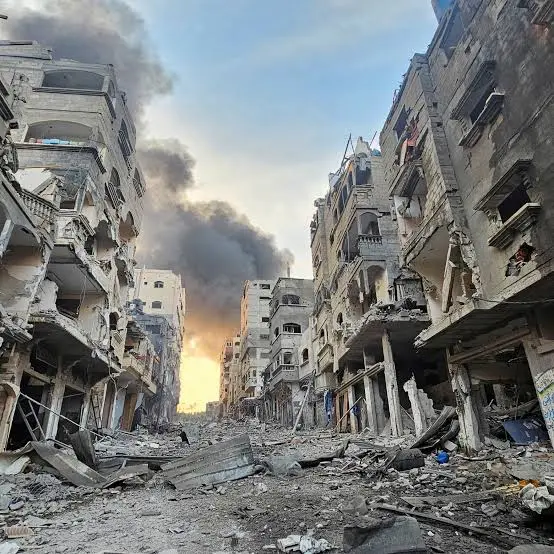
Source: Todaynews