PALESTINE

Sun 22 Dec 2024 10:10 am - Jerusalem Time

Israel continues its violent bombing of Kamal Adwan Hospital in the northern Gaza Strip

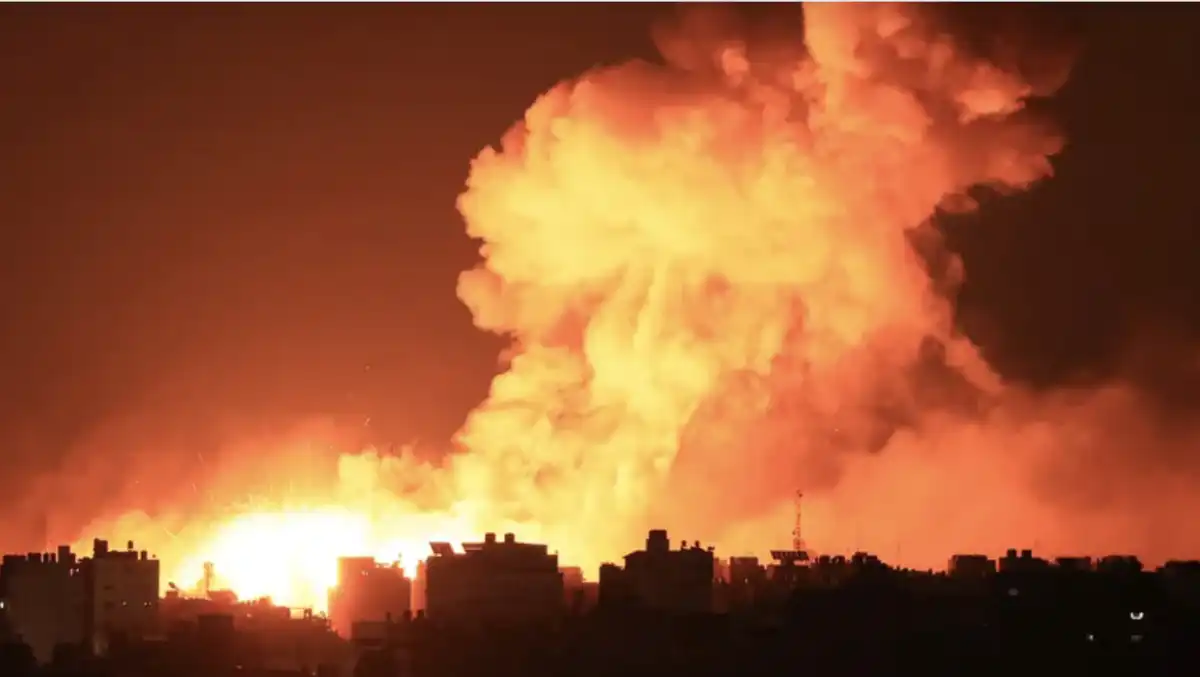
Since yesterday evening, Saturday, the Israeli occupation has continued its direct and unprecedented bombing and targeting of the Martyr Kamal Adwan Hospital in the town of Beit Lahia, north of the Gaza Strip, amidst appeals for the necessity of intervening to save patients and medical staff, and provide them with medical supplies and food.


According to medical sources, the occupation continues to bomb the hospital with bombs and artillery shells, and to target its departments with sniper bullets, causing severe damage, while contact with the medical team inside has been lost.


The same sources explained that the medical crews present in the hospital gathered in one place between the corridors and departments, in an attempt to protect themselves from shrapnel and bullets.


Kamal Adwan Hospital has been under a tight siege by the occupation forces for nearly two months, during which they have prevented the entry of medicine, food, medical staff, ambulances, and any other services.


On a daily basis, the occupation targets the Martyr Kamal Adwan Hospital, which resulted in the martyrdom and injury of a number of medical personnel and citizens in its vicinity, and caused damage to electricity generators and hospital departments.


On October 5, the occupation forces invaded the northern Gaza Strip again, amid bloody shelling, a tight siege, and the prevention of the entry of food, water, and medicine.


The occupation continues to commit crimes of genocide and ethnic cleansing in the town of Beit Lahia, and Kamal Adwan Hospital is a last resort for the sick and injured in the north, who have not found an alternative, providing them with the minimum medical and humanitarian services.


Despite this, the medical staff inside the hospital, consisting of two doctors at most and a small number of nurses, continues to perform their humanitarian duty, and they have refused to obey the army’s multiple orders to evacuate its buildings and leave the governorate, despite the ongoing crimes against them.


It is noteworthy that "Kamal Adwan" was the largest hospital in the northern governorate, providing its services to more than 400,000 people, while it operates today amidst non-existent conditions and capabilities due to the occupation's direct targeting of it since October 2023, as it continues to launch intensive raids on its surroundings, in addition to blowing up buildings and residential blocks next to it, which results in damage to its buildings, and the deaths of martyrs and wounded inside or outside the hospital.

ARAB AND WORLD

Sun 22 Dec 2024 9:19 am - Jerusalem Time

Spanish PM calls for recognition of Palestine and end of occupation

Spanish Prime Minister Pedro Sanchez called on Saturday on the countries of the world to recognize the State of Palestine and work to grant it full membership in the United Nations and end the Israeli occupation.


Sanchez's statements came during his participation in the Socialist International conference meeting, which is being held in the Moroccan capital, Rabat, between Friday and Sunday.


Sanchez stressed the importance of "achieving a just and comprehensive peace in the Middle East."


He stressed the need for "combined efforts to confront the escalating crises in different parts of the world, especially in Palestine."


"The Israeli occupation must end and the Palestinian people must be enabled to establish their independent state with East Jerusalem as its capital, within the framework of the two-state solution," Sanchez said.


He added: "We must end the suffering of the Palestinians and put an end to the siege and restrictions on the lives of civilians."


Palestine has the status of a “non-member observer state” at the United Nations, and was granted this status after a resolution adopted by the General Assembly by a large majority on November 29, 2012.


With American support, Israel has been committing genocide in Gaza since October 7, 2023, leaving nearly 153,000 Palestinian martyrs and wounded, most of them children and women, and more than 11,000 missing, amid massive destruction and famine that killed dozens of children and elderly people.


Israel continues its massacres, ignoring two arrest warrants issued by the International Criminal Court on November 21 against Prime Minister Benjamin Netanyahu and former Defense Minister Yoav Galant, for committing war crimes and crimes against humanity against Palestinians in Gaza.


The Socialist International is an international organization that includes socialist and social democratic parties from different countries of the world, aiming to support democracy, reduce inequalities, and enhance solidarity to achieve peace and stability.


It was founded in Germany in 1923, and the organization was re-established in its current form in 1951. It currently includes about 162 parties and organizations.

OPINIONS

Sun 22 Dec 2024 9:10 am - Jerusalem Time

When the bodies of dead become skeletons

op-ed - Al-Quds dot com

op-ed - Al-Quds dot com

Opinion Writer

The occupation's crimes against Palestinian civilians in the Gaza Strip continue, as the army kills them and leaves their bodies to be devoured by stray dogs, and it also prevents ambulance and civil defense crews from reaching them to evacuate them.


Referring to the statement of the Civil Defense in Gaza, which was issued yesterday, the occupation army is not only preventing health and rescue teams from reaching the bodies, but also targeting these teams by shooting at them and threatening them not to approach the bodies, especially in northern Gaza, while the horrific humanitarian disaster is represented by the bodies of the martyrs buried under the rubble since the beginning of the war, as it is clear from the Civil Defense report, which reached some of them, that they have decomposed and others have become skeletons, which makes the task of the rescue teams impossible to identify their owners, in addition to complicating the burial tasks, which should have been carried out a long time ago to honor the martyrs and the dead and bury them, but Israel is taking this measure in a step that can be described as one of the most severe, harshest and most difficult crimes that the Gaza Strip is going through.


The Civil Defense report also mentions the cruel sightings of stray dogs gnawing at and eating corpses in the areas of Zeitoun, Jabalia, Tel al-Zaatar, Beit Hanoun, eastern Khan Yunis, and Rafah.


In light of these serious crimes committed by Israel, the Palestinian Civil Defense appealed to the International Committee of the Red Cross, demanding that it exert pressure on the occupation to implement the Guide for Dealing with Corpses and Dead Bodies in Times of War, with the aim of ensuring the continuation of its humanitarian services, including following standard and normative procedures for managing corpses and dead bodies, and ensuring the dignity of the dead in accordance with the guidelines issued by the United Nations.


Civil defense crews and medical relief teams must be allowed to move freely in all conflict areas, in accordance with international protocols, in order to deal with the bodies of the martyrs, noting that a large number of the wounded have become martyrs, as a result of being left to bleed from their wounds, without the occupation army allowing them to provide any medical service or assistance.


Israel constantly violates international humanitarian covenants and treaties, especially the Fourth Geneva Convention, which was adopted in 1949 and stipulates humanitarian protection for civilians in war zones and was signed by 196 countries. This requires it to take urgent and urgent action to compel the occupation to respect its commitment and implement it on the ground based on international law. But it is impossible. Israel, which does not abide by international covenants, has become a threat to all aspects and aspects of human life. After all these crimes, massacres and wars of extermination, it is unreasonable to demand that it implement its commitments and promises. The basic principle here is to expel it and remove it from all international bodies and organizations, and to impose the maximum penalties on it and its leaders responsible for these crimes.

OPINIONS

Sun 22 Dec 2024 9:09 am - Jerusalem Time

The Infant Aisha Al-Qassas' body freezes to death

Bahaa Rahal

Bahaa Rahal

Opinion Writer

Aisha Al-Qassas, born twenty days ago in the crowded tents at the beginning of January, came out into life laughing with a cheerful face and a heart filled with hope. At the time, she did not understand the meaning of birth in a land surrounded by hell on all sides. Her fragile, weak body could not bear the frost of the country that had been destroyed in the time of genocide, so she died of cold, her only sin being that she was born to a mother and father from Gaza.


In this way, which reflects the extent of the hell that people in Gaza are living in, and the extent of the ugliness of the occupation and its soldiers, the twenty-day-old infant Aisha Al-Qassas died, freezing from the bitter cold and the rain that fell on the tents of the displaced, so their limbs froze and they drowned in the mud of the distance, and the mud of fate that made living conditions heavier, amidst the ongoing suffering, while they are in the openness of tents that do not warm the bodies, nor protect from frost and rain, nor protect from shelling and bullets.


A chapter of tragedy is added to the impact of the genocide in Gaza. People are homeless, and winter has returned once again in a series of days of war and continuous killing, where time is hell, and time is miserable, and where everything is hopeless.


Twenty-day-old Aisha Al-Qassas could not bear the cold of winter in a tent on the edge of the border. She is one of thousands of children who have died, whether from bombing, hunger and thirst, or the bitter cold, as the frost of Gaza’s nights is unbearable for adults, so how would it be for children who are born in such difficult and tragic circumstances, with nothing to cover them with in swaddling clothes to keep them warm, and no blankets to protect them on the bitterly cold January nights?


It is a series of tragedies that people in Gaza live through every minute and every moment, and the conscience of the world is still unable to confront the perpetrators to stop their genocide, prevent their arrogance, curb their aggression, ethnic cleansing, and ongoing siege. Everyone who witnesses this genocide knows how negligent the conscience of the world has been, how the covenants of nations have fallen silent, and with them the voice of justice has disappeared!


Aisha Al-Qassas, a 20-day-old infant who died of cold, and the world's conscience has not yet been moved, and humanity has not been provoked by those scenes that make humanity sweat. Someone says: Why do we ask about the lost humanity of the world; and who do we address?! With our humanity, we have passed the chapters of waiting and no one has moved! So how can we address those who are less humane, and they have appeared to us as having no conscience, preferring silence and committing to neutrality?

OPINIONS

Sun 22 Dec 2024 9:07 am - Jerusalem Time

Trump..the strong president

D. Naji Sadiq Sharab

D. Naji Sadiq Sharab

Opinion Writer

The origin of the American presidential political system is that the American president is described as a strong-weak president due to the participation of Congress, and even the Supreme Court in presidential powers, in application of the principle of the system of checks and balances, which means that each authority participates with the other authority to curb its excesses in exercising its powers. Despite this, the position of the president remains the axis and heart of the American political system due to the powers it represents, embodies, and exercises, as stated in the American Constitution.


The founders of the United States were keen to have one strong president in which the identity and the American nation are united. The manifestations of this strength are evident and varied in many forms approved by the American Constitution: He is the only one who is elected through general elections held every four years, in which all the American people participate, and he is elected by what is known as the Electoral College, whose votes amount to 534, and the number is the sum of the votes of each state in Congress. This is an affirmation of this electoral unity that gives him a power that is not available to anyone else, unlike the elections of the American Congress, whose members are elected by the residents of each state, which means that the American president is equal to the total members of Congress. The second matter is that the constitution limited all executive authority to the person of the president only, as the government is responsible to him and he is the one who appoints it, and the entire administrative apparatus is his responsibility and subordinate to the security establishment and the army. While the legislative authority is represented by 543 representatives, the executive authority is represented by one person. The third aspect of the president’s power is the broad powers he enjoys in the legislative and judicial branches. Among his powers are ratification of bills issued by Congress, the right to object, the appointment of judges, and his broad powers in the field of foreign relations, peace, and war.


Despite the manifestations of this absolute power, the founders were keen that the president would not turn into an absolute dictator who is not held accountable. Thus, a system of checks and balances was invented, the essence of which is the participation of power in the powers of other authorities, especially in matters of budget and finance. It is sufficient that the Federal Supreme Court has the judicial right to decide the constitutionality or unconstitutionality of any presidential decision. Among the restrictions imposed on the president is setting his presidential term at only eight consecutive or separate years. The important thing is that he does not rule for more than eight years. After that, he turns into an ordinary citizen who can be tried and questioned. This means that the president, despite the centrality of his position, does not rule alone, but rather through a system of institutions to achieve the supreme American interest, which is considered the highest restriction on the president. Although the American president has the strongest powers compared to any president, his strength is through a system of institutions and mechanisms that ensure, on the one hand, that he does not monopolize power and abuse it, and on the other hand, guarantee the supreme American interest that organizes and defines the extent of his powers.


Therefore, the president cannot make a decision alone, even if he is constitutionally able to do so, as the repercussions of any presidential decision are not easy, as a mistake may be costly to the president and the entire political system. The strength and weakness of the president cannot be understood in the constitutional context alone, but in the broader and more comprehensive political context, as the president works in the context of a political system known as a political system open to all variables and influences, and here is the influence of lobbies such as the Zionist lobby and public opinion, the influence of the wealthy, money and the media, and the role of intellectual and scientific elites and influential think tanks. In the end, what governs America is an alliance of three institutions: the political establishment, the economic establishment, and the military-security establishment.


In this context, presidential decisions can be understood from many issues, most notably the Palestinian issue and the absolute support for Israel, as in the war on Gaza, and the position of President Biden's administration. The question raised by today's article remains whether this general description applies to President Trump, who was re-elected as the forty-seventh president.


According to these elections, President Trump may deviate from the description of the strong-weak president to the strong-strong president, for more than one reason. First, the outcome of the elections themselves, and their obtaining a large number of electoral college votes, the Republican Party’s victory in both houses of Congress, and the background of the members of the Federal Supreme Court loyal to him. Second, the spread of Trumpism and white American populism. Third, the alliance with the wealthy, money men, and lobbies. All of this puts him in an unprecedented presidential position in going far in making decisions related to the environment, immigration, and imposing trade tariffs, and in America’s relations with its traditional allies, and in the position on China and Russia and the wars in the region. Finally, President Trump may be the strong-strong in domestic politics, but globally the position remains subject to the strength of other countries, their capabilities, and their challenge to the American decision.

OPINIONS

Sun 22 Dec 2024 9:02 am - Jerusalem Time

The State of Zinco...

Hossam Abu Al-Nasr

Hossam Abu Al-Nasr

Opinion Writer

I remember when I first crossed into Gaza, my way was to Jabalia, where my maternal grandfather and grandmother lived, I was welcomed by towering eucalyptus trees and torn flags. I had entered the zinc state, which had kept the occupation awake, in 1987, where the sand alleys were between the asbestos alleys, and the borders of the houses were cactus. The women of the gate would chat, covering themselves with the dairs, and the white veil tents, the seller of the heitaliya was still alive, roaming the streets of the camp, and the attic of my aunt’s house was a den for us, the children of the descendants, we would chat, play and have fun, while the breezes blew from Tel al-Zaatar, and approached us, the eucalyptus leaves danced, enchanting us with their beautiful rustle. In a piece of music that has no equal, I remember the Eskmo refrigerators, and the old video tape stores, we would gather at night to watch a foreign film, and play Sheda (cards) interspersed with a meal of hot tea, and screaming and laughter that echoed to the end of the camp. In the morning, the roosters of Jabalia crow, telling us of a new day. The narrow shops rise early, and the old men talk at their doors, sitting on small straw chairs, which later become firewood.


The children wander around with iron plates, to get hot beans, a lick of hummus on the sides, and a sheet of delicious falafel. The people of Asbest gather around a hot loaf of bread, which they divide among themselves. The mother had prepared it on the fire oven, and it had just come out (fresh). As soon as they finish breakfast, the iron doors start knocking. These are the sudden visits of relatives; there is no privacy in the camp, but there is no grumbling either, as its children are attracted to such visits. The talk of sisters and mothers. The men flee the house, as there is no place for them among the women and their noise, and the children find an opportunity to escape from the sight of their mothers. They play hide-and-seek among the mazes of the narrow alleys, until they get tired. The symphony of Zen begins to get some money, to buy juice and white throat, a drummer plays on the corner of the street, a freed prisoner leaves the occupation’s bastilles, and mothers ululate, as the camp’s celebrations are held, and I don’t know why it was called the camp, but it is the common name for the camp, perhaps because of the army’s militarization in it, and despite the imposition of the night cordon, there was pleasure in those who raced to venture out and break the cordon, to become a story on the tongues of the camp’s sons, and this is different from the encirclement of the entire camp, and this used to happen to reach one of the wanted fugitives. All were stories, buried with the third entry of the Israeli army, and the demolition of all the squares of the camp, and the execution of the memory boxes, the shops of the grandfathers, and the stories of the grandmothers. Some colors appear among the rubble, indicating the remains of toys. All that remains of the kite is its octagonal frame. There are no roads leading to the alleys that were there, rubble and walls, concrete, iron rods, melted zinc, and the remains of broken asbestos stones. Here was Jabalia and the wall drawings. There is no exit to the market, where my grandmother used to sell gold fifty years ago. Remains of carts without animals, the last of which was a donkey that was bleeding, next to the corpses, and cats roaming alone among the rubble asking about the people of the camp. There are no wounded in Kamal Adwan Hospital after the aggression. There is no map of the place. A nuclear bomb hit the area. The tank collapsed to wash away the blood. There was life. There was a camp.

PALESTINE

Sun 22 Dec 2024 8:57 am - Jerusalem Time

Campaign of raids and arrests in the West Bank

The Israeli occupation forces launched a campaign of raids and arrests in the West Bank at dawn and this Sunday morning.


In Tulkarm, the occupation forces arrested the young man, Abdul Salam Abu Shanab, after raiding his house in the eastern neighborhood of the city.


In Nablus, the occupation forces stormed the village of Tal, raided and searched several homes, and arrested citizen Muhammad Jihad Zidane.


In Jenin, the occupation forces arrested three citizens from the village of Rummana, namely: Muhammad Jihad Abu Asba, Ibrahim Mahmoud Abu Asba, and Muhammad Ibrahim Abu Asba, after raiding and searching their homes. They also handed the family of the young man Omar Abu Asba a notice to turn himself in.


Citizen Othman Yahya Abu Mahmoud from Al-Arqa village was also arrested after his house was raided.


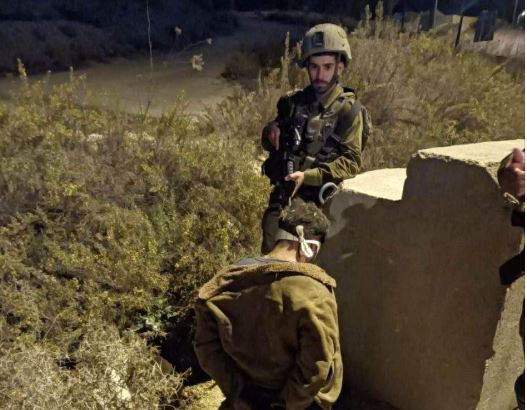
In Bethlehem, the occupation forces stopped the young man Ali Al-Ajouri (26 years old) at a military checkpoint near the town of Tuqu’ while he was heading to his home in Beit Fajjar. They severely beat him and detained him for several hours before releasing him.


In Tubas, Israeli special forces "undercover" infiltrated the town of Tamoun and raided two houses, while the occupation forces sent military reinforcements to the town.

PALESTINE

Sun 22 Dec 2024 8:55 am - Jerusalem Time

Dead and wounded as a result of the ongoingIsraeli aggression on the Gaza Strip for the 443rd day

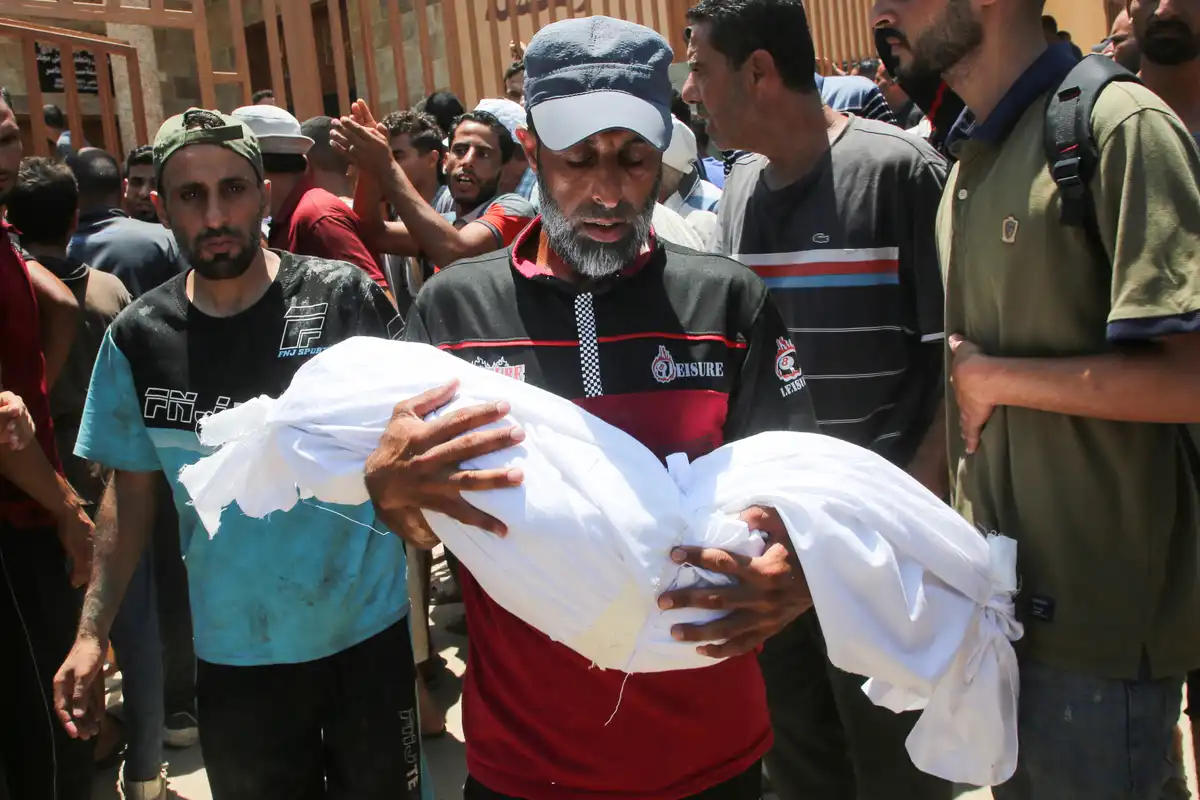
Dozens of citizens, including children and women, have been killed and injured since dawn on Sunday, in the ongoing occupation aggression on the Gaza Strip, which is entering its 443rd day.


Local sources reported that 8 citizens were killed and others were injured as a result of the occupation aircraft bombing the Musa bin Nusair School, which houses displaced people in the Al-Daraj neighborhood in Gaza City.


Three citizens were killed in the occupation's bombing of the city of Rafah, south of the Gaza Strip.


A citizen and his wife were also killed when the occupation bombed their apartment next to Bilal Mosque, west of Khan Yunis Governorate.


The death toll from tonight's massacre of the Abu Samra family east of Deir al-Balah rose to 11 martyrs, and a number of injuries.


Meanwhile, the occupation forces continue to blow up residential buildings north of the Nuseirat camp, in the middle of the Gaza Strip, in conjunction with continuous artillery shelling of the area.


The occupation forces have continued their aggression on the Gaza Strip, by land, sea and air, since October 7, 2023, which has resulted in the death of 45,227 citizens, the majority of whom are women and children, and the injury of 107,573 others, in an incomplete toll, as thousands of victims are still under the rubble and in the streets, and ambulance and rescue crews cannot reach them.

ARAB AND WORLD

Sun 22 Dec 2024 8:52 am - Jerusalem Time

The United States is in no hurry to lift sanctions on Syria

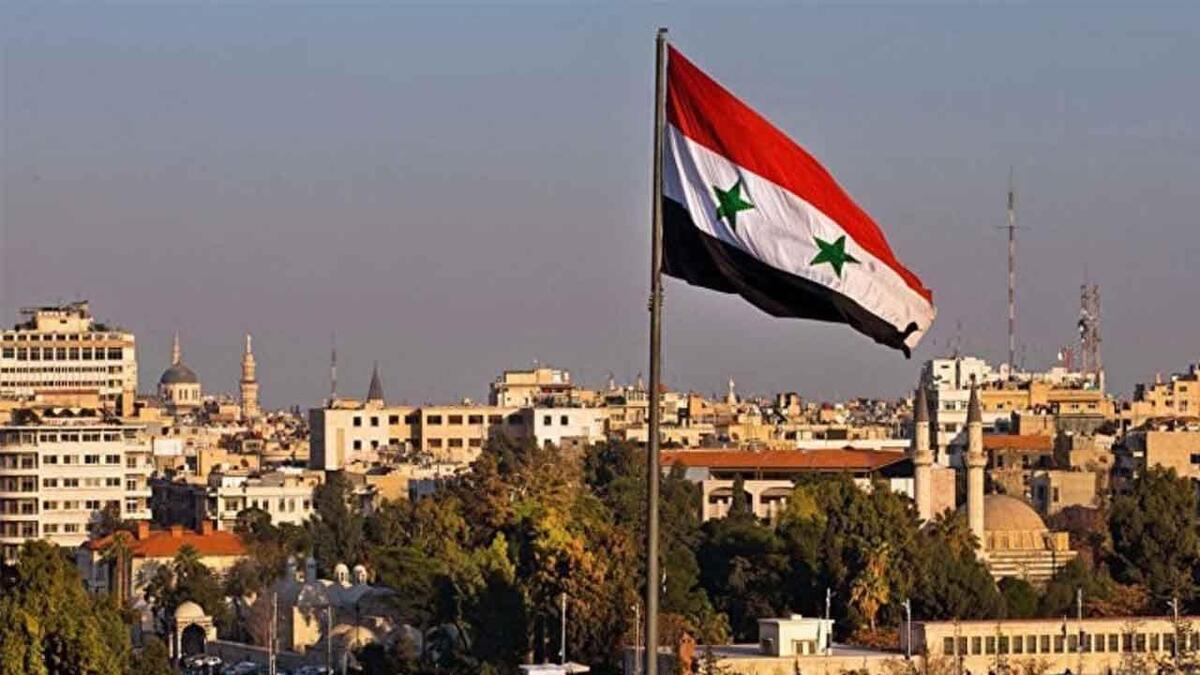
Experts believe that while the collapse of Syrian President Bashar al-Assad’s government in Syria came quickly and shockingly, rebuilding the country’s shattered economy will be painfully slow. After nearly 14 years of brutal civil war, blockades, sanctions and political gridlock, most of Syria’s oil and gas wells, roads, electricity grids, farmland and infrastructure lie in ruins.


Ninety percent of the population lives in poverty, the U.N. envoy to Syria, Geir Pedersen, said last week. The Syrian pound has plummeted in value, and the central bank’s foreign currency reserves — needed to buy essentials like food, fuel and spare parts — have been nearly exhausted.


Before the war, oil accounted for two-thirds of Syria’s exports, agriculture accounted for nearly a quarter of economic activity, the country exported medicine to 95 countries, and Syria had no debt. Now, Syria’s entire economic system is out of order, due to the war that has been going on in Syria since 2011, economic sanctions, and the blockade, according to experts, who believe that Abu Mohammed al-Julani, now known as Ahmed al-Sharaa, the leader of Hay’at Tahrir al-Sham who seized power in Syria, faces the daunting task of unifying rebel factions, reshaping the government, re-establishing the rule of law, providing security, and managing basic services such as water distribution and other scarce resources.


There is broad agreement among experts that the most important step in rebuilding Syria’s economy can only be taken by the United States: lifting layers of punitive sanctions that have effectively cut Syria off from international trade and investment. The U.S. restrictions on financial flows in 2019 were intended to punish the Assad regime. Now, the United States is cutting Syria off from the funds it desperately needs for reconstruction and economic development. Syrians and aid organizations cannot send aid; refugees cannot transfer money from Western bank accounts to invest in a home or business; and the International Monetary Fund and World Bank cannot provide assistance.


Lifting sanctions, even in the form of “temporary waivers,” is a priority, experts say. Ending all financial restrictions would also mean removing the U.S. and U.N. terrorist designations of al-Jolani and his organization, Hayat Tahrir al-Sham. Washington and its allies are sure to offer that possibility as a bargaining chip, and Assistant Secretary of State for Near Eastern Affairs Barbara Leaf told al-Jolani in a meeting with him on Friday that the United States had withdrawn its $10 million reward for his capture for his past ties to al-Qaeda.


But the United States, the European Union and Britain are taking their time in easing these sanctions, contingent on any move being guaranteed by the new leaders in Damascus.


Imposing US and international sanctions on Syria was one of the most important tools used by Western powers to undermine the Syrian state and overthrow the regime of Bashar al-Assad. These sanctions varied between banning exports and imports, freezing assets, banning travel, and imposing strict financial restrictions, with the aim of besieging the regime and stopping serious violations of human rights.


While calls are increasing to ease economic restrictions on the country, which is witnessing difficult humanitarian conditions, especially after the overthrow of the Assad regime, Washington and its Western allies are linking any step in this direction to “conditions” that include ensuring a peaceful political transition, protecting minorities, and preventing the return of ISIS, especially since the new change is led by Ahmed al-Sharaa, nicknamed al-Julani, who is the leader of “Hay’at Tahrir al-Sham,” which is classified on the terrorist lists.


Washington has other economic cards to play, according to Joshua Landis, associate director of the Center for Middle East Studies at the University of Oklahoma, especially since the center of oil production and the remaining operating wells are in northeastern Syria, territory controlled by a Kurdish-led militia backed by the United States.


Oil used to provide about half of the country’s revenue, Landis said in a lecture at his university. These fields belong to the government in Damascus and must be returned to its control, he added. Reviving oil and gas production will not be easy. Before the war, Syria produced 383,000 barrels a day. Now it produces less than 90,000, according to the World Bank. Facilities and pipelines, including those that carried energy to Iraq, Jordan and Egypt, have been destroyed or damaged. The country used to import more oil than it exported.


Security is essential not only for oil and gas production, but also for attracting many of the eight million refugees who have fled the war. Attracting those with the education, skills and resources to return is crucial to Syria’s revival, says Landis. “Syrians with money are key, but many of them won’t come back if there’s no electricity or rule of law,” he says.


Landis, a professor at the University of Oklahoma, believes that Syria’s neighbors also have a strong interest in seeing refugees return and rebuild. Turkey, which shares a border with Syria, occupies large swaths of its territory, and hosts more than three million refugees, is best positioned and has the most leverage.


Turkish President Recep Tayyip Erdogan, who backed and financed the rebels, is seen as the architect of the overthrow of former Syrian President Bashar al-Assad, and is a key ally of Abu Mohammed al-Julani (or Ahmed al-Sharaa). He has close ties to Turkey’s construction industry and is likely to push for reconstruction contracts and rebuilding assistance.


Shares of Turkish construction, cement and steel companies rose after the fall of the Assad government, according to the Wall Street Journal, a stock market report.


For now, Syria’s economic future depends on the ability of the government in Damascus to consolidate control and establish its legitimacy, not only to please its diverse population, but also to please the United States and its allies, who have the final say on sanctions, experts say.


PALESTINE

Sun 22 Dec 2024 8:44 am - Jerusalem Time

Writers and analysts call for dialogue to remove Israeli pretexts.. What Israel did to Gaza should not be repeated in the West Bank

Dr. Ammar Al-Dweik: The situation in Jenin is dangerous and the unanimously agreed upon “Wifaq” initiative represents a comprehensive solution to get out of the crisis

Firas Yaghi: Adopting a “security resolution” is a misconception, and escalation will deepen the crisis and widen the gap with the street

Dr. Sonia Al-Husseini: Internal clashes in Jenin may be a pretext for the occupation to implement its plans in the West Bank

Dr. Ashraf Al-Ajrami: The expansion of armed manifestations in Jenin turns the Palestinian areas into a circle of permanent Israeli threat

Muhammad Hawash: The authority seeks to control the situation in a manner consistent with its political program and to preserve national gains

Dr. Walaa Qadimat: The events in Jenin are being exploited in a way that does not serve the national interest, and everyone must rise to the occasion

Nihad Abu Ghosh: Any security plan cannot succeed without broad national consensus that includes the local community with all its components


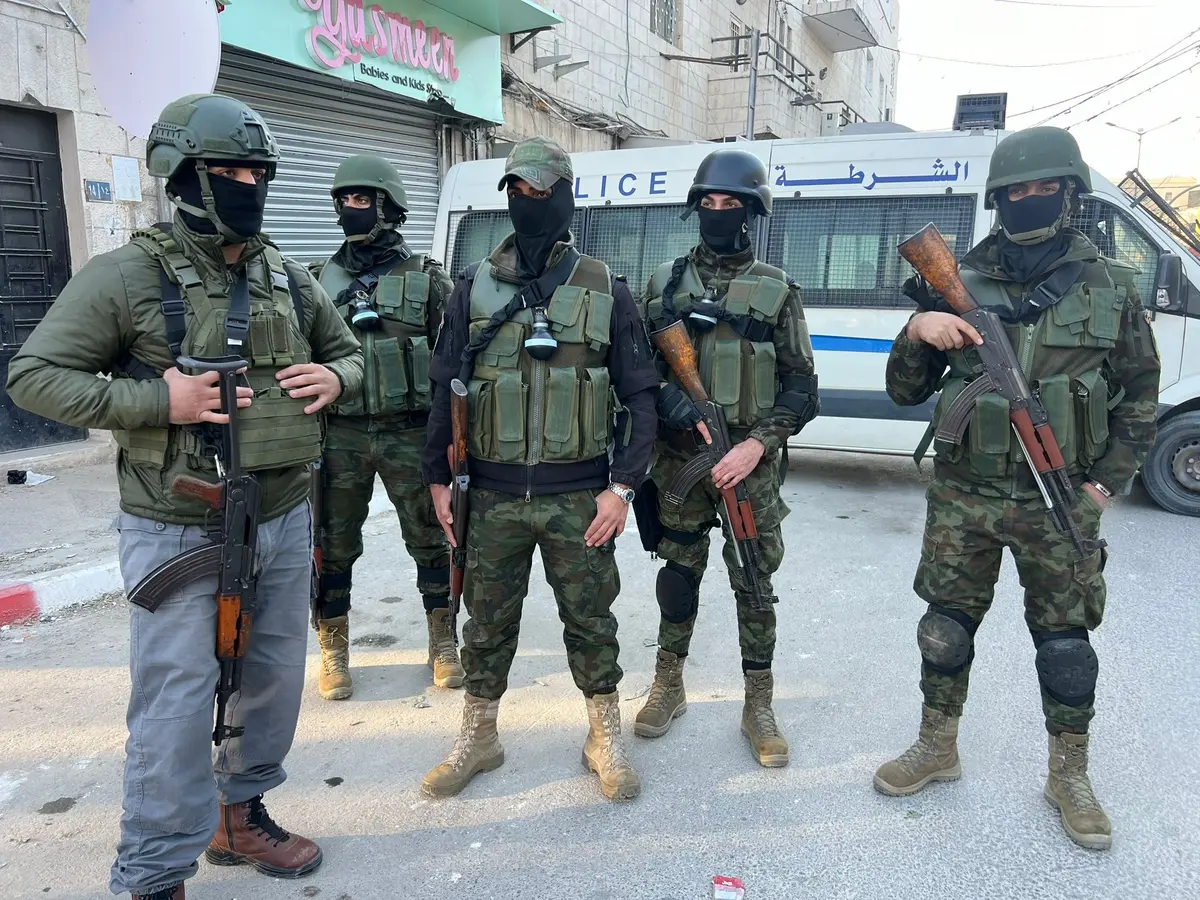
Jenin has been witnessing worrying developments for 18 days that have cast their shadows on the Palestinian scene, amidst a state of increasing tension in the camp and its surroundings, after the clashes that took place between the security forces and young men from Jenin camp.


In separate interviews with “I”, writers, political analysts, former ministers and university professors agree on the seriousness of the events in Jenin and the necessity of agreeing on ways to resolve the crisis and agreeing on a national program to block the Israeli occupation’s plans to target the West Bank.


They stress that the continuation of internal clashes in Jenin represents a threat to the national project, as Israel could exploit this situation to implement its settlement plans and expand its control over the Palestinian territories.


They believe that the only way out of the crisis is to prevail the voice of reason and understanding between the various parties, put aside weapons and launch a comprehensive national dialogue aimed at reducing losses and enhancing stability.


The need to move quickly to defuse tension


The Director General of the Independent Commission for Human Rights (the Board of Grievances), Dr. Ammar Dweik, confirms that the security situation in Jenin camp worries all forces and institutions, pointing out that the state of security alert, which is met with a state of military entrenchment by the camp’s youth, represents a dangerous recipe that may lead to an escalation that is difficult to control.


Al-Duwaik stresses that the continuation of this situation portends a great danger that may take the situation to dangerous levels if no quick action is taken to defuse the tension.


Al-Duwaik explains that an initiative called “Wifaq” was launched after it was prepared by human rights and civil institutions, and was joined by factions, forces and figures. It aims to establish a comprehensive framework for getting out of the current crisis in Jenin, and it is an initiative that represents a comprehensive solution for getting out of the crisis.


He points out that this initiative has received almost unanimous approval from all parties, including civil society institutions, national figures, factions, and political forces, without any reservations being recorded about it. Rather, there are significant positive indicators about it.


Al-Duwaik explains that the initiative is based on several basic axes, starting with the withdrawal of the large Palestinian security forces and snipers from the camp’s vicinity, while maintaining normal police work and law enforcement in the city and camp as usual. In return, the initiative includes stopping all forms of armed action and public appearance with weapons inside Jenin and its camp.


He stressed that the initiative calls for launching a comprehensive national dialogue that brings together the largest possible number of factions and political forces, to discuss the nature and limits of military action in the West Bank under the current circumstances.


Al-Duwaik points out that the initiative stressed that the dialogue must be calm and civilized in order to reach an agreement on the general frameworks for national action and the form of military presence in the camp, in line with the current stage and the challenges facing the Palestinian cause.


According to Al-Duwaik, the initiative includes provisions stipulating respect for Palestinian law by everyone, whether citizens or security forces, with an emphasis on holding accountable any party that violates the law.


Al-Duwaik explains that this accountability includes any attack on property or persons, whether by security forces or citizens, with violators being brought to trial and ensuring justice is achieved.


Al-Duwaik points out that the initiative received positive signals from the official level, but Al-Duwaik stresses that implementation requires continuous follow-up and pressure, in addition to dialogue with the political authorities of the youth inside and outside the camp.


Al-Duwaik stresses that the solution requires national consensus to understand the nature of the camp’s composition, while warning against generalizing individual violations to all camp residents, as this could deepen the crisis and increase tension.


Al-Duwaik stressed that the situation in Jenin requires great calm and wisdom to prevent things from getting out of control, calling on all parties to think deeply and avoid generalizations when dealing with the crisis, stressing that any additional escalation will further complicate the situation and lead to further division within Palestinian society.


Al-Dweik stresses that national consensus and calm dialogue represent the only way out of the current crisis and to ensure stability in Jenin and the camp.


A sad situation that serves the occupation in the first place


Writer and political analyst Firas Yaghi believes that the ongoing siege and armed clashes in Jenin constitute a sad situation that primarily serves the Israeli occupation and increases the suffering of the camp’s residents, who are living in difficult conditions as a result of the repeated incursions by the Israeli army.


Yaghi explains that the continuation of the siege and clashes will not lead to achieving security control, pointing out that the use of force alone will lead to more violent reactions, making the Palestinian people and their leadership the biggest losers.


Yaghi believes that the Palestinian Authority's reliance on "security resolution," as stated by the Palestinian security establishment, is a wrong and dangerous concept, especially since the occupation army itself was unable to achieve its goals through force in Jenin.


Yaghi points out that the escalation resulting from this approach will deepen the crisis and increase the gap between the Palestinian people and the Palestinian Authority, especially in light of the difficult circumstances that the Palestinians are going through in Gaza and the escalating settler attacks in the West Bank, and in light of the plans to resolve the conflict, especially in the West Bank.


He stressed that dealing with the concept of "security resolution" will lead to further deterioration and escalation, calling for stopping this approach before things get out of control.


Yaghi stresses that what is happening now does not serve the Palestinian cause, but rather increases internal fragmentation and weakens the Palestinian position on the national and international levels, stressing that the solution does not lie in force but in dialogue.


Yaghi points out that previous experiences have proven that solutions begin through direct dialogue with the resistance, in addition to communicating with the leaders of the Palestinian factions.


Yaghi stresses that the key to stopping the internal bleeding, including what is happening in Jenin, is to end the Palestinian division and achieve national unity, which is the safety valve for the Palestinian people and their just cause.


He stresses that continuing to rely on the American position without any practical steps towards a clear political path to achieve the implementation of international legitimacy resolutions constitutes a dangerous risk.


Yaghi explains that this approach will only result in more internal divisions and more Israeli and American demands that will not serve the Palestinian cause in any way.


Yaghi stresses the necessity of having a political path that addresses ending the occupation radically in accordance with international legitimacy, and this will lead, along with internal dialogue, to achieving stability and Palestinian national unity.


The current timing makes the situation more complicated and dangerous.


Political science professor Dr. Sonia Al-Husseini warns of the danger of what is happening in Jenin, noting that the current timing makes the situation more complex and dangerous, in light of regional and international transformations.


Al-Husseini explains that the Israeli occupation is currently focusing on four fronts, three of which (Gaza, Lebanon, and Syria) are facing major internal transformations that could upset the regional balance of power, which puts the fourth front, the West Bank, at stake, and may be the occupation’s next target.


Al-Husseini points out that the Israeli occupation has complete control over the security situation in the West Bank, stressing that the Palestinians are aware of this fact, as no suicide operation passes without the elimination of its perpetrators.


She stresses that this situation could make any internal clashes in Jenin a pretext for the occupation to implement its plans in the West Bank, which poses a threat to the Palestinian national project.


Al-Husseini points out that the settlement plans in the West Bank have reached their peak, supported by the arming and escalating attacks of the settlers, which are carried out under the direct sponsorship and support of the occupation army, amidst the absence of the real Palestinian ability to deter these attacks or stop the settlement, which deepens the danger of the current stage.


Al-Husseini believes that the only solution to avoid escalation in Jenin and the rest of the West Bank is understanding and dialogue between the Palestinians.


Al-Husseini stressed that understanding between the various Palestinian factions at this critical stage is the only way to avoid future deterioration.


It warns that the continuation of differences without finding a means or an entrance to dialogue will contribute to complicating the situation, making the Palestinian factions responsible for the repercussions of the situation in the future.


Al-Husseini calls on all Palestinian parties to prioritize the national interest and find mechanisms for understanding and dialogue to confront the dangers threatening the West Bank and the Palestinian cause as a whole, stressing that the current stage requires unity of ranks and joint action to confront the escalating challenges.


Great damage and real threat to the national fabric


Former Minister of Prisoners, Dr. Ashraf Al-Ajrami, confirms that what is happening in Jenin represents great national harm and a real threat to the national fabric.


Al-Ajrami explains that these developments require immediate treatment through a national dialogue aimed at restoring order and security to the Palestinian territories, and ending the armed manifestations that open the door to exploiting the Israeli occupation to implement its settlement plans in the West Bank.


Al-Ajrami points out that the Gaza experience and the tragedies and major losses it witnessed should be a lesson for the Palestinians, so that this tragedy does not spread to the West Bank.


Al-Ajrami asserts that the expansion of armed manifestations in Jenin turns the Palestinian territories into a circle of permanent Israeli threat, which immediately requires national consensus on how to manage the conflict with the occupation in the West Bank, pointing out that Israel exploits any opportunity to justify its attacks and expand its settlement project, which aims to displace Palestinians from their lands and Judaize them.


He stresses the importance of the Palestinian Authority taking the initiative to conduct a comprehensive dialogue with all factions and armed groups, to ensure the restoration of security and order in the areas under its responsibility.


Al-Ajrami stressed that this dialogue should aim to establish clear mechanisms that guarantee the protection of Palestinians from Israeli invasions and prevent the recurrence of the destructive scenarios witnessed in the Gaza Strip.


Al-Ajrami stresses that Israel is prepared to go further than what happened in Gaza to implement it in the West Bank if the current situation and the presence of armed groups continue, as it exploits the chaos to justify escalating its aggression and implementing its settlement plans.


Al-Ajrami stresses the necessity of national consensus to confront Israeli settlements and aggression, in ways that do not expose Palestinian neighborhoods, villages, cities and camps to destruction under pretexts, excuses and slogans that Israel can exploit for such an act.


Attempts by the authorities to control the security situation


Writer and political analyst Muhammad Hawash asserts that what is happening in Jenin reflects the Palestinian Authority’s attempts to control the security situation in the region and prevent chaos resulting from carrying weapons outside the framework of the official security services.


Hawash explains that the Authority is working to prevent confusion between legitimate resistance work and chaos, even in resistance or resistance outside the national consensus, which may lead to counterproductive results that do not serve the Palestinian cause.


Hawash points out that the Palestinian Authority seeks to control weapons in the West Bank so that they are under the control of the official security services only, in line with its political program that aims to manage the daily lives of Palestinians and reduce the pretexts used by the Israeli occupation to expand settlements and carry out raids under the pretext of fighting those militants.


Hawash asserts that the plurality of parties and factions is permitted within the framework of the Palestinian political system, but it is not possible to permit the plurality of political programs or the existence of more than one weapon outside the control of the Authority, as this leads to the division of Palestinian geography and threatens the national gains achieved over decades of struggle.


Hawash points out that the Gaza experience showed how political miscalculation can lead to disastrous results.


Hawash stresses that the Palestinian National Authority is keen not to repeat this scenario in the West Bank, as allowing the presence of a parallel security or political force opens the way for the Israeli occupation to justify further repression, annexation, and settlement expansion.


He points out that some of the armed groups in Jenin are not all linked to the resistance, and some of them are even outside the law, which harms the idea of national resistance.


Hawash asserts that the Authority cannot allow geographical areas in the West Bank under its jurisdiction according to international agreements to be outside its control, as this represents a major threat to the Palestinian national project and gives the occupation an opportunity to destroy Palestinian gains.


Hawash explains that the Palestinian Authority is adopting a very cautious approach in dealing with the situation in Jenin, as it seeks to avoid major losses among civilians or resistance fighters, even though some armed groups are targeting the Authority itself and seeking to weaken it.


Hawash confirms that the authority is working to regain control in a calm and gradual manner, but at the same time it is prepared to use force if necessary.


Hawash stresses that the Authority seeks to unify Palestinian geography under the jurisdiction of the Palestinian security services, as it believes that the existence of parallel security or political authorities endangers the Palestinian national project.


Hawash asserts that the Authority will not allow the existence of separate "republics" within the West Bank, especially in Areas A and B, which are under its control according to international agreements.


Hawash points out that there are some parties inside and outside the Jenin camp that adopt agendas outside the framework of the Authority and the Palestine Liberation Organization, which is completely unacceptable because it undermines national unity.


Hawash stresses that the Palestinian Authority is prepared to take all necessary measures, including the use of force, to defend its political vision and preserve the unity of the Palestinian territories.


He stresses that resistance is a legitimate right of the Palestinian people, but it must be within a unified national and political framework, and must not become a tool for dividing the Palestinians or creating geographical areas outside the control of the Authority.


Hawash points out that the Palestinian people themselves have criticised, at various stages, the misuse of weapons, which sometimes led to negative results, reflecting the need for careful planning of the timing and method of resistance work.


Hawash points out that the Authority has the patience and ability to end the abnormal situation in Jenin, whether through dialogue or force if necessary, to ensure the restoration of its full control over all Palestinian territories under its jurisdiction in accordance with international agreements.


Missing the opportunity for anyone trying to distort the image of the Palestinian


The writer and political researcher, Dr. Walaa Qadimat, confirms that the path towards national unity is clear, and the beneficiary of the differences between the Palestinians is also clear. In light of the ongoing war on the Palestinian national project and targeting the foundations of steadfastness, everyone is required to live up to the responsibility.


Qadeemat explains that what is happening in Jenin, as is clear, is being used in a way that does not serve the Palestinian national interest, and the opportunity must be denied to anyone who tries to distort the image of the Palestinian.


Qadeemat stresses that Jenin camp is a symbol of great steadfastness with its loyal and faithful sons to Jerusalem and Palestine, and that the members of the security services are our sons and brothers among the fighters and they are the guardians of the citizen’s security.


Qadeemat stresses that the time is not right for anything but turning towards Palestine, and the sacrifices of our people require all parties, and deserve to miss the opportunity for all those who lie in wait for our struggle.


Qadeemat calls on everyone who is jealous of Palestine and the blood of its sons to push towards laying down weapons and sitting at the negotiating table to reach an end to all the costly manifestations that cost a lot of precious Palestinian blood.


Qadeemat stresses that what is required is to rally around the national interest, and everything that undermines it, at this time that only serves those who are lying in wait for Palestine, its stability and its immunity.


Qadeemat says: “What is happening can be stopped by letting reason prevail, denying the enemies the opportunity, and opening a national dialogue that stops the bloodshed and ensures security and stability.”


Treat wisely without resorting to coercive security solutions


Writer and political analyst Nihad Abu Ghosh warns of the danger of continued escalation in Jenin, pointing out that resolving the crisis depends on the rationality of all parties, including official bodies, civil society, local forces, and resistance youth.


Abu Ghosh explains that the situation in Jenin camp has reached a high degree of complexity and crisis as a result of the baseless accusations launched by some officials in the Palestinian Authority against the resistance youth, describing them as “following foreign agendas” or “outlaws,” accusations denied by civil sources, stressing that such generalizations only serve to deepen the crisis.


Abu Ghosh points out that the manifestations attributed to the resistance youth, such as armed appearance and shooting, can be dealt with wisely without resorting to coercive security solutions.


Abu Ghosh believes that any security plan cannot succeed without a broad national consensus that includes the local community with all its components, including factions, national bodies, institutions, and camp residents.


Abu Ghosh stresses that the coercive security approach that the Palestinian Authority is trying to impose in isolation from the will of the people represents a major mistake, warning that this policy may place the Authority in a position that is not in line with its history of struggle and its national composition.


He stresses that Jenin camp has been subjected to repeated Israeli attempts to eradicate the resistance, and has offered many martyrs in order to preserve the steadfastness of its people. It is still targeted by the occupation, along with other camps in the West Bank, because these camps symbolize a role in the struggle, an identity, and one of the pillars of the refugee issue.


Abu Ghosh stresses that any treatment of the current issue must take into account this history and sacrifices, and be within a framework that places the national interest and constants of the Palestinian people first.


Abu Ghosh stresses that resistance is not a security or military phenomenon that can be eliminated by security measures, but rather it is a natural phenomenon for a people living under occupation.


Abu Ghosh points out that the absence of political solutions to the Palestinian national issue has made the option of resistance a realistic option adopted by many factions within Palestinian society, including the Fatah movement that runs the Palestinian Authority.


He stresses that it was the resistance that gave the Fatah movement its position and leadership role in the Palestinian national project, as the Palestinian Authority came about as a result of long and continuous sacrifices.


Abu Ghosh expressed his fear that the confrontations in Jenin would spread to other governorates in the West Bank, which could transform the Palestinian momentum from confrontation with the occupation into an internal conflict.


Abu Ghosh stresses that the Israeli occupation, not the resistance, is the most prominent party that is undermining the powers of the Palestinian Authority, calling for not being dragged into accusations that only serve the occupation, and instead working to strengthen national unity and avoid turning internal differences into a confrontation that undermines the Palestinian national project.


PALESTINE

Sat 21 Dec 2024 10:34 pm - Jerusalem Time

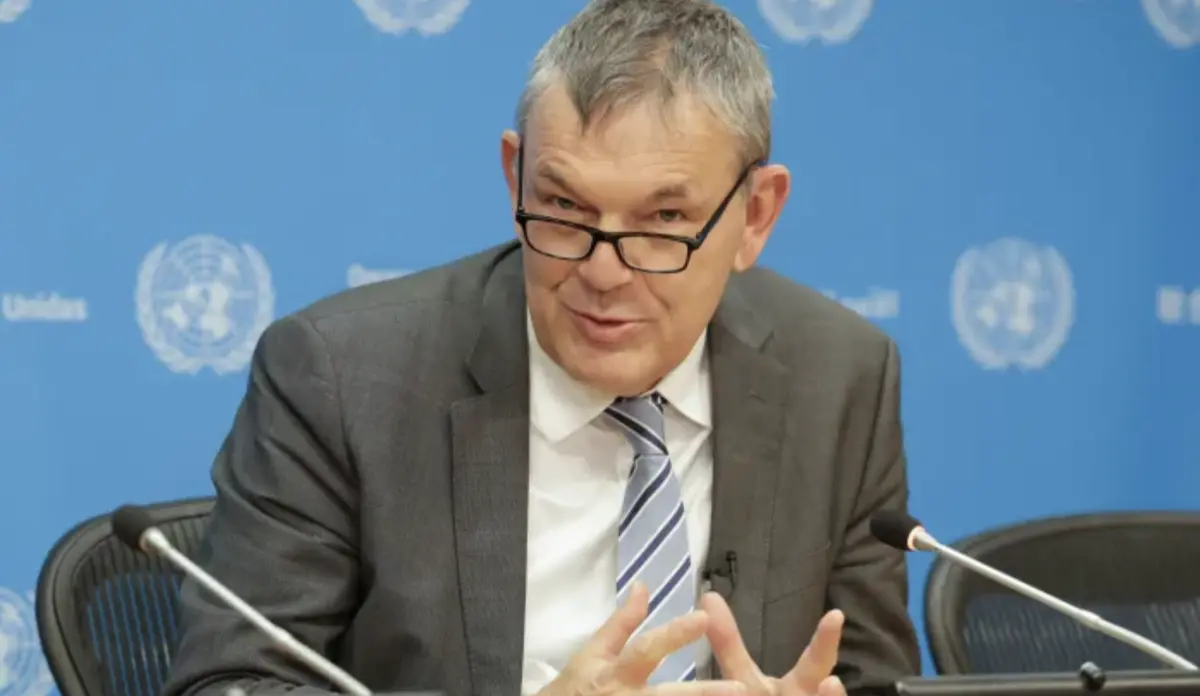
UNRWA Commissioner-General: Stopping the Agency’s Work in Palestine Means Disaster

Should decades of investment in human development and human rights be abandoned by the agency being dismantled in a chaotic manner overnight, or should an orderly political process be pursued in which UNRWA continues to provide education and health care to millions of Palestinian refugees until empowered Palestinian institutions take over these services?


This came in an article he wrote in the British newspaper The Guardian, in which he said that the intensity of international anger over Israel's attempt to dismantle the UN agency has subsided to a large extent, and that the risks are now very high, because the agency may be forced to stop its work in the occupied Palestinian territories next month if the legislation passed by Israel is implemented.


This means paralyzing the humanitarian response in the Gaza Strip, depriving millions of Palestinian refugees of basic services in the West Bank, and eliminating a living witness to the horrors and injustice that Palestinians have endured for decades.


Condemnation and anger faded away.

The Commissioner said that the brazen actions of the Government of Israel to thwart the will of the international community as expressed in UN resolutions, and to dismantle a single UN agency, were met with public condemnation and outrage that quickly faded amid political deadlock, and stressed that the lack of political courage and principled leadership when it matters most does not bode well for the multilateral international system.


Complicity in this endeavor, according to the author, leads not only to the erosion of humanity, but also to the erosion of the legitimacy of the multilateral international system, because the almost complete absence of political, economic, and legal sanctions for flagrant violations of the Geneva Conventions, the complete disregard for Security Council and General Assembly resolutions, and the blatant defiance of the rulings of the International Court of Justice, make a farce of the rules-based international system.


Now, Israeli Foreign Ministry-sponsored propaganda is being displayed on billboards in key locations in the United States and Europe, supplemented by Google ads promoting websites full of misinformation, in a well-funded effort to distract from the brutality of the illegal occupation and international crimes committed with complete impunity under the world’s watch.


Ironically, the Israeli government justifies its actions against UNRWA by claiming that the Islamic Resistance Movement (Hamas) has infiltrated it, despite carefully investigating all the allegations it has made. At the same time, Hamas accuses UNRWA’s leadership of collusion with the Israeli occupation, and UNRWA remains a victim of this war, he said.


Crossroads

If the goal of the efforts to discredit and dismantle UNRWA is to eliminate the status of Palestinian refugees, Philippe Lazzarini continues, then the blind pursuit of this goal ignores the fact that the status of Palestinian refugees is not linked to UNRWA, but is enshrined in a General Assembly resolution that preceded the creation of the agency.


Today, the international community stands at a crossroads, either facing a miserable world that has backed away from its commitment to provide a political solution to the Palestinian issue, leaving Israel, as the occupying power, to bear responsibility for the population in the occupied Palestinian territories, and perhaps contracting with private parties that are less accountable to the international community.


Or in a world based on fixed rules that seeks to resolve the Palestinian issue through political means and build the capacities of the Palestinian administration that will govern the future State of Palestine, including Gaza, and this latter world is the path that UNRWA was established to support according to the Commissioner-General.


Lazzarini explained that pending the establishment of a Palestinian state, the agency's presence will be crucial to ensuring that children in Gaza are not condemned to live in the rubble without education and without hope, and its mission will gradually end, after its teachers, doctors and nurses become the workforce of capable Palestinian institutions, within the framework of a political solution.

PALESTINE

Sat 21 Dec 2024 9:55 pm - Jerusalem Time

Suffocation injuries during Israeli forces' storming of the town of Sa'ir

Citizens suffocated on Saturday evening after the Israeli occupation forces stormed the town of Sa'ir, north of Hebron.


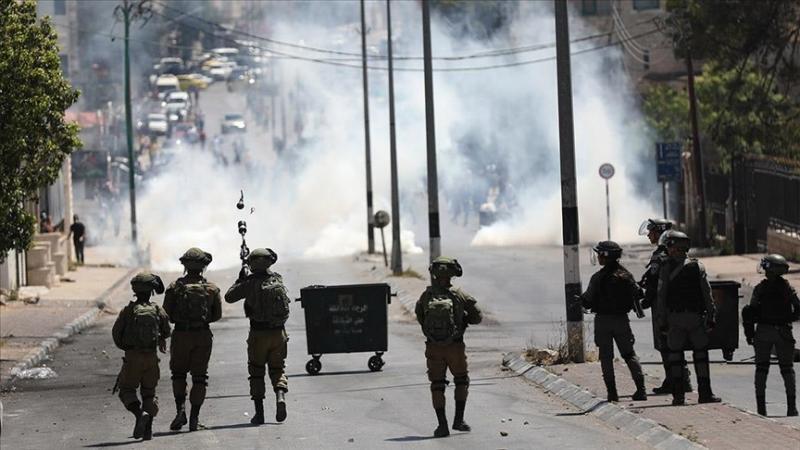
According to local sources, the occupation forces stormed the "Al-Aroud" area in the town, and fired sound bombs and tear gas at the citizens, which led to a number of them suffocating from inhaling the toxic gas, while clashes erupted with the occupation forces before they withdrew from the area.

PALESTINE

Sat 21 Dec 2024 9:41 pm - Jerusalem Time

Israel bombed Kamal Adwan Hospital in the northern Gaza Strip

The Israeli occupation bombed, this evening, Saturday, the Martyr Kamal Adwan Hospital in the town of Beit Lahia, north of the Gaza Strip.


Medical sources reported that the Martyr Kamal Adwan Hospital is being subjected to heavy, violent and unprecedented Israeli shelling, without prior warning, noting that the occupation is shelling the hospital with bombs and artillery shells, and targeting the hospital departments with sniper bullets, which has caused serious damage.


The sources indicated that the medical crews present in the hospital gathered in one place between the corridors and departments, in an attempt to protect themselves from shrapnel and bullets.


On a daily basis, the Israeli occupation targets the Martyr Kamal Adwan Hospital, which resulted in the martyrdom and injury of a number of medical personnel and citizens in its vicinity, and caused damage to electricity generators and hospital departments.


On October 5, the occupation forces invaded the northern Gaza Strip again, amid bloody shelling and while food, water and medicine were being brought in.


Since October 7, 2023, the Israeli occupation has been committing genocide in Gaza, leaving nearly 153,000 dead and wounded, most of them children and women, and more than 11,000 missing, amid massive destruction and famine that killed dozens of children and elderly people.


Israel, the occupying power, continues its massacres, ignoring two arrest warrants issued by the International Criminal Court on November 21 against its Prime Minister Benjamin Netanyahu and his former Defense Minister Yoav Galant, for committing war crimes and crimes against humanity against the Palestinians in Gaza.

ARAB AND WORLD

Sat 21 Dec 2024 9:03 pm - Jerusalem Time

Israeli is preparing for another attack in Yemen and other countries are expected to participate

Israeli security officials said Saturday that Tel Aviv is preparing to launch another attack in Yemen, involving other countries, to create a "full mobilization" that will increase the attack on the Houthis.


The Israeli Broadcasting Corporation quoted an Israeli source as saying, "We conveyed a message to the Americans that we expect an increase in their attacks on the Houthis," along with a message to the international coalition "emphasizing that the Houthi attacks threaten the stability of the region."


For its part, the Israel Hayom newspaper quoted a political source as saying that the conflict with the Houthis is escalating, saying, "Our goal is to fully mobilize Washington to increase the attack on the Houthis."


This comes after an Israeli Air Force investigation revealed that several failed attempts were made to intercept the ballistic missile that was launched on Saturday from Yemen and fell in a Tel Aviv stadium, leaving 30 people injured and dozens of apartments damaged in the area.


In a preliminary investigation, the Israeli Air Force said that after spotting the ballistic missile, a state of alert was activated in the central region and "interceptor missiles were fired in the upper layer of the atmosphere that missed the target outside the borders of Israel."


"Later, interceptor missiles were fired at the missile, this time in the lower atmosphere, which also missed the target," he continued.


According to the Israeli Broadcasting Authority, Israel's air defense system operates in layers and is called a "multi-layered defense system."


She pointed out that in the upper layer above the atmosphere, the Arrow 2 and Arrow 3 arrays operate, in the middle layer the David's Sling array operates, while in the lower layer the Iron Dome array operates.


The Israeli Army Radio also published a video clip showing attempts to intercept the missile, while the Houthi group claimed responsibility for launching the missile towards central Israel.


Ansar Allah (Houthis) military spokesman Yahya Saree said the group had bombed a military target in the occupied city of Jaffa with a hypersonic ballistic missile, in response to the Israeli bombing of Yemen and the ongoing massacres in the Gaza Strip.


On Thursday morning, Israel launched a series of raids on the Yemeni capital, Sanaa, and the Al Hudaydah Governorate, which overlooks the Red Sea in the west of the country.


The Houthi government's Ministry of Transport announced that the port of Hodeidah "continues to operate normally" despite these attacks, while the head of the Red Sea Ports Corporation (under Houthi control) reviewed the extent of the damage to the port as a result of the Israeli raids.


Overall, this is the third Israeli attack on Yemen since the beginning of the ongoing “war of extermination” on Gaza. The first was last July, and the second was last September, targeting the port of Hodeidah and fuel facilities at the city’s power plant.


In "solidarity with Gaza", which has been subjected to an Israeli war since October 7, 2023, the Houthi group said that since November of the same year, it had begun targeting Israeli or Israeli-linked cargo ships in the Red Sea with missiles and drones.

Since the beginning of this year, Washington and London have also begun launching air strikes and missile attacks on Houthi sites, which the group responded to by announcing that it considers all American and British ships to be military targets.

PALESTINE

Sat 21 Dec 2024 8:31 pm - Jerusalem Time

Palestinian factions: Ceasefire in Gaza is closer than ever

Three Palestinian factions, Hamas, Islamic Jihad and the Popular Front for the Liberation of Palestine, announced today, Saturday, the day after a meeting in Cairo, that reaching an agreement with Israel on a ceasefire in the Gaza Strip is "closer than ever" if the Hebrew state does not set "new conditions."


Hamas said in a statement that delegations representing the three Palestinian factions met in Cairo on Friday evening and agreed that "the possibility of reaching an agreement is closer than ever if the enemy stops setting new conditions."


The statement stressed, according to Agence France-Presse, "everyone's keenness to stop the war on our people."


Last week, indirect negotiations took place in the Qatari capital, Doha, between Hamas and Israel, with Egyptian and Qatari mediation.


Hamas announced, in a brief statement a few days ago, that reaching an agreement was imminent if Israel did not set new conditions.


A Hamas leader told Agence France-Presse, "The negotiations have made great and important progress, and agreement has been reached on most of the points related to the ceasefire and prisoner exchange issues. Some outstanding points remain, but they are not disruptive."


He added, on condition of anonymity: "The agreement could see the light before the end of this year if (Israeli Prime Minister Benjamin Netanyahu) does not obstruct it with new conditions."


He explained that "if the agreement is announced and implemented, it will stipulate a gradual cessation of the war and a gradual military withdrawal from the Strip, but the agreement ends with a serious deal to exchange prisoners, a permanent cessation of the war, a complete withdrawal from the Strip, the return of the displaced, and a non-return to combat operations with guarantees from international mediators, and reconstruction."


In its statement, Hamas said that the factions also discussed in Cairo “the latest developments related to the Community Support Committee for the Administration of the Gaza Strip” the day after the war.


According to the statement, the three factions appreciated the Egyptian efforts to "form the committee and announce it as soon as possible."


The factions also agreed to meet again soon "to complete the final touches to form the community support committee to manage the Gaza Strip after the war."


Hamas and Fatah agreed in Cairo a few weeks ago to form a community support committee consisting of ten to fifteen members of specialized figures and independent competencies, but a number of Fatah leaders, including the movement’s Central Committee member Jibril Rajoub, expressed their rejection of this committee.

ARAB AND WORLD

Sat 21 Dec 2024 7:46 pm - Jerusalem Time

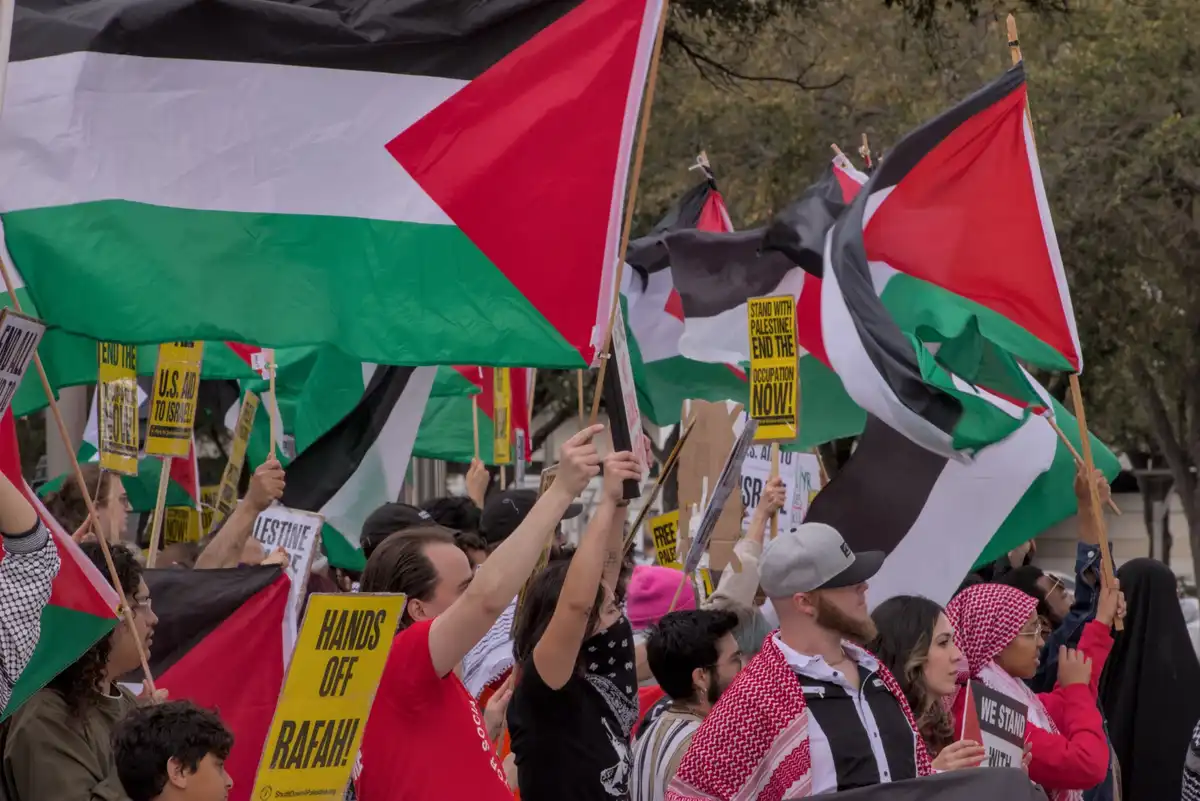
Demonstrations in cities and capitals around the world condemning the aggression on the Gaza Strip

Today, Saturday, many world capitals and cities witnessed mass demonstrations denouncing the Israeli aggression on the Gaza Strip.


Thousands participated in demonstrations organized in the French capital, Paris, the city of Manchester in the United Kingdom, Aarhus in Denmark and the capital, Copenhagen, Helsingborg in Sweden and the capital, Stockholm, Milan in Italy, Pointe in Germany and the capital, Berlin, in support of the Palestinian people, and to demand a ceasefire and the entry of humanitarian aid into the Gaza Strip.


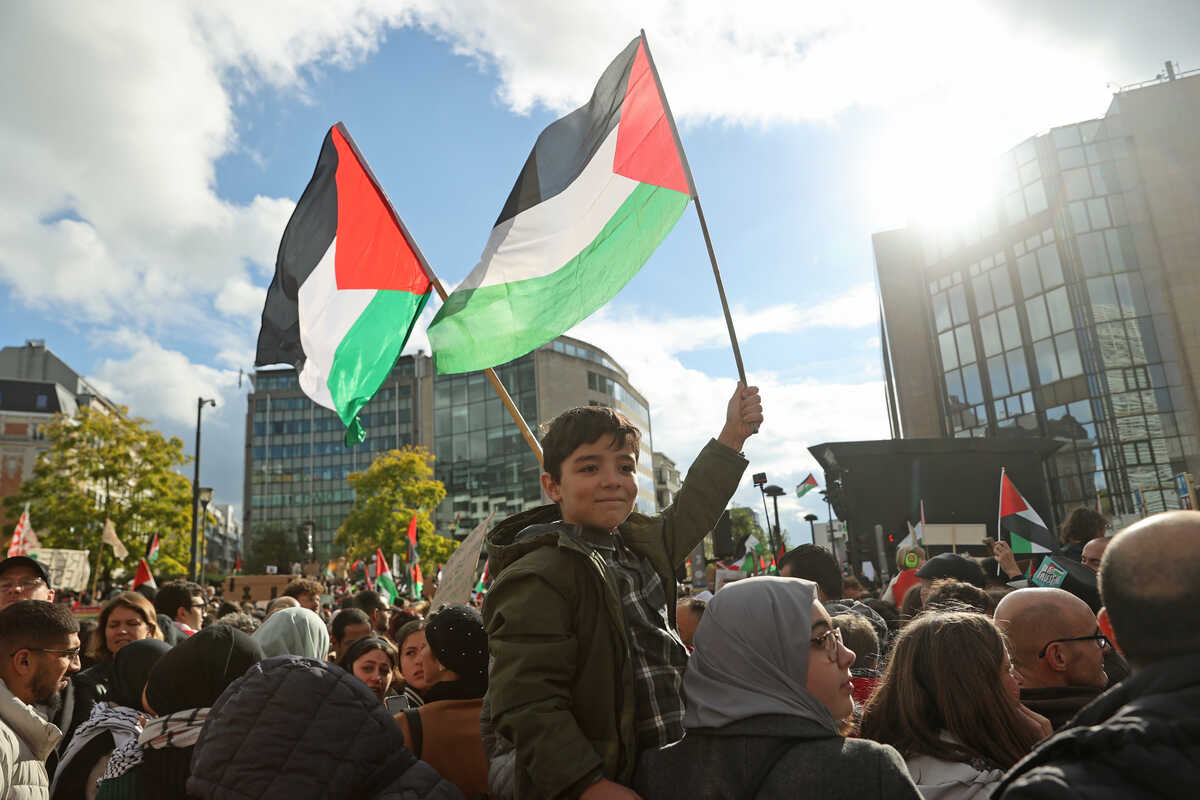
The participants in the demonstrations raised Palestinian flags and banners denouncing the crimes committed by the Israeli occupation against our people.


Participants called for an end to double standards and the need to prosecute the occupation for its massacres against the Palestinian people, especially children, and denounced the genocide in the Gaza Strip.

ARAB AND WORLD

Sat 21 Dec 2024 7:02 pm - Jerusalem Time

Israeli calls for demonstrations demanding a deal to return prisoners

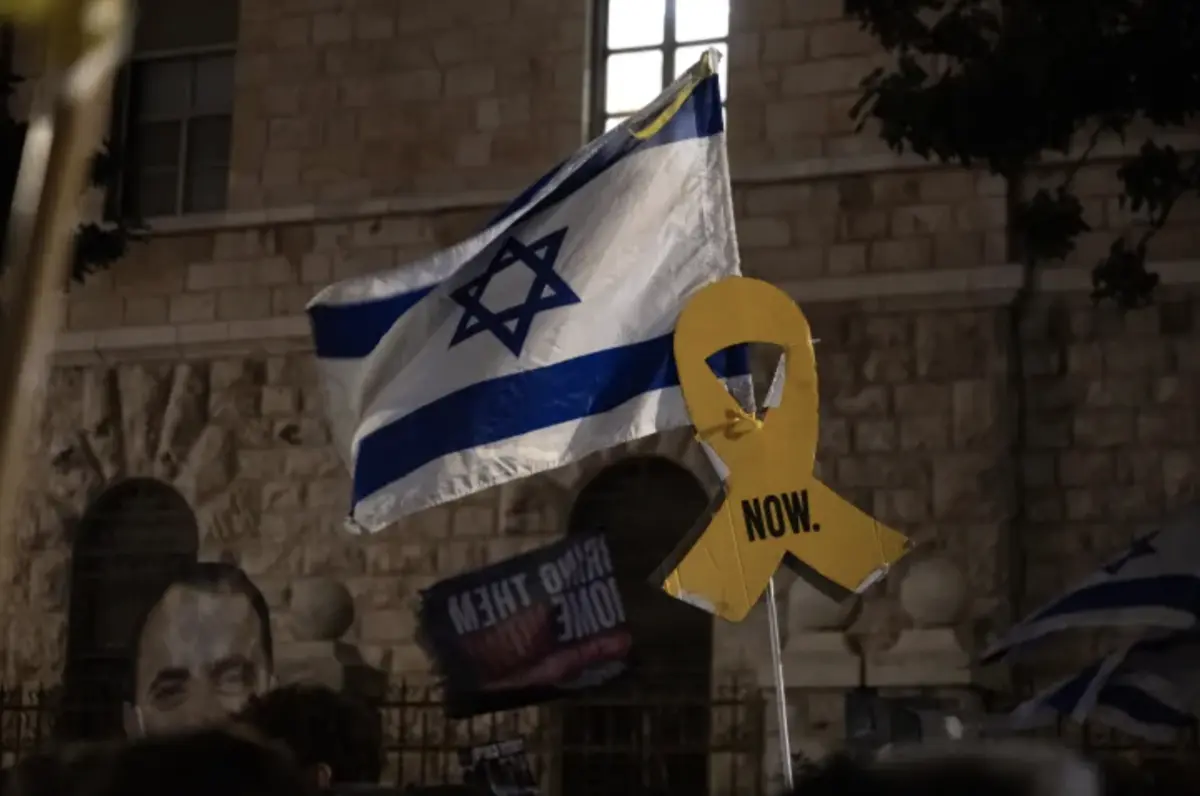
The Families of Israeli Prisoners in Gaza Authority called for demonstrations in Tel Aviv and several Israeli cities on Saturday evening to demand a deal that would return all prisoners held in the Strip.


The families of the Israeli prisoners said that "the leadership must reach an agreement now that guarantees the release of all the kidnapped," and that "ending the war is not a failure and is not a price, and the most important thing is the return of our sons."


These calls coincide with increasing indications that an agreement is close to being reached between the Islamic Resistance Movement Hamas and Israel, leading to a prisoner exchange deal.


The families of the Israeli prisoners continue to escalate their movement demanding an end to the war and the return of their sons, and they say that the military pressure pursued by the government "led to the deaths of the prisoners and did not achieve any accomplishment" in this regard.


In turn, the leader of the opposition in Israel, Yair Lapid, called on Israelis to demonstrate in Tel Aviv this evening in order to what he called "putting the state back on the right track."


Israeli media reported yesterday that Hamas is demanding the release of Palestinian prisoner Marwan Barghouti as part of the exchange deal, while the office of Israeli Prime Minister Benjamin Netanyahu announced progress in the negotiations, without reaching a final agreement.


For weeks, Israeli media has been talking about unprecedented progress in a prisoner exchange deal, while Hebrew reports say that “there has been no serious breakthrough in the ongoing ceasefire talks in Gaza.”


The newspaper "Israel Today" quoted an informed source earlier that progress had been achieved in the exchange deal talks, and that negotiations to formulate the deal may be completed after the Jewish holidays at the end of this month, with the agreement being implemented over long periods.


The newspaper said that the main point of contention between Hamas and Israel remains the number of prisoners to be released, noting that despite the gaps between the two parties, the message received from the mediators (Egypt and Qatar) raised more optimism compared to the past.


For its part, the Israeli Broadcasting Authority quoted sources it described as high-ranking that unprecedented progress had occurred in the issue of the exchange deal, and that this week would be decisive in the indirect negotiations between Hamas and Israel.


Channel 12 Israel also quoted sources close to Prime Minister Benjamin Netanyahu as saying that he is more determined than ever to reach an agreement.


The families of the prisoners held in Gaza, along with the opposition leaders in Israel, have previously accused Netanyahu's government of thwarting negotiations to return the "kidnapped" soldiers.


This comes as the occupation army continues its war on Gaza since October 7, leaving tens of thousands of martyrs, wounded and missing amid a humanitarian situation described as catastrophic and a worsening famine looming over the besieged Strip.

ARAB AND WORLD

Sat 21 Dec 2024 6:31 pm - Jerusalem Time

Washington is in no hurry to lift sanctions on Syria despite its modest steps towards Damascus

Experts believe that although the collapse of Syrian President Bashar al-Assad's government in Syria came quickly and shockingly, rebuilding the country's shattered economy will be painfully slow.


After nearly 14 years of brutal civil war, blockades, sanctions and political gridlock, much of Syria’s oil and gas wells, roads, power grids, farmland and infrastructure lie in ruins. Ninety percent of the population lives in poverty, the U.N. envoy for Syria, Geir Pedersen, said last week. The Syrian pound has plummeted in value, and the central bank’s foreign currency reserves — needed to buy essentials like food, fuel and spare parts — are nearly exhausted.


Before the war, oil accounted for two-thirds of Syria’s exports, agriculture accounted for nearly a quarter of economic activity, the Syrian state exported medicine to 95 countries, and Syria had no debts. Now, Syria’s entire economic system is out of order, due to the war that has been going on in Syria since 2011, economic sanctions, and the siege imposed by experts, who believe that Abu Muhammad al-Julani, now called Ahmed al-Sharaa, the leader of Hay’at Tahrir al-Sham who seized power in Syria, faces the daunting task of unifying rebel factions, reshaping the government, re-establishing the rule of law, providing security, and managing basic services such as water distribution and other scarce resources.


There is broad agreement among experts that the most important step in rebuilding Syria’s economy can only be taken by the United States: lifting layers of punitive sanctions that have effectively cut Syria off from international trade and investment. The U.S. restrictions on financial flows in 2019 were intended to punish the Assad regime. Now, the United States is cutting Syria off from the funds it desperately needs for reconstruction and economic development. Syrians and aid organizations cannot send aid; refugees cannot transfer money from Western bank accounts to invest in a home or business; and the International Monetary Fund and World Bank cannot provide assistance.


Lifting sanctions, even in the form of “temporary waivers,” is a priority, experts say. Ending all financial restrictions would also mean removing the U.S. and U.N. terrorist designations on al-Jolani and his organization, Hayat Tahrir al-Sham. Washington and its allies will surely offer this possibility as a bargaining chip, given that Assistant Secretary of State for Near Eastern Affairs Barbara Leaf told al-Jolani in a meeting with him on Friday that the United States had withdrawn its $10 million bounty on his head for his past ties to al-Qaeda.


But the United States, the European Union and Britain are taking their time in easing these sanctions, contingent on any move being guaranteed by the new leaders in Damascus.


Imposing US and international sanctions on Syria was one of the most important tools used by Western powers to undermine the Syrian state and overthrow the regime of Bashar al-Assad. These sanctions varied between banning exports and imports, freezing assets, preventing travel, and imposing strict financial restrictions, with the aim of besieging the regime and stopping serious violations of human rights.


While calls are increasing to ease economic restrictions on the country, which is witnessing difficult humanitarian conditions, especially after the overthrow of the Assad regime, Washington and its Western allies are linking any step in this direction to “conditions” that include ensuring a peaceful political transition, protecting minorities, and preventing the return of ISIS, especially since the new change is led by Ahmed al-Sharaa, nicknamed al-Julani, who is the leader of “Hay’at Tahrir al-Sham” - classified on the terrorist lists.


According to Joshua Landis, co-director of the Center for Middle East Studies at the University of Oklahoma, Washington has other economic cards to play, especially since the center of oil production and the remaining operating wells are in northeastern Syria, territory controlled by a Kurdish-led militia backed by the United States.


Oil used to provide about half of the country’s revenue, Landis said in a lecture at his university. These fields belong to the government in Damascus and must be returned to its control, he added. Reviving oil and gas production will not be easy. Before the war, Syria produced 383,000 barrels a day. Now it produces less than 90,000, according to the World Bank. Facilities and pipelines, including those that carried energy to Iraq, Jordan and Egypt, have been destroyed or damaged. The country used to import more oil than it exported.


Security is essential not only for oil and gas production, but also for attracting many of the eight million refugees who have fled the war. Attracting those with the education, skills and resources to return is crucial to Syria’s revival, says Landis. “Syrians with money are key, but many of them won’t come back if there’s no electricity or rule of law,” he says.


Landis, a professor at the University of Oklahoma, believes that Syria’s neighbors also have a strong interest in seeing refugees return and rebuild. Turkey, which shares a border with Syria, occupies large swaths of its territory, and hosts more than three million refugees, is best positioned and has the most leverage.


Turkish President Recep Tayyip Erdogan, who backed and financed the rebels, is seen as the architect of the overthrow of former Syrian President Bashar al-Assad, and is a key ally of Abu Mohammed al-Julani (or Ahmed al-Sharaa). He has close ties to Turkey’s construction industry and is likely to push for reconstruction contracts and rebuilding assistance.


Shares of Turkish construction, cement and steel companies rose after the fall of the Assad government, according to the Wall Street Journal, a stock market report.


For now, Syria’s economic future depends on the ability of the government in Damascus to consolidate control and establish its legitimacy — not only to please its diverse population but also the United States and its allies, who have the final say on sanctions, experts say.

ARAB AND WORLD

Sat 21 Dec 2024 6:18 pm - Jerusalem Time

5 Israeli violations of the ceasefire on Saturday, raising the total to 280

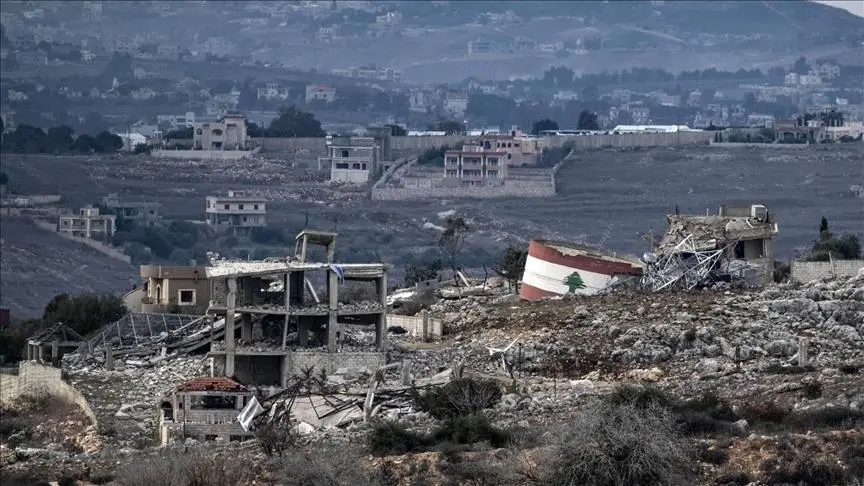
On Saturday, the Israeli occupation army committed 5 violations of the ceasefire with Hezbollah, bringing the total number of violations since the agreement went into effect 25 days ago to 280.


According to various news published by the official Lebanese News Agency, today's violations were concentrated in the Tyre district in the South Governorate (south), and the Marjeyoun and Bint Jbeil districts in the Nabatieh Governorate (south).


The violations included bulldozing olive groves, demolishing homes and buildings, flying drones and warplanes, and setting up a military checkpoint.


In Tyre district, Israeli army forces carried out new bulldozing operations that affected a number of olive groves near the headquarters of the United Nations Interim Force in Lebanon (UNIFIL) in the town of Naqoura.


In Naqoura as well, the Israeli army carried out new demolitions of buildings and homes, and set up a permanent military checkpoint in place of a Lebanese army post near the fishermen’s port.


In Bint Jbeil district, Israeli warplanes were recorded flying at low altitude.


In Marjeyoun district, an Israeli enemy drone flew at low altitude over the towns of Khiyam, Burj al-Muluk, Qalaa, Jdeidet Marjeyoun, Debbin, and Balat, in addition to the Marjeyoun plain.


Since November 27, a fragile ceasefire has prevailed, ending the mutual shelling between Israel and Hezbollah that began on October 8, 2023, and then turned into a full-scale war on September 23.


Under the pretext of confronting "threats from Hezbollah," Israel committed 175 violations of the ceasefire in Lebanon until the end of Friday, which led to a total of 30 martyrs and 37 wounded, according to a statistic by Anadolu Agency based on data from the Lebanese Ministry of Health.


These violations prompted Hezbollah to respond, on December 2, for the first time since the agreement came into effect, with a missile attack targeting the Ruwaysat al-Alam military site in the occupied Lebanese hills of Kfar Shuba.


The most prominent provisions of the ceasefire agreement include Israel's gradual withdrawal to the south of the Blue Line separating it from Lebanon within 60 days, and the deployment of Lebanese army and security forces along the border, crossing points, and the southern region.


Under the agreement, the Lebanese army will be the only entity allowed to carry weapons in the south of the country, with the dismantling of military infrastructure and sites, the confiscation of unauthorized weapons, and the establishment of a committee to oversee and help ensure the implementation of these obligations.


The Israeli aggression on Lebanon resulted in 4,061 martyrs and 16,662 wounded, including a large number of children and women, in addition to the displacement of about 1,400,000 people. Most of the victims and displaced persons were recorded after the escalation of the aggression on September 23.

PALESTINE

Sat 21 Dec 2024 6:14 pm - Jerusalem Time

Israeli Settlers close the entrance to Wadi Fukin, west of Bethlehem

Settlers closed the entrance to Wadi Fukin village, west of Bethlehem, on Saturday evening.


According to local sources, a group of settlers from the "Beitar Illit" settlement, which is located on citizens' lands, closed the entrance to the village with stones and prevented the passage of vehicles and citizens, before it was reopened.

PALESTINE

Sat 21 Dec 2024 5:10 pm - Jerusalem Time

International newspapers: Gaza patients face death risk, Netanyahu does not want to end the war

The French newspaper "Le Monde" confirmed that more than 12 thousand patients and wounded in the Gaza Strip, according to figures from the World Health Organization, are facing the risk of death due to the inability to obtain medical evacuation, as the number of evacuations has decreased significantly since May, when the Israeli army took control of the Rafah crossing in the southern Gaza Strip.


Le Monde pointed out the collapse of health institutions in Gaza, which has been under Israeli attack for more than 14 months, with the besieged sector lacking food, medicine and medical equipment.


In the Guardian, Philippe Lazzarini, Commissioner-General of the United Nations Relief and Works Agency for Palestine Refugees (UNRWA), wrote an article saying that the agency may be forced to stop its work in the occupied Palestinian territories next month, which would paralyze the humanitarian response in Gaza and deprive millions of Palestinian refugees of basic services in the West Bank.


Lazzarini argues that the Israeli government's efforts to dismantle a UN agency were met with public condemnation and outrage, which largely turned into political deadlock.


In addition to the humanitarian file in Gaza, international newspapers and websites highlighted developments in the situations in Yemen and Syria.


“The United States hopes that Prime Minister Benjamin Netanyahu will find it difficult to back down after the first round of negotiations on the Gaza deal,” Amos Harel said in an analysis in Haaretz. He added that both the outgoing and incoming American administrations are exerting all their influence to force an agreement between Israel and the Islamic Resistance Movement (Hamas), before the presidential rotation in a month.


The writer comments that "despite the optimism about the possibility of concluding a deal this time, Netanyahu and his far-right partners in the government certainly do not want the war to end."


On the subject of Yemen, writer Avi Ashkenazi acknowledged in his article in the Maariv newspaper that Israel “failed to confront the Houthis, was not prepared intelligence-wise and politically, and did not develop a real plan to repel them, as happened in the north with Lebanon.”


The writer believes that Tel Aviv "must make a real decision to act decisively not only in Yemen, but also against those responsible for the Houthi activities and intelligence, because they are not based in Sanaa but in Tehran," according to the Israeli writer.


On Syria, the New York Times said that the way forward for the Syrian economy begins with easing sanctions, after years of conflict devastated the energy sector, battered the currency, and stifled growth. The newspaper commented that although “the collapse of Bashar al-Assad in Syria was shockingly rapid, rebuilding the shattered economy he left behind will be painfully slow.”

PALESTINE

Sat 21 Dec 2024 4:19 pm - Jerusalem Time

ActionAid: Gaza Strip citizens face great difficulty in surviving

ActionAid International said that people in the Gaza Strip are facing great difficulty in surviving, as many of them are living on less than one loaf of bread per day, due to the severe food shortage that has forced bakeries and community kitchens (takayas) to close.


Many families rely on community kitchens as their only hope for one meal a day, but some of these kitchens have now been forced to close, leaving people without any source to turn to in light of the limited aid to Gaza as a result of the restrictions imposed by the Israeli occupation authorities and the exorbitant rise in food prices, she added in a statement issued on Saturday.


The organization pointed out that there are only four bakeries operating in Gaza run by the World Food Program, and that demand is so high that people have to start lining up at 3 a.m. in front of bakeries and flour trucks in an attempt to secure their share.


It pointed out that the price of a 25 kg bag of flour reaches about 1,000 shekels in Deir al-Balah, according to the United Nations Office for the Coordination of Humanitarian Affairs (OCHA) in northern Gaza.


It continued: Food supplies to approximately 75,000 citizens have been completely cut off for more than 70 days in the northern Gaza Strip, and doctors and patients at Al-Awda Hospital in northern Gaza are living on only one meal a day.


The Foundation stressed that hunger and malnutrition in northern Gaza are increasing rapidly, and that the famine threshold has already been crossed. Despite this, only very limited aid has reached the area.


It stressed that with the occupation continuing to bomb the entire Gaza Strip, simply going out to look for food for family members means risking the lives of individuals. On the first of this month, 13 citizens were martyred and 30 others were injured in an air strike launched by the occupation while citizens were waiting to receive food parcels.


“As starvation continues to be used as a weapon of war in Gaza, it is becoming increasingly difficult for people to get enough food to survive,” said Reham Jafari, the organization’s communications and advocacy officer. “Our partners and humanitarian workers are doing their best to provide food parcels and hot meals wherever possible, but with very limited supplies allowed in, even community kitchens have been forced to close.”


“With no safe place in Gaza, people face a tragic choice: starve to death, or risk being killed or injured while waiting in food queues,” she added. “The world cannot continue to watch in silence as Gaza’s people wither away. A lasting ceasefire is the only way to ensure aid can safely reach more than two million people in need and prevent widespread famine.”

ARAB AND WORLD

Sat 21 Dec 2024 4:02 pm - Jerusalem Time

Israeli Leader of the opposition calls on settlers to demonstrate in Tel Aviv

The leader of the opposition in the occupation, Yair Lapid, called on the settlers to demonstrate in Tel Aviv this evening to put the state back on the right track, as he put it.


For its part, the Detainees' Families Committee called on settlers to demonstrate in Tel Aviv and several cities this evening to demand a deal to return the detainees.


The leader of the opposition in the occupation, Yair Lapid, called on the settlers to demonstrate in Tel Aviv this evening to put the state back on the right track, as he put it.

For its part, the Detainees' Families Committee called on settlers to demonstrate in Tel Aviv and several cities this evening to demand a deal to return the detainees.


ARAB AND WORLD

Sat 21 Dec 2024 2:53 pm - Jerusalem Time

UN extends peacekeeping mission between Syria and Golan Heights

The UN Security Council has decided to extend the peacekeeping mission between Syria and the Israeli-occupied Golan Heights for six months, expressing concern that military operations in the area could lead to an escalation of tensions.

Since a surprise attack by Syrian rebels that toppled Syrian President Bashar al-Assad earlier this month, Israeli forces have entered the demilitarized zone established after the 1973 war, which is patrolled by the United Nations Disengagement Observer Force (UNDOF).

The UN Security Council stressed in the resolution it adopted on Friday "the need for both parties to abide by the terms of the 1974 Disengagement of Forces Agreement between Israel and the Syrian Arab Republic and to observe the ceasefire with utmost precision."

The Council expressed its concern that "ongoing military operations by any party in the 'area of separation' continue to have the potential to escalate tensions between Israel and the Syrian Arab Republic, jeopardize the ceasefire between the two countries, and pose a risk to the local civilian population and United Nations personnel on the ground."

The ceasefire agreement stipulates that neither the Israeli nor the Syrian armies will be allowed to be present in the demilitarized zone, the 400-square-kilometer "separation zone."

PALESTINE

Sat 21 Dec 2024 2:25 pm - Jerusalem Time

The death toll from Israeli aggression on Gaza rises to 45,227 dead and 107,573 wounded

Medical sources announced today, Saturday, that the death toll from the Israeli occupation's aggression on the Gaza Strip has risen to 45,227 dead and 107,573 wounded, since October 7, 2023.


Medical sources added that the occupation forces committed three massacres against families in the Gaza Strip, resulting in the death of 21 citizens and the injury of 61 others, during the past 24 hours, noting that thousands of victims are still under the rubble and in the streets, and ambulance and rescue crews cannot reach them.

PALESTINE

Sat 21 Dec 2024 2:24 pm - Jerusalem Time

Bethlehem Municipality launches Christmas message

Today, Saturday, Bethlehem Municipality launched the Christmas message on the occasion of the glorious Christmas holidays, during the traditional annual Christmas press conference held at the municipality headquarters.

Bethlehem Mayor Anton Salman said, “From Bethlehem, the capital of Christmas, and in this glorious Christmas season, we light the candle of hope once again, calling on the peoples of the world to adopt the values of Christmas, peace, justice and love.”

He added, "Despite the pain and injustice, we remain a living people who love peace, adore life, and cling to our roots in this holy land. We remain witnesses to the birth and salvation, and bearers of a message of hope and peace, believing in the justice of heaven that will inevitably come."

The letter stated, “The city of Bethlehem is not far from what is happening around it in the Palestinian cities. Since the beginning of the Israeli aggression on Gaza, the city has suffered from isolation as a result of the restrictions imposed on it by the Israeli occupation. Tourism has stopped, doors have been closed to its pilgrims, resources have dried up, barriers have spread at its entrances, the occupation has tightened restrictions on movement to and from it, and stagnation has spread in its markets, which has had a severe impact on the lives of its citizens. The economic crisis has worsened, the suffering of its citizens has increased, and the sense of isolation has deepened.”

Salman strongly condemned the continued brutal Israeli aggression against our people in the Gaza Strip, expressing his dissatisfaction with the silence of the international community in the face of the massacres being committed against our people in Gaza and the rest of the Palestinian territories.

He called for serious and immediate intervention to put an end to Israeli violations of the rights of our people and human rights in the Palestinian territories.

He said that the Bethlehem Municipality decided to limit the Christmas activities this year to prayers and religious rituals, in confirmation of the rejection of the injustice inflicted on our people in Gaza and all of Palestine and the genocide to which they are being subjected, stressing that the true essence of Christmas does not lie in appearances and festivals, but in worship and prayers.

He called on the peace-loving peoples of the world to "draw inspiration from the values of Christmas, and instill them in the consciences of humanity and decision-makers in this world, hoping that our message will reach their hearts and that they will be a voice to stop the atrocities that have been committed against the Palestinian people for many years, which have reached their peak these days."

For his part, Minister of Tourism and Antiquities, Hani Al-Hayek, said, "We meet today to launch the Christmas message in light of the continued barbaric aggression targeting everything Palestinian, and seeking to liquidate our cause and end our historical presence on this land, but our people have proven, as every time, their steadfastness and their roots in their land."

He stressed that our people will remain committed to their legitimate right to freedom and independence, standing firm behind their leadership, which has stood as an impregnable barrier against all attempts to undermine their steadfastness.

Al-Hayek added that in light of the ongoing aggression and Israeli measures represented by the intensification of barriers, the separation of Palestinian cities and villages from each other, their siege, the repeated invasions, the prevention of work within the 1948 territories, and the seizure of clearance funds, the Palestinian economic sectors, including tourism, face fateful challenges, as foreign incoming tourism, which did not exceed 3% of incoming tourism before the aggression, has stopped, and the tourism sector has incurred huge losses estimated at more than a billion dollars since the beginning of the aggression, of which about 600 million dollars were lost by Bethlehem alone, in addition to indirect losses.

He pointed out that the unemployment rate has risen to more than 36%, and the poverty rate has increased, as about 30% of Bethlehem's population has no source of income.

Al-Haik pointed out that despite all the challenges and scarcity of financial resources, the Ministry of Tourism and Antiquities did not stop working diligently. It worked in cooperation with local and international community institutions, and in partnership with the private sector, to preserve the Palestinian tangible cultural heritage in the northern governorates, monitor and document the destruction in Gaza, and address international institutions specialized in global tangible cultural heritage. It also worked to preserve Palestine’s global tourism status to ensure the return of tourism when appropriate conditions are available.

Al-Hayek called on the world to work to lift the siege imposed on Palestine by visiting it and its religious and cultural sites, attending through Palestinian offices, staying in Palestinian hotels and shelters, communicating with the Palestinian people and enjoying their hospitality and getting to know their lives and legitimate struggle to establish peace and achieve freedom, stressing that supporting the Palestinian economy and participating with our people in their struggle for freedom represent a message of solidarity with deep meaning.

In turn, Bethlehem Governor Mohammed Taha said, “On this day, I address the silent world that does not move a finger and I say to it, is it not time to move and stand up to this latest occupation in the world and the genocide it is committing?”

Taha added, "Limiting the occasion of the birth of Christ to performing religious rituals is a clear indication that we are one people in the homeland and the diaspora, and that the occupation has failed in all its plans to undermine our unity, as we live in common pain and suffering."

For his part, the Director General of Bethlehem Police, Brigadier General Murad Qandah, announced the completion of all police preparations in all its departments, in order to secure the glorious Christmas holidays and provide an appropriate atmosphere for the national religious occasion.

ARAB AND WORLD

Sat 21 Dec 2024 2:23 pm - Jerusalem Time

Pope Francis condemns the occupation's killing of 7 children from one family in Jabalia

Pope Francis condemned, on Saturday, an Israeli airstrike that killed seven children from the same family in the Jabalia camp in the Gaza Strip, describing the crime as barbaric.


"Yesterday, children were bombed. This is barbarity. This is not war. I wanted to say that because it touches the heart," he said during his annual Christmas address.


In excerpts from a book published in November, Pope Francis called for a “careful study” into whether the situation in Gaza “meets the technical definition” of genocide.

PALESTINE

Sat 21 Dec 2024 12:17 pm - Jerusalem Time

Israel imposes a curfew in Khirbet Umm al-Khair, south of Hebron

The Israeli occupation forces imposed a curfew today, Saturday, in the village of Umm al-Khair, southeast of Yatta, south of Hebron.


Activist Osama Al-Makhamra reported that the occupation forces imposed a curfew in the village and declared it a "closed military zone."

PALESTINE

Sat 21 Dec 2024 10:35 am - Jerusalem Time

A Palestinian child was killed when a landmine left behind by the occupation exploded east of Bethlehem

A child was killed today, Saturday, when a landmine left behind by the Israeli occupation army exploded in the Al-Rashaydah area, east of Bethlehem.


The Ministry of Health reported, in a brief statement, the death of the child Muhammad Yasser Ali Rashaida (7 years old) as a result of the explosion of a landmine left behind by the occupation in the Rashaida area.


ARAB AND WORLD

Sat 21 Dec 2024 9:32 am - Jerusalem Time

UC Resolves Federal Civil Rights Complaints Involving Palestinians, Their Supporters’ Right to Protest

The U.S. Department of Education announced Friday that the University of California has resolved nine federal civil rights complaints of anti-Semitism and bias against Muslim, Arab and pro-Palestinian students stemming from protests over Israel's war on Gaza at five UC campuses.

The complaints alleged that UC administration, the University of California at Santa Barbara, the University of California at San Diego, the University of California at Davis, and the University of California at Santa Cruz failed to respond promptly or effectively to harassment of their students based on their actual or perceived national origin and that some UC campuses subjected these students to differential treatment in access to university programs.

UCLA has been a hot spot, receiving more than 150 bias complaints about protests and rallies in October and November 2023, as well as reports of a large pro-Palestinian camp on campus during the spring. Reported incidents included chants of “Death to Israel” and “Intifada Now” and complaints that checkpoints at the camp denied entry to Jewish students who refused to denounce Zionism. Muslim, Palestinian-American, and pro-Palestinian students also reported unwanted photographing, searches, and being followed on and near campus by other students and members of the public. Many members of the pro-Palestinian camp were Jewish students who identified as anti-Zionist.

The Department of Education's Office for Civil Rights said the violence at the UCLA camp against Jewish, Israeli-American and pro-Palestinian protesters was "particularly troubling."

Officials have pointed to allegations that UC, through campus police, failed to protect Palestinian, Arab and/or pro-Palestinian protesters as they were violently attacked, injured and intimidated by counterprotesters, including third parties. Last month, UC released an independent report from the Office of the Provost, which found a “chaotic” response by both administrators and campus police that led to a failure to protect students.

UC has agreed to take stronger steps to review reports of bias incidents, share campus responses with the federal Office for Civil Rights and obtain the Office’s approval for any changes to university policies related to Title VI of the Civil Rights Act of 1964, which prohibits discrimination on the basis of race, color and national origin in programs and activities that receive federal financial assistance.

As part of the agreement, each campus must review all harassment complaints from the past two academic years and assess whether more needs to be done.

The Department of Education broadly defines the types of harassment it investigates on its website, including “insults, ridicule, stereotypes, or name-calling, as well as racially motivated physical threats, attacks, or other hateful behavior.”

The laws enforced by the Office of Civil Rights do not specifically address religious discrimination, but the administration said it investigates “complaints that students have been subjected to racial or ethnic slurs; harassed because of their appearance, dress, or speech in ways associated with their race or ethnicity (such as skin color, religious dress, or spoken language); or profiled based on perceived shared ethnic or ethnic characteristics.”

The administration cites Hindus, Jews, Muslims and Sikhs as among the groups that could be subjected to such harassment.

The University of California has also agreed to train staff, public safety personnel, and campus police officers responsible for handling such complaints.

“The University of California unequivocally rejects anti-Semitism, Islamophobia, and all forms of harassment and discrimination,” the University of California said in a statement seen by Al-Quds.

“The University is pleased to announce that it has entered into a voluntary resolution agreement with the U.S. Department of Education’s Office for Civil Rights, reinforcing UC’s commitment to fostering a respectful and welcoming environment free from discrimination and harassment based on national origin. This agreement is part of the University’s ongoing efforts to combat discrimination and harassment based on national origin, including Jewish, Israeli, Palestinian, Arab, and Muslim origins, and/or association with these actual or perceived identities,” the statement said.

The agreement with the university follows similar agreements signed this year by Brown University and the University of Illinois, which also faced federal civil rights complaints related to protests sparked by Israel’s war on Gaza since October 7, 2023. Dozens of other complaints stemming from protests and encampments on campuses across the United States remain open.

Although the University of California has reached an agreement with the federal government over civil rights complaints, it still faces additional legal challenges related to student and staff protests.

In October of this year, a group of pro-Palestinian students and faculty at UCLA filed a lawsuit in state court, alleging that the university violated their free speech rights when it cleared the spring camp and wrongfully disciplined them for protesting. The protesters, represented by the American Civil Liberties Union of Southern California, asked the court to bar UCLA police from declaring an “unlawful assembly” only when the demonstrations violate university policy — which limits the order to acts of violence or if protesters appear to be violating criminal laws.