PALESTINE

Thu 09 Jan 2025 2:38 pm - Jerusalem Time

Al-Aqsa Mosque in danger: Israeli occupation's crimes continue without stopping

The Jerusalem Governorate issued its annual report on the crimes of the Israeli occupation in the Jerusalem Governorate during the year 2024. The report clarified the Israeli violations in the governorate, which revealed the truth about the crimes of the Israeli occupation during the year 2024, in all aspects of life.


Martyrs:

During the year 2024, (35) martyrs were killed in the Jerusalem Governorate, including: (7) from outside the governorate, and (14) children, the youngest of whom was a girl who was no more than 4 years old. During the year 2024, the occupation forces executed: Muhammad Abu Eid (32 years old) and his wife Duha Abu Eid (26 years old), the child Ruqayyah Abu Dahuk (3 years old), the child Suleiman Kanaan (17 years old), the child Wadih Awisat (14 years old), Muhammad Khaddour (19 years old), the child Muhammad Abu Sneineh (16 years old), Fadi Jamjoum (40 years old), Muhammad Manasra (31 years old), the child Mustafa Abu Shalbak (16 years old), the child Rami Al-Halhouli (13 years old), the young man Zaid Khalifa (23 years old), the child Abdullah Assaf (16 years old), the child Nour Shihabi (17 years old), the child Muhammad Hoshiya (12 years old), Muhammad Ghaleb Shihab (27 years old), Ahmad Nidal Aslan (20 years old), the child Shadi Shiha (16 years old), Khalil Ziada (37 years old), the child Hani Al-Qari (16 years old), Yasser Matar (20 years old), the child Hatem Ghaith (12 years old), Sami Al-Amoudi (40 years old), the child Omar Shuwaiki (17 years old), Tariq Ghazawneh (27 years old).


Outside the governorate, 7 martyrs were killed in Jerusalem: Muhammad Zawahra (26 years old), Ahmad al-Wahsh (31 years old), Nizar Hasasneh (34 years old), the child Mustafa Taleb (15 years old), the Turkish tourist Hasan Sakalanan (34 years old), Rami Taqatqa (44 years old), the martyr Muhammad Hamash, and the martyr Ziad Abu Subaih (33 years old). In the Gaza Strip, the child Janan Abu Sneineh was killed, as well as the freed prisoner deported to the Gaza Strip, Zakaria Najib.

File of the martyrs whose bodies are being held:

During the first quarter of 2024, the occupation detained the bodies of the Jerusalemite martyrs: Muhammad Abu Eid, the child Wadih Awisat (14 years old), the child Muhammad Abu Sneineh (16 years old), Fadi Jamjoum (40 years old), Muhammad Manasra (31 years old), the child Rami Al-Halhouli for 6 days and then handed him back, the child Nour Shihabi (17 years old).


During the third quarter of 2024, the occupation detained the bodies of the two martyrs, Muhammad Ghaleb Shihab (27 years old), and the child Shadi Sheha (16 years old). In the last quarter of 2024, the occupation detained the bodies of the two martyrs, Sami Al-Amoudi (40 years old), and the child Omar Shuwaiki (17) years old.


Thus, the number of bodies of Jerusalemite martyrs held by the occupation authorities in the occupation refrigerators and numbered cemeteries until the end of the year 2024 will be (45).


The crimes of the occupation against the Jerusalemite figures and national symbols in Jerusalem:

Under the far-right government led by herds of settlers, the occupation authorities continue their attempts to impose sovereignty over Jerusalem and its holy sites with the aim of imposing a new reality, and continue their racist policy against the national symbols of Jerusalem, headed by the Governor of Jerusalem, Adnan Ghaith, who has been subjected to an open-ended house arrest decision by the occupation since August 4, 2022, without specifying a time period for the decision. During the year 2024, the occupation took several measures against Ghaith, the last of which was that the occupation’s Magistrate’s Court in the city of Jerusalem held a session to consider several accusations against Ghaith filed by the occupation’s prosecution, as the occupation is pursuing Ghaith on charges related to his role in the city of Jerusalem, and consideration of the accusations against Ghaith was postponed until February 16, 2025.


The occupation continued to target the Secretary of the Fatah Movement in occupied Jerusalem, Shadi Al-Mutawwar, the last of which was on August 12, when the occupation intelligence handed Al-Mutawwar a decision to renew his ban from the West Bank for six more months. It is worth noting that the occupation has been imposing military decisions on Al-Mutawwar for more than five years, and they are renewed periodically every six months.


During 2024, the occupation continued to target the preacher of Al-Aqsa Mosque and head of the Islamic Authority in Jerusalem, Sheikh Ekrima Sabri. One of the most prominent violations against him was when the occupation forces arrested His Eminence Sheikh Sabri and released him on the condition that he be removed from the blessed Al-Aqsa Mosque. It is noteworthy that during the month of July, lawyer Khaled Zabarqa indicated that there was direct incitement to liquidate Sheikh Ekrima Sabri, and the occupation prosecution did not move a finger. During October, the settlers again incited against Sabri and called on the extremist Ben Gvir to demolish his house in the Al-Suwana neighborhood in Jerusalem and displace him from Jerusalem.


The occupation court also renewed the administrative detention of the former Minister of Jerusalem Affairs, Engineer Khaled Abu Arafa, and during June the occupation released Abu Arafa, noting that his residency was revoked and he is deported from occupied Jerusalem.


The occupation authorities released the former Jerusalemite MP, Ahmed Atoun, after a year of administrative detention, noting that the occupation has been deporting Atoun from Jerusalem to Bethlehem for 13 years.


In May, the occupation forces attacked participants in the commemoration of the 23rd anniversary of the passing of the Emir of Jerusalem, Faisal al-Husseini, by beating and pushing, which led to the injury of the director of the Prisoners Club, Nasser Qaws, and Ishaq al-Qawasmi, an employee of the Orient House.

The occupation issued a decision to place the Jerusalemite Sheikh Yousef Makharza under administrative detention for 6 months on charges of incitement and “calling on armies, scholars and media professionals to support Gaza.”


The occupation forces also arrested Yasser Darwish, a member of the Fatah Regional Command in Jerusalem, from his home in the town of Issawiya in occupied Jerusalem. The occupation soldiers brutally assaulted him and his family during the raid. All of his family members were transferred for treatment to Al-Makassed Hospital, and he was later released on bail.


In 2024, the occupation courts issued prison sentences against three imams and preachers of mosques in Jerusalem, for periods ranging from three years to one year and one month, on the basis of their conviction for incitement and support and solidarity with Gaza. They were arrested last year, where they were subjected to harsh interrogations. The occupation authorities issued a three-year prison sentence against Sheikh Jamal Mustafa from the town of Issawiya, a one-year and one-month prison sentence against Sheikh Mahmoud Abu Khudair from the town of Shuafat, in addition to a one-and-a-half-year prison sentence against Sheikh Naim Odeh from the town of Silwan, south of the blessed Al-Aqsa Mosque.

Colonial attacks:

During the year 2024, the Jerusalem Governorate recorded about (159) attacks by settlers, including (19) attacks involving physical harm.

Compared to previous years, the number of settler attacks during the year 2021 was (110), during the year 2022, (489) attacks, including (112) physical harm, and during the year 2023, (225) attacks, including (50) physical harm.


Injuries:

During the year 2024, the Jerusalem Governorate monitored injuries resulting from the occupation’s use of excessive force against Jerusalemites in various parts of the occupied capital. (168) injuries were monitored as a result of live and rubber-coated metal bullets and severe beatings, in addition to cases of suffocation by gas.


Compared to previous years, the number of infections in the Jerusalem Governorate during the year 2021 amounted to more than (3000) infections, while the number of infections in the year 2022 amounted to (2486) infections, and during the year 2023 (543) infections.


Crimes against the blessed Al-Aqsa Mosque:

In a clear and explicit violation of the sanctity of the blessed Al-Aqsa Mosque, the settlers’ incursions continue during the year 2024, as 60,792 settlers and 41,001 under the name of “tourism” stormed the blessed Al-Aqsa Mosque during the de facto situation imposed by the occupation and called the morning and evening periods under heavy protection from the occupation forces, during which they performed Talmudic prayers and rituals, and performed prayers for Israeli prisoners and dead soldiers, and some of them wore costumes during the “Purim Festival”, and some of them wore Talmudic prayer tools (Teflin), in addition to performing public collective and individual prayers, raising the Israeli flag, attempts to slaughter animal sacrifices, and episodes of dancing and singing, blowing the trumpet, performing epic prostration, bringing in plant sacrifices, and performing and praying the “Priests’ Blessing”, wearing the white “repentance” clothes worn by the “temple” priests, performing the “Musaf” (Address) prayer collectively in the eastern courtyards, Abrogation, which is mixing the water of the Silwan spring, claiming that it is sacred to the Jews in their beliefs, and a number of intruders wearing prayer clothes and bringing in religious books, and other crimes that will be detailed below.


The most dangerous shift in Al-Aqsa Mosque during the month of August was the occupation's attempt to impose a new political reality through repeated incursions by ministers and members of the occupation Knesset, and the extremist "Ben Gvir"'s statement about his intention to build a synagogue inside the blessed mosque, and to implement a policy that allows Jews to pray in Al-Aqsa Mosque on an equal footing with Muslims. It is noteworthy that the extremist Ben Gvir stormed Al-Aqsa Mosque 4 times during the year 2024.


In a dangerous precedent, on Friday, October 4, two settlers wearing Jewish religious clothing, the “tallit,” stormed the blessed Al-Aqsa Mosque through Bab Al-Qattanin, one of the gates of Al-Aqsa located on its western side.


An occupation police station near Al-Aqsa Mosque:

In October, the occupation police announced its intention to build a three-story building near Bab al-Hadid - one of the gates of Al-Aqsa Mosque - on Al-Wad Road in the Old City of occupied Jerusalem, with the approval of the so-called head of the Israeli District Planning and Building Committee.

The occupation also doubled the number of surveillance cameras around Al-Aqsa Mosque a few days before the holy month of Ramadan.


Excavations under Al-Aqsa Mosque and preventing restoration:

On March 30, one of the trees in Al-Aqsa Mosque fell. It is one of the mosque’s old and famous trees near the women’s mosque in the southwestern corner of Al-Aqsa. The tree fell due to excavations under the blessed Al-Aqsa Mosque. It is noteworthy that Al-Aqsa lost 19 of its trees over the course of 16 years, either due to the occupation’s excavations under it, or due to other climatic or agricultural factors.


On August 11, a stone fell from the wall of the Tankaziyya School onto the occupied Buraq Wall plaza west of Al-Aqsa Mosque. The occupation said that the fall of the archaeological stone was due to water leaking from the roof of the Tankaziyya School, which put pressure on the stones and the material binding them together.


During September, the occupation continued excavation and Judaization work in the Umayyad palaces area south of the Qibli Mosque and adjacent to the wall of the blessed Al-Aqsa Mosque.


Compared to previous years, the number of invading settlers in 2021 was (39,344 settlers), while in 2022 the number was (60,089 settlers), and in 2023 (55,158 settlers), indicating that the number of invading settlers increased during 2024.


Crimes against Christians:

The violations of the occupation authorities and the attacks of the settlers against the Christian holy sites and Christians in occupied Jerusalem continue, without any serious intervention from the occupation authorities to prevent these attacks, which encourages them to continue their attacks without deterrence or punishment. During the year 2024, a number of attacks were monitored on Christian places and holy sites and clerics. In February, settlers attacked a German monk, the cleric Father Nicodemus Schnabel, the head of the Benedictine monks in the Holy Land, and assaulted him by spitting and cursing Jesus Christ, peace be upon him, while he was walking in the Old City of occupied Jerusalem.


During March, the occupation prevented thousands of Christians this year from reaching Jerusalem to celebrate Easter - according to the Western calendar - and the feast of Palm Sunday, the Via Dolorosa, Good Friday, Holy Saturday, and to participate in religious rituals. The occupation refused to issue entry permits to Jerusalem for Palestinian Christians from the West Bank except in limited numbers and under restrictive conditions. Every year, Christian communities used to celebrate in the heart of the city of Jerusalem, where Christians from all governorates of the homeland gather, with the exception of Palestinian Christians in the Gaza Strip, whom the Palestinian occupation authorities prevent from reaching Jerusalem on all Christian holidays, despite the symbolism and importance of the city.


Arrests:

During the year 2024, the occupation forces launched extensive arrest campaigns among Jerusalemites, under flimsy pretexts, and (1287) arrests were monitored in all areas of the Jerusalem Governorate, including (112) children and (65) women.


Looking at the last three years, the number of arrests in 2021 was (2879 arrests), while in 2022, (3504 arrests) were monitored, and in 2023, the occupation arrested (3081) Jerusalemites, which means that the arrests monitored during the year 2024.


Decisions of the occupation courts:

The occupation courts impose unfair decisions on detainees, ranging from issuing actual prison sentences, imposing house arrest, in addition to deportation decisions and heavy fines, in addition to extending the detention of a large number of detainees for long months without bringing clear charges against them.


actual prison sentences

During the year 2024, the racist occupation courts issued (411) actual prison sentences against Jerusalemite prisoners, including (280) administrative detention sentences “that is, without clearly specifying the charge against them.”


In comparison with previous years, we find that the occupation issued a higher number of actual prison sentences, especially administrative ones, during the year 2024. During the year 2021, the occupation issued (157 actual prison sentences, including 43 administrative detentions), and in the year 2022, the occupation issued (276 actual prison sentences, including 96 administrative detentions), and during the year 2023, the occupation issued (330 actual prison sentences, including 153 administrative detentions).


House arrest decisions

During 2024, (51) house arrest decisions were monitored, issued by the occupation authorities against Jerusalemite citizens.


When comparing the number of house arrest decisions issued by the occupation in recent years, we find that the occupation issued fewer decisions during the year 2024. In the year 2023, the occupation issued (316 decisions), in the year 2022, the occupation issued (214 decisions), and in the year 2021, the occupation issued (176 decisions).


Deportation decisions

In the year 2024, the occupation authorities issued (102) deportation decisions, including (52) decisions to deport from Al-Aqsa Mosque.


Compared to previous years, the number of deportation decisions in 2021 was (473 decisions), while in 2022, (871 decisions, including 427 from Al-Aqsa Mosque), and in 2023, (740 decisions, including 561 from Al-Aqsa Mosque).


Travel ban decisions

The occupation uses security reasons to prevent Palestinians from traveling, especially in occupied Jerusalem. During 2024, 8 travel ban decisions were monitored.


Demolition operations:

The occupation authorities are pursuing a policy of demolishing citizens’ homes in occupied Jerusalem, which comes within the context of punitive measures, forced displacement, and ethnic cleansing of citizens, and the Judaization and “Israelization” of the occupied city. The occupation authorities justify the demolition of homes in general on the pretext that they were built without a permit, despite the scarcity of approval for the necessary permits to build homes for Jerusalemites.


During the year 2024, the number of demolitions in the Jerusalem Governorate amounted to (380) demolitions and bulldozing operations, including: (92 forced self-demolitions) and (259 demolitions carried out by occupation mechanisms), in addition to 29 bulldozing operations.


When comparing the number of demolitions carried out during the year 2024, we notice an increase in the pace of demolition and bulldozing operations compared to previous years. The number of demolition and bulldozing operations during the year 2021 reached (315 demolition and bulldozing operations), in the year 2022, (306 demolition and bulldozing operations), and in the year 2023, (337 demolition operations).


Demolition Notices:

During the year 2024, the occupation authorities delivered more than 130 demolition notices in various parts of the Jerusalem Governorate, in the Bab al-Amud area, the towns of Silwan, al-Jib, Hizma, Anata, Jaba, Jabal al-Mukaber, Kafr Aqab, and Shuafat camp, in the Abu al-Nuwar community east of occupied Jerusalem, and the neighborhoods of al-Bustan, Yasul, and Wadi al-Joz, and the al-Khunaidiq and Ras al-Nader areas in the town of Beit Anan northwest of occupied Jerusalem.


In May, the occupation forces notified the demolition of dozens of shops along the road linking the Jaba and Qalandia military checkpoints north of occupied Jerusalem, and a bridge linking the towns of Jaba and Al-Ram.


Violations against Jerusalem institutions and landmarks:

In continuous attempts to undermine the efforts of Jerusalemites inside the occupied capital, the occupation continues the policy of closing the institutions operating there and suppressing the activities that prove the presence and steadfastness of Jerusalemites in the occupied city.


The most prominent of these attacks during the year 2024:

Targeting educational institutions and Jerusalemite students and fighting the Palestinian curriculum, attacking religious sites and obliterating their features, incitement against international institutions in Jerusalem (UNRWA), violations against cultural institutions, attacks against journalists, targeting media institutions, obliterating the city’s features, attacking national events, targeting medical institutions, and attacks on sports institutions.


Colonial projects:

In its relentless and insanely accelerating pursuit to impose a new reality on the occupied city of Jerusalem and Judaize it, the occupation authorities implemented dangerous colonial projects during the year 2024, as the occupation approved (19) new colonial projects, and began implementing (12) projects that were previously approved, and completed work on (4) projects.
ARAB AND WORLD

Thu 09 Jan 2025 2:10 pm - Jerusalem Time

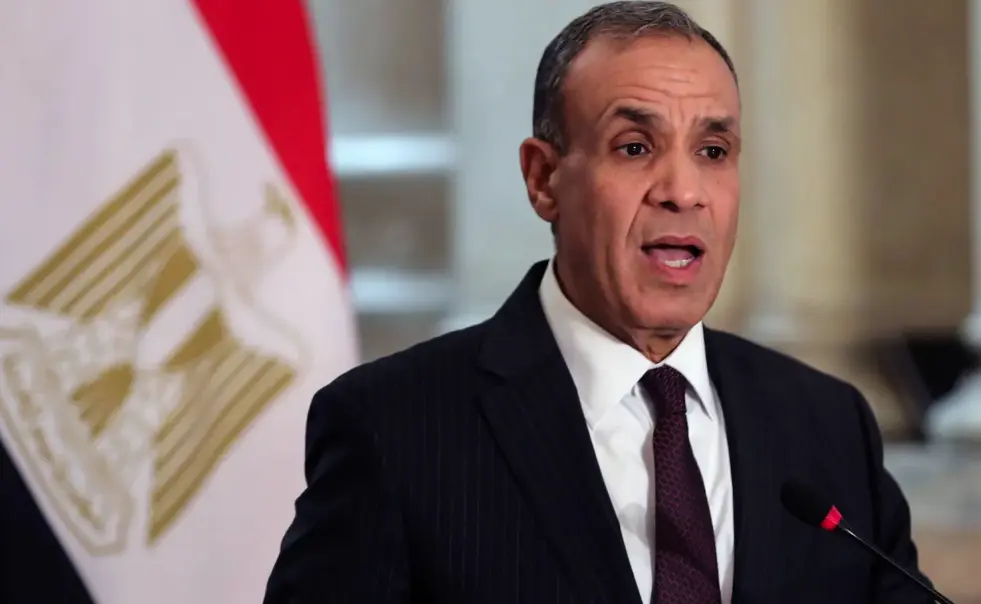
Egyptian Foreign Minister: We will spare no effort to reach a ceasefire in Gaza

Egyptian Foreign Minister Badr Abdel Aati confirmed on Thursday that his country will spare no effort to try to reach a deal to cease fire in Gaza, release hostages, and allow humanitarian aid to reach the Strip.


This came during Minister Abdel Aati's reception, on Thursday, of Roberta Metsola, President of the European Parliament, where the meeting witnessed discussions on bilateral relations between Egypt and the European Union, in addition to the most prominent regional issues, according to Foreign Ministry spokesman Tamim Khalaf.


The spokesman stated, in a press statement, that Minister Abdel-Ati praised the positive developments witnessed in relations with the European Union since the elevation of bilateral relations to the level of a comprehensive strategic partnership on March 17, 2024, according to the German News Agency.


He pointed out the priority of implementing the various axes of the strategic partnership, including the economic aspect, expressing his aspiration for the European Parliament to quickly approve the second tranche worth four billion euros of the financing package for Egypt.


The spokesman added that Minister Abdel Aati praised the existing cooperation between the two sides in the field of combating terrorism, including within the framework of Egypt's joint presidency with the European Union of the "Global Counterterrorism Forum."


The meeting also discussed regional developments in the Middle East, where Minister Abdel-Ati stressed the need to recognize the Palestinian state on the lines of June 4, 1967, with East Jerusalem as its capital.


He also pointed out the importance of pushing for a comprehensive political process in Syria that does not exclude any of the Syrian components. He also discussed the developments on the Lebanese scene, where he stressed the need to reach a Lebanese consensus to end the presidential vacancy crisis, and that this should be done with pure national ownership without foreign interference.


Minister Abdel-Ati was also keen to review Egypt's position in support of the unity, sovereignty and territorial integrity of Sudan and Somalia, in addition to the determinants of Egypt's position on the issue of water security.

PALESTINE

Thu 09 Jan 2025 2:07 pm - Jerusalem Time

Israeli occupation detains 5 young Palestinians at the Ein Siniya checkpoint, north of Ramallah

Today, Thursday, the Israeli occupation forces detained five young men at the Ein Siniya military checkpoint, north of the city of Ramallah.


Local sources said that the occupation forces at the checkpoint detained five young men while they were passing through it.

PALESTINE

Thu 09 Jan 2025 1:40 pm - Jerusalem Time

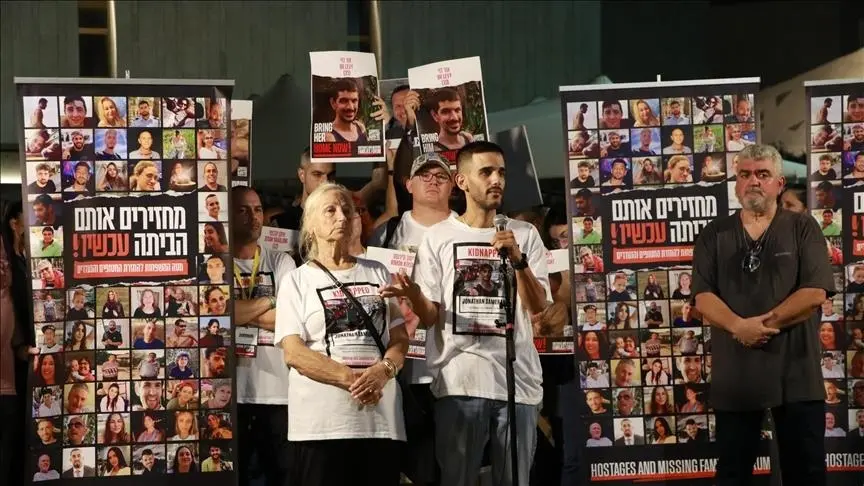
Israeli government pushes bill to thwart prisoner swap deal

The Israeli government is pushing a bill through the Knesset that would prevent the possibility of reaching a prisoner exchange agreement, as well as stopping the war on Gaza, while talks on a prisoner exchange continue in the Qatari capital, Doha.


The bill was submitted by Knesset members Dan Iluz of the Likud party, Michal Voldiger of the Religious Zionism party, and Yitzhak Kroizer of the Otzma Yehudit party, and is now on the agenda of the meeting of the Ministerial Committee for Legislation next Sunday.


The stated goal of the bill, according to Israel's Channel 13 today, Thursday, is to "institutionalize the struggle against countries that finance and support terrorist operations carried out in Israel," and one of its clauses states that "the State of Israel will not allow a state that supports terrorism to be involved in political settlements between Israel and other countries and foreign entities."


The channel indicated that this clause, after the approval of the bill, will allow "the thwarting of the very important Qatari mediation within the framework of communications" regarding a prisoner exchange deal.


The channel added that the draft law may be subject to amendments if the Ministerial Committee for Legislation approves it and transfers it to the Knesset.


According to Israeli Channel 12, Hamas agreed, after receiving an Israeli list containing the names of 34 Israeli prisoners held in Gaza, to release the living prisoners mentioned in this list, including male prisoners under the age of 50, and described as a "humanitarian case."


Channel 12 added that Hamas is still insisting on its demands, especially the release of a large number of Palestinian prisoners in exchange for the release of every Israeli male prisoner under 50 years old, in addition to Hamas's demand to stop the war and withdraw the Israeli army from the Gaza Strip.

ARAB AND WORLD

Thu 09 Jan 2025 1:31 pm - Jerusalem Time

Trump's envoy: Returning prisoners in Gaza is the new president's priority before his inauguration

US President-elect Donald Trump's Middle East envoy, Steven Witkoff, said that returning Israeli prisoners held in Gaza is the "most important thing" for him before his inauguration on January 20.


"Reaching an agreement to release the hostages is the most important thing for President Trump before the inauguration," Witkov told Israel's Channel 12 on Thursday.


He continued: "President Trump personally directed me to exert maximum pressure to move forward with the agreement."


The Israeli channel indicated that Witkov is expected to visit the Qatari capital, Doha, in the coming days as part of the intensive efforts to reach an agreement.


The channel quoted unnamed American sources as saying that "there is close and unusual cooperation between the outgoing Biden administration and the incoming Trump team."


"Biden administration officials confirmed that there was full coordination between the two parties, as Brett McGurk, Biden's representative, remained in constant contact with Witkoff," she said.


According to the channel, "a development was noted in the talks when Hamas agreed to accept the list of 34 kidnapped men presented by Israel, and expressed its readiness to release the living kidnapped men from the list, including men under the age of 50 who were defined as being in a humanitarian situation."


On Sunday evening, a Hamas official said that the movement had agreed to a list of 34 Israeli prisoners submitted by Tel Aviv to be exchanged for Palestinian prisoners as part of a possible ceasefire agreement in Gaza.


The prisoner exchange negotiations, mediated by Qatar, Egypt and the United States, have stumbled more than once, due to Netanyahu’s insistence on maintaining control over the Philadelphi Corridor on the border between Gaza and Egypt, and the Rafah crossing in Gaza, and preventing the return of Palestinian faction fighters to northern Gaza by searching returnees through the Netzarim corridor in the middle of the Strip.


For its part, Hamas insists on a complete Israeli withdrawal from the Gaza Strip and a complete cessation of war, in order to accept any agreement.


Tel Aviv is holding more than 10,300 Palestinians in its prisons, while it estimates that there are 100 Israeli prisoners in the Gaza Strip, while Hamas announced the killing of dozens of its prisoners in random Israeli raids.

PALESTINE

Thu 09 Jan 2025 12:48 pm - Jerusalem Time

More than 46 thousand killed since the beginning of the aggression on the Gaza Strip

The death toll from the Israeli aggression has risen to 46,006 dead and 109,378 injuries since October 7, 2023.


The Ministry of Health reported in a statement today, Thursday, that the Israeli occupation committed 3 massacres against families in the Gaza Strip, resulting in 70 dead and 104 injuries arriving at hospitals during the past 24 hours.


It pointed out that a number of victims are under the rubble and on the roads, and ambulance and civil defense crews cannot reach them.


PALESTINE

Thu 09 Jan 2025 12:13 pm - Jerusalem Time

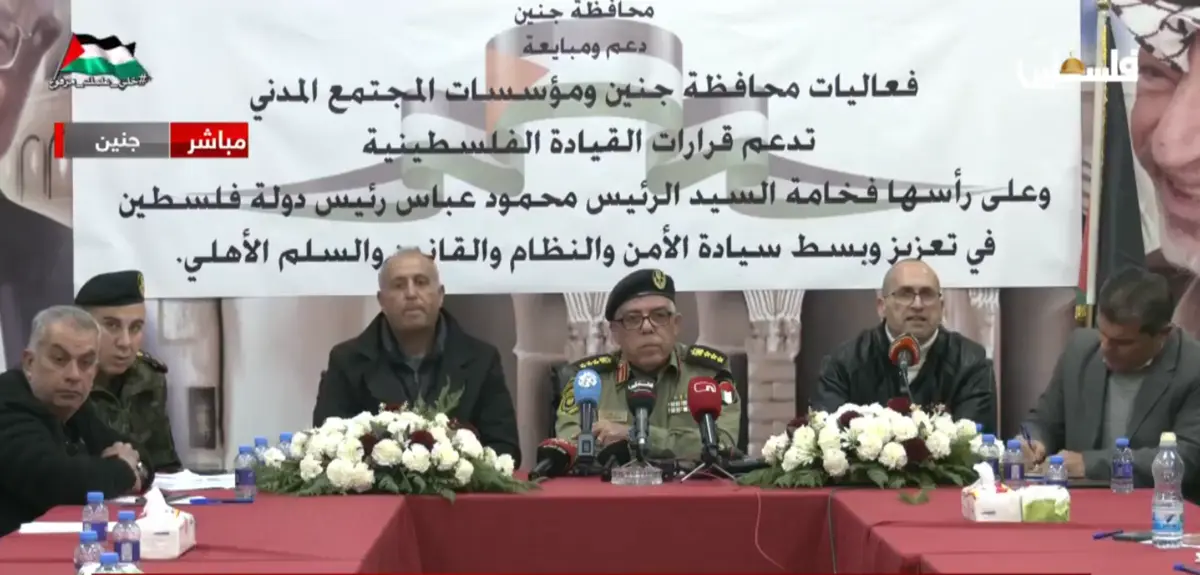
Rajab: 247 "outlaws" arrested in Jenin camp

The official spokesman for the security forces, Brigadier General Anwar Rajab, said, "247 outlaws were arrested during the "Homeland Protection" campaign in Jenin camp."


He added during a press conference held today, Thursday, in the city of Jenin, "8 people involved in financing outlaws and controlling many external funding lines were arrested."


He explained that based on the detainees' confessions, it was confirmed that the outlaws received external funding from several parties, with the aim of continuing and strengthening the state of chaos in Jenin Governorate, according to him.


He pointed out that the outlaws steal money in the name of the families of martyrs and prisoners, and donations to the Gaza Strip, exploiting the war on Gaza to collect donations under the name of aid to the Strip, explaining that the crime of burning the headquarters of the Popular Committee in Jenin camp confirms the policy of the outlaws in targeting citizens, as stated in the statement.


He continued: "We controlled 17 booby-trapped vehicles and defused them, in addition to deactivating 245 explosive devices that had been planted in public places, and confiscating various weapons and ammunition."


Rajab claimed that outlaws are shooting at civil defense vehicles and ambulances, and are using children and women to monitor, transport ammunition, and throw explosive devices.


He added: "We are refraining from publishing some of the confessions because they affect the social fabric and civil peace," noting that three factories that were used to manufacture explosive devices between citizens' homes were seized.

PALESTINE

Thu 09 Jan 2025 11:39 am - Jerusalem Time

The Prisoners Authority reveals the conditions of 5 prisoners in Ofer prison, including patients

The Prisoners' Affairs Authority reported today, Thursday, that the conditions in Ofer prison are still bad, according to a visit by its lawyer to a number of prisoners there, where they reported that the Ofer prison administration deliberately takes them out to the yard in the early hours of dawn in the bitter cold with the onset of winter.


The Commission’s lawyer stated in his report that he visited five prisoners in Ofer Prison and they gave their testimonies about the conditions in Ofer Prison. They are:


Administrative prisoner Mamoun Mahmoud Hamed, 18 years old, from Ramallah Governorate, detained in Ofer Prison, located in Section (14), Room (6), detained on 2/4/2024, and the last administrative detention order issued against him expires on 1/30/2025.


Prisoner Hamed suffered from health problems before his arrest, including sinusitis, dental problems, and stomach pain. He did not receive any treatment despite repeated requests to the prison administration, but to no avail.


Regarding the prison conditions, prisoner Hamed said that they are bad in all aspects. The quantities of food are small and of poor quality. Regarding the break, the prisoner said that it lasts between half an hour and an hour a day, and that the duration is determined according to the mood of the jailer.


Administrative prisoner Abdullah Nayef Daoud Salem, 25 years old from Bethlehem, is held in Ofer Prison in Section (18), Room (11). He suffers from several health problems before his arrest, including gastroesophageal reflux, stomach bacteria, weak heart muscle, congenital problems in his left hand, and an injury to his feet before his arrest. After his arrest, he was not provided with the necessary treatment, despite his request in the court session that was held regarding him for the necessity of providing treatment.


Regarding the conditions in the prison, the prisoner said that they are very difficult in general, and he referred to the ongoing policy of suppression of prisoners’ rooms and attacks on them. He stated in his testimony that several days ago, units affiliated with the Prison Service, accompanied by police dogs, suppressed a number of prisoners’ rooms, accompanied by insults, and the prisoners’ food and “pajamas” were confiscated, despite the shortage of regular and underwear clothing for nine months.


The prisoner said that there are a number of prisoners infected with "Scabies" in the section where he is located.


Prisoner Ahmad Shawqi Abu Arqoub from Hebron, 22 years old, is in Section (26), Room (15), and has been detained for 15 months.


He has been issued with three administrative detention orders and is awaiting an appeal hearing regarding the latest administrative detention order.


Prisoner Abu Arqoub suffers from a respiratory health problem before his arrest and needs a spray. His suffering has increased significantly after his arrest, as the prison administration refuses to provide him with a spray. In addition, he needs glasses, and the prison administration has not responded to his requests. He pointed out that they suffer from the cold weather in the room he is in.


Abu Arqoub stated that the prison administration deliberately takes them out to the refueling area at 5:30 in the morning, when it is bitterly cold, which makes a number of prisoners refuse to go out to it.

PALESTINE

Thu 09 Jan 2025 11:29 am - Jerusalem Time

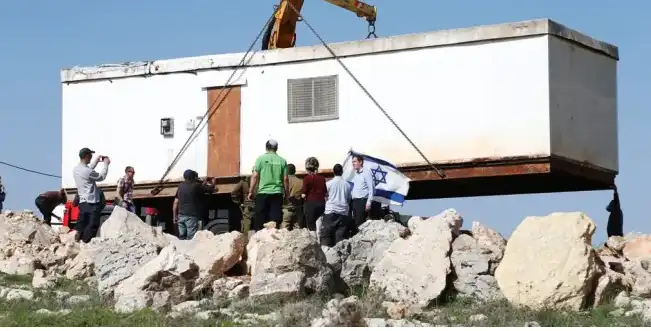
Israeli settlers place caravans on citizens' lands north of Tubas

Last night, settlers placed caravans on citizens' lands east of the town of Tammun, north of Tubas.


According to local sources, a group of settlers placed caravans in the "Al-Tha'la" area, amid fears that it would later be turned into a colonial hotbed.


She pointed out that these caravans were placed on lands owned by citizens of Tammun, and that the "Bek'ot" settlement, which is forcibly squatting on citizens' lands, is located nearby.

The head of the Wall and Settlement Resistance Commission, Mu'ayyad Shaaban, explained that the settlers established 51 new colonial outposts last year, 36 of which took the form of pastoral outposts in the governorates of Ramallah and Al-Bireh, Bethlehem, Hebron, Nablus, Jerusalem, Tubas, Jericho, Salfit, and Tulkarm.


He pointed out that the occupation authorities have practically begun to settle the status of 13 colonial outposts, so that some of them will be transformed in the future into colonial neighborhoods or colonies in themselves, through government decisions and amending the borders of colonies.

OPINIONS

Thu 09 Jan 2025 11:28 am - Jerusalem Time

Children pay a heavy price in war

op-ed "AlQuds" dot com

op-ed "AlQuds" dot com

Opinion Writer

As the criminal war against the Palestinian people continues everywhere, Israel has undisputedly topped the list of “child killers,” in light of its insistence on continuing its aerial and artillery bombardment, which targets defenseless civilians on a daily basis.


The largest Israeli target bank in the war is children. Every day, one child after another is killed, raising the number of child martyrs to more than 15,000, who were victims of a frenzied Israeli attack aimed at taking revenge on our people.


Children constitute 44 percent of the Palestinian people, as Israel forced about 50,000 of them to live without parents, in addition to a large percentage of the disabled and injured, whom Israel robbed of the joy of their childhood, which was destroyed in the midst of this huge volcano of attacks and breaches.


The killing of children is not limited to one geographical area or another. It is a policy at the highest military ranks, and the army has no choice but to implement it. The latest of these is the assassination of two children in an air strike by an aircraft on a site in Tamoun, which led to the death of one of the young men and the two children.


Killings are not the only thing that leads to many deaths among children. In addition to arrests, the children of Gaza have experienced real hunger, which has claimed the lives of dozens due to malnutrition and dehydration. As a result of the siege, newborns have not been spared from the struggle to stay alive, amid the challenges of pregnant mothers from malnutrition and the lack of vaccines, and thus the spread of diseases widely.


In addition to all of the above, with the arrival of winter, the children of Gaza are dying from the cold and the drop in their body temperatures, while living in difficult conditions that have led to the freezing and death of a large number of them, in one of the most severe forms of human suffering, which means the seriousness of the crisis that the Strip is suffering from.


With the calls of the International Red Cross to deliver humanitarian aid safely and without obstacles to the Gaza Strip, we stress the necessity of providing all the necessities of life to the Palestinians in the Strip, especially children, and providing them with the basic necessities of life, including health and food services, and stopping targeting them and making them pay the highest price in this fierce war.

PALESTINE

Thu 09 Jan 2025 11:18 am - Jerusalem Time

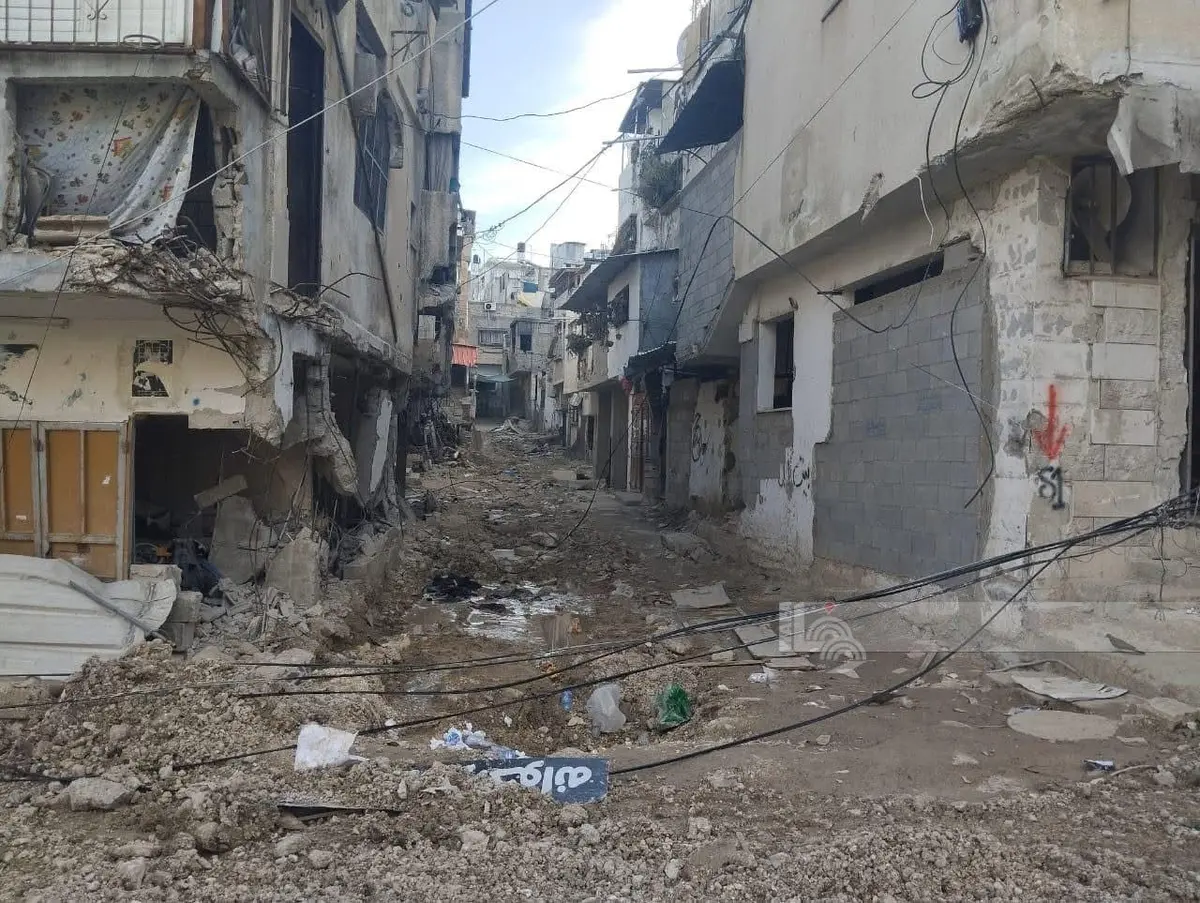
Israeli occupation withdraws from Tulkarm, leaving behind widespread destruction to the infrastructure

The Israeli occupation forces withdrew two days after their aggression on the city of Tulkarm and its two camps, causing widespread destruction to the infrastructure and citizens’ property.


Local sources said that the occupation forces blew up, at dawn today, the house of the detainee Mahmoud Mutie Salit in the schools neighborhood in Tulkarm camp, who was arrested after he was injured early last year.


It added that the occupation bulldozers continued throughout last night to bulldoze and destroy the infrastructure in the camp's streets, including water, electricity and internet networks, specifically in its center and its northern side, which is located in the neighborhoods of "Schools, Services, Balawneh, Hanoun Square, Abu al-Foul, al-Akasha and al-Muqata'a", which led to their interruption in large parts of it.


The occupation soldiers raided dozens of homes in the aforementioned neighborhoods, amid acts of violence, searching, and abusing citizens, detaining them in one room and subjecting them to field investigation, and turning a number of them into military barracks and sniper locations, while other groups were expelled from their homes.


In the same context, the occupation forces stormed Nour Shams camp east of the city, and sent more of their vehicles and bulldozers to the camp, where they began destroying the infrastructure and citizens’ property along Nablus Street adjacent to its entrances, the vicinity of the Martyr Saif Abu Labdeh roundabout, the entrance to the Manshiya neighborhood, and the center of the camp.


The occupation forces fired heavy gunfire, coinciding with the sound of explosions heard in the vicinity of Nour Shams camp, which caused a power outage in the camp, the Iktaba suburb, the Salam neighborhood, and large parts of the city and its suburbs.


Yesterday evening, a 36-year-old woman was injured after the occupation army assaulted her in the Al-Ghanem neighborhood in Tulkarm camp, while the young man Thaer Saleh Shraim, the brother of the martyr Mamoun Shraim who was killed in November of last year, was arrested from his home in Ezbet Al-Jarad east of the city.

PALESTINE

Thu 09 Jan 2025 9:28 am - Jerusalem Time

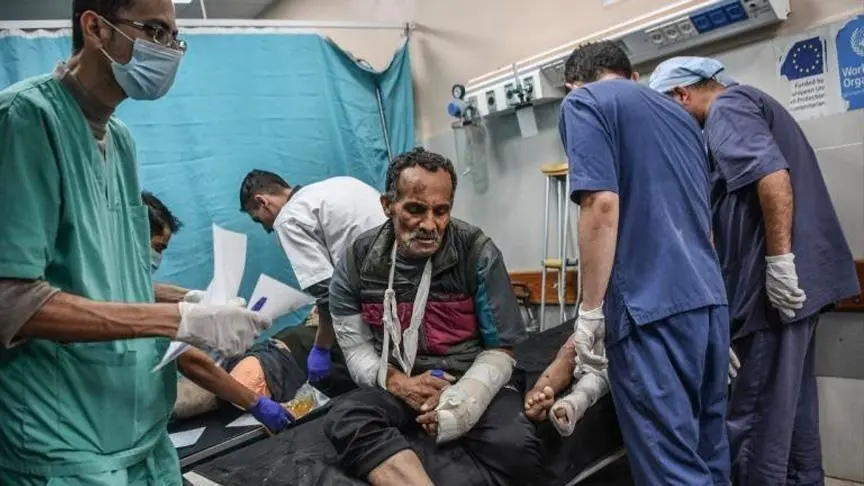
Dead and wounded in the Gaza Strip

A number of citizens were killed and injured today, Thursday, as a result of the Israeli occupation continuing its aggression on the Gaza Strip for the 461st consecutive day.


According to medical sources, 19 citizens were killed and dozens were injured in Israeli raids on the Gaza Strip since dawn on Wednesday.


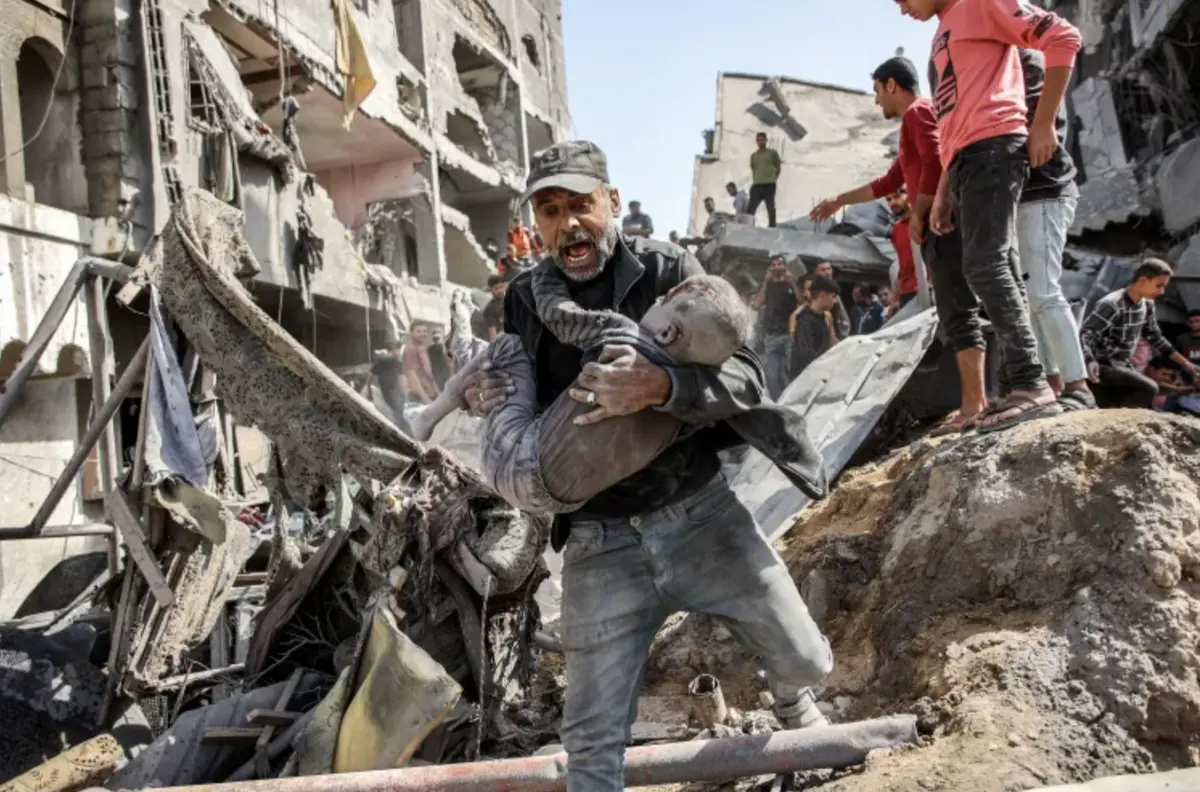
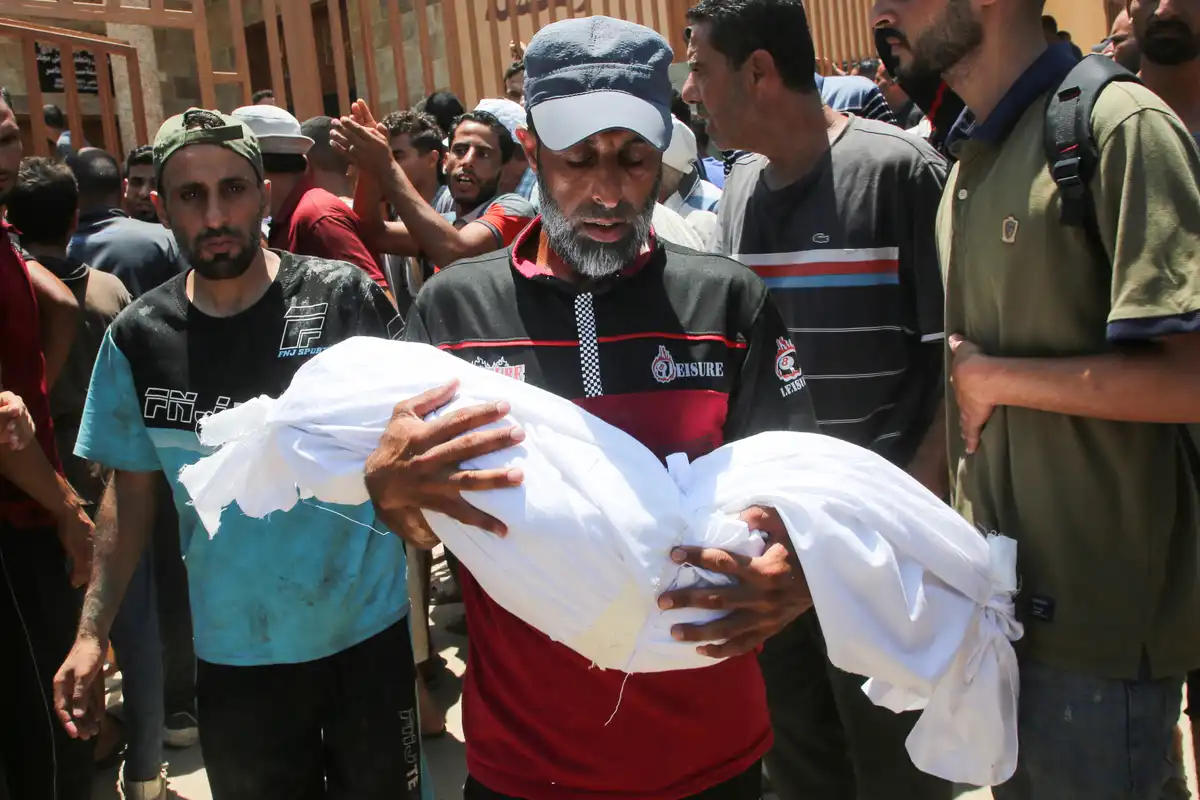
A father and his three children were killed in the bombing of the Nuseirat 1 camp by the occupation warplanes, in the central Gaza Strip.


The sources reported that the father and his three children from the Bassam Abu Kharouf family were killed, and there are still missing people under the rubble.


The death toll also rose to five in the bombing that targeted the Al-Dabaji family home west of Deir al-Balah city in the central Gaza Strip.


In the northern Gaza Strip, eight citizens were killed and others were injured in a raid by warplanes on a house in Jabalia al-Balad.


The Israeli occupation continues its aggression on the Gaza Strip, by land, sea and air, since October 7, 2023, which resulted in the death of 45,936 citizens, the majority of whom are women and children, and the injury of 109,274 others, in an incomplete toll, as thousands of victims are still under the rubble and in the streets, and ambulance and rescue crews cannot reach them.

PALESTINE

Thu 09 Jan 2025 9:18 am - Jerusalem Time

Israeli forces launch arrest campaign in the West Bank and Jerusalem

This morning, Thursday, the Israeli occupation forces launched an arrest campaign in the West Bank and occupied Jerusalem.


In Qalqilya, the occupation forces stormed Azzun from its northern entrance, amidst the firing of sound bombs and toxic gas, and arrested the two brothers: Muhammad and Othman Abdul Hadi, and assaulted the young man Omar Nasser Salama, after raiding and searching their homes.


The occupation forces also raided several homes in the areas of Al-Maqbara, Khallet Al-Darba, Al-Muthallath, Jisr Al-Khalayel, and Al-Mansoura. The owners were identified as: Mufid, Tamer, Naji, Kazem, Rashid Radwan, Abdul Hadi Al-Badran, Mustafa Adwan, Nasser Salama, and Aboud Yousef Salama. They searched them and ransacked their contents, causing havoc.


The occupation forces also detonated an explosive device in the home of citizen Abdul Hadi Badran, after forcing the family to evacuate their home and stay for hours in the bitter cold. The explosion also resulted in partial destruction of the contents of the home, and partial damage to citizen Badran’s vehicle.


In Bethlehem, the following were arrested: Muhammad Wael Daajneh (22 years old), Muhammad Salah Al-Masaeed (22 years old), Bassam Abdul Rahman Abu Aker (62 years old), and the Secretary of the Fatah Movement in Aida Camp north of Bethlehem, Marwan Mahmoud Fararjah (37 years old), who are both released detainees, after raiding and searching their families’ homes in the camp.


The occupation forces also arrested the two young men, Muhammad Mustafa Sabatin and Ahmad Mahmoud Hamamra, both 19 years old, from the village of Husan to the west, after raiding and searching their parents’ homes.


From the town of Al-Khader to the south, these forces arrested citizen Masid Suleiman Salah (48 years old), after raiding his house and tampering with its contents.


In Al-Bireh, they arrested the young man Abdullah Al-Aref from the Umm Al-Sharait neighborhood, after raiding and searching his house.


In occupied Jerusalem, the occupation forces arrested the young man, Islam Zayed, after storming his house in Qalandia camp and searching it.


PALESTINE

Thu 09 Jan 2025 9:17 am - Jerusalem Time

UNICEF: 74 children killed in Gaza Strip during first week of 2025

The United Nations Children's Fund (UNICEF) announced that at least 74 children were killed in the first seven days of 2025, due to the ongoing violence in the Gaza Strip, including attacks on a unilaterally designated safe zone.


UNICEF Executive Director Catherine Russell said in a post on the X platform that eight infants and newborns have died since December 26 due to hypothermia, while more than a million Gazan children live in temporary tents unable to withstand low temperatures.


“We have long warned that inadequate shelter, lack of access to nutrition and healthcare, dire health conditions and now winter weather are putting the lives of all children in Gaza at risk, with newborns and children with underlying health conditions particularly at risk,” she added.

PALESTINE

Thu 09 Jan 2025 9:12 am - Jerusalem Time

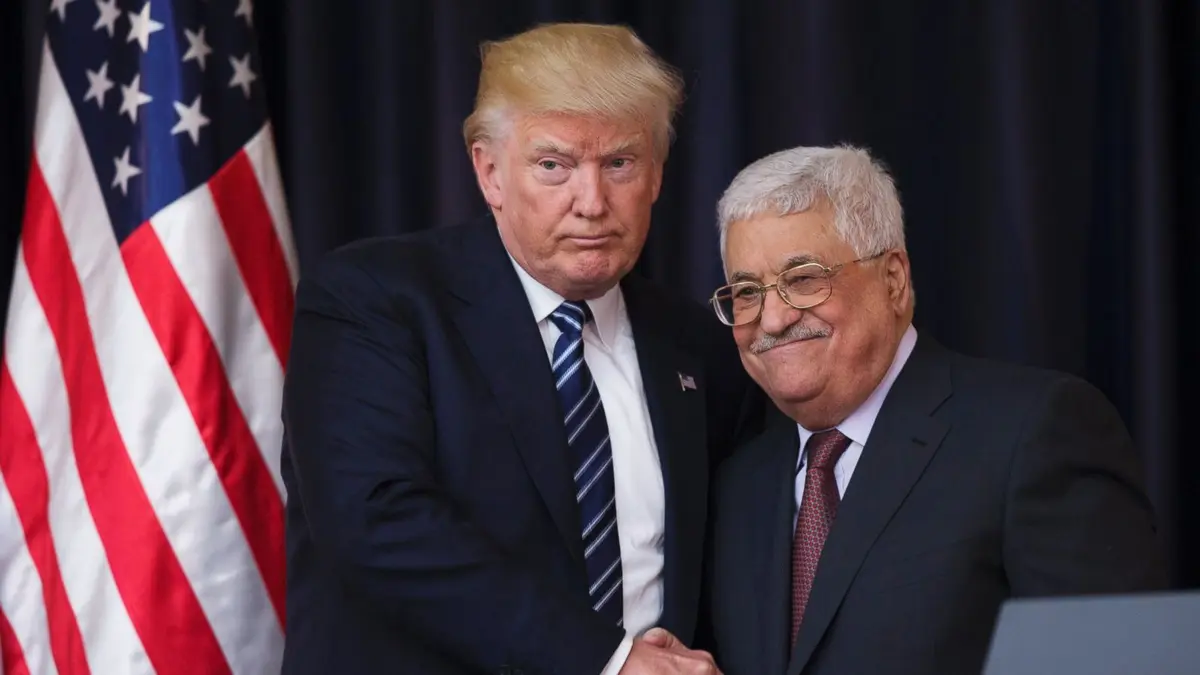
"Foresight Reading"... Trump and the "Minimum Settlement" of the Palestinian Issue

The future of the Palestinian cause and the path and outcome of any future settlement will be affected by Trump’s return to the White House

Trump's policy will revolve around major issues that are primarily related to restoring America's position in the world.

Trump wants stability that preserves American interests in the region and is based on continued, unwavering support for Israel.

Trump gives Saudi Arabia a special status due to its wealth and religious status that qualifies it to lead the Arab and Islamic worlds

For Trump, the Palestinian issue is nothing more than a factor of unrest and an obstacle to regional stability.

Trump's settlement of the Palestinian-Israeli conflict will not necessarily be consistent with the vision of the right-wing-religious Netanyahu government

Away from slogans, Israel was able to undermine the capabilities of the "Axis of Resistance", dismantle the "unity of the arenas" and weaken Iran's position.

Israel provided the appropriate ground for imposing the stability that Trump wants in the region even before he took office

The Palestinian issue has become a heavy burden and a source of annoyance that many ruling regimes want to get rid of and remove from their shoulders.


A set of data that have currently gathered on the external and internal Palestinian levels indicate that the next stage, specifically during Trump's second term, will have repercussions that will have a major impact on the Palestinian cause, and perhaps decisive in terms of the long-standing attempts to end it and close the file related to addressing the legitimate national rights of the Palestinian people. What makes this stage fraught with risks, which the Palestinians are expected to face, is that it comes with the convergence of a group of external factors, American, regional and Israeli, putting intense pressure towards resolving the Arab/Palestinian-Israeli conflict, on the one hand, at a time when the internal Palestinian situation has reached a state of extreme weakness, resulting from the loss of self-immunity, which greatly reduces the Palestinian ability to be able to confront incoming pressures with the required effectiveness, on the other hand. What is very worrying with this situation is the high possibility of passing the "minimum settlement" on the Palestinians, and being forced to accept it, if the Palestinians do not take rapid and effective action to address the deterioration of the internal situation, and restore at least the minimum level of lost immunity.

To understand the impact of external factors on the future of the Palestinian cause, it is necessary to investigate the starting points and objectives, and clarify the impact of the intersection of interests of the main external actors in this file. These actors can be divided into three levels: international, regional, and Israeli.


International level: Although the unipolar international system is witnessing transformations, albeit slow, towards multipolarity, the United States of America still monopolizes, currently and for the foreseeable future, the most important position and the broadest international influence in the Middle East region, and the absolute control over the Palestinian-Israeli conflict settlement file. This monopolization continues not only because of the expansion of the scope and depth of the penetration of American interests in the region, and the resulting ties in various fields with many ruling regimes in it, especially the organic relationship that links it to Israel, but also because China does not give priority to this region as it consolidates its rise and strengthens its competition with America, on the one hand, and because of the shrinking Russian influence in it, in favor of expanding penetration in other regions, especially in Africa, on the other hand, not to mention the European subordination to America in general. on the third hand. On this basis, the future of the Palestinian cause, and the path and outcome of any future settlement that may be proposed for it, will be greatly affected over the next four years by Donald Trump’s return to the White House, his outlook and basic priorities towards the world, the position of the Middle East region on the map of these priorities, and the determinants of his vision for how to address the Palestinian issue.

Addressing domestic issues to revive American supremacy

Given the foundations that governed Trump's vision and actions during his previous presidency, and his frequent statements currently, his policy during his upcoming presidency will revolve around major issues. For him, these issues are primarily related to restoring America's position in the world. Under the slogan "America First," Trump will give full attention to addressing domestic issues that he considers a priority and necessary to revive American superiority, foremost among which are strengthening the economic situation, establishing internal security, and reducing illegal immigration. Along with this, and with equal importance, comes confronting the external competition that the country is facing, specifically in the field of trade, which aims to weaken it and undermine its position, not only from China, but also from other countries that are traditionally considered allies and friends. In his endeavors at the domestic and foreign levels, Trump does not want to be distracted from achieving victory by continuing to be involved in military wars and being preoccupied with side conflicts. The wars he is preparing to wage are of a different nature, such as the one over tariffs, and require a regrouping of resources, not a dissipation of them in areas and on issues he does not consider to be in the American interest. This interest, for him, is very clear, specific and focused, and cannot tolerate continued distraction by immersion in matters he considers not essential to rebuilding America’s future and restoring its unique position in the international system.

The Middle East is not at the top of Trump's priorities

Although the Middle East remains important to Trump, it does not rise to the level of a central issue in his view, nor does it fall within his top priorities. Therefore, what he wants is to achieve stability in it, with the aim of removing it from his agenda, which is crowded with pursuing more important goals. To this end, he threatened that he would not hesitate to confront any party in the region that seeks to obstruct the achievement of this stability. As for the basis of stability that preserves American interests in the region, it is based on the continuation of steadfast and absolute support for Israel, an ally with an organic (supra-strategic) relationship with America, and empowering it as a dominant regional power. This is achieved through two things: completing the normalization of Israel’s relations with the Arab countries, the gateway to which is the Kingdom of Saudi Arabia, and weakening Iran, reducing its regional influence, and ending its efforts to develop nuclear weapons.


Since he does not want to be preoccupied with war, it is expected, and there are indications that point to this, that Trump will achieve the goal with Iran by concluding a favorable deal that is already being carefully prepared.


As for the Arab countries that are still standing and have not yet disintegrated, they generally do not enjoy a high degree of appreciation from him, and he does not take them into account much, as he considers them obedient and guaranteed to be subservient and loyal, and their political systems perform the functional roles required of them regularly. Within this framework, Trump gives Saudi Arabia a special status, not only for its wealth and its strategic relationship with America that has spanned nearly a century, but also for its religious status that qualifies it to lead the Arab and Islamic worlds. This makes it a reliable partner to achieve stability in the region, and it can be used to address other issues outside it. As for the normalization of relations between many countries in the region and Israel, the issue was effective, and the outbreak of war following Operation Protective Edge prevented its completion. As a result of the war and its disastrous repercussions on the Gaza Strip, Saudi Arabia demanded that the completion of the stalled normalization agreement include a commitment to resolving the Palestinian issue on the basis of the "two-state solution" and a reliable path to establishing a Palestinian state.

Addressing the Palestinian issue on pragmatic grounds

As for the Palestinian issue, for Trump it is nothing more than a factor of unrest and an obstacle to regional stability. The starting point for dealing with it, for him, is not ideological, but rather he wants to reach a settlement on it based on pragmatic foundations, governed by two things: achieving the American interest in regional stability, on the one hand, and achieving Israel’s interest, on the other hand. Although at first glance it seems that the two interests are similar, in reality they intersect a lot, but they are not completely identical. The Israeli interest is narrower than the complex and intertwined American interest in the region. Therefore, Trump’s settlement of the Palestinian-Israeli conflict will not necessarily be completely identical to the vision of the current right-wing-religious Netanyahu government, since regional stability through normalizing Israel’s relations with Arab countries requires a response, even at a minimal level, to the Saudi demand. The “Deal of the Century” that Trump proposed during his first term is the best evidence of this, as his vision in it did not match the Israeli position of preventing the establishment of a Palestinian state. Rather, his plan was based on establishing this state, although in its details it did not go beyond being a “remnant state” consisting of fragments that were disjointed.

"Al-Aqsa Flood" and the Shifts in Regional Power Balances

Regional level: Since October 7, 2023, the region has witnessed, and continues to witness, fundamental shifts in the regional balance of power, which will have profound repercussions on the future of the Palestinian cause, and specifically on the content of the potential political settlement. It is worth noting, first, that the main powers that constitute the effective and influential pillars in the region are the non-Arab countries; Israel, Iran and Turkey, with the decline of the extent of Arab power and influence, and its gathering in some Gulf countries, especially Saudi Arabia. As for the rest of the Arab countries, they are either preoccupied with addressing their escalating internal problems, or constitute - especially in the Arab Levant - arenas and battlefields for violent international and regional conflicts. It is also worth acknowledging, second, that the state of official Arab solidarity is going through its weakest stages, after the status of the Qatari state has been strengthened over the past decades, and in contrast to it, the actual political influences of Arab nationalism have diminished, which has led to the interests of individual countries, which are often conflicting, being given precedence over the collective interest of the nation and what was called the "Arab world."


Following the "Operation Flood of Al-Aqsa" that surprised Hamas, the war that Israel launched on the Gaza Strip, and then on Lebanon, had negative repercussions on it, covering various fields, and it is still suffering from them to this day. However, this war, which some parties hoped would exhaust Israel and weaken its regional position in a sustainable manner, if not completely destroy it, did not produce what was hoped for. Israel, with massive external support from its Western allies, led by America, was able to absorb, albeit with great difficulty and at a high cost, the totality of the shocks it received, and to carry out violent repercussions through which it changed the regional balance of power in the region. With a violent destructive war on the Gaza Strip, Israel fundamentally weakened Hamas's military capabilities and the possibility of continuing its control over the Strip. And with a quick and intensive war on Lebanon, it was able to disable Hezbollah and effectively remove it from the confrontation with it for a long time to come, if not in a final and sustainable manner. Following an effective strike deep inside Iran, it made an effective contribution to eliminating Assad’s rule in Damascus, thus ending the Iranian presence in Syria, and cutting off Iran’s main supply line to Hezbollah, not to mention expanding its occupation of more Syrian territory.


Regardless of the continuation of the war with slogans, Israel has actually been able to undermine the capabilities of the "Axis of Resistance", dismantle the "unity of the arenas", and weaken Iran's position as a competing power in the region. Thus, Operation "Noah's Flood" and its successive repercussions so far have, in the end, reduced the state of severe and escalating tension and congestion in the region, on the one hand, and reduced, in Israel's favor, the intensity of the state of Israeli-Iranian polarization in it, on the other hand. Thus, the result is that Israel was able, with great suffering that will have negative effects on it in the future, to strengthen its position as a regional power in the region, and at the same time provide the appropriate ground for imposing the stability that Trump wants for it, even before he takes office, and to facilitate his task of completing this imposition after taking office.

Pressure on Palestinians to accept low ceiling settlement

This completion is achieved by Trump's handling of the two remaining files. The first is the Iranian nuclear file, which has increased the possibility that Iran, in light of the changes taking place in the region, has become more open and accepting of concluding a deal with Trump on it, leading to a gradual lifting of the sanctions that have exhausted its economy, and its re-absorption as a more open and positive state in the region. The second is related to completing the normalization "Abraham Accords" between Israel and the rest of the Arab countries, which Saudi Arabia linked to determining a positive path to end the Palestinian-Israeli conflict by establishing a Palestinian state. In this context, it is worth noting that many indicators indicate that the Palestinian issue has no longer, in recent decades, especially after the strengthening of the position of the Qatari state, on the one hand, and the increasing problems of the internal Palestinian situation and the burdens "thrown" on these countries because of it, on the other hand, constitute for the ruling regimes in them an issue of a wasted Arab right that must be restored, but rather it has become considered a heavy burden and a source of annoyance that many of these regimes want to get rid of and remove from their shoulders.


From this perspective, the actual support of these regimes for the cause has declined, while the level of apparent and formal support has remained the same, to the point that many of them have become preoccupied with mediation between the Israeli and Palestinian sides. These regimes are now looking for a way out, and are satisfied with a political settlement that does not exceed the level of meeting the minimum requirements, and are exerting various pressures on the Palestinians to lower the ceiling of their demands, and accept the low ceiling settlement, to cover themselves with it and remove the burden and continued embarrassment from their shoulders. They want to close the file and remove the obstacle that prevents them from responding to the American demand for full and public normalization of relations with Israel.

PALESTINE

Thu 09 Jan 2025 8:59 am - Jerusalem Time

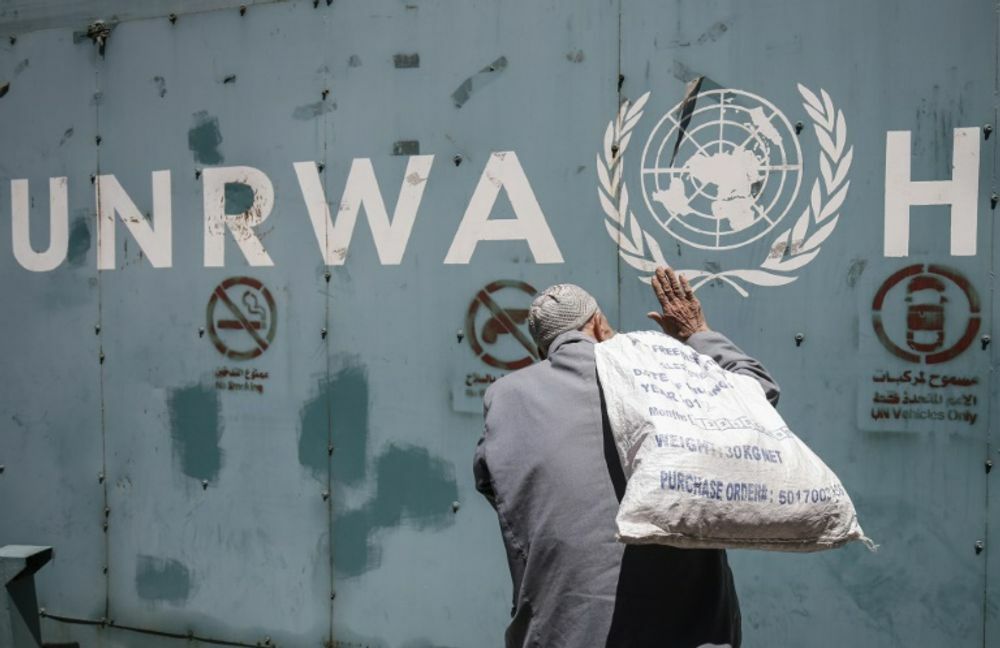
What remains of UNRWA? The first Nakba created it and the second undermined it

Munther Al-Hayek: Whoever wants to end UNRWA’s work must implement Resolution 194, which returns Palestinian refugees to their homes

Sami Mshasha: What is being planned now is a second educational, health and social catastrophe and systematic impoverishment leading to displacement.

Tawfiq Taama: The establishment of UNRWA came by a decision of the General Assembly, and any attempt to abolish it must be done through a similar international framework.

Dr. Amani Al-Qarm: Halting UNRWA funding will create a lasting catastrophe that will cast a shadow over the security and stability of the entire Middle East

Osama Al-Sharif: Israel and America have two common goals in the next stage: ending the refugee file and closing the camps file

Hazem Al-Qawasmi: The Trump administration seems ready to make decisions that contribute to resolving major issues in favor of Israel, including closing UNRWA

The measures taken by the Israeli occupation state against the United Nations Relief and Works Agency (UNRWA), the attacks on its headquarters, staff and schools, the accusations levelled against many of its employees of participating in the October 7 attack, and the law passed by the Israeli Knesset to ban its activities in areas under the Israeli occupation state, especially Jerusalem, did not come out of nowhere and were not the result of immediate reactions, but rather preludes to major decisions against this international organization whose existence is linked to the Palestinian refugee issue.


The occupying state would not have dared to carry out such practices or decisions without the American green light and the countries that follow its orbit, which doubles the fears of what the next stage will bring, as Donald Trump re-enters the White House, in light of the decisions associated with his name and his recognition of Jerusalem as the unified capital of Israel, the transfer of the American embassy to it, and the recognition of the annexation of the Syrian Golan, all the way to his plan for an unjust political settlement called the "Deal of the Century". Consequently, there is a real fear that Trump will end the existence of the Relief Agency entirely, in order to cancel the Palestinian refugee issue.


In light of these concerns, question marks arise about what could result from dissolving UNRWA and its consequences for millions of refugees to whom it provides social, health, educational and other services, especially in light of the catastrophic situation in the Gaza Strip, most of whose inhabitants are refugees, after fifteen months of killing, destruction, starvation, poverty and diseases that are ravaging the refugees and their loss of their homes, schools, hospitals and other educational and service institutions.


Writers and analysts who spoke to Al-Quds considered what is being planned now to be a second catastrophe, educational, health, and social, and systematic impoverishment leading to displacement, stressing that stopping funding for UNRWA will create a lasting catastrophe that will cast its shadow over the security and stability of the entire Middle East. They noted that the Trump administration seems ready to make decisions that will contribute to resolving major issues in Israel’s favor, including closing UNRWA.

UNRWA is the lifeline of Palestinian refugees

The spokesman for the Fatah movement in the Gaza Strip, Munther Al-Hayek, said that UNRWA has been historically linked to the Palestinian refugee since the displacement of the Palestinian people from their land in 1948.


Al-Hayek explained that UNRWA continues to support our Palestinian people, but the Netanyahu government seeks to eliminate the Palestinian state project and the right of return of refugees to their homes, in an attempt to end the Palestinian national project.

Al-Hayek stressed the need for countries that have refrained from supporting UNRWA to return to their commitment to the UN resolution by which this organization was established, which aims to provide support and relief to the Palestinian people.


He pointed out that UNRWA has complete records of the poor in the Gaza Strip, the West Bank and refugee camps, and it is the body responsible for providing humanitarian aid to them.


He stressed the Fatah movement's rejection of Netanyahu's government's plans and its confrontation of them, calling on the countries supporting UNRWA to continue providing support, especially financial support, in a strong and sustainable manner.


He added: "Whoever wants to end UNRWA's work must implement UN Resolution 194, which guarantees the right of return of Palestinian refugees to their homes from which they were displaced in 1948. Only then can we say that we do not need UNRWA. However, as long as the Palestinians are displaced and homeless, UNRWA must remain in place in accordance with international legitimacy resolutions."

UNRWA is the body authorized to bring in and distribute aid.

Regarding the UNRWA budget, and what is said about its distribution to humanitarian organizations and civil society, Al-Hayek said that UNRWA is the body authorized to bring in funds and aid and distribute them to the Palestinian people according to the records it has.


He added: "We trust UNRWA and want it to continue doing its work, especially in the relief situation in the Gaza Strip, which has worsened after the insane war waged by the occupation government against our people."


He pointed out that there are accusations and demonization against UNRWA by the Netanyahu government, which claims that UNRWA distributes aid through other humanitarian organizations.


Al-Hayek explained that there are humanitarian organizations that work independently, stressing that the legitimate framework that the Palestinians trust and that is present in the territories occupied in 1967 and in the refugee camps is UNRWA.

UNRWA's financial situation this year will be very difficult

For his part, Sami Mshasha, an expert on international organizations and media affairs, confirmed that UNRWA’s financial situation this year will be very difficult.


He said: For years, UNRWA's financial deficit has been accumulating, which has negatively affected the level of services provided to millions of Palestinian refugees, as UNRWA's regular budget amounts to more than $1.4 billion, and as in previous years, the pledges secured by donor countries did not exceed half of this amount. In fact, we will be below this level.

Mshasha touched on this year's emergency budgets, adding: Given the destruction that befell the camps in Gaza and Lebanon, and the needs of emergency services in Syria and the West Bank, they will be very large.


However, UNRWA will receive crumbs from it, which will greatly limit its ability to respond and assist.

He pointed out that the project budgets allocated to rebuild hundreds of UNRWA facilities that were completely destroyed will be very large, and UNRWA is expected to receive a small portion of them.

The United States will not resume its donations at all.

He stressed that the United States is no longer the largest donor to UNRWA, and will never resume its donations. Like Sweden (the fourth largest donor), it has shifted its support to international and local institutions.


He pointed out that other countries, such as Switzerland, are considering implementing the same approach. Countries such as Norway, Denmark, Spain, Britain, Japan, and France will continue to support UNRWA, but will not increase the level of donations to cover the American and Swedish losses.


Mish'sha' addressed Arab donations, saying: They are irregular and difficult to rely on, because the amounts allocated annually to UNRWA by Arab countries are small, and cover a small percentage of the total of UNRWA's various budgets.


He stressed that UNRWA's mandate is dedicated to serving Palestinian refugees, and that replacing UNRWA with other international institutions, such as the World Food Organization and local civil society organizations with limited budgets, will deprive large sectors of refugees of basic services, especially health and social services dedicated to the poorest of the poor, which will raise levels of extreme poverty and economic exposure to unprecedented levels.

A trend that will destroy the educational process for hundreds of thousands of students

On the educational level, he explained that this approach would destroy the educational process for hundreds of thousands of students in UNRWA schools, noting that alternative institutions to UNRWA have, at best, dozens of employees, while UNRWA in the Gaza Strip alone has 13,000 teachers, doctors, technicians, cleaners, engineers and others, which makes it very difficult to replace them.


Mish'sha' said: What is being planned now is a second catastrophe: an educational, health, and social catastrophe, and systematic impoverishment leading to displacement, leading to a second catastrophe with all its components.


Mshasha touched on the imminent arrival of Trump. He said: There is an impression that Trump's arrival to power will exacerbate UNRWA's existential and financial crisis. This is not accurate, stressing that his arrival will only reinforce the current measures and efforts to weaken and exhaust the agency, which have so far made great strides.


He pointed out that the demonization of UNRWA and the efforts to end it and eliminate the right of return are primarily Israeli efforts.

He added: Their efforts to incite the countries of the world against them aim to ensure the success of their own efforts to expel the agency and prepare international, regional, and local alternatives.


Mish'sha concluded his statement to Al-Quds by emphasizing that the goal is not only to replace the role of UNRWA and its humanitarian services, but also to end the Palestinian refugee file far from an actual translation of the right of return, and to come closer to establishing the concept of settlement, forced and voluntary displacement, and material compensation for refugees.

Israel's actions against UNRWA threaten humanitarian catastrophe

In turn, political analyst Tawfiq Taama said that the United Nations Relief and Works Agency for Palestine Refugees (UNRWA) is considered one of the most prominent international institutions that plays a vital role in the lives of Palestinian refugees, as it provides them with basic humanitarian services in the areas of health, education, and nutrition.


He pointed out that the establishment of UNRWA in 1949 came by a decision of the United Nations General Assembly, which means that any attempt to abolish it must also be done through a similar international framework.


Taama explained that UNRWA provides its vital services to Palestinian refugees in various areas, including Gaza, the West Bank, East Jerusalem, Jordan, and Syria.


He pointed out that this institution represents an international witness to the Palestinian Nakba of 1948 and the displacement of Palestinians from their lands.

UNRWA's humanitarian function and political role

He added: UNRWA does not only provide humanitarian aid, but also affirms through its presence the right of Palestinian refugees to return to their lands, which makes it an obstacle to Israeli projects seeking to completely end this right.


Taama touched on the measures taken by Israel against UNRWA, referring to the Israeli Knesset’s decision last October, which prevents the agency from operating in areas controlled by Israel, including the West Bank, East Jerusalem and the Gaza Strip.


He explained that this decision gives UNRWA only three months to operate before its offices are closed and its activities are completely banned.


He pointed out that this decision includes imposing restrictions on institutions that deal with UNRWA, and threatens sanctions on its employees who continue to work with it. Tohme described these steps as illegal, because they contradict the international resolutions that established UNRWA.


Tohme warned that banning UNRWA would lead to a major humanitarian disaster, as millions of Palestinian refugees depend on its basic services. He pointed out that the agency's budget, which amounts to about $1.4 billion annually, is used to provide services in the fields of education, health, social protection, and nutrition.


He added that the cessation of UNRWA services will leave millions of refugees without education, health care or social support, which will exacerbate the already deteriorating humanitarian conditions, especially in the Gaza Strip.

Israeli motives for canceling UNRWA

Taama considered that Israel is working to end the existence of UNRWA because it represents an obstacle to achieving its political goals.


He explained that UNRWA is a living witness to the Palestinian Nakba and the right of refugees to return to their lands.


He pointed out that Israel believes that the continued work of UNRWA hinders its plans to liquidate the Palestinian issue, as the existence of the agency represents an international guarantee for the rights of Palestinian refugees.


Taama discussed the options available to the international community to confront the Israeli decision, noting that there are fears that humanitarian organizations and civil society organizations (NGOs) will be resorted to as alternatives to UNRWA. However, he stressed that this step could be considered an implicit recognition of the Israeli decision, which is dangerous.


He stressed that these organizations' acceptance of the Israeli decision means approval of the cancellation of UNRWA and the right of return, which will have disastrous repercussions on Palestinian refugees and on the Palestinian cause in general.


He stressed the importance of the Arab and international role in pressuring Israel to reverse its decision, and called for preserving the work of UNRWA as one of the main pillars that support Palestinian refugees and preserve their rights.


Taama concluded his speech by stressing the need for the international community to assume its humanitarian and political responsibilities towards Palestinian refugees, considering that the continuation of UNRWA’s work is an urgent necessity to prevent a new humanitarian catastrophe that would be added to the already existing suffering.

Harming UNRWA will break the backbone of the Palestinian cause

The writer and researcher in American and Israeli affairs, Dr. Amani Al-Qarm, said that the hostility between UNRWA on the one hand and Israel and America/Trump on the other hand is not new, and is not a product of the current war, but rather goes back to the rise of the Zionist right-wing current inside Israel, where new ideas and trends have emerged in the Israeli political mind, the essence of which is to liquidate the Palestinian cause by getting rid of its manifestations and tools, especially those that enjoy international legitimacy.


Al-Qarm pointed out that the refugee issue is one of the constants of the Palestinian cause, and is a living witness to the existence of the Palestinian problem, and that the establishment of UNRWA was linked to the issue of the Palestinian refugee. As long as there are refugees, UNRWA will continue to exist.


She stressed that Israeli policy, despite the oppression, marginalization, and all the settlement projects that were proposed throughout the history of the conflict, whether inside or outside the drawers, and the attempts to resolve it, could not end the refugee issue.


Al-Qarm added: The extremist Israeli thought has turned into an attempt to end the existence of the only legitimate and international organization charged with following up on refugee affairs, by drying up its sources of funding, closing its offices, and taking decisions in the Knesset to stop working with it following the 1967 agreement, and withdrawing all permits and privileges granted to its employees to facilitate its work.


She explained that the attack on UNRWA, by force and imposing a fait accompli, and distorting its role by accusing it of being a stronghold of Hamas, will lead to breaking the backbone of the Palestinian cause and cancelling the status of “refugee” for five million Palestinians who hold this classification and benefit from UNRWA services.

UNRWA is a multifaceted life system

She pointed out that President Trump, in his first term, and motivated by the Israeli right, stopped supporting the agency, believing that the attack on UNRWA would continue in the coming years.


But Crimea strongly doubted the possibility of achieving the Israeli-American goal, stressing that stopping funding for UNRWA would create a lasting catastrophe in the coming years, which would not only affect the refugees, but would cast a shadow over the security and stability of the entire Middle East, and its repercussions might extend beyond the seas.


Al-Qarm pointed out that the problem lies in the fact that UNRWA is not just a relief organization, but rather a multi-faceted and successive life system, similar to a continuous chain for every Palestinian family that has held the status of “refugee” since the emergence of the issue due to the Israeli occupation.


She added: UNRWA, through its various programs, especially in the field of education, played a pivotal role in taming the Palestinian collective thought related to the cause. It also created conditions that represent both a challenge and a hope for the refugee to improve his status within the framework of international legitimacy laws and moderate thought.


Al-Qarm stressed that knowledge has become a primary goal for Palestinians and a way to survive and survive.


She asked: "If UNRWA is stopped, who will fill the void in this entire life system except extremist and radical ideas?", likening it to releasing a genie from a bottle to ignite a fire, as it cannot be returned and the fire cannot be extinguished.

Trump's plan aims to liquidate the Palestinian cause

For his part, political analyst Osama Al-Sharif confirmed that liquidating the Palestinian issue and closing the file once and for all represents the plan of former US President Donald Trump in his second term.


Al-Sharif explained that the repercussions of October 7 created the conditions for implementing this plan and completing Trump’s project related to the so-called “Abraham Accords.”


He pointed out that there are two common goals for both Israel and America during the next stage to achieve this project, the first is to end the refugee file: This is represented by the legal liquidation of the Relief Agency (UNRWA), as happened through the law recently passed by the Israeli Knesset. This procedure requires the naturalization of Palestinian refugees in Jordan, Lebanon and Syria, which practically means dropping the right of return and settling refugees in their places of residence.


He added: The second goal is to close the camps file: Israel seeks to evacuate the camps in the West Bank either through economic siege and terror to push their residents to leave voluntarily, or by destroying the camps’ infrastructure so that they become uninhabitable.


Al-Sharif pointed out that the camps represent a constant concern for Israel, as they are an incubator environment for resistance inside and outside Palestine, and destroying them means depriving the resistance of this supportive environment.


He pointed out that this approach is what Israel recently implemented in Gaza through the systematic destruction of the camps there.


Al-Sharif added: What will remain after that is the imposition of a political solution that does not include the establishment of an independent Palestinian state or the end of the occupation, but rather is based on an old-new project under the title of "self-rule under the spears of occupation."


He stressed that the current geopolitical conditions in the region may contribute to facilitating the implementation of these goals, noting that proceeding with this plan will not face significant political opposition, especially after the decline in the influence of what is known as the "Axis of Resistance."

UNRWA services unlikely to return to normal

In turn, economic advisor Hazem Al-Qawasmi said that the horizon does not seem promising for the return of UNRWA services to what they were, at a time when the afflicted Palestinian people in the Gaza Strip are in dire need of them since the Nakba.


Al-Qawasmi pointed out that the attack on this international relief organization during the past year, in addition to the decision of the US Congress and the White House to continue to stop funding allocated to it until March 2025, as well as the Arab silence, encouraged the fascist government in Israel and its supporters to deepen their attacks on this organization with the aim of liquidating it completely and burying it during the next few months of this year.


Al-Qawasmi added: The expected US administration headed by Donald Trump seems ready to make bold decisions that will contribute to resolving major issues in Israel’s favor, most notably the final closure of UNRWA.


He stressed that this would lead to the liquidation of the issue of refugees and Palestinian camps, regardless of any comprehensive solution to the Palestinian issue.


He pointed out that the statements issued by the expected Trump administration regarding the Middle East, most notably the appointment of the new US ambassador to Israel, Mike Huckabee, do not bode well for finding a just and comprehensive solution to the Palestinian issue, including the rights of Palestinian refugees and the establishment of a Palestinian state on the June 4 borders.


He also pointed out that Trump's first expected decisions may include stopping funding for UNRWA completely and pressuring European countries to follow the same approach, which will lead to accelerating the pace of systematic targeting of Palestinian camps.


Al-Qawasmi stressed that these steps threaten to close the Palestinian refugee file and cancel the role of UNRWA, which portends a worsening of the humanitarian situation in the Gaza Strip and the West Bank, at a time when the targeting of camps is increasing as part of the forced displacement plans adopted by the Israeli government.

PALESTINE

Thu 09 Jan 2025 8:54 am - Jerusalem Time

Netanyahu and Smotrich’s threats to the West Bank: a license to kill in preparation for displacement

Dr. Ahmed Rafiq Awad: Serious threats may indicate the start of implementing a plan to impose sovereignty over parts of the West Bank, carry out massacres, and push towards displacement

Akram Atallah: What is required is not a direct confrontation with the Israeli storm, but rather adherence to the Palestinian presence on the ground as a basic priority

Abdullah Abu Rahma: The occupation may not resort to the public displacement of Palestinians, but it creates harsh conditions that push Palestinians to voluntarily emigrate

Dr. Tamara Haddad: Threats to turn Nablus and Jenin into areas similar to Jabalia reflect Israel’s intention to use a scorched earth policy and displacement

Nihad Abu Ghosh: A comprehensive national response is required to confront threats...and to unite on a comprehensive national emergency program aimed at protecting the Palestinian people

Fayez Abbas: Netanyahu and Smotrich's statements after the hotel operation carry dangerous implications indicating a violent and unprecedented escalation in the West Bank

Israeli threats against Palestinians in the West Bank are escalating, with threatening statements made by Israeli Prime Minister Benjamin Netanyahu and Finance Minister Bezalel Smotrich, after the shooting attack in the village of Al-Funduq east of Qalqilya on Monday, calling for the implementation of wide-ranging offensive and defensive policies, and even the destruction of Jenin and Nablus as happened in Jabalia.


In separate interviews with “I”, writers, political analysts and specialists believe that these statements go beyond being reactions to the operation in the West Bank, but rather carry clear indications of the implementation of strategic plans that may include the displacement of Palestinians, and perhaps the implementation of massacres and the expansion of Israeli settlements in an unprecedented manner, indicating that the West Bank may be heading towards a new phase of escalation, which portends dangerous events.


Writers, analysts and specialists confirm that confronting these challenges comes through national unity and developing a comprehensive emergency plan to protect the Palestinian land and existence, as well as abandoning bets on futile international initiatives, and working collectively to restore national rights and confront Israeli plans that aim to change the demographic and geographical reality in favor of the settlement project.

Netanyahu and Smotrich's statements pose great risks

Writer and political analyst Dr. Ahmed Rafiq Awad warns of the great dangers posed by the statements of Israeli Prime Minister Benjamin Netanyahu regarding offensive and defensive plans in the West Bank, in addition to the statements of Israeli Finance Minister Bezalel Smotrich, who called for turning the cities of Nablus and Jenin into “Jabalia,” in a clear reference to committing massacres against the Palestinians.


Awad points out that these threatening statements mean that the next stage may witness the beginning of the implementation of the plan to impose Israeli sovereignty over parts of the West Bank, especially the areas classified as “C,” in parallel with the massacres and the push towards displacement.


Awad explains that Israel has been paving the way for years by building a legal and political system to strengthen its control over areas classified as “C,” which is considered an explicit political declaration to annex these areas.


Awad asserts that the recent statements may be followed by field measures that include a wider deployment of Israeli forces in the West Bank, and the reinforcement of military checkpoints with advanced defense systems based on artificial intelligence technologies.

Awad warns of the possibility of carrying out large-scale military incursions that are not limited to the northern West Bank, but may extend to include other areas.

Intensifying settlement and more political blackmail of the Authority

Awad points out that these escalations coincide with the intensification of settlement, which practically means the displacement of Palestinians from their lands.


According to Awad, settlements lead to the expulsion of Palestinians, and increasing barriers leads to an exacerbation of poverty and unemployment rates, which pushes Palestinians to forced migration, even individually, to escape living conditions that resemble “hell.”


Awad points out that Israel is systematically seeking to weaken the Palestinian Authority, destroy the two-state solution, and separate the West Bank from the Gaza Strip.


Awad believes that the next stage may witness more political blackmail of the Palestinian Authority, so deepening the internal Palestinian division strengthens Israeli hegemony on the ground.


In the face of these dangers, Dr. Awad stresses that what is required for Palestine is to achieve national reconciliation and restore unity within a unified Palestinian vision, which blocks the path of the Israeli occupation that claims the absence of a Palestinian partner for negotiation, while Awad calls for effective and real Arab action to confront these Israeli plans.


Awad stresses the necessity for the Palestine Liberation Organization to return to the international arena by activating its efforts in the United Nations, the Security Council, and international courts, to expose and expose Israel’s policies towards the West Bank.


Awad believes that the Israeli escalation in the West Bank aims to change the demographic and geographical reality in favor of the settlement project, which requires urgent Palestinian, Arab and international efforts to stop this aggressive policy.

Premeditated projects threaten the future of Palestinians in the West Bank

Writer and political analyst Akram Atallah asserts that the threats made by Israeli Prime Minister Benjamin Netanyahu and Finance Minister Bezalel Smotrich to the West Bank represent a very dangerous development and reveal premeditated projects that threaten the future of Palestinians in these areas.


Atallah explains that these statements do not come as a reaction to the escalation of the resistance operations in the West Bank only, but rather exploit the current situation to implement strategic projects that Israel has been working on for years, similar to what happened in the Gaza Strip.


Atallah points out that the Israeli government, headed by Netanyahu, has always announced its intentions to annex Palestinian lands in the West Bank, which is a long-standing strategic project, even before Smotrich was in the current government since the “Deal of the Century” that includes annexing large areas of the West Bank in favor of the occupation, but Smotrich’s presence has strengthened these trends.

Risks of mass displacement from the West Bank

Atallah explains that Netanyahu and Smotrich's statements cannot be treated as passing statements or a reaction to recent operations, but rather they must be understood in the context of Israel's exploitation of events to implement its strategic plans.


Atallah stresses that these statements require the utmost seriousness, because the continuation of the situation in this manner may lead to the commission of massacres and mass displacement operations in the West Bank.


Atallah recalls the Israeli experience in the Gaza Strip, where Israel carried out genocide without any real international deterrent, pointing out that Israel may seek to repeat this experience in the West Bank, by targeting camps and committing crimes, especially since it has not been held accountable for its crimes so far in the Gaza Strip, which encourages it to commit crimes in the West Bank.


Atallah warns that there is a real danger of forced or voluntary displacement of Palestinians in the West Bank, especially if Israeli pressure on them continues.


Atallah points out that the historical experience during the Second Intifada indicates that a large number of Palestinians were forced to move to East Jordan, especially since many of them hold Jordanian passports.

Managing the current stage rationally and with extreme caution

In the face of these challenges, Atallah calls on the Palestinians to manage the current stage rationally and with extreme caution.

Atallah says: “What is required is not a direct confrontation with this violent Israeli storm, but rather adherence to the Palestinian presence on the ground as a basic priority.”


Atallah stresses that preserving this presence is the greatest achievement, and any ill-considered adventure could lead to a threat to the Palestinian entity as a whole.


Atallah stresses the importance of working with a cool and calm mind to overcome this sensitive stage, in which the Israeli government seeks to impose a fait accompli through annexation and displacement projects.
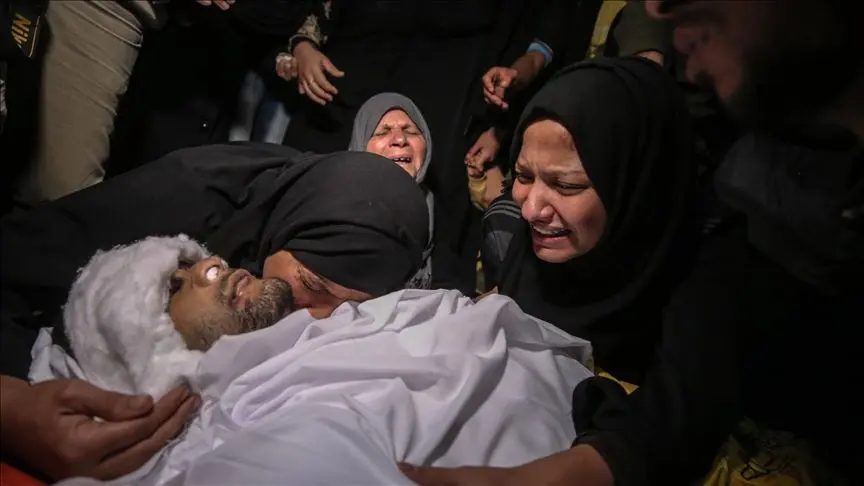

Atallah believes that the Palestinians need a cohesive national strategy that aims to strengthen their steadfastness and resist Israeli plans using smart and thoughtful methods that ensure their survival on their land and the protection of their national rights.

Green light to commit more crimes

Abdullah Abu Rahma, Director General of the Popular Action Department in the Palestinian Wall and Settlement Resistance Commission, warns of the danger of Netanyahu and Smotrich’s statements regarding offensive and defensive plans in the West Bank, stressing that they represent a green light for the occupation forces and settlers to commit more crimes and violence against the Palestinians.


Abu Rahma explains that these statements come in a political and security context that has disastrous repercussions on the lives of Palestinians, as they contribute to the escalation of raids and attacks in all areas of the West Bank.


Abu Rahma believes that what happened in the areas of Tubas, Tamoun, and Al-Far’a refugee camp after the shooting in the village of Al-Funduq, east of Qalqilya, or the settlers’ attack and the closure of roads and checkpoints, is an example of the extent of the expected escalation.


Abu Rahma points out that the West Bank recorded the highest rates of violations during the year 2024 since the beginning of the occupation, as 16,612 attacks and violations were documented by the army and settlers, including raids and attacks on Palestinian villages and Bedouin communities, all of which took place without deterrence, which means that these attacks are being reinforced.


He points to the statements of the head of the West Bank settlement council, Yossi Dagan, in which he called for the construction of a settlement for every Israeli killed following the shooting in the village of Al-Funduq, east of Qalqilya, as this call embodies an expansionist settlement policy aimed at complete control over the Palestinian territories.


Abu Rahma asserts that Smotrich's statements threatening to turn the cities of Nablus and Jenin into a "new Jabalia" reflect the criminal mentality of the occupation, pointing out that the complete destruction that the Nur Shams and Tulkarm camps recently witnessed is an example of the scenarios that the occupation seeks to repeat in the West Bank, perhaps in a more brutal manner.

Large-scale invasions similar to what happened in 2002

Abu Rahma warns that the Israeli escalation may take the form of large-scale invasions similar to what happened in 2002, noting that the occupation is seeking to find justifications to destroy Palestinian institutions and target the Palestinian presence in the West Bank.


He stresses that the Israeli plans aim to create an environment that repels Palestinians by tightening the noose on them, by closing roads, increasing barriers, and targeting their sources of livelihood.


Abu Rahma points out that the occupation may not resort to the public displacement of Palestinians, but it creates harsh conditions that push Palestinians to voluntarily emigrate.


In light of these challenges, Abu Rahma stresses that the internal Palestinian situation does not rise to the level of danger that threatens the existence of Palestinians in all places where they are located, which requires unifying Palestinian efforts and raising the level of national action to confront the Israeli plans that target the Palestinian existence.


Abu Rahma calls for activating popular protection committees to confront settler attacks, pointing out that settlers have exploited the absence of deterrence and their crimes have escalated in recent years.


Abu Rahma stresses the necessity of developing a comprehensive national plan to confront the occupation’s attacks at all levels, emphasizing the importance of popular action to confront these crimes through demonstrations and activities that raise the voice of the Palestinians before the world.


He stresses the importance of international efforts to hold the leaders of the occupation and settlers accountable for their crimes. He also stresses the need to pressure the international community to implement its decisions, impose deterrent sanctions on the occupation system, and prosecute the Israeli perpetrators of crimes, whether they are soldiers, settlers, or politicians, before international courts.


Abu Rahma points out that the statements of the occupation leaders, such as Netanyahu and Smotrich, contain explicit calls to commit war crimes, and these statements must be part of the condemnation files submitted to international courts.


Abu Rahma points out that the legal prosecutions we have recently witnessed against Israeli soldiers in some countries should be extended to include politicians and settlers responsible for crimes in the Palestinian territories.


Abu Rahma stressed that the next stage requires a comprehensive national mobilization to confront the occupation's policies, pointing out that confronting the Israeli attacks requires unity of the Palestinian ranks and intensification of popular and diplomatic efforts to confront the challenges that threaten the Palestinian existence.


Abu Rahma stressed that the Palestinian people have proven their steadfastness in the face of Israeli plans, and will not allow a repetition of the 1948 Nakba, calling for the activation of popular resistance and the defense of the land and existence by all possible means.

Transcending the security dimension to achieve long-term strategic goals

Writer and political researcher Dr. Tamara Haddad believes that Israeli Prime Minister Benjamin Netanyahu’s plans, which he referred to as offensive and defensive, go beyond the security dimension to achieve long-term strategic goals.


According to Haddad, Israel seeks to achieve comprehensive control over land and resources in the West Bank, which falls within Israeli plans to strengthen regional hegemony and implement expansionist agendas targeting the Palestinian cause.


Haddad explains that the offensive plans adopted by Israel aim to achieve a long-term strategic advantage, based on controlling land and resources in the West Bank, while the defensive plans carry a propaganda message to the world, in which Israel claims that it is protecting its citizens from what it calls “Palestinian terrorism.”


Haddad points out that Israel uses various military means and strategies to justify preventing any offensive action from the West Bank, exploiting individual Palestinian operations as a pretext for escalation.


Haddad points out that Israel is exploiting the recent individual Palestinian operations, investing them as a pretext to achieve its major goals, the most important of which is complete control over the West Bank.


In this context, Haddad refers to the threats of Israeli Finance Minister Smotrich to turn Nablus and Jenin into areas similar to Jabalia in Gaza, stressing that these threats reflect Israel's intention to use a scorched earth policy, including the destruction of homes and the displacement of Palestinian residents.


Haddad warns that areas such as Nablus and Jenin could witness large-scale internal displacement if Israeli military operations continue there, as these policies could force residents to leave the camps, either under pressure from aerial bombardment, in parallel with strict security measures that include imposing checkpoints and tightening the noose on the daily lives of Palestinians in various areas of the West Bank.


Haddad confirms that there is a plan on the agenda of the right-wing Israeli government that aims to gradually and officially annex Area C in the West Bank, as Israel is waiting for Trump to return to the White House to officially announce the annexation.


However, Haddad points out, Israel is currently working to impose a fait accompli in the West Bank, exploiting individual Palestinian operations to justify its expansionist policies before the international community, and to reinforce its narrative that the West Bank contains terrorist movements that threaten Israeli national security.


She believes that Israel is following a strategy to gradually weaken the Palestinian Authority, either by weakening it in terms of security and economy, or by creating a political vacuum that leads to its collapse.


The ultimate goal, according to Haddad, is to impose direct Israeli military rule over the West Bank, allowing Israel to implement its security and political policies unhindered.


Haddad touched on what she described as the Israeli ideological project, which considers the West Bank a strategic center in the Zionist narrative about controlling the land.


Haddad refers to Smotrich's statements in which he declared that 2025 would be "the year of decision in the Palestinian-Israeli conflict," by ending any form of Palestinian resistance in the West Bank, and imposing forced displacement on the Palestinian population.

Intensifying the policy of demolishing houses and preventing the entry of workers

Haddad expects that Israel will intensify its policy of demolishing homes in the West Bank, in parallel with preventing the entry of Palestinian workers into the interior, as part of a comprehensive plan aimed at reducing the Palestinian presence in the region by turning Palestinian life into hell. These measures will lead to an escalation of forced displacement, which threatens a large-scale demographic change in the West Bank.


Haddad calls on the Palestinian Authority to activate its diplomatic tools to confront the annexation plans, stressing the importance of communicating with countries that recognize the State of Palestine and believe in the two-state solution, to pressure Israel to stop its expansionist policies, in addition to the need to exploit relations with countries seeking normalization with Israel to pressure the United States and urge it to prevent the implementation of the annexation plans.


Haddad stresses that international organizations play a pivotal role in confronting Israel's policies, stressing the importance of working to enhance international support for the Palestinian cause and intensifying efforts to mitigate the severity of Israeli policies, whether through political pressure or humanitarian support for the Palestinian population in threatened areas.


Haddad warns of the danger of the next stage, as Israel moves towards strengthening its security and political sovereignty over the West Bank, bypassing Area C. The continuation of military operations and annexation policies will increase the suffering of the Palestinians and threaten to weaken the unified Palestinian position, in light of the absence of a comprehensive strategic vision to confront this existential challenge.

Netanyahu and Smotrich's statements reflect official policy

Writer, political analyst and specialist in Israeli affairs, Nihad Abu Ghosh, confirms that Netanyahu and Smotrich’s statements after the shooting attack in the village of Al-Funduq, east of Qalqilya, although they were made in an emotional context, are completely consistent with the political program that the Israeli government, led by Netanyahu, seeks to implement.


Abu Ghosh believes that these statements calling for the destruction of Nablus and Jenin and the punishment of the entire Palestinian people reflect the official Israeli policy that has been going on for many years, and which witnessed a noticeable escalation during the last war on the Gaza Strip.


Abu Ghosh explains that what is happening is a consistent implementation of the Israeli far-right program that aims to displace the Palestinian people and deprive them of their political, civil and human rights.


Abu Ghosh points out that these policies aim to reduce Palestinian national rights to the mere right to survive, within a limited framework of basic rights.


Abu Ghosh stresses that these statements are not just words uttered to vent anger, but rather they are a bad omen and a prelude to new rounds of violence and escalation against the Palestinian people, aiming to implement the projects of the extreme right to control the Palestinian territories, displace the population, and reduce their national rights.


Abu Ghosh stresses that the occupation is working through an integrated system that includes the army, security services, and settlers to achieve this goal.


Abu Ghosh points out that the entire Palestinian people, including their lands, freedom, movement, and even their institutions, are targeted by these policies.


Abu Ghosh stresses that Smotrich and Netanyahu's threats require a comprehensive national response to confront them, as the occupation does not target a specific faction or segment, but rather seeks to weaken all aspects of the Palestinian presence in the West Bank and Gaza Strip.


Abu Ghosh calls for putting political differences aside and uniting on a comprehensive national emergency program aimed at protecting the Palestinian people in the face of Israeli plans, as this program must have clear addresses in both the West Bank and the Gaza Strip.


He points out that this program in Gaza should focus on relief and protecting the existence of the Palestinian people and the integrity of their lands, while strengthening the unity of Palestinian institutions. As for the West Bank, the main title of this program should be protecting the land and confronting the accelerating settlement and creeping annexation projects, and the necessity of confronting the occupation’s attempts to blackmail the role of the Palestinian Authority.


Abu Ghosh stresses that confronting these challenges requires implementing the decisions previously taken by the Palestinian leadership in the Central Council and the National Council, as well as implementing the outcomes of the national dialogue sessions, especially those held in Beijing, which called for the formation of a unified national leadership body, or what was called the “Committee for Activating and Developing the PLO,” as well as forming a national consensus government that restores respect for Palestinian unity in the face of the occupation and its plans.


Abu Ghosh stresses that the unified national leadership must assume the responsibility of protecting the people, defending the land, and strengthening the Palestinian political and legal position in all international forums, stressing that these efforts require moving away from losing bets on American and European initiatives, or betting on changes in Israel, which have proven their failure over the past three decades.


Abu Ghosh stresses that the unity of the Palestinian position is the only way to strengthen Palestinian national rights and ensure sovereignty over land and destiny, and not an attempt to prove good intentions to convince the Americans and Israelis of Palestinian rights.

Statements that carry meanings that go beyond traditional political discourse

Israeli affairs expert Fayez Abbas confirms that Netanyahu and Smotrich's statements, issued after the shooting in the village of Fonda, east of Qalqilya, carry dangerous implications that point to a violent and unprecedented escalation in the occupied West Bank.


Abbas points out that this operation angered the leaders of the settler right and the occupation government, which prompted Israeli officials to issue statements reflecting their intentions towards the people of the West Bank and its main cities.


Abbas points out that Netanyahu's statements in which he spoke about "defense and attack" carry meanings that go beyond traditional political discourse, as they mean granting the Israeli military and security leadership an open mandate to practice violence against the Palestinians in the West Bank, in a manner that may be the most severe since the beginning of the occupation.


In the same context, Abbas sees Smotrich's statements, in which he called for the destruction of the cities of Nablus and Jenin and turning them into a "new Jabalia," as an expression of an aggressive colonial mentality.


Abbas explains that Smotrich had previously called for burning the entire town of Hawara, and now he is threatening to demolish Nablus and Jenin, forgetting that the conditions in the West Bank are completely different from those in the Gaza Strip.


Abbas explains that Nablus is not "Jabalia" and Jenin is not "Beit Hanoun", referring to the complexity of the situation in the West Bank and the difficulty of the occupation implementing policies of destruction and killing similar to what is happening in Gaza.


Abbas confirms that the Israeli occupation is heading towards a new phase of escalation, especially after the events of October 7.


Abbas believes that the occupation, despite its expected escalation in the West Bank, will not be able to implement the same policies of destruction, demolition and mass killing that it is implementing in Gaza due to the difference in the field and political reality.


Abbas is urging the Palestinian leadership to exploit statements by Israeli officials about the destruction of Nablus and Jenin to file complaints with the International Criminal Court.


He stressed that these statements constitute documented material to convict the occupation leaders before the court, especially in light of the issuance of previous international arrest warrants against Prime Minister Netanyahu and former Minister of War Yoav Galant.


Abbas stresses the importance of the Palestinian leadership moving quickly to collect these statements and present them as evidence to the International Criminal Court, while calling for immediate action against the occupation leaders.


Abbas calls on the Palestinian National Authority to intensify its contacts with the international community and the United Nations, to warn them of the possibility of Israel committing new crimes against humanity in the West Bank, similar to what is happening in the Gaza Strip.

PALESTINE

Thu 09 Jan 2025 8:48 am - Jerusalem Time

Extermination is a habit and a cult!

Crime is not measured by the number of people killed, but rather by the ideology that shapes the killer’s thinking and behavior, and his intellectual references, whether he is an individual, a group, or a state that sponsors terrorism and practices genocide as a habit and a form of worship, inspired by the crimes of the founding fathers of the rogue state in 1948, which was established on the ruins of the abandoned villages and the bodies of the victims whose brutality was documented in the “Tantura” documentary, which killed and mutilated them.


A few hours after Netanyahu and Smotrich called for the West Bank to be subjected to what was done to Gaza, a drone arrived “on demand” to cut the opening ribbon of the Gazan version of genocide in the town of Tamoun, killing members of a single family, including two children under the age of ten, who were sitting in the courtyard of their home, while Goebbels’ disciples marketed a weak narrative, which was quickly exposed as a lie, that the target “was a cell planting mines in the targeted area!”


Justice has two pillars: providing justice to the victim and punishing the perpetrator. When these two pillars are not achieved, this will encourage the perpetrator to repeat his crime. The blood of others is permissible for him, and he draws closer to God through it, and God is innocent of it.


The killer did not stop at killing his victims, the children Reda Basharat (9 years old) and Hamza Basharat (10 years old), and the young man Adam Basharat (23 years old), but he also committed the crime of detaining their bodies, despite knowing their identities and ages, which raises suspicions that he stole their organs, and the suspicions will not be removed until a re-autopsy is performed before they are buried.

Stop the genocide now...!

PALESTINE

Wed 08 Jan 2025 10:47 pm - Jerusalem Time

50 Palestinians killed since dawn: dead and wounded in the ongoing Israeli raids on the Gaza Strip

Four citizens were killed and others were injured, Wednesday evening, in an airstrike launched by Israeli occupation aircraft on a house in Deir al-Balah in the central Gaza Strip.


According to local sources, the occupation aircraft bombed the house of the "Al-Dabaji" family near the "UNRWA" clinic west of Deir al-Balah, which resulted in the martyrdom of four citizens and the injury of others.


Earlier, a citizen was killed as a result of the occupation's bombing in the vicinity of Al-Nasr Street, west of Gaza. Five citizens were also killed and others were injured as a result of the occupation's drones targeting a group of citizens inside the municipal park in the center of Gaza City.


Two citizens were killed and others were injured in the bombing of the occupation's drones around Al-Wahda Tower, west of Gaza City.


In the southern Gaza Strip, four citizens were injured when the occupation bombed a house near the Al-Qubba Mosque, west of Khan Yunis.


Medical sources reported that at least 50 citizens were killed in the occupation's raids on the Gaza Strip since dawn on Wednesday, 33 of them in the northern Gaza Strip.


The Israeli occupation continues its aggression on the Gaza Strip, by land, sea and air, since October 7, 2023, which resulted in the death of 45,936 citizens, the majority of whom are women and children, and the injury of 109,274 others, in an incomplete toll, as thousands of victims are still under the rubble and in the streets, and ambulance and rescue crews cannot reach them.

ARAB AND WORLD

Wed 08 Jan 2025 9:46 pm - Jerusalem Time

A3+ group of the Security Council expresses concern over Israel's incursion into Syria

The A3+ group in the UN Security Council expressed its deep concern on Wednesday over the recent Israeli incursions into parts of Syria.


This came in a speech delivered by Algeria's Permanent Representative to the United Nations, Ambassador Amar Benjamaa, on behalf of the members of the group during a Security Council meeting devoted to discussing the humanitarian situation in Syria.


The A3 Plus group includes the three African countries that hold non-permanent seats on the Security Council, currently Algeria, Sierra Leone and Mozambique, in addition to the Caribbean country of Guyana, which has historical solidarity ties with the African continent.


In his speech, Bin Jameh said: “We remain deeply concerned about the actions of the Israeli occupation forces in the occupied Syrian Golan Heights and their incursions into other parts of Syria.”


He added: "The A3 Plus Group remains committed to its principles of Syria's unity, independence, sovereignty and territorial integrity."


In the same context, the Algerian delegate stressed, saying: “We categorically reject any attempts to divide Syria, annex any part of its territory, or violate its sovereignty and territorial integrity in any other way.”


Taking advantage of the Syrian factions’ overthrow of Bashar al-Assad’s regime on December 8, Israel has recently intensified its air strikes targeting military sites in various parts of the country, in a flagrant violation of its sovereignty.


Israel also announced the collapse of the 1974 disengagement agreement with Syria, and the deployment of its army in the demilitarized buffer zone in the Syrian Golan Heights, most of whose area it has occupied since 1967, in a move condemned by the United Nations and Arab countries.


Recent statements by Israeli officials regarding Syria reflect anger at the new administration taking over after the fall of the Assad regime, which media reports and statements by officials indicate that Israel never wanted to see fall and "saw it as a useful player."


During the same Security Council meeting chaired by Algeria on Wednesday, Ben Jamaa considered that Syria "is currently at a pivotal crossroads after its people have suffered for years."


He pointed out that the Syrian people "now aspire to build a future in which a unified Syria flourishes, embracing all its citizens, regardless of their backgrounds."


The Algerian delegate called for the need to maintain steadfast support for a comprehensive political process in Syria "led by the Syrians, and in line with Security Council Resolution 2254."


"After 14 years of devastating conflict, the Syrian people deserve the full support and solidarity of the international community," he said.


Resolution 2254 was issued by the United Nations in 2015, and expresses support for a Syrian-led political process facilitated by the United Nations, which establishes credible, inclusive, non-sectarian governance, and sets a timetable and process for drafting a new constitution.


Ben Jameh, on the other hand, pointed out that the humanitarian situation in Syria "remains catastrophic and requires urgent attention."


He pointed out that the recent developments in Syria "caused the displacement of more than 664,000 people recently," according to him, which requires "strengthening efforts to facilitate their safe and dignified return."


He continued, addressing the Syrians: “It is time to silence the guns and work together for a brighter future for your country.”


It is noteworthy that the administration formed in Syria after the fall of the Assad regime confirms that the country, in its new era, will guarantee the dignity and freedom of its citizens, with fair representation of all spectrums and ethnicities.


But she vowed to bring to justice those involved in killing and torturing thousands of Syrians during the rule of the ousted regime.

PALESTINE

Wed 08 Jan 2025 8:34 pm - Jerusalem Time

Hamas: The occupation is deliberately exacerbating the health situation in Gaza

Hamas said on Wednesday that Israel is deliberately exacerbating the health situation in the Gaza Strip and preventing fuel and medical supplies from reaching hospitals, which threatens the complete collapse of the health sector in light of the ongoing genocide for more than 15 months.


It explained in a statement: "The occupation is still deliberately preventing fuel from reaching hospitals except in very limited quantities that are not enough for a few hours."

It added: "The occupation is trying to deceive the international community into allowing aid in, while it continues its open war on hospitals and medical centers, targeting them with bombing and destruction, and preventing the entry of fuel and medical supplies necessary to operate them."


It pointed out that "the occupation is deliberately exacerbating the health situation in the Strip, and keeping the hospitals in a state of permanent crisis, in order to complete its plan to destroy the health sector in Gaza, without regard to the lives of patients and the wounded."


Hamas called on the United Nations, the World Health Organization, and the International Committee of the Red Cross to "take immediate action to save the health sector from the risk of complete collapse," calling for providing emergency hospital needs and sending specialized medical delegations to treat the injured and wounded.


In the same context, the Ministry of Health in Gaza appealed to the United Nations and humanitarian organizations to intervene urgently to secure fuel on a regular basis for hospitals.


The ministry said in a statement that "on Wednesday, very limited quantities of fuel were brought in for hospital generators in Gaza, sufficient for today only."


Hospitals in Gaza are facing a shortage of fuel to operate generators due to power outages, in addition to a shortage of medicines and medical supplies due to the lack of sufficient aid.

ARAB AND WORLD

Wed 08 Jan 2025 8:06 pm - Jerusalem Time

Blinken: 'We are very close' to ceasefire, hostage release

US Secretary of State Antony Blinken said on Wednesday, "We are very close to a ceasefire and hostage release agreement," hoping to reach it in the time remaining for President Joe Biden's administration.


“I hope we can get it done in the time we have left, but if we don’t, the plan that President [Joe] Biden has put forward for a ceasefire and hostage release will be handed over to the next administration, and I think when we get that deal — and we will get it — it will be based on the plan that President Biden put forward to the world last May,” Blinken said at a news conference with his French counterpart in Paris, stressing that the Biden administration has spent a significant amount of time pushing an initiative to govern Gaza after the war that includes arrangements for the security, governance and reconstruction of the Strip.


"We are prepared to hand that over to the [Trump] administration so they can work on it and take advantage of it when the opportunity arises," he added.


Blinken also highlighted the work the Biden administration has done to secure a normalization deal between Israel and Saudi Arabia.


“All of this is ready to be implemented if the opportunity arises, with a ceasefire in Gaza, as well as understandings about a path forward for the Palestinians. So there is a tremendous opportunity there,” Blinken said.


Regarding the situation in Lebanon, Blinken confirmed in a press conference on Wednesday on the sidelines of his visit to France that the ceasefire monitoring mechanism in Lebanon is "working well," highlighting that the agreement to end the fighting in this country was achieved through American and French efforts.


He expressed his hope for "sustainable peace" in Lebanon, saying, "Yesterday we saw that more than a third of the Israeli forces withdrew from Lebanon. I believe that the ceasefire can form a bridge towards sustainable peace."

PALESTINE

Wed 08 Jan 2025 7:02 pm - Jerusalem Time

Israeli occupation army talks about retrieving the body of a prisoner from a tunnel in Rafah

The Israeli occupation army spoke on Wednesday evening about retrieving the body of a prisoner from inside a tunnel in the city of Rafah, south of the Gaza Strip.


This came in a statement published on the "X" platform.


The army said that its forces and the General Security Service (Shabak) "were able to retrieve the body of Yousef al-Zayadneh from inside a tunnel in the Rafah area on Tuesday."


He added that Al-Zayadneh "was kidnapped on October 7, 2023 and killed while in captivity," without providing any details on how he was killed.


ARAB AND WORLD

Wed 08 Jan 2025 6:45 pm - Jerusalem Time

Saudi Arabia rejects alleged map of Israel that includes Arab lands

On Wednesday, Saudi Arabia expressed its condemnation and rejection of Israel’s false allegations and claims regarding a map published by official accounts affiliated with the occupation, which includes parts of Jordan, Lebanon, and Syria.


In a statement by its Ministry of Foreign Affairs, it stressed that such extremist allegations demonstrate the intentions of the occupation authorities to consolidate their occupation, continue blatant attacks on the sovereignty of states, and violate international laws and norms.


Saudi Arabia renewed its call for the international community to play its role in stopping Israeli violations against the countries and peoples of the region, stressing the need to respect the sovereignty of states and their borders, to limit the exacerbation of the region's crises and undermine efforts aimed at achieving a just and comprehensive peace.

ARAB AND WORLD

Wed 08 Jan 2025 6:33 pm - Jerusalem Time

Omani Minister Comments on Proposal to Send International Forces to Gaza

Omani Foreign Minister Badr Al-Busaidi commented on Wednesday on the proposal to send international forces to the Gaza Strip following the ceasefire in the Strip.


Al-Busaidi said during the "Oman and the World" conference organized by the Omani Ministry of Information: "The Sultanate of Oman does not see a need to send foreign forces to the Gaza Strip after the ceasefire and the end of the genocide committed by Israel for 15 months, indicating that the Palestinians are capable of governing themselves."


In response to a journalist's question about the possibility of Gulf states sending forces to the Gaza Strip after a ceasefire and the cessation of the genocide committed by Israel, he replied: "Palestine is for the Palestinians, and they are capable of governing themselves."


Al-Busaidi explained that "Palestine has the necessary competencies and capabilities to manage it without external interference from anyone," adding that other countries must help by financing the Palestinians and continuing diplomatic work to support them.


In recent months, Western media have reported a proposal to send a multinational force that would include some regional countries if the United States supported steps toward establishing a Palestinian state.


In response to a journalist's question about the possibility of Oman hosting a Hamas office in the Sultanate, he said that "Palestine has an embassy in Muscat" and that the latter has an embassy in the city of Ramallah in the West Bank.


In this regard, the Omani Minister called on the Palestinians to unite under one roof, and urged them to unite their national ranks to overcome the current crises.


Regarding the ceasefire in the Gaza Strip, he pointed out that many efforts have been made to achieve this, and to stop the ongoing tragedies and crimes committed against the defenceless Palestinian people.


The minister expressed his hope that there would be greater efforts and initiatives to cease fire with the arrival of the next US administration headed by Donald Trump, who will assume office on January 20.


He stressed that a ceasefire would not be enough, emphasizing the need to find a solution to restore the rights of the Palestinian people in accordance with international charters and resolutions and the peace initiative approved by the Arab League at its summit in 2002.


In a related context, he explained that there is a growing support in the international community for the justice of the Palestinian cause, and that there is a near international consensus on "criminalizing Israeli policies and the criminal destruction and human and material losses" caused by Tel Aviv in the Gaza Strip.


Al-Busaidi said, "Neutral countries and even countries that lean towards Israel have begun to talk about the credibility and justice of the Palestinian right."


He stressed that the Middle East region "will not enjoy peace" without addressing the Palestinian issue on the basis of the two-state solution (Palestinian and Israeli).


PALESTINE

Wed 08 Jan 2025 5:53 pm - Jerusalem Time

Israeli forces assaulted a Palestinian woman and injured her in Tulkarm camp

This evening, Wednesday, a woman was injured after the Israeli occupation army assaulted her in Al-Ghanem neighborhood in Tulkarm camp.


The Palestinian Red Crescent Society reported that its crews transferred an injured woman (36 years old) from the camp to the Martyr Thabet Thabet Governmental Hospital, after she was beaten by the occupation soldiers during their raid on the camp.


The occupation bulldozers continue to destroy the infrastructure of Tulkarm camp, in its various neighborhoods, including Al-Balawneh and Al-Madaris neighborhoods, Al-Akasha, Al-Rabaia, and Al-Shuhada, and destroy the public and private property of citizens.


According to local sources, the occupation forces raided citizens' homes and forced them to leave the camp, specifically in the Al-Ghanem neighborhood, which is witnessing a large deployment of occupation soldiers and their vehicles.


The occupation forces deployed their snipers on the roofs of tall buildings inside and around the camp, amidst the sounds of heavy gunfire and explosions, while they tightened their siege on its entrances from all directions, and pushed more of their vehicles into the area.


The occupation forces also stormed the Dhnaba suburb adjacent to the camp, and fired smoke bombs heavily at the Al-Firdaws Mosque junction at its entrance, and raided a number of citizens’ homes there, searched them, and subjected their residents to interrogation.


Dozens of military vehicles, backed by five heavy bulldozers, stormed the city of Tulkarm this afternoon, from its western entrance, and headed towards its camp, passing through its main streets in the western and northern neighborhoods, while intercepting citizens' vehicles.

ARAB AND WORLD

Wed 08 Jan 2025 5:44 pm - Jerusalem Time

Al-Sisi: Establishing an independent Palestinian state is the only way to sustainable peace

Egyptian President Abdel Fattah El-Sisi said on Wednesday that establishing an independent Palestinian state is the only way to sustainable peace.


The Egyptian president added, during a press conference with his Cypriot counterpart and the Greek prime minister, following the tripartite summit in Cairo today, Wednesday, that security and stability must be achieved in the region, a ceasefire must be reached in the Gaza Strip, humanitarian aid must be sent to the Palestinian people in the Strip, and forced displacement must be prevented.


President Sisi also stressed that the only way to achieve peace and cooperation among peoples is to implement the relevant international resolutions, adding, "It is time to use reason in order to achieve security and stability in the region."

OPINIONS

Wed 08 Jan 2025 5:30 pm - Jerusalem Time

Group Psychology in Palestine: Shield of Struggle and Sword of Division

Dr. Samah Gabr

Dr. Samah Gabr

Opinion Writer

In Palestine, where blood mixes with soil, and where the occupation attempts to obliterate all signs of life, group psychology emerges as a fundamental shield in the battle of steadfastness. It is the force that rebuilds what the war machine has destroyed, and inspires the individual that his existence is part of a cohesive collective fabric. But this force, as much as it can build, can turn into a wrecking ball if it is misused or slips into the labyrinths of division.


The Group as a Fortress: A Force That Defies Destruction


During the last aggression on Gaza, when only rubble remained as a witness to human existence, the spirit of community emerged to bring life back to what seemed to have ended. Khaled, a simple worker, opened his modest home to shelter displaced families from the Shujaiya neighborhood. “I never felt for a moment that I was doing a favor,” he says. “At this moment, we are one family, and our homes belong to everyone who lost theirs.”


These moments reflect how group psychology in Palestine is turning into a lifeline. From grassroots initiatives to rebuild homes, to mothers caring for neighbors’ children during bombings, Palestinians are demonstrating their ability to turn tragedy into an opportunity to foster unity.


National Identity: A Collective Narrative Under Siege


The Israeli occupation did not only target the land, but also tried to obliterate the Palestinian national identity. But in the face of these attempts, the group’s psychology turned into a cultural tool of resistance. The walls covered with drawings immortalizing the martyrs, and the embroidered dresses bearing stories of the Nakba and struggle, all reflect this cultural resistance.


In Jerusalem, Umm Ahmad spoke about teaching her granddaughter the art of Palestinian embroidery. “This dress is not just a piece of cloth,” she said. “It is our history, an identity that the occupation cannot erase. When my granddaughter completes the dress, she will have woven into every stitch a story of our displaced villages.”


The Group as a Double-Edged Sword: Lessons from Division


Just as the group can be a tool of power, it can become a burden if awareness is absent. The political division between Gaza and the West Bank was not just a difference in visions, but a collective hemorrhage that affected the spirit of Palestinian steadfastness and weakened global solidarity.


Mahmoud, a young man from Ramallah, who participated in a demonstration calling for an end to the division, expressed his frustration, saying: “We fight the occupation with one hand, and weaken ourselves with the other. We cannot win if we fight each other.”


This division was not limited to political factions only, but also seeped into society, where party affiliations came to define daily relationships and deepen the gap between citizens.


Conformity Pressure: When the Group Stifles the Individual's Spirit


Often, belonging to a group turns into enormous psychological pressure on the individual, creating an environment that robs him of his freedom of thought and expression. In some Palestinian factions or families, the individual is required to fully comply with the group’s rules and decisions, even if they conflict with his personal convictions.


A young Palestinian man working in a civil society organization described this pressure, saying: “Sometimes, I find myself forced to support decisions that I do not believe in, just because I fear being accused of disloyalty or abandoning the group. This feeling creates internal alienation and weakens my ability to take initiative.”


This kind of pressure kills diversity within the group and prevents the emergence of new ideas. Instead of being an incubator for creativity, the group turns into a space for intellectual stagnation. In the context of the occupation, where Palestinians need all the energy possible, this alienation becomes a great loss for the national project.


How do we reclaim the group as a tool for liberation?


Reclaiming the group as a tool for liberation requires a sustained effort to reframe its role in Palestinian life. The group must be transformed into a space that promotes the highest human and national values and embraces intellectual diversity, rather than being a tool for division or exclusion.

National identity must be strengthened as an umbrella that transcends all partisan and factional affiliations. When the Palestinian flag is raised, it must cover everyone without exception. Stories and narratives that reflect the struggle of Palestinians as a whole, regardless of their affiliations, can create a new awareness that reunites the ranks.


Free dialogue should also be encouraged within groups, so that each individual has the right to express himself and participate. This dialogue does not only mean accepting different opinions, but also turning them into strengths that enrich the group rather than divide it.


We must confront the internal oppression that creeps into Palestinian society. Traditional values that hold women back or marginalize young people must be replaced with a system that enshrines social justice. For example, strengthening the role of women in community leadership can be a step toward building a stronger and more just group.


Finally, it is necessary to build bridges of solidarity with international groups that support the Palestinian cause. International solidarity can give Palestinians a sense that they are not alone in the battle, and highlight their cause as part of a global human struggle against injustice and colonialism.


In the face of occupation, the Palestinian cannot stand alone. The Palestinian groups, with their good and bad, are the force that has kept the cause alive for decades. But it is a force that needs awareness and openness, lest it become a burden on the liberation project.


As one of the notables of Jenin camp said: “It is not enough to confront the occupation as an external enemy, but we must confront everything that is destroying the fabric of our unity from within. When we listen to the voice of our conscience and make solidarity our compass, our strength becomes greater than an enemy can conquer, and deeper than the winds of division can shake it.”


Group psychology is not just a passing social phenomenon, but rather the backbone of the Palestinian struggle. It is the latent force that, if properly invested, can transcend divisions and build a comprehensive national project that will lead the Palestinians steadfastly and with dignity towards freedom and liberation.

PALESTINE

Wed 08 Jan 2025 5:10 pm - Jerusalem Time

Israel hands over the bodies of 3 Palestinians, including two children, south of Tubas

This evening, Wednesday, the Israeli occupation forces handed over the bodies of 3 dead, including two children, from the town of Tamoun, south of the city of Tubas.


The Red Crescent said that its crews received the bodies of the three dead: Reda Ali Ahmed Basharat (9 years old), Hamza Ammar Ahmed Basharat (10 years old), and Adam Khair al-Din Ahmed Basharat (23 years old), who were martyred this morning as a result of an Israeli occupation drone bombing a site in the town. They were transferred to the Turkish Tubas Hospital.


Tamoun Mayor Najeh Bani Odeh said that the bodies of the three martyrs will be buried in the town tonight after the necessary procedures are completed.


The occupation forces stormed the town of Tamoun this morning and surrounded two houses, and raided several homes of citizens. At the same time, they carried out an airstrike via a drone on a residential area, which led to the death of the three people, and kidnapped their bodies.

ARAB AND WORLD

Wed 08 Jan 2025 4:56 pm - Jerusalem Time

Trump envoy to take part in Qatar talks on Gaza ceasefire

Steve Witkoff, President-elect Donald Trump's Middle East envoy, said Tuesday he will travel to Qatar to participate in ceasefire and hostage negotiations in Gaza with Biden administration officials.


Chances of a deal appear slim as Israeli Prime Minister Benjamin Netanyahu has made clear he has no intention of ending the genocidal war and Hamas says any deal must lead to a permanent ceasefire, but Witkoff insisted progress was being made.


It is unprecedented for an official from an incoming administration to join the diplomatic work of the current administration.


“We’re making a lot of progress, and I don’t want to say too much because I think they’re doing a really good job in Doha,” Witkoff, a real estate investor, said at a news conference with Trump at Mar-a-Lago.


“I’m really optimistic that by the time the inauguration comes around, we’ll have some good things to announce on behalf of the president,” Witkoff said. Asked what was holding up an agreement, Witkoff declined to answer. “I think we were close to [an agreement]. I don’t want to discuss what held it up — there’s no point in being negative in any way,” he said.


Trump reiterated his threat that there would be "hell to pay" if Hamas did not begin releasing the hostages by his inauguration on January 20.


“If these hostages are not returned — if they are not returned by the time I take office — hell will break out in the Middle East and it will not be good for Hamas and it will not be good, frankly, for anybody,” Trump said. “Hell will break out. I don’t need to say more, but that is the case and they should have been returned long ago.”


The president-elect has pledged to be a strong supporter of Israel, as he was in his first term, and said Monday that he is "the best friend Israel has ever had."


According to media reports, Hamas has issued a list of 34 hostages it wants to release as part of the first phase of a ceasefire agreement in exchange for the release of Palestinian prisoners.


The Times of Israel reported that the possible deal on the table would only include a temporary ceasefire of six to seven weeks. Relatives of the Israelis still being held in Gaza are demanding that the government seek a comprehensive agreement that would free all the hostages and end the conflict.


During previous rounds of negotiations, Netanyahu has worked to sabotage the chances of reaching an agreement by constantly declaring that he would not agree to a permanent truce and adding new demands.