PALESTINE

Wed 19 Mar 2025 1:09 pm - Jerusalem Time

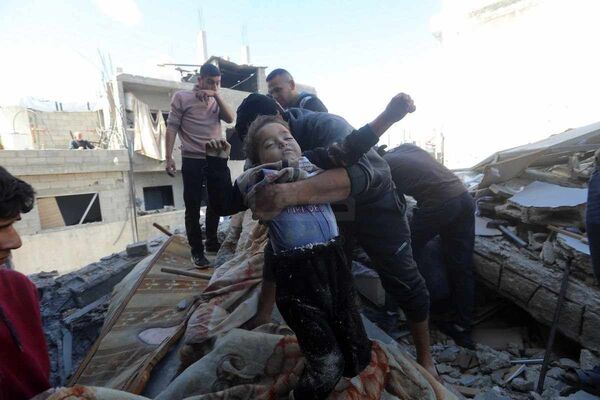
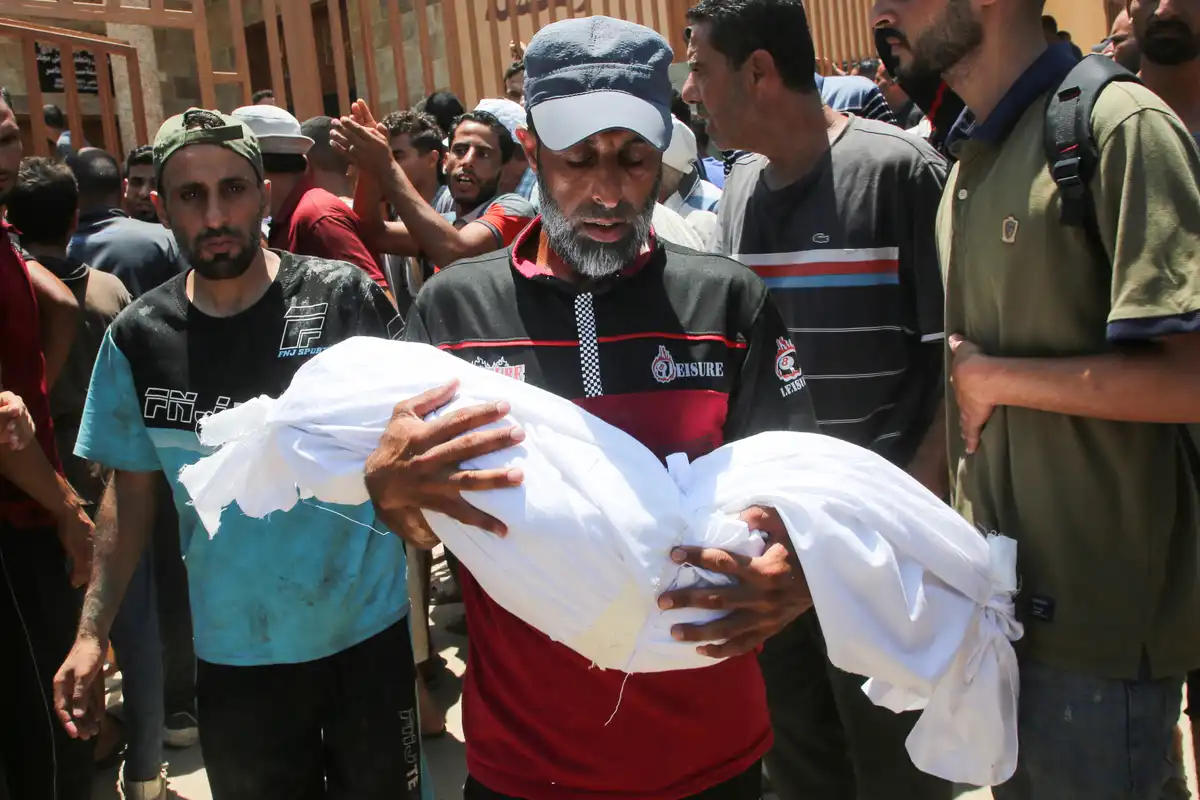
Dead and wounded, including UN employees, in various areas of the Gaza Strip.

A number of citizens were killed and injured on Wednesday as a result of the ongoing Israeli attacks on various areas of the Gaza Strip.


In the latest developments: 4 dead and several injuries as a result of the bombing of a vehicle in the Musabah area, north of Rafah, in the southern Gaza Strip.


Meanwhile, three civilians were killed in an Israeli airstrike on the vicinity of Al-Mahta Mosque in the Al-Tuffah neighborhood, east of the city.


Three citizens were killed and others injured when an apartment in the city's Al-Rimal neighborhood was targeted.


25 citizens were killed and others injured in an Israeli bombardment of a house in the Al-Sabra neighborhood of Gaza City.


Meanwhile, the Ministry of Health in Gaza announced the death of a foreign employee working for UN agencies and the serious injury of five others in an Israeli airstrike on the UN headquarters in Deir al-Balah, central Gaza Strip.


Three civilians were killed and others injured when the occupation forces targeted the home of the Al-Kilani family in the Al-Shimaa area of Beit Lahia, north of the Gaza Strip.


Two civilians were killed and others injured in the bombing of a house in the Al-Zeitoun neighborhood, southeast of Gaza City.

PALESTINE

Wed 19 Mar 2025 1:04 pm - Jerusalem Time

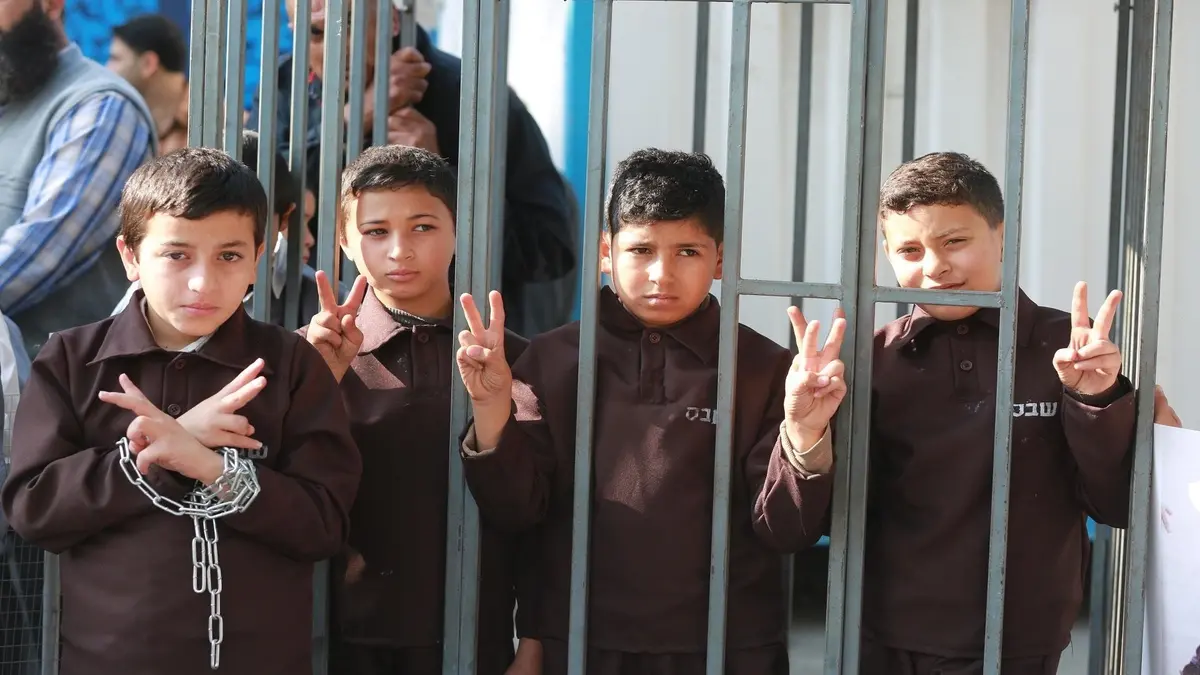
The Palestinian Damon Cubs are suffering from difficult detention conditions.

The Commission of Prisoners' Affairs and Ex-Prisoners said on Wednesday that young prisoners in Damon prison are experiencing difficult detention conditions, with insects rampant in their rooms and are subjected to almost daily surprise searches that leave them exposed to the elements for hours.


The Commission's lawyer reported that conditions in the Ashbal section, where 70 detainees are held, are difficult, as they are subjected to surprise inspections from time to time. A week ago, at dawn, a unit called "Yamaz" stormed the section and took the prisoners out into the yard after shackling them hand and foot for two hours in the cold until the unit's personnel finished the inspection.


The Commission noted that four days ago, prison guards, accompanied by an officer, entered the rooms and confiscated all the prisoners' clothing, leaving each young prisoner with one gray uniform in addition to the brown Shabas uniform.


The lawyer added, citing detainees she visited, that the prisoners are suffering from a widespread bedbug infestation in some rooms.

As for the duration of the break, two prisoners’ rooms go out together for a break every day for an hour.


The Commission's lawyer visited the young prisoner Adam Fawaz Reda Abu Zant (17 years old), from the town of Al-Ram, north of Jerusalem, who is being held in Section 4 for young detainees and was arrested on 08/27/2024, sentenced to 6 months administrative detention for the second time. He suffers from an injury to his hand and his condition is being monitored by the prison clinic.


The Commission's lawyer also visited the young prisoner Yousef Nidal Abdel Ghafer Zion, 17 years old, from the town of Abwein, northwest of Ramallah. He was arrested on November 1, 2024. His health is generally good and he is serving a four-month administrative detention sentence for the second time.


The lawyer noted that the two young prisoners, Mohammed Salama from Tuqu' and Ahmed Dahbour from Al-Wahdat camp in Amman, are also in Al-Damon prison.

ARAB AND WORLD

Wed 19 Mar 2025 12:39 pm - Jerusalem Time

Trump releases JFK assassination documents... What do they include?

US President Donald Trump has released documents related to the 1963 assassination of former President John F. Kennedy, as part of his campaign promise to provide greater transparency regarding the shocking event in Texas.


A first batch of electronic copies of the documents has been posted on the National Archives website, with more than 80,000 expected to be made public after Justice Department lawyers spent hours scrutinizing them. The digital documents include files of memos, one of which is labeled "Secret." This is a typed account, including handwritten notes, of a 1964 interview with a Warren Commission researcher in which he questioned CIA employee Lee Wegreen about inconsistencies in materials provided to the commission by the State Department and the CIA regarding Soviet-American marriages.

* Conspiracy theories


The documents also included references to various conspiracy theories suggesting that Lee Harvey Oswald, Kennedy's assassin, left the Soviet Union in 1962 intent on assassinating the popular young president.

Other documents downplayed Oswald's connection to the Soviet Union. A November 1991 document cited a report by an American university professor named E. B. Smith, who reported that he spoke in Moscow about Oswald with Soviet intelligence official "Slava" Nikonov, who said he reviewed five voluminous files on the assassin to determine whether he was a KGB agent.

"Nikonov is now confident that Oswald was never an agent under the control of the Soviet intelligence," Smith added.

* Fidel Castro

The 1963 U.S. Department of Defense documents covered the Cold War in the early 1960s and U.S. intervention in Latin America in an attempt to thwart Cuban leader Fidel Castro's support for communist forces in other countries. The documents indicate that Castro would not go so far as to provoke a war with the United States or escalate to the point of "serious and immediate danger to the Castro regime." The documents stated, "It appears likely that Castro will intensify his support for subversive forces in Latin America."

A document published in January 1962 reveals details of a top-secret project called "Operation Nemes," or simply "The Cuban Project," a CIA-led campaign of covert operations and sabotage against Cuba, approved by Kennedy in 1961, with the aim of overthrowing the Castro regime.

* "Maximum transparency"

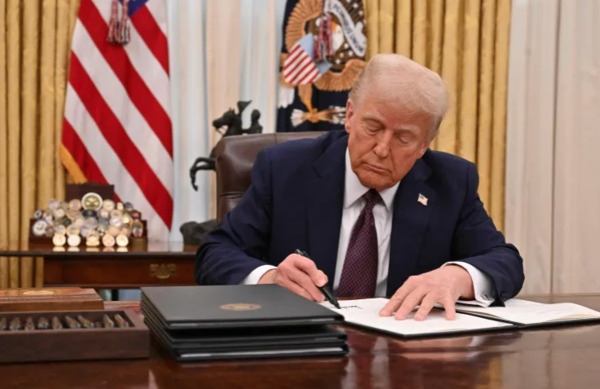
Shortly after taking office in January, Trump signed an order releasing documents, which led the FBI to find thousands of new documents related to the Kennedy assassination in Dallas.

Amid efforts to comply with Trump's order, an email seen by Reuters late Monday showed that the Justice Department ordered some of its lawyers who handle sensitive national security cases to urgently review assassination records.

“President Trump is ushering in a new era of extreme transparency,” Director of National Intelligence Tulsi Gabbard said in a post on Twitter.

* Experts are skeptical

Kennedy's assassination was attributed to a single gunman, Oswald. The Department of Justice and other federal government agencies confirmed this conclusion in the decades that followed. But polls show that many Americans still believe his death was the result of a conspiracy.

Experts doubted that this new information would change the basic facts of the case: Lee Harvey Oswald shot Kennedy from the window of a school book warehouse as the president's motorcade passed through Dealey Square in Dallas.

"Those expecting major events will almost certainly be disappointed," said Larry Sabato, director of the Center for Politics at the University of Virginia and author of a book about the assassination. He added that some pages may simply be previously published material with some words redacted.

* CIA involvement?

Trump also promised to release documents related to the assassinations of civil rights leader Martin Luther King Jr. and Senator Robert Kennedy, who were killed in 1968. He gave Trump more time to develop a plan for releasing these documents.

Trump's Health and Human Services Secretary, Robert Kennedy Jr., son of Robert Kennedy and nephew of John F. Kennedy, said he believed the CIA was involved in his uncle's death, a claim the agency described as baseless. Kennedy Jr. also said he believed his father was killed by multiple gunmen, a claim that contradicts official accounts.

Among the things the documents may reveal is that the CIA knew more about Oswald than previously disclosed. Questions remain about what the agency knew about Oswald's visits to Mexico City six weeks before the assassination. During that trip, Oswald visited the Soviet embassy. Trump said, "People have been waiting for this for decades. It's going to be very interesting."


OPINIONS

Wed 19 Mar 2025 12:35 pm - Jerusalem Time

National priorities and the self-destructive syndrome

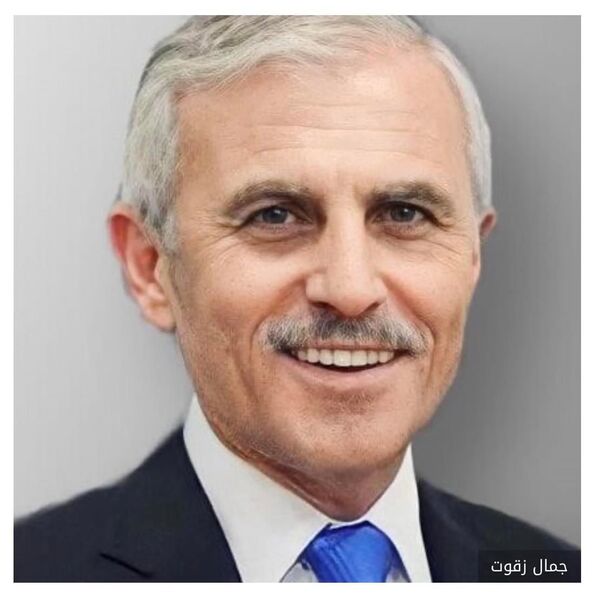
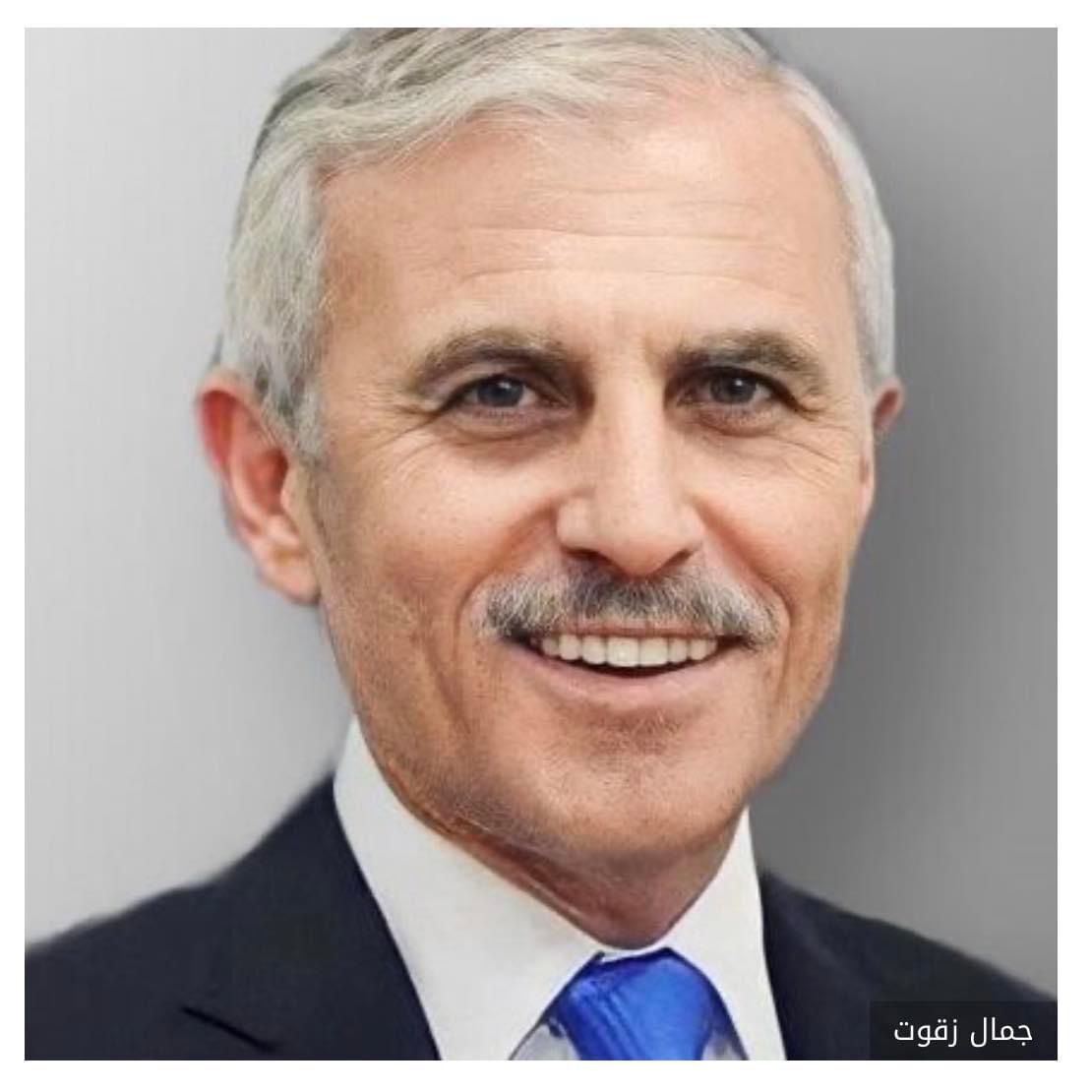
Jamal Zaqout

Jamal Zaqout

Opinion Writer

At its 23rd session, held in Ramallah on April 30, 2018, the Palestinian National Council's work was essentially limited to restructuring and dismantling the Palestine Liberation Organization's (PLO) bodies. This contradicted the national imperative to open the PLO's doors to all in order to advance the role of inclusive national institutions, in accordance with the decisions of the PNC Preparatory Committee meeting held in Beirut in January 2017, with the participation of the PNC President, members of the Executive Committee, and leaders of all factions, including Hamas and Islamic Jihad. This was a consecration of the requirements of political hegemony over national decision-making based on the principle of loyalty to the adopted policy and the exclusion of those who object to it, despite the clear failure of the policy, particularly with regard to the political settlement process and the relationship with Israel. All of this constituted a complete disregard for all previous decisions taken by the Central Council, which called on the Executive Committee to take a number of steps, the essence of which was to review this process and halt the path of failure that had begun to afflict the Palestinian struggle and its institutions with chronic damage, as if it had become an embodiment of self-erosion.

Thus, the last vestiges of the frontal stance expressed by the National Council were overthrown, despite the filth and burdens it was burdened with in the context of its floatation by inflating the number of loyalists in its membership, at the expense of the vital social and political forces. During that session, the previously innovated clause regarding the formation of the Central Council was used as an intermediate stage between the two sessions of the National Council to monitor and correct the work of the executive, to transfer all political and organizational powers of the National Council to the Central Council. In effect, this meant abolishing the National Council and reforming the Central Council with a majority of loyalist supporters, particularly with regard to the independent members who were added during that National Council session, bringing them in and "appointing" them directly and during the same session to the Central Council. This was, of course, in addition to the dissolution of the Palestinian Authority's Legislative Council and the abolition of all forms of oversight over its government, including popular and media oversight.

In the context of further emptiness of the organization of its front-line content, the work of the executive was transformed into a mere advisory body to the president. The executive accepted this situation and accepted this fait accompli without even a single protest about the transformation of the highest “front-line executive authority” into a mere advisory club and a bureau for political chatter.

This state of affairs of the PLO was not merely a coincidence or a result of the aging of its leadership, but rather a result of the failure of its policy and the insistence on pursuing a policy of appeasement in the context of the effort to engineer the Palestinian political system, by emptying it of the elements of strength that enabled it to rise through the years of revolution and the formation of the PLO, especially with regard to preserving national unity and its frontal character, and the nature of representation that it consolidated through revolutionary legitimacy over the decades that followed the founding of the PLO.

The erosion of the PLO's standing has not only become apparent internally, particularly in relation to the absence of its role and that of the Palestinian Authority in the political confrontation with the war of extermination, and the suspicious stubbornness in refusing to pursue anything that would strengthen its unifying leadership role in accordance with the consensus of the factions in Beijing, supported by a popular consensus that is the broadest since falling into the trap of division in 2007. Rather, it has reflected on the PLO's representative standing, when a number of Arab leaders met in Riyadh, and the Palestinian presence was absent, at a time when the sole topic of discussion was limited to the future of the Palestinian situation, particularly the war on the Gaza Strip, its reconstruction mechanisms, and the frameworks capable of doing so. This erosion was also evident when, instead of placing ways to end the division on the summit agenda, to pursue the Arab League's role in ending it as an existential need in accordance with the decisions of its foreign ministers in 2007, under the pretext that this is an internal Palestinian affair, the summit was dragged into issues related to the "ruling party" of the Palestinian Authority. Despite their importance, the Arab Summit is not the appropriate place to address them, as much as it is an expression of the erosion of its standing.

The highest national priority for our Palestinian people is, first and foremost, to stop the war of extermination against the Gaza Strip, and to mobilize all forces and energies to prevent the resumption of Israeli aggression on a large scale, while simultaneously confronting the war of annexation of the West Bank and the persistence of the Judaization of Jerusalem.
The question that arises is whether the call for a central council to create the position of vice president of the organization constitutes a priority for achieving this goal? Especially since the constitutional declaration regarding the President of the National Council filling the position of president in the event of a vacancy has addressed fears of a vacuum. Or is it another attempt to further ensure the continuity of hegemony and control, and perhaps deepen the dispute within the "national frameworks" that have prevailed in a pathological environment of competition over the so-called succession? This is a question of external origin, not an internal requirement, and has been circulating for more than a decade. It aims to spread illusions that serve no purpose other than to control the decision-making mechanism, thus consecrating monopoly on the one hand, and deepening internal conflicts on the other. This is at a time when what is required is a return to a common word that mobilizes all the energies of our people in defending their rights that are being liquidated. There is no alternative to this matter except by restoring the PLO as the national front that includes all forces on the basis of common denominators and a unified collective leadership, and forming a transitional consensus government until elections are held, which places at the top of its priorities strengthening the ability of our people to withstand and survive and protect its national destiny from the imminent danger of liquidation, and not further erosion in the context of the struggle over legitimacy that is being overthrown every day, which the Palestinian people reject, and on it lies the responsibility to correct it by restoring the PLO and its role in leading the national liberation struggle.

PALESTINE

Wed 19 Mar 2025 12:20 pm - Jerusalem Time

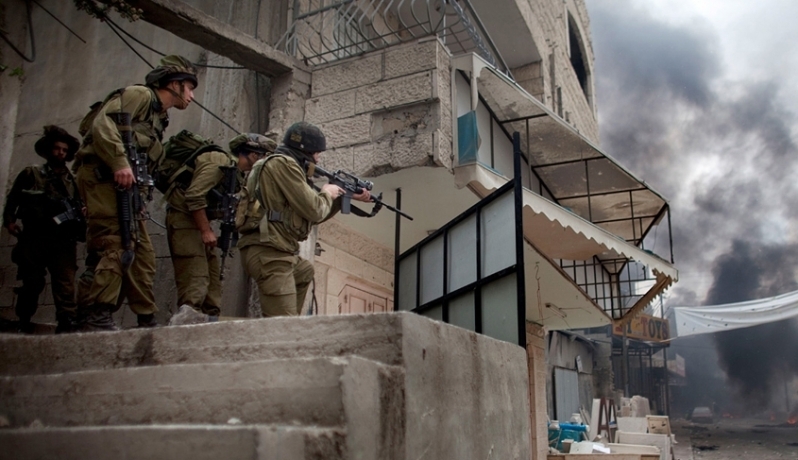
Israeli occupation forces continue to storm the town of Silwad, arrest a citizen, and raid dozens of homes.

Since dawn on Wednesday, Israeli occupation forces have continued their raids on the town of Silwad, east of Ramallah, and have arrested a citizen.


Local sources reported that the occupation forces have continued their raid on the town since dawn today, and arrested citizen Ahmed Othman Hamed (49 years old), while detaining dozens of citizens and later releasing them after investigating them in the field.


She added that the occupation forces searched dozens of homes in the town, including those of detainees and freed prisoners, vandalizing and tampering with their contents. They also seized a number of vehicles belonging to local residents.


She reported that the occupation forces deployed hundreds of soldiers and military vehicles throughout the town's neighborhoods and streets, disrupting all aspects of life, including institutions, schools, and commercial activities.

PALESTINE

Wed 19 Mar 2025 12:05 pm - Jerusalem Time

OCHA: 170 children were killed during the occupation's aggression on the Gaza Strip.

The United Nations Office for the Coordination of Humanitarian Affairs (OCHA) announced that more than 170 children were killed during the Israeli occupation's aggression on the Gaza Strip early Tuesday morning.


The office stated in a statement on its official website on Wednesday that the total number of martyrs as a result of these raids has reached more than 400 citizens, including more than 170 children and 80 women. It noted that rescue teams and paramedics were unable to reach many of the victims due to a lack of equipment, fuel, and heavy machinery.


The office explained that only four field hospitals are fully operational in the region, while 22 hospitals and six field hospitals are partially operational. Another 13 hospitals and four field hospitals have ceased operations due to destruction and shortages of medical personnel and medicines.


The office quoted the director of Al-Shifa Hospital, Mohammed Abu Salmiya, as saying: "The situation is catastrophic and we have many victims."


OCHA warned that more than one million people in the Gaza Strip could face severe food shortages if humanitarian aid deliveries to the area do not resume. They are at risk of not receiving food rations in March if deliveries to Gaza do not resume.


He stressed that available stocks in the sector are rapidly depleting, and to address the shortage, UN partners have sharply reduced food aid, suspended the distribution of flour and fresh food, and reduced the quantity of hot meals in public kitchens.


The office also warned that if the situation continues as it is, at least 80 of the 170 public kitchens in the Strip will be forced to close within a week or two.

ARAB AND WORLD

Wed 19 Mar 2025 11:27 am - Jerusalem Time

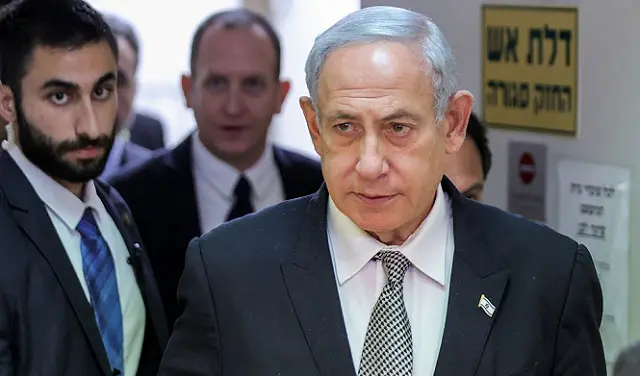
Israeli analyst: Netanyahu seeks to slide into a dictatorial regime to maintain an eternal war and remain in power.

Haaretz military analyst Amos Harel asserted on Tuesday that "Israel deliberately violated the ceasefire agreement with Hamas, with American approval, the night before last, because it refused to implement all the conditions it pledged to two months ago. There is no other way to interpret the decision to resume fighting in the Gaza Strip."

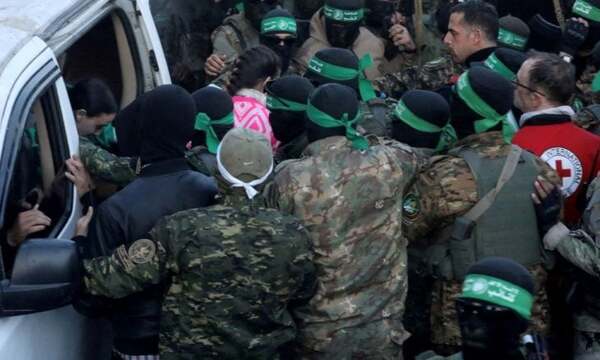
He added, "Hamas' psychological abuse of the detainees and their family members throughout the recent rounds of release (prisoner exchange) cannot be considered a major breach of the agreement on its part. It is the Israeli government that failed to implement the agreement when, in recent weeks, it did not complete the withdrawal of Israeli forces from the Gaza Strip, especially from the Philadelphi corridor, as it had committed to. Hamas refused to turn a blind eye and move forward in releasing detainees under the new mediation initiatives put forward by the Americans, and negotiations have become stalled."

Harel predicted that Israel would continue its airstrikes later, "and also implement the plan of the Chief of Staff, Eyal Zamir, for a new, large-scale ground invasion of the Gaza Strip, hoping this time to finally defeat Hamas." Several military divisions would participate in the invasion, after a broad call-up of reserve forces once again, "and it will take place for the first time under conditions in which there is no real public consensus on the justness of returning to war."

Israeli Prime Minister Benjamin Netanyahu claims that only through military pressure on Hamas will it be possible to return the 59 Israeli prisoners still being held in the Gaza Strip.

But Harel stressed that "this is a long-disproven pretext. In practice, approximately 40 abductees died in the Gaza Strip, under various circumstances, after being abducted alive from Israeli territory on October 7. Resuming military pressure certainly poses a danger to the living captives, and could lead to a further tightening of their already difficult captivity conditions. In a more extreme scenario, it could prompt Hamas to target some of them in retaliation."

The Israeli government justifies the resumption of the war on Gaza with the goal of breaking the deadlock in negotiations over a ceasefire and prisoner exchange agreement, and fulfilling its pledge to defeat Hamas, "even though the timelines for achieving these two goals are not synchronized. The kidnapped soldiers could die before Hamas is defeated, if that happens at all," according to Harel.

The analyst noted that "there are a series of pressing political goals that Netanyahu is not speaking about out loud: bringing Ben-Gvir and his party back into the government, approving the budget, and stabilizing the coalition. This time, it's truly a full-fledged battle for Netanyahu's safety, including an attempt to divert media attention from the renewed protests against the government, against the backdrop of Netanyahu's intention to dismiss the head of the Shin Bet."

Harel believes that "Netanyahu's true goal is to gradually slide into a regime with dictatorial characteristics, whereby he attempts to ensure his survival by maintaining an eternal war on several fronts. It seems to him that the kidnapped soldiers can die in the tunnels, knowing that they contributed to his continued rule."


PALESTINE

Wed 19 Mar 2025 10:51 am - Jerusalem Time

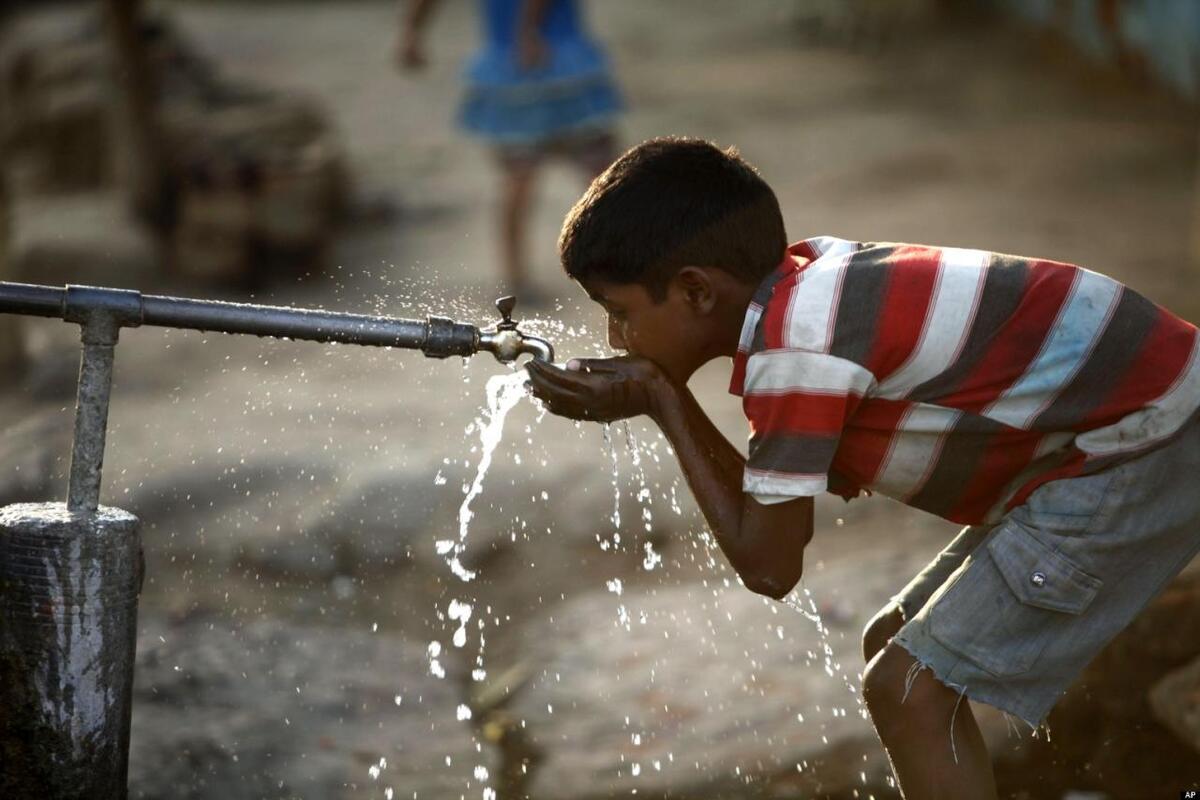
85% of water and sanitation sources are out of service in the Gaza Strip.

The Palestinian Central Bureau of Statistics and the Water Authority stated that more than 85% of water and sanitation facilities and assets have been completely or partially out of service due to the repercussions of the Israeli occupation's aggression on the Gaza Strip.


A statement issued by the Central Bureau of Statistics (CBS) and the Water Authority on Wednesday, on the occasion of World Water Day, explained that initial damage assessments, as of the ceasefire date, showed that more than 85% of water and sanitation facilities and assets were completely or partially out of service and required rehabilitation, exceeding $1.5 billion, only for areas where damage was identified. This includes wastewater treatment plants, desalination plants, pumping stations, wells, water reservoirs, main transmission lines, water, sanitation and stormwater drainage networks, and water control laboratories.


The statement pointed out that the occupation's aggression has undermined all efforts made by the Palestinian government, with investments exceeding one billion dollars over many years, to avert the catastrophe that threatened Gaza due to the salinity and pollution of 97% of the groundwater reservoir, the only water source there.


He pointed out that the per capita water share in Gaza does not exceed half the estimated minimum humanitarian requirement in emergency situations, which is 15 liters per person per day.


The statement continued: "Due to the extensive damage incurred by the water and sanitation sector, water supply rates have declined to an average of 3-5 liters per person per day, with significant variations depending on geographic location, water supply, infrastructure damage, and ongoing displacement."


He added: "This percentage is less than the minimum required for survival in emergency situations, according to World Health Organization indicators, which is estimated at 15 liters per person per day."


This is mainly due to the damage to the infrastructure, the complete power outage necessary for pumping water from wells, and the operation of related water facilities such as reservoirs and pumping stations, and the restrictions imposed on the provision of fuel and materials necessary for their operation. The available water resources in the Gaza Strip are suffering enormous losses, and water quantities have decreased to an average of 35% of what they were before the aggression.

The statement added that the Gaza Strip relies on three main sources of water, and estimates indicate that, as a result of the current aggression, the supply through these sources has decreased to approximately 10-20% of what it was before the aggression. Then, with the start of urgent interventions, the rate rose relatively to reach approximately 35% of what it was before the aggression. These sources include:


Groundwater: There are 300 wells distributed throughout the Gaza Strip (290 municipal wells and 10 UNRWA wells), with a total supply of 262,000 m3/day for all uses, most of which sustained severe damage. As a result of interventions undertaken by the Water Authority, in cooperation with service providers during the aggression, the amount of water produced from these wells reached approximately 93,000 m3/day.


- The three limited-capacity desalination plants (central, northern, and southern): Throughout the aggression, the northern plant completely stopped operating due to the extensive damage it sustained, and the occupation forces deliberately converted it into a military barracks. Meanwhile, the central plant operated at a production capacity not exceeding 30% of its pre-aggression capacity due to some damage, in addition to the scarcity of fuel needed to operate the generators, and the unavailability of spare parts for maintenance. As for the southern plant, until mid-November 2024, it was operating at a total production capacity estimated at only 20% of its total capacity, subject to fuel availability. Later, it began operating at a production capacity of approximately 70% of its capacity, after the power line supplying the plant was connected.


-Water purchased from Mekorot (through three connections supplied in the north, center, and south): The amount of water supplied through these connections before the aggression reached 52,000 m3/day, equivalent to 52% of the potable water.


The occupation completely shut down the three connections at the beginning of the aggression. After they were reopened, the Water Authority crews and its partners began the necessary maintenance work on the main and subsidiary lines of these connections, and followed up and inspected the pumping work from them, and expanded it to new populated areas. As of the date of the ceasefire, as a result of these interventions, a total of 40,000 m3/day was supplied, knowing that this quantity decreased later due to a malfunction in the feeder line from the Bin Saeed connection that feeds the central governorate, and the delay in obtaining coordination to carry out the necessary maintenance.


As for water networks, approximately 2,263 kilometers were destroyed, of which 1,622 kilometers were completely destroyed and 9 kilometers were partially destroyed. Unfortunately, with water scarcity to meet basic needs, addressing agricultural needs has been postponed, despite its significant link to food insecurity in the Gaza Strip.


Damage to the sewage system poses significant risks to life, health, and the environment.


The Central Bureau of Statistics and the Water Authority stated that wastewater services in the Gaza Strip were advanced before the aggression, as the existing wastewater system includes integrated facilities and infrastructure (from collection and pumping to transportation and treatment). The system covers approximately 73% of the Gaza Strip's population with an infrastructure that includes a network of various diameters estimated in length at approximately 2,250 km, 79 pumping stations, and 29 rainwater collection basins connected to eight rainwater pumping stations, in addition to five wastewater treatment plants with a design capacity of up to 154,600 m3 per day. Until the ceasefire, all wastewater plants were out of operation due to the extensive damage they sustained, which still requires a detailed assessment without access due to the security situation.


The networks were severely damaged, with 1,545 kilometers completely destroyed and 8.6 kilometers partially destroyed. Forty-seven sewage pumping stations were also destroyed, including 20 completely destroyed and 27 partially damaged. This destruction led to the flow of wastewater into streets and residential neighborhoods, posing a significant threat to health and the environment.


The amount of water available to Palestinians from groundwater resources remains unchanged despite population growth and increased development requirements.

Palestine relies primarily on water extracted from groundwater resources, which account for 73.1% of the total available water, amounting to 399.7 million m3 (the total groundwater extracted is 289.63, of which 135.1 million m3 is in the West Bank, while in the Gaza Strip 154.53 million m3 is extracted, of which 97% is considered unfit for human use).


In the West Bank, the amount of water pumped from groundwater wells (the Eastern, Western, and Northeastern basins) in 2023 amounted to approximately 106 million cubic meters. The reason for the fluctuation in the quantities pumped from the wells (increasing or decreasing by small amounts annually) is due to the obstacles placed by the occupation authorities in the way of drilling and rehabilitating wells. This is the same reason for the decrease in the quantities pumped from the springs, in addition to the increase in control operations and settler crimes in illegally annexing these springs.


The main reason for the weak use of surface water is the occupation's control over the Jordan River and its inability to exploit more than 165 million m3 of rainwater annually. This is achieved by preventing Palestinians from building dams and ponds to collect rainwater. The total amount of surface water exploited does not exceed 4 million m3 from the Al-Auja, Al-Far'a, Beit Al-Rush, Bani Al-Na'im, Marj Sanur, Araba Lake, and some small ponds.


The destruction of infrastructure during ongoing incursions into the West Bank exacerbates the already difficult water situation in the West Bank.


The statement noted that due to the continued and repeated incursions into the West Bank, particularly into the camps of Jenin and Tulkarm governorates, there are no statistical figures on the extent of the damage incurred by the water and sanitation sector to date, especially with the repeated systematic destruction of infrastructure and its rehabilitation by local authorities. According to reports by the United Nations Relief and Works Agency for Palestine Refugees in the Near East (UNRWA), the aggression on the Jenin, Tulkarm, Nur Shams and Far'a camps resulted in the large-scale forced displacement of approximately 40,000 people, the majority of whom, according to reports issued by local community institutions and local authorities of the host communities, are in need of adequate water sources.


39% of the water available in the West Bank is purchased from Israeli water companies, representing approximately 60% of the water supplied for domestic use.

The occupation's measures have limited citizens' ability to exploit their natural resources, particularly water, forcing them to compensate for the shortage by purchasing water from Israeli water companies. The total amount of water purchased for domestic use in 2023 reached 102.1 million cubic meters in both the West Bank and Gaza Strip, representing 25% of the available water supply.


In the West Bank, the amount of water purchased from Israel amounted to 85.9 million cubic meters, equivalent to 39% of the available water quantities and representing approximately 60% of the water supplied for domestic use.


It should be noted that the increased reliance on purchasing water from Israel in itself poses significant challenges for the Palestinian government, given Israel's control over water prices and quantities, especially during the summer. It also represents an Israeli approach to undermining the prospects for a two-state solution by denying Palestinians sovereignty over natural resources.


Data for 2023 indicate a slight increase in the daily per capita water share compared to previous years, reaching 88 liters per capita per day in the West Bank. This share is still below the internationally recommended rate (120 liters per capita per day), with consumption quantities reaching 95.5 million m3. Note that this quantity was supplied for non-agricultural purposes, and includes water supplied for commercial and industrial purposes.


Therefore, the actual per capita supply and consumption are lower than the stated amounts. Comparing consumption in Palestine with per capita Israeli consumption, we note that the Israeli per capita consumption rate is three times that of the Palestinian per capita, and doubles compared to the settlers' share, or even if non-agricultural uses are taken into account.


Household uses are the largest consumer, and the loss rate exceeds 30%.


According to water data for 2023, domestic water supply accounted for up to 61% of the total available water. Indicators for 2023 also showed that water loss in the West Bank remains high, at more than 35%, due to the deterioration of networks and encroachments on water lines and networks by citizens. Statistics showed variations in the percentage of loss between governorates, with the highest percentage in Hebron Governorate and the lowest in Salfit Governorate.


The variation in prices and available quantities between governorates depends on the availability of resources and the ability of these resources to meet the needs of their populations.


The disparity in water quantities and prices experienced by citizens across governorates is due to differences in the availability of natural water resources and the extent to which these resources can meet the needs of the population, given the population density in each governorate.


While some governorates, such as Jericho, the Jordan Valley, and Tulkarm, have abundant local water resources, the governorates of Hebron, Bethlehem, and Ramallah and Al-Bireh rely on water purchased from Israel to fill their water supply deficit. The cost of producing water from local sources varies according to the cost of production.


The cost of water supplied from local sources is also lower than the cost of water purchased from Israeli water companies, which also creates disparities in water prices between governorates. The purchase and production price of a cubic meter of supplied water is an average of 3.2 shekels per cubic meter, and it is sold to local authorities at an average of 2.4 shekels per cubic meter; that is, with government support of up to 0.8 shekels per cubic meter.


It's worth noting that achieving fair distribution among population centers in the governorates is one of the main challenges facing the State of Palestine as a result of the policies of the Israeli occupation and its control over Palestinian territories. This limits the possibility of developing an integrated water system at the national level that ensures fair management and distribution of water resources. It's also worth noting, in this context, that the government faces the challenge of rising debt on local authorities, which, by the end of 2024, amounted to more than $1.8 billion.

PALESTINE

Wed 19 Mar 2025 10:47 am - Jerusalem Time

Settlers set fire to Bedouin tents west of Salfit

Today, Wednesday, settlers set fire to Bedouin tents located in the Wadi al-Matwi area, which connects the city of Salfit and the town of Bruqin.


Local sources reported that a group of settlers attacked the Bedouin community, set fire to their tents, and assaulted their property.


Earlier, the settlers assaulted the tent residents and sprayed them with pepper gas.


These violations come as the occupation forces and settlers continue to pave a new colonial road leading to the colonial outpost built on the lands of the village of Farkha, southwest of Salfit.

PALESTINE

Wed 19 Mar 2025 10:28 am - Jerusalem Time

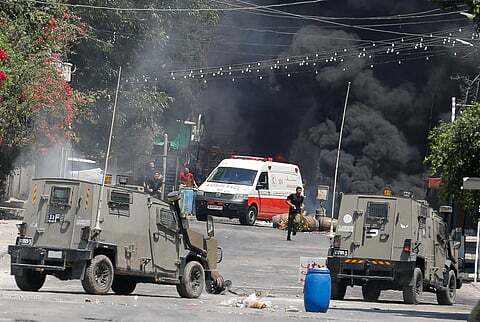
Updated: Israeli occupation continues its aggression against the West Bank governorates.

  1. The Israeli occupation continues its aggression on the city and camp of Jenin for the 58th consecutive day, amidst bulldozing and burning homes, and converting others into military barracks.

This morning, heavy live fire and explosions were heard from inside Jenin camp by the occupation forces.


The occupation continues to send military reinforcements accompanied by bulldozers to Jenin camp, while bulldozing, widening streets, and paving new roads in the camp continues.


During the 58 days, the occupation forces arrested approximately 227 citizens from the Jenin Governorate and conducted dozens of field investigations.


According to the Jenin Municipality, the occupation forces have bulldozed 100% of the streets in Jenin camp and nearly 80% of the streets in Jenin city, while the residents of 3,200 homes in the camp have been displaced.


Last night, occupation forces set fire to the homes of citizens in the vicinity of Diwan al-Saadi inside the camp. The occupation forces continue to close the road leading to Jenin Government Hospital from the entrance to Jenin camp with earth mounds.


The ongoing Israeli aggression on the city and camp of Jenin, which has continued for the 58th day, has left 34 martyrs and dozens of wounded and arrested.


**Tulkarm**

Israeli occupation forces continue their aggression against the city of Tulkarm and its camp for the 52nd consecutive day, and for the 39th day against the Nur Shams camp, intensifying raids and demolitions, forcibly forcing residents to leave their homes amid a suffocating siege and increasing military reinforcements.


Local sources reported that occupation forces informed residents of the Al-Hadaida and Al-Matar neighborhoods in Tulkarm refugee camp this morning that they must evacuate their homes by 12 noon. Meanwhile, they raided homes in the Al-Raba'a neighborhood, conducted extensive searches inside, and interrogated residents.


Over the past few days, Tulkarm camp has witnessed a massive exodus of its remaining residents from its outlying neighborhoods, including Qaqun, Abu al-Ful, and Marbat Hanoun. Today, they have been followed by al-Hadaida and al-Matar, after the occupation forces forced them to leave through threats and intimidation. The camp has become almost empty of its residents, with more than 12,000 refugees displaced.


Occupation soldiers are also deployed extensively throughout all neighborhoods, chasing citizens and raiding empty homes, turning them into military barracks and sniper positions. They are also raiding shops, businesses, and mosques, vandalizing and stealing their contents.


In Nour Shams camp, occupation bulldozers continued to demolish homes and destroy infrastructure, particularly in the Manshiyya neighborhood. Meanwhile, a fuel tanker was spotted arriving in the camp, amid a tight siege that has prevented all entry.


Occupation forces also continued to seize more homes in the Jabal al-Nasr neighborhood of the camp, while forcing a number of residents on the western outskirts to evacuate their homes, amid indications that the occupation intends to transform the area into a military barracks.


Eyewitnesses confirmed that the camp is being subjected to daily bulldozing and demolition operations targeting homes, alleys, and infrastructure, resulting in the complete destruction of its landmarks and the forced displacement of its residents, in an attempt to obliterate its identity and alter its geography.


Meanwhile, the occupation forces deployed military reinforcements, including heavy vehicles and bulldozers, toward the city and its two camps. They deployed infantry units on the main streets, restricting the movement of vehicles and harassing civilians. They also fired sound bombs to terrorize residents.


A military bulldozer closed the road linking Al-Sikka Street and Nablus Street in the city with earth mounds, where military barracks are located inside residential buildings seized by the occupation forces in the area.


Meanwhile, Israeli occupation forces raided the Al-Huda building on Nablus Street, searching apartments and checking residents' cell phones. They also continue to seize several homes on the same street, specifically in the area adjacent to Tulkarm refugee camp, where their vehicles are positioned amid tight security measures restricting the movement of vehicles and citizens.


These attacks come amid the ongoing escalation by Israeli occupation forces in the city of Tulkarm and its two camps, which has resulted in the deaths of 13 civilians, including a child and two women, one of whom was eight months pregnant. Dozens more have been injured and arrested, and more than 24,000 people have been forcibly displaced from the two camps.


The aggression also caused widespread destruction to the infrastructure, including water, electricity, sewage, and communications networks, as well as homes, shops, and vehicles, which were completely and partially demolished, burned, vandalized, looted, and stolen. The entrances and alleys of the camps were also closed off with earth mounds.

OPINIONS

Wed 19 Mar 2025 9:40 am - Jerusalem Time

Crimes that cross all red lines

Hamada Faraana

Hamada Faraana

Opinion Writer

More than 300 Palestinian civilians have been killed and more than 1,000 wounded in the Gaza Strip as a result of deliberate Israeli bombardment. This is not the result of a mistake or miscalculation, but rather an intentional attempt to turn the Gaza Strip into a "piece of hell," as the far-right Minister of Defense and the Army, Israel Katz, publicly declared in the settlement.

More than three hundred martyrs in one night, by bombing clearly identified civilian sites - tents, public housing, and residential buildings - without any warning to their inhabitants. Some died under the bombing and raids, their homes were destroyed, and others were burned alive, or their bodies were burned as a result of the bombing with incendiary bombs.

It is genocide and ethnic cleansing to complete the plan to respond to October 7, a plan to make Palestine, in the Gaza Strip and the West Bank camps, until now, uninhabitable, unlivable, by direct, deliberate killing, or attempts to push towards immigration, departure and displacement as happened in 1948, the year of the Nakba, the year of the forced displacement of the Palestinians as Ben-Gurion had previously done.

They want to kill the Palestinians, as punishment for the 2022 Palestinian census data, which shows more than seven million Palestinian Arabs across the entire land of Palestine, because the presence of more than seven million Palestinian Arabs, Muslims and Christians, prevents the establishment of a state: Jewish, Hebrew, Israeli, or Zionist, across the entire land of Palestine.

They want to get rid of the Palestinian Arab from his homeland, which is his only homeland. That is why they find it acceptable to kill and work to reduce the number of Palestinians as much as possible. The killing and destruction are taking place under official American and European cover, despite the fact that Israeli killing and destruction violate all human rights prohibitions. However, Palestinian civilians are being killed silently, under cover, with declared and effective American support, under cover of preventing any international legal or political action against the criminals of the colony. Even those who stand with Palestine, such as South Africa, are being punished by withholding aid and expelling their ambassador from Washington.

I was saying no war in the Gaza Strip after the bloody fifteen months against the backdrop of the Israeli failure in the entire war and invasion of the Gaza Strip, where the colony's army failed to: 1- Release the Israeli prisoners without an exchange deal, 2- Uproot and eliminate the Palestinian resistance in the Gaza Strip, and the failure of Netanyahu's plans increased by the court's insistence on forming an investigation committee on the basis of: "negligence", but he evaded, and did everything he could to postpone the formation of the investigation committee under the pretext that he is in a state of war, and the Supreme Court postponed its decision to form the investigation committee until next May, so he worked to dismiss and change the leaders of the army and intelligence who raised the slogan "There are no strategic goals to address in the Gaza Strip", and here he is inventing through his minister Katz that the strategic goals are people, aren't they the popular incubator of the resistance?

Therefore, it has become clear that the strategic goal of the war on the Palestinian people is to eliminate the largest possible number of Palestinian civilians. Isn't this truly genocide and ethnic cleansing by the colony of Palestinian civilians?


..............


They want to rid the Palestinian Arabs of their homeland, which is their only homeland. That is why they find it acceptable to kill and work to reduce the number of Palestinians as much as possible. The killing and destruction is carried out under official American and European cover.

ARAB AND WORLD

Wed 19 Mar 2025 9:33 am - Jerusalem Time

UN official: Israel killed the largest number of Gaza children in a single day in a year

The Executive Director of the United Nations Children's Fund (UNICEF), Catherine Russell, said on Tuesday that Israel killed more children in a single day than on any other day in a year.


Russell said in a statement that the information and images coming from Gaza show how dire the situation is.


"The reports and images coming from the Gaza Strip following Tuesday's attacks are horrific. Hundreds were killed, including more than 130 children, representing the highest number of child deaths in a single day in the past year," she added.


Russell noted that “some airstrikes reportedly hit makeshift shelters where children and families were sleeping, another deadly reminder that nowhere in Gaza is safe,” and that “the latest attacks come as life-saving aid remains blocked from entering Gaza, further increasing the risks to children. It has been 16 days since the last truckload of humanitarian aid entered Gaza. In addition, electricity to the main desalination plant has been cut off, significantly reducing the supply of drinking water.”


The Ministry of Health in Gaza reported that "404 martyrs and more than 562 wounded, including very serious cases," had arrived at hospitals as of 10:00 a.m. GMT, as a result of the indiscriminate Israeli bombardment. Work is still underway to retrieve victims from under the rubble.


Today, one million children in Gaza—who have endured more than 15 months of war—have returned to a world of fear and death. The attacks and violence must stop—now. We urge all parties to immediately reimpose the ceasefire, and call on influential states to use their influence to ensure the situation does not deteriorate further. All parties must respect international humanitarian law, allowing for the immediate delivery of humanitarian aid, protecting civilians, and releasing all hostages.


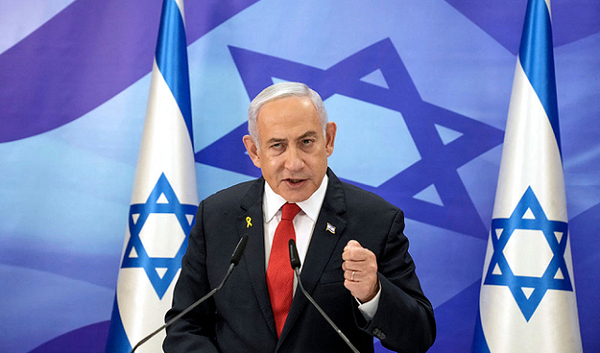
For his part, Israeli Prime Minister Benjamin Netanyahu said on Tuesday that negotiations regarding Israeli prisoners held in the Gaza Strip would henceforth be conducted "under fire," and he vowed to escalate military operations as part of Israel's war of extermination against the Gaza Strip.


This came in a video statement by Netanyahu following the resumption of the Israeli war on the Gaza Strip, in which he claimed that "Hamas has rejected all the proposals presented to it repeatedly," while alleging that Israel had agreed to the proposal of US envoy to the Middle East, Steve Witkoff.

PALESTINE

Wed 19 Mar 2025 9:32 am - Jerusalem Time

Raids and arrests in the West Bank

Israeli occupation forces arrested a young man at dawn on Wednesday after storming the village of Beit Sira, west of Ramallah. They also raided the homes of released prisoners in the town of Silwad, northeast of Ramallah.


Local sources reported that the occupation army arrested the young man, Muhammad Mahmoud Alqam (22 years old), after raiding his home in Beit Sira, while an occupation army force raided several homes of freed prisoners in Silwad, including the home of the freed prisoner, Ahmad Daoud Hamed, who was deported to Egypt.

PALESTINE

Wed 19 Mar 2025 9:30 am - Jerusalem Time

A Palestinian dead, others injured, and arrests in Nablus camps

A young man was killed at dawn on Wednesday, and others were injured and arrested during Israeli occupation forces' raids on the Ain, Balata, and Askar refugee camps in Nablus.


Security sources reported that Israeli special forces, known as "Musta'ribun," infiltrated the Ain al-Ain refugee camp, west of the city, and fired live ammunition at a vehicle inside the camp, killing Uday Adel al-Qatouni, who was in the vicinity of the targeted vehicle.


The same sources added that clashes erupted inside the camp, during which three citizens were injured, one of them by live bullets in the abdomen and hand and was arrested. He is Farouk Rashid Khaled, another was injured as a result of being beaten, and a third was injured as a result of falling from a high place. The sources indicated that the occupation forces stormed several homes, and deployed snipers on their roofs, before launching a search campaign during which they arrested several citizens, among whom were identified: Jarrah Arafat and Ahmed Salim Mahmoud Jibril.


The sources added that the occupation forces stormed the Balata, Askar al-Qadeem and Askar al-Jadeed refugee camps east of Nablus, raided a number of homes, searched them and ransacked their contents. They arrested Salah al-Jarmi from Balata camp and Ahmed Da'das Arayshi from Askar al-Jadeed camp. They also arrested two citizens from the al-Masakin al-Sha'abi area east of Nablus, namely: Montaser al-Arayshi and Ibrahim Samer Muhammad al-Naqeeb.


The sources confirmed that the occupation forces are still present inside the Ain al-Ain camp and around the Askar and Balata camps.

OPINIONS

Wed 19 Mar 2025 9:28 am - Jerusalem Time

And people are asleep!

Ibrahim Melhem

Ibrahim Melhem

Opinion Writer


What pain grips our sad souls and broken hearts as we watch screens covered in blood at suhoor, while people sleep with empty stomachs, starving and ravaging their tents and shelters.

For hours and minutes after dawn yesterday, our hearts were attached to the cries for help from the children and women who perished under the rubble. We felt ashamed of our helplessness, our weakness, and our insignificance in the eyes of the people.

The crying of children grieving the loss of their mothers, who used to care for them and prepare enough suhoor to satisfy their hunger and enable them to perform their religious duties, while waiting for a poor breakfast from a takaya that only serves lentil soup, which is neither fattening nor satiating.

"We have detected a Hamas move to launch a new war." This is the ready-made, false, and misleading pretext used by "Dracula," who has not yet had his fill of the blood of Gaza's children, to justify his return to the war of extermination.

The false pretext continues to roll, with the criminals paying no attention to the fate of the detainees in Gaza, whom the fox would have considered dead had the "Hannibal Law" been activated the moment they were captured.

Our voices have become hoarse, and the ink in our pens has frozen from our many cries for help, from our reliance on the best nation brought forth for mankind, and on a world that has lost its values and has been swayed by evil and arrogant tendencies, without regard for people's lives or for the laws and regulations that protect human rights.

In these painful moments of prolonged national tragedy, we can only implore God Almighty to have mercy on our people in Gaza and to make the fire cool and peaceful for them.

PALESTINE

Wed 19 Mar 2025 9:27 am - Jerusalem Time

More than a thousand dead and wounded as a result of the ongoing Israeli aggression on the Gaza Strip

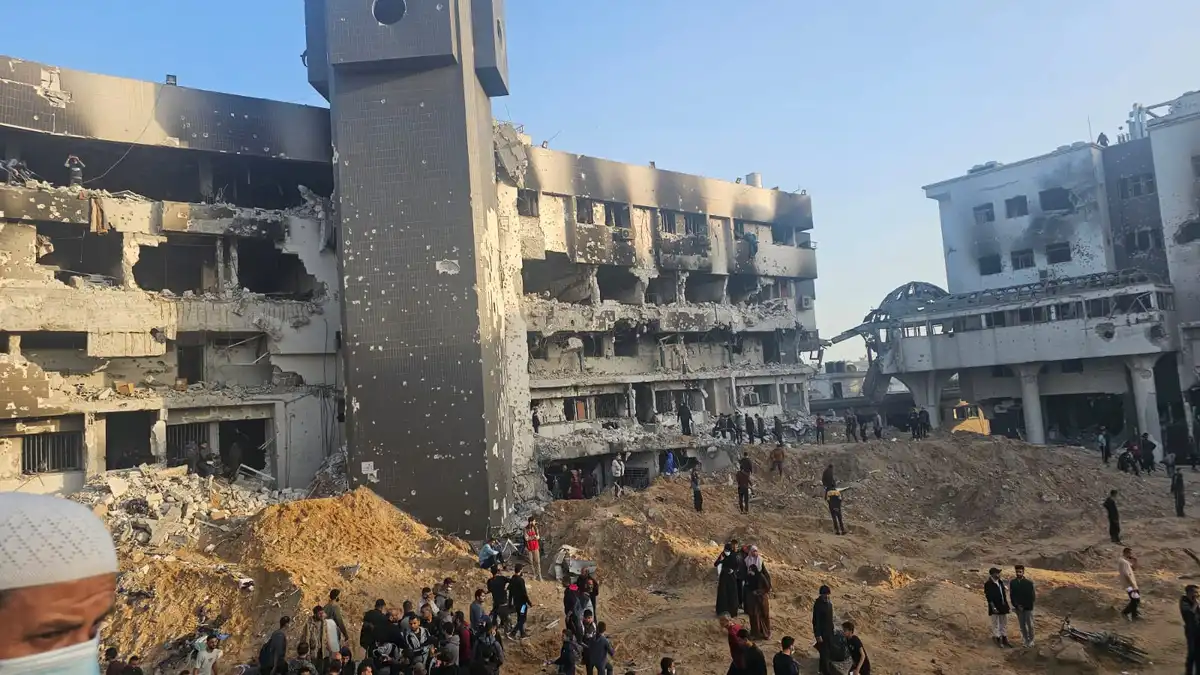
On the second day of the Israeli military's resumption of its war on the Gaza Strip, as part of a military operation codenamed "Courage and Sword," the occupation's warplanes continued to launch raids on various areas of the Strip on Wednesday. These raids resulted in the deaths of 439 Palestinian civilians and the wounding of hundreds more.


A number of people were killed and wounded in a series of airstrikes launched by Israeli warplanes on various areas of the Gaza Strip early Wednesday morning. The raids targeted homes and tents of displaced people in the Sabra neighborhood of Gaza City, north of the Strip, as well as in the Bureij refugee camp, the town of Al-Maghraqa, and the city of Rafah.


The Palestinian Ministry of Health said in a statement that 429 martyrs and 612 wounded have arrived at hospitals in the Gaza Strip as a result of the multiple attacks and massacres perpetrated by the occupation since the early hours of Tuesday morning.


The director of Al-Shifa Hospital in Gaza, Mohammed Abu Salmiya, explained that "the health system in the Strip is unable to deal with the scale of the humanitarian disaster, with wounded people dying every minute due to a lack of resources."

"The Israeli attacks on the Gaza Strip have left the highest number of children dead in a single day in a year," said UNICEF Executive Director Catherine Russell.


In a statement, she explained that the information and footage coming from Gaza demonstrate the horrific nature of the situation. She added, "Reports indicate that hundreds of people have been killed, including more than 130 children. This represents the highest number of child deaths in a single day in the past year."


This comes as Israeli Prime Minister Benjamin Netanyahu said that the airstrikes launched by the Israeli army early Tuesday morning on the Gaza Strip were "just the beginning," claiming that the resumption of the war "was decided after Hamas rejected all proposals, and therefore, from now on, negotiations will be conducted under fire."


For his part, Hamas spokesman Abdul Latif al-Qanou said that the movement was and remains keen to complete the agreement's stages, "but Netanyahu's personal interests and his desire to escape his crises have undermined the agreement."


Al-Qanou' added that all mediators are aware of Hamas's commitment to the terms of the agreement despite Netanyahu's procrastination and coup, and they must reveal this to the world.


PALESTINE

Wed 19 Mar 2025 9:21 am - Jerusalem Time

Dismissal of the Shin Bet chief: Netanyahu sinks the country to save himself

Dr. Saad Nimr: Israeli law does not permit the arbitrary dismissal of a security chief, which reflects Bar's refusal to dismiss him.

Akram Atallah: The legal advisor's opinion is advisory and does not have the legal force to prevent the dismissal due to suspicion of personal interests.

Nizar Nazzal: Bar's dismissal does not serve Israel's security interests, but rather aims to eliminate figures who could pose a threat to Netanyahu's political future.

Dr. Saeed Shaheen: Netanyahu and his clique are seeking to dismantle what is known as the "deep state" in Israel and establish new rules for its management.

Antoine Shalhat: Bar's dismissal is an attempt by Netanyahu to evade responsibility for October 7, "the greatest strategic failure in Israel's history."

Fayez Abbas: The confrontation between Netanyahu and Bar could lead to an escalation of popular protests in Israel, possibly more violent than before.


Amid escalating political and security crises within Israel, Prime Minister Benjamin Netanyahu's decision to dismiss Shin Bet chief Ronen Bar stands out as one of the most significant issues, believed to be part of Netanyahu's attempts to eliminate figures who pose a threat to his political future.

In separate interviews with Al-Quds, political writers, analysts, experts, and university professors believe the decision comes after Bar-Bar opened investigations into Netanyahu's office, including corruption cases. They point out that this move reflects a broader struggle between the political leadership and the security establishment, as Netanyahu seeks to consolidate his control over the state apparatus and oust anyone who opposes him.

They point out that the decision may face strong legal and political opposition, especially since the Israeli Attorney General rejected the dismissal without a formal investigation, stressing the need for clear legal justification.

They believe the dismissal is an attempt to avoid accountability for security and political failures, especially in the wake of the October 7, 2023, attack. Barr's refusal to resign further complicates the situation, as he has declared full responsibility for the events but refused to submit to the arbitrary dismissal order.

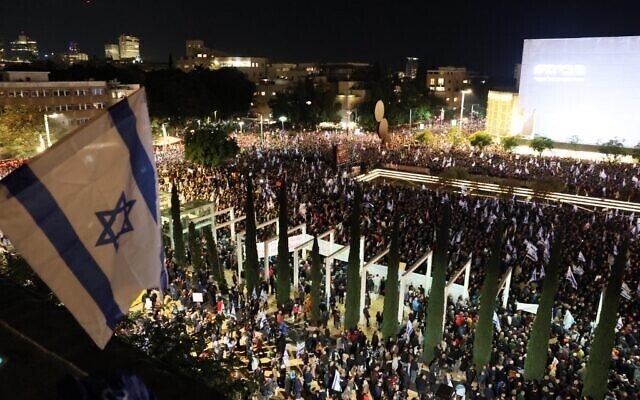
They expect Bar's dismissal to escalate popular protests and lead to legal and political confrontations within Israel, especially since the move is seen as part of a broader shift toward a more authoritarian regime and the strengthening of the prime minister's power.


The political side must bear its responsibilities.


Dr. Saad Nimr, a political science professor at Birzeit University, says that Israeli Prime Minister Benjamin Netanyahu is seeking to remove the head of the General Security Service (Shin Bet), Ronen Bar, due to what he claims is a loss of trust in him. This is especially true after Bar opened investigations into Netanyahu's office, the most recent of which concerned suspicions that some members of his office received bribes from Qatar.

Nimr explains that Barr did not stop at this investigation, but insisted on opening other files related to the responsibility of the political leadership, headed by Netanyahu, for the failure to deal with the October 7, 2023 attack.

Nimr points out that Barr clearly stated that "the political side must bear its responsibility for what happened that day," emphasizing that as a security apparatus it bears its responsibility, but the political leadership, especially the prime minister, must also bear its responsibility.

Nimr believes that Netanyahu seeks to surround himself only with loyalists, a fact evident in his previous attempts to dismiss officials who opposed his policies. However, Barr refused to comply with the dismissal order, which led to an escalation in the crisis between the two sides.


Arbitrarily dismissing a security chief is not permitted.


Nimr points out that Israeli law does not permit the arbitrary dismissal of a security chief, as such decisions must be subject to a legal investigation by the competent judicial authorities, reflecting Bar's refusal to dismiss him.

Nimer points out that the Israeli government's attorney general refused to dismiss Bar without conducting a formal investigation to determine the reasons for his dismissal, stressing the need for an independent investigative committee to examine the motives behind the decision.

Nimer believes this crisis could lead to a major legal and political escalation within Israel, as the courts may review the legality of the dismissal. If it is proven illegal, Barr could remain in his position or be formally removed if investigations reveal legal grounds for his dismissal.

Nimr explains that this battle reflects a broader conflict within the Israeli establishment between the political leadership and the security establishment, amid Netanyahu's ongoing attempts to consolidate his grip on various state agencies.


Qatari money may be behind Barr's dismissal


For his part, writer and political analyst Akram Atallah explains that Israeli Prime Minister Benjamin Netanyahu's decision to dismiss Shin Bet chief Ronen Bar involves Netanyahu justifying the decision by citing a loss of confidence in Bar. However, the real reasons appear more complex. Reports indicate that Shin Bet investigations into whether some employees in the Prime Minister's Office received funds from Qatar, with Netanyahu's approval, may be the real motive behind the decision. There is also suspicion that Netanyahu himself may be involved in this case, which increases the sensitivity of the situation.

Atallah points out that, in the legal context, the Israeli government's legal advisor confirmed that this decision entails a conflict of interest, making it difficult to defend in court.

According to Atallah, although the legal advisor's opinion is advisory and does not have the legal force to prevent the dismissal, she cannot defend this decision in court due to suspicions of personal interests and a conflict of interest.


Possibility of dismissal via government decision


Atallah points out that, despite this, Netanyahu has the legal ability to implement the dismissal via a government decision, as the head of the Shin Bet is appointed by the government, and thus he can be removed by the same mechanism.

However, Atallah believes that the real battle may begin after the decision is implemented, as the case is expected to be brought to court, which could radically change the course of events.

Atallah notes that the Israeli government's meeting on Wednesday to discuss the dismissal could be a turning point in this conflict, especially given the escalating political and security tensions within Israel.

Atallah believes the decision reflects Netanyahu's ongoing attempts to consolidate his control over the security establishment and eliminate anyone who poses a threat to his authority or might hinder his political endeavors.

Atallah says that the struggle over Bar's dismissal will not simply be an administrative matter, but rather part of a larger battle between Netanyahu and the security and judicial establishments, which could have significant political repercussions in the coming period.


"Cleansing" the government of secular and liberal figures


Nizar Nazzal, a researcher specializing in Israeli affairs and conflict issues, says that Israeli Prime Minister Benjamin Netanyahu's decision to dismiss Shin Bet chief Ronen Bar, and Bar's rejection of the decision, are part of Netanyahu's efforts to "purge" his government of secular and liberal figures and replace them with figures who are completely loyal to him.

Nazzal points out that Israel is no longer a democracy, but is gradually transforming into a dictatorial regime, with Netanyahu making decisions that reflect the approach of authoritarian leaders, not an elected prime minister in a country that claims to be "democratic."

Nazzal points out that this trend is not new, but rather began long ago. Netanyahu dismissed a number of military and security leaders who disagreed with him, starting with former Defense Minister Yoav Gallant, the pressure exerted on Chief of Staff Herzi Halevi, and culminating in his current efforts to dismiss Ronen Bar.

Nazzal explains that the main problem between Netanyahu and Bar is the latter's support for a prisoner exchange deal, which conflicts with the government's far-right orientation.

Nazzal points out that the dismissal decision enjoys support from Netanyahu's allies in the government, such as National Security Minister Itamar Ben-Gvir and Finance Minister Bezalel Smotrich. Through this move, Netanyahu seeks to woo Ben-Gvir and ensure his return to the government, amid fears of rifts within the ruling coalition.


The dismissal is a "gift" for Smotrich.


Nazzal explains that this dismissal is a "gift" to Smotrich, strengthening the alliance between Netanyahu and the leaders of the extreme right.

Nazzal emphasizes that this dismissal does not serve Israel's security interests, but rather Netanyahu's personal interests. He believes the primary goal of the decision is to remove everyone who played a role in running the state during the October 7, 2023, attack, in an attempt by Netanyahu to evade any responsibility for the security failure that occurred at the time.

Nazzal points out that Netanyahu is promoting the idea that the dismissal stems from a loss of confidence in Bar, but the reality is that the real reason is to eliminate figures who could pose a threat to his political future.

Nazzal asserts that Israeli Attorney General Gali Baharav opposes the dismissal and is demanding clear legal justifications for it, a move that could escalate the confrontation between Netanyahu and the judiciary.

Nazzal believes the repercussions of this dismissal will be significant and could lead to a powerful upheaval within Israeli society, particularly as it reflects the rise of right-wing and extremist rhetoric and Israel's transformation into a more authoritarian regime.

Nazzal explains that this move will strengthen Netanyahu's grip on power and give him greater freedom to make decisions without opposition from within the security and military establishments.

Nazzal points out that the appointment of Yisrael Katz as Minister of Defense and the selection of Eyal Zamir as Chief of Staff have made the Israeli military completely subservient to Netanyahu, and now Netanyahu is seeking to achieve the same with the Shin Bet security service by appointing a figure loyal to him.

Control over military, security and judicial institutions


Nazzal believes that if Netanyahu succeeds in dismissing Bar, the next step is likely to be the dismissal of the attorney general, which would give him complete control over Israel's military, security, and judicial institutions.

Nazzal explains that these moves mean that the levers of state power will fall into the hands of the extreme right, with the influence of secular, liberal, and nationalist movements declining, heralding a radical shift in the nature of governance within Israel.

Nazzal believes that Israel is going through a critical phase, as it has never before witnessed decisions like those currently being made by Netanyahu, which could impact the stability of its security, military, and judicial institutions.

Nazzal explains that these steps could lead to escalating anger within the Israeli public, particularly among the opposition and political elites, who believe Netanyahu is exploiting the state of war to consolidate his power and marginalize all those who oppose him.

Nazzal believes that Bar's dismissal could have significant repercussions for Israel's future, leading to widespread protests and possibly an unprecedented political crisis, especially given growing fears that the Israeli regime could shift to an extreme right-wing government, far removed from any democratic norms.


Netanyahu acts with the mentality of an "absolute leader."


For his part, Dr. Saeed Shaheen, a professor of political media at Hebron University, says that Israeli Prime Minister Benjamin Netanyahu behaves with the mentality of an "absolute leader," similar to totalitarian regimes, placing his personal interests and those of his ruling coalition above all other considerations, supported by fascist groups within his government.

Shaheen asserts that the dismissal of Shin Bet chief Ronen Bar comes within this context, as Netanyahu attempts to oust anyone who disagrees with him or threatens his political future.

Shaheen believes that Netanyahu and his extremist clique are seeking to dismantle Israel's so-called "deep state" and establish new rules for governing the country politically, judicially, and security-wise, ensuring his continued rule of law for as long as possible.

Shaheen explains that this effort is not limited to the political dimension, but extends to an attempt to evade legal prosecution, especially in light of the accusations against him and the growing criticism regarding his responsibility for the failures of October 7, 2023.


Placing security institutions under direct political control


Shaheen points out that this move will create a sharp division within Israeli society that may be difficult to bridge. The secular movement in Israel views Bar's dismissal as part of an effort to undermine the foundations of democracy and transform the state into a regime loyal to the prime minister, rather than to institutions and laws.

Shaheen asserts that this move could jeopardize Israeli security in the medium term, as it places security institutions under direct political control, rather than maintaining them as independent entities charged with protecting the state.

Shaheen explains that the most significant challenge facing Netanyahu in this context is the ability of the Israeli government's attorney general, who opposes the dismissal, to withstand the enormous pressure exerted by extreme right-wing groups within and outside the government to pass the dismissal decision without subjecting it to judicial review.

Shaheen asserts that Netanyahu is exploiting the current state of war, which he calls a "seven-front war," as a pretext to evade the political and legal challenges he faces, relying on fueling security concerns to strengthen his grip on power.

Shaheen believes that the continuation of this approach could lead to unprecedented internal escalation, and possibly widespread protests against Netanyahu's policies, given the growing criticism of his management style.


The greatest strategic failure in Israel's history


Antoine Shalhat, a writer and political analyst specializing in Israeli affairs, believes that Israeli Prime Minister Benjamin Netanyahu's decision to dismiss the head of the General Security Service (Shin Bet), Ronen Bar, represents an attempt to evade responsibility for the October 7, 2023, failure, which Israeli circles described as "the greatest strategic failure in Israel's history."

Shalhat explains that Netanyahu, through this move, seeks to place the responsibility for this failure on the security establishment, particularly the army command and the Shin Bet, at a time of mounting tensions between the government and the security establishment over the objectives of the war in the Gaza Strip.

Shalhat points out that there are fundamental differences between the two sides, with Netanyahu waging war as an "end in itself," while the security establishment views it as a means to achieve goals related to the so-called "day after war."

Shalhat explains that the Israeli Prime Minister refuses to define a clear purpose for the war and insists on its continuation to maintain his hold on power and the cohesion of his government coalition.

Shalhat points out that the repercussions of the decision to dismiss the Shin Bet chief will be significant domestically in Israel, with local media describing it as a "political earthquake."

Shalhat explains that many Israeli analysts view the security establishment as the "last bulwark" against the "nihilistic and absurdist tendencies" of the Netanyahu government, which insists on continuing the war despite the impossibility of achieving its declared goals.

Shalhat asserts that there is growing recognition within Israel that the two main objectives of the war—recovering Israeli prisoners held by Palestinian factions and dismantling Hamas's rule in Gaza—have not been achieved and remain far from being achieved.


Bar's dismissal opens a new front inside Israel


Shalhat believes the conflict between the political and security establishments will continue and possibly intensify if Netanyahu succeeds in implementing his decision to dismiss the head of the Shin Bet, especially given the government's legal advisor's opposition to the move.

Shalhat points out that this decision could open a new front within Israel, where the courts may intervene to prevent the dismissal. Netanyahu appears poised to face the courts, exploiting the cohesion of his governing coalition and US support for his policies related to the war on Gaza and the prisoner exchange deal.

Shalhat points out that Netanyahu feels a surplus of power that allows him to continue his project to dominate state institutions, a project he began before the war through his plan to weaken the judiciary.

According to Shalhat, the recent period has witnessed an escalation in attacks on the Supreme Court, the Shin Bet, and the army command, with a number of generals resigning and being replaced by others loyal to the government.

Shalhat believes that Israel may be on the cusp of a new phase of popular protests against Netanyahu's policies, similar to the demonstrations that erupted previously against his attempts to weaken the judiciary. He noted that the coming weeks will be crucial in determining the future of this internal crisis.


Returning detainees and forming an official investigation committee


In turn, Fayez Abbas, a writer specializing in Israeli affairs, explains that Israeli Prime Minister Benjamin Netanyahu has so far succeeded in getting rid of most of the security leaders responsible for the major failure of the October 7, 2023 attack. Only the head of the General Security Service (Shin Bet), Ronen Bar, remains. Bar has declared full responsibility for the events, but he has refused to resign despite Netanyahu's repeated attempts to force him to do so.

Abbas explained that Bar set two main conditions before leaving office: the return of the Israeli detainees from the Gaza Strip and the formation of an official commission of inquiry into what is known within Israel as the "October 7 massacre," something Netanyahu strongly opposes.

Abbas notes that Netanyahu fears that this committee will reveal sensitive details about his dealings with Hamas and its leaders, whom he and his government considered a "strategic treasure" whose presence prevented the establishment of a Palestinian state.

Abbas points out that Bar's refusal to resign and his refusal to be dismissed by government decision comes at a particularly sensitive time, as the Shin Bet security service is conducting investigations into what the media has dubbed "Qatargate," a case involving the ties of individuals close to Netanyahu's office to the Qatari government and their receipt of funds from it.


The investigation may include Netanyahu personally in the "Qatar Gate" case.


Abbas explains that the investigation could extend to Netanyahu personally, so dismissing Bar and replacing him with a Netanyahu loyalist could mean closing this case or at least halting the investigation into it.

Abbas asserts that Bar was clear in his response to Netanyahu, emphasizing that his mission as head of the Shin Bet is to "serve citizens, not obey the prime minister," in accordance with the agency's law.

Abbas points out that this confrontation between Netanyahu and the head of the Shin Bet could lead to an escalation of popular protests in Israel, perhaps more violent than before, because ousting Bar would mean Netanyahu taking full control of the Shin Bet, just as he did with the army when he appointed Major General Eyal Zamir as Chief of Staff.

Abbas explained that the battle between the two sides could reach the Israeli Supreme Court, which could demand a halt to the dismissal decision. However, it appears that the Netanyahu government is proceeding with its plan to take complete control of the Shin Bet, which threatens an unprecedented internal crisis in Israel.





OPINIONS

Wed 19 Mar 2025 8:40 am - Jerusalem Time

How to Match Ends and Means in the Middle East. America Must Rediscover the Practice of Statecraft

Foreign Affairs

Foreign Affairs

Opinion Writer

By Dennis Ross

For years after the collapse of the Soviet Union, the United States enjoyed superpower status in a unipolar world. Its economy roared, and its military power went unmatched. When it came to pursuing its goals, Washington had to contend with few obstacles. But even during these boom times, American leaders sometimes botched foreign policy. The United States often made mistakes that caused it to punch below its weight internationally. Many wondered, for instance, how the United States could be powerful enough to win the Cold War yet fail to accomplish its mission in places such as Somalia just a few years later.

Since then, the world has changed dramatically. China has experienced a remarkable ascent. It now competes with the United States militarily and economically and, along with Russia, has sought to upend the U.S.-dominated international order. Washington once again has peer competitors. In short, the United States has slowly been losing its edge.

The American people have changed, too. There is no longer a domestic consensus that the United States should be a global leader. That impulse could prove dangerous because the world is generally more stable when the United States plays a leading role. Given these constraints at home and abroad, American leaders no longer have the luxury of conducting statecraft poorly. They must learn from the mistakes of their predecessors—namely, that a policy will fail if a president does not align its objectives with its means.

If U.S. President Donald Trump is going to be successful, he will have to internalize this truth. A few of his goals, such as ending the wars in Gaza and Ukraine, are commendable but so vast that they will require the United States to expend all its means. Even then, Washington will need help from some of its partners. Although Trump sees allies as burdensome free riders, it will be hard for him to end the war in Gaza without the support of Arab countries, just as it will be difficult to impose “maximum pressure” on Iran without sanctions from U.S. partners. If the Trump administration wants the United States to claw back its dominance, it must figure out how it intends to do so and what it needs to succeed. That might sound blindingly obvious. But American history is full of foreign policies that failed because presidents could not or would not marshal enough resources to achieve the objectives they set for themselves.


GOAL SETTING

Many U.S. foreign policy endeavors are doomed to fail from the start because they are created in the service of bad objectives. Sometimes, American presidents have a poor understanding of what they are getting into, leading them to grandiose goals. U.S. President George W. Bush thought the United States could bring democracy and peace to the Middle East by removing the Iraqi dictator Saddam Hussein. A free Iraq would serve as a model for the rest of the region—or so the president believed. Bush was convinced of the plan by his advisers and some notable Iraqi exiles. He sidelined those around him, such as Secretary of State Colin Powell, who challenged his assumptions. As a result, the United States changed Iraq’s regime but left a vacuum, which led to a sectarian war. Without providing security for the Iraqi population, the political process had no chance of succeeding.

Political pressure can also lead presidents to embrace goals that they are not prepared to act on. In 2011, Syrian President Bashar al-Assad began killing and torturing thousands of his own people. For months, activists and analysts called on U.S. President Barack Obama to do something. In August 2011, he responded to the pressure by declaring that it was time for Assad “to step aside.” But Obama was unprepared to intervene. The price of his inaction was a devastating war that gave rise to the Islamic State, killed 600,000 people, and displaced millions more. It is true that U.S. intervention could not have prevented the entire war, but the United States could have significantly mitigated the damage, such as by enforcing a no-fly zone over northern Syria.

Sometimes presidents achieve one goal and become convinced they can do more. U.S. President George H. W. Bush, for example, approved a military mission in 1992 to provide famine relief to Somalia and to prevent militants from seizing humanitarian aid. U.S. forces succeeded in reducing the threat of famine—achieving Bush’s original objective—but the country remained unstable because of fighting among warlords. Bush then broadened the mission so much so that the United States was effectively drawn into a civil war in Somalia. President Bill Clinton inherited the revised objective and maintained Bush’s policy until Somali militants shot down two U.S. Blackhawk helicopters and dragged the bodies of U.S. marines through the streets of Mogadishu. After the tragedy, Clinton withdrew American troops. The mission ultimately failed because the United States lacked the stakes, the forces, and a credible local partner who could win Somalia’s civil war. Somalia proved to be a classic example of mission creep; over time, the goal grew so unwieldy that the United States promised more than it was prepared to deliver.

American leaders no longer have the luxury of conducting statecraft poorly.

Ill-considered objectives almost guarantee poor statecraft. To come up with appropriate goals, a president must carefully weigh the stakes. The United States can be ambitious when it is willing to commit the necessary resources, as it did in Germany after the fall of the Berlin Wall. The George H. W. Bush administration believed that German unification was inevitable and that the new German state needed to be a part of NATO. Washington worried that if a unified Germany was neutral, it would feel the need to build its own nuclear weapons and would become an area of competition between great powers—re-creating the conditions in Europe that had led to two world wars.

The stakes, therefore, were very high, and the obstacles were formidable: the Soviet Union would not easily accept an outcome in which the two Germanys unified and joined the United States’ alliance. British and French leaders, too, were concerned that a more powerful Germany could dominate Europe. As British Prime Minister Margaret Thatcher put it, “The Germans will get in peace what Hitler couldn’t get in war.” Bush and Secretary of State James Baker resolved that they could overcome the various sources of opposition if they seized the initiative, showed the Germans that Washington was on their side, offered Soviet leader Mikhail Gorbachev a package of assurances and material support, and demonstrated how the United States would help transform the economic and security architecture of Europe so that Germany would not dominate European institutions. (Bush and Baker often reassured their allies that the result would be a European Germany, not a German Europe.)

Washington was able to ensure that a unified Germany became a part of NATO—a massive undertaking—because it was prepared to back up the effort with intensive diplomacy. Baker flew around the globe to meet his British, French, German, and Soviet counterparts to work through details, such as how Soviet forces would leave East Germany, who would pay for their removal, and how NATO could appear less threatening to the Soviet Union. The United States carefully choreographed every step of its diplomacy. For example, Washington used backchannels to work out key issues in advance of meetings with allies and the Soviet Union, going so far as to give Gorbachev and his foreign minister, Eduard Shevardnadze, a draft NATO declaration to show that the United States’ alliance was changing—something, according to Shevardnadze, that enabled Gorbachev to convince the party leadership to accept Germany’s accession to NATO.

Bush’s success in Germany was the product of careful diplomacy and American soft power. The United States has an easier time achieving its objectives when it brings allies along and frames issues in a way that makes the U.S. position attractive to others. Soft power cannot substitute for hard power but can supplement it when wielded effectively. Trump has largely ignored this tool. He prefers to shock allies and partners as opposed to attracting them to his cause. He is more comfortable embracing another element of statecraft: leverage.

PEACEMAKER?

Trump’s penchant for wielding leverage could help end the war in Gaza, if applied prudently. Israel and Hamas have completed the first phase of a three-phase ceasefire they agreed to in January. Israeli Prime Minister Benjamin Netanyahu has been unwilling to negotiate phase two, in part, because he wants to avoid causing problems within his coalition. Trump has not pressured Netanyahu to negotiate phase two. The deal has stalled, meaning no hostages are being released and no humanitarian aid is being delivered to Gaza. Instead, Trump’s Middle East envoy, Steve Witkoff, is proposing an alternative plan that would see a 40-day cease-fire in which half the living hostages would be released in return for a large number of Palestinian prisoners, allowing the United States more time to try to resolve all issues. Hamas, however, has rejected the plan. On March 18, Israel resumed bombing Gaza, possibly with the aim of pressuring Hamas into accepting Witkoff’s proposal. More fighting will lead to more Palestinian deaths, may seal the fate of the hostages, and could entrench Israel deeper into Gaza with no easy way out.

Now is the time for Trump to focus his leverage on Arab countries. If the war is to end, there needs to be an alternative to Hamas’s rule in Gaza, and that can only happen with the support of Arab governments. On March 5, Egypt released a plan to create a technocratic Palestinian administration for Gaza and rebuild the territory without requiring Gazans to leave—a response to Trump’s suggestion that Gazans be relocated to other countries so the United States could build a “Riviera of the Middle East.” Under Egypt’s plan, Palestinians would move to certain zones of the territory so that reconstruction could begin in other areas. But the plan’s fatal flaw is that it does not deal with Hamas. In fact, it doesn’t even mention Hamas. Few donors will invest in the territory knowing that Hamas can rebuild itself and trigger another war in a few years’ time.

Israel will accept an end to the war only when all the hostages are returned and it believes that Hamas cannot reconstitute itself. An Arab plan must include credible provisions to stop smuggling from Egypt into Gaza and to ensure that humanitarian assistance and reconstruction material won’t be seized, resold, or repurposed by Hamas. Such provisions would effectively cut the group off from its sources of revenue. Arab governments need to show how they will implement these mechanisms, such as by offering to send troops to enforce law and order and prevent Hamas from commandeering aid. The United Arab Emirates has indicated some willingness to do so if other Arab countries join in.

Iran already has six bombs’ worth of near-weapons-grade material.

Trump can influence Egypt’s plan through both coercion and inducements: for example, he could make clear that unless such mechanisms are part of the deal, he will reject it and back Israel’s further decimation of Hamas. Arab states have no love for Hamas but they want the war to end. At the same time, he could promise that if these mechanisms are credibly implemented, Egypt can take the lead in reconstructing Gaza, which would be a boon to Egypt’s contractors and overall economy. Arab governments must also produce a plan to reform the Palestinian Authority so it can eventually assume responsibility in Gaza. If the Palestinian Authority remains corrupt, sclerotic, and deeply unpopular, there is no credible pathway to a Palestinian state.

When it comes to Iran, Trump’s goal is to prevent the Islamic Republic from building a nuclear weapon. So far, he has issued sanctions and threatened force against Tehran. He also launched military strikes against the Houthis, an Iran-backed militia, declaring that “Every shot fired by the Houthis will be looked upon...as being a shot fired from the weapons and leadership of IRAN.” Trump would be more compelling if he employed an integrated approach that includes increasing Tehran’s political isolation—a tactic that has historically worked well. To effectively cut Iran off financially and diplomatically, Washington needs the help of its allies and partners. Trump and Secretary of State Marco Rubio should mobilize others to join the United States by calling attention to the fact that Tehran has been enriching uranium to 60 percent at an accelerated rate—30 kilograms a month—since at least the end of last year. According to Rafael Grossi, the director general of the International Atomic Energy Agency, there is “no justifiable civilian purpose” to enrich uranium to that level. The IAEA now reports that Iran already has six bombs’ worth of near-weapons-grade material.

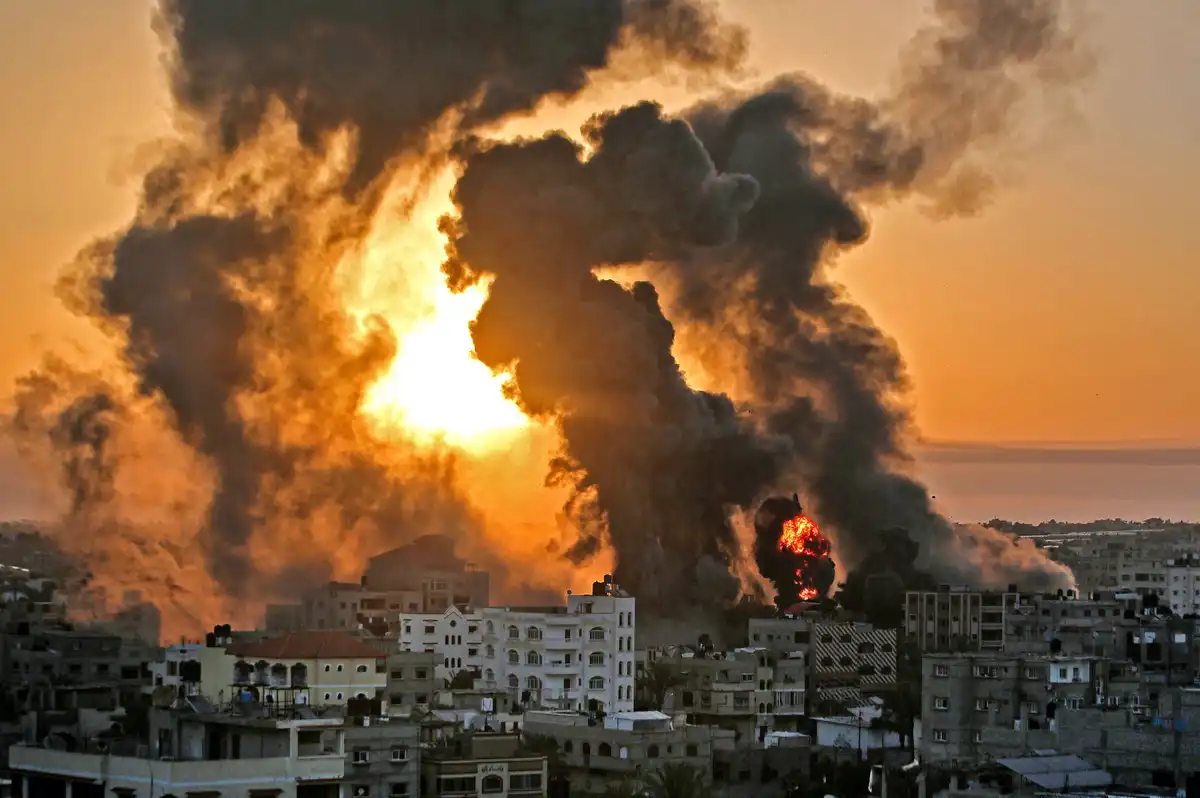
Washington should trumpet the IAEA’s findings and remind the world that every country that has enriched uranium to 60 percent has gone on to produce nuclear weapons. The Trump administration has already taken steps to ratchet up economic pressure on Iran by enforcing sanctions on those who buy Iranian oil. Convincing allies to get on board will magnify Trump’s ability to coerce Iran into halting its nuclear program.


STRENGTH IN NUMBERS

Trump would be wise to use leverage not just against Iran but also with countries that have influence over Tehran. China, for example, does not want to see the United States or Israel use force against Iran lest it dramatically drive up the price of oil; Trump should be clear with Chinese leader Xi Jinping that he will take U.S. military action off the table only if Iran signs a deal that dramatically reduces the size of its nuclear infrastructure. (Civilian nuclear power would be permitted.)

Trump must, of course, communicate with Iran through multiple channels. He needs to convey both publicly and privately that—although his preference is to use diplomacy—the United States, either on its own or with Israel, would be left with no choice but to destroy Iran’s nuclear infrastructure if Tehran turned down a deal. Iran’s leaders must know they would lose four decades’ worth of investment in their country’s nuclear infrastructure if they rejected a diplomatic outcome.

Trump can couple his threats with inducements, including promises to invest in Iran and lift sanctions. Iranian leaders may be dubious about such offers given that their country benefited only modestly from the economic payoffs of the Iran deal of 2015, but Trump can also offer help with water and related food security. Iran has profound water shortages. A former Iranian minister of environment warned that the country could not sustain its population if it continued to mismanage its water. The United States can help by providing technologies that regulate crop irrigation and prevent the loss of water through evaporation—and Washington should publicize its willingness to do so.

Good statecraft requires setting realistic goals and dedicating the necessary resources to achieve them. Trump understands better than most the importance of exercising leverage to meeting his objectives. But he misses that Washington has historically been most effective when it has drummed up support from its friends. By working with others, the United States increases its leverage and becomes more powerful. The Trump administration has the best shot at success if it uses all the tools at its disposal—including soft power and alliances.

PALESTINE

Tue 18 Mar 2025 10:59 pm - Jerusalem Time

A Palestinian citizen was injured during the raid on the town of Dura.

A citizen was injured with bruises, Tuesday evening, during the Israeli occupation forces' raid on the town of Dura, south of Hebron.


Local sources reported that occupation forces stormed the town center and fired live ammunition at residents and their businesses. Soldiers also assaulted a young man after arresting him, causing him to suffer bruises.

ARAB AND WORLD

Tue 18 Mar 2025 10:52 pm - Jerusalem Time

Syria: Israeli shelling targets military sites in the Homs countryside.

Explosions rocked a military site in the southern Homs countryside, coinciding with Israeli airstrikes targeting a missile battalion in Jdeideh al-Sharqiya, near Homs city. No casualties were reported, according to the Syrian Observatory for Human Rights on Tuesday evening.


The Observatory reported that in a previous attack, "Israeli warplanes targeted the 175th Regiment in Izraa with several airstrikes, coinciding with an airstrike targeting the 132nd Brigade in Daraa city, which led to violent explosions that shook the area."


Israeli warplanes targeted the 132nd Brigade in Daraa with several airstrikes, sparking flames and prompting the dispatch of ambulances and fire trucks to the site.


The Syrian Observatory for Human Rights documented the deaths of four people in Daraa, including three civilians and a member of the Military Operations Directorate, in addition to several others wounded.


Since the beginning of this year, the Observatory has documented 31 Israeli attacks on Syrian territory, including 29 airstrikes and two ground attacks. These attacks resulted in the damage and destruction of approximately 40 targets, including weapons and ammunition depots, headquarters, centers, and vehicles.


These strikes resulted in the deaths of 12 people, including five members of the Military Operations Department, and the injury of another. Five civilians were also killed, in addition to two unidentified Lebanese nationals.


The Israeli airstrikes were distributed as follows: 1 Aleppo with 7 strikes, 9 Damascus countryside, 3 Sweida, one of which was targeted with 4 strikes, 3 Homs countryside, including two that targeted the Syrian-Lebanese border, 4 Quneitra countryside, 4 Daraa, 1 Tartus, 2 Damascus; according to the Syrian Observatory for Human Rights.

PALESTINE

Tue 18 Mar 2025 10:38 pm - Jerusalem Time

Dozens of Israelis demonstrate in Tel Aviv against Netanyahu's decisions.

Some 40,000 people demonstrated in Tel Aviv on Tuesday evening to protest Israeli Prime Minister Benjamin Netanyahu's decision to dismiss Shin Bet chief Ronen Bar and resume the war on the Gaza Strip.


Tens of thousands of demonstrators gathered in Habima Square in central Tel Aviv, and the protests spread to surrounding streets, such as Rothschild and Ben Zion, where heavy traffic jams were recorded.


Similar protests took place in Jerusalem, the Sha'ar Hanegev Rangers, Beersheba, Haifa, and other areas, with demonstrators raising slogans against the dismissal of the Shin Bet chief and against the continuation of the war.


Protesters accused Netanyahu of waging the war based on political calculations to ensure he remained in power, demanding a comprehensive deal to release all prisoners and rescind the dismissal of the Shin Bet chief.


The protests were attended by former leaders of Israel's security services, including former Police Commissioner Roni Alsheich, former Mossad chief Tamir Pardo, and families of prisoners in Gaza.


In his address to the demonstrators, Al-Sheikh said there was a systematic attempt to undermine the work of security institutions, noting that the security services were now required to "not carry out their duties if they do not align with the government's political interests."


He added, "The police are prevented from investigating cases that displease the political leadership, and now even the Shin Bet is no longer permitted to perform its duties if doing so threatens Benjamin Netanyahu's stability in power."


Al-Sheikh launched a sharp attack on Netanyahu, saying, "There can no longer be any doubt that he is willing to compromise national security for non-national reasons." He added, "We will not allow their future to be jeopardized."


He continued, "This is a fateful moment, and anyone who remains silent in the face of the government's political deception and security manipulation is sacrificing state security for narrow political interests."


For his part, former Mossad chief Pardo also launched a sharp attack on Netanyahu, saying, "March 18 is another dark day in the campaign of destruction led by the accused Netanyahu."


He added, "What is happening now is Netanyahu's war for his survival. It is not Israel's war, but Netanyahu's war for his political survival. The self-destructive mechanism that this coward, fraud, and liar launched long ago is reaching its decisive stage."


Pardo accused the prime minister of deliberately dragging Israel into an open war with no political horizon, saying, "You ousted the head of the Shin Bet hours before he was due to sit at the command table with the chief of staff. You claimed you didn't trust him, but at the same time, you gave him the responsibility of running the war again."


Pardo concluded his statement sharply: "You, Benjamin Netanyahu, pose an immediate and clear danger to the security of the state. You are a man without a conscience, without a compass. We will not forget and we will not forgive."


In turn, Einav Tsengauker, the mother of a prisoner held in the Gaza Strip, called on demonstrators to join the prisoners' families' protests on Begin Street, opposite the Ministry of Defense headquarters.


"Netanyahu opened the gates of hell on the hostages, not on Hamas. They can only be saved through a single comprehensive deal. War will not bring them back; it will kill them," she said.


She called for escalation, adding, "If thousands of Israelis set up tents around the Kirya headquarters (the Defense Ministry headquarters in Tel Aviv), Netanyahu will have no choice but to end the war and return the hostages."


PALESTINE

Tue 18 Mar 2025 10:36 pm - Jerusalem Time

Suffocation injuries during clashes south of Bethlehem

A number of citizens suffered suffocation when Israeli occupation forces stormed the village of Jouret al-Sham'a, south of Bethlehem, on Tuesday evening.


Local sources said that the occupation forces stormed the village and took up positions in its center, firing tear gas and sound bombs at the worshippers after they had finished the evening and Tarawih prayers, causing a number of them to suffer from suffocation.

ARAB AND WORLD

Tue 18 Mar 2025 10:03 pm - Jerusalem Time

Trump and Putin agree to a limited ceasefire in Ukraine... and Putin sets conditions.

US President Donald Trump said he and his Russian counterpart Vladimir Putin agreed during a "good and productive" call to work quickly toward a ceasefire in Ukraine, after agreeing to a halt to attacks on energy facilities but not a full truce.


Trump wrote on his Truth Social network that "it was agreed that we would work quickly to achieve a comprehensive ceasefire and ultimately end this very terrible war between Russia and Ukraine."


Putin demanded from his counterpart Trump a "complete halt" to Western military aid to Ukraine, the Kremlin announced.


The Russian presidency said in a statement following the call between the two leaders, "It was emphasized that the basic condition for preventing the escalation of the conflict and working to resolve it through political and diplomatic means must be a complete cessation of Western military assistance (to Ukraine) and the supply of intelligence information to Kyiv."


The Kremlin also announced that Putin had set conditions for a ceasefire in Ukraine, including an end to the country's "rearmament."


In a statement, he said, "The Russian side emphasized a number of key points related to effective monitoring of a possible ceasefire along the entire front line, the need to end the mandatory mobilization in Ukraine, and the rearmament of the Ukrainian armed forces."


For its part, the White House announced that Trump and Putin had agreed to a 30-day truce in Ukraine, including "energy and infrastructure," and that talks should begin immediately to reach a broader truce.


The White House said in a statement that "these talks will begin immediately in the Middle East," also noting that improving relations between Washington and Moscow would entail "tremendous economic and geopolitical benefits."


Putin told his counterpart Trump of his readiness to work with the United States on "possible ways to resolve" the conflict in Ukraine, the Kremlin announced.


The Kremlin said, "The Russian president declared his readiness to work with his American partners to thoroughly consider possible paths to a settlement that should be comprehensive, stable, and sustainable," describing the phone call between the two presidents as "detailed and frank."

PALESTINE

Tue 18 Mar 2025 9:07 pm - Jerusalem Time

Demolition of facilities and destruction of agricultural crops in Jericho and Hebron

Israeli occupation forces demolished facilities in Jericho on Tuesday evening, while settlers vandalized agricultural crops south of Hebron.


Hassan Malihat, general supervisor of the Al-Baidar organization for the defense of Bedouin rights, said in a press statement that the occupation authorities, accompanied by representatives from the settlement council and settlers from the colonial outposts adjacent to Arab Malihat in Jericho, demolished two barracks owned by Jamal Malihat, one of which was designated as a residential area and the other as a sheep pen.


He added that the occupation forces demolished the facilities that supply electricity to the residents and are used in their daily lives, in the presence of the director of the "Mefo'ot Yeriho" settlement, Jibrin Kalash, during the demolition operations.


The Arab al-Malihat, like other Bedouin communities in the Jordan Valley, face ongoing escalation by the occupation and its settlers, including demolitions, land seizures, and the prevention of construction and infrastructure development.


In Hebron, media activist Osama Makhamreh said that settlers stormed the village of Al-Mafqara, roamed around the homes of citizens, and released their livestock into a plot of land planted with more than 120 olive trees, owned by citizen Fayez Makhamreh in Khirbet Maghayer Al-Ubaid. The livestock grazed on dozens of olive trees owned by citizen Shahada Makhamreh, and destroyed agricultural crops owned by citizen Kayed Makhamreh.


In the "Fatah Sidra" area, settlers released their sheep around the home of citizen Farid Al-Hamamdeh, destroying irrigated seedlings around the house, fruit trees, and areas of agricultural crops.

PALESTINE

Tue 18 Mar 2025 8:52 pm - Jerusalem Time

Medical facilities in Gaza are suffering from severe pressure and a shortage of supplies.

The Red Cross warned that many medical facilities in Gaza are suffering from "extreme pressure" beyond their capacity following the recent Israeli bombardment of the Strip, coinciding with what the World Health Organization confirmed about a shortage of medicines in the Strip.


Tommaso Della Longa, spokesman for the International Federation of Red Cross and Red Crescent Societies, said on Tuesday that Palestinian Red Crescent Society workers confirmed that "many health facilities across Gaza are under extreme pressure, exceeding their capacity." He noted that health facilities are suffering from a high number of patients and pressure amid declining supplies.


"There is a shortage of food, supplies, and fuel," he said, adding that Palestinian Red Crescent teams are assessing the impact of the fuel shortage on ambulance services and the ability of paramedics to reach those in need.


He added, "There is a shortage of medical equipment and medicines in hospitals and clinics. This makes it even more difficult to provide the necessary treatment to save lives."


For his part, World Health Organization spokesman Tarik Jasarevic warned of depleting drug stocks.


"Unfortunately, due to this shortage of medicines, there is a risk that health workers will not be able to provide treatment for various medical conditions, not just injuries," he told reporters, stressing that many supplies are running out.


He explained that the World Health Organization has 16 trucks waiting at the El Arish crossing on the Egyptian side of the border with Gaza, while essential medical supplies are being purchased.


For its part, Doctors Without Borders reported that its teams received a large influx of wounded at its field hospital, clinic, and Nasser Hospital.


"The types of injuries are extremely difficult, ranging from amputations to complex orthopedic cases and burns," said Mohammed Abu Mughsib, the organization's deputy medical coordinator in southern Gaza.


He added, "Hospitals are unable to cope with the large number of victims they receive at once."


"It was absolutely terrifying for 20 minutes, with bombs falling everywhere," said Claire Nicolet, head of MSF's emergency department, who is currently in Gaza.

PALESTINE

Tue 18 Mar 2025 8:50 pm - Jerusalem Time

Netanyahu: From now on, negotiations will be conducted under fire.

Israeli Prime Minister Benjamin Netanyahu said Tuesday evening that negotiations regarding Israeli prisoners held in the Gaza Strip will henceforth be conducted "under fire," and vowed to escalate military operations as part of Israel's war of extermination against the Gaza Strip.


This came in a video statement by Netanyahu, following the resumption of the Israeli war on the Gaza Strip, in which he claimed that "Hamas rejected all the proposals presented to it repeatedly," while alleging that Israel had agreed to the proposal of the US envoy to the Middle East, Steve Witkoff.

PALESTINE

Tue 18 Mar 2025 7:43 pm - Jerusalem Time

Israeli prisoners released from Gaza: Resumption of war threatens the lives of hostages

Israeli prisoners released from the Gaza Strip called on Israeli Prime Minister Benjamin Netanyahu to conclude a comprehensive and immediate deal that guarantees the release of all hostages.


The prisoners warned that the resumption of the war would directly endanger the lives of prisoners held by resistance factions in the Gaza Strip, during a press conference held in the "Prisoners' Square" in Tel Aviv.

Speakers stressed that political procrastination and military escalation "are costing the hostages in Gaza a heavy price," calling on the government to take urgent steps to end the crisis.


They called on the international community to continue to pressure "all parties" to push Israel and Hamas to return to the negotiating table and reach a deal that guarantees the release of prisoners.


Sasha Turbanov, one of the prisoners released from the Gaza Strip, warned that the Israeli military operations "endanger the lives of the hostages and directly affect them."


"I am shocked that decision-makers choose not to listen," he added. "I can't stop thinking about those still there, living in hell because of the resumption of fighting."

PALESTINE

Tue 18 Mar 2025 7:12 pm - Jerusalem Time

EU calls on Israel to stop bombing Gaza.

  1. The European Union called on Israel to halt its bombing of the Gaza Strip and resume the unimpeded flow of humanitarian aid and electricity into Gaza.


A joint statement by High Representative Callas and Commissioners Soika and Lahbib expressed regret over the collapse of the ceasefire in Gaza and the killing of civilians, including children, in Israeli airstrikes, calling for adherence to its obligations under international humanitarian law.


The European Union emphasized that resuming negotiations is the only way forward, and that stability is a prerequisite for rapid reconstruction.

ARAB AND WORLD

Tue 18 Mar 2025 6:41 pm - Jerusalem Time

US Ambassador to the UN Blames Hamas for Israel's Resumption of War


Interim US Ambassador to the United Nations Dorothy Shea told the Security Council on Tuesday that responsibility for the resumption of Israeli airstrikes on Gaza last night "rests solely with Hamas."

"The terrorist movement Hamas has categorically rejected every proposal and deadline presented to it over the past few weeks, including a temporary proposal to extend the ceasefire beyond Ramadan and Easter to allow time to negotiate a framework for a permanent ceasefire," She claimed.

In her address to one of the Security Council's many sessions on the Israeli-Palestinian conflict, Xi rejected accusations that Israel is indiscriminately bombing Gazans.

The US representative also claimed: "The IDF is bombing Hamas positions. Hamas is known to continue using civilian infrastructure as launching points for its attacks, and the United States condemns this practice, as should others."

It is noteworthy that the movement has not fired a single shot at Israel since January 19.

The Israeli occupation army resumed its war of extermination at dawn on Tuesday with a sweeping airstrike that killed at least 412 civilians, most of them children and women, and wounded 500 others, as a result of the intensive airstrikes on the Gaza Strip since dawn on Tuesday.

The Israeli occupation army claimed on Tuesday that it continues to bomb targets belonging to the Islamic Resistance Movement (Hamas) and the Islamic Jihad movement throughout the Gaza Strip.

The Israeli military claimed that the targets it bombed over the past few hours included militant cells, weapons depots, and other military infrastructure used by Hamas "to plan and carry out terrorist activities and posed a threat to IDF forces and citizens of the State of Israel."

Hamas is insisting on adhering to the original ceasefire terms of the agreement signed on January 16. The first phase of the agreement went into effect on January 19, and the second phase was supposed to enter early March. That phase included Israel's full withdrawal from Gaza and an agreement to permanently end the war in exchange for the release of the remaining living prisoners. While Israel signed the agreement, Israeli Prime Minister Benjamin Netanyahu has long insisted that Israel will not end the war "until Hamas's governing and military capabilities are destroyed." Accordingly, Israel has refused even to hold talks on the terms of the second phase, which was supposed to begin on February 3 with US support.

Instead, Netanyahu pushed for the first phase (which concluded on March 1) in exchange for the release of more Israeli detainees. The United States embraced Netanyahu's approach, and a new proposal from Trump's special envoy to the Middle East, Steve Witkoff, sought to achieve precisely that. Witkoff stated on Sunday that Hamas's response to the proposal was unacceptable.

Hamas had offered on Friday to release the remaining five American hostages, in line with what it had discussed during direct talks with Trump's hostage affairs envoy, Adam Boehler. Those talks collapsed after Israel leaked them to the press, prompting the Trump administration to abandon the framework by the time Hamas accepted it.

The Israeli occupation authorities threaten to intensify strikes on the besieged Gaza Strip unless Hamas resumes "real" negotiations.

PALESTINE

Tue 18 Mar 2025 5:32 pm - Jerusalem Time

Israeli Defense Minister: We will not stop until Hamas is eliminated and the hostages are returned.

Israeli Defense Minister Yisrael Katz said that "the rules of the game have changed" in the confrontation with Hamas, stressing that Israel will continue its war of extermination in the Gaza Strip "until all hostages are returned and the movement is completely eliminated."


Katz's remarks came during a field tour of the Israeli Air Force's Tal Nof base on Tuesday, following Israel's reversal of the ceasefire agreement and resumption of the war on Gaza, which has resulted in the deaths of 420 Palestinians in just hours.


Katz said, "I congratulate the IAF and the IDF on the unprecedented assassinations last night in Gaza, which were carried out based on the decision made by Prime Minister Benjamin Netanyahu and me, with the approval of all the security agencies."


He added, "Hamas must realize that the rules of the game have changed. If it does not immediately release all the hostages, the gates of hell will open on it, and it will face the full force of the Israeli army by air, sea, and land, until it is completely eliminated," he said.


Katz stressed that Israel "will not stop fighting until all hostages are returned to their homes and all threats to the residents of the south are removed."


By resuming its war on Gaza, Israel seeks to achieve three main goals. The first is to pressure Hamas to accept its terms in negotiations regarding a ceasefire and prisoner exchange. It also threatens to undermine the movement's rule in the Strip.


In addition, Israel is attempting to exert pressure on Iran and the Houthis amid the regional escalation. It is also working to prevent the rebuilding of the Qassam Brigades, Hamas's military wing, and weaken its combat capabilities.