ARAB AND WORLD

Fri 26 Jun 2026 6:57 pm - Jerusalem Time

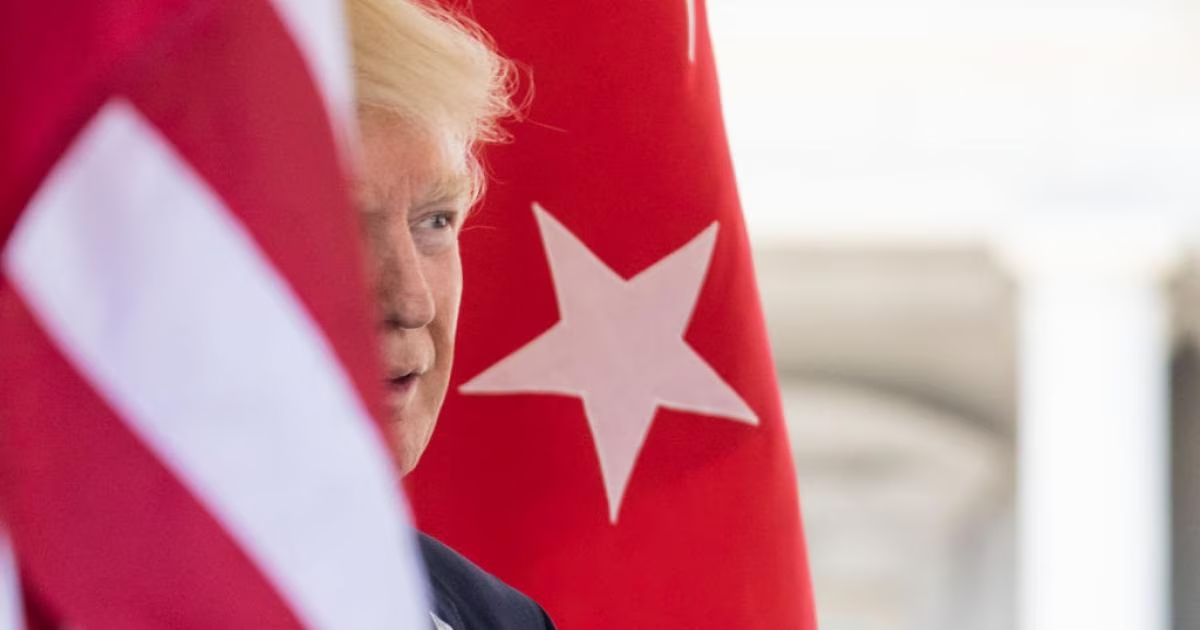
Trump Administration Defies Democratic Opposition, Proceeds with $700 Million Aircraft Engine Deal for Turkey

The administration of US President Donald Trump has officially informed Congress of its decision to proceed with a massive military deal with Turkey, which includes supplying Ankara with dozens of engines for fighter jets. The total value of this deal exceeds $700 million, a move that reflects the White House's desire to strengthen defense cooperation with its Turkish ally despite existing tensions.

The US State Department, in its official notification to lawmakers dated June 24, stated that the decision came after a comprehensive evaluation of a range of political, military, and economic considerations. The administration affirmed that it takes into account human rights standards and arms control before granting final export licenses for these sensitive components.

This step comes at a sensitive political time, serving as a clear signal of support from Washington to Ankara ahead of the NATO summit that Turkey will host next month. Observers also see the deal as a strong political boost for Turkish President Recep Tayyip Erdoğan, who has close ties with President Trump.

In contrast, this approach faces fierce opposition within Congress, specifically from Democratic lawmakers who refuse to make defense concessions to Ankara. Opponents base their stance on Turkey's continued possession of the Russian S-400 missile defense system, which has caused a deep diplomatic crisis since 2019.

Informed sources reported that Democratic Representative Gregory Meeks, the ranking Democrat on the House Foreign Affairs Committee, expressed explicit objections during initial reviews. Meeks refused to grant his approval for the deal, accusing the administration of ignoring the implications of this decision for US national security and strategic relations in the region.

In press statements, Meeks criticized what he described as the administration's failure to provide sufficient clarification on key aspects of US policy towards Turkey. He pointed out that the required components would not be delivered for years, yet the administration insists on proceeding with the procedures without addressing the unresolved issue of the Russian system.

Technically, these engines, produced by General Electric, are slated to power the 'Kaan' fighter jet, Turkey's first domestically produced stealth aircraft. This project represents a cornerstone of Ankara's ambitions to enhance its defense independence and reduce reliance on Western suppliers in the distant future.

Despite progress on the 'Kaan' project, Turkish officials acknowledge that the new aircraft will require many years of development before it is ready for actual service. US F-16 aircraft will remain the backbone of the Turkish Air Force for at least the next decade.

US law grants Congress a 15-day period to act collectively and introduce a joint resolution aimed at stopping or delaying the deal. However, the success of this endeavor requires the approval of a majority of members in both the House and Senate, with the presidential veto right remaining available to Trump to override any parliamentary objection.

It is worth noting that defense relations between the two countries have significantly deteriorated since Turkey's exclusion from the advanced F-35 fighter jet program as a punitive measure for the S-400 deal. Current US legislation prohibits the sale of those fighter jets to Ankara as long as the Russian system remains in its possession, claiming it poses a technical threat to US aircraft.

The US government is preparing to grant an export license for these components after considering political, military, economic, human rights, and arms control considerations.

ARAB AND WORLD

Fri 26 Jun 2026 9:40 am - Jerusalem Time

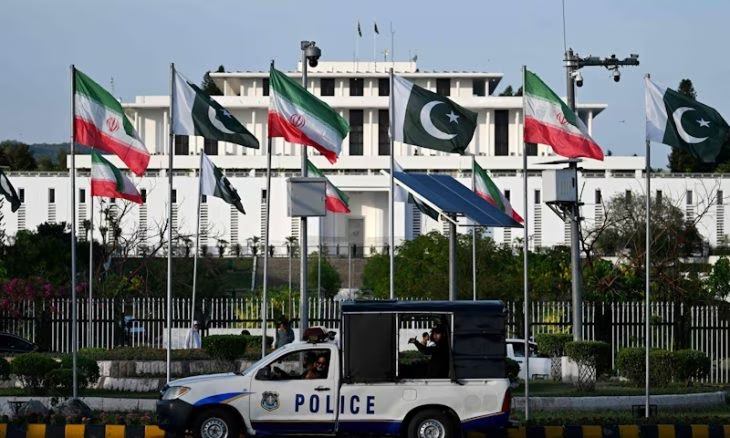
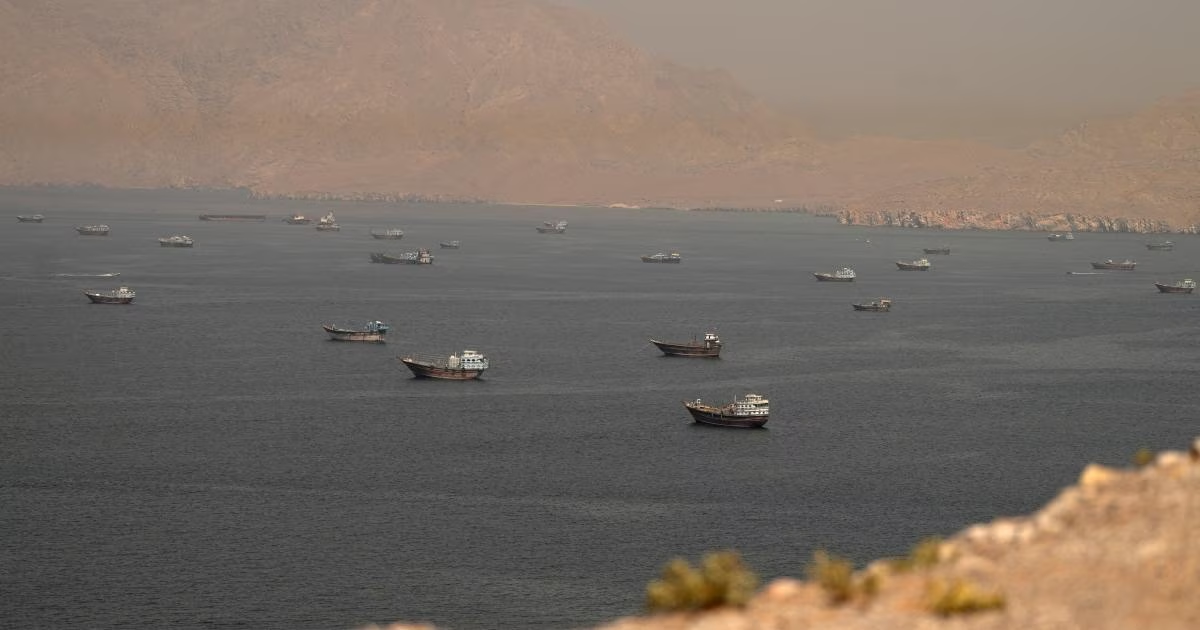
Iranian-Omani arrangements for managing the Strait of Hormuz: Tehran stipulates coordination, Muscat denies imposing fees

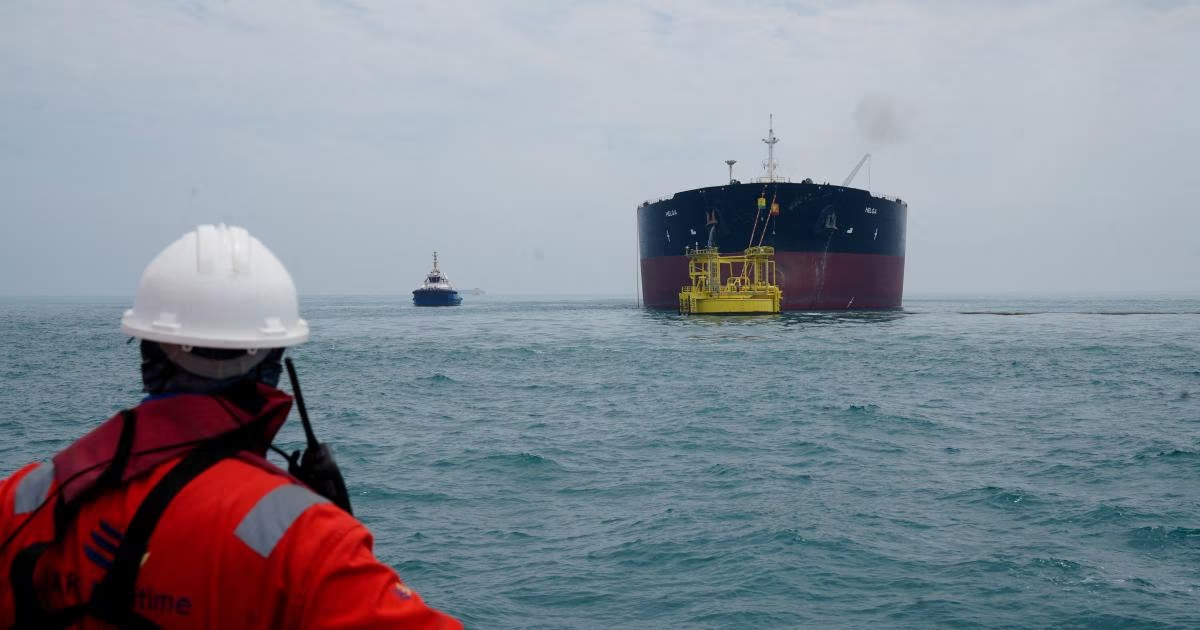
Iranian Foreign Minister, Abbas Araghchi, announced that Tehran and the Sultanate of Oman are heading towards holding a specialized round of talks aimed at outlining the future management of the Strait of Hormuz. This step follows a joint statement issued in Muscat, where both parties seek to regulate maritime navigation services in one of the world's most strategically important waterways.

In the context of diplomatic moves, Araghchi held a phone call with his Omani counterpart, Badr Al Busaidi, which he described as fruitful, emphasizing the two countries' determination to continue discussions with neighboring countries. These consultations aim to ensure regional stability and coordinate joint efforts to manage the waterway in a way that serves regional and international interests.

For his part, Omani Foreign Minister, Badr Al Busaidi, clarified that the Sultanate of Oman bears a historical and special responsibility in supporting international efforts to secure navigation in the Strait. Al Busaidi stressed during a ministerial meeting with the United States and Gulf countries in Bahrain that the upcoming arrangements will not include imposing any fees on ship transit.

Muscat affirmed its full support for the Memorandum of Understanding signed between Washington and Tehran on June 18, considering it a fundamental step towards achieving peace. The Sultanate believes that the success of this memorandum will directly contribute to restoring freedom of navigation through the Strait of Hormuz and ensuring the safe flow of global supplies.

These developments come after a period of military tension, as negotiations began to end the war that erupted last February between the United States and Israel on one side, and Iran on the other. That period witnessed the closure of the Strait and a significant impact on the movement of global seaborne oil exports, making the security of the passage a top priority.

On the technical front, the Omani Ministry of Transport announced continuous coordination with the International Maritime Organization regarding a proposal to use a temporary maritime corridor in the Strait. The Ministry indicated the necessity for transiting ships to coordinate in advance with the organization to ensure safe passage and avoid any navigational incidents under current circumstances.

In contrast, the Gulf Waterway Administration in Iran set specific conditions for ship transit during a 60-day transitional period in accordance with the Memorandum of Understanding. These conditions include the necessity of submitting transit requests at least 48 hours in advance, with a temporary exemption from costs associated with security, safety, and environmental services.

In a warning tone, the naval force of the Iranian Revolutionary Guard issued a strongly worded statement rejecting any attempts to impose new routes or alternative corridors. The Revolutionary Guard considered any navigational movement outside full coordination with Tehran to be extremely dangerous and unacceptable, threatening to take firm measures against violators.

Iranian naval forces stressed that the routes determined by Tehran are the only ones permitted for safe passage, demanding ships to communicate directly via marine channel 16. This stance reflects Tehran's desire to maintain its operational control over the Strait and prevent its use for any hostile military purposes.

Previous reports indicate that Iran describes the amounts it intends to collect in the future as costs for navigational and environmental services, not sovereign transit fees. As negotiations continue, the Strait of Hormuz remains a focal point of international tensions, with major powers seeking to ensure freedom of navigation without financial or security restrictions imposed by the littoral states.

The future arrangements for the Strait of Hormuz will not include transit fees, and we are working to restore freedom of navigation and ensure its safe flow.

PALESTINE

Fri 26 Jun 2026 9:40 am - Jerusalem Time

In cold blood.. Occupation soldiers assassinate a child in his father's arms and leave him bleeding for hours

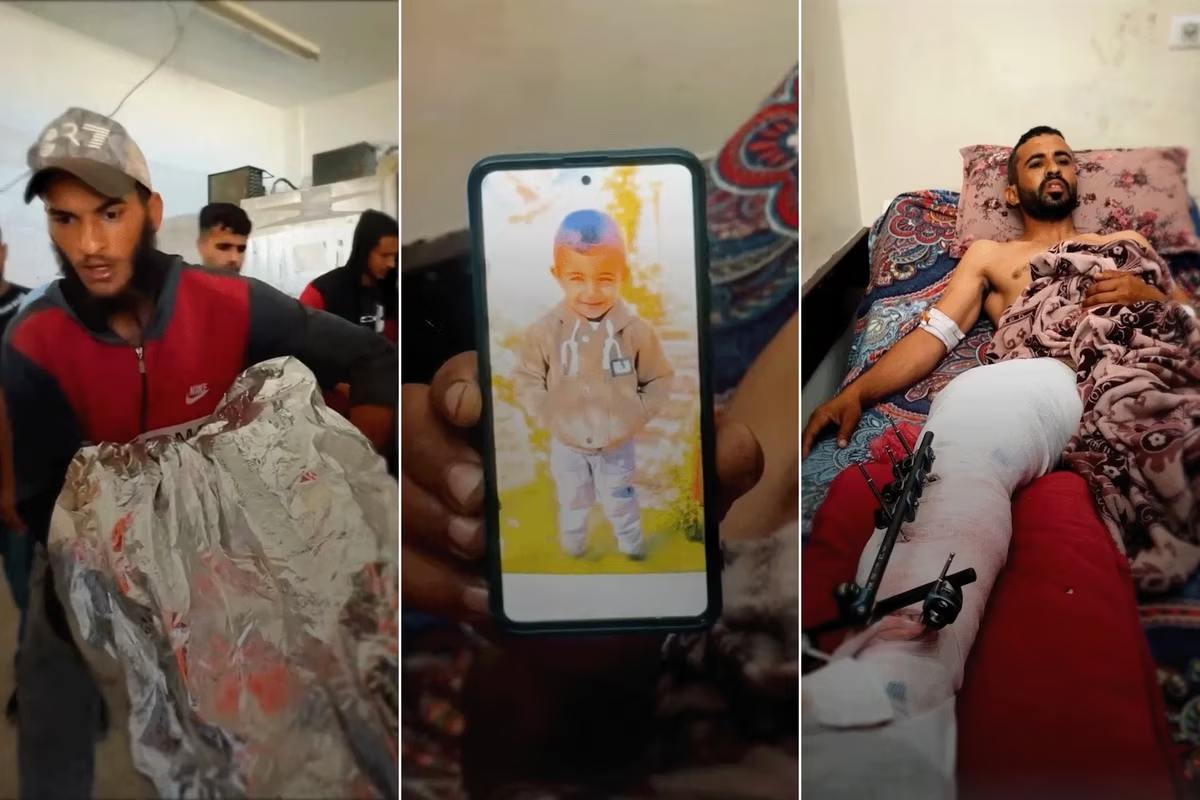
Day after day, horrific chapters of Israeli occupation crimes against civilians in the Gaza Strip are revealed, with a new tragedy recorded, victimizing three-year-old child Rayan Abu Al-Ajeen. The crime occurred while the child was in his father's arms as they returned from a family visit in the area west of the Yellow Line, which was completely devoid of any military activity or armed presence.

The grieving father, Bahaa El-Din Abu Al-Ajeen, recounts from his hospital bed at Al-Aqsa Martyrs Hospital how he was surprised by occupation soldiers directly in front of them at close range. He says he tried to protect his child, who began crying as soon as he saw the soldiers, so he hugged him, trying to move away from the place, but bullets were fired at them without warning or justification.

According to the father's testimony, the soldiers initially fired two bullets that did not hit him, so he raised his voice loudly, asking them to stop shooting, but the response came with a third bullet that directly targeted Rayan's head while he was still in his father's arms. The soldiers did not stop there; they also shot the father's leg, causing him serious injuries that almost severed his foot from his body.

When the father tried to call for help and an ambulance via his mobile phone, the soldiers quickly confiscated the phone and forcibly shut it down, preventing any means of saving the child who was bleeding profusely. A forced conversation ensued, characterized by brutality, as the father cried out, pleading with the soldiers to save his son, to which one of them coldly replied: 'What do you want with the boy? Let him die,' then they snatched the child's body and wrapped it in a piece of nylon in front of his father's eyes.

The injured father was subjected to abuse for long hours, as he and his child's body were taken to a nearby military site, where he was subjected to psychological pressure and threats of amputating his injured foot, which was only held by some tissues. During his interrogation, the soldiers accused the father of belonging to resistance factions, which he denied completely, emphasizing that he was a civilian on a family outing.

At approximately eleven o'clock at night, after hours of bleeding and pain, the occupation soldiers threw the father in an empty, dark area near the 'Kissufim' military site. The father was left alone under the surveillance of 'Quad Copter' drones, only to find his child Rayan's body next to him, which the soldiers had thrown, still wrapped in the piece of nylon it had been placed in since the moment of his martyrdom.

Medical sources overseeing Bahaa El-Din Abu Al-Ajeen's condition describe his health as extremely critical, as he suffers from severe bone and blood vessel damage. The father needs a series of complex surgical operations, including bone grafting and repair of arteries and veins in his right foot to save it from certain amputation due to deliberate medical neglect during the hours of detention.

The father concludes his story with indescribable bitterness, appealing to international bodies and humanitarian organizations to help him receive the necessary treatment outside the Strip due to weak local capabilities. Bahaa El-Din confirms that since the moment his child died in his arms, he has not tasted sleep, as Rayan's image and the harsh words of the soldiers still haunt him every moment.

What do you want with the boy? Let the boy die, leave him.

ARAB AND WORLD

Fri 26 Jun 2026 9:40 am - Jerusalem Time

Spitting and death threats.. A German activist recounts chapters of racism against veiled women in her country

Gheylen Brandenburg, a 22-year-old German activist, faces increasing challenges in her home society due to her religious identity and her choice to wear the hijab. Brandenburg, who is of French father and German mother, recounts how her life turned into a series of encounters with exclusion and discrimination that began to intensify since her conversion to Islam at an early age.

In statements to media sources, the activist recalled the first incidents of physical assault she was subjected to at the age of eighteen, when a drunken man spat on her inside a subway train in Berlin. She explained that the assailant was shouting, claiming that she 'does not live freely,' referring to her hijab, while she at that moment feared for the safety of her mother, who tried to protect her.

Gheylen criticizes the stereotypes rooted in the collective consciousness of some Germans, who assume that the hijab is forcibly imposed on Muslim women. She asserts from her personal experience that her decision stemmed from a complete self-conviction, calling on society to open direct channels of dialogue with veiled women instead of making prejudiced judgments based on ignorance.

Hate harassment is not limited to the street, but extends to the digital space, which has become an arena for severe threats and insults against her. Brandenburg pointed out that she received comments questioning her national belonging, and some even wished her to be involved in fatal accidents, which she describes as painful because it comes from members of her society in which she was born.

On the political activism front, Gheylen stands out as a voice advocating for humanitarian issues, regularly participating in demonstrations supporting the Gaza Strip and Lebanon. The activist believes that defending civilians and rejecting the war machine is a moral responsibility that falls on every human being, regardless of their religious or ethnic background.

Brandenburg calls on the German government to review its policies, especially regarding stopping the export of weapons that contribute to the continuation of conflicts. She also urges German citizens to break the barrier of silence and actively participate in the peaceful movement rejecting wars, emphasizing that humanity must precede any other considerations.

Returning to the roots of her faith journey, Gheylen describes her childhood as full of challenges and an early feeling of exclusion and school bullying. However, her transfer to a culturally diverse school in Berlin contributed to changing her perspective, as she experienced respect and affection from her Muslim classmates for the first time.

Her journey of converting to Islam began at the age of fourteen, after she became curious about a boy fasting in a care home where she was staying. Since then, she embarked on a deep research journey into the teachings of the Islamic religion, asserting that she has never regretted this path that gave her certainty and inner peace despite all difficulties.

In a related context, a recent human rights report issued by the 'Claim' network for monitoring discrimination revealed shocking figures reflecting the scale of the crisis in Germany. The year 2024 recorded a huge jump in the number of attacks against Muslims, with 3080 cases documented, compared to only 192 cases in the previous year, indicating a serious deterioration in social peace.

The data showed that women are the most targeted group, accounting for up to 70% of the total documented incidents, which included verbal and physical assaults and pre-packaged accusations. The report links this sharp escalation to the charged political climate following the outbreak of the Israeli war on Gaza, which created an environment of fear and distrust in official institutions.

Hate does not stop at street harassment, but extends to the digital world where my German identity is questioned and death is wished upon me.

ARAB AND WORLD

Fri 26 Jun 2026 9:40 am - Jerusalem Time

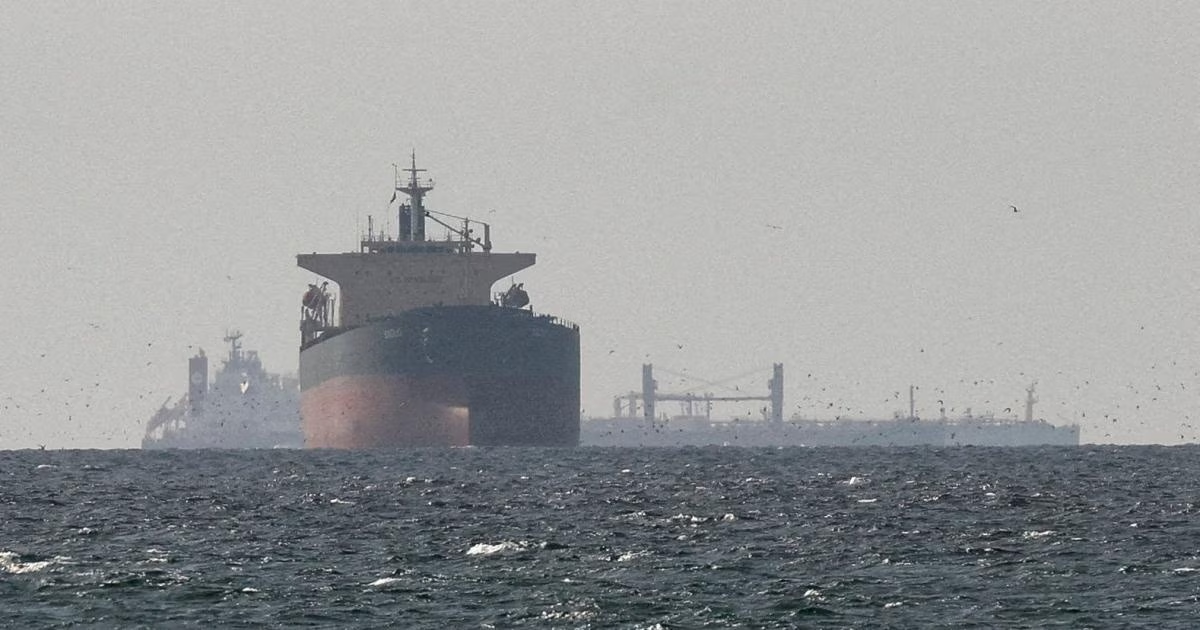
Cargo Ship Targeted by Unknown Projectile in Strait of Hormuz, Evacuation Operations Suspended

International shipping sources reported that a commercial cargo ship sustained a direct hit from an unknown projectile while transiting the Strait of Hormuz off the Omani coast on Thursday. The UK Maritime Trade Operations (UKMTO) stated that the attack targeted the starboard side of the vessel, resulting in material damage to the bridge without any reported crew injuries.

Maritime security firm 'Vanguard Tech' identified the targeted vessel as the container ship 'Ever Lovely', sailing under the Singaporean flag. According to the ship's captain, the incident, which occurred 14 kilometers southeast of Oman, did not cause any oil spills or environmental damage threatening the sensitive maritime area.

Following this serious security development, the United Nations International Maritime Organization (IMO) announced the suspension of all its efforts to evacuate hundreds of ships and thousands of sailors stranded in the Strait of Hormuz. The organization's Secretary-General, Arsenio Dominguez, confirmed that the targeted vessel was not among the convoys whose safe passage from the region the organization was overseeing.

The incident caused an immediate disruption in global energy markets, with oil prices jumping by about one percent due to fears of crude supply disruptions. Brent crude futures rose to $74.67 per barrel, while US West Texas Intermediate (WTI) crude climbed to $71.50 per barrel in recent trading.

This field escalation comes shortly after a period of relative calm in the vital waterway, following understandings between Tehran and Washington that led to the lifting of the blockade on ports. The region had gradually begun to recover from the repercussions of the recent war in the Middle East before this attack reshuffled the security cards once again.

Reports indicate that the competent authorities have launched an extensive investigation to uncover the circumstances of the attack and the type of projectile used in the operation. Maritime authorities also issued urgent appeals to all vessels passing through the area to exercise extreme caution and immediately report any suspicious movements that might threaten navigation safety.

Observers link this attack to ongoing discussions between Muscat and Tehran regarding mechanisms for managing the waterway in the upcoming phase. These discussions include proposals to impose fees for transit services, a matter strongly opposed by the United States, which insists on freedom of navigation without additional costs.

This incident is the second of its kind within two weeks, as the UK Maritime Organization recorded a similar incident on June 12th. These repeated attacks reflect the fragility of the security situation in the Strait of Hormuz despite diplomatic efforts to establish a comprehensive ceasefire.

Global shipping companies are concerned about how long it might take for oil flows to return to normal levels before the recent confrontations. Economic experts believe that continued threats in the Strait could push energy prices to new record highs if the passage is not fully secured.

In a related context, international bodies continue to closely monitor the situation to assess the impact of the attack on future evacuation plans for sailors. The question remains about the identity of the party responsible for launching the projectile, amid official silence from the active regional powers in the area until now.

Today, an attack was reported in the Gulf of Oman on a ship that had crossed the Strait of Hormuz, and this ship was not sailing within the evacuation framework organized by the organization.

ARAB AND WORLD

Fri 26 Jun 2026 9:40 am - Jerusalem Time

US Supreme Court Upholds Trump's Decision to End Temporary Protection for Thousands of Syrians and Haitians

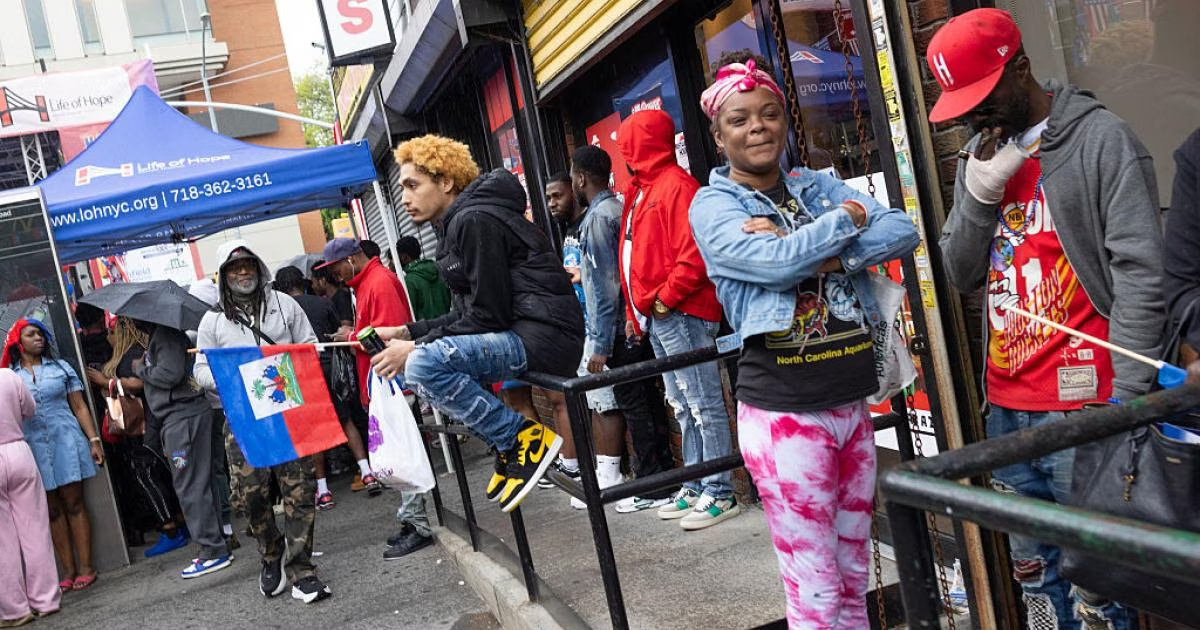
The United States Supreme Court issued a decisive ruling on Thursday, upholding the Trump administration's decision to revoke temporary protected status for hundreds of thousands of immigrants. This measure directly targets approximately 350,000 Haitian and 6,000 Syrian nationals who have resided in the United States for years under the umbrella of this humanitarian program.

The ruling, issued by the conservative-majority court, was supported by six justices and opposed by three. The decision stated that the Department of Homeland Security's procedures for ending protection are not subject to judicial review. This stance represents a legal blow to immigrants whose appeals were based on the instability of security conditions in their home countries, which are suffering from wars and disasters.

In justifying the ruling, Justice Samuel Alito wrote that the statements made by the US administration did not carry an explicit racist character against immigrants, but rather expressed neutral political orientations. The court thus rejected the arguments presented by the affected parties' lawyers, which claimed that the decision to revoke was driven by racial animosity from President Trump towards specific nationalities.

The Temporary Protected Status (TPS) program is a lifeline for individuals considered to be at extreme risk if they return to their home countries due to armed conflicts or major natural disasters. With this new ruling, more than one million beneficiaries of the program from 12 different countries face the risk of deportation, raising widespread concern among international human rights and humanitarian organizations.

In addition to Syria and Haiti, the list of countries affected by this decision includes Yemen, Afghanistan, Venezuela, Somalia, and South Sudan, as well as other countries in Latin America and Asia. The Trump administration had made ending this protection a priority as part of a broader campaign to tighten immigration laws and reduce the number of temporary residents.

Syrian immigrants had obtained this legal status in 2012 as a result of the ongoing war in their country, while it was granted to Haitians in 2010 following the devastating earthquake that struck their island. Despite continued armed violence and extreme poverty in Haiti, the court found that the executive branch has the full right to assess whether or not to continue this protection.

Sources reported that this decision comes at the peak of political activity related to the immigration file, as Trump had previously sparked widespread controversy with his statements about Haitian immigrants during his election campaign. Observers believe that the ruling gives the current administration a green light to proceed with mass deportation plans without significant legal obstacles from federal courts.

The Department of Homeland Security is expected to begin taking procedural steps to implement the decision, placing thousands of Syrian and Haitian families before difficult choices and an uncertain future. These developments confirm a radical shift in US asylum policy, where political and security considerations have now taken precedence over the humanitarian motives upon which the Temporary Protected Status program was founded.

None of the statements attributed to the President or the Secretary of Homeland Security were explicitly racist in nature, and all expressed political orientations.

PALESTINE

Fri 26 Jun 2026 9:39 am - Jerusalem Time

Israel insists on military presence in Lebanon and Gaza.. and a European proposal for a 'coalition' to replace UNIFIL

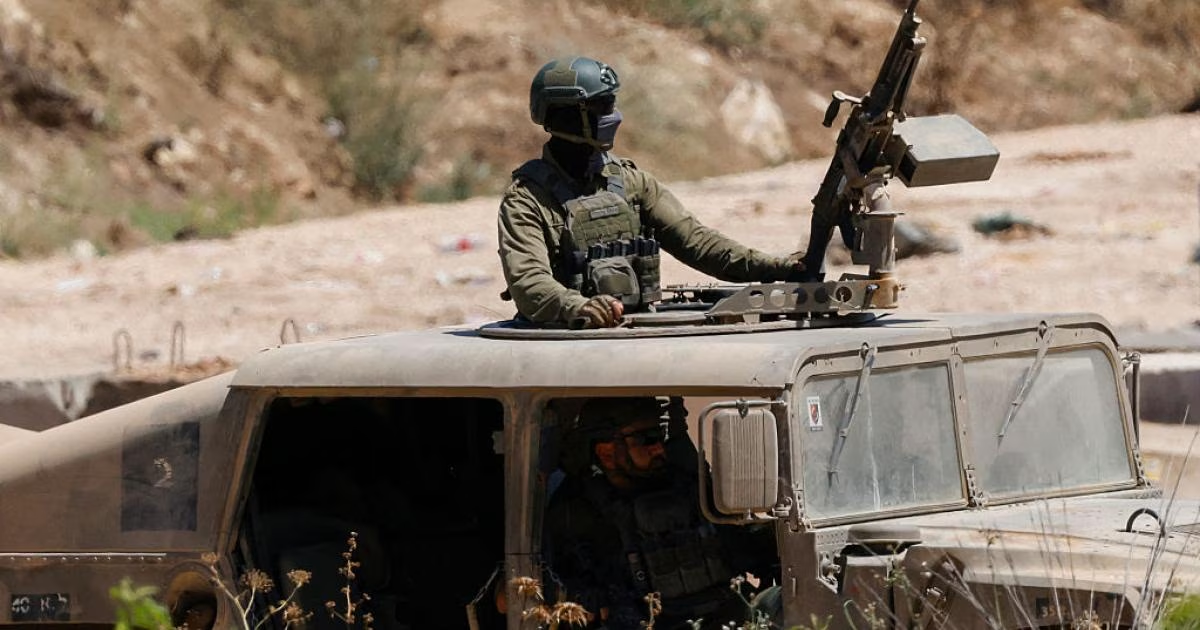
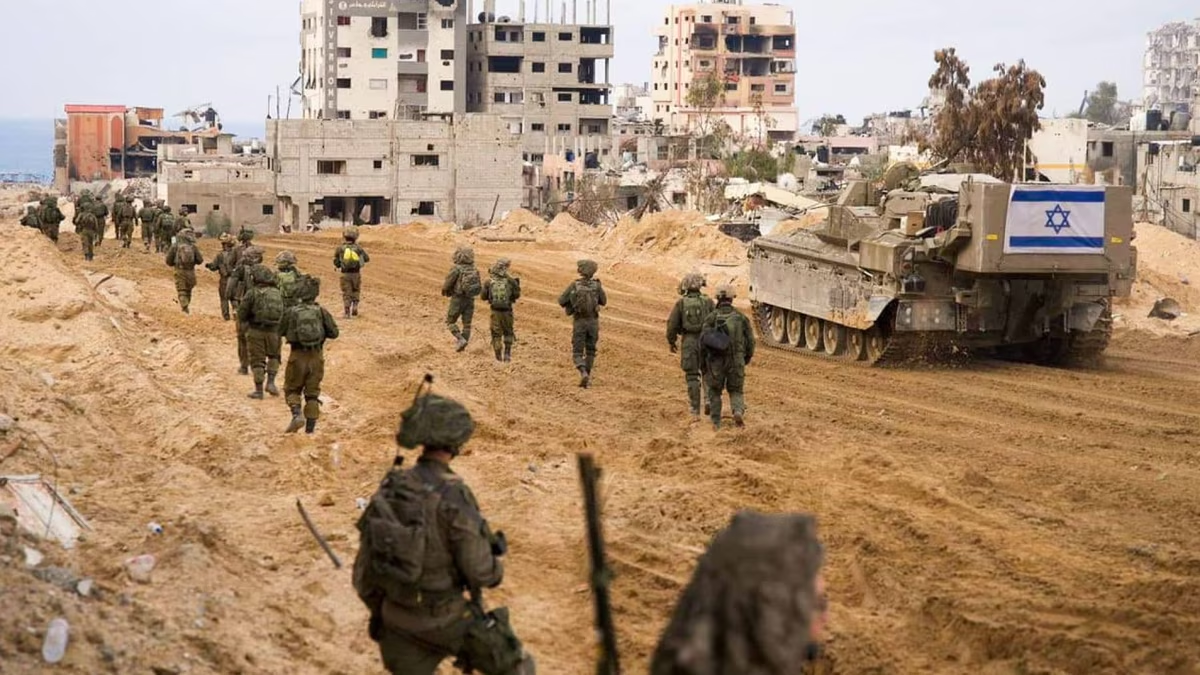
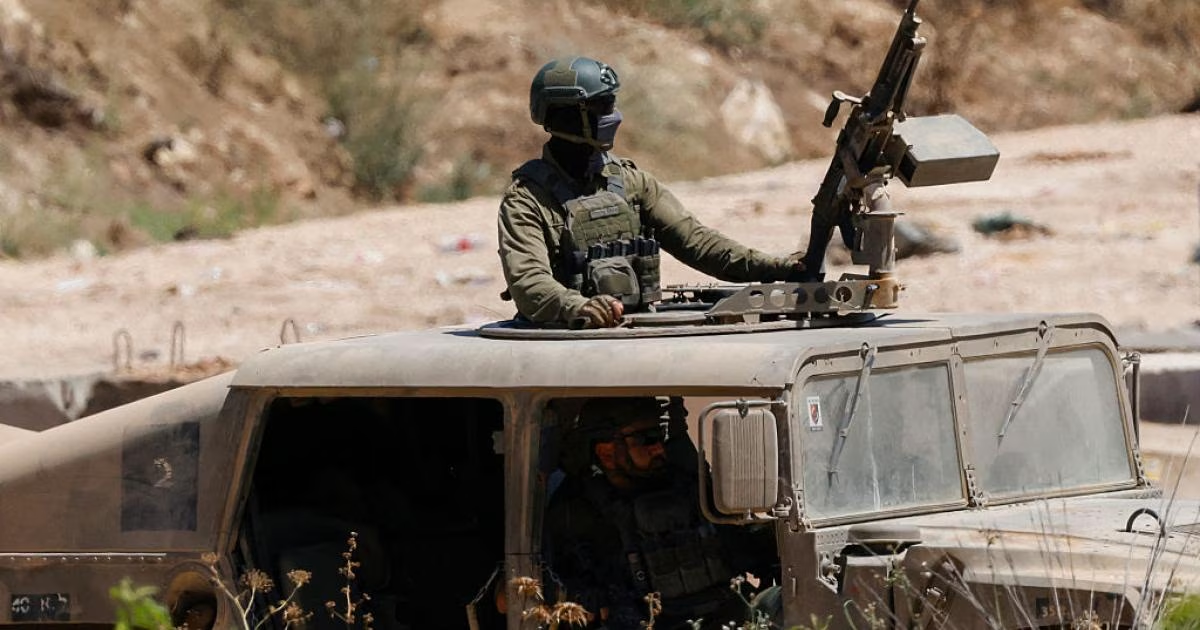
The Israeli government officially announced that there is no time limit for the withdrawal of its forces from South Lebanon, the Gaza Strip, and Syrian territories, emphasizing the continuation of military operations until its security objectives are achieved. These statements came at a sensitive time, coinciding with the start of a new round of talks in Washington, mediated by the United States, aimed at achieving regional de-escalation.

Israeli Defense Minister, Israel Katz, affirmed during a military ceremony that the Israeli army intends to maintain its presence in what he described as 'security zones' for an indefinite period. Katz clarified that this approach aims to protect Israeli settlements from threats posed by armed factions and jihadist elements on those fronts.

Katz stressed Tel Aviv's absolute opposition to any international pressure that might be exerted to push it towards an early withdrawal from South Lebanon, considering that a direct military presence is the only guarantee to prevent future attacks. He pointed out that past experiences have proven Israel's need for direct field control to secure its northern and southern borders.

For his part, Prime Minister Benjamin Netanyahu gave the green light to the army to continue operating with full freedom within Lebanese territories, affirming that forces will remain there as long as security necessity dictates. Netanyahu considered that freedom of military action is the primary tool to ensure that threats do not return to border areas.

In the same context, Israeli government spokesman, David Mencer, clarified that any redeployment of forces in South Lebanon is organically linked to the disarmament of Hezbollah and stripping it of its combat capabilities. Mencer added that Israel will not repeat past mistakes, referring to previous international decisions that failed to clear the area of weapons.

On the international front, French President Emmanuel Macron and Italian Prime Minister Giorgia Meloni revealed a plan to form a multinational 'coalition' to undertake security tasks in Lebanon after the expiration of UNIFIL's mandate. This proposal aims to strengthen Lebanese state sovereignty and support its national army to prevent the South from becoming a base for escalation.

Meloni affirmed during a meeting in the French city of Antibes that coordination between Rome and Paris aims to avoid a dangerous security vacuum in the border region after December 2026. The Italian leadership believes that the presence of an international force with new operating mechanisms could contribute to stabilizing the region more effectively than current formulas.

These European moves come in light of the UN Security Council's decision to end the mission of the United Nations Interim Force in Lebanon (UNIFIL) by the end of next year. This force currently includes about 7,500 soldiers representing 50 countries, but its effectiveness has been subject to continuous criticism by the Israeli side and the United States.

In turn, UN Secretary-General António Guterres warned of the dangers of the absence of a UN military presence in Lebanon, stressing the need to find an alternative formula that ensures continued international oversight. However, Guterres's proposal faces significant challenges in light of the Israeli tendency to impose a new security reality based on direct military force.

Field data indicates that the region is heading towards a phase of political and military complexity, where the Israeli desire for long-term occupation intersects with European efforts to internationalize the security file. The fate of South Lebanon remains pending between the results of Washington's negotiations and ongoing military movements on the ground.

We must remain in the security zone in Lebanon, in Syria, and in Gaza, and not for a limited period, in order to defend our population and our communities.

PALESTINE

Fri 26 Jun 2026 9:39 am - Jerusalem Time

13 Palestinian prisoners transferred to Al-Aqsa Martyrs Hospital after their release from occupation prisons

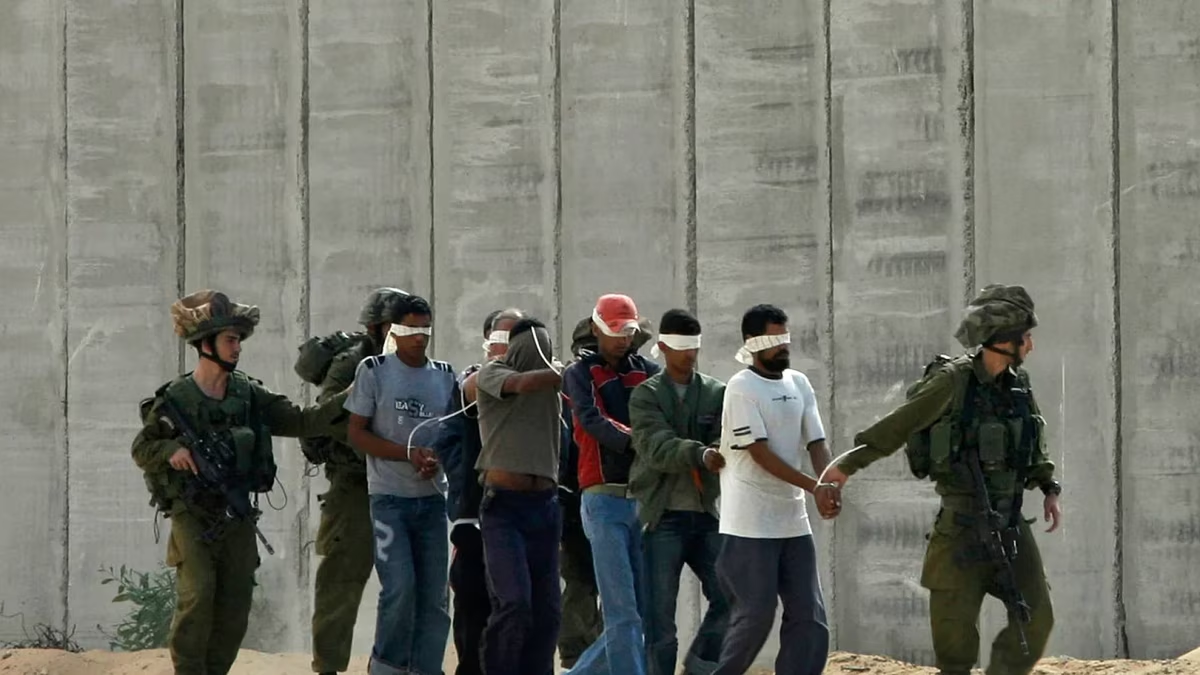
Medical and field sources reported the arrival of 13 Palestinian prisoners at Al-Aqsa Martyrs Hospital in Deir al-Balah city, central Gaza Strip, immediately after their release by the Israeli occupation authorities today, Thursday. The release process took place via the Kerem Abu Salem border crossing, where International Committee of the Red Cross (ICRC) teams took charge of receiving and transporting them to receive necessary medical care and examine their health condition.

In a statement, the International Committee of the Red Cross confirmed that it facilitated the transfer of the released prisoners and enabled their communication with their families to ensure their reunification after periods of detention under ambiguous circumstances. The committee did not disclose the full identities of the prisoners or precise details about the nature of their injuries, but their direct transfer to the hospital raises concerns about the deteriorating health condition suffered by detainees inside prisons.

The international organization indicated that it has facilitated the transfer of more than 2,500 Palestinian prisoners since 2023 using the same mechanism, but it renewed its complaint about being continuously prevented from accessing Israeli detention centers. The committee stressed that it has not been able to visit any detainee since October 2023, demanding the necessity of revealing the fate of all missing persons and their places of detention, and allowing its teams to exercise their oversight role.

In a related context, the International Committee stressed the need for the occupation authorities to adhere to international humanitarian law, which mandates treating prisoners with dignity and providing a detention environment that ensures their physical and psychological safety. It expressed its grave concern about the thousands of Palestinian families who still do not know the fate of their children, affirming the continuation of dialogue with the Israeli side to resume periodic visits to detainees and check on their conditions.

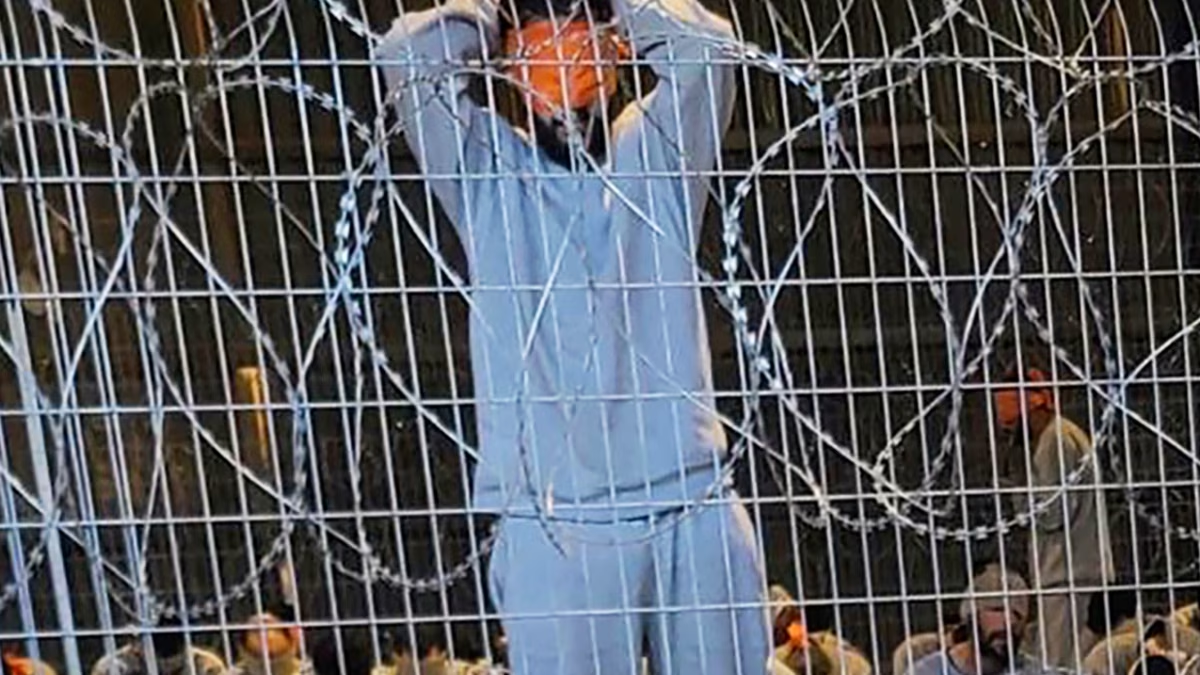
This step comes at a time when documented testimonies are increasing about Palestinian prisoners, especially those from the Gaza Strip, being subjected to brutal torture and systematic starvation policies inside detention centers. The prisons where thousands of Palestinians are held lack the minimum humanitarian standards, as detainees suffer from deliberate medical neglect, which in many cases has led to a severe deterioration in their health or the martyrdom of some under torture.

Regarding the ongoing aggression, data from the Palestinian Ministry of Health indicates that the genocide war waged by the occupation on Gaza has resulted in more than 73,000 martyrs and over 173,000 injured. The continuous aggression has also caused the destruction of about 90% of the infrastructure and civilian facilities in the Strip, exacerbating the humanitarian crisis and making the provision of medical services to released prisoners a major challenge.

As for the occupied West Bank, the pace of attacks by the occupation army and settlers has escalated, leading to the martyrdom of 1,173 Palestinians and the injury of thousands of others since October 2023. These attacks coincide with widespread arrest campaigns targeting about 23,000 citizens, as part of the comprehensive escalation policy pursued by the Israeli authorities in all Palestinian territories.

Under international humanitarian law, prisoners must be treated humanely, provided with acceptable detention conditions, and allowed to communicate with their families.

PALESTINE

Fri 26 Jun 2026 9:39 am - Jerusalem Time

Occupation releases 13 prisoners from Gaza: Released individuals arrive in Deir al-Balah amidst difficult health conditions

The Israeli occupation authorities released a new batch of Palestinian prisoners from the Gaza Strip on Thursday evening, including 13 citizens who had been detained for varying periods. The released individuals arrived via the Kerem Shalom crossing to the city of Deir al-Balah in the central part of the Strip, where an atmosphere of anticipation prevailed among the residents who waited to check on their relatives after a long period of communication قطع.

Local sources reported that all released prisoners arrived at Al-Aqsa Martyrs Hospital, where they immediately underwent thorough medical examinations and comprehensive tests upon their arrival. These medical procedures come amidst human rights reports confirming that detainees have been subjected to inhumane detention conditions, including systematic torture and starvation, raising serious concerns about their physical and psychological well-being.

The International Committee of the Red Cross (ICRC) coordinated the transfer process and facilitated the reunion of prisoners with their families, despite the strict restrictions imposed by the occupation. It is worth noting that the Red Cross has helped transfer more than 2,500 released prisoners since 2023, while the occupation continues to prevent ICRC teams from visiting detention centers or checking on the conditions of prisoners since October 2023.

The list of released individuals included names from various age groups, including elderly people over sixty-five such as Jibril Hamed Abu Jubba and Abdul Hay Mohammed Abu Hujeir. The list also included young men in the prime of their lives, among them Mohammed Rifaat Abu Anza and Nader Hani Nasr, who suffered the bitterness of detention in prisons and interrogation centers lacking the most basic human necessities.

This step comes amidst escalating Israeli violations against Palestinians, with official statistics indicating the arrest of approximately 23,000 citizens in the West Bank alone since October 2023. In the Gaza Strip, humanitarian suffering continues with a rising toll of martyrs and injured, amidst international demands to open prisons to human rights organizations to stop the crimes committed against prisoners.

The prisoners were transferred immediately upon their arrival to the care sections for necessary medical examinations and check-ups to ensure their health following the harsh detention conditions.

PALESTINE

Fri 26 Jun 2026 9:39 am - Jerusalem Time

Returned in a wheelchair.. French nurse documents Israeli torture atrocities against the Freedom Flotilla

French nurse of Moroccan origin, Malika Bouya, returned to her city of Nice in a wheelchair, after a humanitarian journey aimed at delivering aid to the besieged Gaza Strip. Bouya, who left her country on foot, found herself a victim of grave violations committed by Israeli occupation forces against participants in the global Freedom Flotilla.

The French nurse recounts the details of the interception of the flotilla, which included solidarity activists from 54 different nationalities, when Israeli warships attacked the ships in the open sea. Sources reported that heavily armed soldiers boarded the boats and took the activists at gunpoint to a massive military vessel, leaving the aid boats adrift without a captain.

Bouya described the first moments of detention as the beginning of a two-day journey of terror, where everyone was forced to lie on their stomachs with their faces to the ground. Participants were subjected to systematic humiliation, including having their hands tied behind their backs and severe beatings, amidst mockery and derision from Israeli soldiers towards the detainees' feelings and dignity.

The testimony revealed the existence of what activists called the 'torture container,' a dark room inside the military vessel dedicated to abusing participants individually. Bouya stated that inside this container, she was subjected to successive punches to the chest and back by three masked soldiers, despite her continuous screams that she could not breathe.

The abuse was not limited to manual beating but extended to the use of electric shocks against some activists, tearing their clothes, and placing them in pools of cold water. The nurse confirmed that she saw her companions drenched in their blood and suffering from fractures and severe injuries immediately after they emerged from the interrogation and torture room, which spared no one.

After the participants were released and transferred to Turkish territory, Malika Bouya underwent urgent medical examinations that revealed she had two fractures in the cervical vertebrae at the back of her neck. Upon her arrival in France, additional X-rays confirmed another fracture and a severe injury to her hand, which caused her to lose normal movement due to the torture.

Legally, Bouya did not just document her injuries; she, along with other French participants, began prosecuting those responsible for these violations before the French judiciary. An official investigation has been opened by specialized bodies in war crimes and crimes against humanity to look into the abuses suffered by the Freedom Flotilla.

The nurse explained that the psychological effects of the assault are no less serious than the physical fractures, as most participants suffer from severe psychological trauma. However, she stressed that this harsh experience did not break their will but rather strengthened their belief in the necessity of continuing to support the Palestinian cause and break the siege.

'Mission Spring 2026' had launched on April 12 from Barcelona, Spain, with the participation of about 39 boats that set sail from various European and Arab ports. Organizers had hoped for wider participation of up to 100 ships, but Israeli military intervention prevented the humanitarian aid from reaching its destination in Gaza.

Malika Bouya's story embodies the suffering of international activists who face the Israeli machine of oppression in their attempts to break the isolation of the Palestinian people. Her case before the French courts remains a new test of the ability of international law to hold perpetrators of torture crimes against unarmed civilians in the open sea accountable.

They wanted to destroy and humiliate us through systematic torture, but we emerged from this experience stronger and more determined in our humanitarian stance.

ARAB AND WORLD

Fri 26 Jun 2026 9:39 am - Jerusalem Time

Mossad Accused of Assassinating Iranian AI Scientist in France

The case of the death of the prominent Iranian researcher Ali Ehsanian has returned to the international spotlight, after new information emerged suggesting the possibility that he was subjected to a planned assassination operation in French territory. Ehsanian, a specialist in artificial intelligence research, died under mysterious circumstances in the city of Nice on March 28, raising widespread questions about the nature and timing of the incident.

Media sources reported that the researcher's body was recently transferred to Iranian territory, where he was buried in his hometown on June 11. These developments come at a time when accusations against the Israeli intelligence agency (Mossad) are increasing, holding it responsible for liquidating scientific competencies that contribute to the development of the Islamic Republic's defensive capabilities.

According to incoming reports, field evidence and the circumstances surrounding the incident reinforce the hypothesis of political assassination, especially since Ehsanian had a distinguished record of cooperation with the Iranian Ministry of Defense. The researcher had expressed on several occasions his readiness to employ his deep expertise in the field of artificial intelligence to serve the national defense system and develop complex military technologies.

The late scientist's research focused on AI-enhanced communications, which are dual-use technologies that can be employed in advanced military operations and encryption systems. Observers believe that targeting such minds aims primarily to create a technological gap and prevent Tehran from achieving qualitative leaps in sensitive technology fields that concern the occupation.

Ongoing analyses have linked the timing of Ehsanian's death to the unprecedented military and security escalation that the region has witnessed recently. This incident came amidst widespread intelligence and military confrontations, including assassination operations targeting influential leading figures in the Iranian political and military structure.

Sources indicate that the death occurred shortly after the start of a wave of attacks targeting Iranian facilities and figures, including the assassination of a number of prominent scientists and leaders. This tense atmosphere reinforces the hypothesis that the Mossad seeks to expand its targeting circle to include scientists residing abroad who represent a pillar of Iranian scientific research.

To date, no official comment has been issued by the French authorities regarding the results of the final investigations into the causes of death, amidst complete silence from the Israeli side, as is customary in such operations. Iranian security circles continue to collect information proving the involvement of external parties in the incident, stressing that targeting scientists will not deter them from continuing their scientific program.

All available evidence points to the Israeli Mossad being behind the death of scientist Ehsanian in a clear attempt to obstruct Iranian technological progress.

PALESTINE

Fri 26 Jun 2026 9:38 am - Jerusalem Time

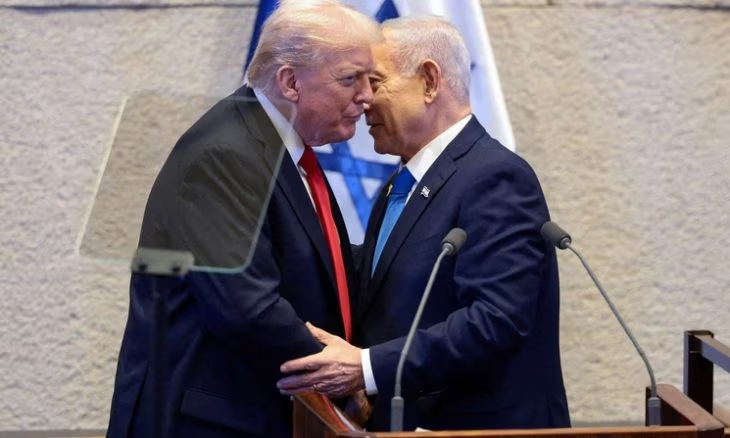
Behind the Scenes of Trump's Reprimand of Netanyahu: "Everyone is Tired of You, Even the Jews"

American media sources revealed details of a tense phone call between President Donald Trump and Israeli Prime Minister Benjamin Netanyahu, during which the former delivered a scathing reprimand to the latter over the stalled Gaza Strip negotiations. Reports indicated that Trump expressed his deep frustration with Netanyahu's policies, which he considered to be obstructing efforts to reach an agreement that would end the military escalation.

According to a new book by journalists Maggie Haberman and Jonathan Swan, Trump explicitly told Netanyahu: 'All Jews are tired of you.' This statement came during a call last September, at a time when Washington was strongly pushing for a prisoner exchange deal and a ceasefire in the besieged strip.

The sources noted that Trump did not stop at a general reprimand but specifically mentioned the Jewish figures present with him on the call: his son-in-law Jared Kushner and special envoy Steve Witkoff. Trump assured Netanyahu that even these close associates, involved in supporting Israel, had run out of patience with his actions and the continuous procrastination on the Gaza issue.

During the call, Trump reviewed a long list of historical and controversial decisions he had made during his years in office to enhance Israel's security and politically protect Netanyahu. Trump appeared angry at the lack of reciprocity through cooperation on the peace file, demanding that Netanyahu move forward with the agreement without further excuses.

Journalist Maggie Haberman described this call as an 'extraordinary moment' that revealed the depth of the rift in the relationship between the two men. She explained that this tension paved the way for the current dealings between the US administration and Netanyahu's government, especially with growing frustration within the White House over surprising Israeli decisions.

Among the points that angered Washington was Israel's military strike in the Qatari capital, Doha, targeting a Hamas delegation. This strike occurred at a time when the United States and Qatar were making strenuous efforts to negotiate a US ceasefire proposal, which American officials considered a stab in the back of mediation.

The attack, which took place in September 2025, led to widespread international condemnation, with Qatar considering it a violation of its sovereignty and a deliberate obstruction of peace efforts. The Trump administration believed that this Israeli action reflected Netanyahu's lack of genuine desire to end the war, preferring instead to continue military escalation for personal political goals.

This incident was not the only one, as reports indicate another reprimand Trump delivered to Netanyahu in June 2026 due to military escalation in Lebanon. Trump warned Netanyahu that his military actions were undermining broader diplomatic paths in the region, including ongoing negotiations with other regional parties.

In a moment of sharp frankness, Trump told Netanyahu in a phone call: 'Without me, you would be in prison now,' a clear reference to the political and legal support he had provided him. This sentence reflects Trump's awareness of the legal crises pursuing Netanyahu inside and outside Israel, and his attempt to use them as leverage.

Netanyahu faces immense legal pressure, as he is on trial in Israel on charges related to bribery, fraud, and breach of trust in three separate cases. These trials come at a very sensitive time in his political career, as he seeks to maintain his far-right government coalition at any cost.

Internationally, the International Criminal Court has been pursuing Netanyahu since 2024 on charges of committing war crimes and crimes against humanity in the Gaza Strip. This complex legal situation has made him an outcast in many international capitals, increasing his reliance on American support, which has recently begun to waver.

Sources confirmed that Jared Kushner and Steve Witkoff felt similar frustration to Trump's, despite being among the strongest advocates for Israeli interests. These officials believe that Netanyahu's intransigence harms Israel's global image and makes it difficult to continue defending its policies before the international community.

These leaks shed light on the significant gap between the public discourse, which portrays a strong alliance, and the behind-the-scenes reality, which is rife with disagreements and mutual accusations. It appears that the personal relationship between Trump and Netanyahu has reached a point of no return, with Trump viewing Netanyahu as a political burden rather than a strategic partner.

In conclusion, these details redraw the contours of American policy towards the Middle East should Trump remain in power or return to it. The repeated reprimands and harsh language used indicate that American patience with the policies of the current Israeli government has reached its limits, which could open the door to fundamental changes in the nature of support provided to Tel Aviv.

I'm tired of your actions... Everyone is tired of you, Bibi, even the Jews participating in this call are tired of you.

PALESTINE

Fri 26 Jun 2026 9:38 am - Jerusalem Time

Contractor with occupation army killed in Gaza amid escalating truce violations

The Israeli occupation army announced today the killing of a civilian contractor in what it described as an 'operational incident' that occurred inside the Gaza Strip, bringing the number of fatalities among the occupation forces to six since the ceasefire agreement was reached with resistance factions last October. Military sources clarified that the deceased was working for an engineering company implementing vital projects for the Ministry of War, and his family was informed of the incident amidst initial secrecy regarding his full identity before it was confirmed that he was a settler holding Israeli citizenship.

This incident highlights the fragility of the current calm, as the region witnesses continuous violations and an exchange of accusations of breaching the concluded agreements. Despite a long period since the ceasefire came into effect after a two-year war, the field reality still sees bloody tensions, with data from the Gaza Ministry of Health indicating the martyrdom of at least 1027 citizens since the truce began, figures described by international reports as highly reliable.

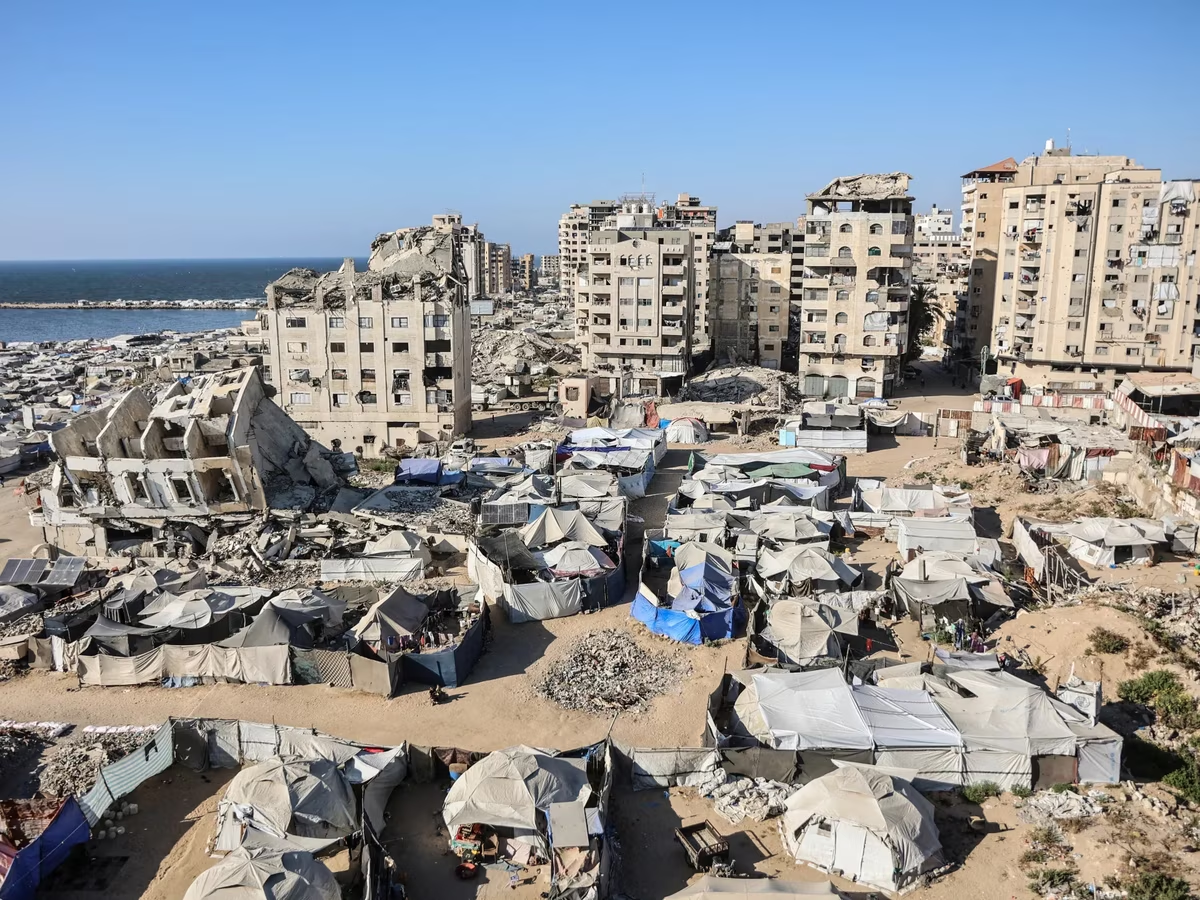
In a related context, field reports revealed significant setbacks in the implementation of the second phase of the US-backed plan, which stipulated a gradual withdrawal of occupation forces from areas of the Strip in exchange for specific security arrangements. Instead of retreating, data indicates that the occupation army has strengthened its military presence and imposed a new reality on the ground, hindering any political path aimed at ending the escalating humanitarian tragedy in Gaza.

Current statistics indicate that the occupation forces have expanded their field control to include at least 70 percent of the Gaza Strip's area, which represents a significant increase compared to the beginning of the truce when control was limited to about half the area. This military expansion reflects a policy of procrastination and intransigence in implementing the withdrawal provisions, turning areas that were supposed to be evacuated into military barracks and permanent operational zones.

It is worth noting that these developments come at a time when the residents of the Strip are suffering from harsh living conditions, as the truce has not succeeded in securing the required stability or fully stopping the bloodshed. With the continued fall of casualties from both sides and the expansion of the occupation's area, international fears of a complete collapse of the agreement and a return to full confrontation are increasing, especially in the absence of a real prospect for the withdrawal of Israeli forces from the areas they recently reoccupied.

The deceased is a settler holding the nationality of the occupation entity, and was killed during military and security activity in the Strip.

OPINIONS

Fri 26 Jun 2026 9:38 am - Jerusalem Time

Leaked Documents: Trump's Peace Council Seeks to Dismantle Resistance and Bury the Palestinian State

Washington's Message

Washington – Said Arikat – 26/6/2026

News Analysis

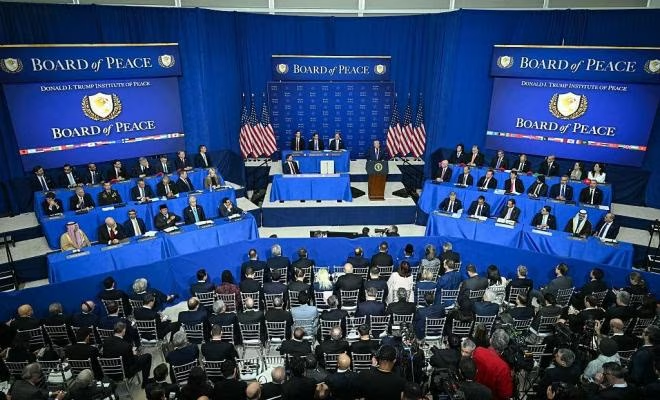
Negotiation documents obtained by "Drop Site" have revealed deep disagreements between Palestinian factions and the "Peace Council" established by the administration of US President Donald Trump to oversee post-war arrangements in Gaza. The documents show that the core of the dispute is no longer limited to establishing a ceasefire or reconstruction, but extends to more sensitive issues related to the future of Palestinian resistance, the nature of governance in Gaza, and the possibility of an independent Palestinian state.

According to the documents, Palestinian factions submitted amendments to a 15-point roadmap proposed by the Council, emphasizing that any security arrangements or discussions about weapons must be part of a clear political path that guarantees the Palestinians' right to self-determination and the establishment of their independent state. In contrast, the Council insisted on formulations that link the disarmament of factions to the creation of "suitable conditions" for a future political path without offering clear commitments regarding a Palestinian state.

Mutual correspondence indicates that the Council, led by former international official Nikolay Mladenov, seeks to expand the scope of disarmament to include not only heavy weapons, but also tunnels, military manufacturing facilities, and weapons depots, ultimately preventing Palestinian factions from possessing or storing any weapons in the future. The factions believe that this formulation goes beyond the terms of the original ceasefire agreement and transforms the negotiations into a comprehensive dismantling process of Palestinian resistance.

The importance of these disagreements is not limited to procedural or security aspects, but touches upon the core of the decades-long Palestinian-Israeli conflict. Palestinian factions believe that the right to resistance is directly linked to the continuation of the occupation and the absence of an independent state, and that any discussion about the future of weapons must come within the framework of a comprehensive political settlement that ends the occupation and guarantees Palestinian national rights. The approach reflected in the "Peace Council" documents, however, treats the issue of weapons as the primary entry point for any political or economic progress, raising fears that the negotiations will be transformed from a process aimed at ending the war and achieving a just settlement into a path focused exclusively on Israeli security requirements. Observers believe that this gap in visions explains the current stalemate in the talks, as each party adheres to a different interpretation of the goals for the next phase. While the factions speak of building a path leading to a Palestinian state, the documents presented by the Council focus on long-term security and administrative arrangements, without setting a clear timeline for ending the occupation or guaranteeing the establishment of a sovereign Palestinian state. This leads many Palestinians to view the entire initiative with suspicion, considering it an attempt to reframe the Palestinian issue from a national liberation cause to a matter of security and demographic management under long-term international supervision.

The documents also reveal significant divergence regarding the role of the proposed international force in Gaza. While the factions want its role to be limited to monitoring the implementation of the agreement and separating forces, the Council's project grants it broader powers, including overseeing the implementation of disarmament arrangements and training Palestinian security agencies.

In the civil administration file, the factions emphasize the necessity of empowering an independent technocratic Palestinian committee to administer Gaza as a prelude to reunifying the Strip and the West Bank within a political framework leading to a Palestinian state. However, the modified version presented by the Council reduces the powers of this committee and places it under the direct supervision of a structure linked to the Council itself, with almost complete disregard for the role of the Palestinian Authority and the future of Palestinian political unity.

Palestinian factions accuse the Council of adopting an approach that focuses on Israeli security demands, at a time when Israeli military operations and restrictions on the entry of humanitarian aid continue, despite the ceasefire agreement signed in October 2025. They also consider that conditioning reconstruction and the completion of Israeli withdrawal on the completion of the disarmament process gives Israel additional leverage and delays any real political settlement.

Information in the documents indicates that the disagreement is not limited to the weapons file, but extends to defining the future of Gaza itself. The factions demand linking any transitional arrangements to the reunification of the Palestinian political system and considering Gaza and the West Bank as a single geographical and political unit, while the formulations pushed by the Council avoid any direct commitment to this principle. The documents also raise questions about the nature of the role that international bodies overseeing the next phase might play, and whether they will act as neutral mediators or as a party imposing specific political and security visions on Palestinians. Critics of the plan fear that the proposed transitional institutions could become a permanent alternative to Palestinian national institutions, which could prolong external guardianship over the Strip instead of paving the way for Palestinians to exercise their full right to self-determination.

In contrast, the Council affirms that its goal is to transform the fragile truce into a sustainable reality that ensures security, stability, and reconstruction, and that security arrangements are a fundamental condition to prevent the renewal of war and create a suitable environment for development and civil governance.

These documents reveal a fundamental shift in the nature of the negotiations surrounding Gaza. After the focus was on ending the war, prisoner exchange, and humanitarian aid delivery, negotiations are now revolving around redefining the Palestinian national project itself. It appears that the weapons file has transformed from a security issue into an entry point for reshaping the balance of political power within the Palestinian arena. The factions fear that linking any political or economic progress to disarmament will create a new reality in which national rights are postponed indefinitely, while Palestinian commitments become immediate preconditions.

The documents also reflect a structural imbalance in the current negotiation mechanism, represented by the lack of balance between mutual commitments. While the proposals include precise details about what is required from the Palestinian side, Israeli commitments appear less clear and more open to interpretation. This pattern is not new in the course of Palestinian-Israeli settlements, as Palestinians have often complained about double standards that link any political progress to increasing security requirements, while fundamental issues such as statehood, borders, and sovereignty remain postponed to later stages that may never come. Therefore, many view these documents as an extension of this historical approach.

Perhaps the greatest importance of these developments lies in the fact that they are taking place away from widespread international attention, amidst media preoccupation with other regional crises. However, what is happening in these negotiations could shape the political and security landscape in Gaza for many years. If the currently proposed formula is adopted, the Strip could transition to an international or semi-international administration model dominated by security considerations more than political and national considerations. However, if the factions and mediators succeed in imposing a greater balance between security and political rights, the negotiations could open a new window for reviving the Palestinian state project within a more comprehensive and sustainable framework.

OPINIONS

Fri 26 Jun 2026 9:38 am - Jerusalem Time

Washington and Gulf States Outline a New Phase in the Region: Containing Iran and Settlements in Gaza, Lebanon, and Syria

Washington's Message

Washington – Said Arikat – 25/6/2026

The outcomes of the joint ministerial meeting between the United States and the Gulf Cooperation Council (GCC) countries, held on Thursday in the Bahraini capital Manama, revealed new political and security orientations that Washington and its Gulf allies seek to consolidate in the post-recent confrontation phase with Iran, by combining negotiation and containment, and redrawing regional balances from the Gulf to the Arab Levant.

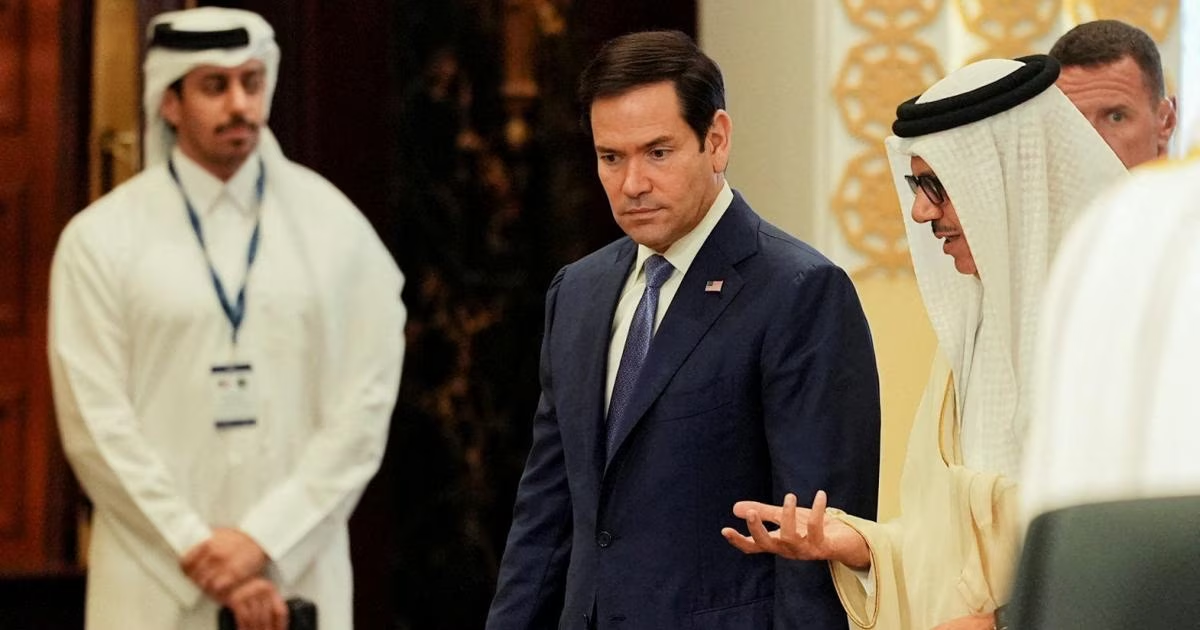
The meeting was chaired by US Secretary of State Marco Rubio and Bahraini Foreign Minister Abdullatif bin Rashid Al Zayani, in his capacity as the current chairman of the GCC Ministerial Council, with the participation of the foreign ministers of the Council states and the GCC Secretary-General Jasem Al-Budaiwi.

According to the statement, a copy of which was received by Al-Quds newspaper's correspondent in Washington, Rubio affirmed during the meeting his country's firm commitment to the security of the Gulf states, while the ministers stressed the importance of the strategic partnership between the United States and the Council states as a fundamental pillar for regional stability amidst the rapid transformations the region is witnessing.

Regarding the Iranian file, the attendees welcomed the memorandum of understanding signed by the United States and Iran on June 17, and praised the Qatari and Pakistani roles in mediating between the two parties. They also affirmed the necessity of continuing negotiations to reach a permanent agreement that ends tensions and prevents Iran from acquiring nuclear weapons.

However, the joint statement clarified that the current understandings are not limited to the nuclear file alone, but also include what it described as “the totality of Iranian threats,” including ballistic missiles, drones, and support for armed groups allied with Tehran in the region.

As an indication of the strategic importance of maritime passages, the ministers stressed the need to reopen the Strait of Hormuz to international navigation fully and unconditionally, rejecting any fees, restrictions, or attempts to control transit traffic. They also welcomed the plan announced by the Sultanate of Oman and the International Maritime Organization to evacuate more than eleven thousand sailors stranded in the region due to recent tensions, according to the statement.

The statement indicated that any economic or investment opening to Iran would remain conditional and reversible, depending on Tehran's commitment to the memorandum of understanding and the anticipated final agreement, as well as stopping what the statement considered destabilizing behavior.

On the Syrian issue, the ministers announced their continued support for the Syrian government in facing security and economic challenges, including combating terrorism, restoring basic services, improving the investment environment, and encouraging the voluntary return of refugees and displaced persons, while emphasizing Syria's unity, sovereignty, and territorial integrity.

Lebanon occupied a prominent position in the discussions, where the attendees renewed their full support for Lebanon's sovereignty, stability, and territorial integrity, and welcomed the ongoing bilateral negotiations between Lebanon and Israel under American auspices. The statement considered these negotiations an opportunity to formulate permanent security arrangements and definitively demarcate borders.

The statement also stressed that restoring full Lebanese sovereignty requires confining weapons to the Lebanese state, calling for the disarmament of all armed groups outside the state's authority, while emphasizing the importance of supporting the Lebanese army to carry out this mission.

Regarding the Gaza Strip, the ministers renewed their support for President Donald Trump's comprehensive plan to end the war, which was endorsed by the UN Security Council. Rubio praised the participation of the Gulf states in what is known as the "Peace Council" tasked with overseeing stabilization and reconstruction efforts in the Strip.

The statement affirmed the necessity of disarming non-state armed factions in Gaza and transferring administrative responsibility to an independent civilian Palestinian committee of a technocratic nature. It also welcomed Trump's affirmation of his opposition to the annexation of the West Bank, considering that reforming the Palestinian Authority and reconstructing Gaza could be an entry point for the establishment of a Palestinian state in the future.

According to the statement, the ministers stressed that the residents of Gaza would not be forced to leave the Strip, and that those who choose to leave would have the freedom to return later.

In Iraq, the statement condemned the attacks carried out by pro-Iranian groups against Gulf states, including drone attacks targeting civilian facilities, vital infrastructure, and the energy sector. The ministers also expressed their support for the Iraqi government's efforts to confine weapons to the state and prevent the use of Iraqi territory to threaten neighboring countries.

The attendees also renewed their support for Kuwait's sovereignty, territorial integrity, and territorial waters, demanding that Baghdad fulfill its bilateral and international obligations and ensure the security of diplomatic missions operating on its territory.

The statement reveals an American attempt to re-engineer the regional system after years of successive wars and crises. Washington is not merely proposing a new nuclear agreement with Iran but seeks to build a broader security system that links the Iranian nuclear program with Tehran's regional behavior, its missile capabilities, and its network of allies in the region. This approach reflects a growing conviction within the US administration that addressing one file in isolation from others will not guarantee lasting stability. Therefore, any future agreement with Iran appears to be more complex and broader in scope than previous agreements.

The section concerning Lebanon carries deep political implications that go beyond the issue of border demarcation or security arrangements. The insistence on confining weapons to the Lebanese state represents the core of the American and Gulf vision for Lebanon's future and reflects an endeavor to reshape internal power balances after decades of non-governmental armed forces dominating security and strategic decision-making. However, translating this goal into practical reality remains hostage to complex internal Lebanese balances, as well as its connection to broader regional developments, particularly the future of US-Iranian relations and the trajectory of the Arab-Israeli conflict.

As for Gaza, the statement reveals the outlines of a new political vision that combines reconstruction with the restructuring of authority and administration in the Strip. It appears that the United States and its Gulf partners seek to establish a new Palestinian governance model based on a technocratic civilian administration, away from armed factions. However, the success of this project will remain linked to addressing fundamental issues that have not yet found a solution, foremost among them ending the occupation, stopping settlements, and defining a clear political horizon for the establishment of an independent Palestinian state. Without this, reconstruction and stabilization efforts may remain temporary, fragile, and prone to setbacks.


PALESTINE

Fri 26 Jun 2026 9:37 am - Jerusalem Time

Washington negotiations between Lebanon and Israel extended for an additional day amid signs of stalled agreement

The US State Department decided to extend the round of indirect talks between the Lebanese and Israeli delegations in Washington for an additional day, after the fifth round could not be concluded on its scheduled date on Thursday. The US administration confirmed in an official statement that the talks would resume on Friday morning, emphasizing Washington's commitment to continuing its role as a mediator to facilitate reaching common understandings.

These developments come in the context of intensive international efforts to solidify the existing ceasefire agreement, and concurrently with parallel negotiations Washington is conducting with Tehran to end the military escalation against Iran. These diplomatic moves aim to ensure the stability of the Lebanese front and prevent the region from sliding into a comprehensive confrontation, given the complexities of the military and political issues on the table.

Informed sources from the US State Department headquarters reported that the decision to extend came after a surprising postponement of a press conference that was supposed to announce the results of the talks. This postponement sparked a wave of speculation about fundamental obstacles that prevented the two parties from reaching a final draft of the concluding statement, which necessitated additional time for consultations.

Sources stated that journalists waited for long hours in the ministry's corridors before being informed of a change in the briefing location, and then its subsequent cancellation without setting an alternative date. This protocol confusion reflects the extent of divergence in views between the two delegations, especially regarding the details of withdrawals and border security arrangements, which constitute the core of the current dispute.

Field data indicates that the discussion remains intense regarding the nature of the final outcome of this round, and whether it will culminate in a written and binding agreement or if the two sides will suffice with issuing a general 'declaration of intent'. American mediators are striving to bridge the gaps to ensure a positive outcome that saves face for all parties and prevents the collapse of the negotiation process.

This three-day round was characterized by the integration of political and military tracks into unified meetings, which differs from previous rounds that separated the two files. This integration aims to accelerate the pace of understanding on the executive mechanisms for the ceasefire, while direct American pressure is exerted on both sides to make mutual concessions.

For his part, US Secretary of State Marco Rubio expressed cautious optimism about the possibility of a breakthrough in this round, emphasizing during a regional tour the importance of achieving tangible results. Despite this optimism, uncertainty remains the dominant factor pending the outcome of Friday's meetings, which will determine the fate of de-escalation on the Lebanese border in the coming period.

Talks between Israel and Lebanon are still ongoing as we continue to facilitate this process.

PALESTINE

Fri 26 Jun 2026 9:37 am - Jerusalem Time

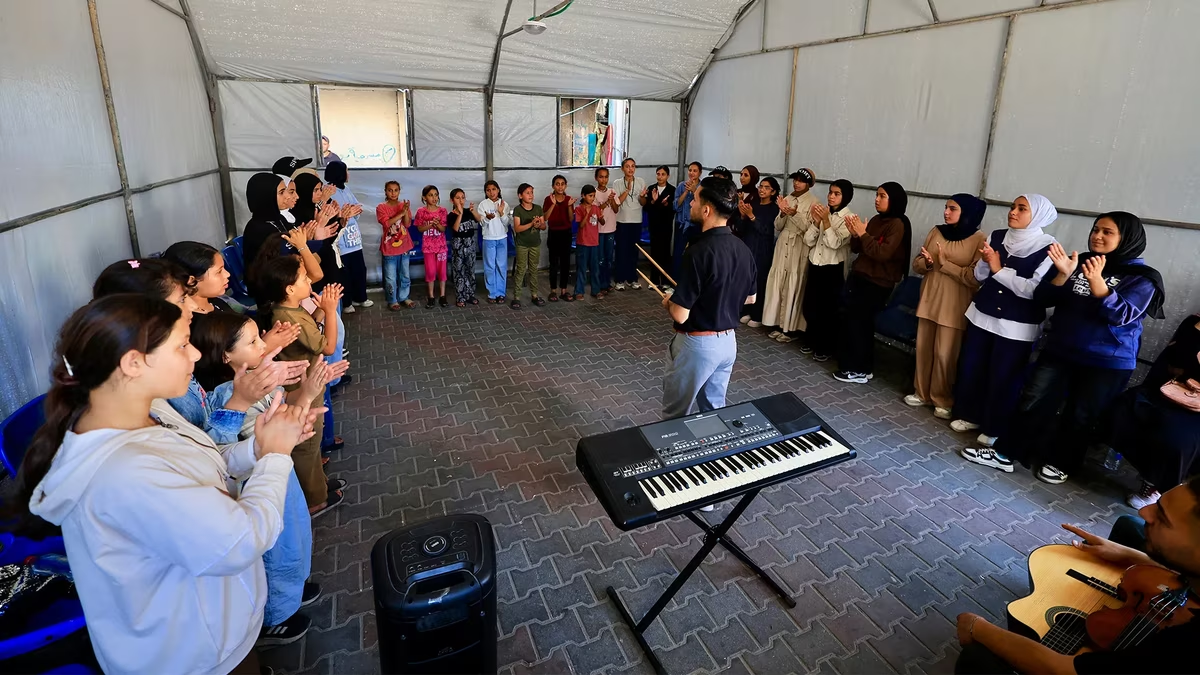
Melodies from beneath the rubble.. Music is the weapon of Gaza's children to confront loss and displacement

Singing occupies a prominent position in confronting the harsh reality of war in the Gaza Strip, as a cultural and humanitarian act that reorders humanity's relationship with its exhausted surroundings. Inside crowded displacement tents and shelters, new spaces for expression and training are being formed, where children continue to learn music despite the siege and fear.

Trainers invent their artistic tools from available materials in the surrounding environment, while artists carry their voices to camps and hospitals to establish the presence of art in people's lives. This return raises a humanitarian question about how children and youth find their way to singing at a time when they are surrounded by memories burdened with accumulated losses.

In Jabalia camp, Mohammed Abdel Karim Abu Matar stands alone after being part of a five-member prophetic praise band; his three brothers and close friend were martyred in a massacre that occurred in November 2023. Today, Mohammed begins his vocal pieces with a voice waiting for someone to complete it, transforming praise into a space to vent the pain of survivors and preserve the memory of the departed.

Mohammed says that praise was his way of alleviating worries with his brothers before the war, but today, worries have become like mountains after their departure. Despite this, he insists on continuing to sing in gatherings, considering that his voice carries his personal pain and the pain of the camp, which has lost many of its features and people.

In the tent of the Shatea Boys' School, the story of fifteen-year-old Malak Al-Tilmis stands out, who lost her entire family in an Israeli raid. Malak, who survived with her younger sister Bayan, found in the guitar a path to recover from the shock of the news she received while in a hospital bed.

Malak describes the guitar as her only solace during her most painful days, as she plays her sorrows to alleviate the burden of responsibility placed on her to care for her sister. Traces of sadness are clearly visible on her face, but music gives her a short time to breathe and return to herself away from the noise of war.

As for Mayar Al-Tahan, she found her way to music after a bitter journey of displacement and the loss of her father and home, which plunged her into a severe state of depression. Mayar joined courses at the Edward Said Institute, where she chose the guitar to be a bridge to get her out of her psychological isolation and help her regain focus and presence.

Mayar began to readjust the rhythm of her life on the strings of the instrument, transforming her time inside the tent into a meaning different from the deadly routine of displacement. Educational sources confirm that music has helped many children like Mayar improve their psychological state and increase their self-confidence in the current circumstances.

For his part, Fouad Khader, the music project coordinator, revived training in early 2024 after noticing the deterioration of his son's psychological state. The project started from a personal need to become a broad initiative targeting hundreds of children in displacement centers in Gaza City, Deir al-Balah, and Nuseirat.

The institute faced enormous challenges after its main headquarters in the Tal al-Hawa neighborhood was damaged by Israeli shelling, forcing the team to work in tents. Due to the scarcity of resources, trainers replaced lost instruments with water gallons and empty canned food containers to teach children the basics of musical rhythm.

Khader points out that the biggest obstacle they face is repeated displacement, as musical groups disperse a few days after their formation due to military attacks. Nevertheless, trainers continue to gather new groups and rearrange classes, believing that music is a practical way to extract children from the effects of trauma.
In another scene of challenge, artist Abdullah Natat returned to singing from his wheelchair just two months after his legs were amputated. Abdullah, who also lost his mother and brother, refuses to let his physical injury prevent him from delivering his artistic message to children and displaced people in hospitals.
Abdullah moves with his powerful voice among children's circles, performing traditional and popular pieces that add a temporary atmosphere of joy to the place. He emphasizes that he is keen for people to see him as a singer with a message and ability to perform, not as an injured person, transforming his personal ordeal into positive energy that inspires others.

The 'Gaza Beginnings' program, in cooperation with UNRWA, continues to offer choir, violin, and oud lessons, trying to create safe spaces for younger generations. These voices emanating from the tents remain a testament to the will to live in the Gaza Strip, where melody transforms into a path to salvation from loss and oblivion.

The guitar was my only solace during my most painful days, I carry it under my arm, and I begin to play my sorrows.

PALESTINE

Fri 26 Jun 2026 9:37 am - Jerusalem Time

Netanyahu describes Israel's borders with its Arab neighbors as 'previous' and affirms adherence to security zones

Israeli Prime Minister Benjamin Netanyahu sparked a wave of political controversy following statements he made during a graduation ceremony for officers in the Israeli army. Netanyahu described the current borders with Arab countries as 'previous borders,' a clear indication that his government does not recognize internationally recognized border lines and seeks to impose a new geographical reality.

Informed sources reported that these statements cannot be considered a mere slip of the tongue, but rather an accurate expression of a strategic vision adopted by Tel Aviv to expand security zones. This policy aims to seize additional areas in southern Lebanon and Syrian territories, in addition to strengthening absolute control over the Gaza Strip under security pretexts.

In the field context, the occupation forces deliberately established a buffer zone inside Lebanese territory up to 10 kilometers deep from the international border. These measures caused a wave of forced displacement of Lebanese residents, after their villages and buildings were subjected to systematic destruction and intense air raids to ensure the area was free of any civilian presence.

These developments come at a sensitive time when Washington is witnessing a new round of negotiations between the Lebanese and Israeli sides under American patronage. The current proposal discusses the possibility of handing over parts of the territories recently occupied by Israel to the Lebanese army, as an initial step to restore Lebanese sovereignty over the occupied territories, but the Israeli position appears rigid.

For his part, Israeli Security Minister Yisrael Katz blocked any optimism for withdrawal, stressing Tel Aviv's categorical opposition to leaving the 'security zone' in Lebanon. Katz emphasized that the Israeli army would remain in the areas it controlled in Lebanon, Syria, and the Gaza Strip as long as security necessity dictated, disregarding international pressure.

As for the Gaza Strip, data revealed a significant expansion in the area of Israeli control, which increased from 53% to about 64% of the total area of the Strip. This expansion occurred through the designation of new prohibited areas in maps sent to relief organizations, which reduces the areas available to Palestinians and tightens the military blockade.

On the level of political agreements, the 'Peace Council,' formed last year with the mediation of US President Donald Trump, continues to oversee the ceasefire stages. Despite the UN Security Council's approval of this council, Israeli practices on the ground indicate a continuous تجاوز of the agreed-upon truce terms.

On the Syrian front, Israeli violations continue daily in the southern regions, where forces carry out raids and searches of homes and set up military checkpoints. These violations include arrests of civilians, including children and shepherds, in the absence of any international deterrent to these military movements.

For his part, Syrian President Ahmed Al-Shara explained that the negotiation process with the Israeli side faces major obstacles and has not yet reached a dead end despite the difficulties. Al-Shara indicated that the main obstacle is Israel's insistence on maintaining its military presence within Syrian territory and its refusal to return to the lines before the last escalation.

Israel had exploited the events that followed the fall of the former regime in Damascus in September 2024 to declare the collapse of the 1974 disengagement agreement. Accordingly, Israeli forces occupied the buffer zone in the Golan, considering that the old agreements were no longer binding on it in light of the new regional changes.

The borders with Arab countries are merely previous borders.

PALESTINE

Thu 25 Jun 2026 8:16 pm - Jerusalem Time

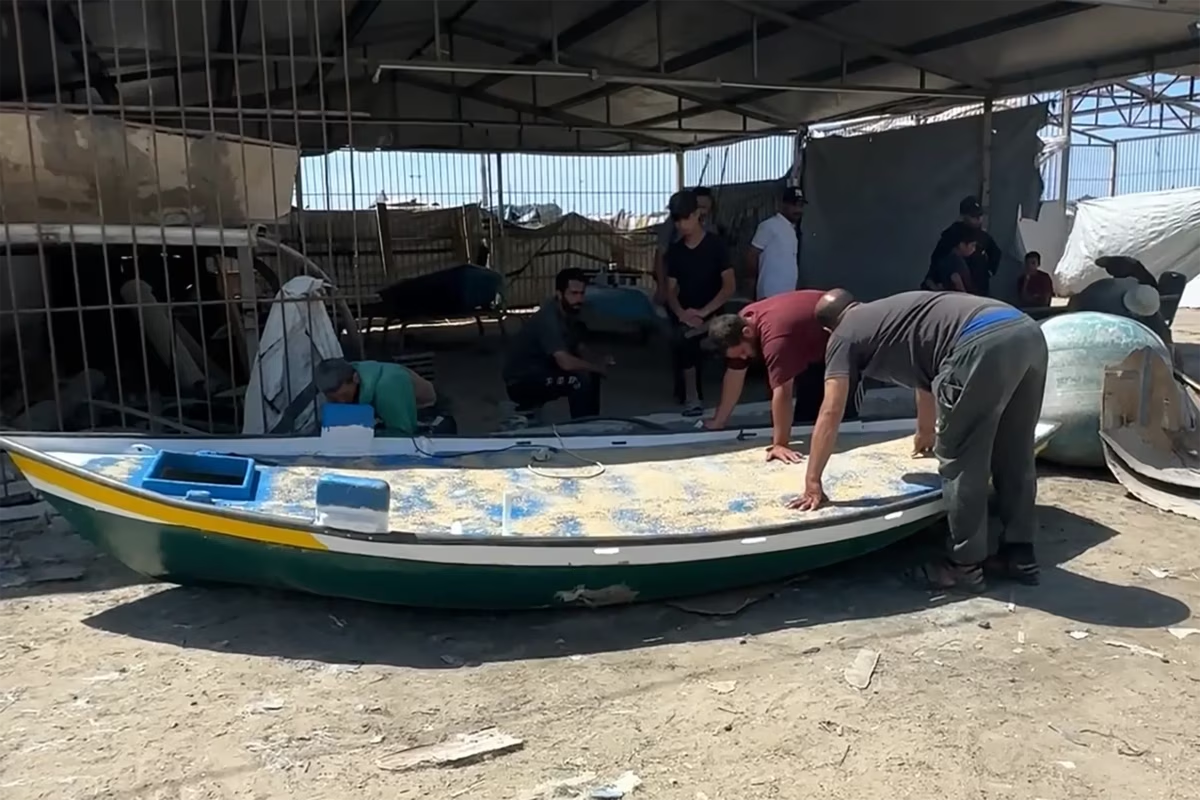
From the rubble of homes to the open sea.. Gaza's craftsmen breathe life into destroyed fishing boats

Under a modest roof of thick nylon on the Gaza City beach, the sounds of electric drills announce a new battle for survival being waged by the sector's craftsmen. Here, despite the lack of resources, a small workshop has transformed into a beehive where carpenters are trying to rebuild what the Israeli war destroyed in the fishing sector, using tools worn out by continuous work and wooden planks unlike those they were accustomed to previously.

Today, this industry does not rely on imported materials or luxurious wood, but rather entirely on the debris left behind by the war machine. Workers collect remnants of doors and windows from under the rubble of demolished homes, reshaping them into structures for small boats, in an attempt to break the blockade that prevents the entry of 'fiberglass' and wood designated for shipbuilding.

Mustafa Miqdad, a sixty-year-old craftsman who has spent his life in this profession, meticulously observes the curves of the wood over the blue structures. Miqdad explains that the profession he inherited from his ancestors is facing its toughest tests today, as he is forced to use a 'measuring tape' on wooden pieces that were once part of bedrooms or house entrances, transforming them into a 'belt' that carries the boat over the waves.

Miqdad describes the scene upon his return from displacement as shocking, as he found the port basin a graveyard for boats that had either sunk or turned into scattered debris on the sand. Fishermen had no choice but primitive restoration or manufacturing, a arduous path that requires double the effort in the absence of electricity and the high costs of manual operation.

Suffering is compounded by a severe shortage of raw materials, as craftsmen indicate that the stock of fiberglass is almost completely depleted. This shortage has driven the prices of available materials to record levels, making the dream of owning a new boat out of reach for the majority of fishermen who lost everything they owned during the continuous shelling.

Fisherman Musa Abu Jiyab is one of those who watch their boats under construction with much anxiety and hope, after his vessels burned in the open sea from the first days of the war. Abu Jiyab was forced to borrow and collect money from all corners to secure the cost of the new boat, emphasizing that returning to the sea is the only way to support his large family.

Figures reveal insane price jumps; a wooden plank that sold for 10 shekels before the war now costs 200 shekels. This increase is not due to the quality of the material, but rather its scarcity and the difficulty of extracting it from the rubble and preparing it to be suitable for sailing again in a harsh marine environment.

Challenges do not stop at the workshop, but extend to the open sea where the occupation imposes strict restrictions preventing fishermen from exceeding a distance of one kilometer. The occupation also prohibits the use of engines, forcing fishermen to rely on manual oars in dangerous fishing trips under the threat of direct gunfire.

Field sources reported that the fishing sector in Gaza suffered a devastating blow, with daily fish production decreasing from about 20 tons before the war to only 10 tons per month. This sharp decline reflects the extent of the destruction that has affected the infrastructure of this vital sector, which supports thousands of Palestinian families.

Reports indicate that more than 232 fishermen have been martyred by occupation fire since the start of the aggression, while hundreds more have been injured and arrested. These systematic targeting aims to empty the sea of its users and destroy the primary livelihood of the coastal population, amid international silence regarding these daily violations.

Inside the workshop, workers continue to scrape fiberglass surfaces and fix nails into a complex network of wooden supports that form the backbone of the boat. Every nail hammered represents a challenge to the closure policy, and every completed boat is a message of steadfastness confirming that Gaza is capable of recycling its destruction to create tools for life.

Officials in the fishermen's committees confirm that the occupation destroyed about 96 large vessels that formed the backbone of Gaza's fish economy. Today, fishermen rely on small 'Haskat' (small boats) and primitive means that are insufficient to feed the besieged population, given the urgent need to provide food.

The continued closure of crossings threatens the complete disappearance of the boat-building profession, as the occupation prevents the entry of the simplest tools and parts necessary for maintenance. Craftsmen warn that the depletion of remaining stored materials will mean the complete cessation of workshops, leaving thousands of fishermen without a means to practice their sole profession.

Despite all these circumstances, the sight of blue boats emerging from under the nylon roof towards the beach remains a sign of Palestinian will. These are boats born from the womb of rubble, carrying stories of destroyed homes and fishermen who refuse to surrender, betting on reshaped wooden pieces to sail them towards a new horizon.

The wood we use today is the remains of demolished homes; we take doors and windows to make a 'backbone' for boats that will return fishermen to their livelihood.

ARAB AND WORLD

Thu 25 Jun 2026 8:15 pm - Jerusalem Time

Monetary Split in Sudan: New Currencies Circulate in RSF-Controlled Areas

Markets in areas controlled by the Rapid Support Forces (RSF) have witnessed an influx of new Sudanese banknotes, a development that has raised widespread questions about the source of these funds and the future of Sudan's monetary system unity. These developments come amidst the ongoing armed conflict since April 2023, where the paramilitary forces control vast areas, including the Darfur region and parts of the capital, and have effectively begun to exercise administrative functions through what is called the 'Tasis' alliance.

The currency issue has become a new focal point of conflict between the army and the RSF, especially after the Central Bank in Port Sudan decided to cancel the use of some old denominations and issue new banknotes of 500 and 1000 pounds. In response, the RSF prevented the circulation of the new government issues in its areas, leading to a severe liquidity crisis before the mysterious banknotes recently appeared to cover the salaries of employees and fighters.

Informed sources reported that the newly circulated banknotes appear to be in excellent, unused condition, despite bearing an issue date of May 2022. The paradox lies in these notes carrying the signature of Hussein Yahya Jangoul, who was the Governor of the Central Bank before the outbreak of the war, before he was recently appointed head of a parallel central bank affiliated with the 'Tasis' government in Nyala.

For his part, Mohamed Hassan Al-Ta'aishi, head of the 'Tasis' government, affirmed that their authorities still recognize currencies issued before June 2024, but he refrained from clarifying how the new quantities of cash were obtained. Al-Ta'aishi accused the pro-army government of attempting to use the banking system and the national currency as a weapon to economically strangle civilians in areas not under its control.

In contrast, no official comment has been issued by the Sudanese Central Bank, affiliated with the government in Port Sudan, regarding the appearance of these funds or their legal legitimacy. Economic experts believe that this step represents a dangerous escalation that could lead to the emergence of two separate financial systems, making any future political settlement more difficult and further complicating the already collapsing economic landscape.

International observers warn that establishing a parallel central bank lacking international recognition will make it difficult for Sudan to deal with global financial institutions in the future. Furthermore, the circulation of currencies of questionable origin could open the door to widespread counterfeiting operations, accelerating the pace of rampant inflation that is crushing Sudanese citizens in various states.

As a result of the lack of paper cash liquidity, Sudanese people have become almost entirely dependent on electronic banking applications, primarily the 'Bankak' application belonging to Bank of Khartoum. In RSF-controlled areas, intermediary offices have emerged offering money transfer services for high commissions, exploiting the urgent need of residents to secure basic necessities amidst harsh war conditions.

In terms of market value, the Sudanese Pound continues its historical collapse against foreign currencies, with the dollar exchange rate recording record levels exceeding 5000 pounds in the parallel market. This decline represents a sharp drop compared to the pre-war exchange rate, which did not exceed 600 pounds, reflecting the scale of the economic catastrophe the country is experiencing with the continuation of fighting.

Liquidity management is subject to technical arrangements aimed at maintaining economic stability while using currency as a pressure tool.

OPINIONS

Thu 25 Jun 2026 8:15 pm - Jerusalem Time

Electing the Palestinian National Council in the Diaspora: A Gateway to Renewing National Legitimacy and Rebuilding Palestinian Representation

The announcement of the start of preparations to complete the election of members of the Palestinian National Council in diaspora countries is an important national milestone that deserves serious and responsible consideration. The issue is not merely about completing the membership of one of the institutions of the Palestine Liberation Organization, but rather it touches upon the essence of the political representation of the Palestinian people and the future of their national system and inclusive institutions. This step comes at an exceptional historical juncture where the Palestinian people face the most dangerous challenges their national cause has known for decades, amidst the ongoing war on the Gaza Strip, escalating settlement and annexation in the West Bank, and increasing attempts to liquidate Palestinian national rights, foremost among them the right of return, self-determination, and the establishment of an independent Palestinian state. In light of these challenges, renewing national legitimacies and strengthening inclusive representative institutions becomes an urgent national necessity, not only as an organizational entitlement but also as part of the battle for national steadfastness and the defense of historical Palestinian rights. The Palestinian National Council holds a unique position in the Palestinian political system; it is not merely a council for the residents of the Palestinian territories, but rather the national parliament for the entire Palestinian people in the homeland and the diaspora. Since its establishment, the National Council has been the framework through which the unity of the Palestinian people has been embodied despite dispersion, refuge, and occupation. It was the supreme national authority that approved the Palestinian National Charter, elected the political leadership of the Palestine Liberation Organization, and outlined the general course of the Palestinian national struggle. Hence, the importance of the National Council does not stem from the number of its members or its sessions, but from its being the institutional expression of the unity of the Palestinian people and their collective right to national self-determination. Over the past decades, the Palestinian people have witnessed profound political and demographic transformations, and new Palestinian generations have emerged in the homeland and the diaspora who have not had the opportunity for direct participation in electing their representatives to the Palestinian National Council. Therefore, completing the formation of the National Council represents an opportunity to renew representative legitimacy on more democratic and inclusive foundations, thereby enhancing Palestinians' trust in their national institutions and restoring vitality to the Palestine Liberation Organization as the legitimate representative of the Palestinian people. However, achieving this goal requires that the entire process be based on clear rules of justice, transparency, and broad national participation. If the National Council represents the entire Palestinian people, then the governing principle for its formation must be representative justice. Representation should not be based on quotas, administrative considerations, or pre-existing political agreements, but rather should be based on a clear democratic standard derived from population size and the number of registered voters. If the adopted representation standard in the homeland is approximately one member for every twenty-five thousand citizens, then national and democratic logic dictates adopting the same standard for representing Palestinians in the diaspora. A Palestinian residing in refugee camps in Lebanon or Syria, or in Gulf countries, or in Europe, the Americas, and Australia, has national rights no less than those of a Palestinian residing in the homeland, and their right to participate in national decision-making is not diminished by their place of residence. Hence, the number of representatives allocated to any Palestinian community should be a reflection of its true population size and the number of registered voters within it, not a result of prior understandings or arrangements. Direct elections represent the optimal formula for embodying the popular Palestinian will, and therefore prioritizing them is a positive direction that deserves support. However, legal and political circumstances in some countries may make direct elections impossible in certain cases, which justifies resorting to electoral colleges or national consensus formulas. Nevertheless, these alternatives should remain an exception dictated by necessity, not a permanent rule replacing elections. Elections confer legitimacy, while consensus should be a means to protect national unity when direct democratic practice is not feasible. The issue of Palestinians residing in Jordan is a special case due to the historical, political, and legal considerations governing the Palestinian-Jordanian relationship. Despite understanding this specificity, any treatment of this file should proceed from a firm principle that Palestinian national rights are not forfeited or diminished due to place of residence or legal status. Palestinians in Jordan constitute an integral part of the Palestinian people, and any future treatment of this issue must balance the specificity of the Jordanian-Palestinian relationship with the preservation of comprehensive Palestinian national rights. From the perspective of international law, refuge, migration, or residence outside the homeland does not nullify national status or abrogate the political rights of peoples under occupation or deprived of self-determination. Indeed, the legal status of Palestinian refugees and their collective and individual rights confirm that their participation in their national institutions is not a privilege granted to them, but an inherent right among their political and national rights. Furthermore, the representation of Palestinian refugees within the National Council constitutes one of the political and moral guarantees for the continued defense of the right of return as an inalienable individual and collective right. Despite the importance of this step, its success is not automatically guaranteed. There are real challenges, including: the continued Palestinian political division; weak public trust in political institutions; varying conditions of Palestinian communities from one country to another; difficulties in voter registration and preparing electoral rolls; the need to involve younger generations; the necessity of representing women and national competencies; and ensuring transparency and integrity in all stages of the electoral process. Addressing these challenges requires a sincere national political will that places national interest above narrow factional and organizational interests. For this process to achieve its desired national goals, it is necessary to adopt a set of practical measures: First: Adopting a unified, modern, auditable, and reviewable Palestinian electoral register. Second: Adopting a unified demographic and representative standard in the homeland and abroad based on a clear ratio and proportion between the population size and the number of representatives. Third: Announcing the criteria for representation and election transparently and publicly to all Palestinians. Fourth: Empowering civil society organizations and Palestinian communities to monitor the electoral process. Fifth: Ensuring fair representation for women, youth, and scientific and professional competencies. Sixth: Involving various political forces and independent figures in the process to enhance national partnership. Seventh: Setting a fixed term for National Council membership, to be renewed periodically and regularly through elections or adopted democratic mechanisms. Eighth: Linking the process of forming the National Council to a comprehensive reform plan for the institutions of the Palestine Liberation Organization and enhancing their effectiveness and representative capacity. The real issue is not about electing one hundred and fifty members from the diaspora or two hundred members from the homeland, but about the ability of this process to rebuild the Palestinian national contract on more just, representative, and participatory foundations. The Palestinian people, who have preserved their national identity despite the Nakba, occupation, refuge, and wars, deserve strong, effective, and expressive national institutions that reflect their true will. If the process of completing the National Council succeeds in achieving fair representation, free elections, and broad national partnership, it can constitute an important turning point in the trajectory of the Palestinian national movement and restore vitality to the Palestine Liberation Organization as the inclusive political home for all Palestinians. However, if it is treated as a limited administrative or organizational process, it will lose much of its ability to renew legitimacy and restore public trust. In conclusion: Completing the election of members of the Palestinian National Council in the homeland and the diaspora is not merely a postponed organizational entitlement, but a national and democratic entitlement directly linked to the future of the Palestinian cause and its representative institutions. The closer this process adheres to the principles of democracy, representative justice, transparency, and national partnership, the greater its ability to produce a National Council that truly represents the Palestinian people in all places of their existence. At a time when the Palestinian cause is subjected to attempts of marginalization and liquidation, rebuilding the inclusive national institution and renewing its legitimacy becomes one of the most important tools of national steadfastness, and one of the essential conditions for preserving the unity of the Palestinian people and their inalienable historical rights to freedom, return, self-determination, and independence.

PALESTINE

Thu 25 Jun 2026 8:15 pm - Jerusalem Time

Martyrs' Phones in Gaza.. Stores of Pain and Memory Trapped Under Rubble

From beneath the rubble of destroyed homes in the Gaza Strip emerge shattered mobile phones or ones locked behind passwords, carrying in their digital memory the last breaths of martyrs, their photos, and their unfinished messages. For grieving families, these devices are no longer mere communication tools; they have become final windows overlooking the faces of their departed loved ones, and essential keys to reclaiming financial rights needed by orphaned children.

Subhiya Sharab recounts the story of her husband, journalist Abdul Rahman Al-Abadla, who was martyred in May 2025 while performing his professional duty. His wife received a 'Redmi 9' device with a shattered screen and damaged body, but it carried the heaviest material trace remaining of her husband, prompting her to embark on an arduous journey to find a way to reactivate it despite the grief that weighed heavily on her.

Subhiya faced a harsh economic obstacle, as phone repair costs in the Strip skyrocketed due to a shortage of parts and security conditions. After a six-month wait, she managed to repair the phone for 1200 shekels, an exorbitant amount equivalent to the price of a new phone, but for her, it was a small price to pay to retrieve video clips her husband had documented until the moment he was targeted.

In a similar context, citizen Mohammed Sabah is experiencing a compounded loss after the martyrdom of his wife and five daughters all at once. Sabah carries five phones belonging to his deceased family and moves them between repair shops in Gaza, central, and southern areas, hoping to retrieve a single photo or voice recording that might alleviate the burden of his deadly loneliness.

After arduous attempts lasting months, Sabah managed to access the login code of only one phone, while the other devices remained locked and inaccessible to technicians. He sought help from relatives to guess passwords by recalling birth dates and his daughters' favorite numbers, in a desperate attempt to break the digital isolation imposed by the locked devices.

As for Mohammed Sobeih, he views his martyred brother's phone as both a 'memory and money wallet,' as the device contains banking account details and electronic wallets essential for supporting his brother's children. His attempts are met with complex legal and technical procedures that require official documents and certifications from specialized authorities in Ramallah, at a cost that could consume half of the existing savings.

Journalist Dina Farawana's story stands out as an example of significant digital loss, as she lost two brothers and a husband, and with them, a digital memory containing over 5,000 photos of her brother Huthayfa was lost. Dina says her husband's phone contained details of their daily lives and moments of their children's growth, and today she struggles to save this data to serve as living proof for her children about their father when they grow up.

Inside programming workshops in Gaza, technician Nabil Faraj describes the phones arriving from martyrs' families as the 'heaviest devices' he deals with professionally and humanely. Faraj indicates that his shop has turned into a waiting room for hope, where families watch computer screens making millions of guesses to unlock protection codes, as if waiting for a loved one to return from behind the glass.

Faraj explains that the technical process can take continuous days of work on a single device, and if successful, families burst into tears as soon as the first image appears on the screen. These moments reflect how technology has transformed from a means of communication into a repository of Palestinian collective memory that the occupation tries to erase by destroying homes and their inhabitants.

For his part, Musa Totah, an Apple device repair specialist, points out that the complexities of protection in iPhones make the task more difficult and costly. Despite this, customers are willing to pay amounts exceeding the market value of the device just to retrieve data, confirming that the human value of the content far outweighs the value of the shattered physical hardware.

Repair shops suffer from a severe shortage of screens, batteries, and integrated circuits, making the repair of phones retrieved from under the rubble a complex and sometimes almost impossible process. This shortage exacerbates the suffering of families who see a phone malfunction as a second loss of their loved ones, and the loss of the last trace left by the martyr before his departure.

The journey to find the 'last voice' in broken phones reflects the Palestinians' determination to cling to their memory and identity in the face of annihilation. Every retrieved photo and every working video clip represents a small victory for love and life over the machine of destruction that tried to bury these stories under tons of cement and rubble.

These phones ultimately transform into sacred personal archives, carefully preserved and displayed in family night gatherings to evoke the absent. As the war continues, repair shops in Gaza remain witnesses to stories of loyalty, where the living strive with all their might to keep the voices of their martyrs alive, even through the headphones of a dilapidated phone.

In the absence of clear graves due to bulldozing and desecration, digital memory has become the 'symbolic grave' and safe haven for memories. It is a battle fought by Gazans against oblivion, using charging cables and programming software to mend what has been broken in their souls, and to document their right to life that the cruel war has stolen.

Repairing the phone was very expensive, but my longing for my husband overwhelmed me; I wanted to hear his voice and see his last moments that he documented before the targeting.

ARAB AND WORLD

Thu 25 Jun 2026 8:15 pm - Jerusalem Time

The Return of 'Nixon Doctrine': Will the Islamabad Memorandum Reshape American Influence in the Middle East?

The memorandum of understanding signed by the United States and Iran in the Pakistani capital, Islamabad, last week brought an end to a military conflict that lasted nearly 15 weeks, amidst a cautious sense of relief in international circles. Under this agreement, brokered jointly by Pakistan and Qatar, the Strait of Hormuz was reopened for international navigation, with a 60-day timeframe set for the start of in-depth negotiations on Iran's nuclear program and the issue of easing economic sanctions.

Observers and diplomats, including Eldar Mamedov, political advisor to the European Parliament, believe that this memorandum not only aims to halt hostilities but also establishes a radical shift in the strategic structure of the Middle East. This shift raises serious questions about the possibility of replicating a new 'Nixonian moment,' reminiscent of American policies in the late 1960s that focused on delegating regional security to local allies.

This analysis is based on the 'Nixon Doctrine' announced in 1969, which relies on an 'offshore balancing' strategy after Washington realized its inability to unilaterally play the role of the world's policeman. At that time, the United States relied on the 'twin pillars' policy of Saudi Arabia and Iran to ensure stability in the Gulf, which the current US administration seems to be trying to revive in an updated form suitable for the realities of the 21st century.

However, the currently emerging system does not seem to be based on a single regional power or just two pillars, but rather consists of a broad bloc of independent regional powers. Informed sources clarified that the memorandum was not a traditional bilateral agreement, but rather the product of multilateral diplomacy actively involving countries such as Saudi Arabia, Turkey, Egypt, and Oman, indicating that Washington has become a partner to a regional alliance rather than the sole ruler.

Pakistan's role in this process emerged as a remarkable diplomatic achievement, as Islamabad succeeded in solidifying its position as a trusted mediator between Washington and Tehran. This role reflects regional powers taking on strategic responsibilities that were previously exclusive to the United States, sending a clear signal that the era of direct American hegemony is giving way to a more distributed system of influence and responsibilities.

In line with this new approach, Washington recognizes that supporting its partners requires cooperation that goes beyond traditional military aspects to include intelligence and diplomatic coordination. In the Pakistani case, for example, it may require assisting Islamabad in confronting internal security threats from armed groups, an approach that achieves strategic balance and reduces the need for permanent deployment of American combat forces on the ground.

Saudi Arabia's participation in this new bloc is a fundamental turning point, given the history of zero-sum competition that characterized its relationship with Tehran for decades. Saudi Arabia's agreement to engage in a framework leading to regional stability and economic integration for Iran reflects a desire to end chronic crises and focus on joint economic development away from direct confrontation policies.

For its part, Turkey adds additional military and diplomatic weight to this regional alliance, as a major NATO power increasingly adopting an independent foreign policy. This bloc, comprising Pakistan, Saudi Arabia, and Turkey, possesses the necessary ingredients to impose a new geopolitical reality, where the interests of these countries intersect with American interests in achieving stability, without necessarily coinciding in all details.

Signs of this shift were clearly evident in the strong American stance against sharp Israeli criticism of the agreement, as the Trump administration openly defended the de-escalation path. Vice President J.D. Vance's statements clarified the situation, reminding Israeli leaders that their security fundamentally depends on American weapons and funding, emphasizing that Washington's strategic goals would not be subject to the preferences of regional partners.

In conclusion, it appears that the 'Islamabad Memorandum' may be the historical moment when the Middle East began its transition from an era of absolute American hegemony to an era of regional power blocs. Although the basic logic of the Nixon Doctrine remains present, the multiplicity and independence of actors make the new system more complex and pluralistic, imposing a new role on Washington as a balancing power that supports stability from afar.

If I were a member of the Israeli government, I would not attack the only strong ally I have left in the entire world.

ARAB AND WORLD

Thu 25 Jun 2026 8:15 pm - Jerusalem Time

Iranian Revolutionary Guard warns against exceeding navigation routes in the Strait of Hormuz

The Iranian Revolutionary Guard, today Thursday, issued an official warning to all ships and oil tankers crossing the Strait of Hormuz, emphasizing the necessity of not deviating from the maritime routes specified by Iranian authorities. The Guard affirmed in a statement that any attempt to create new navigation lanes without direct coordination with Tehran will be met with legal and field measures, considering this a direct threat to navigation security in the region.

The statement clarified that safe navigation in this vital waterway must be subject to full supervision and coordination with the relevant authorities in Iran, to ensure smooth movement and avoid accidents. Sources indicated that Iranian authorities will not hesitate to take firm steps against ships that violate these instructions or attempt to bypass the rules in force in its territorial waters.

This escalation comes amid sharp political and military tensions between Tehran and Washington, especially after Iran closed the strait since the outbreak of military confrontation with the United States and Israel last February. The future of the strait is a key focus in the ongoing discussions, which followed the signing of a memorandum of understanding aimed at ending the armed conflict that the region recently witnessed.

On the diplomatic front, Iran and Oman, as the two countries bordering the strait, announced the start of work on drafting a joint agreement to regulate the future management of navigation. This anticipated agreement aims to define mechanisms for providing navigation services and distributing associated costs, thereby ensuring the stability of the most important waterway for global energy supplies.

In contrast, the United States reiterated its categorical rejection of any approach aimed at imposing financial fees on international navigation in the Strait of Hormuz, considering it an obstacle to global trade. Washington believes that the strait should remain an open international passage without financial or unilateral administrative restrictions, which further complicates ongoing negotiations regarding the management of the passage.

For its part, informed sources in Tehran clarified that what Iran intends to collect is not 'transit fees' in the traditional sense, but rather costs for the logistical and environmental services it provides to ships. The sources indicated that Iran has provided rescue, environmental security, and rapid intervention services in accident cases for decades without charging any financial compensation, a situation it now seeks to change.

Tehran is currently holding intensive consultations with Muscat through a joint technical committee to reach a consensual formula, and has also expressed its readiness to open channels of dialogue with Gulf countries and other countries benefiting from the strait. These moves aim to find a comprehensive regulatory mechanism that enjoys regional acceptance and guarantees the rights of the countries bordering the waterway to protect their waters and marine environment.

Iran justifies its recent strictness by stating that the Strait of Hormuz was used during the recent conflict period to transport military equipment and logistical supplies to American bases that participated in military operations against it. The Iranian leadership believes that this use harmed the country's national security, necessitating stricter control over the nature of ships, their cargo, and the routes they take.

The recent 40-day war proved that any disruption in the Strait of Hormuz immediately reflects on global energy markets and directly threatens the stability of the international economy. This strategic impact is what drives Tehran to adhere to a leading role in navigation management, emphasizing that the security of the strait cannot be fragmented and must be as safe for Iran as it is for the rest of the world.

Any new navigation passage announced in the Strait of Hormuz without prior coordination with Tehran is considered unacceptable and poses a real danger to the safety of international navigation.

ARAB AND WORLD

Thu 25 Jun 2026 8:15 pm - Jerusalem Time

Rubio from Manama: Strait of Hormuz is an international passage and any agreement with Tehran will protect the security of allies

US Secretary of State Marco Rubio announced today, Thursday, his country's categorical rejection of recent Iranian positions regarding the regulation of navigation in the Strait of Hormuz. Rubio affirmed during his participation in the meeting of the foreign ministers of the Gulf Cooperation Council countries in Manama that this waterway represents an international artery and cannot be subjected to the sovereignty of any single state.\n\nThe US Secretary explained that attempts to impose financial fees on the passage of ships in the Strait of Hormuz, under any name, constitute a dangerous precedent that could push other countries to take similar measures in vital passages around the world. He considered that adherence to the freedom of international navigation is a fundamental pillar for the stability of the global system and preventing international trade from sliding into chaos.\n\nRubio stressed in his speech to Gulf officials that the legal debate raised by Tehran regarding the names of the required amounts, whether they are fees or service costs, does not change the essence of the issue. He pointed out that Washington is closely monitoring Iranian moves aimed at imposing a new reality in the region by controlling maritime routes.\n\nThese statements come in response to warnings issued by the Iranian Revolutionary Guard, which stressed the necessity for ships to adhere exclusively to the routes specified by Tehran. The Iranian military leadership considered that any alternative routes announced without prior coordination with them are unacceptable and represent a direct threat to the safety of navigation in the region.\n\nFor its part, Tehran justified its approach to imposing financial amounts by stating that they are in exchange for navigational and environmental services that ships previously provided for free. Iranian sources linked this shift to what they described as the recent US-Israeli aggression, stressing that they will not continue to bear the burdens of maintaining the waterway without financial compensation from the beneficiaries.\n\nIn the context of nuclear talks, Rubio reassured Washington's allies that the US administration is seeking to reach an agreement with Iran that ends tensions, but he added that this will not happen 'at any cost'. He affirmed that any final understanding must include strict guarantees that permanently prevent Iran from possessing a nuclear weapon.\n\n"The head of US diplomacy added that the United States has entered a new phase in its foreign policy aimed at achieving lasting and genuine peace. He stressed that this peace will not be built on making concessions that undermine the security and prosperity of the United States or its strategic partners in the Arabian Gulf region.\n\nDuring the meeting, Rubio pledged that Washington would do everything in its power to ensure the success of the negotiation process while ensuring that regional interests are taken into account at every step. He indicated that the goal is to reach a formula that guarantees stability and prevents any military escalation that could harm the global economy or energy security.\n\n"The visit to Manama is the final stop of a wide Gulf tour that included the United Arab Emirates and the State of Kuwait. The tour primarily aimed to rally support for the preliminary agreement reached by President Donald Trump's administration with the Iranian side, amidst regional questions about the nature of the new balances.\n\nAt the end of the meeting, Bahraini Foreign Minister Abdullatif bin Rashid Al Zayani welcomed the Omani initiative to create a safe passage for ships, as a step to enhance maritime stability. However, Tehran remains insistent on the necessity for any new navigational arrangements to pass through direct consultation channels with it, which portends the continuation of political tug-of-war over this issue.\n\nInternational waterways do not belong to any country; this is a fundamental principle in the international system, and without it, chaos will prevail.

PALESTINE

Thu 25 Jun 2026 8:15 pm - Jerusalem Time

Martyr in Beit Lahia and Israeli admission of occupying 70% of the Gaza Strip

The town of Beit Lahia, north of the Gaza Strip, recorded a new crime committed by the Israeli occupation forces on Thursday morning, resulting in the martyrdom of a Palestinian citizen after he was targeted with live bullets in the Al-Atatra area. Medical sources confirmed the arrival of the martyr's body at Al-Shifa Medical Complex, noting that this aggression represents an additional violation of the ceasefire agreement announced last October, which has witnessed repeated Israeli violations leading to hundreds of casualties.

In a related context, data from the Ministry of Health in the Strip revealed a heavy toll of Israeli violations since the agreement came into effect, with 1029 Palestinians martyred and 3249 others injured. These figures come amid ongoing limited military operations and direct sniping by the occupation army in border areas and the northern Strip, raising the total number of genocide victims since October 2023 to more than 73,000 martyrs.

For his part, Israeli Prime Minister Benjamin Netanyahu admitted that his army currently controls about 70% of the total area of the Gaza Strip, which is equivalent to 255 square kilometers out of 365 square kilometers. This admission solidifies the reality of direct occupation and confirms the Israeli government's endeavor to expand buffer zones and security squares within the Strip, disregarding all international warnings and agreements.

Field data indicate that the expansion of the occupation into these vast areas has confined about 2.13 million Palestinians to a narrow area not exceeding 110 square kilometers. This policy leads to the creation of suffocating population density exceeding 19,000 people per square kilometer, amid an almost complete lack of basic services and the destruction of 90% of civilian infrastructure and vital facilities.

As for the West Bank, the young man Mustafa Taha Khatib was martyred by the bullets of the occupation forces who stormed his home in the town of Sarata to the north, in a crime that coincided with a widespread raid campaign. Local sources reported that the occupation forces arrested 16 citizens on Thursday morning, including three children and a member of the Huwara municipal council. The arrests were concentrated in the Qalqilya, Ramallah, and Nablus governorates, bringing the number of detainees since October 2023 to about 23,000.

On the legal front within the Israeli military establishment, legal advisor Kobi Marcus warned of a state of 'leadership chaos' prevailing in the West Bank due to illegal military checkpoints. Marcus explained that many restrictions imposed on the movement of Palestinians are made without official approvals, noting the difficulty of distinguishing between checkpoints established by the army and those imposed by settlers to terrorize the population.

These rapid developments in Gaza and the West Bank reflect a unified Israeli strategy aimed at tightening the noose on the Palestinian presence through direct killing, systematic arrests, and land grabbing. Despite previous UN warnings against invading densely populated areas such as Rafah, the occupation continues to impose new realities on the ground that further complicate the humanitarian catastrophe and make the lives of civilians a daily hell.

Netanyahu's statements about controlling 70% of Gaza mean reducing the available area for more than two million Palestinians to only 110 square kilometers.

PALESTINE

Thu 25 Jun 2026 8:14 pm - Jerusalem Time

"Guardians of Heritage".. A volunteer initiative to save Gaza's historical memory from under the rubble of war

Amidst the widespread destruction witnessed in the Gaza Strip, a volunteer initiative called 'Guardians of Heritage' is active in saving what remains of the historical memory of Palestinians. These volunteers use a simple tent in the Al-Mawasi area, west of Khan Yunis, as their headquarters, where they try to restore artifacts recovered from the rubble.

This initiative belongs to the non-governmental Mayasem Association and primarily aims to collect archaeological artifacts damaged by intensive air raids. The team works to document and archive each piece found before placing it in special wooden boxes for temporary preservation under difficult displacement conditions.

Sources from within the initiative reported that the Israeli occupation did not only target people and stones, but the systematic bombing also extended to museums and historical sites that represent the identity of the land. These efforts are considered a last attempt to prevent the disappearance of the civilizational evidence that has succeeded in the Strip throughout different eras.

Shaima Al-Nattour, Assistant Coordinator of the Heritage Protection Program, explained that the team began to inventory museum collections that were directly bombed. She pointed out that the work is currently focused on extracting artifacts buried under the rubble of destroyed museums and archaeological buildings in various areas of the Strip.

Official estimates indicate the loss of about 3,500 museum pieces since the start of the aggression, including artifacts that were displayed in the famous Al-Qarara Museum. Volunteers face enormous challenges in accessing targeted sites due to ongoing military operations and the danger of moving through the rubble.

The Gaza Strip has a rich civilizational heritage dating back to the Canaanite, Pharaonic, Roman, and Byzantine civilizations, leading up to Islamic eras such as the Mamluk and Ottoman. Through their work, the 'Guardians of Heritage' seek to prove the rootedness of the Palestinian people in their land in the face of continuous attempts at cultural erasure.

So far, volunteers have been able to identify the locations of about 300 additional archaeological pieces that are still stuck under the rubble in conflict areas. However, security restrictions and high danger prevent the team from accessing and safely extracting them at this moment.

Al-Nattour warned that some citizens find artifacts while searching through the rubble of their homes without realizing their great historical value. This ignorance of archaeological value threatens the loss of more irreplaceable heritage treasures if they are not handled professionally.

The current tents in the Al-Mawasi area, which houses nearly 900,000 displaced people, lack the international standards necessary for preserving sensitive antiquities. However, those in charge of the initiative see them as a temporary refuge that protects these pieces from total damage or theft until the war ends.

According to the latest statistics from the Government Media Office, Israeli forces destroyed about 208 archaeological and heritage sites out of 325 sites in Gaza. These cultural losses come within a heavy toll of aggression that has left tens of thousands of martyrs and wounded and unprecedented destruction of infrastructure.

These tents do not protect the artifacts as required, but they give them a chance to survive until a day comes when museums can be restored and heritage preserved in safe places.

ARAB AND WORLD

Thu 25 Jun 2026 8:14 pm - Jerusalem Time

Lebanese military source denies withdrawal of occupation forces from southern areas

An official Lebanese military source refuted all recent reports about the Israeli occupation army beginning to withdraw from areas it had penetrated in the south of the country. The source clarified in media statements that Israeli forces remain stationed in their positions and no movements indicating the evacuation of occupied points have been recorded so far.

These Lebanese clarifications come in response to what international press reports quoted from a US State Department official, who claimed that Israel had already begun withdrawing from parts of what is known as the buffer zone. The US administration had called on the Lebanese army to move immediately into the areas that the occupation was supposed to evacuate according to initial understandings.

The Lebanese military source stressed that expectations had indicated an imminent withdrawal from the border areas of Wazzani and Ain Arab, but the occupation forces backed down from this step at the last minute. He pointed out that the field still witnesses an intensive Israeli military presence, contrary to what the American side promotes in diplomatic circles.

On the other hand, media sources quoted a senior Israeli official as categorically denying any change in the current military deployment in southern Lebanon. The official affirmed that Israeli security policy is completely clear, as there is no intention to withdraw from the buffer zone at present, pending specific security guarantees.

In the same context, Hebrew sources reported that the Israeli army command has not yet received any official instructions from the political level to begin withdrawal procedures from Lebanese positions. This contradiction reflects a state of uncertainty between American diplomatic statements and the field reality imposed by the occupation forces on the ground.

These field developments coincide with an intensive round of talks taking place in the US capital, Washington, where mediators are seeking to establish a ceasefire between Israel and Hezbollah. These meetings aim to set a clear timetable for Israeli withdrawals and the handover of security tasks to the Lebanese army and UNIFIL forces.

The issue of the scope of the Israeli withdrawal and the areas from which the operation will begin constitutes the most prominent knot in the ongoing negotiations, as sharp differences emerge over technical details. International parties are pushing for the implementation of the UN resolution and ensuring the stability of the southern borders to prevent the renewal of comprehensive military confrontations.

The Israeli army has not withdrawn from any point in the areas it occupies in southern Lebanon, and it was supposed to retreat from Wazzani and Ain Arab but did not.

PALESTINE

Thu 25 Jun 2026 8:14 pm - Jerusalem Time

Between Confusion and the Delayed 'Hannibal' Protocol.. Israeli Documents Reveal the Inside Story of Shalit's Capture

The Israeli army today, Thursday, released secret operational documents and records coinciding with the 20th anniversary of the operation to capture soldier Gilad Shalit by the Palestinian resistance in the Gaza Strip in 2006. These records reveal precise details about the intelligence and field failure that accompanied the attack, and how the military system failed to locate the soldier for many years.

Hebrew media sources quoted excerpts from the records of the Southern Brigade, describing the day the operation was carried out as an embodiment of the state of disarray and helplessness that afflicted the occupation army. The documents clarified that the Palestinian resistance succeeded in carrying out a complex and coordinated attack that surprised the forces stationed near the border, leading to a rapid collapse in the local defense system.

The incident began with the infiltration of a group of Hamas fighters, the Popular Resistance Committees, and the Army of Islam through a strategic offensive tunnel dug under the border, 300 meters long. According to the released archive, the resistance fighters simultaneously targeted a tank, a guard post, and an armored personnel carrier in an area near the Kerem Shalom military crossing.

The surprise attack resulted in the death of a lieutenant officer and another soldier, in addition to four soldiers being wounded with varying injuries, while the attacking group managed to pull soldier Gilad Shalit into the Gaza Strip. The records show that the command center received the first report of mortar fire and small arms fire at exactly 5:13 AM.

A few minutes after the first report, specifically at 05:19, reports described by sources as 'alarming' poured in about soldiers at the separation fence and confirmed casualties. Conflicting information continued to reach the command headquarters about tanks being directly shelled and armed men infiltrating military positions, amidst a state of chaos in managing the situation.

The records indicate that the initial assessment of losses began to emerge after the tanks were evacuated from the engagement area, where the death of one soldier was initially recorded without realizing the full extent of the disaster. More than an hour after the operation began, concern began to escalate within the military command as indicators of losing contact with one of the tank crew members increased.

At exactly 06:34 AM, the word 'missing' appeared for the first time in the official records next to the list of dead and wounded, and it was later confirmed that the missing soldier was Gilad Shalit. Just six minutes after this entry, the phrase 'soldier missing from the tank' was written, which prompted an urgent move by the high command to try to remedy the deteriorating field situation.

The documents revealed that the Israeli army activated the controversial 'Hannibal' protocol at 06:44 AM, a procedure that allows the use of excessive force to prevent the capture of soldiers even if it endangers their lives. However, it turned out that this activation came too late, as the resistance fighters had crossed the border fence back into Gaza with Shalit more than an hour earlier.

Hebrew sources admitted that the activation of the Hannibal protocol had no practical use at that time, given the success of the executing group in withdrawing and securing the captured soldier inside the Strip. By 06:48, the army command realized that the kidnapping operation had become a reality, and widespread search operations began in a desperate attempt to track the kidnappers.

During the first hours of the search, occupation forces found a camouflage vest and helmet belonging to Shalit lying near the separation fence, which reinforced the hypothesis of the successful capture operation. At 8:00 AM, three hours after the attack, the soldier's name was officially recorded in military records as a kidnapped soldier, marking the beginning of one of the longest capture crises in the history of the occupation.

Additional rescue forces arrived in the area at 9:00 AM and were able to identify the footprints of the resistance fighters and the kidnapped soldier heading deep into the Gaza Strip. Later in the afternoon, a reconnaissance officer found Shalit's military uniform with traces of blood and shrapnel, which led intelligence to believe at the time that he was still alive despite his injury.

The records reflect a state of intelligence confusion, as the command developed multiple scenarios, including the possibility of the kidnappers separating from each other or transferring the soldier to Egypt through tunnels. These estimates fluctuated between reality and imagination for years, amidst a dismal failure to obtain any accurate information about Shalit's whereabouts, who remained a captive for five years.

Shalit's case ended in 2011 with a major exchange deal, under which the resistance released him in exchange for the liberation of 1027 male and female prisoners from occupation prisons. These revelations today confirm the extent of the failure suffered by the Israeli security system in confronting the resistance's planning and its ability to hold prisoners despite technology and strict surveillance.

The phrase 'soldier missing from the tank' appeared in the records an hour after the operation, followed by the activation of the Hannibal protocol, which was no longer of any practical use.

OPINIONS

Thu 25 Jun 2026 8:14 pm - Jerusalem Time

Trump asks Congress for an additional $88 billion, Iran war funding sparks political confrontation in Washington

Washington Message

Washington – Said Arikat – 25/6/2026

In a move reflecting the growing financial and political burdens of the American war against Iran, US President Donald Trump on Wednesday asked Congress to approve an additional spending package of $87.6 billion during the current year, most of which is allocated to cover military expenses related to operations against Iran, at a time when opposition is escalating within both the Republican and Democratic parties to the continuation of the conflict and its exorbitant costs.

According to the message sent by the US administration to Congress, about $70 billion of the requested amount will go to cover “operational costs” incurred by the US Department of Defense during the war, while the rest of the allocations are distributed to other programs, including $11 billion to support American farmers, and $1.4 billion to combat the Ebola virus outbreak in Central Africa, in addition to $1 billion to complete the modernization of the famous Pennsylvania Station in New York City.

The presidential request reveals a widening gap between the White House and Congress regarding the management of the war, especially after months of criticism directed at the Trump administration for not obtaining clear legislative authorization to continue military operations against Iran.

House Appropriations Committee Chairman Republican Representative Tom Cole, and Defense Subcommittee Chairman Ken Calvert, welcomed the study of the request, stressing that Congress has a constitutional responsibility to provide for national defense requirements and ensure the readiness of the US armed forces to confront various threats.

However, the path for the funding package appears very difficult, especially in the Senate, where its passage requires bipartisan support and at least sixty votes. Most Democrats have announced their rejection of funding the war, considering that the administration has not yet provided sufficient justifications regarding its objectives, cost, or exit strategy.

Democratic Senator Patty Murray, a prominent member of the Appropriations Committee, said that the administration “has failed for months to answer basic questions about the war,” considering that the request is not limited to funding military operations, but includes an attempt to pass additional Pentagon priorities that should have been discussed within the regular annual budget.

The Department of Defense’s request includes allocating $21 billion for the purchase of new ammunition, as well as $4 billion to launch a space program aimed at deploying a constellation of satellites capable of tracking aerial targets from orbit, indicating that the war has pushed Washington to accelerate its military and technological programs related to missile defense and reconnaissance.

The request came in a turbulent political atmosphere within the US capital. Hours before its submission, Trump caused widespread confusion in Congress after he suddenly canceled the signing of a bipartisan housing bill, stipulating the approval of new legislation imposing additional electoral restrictions, including requiring proof of US citizenship to vote and significantly limiting mail-in voting.

At the same time, Republican voices that had supported the president in recent months began to raise increasing questions about the cost, objectives, and possibility of ending the war. In recent weeks, the House and Senate voted on symbolic measures demanding that Trump stop the war or obtain official congressional approval to continue operations, a move that reflected growing doubts about the course of the conflict.

On Tuesday, the Senate witnessed four Republican members break ranks with their party, joining Democrats in voting for a resolution related to war powers, while Republican representatives facing tough elections expressed concern about voting for tens of billions in spending on an unpopular war just months before the midterm elections.

In an attempt to rally support, Defense Secretary Pete Hegseth intensified his closed-door meetings with Republican lawmakers, emphasizing the urgent need for additional funding to purchase weapons and compensate for the depletion of military stockpiles resulting from operations against Iran.

A senior Pentagon official estimated the cost of the war last month at about $29 billion, but this figure does not include future expenses related to repairing more than a dozen US military bases damaged by Iranian attacks, meaning that the final cost could be much higher than current estimates.

Discussions within the corridors of power indicate that the White House and some Republicans are considering resorting to the parliamentary “reconciliation” mechanism, which allows the passage of financial legislation with a simple majority, with the aim of providing up to an additional $350 billion for military spending. However, this option faces political obstacles in turn, given the objection of some Republican conservatives to the proposed record increase in the defense budget, which could reach $1.5 trillion next year.

The US administration also attached a series of other legislative demands to the financial request, including permanently allowing the sale of E15 ethanol fuel year-round, along with allocating $300 million for urgent projects to modernize and replace elevators in more than 45 government buildings nationwide.

Trump’s request to fund the war through an extraordinary spending package reveals that the conflict with Iran has far exceeded the initial estimates provided by the administration at its outset. Modern wars are not only measured by the scale of military operations, but by the ability of governments to bear their long-term economic and political burdens. With the rising US fiscal deficit and increasing internal pressures, the administration faces a dual dilemma: convincing public opinion of the war’s utility on the one hand, and convincing Congress to fund it on the other. This political battle may become more complex than the military confrontation itself.

The divisions within the Republican Party also reflect a significant shift in the American political mood towards foreign military interventions. After years of aligning with the White House on national security issues, an increasing number of Republicans have begun to question the ultimate goals of the war and the amount of resources that should be allocated to it. This shift is particularly important because it comes before the midterm elections, where many representatives fear that supporting the war will become an electoral burden. The continuation of these divisions would weaken the administration’s ability to secure long-term funding for military operations.

The provisions in the request also reveal that the war with Iran is not just about managing an ongoing battle, but about reshaping US defense spending priorities in the coming years. The massive allocations for ammunition and satellite systems indicate that the Pentagon is preparing for a more complex strategic environment where traditional wars intertwine with space technology and intelligence. However, the inclusion of civilian projects and economic policies not directly related to the war raises questions about the use of security crises to pass broader legislative agendas, a matter that has long sparked debate within American political life.