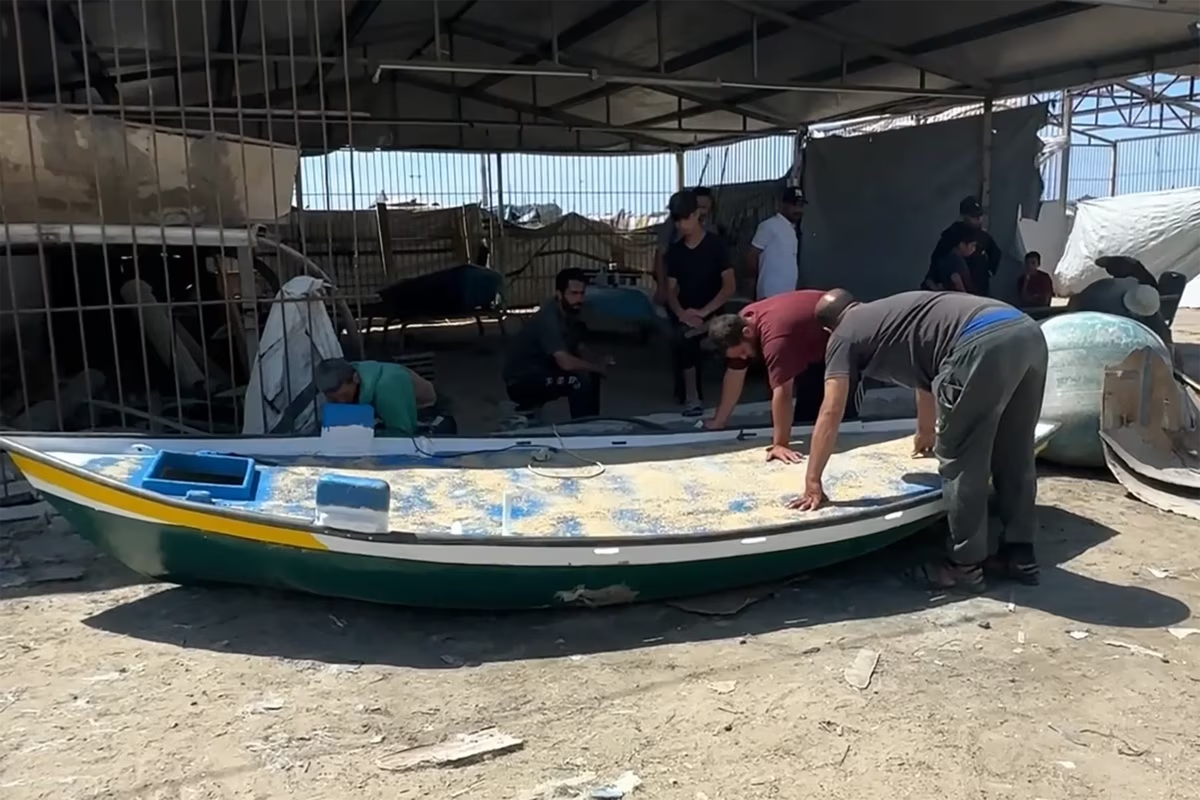







Under a modest roof of thick nylon on the Gaza City beach, the sounds of electric drills announce a new battle for survival being waged by the sector's craftsmen. Here, despite the lack of resources, a small workshop has transformed into a beehive where carpenters are trying to rebuild what the Israeli war destroyed in the fishing sector, using tools worn out by continuous work and wooden planks unlike those they were accustomed to previously.
Today, this industry does not rely on imported materials or luxurious wood, but rather entirely on the debris left behind by the war machine. Workers collect remnants of doors and windows from under the rubble of demolished homes, reshaping them into structures for small boats, in an attempt to break the blockade that prevents the entry of 'fiberglass' and wood designated for shipbuilding.
Mustafa Miqdad, a sixty-year-old craftsman who has spent his life in this profession, meticulously observes the curves of the wood over the blue structures. Miqdad explains that the profession he inherited from his ancestors is facing its toughest tests today, as he is forced to use a 'measuring tape' on wooden pieces that were once part of bedrooms or house entrances, transforming them into a 'belt' that carries the boat over the waves.
Miqdad describes the scene upon his return from displacement as shocking, as he found the port basin a graveyard for boats that had either sunk or turned into scattered debris on the sand. Fishermen had no choice but primitive restoration or manufacturing, a arduous path that requires double the effort in the absence of electricity and the high costs of manual operation.
Suffering is compounded by a severe shortage of raw materials, as craftsmen indicate that the stock of fiberglass is almost completely depleted. This shortage has driven the prices of available materials to record levels, making the dream of owning a new boat out of reach for the majority of fishermen who lost everything they owned during the continuous shelling.
Fisherman Musa Abu Jiyab is one of those who watch their boats under construction with much anxiety and hope, after his vessels burned in the open sea from the first days of the war. Abu Jiyab was forced to borrow and collect money from all corners to secure the cost of the new boat, emphasizing that returning to the sea is the only way to support his large family.
Figures reveal insane price jumps; a wooden plank that sold for 10 shekels before the war now costs 200 shekels. This increase is not due to the quality of the material, but rather its scarcity and the difficulty of extracting it from the rubble and preparing it to be suitable for sailing again in a harsh marine environment.
Challenges do not stop at the workshop, but extend to the open sea where the occupation imposes strict restrictions preventing fishermen from exceeding a distance of one kilometer. The occupation also prohibits the use of engines, forcing fishermen to rely on manual oars in dangerous fishing trips under the threat of direct gunfire.
Field sources reported that the fishing sector in Gaza suffered a devastating blow, with daily fish production decreasing from about 20 tons before the war to only 10 tons per month. This sharp decline reflects the extent of the destruction that has affected the infrastructure of this vital sector, which supports thousands of Palestinian families.
Reports indicate that more than 232 fishermen have been martyred by occupation fire since the start of the aggression, while hundreds more have been injured and arrested. These systematic targeting aims to empty the sea of its users and destroy the primary livelihood of the coastal population, amid international silence regarding these daily violations.
Inside the workshop, workers continue to scrape fiberglass surfaces and fix nails into a complex network of wooden supports that form the backbone of the boat. Every nail hammered represents a challenge to the closure policy, and every completed boat is a message of steadfastness confirming that Gaza is capable of recycling its destruction to create tools for life.
Officials in the fishermen's committees confirm that the occupation destroyed about 96 large vessels that formed the backbone of Gaza's fish economy. Today, fishermen rely on small 'Haskat' (small boats) and primitive means that are insufficient to feed the besieged population, given the urgent need to provide food.
The continued closure of crossings threatens the complete disappearance of the boat-building profession, as the occupation prevents the entry of the simplest tools and parts necessary for maintenance. Craftsmen warn that the depletion of remaining stored materials will mean the complete cessation of workshops, leaving thousands of fishermen without a means to practice their sole profession.
Despite all these circumstances, the sight of blue boats emerging from under the nylon roof towards the beach remains a sign of Palestinian will. These are boats born from the womb of rubble, carrying stories of destroyed homes and fishermen who refuse to surrender, betting on reshaped wooden pieces to sail them towards a new horizon.
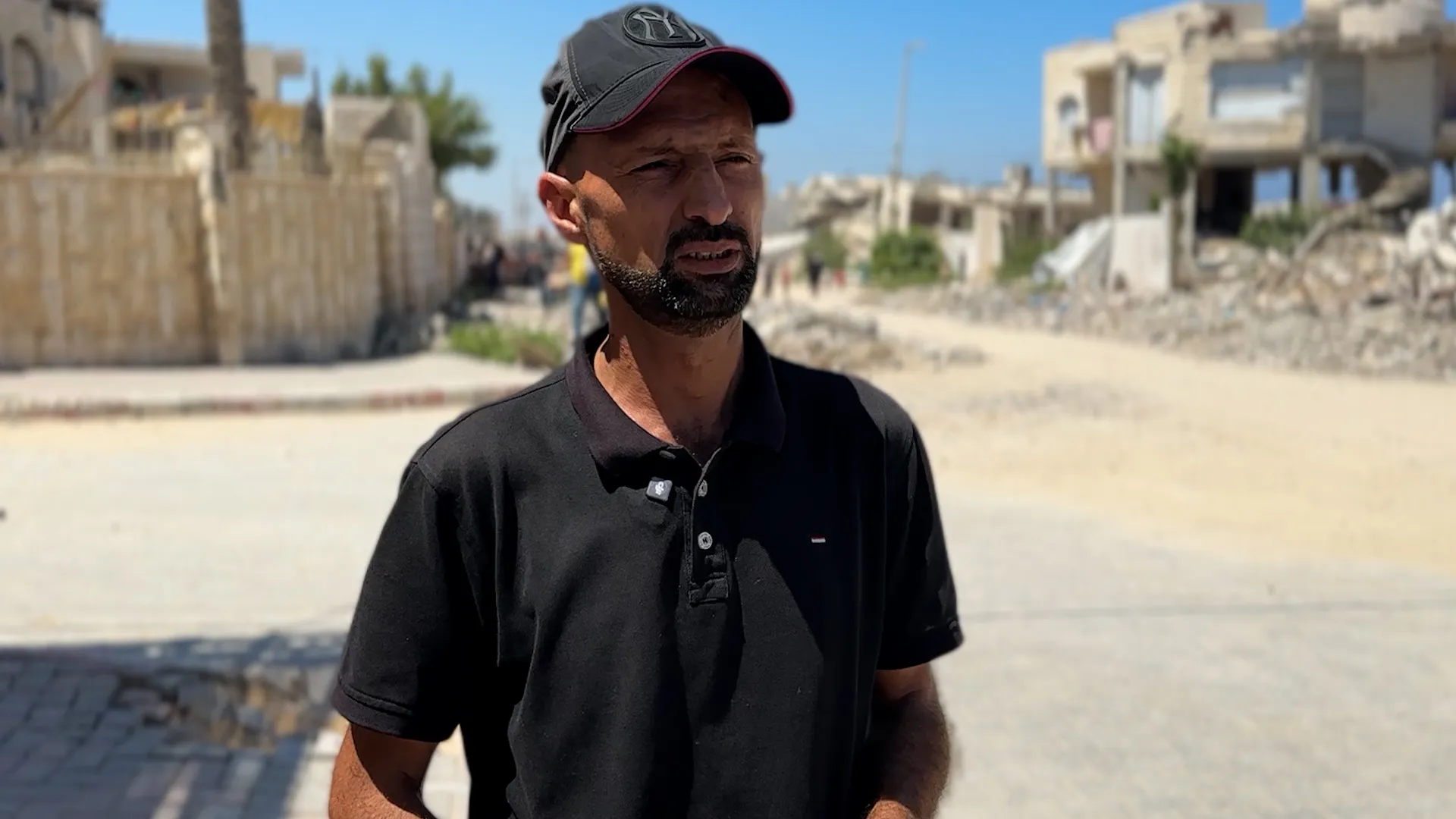
The wood we use today is the remains of demolished homes; we take doors and windows to make a 'backbone' for boats that will return fishermen to their livelihood.

Share your opinion
From the rubble of homes to the open sea.. Gaza's craftsmen breathe life into destroyed fishing boats