PALESTINE

Mon 03 Feb 2025 1:11 pm - Jerusalem Time

Health: 70 dead in the West Bank since the beginning of the year

The Ministry of Health announced today, Monday, that 70 citizens have been milled in the West Bank governorates since the beginning of this year, most of them from Jenin Governorate.


The ministry explained, in a statement, that among the dead were: 10 children, a female and two elderly .

PALESTINE

Mon 03 Feb 2025 12:08 pm - Jerusalem Time

Palestinian Presidency warns against expanding the war in the West Bank to displace citizens

The official spokesman for the Palestinian presidency, Nabil Abu Rudeineh, condemned the occupation authorities’ expansion of their comprehensive war on our Palestinian people in the West Bank to implement their plans aimed at displacing citizens and ethnic cleansing, warning of the danger of these plans to the future of the entire region.


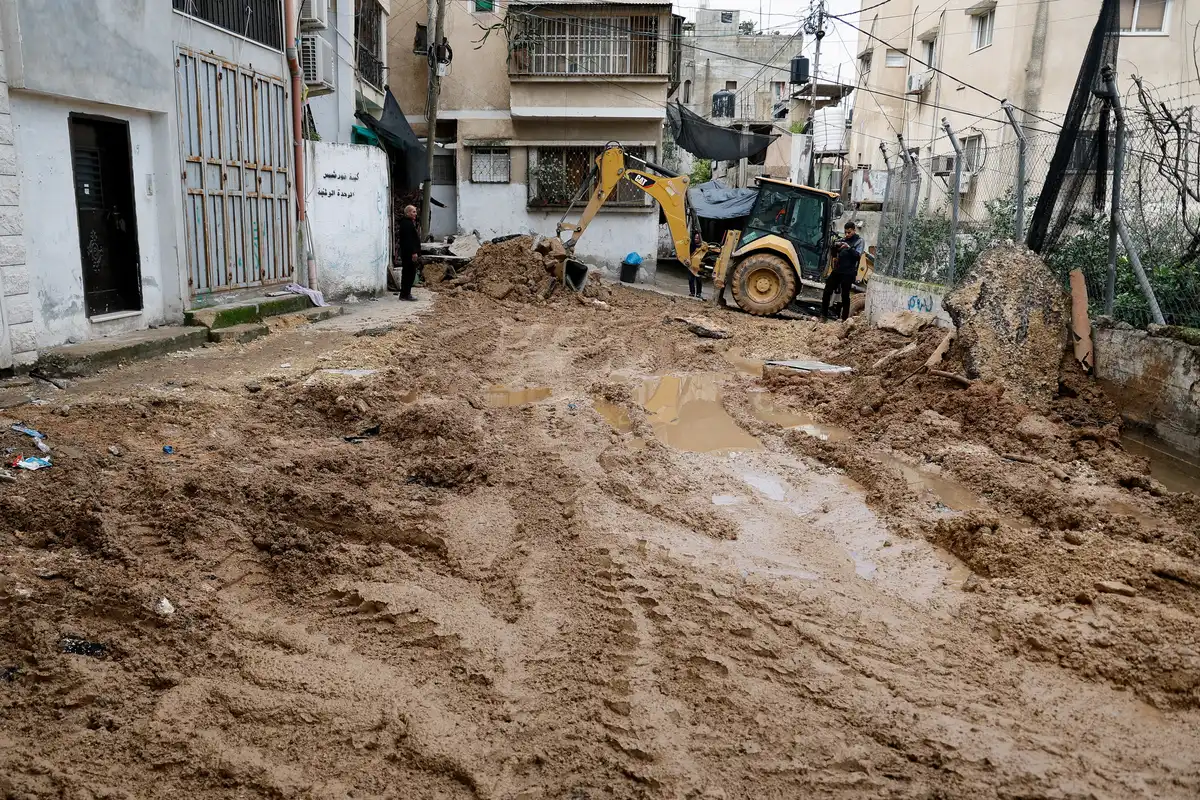
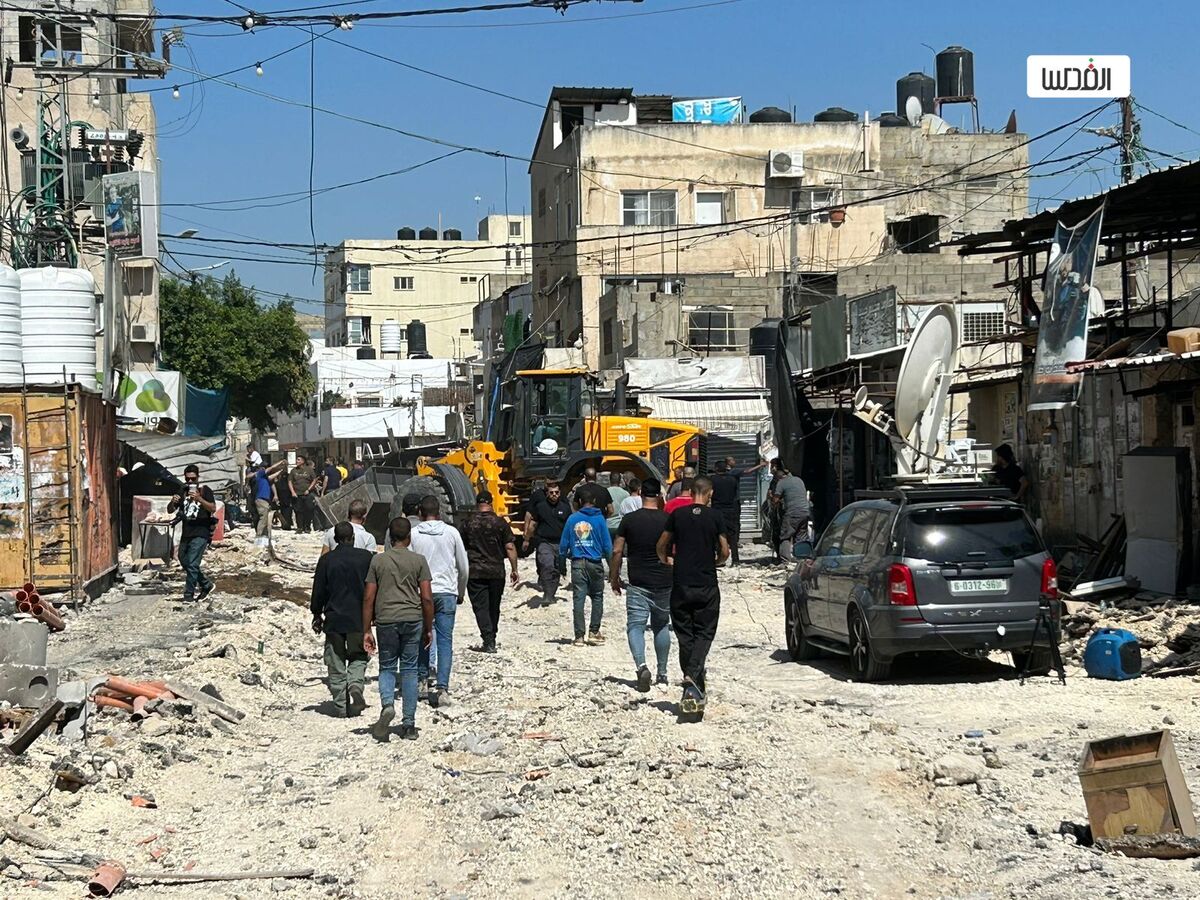
Abu Rudeina added that these aggressive policies implemented by the occupation forces in the West Bank have led to the martyrdom of 29 citizens, hundreds of wounded and arrested, in addition to the demolition of entire residential blocks in the Jenin and Tulkarm camps, the displacement of thousands of citizens, and massive destruction of the infrastructure.


He continued: We demand the intervention of the US administration before it is too late, to stop the ongoing Israeli aggression against our people and our land, which will lead to the situation exploding in an uncontrollable manner, and everyone will pay the price.


The official spokesman for the presidency stressed that the Palestinian people will not accept any plans, whether for displacement or an alternative homeland, and threatening our people will not benefit anyone, but will lead to widespread destruction here or in the region, whether today or tomorrow.

ARAB AND WORLD

Mon 03 Feb 2025 11:31 am - Jerusalem Time

Two British spy planes flew near Gaza during prisoner exchange

A British news website revealed that two British Air Force reconnaissance planes flew over the eastern Mediterranean during the prisoner exchange process in the Gaza Strip between the Palestinian factions and Israel.


The British website "Declassified" said on Sunday that "the British Royal Air Force sent two reconnaissance planes towards Gaza since the start of the ceasefire between Israel and Hamas."


The website, which conducts research on the work of military and intelligence institutions, added: "The two trips occurred during a prisoner exchange."


He continued: "The first spy flight took off from the British Akrotiri Air Base in Cyprus (Romania) at 15:32 (13:32 GMT), and returned at 20:59 local time (18:59 GMT) on January 19, the day the ceasefire came into effect."


"The plane turned off its transponders over the eastern Mediterranean, raising questions about what exactly it was doing in the air while Hamas was releasing the last remaining British captive, Emily Damary," he added.


He pointed out that "the second flight departed from Akrotiri base on January 25 at 11:26 local time (09:26 GMT) and returned to base at 17:44 (15:44 GMT), and again turned off the transponders over the eastern Mediterranean during the second prisoner exchange."


The website quoted the British Ministry of Defense as saying, "The aircraft did not enter Gaza airspace and operated at all times in accordance with the ceasefire and prisoner release agreement between Israel and Hamas."


However, Declassified notes that “this denial will not prevent the RAF’s Shadow R1 spy plane from collecting surveillance footage of prisoner movements from Israeli airspace or conducting further intelligence gathering to support Israel elsewhere.”


He added: "The British Ministry of Defense did not respond to our questions about whether the spy planes collected intelligence about Gaza from Israeli airspace."


The British Foreign Office said that the surveillance planes are "unarmed" and "their mission is only to locate the hostages," according to the same British website.


He considered that this response "raises serious questions about why spy planes continue to be sent to the region while prisoners are being released."


“For months, the government has said that RAF flights over Gaza are only used to locate prisoners, so why are these flights still continuing now that hostilities have stopped?” Zaki Sarraf, legal officer at the UK-based International Centre for Justice for Palestinians, was quoted as saying.


The news site notes that "the spy flights have been shrouded in secrecy since they were first sent to Gaza in December 2023, and activists are now calling for an investigation into intelligence sharing between Britain and Israel."


“The Shadow R1 drones used are specialized for target identification, and it is unclear why they were used in the first place, but their continued use – despite the prisoner exchange already underway – raises more serious concerns about their true purpose,” Sarraf added.


“The British people deserve clarity. There is an urgent need for a comprehensive and public inquiry into the UK’s complicity in Israel’s genocide against Palestinians, including these flights,” he continued. “Accountability is simply not negotiable. The stakes are too high.”


The British website stated that "the text of the ceasefire agreement between Israel and Hamas indicates that in the first stage: all flight operations (military and reconnaissance) in the Gaza Strip must stop for 10 hours a day, and 12 hours on the days when prisoners are exchanged."


“This condition was designed not only to give the Palestinians a break from Israeli bombardment, but also to reassure Hamas that Israel would not collect intelligence on the prisoners’ movements and locations,” he said.


He added: "Since the United Kingdom is not a signatory to the ceasefire agreement, Hamas believes that the spy flights made Britain complicit with the Zionist occupation when they were launched in December 2023."


"Therefore, the decision to send spy flights to the region during the prisoner exchange may raise suspicions that Britain violated the spirit, if not the letter, of the ceasefire," he continued.


He added: "These spy flights also raise the possibility that Israeli forces will use surveillance footage provided by the UK to conduct future military operations in Gaza."


The British website also revealed that the Shadow R1 drones can collect information in order to "identify targets."


On January 19, a ceasefire and prisoner exchange agreement went into effect in three stages, each lasting 42 days. During the first, negotiations were held to start the second and third, with the mediation of Qatar and Egypt and the support of the United States.

ARAB AND WORLD

Mon 03 Feb 2025 11:24 am - Jerusalem Time

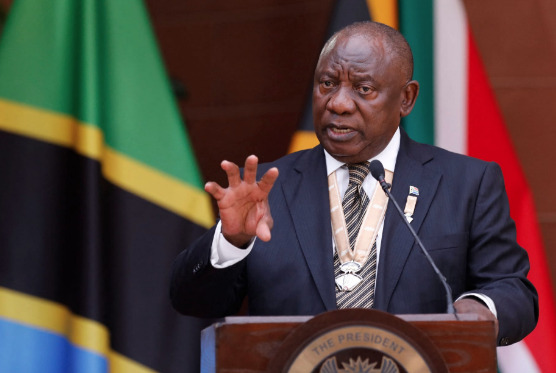
South African President Responds to Trump's Accusations

South African President Cyril Ramaphosa on Monday responded to US President Donald Trump's accusations of land "seizure" and "abuse of certain groups," he said.


Ramaphosa said his country had not expropriated any land, adding that the expropriation law was constitutionally enshrined.


He stressed in his remarks that the United States remains a major strategic political and trade partner of South Africa.


Pretoria maintains that the law does not allow the government to arbitrarily seize property, and that it must first seek an agreement with the owner.


Ramaphosa added that his government looks forward to engaging with the Trump administration on land reform policy and issues of mutual interest.


For its part, the South African Ministry of Foreign Affairs said, "We are confident that Trump's advisors will use the investigation period to reach a comprehensive understanding of South Africa's policies within the framework of constitutional democracy."


"It may turn out that the confiscation law is not exceptional, as a large number of countries have similar legislation," the Foreign Ministry added.


Trump accused South Africa on Sunday of "expropriating" land and "treating certain groups of people very badly," announcing the suspension of any future funding to the country, pending an investigation.


South Africa's currency fell in early trading on Monday after Trump's comments about cutting funding.


Last January, the South African president issued a law that allows the government, under certain circumstances, to confiscate land for the public interest without providing any compensation at all.


The land issue in South Africa is divisive, with efforts to address inequality inherited from apartheid drawing criticism from conservatives, particularly Elon Musk, the South African-born billionaire who is one of President Trump’s closest advisers.


It is noteworthy that the white minority in South Africa - which constitutes 9% of the country's population since the colonial period - owns 75% of the arable land.

PALESTINE

Mon 03 Feb 2025 11:05 am - Jerusalem Time

EU condemns Israel's ban on UNRWA activities

The European Union condemned the Israeli occupation government's ban on the activities of the United Nations Relief and Works Agency for Palestine Refugees in the Near East (UNRWA) in the region.


The EU High Representative for Foreign Affairs and Security Policy, Kaya Kallas, said in a statement last night that the Israeli legislation raises concerns because of its comprehensive consequences for UNRWA operations in the West Bank (including East Jerusalem) and Gaza.


The statement indicated that the European Union condemns any attempts to cancel the 1967 agreement between Israel and UNRWA, or to obstruct the UN agency's ability to perform its mandate, stressing that providing basic services to Palestinian refugees has become more important in light of the need to implement the ceasefire agreement quickly in particular.


He also stressed that the European Union is determined to continue its support to enable UNRWA to fulfil its mandate.


He stated that the European Union awaits the full implementation of the recommendations contained in the Independent Review Group report, following the accusations against some UNRWA employees, calling on the United Nations to take more decisive steps to ensure neutrality and accountability, and to enhance oversight to prevent such incidents.


On October 28, 2024, the Knesset finally approved, by a large majority, two laws that prevent UNRWA from carrying out any activities inside Israel, withdraw privileges and facilities from it, and prevent any official contact with it.

The Israeli government's decision to ban UNRWA from operating in Israel and occupied East Jerusalem came into effect last Thursday.

___

PALESTINE

Mon 03 Feb 2025 10:46 am - Jerusalem Time

2161 attacks carried out by Israeli occupation forces and settlers last month

The Wall and Settlement Resistance Commission documented 2,161 attacks carried out by the occupation forces and terrorist settlers during the month of January 2025.


The head of the commission, Minister Mu'ayyad Shaaban, said in the monthly report on "occupation violations and colonial expansion measures" that the occupation forces carried out 1,786 attacks, while the settlers carried out 375 attacks, most of which were concentrated in the governorates of Hebron with 358 attacks, Ramallah with 342, and Nablus with 328.


He pointed out that the attacks ranged from armed attacks on Palestinian towns and villages to imposing facts on the ground, field executions, vandalism, bulldozing of land, uprooting of trees, seizure of property, closures and military checkpoints that sever the ties of Palestinian geography.


A wave of terrorism targeting citizens’ properties and homes:


He pointed out that the settlers' attacks were concentrated in Nablus Governorate, with 108 attacks, Ramallah Governorate with 105 attacks, Nablus with 76 attacks, Hebron with 55, and Qalqilya with 31 attacks.

He added that the settlers carried out 318 acts of vandalism and theft of citizens' property, which affected large areas of land, and resulted in the uprooting of 969 trees, including 960 olive trees, 350 of which were in the Hebron Governorate, 328 in Bethlehem, 160 in Salfit, 100 in Nablus and 31 in Ramallah.


126 facilities demolished and 131 others notified of demolition

The Commission's report indicated that the occupation authorities carried out 76 demolition operations last month, affecting 126 facilities, including 74 inhabited homes, 4 uninhabited ones, and 29 agricultural and other facilities. They were concentrated in the Jenin governorates, with the demolition of 47 facilities, then the Jerusalem governorate with 14 facilities, Qalqilya with 11, and Bethlehem and Nablus with 10 facilities each.

The occupation authorities also notified 131 facilities to demolish, concentrated in the Hebron Governorate with 66 notifications, then the Bethlehem Governorate with 45 notifications, and Ramallah with 10 notifications.


Attempt to establish 10 new colonial outposts

He pointed out that the settlers have tried to establish 10 new colonial outposts since the beginning of last January, which were predominantly agricultural and pastoral in nature, and were distributed as follows: 4 new colonial outposts on the lands of Tubas Governorate, 3 outposts in Nablus Governorate, and 3 others in Qalqilya, Ramallah, and Bethlehem.


Shaaban stressed that the decision to establish the colonial outposts comes under directives from within the occupation's "cabinet", which sponsors the colonial settlement project and provides facilities to terrorist colonists in order to implement plans to control the land and forcibly displace them.


Seizing 262 dunums:

The occupation authorities seized a total of 262 dunums of citizens’ lands through two expropriation orders for the purpose of expanding a colonial road north of Jerusalem. The first order targeted a total of 258 dunums of citizens’ lands in the villages of Jaba’, Kafr Aqab, Al-Ram, Mikhmas and Qalandia, north of the Jerusalem Governorate, through an expropriation order aimed at expanding Road No. 45, which connects Road 60 near the Binyamin Industrial Zone and the two colonial Kokhav Yaakov roads, all the way to the Qalandia military checkpoint. The second order stipulated the right to dispose of 4.5 dunums of the area’s lands for the purpose of expanding a colonial road.


Adjusting the boundaries of a colony and studying 31 structural plans for the colonies

The report indicated that the occupation authorities studied last January a total of 31 master plans (deposit and approval) for the purpose of expanding the settlements of the West Bank and Jerusalem. The plans aimed to build a total of 943 colonial units on an area estimated at 9,881 dunams of citizens’ land, and were mainly characterised by changing the use of land within the settlements from agricultural areas to “colonial” residential areas, which reveals the occupation’s intention to carry out large and intensive expansion operations in the coming period, in addition to allocating 3 plans, including them, for the purpose of expanding two industrial areas within the settlements, while plans within the borders of the city of Jerusalem aimed to build 3,512 colonial units on an area estimated at 441 dunams of citizens’ land.


He pointed out that the occupation authorities announced their intention to settle the status (legalize) of the "Mitzpe Kramim" colonial outpost by annexing it to the area of influence of the "Kochav Hashahar" colony, within the so-called "Mate Binyamin" colonial regional council, which is built on citizens' lands northeast of the Ramallah governorate, specifically the lands of the village of Deir Jarir, which allows for the start of planning to organize the colonial outpost.


The "Mitzpe Kramim" colonial outpost, which was established in 1999 on private Palestinian land to the east of the "Kochav Hashahar" settlement, is located. The citizens fought a legal battle with the occupation in order to remove the outpost, and in 2022 the occupation court decided to "settle" the status of the outpost on the pretext that it was established in good faith by the colonists!

912 military barriers and "gates" to reshape the geography and make it repellent to citizens


Shaaban stressed that the escalating crimes of the terrorist colonists have gone beyond the level of attacks to the principle of terrorism sponsored by the official Israeli establishment, and cannot be viewed as isolated from the colonial context, but rather has become organized and protected by the occupying state with a racist legislative environment that provides it with support, care and immunity.


He added that the occupying state has become adept at inventing reasons to oppress the Palestinians and turn their lives into a living hell and constant torment, which would not have happened except because the world has completely stopped being a guardian of human rights and a deterrent to the criminal behaviors pursued by the last occupying entity on earth and in history.


Shaaban said that the methodology of comprehensive closure of Palestinian geography, through checkpoints, military gates, and the separation wall and racist expansion, was not only aimed at controlling the movement of Palestinians on the streets, but also, through more than 912 checkpoints, military gates, and a separation wall that is more than 700 km long, it wanted to reshape geography according to the sick whims of the occupier, and transform the West Bank, including Jerusalem, into narrow enclaves and cantons, repelling living and housing, and subject to the most severe system of control and control over the lives of those under occupation, completely eliminating the possibility of communication not only between two neighboring governorates, but also extending to eliminating communication between a village and the village next to it.

OPINIONS

Mon 03 Feb 2025 9:19 am - Jerusalem Time

Genipalia.. The tragedy of the century

op-ed - Al-Quds dot com

op-ed - Al-Quds dot com

Opinion Writer

It was not an absurd or spontaneous statement made by the extremist Israeli Finance Minister Bezalel Smotrich last January, when he called for genocide and ethnic cleansing of the Palestinians in the cities of Nablus and Jenin in the northern West Bank, as Tel Aviv is doing in Jabalia in the northern Gaza Strip.


This came in Smotrich's comment on the killing of three Israeli settlers and the wounding of seven others in a shooting attack near the settlement of Kedumim, the settlement where he lives, east of Qalqilya in the northern West Bank.


"Al-Funduq (a village in Qalqilya), Nablus and Jenin must be like Jabalia, so that Kfar Saba does not become like the infidels of Gaza," Smotrich said in a statement.


This call coincided with several demands by the settlers, in which they called on the Israeli Minister of Defense, Yisrael Katz, to transfer the Gaza model to the West Bank, to burn all its properties, blow up its buildings, kill its citizens, and turn it into rubble, and not to limit the war of extermination to Gaza.


The Israeli army immediately responded to these calls, launching a large-scale aggression two weeks ago on the city of Jenin and its camp, the city of Tulkarm and the Tulkarm and Nur Shams camps, then expanding the scope of the aggression to include the Tubas governorate, where the Far’a and Tamoun camps are located, leaving about 50 martyrs through continuous bloody bombardment, a tight siege that prevents the entry of food, water and medicine, and forcing the citizens in the camps to flee.


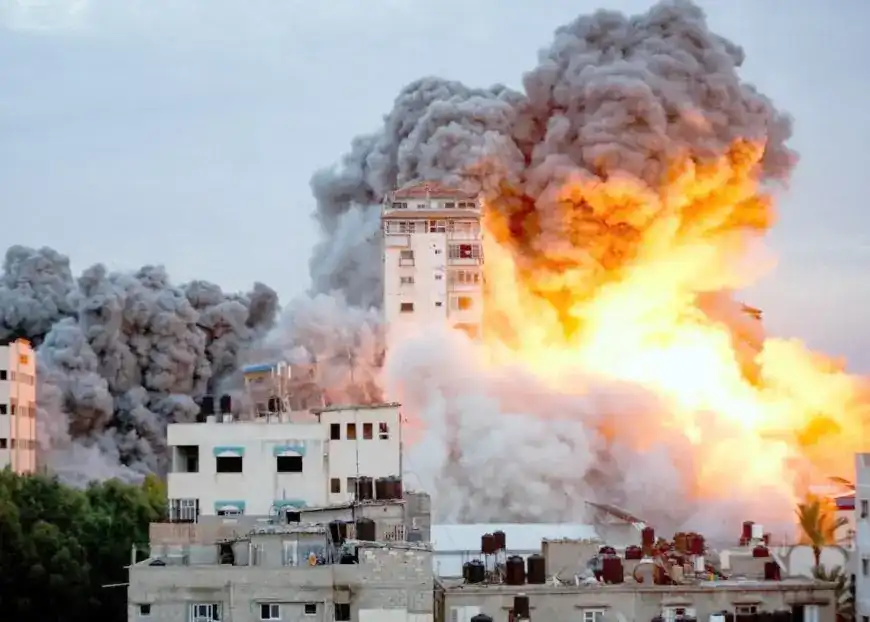
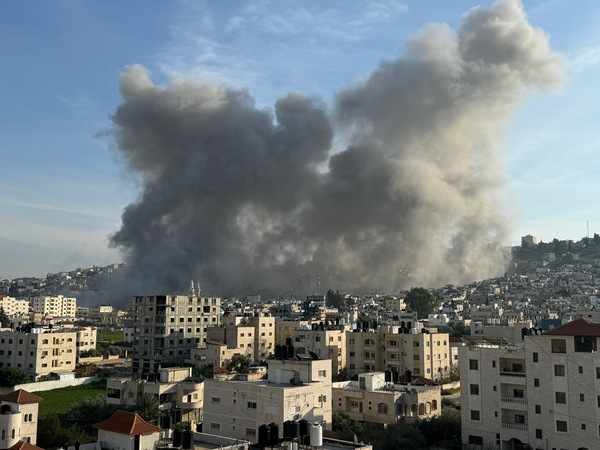
Yesterday, the aggression escalated and imposed on Jenin camp a catastrophic tragedy unprecedented in the history of the West Bank, when about 23 homes were blown up at once in a terrifying scene that shook the walls, doors and windows of homes for several kilometers, for the occupation to impose on the people of the camp the bitterness of a new displacement suffering, as they have lost more than 100 homes that were demolished, burned or blown up by the occupation.


Netanyahu's government met Smotrich's demands, and at that time held an urgent session of the Security Cabinet, which was devoted to discussing the situation in the West Bank. Netanyahu made decisions to undermine the dream and project of a Palestinian state, by continuing to terrorize citizens. He himself threatened to find the killers and hold them and all those who helped them accountable, "without letting anyone escape punishment." Meanwhile, Defense Minister Yisrael Katz tweeted on the X platform that "Israel will not allow the reality in the (West Bank) to be the same as it was in the Gaza Strip," and that "whoever follows Hamas's path in Gaza and sponsors the killing and harming of Jews will pay a heavy price," according to his expression.


Israel has exploited the Al-Funduq shooting incident to vent its anger on the northern West Bank. It needs no justification. Its plans have been in place for many years, and its actions on the ground prove that it is waging a long-term war. For many years now, the West Bank has been the scene of army incursions and a target for settler attacks.


The besieged and oppressed Jenin was and still is a strategic target for the occupation, and there is no doubt that the pictures and scenes of the massive destruction there make it resemble Jabalia, and what can we say except (Jenin) the tragedy of the century, in a brief reference to Jenin, Jabalia and all the cities and camps of the homeland.

OPINIONS

Mon 03 Feb 2025 9:17 am - Jerusalem Time

Netanyahu-Trump meeting and the fate of the ethnic cleansing and genocide stop proposal

Ahmed Issa

Ahmed Issa

Opinion Writer

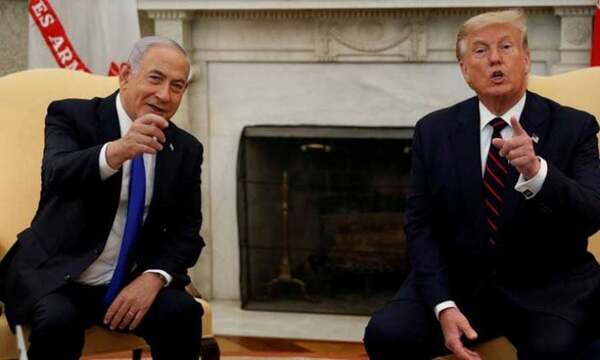
Netanyahu is scheduled to meet with US President Trump tomorrow, Tuesday, February 4, 2025, at the latter’s invitation, to be the first foreign official to visit Washington and meet with the president who has been inaugurated less than two weeks ago. This shows the extent of America’s interest in Israel’s position in the Middle East, where tension and instability have reached their peak, especially after the Al-Aqsa Flood operation carried out by the Palestinian resistance forces in the Gaza Strip on October 7, 2023, which Israel considered an existential threat to the state, and subsequently launched a war of genocide against the Palestinians in the Gaza Strip that continued until the signing of the Doha Agreement, which entered into force on Sunday, January 19, 2025, 24 hours before the inauguration ceremony of the president-elect.


The Middle East was President Trump’s first foreign stop in his first term, starting in Riyadh on May 20, 2017, where the first Arab-Islamic-American summit was held. Trump had called for the formation of an Israeli-Arab-Islamic-American military alliance to confront Iran as a threat to the security and stability of the region.


After this visit and during his first term, the American embassy was moved to Jerusalem, and the so-called “Deal of the Century” was published, which was rejected by the Palestinians, and some Arab countries normalized their relations with Israel away from the condition of declaring the establishment of the Palestinian state as stipulated in the Arab Peace Initiative in 2002, matters that appeared to be goals of an American-Israeli plan to liquidate the Palestinian cause and end Israel’s existence as a normal state in the region.


While Trump has achieved some of the goals of the Israeli Jewish right and the American Christian (Evangelical) supporter of Israel and its goals, he realizes, as his predecessor Biden did, that the Israeli intelligence services and the army have failed miserably, first in anticipating the threat, and second in defeating the Palestinians, which makes Israel’s need for America much greater than the capabilities of Smotrich, Ben-Gvir, and even Netanyahu himself.


In fact, the Israeli failure to anticipate the threat, and then the failure to achieve the war’s goals, is a failure of the American state and the rest of the countries that are partners with Israel and have the largest share in its manufacturing project in the region, which makes trying to fix this failure or some of it the main topic of the meeting between Netanyahu and Trump, which will find its manifestations in the statements that will be issued from this meeting, and the policies that will follow from both Washington and Tel Aviv towards the region, especially with regard to consolidating the ceasefire, as well as Biden’s proposal for ethnic cleansing.


The sense of failure in both Israel and America is most clearly evident in the discussions that have begun to surface, especially among intellectuals and opinion writers in both countries, which mostly revolve around the fact that the Al-Aqsa flood and the subsequent war of extermination have forced Israel and its partners to confront questions that they have always sought to evade providing answers to, such as: Can Israel’s military power guarantee a solution? Will extermination lead to the end of existence? Or will extermination deepen the abyss? Will Israel, supported by America, continue its project of extermination and ethnic cleansing, or will it choose a different path? And will the exhausted Israeli society agree to live in the shadow of an eternal war imposed on it by its current right-wing government?


It is clear that these questions and others will dominate tomorrow’s meeting, as they will find their manifestations in the topics that will impose themselves on the agenda of Tuesday’s meeting. I argue here that there are three topics that will dominate the meeting’s agenda: the first relates to the Kingdom of Saudi Arabia, the second relates to Iran, and the third relates to the Palestinian issue and the independent Palestinian state. Netanyahu’s position on the third topic will determine the fate of the second and third stages of the Doha ceasefire agreement and the future of Trump’s plan for ethnic cleansing.


While Israel is trying to downplay the importance of the third issue, and present its media as was clearly seen in Haaretz newspaper on Sunday morning, 2-2-2025, the truth is completely different, as the Palestinian issue cannot be ignored, especially with regard to the ceasefire agreement and the implementation of its three stages, due to the relationship of the Palestinian issue to the first two issues related to Saudi Arabia and Iran.


The first indications of this came in Netanyahu’s appointment of a Minister of Strategic Affairs and a close confidant of his (Ron Dermer) before he traveled to Washington to meet with the president, and in his prevention of the Israeli delegation from traveling to Doha and starting negotiations on the second phase of the agreement, which was scheduled to begin today, Monday, according to the text of the agreement, and in considering Netanyahu’s meeting with President Trump’s special envoy to the Middle East (James Witkoff) tomorrow as the beginning of this round of negotiations.

This article will not address the Iranian issue in tomorrow’s meeting, as a separate article will be devoted to it. Instead, it will focus on the Saudi issue. Regarding Saudi Arabia, there are two issues: the first relates to a defense treaty with America, and the second relates to Saudi Arabia obtaining civilian nuclear capabilities. This issue is solvable, according to what Meir Ben-Shabbat, the former Israeli National Security Advisor and close associate of Netanyahu, who heads the Misgav Institute for National Security and Zionist Strategy, wrote in an article published on the website on January 30, 2025.


The second issue revolves around the normalization of Saudi-Israeli relations, as Saudi Arabia stipulates in this issue the establishment of an independent Palestinian state on the 1967 borders, as stated in the Arab Peace Initiative, or Israel’s approval to open a political path leading to the establishment of a Palestinian state.

Regarding the Palestinian state, Netanyahu will make it clear that talk of a Palestinian state after October 7 will be a reward for Hamas and the Palestinian Authority, which supports terrorism. Netanyahu is expected to add two more demands to America’s insistence on removing Hamas from power. The first focuses on clearing Gaza of weapons, and the second revolves around Washington’s non-support for any model of government that allows Hamas to operate behind the scenes.


It is worth noting here that President Trump expressed his optimism after the Doha agreement, considering that the agreement could be the beginning of a broader peace project in the Middle East, while expressing his doubts about the continuation of the ceasefire between Israel and Hamas. He added that "this is not our war, it is their war," which indicates that President Trump does not adopt the military approach, or rather the genocidal approach adopted by Israel with the full participation of former President Biden. In this regard, Ben-Shabbat wrote in his previously mentioned article: "Trump seems determined to achieve regional peace."


Since it is difficult to bet on Trump’s statements, as it is difficult to predict his positions and policies, which appeared in his proposal to deport Palestinians from Gaza to Egypt and Jordan, his success in imposing the Doha Agreement and his statements about the opportunities provided by the agreement to achieve regional peace, and America’s conviction as a state that Israel has failed to anticipate the threat and achieve absolute victory in the war of extermination that it has been waging against the Palestinians for more than fifteen months, is enough to conclude that the approach to regional peace from the gateway of the Kingdom of Saudi Arabia is the best approach for Israel than the military approach, according to Trump’s vision.


The above reinforces the conclusion that Israel is unable to fail to implement the remaining stages of the Doha Agreement, in addition to reinforcing the lack of seriousness of Trump’s proposal for displacement and ethnic cleansing. However, it does not reduce the possibility of further forms of Israeli genocide in the West Bank, and most importantly, it highlights the importance of the role of the Kingdom of Saudi Arabia in achieving its vision for peace in the region, which requires the Palestinians to improve their political positioning at this stage in time.


OPINIONS

Mon 03 Feb 2025 9:15 am - Jerusalem Time

"Ugly American" and the colonization of Mars

Dr. Ahmed Rafiq Awad

Dr. Ahmed Rafiq Awad

Opinion Writer

Sixty-seven years have passed since the novel "The Ugly American" was written by William Julius Leder and Eugenie Burdick at the height of the Cold War and the McCarthyite wave that gagged and spread terror within the United States of America. The novel is political par excellence, as its authors were preoccupied with politics and diplomatic work. In this novel, which was exceptional at the time and still is, the authors accuse American politicians, including ambassadors in particular, of arrogance, ignorance, and contempt for peoples, and of not understanding or sympathizing with them, and that American policy in general presents a distorted image of the good and humble American people - according to the novel, of course. Moreover, the authors attribute the people's revolutions against America and their hatred of it to the greed, avarice, and stupidity that American politicians show towards them. This talk was published in 1958, but to this day it is still true to a large extent, if not deepened and increased and appeared in a more ugly and hideous form.


We have seen the former US Ambassador carrying an axe to demolish a wall under Al-Aqsa Mosque, we have seen US ministers implementing Israeli policies, distorting facts and setting fires, we have seen support, coverage and funding with ammunition, positions and media narratives, we have heard public threats to the International Criminal Court and blind support for closing UNRWA to starve and impoverish millions of Palestinians. We have known the meaning and taste of US policy on our skins, in our fields and on the walls of our homes that have been demolished and razed to the ground.


President Trump is the pinnacle of all this, as he has opened fire on almost all sides. He wants the Gulf states to invest more than $600 billion in his country, a request that is like an order or a threat. He is asking Iran to stop its nuclear program, otherwise Israel is ready, and has been provided with bombs of more than 200 pounds, enough to blow up every underground tunnel. Trump is not satisfied with that, but rather threatens the BRICS countries not to think or take the initiative to issue a new currency for dealing, otherwise he will exhaust the group’s economy with taxes of up to 25 percent. He also wants to seize Greenland, the Panama Canal, and Canada. He also wants to cleanse his enemies inside the United States by overthrowing the bureaucratic apparatus, which forms a parallel government in the shadows that has a great influence on American decision-making. He also wants to invest in future industrial cartels, ignoring the middle and working classes, as if he were a president for the rich whites only. Not only that, but he has also signed decisions that will remove America from important international agreements such as climate and others. In other words, Trump, who wants to withdraw inward for the sake of prosperity and prosperity, can only do so by antagonizing others, imposing taxes on them, and forcing them to give their money for free. Trump's policy is actually based on the Monroe Doctrine, a colonial principle that allows America to do whatever it wants for its interests and influence in every region of the world, especially the Americas. But Trump is not satisfied with this principle, but rather expands it so that his influence reaches Mars, yes, to Mars, because the space program he is preparing for exceeds what former President Reagan proposed. The current program aims, as Trump said, to reduce the Russian and Chinese threat, and therefore this program may reach the colonization of Mars in search of power, influence, and perhaps wealth. No one knows. This is the madness of grandeur and arrogance we have seen before, because every ruler who talks about the stars has reached an advanced stage of complete detachment from reality. Empires that aspire to reach the stars usually fall into deep, bottomless pits.


As for us, the Palestinian people, the weak and forgotten people, who are antagonized by the world’s powerful politicians, industrialists, media figures, and legal experts, Trump strongly believes that he can solve the conflict with Israel by displacing us, replacing our state with economic privileges, aborting our dreams of freedom, dignity, and independence, and turning us into mere unknown subjects under every planet. Trump’s proposals seem extremely naive, and to the extent that this naivety makes us laugh, it also makes us cry, as this superficiality reflects a complete surrender to the Israeli colonial vision that sees displacement as a real solution to the conflict that has been going on for more than a hundred years.


The ugliness, hideousness and superficiality of American policy reaches its peak in talking about the Palestinians as a group of nomads, consumers or tenants who can move from one market to another simply because the market has declined or the service at the hotel has changed. We are not “consumers” according to American culture, nor are we just tenants of a dilapidated building. Rather, we are the Palestinians. We love this land. We love it without proof. We love it as we love our mother without documents or papers.


Finally, if Trump believes that he can force the region to accept his ugly offer, this will sooner or later lead to the demolition and termination of the relationship with Israel. Simply put: displacement will blow up normalization. In this sense, Jordan and Egypt, which constitute the broad current of Arab moderation and historical settlements, may find themselves facing two options, both of which are bitter, but one of which guarantees dignity, independence, and equality.

OPINIONS

Mon 03 Feb 2025 9:13 am - Jerusalem Time

Trump and the malicious displacement!

Bakr Abu Bakr

Bakr Abu Bakr

Opinion Writer

The idea, proposal, or plan of the confused, capricious, and conspiring American President Trump, who is conspiring with Netanyahu, to displace the Palestinians from the residents of Gaza (and steal the Palestinian West Bank, as was the case with the slap of the century), is a clearly malicious idea that clearly aims to kill the Arab Palestinian people, end the cause, and bring the Arab nation to its knees.


It is a malicious and poisonous idea that aims to kill the Palestinian state that exists by natural, legal and political right (and is under occupation), and which the world recognizes, except for him and his ilk of blunderers, reckless people and war criminals.


Hence, let us say at the outset that we are fully confident in the downfall of his project, which contradicts all the laws of the world and represents a crime against humanity, as is the case with the lowly, subservient “Abrahamic” project of the nation under the feet of Zionism and Israeli dominance.

The same man had given the Syrian Golan Heights as a gift to Netanyahu! He also moved the US embassy to Jerusalem, and he himself, with his confused mind, weak awareness and culture, had also made a reckless statement before his last statement, demanding what he called "Israel's right" to expand due to the small size of its land compared to the density of its population!


Therefore, as the writer Jumaa Bouklaib said, his statement about displacing the Palestinians from the Gaza Strip to two neighboring Arab countries (Egypt and Jordan) can be placed in the same context, as strange statements that will not hold up, adding: In the West Bank, this is being done through several plans (scenarios) that may be ready, “beginning with settling more Israeli settlers, through continuing the process of usurping land and building settlements, with the aim of creating a de facto situation on the ground that makes the establishment of a Palestinian state impossible.”


A number of commentators said to the evil American President: Wouldn’t it have been better for you to move the foreign settlers to one of the fifty American states! Or better yet, return to their original countries, and the issue would be solved! And as for Gaza, wouldn’t it have been better for you to build the Gaza Strip with the strong, skilled Palestinians of the country, rather than imported labor!? It is the biblical, evangelical Zionist mind combined with the whims of money and power.


“President Trump’s proposal contains numerous blatant violations of international law, including violations of international humanitarian law, human rights, international criminal law, and customary international law, in addition to UN resolutions relevant to the Palestinian issue,” says friend and lawyer Ali Abu Habla.


While all of Palestine, with its authority, organization, factions and people, rejected Trump’s proposals, Egyptian President Abdel Fattah el-Sisi confirmed his “rejection of the displacement proposal,” saying: “The displacement of the Palestinian people is an injustice that Egypt, which has a firm and historical position on this issue, will not participate in.” Jordanian Foreign Minister Ayman Safadi also said: “Jordan is for Jordanians and Palestine is for Palestinians, and our rejection of displacement is firm and unchanging.” There were also Western and European statements widely rejecting the proposal.


Let us say: “No matter how much Trump thinks about rearranging the world with the arrogance of his power and authority, from the strange and wonderful statements he made that toured the world (Panama, Greenland, Canada, Mexico, Palestine, the theft of Saudi Arabia, the World Health Organization...etc.), they demonstrate the mentality of this man who comes from among piles of money and scandals, deals and whims, in addition to the myths of Christian-Zionism, thinking with all certainty that his dreams, desires and deals in the world, including the theft of the Arab region and Palestine and its re-engineering, will be dictated to all Arab peoples and leaders, then that is something that will never happen, for this is the region of Arab-Islamic civilization with its distinguished Eastern Christianity that has rejected all invaders and their dreams throughout history and turned them into nightmares.


Let us conclude with a word from a report by Al-Quds newspaper, in which Firas Yaghi says, “All previous attempts to liquidate the Palestinian cause have failed, and Trump will go as others have gone, but the Palestinian people will remain and the Palestinian cause will remain alive, because immigration is not included in the Palestinian dictionary. Whoever dreams of returning and works for the return cannot immigrate, neither voluntarily nor by force.”


Let us affirm, without a doubt, that the Palestinian Arab people, rooted in their homeland Palestine, since the beginning of the Natufian and Kabarian civilizations (20 thousand years ago), here in their Arab region, are still pulsating with life despite the destruction, and they have been standing, attacking, and roaming since the creation existed, and they will remain so while strangers go “to wherever Umm Qusha’am threw her baggage.”

OPINIONS

Mon 03 Feb 2025 9:11 am - Jerusalem Time

Turning the West Bank into ghettos

Bahaa Rahal

Bahaa Rahal

Opinion Writer

The occupation continues its escalation in the West Bank, according to a systematic aggressive vision, by implementing a policy of assassinations by aircraft bombing, invasion, great destruction, deliberate killing and arrests, and is working to cut off cities from each other and from villages and camps, with iron gates, military checkpoints, towers and surveillance cameras, according to a policy of strangulation and racial segregation that has made movement impossible for Palestinians, such that it has become difficult and long hours of travel and suffering, and the military checkpoints have become points for humiliating and abusing Palestinians through reckless practices by soldiers, while the occupation has invaded all cities, villages and camps with a daily invasion day and night, and it is working to tighten the economic noose and freedom of movement and travel, and it continues the process of stealing land for the benefit of settlements, through plans for nibbling, annexation and Judaization that are not limited to the cities of the West Bank, but rather primarily target Jerusalem, with all its sanctities and Palestinian human and emotional heritage, and all its deep cultural legacy.


The occupation government intentionally installed hundreds of iron gates at the entrances to cities and villages, closed most of the time, and opened for a few hours each day, according to the apartheid system based on isolating Palestinians in small, narrow communities, poor in conditions and weak in their components and capabilities of life, in light of the continuation of daily demolition and sabotage operations, and targeting all aspects of life, in order to drown the West Bank in a state of economic paralysis and general poverty. All of this comes within the framework of what the occupation government seeks and plans, according to a declared policy based on pushing Palestinians to think about voluntary immigration, and for this they work to create a desperate and miserable reality besieged from all sides, in which all forms of life are absent and the means of livelihood are lost.


Cities isolated from each other, from their villages and camps, violated at all times by the hand of systematic destruction and devastation, and the mentality of apartheid and ethnic cleansing, and they are surrounded by gates, soldiers, military checkpoints, the separation wall and settlements. This is the reality imposed by the occupation, and it seeks to establish it through a set of laws that achieve absolute dominance, which it wants and seeks to achieve in all forms and means, and with new and renewed methods.


In the face of all this, the Palestinian bet remains on the patience and steadfastness of the people, but the bet alone is not enough, rather the people need the elements of support and assistance to survive and endure, and this requires Palestinian and Arab solidarity, and more serious international positions in dealing with the arrogance of the occupation, which will not stop, as long as it does not find anyone to stop it and stand in its way, as it continues with its policy of sabotage, killing and destruction, and it is based on the mentality of ethnic cleansing, racism and terrorism.


Isolated ghettos, with no communication between them except by orders of the occupation, and people without the most basic rights to freedom of movement, travel and travel, and this is what the reality has become in the West Bank and Jerusalem, and this is what the people are experiencing from continuous and ongoing oppression, persecution and suffocation, and from assassinations, arrests and daily invasions, and the clear targeting of Palestine, the land, the cause and the people.


OPINIONS

Mon 03 Feb 2025 9:09 am - Jerusalem Time

Where did they get the theory of "the weak are victorious if they are not defeated"?

Dr. Ramzi Awda

Dr. Ramzi Awda

Opinion Writer

The Iranian Foreign Minister recently declared that Hamas had won the last aggression/war! Hamas’s mouthpieces and theorists also come out with a new theory in political science that I have never heard before, which points to the same conclusion, which is “If the strong does not win, then it is defeated, and if the weak does not lose, then it is victorious”!


This theory is very strange to the theories of political science, and is closer to the famous Arab saying, "Explain water after effort with water." The reason for the distortion and invalidity of this theory is that it does not explain the meaning of victory or the meaning of defeat. Therefore, the reader must make a great effort to understand this theory, which is contradictory in its logic, and necessarily submit to the result that its proponents want to promote, which is that Hamas won the last war. As a result, its alleged victory gives it legitimacy to restore its rule over the Gaza Strip, even if the Strip is completely destroyed, and more than a quarter of the population is martyred and wounded!


First, I would like to say that even if Israel did not achieve all of its goals in the last war, and this is relatively true, this premise does not necessarily lead to the assumption that Hamas has won, as Israel could fail to achieve all of its goals at a time when Hamas has lost this battle, as there is no contradiction between the two statements, as the damage that befell Hamas is much greater than the damage and cost that befell Israel.


In fact, political literature measures the meaning of victory and defeat by two basic standards: The first standard is the results. That is, which side do the results favor? The second standard is the costs. That is, are the costs proportional to the benefit obtained by each side in the results of the war? If we apply these two rules to the results of the October 7 aggression, we find the following:


First, the basis of the results of the aggression: In this context, the fragile armistice agreement reflects the results of the aggression, which we see as largely in favor of the occupying state. Even in light of our lack of knowledge of all the provisions of the secret annexes in the agreement, some of which were announced by the Hebrew media, we find the following observations that clearly indicate that the results of the agreement were, overall, in favor of Israel. Among these observations on the agreement:


1- The agreement cut off 16% of the Gaza Strip’s area as a buffer zone.


2- The agreement stipulated the safe exit of more than 18,000 Hamas military leaders under the category of wounded fighters.

3- The agreement did not mention any political provisions regarding the day following the aggression, and it also avoided referring to any political formula that talks about the Palestinian state, the right of return, stopping the escalation in the West Bank, or other legal issues for the Palestinian people.


4- The agreement stipulates a joint Israeli-Arab-international administration of the Gaza Strip. For example, Israel and the United States control who enters and exits the Strip through their security offices in the Strip. American security companies also control the inspection of displaced persons returning from the south to the north. These companies also control reconstruction and the distribution of aid. It may be revealed in the coming days that these companies have settlement programs in northern Gaza.


5- The agreement does not guarantee a permanent ceasefire, and there are no mechanisms to monitor the ceasefire.


Second, the cost base: Although the agreement is expected to succeed in releasing about 1,750 Palestinian prisoners, including hundreds of life sentences, and the agreement succeeded in a temporary ceasefire, we find that these benefits do not equal the size of the great sacrifices paid by the Palestinian people in the war of genocide, where more than 70% of the buildings in the Strip were destroyed, the infrastructure was destroyed, and more than a million Palestinians were displaced from their homes, in addition, of course, to the martyrdom, injury, and loss of more than 200,000 Palestinians. These exorbitant costs take us back to the memory of the Palestinian Nakba in 1948, and these great sacrifices were not matched by benefits of their size, as the agreement did not stipulate a Palestinian state, nor a halt to settlements, or a halt to settler attacks, or the emptying of prisons, or the right of return, all of which are political issues that express the rights of the Palestinian people and their national constants. On the other hand, the agreement does not guarantee a permanent ceasefire. On the contrary, Israeli statements indicate that the occupation is preparing today before tomorrow to resume its aggression on Gaza. Regarding the issue of prisoner exchange, Israel has arrested more than 6,000 Palestinian prisoners after October 7, excluding the prisoners from Gaza. The expected number to be released in the agreement does not equal 15% of them. The agreement excluded discussing the senior leadership prisoners such as Ahmed Saadat, Marwan Barghouti, Hassan Salameh, and others. The agreement also stipulated the deportation of prisoners serving life sentences outside Palestine. This deportation constitutes a dangerous precedent, whereby Hamas recognizes Israel’s right to deport Palestinians, and deprives the captive movement from returning to their homes, children, and homeland.


In the previous context, we find that Hamas absolutely lost its war with Israel, and that its military parade in the ceremony of handing over the Israeli prisoners does not indicate that it has won, as the handover engineers wanted to show the public that they are still there and able to rule Gaza. If the criterion for victory was the survival of the political authority in power after the wars, we would have considered that we have won all our wars with Israel because our Arab and Palestinian regimes continued to rule after 1948, 1967, the Second Intifada, and other wars in which the regimes continued to rule after the heavy losses inflicted on their people.


What prompted me to write about this topic is not my insistence on criticizing Hamas or completely refuting its alleged narrative of victory, as it did in its five previous wars with Israel, but what prompted me to do so is, first, the scientific and combative responsibility that falls on researchers, which forces them to tell the truth before the people, and second, the necessity of stating that we cannot defeat Israel without acknowledging the reality of defeat and loss, as we must acknowledge to ourselves first and to our people second, the reality of the second catastrophe that befell us, so that our mistakes are not repeated and we bear our responsibilities before our people, as a result of engaging in ill-considered military battles and adventures. This is important, and more important than that is that this acknowledgment helps us evaluate our ability to determine the available alternatives that guarantee us reaching national interests at the lowest possible cost.

PALESTINE

Mon 03 Feb 2025 9:02 am - Jerusalem Time

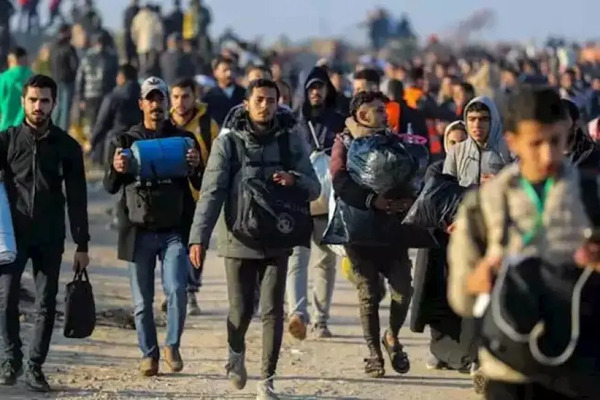
WFP: Humanitarian needs are enormous as displaced return to the north

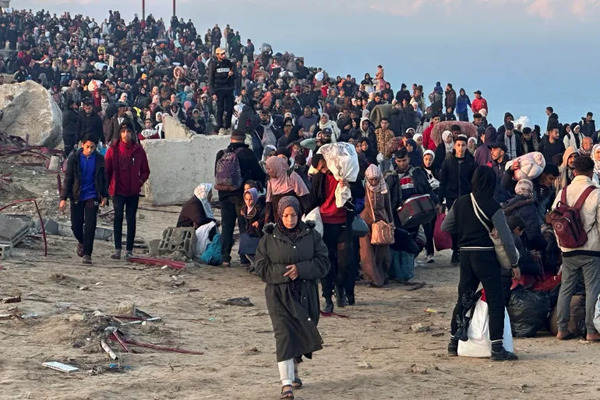
The World Food Programme said that "humanitarian needs in the Gaza Strip are enormous, amid the return of displaced Palestinian families to their areas in the north," after about 15 months of Israeli genocide.


The program stressed, in a post on its account on the "X" platform, yesterday evening, that "any hope for the recovery of the Gaza Strip requires a comprehensive humanitarian response with the cooperation of all UN agencies."


“As displaced Palestinian families return to northern Gaza, our teams are working to set up more distribution points to provide much-needed food,” he added.


The UN programme described the humanitarian needs in Gaza as "enormous".


He also published a video clip showing hundreds of displaced Palestinians walking towards the north of the Strip amidst destroyed buildings.

PALESTINE

Mon 03 Feb 2025 8:29 am - Jerusalem Time

Trump: Middle East talks progressing

US President Donald Trump said talks with Israel and other countries on the Middle East were "progressing."


"Discussions on the Middle East with Israel and various other countries are progressing; (Israeli Prime Minister Benjamin) Netanyahu is coming in on Tuesday, and I think we have some big meetings scheduled," Trump told reporters.


Earlier on Sunday, Prime Minister Netanyahu arrived in Washington, D.C., ahead of his meeting with Trump on Tuesday.


Netanyahu is scheduled to meet on Monday with Steve Witkoff, Trump's envoy to the Middle East.


During Monday's meeting with Witkoff, the two sides are expected to discuss extending the first phase of the ceasefire and hostage release agreement with Hamas or moving forward to the second phase. Israel is scheduled to withdraw from the Philadelphi corridor on the 50th day of the agreement that began on January 19.


Trump will meet with Netanyahu to discuss the modus operandi of the negotiations on Tuesday in a formal meeting and then at a White House dinner to discuss the modus operandi of the negotiations.


On Sunday morning, before leaving for Washington, Netanyahu told reporters: “The fact that this will be President Trump’s first meeting with a foreign leader since taking office is very significant. I think this is a testament to the strength of the Israeli-American alliance. It is also a testament to the strength of our personal friendship; friendship and cooperation have already yielded important results for the Middle East, including the historic Abraham Accords that President Trump led, which brought four historic peace treaties between Israel and its neighbors.”


He pointed out that "in this meeting, we will deal with the critical issues facing Israel and our region: victory over Hamas, achieving the release of all our hostages, and dealing with the Iranian terror axis and all its components, which threatens the peace of Israel, the Middle East, and the entire world."


Netanyahu claimed: “The decisions we made in the war really changed the face of the Middle East. Our decisions and the courage of our soldiers redrawn the map and I believe that working with President Trump we can redraw it even more, for the better. I believe we can strengthen security, expand the circle of peace and bring about a wonderful era of peace through strength.”


The Financial Times published a report on Sunday asking whether Israeli Prime Minister Netanyahu would stop the war in Gaza. It said he must make the decision before he arrives in Washington and meets with President Donald Trump.


The newspaper said that Netanyahu has refused to discuss his vision for the future of Gaza throughout the 16 months of war. The discussion in his meeting with Trump is expected to focus on whether the temporary truce agreed to last month - and scheduled to continue for another four weeks - will become a permanent ceasefire.


The newspaper points out that publicly, Netanyahu said that he was committed to the two goals he set at the beginning of the war: destroying Hamas in the Gaza Strip, and returning all the prisoners captured during the movement's attack on October 7, 2023, by military force.


But it is clearer than ever that these two goals are incompatible. No sooner had the fighting ended, which marked the beginning of an operation that would eventually bring back 33 prisoners, than Hamas fighters emerged to reassert control over the coastal area, displaying their weapons and holding mass rallies.


It was a shocking reminder to Netanyahu and Israel that the “complete victory” that Netanyahu had always promised, despite Israel’s brutal war on the besieged Strip, which killed at least 47,000 Palestinians according to local authorities, was an illusion.


The newspaper quotes former intelligence official Michael Milstein as saying that the war "did not lead to the collapse of Hamas or the return of the prisoners," adding that Israel "achieved tactical, not strategic, achievements. Hamas remains the dominant ruler in Gaza, point below zero."


International mediators, led by the United States, are set to begin talks next week on the details of the second phase of the ceasefire. It is expected to be a tough negotiation to secure the release of dozens more prisoners and get the warring parties to agree to a full ceasefire. Netanyahu will soon need to decide whether he is willing to see the deal through. On the one hand, he will have to take into account the mercurial Trump, his most important international patron, who forced him to accept the initial 42-day truce and focus on the return of the prisoners as a primary goal.

PALESTINE

Mon 03 Feb 2025 8:23 am - Jerusalem Time

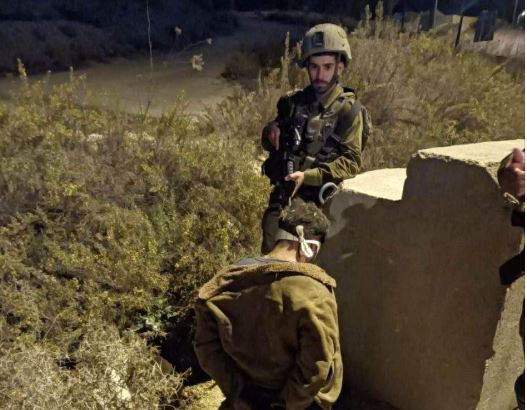
Israeli occupation launches an arrest campaign in the West Bank and Jerusalem

This morning, Monday, the Israeli occupation forces launched an arrest campaign in the West Bank and occupied Jerusalem.


In Nablus, the western part of the city was raided and the citizens: Tamer Al-Zaher and Abdul Rahman Hassan Awda were arrested after raiding their homes and searching them on Asira Street.


In Hebron, the Prisoners Club reported the arrest of 4 young men after raiding their homes in the town of Halhul. They are: Muhammad Rateb Abu Ramishan, Anas Muhammad Al-Bu, Ayman Mujahid Masalma, and Malik Al-Baba.


In occupied Jerusalem, the occupation forces arrested a citizen and his two sons during their raid on the town of Silwan, south of Al-Aqsa Mosque, while raiding several homes and ransacking their contents in the central neighborhood of Silwan, whose owners were identified as the Muhaisen family.


They also arrested a young man after storming his home in the town of Kafr Aqab, north of Jerusalem, while an occupation army force stormed the Shuafat camp, northeast of Jerusalem.


In Ramallah, the occupation forces arrested: Nidal Hayel Hamayel, Ghassan Fawzi Ba’irat, and Samer Ahmed Shawkat Amrah, after raiding their homes, searching them, and tampering with their contents in the village of Kafr Malik.


PALESTINE

Mon 03 Feb 2025 8:21 am - Jerusalem Time

Demolition sequence!

In geometric progression, the mass extermination of the popular housing in Jenin camp is taking place, in a scene in which the killers are reliving scenes that the memory, riddled with wounds, has not and will not recover from for fifteen months in the Gaza Strip.


Shocking and painful are the scenes emerging from the neighborhoods of Al-Damj, Al-Hawashin, Mahyoub, and Al-Assir, in the camp afflicted by killing, destruction, and displacement, after all of its fifteen thousand residents left for neighboring villages and towns.


It is a systematic and declared policy of targeting the camps, considering them the safe havens and incubators of dreams and hopes passed down from generation to generation, after the ban on UNRWA, the bearer of seals, came into effect a few days ago.


The right will not be lost by the destruction of brick houses, because it resides in the depths of hearts, and is guarded by the eyelashes of eyes. It is not a house that is demolished, nor a street that is dug up, nor a residential block that is blown up. Rather, it is the bridge of return that Fairuz’s throat rang out with during the June setback, and it is a daily journey that successive generations continue to take to the sad orange groves, the vineyards, and the fields of figs and olives.


We know that the occupation is criminal and murderous, and has announced plans to implement them while waiting for suitable pretexts. This is a call to all national forces to withdraw those pretexts, which Netanyahu is selling to a complicit world, which has remained silent about the holocaust in Gaza, during which crops and people were destroyed, and his partner in the genocide bill asked those who were killed and whose homes were destroyed to emigrate from their homeland.


Let us be careful to re-evaluate and re-evaluate, and conduct reviews, in the face of an enemy that has reached the peak of madness, that does not value principles, morals, and laws, and that exploits our division and uniqueness in our choices, in order to attack us... for life is the strongest weapon to strengthen us in the face of what surrounds us.

PALESTINE

Mon 03 Feb 2025 8:16 am - Jerusalem Time

Tuesday's meeting between Trump and Netanyahu.. Will the region go to cool down or to inflame?

Dr. Bilal Al-Shobaki: The main theme of the Trump-Netanyahu meeting is to reduce the pace of military escalation and increase escalation in the event of political conflict

Akram Atallah: Netanyahu-Trump meeting is dangerous due to its potential impact on the future of the Palestinian cause and redrawing the map of regional alliances

Muhammad Abu Allan Daraghmeh: Ambiguity surrounds the fate of the region between escalation and calm after the expected meeting between Trump and Netanyahu, given the complexities of the regional scene

Dr. Qusay Hamed: Netanyahu will bring internal and external pressures to the White House, and his meeting with Trump aims to shape the new shape of the region

Awni Al-Mashni: Trump will try in one way or another to impose his position on Netanyahu in light of the strong American desire to end wars in the Middle East

Yasser Manna: Netanyahu may seek a more flexible US position that allows Israel “freedom of military action” inside Gaza even after the war stops


All eyes are on the upcoming meeting between US President Donald Trump and Israeli Prime Minister Benjamin Netanyahu tomorrow, Tuesday, as a pivotal meeting in determining the course of regional events, especially fears that Netanyahu will return to ignite the war in the Gaza Strip and thwart the ceasefire.


In separate interviews with “I”, writers, political analysts, specialists and university professors expect that this meeting, with all its complexities, is a decisive step in redrawing the map of regional alliances and determining the future of the Palestinian cause.


They believe that the meeting will focus on reducing the pace of direct military escalation, while increasing political and economic pressure on the Palestinians, especially in the Gaza Strip, where efforts will focus on using non-military pressure tools, such as managing the flow of humanitarian aid and reconstruction, as a means of influencing the management of the Strip, but they warn that Netanyahu will convince Trump to ignite the war on Gaza again.


They point out that in the West Bank, there appears to be an American “green light” to continue Israeli operations, which are more settlement and political in nature than purely military, with the aim of imposing new facts on the ground, reflecting an Israeli strategy to strengthen control over the region.


On the regional level, writers, analysts, specialists and university professors explain that the meeting will raise sensitive issues, such as: Iranian threats and the issue of normalization with some Arab countries, especially Saudi Arabia, in addition to the issue of displacing the residents of Gaza.


Pressure on the Palestinians will take many forms.


Dr. Bilal Al-Shoubaki, a professor of political science at Hebron University, expects that the upcoming meeting between Israeli Prime Minister Benjamin Netanyahu and US President Donald Trump will have the broad title of “reducing the pace of military escalation while increasing escalation in the event of political conflict.”


Al-Shoubaki points out that pressure on the Palestinians will take many forms, not necessarily military, especially in the Gaza Strip, where efforts will focus on political, economic and security aspects.


Al-Shoubaki explains that the nature of the escalation will differ according to the geographical area. While efforts will be made to reduce tensions on fronts such as Gaza and Lebanon, the focus will be on the West Bank, where there appears to be an American “green light” to continue Israeli operations there.


These operations, according to Al-Shobaki, are not of a purely military nature, but rather an attempt to impose new facts on the ground through operations of a settlement and political nature.


In the Gaza Strip, Al-Shobaki expects the escalation to take a different form, as the US administration will use political and economic pressure tools instead of military ones.


Among these tools, according to Al-Shoubaki, is managing the flow of humanitarian aid and reconstruction, which are major pressure points through which those in charge of managing the sector can be influenced, regardless of their political identity.


He points out that endless American support for Israel may strengthen its negotiating position and force it to adopt a more political and investment-oriented approach to dealing with the Palestinian issue, rather than relying on military solutions.


Al-Shoubaki believes that changing the leadership of the Israeli negotiating delegation in the second phase of the deal, from Mossad to other parties, indicates that Israel has begun to deal with the Palestinian issue with the logic of political investment more than seeking to achieve military and security goals. However, voices inside Israel are still rising to resume the war on the Gaza Strip, which makes the scene complex and unclear.


Agenda of the upcoming meeting


As for the agenda of the meeting between Trump and Netanyahu, Al-Shoubaki believes that it will include several main points, namely: strengthening the Israeli negotiating position in the second and third stages of the current deal, discussing regional threats, especially from Iran, agreeing on a way to deal with the Iranian regime, giving Israel the green light to continue expansion and annexation in the West Bank, including Jerusalem, establishing new facts in Syria and Lebanon, and raising the issue of normalization in the region clearly.


Al-Shoubaki points out that there is a new file that will be raised during the meeting, which is the issue of displacement from the Gaza Strip, which is the idea that Trump is promoting, as this issue overlaps with the positions of countries such as Egypt and Jordan, which have so far rejected this idea.


Al-Shoubaki points out that this step may spark a popular movement in these countries, especially in Egypt, where signs of a popular movement against these proposals have begun to appear.


Al-Shoubaki believes that the meeting between Trump and Netanyahu will be pivotal in determining the course of events in the region, as Trump will try to balance his support for Israel with his desire to ease tensions, while Netanyahu will seek to strengthen his negotiating position and achieve political and security gains. However, the scene remains complex and unclear, especially in light of the rapid regional developments.


Deep political implications that reflect the strength of the relationship between the two parties


Writer and political analyst Akram Atallah believes that the upcoming meeting between Israeli Prime Minister Benjamin Netanyahu and US President Donald Trump carries deep political implications that reflect the strength of the relationship between the two parties.


Atallah points out that the nature of the invitation that Trump extended to Netanyahu, saying that he was “honored to receive the first foreign leader,” carries important protocol implications in American politics, reflecting the special nature of the relationship between the two leaders.


Atallah believes that the danger of this meeting lies in its sensitive timing, especially in light of the deteriorating conditions in the Gaza Strip.


He expressed his fear that Netanyahu would be able to convince Trump of his ultimate vision for the future of Gaza, which is summed up in the project of forced displacement of the Strip’s residents.


According to Atallah, this project has the support of extreme right-wing forces within the Israeli government that agree with Netanyahu on this option, as he is one of its most prominent promoters.


Atallah believes that the agenda of the meeting between Netanyahu and Trump will include discussing the Hamas file, with a focus on ways to remove it from the Gaza Strip, whether through peaceful means or through military escalation. This scenario raises the possibility of a renewed war on the Strip, especially if Netanyahu is able to convince Trump of the need to continue with this approach.


On the regional level, Atallah confirms the existence of an American-Israeli consensus on re-engineering the region in line with Israeli interests.


Atallah points out that Israel, with the support of the United States, has succeeded in creating a favorable regional environment that it now seeks to exploit to enhance its regional presence, which may include pushing new Arab countries towards normalization with Israel.


Atallah describes the meeting between Netanyahu and Trump as perhaps one of the most dangerous meetings that will bring together two American and Israeli leaders, given its potential impact on the future of the Palestinian cause and the redrawing of the map of regional alliances.


Escalation in the West Bank may be a prelude to its reoccupation


The writer and expert on Israeli affairs, Muhammad Abu Allan Daraghmeh, believes that the direction in which events in the region are heading, whether towards calm or escalation after the Trump-Netanyahu meeting, is unknown, given the complexities of the regional scene, which includes several arenas, including Gaza, the West Bank, Lebanon, and the newly occupied Syrian territories, as each arena carries its own data, which makes the general scene intertwined and unclear.


In the West Bank, Draghmeh believes that things are heading towards further Israeli escalation, as areas such as Tubas, Jenin, Tulkarm and Nablus are witnessing repeated military operations and raids by the occupation forces.


These operations, according to Draghmeh, may be a prelude to a complete reoccupation of the West Bank in one form or another, especially in light of the international silence and the lack of sufficient pressure to stop these actions.


As for the Gaza Strip, Draghmeh explains that matters are linked to the seriousness of Trump in his quest to stop the war, as Trump may seek to stop the war for two main reasons: the first is to return the Israeli prisoners held in Gaza, and the second is to implement his new vision that calls for the displacement of the residents of the Gaza Strip to countries such as Jordan, Egypt, Indonesia and Albania, under the pretext of rebuilding the Strip.


He explains that Trump wants to help Netanyahu achieve the declared war goals of eliminating Hamas's military and political capabilities and returning the Israeli prisoners.


According to Draghmeh, a complete cessation of the war, if it happens, will have major repercussions on Israeli internal affairs, as it could lead to the fall of Netanyahu's government if the latter decides to agree to a cessation of the war.


Draghmeh explains that Netanyahu's government will have two options if the war stops: either go to early elections, or change the composition of the current government to pass the prisoner exchange deal and then go to elections.


However, Draghmeh explains that the most likely option is to go to early elections, unless the Israeli opposition agrees to join the government until the elections scheduled for October 2026.


Things are moving towards a solution in Lebanon


In Lebanon, Draghmeh believes that things are heading towards a solution, as there are no indications of a major escalation at the present time. As for Syria, the Israeli occupation of Syrian territory does not seem to raise major objections from the current Syrian regime, the US administration, or the Arab countries, which means that the situation will remain as it is.


As for the agenda of the Trump-Netanyahu meeting, Draghmeh indicates that it will be long and complex, as the two parties will try to shape the Middle East in the coming period. Among the main topics that will be discussed are: the prisoner exchange deal and the ceasefire in the Gaza Strip, the Iranian file and whether an agreement will be reached with Iran or a joint military strike will be resorted to, the issue of normalization between Israel and the Kingdom of Saudi Arabia, the expansion of the Abraham Accords, American arms shipments to Israel, and the issue of Israeli annexation of the West Bank.


Draghmeh believes that the issue of displacing the residents of the Gaza Strip will also be on the agenda, especially in light of the American promotion of this idea.


He points out that Israeli policy in the West Bank, including military operations, raids, killings and arrests, will not be on Trump's agenda, which means that this issue will remain outside the main discussions.


Draghmeh points out that this meeting is one of the most important meetings in the current period, as Netanyahu will be the first foreign leader that Trump will receive in the White House.


Draghmeh believes that Trump’s invitation to another leader after Netanyahu, whether it is the Saudi king, the Jordanian king, the Egyptian president, or the Emir of Qatar, will be an indication of American priorities in regional policy during the coming period.


4 main files to agree on the form of regional change


Professor of Political Science at Al-Quds Open University, Dr. Qusay Hamed, confirms that the upcoming meeting between Trump and Netanyahu, scheduled for tomorrow, Tuesday, will focus on four main files that will be the focus of discussion between the two parties, aiming to agree on the form of regional change.


Hamed points out that Netanyahu will bring with him to Washington internal and external pressures, which makes this meeting pivotal in determining the course of regional events, especially with regard to the Gaza Strip and normalization with Saudi Arabia.


According to Hamed, the war on the Gaza Strip is the most important file that will be discussed, especially since there is a difference in viewpoints between the two presidents. Trump wants to end the war in Gaza, not for humanitarian reasons, but to achieve his broader regional project, which begins with normalization with Saudi Arabia, while Netanyahu is trying to convince him of the necessity of continuing the war on the Strip, even if it is not necessarily in the same form as it was in the past.


Hamed points out that Netanyahu wants to decide the “day after” in Gaza, ensuring that Hamas does not return to power, determining the mechanism for managing the Strip after the war, and that the Palestinian Authority in its “current form” has no role in managing Gaza.

The second file, according to Hamed, is launching a military strike against Iran, as Netanyahu will try to convince Trump of the necessity of taking military measures against Iran, especially in light of the escalating tensions in the region.


He believes that this file will be pivotal in strengthening the Israeli-American alliance, especially in the face of growing Iranian influence.


Hamed points out that the third file that Netanyahu will raise is the file of normalization with Saudi Arabia, as Netanyahu realizes that the main focus of the Trump administration is to move quickly towards normalizing relations with Saudi Arabia, which the Americans consider to be the key to regional change, weakening Hamas, and eliminating the Iranian nuclear project.


Regarding the fourth file, Hamed points out that Netanyahu will bring with him to Washington great internal pressure, especially in light of the threats of the Israeli Finance Minister, Bezalel Smotrich, to bring down the government if Netanyahu agrees to go to the second stage of the agreement with Hamas and end the war on the Gaza Strip. It is not unlikely that Netanyahu will seek guarantees of personal intervention from Trump to prevent the downfall of his government in light of the threats to end his political future.


Hamed expects Trump to make several promises to Netanyahu, including facilitating the annexation process in the West Bank, undermining Hamas’ rule, and ensuring that it does not return to power in Gaza. Trump may also make promises to personally intervene to preserve Netanyahu’s government coalition, especially in light of the internal pressures he is facing.


He stresses that the importance of this meeting lies in its timing, as it comes before Trump's expected visit to Saudi Arabia, which will be preceded by a meeting with Jordanian King Abdullah.


Hamed believes that these meetings will determine the course of events in the region, Gaza, and normalization with Israel, while stressing that Netanyahu will try to maneuver between internal and external pressures to achieve his goals.


Exceptional importance of the visit at a very sensitive time


Writer and political analyst Awni Al-Mashni explains that the visit of Israeli Prime Minister Benjamin Netanyahu to the United States to meet with Trump tomorrow, Tuesday, is of exceptional importance, as the visit comes at a very sensitive time for both Washington and Tel Aviv, as the United States is trying to reshape the political scene in the region, while Israel faces a critical crossroads in its domestic and foreign policies.


According to Al-Mashni, from the American point of view, the visit is part of the efforts of the administration of President Donald Trump to reshape events in the Middle East, in line with Trump’s promises to end wars in the region. According to Al-Mashni, Trump seeks to consolidate the ceasefire on both the Lebanese front and in the Gaza Strip, and to transform the current truce into a permanent ceasefire. This step comes within the framework of Trump’s clear policy aimed at reducing conflicts in the region, which contradicts the desires of Netanyahu, who is facing great domestic pressure.


Al-Mashni stresses that the visit is of utmost importance to Israel, which is facing a complex situation on more than one level. On the domestic front, Netanyahu is facing a severe political crisis, as opinion polls indicate a decline in his popularity and that of his Likud party in the Israeli political scene. The image conveyed by the media about the war in the Gaza Strip, which depicts Hamas as the victorious party and the Israeli army as the defeated party, is increasing the pressure on Netanyahu, who is seeking to change this image in any way possible.


Al-Mashni believes that Netanyahu's visit to Washington carries somewhat contradictory goals. While the relationship between Trump and Netanyahu appears to be a strong alliance, each of them comes from a different position. Trump seeks to consolidate the ceasefire and transform it into a permanent truce, while Netanyahu needs to change the negative image that has formed about Israel following the recent war in Gaza. Therefore, this visit may be the opposite of what many expect, as it expresses a meeting between two parties with different goals, even if they are historically allied.


He points out that Netanyahu may try to use this visit to blackmail the US administration to obtain concessions on other issues, the most prominent of which is the Iranian file, as Netanyahu may demand military strikes against Iran or US support for normalization with Saudi Arabia and the Arab countries. Netanyahu may also seek US approval to continue settlement and annexation in the West Bank, an issue that raises great controversy on the international scene.


Al-Mashni points out that the US administration faces major challenges in dealing with Netanyahu, as it cannot ignore the Israeli position, but at the same time it cannot allow him to disrupt its efforts to achieve stability in the region.


According to Al-Mishni, Trump will try to impose his position on Netanyahu in one way or another, especially in light of the strong American desire to end wars in the Middle East.


He explains that US-Israeli relations are not governed by this visit alone, but there are other variables that play a major role, especially with regard to the situation in Syria. The US administration has expressed a desire to withdraw from Syria, which affects the Israeli position, which depends on US support in confronting regional threats.


Al-Mashni believes that Netanyahu's visit to Washington will lead to the consolidation of the ceasefire on both the Lebanese front and Gaza, but it will also be an opportunity for Netanyahu to try to achieve political gains at the expense of the American position. However, the final settlement will express the American position, which Israel cannot ultimately reject.


Features of the political and security future in the Gaza Strip and the region


Writer and expert on Israeli affairs Yasser Manna expects that the upcoming meeting between US President Donald Trump and Israeli Prime Minister Benjamin Netanyahu will address several fundamental issues that will determine the political and security future of the Gaza Strip and the region as a whole.


According to Manaa, the most prominent of these issues is the issue of stopping the war on Gaza, and what is known as the “day after” for the Strip, where the two parties will discuss possible scenarios for the future of Gaza after the end of military operations.


According to Manaa, one of the main points of the meeting will be to discuss ways to remove Hamas from power in Gaza, whether by imposing a new alternative authority or through security and political arrangements that ensure a change in the status quo. The possibility of resuming military operations against Gaza may also be discussed if the calming efforts falter or if Israeli goals are not fully achieved.


In this context, Manna believes that Netanyahu may seek to extract a more flexible American position that allows Israel “freedom of military action” inside Gaza even after the war stops, in order to ensure that Hamas does not regain its military or administrative capabilities.


As for the normalization file, Manaa believes that it will occupy a central position in the discussions, especially since the US administration considers the success of the normalization process with the Arab countries a strategic priority for it. Achieving a sustainable calm in Gaza is a major condition for the success of the normalization project, as Washington believes that the continuation of the war hinders progress in this file and negatively affects the chances of expanding the circle of Arab countries involved in the normalization process with Israel. Therefore, the United States may seek to pressure Israel to commit to the calm, despite the opposition of some Israeli political and military circles to this approach.


In addition, Manaa expects the meeting to address the thorny issue of the displacement of Palestinians, whether from the Gaza Strip or the West Bank, and ideas may be put forward regarding finding new demographic solutions, such as settling Palestinians in neighboring countries, an idea that has previously sparked widespread controversy and categorical rejection from many Arab and international countries. Discussions may also be held regarding the “alternative plan” related to the management of Gaza if the displacement option is ruled out.


Manna points out that the settlement file and the situation in the West Bank will be strongly present in the meeting, as Israel seeks to establish new facts on the ground, taking advantage of the world's preoccupation with what is happening in Gaza.


He points out that the continued expansion of settlements, the escalation of confrontations between Palestinians and settlers, in addition to Israeli policies in Jerusalem, are all issues that may be raised in the context of the meeting, especially with the escalation of internal pressure on Netanyahu from the far-right parties to push this agenda forward.


Manaa believes that the meeting will be of great importance, as it will largely determine the direction of the situation in Gaza and the region, whether by strengthening the path of calm and consolidating its agreements, or pushing towards more escalatory options according to the political and military calculations of both Israel and the United States.


PALESTINE

Mon 03 Feb 2025 8:05 am - Jerusalem Time

Updated: Israeli occupation continues its aggression on the West Bank governorates

Today, Monday, the Israeli occupation forces continued their aggression on the West Bank governorates, including Tubas, Tulkarm and Jenin.


In Tulkarm, the occupation forces continue their aggression against the city and its camp, for the eighth consecutive day, amidst the deployment of more military vehicles, raiding homes, vandalizing them, forcing their residents to flee, and arresting young men.


At dawn today, the occupation forces raided the homes of citizens in the Ezbet al-Tayah suburb, south of Tulkarm city, and arrested five young men: the brothers Samer, Mu'ayyad, and Iyad Matar, Ahmed Balidi, and Karim al-Kharouf. They also arrested the citizen Muhammad al-Fakhouri from his home in the city.


The occupation forces continue to besiege the Martyr Thabet Thabet Governmental Hospital and the Israa Specialized Hospital, obstructing the work of ambulances and their medical crews, and subjecting them to search and field investigation, while turning the surrounding buildings into military barracks and sniper locations.


The occupation forces are still sending more of their vehicles to the city and its camp from the "Tsna'oz" military camp west of Tulkarm, and are deploying large numbers of infantry patrols in the streets, neighborhoods, and in the middle of the vegetable market, combing and searching between the houses and alleys, and harassing the citizens.


The occupation forces escalated their violations against the citizens of the city and its camp, through a series of attacks that included raiding homes, expelling their owners, vandalizing and stealing their contents, and blowing up and destroying a number of them, in addition to restricting movement, while seizing commercial and residential buildings and turning them into military barracks and places for their snipers.


Yesterday evening, the occupation forces destroyed a number of vegetable stalls in the middle of Tulkarm market, located on the sides of the sidewalks, terrorizing their owners and trying to crush them.


In Tulkarm camp, the occupation forces continued to deploy large numbers of infantry soldiers in all its neighborhoods and alleys, raid homes and expel their residents, seize tall buildings and turn them into sniper platforms and fire at citizens, which led to the injury of a citizen (40 years old) by the bullets of the sniper of the occupation soldiers stationed inside one of these buildings.


The occupation continues the large-scale evacuation of citizens from their homes in the camp, extending to the Al-Ghanem and school neighborhoods, in addition to the club, Al-Shuhada, Al-Matar, and Abu Al-Foul neighborhoods, forcing them to leave the camp towards the city.


In Tubas, the occupation forces continue their military aggression and siege on Al-Far'a camp and the town of Tamoun, south of Tubas, for the second day in a row.


Since the beginning of the incursion, the occupation forces have begun to bulldoze the roads and infrastructure leading to Al-Far’a camp, in addition to closing all its entrances with earthen barriers, in addition to raiding homes around the camp, forcing their residents to flee, and turning them into military barracks.


These forces also raided citizens' homes on the outskirts of the town of Tamoun, forced them to flee, and told them not to return for ten days.


The occupation bulldozers also destroyed a water pipeline between the town of Tamoun and the village of Atouf, in addition to closing the road connecting the two areas with earth mounds.


Meanwhile, the director of the Prisoners Club in Tubas, Kamal Bani Odeh, reported that the occupation arrested ten citizens from Tamoun and Al-Far’a camp.


In Jenin, the occupation continues its aggression on the city of Jenin and its camp for the fourteenth consecutive day, leaving 25 martyrs, dozens of injuries, arrests, and the demolition of dozens of homes, amidst a large displacement operation that affected 15 thousand citizens.


Yesterday, the elderly man Walid Lahlouh was martyred by the occupation forces’ bullets at the entrance to Jenin camp, while a citizen was injured by bullets in the thigh in the Al-Jabariyat neighborhood of the city.


The occupation forces also simultaneously blew up about 20 buildings in the eastern part of Jenin camp, after rigging them with explosives, causing damage to some sections of Jenin Governmental Hospital, without recording any injuries.


The occupation forces notified the family of the young man Qusay al-Saadi that their house in the eastern neighborhood of the city of Jenin, which consists of three floors, would be bombed if his son Qusay did not surrender, claiming that he was wanted by the occupation.


Two journalists were also attacked while covering the situation on the ground in Jenin.


The occupation continues to send reinforcements to the city of Jenin camp from the Jalameh military checkpoint, while its bulldozers continue to destroy homes in the Al-Damj neighborhood.

PALESTINE

Sun 02 Feb 2025 10:59 pm - Jerusalem Time

President requests emergency Security Council session to stop Israeli aggression on West Bank

The President of the State of Palestine, Mahmoud Abbas, requested an urgent and emergency session of the UN Security Council to stop the ongoing Israeli aggression against the Palestinian people, the occupation forces’ destruction of entire residential blocks in the Jenin and Tulkarm camps, the bombing of dozens of homes and forcing citizens to flee their homes in Tamoun and the Far’a camp in Tubas, and the systematic destruction of the infrastructure, in addition to the policy of killing that led to the martyrdom of dozens of citizens, the wounding of hundreds, the arrest of thousands, the terrorizing of settlers, and the burning of citizens’ homes and property, all of which aim to displace our people from their land and homeland.

The presidency also called on the UN Security Council to intervene urgently and assume its responsibilities to provide international protection for the Palestinian people, and to pressure the occupying state to stop its serious crimes, including the displacement of Palestinian citizens and the implementation of the policy of ethnic cleansing, which is considered a war crime and genocide according to international law.

The presidency called on the US administration to intervene immediately and force the occupying state to stop the destruction and displacement operations, to prevent escalation and tension resulting from this policy, the destructive effects of which will be reflected on the entire region.

The presidency indicated that the occupation army is completing its plans that it started in the Gaza Strip to displace the Palestinian people, by blowing up homes and residential neighborhoods, with the aim of imposing its rejected and condemned plans, which our people will meet with steadfastness on their land in defense and preservation of their history and sanctities, and it is capable of thwarting these displacement plans, just as it has previously thwarted all projects that targeted their struggle, legitimate rights and constants from which they will not deviate.

The presidency warned, once again, of the seriousness of these destructive actions carried out by the occupation forces, and their grave repercussions on the Palestinian people and the entire region, which will not achieve peace and security for anyone.

She stressed that our Palestinian people will remain steadfast on their land, and will thwart these plans with their steadfastness.

PALESTINE

Sun 02 Feb 2025 10:57 pm - Jerusalem Time

West Bank: Israeli occupation threatens to bomb a three-storey house in Jenin city

Today, Sunday, the Israeli occupation forces notified the family of the young Palestinian Qusay Al-Saadi that their house in the eastern neighborhood of the city of Jenin would be bombed.


Local sources said that the occupation forces informed Qusay al-Saadi's father of their intention to bomb their three-story house in the eastern neighborhood of the city, if his son Qusay did not surrender, under the pretext that he was wanted by the occupation.

PALESTINE

Sun 02 Feb 2025 10:55 pm - Jerusalem Time

Red Crescent rescues an elderly man after 7 days of Israeli occupation siege of Tulkarm camp

This evening, Sunday, the Red Crescent crews were able to rescue an elderly man from Tulkarm camp, after he had been inside his home for seven days without water or food, due to the ongoing Israeli aggression.


Sources in the Red Crescent Society in Tulkarm reported that its crews, headed by the society’s director, Manal Al-Hafi, were able to reach the elderly man, Abdul Karim Al-Awfi, in his seventies, inside his home in the camp and save his life.


The association indicated that the elderly man was transferred to the Shahid Thabet Thabet Governmental Hospital in the city, and then to the home of one of his relatives.

PALESTINE

Sun 02 Feb 2025 8:09 pm - Jerusalem Time

Settlers assault Palestinian man in northern Jordan Valley

Settlers attacked a Palestinian in Ein al-Hilweh in the northern Jordan Valley on Sunday evening.


Wafa quoted local sources as saying that a number of settlers raided the homes of citizen Muhammad Adel Daraghmeh and assaulted him.


The area frequently witnesses attacks by settlers under the protection of the occupation forces, according to WAFA.

PALESTINE

Sun 02 Feb 2025 6:44 pm - Jerusalem Time

Israeli police arrest 432 Palestinian workers inside the 1948 territories

Today, Sunday, the Israeli police arrested 432 Palestinian workers inside the 1948 territories.

Local sources reported that the Israeli police launched a wide-scale campaign of raids throughout the 1948 territories, during which they arrested 432 workers from the West Bank on the pretext of "residing without permits."

The Israeli police continue to pursue Palestinian workers on the pretext of "residence without permits."

ARAB AND WORLD

Sun 02 Feb 2025 5:06 pm - Jerusalem Time

Second phase of truce negotiations to begin Monday in Washington between Witkoff and Netanyahu


The second phase of the ceasefire negotiations between Hamas and Israel will begin on Monday, as the Israeli Prime Minister's Office announced that Benjamin Netanyahu will meet in Washington on Monday with Steve Witkoff, the US President's envoy in the US capital. This comes after Netanyahu threw the negotiations, which were supposed to begin on Monday in the Qatari capital, into chaos and uncertainty, declaring that he would postpone negotiations with mediators until after his return from Washington.


All eyes are on Netanyahu's meeting with US President Donald Trump on Tuesday at the White House, in what has been described as a crucial meeting for the future of the deal, and perhaps the future of the Gaza Strip, the future of Hamas, and the future of Netanyahu's coalition as well.


Since the first day, Netanyahu has been evading this deal due to his unwillingness to stop the war, in order to remain in power, and in the hope of toppling the Islamic Resistance Movement (Hamas), under the slogan of “absolute victory,” and avoiding the confusing complications that threaten the cohesion of his most right-wing and extremist ruling coalition, and threaten his political future, and in line with the desires of his political partners who are greedy to occupy the Strip and resettle it.


Netanyahu arrived in the United States on Sunday, becoming the first foreign leader invited by Trump to meet him after taking over the White House two weeks ago (January 20, 2025), in what was interpreted as a reward for Netanyahu for accepting pressure from Trump and his envoy, Saif Witkoff, to cease fire on December 15, and to activate it on the 19th of the same month.


The implementation of the first phase, which began a day before Trump took office, was a resounding success, as Hamas was able to fulfill its commitment to hand over Israeli prisoners with discipline and professionalism, while the Israeli occupation authorities continued to release Palestinian prisoners in crude, chaotic and humiliating ways. With the end of the fourth round of prisoner exchanges between Israel and Hamas, as part of the first round of the truce in the Gaza Strip, Israel is preparing to resume indirect negotiations with Hamas regarding the second phase of the agreement, starting Monday in Washington.


Netanyahu's office announced the freezing of the Doha talks until after his meeting with Trump, and the launch of bilateral talks on Monday between him and the Trump administration, following the success of the fourth round of Palestinian prisoner exchanges and Israeli detainees, which witnessed the release of 3 hostages in exchange for more than 180 Palestinian detainees from Israeli prisons on Saturday.


The three-stage truce agreement calls for a cessation of hostilities and an Israeli withdrawal from populated areas. The first stage will last for six weeks and includes the release of 33 Israeli detainees from Gaza in exchange for about 1,900 Palestinian detainees.


It is noteworthy that the agreement on the first phase stipulates that the parties will begin talks on the second phase after 16 days have passed since the start of the current phase, which will last 42 days.


While the details of the second and third phases are still unclear, former US President Joe Biden has previously indicated that the transition to the second phase will be based on the success of the first phase of the agreement.


The former president also stressed that "Israel will negotiate, over the next six weeks, the necessary arrangements to move forward to the second stage, which will represent the decisive end to the war."


For his part, the Qatari Prime Minister confirmed, in previous statements, that the second and third phases of the agreement will be worked on to complete their provisions, "during the implementation of the first phase."


"When Phase Two begins, there will be an exchange of the remaining surviving hostages, including male soldiers, and all remaining Israeli forces will withdraw from Gaza. The temporary ceasefire will then become permanent," Biden said.


Biden stressed that the ceasefire should continue as long as discussions continue on moving from phase one to phase two, even if they last more than 6 weeks.


The second phase is of exceptional importance, as it represents a turning point in the course of the crisis that has been ongoing since December 7, 2023, and is expected to include the release of all remaining living hostages, including men under the age of fifty and soldiers.


At the same time, Palestinian prisoners will be released en masse, in conjunction with the continued withdrawal of Israeli army forces from the Gaza Strip. The temporary ceasefire will be transformed into a permanent one.


While the third phase is supposed to allow for the reconstruction of the Gaza Strip and the definition of a model of governance for the Palestinian sector.


The mediation countries aspire to make the stages of the announced agreement a success, as Qatar and Egypt, with direct American support, led intensive discussions with the Israeli and Palestinian sides to advance the negotiations, which have faltered more than once.


Netanyahu's office said in a statement Saturday that he agreed with Witkoff that negotiations on the second phase of the hostage deal "will begin when they meet in Washington next Monday."


Netanyahu hopes to receive a package of gifts from Trump, including the right to return to war to please his right-wing partners, the right to expand settlements, annex parts of the West Bank, an unprecedented influx of American weapons, and pressure on Saudi Arabia to normalize relations with Israel.

PALESTINE

Sun 02 Feb 2025 3:49 pm - Jerusalem Time

Israeli occupation blows up a number of houses in Jenin camp

Today, Sunday, the Israeli occupation forces blew up a number of buildings in Jenin camp.


According to local sources, the occupation forces simultaneously blew up about 20 buildings in the eastern part of Jenin camp, after rigging them with explosives, adding that the sounds of huge explosions were heard throughout the city of Jenin and parts of the towns of the governorate.


Director of Jenin Governmental Hospital, Wissam Bakr, said that some departments of the hospital were damaged by the explosions, but no injuries were recorded.


It is noteworthy that the residential buildings in Jenin camp are built vertically, as each building contains more than one apartment, which means that a large number of families lost their homes due to the bombing.

The Israeli occupation continues its aggression on the city of Jenin and its camp, for the thirteenth consecutive day, leaving 25 martyrs, dozens of injuries, arrests, and widespread destruction of property and infrastructure.


This morning, Sunday, the elderly man Walid al-Lahlouh, 73 years old, was martyred by the bullets of an occupation sniper at the entrance to Jenin camp, and a citizen was also injured by bullets in the thigh, in the Jabriyat neighborhood of the city.


Yesterday, Saturday, five citizens, including a child, were martyred in the eastern neighborhood of the city of Jenin and the town of Qabatiya to the south. They are: the child Ahmed Al-Saadi, Nour Al-Saadi, Tamam Al-Saadi, Saleh Zakarneh, and Abdul Alawneh.


It is noteworthy that the occupation forced nearly 15 thousand people to be displaced from Jenin camp and Al-Hadaf neighborhood, and they were distributed in several villages and towns in the governorate.


The city's hospitals are suffering from a severe water shortage, after the occupation targeted and destroyed the water lines, as nearly 35% of the city's residents suffer from a lack of water.


The occupation forces completely demolished nearly 100 homes in Jenin camp, amid widespread destruction of the infrastructure.

PALESTINE

Sun 02 Feb 2025 3:39 pm - Jerusalem Time

Updated | A Palestinian shot dead by the occupation forces in Al-Arroub camp

The young man, Muhammad Amjad Hadoush (27 years old), was killed and others were injured today, Sunday, during the Israeli occupation forces’ storming of Al-Arroub camp, north of Hebron.

Local sources told WAFA that the occupation forces stormed the camp, deployed a number of snipers on the roofs of some houses and the windows of a mosque, and fired live bullets and tear gas canisters at the citizens, which led to the injury of the young man Haddoush, a first sergeant in the customs police, with live bullets in the abdomen. He was subsequently transferred to the Beit Fajjar Health Center, where his martyrdom was later announced.

Clashes erupted with the occupation forces in the camp after the announcement of the martyrdom of the young man Hadoush, resulting in four young men being injured by live bullets in the lower limbs, and they were subsequently transferred to the hospital.

Activist in Al-Arroub camp, Abdul-Hay Jawabra, said that the occupation forces’ raids on the camp have increased significantly recently.

He added that the occupation forces have tightly closed the main and secondary entrances to the camp, where residents face difficulty in reaching medical centers and hospitals outside it.

PALESTINE

Sun 02 Feb 2025 3:15 pm - Jerusalem Time

Gaza government media reveals the number of martyrs and the extent of the destruction left by the occupation as a result of the aggression

The Government Media Office in Gaza announced that the number of victims of the war on Gaza has exceeded 61,000 dead, amid widespread destruction that has affected various aspects of life.


The office explained that the aggression led to the displacement of more than two million Palestinians from their homes, in light of a worsening humanitarian disaster and the lack of basic necessities of life.


The report also revealed that the Israeli occupation aggression caused the partial or complete destruction of more than 150,000 housing units, in addition to putting 34 hospitals out of service, which led to a near-total collapse of the health sector.


The office pointed out that the occupation committed 9,268 massacres against Palestinian families, and targeted medical and media crews and the civil defense system, as the attacks resulted in the death of 1,155 medical crews, 205 journalists, and 194 civil defense personnel, which increases the difficulty of providing humanitarian and relief services in the sector.


The Government Media Office confirmed that the Israeli war of extermination continues to target civilians and infrastructure, calling on the international community to assume its responsibilities and stop these crimes against the Palestinian people.

PALESTINE

Sun 02 Feb 2025 1:47 pm - Jerusalem Time

Gunshot wounds and forced displacement during ongoing aggression on Tulkarm

This Sunday afternoon, a citizen was injured by Israeli occupation bullets in Tulkarm camp, coinciding with the ongoing aggression for the seventh consecutive day.


The Red Crescent Society reported that a citizen was injured by the occupation forces’ bullets in the feet, and he was transferred to the Martyr Thabet Thabet Governmental Hospital in the city.


Local sources reported that the occupation bulldozers destroyed and smashed private vehicles belonging to citizens near the entrance to the camp, in addition to destroying and vandalizing vehicles belonging to citizens in the town of Tamoun.


Meanwhile, the occupation forces continue their tight siege on Tulkarm camp, deploying large infantry forces in its neighborhoods and alleys, raiding and searching homes, and expelling their residents.


Eyewitnesses reported that the occupation is carrying out a wide displacement campaign against the camp’s residents, extending to the Al-Ghanem and Al-Madaris neighborhoods, in addition to the club, Al-Shuhada, Al-Matar, and Abu Al-Foul neighborhoods, forcing them to take the Al-Madaris Street road towards the northern entrance of the camp, exiting to the city.


The occupation forces seize houses and tall buildings inside and around the camp, and deploy snipers inside them, who open fire from time to time at the citizens.


In addition, the occupation forces stormed the Aktaba suburb east of Tulkarm city, and arrested the young man Basil Aref from his home, while they arrested the citizen Tawfiq Al-Awfi from his home in the Dhnaba suburb, with the spread of pedestrian patrols in large neighborhoods of the city.


PALESTINE

Sun 02 Feb 2025 1:28 pm - Jerusalem Time

Arab Nations Reject Trump’s Suggestion to ‘Clean Out’ Gaza

By Matt Surman and Aaron Boxerman

of Arab nations on Saturday rejected an idea floated by President Trump for Gazans to be moved to Egypt and Jordan, saying in a joint statement that such a plan risked further expanding the conflict in the Middle East.

The statement, signed by Egypt, Jordan, Saudi Arabia and other Arab countries, did not refer to Mr. Trump’s comments explicitly but warned that any plan that encouraged the “transfer or uprooting of Palestinians from their land” would threaten stability in the region and “undermine the chances of peace and coexistence among its people.”

In recent days, Mr. Trump has suggested on multiple occasions that more Gazans should be evacuated from the enclave and taken in by Jordan and Egypt.

The far right in Israel has made similar calls for Palestinians to leave the territory.

“You’re talking about probably a million and a half people, and we just clean out that whole thing,” Mr. Trump said of Gaza last weekend. “I don’t know. Something has to happen, but it’s literally a demolition site right now.”

He said Palestinians could be in Jordan and Egypt “temporarily, or could be long-term.” It was unclear from Mr. Trump’s comments whether he was suggesting that the entire population of Gaza — more than two million people — should leave.

For Palestinians, even the suggestion of such a mass exile evokes painful historical memories: Hundreds of thousands of Palestinians were displaced to neighboring countries during the war surrounding Israel’s 1948 establishment. After they left, Israel did not allow them to return and many are still formally considered refugees.

Egypt and Jordan immediately spurned Mr. Trump’s call. Both countries have longstanding peace treaties with Israel and support a Palestinian state but also fear that a large influx of Palestinians who would remain indefinitely could stir domestic upheaval.

The office of President Abdel Fattah el-Sisi of Egypt said he had received a call from Mr. Trump on Saturday that touched on the Gaza cease-fire but made no mention of the idea to evacuate Gazans.

It described their exchange as positive and said they had agreed on the need to stabilize the Gaza cease-fire deal and advance the implementation of it, according to a statement from the Egyptian presidency. It called for stepping up humanitarian aid to Gaza.

The Egyptian leader stressed the importance of reaching a lasting peace in the Middle East.

“The international community places its trust in President Trump’s capacity to secure a historic and enduring peace agreement, which would bring an end to the decades-long conflict in the region,” the Egyptian statement said.

The statement by the Arab countries on Saturday was a notable show of unity from across the Arab world. The United Arab Emirates, Qatar, the Palestinian Authority and the secretary-general of the Arab League also signed onto the statement, which came after a meeting of foreign ministers in Cairo.

The statement said that the countries looked forward to working with the Trump administration “to achieve a just and comprehensive peace in the Middle East, in accordance with the two-state solution.”

During his previous administration, Mr. Trump submitted a plan that Palestinians said fell far short of giving them a truly independent state. It is still unclear what he may seek to advance during his current term and what his long-term visions for Gaza and the Israeli-occupied West Bank are.

The Trump administration has appeared eager to engage with the Gulf powerhouses of Saudi Arabia and the United Arab Emirates after the president enjoyed mostly friendly relations with both in his first term.

But Mr. Trump’s stance on Gaza could complicate those efforts.

His administration seeks to broker a wider Middle East peace agreement that would include normalizing diplomatic relations between Israel and Saudi Arabia, a deal that Mr. Trump sought during his first term.

But the war in Gaza, in response to the Hamas-led attack of Oct. 7, 2023, has prompted major shifts in the region.

Widespread anger over the war, which has killed tens of thousands of people and wreaked vast destruction and displacement of the population, has renewed attention on the issue of Palestinian statehood.

Saudi Arabia’s leader, Crown Prince Mohammed bin Salman, has said his country will not establish diplomatic relations with Israel without a Palestinian state.

Millions of Palestinian refugees are already living in camps in Jordan, Syria and Lebanon while others are living in Egypt and the United Arab Emirates. Egypt has also allowed more than 100,000 Gazans to cross into its territory since the war began in October 2023.

On Friday, a small group of Egyptians demonstrated on their side of the Rafah border crossing with Gaza as part of a protest against Palestinian displacement from Gaza. Rallies in autocratic Egypt are almost always staged or sponsored by the authorities.

Egypt and Jordan are both significant U.S. partners in the Middle East, and the U.S. government has typically seen their stability as key to the wider region. They both receive considerable U.S. funding. Egypt is the second-largest recipient of foreign aid after Israel.

PALESTINE

Sun 02 Feb 2025 1:02 pm - Jerusalem Time

25 dead and destruction of infrastructure during the ongoing aggression on Jenin

The Israeli occupation continues its aggression on the city of Jenin and its camp, for the thirteenth consecutive day, leaving 25 dead, dozens of injuries, arrests, and widespread destruction of property and infrastructure.


This morning, Sunday, the elderly man Walid al-Lahlouh, 73 years old, was killed by the bullets of an occupation sniper at the entrance to Jenin camp, and a citizen was also injured by bullets in the thigh, in the Jabriyat neighborhood of the city.


Yesterday, Saturday, five citizens, including a child, were killed in the eastern neighborhood of the city of Jenin and the town of Qabatiya to the south. They are: the child Ahmed Al-Saadi, Nour Al-Saadi, Tamam Al-Saadi, Saleh Zakarneh, and Abdul Alawneh.


The occupation continues to send reinforcements to the city of Jenin camp from the Jalameh military checkpoint, while demolition operations continue in several neighborhoods of Jenin camp.


The occupation forces forced the residents of Al-Safa building to forcibly evacuate their homes and turned it into a military barracks.
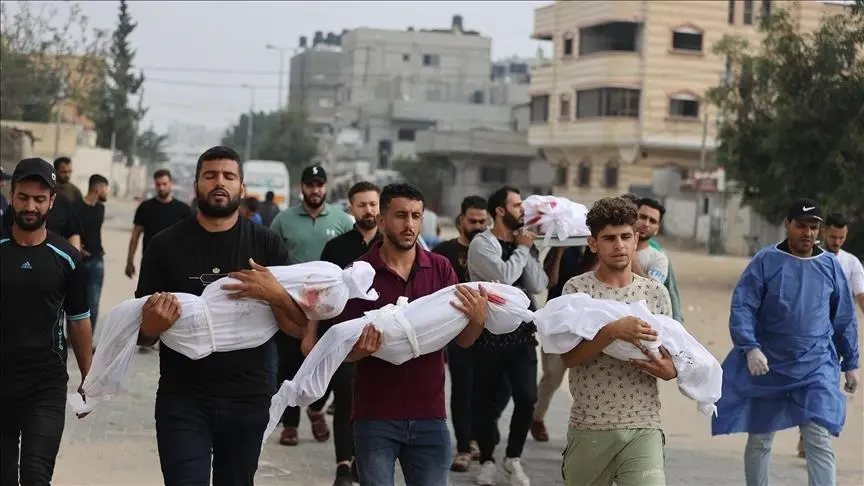

It is noteworthy that the occupation forced nearly 15 thousand people to be displaced from Jenin camp and Al-Hadaf neighborhood, and they were distributed in several villages and towns in the governorate.
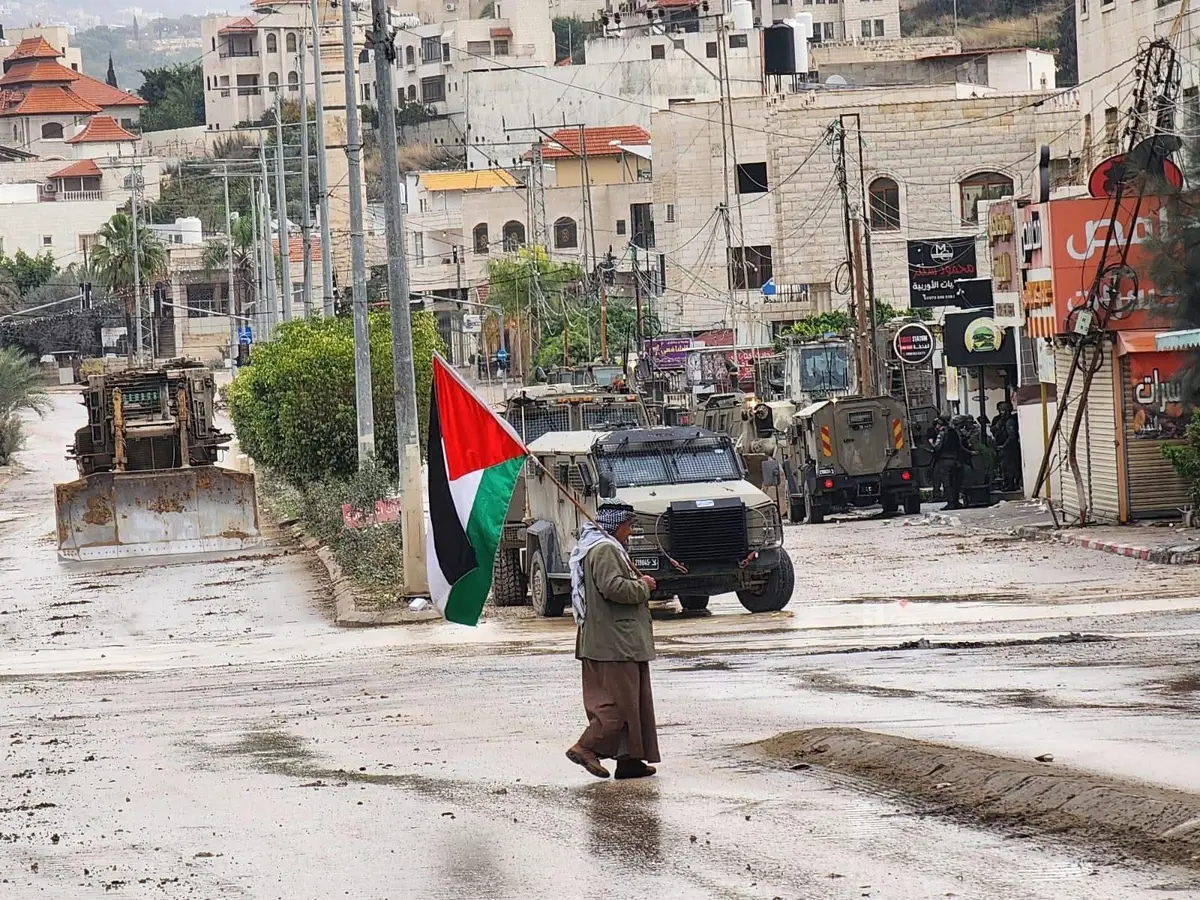

The city's hospitals are also suffering from a severe water shortage, after the occupation targeted and destroyed the water lines, as nearly 35% of the city's residents suffer from a lack of water.


The occupation forces completely demolished nearly 100 homes in Jenin camp, amid widespread destruction of the infrastructure.


The Ministry of Education announced yesterday, Saturday, that the attendance of public and private schools and kindergartens in the city and camp of Jenin will be electronic, while attendance will be in person in the rest of the towns and villages of the governorate, with the exception of the attendance of the town of Qabatiya and the village of the Triangle of Martyrs, where attendance will be on Sunday as a duty and will be compensated for next Thursday.