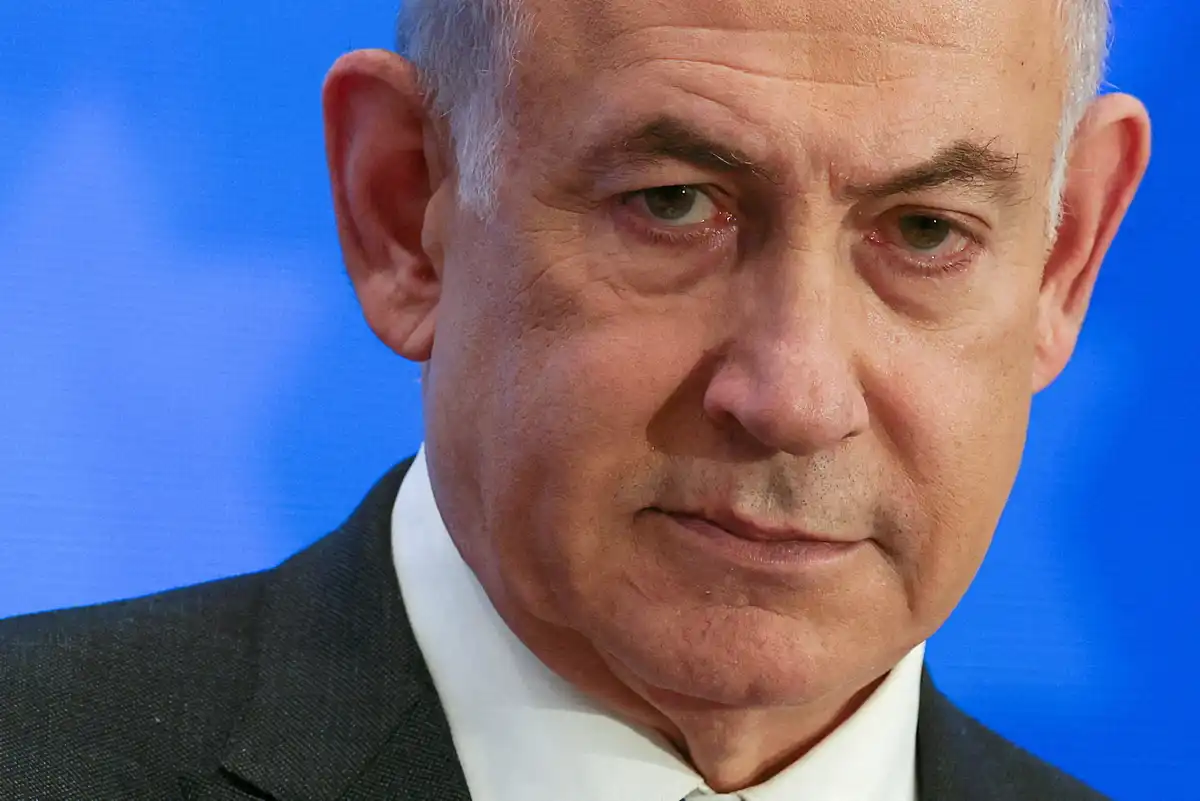
PALESTINE

Mon 07 Apr 2025 4:30 pm - Jerusalem Time

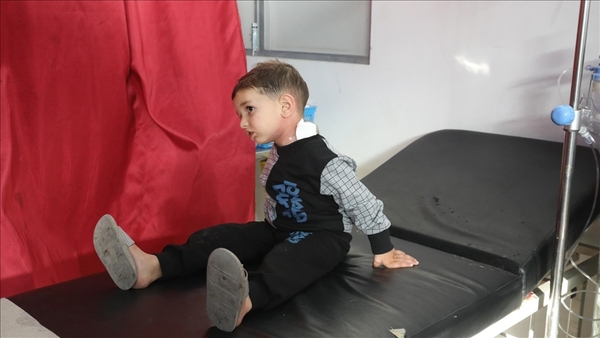
An Israeli settler runs over a child south of Nablus

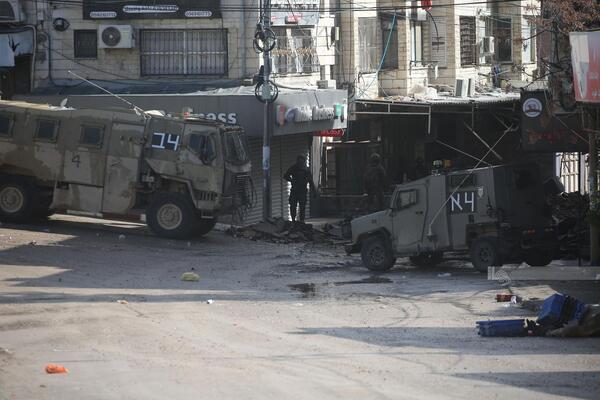
Today, Monday, a settler ran over a child in the town of Hawara, south of Nablus.


Local sources reported that a settler ran over the child Ahmed Awda (14 years old) from the town of Hawara on the main street. He was taken to the hospital, where his injuries were described as moderate to minor.


Local sources reported that occupation forces stormed the Hawara Emergency Center and detained a number of young men inside.

PALESTINE

Mon 07 Apr 2025 4:21 pm - Jerusalem Time

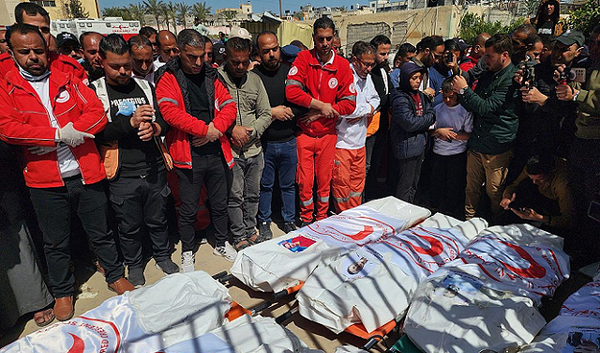
The Red Crescent calls for an international investigation into the crime committed against ambulance crews in Rafah.

The Palestinian Red Crescent Society (PRCS) confirmed that the Israeli occupation forces' targeting of an ambulance convoy in the Hashashin area of Rafah on March 23 constitutes a "full-fledged war crime" and reflects a dangerous pattern of repeated violations of international humanitarian law.


During a press conference held Monday to discuss the latest developments surrounding the deaths of the eight paramedics in Rafah, the Red Crescent Society, through its president, Younis al-Khatib, demanded the immediate identification of paramedic Asaad al-Nasasira, whose fate remains unknown.


Footage in the video, documented by fellow paramedic Raafat Radwan, shows the crew's final moments as they headed to the site of the attack in clearly marked ambulances with their emergency lights on. Despite the clear identities of the vehicles and crews, the convoy was subjected to a hail of bullets for nearly five minutes, as shown in the published video. Meanwhile, calls between the team and the central communications center confirmed that the gunfire continued for at least two hours, with continuous gunfire heard until contact with one of the crew members was completely cut off.


The association confirmed in a statement that what happened was not a random targeting or an individual mistake, but rather a series of deliberate attacks, beginning with the shooting of an ambulance on its way to evacuate people injured after a house was bombed in the Hashashin area. This was followed by the direct targeting of a convoy of the association's ambulances and civil defense vehicles, despite their adherence to all safety protocols. A fourth ambulance, on its way to support the team, was then shot at.


According to the statement, it is worth noting that the area was not classified as a red zone at the time of the response, which means that there was no need for prior coordination to enter the place, as the occupation forces did not appear in the area, which is proven by the long video recording, in which the crew walked for about 15 minutes on the same street back and forth before they were targeted. It was also revealed by following the sequence of events that about an hour after the convoy was targeted, a civilian vehicle and a UNRWA vehicle passed by, which confirms that the area was not a military operations zone at that time.


He added: “For nearly five days, the occupation prevented the rescue team from entering the site to search for the missing crew, claiming that the area was red. Then, they allowed entry for a short time during which we were able to retrieve the body of a civil defense member. Then, the occupation forces forced us to withdraw from the site. On March 30, the bodies of 14 paramedics, civil defense employees, and a UNRWA employee were found piled in a black mesh bag in a mass grave, in a brutal and degrading manner.”


According to the testimony of all the crew members who participated in the mission to recover the bodies of the seven ambulance crew members, namely: Mustafa Khafaga, Ezz El-Din Shaat, Saleh Muammar, Refaat Radwan, Mohamed Bahloul, Ashraf Abu Labda, Mohamed Al-Hila, and Raed Al-Sharif, it became clear that all the ambulances and rescue vehicles were completely destroyed and buried under the soil, which means that they were deliberately destroyed and taken out of service permanently, and that the protection badge was deliberately targeted.


The initial forensic report showed that the paramedics died as a result of multiple gunshot wounds to their upper bodies, further evidence of premeditated murder.


She said that targeting ambulances bearing the Red Crescent emblem and protected under the Geneva Conventions constitutes a war crime.


The Assembly called for an independent international investigation and the accountability of all those involved, and urged the states parties to the Geneva Conventions to fulfill their obligations and take practical measures to hold Israel accountable for these crimes.


The Red Crescent Society emphasized that the international silence on the targeting of humanitarian personnel not only amounts to a death sentence for Palestinians in Gaza, but also represents a direct threat to humanitarian work everywhere.

PALESTINE

Mon 07 Apr 2025 3:52 pm - Jerusalem Time

Gaza Health: Most medicines and medical supplies are out of stock due to the aggression.
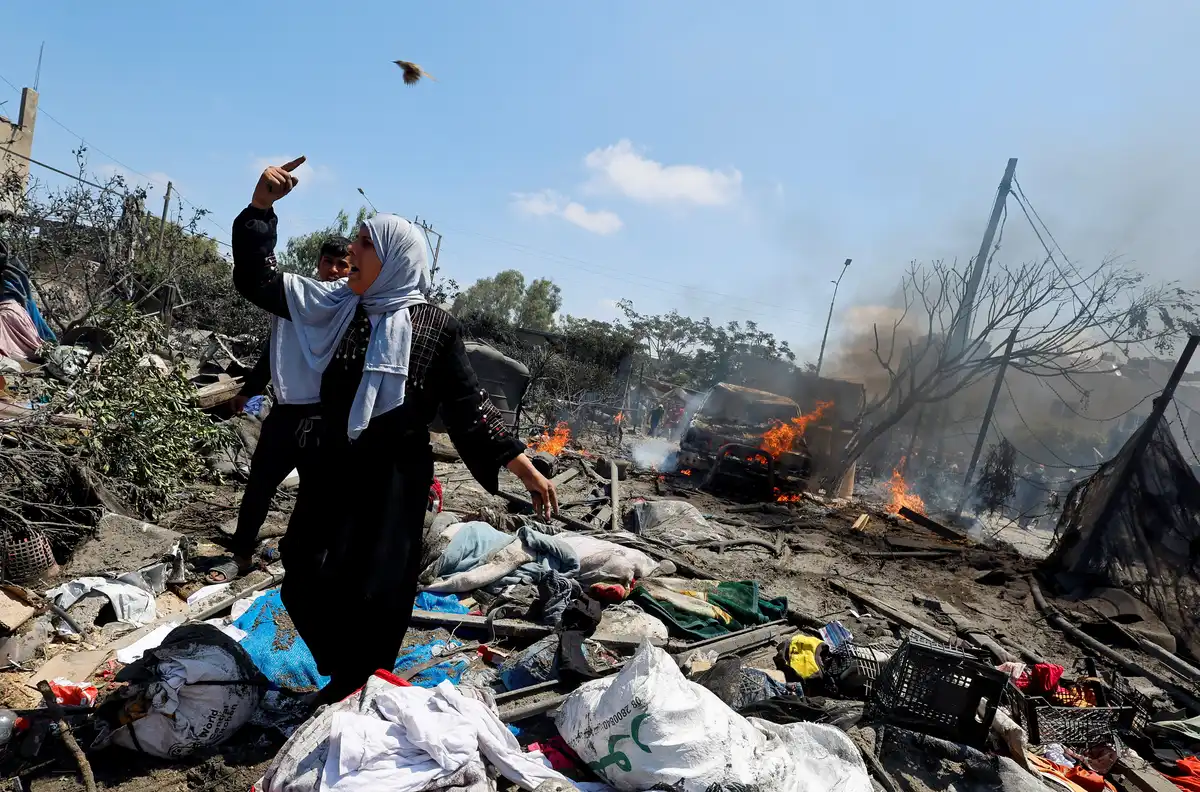
The Ministry of Health in the Gaza Strip announced that most medicines and medical supplies in the Gaza Strip are currently at zero due to the occupation's ongoing aggression against our people and its direct targeting of hospitals and medical personnel.


In a press release issued Monday, the agency explained that 37% of medications, 59% of medical supplies, 54% of cancer and blood disease medications, 40% of primary care medications, and 51% of maternal and child health services medications are at zero stock, threatening patients' lives.


She noted that 13,000 patients and wounded people have been denied access to specialized treatment outside the Gaza Strip following the closure of the Rafah crossing. She noted that the closure of the crossings and the blocking of food supplies threaten more than two million citizens with malnutrition and anemia, particularly among children.


She said: "The Gaza Strip is without medicine, and the serious and catastrophic repercussions will add to the already deteriorating health and humanitarian situation." She explained that medications for operations, intensive care, and emergency departments are depleted to unprecedented levels, as the genocidal war continues.


She noted that vital hospital departments are operating on generators, which are at risk of shutting down due to fuel and spare parts shortages, most of which have been destroyed.


She pointed out that patients and the wounded in the Gaza Strip are deprived of diagnostic imaging services due to the occupation's destruction of CT and MRI equipment.


She reported that ambulance crews and humanitarian teams are operating within the direct targeting zone during missions to rescue the wounded, with 1,300 of them killed. Furthermore, 42% of childhood vaccinations are unavailable in the Gaza Strip, as the occupation prevents the entry of vaccines, which means the collapse of efforts that have continued over the past seven months to combat the pandemic.


She warned that the disruption of water lines increases health and environmental risks and the spread of diarrhea and skin diseases.


She added, "These serious developments are placing a heavy burden on healthcare providers, requiring urgent action to remove the healthcare system from the targeted category and provide essential medical supplies to enable staff to provide care to patients and the wounded."

PALESTINE

Mon 07 Apr 2025 3:04 pm - Jerusalem Time

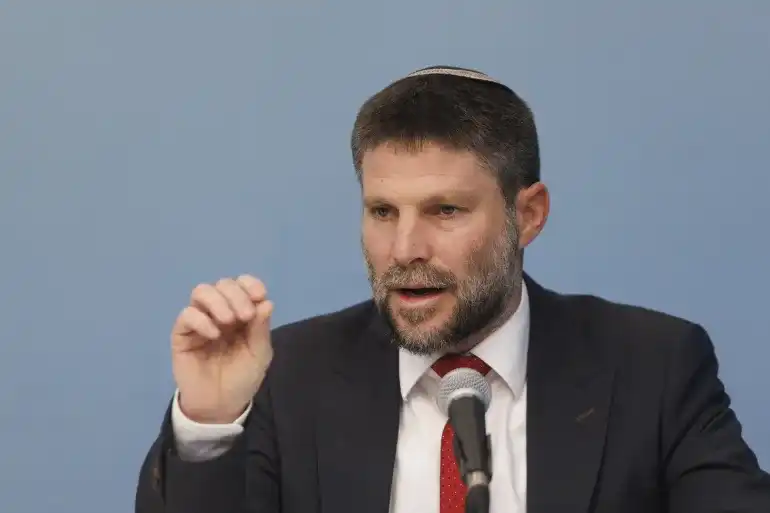
Smotrich admits to using starvation: Not a grain of wheat will enter Gaza

Israeli Finance Minister Bezalel Smotrich, a hardline right-winger, admitted on Monday that starvation is being used as a weapon against Palestinians, and that he will not allow even a single grain of wheat into the Gaza Strip.

Smotrich's remarks came in response to a report published by the Yedioth Ahronoth newspaper claiming that Israeli forces were preparing to resume the entry of aid into Gaza.


He added, "It's good that the war has started, and it's unfortunate that it started this way, but we are changing the reality in the Middle East."


On March 2, the occupation forces closed the Gaza Strip's crossings to all vital supplies, preventing the entry of humanitarian, relief, and medical aid into the Strip. This has led to an unprecedented deterioration in the humanitarian situation, according to local government and human rights reports.


Since October 7, 2023, Israel has been committing genocide in Gaza, leaving more than 166,000 dead and wounded, most of them children and women, and more than 11,000 missing.

PALESTINE

Mon 07 Apr 2025 3:00 pm - Jerusalem Time

Israeli occupation threatens to demolish 12 homes northwest of Hebron.

Israeli occupation forces notified 12 homes on Monday of the demolition of Tarqumiya, northwest of Hebron.


Local sources said that the occupation forces raided the Shaab al-Bir area in the region and issued demolition orders for 12 homes, all of which were inhabited, including several multi-story buildings, owned by citizens from the Ja'afari and Qabaja families.


She added, "One of the threatened homes is my three-story home, where I live with my family." She explained that the owners of these homes have proof of ownership, and that they are located several kilometers away from the "Telem" and "Adora" settlements, which were built on citizens' land and property in Tarqumiya.

PALESTINE

Mon 07 Apr 2025 1:53 pm - Jerusalem Time

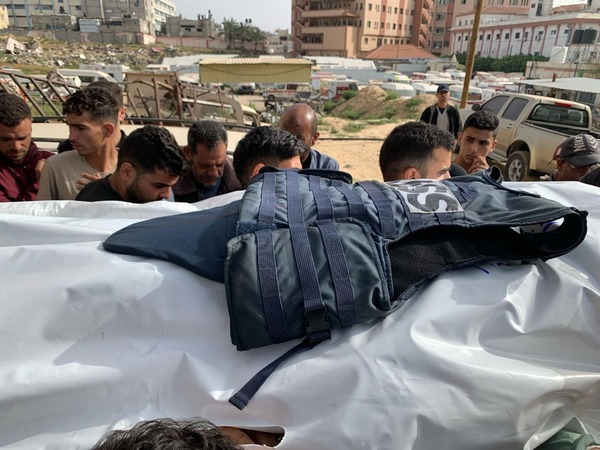
The Journalists Syndicate condemns the occupation's crime against journalists in Khan Yunis.

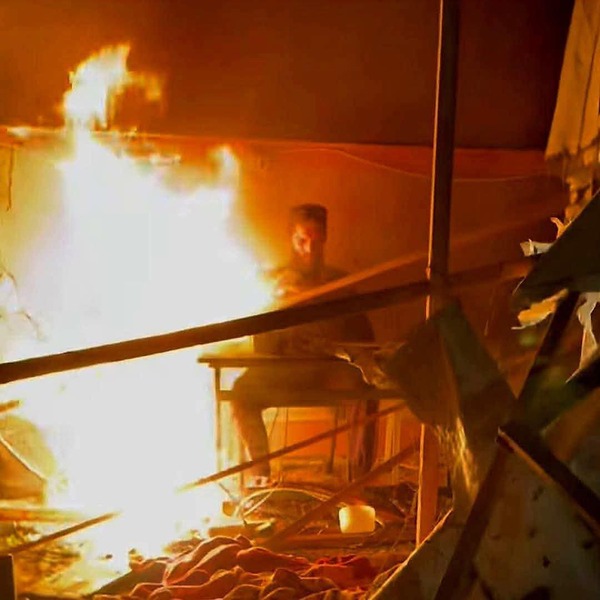
This morning, Monday, Israeli occupation forces committed a horrific and hideous massacre against Palestinian journalists while they were sheltering in a tent in the courtyard of Nasser Hospital in Khan Yunis, south of the Gaza Strip.


The Journalists Syndicate condemned this horrific massacre, in which a journalist was killed as a result of the bombing of the tent, which caught fire. The nine injured journalists, Ahmed Mansour, Hassan Islayh, Ahmed Agha, Mohammed Fayek, Abdullah Al-Attar, Ihab Al-Bardini, Mahmoud Awad, Majed Qadih, and Ali Islayh, remain in critical condition.


The union stressed its demand that the UN Security Council act quickly and issue a resolution to halt all these massacres and the genocidal war to which all our people, including journalists, are being subjected.


The union called on the International Criminal Court to swiftly address the cases and complaints filed with the court against Israeli war criminals, most notably the internationally wanted Prime Minister of the occupation, Benjamin Netanyahu, and the leaders of his army and security institutions.


The Syndicate called on all human rights organizations, media freedom and freedom of expression organizations worldwide, and all media institutions to expose the massacres and slaughters to which Palestinian journalists are being subjected, which are the most horrific in the history of media.


She stressed that she will continue to file complaints and exert pressure through all legal and union means to ensure that these criminal killers do not escape punishment for the war crimes and crimes against humanity committed against Palestinian journalists.

PALESTINE

Mon 07 Apr 2025 1:45 pm - Jerusalem Time

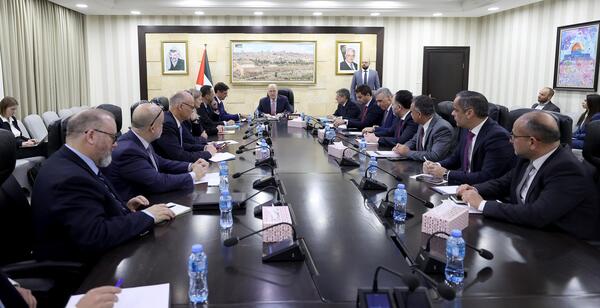
Palestinian PM : We stress the importance of international pressure to halt the aggression and financial deductions.

Prime Minister Mohamed Mustafa discussed with international partners on Monday ways to resume basic services in the Gaza Strip, practical plans for implementing field interventions, the overall financial situation and confronting the Israeli financial war, Palestinian national priorities, and areas for international community support. The meeting was attended by the ministers of finance, communications, civil affairs, the water authority, the energy authority, and the monetary authority.


During the meeting, held at his office in Ramallah with the European Union, the United Kingdom, the Netherlands, the United States, the World Bank, the International Monetary Fund, and the office of the Quartet, Mustafa stressed the importance of the international community pressuring Israel to halt its war of extermination against our people in the Gaza Strip, and to establish a sustainable ceasefire. This will allow for practical steps towards reconstruction, primarily restoring basic services in the Strip, in addition to preparing for the reconstruction conference and providing the necessary financial support for this purpose.


The Prime Minister also reviewed the overall financial situation, Israel's continued financial blockade, and the escalating deductions from Palestinian tax revenues, which place the government in a difficult position to fulfill its obligations to our people. He reiterated his call for more international pressure to halt these illegal deductions and release the withheld funds.


For their part, international partners expressed their support for ceasefire efforts in the Gaza Strip, backing the government's efforts to restore basic services in preparation for comprehensive reconstruction of the Strip, and pressuring Israel to halt deductions from Palestinian tax revenues.

PALESTINE

Mon 07 Apr 2025 1:42 pm - Jerusalem Time

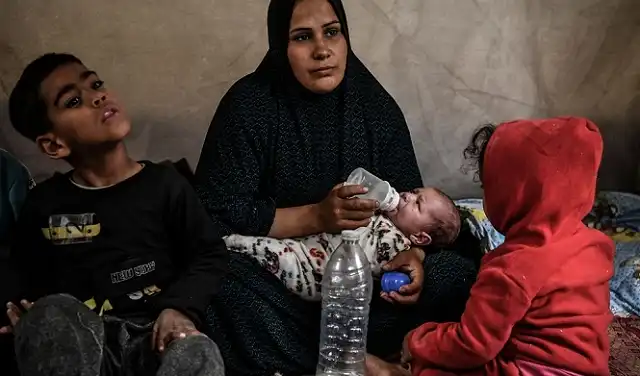
WHO: 90% of pregnant and breastfeeding women in Gaza suffer from malnutrition

World Health Organization spokeswoman Margaret Harris said that 90% of pregnant and breastfeeding women in the Gaza Strip suffer from severe malnutrition, and that the lack of medical equipment prevents them from receiving the necessary treatment.


In press statements marking World Health Week, held from April 7 to 13 of each year, Harris reviewed the deteriorating health situation in the Gaza Strip, which has been subjected to a genocidal Israeli war for nearly a year and a half.


She noted that the health of mothers and children in Gaza has deteriorated sharply since the start of the Israeli war of extermination on October 7, 2023.


She explained that 90% of pregnant and breastfeeding women and thousands of children suffer from severe malnutrition.


Harris stressed that many women and children in Gaza are in dire need of treatment.

"Many of them are in dire need of treatment," she said. "No food or medical aid is currently reaching Gaza."

Mothers and children are already suffering, and the situation is getting worse by the day.”


She spoke about the period during which a temporary ceasefire prevailed before Israel resumed its genocide, saying: "During the nearly two months of calm, some hospitals regained their capacity to provide services, we were able to send medical teams, and we received significant international support." She added: "But after the truce ended, many health centers were destroyed, including Nasser Hospital."


She noted that "there are approximately 20 hospitals still partially operating in Gaza, but they are unable to perform their functions without medical supplies."


She added, "We are currently unable to deliver these supplies. Medical staff are exhausted and lack the equipment even to transfuse blood, while patients suffer from horrific injuries and severe bleeding. Yet, when you speak to them, they say they are still at their posts to serve the people."


Harris expressed her gratitude to all healthcare workers working under extremely challenging conditions, adding, "We thank every healthcare worker who goes the extra mile every day to save lives and improve health and well-being, despite all the challenges."


Since October 7, 2023, the occupying forces have launched an aggression against the Gaza Strip, resulting in the deaths of 50,752 citizens, the majority of whom were children and women, and the injury of 115,475 others. This is a preliminary toll, with a number of victims still under the rubble and on the streets, unable to be reached by ambulances and rescue teams.

PALESTINE

Mon 07 Apr 2025 1:32 pm - Jerusalem Time

The death toll in the Gaza Strip has risen to 50,752 since the start of the aggression.

The Ministry of Health in Gaza announced on Monday that the death toll in the Gaza Strip has risen to 50,752, the majority of whom are children and women, since the start of the Israeli occupation's aggression on October 7, 2023.


It added that the death toll has risen to 115,475 since the start of the aggression, while a number of victims remain under the rubble, unable to be reached by ambulances and civil defense teams.

It noted that 57 martyrs, including one who was recovered, and 137 injuries arrived at Gaza Strip hospitals over the past 24 hours. The total number of martyrs and injuries since March 18, when the occupation violated the ceasefire agreement, stands at 1,391 martyrs and 3,434 injuries.


It pointed out that there are still a number of victims under the rubble and on the streets, and that ambulance and civil defense crews are unable to reach them.

OPINIONS

Mon 07 Apr 2025 12:06 pm - Jerusalem Time

Settler war in the West Bank

Baha Rahal

Baha Rahal

Opinion Writer


Since the start of the war of extermination in Gaza, settlement activity has intensified in Palestinian cities and towns, especially in Jerusalem, which is subjected to the largest Judaization and isolation operation from its Arab Palestinian surroundings. This has been accompanied by unprecedented support from the war and occupation government and its extremist ministers, led by Smotrich and Ben-Gvir. Between legislation and laws passed in the occupation Knesset and the accelerated measures on the ground, settlement has dominated the West Bank and seized hundreds of thousands of dunams of land, according to declared plans whose goal has become clear and declared: complete control, and the expulsion and displacement of Palestinians from the West Bank and Jerusalem, just as are the attempts to displace people from Gaza.

With the expansion of the aggression, the international community's complicity, and regional and Arab silence, the demolition and confiscation operations have escalated, in a scene that reflects the extent of the complicity and cover-up of the occupation's expansionist policies, which have not stopped but are escalating day after day.

Anyone following developments on the ground knows that this is no longer simply a matter of military or security decisions, but rather a systematic plan, in which the political, military, and judicial arms of the occupation are involved, to reshape the geography and demographics to serve the Zionist colonial project, a move they openly declare. In Jerusalem, measures are intensifying, from repressing residents, demolishing homes, and changing the city's character to banning any manifestation of Palestinian Arab life, in an attempt to obliterate identity and rob the place of its profound Palestinian significance.

What is happening is just one chapter in the ongoing Nakba, ethnic cleansing, and genocide, in which the occupation is attempting to reproduce the colonial project in a new guise: the guise of murder, oppression, and repression, along with terrifying and unprecedented policies and unjust and oppressive laws. This is in defiance of all international calls and resolutions, and an attempt to benefit from the international complicity, led by Trump, who supports the continuation of the war of ethnic cleansing in Gaza, the West Bank, and Jerusalem.

The people are subjected to constant attacks by settler gangs, including land confiscation, the burning of property, and all forms of violence under heavy guard from the occupation army and with the constant support of the Netanyahu government, which openly distributes weapons and provides them with legal and political cover to practice their terror against defenseless Palestinians. This tragic reality has created an environment of daily terror in villages and towns, where the lives of residents are threatened at any moment, as settlers invade homes and attack the agricultural crops that constitute their sole source of livelihood.

However, the Palestinian people remain on the land, steadfast, steadfast, clinging to their homes despite the demolition and destruction, believing in Palestine as their land and identity, and fully convinced that the occupation, no matter how long it lasts, will inevitably end.

ARAB AND WORLD

Mon 07 Apr 2025 11:20 am - Jerusalem Time

Former Shin Bet chief: Netanyahu asked to revoke a political rival's membership in the cabinet

Former Shin Bet chief Yoram Cohen said Monday that Israeli Prime Minister Benjamin Netanyahu asked him, as head of the Shin Bet, to revoke then-minister Naftali Bennett's membership in the security cabinet. The request came after Netanyahu heard that Bennett had been dismissed from the elite commando unit, the General Staff Company, due to a "loyalty issue."


Cohen added, during an interview with Israel's Army Radio, that Netanyahu asked him to revoke Bennett's membership in the cabinet during a private conversation between them, saying, "If he was dismissed due to a loyalty issue, then apparently he cannot be a member of the cabinet."

Cohen continued, saying that he rejected Netanyahu's request, "He didn't ask me to confirm this, but rather to reject his membership in the cabinet, as if he had no security classification."

Cohen added that he told Netanyahu, "Are you serious about this demand? First, what is the connection between what happened 30 years ago and what we are discussing now? Second, I will not implement it."

Cohen's remarks come against the backdrop of the conflict between former Shin Bet chiefs and Netanyahu after the latter fired the current Shin Bet chief, Ronen Bar. Cohen said, "Isn't it shocking and disturbing that the prime minister would approach the head of the Shin Bet and ask him to revoke a membership, or to use his influence to remove a political opponent? And by chance, I said 'no,' so what happens if someone else says 'yes'?"


Cohen noted that after a sensitive military operation, Netanyahu asked him to use "the Shin Bet's intelligence collection tool against all the heads of the intelligence services who were aware of this operation. It seemed to me that carrying out this request was insane. Without specific suspicion, I had to monitor all the heads of the services. Do you understand what it means to monitor all of Israel's intelligence services—the head of the Shin Bet, the General Staff, the Shin Bet, and all the security leadership—in depth?"

Opposition leader Yair Lapid described Cohen's remarks as "nothing less than an earthquake," adding that "Netanyahu tried to use the Shin Bet to fabricate a lie and eliminate a political opponent. That's not how a prime minister behaves. That's how the head of a criminal organization behaves."

Former Shin Bet chief Nadav Argaman told Channel 12 last month, in the context of Bar's dismissal, that if Netanyahu acted illegally, he would reveal "everything I know about it." He added that the Shin Bet chiefs "know a lot" of information, and that "there are things we know about that pose a threat to the security of the State of Israel, and we will use them according to the law."

Bar submitted a letter to the Supreme Court, which will hear a petition against his dismissal tomorrow. The letter outlined the reasons for his dismissal, including his refusal to provide Netanyahu with a position preventing the continuation of Netanyahu's trial, as well as his demand that Netanyahu "exercise Shin Bet powers against citizens" demonstrating against Netanyahu and the government. Bar wrote that his refusal to Netanyahu's demands led to Netanyahu's "loss of trust" in him.

Barr requested that the facts be reviewed in a court session not open to the public.

ARAB AND WORLD

Mon 07 Apr 2025 10:51 am - Jerusalem Time

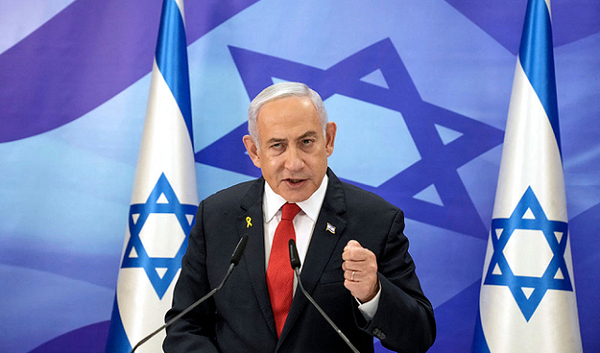
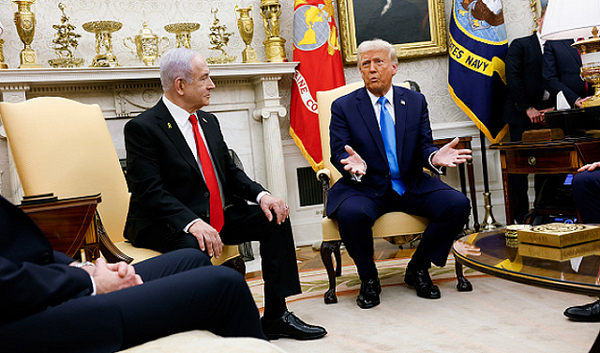
Tariffs, Iran, and the Gaza War on the Agenda for Trump-Netanyahu Talks

US President Donald Trump will meet with Israeli Prime Minister Benjamin Netanyahu on Monday, with the tariffs imposed by Washington on Israel expected to dominate the talks, along with the war on Gaza and the Iranian issue.


Prior to his meeting with Trump, Netanyahu met with the US Secretary of Commerce. The Prime Minister's Office reported that "Prime Minister Netanyahu met at Blair House in Washington with US Secretary of Commerce Howard Lutnick and Trade Commissioner Jameson Greer. The meeting was friendly and productive, and proceeded in good spirits," according to the statement.


Netanyahu is the first foreign leader to meet with Trump since the latter announced the imposition of general tariffs last week.


Netanyahu's main goal, arriving in Washington from Hungary, is to persuade the US president to reverse the decision or at least reduce the 17 percent tariffs before they go into effect on Israel.


Before leaving Hungary, Netanyahu said he aimed to discuss "the hostage issue, achieving victory in Gaza, and, of course, the tariffs imposed on Israel."


"I am the first international official, the first foreign leader, to meet with President Trump to discuss a critical issue for Israel's economy," he added in a statement.

"I think this reflects the special personal relationship and bond between the United States and Israel, which is essential at this time," he explained.


Netanyahu is seeking to exempt Israel from these fees.


If this happens, exempting Israel, Washington's closest ally in the Middle East, from customs duties would not only benefit Israel, but would also be welcomed by Republicans in the US Congress, who have pro-Israel constituencies and appear unwilling to confront Trump on this issue.


Israel attempted to preempt Trump's announcement on Wednesday by removing the remaining 1 percent of tariffs on US goods that were still subject to tariffs in Israel.


But Trump went ahead with his tariffs, noting that the United States has a large trade deficit with Israel, a major beneficiary of US military aid.


The war on Gaza, the release of the Israeli hostages held in the Strip, and escalating tensions with Iran will also be on the agenda.


Israel resumed its war on the Gaza Strip on March 18, following a ceasefire with Hamas that lasted for about two months. Mediators, including the United States, have yet to reach a conclusion regarding resuming the truce or ending the war that erupted nearly 18 months ago.


According to the Palestinian Ministry of Health, 1,335 people have been killed since the resumption of Israeli airstrikes on the Gaza Strip, bringing the death toll in the Strip to 50,695 since the war began on October 7, 2023.


Trump and Netanyahu also agree on the US's "maximum pressure" policy against Iran, demanding that it halt its nuclear and missile programs and end its support for anti-Israel groups in the region.


Trump offered Iran "direct talks," which the Islamic Republic rejected on Sunday.

Iranian Foreign Minister Abbas Araqchi considered direct negotiations with the United States "meaningless" in light of the "threats" and "contradictions."

Speculation has recently increased that Israel, with US assistance, could launch a military attack on Iranian facilities.

ARAB AND WORLD

Mon 07 Apr 2025 10:47 am - Jerusalem Time

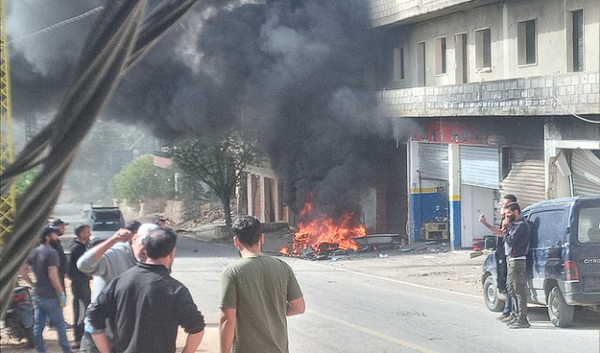
A Lebanese was killed in an Israeli attack on a motorcycle in Taybeh, southern Lebanon.

One person was killed this morning, Monday, when an Israeli drone targeted a motorcycle in the town of Taybeh, south Lebanon.


Lebanese media reported that "the Israeli airstrike on the Taybeh-Adaisseh road targeted a motorcycle as it stopped in front of a tire shop, causing a fire."


It was also reported that the motorcycle was targeted while being driven by the owner of a motorcycle repair shop, resulting in his injury and the shop being set on fire.


In addition, an Israeli drone targeted the Church Hill between the towns of Taybeh and Rab Thalathin with sound bombs.


This comes as Israeli violations of the ceasefire agreement with Hezbollah continue, targeting areas and towns in southern Lebanon and the southern suburbs of Beirut on a daily basis.


Under the ceasefire agreement, Israel had until January 26 to withdraw its forces from southern Lebanon, but it stayed for an additional period, considering that Lebanon had not "fully" implemented the agreement.


Lebanon accused Israel of "stalling" the implementation of the agreement. The government announced on January 27 that it had agreed to extend the agreement's implementation until February 18, following US mediation.


However, Israel maintained its presence on five strategic heights along the border, saying this was to ensure "there is no immediate threat" to its territory. Lebanon, in turn, considered this an occupation and called on the international community to pressure Israel to complete its withdrawal.

PALESTINE

Mon 07 Apr 2025 10:34 am - Jerusalem Time

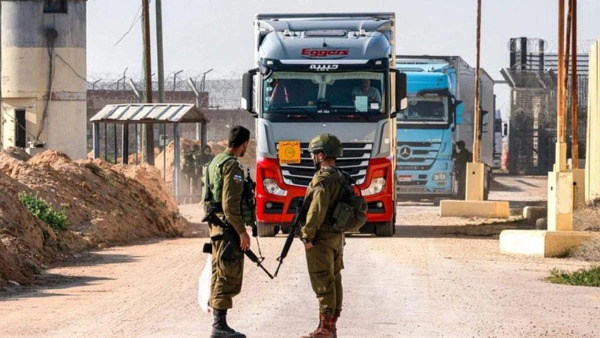
Israeli army to government: Resuming aid to Gaza is inevitable

The Israeli military informed the government that Israel must resume the delivery of humanitarian aid to the Gaza Strip, regardless of military operations conducted by the army following the resumption of hostilities or the stalemate in negotiations over a prisoner exchange agreement. This follows a halt in humanitarian aid deliveries for more than five weeks.


Over the past week, the army command held discussions about bringing in aid, and the Israeli government was informed that "the stage is approaching where it is inevitable to resume the supply of food, fuel, and medicine to the Strip, unless we want to risk deliberately violating international law and placing the responsibility on the shoulders of the officers of the army's Southern Command, the army command, and the political echelon," Yedioth Ahronoth reported Monday.


The newspaper added that Israel may bring humanitarian aid into the Gaza Strip within a few weeks, after government approval. The Israeli military claims it has brought large quantities of humanitarian aid into the Gaza Strip during the ceasefire, and that this amount will be sufficient for the next several weeks.


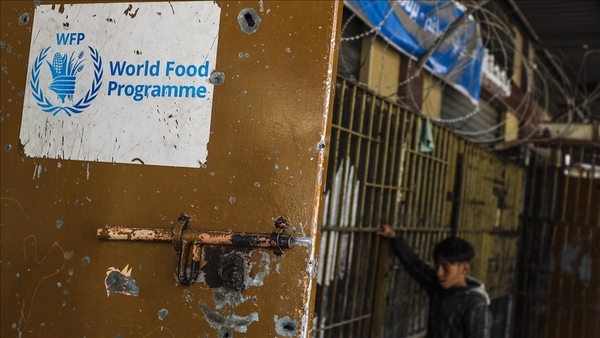
The World Food Programme announced on Sunday that all 25 bakeries it supports in Gaza have closed due to fuel and flour shortages, as a result of the Israeli closure of the crossings to humanitarian aid for more than a month. The programme said that current food supplies at its hot meal kitchen in the Gaza Strip "can suffice for less than two weeks," but noted that "one hot meal provides 25 percent or less of a person's daily nutritional needs."


Eyewitnesses reported that Israeli forces executed 15 Palestinian rescue workers in the Tel al-Sultan neighborhood of Rafah, shooting them in the chest and head before burying them in a mass grave last week.


While human rights, governmental, and international organizations have warned of the repercussions of the continued Israeli blockade of the Gaza Strip, and the Palestinians' plunge into a state of severe hunger, Israeli security sources claimed that "there is no hunger or the beginning of epidemics in Gaza, but we are 40-50 days away from a situation in which food stores are emptied," according to the newspaper.


The newspaper quoted Israeli military sources as saying, "The situation will worsen when the intense military operation in Rafah begins, and food supplies will run out in areas where we will fight again. The humanitarian clock is ticking, and it's clear we will have to resume aid even without international pressure."

PALESTINE

Mon 07 Apr 2025 10:08 am - Jerusalem Time

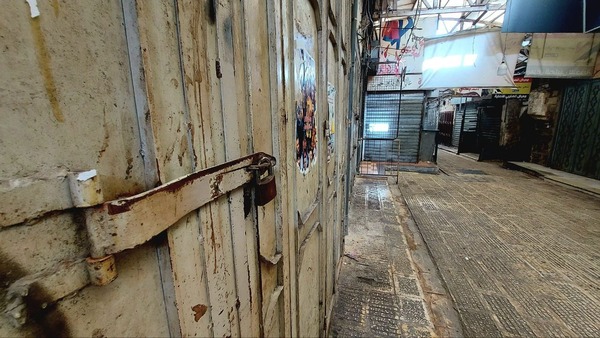
A general strike sweeps the country's governorates in protest against the war on Gaza.

A general strike swept across the country's governorates on Monday, denouncing the ongoing Israeli aggression against our people in the Gaza Strip and demanding an end to the massacres and bombing of civilians' homes, hospitals, and shelters.


The strike called for by national and Islamic forces in the northern governorates, coinciding with a global movement calling for a comprehensive strike around the world to demand an end to the war of extermination in the Gaza Strip and in solidarity with our people, has paralyzed all aspects of life. Universities, schools, banks, shops, and governmental and civil institutions have been closed, amid calls from the masses to continue their confrontation with the occupation.


The strike included public transportation in the northern governorates, leaving streets empty of vehicles and pedestrians, and factories and workshops closed.


Activists on social media platforms have launched calls for a comprehensive strike around the world in solidarity with the people of the Gaza Strip in the face of the war of extermination being waged by the Israeli occupation forces.

PALESTINE

Mon 07 Apr 2025 9:33 am - Jerusalem Time

Raids and arrests in the West Bank

Israeli occupation forces launched a campaign of raids and arrests in the West Bank at dawn on Monday.


Security sources reported that occupation forces stormed the western part of Nablus from the Sarra checkpoint, and the eastern part from the Beit Furik checkpoint.


She added that the occupation forces attacked a vehicle and smashed its windows in the Al-Makhfiya area. They also raided and searched a number of homes and arrested citizen Fouad Darwish.


She noted that occupation forces stormed Balata refugee camp, east of Nablus, and explosions were heard inside the camp. They raided and searched several homes there, but no arrests or injuries were reported.


In Ramallah, occupation forces stormed Jalazone camp, raided dozens of homes, blew up their doors, destroyed their contents, and arrested the young men: Yousef Munther Alian (25 years old), Yousef Ghawanmeh, Qassam Iyad Duwaik, and Abdullah Mubarak.


The occupation forces also turned the home of Tayseer al-Zubaidi into a military barracks and an interrogation center for the young men they detained.

In Al-Amari camp, large forces of the occupation army stormed the camp and surrounded its entrances, before raiding and searching a number of homes. No arrests were reported.


In Qalqilya, occupation forces arrested Qusai Maskawi, Fares Awda, Wissam Nasoura, Obada Qutash, and the brothers Sajid, Ismail, and Ghassan Jibril, after raiding and searching their homes.


In Hebron, forces arrested the young man Hamza Muhammad al-Qawasmeh from the city of Hebron, and the child Yusef Muhammad Salman al-Amla from the town of Beit Ula, northwest of Hebron, after raiding their parents' homes.

PALESTINE

Mon 07 Apr 2025 9:07 am - Jerusalem Time

10 dead, including a journalist, were killed in the occupation's bombing of various areas in the Gaza Strip.

At least 10 civilians, including a journalist, were killed and others injured early Monday morning in Israeli shelling of various areas of the Gaza Strip.


Local sources reported that Israeli warplanes bombed a tent for journalists near Nasser Medical Complex Hospital in Khan Yunis, killing journalist Hilmi al-Faqawi and young man Yousef al-Khazindar, and wounding journalists Ahmed Mansour, Hassan Islayh, Ahmed al-Agha, Mohammed Fayeq, Abdullah al-Attar, Ihab al-Bardini, Mahmoud Awad, Majed Qadih, and Ali Islayh, with various injuries, some of them serious.

She added that the occupation forces bombed two houses west of Deir al-Balah city in the central Gaza Strip, killing two civilians and wounding others.


Local sources said that Israeli drones targeted a group of citizens on Wadi Al-Arayes Street in the Al-Zeitoun neighborhood, south of Gaza City, resulting in the martyrdom of three citizens: Ghassan Bassam Al-Anqar, Awad Jamal Al-Harazin, and Saeed Ashour Daghmash.


She added that the occupation also bombed Masoud Street in the Al-Jurn area north of Gaza City, leading to the martyrdom of the young man Abdul Karim Akram Muqbil.


Two citizens were killed and others were injured in the occupation's bombing of Jabalia al-Balad, north of the Gaza Strip.

Since October 7, 2023, the occupying forces have launched an aggression against the Gaza Strip, resulting in the deaths of 50,695 citizens, the majority of whom were children and women, and the injury of 115,338 others, according to a preliminary toll. A number of victims remain under the rubble and on the streets, with ambulance and rescue crews unable to reach them.

OPINIONS

Mon 07 Apr 2025 8:17 am - Jerusalem Time

Ambulance Massacre: When soldiers bury bodies in a mass grave, it's not chaos, it's politics.

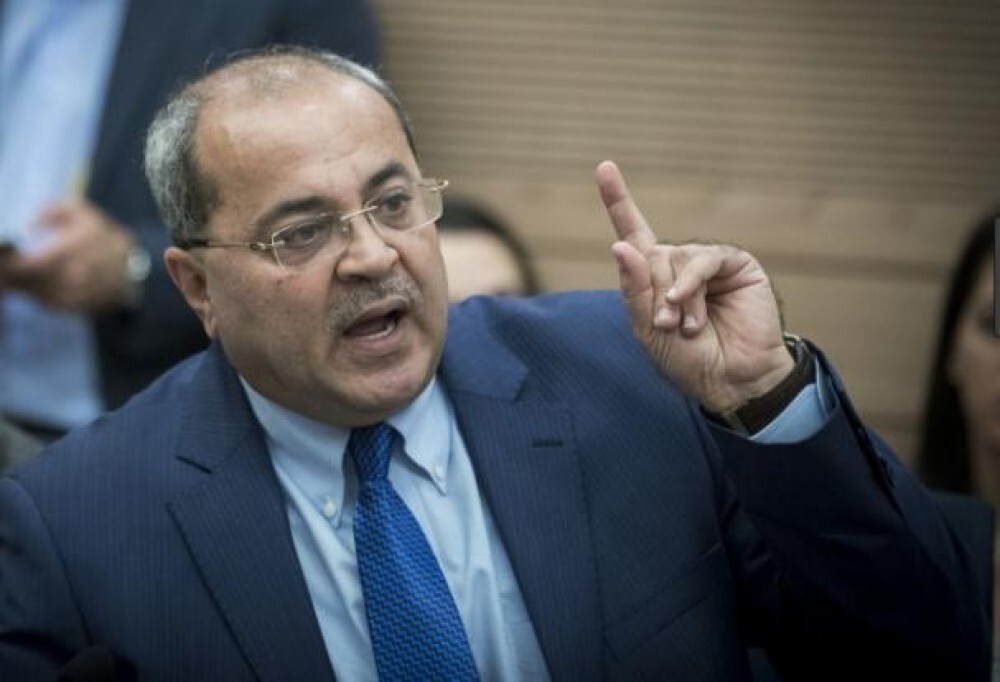
Written by: Representative Ahmed Tibi

The article published in Haaretz and The Guardian reveals a reality that should shake not only Israel, but the conscience of all humanity. But Israel will not be shaken, because Israeli society is suffering a barbaric post-traumatic transformation in October 2023.

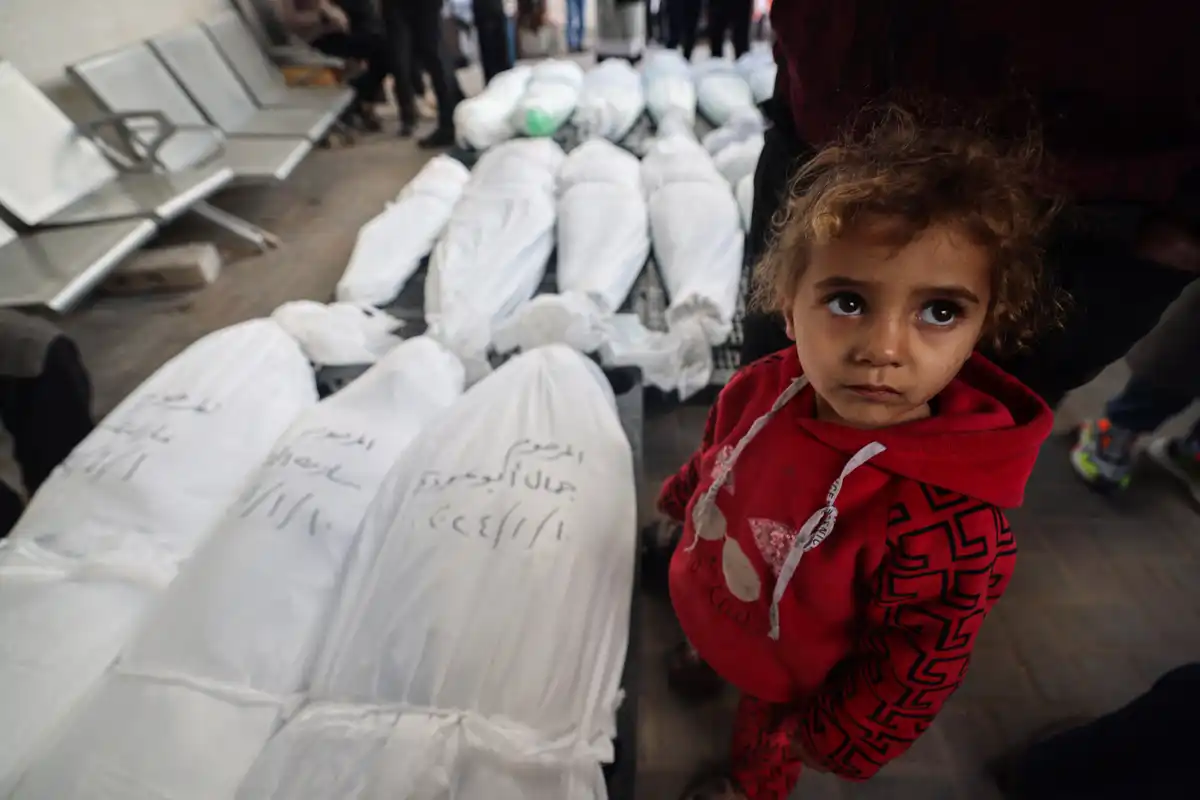
In this incident, 15 paramedics—rescue workers who had come to the aid of the wounded—were shot at close range and buried in a mass grave using Israeli military engineering equipment. The exhumation of the bodies took five days and was only completed after an Israeli military source guided rescue crews to the site of the mass grave.

Sole Survivor Testimony:

Munther Abdul, the only medic to survive the massacre, told The Guardian: “They stripped me completely naked, leaving me in only my underwear. My hands were tied behind my back. They threw me to the ground and the interrogation began. I was subjected to severe torture: beatings, insults, death threats, and being strangled with a rifle around my neck. Then another soldier put a knife to my left shoulder. After a while, an officer arrived and ordered the soldiers to stop, calling them ‘crazy’ who didn’t know how to deal with people.”

Evidence of the execution of medical personnel:

Evidence on the ground—bound hands and feet, close-range shootings, and burials alongside relief vehicles—suggests the possible summary execution of medical personnel. The New York Times published a video taken by one of the medics buried in the mass grave, clearly showing that the vehicles were clearly marked and the ambulance lights were on during the military assault.

Accountability is absent and the media is silent:

Is this the image of the "most moral army in the world"? Is this a country claiming democracy and Western values? The deafening silence of the Israeli media on this issue is dangerous in itself. Silence at a time when basic moral values are being violated is complicity in the crime.

Demand for an international investigation:

I call for the formation of an independent, external, and preferably international, investigation committee. This case must not be left in the hands of parties that have repeatedly failed and committed war crimes. This is a moral and humanitarian test. The world is watching, and if justice is not served, history will judge.

International law is clear:

The Fourth Geneva Convention, to which Israel is a signatory, requires the protection of medical personnel in conflict zones. Deliberate attacks on relief personnel constitute a war crime. The discovery of bodies bound and outside humanitarian vehicles should raise alarms in every legal institution around the world.

Not an isolated case:

Unfortunately, this is not the only incident. For months, reports have been circulating of the targeting of Gaza's health infrastructure—hospitals, clinics, medical personnel, and ambulances. When a doctor becomes an enemy, a nurse a target, and an ambulance a military target, the state crosses red lines that no state should approach.

The international community must not remain silent:

I call on the World Health Organization, the United Nations, and international law organizations: Do not remain silent. Those who remain silent in the face of this injustice grant it legitimacy.

The German Foreign Ministry stated that the aid team in Gaza was definitely killed by Israeli military forces. A forensic doctor who examined some of the bodies said he had evidence that they were summarily executed. This incident sparked international outrage, particularly since they were killed while unloading food aid, despite their clear humanitarian identities. The army expressed "regret," and after international pressure, announced an "investigation," and that "procedures may be reviewed."

But when it comes to 15 lives, regret is no substitute for responsibility, and tragedy is no excuse for false justice. The immediate solution required is a prisoner exchange deal and a cessation of hostilities. This is possible, were it not for Netanyahu's political survival and party alliances. This, too, is a crime in itself. Enough war, enough crimes.

The Rafah massacre was no exception:

The ambulance massacre, horrific as it is, is not the only incident since the war began. Israel bombs shelters, schools, hospitals, mosques, churches, and civilian homes daily. It is an ongoing massacre, documented and transmitted in a manner unprecedented in history.

Finally:

History will remember not only who committed and who remained silent, but also who lied and who issued false statements in the name of the occupation army.

In commemoration of their memory:

The martyrs: Mustafa Khafaja, Ezz El-Din Shaath, Saleh Muammar, Refaat Radwan, Mohammed Bahloul, Ashraf Abu Labda, Mohammed Al-Hila, Raed Al-Sharif, Yousef Khalifa, Fouad Al-Jamal, Zuhair Al-Farra, Anwar Al-Attar, Samir Al-Bahabsah, Ibrahim Al-Maghribi, and Kamal Mohammed Shahtout. The fate of Asaad Al-Nusra, a member of the Red Crescent, remains unknown. The surviving paramedic said he saw him alive and detained by soldiers.

Stop war crimes!

PALESTINE

Sun 06 Apr 2025 11:23 pm - Jerusalem Time

Smotrich continues incitement against Gaza: We must not stop before Hamas is destroyed

Israeli Finance Minister Bezalel Smotrich stressed the government's commitment to destroying Hamas, emphasizing that the rocket attacks on southern Gaza cities remind everyone of the need to continue achieving this goal.


"If anyone needed a reminder why we shouldn't pause for a moment before destroying Hamas, they got it tonight in the form of the rocket fire from Gaza into southern cities," Smotrich said, according to Sky News Arabia.


The extremist Israeli minister added: "We pledged to the citizens of Israel that Hamas will be destroyed and that the residents of the south will be able to live in peace and security for many years, and with God's help, we will achieve this."


This evening, the Al-Qassam Brigades, the military wing of Hamas, announced a barrage of rocket fire on the Israeli city of Ashdod, in what it said was a response to the massacres committed by the Israeli occupation army against Palestinian civilians.


The Israeli occupation army confirmed that it detected approximately 10 rockets fired from the Gaza Strip, most of which were intercepted.

PALESTINE

Sun 06 Apr 2025 10:39 pm - Jerusalem Time

Israeli occupation forces force citizens to evacuate their homes and detain young men in Nour Shams camp.

Israeli occupation forces forced a number of residents of the Jabal al-Salihin area in the Nur Shams refugee camp, east of Tulkarm, to evacuate their homes on Sunday evening, in a new escalation of violence against the camp's residents.


In the same context, the occupation forces proceeded to take a young man with them after assaulting him near the entrance to the Manshiyya neighborhood in the camp, without knowing his fate. They also detained a group of young men at the same location, forcing them to sit on the ground while threatening them with weapons and abusing them, without knowing their identities.


Nour Shams camp has been subjected to a relentless Israeli aggression and a 57-day-long siege, causing extensive damage to infrastructure and property and exacerbating humanitarian suffering among residents.


The camp has also witnessed raids and searches of homes, particularly in the Jabal al-Nasr and al-Salihin neighborhoods, with a number of homes being converted into military barracks after their residents were expelled through threats and intimidation.


In addition, the Popular Committee for Camp Services documented the extent of the widespread destruction caused by the Israeli occupation to the camp's homes during a field visit to monitor the effects of the ongoing aggression.


Footage from inside the camp showed widespread destruction in a number of homes, including some deliberately set on fire. Signs of fire were clearly visible on walls and roofs, along with burnt furniture and charred belongings.


The Popular Committee confirmed that the documentation reveals the extent of the violations against civilians, particularly given that many of these homes were inhabited by families prior to the raid.


In a related development, a number of camp residents were able to return to their damaged homes today, in an attempt to retrieve personal and essential belongings.


Residents reported that their return occurred individually, without prior coordination, amidst a state of tension, fear, and risk, given the extent of the destruction throughout the camp.


Some residents indicated that what they were able to collect did not compensate for the severe losses they suffered, particularly psychological and material.

PALESTINE

Sun 06 Apr 2025 9:58 pm - Jerusalem Time

A boy was killed by Israeli occupation forces in Turmus Ayya, northeast of Ramallah.

A young boy was killed and two others were injured by Israeli occupation forces' fire near the town of Turmus Ayya, northeast of Ramallah, on Sunday evening.


The Ministry of Health said it was informed, via the General Authority of Civil Affairs, of the martyrdom of Omar Muhammad Saada Rabie (14 years old) by Israeli occupation forces in the town of Turmus Ayya.


According to local sources, occupation forces fired live bullets at three children as they were walking on the street adjacent to the town, wounding them. One of them, Omar Muhammad Sa'ada Rabie (14 years old), was arrested before being pronounced dead, while the other two children were transferred to a medical center in the neighboring village of Abu Falah for treatment.


The Red Crescent Society said in a brief statement that it had transferred two children (14 and 15 years old) from the village of Abu Falah to receive treatment at the hospital. One of them was shot in the abdomen, and the other in the thigh.


Local sources reported that the occupation forces obstructed the exit of ambulances from the town of Turmus Ayya, deliberately delaying them.

PALESTINE

Sun 06 Apr 2025 8:23 pm - Jerusalem Time

Update: 3 children injured by Israeli occupation forces east of Ramallah

Three children were injured by Israeli occupation forces' bullets this Sunday evening near the town of Turmus Ayya, northeast of Ramallah.


According to local sources, the occupation forces fired live bullets at three children while they were on the street adjacent to the town, which led to their injury. They arrested one of them, Amer Muhammad Saada Rabie (14 years old), and transferred the other two children to receive treatment at a medical center in the neighboring village of Abu Falah.


The Red Crescent Society said in a brief statement that it had transferred two children (14 and 15 years old) from the village of Abu Falah to receive treatment at the hospital. One of them was shot in the abdomen and the other in the thigh.


Local sources reported that the occupation forces obstructed the exit of ambulances from the town of Turmus Ayya and deliberately delayed them.

PALESTINE

Sun 06 Apr 2025 8:04 pm - Jerusalem Time

A young man was injured after being attacked by the occupation forces in Nahalin, west of Bethlehem.

A young man was injured and bruised this Sunday evening after being assaulted by Israeli occupation forces in the town of Nahalin, west of Bethlehem.


According to local sources, the occupation forces stormed the Umm Sha'ra area and severely beat the young man, Haitham Aqab Najajra (35 years old), while he was plowing his land, causing him to suffer wounds and bruises all over his body. He was then transferred to Beit Jala Governmental Hospital for treatment.

PALESTINE

Sun 06 Apr 2025 7:47 pm - Jerusalem Time

Dead and wounded in violent Israeli airstrikes on several areas in the Gaza Strip.

Ten Palestinians, most of them children, were killed and others injured in a violent Israeli shelling of Al-Nakhil Street in the Al-Tuffah neighborhood east of Gaza City.


Three Palestinians were also killed in an artillery attack on the Abu al-Ajeen area of Deir al-Balah in the central Gaza Strip, while an airstrike on the Abu Issa family home near Jaffa Hospital killed five others, including children and women, and wounded several others, according to Palestinian sources.


In this context, the Palestinian Ministry of Health warned that the health and humanitarian situation in Gaza has reached a catastrophic level, with 59% of essential medicines and 37% of medical supplies running out, while the closure of the crossings exacerbates the crisis for patients requiring treatment outside the Strip.


The ministry recorded 52 child deaths due to malnutrition during the war, warning that the numbers are likely to increase given the ongoing blockade and the denial of food supplies.


The ministry noted that hospitals are facing severe shortages of oxygen and fuel needed to operate generators, threatening to disrupt medical services.


It pointed out that direct targeting of ambulance crews disrupts the evacuation of injured people, while disruption of water networks leads to the spread of skin and gastrointestinal diseases.


The ministry confirmed that 16 of the 52 health centers are completely out of service, amid the ongoing Israeli aggression on the Gaza Strip.


ARAB AND WORLD

Sun 06 Apr 2025 7:13 pm - Jerusalem Time

Katz: Sinwar and Deif requested $500 million from Iran to destroy Israel.

Israeli Defense Minister Yisrael Katz revealed an intelligence document showing that Hamas leaders Yahya Sinwar and Mohammed Deif sent a letter to the commander of the Quds Force of the Iranian Revolutionary Guard Corps, Esmail Qaani, in June 2021, requesting support for the movement's plans to invade Israel, which were carried out on October 7, 2023.


“I am presenting here for the first time a document found in the tunnels of senior Hamas officials in Gaza, which proves a direct connection between Iran, Yahya Sinwar, and Mohammed Deif, as part of Iran’s support for Hamas’s plan to destroy Israel,” Katz said during a visit to the Military Intelligence Directorate’s intelligence gathering and technical illicit gains unit, known as Amashat. “In the document, they ask the Quds Force commander to transfer $500 million to destroy the State of Israel.” The document shows that Hamas asked Iran for $20 million a month for two years to “achieve these great goals, through which we will change the face of the world.”


The letter read: “We are confident that by the end of these two years, or within them, God willing, we will uproot this brutal entity and end this dark era in our nation’s history.”


Katz said that Saeed Izadi, head of the Palestinian division of the Iranian Revolutionary Guard Corps, "accepted the request and responded that Iran, despite its difficult economic situation and the suffering of the Iranian people, would continue to pump funds into Hamas because the struggle against Israel and the United States is the Iranian regime's top priority."


The Defense Minister added, "The conclusion is clear: Iran is the head of the snake, and despite all its denials, it funds and promotes terrorism in all regions, from Gaza, through Lebanon, Syria, the West Bank, and now with the Houthis in Yemen, seeking to destroy Israel." He concluded, "Israel will do everything in its power to prevent Iran from possessing a nuclear weapon, and will continue to strike its proxies in the region until the Iranian axis of evil is crushed and defeated."

PALESTINE

Sun 06 Apr 2025 6:48 pm - Jerusalem Time

The World Food Programme announces the closure of its bakeries in Gaza due to fuel and flour shortages.

The World Food Programme announced on Sunday that all 25 bakeries it supports in Gaza have closed due to fuel and flour shortages, in light of the ongoing Israeli blockade of the Strip.


In a post on the X platform, the UN program said that current food supplies in its hot meal kitchen in the Gaza Strip "can last for less than two weeks."

It pointed out that "one hot meal provides 25 percent or less of a person's daily nutritional needs."

PALESTINE

Sun 06 Apr 2025 6:12 pm - Jerusalem Time

Netanyahu arrives in Washington amid efforts to reoccupy Gaza and escalate tensions with Iran

Israeli Prime Minister Benjamin Netanyahu arrived in the United States on Sunday for his second visit in two months. He will meet with US President Donald Trump at the White House on Monday to discuss his plans to reoccupy Gaza, the US-Israeli escalation against Iran, and Trump's request for a special exemption from the 17% tariffs he imposed on Israel last week, according to informed sources.


Last week, Netanyahu justified the resumption of the war on the besieged Gaza Strip and its reoccupation by claiming that he was implementing the "Trump Plan for Gaza," which the US president announced from the White House on February 4, in Netanyahu's presence. The plan called for seizing Gaza, displacing its citizens, and turning it into the "Riviera" of the Middle East.


It's worth noting that on April 2, Israeli Defense Minister Yisrael Katz announced plans to seize large areas of Gaza "with the aim of eliminating what remains of Hamas's infrastructure and establishing new security zones that will divide Gaza in two." This escalation, which began in mid-March with intensive airstrikes, aims to force a mass exodus of the local population, resulting in heavy casualties among the besieged Palestinian civilians.


Despite international condemnation of the more than 50,000 deaths, 110,000 civilian injuries, and the massive displacement of Palestinians, the Israeli occupation authorities justify these steps as necessary for security in the face of an undefeatable Hamas. Experts believe that ultimately, Israel's actions threaten the fragile ceasefire negotiations, their broader credibility, and its broader hopes for a political process to end the conflict. Experts insist that, in reality, negotiations will be the only viable path to stability and security.


On March 18, Netanyahu ended the ceasefire that had been holding in Gaza since January 19, brokered by the United States, Egypt, and Qatar, in exchange for the release of Israeli prisoners. This was intended to destroy any chances of moving to the second phase of the agreed-upon ceasefire agreement, which stipulates the withdrawal of Israeli forces from Gaza and a complete end to the war. Instead, the occupation authorities are using harsh military tactics to pressure Hamas to release the remaining 59 prisoners, 24 of whom are believed to be alive.


Experts believe Netanyahu also has several personal and political motives for resuming the war on Gaza. He remains under pressure from far-right factions within his government, which oppose moving to the second phase of the ceasefire and instead seek to expand Israel's security by establishing buffer zones and seizing land. In this context, the occupation government recently approved the expansion of more settlements in the West Bank. With Netanyahu facing broader domestic criticism and legal pressure, the war provides a rallying cry and a distraction from the scandal and corruption within his office.


It is noteworthy that Israel's return to Gaza to "accomplish the mission" delays any political accountability for its security failures. The establishment of a permanent corridor within Gaza's northern and eastern borders is officially intended to prevent future border attacks. While Israel insists it does not seek permanent rule over Gaza, its operations indicate a significant shift toward long-term security control in the Strip.


Netanyahu claims that the effective occupation of certain areas is the only way to ensure that Hamas cannot regroup. However, it is also clear that the Israeli government aims to thwart any reconciliation process between Hamas and the Palestinian Authority in the West Bank. By focusing on eliminating Hamas and refusing to engage with it politically, Israel has clear ambitions to reorganize the divided Palestinian leadership.


As noted from the outset, the broader and more significant challenge is Israel's refusal to formulate or participate in a clear post-war governance plan. On March 4, Arab states presented a plan for the reconstruction and redevelopment of Gaza, whereby Hamas would cede power to a transitional technocratic government while the Palestinian Authority is reformed. However, Israel and the Trump administration immediately rejected this plan as unrealistic.


Amid this military escalation and political stalemate, tense negotiations continue, led by Egypt and Qatar, who are attempting to revive discussions with a new proposal that includes a full release of the hostages in exchange for a permanent ceasefire. Israel has rejected this proposal and presented a counteroffer under which Hamas would release approximately half of the remaining hostages and some of the dead in exchange for a 40-day ceasefire. By refusing to commit to a formal end to the conflict, let alone discuss what comes next, Israel clearly intends to use military pressure to enforce its unknown objective. Its objective so far appears to be the permanent reoccupation of the Gaza Strip. Absent serious and sustained regional and international interest and pressure, this outcome will not lead to a ceasefire or pave the way for a meaningful political process.

PALESTINE

Sun 06 Apr 2025 5:54 pm - Jerusalem Time

Gaza Health: 59 percent of medicines are out of stock

Gaza's Undersecretary of Health, Yousef Abu al-Rish, announced on Sunday that 59 percent of essential medicines and 37 percent of medical supplies are out of stock.


Abu al-Rish warned that the health sector has reached "dangerous and catastrophic levels" in light of the genocide being perpetrated by the Israeli occupation with American support.


This came during his meeting in Gaza with the acting UN Humanitarian Coordinator, Suzana Tkalcic, according to a statement from the Ministry of Health in Gaza.


Abu Al-Rish said, "The stock of 59 percent of essential medicines and 37 percent of medical supplies has become zero."


He explained that hospitals in the Gaza Strip are in dire need of oxygen stations to ensure the continued operation of vital departments and to provide care to the wounded and sick.


Abu al-Rish pointed out that hospitals are facing severe shortages of fuel, spare parts, oils, and filters, threatening to shut down the generators they rely on, while a shortage of diagnostic equipment is preventing many emergency medical interventions.


On March 2, Israel closed Gaza's crossings to the entry of humanitarian, relief, and medical aid into the Strip, causing an unprecedented deterioration in the humanitarian situation.


In the same context, Abu Al-Rish stated that 16 of the 52 primary care health centers are no longer in service.


Regarding the nutritional situation, he revealed that 52 children had died due to malnutrition.


Abu Al-Rish warned that blocking food supplies threatens food security and increases the likelihood of more cases of anemia and malnutrition.


He added, "We are facing new numbers unless food and medicine supplies are brought in."


Abu al-Rish also pointed out that the continued closure of the crossings exacerbates the suffering of hundreds of patients and wounded people awaiting travel abroad for specialized treatment.


He pointed out that there are about 13,000 medical cases that need to leave the Gaza Strip.


Since resuming its genocide in Gaza on March 18, 2025, Israel has killed 1,335 Palestinians and injured 3,297 others, most of them children and women, as of Sunday morning, according to the Gaza Ministry of Health.


On another note, Abu al-Rish stressed that the direct targeting of ambulance crews and humanitarian teams significantly hinders the evacuation of the wounded and injured.


He warned that the interruption of water lines increases health and environmental risks, with diseases such as diarrhea and skin diseases spreading.


Abu Al-Rish said, "274 children were born and martyred during the Israeli aggression on the Gaza Strip."


With full American support, Israel has been committing genocide in Gaza since October 7, 2023, leaving more than 165,000 Palestinians dead and wounded, most of them children and women, and more than 11,000 missing.


On March 1, the first phase of a ceasefire and prisoner exchange agreement between Hamas and Israel, which had been in effect since January 19, ended. Israeli Prime Minister Benjamin Netanyahu disavowed the start of the second phase.


Netanyahu, who is wanted by international justice, sought to release more Israeli prisoners in Gaza without fulfilling the commitments of the second phase, particularly ending the war of extermination and withdrawing completely from the Strip. Meanwhile, Hamas insisted on starting the second phase.

PALESTINE

Sun 06 Apr 2025 5:15 pm - Jerusalem Time

Dead and wounded, including children and women, as a result of the occupation's bombing of a house in the center of Deir al-Balah.

A number of citizens were killed Sunday evening when Israeli warplanes bombed a house in the city of Deir al-Balah in the central Gaza Strip.


Medical sources in the Gaza Strip reported that Israeli warplanes targeted a house in the center of Deir al-Balah, killing at least four civilians and wounding others, including children and women.


Since October 7, 2023, the occupying forces have launched an aggression against the Gaza Strip, resulting in the deaths of 50,695 citizens, the majority of whom were children and women, and the injury of 115,338 others, according to a preliminary toll. A number of victims remain under the rubble and on the streets, unable to be reached by ambulances and rescue teams.

ARAB AND WORLD

Sun 06 Apr 2025 4:32 pm - Jerusalem Time

Iran in the Eye of the Storm: The Goal Is to Reshape the Middle East by Force

Dr. Hussein Al-Deek: Halting military and financial funding represents a major retreat from the principles of the Iranian revolution, which was based on exporting the revolution.

Dr. Dalal Erekat: The United States may not resort to a comprehensive, direct strike before exhausting all diplomatic and economic pressure tools.

Dr. Ahmed Rafiq Awad: Trump and Netanyahu share an aggressive vision based on "reshaping the Middle East by force," which increases the likelihood of confrontation.

Dr. Jamal Harfoush: Any strike against Iran would be a "strategic earthquake" that would push the major powers from proxy conflicts to direct confrontation.

Dr. Walaa Qadimat: Iran still has effective tools of influence in the region and faces two choices: either accept direct negotiations or face military action.

Dr. Mahmoud Al-Froukh: Israel sees this time as a "rare, unrepeatable opportunity" to end what it calls "the head of the snake" after exhausting its arms.


The Middle East is witnessing escalating tensions between the United States and Israel on the one hand, and Iran on the other, amid growing indications of a possible US-Israeli military strike against Iranian nuclear facilities.

In separate interviews with Al-Quds, writers, political analysts, specialists, and university professors believe this escalation comes amid clear field preparations and indirect negotiations mediated by the Sultanate of Oman. These negotiations seek to reduce the chances of confrontation by having Tehran offer concessions regarding its support for armed factions in the region.

Writers, analysts, specialists, and university professors warn that any strike against Iran could lead to a widespread regional and perhaps international explosion, with the possibility of a direct Iranian response against US and Israeli bases and a threat to navigation in the Strait of Hormuz, which would directly impact the global economy. Meanwhile, Tehran considers its military presence in Lebanon, Yemen, and Iraq, along with its missile and nuclear capabilities, to be deterrent elements that would make any attack an adventure fraught with strategic consequences.

They explain that, in light of this complex landscape, assessments are divided into three scenarios: a political settlement that guarantees Iran economic gains in exchange for a decline in its regional influence, a military escalation that could ignite a full-scale war, or the collapse of the Iranian regime from within due to pressure and sanctions.

They emphasize that, in all cases, collective diplomacy remains a central tool for averting disaster, at a time when major powers are racing to redraw the map of influence in the Middle East.


US-Israeli preparations to attack Iran


Dr. Hussein Al-Deek, a writer and political analyst specializing in American and strategic affairs, says that there are joint American-Israeli preparations for a military strike against Iranian nuclear and economic facilities. He points out that this step is subject to considerations in the indirect negotiations underway in the Sultanate of Oman, which have led to a decline in the likelihood of an attack recently due to concessions offered by the Islamic Republic of Iran.

Al-Deek explains that if the information is correct that Tehran has agreed to American demands related to halting its support for allied groups in the region, most notably the Houthis in Yemen and Hezbollah in Lebanon, including agreeing to the party’s transfer of its weapons to the Lebanese army, and halting military and financial funding for these factions, which are considered Iran’s arms in the region, then this represents “a major retreat from the principles of the Iranian revolution, which was based on exporting the revolution.” He points out that Tehran has succeeded over the past three decades in spreading its influence through agents in Iraq, Lebanon, and Yemen.

Al-Deek explains that indirect US-Iranian negotiations are currently underway in the Omani capital, Muscat, mediated by the Sultanate of Oman and a role played by the UAE, which has conveyed preliminary messages between the two sides.

Al-Deek points out that progress in these negotiations has reduced the likelihood of a military strike, despite Israeli Prime Minister Benjamin Netanyahu's insistence on the necessity of carrying it out.

Al-Deek points out that the final decision rests with Washington, not Tel Aviv, especially given the significant economic and military repercussions that could result from any attack, including its impact on global oil markets. Iran is a major source of oil for both China and India, and any disruption to its production could exacerbate global economic crises, particularly in the United States, which is struggling with its own domestic economic challenges.


3 scenarios for US dealings with Iran


Al-Deek believes there are three main scenarios for US engagement with Iran: either by reaching political understandings through Tehran offering additional concessions on its nuclear program and regional relations, in exchange for economic gains, such as sanctions relief.

The second scenario, according to Al-Deek, is the collapse of the Iranian regime from within through increased economic sanctions and support for the opposition and ethnic minorities (such as Arabs, Azeris, and Kurds), creating "creative chaos" that would weaken the regime.

Al-Deek points to the third scenario: a military strike against Iran, which would be met with a violent Iranian response, including attacks on US bases in the region and deep within Israel, potentially igniting a widespread regional war.

Al-Deek believes that the military scenario remains the weakest, given several factors, including: Iran's military power extending into the mountains and underground facilities; Tehran's ability to target US bases in the Middle East and even overseas; and the risk of regional escalation, which could benefit US enemies, such as Russia and China, who seek to weaken Washington by embroiling it in new conflicts.

Al-Deek points out that US President Donald Trump's policy is based on avoiding new wars, which contradicts the option of a military strike, increasing the likelihood of a political settlement.

Al-Deek says, "The most likely scenario is a US-Iranian understanding, while a military strike or the overthrow of the regime from within remain distant options in the foreseeable future, unless negotiations fail completely."


The option of confrontation is not excluded


For her part, Dr. Dalal Araikat, professor of diplomacy and conflict resolution at the Arab American University, says that amidst the climate of regional tension and the increasing US military presence in the Gulf region, the option of a military confrontation between the United States and Iran cannot be ruled out, even though it is not the preferred option for either side.

Erekat explains that the repeated verbal escalation by US President Donald Trump, coupled with the US military buildup in the Gulf waters, poses a dangerous scenario for the region.

Erekat says, "The United States may not resort to a comprehensive, direct strike before exhausting all diplomatic and economic pressure tools and attempting to convey deterrent messages through measured, limited strikes."

Erekat believes the options available to the Trump administration are limited to limited escalation through precision strikes, continued economic sanctions to weaken Iran internally, or opening negotiations under strict conditions to reshape the nuclear agreement to serve Washington's agenda.


The repercussions of the war are disastrous for the region.


Erekat believes that Iran faces three strategic options: First, accepting indirect dialogue while maintaining its rhetoric of steadfastness and the state's prestige before its people and allies. Second, regional escalation through its military proxies in Lebanon, Yemen, and Iraq to expand the scope of the conflict. Third, what she calls "strategic patience," i.e., betting on potential changes after the upcoming US elections or shifts in the regional balance of power.

Erekat warns that a simple miscalculation or field incident could ignite a confrontation that neither side wants, but whose repercussions could be disastrous for the region.

Erekat points to the possibility of multiple regional fronts erupting, threatening navigation in the Strait of Hormuz, and the potential for some Arab regimes to face internal pressure due to their alliances with Washington or normalization with Israel.

Erekat asserts that the only tool currently available to the countries of the region to avoid a comprehensive explosion lies in strengthening multilateral diplomacy and supporting the collective regional role to open new paths for dialogue and negotiation.


"Settlement within two months" or else..


In turn, writer and political analyst Dr. Ahmed Rafiq Awad says that US President Donald Trump's foreign policy, based on the principle of "peace through strength," coupled with a strategic alliance with the Israeli right-wing led by Benjamin Netanyahu, could lead to a wave of aggressive escalation against Iran, including the possibility of a preemptive military strike against Iranian nuclear and strategic facilities.

Awad asserts that recent US statements and actions, such as supplying Israel with bunker-busting bombs, sending military reinforcements to the region including aircraft carriers and strategic aircraft, and Trump's direct warning to Iranian Supreme Leader Ali Khamenei that they must reach a "settlement within two months" on the nuclear issue, indicate that Washington and Tel Aviv are preparing for advanced scenarios that could escalate to a military confrontation.

Awad points out that Jewish and Zionist lobbies in the United States are exerting strong pressure on the US administration to allow Israel to carry out strikes against Iran, especially after Tel Aviv's success in exhausting Tehran's regional proxies, such as the Houthis in Yemen and Hezbollah in Lebanon.

"Israel wants to eliminate the Iranian nuclear threat and become the unrivaled dominant power in the region," Awad says.


An Iran strike will not resemble the 2003 Iraq War.


Awad points out that Trump and Netanyahu share an aggressive vision based on "reshaping the Middle East by force," which increases the likelihood of confrontation, especially with reports of Israeli preparations for "limited" strikes targeting nuclear facilities, or even "comprehensive" strikes encompassing Iran's military and economic infrastructure.

Awad warns that any military strike against Iran would not resemble the 2003 Iraq War, explaining that Tehran possesses multi-layered deterrence tools, including: a still-mysterious nuclear program, the true extent of which has not been revealed; a ballistic missile arsenal capable of striking US bases in the Gulf and even Europe; and the option of closing the Strait of Hormuz, which would lead to a global oil crisis, especially given China and India's dependence on Iranian oil. Iran also has a network of regional allies (such as Hezbollah and the Houthis) who could launch retaliatory attacks against US and Israeli interests, as well as international allies who could intervene on its behalf.

Awad says, "If Iran feels that the strike threatens its existence, it may use all its military and economic tools, and allies like Russia or China may even intervene indirectly, to turn the conflict into a war that is not just regional, but global in scope."

Awad anticipates three possible scenarios: either a limited Israeli strike targeting nuclear facilities, avoiding direct confrontation; a comprehensive US-led war that would include the destruction of Iran's military and economic infrastructure, but would be met with a retaliation that could extend to the Gulf states and US bases in the Indian Ocean; or a political settlement under duress, where Tehran would offer nuclear concessions under the pressure of a military threat. However, this scenario appears unlikely given the intransigence of Trump and Khamenei.


Catastrophic scenarios militarily, politically and economically


For his part, Professor Dr. Jamal Harfoush, Professor of Scientific Research Methods and Political Studies at the University of Brazil's Academic Research Center, says that any comprehensive US military strike against Iran could constitute a "third turning point" in the history of the Middle East, following the 2003 invasion of Iraq and the 2011 Arab Spring. He asserts that such an escalation would open the door to catastrophic scenarios militarily, politically, and economically.

Harfoush explains that any American preemptive strike against Iranian facilities, without authorization from the Security Council or based on Article (51) of the United Nations Charter regarding legitimate defense, is considered “blatant aggression” and a violation of the sovereignty of a member state of the United Nations.

Harfoush asserts that this move could undermine the international legal system and legitimize aggression under unverifiable security pretexts, thus threatening global stability.

Harfoush expects the US strike to target Iranian nuclear facilities, such as Natanz, Fordow, and Arak, in addition to missile research and air defense centers.

Harfoush points out that Iran possesses formidable deterrent capabilities, including ballistic missiles that could target US bases in the region, drones that could disrupt Gulf oil facilities, and regional proxies such as Hezbollah in Lebanon, the Popular Mobilization Forces in Iraq, and militias in Syria and Yemen, which could launch proxy attacks.

Harfouche predicts a temporary closure of the Strait of Hormuz, which would disrupt global energy supplies and send oil prices to record highs.

Harfoush warns that the strike could lead to: new international alignments led by Russia, China, and Turkey against US policies; a deterioration in US-European relations, especially if the strike is carried out without congressional or allied approval; and severe economic crises, with the price of oil potentially reaching $150 per barrel. This would make matters worse for European and Asian economies, leading to the collapse of Gulf financial markets and the flight of foreign capital due to panic.


Iran's options to respond to the aggression


Professor Harfoush presents several options Iran might employ to respond, including direct tactical attacks against American or Israeli interests in the Gulf, Iraq, and Syria, or a proxy war through its regional militias to deplete American forces.

According to Harfoush, Iran may resort to nuclear escalation by increasing uranium enrichment, withdrawing from international protocols, or launching a diplomatic and legal campaign to prosecute the United States in international forums.

Harfoush believes the worst-case scenario is for the region to slide into all-out war, which could lead to: a redrawing of the geopolitical map of the Middle East, with the erosion of the borders of fragile states, an escalation of sectarian violence between Sunnis and Shiites, particularly in countries such as Iraq, Lebanon, and Yemen, or new waves of mass displacement due to the expansion of the conflict.

Harfoush emphasizes that Arab countries must not remain passive spectators, but rather adopt an active diplomacy to prevent involvement in conflicts that only serve the interests of "arms factory owners and reconstruction companies."

Harfoush warns that any strike against Iran would be a "strategic earthquake" that would push the major powers from proxy conflicts into direct confrontation, with dire consequences.


Iran is a pivotal player through its military arms.


Writer and political researcher Dr. Walaa Qadimat says that the United States' current timing regarding the Iranian threat falls within the framework of its strategy to reshape Tehran's role in the region by reducing its influence and trimming its extended reach in several regional arenas. She believes this approach is an extension of the approach of US President Donald Trump's administration to reorder the Middle East to serve both American and Israeli interests.

Qadeem believes that Iran's ability to destabilize the region through its military and security arms has made it a pivotal player. Tehran has deployed effective tools of influence, as evidenced by the Houthis in Yemen, who have played a significant role in threatening navigation in the Red Sea. This reflects the extent of Iranian influence and the importance of its regional and international alliances, particularly with Russia and China.

The sources indicate that there is genuine concern within the United States and the occupying state of Israel that Iran is approaching the capability to produce a nuclear weapon. This has prompted Washington to adopt serious steps to pressure Tehran, including direct military threats, as Trump did when he threatened to bomb Iran and impose heavy tariffs if a direct agreement is not reached regarding its nuclear program.


Israel's opportunity to destroy Iran's nuclear capabilities


Qaddimat asserts that Washington has already begun strengthening its military presence in the region to counter any potential escalation, noting that Israel considers the current situation an opportune moment to destroy Iran's nuclear capabilities and has declared its readiness to take direct military action to prevent Iran from developing this weapon.

As for Iran's options, Qadeemat explains that Tehran still possesses effective tools of influence in the region, and faces two main choices: either accept direct negotiations as Washington desires, or face military action, which may be limited and calculated, or directed at striking the regime from within and dismantling it.

Qadimat indicates that Iran has shown partial openness to indirect talks, and perhaps direct talks later. However, managing American threats and avoiding military confrontation remain among the scenarios on the table. Meanwhile, Israel and the United States are clearly seeking to reduce Iranian influence and limit its nuclear capabilities, keeping the option of military escalation open.

Qadeemat asserts that, in the event of a strike, Iran's response would be direct and would include US forces in the region and the occupying state of Israel. This could open the door to a new phase of confrontation and competition in the Middle East, using new tools that go beyond US interests to affect broader regional balances.


The region is facing a major strategic transformation.


For his part, journalist and political analyst Dr. Mahmoud Al-Froukh says the region is on the cusp of a major strategic shift, potentially embodied by a severe military strike against Iran. He predicts this strike will be imminent and irreversible, given what he describes as "golden" and unprecedented conditions for Israel and the United States.

Al-Faroukh adds: "All regional and international indicators and circumstances are now entirely favorable for Israel and the United States to launch a direct strike against Iran, primarily targeting its nuclear program and limiting its regional interventions, which have long posed a threat to Arab and Israeli national security alike."

Al-Faroukh points out that "Israel's dismantling of Iran's arms in the region," such as Hezbollah in Lebanon, Hamas and Islamic Jihad in Gaza, and the Houthis in Yemen, as well as the calm in Syria and Iraq, paves the way for a direct strategic strike against Iranian territory.

Al-Faroukh believes that Israel sees this time as a "rare, unrepeatable opportunity" to end what it calls "the head of the snake," after its arms have been exhausted.


US-Iran negotiations are doomed to fail


Al-Faroukh emphasizes that there is a US-Israeli consensus, with clear Arab support, regarding this military option, particularly under the administration of US President Donald Trump, who seeks to reshape the regional order in the Middle East in a manner that serves the principle of a "new Middle East."

Regarding the ongoing negotiations between Washington and Tehran, Al-Faroukh explained that they are "doomed to failure," suggesting that the Zionist lobby will likely work to thwart any attempts at rapprochement, paving the way for a military attack.

Al-Faroukh asserts that Iran faces difficult challenges. Tehran must either make tangible concessions regarding its nuclear program and foreign policy, or bear the consequences of a devastating strike.

Al-Faroukh points out that the strike could be "preemptive and shocking," depriving Iran of its ability to respond to US bases in the region or even Israel, as a result of prior coordination with Iran's neighbors to contain any potential retaliation.

Al-Faroukh warns that the aftermath of the strike will not be the same as before, noting that the Middle East will enter a new phase in which Arab-Israeli relations will be fully normalized, and what he calls "the second great rise of the State of Israel" will begin within the framework of the "Greater Israel" project extending from the Nile to the Euphrates, in accordance with the Zionist biblical vision.