PALESTINE

Thu 08 May 2025 10:43 am - Jerusalem Time

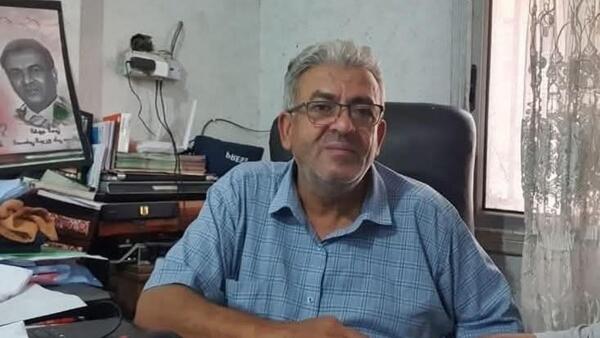
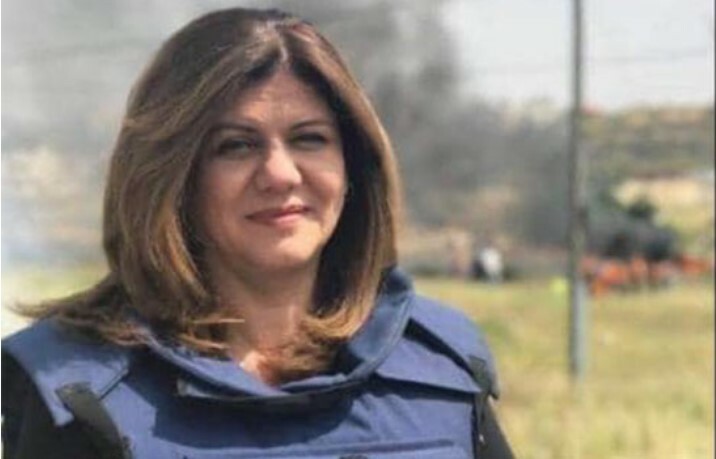
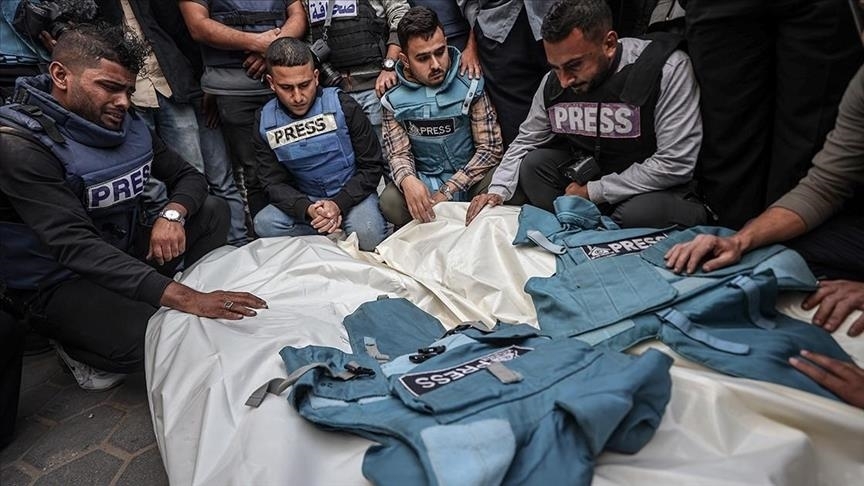
Israeli occupation forces transfer journalist Ali Al-Samoudi to administrative detention.

The Israeli occupation authorities issued an administrative detention order against journalist Ali Al-Samoudi (58 years old) from Jenin, for a period of six months, bringing the number of journalists administratively detained in the occupation prisons to (20) journalists, who are among (50) male and female journalists whom the occupation continues to detain since the beginning of the war of extermination.


A joint statement issued by the Commission of Prisoners' Affairs and the Prisoners' Club, today, Thursday, clarified that this data includes only those who were arrested after the war of extermination, noting that there are (6) journalists detained before the start of the war on October 7, 2023.


The Commission and the Club added that journalist Al-Samoudi was subjected to torture following his arrest on April 29. He was initially detained in a military barracks in Jenin, then transferred to Al-Jalameh detention center and later to Megiddo prison, where he is being held today.


The Commission and the Club noted that Al-Samoudi's arrest and transfer to administrative detention comes amid the occupation's continued escalation in targeting journalists through arrests, specifically through the systematic policy of administrative detention, which constitutes the most prominent crime that witnessed a historical transformation after the genocide, or through arrests on the basis of what the occupation claims is "incitement."


The Commission and the Club hold the occupation responsible for the life and fate of journalist Samoudi, who suffers from numerous health problems and previous injuries, especially with his continued detention in Megiddo Prison, which is a symbol of systematic medical crimes, along with many other systematic crimes, which have been a central reason for the deaths of many prisoners and detainees.

PALESTINE

Thu 08 May 2025 10:34 am - Jerusalem Time

Israeli occupation forces storm a Jerusalemite's home and assault his family


Israeli occupation forces stormed the home of a Jerusalemite man on Thursday and assaulted his family.


The Jerusalem Governorate said that occupation forces stormed the home of Jerusalemite Areen Al-Za'anin and assaulted him and several members of his family.

PALESTINE

Thu 08 May 2025 10:25 am - Jerusalem Time

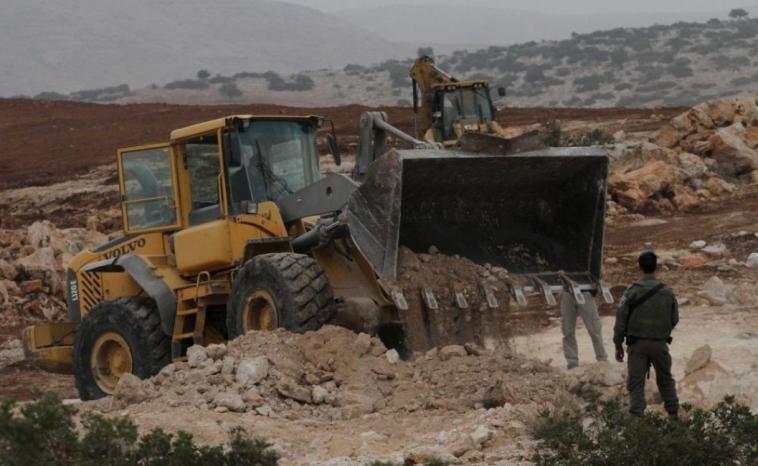
Israeli settlers bulldoze lands in the northern Jordan Valley

Today, Thursday, settlers began bulldozing private lands in the northern Jordan Valley.


Mahdi Daraghmeh, head of the Al-Maleh village council, reported that settlers brought a bulldozer and began bulldozing privately-owned land in Umm al-Jimal in the northern Jordan Valley.


Last summer, approximately 14 families were forced to leave their homes due to increased attacks by settlers.


Last year, settlers established a colonial outpost near citizens' homes and seized hundreds of dunams of grazing land that the citizens relied on to feed their livestock.

PALESTINE

Thu 08 May 2025 9:51 am - Jerusalem Time

Israeli occupation forces have placed military orders on schools in Shuafat, Jerusalem, ordering their evacuation

Israeli occupation forces stormed schools in the Shuafat refugee camp, northeast of occupied Jerusalem, on Thursday, and issued military orders mandating the evacuation and closure of the schools. They demanded that students and teaching staff leave the area immediately, as the decision to close six UNRWA schools went into effect.


The Jerusalem Governorate said in a statement on Thursday that Israeli police forces stormed the school's surroundings and grounds, amid heightened tensions and fears of attacks on students and teachers. This comes as part of a systematic Israeli escalation against Palestinian educational institutions in the city.


On April 8, the occupation authorities issued a decision to three schools in the Shuafat refugee camp, and one school in each of Sur Baher, Silwan, and Wadi al-Joz, prohibiting anyone from entering the school building after May 8, 2025, including principals, teachers, staff, and parents.


UNRWA stated that the occupation's implementation of its decision to close the six schools would deprive 800 children of their right to education, which constitutes a violation of Israel's obligations under international law.


In October 2024, the Israeli Knesset passed a law banning the activities of the United Nations Relief and Works Agency for Palestine Refugees (UNRWA) in Israel.

OPINIONS

Thu 08 May 2025 9:46 am - Jerusalem Time

Israeli Newspaper: Trump is coming to the Middle East to make deals, and Netanyahu could offer him the deal of his life

N12 Channel

N12 Channel

Opinion Writer

Yaki Dayan

Next week will witness US President Donald Trump's first diplomatic visit (except for his visit to the Pope's funeral). Trump will visit Saudi Arabia, Qatar, and the UAE, and will hold a summit with the Gulf states. This visit will be an opportunity that could help shape the future of the Middle East, and it is right for Israel to take the initiative and not wait for a "plan" to be dropped from above.

It is no coincidence that his first visit to the Gulf, as planned, will be his first. Essentially, Trump views his foreign policy from the perspective of "economy and profit first." An economic foreign policy aimed at making the United States richer. Mohammed bin Salman [the Saudi Crown Prince] promised Trump $600 billion in investments in the United States, before the massive arms sale between the two countries, estimated at $100 billion, was concluded. The president promised that he would return from the visit with a Saudi commitment to investments of up to $1 trillion, and it is important to remember that Qatar and the UAE speak the same language. Two weeks ago, the US Secretary of Energy concluded a visit to Riyadh, during which an agreement was reached to build civilian nuclear reactors. Who do you think will build them? The Americans, of course.

Saudi Arabia will not only become a major trading partner for the United States, but Trump is also giving it an additional role in his vision for the Middle East, namely to fill the vacuum left by the Iranians, from Lebanon to the Gaza Strip.

However, the US president's ambitions do not stop there. He wants to expand the Abraham Accords, which could transform the entire Middle East and perhaps even lead him to the Nobel Peace Prize, which he has deserved since his first term, although the Europeans may find it difficult, this time, to ignore him. Currently, Trump is engaged in negotiations with the Iranians regarding a nuclear agreement, as Washington and Riyadh prefer to reach an agreement rather than the option of a military attack.

Rather than waiting for circumstances to impose a reality on us that we as Israelis may not like in a new Middle East, Prime Minister Benjamin Netanyahu must now present an initiative to President Trump before his visit to Saudi Arabia. This initiative requires Israel to agree to the Egyptian proposal to end the war in Gaza, which includes a five-year ceasefire and the release of all 59 kidnapped Israelis. This proposal will allow Trump to initiate the process of Saudi Arabia's accession to the Abraham Accords during his upcoming visit.

However, Israeli approval must be conditional on several basic demands:

An agreement with the Americans regarding Gaza, based on the "Lebanon model," meaning that Israel will remain in control and be empowered to eliminate any identified threat.

Any agreement with the Iranians must include a ban on uranium enrichment within their territory, the dismantling of nuclear facilities under American supervision, without an expiration date, the halting of their long-range missile program, and the cessation of support for "terrorism." If these provisions do not lead to an agreement, a joint American-Israeli military strike will be carried out against the nuclear facilities. Even from a domestic political standpoint, reaching an understanding of this kind with the Americans would provide Netanyahu with a sense of immunity, as he would be able to keep [Finance Minister] Bezalel Smotrich within the coalition, since, according to polls, the alternative available to him is far from guaranteed. Prime Minister Netanyahu can reassure Smotrich that the greatest threat of all is the Iranian threat, and it will be addressed. Even if Itamar Ben-Gvir leaves, the coalition will still be able to continue functioning politically.

Dismantling the Iranian sites at Bordeaux and Natanz, in exchange for the release of all our abductees and a long-term ceasefire, is a deal that is difficult to refuse, in terms of priorities, from both the Israeli and American perspectives. This deal would give Netanyahu the ability to take the initiative, rather than waiting for some settlement to be imposed on us, and would give him access to the process of shaping the new Middle East. The year 2025 holds the potential to reshape the region, and planning and initiative must begin from within first.

OPINIONS

Thu 08 May 2025 9:42 am - Jerusalem Time

Haaretz: Trump Will Not Turn the United States into a State Under Israel's Patronage

Translation for "Alquds" dot com

Translation for "Alquds" dot com

Opinion Writer

By Aluf Benn

Since the beginning of his second term, Donald Trump has been implementing major changes in American administration, society, the economy, culture, and science. He asserts that he will completely destroy the old arrangements and build a nation that is conservative inwardly and closed outwardly. The revolution he is undertaking affects everything except one: relations with Israel. In this area, the president is following the approach established by his predecessors.

From the moment Harry Truman recognized Israel, the "special relationship" between the two countries began to operate almost invariably. Washington exempted Israel from the issues and standards it imposed on other countries, both friendly and rival: respect for borders, adherence to international humanitarian law, and the prevention of nuclear proliferation. Of course, there were differences between presidents regarding their deviation from Israel's special nature: John F. Kennedy wanted to close the reactor in Dimona; Jimmy Carter and Barack Obama tried to stop the spread of settlements; Ronald Reagan expressed his displeasure over the bombing of Beirut; Joe Biden halted some arms shipments. In all these disputes, Israel insisted on what it wanted, removed the pressure, and, after a while, got what it wanted.

The freedom of action that Israel received from the United States, without adhering to internationally accepted standards and under the auspices of the American veto in the Security Council, did not grant it unlimited influence over American foreign policy. From the founding of the state until today, Washington's rulers have not followed the path desired by Jerusalem, except on the Palestinian issue, which was, and remains, the most important issue for Israel, in terms of its existence, security, and well-being.

The Americans recognized the territorial and demographic consequences of the "War of Independence" [the 1948 War] and did not demand the return of the refugees. After the "Six-Day War" [the June 1967 War], they acquiesced to the ongoing occupation of the West Bank and East Jerusalem, even if they publicly declared that "the settlements are an obstacle to peace." But beyond the borders of the Land of Israel, the Americans have always made clear to Jerusalem, time and again, who is the superpower and who is the state under its protection. They expelled Israel from the Sinai Peninsula once in the Kadesh Campaign [1956] and another time through the peace treaty with Egypt. They prevented the sale of Israeli weapons to China, and they also prevented the bombing of the nuclear reactor in Iran.

When Trump came to power, he broke with the agreements he had with Israel: he moved the US embassy to Jerusalem; recognized the annexation of the Golan Heights; and refrained from insisting on the settlements. During his last week in office, he integrated Israel into the US Central Command's defense zone, effectively creating a defensive military alliance between Israel, Saudi Arabia, and the rest of the moderate states, as a complement to the Abraham Accords. Biden, for his part, did not reverse any of these decisions. He allowed Israel to demolish Gaza after the Hamas attack and to advance the annexation of the West Bank, even if he imposed symbolic sanctions on violent settlers.

When Trump returned to power, hopes were high in Israel, as if Benjamin Netanyahu would gain control of US foreign policy. Very quickly, it became clear that the president had no intention of allowing this. The plan has remained as it always has: Israel does what it wants with the Palestinians and follows Washington's orders everywhere else. Just as before Truman in the first Nakba, now Trump is agreeing to the occupation and ethnic cleansing of Gaza. But he is seeking a deal with Iran, contrary to the prime minister's position, and he even fired the national security advisor who, with Netanyahu, planned to bomb the nuclear reactor. While Trump may be irascible and impulsive, and disregard international law and human rights more than his predecessors, he will not turn the United States into a state under Israel's protection.

OPINIONS

Thu 08 May 2025 9:38 am - Jerusalem Time

Political Analysis: A Reading of Israel’s Strategy for the Future of the Gaza Strip

Mohsen Mohammad Saleh.

Mohsen Mohammad Saleh.

Opinion Writer

The Israeli strategy toward the Gaza Strip (GS) operates across three tiers—high, medium, and low—based on the level of feasibility. Despite the variation in goals at each level, one common objective seems to underlie all three: a Gaza without weapons and without Hamas!!

The highest tier envisions occupying GS, displacing its population, annexing it wholly or in part, reactivating settlement plans, and establishing direct or indirect control over it. This implicitly entails the elimination of Hamas and the disarmament of both its forces and other resistance groups. This vision is actively discussed in far-right and Religious Zionist circles and is supported by the US, with Trump having repeatedly called for the displacement of Gaza’s population.

The middle tier involves maintaining control points within GS, exercising overt or covert authority over the crossings, and retaining unrestricted access to Gaza’s airspace, with the ability to carry out targeted raids and strikes, as is done in the West Bank (WB). Governance of Gaza would be assigned either to Arab and international forces or to the Palestinian Authority (PA)—but under Israeli-defined terms. This scenario excludes displacement, annexation and settlement, while facilitating the entry of basic necessities and some reconstruction materials. It also includes an intensive program to disarm the resistance and remove Hamas from both the political arena and the administration of the Strip.

Israel will seek to achieve what is attainable within the upper and middle tiers, based on field conditions and on-the-ground developments. At the same time, it will use these tiers as leverage in negotiations, especially if the resistance maintains its operations, aiming to reach its desired minimum objective. Israeli efforts will likely include generating pressure from international, Arab and internal Palestinian fronts—particularly from the PA and its supporters. There may also be attempts to fabricate and expand a protest movement against the resistance within GS. These moves would be reinforced by Arab and international political and media campaigns portraying Hamas as the intransigent party blocking an agreement and causing the Strip’s suffering. In addition, the cessation of the war, Israel’s withdrawal from GS, the halting of the displacement plans, and a partial easing of the blockade—along with the introduction of a Palestinian administration modeled after the PA—will be all framed as major Israeli “concessions.” This would amount to an attempt to make Hamas “swallow the knife” by conditioning the end of the war and a full Israeli withdrawal from the Strip on Hamas and the resistance agreeing to disarm and exit the Palestinian political and institutional arena.

However, the danger of such a strategy lies in its attempt to achieve the war’s primary objective while simultaneously presenting it as an Arab and international demand. It is further framed as a “national” and “pan-Arab” achievement by the normalizing Arab states that reject displacement but align with Israeli and US hostility toward the resistance axis and the “political Islam” current. Furthermore, it portrays the PA as a viable alternative capable of ending Palestinian suffering.

Key Elements of the Israeli Strategy:

An objective and analytical review of Israeli statements and positions—alongside an assessment of the actions taken by Netanyahu, his government and the military on the ground—reveals the following as the key elements of Israel’s strategy toward GS and its future:

1. Attempting to restore the image lost by Israel, on 7/10/2023, following the severe blow to its security theory, the loss of deterrence power, and the erosion of public trust in it.

2. Attempting to rebrand Israel’s functional role as an advanced fortress and a blunt instrument for Western influence in the region, while positioning it as a reliable power for Arab normalization countries, particularly in managing conflicts with their regional competitors.

3. Attempting to sear, in the harshest possible way, a sense of deterrence into the consciousness of the popular base in GS and the resistance—through overwhelming force, brutal civilian massacres, and the total destruction of homes, infrastructure, government institutions, schools, hospitals, mosques, churches, crops, and water wells, among others. This is carried out with complete disregard for legal, ethical or political standards, aiming to instill the “complex” of preventing a repeat of the October 7th attack.

4. Exploiting the wartime context to impose visions of “postwar” governance in GS, shaped by Israeli criteria and standards.

5. Exploiting the wartime environment to advance and accelerate Judaization and displacement projects in WB and GS.

6. Expanding Israel’s security doctrine to include effective deterrence across the strategic surroundings of Israel, with the aim of securing its stability and longevity—even after the Palestinian file is deemed closed. This vision has been repeatedly articulated by Netanyahu.

7. Raising the negotiation ceiling with the resistance to extremely high levels—even if these goals are unattainable—in order to use them as leverage and tools of pressure during the negotiation process.

8. Seeking to minimize the impact of the Israeli captives’ issue on the costs paid to the resistance, whether by attempting to free them, prolonging negotiations, or emphasizing the potential gains of continuing the war—even if it risks the loss of additional captives.

9. Maximizing the use of US influence and backing within the international arena, the UN Security Council and the Arab environment. Also, leveraging the US role as a mediator and its support in political, military, economic and media fields.

10. Maximizing the exploitation of Arab weakness and disillusionment, leveraging the alignment of several Arab states with anti-resistance and anti-“political Islam” agendas, and taking advantage of the ineffectiveness and failure of international institutions, all in order to advance the Israeli agenda.

11. Prolonging the war as much as possible to achieve maximum gains against the resistance, while maintaining the cohesion of the extremist coalition governing Israel, advancing its internal agendas, and evading both collapse and accountability.

12. Deliberately concealing the true losses of the Israeli army, fabricating lies about its achievements, and attempting to obscure widespread desertion within the reserve forces, as well as crises related to recruitment, all in an effort to maintain domestic support for the war.

13. Deliberately violating agreements with the resistance and using that as a means of military, political and economic coercion—exploiting the exhaustion and suffering in GS to tighten the blockade and secure strategic and negotiating gains, particularly at the resistance’s expense.

Disarmament of the Resistance:

Recent discussions have increasingly linked “post-war” arrangements in GS to the disarmament of Hamas and its exclusion from the political arena. European leaders, including French President Emmanuel Macron—despite his support for the two-state solution and recognition of a Palestinian state—have echoed this stance. Notably, Egypt, in its role as mediator, has added the disarmament issue to the list of negotiation clauses between Hamas and Israel. This has raised concerns among Hamas and other resistance factions, who maintain that resistance weapons are a “red line” and will not be subject to negotiation. Meanwhile, some figures aligned with the PA have sought to exploit the severe humanitarian suffering in GS by redirecting public anger toward Hamas and the resistance, rather than maintaining pressure on the Israeli occupation for its continued aggression and crimes.

The Israeli escalation, following the violation of the ceasefire and the tightening of the blockade on GS—preventing the entry of essential supplies—was characterized by bloody aggression and brutal massacres, with women and children bearing the brunt of the suffering. Israel also reoccupied parts of the Strip, displacing large numbers of its already exhausted people, who had been drained of their blood, resources and homes. This heightened the pressure to unbearable levels, while Israel reiterated its agenda with its most extreme demands. However, the resistance surprised Israel by reactivating its effective military operations and launching a parallel political campaign that reaffirms its steadfastness on fundamentals, while demonstrating maximum flexibility in issues like prisoner exchanges, aiming to save Palestinian lives, end the war and ensure a complete Israeli withdrawal from GS.

Resistance’s Arms are a Red Line:

In response to Netanyahu’s “zero-sum” strategy, driven by his extremist government, there are no clear signs of ending the war, fully withdrawing from GS, lifting the blockade, or even restoring the situation to what it was before October 7—unless the resistance continues to exhaust Israel’s army, economy and security, while intensifying internal pressure and raising the costs of the war to unsustainable levels. The resistance has made significant strides, particularly after resuming its targeted operations, while Israel’s situation becomes increasingly untenable. Israeli Chief of Staff Eyal Zamir admitted that the war could last months or possibly even years. Meanwhile, Trump’s volatile and urgent nature limits Netanyahu’s ability to prolong the war, compounded by Trump’s push for breakthroughs in regional normalization and Iran’s nuclear file. This is further complicated by an anxious Arab environment, which holds the potential for change and upheaval, and an international landscape where support for Israel has dwindled, even among its European allies.

The luxury of having options is non-existent for the resistance when it comes to engaging in this “zero-sum” battle aimed at eradicating the Palestinian people and their cause. Therefore, reliance on the resistance and its weapons remains a fundamental condition and a red line in confronting the occupation and thwarting its plans. Historical experience over more than a century bears witness to the Palestinian people’s ability to thwart dozens of plans and projects targeting them, and they are also capable of defeating this strategy and resisting this aggression.


PALESTINE

Thu 08 May 2025 9:27 am - Jerusalem Time

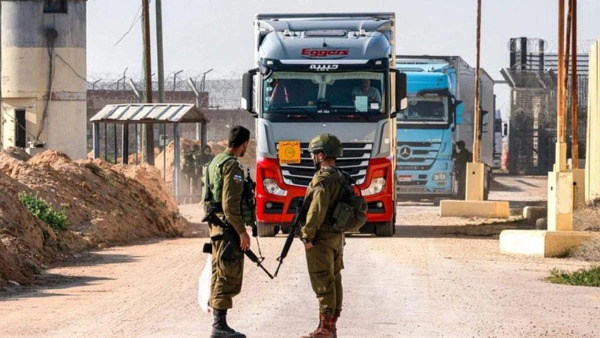
Witkov briefs the Security Council on an Israeli-American plan to bring aid into Gaza.

Axios reported that US President Donald Trump's special envoy, Steve Witkoff, briefed the UN Security Council on a new Israeli plan to resume aid distribution to Gaza. Following the briefing, which also covered other regional issues, Witkoff held a brief one-on-one meeting with Israel's UN Ambassador Danny Danon, according to Danon's office.


International organizations have criticized the aid initiative, approved by the Israeli occupation government last week and supported by the United States, describing it as insufficient and dangerous.


Data and testimonies from within the Gaza Strip indicate a worsening hunger crisis and rising malnutrition rates, while the occupation claims to be working on a new aid distribution system that it hopes will prevent aid from reaching Hamas.


Israeli officials have so far claimed that Gazans are not yet starving, but an Israeli official said last week that the Israeli military believes it only has a few weeks before a major humanitarian crisis erupts in the Strip due to shortages of food and medical supplies.


According to the Axios news website, the Trump administration is "pressuring countries to donate funds to the mechanism and for the United Nations to cooperate with it," while the US State Department declined to comment on the matter.


The occupation authorities halted the entry of any aid into Gaza on March 2, following the end of the first phase of the ceasefire agreement with Hamas and the release of hostages. Israel claims that Hamas diverted a significant portion of the aid that entered during the six-week truce, and that the 650 trucks entering daily were sufficient to feed the population for a prolonged period.


The Trump administration is pressuring international humanitarian organizations to cooperate with Israel's new plan to resume aid distribution in the Gaza Strip after the Israeli occupation army's more than two-month blockade, according to Israeli media sources.


Organizations familiar with the initiative have expressed deep skepticism, arguing that it fails to adequately address the humanitarian crisis in the war-torn enclave and requires them to be complicit in Israel's "weaponization" of aid.


Amid this refusal, the Trump administration has signaled to these organizations—including the World Food Program—that their US funding may be cut if they do not cooperate, according to an international aid organization employee, a senior Western diplomat, and an Israeli official who spoke to Israeli media.


As part of its efforts to engage the World Food Programme, the Western diplomat told The Times of Israel that US officials held a meeting earlier this week with the organization's executive director, Cindy McCain, along with representatives of the Gaza Humanitarian Foundation (GHF), which was established in January to develop a new solution for aid distribution that prevents Hamas and other terrorist groups from diverting aid. Representatives from Safe Reach Solutions and UG Solutions, two US companies contracted to secure humanitarian hubs established in southern Gaza for aid distribution, also participated.


When asked to comment on the matter, a Foreign Ministry spokesperson did not deny that pressure was being exerted on international organizations.


"While we have nothing to announce and will not speak on behalf of the organization, we welcome moves to get urgent food aid into Gaza quickly, in a way that prevents it from falling into the hands of terrorists. We have long advocated for creative solutions and fresh thinking that keeps Israel safe and helps the people of Gaza," the spokesperson said.


The US State Department spokesperson referred to US President Donald Trump's statements earlier this week, in which he asserted: "We will help the people of Gaza because they are being treated very badly by Hamas."


The World Food Programme is still seeking funding from various governments for the initiative, and while there had been hopes that the UAE would be among the most prominent backers, two sources familiar with the matter said that Abu Dhabi has not yet made such a commitment due to concerns about the feasibility of the mission. However, the Global Relief Foundation (GHF) still plans to publicly unveil the initiative later this week, with State Department spokeswoman Tammy Bruce indicating on Tuesday that "there will be a major announcement regarding aid access to Gaza in the next few days, and there is very good news."


Trump himself indicated on Wednesday that he would make an announcement related to Gaza within 24 hours.


The Israeli occupation army has already begun building the first of several humanitarian centers in southern Gaza, where it plans to distribute aid to civilians in the coming weeks, with Israeli officials acknowledging that some Gazans are "on the brink of starvation."


According to the Israeli military, the Israeli initiative will create a new humanitarian zone between the Philadelphi Corridor along Gaza's southern border with Egypt and the newly established Morag Corridor approximately five kilometers to the north.


The mechanism involves using private American security contractors to secure the aid centers, which will be located within the humanitarian zone but away from the tent camps where civilians are expected to shelter. Officials familiar with the plan said that between 5,000 and 6,000 accredited representatives will be allowed to travel on foot to the aid centers once every two weeks to collect a 40-pound food box for their families.


An international relief organization employee said the plan does not take into account the current reality in the Strip, where desperate, hungry Gazans are likely to flock to aid centers as soon as they open.


The United Nations has criticized the mechanism's plan to facilitate the entry of only 60 trucks into Gaza daily through a single crossing, saying this number is insufficient to feed Gaza's already malnourished population. Israel insists that the 60 trucks will be sufficient to prevent famine in Gaza.

ARAB AND WORLD

Thu 08 May 2025 9:27 am - Jerusalem Time

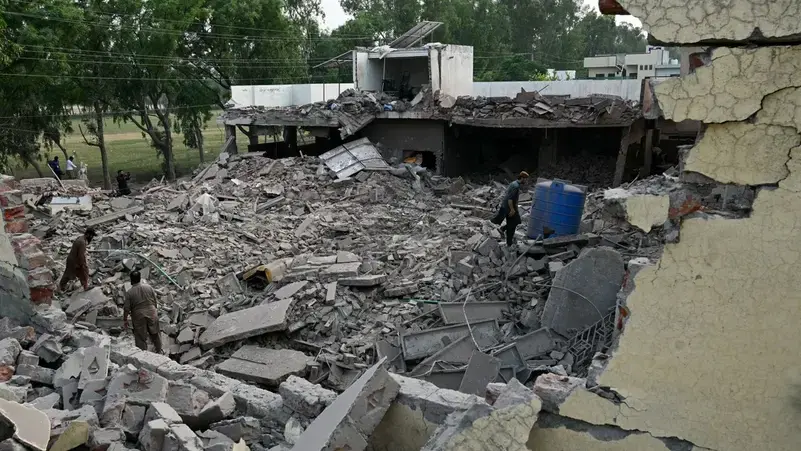
Clashes between India and Pakistan, and an Indian drone shot down in Lahore

A day after Indian strikes targeted multiple locations in Pakistan, fueling fears of an escalation in military conflict between the two nuclear-armed neighbors, the Indian military announced that "on the night of May 7-8, 2025, the Pakistan Army carried out unprovoked small arms and artillery shelling along the Line of Control (which effectively serves as the border between the two countries) in the Kupwara, Baramulla, Uri and Akhnoor sectors."
He added in a statement on Thursday that he "responded proportionately" and no casualties were recorded, according to Agence France-Presse.
Explosion in Lahore
An explosion was heard in the eastern Pakistani city of Lahore this morning, according to Reuters.
Pakistan later announced that it had shot down an Indian drone near a naval base in Lahore.
For its part, the Pakistan Airports Authority announced a temporary suspension of flight operations at Karachi, Lahore, and Sialkot airports.
The most dangerous military confrontation
This came after artillery and machine gun clashes erupted between India and Pakistan on Wednesday night and Thursday along the demarcation line separating the two countries in the Kashmir region, over which they dispute sovereignty, according to New Delhi.
The two countries exchanged heavy shelling on Wednesday, killing 31 people on the Pakistani side and 12 on the Indian side, in the most serious military confrontation between the two nuclear powers in two decades.
The most prominent events in the conflict between India and Pakistan in Kashmir
It is noteworthy that since the April 22 attack that killed 26 people in Indian-administered Kashmir, tensions have escalated between the two countries, which have been at odds since the country's partition in 1947.

This tension escalated into a military confrontation on Tuesday night, while international parties rushed to offer mediation between the two sides, or at least call for restraint.


OPINIONS

Thu 08 May 2025 9:20 am - Jerusalem Time

Why might Israel turn against Netanyahu soon?

Helmy Moussa is a journalist specializing in Israeli affairs.

Helmy Moussa is a journalist specializing in Israeli affairs.

Opinion Writer

Israel is experiencing an unprecedented, multi-dimensional, and multifaceted historical dilemma, which is reflected in the extent of polarization and conflict regarding the most important issues that concern the state and its future.

Although Israel has been in a state of crisis since its establishment in the wake of the Palestinian Nakba, over the years it has succeeded in maneuvering between war and peace, between regional and international demands, and, most importantly, within its own domestic context.

In its first decades, it succeeded in neutralizing most of its internal contradictions, creating a kind of melting pot for Jewish communities from more than 100 countries and 80 languages. But all this began to change on a large scale after the right-wing succeeded in coming to power in 1977.

Over the next two decades, amid a steady shift to the right, the picture was completely reversed. Instead of a kibbutz vanguard with "socialist" values, a fascist, religious settler vanguard emerged from among the settler herds.


Almost immediately after Netanyahu came to power, the remnants of liberalism began to disappear, even within the ranks of the right, until Netanyahu's most recent government became a symbol of the former right-wing fringes' control over the center of public life in Israel.

The extreme right found in Netanyahu a skillful, eloquent, and charming leader who knew how to manipulate the game to serve the right's interests and aspirations. On the path to this leadership, Netanyahu skillfully utilized all available tools, adhering to the principle that "the end justifies the means."

When his goal was to attain the leadership of the Likud, he built what was called at the time a "submarine," which led him and his then-director-general, Avigdor Lieberman, to the top of the Likud. Using mafia-like methods, the two men succeeded in removing the so-called "princes," sons of Herut's historic leaders—such as Benny Begin, Dan Meridor, Ehud Olmert, and Reuven Rivlin, among many others—from positions of influence.

They were replaced by a group of opportunists who obeyed his orders and showed no objection. The last of the princes he removed from the Likud was Gideon Sa'ar, who, after opposing him and joining his attackers, quickly returned to the government.

On his path to leadership, Netanyahu refused to accept the word "no" from any of his close associates, which led to his closest confidantes turning against him and becoming his bitterest enemies, despite their lack of opposition to his right-wing views. Among the most prominent of these are Avigdor Lieberman and Naftali Bennett.

As previously mentioned, Lieberman led Netanyahu's submarine to the leadership of the Likud Party and was even his partner in the clash with Ariel Sharon. He became the director general of the Prime Minister's Office and held the reins of the Knesset and state ministries on Netanyahu's behalf, to the point where he was dubbed "Yvette the Terrible," akin to Ivan the Terrible in Tsarist Russia.

A dispute arose between them, and Lieberman established the "Israel Beitenu" party against him, relying primarily on his influence among Russian immigrants, before transforming it into a generally right-wing party.

Naftali Bennett, who had been one of Netanyahu's closest advisors, also quickly left Netanyahu's office and became one of his most bitter enemies. Bennett joined Religious Zionism to lead it in partnership with others, but Netanyahu's hostility toward him prompted him to form the most important coalition to confront Netanyahu, in cooperation with Yair Lapid, leader of Yesh Atid.

With a small number of seats in the Knesset, Bennett succeeded in establishing himself as prime minister of the opposition government to Netanyahu. It is possible that the Bennett-Lapid government, which demonstrated that Israel could survive without Netanyahu, prompted Netanyahu and the far right to wage the most vicious and distorting propaganda campaigns against their opponents, leading to their success in winning a narrow majority in the last election. It was these elections that produced the Netanyahu-Smotrich-Ben-Gvir government.

Given the nature of the two men, Smotrich and Ben-Gvir, it would have been almost impossible for them to meet had it not been for Netanyahu's efforts, who promised to fulfill their personal and national dreams. It was Netanyahu who brought together the two extreme right-wing fringes, Smotrich and Ben-Gvir, promising them and their parties victory and the highest positions in the state.

Immediately after he succeeded in forming a government, he agreed to grant them critical ministries such as Finance, a branch of the Ministry of Defense responsible for the West Bank, and the Ministry of National Security.

And that's what happened. They won the elections and became central players in Netanyahu's coalition. They quickly fell out within the government, contradicted each other, and separated. A constant race between them to win the upper hand is the extremism.

Netanyahu wasn't forced into this coalition formation, but he not only chose it, but he also created it, and he viewed it as a "full right-wing government." This government, without objection, is capable of realizing the right's dreams of building a Greater Israel and rebuilding the Temple.

It is no coincidence that Netanyahu was driven by personal and ideological motives in all his positions and alliances. His wife, Sara, and his son, Yair, played a central role in his stance against secularism, the left, democracy, and everything that contradicts fascism.

Due to his and his family's proclivity for extravagance and luxury, he established dubious relationships with numerous business leaders and billionaires, some of whom were driven to purchase several major Israeli media outlets, both visual and audio, in an effort to reshape Israeli public opinion in favor of the right.

Indeed, an American billionaire, Sheldon Adelson, established a free newspaper, Israel Hayom, to compete with widely read and historic newspapers like Yedioth Ahronoth and Haaretz. He led to the collapse of Maariv and its restructuring, and attempted to take control of the Walla news website.

In general, these relationships have served as the basis for several corruption cases for which Netanyahu is being prosecuted, including the case of receiving expensive gifts from businessmen to facilitate their control of interests or media outlets.

Because of these legal prosecutions, Netanyahu has agreed with a number of right-wing forces to overthrow the judiciary and even the state's structure and institutions, serving the goal of deflecting the wrath of the law from himself.


Initially, he attempted to enact a law preventing his prosecution. When that failed, he attempted to change the direction and composition of the judiciary in general and hand over its authority to the Knesset, thereby eliminating the independence of the judiciary and subjecting it to the legislative authority, which he succeeded in eroding and subjecting to his command.

Almost everything we hear today in Israel about the conflict between the political and military levels, conflicts with the Shin Bet at one time, with the Mossad at another, with the police leadership, and with the Attorney General, stems from this point.

Netanyahu—and the right wing behind him—want complete and unconditional control over all state institutions, transforming them into tools serving the leader or the right wing, rather than working in the interests of the state.

Naturally, this approach provoked widespread opposition from within institutions and society. Over time, the conflict intensified, with demonstrations and protests sweeping across Israel.

Some believe this rift and conflict was a major reason behind Hamas's rush to detonate the Al-Aqsa flood on October 7, 2023.

But the war and its length did not help quell this opposition; rather, they greatly intensified it. The failures of October 7 revealed not only weaknesses in the Israeli military and political system, but also a collapse in the concepts upon which Israel relied in dealing with contradictions.

It has become clear to everyone that blocking the path to a regionally and internationally acceptable peace settlement does not guarantee security for Israel. Israel's failures in the war and its prolonged duration also demonstrated that dealing solely with force and using more force whenever the initial force fails to achieve the goal does not guarantee victory.

But if this is the conclusion of the Israeli public and its balanced institutions, it is not the conclusion of Netanyahu and the ruling right. This is the true meaning of opinion polls, which show that a majority of Israelis, and a majority of former and current military and security leaders, support a ceasefire, a prisoner exchange deal, and the formation of an official commission of inquiry into the events of October 7 and into the political and military performance before and after that.

This also demonstrates why Netanyahu and the right-wing insist on refusing to stop the war and even developing a theory of permanent war as a means of remaining in power. In their view, stopping the war would mean the defeat of Netanyahu and the right-wing's political and intellectual project.


In this context, Israeli President Isaac Herzog's call for a settlement emerged, not just late last month, offering a deal to halt prosecutions against Netanyahu in exchange for a "pleasure plea" and a departure from political life.

Of course, this isn't just a call, as the Israeli president also has the power to pardon even a convicted criminal. Many therefore understood this as a call from a centrist president who wants to spare Israel from continuing to spiral into a cycle of conflict, judicial coups, and the search for and clash with the "deep state."

Israeli authorities had submitted a request to Herzog to consider this proposal late last year, but he stipulated that the request should come from authorized parties. The resubmission of the proposal appears to be a testament to the bleak outlook that awaits if the conflict between Netanyahu and other state institutions continues, and the president himself seeks a way out.

But one thing can be said: Netanyahu, who has become the longest-serving prime minister in Israel's history and has ruled the country longer than its historical founders, finds it difficult to accept his expulsion from political life. In his own eyes, and perhaps in the eyes of many others, he is one of the prophets of the global New Right, and there are those who have read and embraced the ideas he has presented in his books on politics, counterterrorism, and the clash of civilizations.

The extreme right, not only in Israel but also in America and perhaps in some European countries, will not accept such a withdrawal from political life. This would be a defeat for an idea that would leave behind a profoundly impactful earthquake.

In Israel, the matter is clear and requires no explanation. Netanyahu is not just a person, but rather an expression of the extreme right's transition from the most distant and marginal corners to the center of decision-making.

What will likely bring down Netanyahu is the conflict within the right wing between its Haredi, religious, and fascist nationalist components. This is currently evident in the conflict between Likud and the Haredim over the conscription law, with the Haredim beginning to abstain from voting in favor of the government's proposals.

There is a struggle between the parties of Smotrich and Ben-Gvir over who will prevail among voters in the upcoming elections, and many supporters of the traditional right are abandoning it in favor of more or less extreme trends.

The public mood in Israel under Netanyahu has also become more pessimistic, meaning that the upcoming elections, as opinion polls indicate, are not promising for either Netanyahu or the right.


OPINIONS

Thu 08 May 2025 9:17 am - Jerusalem Time

Trump's personality and the making of history

Majdi Al-Shomali

Majdi Al-Shomali

Opinion Writer

There is no doubt that there is a strategic alliance between Israel and America, and Trump was part of this alliance during his first term in office, during which he killed Soleimani, canceled the nuclear agreement with Iran, moved the embassy to Jerusalem, and recognized the Golan Heights as Israeli property.

But Trump, with his confident personality and arrogant pride, which only grew after the US election results, in which he won by an unprecedented majority, became more impulsive and overconfident, to the point of arrogance. Let's not forget his frequently repeated statements, such as: "If I were president, the war in Ukraine would not have happened," "If I were president, October 7 would not have happened," "And I will stop the war in Ukraine before I assume the presidency," etc.

One hundred days into his presidency, Trump is discovering that he has not fulfilled any of the promises and plans he announced. He has stumbled in Panama, Canada, Greenland, Europe, and Ukraine, and is now about to turn to the Middle East.
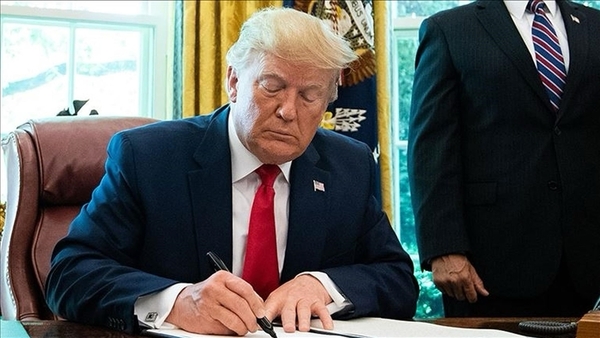
Trump pauses to review the past, saying to himself: "I canceled the nuclear agreement in favor of Israel, and now it's dragging me into a war with it and trying to interfere in negotiations with Iran... I killed Soleimani in favor of Israel, while it denied any connection to the operation (to avoid revenge)." Then he reviews the past 100 days and says: "Israel supports Zelensky (the Jew), who rebelled against me at the beginning of my term, left the meeting as a hero, did not sign the minerals agreement, and did not accept an end to the war." Without Netanyahu's knowledge, he decides to initiate negotiations with Iran.
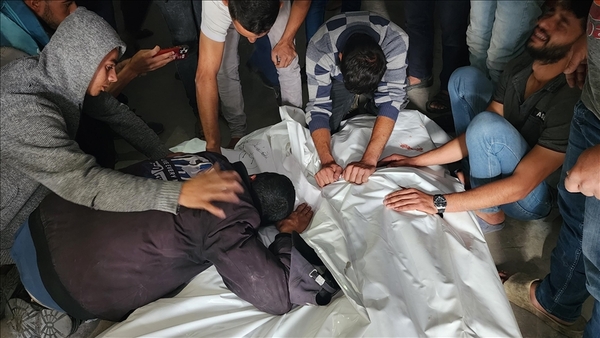
Trump recalls how he imposed a ceasefire in Gaza shortly before taking office and how the aid delivery began. He then recalls how Netanyahu capitulated to the extremists, canceling the agreement and starting the war again, this time more intense and brutal, with famine imposed on Gaza. He also recalls the decisions of the Israeli security cabinet to launch a wider war and occupy Gaza, and Netanyahu's statements that he would not withdraw from it. His memory takes him back to his dream of controlling the Gaza Strip, only to realize that the victory he achieved by stopping the war has been lost, and that his dream of owning Gaza has evaporated.

Trump sees Israel's eagerness to grab a piece of the "Syrian pie" and its complaints about Türkiye's role, so he responds: "Erdogan is my friend... go and talk to him."

Trump recalls that he launched daily raids on Yemen on behalf of Israel, and when he hears Netanyahu declare that he is "not bound by the previous pattern of responses," he feels insulted. He immediately stops, calls Yemen, and reaches an agreement without having to inform Israel.

On his way to Saudi Arabia, he recalls the call he had with Mohammed bin Salman, during which he received a trillion dollars. Then he recalls the sums America spends arming Israel, and asks, "Why should I pay Israel what I receive from Saudi Arabia?"

He remembers that his national security advisor made contact with Israel without his permission, so he gets angry and fires him immediately.

He also remembers the massive demonstrations in America and Europe against the war, against Israel, and against America itself, and he says to himself: "Why should I pay the price?"

Trump recalls the election period and the Zionist lobby's stance, shaking his head, dismissing his son-in-law Kushner and replacing him with his Lebanese cousin, Massad Boulos.

Netanyahu bombs the port of Hodeidah and declares that he "consulted with Trump," only to receive a response from America: "He informed us... but we did not consult."

As Trump packs his bags, he decides there's no need to visit Israel. Netanyahu leaves the courtroom where he's being tried for corruption and heads to the operations room to witness the destruction of Sana'a airport.

Trump looks at the map and finds that all the countries in the region are loyal friends of his (the regimes), with the exception of Netanyahu... his strategic ally. He recalls his landslide victory in the presidential elections and says to himself: "Netanyahu has rebelled against me. He acts as if he were my partner in the presidency, and he must be punished. We gave him everything, and he did not win in Gaza. He must go."

As for Netanyahu, he drinks a lot of coffee, paces back and forth in his house, screaming and crying, and says to himself: "Should I resign to maintain America's support, or should I use the lobby to get rid of Trump?"

PALESTINE

Thu 08 May 2025 8:43 am - Jerusalem Time

Israeli occupation launches an arrest campaign in the West Bank.

Israeli occupation forces launched a campaign of raids and arrests in the West Bank at dawn on Thursday.


In Salfit, the occupation forces arrested: Ammar Abdul Rahman Salman and his son Karim, Samer Abdul Rahman Salman and his son Ali, Saad Tawfiq Khaled and his son Karim, Mithqal Muhammad Saeed Al-Qadi and his son Majdi, Khaled Muhammad Saeed Al-Qadi and his son Salah, Mahmoud Awda Al-Khatib and his son Rami, Mahmoud Abdul Qader Aql and his son Hamza, Jamil Ahmed Kokash and his son Ahmed, Rafiq Awad and his son Rafiq, in addition to Wissam Abu Hijleh and his brother Nour.


During the raid, the occupation forces raided a number of homes and ransacked their contents, causing significant material damage and sparking panic among residents, especially women and children.


In the same context, the occupation forces stormed the town of Al-Zawiya, west of Salfit, and raided a number of homes, whose owners were identified as Jaber Shaqir and Iyad Abdul Halim Shaqir. They searched the homes and ransacked their contents.


In Jenin, occupation forces arrested a young man from the town of Barta'a after storming the town and besieging a house.


Local sources reported that a special force from the occupation army and several military vehicles stormed the town and surrounded a house before arresting a young man from inside.


In Qalqilya, occupation forces stormed the city from the eastern entrance and deployed in several neighborhoods, including Kafr Saba. They arrested Yahya Abu Libdeh after raiding and searching his home.


In Bethlehem, the occupation forces arrested Eid Kamel Eid (35 years old) and Adham Nasser Awad (35 years old) from the Al-Saff Street and Wadi Shahin areas in Bethlehem, and Zaid Haitham Abu Ajamiya (18 years old) from the Deheishe refugee camp in the south, after raiding and searching their families’ homes.


The occupation forces also stormed the village of Husan to the west and arrested the young man, Tamer Wafa Zaoul, after raiding and searching homes, including those belonging to the citizens: Fayez Ismail Shousha, Hamza Zakaria Zaoul, Atef Yassin Hamamra, and Murad Muhammad Zaoul.


Meanwhile, the towns of Beit Fajjar, Marah Rabah, and Tuqu' were raided, without any reported raids or arrests.


In Hebron, the occupation forces raided several homes in the town of Yatta, south of Hebron, and arrested brothers from several homes, including: Majdi, Muhammad, Khalil Hammad Shriteh, Saqr, Laith, Khaled Muhammad Al-Shawahin, Ihab Hisham Abu Zahra, Muhammad Buhais, Yazan Abu Qubaita, Omar Al-Najjar, Ismail Abu Aram, Ahmed Abu Ali, Azzam Makhamreh, and the brothers Ziad and Jamal Al-Najjar from the Shaab Al-Batm gathering in Masafer Yatta after raiding their homes. They also searched citizens’ homes, ransacked their contents, and abused them.

PALESTINE

Thu 08 May 2025 8:37 am - Jerusalem Time

Continuous Israeli massacres result in 93 Palestinian dead in one day

Dozens of dead in the restaurant and market massacre
 Dozens of wounded people wait their turn in front of operating rooms.


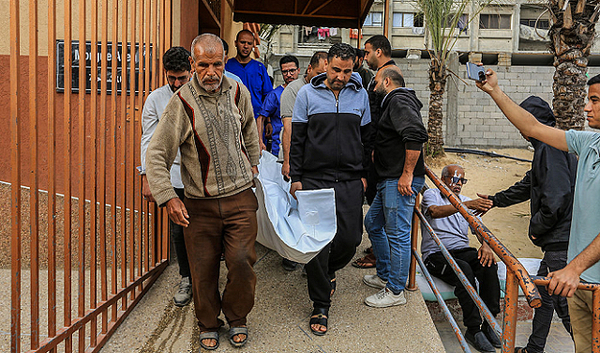
Dozens of people, including children, were killed and wounded on Wednesday in horrific Israeli attacks targeting a restaurant, a popular market, and a school housing displaced people in the Gaza Strip.
Medical sources said that 93 martyrs have been killed in Israeli airstrikes on the Gaza Strip since dawn yesterday, 60 of them in Gaza City.
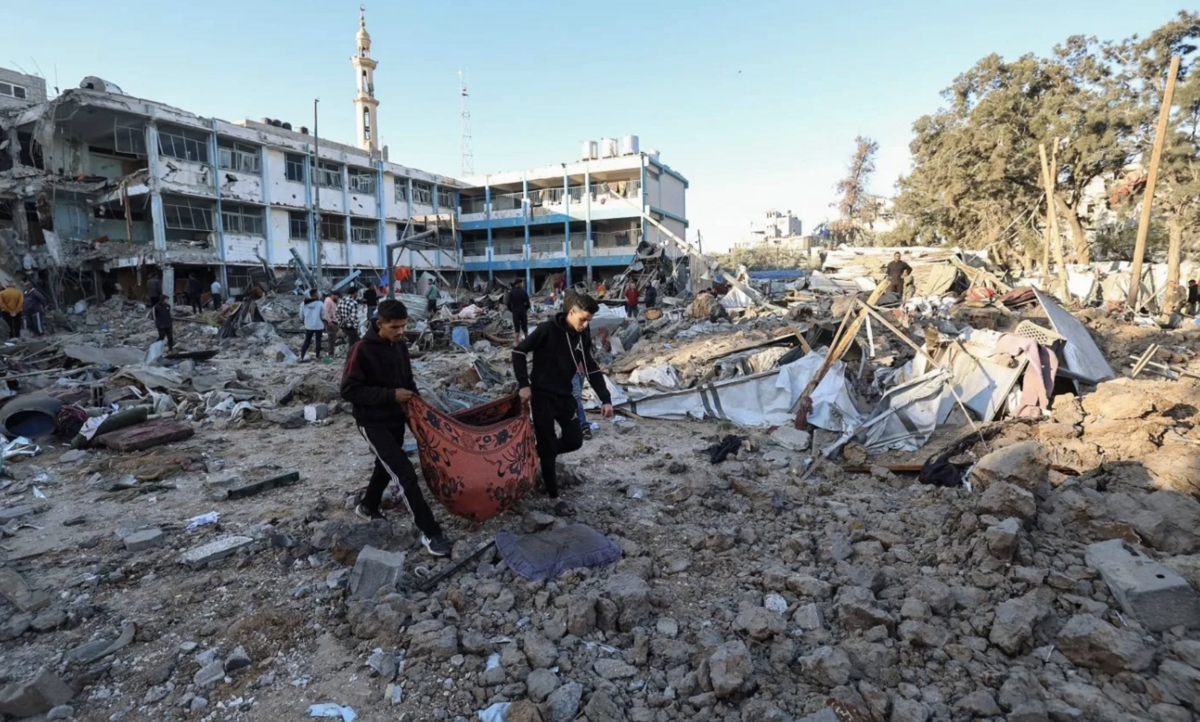
The Government Media Office in Gaza reported that the occupation forces committed four bloody massacres, deliberately targeting civilian and displaced persons. These attacks included the bombing of two schools housing more than 10,000 displaced persons, as well as a restaurant and a crowded market, resulting in dozens of deaths and injuries.
At least 32 civilians were killed and others injured when Israeli warplanes bombed a restaurant and a popular market in the Al-Rimal neighborhood, west of Gaza City.
Medical sources reported that Israeli aircraft carried out an airstrike targeting the Thai restaurant and its surroundings in Gaza City, killing 32 civilians, including journalist Yahya Subaih, and wounding others.
The martyrdom of journalist Subaih, who worked for a local news agency, came just hours after he embraced his newborn daughter, as he posted a photo of him holding her in his arms on his Instagram account.
Yesterday morning, the Israeli occupation forces committed another massacre by bombing Al-Karama School in the Al-Tuffah neighborhood, east of Gaza City.
Medical sources reported that the death toll from the bombing of Al-Karama School had risen to 19, including journalist Nour El-Din Abdo, in addition to dozens of wounded.
The Israeli army continues to commit genocide and starvation crimes against civilians in the Gaza Strip for the 579th consecutive day, amid a stifling blockade imposed on the territory by closing all crossings and preventing the entry of food, medicine, and humanitarian aid for more than two months, exacerbating an unprecedented humanitarian catastrophe.
Medical sources said the death toll from the two massacres committed by the occupation forces in the bombing of Abu Hamisa School, which houses displaced persons in the Al-Bureij refugee camp in the central Gaza Strip, the day before yesterday, has risen to 33 martyrs and 73 wounded. The school was targeted twice.
Yesterday evening, three citizens were killed and others were injured in the occupation's shelling of the Tal al-Hawa neighborhood in the south of Gaza City. Two citizens were also killed and eight others were injured when the occupation targeted a group of citizens in al-Zawayda in the central Gaza Strip.
Yesterday afternoon, medical services recovered two children who were killed and another seriously injured, as a result of an Israeli attack near the American School west of Beit Lahia in the northern Gaza Strip. Three citizens were also killed in an Israeli airstrike on the home of the Abdul Qader family in Tal al-Zaatar, east of Jabalia in the northern Gaza Strip. A female citizen was martyred in an Israeli drone strike on the vicinity of the Friday Market in the Shuja'iyya neighborhood east of Gaza City.
In Khan Yunis, citizen Jihad Mahmoud Asfour was martyred in an Israeli bombardment that targeted a group of citizens in the town of Abasan al-Jadida, east of the city.
Eight civilians, including a child, were killed in an Israeli airstrike on the al-Qudra family home in central Khan Yunis.
The eight martyrs are: Ayman Ismail Mabrouk Al-Qudra (54 years old), Muhammad Ayman Ismail Al-Qudra (24 years old), Rawan Ayman Ismail Al-Qudra (18 years old), Ruwa Ayman Ismail Al-Qudra (22 years old), Ahlam Raed Kamal Al-Qudra (20 years old), Marah Raed Kamal Al-Qudra (18 years old), Eva Ammar Sami Al-Qudra (2 years old), and Ismail Ayman Mabrouk Al-Qudra (25 years old).
Meanwhile, Hisham Shehab and his wife were killed when their home in the town of Bani Suhaila, east of Khan Yunis, was bombed. Three other citizens were killed and others injured when Israeli aircraft targeted a camp for displaced persons near Al-Aqsa Martyrs Hospital in Deir al-Balah, in the central Gaza Strip.
The outcome of the aggression
Since March 18, Israel has resumed its war of extermination in Gaza, reneging on a 58-day ceasefire agreement.
According to the Ministry of Health in Gaza, 2,545 citizens have been killed and 6,856 others injured since March 18, most of them women and children.
The death toll from the Israeli aggression on the Gaza Strip since October 7, 2023, has risen to 52,653 dead and 118,897 wounded.
Gaza's Health Ministry reported that a number of dead remain under the rubble and on the streets, unable to be reached by ambulances and civil defense teams.


PALESTINE

Thu 08 May 2025 8:36 am - Jerusalem Time

40,000 new orphans in Gaza... Al-Kahlout: 700 people classified as "sole survivors" after their families were killed

The Ministry of Social Development in Gaza revealed on Wednesday that the Israeli war of extermination on the Strip has left approximately 40,000 orphans, noting that all sponsorships the orphans had been receiving have been halted.
Ministry spokeswoman Aziza al-Kahlout told Safa News Agency that "the term 'sole survivor' - an individual who remains alive after the martyrdom of all members of his family - has recently emerged, and their number has reached approximately 700 individuals."
It pointed out that "all services for orphans, despite their limited availability, including periodic and non-periodic sponsorships, have been frozen due to the liquidity crisis in the sector resulting from the war."
She stressed that orphans have not received their sponsorships since the outbreak of the war of extermination in Gaza, nor have they received any other support services, whether in kind, psychological or social.
Al-Kahlout continued: "The number of orphans before the start of the Israeli war was estimated at 22,000, not all of whom were covered by sponsorships that would meet their basic needs."
It stressed that orphans face social, psychological, economic, and health-related harm, which could lead to mass deaths at some point if the situation continues to deteriorate.
It explained that the Ministry of Development has included orphans as independent families, allowing them to receive a variety of relief services distributed through it and its local and international partners. She noted that a number of orphans have been added to the list of those wounded or disabled as a result of the war.
It stated that the ministry, in coordination with its partners, conducted a preliminary survey of new orphans in the Gaza Strip, identified their needs, and registered them on a dedicated computerized system. She noted that special assistance has also been allocated for orphans, such as clothing, health packages, and cash assistance.
She stressed that the Ministry is currently coordinating with all relevant authorities to reorganize and restructure the orphans' file, ensuring the protection of their legal and financial rights.


PALESTINE

Thu 08 May 2025 8:35 am - Jerusalem Time

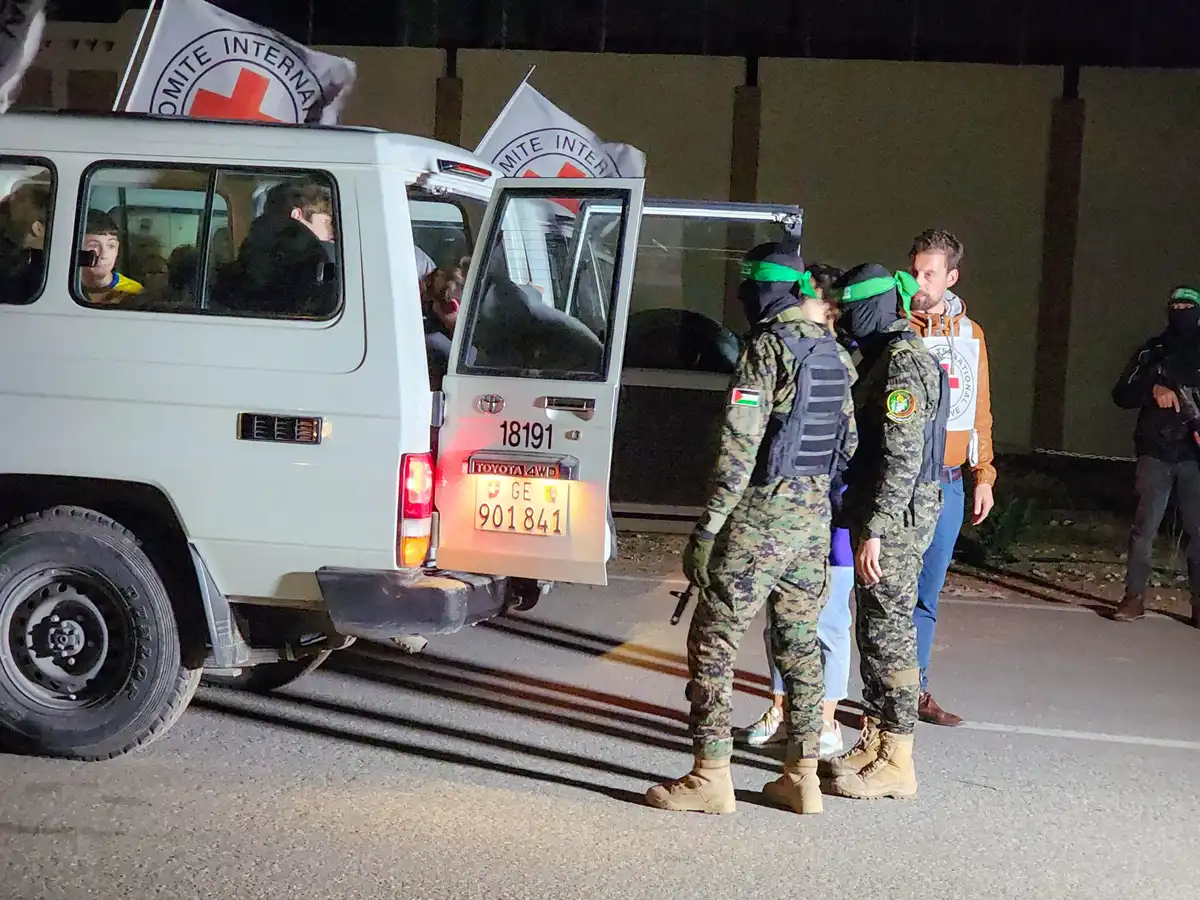
After Trump announced the deaths of 3, Israel confirmed that 24 prisoners are still alive.

An Israeli official said on Wednesday that the number of prisoners still alive in the Gaza Strip is 24, after US President Donald Trump said the number was 21, raising concerns among their families.


Israel's coordinator for prisoners and missing persons, Gal Hirsch, said in a post on the X website that Hamas currently holds 59 prisoners, 24 of whom are alive and 35 have died, numbers that have not changed since the period before Trump's statement.
"All families of the kidnapped are constantly receiving the latest information we have about their loved ones," he added.
On Tuesday, US President Trump announced that three of the prisoners still being held in the Gaza Strip had died, while the other 21 were still alive.
Yesterday, the Republican president said on the sidelines of a White House event that of the 59, 21 are still alive and 3 are dead.
"We want to try to rescue as many hostages as possible," Trump added. "This is a terrible situation."
In response, the families of Israeli prisoners in Gaza demanded that Benjamin Netanyahu's government clarify how many of them are still alive.


PALESTINE

Thu 08 May 2025 8:34 am - Jerusalem Time

Israel uses starvation as a weapon of displacement. The circle of death has tightened and become more entrenched. When will it end?

Dr. Bilal Al-Shoubaki: Israel relies on creating unbearable living conditions to make population displacement or migration an inevitable option.
Akram Atallah: Israel has succeeded in pushing Palestinians to a stage where they see displacement as a possible option due to the impossibility of life in Gaza.
Nabhan Khreisha: The absence of any Israeli or international plans to return residents to their original areas makes this displacement permanent, not temporary.
Dr. Amjad Bashkar: The occupation's policies are reviving Trump's "Deal of the Century," which focused on displacement, starting with Gaza and then the West Bank.
Sari Samour: Israel has only one goal: to exterminate the Palestinians, after facing difficulties in implementing the displacement.
Samer Anabtawi: Israel promotes the concept of voluntary displacement, but in reality, it forces residents to emigrate through starvation and the destruction of the necessities of life.


With talk of an Israeli escalation in the Gaza Strip, concern is growing about a systematic Israeli policy aimed at emptying the territory of its residents, using a complex array of tools ranging from starvation and infrastructure destruction to internal population displacement.
These policies, described by writers, analysts, and university professors in separate interviews with Al-Quds as cumulative, aim to create an unbearable living environment that pushes Palestinians toward forced migration, both within and outside the Strip.
They point out that pressure mechanisms target the necessities of life, including food, water, and healthcare facilities, in addition to intensifying military strikes in civilian areas.
They assert that these actions represent a practical implementation of broader plans aimed at bringing about demographic changes in the Gaza Strip, by forcibly pushing residents into narrow geographical areas, in preparation for the opening of potential "exit" corridors.

A cumulative Israeli plan to displace Palestinians

Dr. Bilal al-Shobaki, a professor of political science at Hebron University, says that famine, along with the destruction of infrastructure and the health sector in the Gaza Strip, constitute key tools in an Israeli plan to displace Palestinians.
Al-Shoubaki explains that these policies aim to undermine the foundations of life in the Gaza Strip, whether by preventing the provision of basic needs such as food and water or destroying infrastructure, thereby forcing residents to move within the Strip or emigrate outside Palestine.
"There is no doubt that undermining the foundations of life in Gaza, whether through famine caused by a lack of food and water, or the destruction of infrastructure and the health sector, constitutes a comprehensive tool for displacement," Al-Shoubaki says.
Al-Shoubaki adds, "Israeli plans are cumulative. They don't necessarily begin with the direct displacement of hundreds of thousands. Rather, they may begin with internal population displacement to intensify the Palestinian presence in specific areas, under the pretext of establishing humanitarian hubs or aid distribution points."
Al-Shoubaki points out that Israel is seeking to reshape the Gaza Strip so that limited humanitarian aid is concentrated in specific pockets, forcing residents of famine-stricken areas to move there in search of minimal supplies.
"In light of the famine being deliberately created in some areas, Israel is using this tool to encourage population movement toward areas with limited aid," says Al-Shoubaki. "So far, there are no strong indications that the Palestinians are responding to this proposal, but basic humanitarian needs may make this policy effective over time."

Internal displacement and displacement at first

Al-Shoubaki asserts that Israel relies on creating unbearable living conditions to make population displacement or migration an inevitable option.
Regarding the possibility of displacement outside Palestine, Al-Shoubaki explains that this type of literal displacement—transferring large numbers of Palestinians across borders—remains impossible for Israel to achieve at this time.
"If Israel had been able to implement external displacement, it would have done so," says Al-Shoubaki. "It succeeded in displacing Palestinians from the north of the Gaza Strip to the south at the beginning of the war. However, displacement outside Palestine is more complicated because it requires a third party willing to accept the Palestinians, something that neighboring Arab countries reject." He points out that Israel may seek internal displacement and displacement initially.
Al-Shoubaki points to statements made by Israeli Prime Minister Benjamin Netanyahu during his visit to the United States, where he hinted that Israel was searching for a third party willing to accept the Palestinians, but such a party is currently unavailable.
Al-Shoubaki asserts that another form of displacement may be possible: the migration of Palestinian individuals or families individually in search of employment or study opportunities abroad, as a result of mounting Israeli pressure.


Creating a permanent reality of poverty and suffering


Al-Shoubaki says, "With the undermining of life in Gaza, it's only natural for some to seek opportunities abroad, especially those with the ability to work or study. This migration may increase at this stage, but it's not the forced mass displacement that Israel seeks."
Al-Shoubaki asserts that Israel may accept what it calls "voluntary migration," which is in fact not voluntary but rather the result of compelling circumstances.
Al-Shoubaki warns against Israel's continued restrictive policies, including the blockade, aid restrictions, and obstruction of the reconstruction of the Gaza Strip, in addition to the concentration of the population in specific areas.
Al-Shoubaki points out that these policies aim to create a permanent reality of poverty and suffering, making emigration a possible option for some, even if Israel's vision of mass displacement does not materialize.
Al-Shoubaki asserts that these cumulative schemes pose an existential threat to the Palestinian people, calling for them to be confronted through international and Arab action to halt the humanitarian catastrophe in Gaza.


Destroying all means of living in the Gaza Strip

For his part, writer and political analyst Akram Atallah says that Israel is practicing the harshest forms of punishment against the people of the Gaza Strip, through policies of starvation, bombing, and direct occupation of territory, all with the aim of forcing the population to emigrate.
Atallah explains that these Israeli practices in the Gaza Strip constitute part of a systematic strategy aimed at preparing the infrastructure for forced displacement, by "destructing life" and destroying all means of subsistence in the Strip.
"Israel is deliberately destroying every aspect of life in Gaza, including health, education, the environment, sanitation, and food, in addition to starvation, terror, killing, and continuous bleeding," Atallah said, noting that starvation is one of the harshest aspects of this policy, but it is not the only one.
According to Atallah, displacement requires two basic conditions: the Palestinian people's acceptance of the displacement, and the acceptance of the countries that will host them.

Displacement is "closer than ever"

Atallah points out that Israel has succeeded in pushing Palestinians to a stage where they see displacement as a possible option, given the impossibility of life in Gaza. Meanwhile, the question of acceptance by other countries remains the most significant obstacle to this plan.
"The more Israel continues to destroy life in the Gaza Strip, the greater the likelihood of emigration," Atallah says. "Life outside Gaza has become possible for Palestinians, while it has become impossible inside the Strip."
Atallah emphasizes that the success of the displacement policy depends largely on the countries that might receive the Palestinians, which is the most important factor in facilitating this process.
Atallah believes that displacement is "closer than ever," warning that Israel's continuation of its current policies makes this scenario more likely.

The ground operation hides a more dangerous target.

Journalist Nabhan Khreisha says that Israel's plan to launch a large-scale ground operation in the Gaza Strip aims to permanently occupy the territory, eliminate Hamas's military capabilities, and end its rule, while simultaneously pressuring it to release Israeli prisoners or force the movement to make concessions in negotiations.
Khreisha asserts that this operation conceals a more serious objective: the forced displacement of Palestinians. He points out that this plan has entered the practical implementation phase, despite not being officially announced.
"Based on the facts on the ground, the threat of Palestinian displacement from Gaza is closer than ever," Khreisha said. "The imminent Israeli attack, according to statements from military and political officials, aims to forcibly displace more than 1.5 million Palestinians toward the southern part of the Strip, particularly the Rafah area, so that the occupation forces can clear the north and center of fighters."
Khreisha explains that the absence of any Israeli or international plans to return residents to their original areas makes this displacement permanent, not temporary, and constitutes a systematic expulsion similar to the expulsions carried out by Zionist gangs in 1948.

Unannounced intention to "open an exit corridor"

Khreisha points out that Israeli preparations include an undeclared intention to "open an exit corridor" after crowding the population into a small geographical area such as Rafah, where continued bombardment and food shortages make fleeing across the border into Sinai the only option, despite public Egyptian opposition.
"What Israel is practicing is not ordinary displacement, but rather systematic expulsion using modern tools such as starvation, by preventing or restricting the entry of food, water, fuel, and medical supplies, and attacks on aid trucks and convoys, in addition to targeting food production and storage facilities such as bakeries, poultry farms, and water stations," Khreisha said.
Khreisha asserts that the goal is to "manufacture" a famine that would create a catastrophic humanitarian situation, making life unbearable and forcing people to emigrate as the only option.
Khreisha considers talk of international law "mockery" given the lack of international will to apply it to Israel, which does not comply with international law in the first place.

Forcible transfer of residents to Rafah is a war crime

Khreisha explains that the forced transfer of residents to Rafah constitutes a war crime under the Geneva Conventions and the Rome Statute, and may amount to a crime against humanity if carried out systematically and on a large scale.
Khreisha asserts that Israel remains an occupying force in Gaza, despite its withdrawal in 2005, because it controls the airspace, crossings, territorial waters, and population registry, and frequently exercises excessive military force.
Khreisha points out that international law permits the evacuation of civilians only in cases of temporary military necessity, with the condition that they be returned immediately after the danger has passed and that adequate humanitarian conditions be provided in the evacuation areas.
Khreisha warns that the facts indicate a lack of guarantees for the return of residents, a lack of adequate infrastructure or shelter in Rafah, and statements by Israeli ministers calling for "cleansing Gaza of its residents," revealing illicit political and demographic intentions.
Khreisha asserts that this operation is not intended to ensure the safety of the population, but rather to achieve political goals aimed at changing the demographic composition of the Gaza Strip. He warns that the continuation of these policies will exacerbate the humanitarian catastrophe and recreate a new Nakba.

Starvation as a primary weapon to empty the Gaza Strip

Political science professor Dr. Amjad Bashkar believes that Israel is using starvation as its primary weapon to empty the Gaza Strip of its population. He asserts that this policy constitutes a war crime under the 1949 Geneva Convention and the 1977 Additional Protocol, which classify starvation as one of the most serious war crimes.
Bashkar believes that what is happening in Gaza is not a reaction to the events of October 7, 2023, but rather part of a systematic plan for forced displacement.
"The 1949 Geneva Convention and the 1977 Additional Protocol were clear in considering starvation a major war crime, and what is happening in Gaza is a despicable exploitation justified by the events of October 2023," Bashkar says. "But the Israeli Heritage Minister was even more explicit when he emphasized a few days ago the necessity of maintaining the weapon of starvation until only about 100,000 Palestinians remain in Gaza."
Bashkar believes this approach aims to empty the Gaza Strip of its population by destroying the basic necessities of life, including the continuous bombing of schools, tents, hospitals, and bakeries, making life impossible.
Bashkar emphasizes that Israel uses starvation as a primary tool for forced displacement, which is in itself a war crime.
Bashkar points to the recent Israeli proposal, advanced by Prime Minister Benjamin Netanyahu, which links the entry of food and drink into Gaza to the relocation of its residents to locations designated by Israel, describing it as "bargaining for the survival of the Palestinians."

Death by bombs or starvation

Bashkar asserts that this policy aims to leave Palestinians with no other option than emigration, given the lack of any alternative for survival.
Bashkar explains that this plan has the support of the United States, pointing to statements by US President Donald Trump, who has repeatedly spoken about displacing Palestinians from Gaza.
Bashkar believes these policies are reviving Trump's "Deal of the Century," which focused on displacement, starting with Gaza and then the West Bank.
"Today, there is a slogan that says: 'Those Palestinians who don't die from bombs will die from starvation, and those who don't die from starvation will have to emigrate to survive,'" Bashkar says.
Bashkar warns against the international community's complicity in these crimes, emphasizing that the absence of real international pressure allows Israel to continue its policies.
Bashkar calls for urgent intervention to halt the humanitarian catastrophe in Gaza, where residents are suffering from a stifling blockade, severe food and medicine shortages, and the systematic destruction of infrastructure.
Bashkar asserts that the continuation of these policies threatens to empty Gaza of its population, which constitutes a flagrant violation of international law and a threat to the very existence of the Palestinian people.

"Extermination" of Palestinians, not their displacement

For his part, writer and political analyst Sari Samour argues that Israel is using starvation as a tool to exterminate the Palestinian people, arguing that the lack of American pressure and the inaction of Arab states are exacerbating the humanitarian crisis in the Gaza Strip.
Samour explains that Israel uses hunger as a weapon, alongside bombing and killing, to achieve its primary goal, which is to "exterminate" the Palestinians, not displace them.
"Had it not been for American pressure, Israel would not have been able to impose famine on Gaza," Samour says. "In addition, there is clear Arab inaction. Some Arab countries used to drop food aid by air, but this intervention has ceased. The Arab countries could have exploited their relations with Israel to secure aid without the need for war, but that didn't happen."
Sammour wonders about the reasons for the stagnation of these Arab efforts, pointing to the decline of Arab initiatives despite the possibility of influence through diplomatic channels.
Samour says, "Israel does not seek to displace Palestinians, but rather to kill and exterminate them. If it wanted to displace them, it would have done so. However, it is resorting to killing with missiles, tanks, aerial bombardment, and now starvation, targeting generations, especially children."
Samour believes that Israel is facing difficulties in implementing the displacement, which has led it to escalate its policy of systematic killing as an alternative.

Politicizing humanitarian aid and controlling its distribution

For his part, writer and political analyst Samer Anabtawi warns of an Israeli plan to politicize humanitarian aid and control its distribution in the Gaza Strip, with the aim of starving the population and forcing them to flee.
Anbatawi asserts that Israel seeks a permanent occupation of the Gaza Strip, with the population displaced from north to south, as a prelude to emptying Gaza of its inhabitants under what Israel calls "voluntary displacement," a process that relies on making life difficult.
Anbatawi says, "The occupation is politicizing food aid, preventing it from reaching Gaza and depriving children of it. It's also seeking to control the distribution of all aid through the Israeli military. This means controlling who gets food and who doesn't, with the goal of controlling the Strip."
Anbatawi points to an escalation in the Israeli plan, which includes the call-up of tens of thousands of reserve soldiers to carry out a comprehensive occupation of the entire Gaza Strip, unlike previous operations that were limited to a simple incursion and withdrawal.
Anbatawi explains that this occupation aims to displace Gaza's population within a specific area and confine them there, facilitating starvation and displacement.
"Israel promotes the concept of voluntary displacement, but in reality, it is forcing people to emigrate through starvation and the destruction of the basic necessities of life," Anbatawi says. "They raise the slogan of eliminating the resistance, but their real goal is to displace the people of Gaza."
Anbatawi links this plan to US President Donald Trump's statements regarding displacement, noting that Israel relies on these statements to justify its continued policies.

A broader strategy to displace Palestinians

Anbatawi asserts that this approach precludes any negotiations for a truce or calm, while continuing the "war of extermination and displacement" in Gaza.
Anbatawi explains that this plan coincides with Israeli statements about its intention to annex the West Bank after "completing" Gaza, revealing a broader strategy to displace Palestinians.
Anbatawi says, "Displacement is not new. It's an old plan that's currently being implemented. Anyone who's surprised by it hasn't fully understood this phase, as Israel will exert all its energy to achieve displacement."
However, Anbatawi believes that a permanent occupation of Gaza will escalate Palestinian resistance, arguing that the reserve army will not succeed where the regular army failed. He expects the occupation to become embroiled in long-term confrontations, likening this to the United States' involvement in Vietnam.
Anabtawi points to Israeli leaders' warnings to Netanyahu about the consequences of this escalation, but he asserts that the latter is determined to move forward with this project.
"Things are heading toward escalation in the coming period, as Israel continues its policies aimed at emptying Gaza of its population, amid international silence that exacerbates the humanitarian catastrophe," Anbatawi said.


PALESTINE

Thu 08 May 2025 8:31 am - Jerusalem Time

An investigative documentary reveals the identity of the Israeli soldier who killed Shireen Abu Akleh.

A documentary film titled "Who Killed Shireen?" produced by Zetteo premiered in New York City for the first time. The film reveals new information about the identity of the soldier who killed Al Jazeera correspondent Shireen Abu Akleh in 2022 in the West Bank city of Jenin.


According to the film, the killer is Israeli soldier Alon Skagio.


For her part, Al Jazeera correspondent Bisan Abu Kuwaik said that the irony revealed in the film is that the soldier who killed her colleague Shireen was killed last summer by Palestinian resistance fighters during a military operation conducted by Israeli occupation forces in the city of Jenin.


The film revealed the efforts of the Israeli and American governments to conceal information related to the circumstances of the late colleague's assassination and prevent access to the killer.


The documentary, produced by investigative journalist and former Wall Street Journal correspondent Dion Nissenbaum, was filmed in Washington, Jerusalem, and Jenin and includes interviews with officials involved in the case, such as Democratic Senator Chris Van Hollen, and new sources who have not spoken publicly about the circumstances and investigations surrounding Shireen Abu Akleh's assassination.

PALESTINE

Wed 07 May 2025 9:54 pm - Jerusalem Time

Netanyahu vows to attack Yemen even if "American friends" do not participate

Israeli Prime Minister Benjamin Netanyahu vowed Wednesday evening to launch further attacks on Yemen, even if "our American friends" do not join in.


This comes a day after the United States and the Yemeni Houthi group, mediated by the Sultanate of Oman, reached a ceasefire agreement that does not include Israel.


Netanyahu commented on the agreement, saying in a televised address: "Israel will defend itself, and we are doing so in Yemen and other places at very great distances."


He continued, "If our American friends join us, that would be good, but if they don't, as I said, we will defend ourselves with our own strength," he said.


In response to Israel's ongoing genocide against Palestinians in the Gaza Strip, the Houthis have launched attacks on Israeli ships and targets within the country.

PALESTINE

Wed 07 May 2025 8:57 pm - Jerusalem Time

Tel Aviv discussed with Washington a temporary US administration for the Gaza Strip.

Five people familiar with the matter told Reuters on Wednesday that the United States and Israel discussed the possibility of Washington leading an interim administration in Gaza after the war. The sources said that the "high-level" consultations focused on forming a transitional government headed by a US official, which would oversee Gaza until the territory is demilitarized and stable, and a functioning Palestinian administration emerges.


The five sources said the discussions, which are still preliminary, indicate there would be no set timetable for the duration of such a US-led administration, as it would depend on the situation on the ground. The sources likened the proposal to the Coalition Provisional Authority in Iraq, which Washington established in 2003, shortly after the US-led invasion that toppled Saddam Hussein. The sources spoke on condition of anonymity because they were not authorized to discuss the talks publicly.


Many Iraqis viewed the authority as an occupying force, and it transferred power to an interim Iraqi government in 2004 after failing to contain a growing insurgency. The sources added that other countries would be invited to participate in the US-led authority in Gaza, without specifying which ones. They said the administration would employ Palestinian technocrats, but would exclude the Palestinian Islamic Resistance Movement (Hamas) and the Palestinian Authority. The sources said it was not yet clear whether an agreement could be reached. They added that discussions had not made progress on determining who would assume key roles.


The sources did not identify the party that made the proposal, nor did they provide further details about the talks. Asked by Reuters whether there were discussions with Israel regarding a US-led interim authority in Gaza, a US State Department spokesperson did not comment directly, saying he could not speak about ongoing negotiations. "We want peace and the immediate release of the hostages," the spokesperson added, adding, "The pillars of our approach remain steadfast: to stand with Israel and to defend peace."


Israeli Prime Minister Benjamin Netanyahu's office declined to comment. Israeli Foreign Minister Gideon Sa'ar had previously expressed in a television interview his belief that there would be a "transitional period" after the end of the war on Gaza, during which the Strip would be overseen by an international body comprising "moderate Arab countries," with the Palestinians operating under its supervision. He added, "We do not seek to control the civilian life of the residents of Gaza. Our only interest in the Gaza Strip is security," without naming the countries he believed would participate. The Foreign Ministry did not immediately respond to a request for comment.


Two sources also stated that a US-led interim authority in Gaza would draw Washington further into the Israeli-Palestinian conflict and represent its largest intervention in the Middle East since the invasion of Iraq. They noted that such a move would carry significant risks, including a strong backlash from both its allies and adversaries in the Middle East if Washington were perceived as an occupying force in Gaza.


The UAE, which established diplomatic relations with Israel in 2020, proposed to the United States and Israel the formation of an international coalition to oversee the administration of Gaza after the war. Abu Dhabi linked its participation to the inclusion of the Palestinian Authority and the establishment of a credible path toward establishing a Palestinian state. The UAE's Ministry of Foreign Affairs did not respond to questions about whether it would support a US-led administration that does not include the Palestinian Authority.


Netanyahu said on Monday that Israel would expand its attacks on Gaza, while transferring more of its residents "for their own safety." Some members of Netanyahu's right-wing coalition have publicly called for the displacement of Gaza's population through what they describe as a "voluntary" mass migration of Palestinians and for the rebuilding of Jewish settlements inside the coastal enclave. But behind closed doors, some Israeli officials are also considering proposals for Gaza's future, according to Reuters, which sources say assume no mass exodus of Palestinians from the territory, such as the proposal by the US-led interim administration.


Four sources, including foreign diplomats and former Israeli officials familiar with the matter, reported that these proposals include restricting reconstruction to specific security zones, dividing the Strip, and establishing permanent military bases.

PALESTINE

Wed 07 May 2025 8:22 pm - Jerusalem Time

"Gaza Truce": Cairo and Doha affirm the effectiveness of their mediation role ahead of Trump's visit.

A joint Egyptian-Qatari statement on the stalled ceasefire negotiations in the Gaza Strip revealed coordination with the United States on an agreement to end the tragic situation in the Strip ahead of US President Donald Trump's visit next week.


This joint statement, the first of its kind since the mediation between Egypt and Qatar following the Gaza war on October 7, 2023, carried clear messages that there is no retreat from the mediation, and no alternative to the importance of proceeding with an agreement in coordination with Washington, according to the estimates of experts who spoke to Asharq Al-Awsat. They expect that matters will move towards the entry of aid only if Hamas does not accept a partial agreement proposed, as is being circulated in the media, by the United States during a meeting that may be imminent in Cairo.


One stop

A joint Egyptian-Qatari statement issued Wednesday stated that their mediation efforts are ongoing and consistent, based on a unified vision aimed at ending the unprecedented humanitarian crisis in the Gaza Strip and alleviating the suffering of civilians by creating the appropriate conditions for achieving a comprehensive ceasefire. The statement stressed that “doubt, distortion, or media escalation will not succeed and will not deter them from continuing their joint efforts to end this war.”


Qatar announced in a statement last Sunday by the spokesman for the Qatari Foreign Ministry, Majed Al-Ansari, its "rejection of inflammatory statements against it from Netanyahu's office," stressing that it "will continue to work in cooperation with Egypt and the United States to ensure an immediate ceasefire." This came a day after Netanyahu's office called on Doha to "stop playing both sides and decide whether it will stand with civilization or with the brutality of Hamas."


Dr. Tarek Fahmy, a political science professor specializing in Israeli and Palestinian affairs, believes that the joint statement between the two mediating states carries a clear message affirming their role and effectiveness in the negotiations. He also believes that they will continue to lead the negotiations process, unaffected by Israeli accusations, and are determined to continue the success of their mediation, which culminated in two previous truces in 2023 and 2025, and they are on their way to achieving a third.


In close proximity to this argument, Palestinian political analyst Dr. Abdul Mahdi Mutawa believes that the timing of the joint statement issued by Egypt and Qatar, prior to Trump's visit, is "an attempt to block Israel's efforts to obstruct the mediators' efforts with accusations." Qatari political analyst Saleh Gharib believes the statement is a message to Arab and international public opinion affirming the strength and effective role of the Egyptian-Qatari mediation, affirming its continuity despite Israeli accusations, and that it will not be able to derail the mediation before Trump's visit.


New proposal

The joint Egyptian-Qatari statement also affirmed that "their efforts are closely coordinated with the United States to reach an agreement that will end the humanitarian tragedy and ensure the protection of civilians." This comes days before Trump's visit to Saudi Arabia, Qatar, and the UAE. Anticipation continues ahead of his Tuesday statement that he will issue a very "positive" announcement before the tour, the content of which he did not specify.


This Egyptian-Qatari-American coordination comes a day after Palestinian sources revealed to Asharq Al-Awsat that “a new round of negotiations will begin in Cairo in a few days, possibly at the end of this week or the beginning of next, in an attempt to reach an agreement on a truce before or with Trump’s arrival in the region.” The sources noted that “the mediators are trying to propose an agreement that includes the release of half of the Israeli detainees in exchange for a truce that will last for months, with American guarantees for a final agreement after that to end the war.”


Saleh Gharib expects Trump's visit to the region to include a discussion on the Gaza crisis, given clear Arab demands for a definitive solution to the crisis. He predicts the US president will likely call on Israel to halt the killing, allow in aid, and reach a final solution that ends the hostage crisis and meets the demands of the Palestinian resistance.


Fahmy believes that "the Egyptian-Qatari statement suggests there is a new proposal brewing behind the scenes in coordination with Washington. Initial information indicates it is an American proposal presented within the past 48 hours and is under consideration. We believe it will be a last-minute agreement, prepared before or with Trump's arrival."


According to Mutawa's estimations, "The American vision, which preliminary information indicates was sent to Egypt, will be a last-minute agreement if the potential Cairo meetings succeed in passing it after consultations." He also suggested a temporary truce would likely occur, followed by negotiations on a final agreement.


Despite cautious optimism about the possibility of an agreement, Hamas remains committed to concluding a comprehensive agreement. Political Bureau member Bassem Naim said Wednesday that "there are desperate attempts ahead of Trump's visit to the region, through the crime of starvation, the continuation of the war of genocide, and the threat of expanding military action, to achieve a partial agreement that would return some Israeli prisoners in exchange for a limited number of days of food and drink."


In statements reported by Agence France-Presse, Naim affirmed that "Hamas and the resistance factions affirm their insistence on reaching a comprehensive agreement and a complete package, not a partial agreement."


If Hamas maintains its position, Mutawa believes the alternative would be arrangements for the delivery of aid. He dismisses the possibility of Trump bringing about a final agreement, given the lack of American pressure on Netanyahu and the lack of time to conclude such a deal before the visit.

PALESTINE

Wed 07 May 2025 8:09 pm - Jerusalem Time

A young man was killed by Israeli occupation forces at the southern entrance to Hebron.

A young man was shot dead by Israeli occupation forces, Wednesday evening, south of Hebron.


According to local sources, occupation forces shot a young man at a military checkpoint in the Seddat al-Fahs area, the southern entrance to Hebron, killing him. The sources noted that the occupation forces have detained the martyr's body.


Later, the Ministry of Health said that the General Authority of Civil Affairs informed it of the martyrdom of the young man, Abdul Fattah Ahed Ahmed Al-Haribat (20 years old), by the occupation forces' bullets near the city of Hebron.


The Israeli occupation army claimed that "the young man carried out a car-ramming attack against its forces stationed at a military checkpoint, then got out of his vehicle and attempted a stabbing attack before being shot and killed." This is the term used by the occupation when executing, wounding, or arresting Palestinians.


Local sources reported that the occupation forces had mobilized their forces around the "Saddat Al-Fahs" checkpoint and closed several roads in the area.

PALESTINE

Wed 07 May 2025 7:35 pm - Jerusalem Time

UN confirms that expanding Israeli attacks on Gaza will not succeed in releasing prisoners.

A UN commissioner said Wednesday that Israel's announced plans to expand its war of extermination on the Gaza Strip "will not succeed" in achieving what it failed to achieve over the past 20 months, and will not lead to the release of all prisoners held in the Strip.


UN High Commissioner for Human Rights Volker Türk said in a statement that expanding the Israeli offensive on Gaza "will inevitably lead to further mass displacement, deaths and injuries among innocent civilians, and the destruction of what remains of the infrastructure," according to the UN News website.


He added, "There is no reason to believe that doubling down on military strategies, which have not led to a permanent solution for a year and eight months or to the release of all hostages (Israeli prisoners in Gaza), will succeed today."


Tel Aviv estimates that there are 59 Israeli prisoners in the Gaza Strip, 24 of whom are still alive. Meanwhile, more than 9,900 Palestinians are languishing in its prisons, suffering torture, starvation, and medical neglect, many of whom have died, according to Palestinian and Israeli human rights and media reports.


On Sunday, the Security Cabinet approved expanding the ongoing war of extermination in Gaza.


On Monday, Israeli Prime Minister Benjamin Netanyahu spoke of his government's intention to occupy the besieged Gaza Strip, saying, "There is a plan to evacuate the population of Gaza."


** "War crime"


Volker stressed that "expanding the Israeli assault on Gaza will exacerbate the misery and suffering caused by the complete blockade on the entry of essential goods that has been in place for nearly nine weeks."


"The people of Gaza are already deprived of all life-saving necessities, especially food, as Israeli attacks continue on community kitchens and those trying to maintain a minimum of law and order," the UN official said.


He continued: "Any use of starvation of civilians as a method of warfare constitutes a war crime."


Since March 2, Israel has closed the Gaza Strip's crossings to the entry of food, relief, medical aid, and goods, causing a significant deterioration in the humanitarian situation for Palestinians, according to government, human rights, and international reports.


Israel has been blockading Gaza for 18 years, leaving approximately 1.5 million Palestinians out of a population of approximately 2.4 million homeless after their homes were destroyed in the war of extermination. The Strip is suffering from famine due to Tel Aviv's closure of the crossings to humanitarian aid.


"The only lasting solution to this crisis lies in full compliance with international law, including what the International Court of Justice stipulated in its 2024 Advisory Opinion and its orders on provisional measures," Türk said.


On March 28 and January 26, 2024, the International Court of Justice issued two sets of provisional measures requested by South Africa in a case accusing Israel of committing genocide against Palestinians in Gaza.


These measures include the unimpeded provision of essential services and much-needed humanitarian assistance, as well as medical supplies and care to Palestinians throughout Gaza.


On July 29, 2024, the Court also issued an advisory opinion in which it affirmed that Israel's continued presence in the occupied Palestinian territory was "illegal."


She stressed that international organizations, including the United Nations, are obligated not to recognize the situation arising from this illegal Israeli presence.

PALESTINE

Wed 07 May 2025 7:23 pm - Jerusalem Time

On their World Day, 866 thalassemia patients in Palestine and 40 dead in Gaza.

The Palestine Thalassemia Patients' Friends Association confirmed that the number of thalassemia patients in Palestine has reached 866, according to a statement issued by the association on World Thalassemia Solidarity Day, May 8, 2025. It also noted that 40 thalassemia patients have been martyred in the Gaza Strip since the start of the genocidal war.


The association explained that 30 new births have been recorded since 2020, including 9 patients in the Gaza Strip and 21 patients from the West Bank, 14 of whom are from the northern West Bank. Thus, the number of thalassemia patients in Palestine has reached 866 patients, 570 in the West Bank and 296 in the Gaza Strip, including 42 patients who were transferred under difficult medical conditions to Egypt and other countries, and their condition also required care and follow-up, and 4 patients among them died.


The association confirmed that 70% of patients in the West Bank are young people, 80% of whom are looking for work.


The Thalassemia Patients' Friends Association in Palestine announced that this year's activities will be held under the slogan "Together for Thalassemia - Patients First." The month-long event will highlight the importance of raising awareness about thalassemia, which has become limited in the current emergency situation.


The Thalassemia Patients' Friends Association said: "This May 8th marks the second year in a row, and the cries of our patients in Gaza and all our families there rise to the heavens, complaining to God of an injustice beyond all injustice, a tyranny that has surpassed the heavens, where our patients, like our families in Gaza, are deprived of medicine, food, and water, while the killing machine is being used to slaughter and murder them."


The association explained that forty patients, both male and female, have been martyred to date in Gaza, in extremely tragic and oppressive circumstances, and we...


The association said: "As we commemorate the International Day of Solidarity with them, we renew our pledge and resolve to make every possible effort to alleviate their suffering and deliver medicine and aid to them, exerting every effort to achieve this."


The association emphasized that the World Day of Solidarity with Thalassemia Patients, celebrated annually on May 8, is an occasion to renew our commitment at the Friends of Thalassemia Patients Association and all Palestinian community institutions to continue working to provide better comprehensive health services for our patients and to protect future generations from the dangers of this disease.


The association emphasized that this year's slogan, "Together for Thalassemia - Patients First," emphasizes that thalassemia is not just numbers or statistics; rather, it represents the stories of real people facing real challenges and living unique experiences.


"By adopting a patient-centered approach, we can enhance the well-being of people with thalassemia holistically, beyond simply treating the medical condition," the association said.


The association emphasized its commitment to working with all relevant authorities to provide better comprehensive healthcare services for thalassemia patients and to foster a community that is worthy of their resilience and patience, both to accommodate them and to create job opportunities for them so they can become active members of society and start their own families.


The association emphasized that protecting future generations from the dangers of this disease falls on every member of Palestinian society, especially young people about to get married. This can be achieved by committing to undergoing free laboratory tests conducted by the Ministry of Health directorates, "to ensure our children are protected from the dangers of this disease."

PALESTINE

Wed 07 May 2025 6:27 pm - Jerusalem Time

The European Union calls on Israel to lift the blockade on Gaza "immediately."

The European Commission called on Israel on Wednesday to immediately lift the blockade on the Gaza Strip, stating that humanitarian aid has not reached Palestinians for more than two months, in clear violation of international humanitarian law.


This came in a joint statement issued by EU High Representative for Foreign Affairs and Security Policy Kaya Kallas, EU Commissioner for the Mediterranean Dubravka Suica, and EU Commissioner for Preparedness, Crisis Management and Equality Hadja Lahbib.


The statement stressed that "the situation in Gaza is extremely worrying," as no humanitarian aid has reached the Strip for more than two months, noting that this is "the longest period of siege" the region has witnessed.


The statement drew attention to reports issued by UN organizations indicating that food stocks in Gaza have run out and that Palestinians are facing difficulties in accessing drinking water, while humanitarian relief organizations warn of a worsening and widespread famine.


He explained that tons of humanitarian aid remain stuck at the Gaza Strip border, awaiting entry, noting that it is sufficient to meet the needs of the 2.2 million Palestinians in Gaza for three months.


The statement affirmed that "the European Union reiterates its urgent call for Israel to immediately lift the blockade on the Gaza Strip," recalling that Israel is obligated under international law to ensure that humanitarian aid reaches civilians in need.


"Our message is clear: humanitarian aid should never be politicized or turned into a military tool. The use of aid as a means of war is prohibited under international humanitarian law," the commission said.


The statement reiterated the European Union's call for a "ceasefire, the immediate and unconditional release of all prisoners, and a permanent end to the conflict," stressing its "steadfast support" for the rights of the Palestinian people.


Since March 2, Israel has closed the Gaza Strip's crossings to the entry of food, relief, medical aid, and goods, causing a significant deterioration in the humanitarian situation for Palestinians, according to government, human rights, and international reports.


Since October 7, 2023, the Israeli occupation, with American support, has been committing genocidal crimes in Gaza, leaving more than 171,000 Palestinians dead and wounded, most of them children and women, and more than 11,000 missing.

PALESTINE

Wed 07 May 2025 6:14 pm - Jerusalem Time

Syndicate: The number of killed journalists has risen to (212)

The Journalists Syndicate said that the number of dead the journalistic family since the beginning of the Israeli genocide war has risen to (212) male and female journalists, following the death of colleagues Yahya Subaih and Nour El-Din Abdo in the Gaza Strip today, Wednesday.


The union added in a statement that this is a deliberate targeting aimed at breaking the voice of truth and silencing the Palestinian narrative through a policy of field executions of journalists, destroying media institutions, and depriving the world of witnessing what is happening in Gaza.


She explained that "while the world celebrates World Press Freedom Day, and the slogan of protecting journalists and preserving freedom of expression is raised, the Israeli occupation continues to commit its heinous crimes against Palestinian journalists, who pay with their lives for conveying the truth and exposing the occupation's ongoing crimes against our people in the Gaza Strip."


The Syndicate mourns with deep sorrow and grief the martyrdom of two colleagues, journalist Yahya Subaih, who was killed in a direct Israeli bombardment of the Thai restaurant west of Gaza City, just hours after the birth of his first child, and journalist Nour El-Din Abdo, who was martyred in an Israeli bombardment targeting Al-Karama School in the Al-Tuffah neighborhood east of Gaza while performing his professional and humanitarian duty in covering the events.


She stressed that this repeated and systematic targeting of journalists constitutes a full-fledged war crime under international humanitarian law and the Geneva Conventions, holding the occupation fully responsible for these flagrant violations.


She called on the international community, the Security Council, and the International Criminal Court to take immediate action to open urgent investigations, hold the perpetrators of these crimes accountable, and end the policy of impunity that encourages the occupation to persist in its crimes.


The Syndicate continued in its statement: “On World Press Freedom Day, which is supposed to be an occasion to promote the protection of journalists and freedom of expression, the Palestinian journalist is paying with his life because he chose to be a voice for the victims and an image of the truth. We call on all free journalists and media institutions in the world to stand with their colleagues in Palestine, raise their voices loudly against the crimes of the Israeli occupation, and support the Palestinian media, which is facing the aggression with an unbreakable will and a lens that does not neglect.”

PALESTINE

Wed 07 May 2025 5:41 pm - Jerusalem Time

Trump administration closes Palestinian affairs office

The US State Department announced on Tuesday the closure of the Palestinian Affairs Office and its merger with its embassy in Israel, a move that signals an impending decline in US relations with the Palestinians.


State Department spokeswoman Tammy Bruce stated in her press conference on Tuesday that US Secretary of State Marco Rubio has decided to end the independent Office of Palestinian Affairs (OPA) and make it an office subordinate to the embassy.


Bruce added that the decision "does not reflect any communication or commitment to engage with the residents of the West Bank or Gaza."


Speculation has been rife in US diplomatic circles in Washington since Trump took office on January 20th about the administration's intention to abolish any US office dealing specifically with the Palestinians. President Trump, Secretary of State Marco Rubio, and US Ambassador to Israel Mike Huckabee agreed that this step would complement steps taken by Trump during his first presidential term (2017-2021), such as closing the US consulate in Jerusalem, closing the Palestine Liberation Organization office in Washington, and cutting off aid to UNRWA and even the Palestinian Authority.


The Trump administration is already moving toward eliminating the position of US Security Coordinator for the occupied West Bank and Gaza Strip.


The Office of the US Security Coordinator is a little-known position, but it represents the most prominent hub of US defense cooperation with the Palestinian Authority's security services. The inclusion of the Office of Palestinian Affairs (OPA) within the US Embassy in Israel signals a further decline in US recognition of the Palestinian Authority and the Trump administration's limited interest in establishing an independent Palestinian state.


American diplomats working in the Office of Palestinian Affairs (OPA) enjoyed a degree of separation from the US diplomatic mission in Israel. They could send diplomatic cables or reports to Washington and other US embassies without the approval of senior US diplomats overseeing Israeli affairs.


This distinction will now disappear, and senior diplomats charged with covering Israeli affairs will oversee relations related to the Palestinian Authority and Palestinian issues.


Hans Wicksell, who headed the Office of Palestinian Affairs (OPA), resigned in March. The Trump administration did not fill his position. Lourdes Lamela, a veteran Foreign Service officer, was the top official in the office.


It's worth noting that for decades, the United States maintained its embassy to Israel in Tel Aviv and operated a consulate in Jerusalem that oversaw Palestinian affairs. This distinction stems from the United States' refusal to recognize Jerusalem as Israel's capital. However, the first Trump administration recognized Jerusalem as Israel's capital (December 6, 2017), in a blow to the Palestinians, and moved the US embassy there. The consulate was also closed, although diplomats continued to operate out of the 19th-century stone building.


It's worth noting that Trump's new ambassador to Israel, Mike Huckabee, is a staunch supporter of Israeli settlement expansion in the occupied West Bank, repeatedly stating that "there really is no such thing as Palestine or a Palestinian."

PALESTINE

Wed 07 May 2025 5:13 pm - Jerusalem Time

Two martyrs dead and wounded in the occupation's bombing of Gaza City

A citizen was killed and others were injured on Wednesday in an Israeli airstrike on the Tal al-Hawa neighborhood in southern Gaza City.


A citizen was killed and eight others were injured as a result of the Israeli occupation targeting a group of citizens in Al-Zawayda, in the central Gaza Strip.


A number of citizens were also injured when Israeli warplanes bombed Al-Hajar Street in Al-Tuffah neighborhood, east of Gaza City.

ARAB AND WORLD

Wed 07 May 2025 4:50 pm - Jerusalem Time

6 European countries oppose any demographic change in the Gaza Strip.

Six European countries, including Spain, Ireland, and Norway, on Wednesday condemned Israel's new plan to expand its military operations and control Gaza. They expressed their "strong opposition to any demographic or territorial changes in the Palestinian enclave," stressing that this would constitute a "violation of international law."


In a joint statement also signed by Slovenia, Iceland, and Luxembourg, the countries said, "Any new military escalation in Gaza will only exacerbate the catastrophic situation for Palestinian civilians and endanger the lives of the hostages still being held," according to Agence France-Presse.


The European Union renewed its urgent call on Wednesday for Israel to immediately lift the blockade on the Gaza Strip and allow humanitarian aid to reach those in need. It warned of a new mechanism Israel plans to implement to deliver aid.


"Israel, as an occupying power, is obliged under international law to ensure that humanitarian aid reaches populations in need," EU foreign policy chief Kaya Kallas, Commissioner for Crisis Management Hadja Lahbib, and Commissioner for the Mediterranean Dubravka Suica said in a joint statement.


The statement also urged a ceasefire and the immediate release of hostages, while expressing concern over a new aid delivery system approved by Israel on May 4.


The statement said that this new system undermines humanitarian principles by entrusting aid distribution to non-humanitarian entities and private security companies, which has also drawn criticism from the United Nations and relief organizations.


For his part, the UN High Commissioner for Human Rights stated that Israel's plans to deport Gaza residents raise "further concerns" that these measures "aimed to impose living conditions on Palestinians that are increasingly incompatible with their continued existence as a group" in the Strip.


“Israel’s announced plans to forcibly transfer Gaza residents to a small area in the southern Gaza Strip and threats by Israeli officials to deport Palestinians outside Gaza raise further concerns that Israel’s actions are aimed at imposing living conditions on Palestinians that are increasingly incompatible with their continued existence as a group in Gaza,” Volker Türk said in a statement issued Wednesday.


The Ministry of Health in Gaza said on Wednesday that the total number of deaths due to Israeli attacks on the Strip has risen to 52,653, and the number of injured to 118,897. The ministry added in a statement that 38 people were killed as a result of Israeli attacks on Gaza in the past 24 hours.


Israel is waging war on the besieged Gaza Strip. Israeli officials have stated that the blockade will continue until the evacuation of residents from areas in the northern and central Gaza Strip is completed and they are relocated south, where an area will be designated for this purpose near the city of Rafah in the southern Gaza Strip.


Israel has already evacuated nearly a third of the Gaza Strip to create "security zones." The aid plan and plans to relocate most of the population south have raised concerns that the intention is to completely occupy the Gaza Strip, according to Reuters.

PALESTINE

Wed 07 May 2025 4:08 pm - Jerusalem Time

Israeli occupation forces arrested a Palestinian citizen south of Tulkarm.

Israeli occupation forces arrested a Palestinian woman from Tulkarm on Wednesday as she was passing through the Jabara Bridge checkpoint at the southern entrance to the city.


According to local sources, occupation forces set up a flying checkpoint at Jabara Bridge, stopped passing vehicles, and arrested lawyer Banan Jamal Abu Al-Haija from a public vehicle she was traveling in from Ramallah, taking her to an unknown location.

PALESTINE

Wed 07 May 2025 3:18 pm - Jerusalem Time

Dozens of dead and wounded in a new massacre committed by the occupation forces west of Gaza City.

Dozens of people were killed and wounded on Wednesday afternoon in a new massacre perpetrated by the Israeli occupation forces west of Gaza City.


The latest statistics on the massacre show at least 20 dead and dozens wounded when Israeli warplanes targeted a Thai restaurant and a nearby popular market in western Gaza City.


Among the victims who were killed in the massacre was journalist Yahya Subaih.


The government media office in Gaza said in a statement, "The Israeli occupation has committed four bloody massacres in the space of 24 hours, the latest of which was the bombing of a crowded restaurant, and before that, two schools for displaced persons, resulting in the deaths and injuries of dozens of civilians."