OPINIONS

Thu 04 Jun 2026 7:14 am - Jerusalem Time

Massie: Trump-Netanyahu rift is mere talk unless Washington stops military aid to Israel

Washington Message

Washington – Said Arikat – 6/4/2026

News Analysis

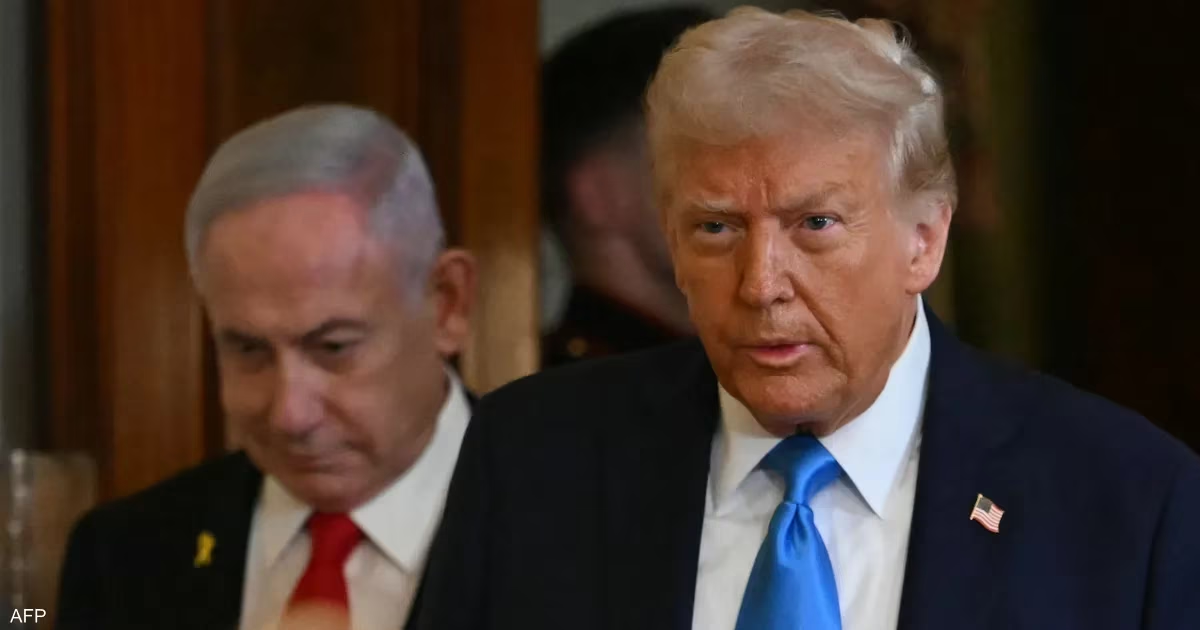
Republican Representative Thomas Massie reopened the debate about the nature of the relationship between Washington and Tel Aviv, and the seriousness of the American administration in exerting any real pressure on the Israeli government, following reports of a sharp tension between US President Donald Trump and Israeli Prime Minister Benjamin Netanyahu against the backdrop of Israeli military escalation in Lebanon and continued regional tension.

Massie's statements came in response to media reports that Trump had directed harsh and unprecedented criticism at Netanyahu during a phone call between them, expressing his dissatisfaction with Israeli military policies that threaten to expand the scope of the conflict in the region. However, the Republican representative, known for his anti-foreign military aid stances, considered that these statements, no matter how severe, remain without real political value unless accompanied by practical measures.

Massie said that ending the wars Israel is fighting does not require speeches or angry phone calls, but rather a clear American decision to freeze military and financial aid. He believed that the continued flow of American support gives the Israeli government a feeling that it is immune from any accountability or real pressure, which makes public criticism merely media messages that do not change anything on the ground.

He added that the United States possesses enormous leverage if it wanted to use it, noting that stopping aid for a short period would be enough to force Israel to reconsider its military and political calculations. He also linked the continuation of conflicts in the region to global economic repercussions, considering that de-escalating conflicts could contribute to stabilizing energy markets and lowering fuel prices.

Massie's statements come at a time when questions are increasing within American political circles regarding the limits of unconditional support Washington provides to Israel, especially after long months of continuous wars in Gaza and Lebanon and ongoing tension with Iran. While successive American administrations talk about the importance of restraint and avoiding escalation, critics note that American military and political support has not stopped, which weakens the credibility of any warning messages Washington sends to Tel Aviv.

According to reports, Trump informed Netanyahu during the call that his military policies were harming Israel's image and international standing, and that they were increasing its isolation on the global stage. Although this language is sharper than usual in public discourse between the two sides, observers point out that US-Israeli relations have previously witnessed similar disagreements that did not reflect on the volume of aid or the level of strategic cooperation.

This was not the first time that signs of divergence between Washington and Tel Aviv appeared. In recent years, there have been repeated disagreements over the management of regional wars, mechanisms for dealing with the Iranian file, and the future of Gaza, but these disagreements remained within the framework of tactical differences, while the strategic alliance remained unchanged.

Massie's statements reveal a growing rift within the American conservative movement itself regarding the relationship with Israel. After decades of near-complete consensus within the Republican Party on providing unlimited support to Tel Aviv, limited but influential voices have begun to question the political and economic cost of this open commitment. This shift does not reflect sympathy for Israel's adversaries as much as it expresses a growing isolationist tendency within segments of the American right that believe foreign wars drain American resources and embroil Washington in crises that do not serve its direct interests.

In another post, Massie directed direct criticism at Netanyahu, considering that his insistence on prolonging confrontations with Iran raises serious questions about the role he played in pushing the American administration towards more escalatory options. He believed that the continued obstacles to any political settlement reinforce the impression that some Israeli parties do not see an interest in ending the state of war, but rather consider it a means to maintain internal political balances that serve their survival in power.

These accusations are particularly important because they come from a Republican representative who cannot be accused of belonging to the liberal or leftist camp critical of Israel. Therefore, they reflect deeper shifts in the American political mood, where the debate is no longer limited to the moral or humanitarian aspects of wars, but has extended to the question of American national interests themselves. This trend gains strength as fears increase of the United States being drawn into broad regional confrontations that may impose financial and military burdens that are difficult to justify to the American public.

Massie's stance also has a personal and political dimension, as it comes after his loss in the primary elections to a Trump-backed candidate in one of the most expensive electoral competitions in the history of House elections. The race witnessed an unprecedented flow of money from pro-Israel lobbying groups and donors, exceeding $30 million, which brought back to the forefront the old debate about the influence of political money in shaping the positions of members of Congress on Middle East issues.

Massie's experience points to a growing phenomenon in American politics, which is the use of massive electoral spending to punish voices that deviate from the traditional consensus on Israel. Many observers fear that this will narrow the space for democratic debate within Congress, so that the cost of political dissent becomes so high that it pushes many to silence. However, the increasing criticism from figures belonging to different intellectual currents suggests that the debate about the nature of the American-Israeli relationship will not recede, but is likely to expand further in the coming years.

Ultimately, observers believe that the core of the issue does not lie in the severity of the words exchanged between Trump and Netanyahu, but in the more important question: Does Washington have the political will to use its enormous influence over Israel when its policies conflict with American interests? So far, the answer, in the view of critics like Massie, seems to be that the declared disagreements are still closer to managing differences than to exerting real pressure capable of changing facts on the ground.
OPINIONS

Thu 04 Jun 2026 7:13 am - Jerusalem Time

The Importance of Parties in the Process of Arab National Revival

Washington – Said Arikat – 4/6/2026

The discussion about party fragmentation in the Arab world, the review of party experiences, and the importance of political organization in confronting spontaneity, is not merely a narrow organizational or intellectual debate. Rather, it is part of a larger historical question related to the reasons for the stagnation of renaissance, liberation, and democracy projects in the Arab region during the last century.

Since the beginning of the 20th century, with the collapse of the Ottoman Empire and the emergence of modern Arab states under the umbrella of European colonialism, the need arose for organized political frameworks that would express the aspirations of Arab societies for independence and state-building. Thus, the first political parties emerged, whether they were national anti-colonial parties, nationalist parties, leftist parties, or Islamic parties. These parties played a pivotal role in leading national liberation movements and in shaping modern political consciousness.

However, the Arab party experience faced profound challenges from an early stage. After independence, many Arab countries transformed into authoritarian regimes that either marginalized parties, contained them, or completely eliminated them. In other cases, a superficial party pluralism emerged that lacked genuine competition. As a result, parties did not develop as stable democratic institutions, but often remained hostage to charismatic personalities, sharp ideological divisions, or regional, sectarian, and tribal loyalties.

Hence, the discussion about party fragmentation arises. Fragmentation is not a new phenomenon in Arab political life. Nationalist, leftist, and Islamic movements alike have witnessed successive divisions since the 1950s. Intellectual or personal differences often turned into organizational schisms that produced new parties and groups, making division easier than managing differences within a single institution. Over time, this led to the depletion of political energies and the weakening of the ability to build inclusive national projects.

However, acknowledging this problem should not turn into a condemnation of the idea of parties themselves. Modern political history shows that parties, despite their flaws, have been and still are the primary tool for organizing political participation, exchanging ideas, formulating programs, and training leaders. Almost all stable democracies have been built on the existence of strong parties and well-established political institutions, not on individual initiatives or spontaneous movements alone.

For this reason, reviewing party experiences takes on exceptional importance today. Review does not mean self-flagellation or denying history, but rather a critical reading of the entire experience. How did some parties succeed at certain stages? And why did they fail at other stages? How did internal bureaucracy and the absence of organizational democracy affect their decline? What was the role of external repression, and what was the role of self-inflicted errors? Any political movement whose experience is not subjected to continuous review is doomed to repeat the mistakes of the past.

Global political history has witnessed numerous examples of the importance of review. European socialist parties re-evaluated their programs after World War II, and nationalist movements in many countries developed their discourse and tools in response to social and economic transformations. As for intellectual and organizational stagnation, it was often a prelude to decline and regression.

In this context, the question of spontaneity and organization arises. Arab popular uprisings and protests, especially during the last two decades, have proven that masses are capable of spontaneous and rapid action when crises reach a certain level of tension. These moments revealed tremendous energies of creativity, solidarity, and sacrifice. But the same experience also showed the limits of spontaneity.

Spontaneity can ignite the spark, but it is often not enough to build an alternative. It can overthrow an existing reality, but it cannot, by itself, manage a complex transitional phase, formulate a political program, negotiate on behalf of a broad public, or build sustainable institutions. Therefore, many protest movements that succeeded in mobilizing the street later found themselves unable to transform popular momentum into a lasting political project.

This is not just an Arab problem, but a recurring lesson in world history. Great revolutions, from the French Revolution to national liberation movements in the 20th century, did not triumph through spontaneity alone, but required political, trade union, and social organizations capable of transforming general demands into programs, institutions, and laws.

Therefore, the real challenge lies not in choosing between organization and spontaneity, but in finding a healthy relationship between them. Political organization provides continuity, discipline, and the ability to plan, while spontaneity provides vitality, flexibility, and the ability to renew. When one is separated from the other, a crisis arises: organization without vitality turns into rigid bureaucracy, and spontaneity without organization turns into a fleeting wave that quickly recedes.

Hence, the urgent need today is to renew Arab party work, not to abandon it; to build more democratic and open parties capable of accommodating differences, and to learn from the lessons of history instead of escaping them. Historical experience clearly indicates that societies cannot do without organized political frameworks for long, and that the path from protest to sustainable change ultimately passes through organization, institutions, and organized political action.

In conclusion, it does not seem that the future of Arab political action can be built on individual initiatives or fleeting protest movements alone, no matter how important and influential they may be. Historical experiences confirm that political parties remain the most capable framework for organizing popular participation, producing leaders, formulating programs, and transforming general demands into policies and institutions. The need today is not to abolish parties or question their usefulness, but to renew and develop them, and to strengthen their internal democracy, independence, and ability to represent changing Arab societies. The existence of effective and deeply rooted national parties is an essential condition for building a sound political life, consolidating a culture of citizenship, ensuring stability, and opening horizons for peaceful change and sustainable development.

In this context, it must be noted that the Palestinian case, in turn, represents a highly significant example of the problem of organizational fragmentation and its impact on weakening the national project. Since the launch of the contemporary Palestinian national movement, political and military factions and organizations have multiplied to an extent that often exceeded the limits of healthy diversity and legitimate difference. Some of this multiplicity was justified at certain stages due to ideological differences or different historical circumstances, but a large part of it, over time, turned into repeated organizational divisions that weakened the unity of national decision-making and depleted human and political energies. In light of the continued occupation and the escalating existential challenges facing the Palestinian people, the need seems more urgent to overcome secondary divisions and agree on a comprehensive national liberation project that defines common priorities and goals and restores credibility to the unity of the national struggle.

No national liberation project can achieve its goals by relying on slogans or national emotions alone, no matter how legitimate and important they may be. The historical experiences of liberation movements around the world confirm that success has always been linked to the existence of solid organizational frameworks capable of managing internal differences within effective and disciplined institutions. The solidity of organization does not mean isolation or confiscation of pluralism, but rather the ability to unite efforts, direct resources, and coordinate political and popular action according to a clear strategic vision. Without this level of institutional discipline, it is difficult to achieve major qualitative leaps or transform popular sacrifices into sustainable political achievements. Therefore, rebuilding Palestinian national unity on solid organizational foundations remains an essential condition for any real progress on the path to national liberation and the realization of legitimate Palestinian rights.

Perhaps one of the most prominent lessons demonstrated by the October 7, 2023 operation, "Al-Aqsa Flood," is that organization and institutional discipline remain crucial elements in the ability of any political or military movement to create an impact that transcends its direct material size. Regardless of the differing political positions on the operation, its results, and its humanitarian and military repercussions, the events revealed that organized action based on planning, coordination, and accumulated experience is capable of bringing about major transformations in the political and regional landscape. This is a fact confirmed by all historical experiences, where major transformations were not the product of spontaneity alone, but the fruit of long and complex organizational work that was able to transform political will into effective action capable of imposing itself on the course of events. From this perspective, the need for Arab party and organizational frameworks appears more urgent, not as an end in itself, but as the means by which societies can organize their energies and direct them towards clear and sustainable goals.

ANALYSIS

Thu 04 Jun 2026 7:13 am - Jerusalem Time

Netanyahu's Predicament in Lebanon: How the US-Iranian Deal Shapes the Fall?

The Lebanese arena is witnessing a radical transformation in field and political equations, driven by explicit Iranian threats that have placed Beirut's southern suburb on par with northern Israeli cities. This threat of displacement for displacement and destruction for destruction has imposed a new reality whose dimensions Israeli Prime Minister Benjamin Netanyahu seems to be reluctantly grasping.

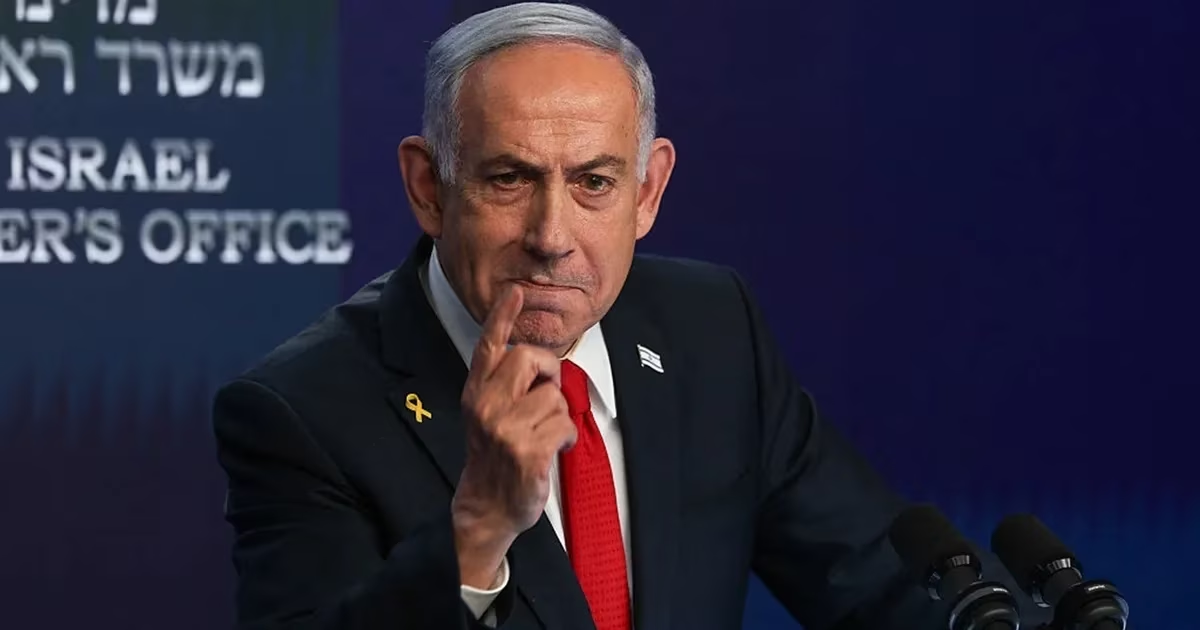
Netanyahu found no escape from responding to US President Donald Trump's pressure to halt widespread threats, despite his previous claims that the decision to escalate had already been made in coordination with the General Staff. Nevertheless, Netanyahu is trying to keep a loophole for limited operations in the suburb while maintaining freedom to bomb in southern Lebanon, in an attempt to save political face.

Political circles realize that Netanyahu is going through a critical phase where electoral calculations intertwine with personal destiny, which pushes him to practice political "foxiness" to try and circumvent the new restrictions. However, the field reality and the deteriorating conditions of his forces in the south have imposed constraints that cannot be easily overcome, especially with the increasing signs of a war of attrition.

Netanyahu understood well that the new US administration's directions do not necessarily intersect with his military ambitions, as Trump appears ready to freeze the conflict in Lebanon as part of a major deal with Iran. This American approach has caused panic in Israeli circles, especially with reports of contacts between Trump's aides and active Lebanese parties.

At this stage, Netanyahu lost four strategic cards that were cornerstones of his plans. The first was the card of targeting the capital Beirut, which served as a reserve "asset" for pressure when field conditions deteriorated. With Beirut out of the easy bombing equation, the occupation finds itself trapped in a war of attrition with no clear horizon.

The second card that began to fade was the reliance on the role of the official authority in Lebanon or creating an internal Lebanese clash that serves the Israeli strategy. Developments have proven that the active forces on the ground are the ones steering the ship, while the role of official institutions has receded to merely a ceremonial framework that lacks the ability to change the field reality.

The third and decisive card is Hezbollah's establishment of a new engagement equation based on protecting its popular base and civilians in exchange for continued pure military confrontation. If the occupation continues to bomb Lebanese villages, the response will be to target northern settlements, thus preventing the occupation from achieving any security for its settlers.

Netanyahu finds himself facing two bitter choices; either accepting a direct military confrontation with the resistance without the ability to use the weapon of urban destruction, which is what Hezbollah prefers. Or falling under the umbrella of a comprehensive deal that ends the fighting, which observers consider political suicide for Netanyahu, who built his future on the continuation of wars.

Netanyahu's acceptance of the potential US-Iranian deal will not only affect the Lebanese front but will also extend to restrict his movement in the Gaza Strip and the West Bank. This fourth and fatal card is what Netanyahu fears, because it means the end of his political project based on absolute military expansion.

Sources reported that the extent of the reprimand and scolding Netanyahu received from the US administration reflects the depth of the gap in strategic visions between the two sides. Washington seeks regional stability that serves its major interests, while Netanyahu seeks tactical victories that prolong his stay in power.

Given these facts, it appears that Lebanon, which Netanyahu wanted to crush, may turn into the arena that witnesses his resounding political fall. The continuation of a limited and restricted war will inflict heavy costs on Lebanon, but in return, it will exhaust the military and political capabilities of the occupation to the point of collapse.

The new equation imposed by the resistance, supported by changing international circumstances, has taken away Netanyahu's most important weapons: destroying villages and killing civilians for political pressure. Facts have proven that the occupation army has the ability to kill and destroy from the air, but it consistently fails in ground confrontation and direct combat.

If Netanyahu succumbs to the comprehensive deal, he effectively exits the Israeli political equation as a "strong" leader, becoming merely an implementer of international agendas that do not serve his right-wing ambitions. This contradiction between his desires and international reality places him in a narrow corner from which there is no escape but to fall.

In conclusion, the coming days will reveal Netanyahu's ability to withstand these increasing pressures, at a time when the major deal is nearing maturity. Whether he chooses to continue the war of attrition or accept political solutions, the price he will pay will be high on both personal and political levels.

Netanyahu realized that Trump is not currently inclined to be drawn into a war, and that Washington's cards in managing the conflict differ radically from his personal calculations.

PALESTINE

Thu 04 Jun 2026 7:13 am - Jerusalem Time

8 Martyrs in a Series of Raids Targeting Residential Buildings in Gaza City

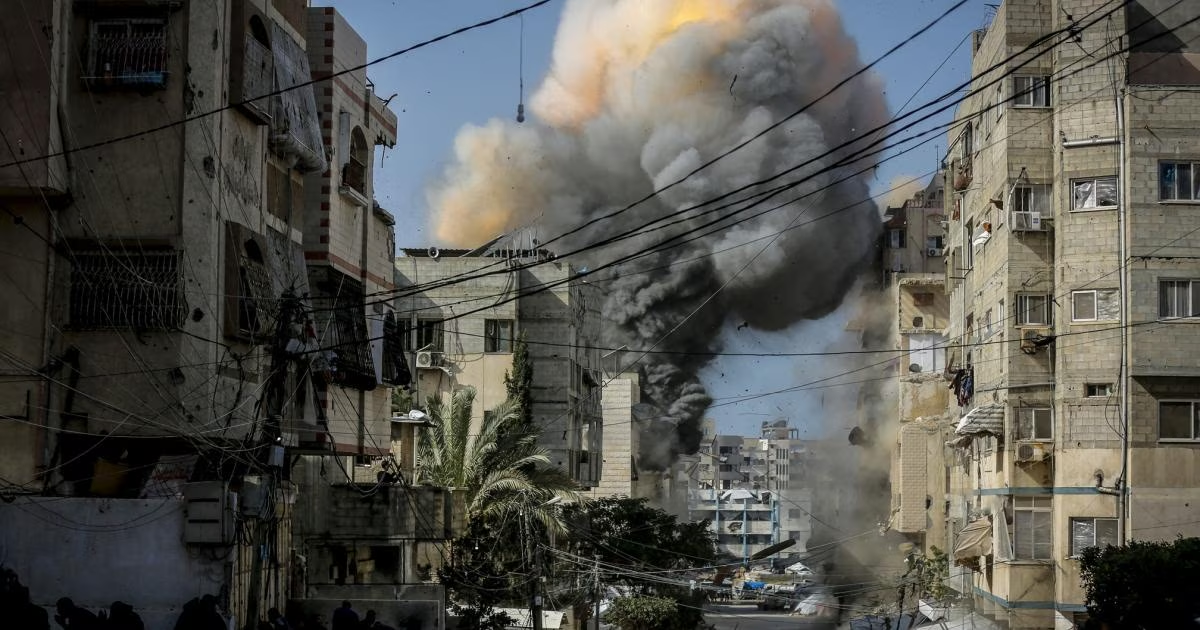
Eight Palestinian citizens were martyred and others sustained varying injuries early Thursday morning, following a series of airstrikes launched by Israeli occupation aircraft on inhabited residential apartments in Gaza City. These field developments come as Israeli forces continue to violate ceasefire understandings by intensifying aerial and artillery shelling in various areas of the Strip.

Medical sources reported that relief teams recovered the bodies of the martyrs from under the rubble of the targeted buildings, with the raids concentrating on vital and densely populated neighborhoods. The targets included apartments in the Sheikh Radwan neighborhood and Tal al-Hawa neighborhood, in addition to the 'Labed' building located on Intelligence Street northwest of the city, and a home belonging to the Muhanna family in Al-Shati refugee camp.

Video clips documented the first moments following the shelling operations, as thick smoke plumes rose and fires broke out at the targeted sites. Civil defense teams made strenuous efforts to control the fires and search for missing persons under the rubble, amid a severe shortage of capabilities and equipment necessary to deal with the extent of the destruction.

In a related context, Wednesday witnessed the martyrdom of three Palestinians in separate raids targeting the central region of the Gaza Strip. Medical sources confirmed the martyrdom of two citizens in a shelling that targeted a house in Al-Maghazi refugee camp, while the body of an unidentified elderly person arrived at Al-Aqsa Martyrs Hospital in Deir al-Balah after being targeted in the Al-Maghraqa area.

Regarding ground operations, the occupation army continued to carry out extensive demolition operations of buildings and residential facilities in the areas it infiltrates. Local sources in Khan Yunis city, south of the Strip, reported that the army carried out at least ten demolition operations of residential blocks east of the city, coinciding with intense artillery shelling and heavy gunfire.

The destruction operations were not limited to the southern Strip but extended to include the eastern neighborhoods of Gaza City, where Israeli forces carried out two violent demolition operations whose explosions were heard throughout the city. These movements come as part of the 'scorched earth' policy pursued by the army within what is known as the Yellow Line, with the aim of changing the geographical features of the area.

Field reports indicate that the occupation continues to impose strict restrictions on the movement of goods and humanitarian aid, as well as preventing the travel of wounded and sick people to receive treatment abroad. The humanitarian crisis is worsening with the continued tight siege that deprives thousands of families of basic necessities and essential means of livelihood.

Since the start of the genocide war on October 7, 2023, the Palestinian Ministry of Health has recorded catastrophic casualty figures, with the number of martyrs reaching approximately 73,000 and the injured 173,000. Women and children constitute the largest proportion of these victims, amid direct targeting of civilian areas and public facilities.

Continuous military operations over two years have led to the destruction of approximately 90% of the infrastructure in the Gaza Strip, including hospitals, schools, and water and electricity networks. Residents face harsh living conditions in displacement tents that lack the minimum standards of health and environmental safety.

Local sources confirm that the continuation of Israeli violations threatens to collapse any efforts to establish calm, as the occupation continues its systematic shelling, demolition, and destruction operations. Palestinians demand urgent international intervention to stop these violations and ensure the flow of relief and medical aid to save what can be saved in the afflicted Strip.

Medical sources reported an increase in the number of martyrs to 8 and injuries to others in the targeting of residential apartments in Gaza City early this morning.

ARAB AND WORLD

Thu 04 Jun 2026 7:13 am - Jerusalem Time

Tehran threatens to target Emirati energy projects alternative to the Strait of Hormuz

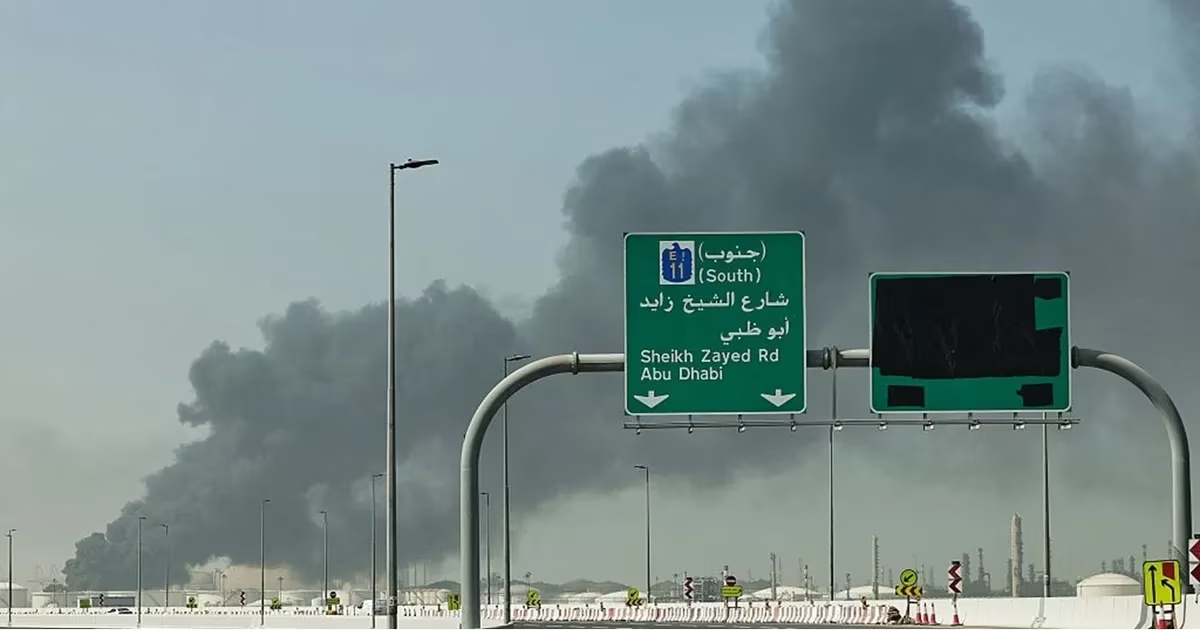
Official Iranian media outlets have issued direct threats to the United Arab Emirates, following reports revealing Abu Dhabi's intention to launch a new pipeline aimed at bypassing the strategic Strait of Hormuz. Iranian sources considered any attempt to circumvent the international waterway to necessarily mean including these vital facilities in the list of military and operational targets in any upcoming confrontation, reflecting escalating tension in the regional energy security file.

These threats come after international press reports about the intention of Abu Dhabi National Oil Company (ADNOC) to build advanced infrastructure to transport gasoline and diesel directly to export ports without the need to pass through the Strait. This Emirati step aims to secure the flow of oil supplies and ensure their arrival to global markets away from the repeated security threats witnessed in the region recently, especially with the increasing intensity of regional polarization.

The UAE currently has a single pipeline connecting production fields to the port of Fujairah on the Arabian Sea, but its limited capacity of about 1.5 million barrels per day does not meet the state's full strategic ambitions. Through the new project, Abu Dhabi seeks to enhance its logistical flexibility, amid a growing conviction among Arab capitals that the security balances in the Strait of Hormuz have fundamentally changed and will not return to their former state before the outbreak of recent military tensions.

For its part, Tehran believes that these economic moves carry political dimensions aimed at weakening its influence and control over the most important waterway for oil trade in the world. Media sources affiliated with the Islamic Republic indicated that the countries of the region are now aware of the inevitability of searching for geographical alternatives, but warned that these alternatives will not be immune from Iranian missile or operational capabilities if the escalation continues in the region's thorny issues.

Building a new export pipeline to bypass the Strait of Hormuz means creating a new target in Iran's attack bank.

LATEST NEWS

Thu 04 Jun 2026 7:13 am - Jerusalem Time

Trump impersonates Agent 007: Political messages with a cinematic flair spark controversy

US President Donald Trump once again dominated the media scene via his private platform 'Truth Social,' after publishing an edited photo showing him as the famous British secret agent James Bond. In this photo, Trump used an old shot from his youth standing in front of a mirror, tagging it 'Trump 007,' a move observers considered an attempt to merge his personal image with symbols of global power and attractiveness.

This interaction was not limited to Trump's personal accounts but extended to the official White House account, which published an illustration showing the President wearing a formal suit and holding a silenced pistol. The image included the slogan 'Make America Great Again' in gold, reflecting an official direction to use popular culture templates to reinforce political messages directed at the American public.

These moves come at a time when the global film industry is eagerly anticipating the identity of the actor who will succeed Daniel Craig in the James Bond film series. 'Amazon MGM' is currently tasked with finding a new star, with prominent Hollywood names such as Aaron Taylor-Johnson and Tom Holland being mentioned to embody the character created by writer Ian Fleming.

Trump is known for his constant tendency to draw comparisons between himself and major historical and iconic figures to enhance his public image among his supporters. He has previously likened himself to rock king Elvis Presley, British leader Winston Churchill, and even, in previous statements, compared himself to Jesus Christ, which always sparks waves of political and religious controversy.

In the context of his intensive digital activity, Trump shared a photo of himself in front of a massive crowd, describing himself as the 'greatest draw' in the current political arena. He also raised questions among his followers by posting an old photo of himself with the late singer Whitney Houston without clear reasons, which analysts see as part of his strategy to always remain in the media spotlight.

On the electoral front, Trump used his platform to celebrate the victory of a group of Republican candidates who received his support in the recent local elections. However, his complete disregard for the loss of Representative Randy Feenstra in Iowa was noted, despite Trump having publicly supported him for the position of state governor, indicating selectivity in presenting political results.

The arena was not without mutual political squabbles, as satirical images comparing Democratic Representative James Talarico to the cartoon character 'Alfred E. Neuman' were circulated. This specific character was used by Trump in 2019 to mock former Secretary of Transportation Pete Buttigieg, reflecting the continued use of caricatures as a tool in partisan conflict.

Communication experts believe that Trump's resort to these methods aims to break traditional political communication molds and reach wider youth demographics. By impersonating 'Bond' or invoking art stars, Trump transforms serious political battles into entertaining material that can be circulated and spread rapidly across various social media platforms.

In conclusion, the use of 'pop culture' symbols remains a double-edged sword in the hands of the American President. While his supporters see it as proof of his wit and closeness to the public, his opponents criticize it as diminishing the prestige of the presidential office. Nevertheless, this strategy succeeds every time in making headlines and imposing Trump's media agenda on public discourse.

The greatest draw... This is how Trump described his ability to rally crowds, coinciding with his impersonation of the famous secret agent.

ARAB AND WORLD

Thu 04 Jun 2026 7:13 am - Jerusalem Time

Lebanese-Israeli Agreement in Washington on Implementing Ceasefire and Security Measures in the South

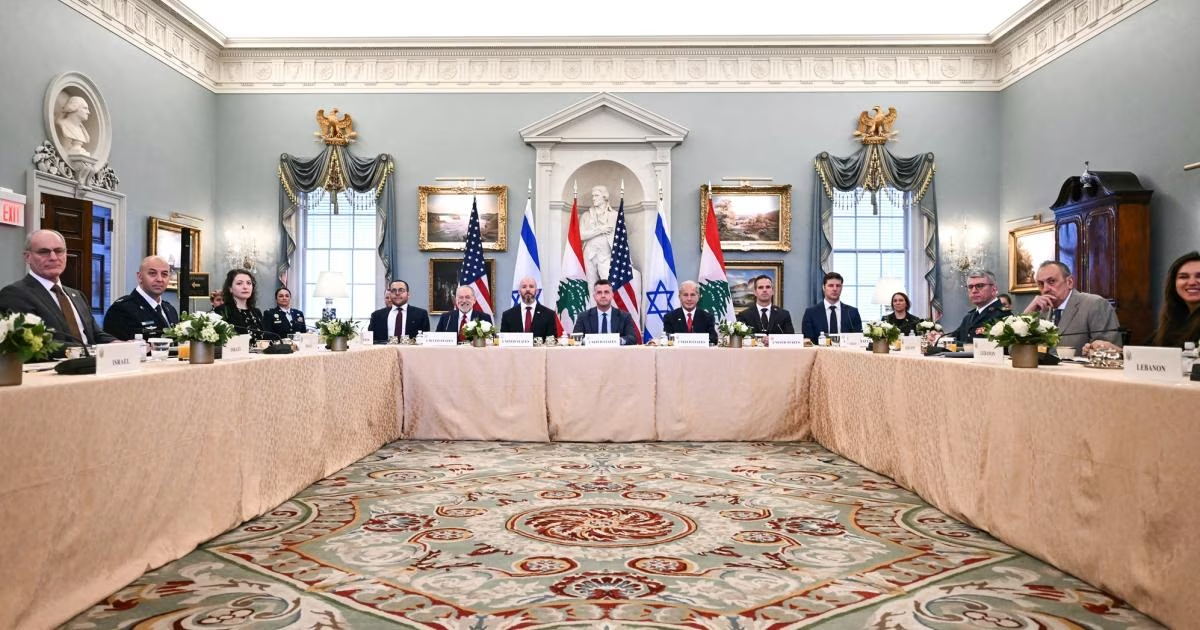
The US State Department announced in an official statement that the Lebanese and Israeli sides have reached an agreement to implement a ceasefire, concluding a fourth round of intensive negotiations hosted in Washington. This announcement came after two days of discussions aimed at containing the ongoing military escalation and solidifying the fragile understandings reached earlier this year.

The new agreement, sponsored and directly guided by the United States, includes the immediate establishment of experimental zones in southern Lebanon. Under this provision, the Lebanese Armed Forces will assume exclusive and full control over these areas, meaning the termination of any armed presence of non-governmental parties in those specified geographical ranges.

The US statement stipulated that for the ceasefire to continue, Hezbollah must commit to a complete and comprehensive cessation of all its military operations against the Israeli side. The understandings also stipulated the necessity of removing all elements of the group and its military installations from the area south of the Litani River, to ensure the border region is free of any armed manifestations outside the framework of the Lebanese state.

Both Israel and Lebanon affirmed during the talks that there are no mutual hostile intentions at present, with a commitment to continue direct negotiations to resolve outstanding issues. This commitment aims to transform the temporary calm into a sustainable security framework that prevents the region from sliding into a destructive comprehensive confrontation.

In drafting this agreement, the negotiating delegations relied on a technical security framework discussed in the Pentagon in late May. Those discussions focused on the implementation mechanisms for deploying Lebanese forces and ensuring the effectiveness of international and local oversight in areas to be cleared of militants.

For its part, the US administration reiterated its full support for the Lebanese and Israeli governments in exercising their national sovereignty over their territories. Informed sources indicated that Washington would provide the necessary logistical and technical support to the Lebanese Army to enable it to carry out its new tasks in the experimental zones stipulated in the agreement.

In a related context, Lebanese Prime Minister Nawaf Salam stressed that Beirut's primary demand remains the consolidation of a ceasefire throughout the country without exception. Salam clarified in press statements that the government seeks to protect civilians and stop the bloodshed caused by recent military operations in Lebanese villages and cities.

On the diplomatic front, US Ambassador to Lebanon Michel Issa expressed optimism about the course of the talks, describing the atmosphere as positive and constructive. Issa affirmed that there is a genuine desire among the parties to overcome technical obstacles, despite the significant field complexities imposed by the ongoing confrontations on the ground.

These political developments come at a time when the Lebanese arena is suffering from catastrophic humanitarian effects, with official statistics indicating thousands of martyrs and wounded and the displacement of more than one million people. International parties hope that this agreement will contribute to alleviating the severity of the humanitarian crisis and allow displaced persons to return to their homes under security guarantees.

Despite this negotiating progress, Hezbollah still explicitly rejects the principle of direct negotiations with Tel Aviv, considering it a form of unacceptable political concession. Lebanese authorities face a major challenge in balancing their international commitments in Washington with strong internal opposition from political and military forces associated with the party.

The two parties agreed to expedite the establishment of experimental zones where the Lebanese Armed Forces will have exclusive control over the land, excluding all non-governmental parties.

ARAB AND WORLD

Thu 04 Jun 2026 7:12 am - Jerusalem Time

US House approves restrictions on Trump's military powers towards Iran

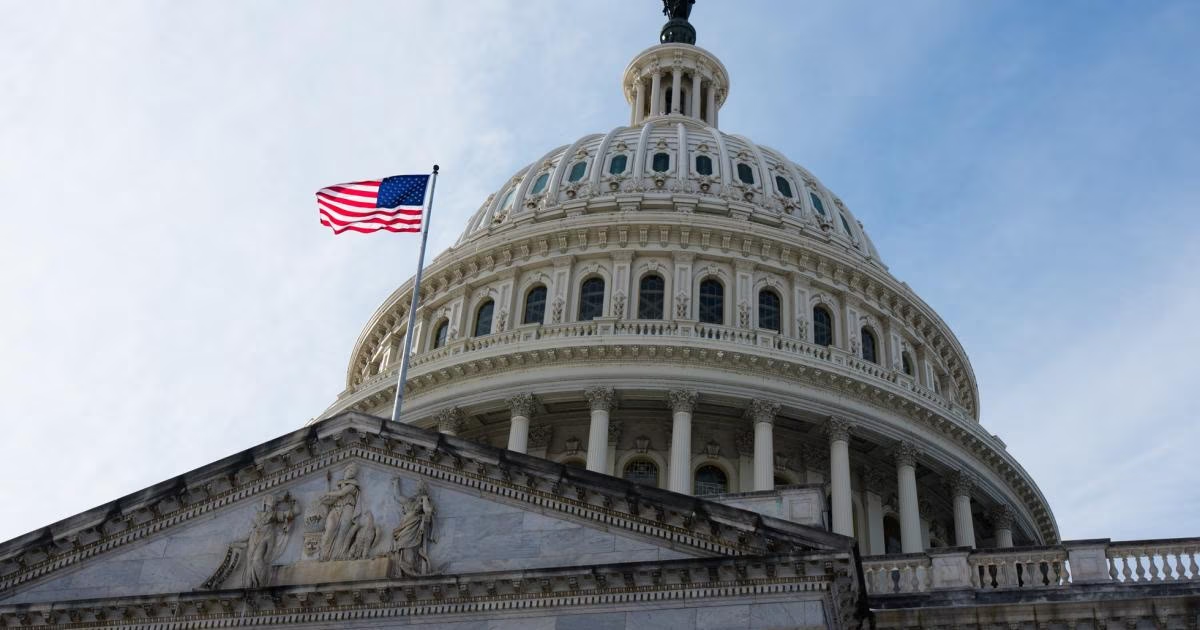
The US House of Representatives, on Wednesday, approved a resolution put forward by the Democratic Party aimed at restricting President Donald Trump's powers in managing military operations against Iran. The resolution stipulates that the US administration must obtain explicit authorization from Congress before engaging in any additional combat operations, reflecting growing opposition within legislative circles to the aggressive policies recently pursued.

The vote result was 215 votes to 208, with the session witnessing a remarkable shift as four Republican representatives joined the Democratic ranks. This move expresses increasing concern within both parties regarding the repercussions of ongoing military escalation in the Middle East and its impact on supreme American interests.

The Democratic Committee, in an official statement via the X platform, described this vote as a firm message from the American people to the White House about the necessity of stopping what it called an 'illegal war.' The statement affirmed that the time has come to end the conflict initiated by Trump with a unilateral decision, emphasizing the importance of Congress reclaiming its constitutional role in declaring wars.

These political developments come in the wake of a widespread military confrontation on February 28, launched by Washington and Tel Aviv against Iranian targets. Tehran responded at the time with a series of attacks targeting Israeli sites and American interests in the region, before a temporary and fragile truce was reached on April 8.

On the ground, tension remains high in vital waterways, as Tehran announced last March the closure of the Strait of Hormuz to international navigation except with prior coordination with it. Iran considered this step a natural response to what it described as American-Israeli aggression that targeted its sovereignty and vital facilities.

In contrast, the United States has continued to impose a strict naval blockade on Iranian ports since mid-April, including those overlooking the Strait of Hormuz. This blockade constitutes enormous economic pressure, given the strategic importance of the strait in securing global energy supplies and stabilizing international oil markets.

Despite the resolution passing in the House of Representatives, observers believe that the move is symbolic for now, as its enforceability requires Senate approval. Lawmakers also need to secure a two-thirds majority in both chambers to override the 'veto' that President Trump has threatened to use against any attempt to restrict his military actions.

For his part, President Donald Trump expressed cautious optimism about the diplomatic path, indicating in statements to reporters at the White House that negotiations are going well. Trump predicted tangible progress in talks with the Iranian side during this weekend, despite the continued blockade and mutual restrictions.

In response to questions about ceasefire violations, Trump downplayed the importance of recent incidents, describing them as 'not a big deal.' He affirmed that American forces dealt with those movements quickly and decisively, stressing that the administration succeeded in containing any field escalation before it worsened.

The US President indicated that Iran is 'very close' to signing a new agreement that ends the current crisis, without revealing details of the proposed terms. These statements come at a time when international parties are seeking mediation to prevent the region from sliding into an all-out war with dire consequences.

Regarding the possibility of separating regional issues, Trump explained that Washington is trying to isolate the issue of opening the Strait of Hormuz from the ongoing conflict in Lebanon and Israeli military operations there. He affirmed that diplomatic efforts are currently focused on securing the vital waterway as a top priority before reaching comprehensive settlements on other fronts.

This vote represents the latest setback for Trump in Congress, as he faces repeated challenges even from within his Republican camp regarding war powers. With continued legislative pressure, the question remains about the US administration's ability to balance military escalation options with internal political pressures.

It's time to end his illegal and unpopular war he chose to wage on Iran.

ARAB AND WORLD

Thu 04 Jun 2026 7:12 am - Jerusalem Time

Rubio: Mojtaba Khamenei is alive and his role in leading Iran is escalating

US Secretary of State, Marco Rubio, revealed Washington's current assessments regarding the leadership situation in Tehran, confirming that the Iranian Supreme Leader, Mojtaba Khamenei, is still alive and performing his leadership duties. Rubio indicated that the US administration is monitoring Khamenei's broader involvement in managing state affairs and making critical decisions during the recent period.

The head of US diplomacy, during a briefing before the Senate Foreign Relations Committee, explained that Khamenei's influence is witnessing a remarkable escalation, noting that this growing role comes at a sensitive time for the region. Despite this increased activity, Rubio pointed to an observation regarding the mechanism of the Leader's communication with the public and institutions, as he still relies on written messages and intermediaries to convey his directives.

These statements come amid ongoing international speculation about the health of the Iranian leadership and succession arrangements within Tehran. According to diplomatic sources, the American assessment relies on precise monitoring of the movements of power centers within the Iranian regime, which reinforces the hypothesis of Khamenei remaining a central player and a key driver of Iranian policies in the current phase.

I believe there are indications that he is more involved in leading the country at a certain level, although all his statements are issued in writing and through other people.

ARAB AND WORLD

Thu 04 Jun 2026 7:12 am - Jerusalem Time

Trump expects decisive results from negotiations with Iran by end of week, insists on seizing 'uranium'

US President Donald Trump revealed rapid developments in the negotiation process with the Islamic Republic of Iran, indicating the possibility of concrete results before the end of the current week. Trump clarified, during statements made from the Oval Office, that the negotiation process is proceeding very positively, despite his affirmation that the possibilities of failure still exist given the complexity of the issues at hand.

The US President stressed that the draft currently being circulated guarantees the United States access to Tehran's entire stock of highly enriched uranium. This issue is a cornerstone of American demands, as Washington aims through it to strip the Iranian nuclear program of its escalatory capabilities and ensure that it does not return to enrichment levels that threaten regional security.

Regarding regional interference, Trump expressed his explicit desire to isolate the negotiating track related to Lebanon from direct talks with Iran. This desire comes at a time when the Iranian leadership insists on the interconnectedness of issues, considering that any comprehensive settlement must include all burning fronts in the region, which represents a new diplomatic challenge for mediators.

Trump refuted news circulated by media outlets about the cessation of communication channels between the two sides, describing those reports as misleading and inaccurate. He affirmed that meetings and discussions have not stopped throughout the past days, stressing that communication continued daily and intensively to reach a consensual formula that ends the current conflict.

The White House urged the leadership in Tehran to make decisive decisions at this critical time, considering that the time has come to conclude an agreement that ends the crisis. Trump indicated that despite the inability to predict the final outcomes, the rapid pace of talks gives indications of the seriousness of the parties in avoiding further military escalation.

These diplomatic moves come after widespread military confrontations erupted last February, in which the United States and Israel participated against Iranian targets. These operations resulted in thousands of casualties and damage to civilian and military facilities, prompting international powers to intervene urgently for fear of the region sliding into an uncontrollable comprehensive war.

Pakistani mediation had previously succeeded in April in securing a temporary truce, but the political process faced significant obstacles that led to its faltering. This was followed by strict American measures, including imposing a naval blockade on vital Iranian ports, including waterways connected to the Strait of Hormuz, which increased the severity of economic pressures on Tehran.

For its part, the Iranian authorities responded by imposing strict restrictions on international navigation in the Strait of Hormuz, requiring prior coordination with its naval forces for ships to pass. This measure raised global fears of the fragile truce collapsing, especially with the noticeable rise in global energy prices and the escalation of inflation rates due to supply chain disruptions.

Political and economic circles are awaiting the outcome of the coming hours, as a potential agreement represents a lifeline for the global economy, exhausted by the consequences of the war. All eyes remain on the White House and Tehran, awaiting an official announcement that could end one of the most violent rounds of conflict in the Middle East in the last decade.

Under an agreement being discussed with Iran, we will obtain Tehran's stockpile of highly enriched uranium, which has been a key point of contention.

OPINIONS

Wed 03 Jun 2026 8:38 pm - Jerusalem Time

When Occupation Intertwines with the Palestinian Authority: How Did the Palestinian Crisis with Governance Form?

The Palestinian crisis with governance is not the result of fleeting political errors, nor the outcome of a specific government or leadership's performance. Rather, it is a much deeper crisis, formed within a unique historical reality where the authority of occupation intertwined with national authority, making it extremely difficult to separate them. From this intertwining, one of the most complex problems in contemporary Palestinian experience was born: the problem of the relationship between the people and the authority.

In most peoples' experiences, the political relationship is clearly defined. There is a national authority that governs, and a people who observe, hold accountable, and influence its decisions. In traditional occupation cases, there is an occupying power that the people confront as the source of control and oppression. But the Palestinian has lived and continues to live a completely different situation; a situation where national authority intertwines with the authority of occupation within the same political sphere, making it sometimes difficult to define the boundaries of responsibility, capability, and decision-making.

To understand this dilemma, one must go back to how Palestinian consciousness regarding the concept of authority was formed.

For many decades, the Palestinian did not know authority as a national institution representing them, but rather as an occupying authority. The meaning of authority was the military governor, the soldier, the checkpoint, and orders issued from outside society, not from within. Authority exercised control without representation, and imposed decisions without participation. Therefore, a relationship based on caution, rejection, and resistance was formed, more than a relationship based on partnership or trust.

Under this long historical experience, it became ingrained in the collective consciousness that authority is the party that possesses power and imposes restrictions, not the party that expresses the general will or is subject to popular accountability. The Palestinian did not have sufficient historical opportunity to build a normal relationship with an independent national authority, like those that emerged in the experiences of other nations.

When the Palestinian Authority was established, it seemed as if this relationship was poised for change. For the first time, institutions with a Palestinian national identity emerged and managed Palestinian affairs. But the problem was that this authority was not born after the end of the occupation, but rather emerged under it. It carried national features, but it operated within a space whose basic boundaries were still controlled by the occupation.

It was precisely here that the intertwining began, which would form the core of the Palestinian crisis with governance.

On the one hand, there became a Palestinian authority that represented the national framework and managed the daily life of the citizen. On the other hand, the occupation authority remained the ultimate controller of the land, crossings, borders, resources, and a large part of political and security decisions. Thus, the relationship did not transition from occupation authority to an independent national authority, but rather the two relationships became intertwined and superimposed on each other.

Palestinians found themselves facing a new reality they had not known before. The face they see daily is Palestinian, but a significant part of the actual power is still outside Palestinian will. The institutions they deal with are national, but their ability to act is constrained by factors they do not fully control. Thus, in the popular consciousness, the image of the national authority became mixed with the image of the authority that is still subject to the conditions of occupation.

From this arose the dilemma of the political position of the Palestinian people themselves.

Palestinians do not face a single authority, but rather two intertwined authorities. The occupation stands between the people and their full national sovereignty, while the Palestinian Authority stands between the people and the occupation. Therefore, the political relationship is no longer a direct relationship between a people and an authority, nor between a people and an occupation, but rather a triangular and complex relationship in which roles and responsibilities are distributed unstably.

Under normal circumstances, a citizen knows where to direct their demands and where to exercise their right to accountability. But Palestinians find themselves in a foggy reality. When they face an economic, social, or political crisis, it is not always clear where the responsibility of the Palestinian Authority begins and ends, and where the responsibility of the occupation begins and where its effects manifest. Even when they try to identify the source of the problem, they discover that both parties are present to varying degrees within the same scene.

This intertwining not only produced confusion in defining responsibility but also brought about a deeper transformation in the nature of the relationship with governance. The Palestinian Authority, by virtue of its proximity to the citizen, became a daily target for anger and criticism. But the occupation, by virtue of its actual control over many elements of reality, remained present as the primary cause of many crises. Between the two parties, the citizen found themselves unable to build a stable relationship with either.

Over time, the crisis transformed from a performance crisis to a conceptual crisis. The question was no longer only about the authority's efficiency, success, or failure, but about the nature of the authority itself and its position within the existing political structure. The Palestinian, who grew up resisting the occupation authority, found themselves facing a national authority that could not completely separate from the conditions of occupation, so images became mixed and concepts intertwined.

However, the most dangerous consequence of this intertwining appeared in another area: the area of popular influence.

Peoples usually have a clear political address towards which their demands, pressures, and struggles are directed. But Palestinians found themselves facing two centers of power. If they directed their efforts towards the occupation, they collided with the reality that the occupation is not subject to the logic of popular accountability. If they directed their efforts towards the Palestinian Authority, they collided with the limits of its actual capacity under the continued occupation.

Thus, the energy of Palestinian society was dispersed between two parallel paths. Part of it was directed towards resisting the occupation, and another part towards holding the national authority accountable. But neither path alone was capable of achieving the desired change. The occupation retained the keys to basic power, and the authority remained constrained by limitations that restricted its ability to fully respond to the demands of society.

Over time, not only did influence weaken, but the center of influence itself was lost. It was no longer clear to the citizen where they should focus their political efforts, nor which entity actually had the ability to respond to their will. From this arose a large part of the political frustration that prevails in Palestinian society today.

When the center of influence is lost, trust in all political action declines. And when trust in political action declines, trust in the authority itself erodes. Thus, the increasing alienation from authority in the Palestinian situation is not the cause of the crisis, but one of its results. The origin of the crisis lies in that continuous intertwining between occupation and authority, which has made Palestinians live for decades within an ambiguous political space, where sovereignty intertwines with restriction, responsibility with impotence, and national decision with the conditions of occupation.

Therefore, the deepest Palestinian dilemma is not only the dilemma of liberation from occupation, but also the dilemma of building a normal political relationship between the people and the authority. This relationship will not fully stabilize until the state of intertwining that has governed the Palestinian experience for many decades disappears, and governance becomes a pure expression of free national will, not a reality stuck between two authorities and incomplete boundaries of sovereignty.

PALESTINE

Wed 03 Jun 2026 8:16 pm - Jerusalem Time

Volunteer Doctor in Gaza Wins New Jersey Democratic Primary for Congress

American doctor Adam Hamowy, known for his medical volunteering in the Gaza Strip, made a significant political advance by winning the Democratic Party primary election in New Jersey. This victory came in the 12th Congressional District, overcoming an intense media campaign that targeted his reputation and political stances in the final weeks of the electoral race.

Hamowy, a former field surgeon who served in the US Army, secured the competition, surpassing a crowded field of Democratic candidates vying to succeed retiring Representative Bonnie Watson Coleman. These results pave the way for Hamowy to run in the general election scheduled for next November, where he will face Republican candidate Greg Meili in a decisive electoral battle.

Despite attempts by right-wing media to portray him as an Islamic extremist based on old testimony he gave in the mid-1990s, Hamowy affirmed that these accusations are nothing more than outdated stereotypes targeting Muslims involved in public affairs. He succeeded in transforming these pressures into electoral momentum, relying on his long professional history of saving lives in conflict zones.

Hamowy's campaign received broad support from progressive figures in the United States, led by Representative Alexandria Ocasio-Cortez and Senator Bernie Sanders. He also gained the endorsement of the Congressional Progressive Caucus PAC and the 'Sunrise Movement,' which strengthened his strong presence among youth bases and progressive voters.

The independent political action committee 'Ballot Back' played a pivotal role in this victory, having been established to counter the influence of the American Israel Public Affairs Committee 'AIPAC.' The committee poured massive advertising resources that contributed to Hamowy's approval rating jumping from 5% in March to about 19% in May, making him lead the race deservedly.

Hamowy's professional biography stands out as one of the most important pillars of his electoral strength, as he possesses a distinguished record that began with his participation as a field surgeon in Iraq in 2004, where he contributed to saving the life of Senator Tammy Duckworth. This humanitarian role was repeated in 2024 when he traveled to Gaza to provide medical aid to wounded Palestinians under extremely harsh conditions.

During his presence in Gaza, Hamowy drew attention by refusing to leave the Strip immediately after the reopening of the Rafah crossing, insisting on the necessity of securing the entry of more medical teams and humanitarian aid. These field experiences were reflected in his political program, which explicitly calls for an end to military aid to Israel and the adoption of a universal healthcare system.

Human rights and political organizations praised Hamowy's victory, considering that New Jersey voters chose to align with the direct humanitarian narrative about what is happening in Gaza. Informed sources confirmed that Hamowy's experience in treating the injured under bombardment gave great credibility to his anti-war political discourse and demands for international justice.

In contrast, Brad Cohen, Mayor of East Brunswick and classified as a centrist pro-Israel candidate, came in second behind Hamowy. Activist Sue Altman also came in a distant position despite having a wide network of connections, indicating a tangible shift in Democratic voter orientations towards humanitarian and international issues.

Voters were drawn to Hamowy's direct narrative about the war of extermination in Gaza, especially his experience in treating the wounded under bombardment.

PALESTINE

Wed 03 Jun 2026 8:16 pm - Jerusalem Time

Fidan Proposes Comprehensive Regional Security Initiative: Palestinian State a Condition for Occupation's Inclusion

Turkish Foreign Minister Hakan Fidan unveiled a new strategic vision aimed at establishing an expanded regional security system, including several central powers in the Middle East and South Asia. Fidan explained that this initiative seeks to reshape regional relations based on cooperation and respect for the national sovereignty of participating states.

Media sources confirmed that the Turkish vision is based on resolving the Palestinian issue as a mandatory and fundamental prerequisite for any future security arrangements in the region. The Turkish minister stated that lasting stability cannot be achieved without addressing the root causes of the conflict and ensuring legitimate Palestinian rights.

The proposed initiative, in its foundational phase, includes Turkey, Pakistan, Saudi Arabia, Egypt, and the Arab Gulf states. This step aims to create a regional bloc capable of confronting common security challenges and enhancing economic and political integration among its members.

Fidan clarified in press statements that the door would remain open for other parties to join this system in later stages, including Iran and Israel. However, the minister stressed that this accession is subject to strict conditions related to adherence to international resolutions and achieving a just peace.

Regarding the Israeli side, the Turkish Foreign Minister linked any role for Tel Aviv in this framework to the necessity of full recognition of an independent Palestinian state on the June 4, 1967 borders. He indicated that this transformation is the only one that can change the regional perception of Israel and integrate it into its surroundings.

Fidan described the project as a 'golden opportunity' for the region's countries to overcome chronic historical conflicts and build a system of collective stability. He affirmed that Middle Eastern countries now possess the capability and will to play an active role in protecting their national security away from traditional external interventions.

These statements come at a time when international pressure is increasing, especially from the US administration led by Donald Trump, to integrate Turkey into the 'Abraham Accords' path. However, the declared Turkish position insists that any commercial or political rapprochement must be preceded by a radical change in Israeli policy towards Palestinians.

The Turkish minister noted that economic relations between Ankara and Tel Aviv, which previously reached about $10 billion, would remain suspended until military aggression ceases. He demanded an end to the blockade imposed on the Gaza Strip and the immediate securing of humanitarian aid and basic necessities for the population.

Fidan strongly criticized the current political doctrine in Israel, considering that it relies on creating enemies to justify its military expansion in the region. He pointed out that Israeli actions in Gaza, the West Bank, Lebanon, and Syria reflect a desire for hegemony rather than a search for true security.

On the international relations front, the minister provided an optimistic assessment of diplomatic efforts to contain tensions between the United States and Iran. He explained that the mediation led by Turkey in cooperation with Qatar has achieved tangible progress that could lead to an imminent agreement between the two parties.

Fidan believes that the success of the US-Iranian dialogue will positively reflect on all outstanding issues in the region, foremost among them the ongoing war in the Gaza Strip. He affirmed that easing international polarization will contribute to accelerating the achievement of comprehensive political solutions to regional crises.

The minister also touched upon the economic challenges resulting from tensions in vital waterways such as the Strait of Hormuz, and their direct impact on energy markets. He warned that the continued absence of political solutions would lead to further disruptions in global oil prices and maritime security.

In the context of international preparations, Fidan indicated that Turkey is preparing to host the NATO summit next July. The summit is expected to witness in-depth discussions on the alliance's role in the Middle East, with anticipated participation from US President Donald Trump.

The Turkish minister concluded his remarks by emphasizing that Ankara will continue to act on all diplomatic tracks to ensure a ceasefire in the Palestinian territories. He stressed that building any successful security system first requires ending the suffering of the Palestinian people and enabling them to determine their own destiny.

Tel Aviv's recognition of an independent Palestinian state on the 1967 borders represents the fundamental condition that could open the door for its participation in any future regional security system.

PALESTINE

Wed 03 Jun 2026 8:16 pm - Jerusalem Time

Grand Mufti of Oman calls for intensifying fleets to break the siege on Gaza following the release of Omani activists

The Grand Mufti of the Sultanate of Oman, Sheikh Ahmed bin Hamad Al-Khalili, called for the necessity of continuing and intensifying the dispatch of maritime convoys aimed at breaking the Israeli siege imposed on the Gaza Strip, emphasizing that these initiatives have become a tangible tool of pressure and influence on the international stage.

Al-Khalili's statements came during a solidarity visit he made to Omani activists who were part of the "Global Fleet of Steadfastness" participants, and who were released by the occupation authorities a few days ago. The Mufti praised the efforts of the participants, considering that what they did represents a duty that resonates widely beyond geographical borders.

The Mufti affirmed during the meeting that the global resonance created by the fleet necessitates building upon it by accelerating the organization of other similar attempts, to ensure that the issue of the Gaza siege remains alive in the global conscience and to strengthen the steadfastness of the Palestinian people in the face of continuous restrictions.

This global movement has left a significant reaction and had a great impact on the world, and therefore the trend is to accelerate its repetition.

PALESTINE

Wed 03 Jun 2026 8:16 pm - Jerusalem Time

Occupation launches arrest campaign targeting female students and graduates from Birzeit University

Israeli occupation forces carried out a widespread raid campaign at dawn on Tuesday in various areas of Ramallah governorate, resulting in the arrest of four Palestinian women, including female students and graduates of Birzeit University. This step comes in the context of a systematic escalation targeting the student movement and Palestinian academic institutions, as the forces stormed the homes of the female students and their university dormitories before taking them to interrogation centers.

Birzeit University administration announced in an official statement the names of those arrested: Golan Abu Awad, Sama Safi, Natalia Abu Diyeh, in addition to graduate Laila Nael Khalil. The university condemned these measures, describing them as an attempt to disrupt the educational process and intimidate students, emphasizing their natural right to continue their education and live freely away from the continuous pursuits of the occupation.

In details of the raids, local sources reported that a military force stormed the town of Birzeit, north of Ramallah, where it raided the home of student Natalie Abu Diyeh's family, searched it, and tampered with its contents before arresting her. The raids also targeted the female students' dormitory in the same town, where student Golan Abu Awad was arrested, a scene that has been repeated frequently in recent months as part of targeting student frameworks and activists inside and around the university campus.

The pursuit operations extended to include the town of Beitunia, west of Ramallah, where occupation forces arrested young Laila Nael Khalil, a graduate of Birzeit University, after raiding her family's home and taking her to an unknown destination. In Ramallah city, the home of student Sama Safi's family was stormed and thoroughly searched, and the operation ended with her arrest and abduction amidst a state of anxiety among her family members and neighbors.

For its part, the Palestinian Football Association revealed additional details related to the detainee Natalie Abu Diyeh, indicating that she is a student in the media department and a former player in the Palestinian women's national team. The association explained in a comment that the occupation raided her residence, leaving behind her lecture notebooks and pens, a symbolic reference to the violations that obstruct the athletic and academic aspirations of Palestinian youth.

Human rights organizations believe that targeting student cadres primarily aims to eliminate student and political activity within universities, and to transform these institutions from spaces for expression into permanent military targets. These organizations affirm that the pursuit of female students falls within the policy of collective punishment practiced by the occupation against Palestinian society in all its segments, especially those influential in national consciousness.

In a related context, data from the Palestinian Prisoners' Club indicate a tragic reality experienced by female prisoners inside prisons, where their number has risen to 89 female prisoners under harsh detention conditions. These new arrests raise the total number of Palestinian prisoners to more than 9,600 prisoners, including hundreds of children and sick individuals, which calls for urgent international action to stop these continuous violations against civilians and students.

The occupation follows systematic policies targeting Palestinian education and students' right to complete their academic journey.

PALESTINE

Wed 03 Jun 2026 8:16 pm - Jerusalem Time

Netanyahu and Trump: The Clash of the 'Cunning' and the 'Impulsive' Puts the Historic Alliance to the Test

A journalistic report by the British newspaper "The Times" revealed the depth of the chasm that has come to separate Israeli Prime Minister Benjamin Netanyahu and the American administration, with Netanyahu described as the most annoying figure in the White House over the past three decades. The report indicated that Netanyahu's personal traits, characterized by stubbornness and maneuvering, have put Tel Aviv's strategic relations in a predicament with successive presidents from both the Republican and Democratic parties.

In a striking development, signs of intense anger from the American president towards Netanyahu emerged, with sources reporting that a stormy phone call witnessed a harsh rebuke and vulgar insults from Trump to the Israeli Prime Minister. This anger came against the backdrop of Israeli military operations in southern Lebanon, which Washington considered a direct threat to the ongoing peace negotiations with Iran, and an attempt to drag the region into a comprehensive confrontation that does not serve American interests.

Reports quoted American officials as saying that Trump confronted Netanyahu with sharp words, reminding him of his favor in keeping him out of prison and protecting him politically and legally over the past years. Trump emphasized in his remarks that Netanyahu's current policies have made Israel an international pariah, noting that hatred for Israel has begun to escalate unprecedentedly in global and American circles as a result of the insistence on military escalation.

For his part, Netanyahu appears to be operating according to a complex internal agenda, with analysts believing that the continuation of the state of war serves his political survival and postpones the resolution of the corruption cases pursuing him. Opinion polls within Israeli society show a sharp division, with a large segment of settlers tending to continue military operations against Iran and Hezbollah, which Netanyahu exploits to strengthen his electoral position against his political opponents.

The Israeli government faces increasing internal pressure due to the displacement of thousands of Israelis from the northern regions, a file that opponents like Naftali Bennett have exploited to accuse Netanyahu of weakness. This internal pressure pushes Netanyahu towards further escalation in Beirut, disregarding repeated American warnings about the need for restraint to avoid the collapse of fragile regional understandings.

On the American side, Trump finds himself under significant electoral and economic pressure, especially with rising fuel prices exceeding four dollars per gallon. The White House believes that the continued tension in the Strait of Hormuz due to Israeli escalation directly harms the American economy, which makes American patience with Netanyahu's military adventures rapidly run out.

In this context, former National Security Advisor John Bolton believes that Trump's crude approach to Netanyahu reflects genuine frustration with the non-compliance with the American vision. Bolton explained that Iran understands this tension and exploits it to pressure Washington, considering that Trump seeks to achieve an agreement that ensures the flow of global oil, even if it is at the expense of Netanyahu's military ambitions in Lebanon.

Historically, Netanyahu was no stranger to clashes with American presidents. He had previously angered Bill Clinton, who angrily questioned who the superpower was in the relationship between the two parties. The Obama and Biden eras also witnessed similar tensions, with Netanyahu being called harsh names behind closed doors, reflecting a continuous pattern of fundamental disagreements over the management of Middle East files.

Current data indicate a fundamental shift in American public sentiment, with research centers showing a significant decline in support for Israel among Americans. After a positive view was prevalent, the majority now hold negative feelings towards the occupation, influenced by the scenes coming from Gaza and the destruction left by the ongoing war, which has even begun to reflect within the Republican Party's electoral bases.

Experts believe that Netanyahu is now fighting on two fronts: the front of political survival and the front of personal destiny to avoid going to prison in bribery and breach of trust cases. This five-year ongoing trial makes his wartime decisions subject to doubt, as he is accused of prioritizing his personal interests over strategic security interests, and even over Israel's relationship with its largest international ally.

Despite Netanyahu's attempts to exploit his American cultural background and his connections in Washington to mend the rift, the gap appears to be continuously widening with the increasing calls for isolationism in America. Influential right-wing figures have begun to openly question the utility of funding wars that do not serve the American citizen, putting annual military aid amounting to billions of dollars under the microscope of popular accountability.

The biggest challenge currently facing the occupying state is the divergence of interests with Washington on vital issues such as energy and the relationship with Iran. While Washington seeks to calm fronts to ensure market stability, Netanyahu finds escalation the only way to escape internal and legal obligations, which may ultimately lead to a direct clash that changes the shape of the historic alliance.

Researchers warn that Netanyahu's continued defiance of American will may cost Israel irreplaceable diplomatic and military cover. The equation based on unconditional support has begun to erode, and the harsh messages sent by Trump are not just fleeting outbursts of anger, but rather an indicator of a structural change in how Washington deals with its unruly allies.

In conclusion, Netanyahu's timeline remains linked to upcoming elections and a pending judicial fate, making him an unpredictable player on the international stage. With the November deadlines approaching in the United States, the relationship between the 'cunning' in Tel Aviv and the 'impulsive' in Washington will remain under a test of resolve, amidst unforgiving regional and international changes.

"If it weren't for me, you'd be in jail. I'm saving you. Everyone hates you now. Everyone hates Israel because of this."

PALESTINE

Wed 03 Jun 2026 8:16 pm - Jerusalem Time

Changes in the occupation's military deployment map in northern Gaza and Netanyahu reveals expansion plans

Military sources reported that the occupation army decided to withdraw the 252nd Division from areas of the northern Gaza Strip, after a period of continuous operations lasting four months characterized by widespread destruction and forced displacement of residents. A statement from the occupation army clarified that this division had completed its assigned tasks, and that forces from the 99th Division would take over field responsibility to continue operations in the same area, without disclosing the total number of remaining divisions inside the Strip.

These field movements come at a time when the head of the occupation government, Benjamin Netanyahu, revealed military ambitions to expand the area of presence in Gaza. Netanyahu indicated in recent statements that his forces currently control approximately 60% of the Strip's area, confirming plans to increase this percentage to 70% in the next phase.

It is worth noting that previous reports had indicated the occupation's control over about 53% of the geographical area of the Strip, following a redeployment carried out as part of the first phase of a plan supported by US President Donald Trump, which indicates an escalation in the pace of geographical encroachment practiced by the occupation in Gaza.

The forces currently control about 60 percent of the Gaza Strip, and intend to raise this percentage to 70 percent.

PALESTINE

Wed 03 Jun 2026 8:16 pm - Jerusalem Time

Palestinian Presidency warns of 'settlement madness' and demands immediate US intervention

The Palestinian Presidency issued strong warnings about the repercussions of continued Israeli settlement policies deep in the occupied West Bank. In an official statement, the Presidency called on the American administration for urgent intervention to stop what it described as 'Israeli madness' that undermines opportunities for peace and stability in the region.

This stance came after the occupation authorities officially approved the construction of 2162 new settlement units, distributed among major settlement blocs and scattered areas. The Palestinian leadership considered this step a grave violation of international law and a challenge to the will of the international community that rejects settlement expansion.

The Presidency stressed that all forms of settlement lack legal and political legitimacy, affirming that these plans will not grant the occupation any right to Palestinian land. It pointed out that UN Resolution 2334 remains the legal reference that proves the invalidity of these measures in the West Bank and East Jerusalem.

The statement held the Israeli authorities fully responsible for sliding into new cycles of violence and field escalation as a result of these provocations. The Presidency affirmed that the absence of international accountability encourages the occupation government to proceed with its policy of imposing facts on the ground and confiscating Palestinian property.

The newly approved units are distributed to include the construction of 1006 units in the 'Givat' settlement south of Bethlehem, in addition to 922 units in the 'Har Bracha' settlement around Nablus. The plans also included the construction of 234 additional units in the 'Kiryat Arba' settlement built on the lands of Hebron city.

In a related context, the Presidency affirmed that the Palestinian people will continue their steadfastness on their land and will not relinquish their legitimate national rights despite all pressures. It stressed that the ultimate goal remains the establishment of an independent Palestinian state on the 1967 borders, with East Jerusalem as its capital, as the only way to achieve security.

These developments come amid a sharp escalation of violations in the West Bank since October 2023, where official statistics indicate the martyrdom of 1168 people and thousands injured. Repressive policies have also led to the arrest of about 23,000 citizens and the displacement of thousands from their homes amid unprecedented settlement expansion.

Settlement in all its forms is illegal and does not grant legitimacy to any party, and it is a blatant challenge to international resolutions.

PALESTINE

Wed 03 Jun 2026 8:15 pm - Jerusalem Time

Fare Reduction.. Does it Provide an Entry Point to Lower High Transportation Costs?

Dr. Shaker Khalil: The decrease in fuel or import costs should be reflected in prices with stricter oversight, considering it a corrective policy. Ayham Abu Ghosh: The decision reflects a responsible and balanced approach, and the public transport pricing file requires a clear and permanent mechanism based on scientific and professional foundations. Dr. Moayad Afaneh: The importance of the decision is not limited to its direct financial impact but extends to breaking the "societal axiom" that prices do not decrease again. Hasnaa Al-Rantisi: The decision does not mean returning to the fare before the last increase and reflects a partial sharing of the burdens of rising fuel prices between passengers and drivers. Dr. Thabet Abu Al-Roos: Reducing transportation costs is important, but the decline of the dollar against the shekel necessitates a review of the pricing mechanisms for basic goods. Firas Al-Taweel: The current reduction did not fully meet citizens' expectations, especially since the previous increase in fuel prices was significant and sudden. Ramallah - Exclusive to "Al-Quds" - The decision by the Ministry of Transport and Communications to reduce public transport fares by 50% of the increase approved following the rise in fuel prices last April, constitutes a remarkable step in light of the difficult economic conditions experienced by citizens. The decision brought the issue of the relationship between fuel prices and the costs of essential services back to the forefront of economic discussion. Economic experts, in separate interviews with "Al-Quds", believe that the decision has an important livelihood dimension, given the daily reliance of a wide segment of workers, students, and employees on public transport. This makes any adjustment in fares directly impact household expenses, despite citizens' hopes for a larger percentage. They emphasize that the decision is not limited to being a reduction in transport fares, but rather represents a test of the ability of the competent authorities to link prices to their actual costs, both up and down, thereby enhancing confidence in economic measures and establishing the principle of fairness in pricing. They believe that the decision opens the door for increasing demands to review the prices of other goods and services that were previously affected by rising fuel prices, especially in light of continued living pressures and the decline in citizens' purchasing power. Significant decline in global oil prices Economic expert Dr. Shaker Khalil confirms that the decision to reduce fuel prices and the subsequent reduction in public transport fares came as a result of a significant decline in global oil prices after a wave of sharp increases witnessed by markets during the past months. He considers the step a partial corrective policy for previous decisions that directly affected citizens and various economic sectors, but this requires effective oversight. Khalil explains that the recent developments came within a volatile trajectory that first saw significant increases in fuel prices, with diesel recording an unprecedented increase of about 40 to 41%, while gasoline rose by about 15%, which directly reflected on transport, production, and service costs. Khalil points out that these increases were linked to regional and international tensions, especially the repercussions related to the confrontation between the United States and Iran and its impact on global energy markets. Three factors behind the recent decline Khalil explains that there are three main factors behind the recent decline: the fall in global oil prices, the decrease in prices from the Israeli supplier, and then the transfer of this decrease to the Palestinian market through local pricing. He affirms that the government seemed more aware of the impact of previous increases, especially regarding diesel, which is a key input for production in various economic sectors. Khalil believes that the Palestinian government's decision to reduce the price of diesel by a higher percentage than others represents a positive review of previous policies, especially since the significant increase in diesel months ago affected the public transport sector, factories, and various economic activities, and contributed to a wide wave of price increases. An important step to build upon Khalil emphasizes that the current decline in public transport fares does not fully restore prices to their previous levels, but it constitutes an important step in the right direction that should be built upon. Khalil explains that issuing a new public transport fare reflects an official response to changes in fuel prices, but he warns that the success of the decision requires effective oversight to ensure that all transport lines adhere to the new fare, noting that varying levels of compliance may lead some drivers to continue charging previous fares. Khalil believes that recent developments should open the door for a broader review of the prices of some goods and services, especially in light of the significant decline in the dollar exchange rate against the shekel, which has reduced the cost of importing many goods and raw materials. The importance of accurate study of import and production costs Khalil points out that this decline does not necessarily mean significant price reductions, but it necessitates a precise study of import and production costs and their implications for the consumer. He stresses that any decrease in import or fuel costs must be reflected in final prices in one way or another, but this will not happen automatically without effective government oversight that monitors markets and holds violators accountable. Khalil explains that the transport sector was the most affected by the rise in diesel prices, and therefore it was natural for it to be the first sector to see a price adjustment after the fuel price drop. Khalil believes that the current stage requires well-considered economic decisions based on a comprehensive assessment of their repercussions before implementation, thereby limiting the confusion that may arise from repeated price adjustments, and ensuring a balance between public revenue requirements and protecting citizens and the national economy from the effects of sharp fluctuations in energy markets. Quick and direct response to citizens' needs Economic journalist Ayham Abu Ghosh considers the Ministry of Transport and Communications' decision to reduce public transport fares following the drop in fuel prices a quick and direct response to citizens' needs, reflecting a responsible and balanced approach in dealing with the economic changes witnessed in the Palestinian market. Abu Ghosh explains that the decision was consistent with the percentage of the decrease in fuel prices, especially diesel used in the public transport sector, noting that the ministry did not fully return to the previous prices that prevailed before the last increase, but rather reduced the fare in proportion to the decline in fuel costs, which achieves a balance between the interests of citizens on the one hand and the interests of drivers and public transport vehicle owners on the other. Abu Ghosh points out that the speed of the decision reflects the seriousness of the competent authorities in monitoring economic changes, noting that the reduction was announced immediately after the issuance of the new fuel price list by the General Petroleum Authority, which enhances confidence in a practical response to changes that directly affect citizens' daily lives. Public transport pricing file and a clear and permanent mechanism Abu Ghosh emphasizes that the public transport pricing file requires a clear and permanent mechanism based on scientific and professional foundations, taking into account various cost elements, distances traveled, and operating conditions, in addition to ensuring a fair profit margin for drivers and vehicle owners, thereby ensuring the stability of the sector and the continuity of its services without burdening citizens with additional costs. He points out that the decision gains greater importance in light of the difficult economic conditions experienced by Palestinian society, where wide segments suffer from declining income levels and exacerbating living pressures as a result of the escalating economic crisis and Israeli measures that have directly affected economic activity and employment opportunities. Abu Ghosh believes that this step reflects consideration for the existing living reality and constitutes a model for economic decisions that should be based on clear criteria and balance between the requirements of social justice and the sustainability of various service sectors. A positive and logical step consistent with changes Economic expert Dr. Moayad Afaneh confirms that the Ministry of Transport and Communications' decision to reduce public transport fares by 50% of the increase approved in April constitutes a positive and logical step consistent with the changes in fuel prices, specifically the price of diesel used in the public transport sector. Afaneh explains that the price of a liter of diesel decreased from 8.40 shekels at the beginning of last April to 7.43 shekels at the beginning of this June, a decrease of about 11.5%, which makes the ministry's decision consistent with the foundations on which the previous decision to raise transport fares was based, which stipulated that the increase was temporary and directly linked to the rise in fuel prices, subject to periodic review according to monthly market changes. Commitment to good governance principles Afaneh points out that the decision reflects a commitment to good governance principles, foremost among them justice and transparency, and represents a quick response to the decline in operating costs, thereby ensuring the alleviation of burdens on citizens, especially those most affected by rising transport costs, including school and university students and employees who rely on daily commuting, in addition to poor and low-income families who do not own private transport. Breaking the prevailing "societal axiom" Afaneh notes that the importance of the decision is not limited to its direct financial impact, but extends to breaking the prevailing "societal axiom" that prices that rise do not fall again. He explains that the Palestinian market has become accustomed to a quick response to price increases when production costs rise, in contrast to a slow or absent response when those costs fall, which exacerbated living pressures on citizens. A starting point for broader reviews Afaneh calls for this decision to be a starting point for broader reviews of the prices of various goods and services in Palestine, especially imported goods that are supposed to be affected by the decline in the dollar exchange rate against the Israeli shekel, which has fallen by about 23% over the past year, meaning it has lost nearly a quarter of its value, taking into account other influential factors such as existing inventory, pre-contracts, and insurance and shipping costs. Afaneh demands a review of the prices of goods and services that immediately rose with the increase in fuel prices last April, especially in light of the current decline in diesel prices and the 16% drop in gas prices, considering that the continued rise in prices of many basic goods now lacks economic justification. The necessity of government intervention to protect the consumer Afaneh stresses the necessity of government intervention to protect the consumer in light of the exacerbating economic crisis resulting from Israeli economic strangulation policies, which have contributed to rising unemployment rates and the expansion of poverty. He calls on the private sector to assume its social responsibilities, in addition to activating the role of civil society organizations and the media in enhancing societal oversight of markets and defending the rights of poor and marginalized groups in the face of the high cost of living. Enhancing the credibility of the official body Economic journalist Hasnaa Al-Rantisi explains that the Ministry of Transport and Communications' decision to reduce public transport fares by 50% of the last increase carries a set of important economic and livelihood implications, foremost among them enhancing the credibility of the official body and proving its commitment to linking public transport pricing to actual changes in fuel prices. Al-Rantisi confirms that the decision does not mean a complete return to the fare that prevailed before the last increase, but rather reflects a partial sharing of the burdens resulting from rising fuel prices between passengers and drivers, noting that the Ministry of Transport had confirmed when raising the fare that the decision was temporary and directly linked to the level of fuel prices, which makes the current reduction decision a practical translation of that commitment and a clear message that the increase was not a permanent measure. Living costs remain high Al-Rantisi points out that the reduction, despite its importance, does not negate the widespread effects of the wave of high prices suffered by citizens, as living costs are still high, and prices have not returned to pre-crisis levels. Moreover, the government has not resumed fuel subsidy policies at a time when markets are experiencing increasing pressures, especially regarding diesel, which is an essential component in the operation of transport, production, and service sectors. Al-Rantisi confirms that the decision has a direct livelihood impact on thousands of families, especially in the West Bank, where a large number of citizens rely daily on public transport to reach workplaces, universities, markets, and health centers, making any reduction in transport fares a contributing factor in reducing daily household expenses. Market fragility in the face of energy price fluctuations Al-Rantisi believes that the decision also reveals the extent of market fragility in the face of energy price fluctuations, in the absence of local ability to control fuel prices and reliance on global markets and the Israeli market as a main source of fuel, which makes transport fares and the prices of many services subject to constant change. Al-Rantisi stresses that the current step should be an entry point for a broader review of the prices of energy-related goods and services, based on the principle that prices should fall when fuel costs decrease, just as they rise when they increase. Al-Rantisi confirms that achieving this requires more effective oversight policies, enhanced market competition, and the development of transparent mechanisms that link final prices to production and transport costs, in addition to developing tools to protect consumers and prevent the full burden of fuel price fluctuations from being passed on to citizens. Resolving the debate about the possibility of reducing transport fares Economic expert and analyst Dr. Thabet Abu Al-Roos confirms that the Ministry of Transport and Communications' decision to reduce public transport fares by 50% of the last increase is important and carries many significant economic and social implications, reflecting the ministry's role as the responsible authority with the power to regulate the transport sector and determine fares in line with economic changes. Abu Al-Roos explains that the first implication of the decision is to resolve the debate that took place during the past period regarding the possibility of reducing transport fares after the decline in fuel prices. The decision came clear and direct to confirm that official bodies monitor developments and deal with them according to specific criteria. Abu Al-Roos points out that the importance of the decision is doubled due to the link between transport services and citizens' daily needs, especially those who constantly travel between Palestinian governorates, in light of the noticeable increase in transport fares during the past months. Abu Al-Roos also notes that the decision reflects an official conviction of the continued decline in global oil prices, based on political and economic expectations related to the possibility of reaching international understandings that ease tensions related to the Strait of Hormuz, which may reflect on the stability of energy markets in the coming period. Alleviating living pressures Abu Al-Roos believes that the decision also comes in the context of dealing with the wave of high prices that burdens citizens, as it contributes to alleviating living pressures and absorbing the popular discontent resulting from successive price increases. Abu Al-Roos considers the step a responsible response to citizens' demands, especially in light of increasing complaints about some sectors continuing to impose high prices despite declining operating costs. Abu Al-Roos confirms that the decision contributed to reducing the state of anxiety and frustration experienced by Palestinian citizens as a result of the continuous rise in prices of basic goods and services, stressing that fuel is a pivotal element in citizens' lives and in the costs of various economic sectors. Review after the dollar's decline against the shekel Regarding the possibility that the decision could be an entry point for a broader review of basic commodity prices, Abu Al-Roos explains that the matter is more complex compared to fuel, due to the clarity of the fuel source and its pricing mechanism, while basic commodities differ in terms of import sources, types, specifications, and associated operating costs. Abu Al-Roos points out that a single commodity may be available in several varieties and prices, and transport and distribution costs vary between governorates. Nevertheless, Abu Al-Roos stresses that the significant decline in the dollar exchange rate against the shekel, which reached about 23%, necessitates a review of the pricing mechanisms for basic commodities, calling for setting upper and lower price ceilings that achieve greater fairness and clarity in the markets. Abu Al-Roos calls on the competent authorities, foremost among them the Ministry of National Economy, consumer protection associations, and regulatory bodies, to play a more effective role in monitoring prices and regulating markets, similar to the role played by the Ministry of Transport and Communications in the transport fare issue, thereby ensuring consumer protection and promoting economic and social stability. The reduction did not fully meet citizens' expectations Firas Al-Taweel, editor-in-chief of "Al-Iqtisadi" website, confirms that the decision to reduce public transport fares reflects a government attempt to align transport costs with changes in fuel prices, ensuring that fares do not remain at high levels while operating costs, primarily fuel, which is one of the most important components of transport cost, are declining. Al-Taweel explains that the decision represents an implicit acknowledgment that the majority of the previous increase in transport fares was linked to the sharp rise in fuel prices during the past months, which makes it natural for any decrease in fuel prices to be reflected in fares, even partially. Al-Taweel points out that the current reduction did not fully meet the expectations of citizens who hoped for a larger decrease, especially since the previous increase in fuel prices was significant and sudden, with the price of a liter of diesel rising to about 8.40 shekels after a single increase of nearly 2.5 shekels. Al-Taweel notes that popular discontent stems from the fact that fuel prices rise rapidly and significantly, while reductions are gradual and limited, despite the noticeable decline in global oil prices compared to the period that witnessed the last increases, based on the popular saying, "Raising is by the gram, and lowering is by the gram." Fuel is not the only component of transport cost Al-Taweel points out that many citizens do not realize that petroleum derivatives are purchased through futures contracts, which means that a decrease in oil prices or a decline in the dollar exchange rate against the shekel is not immediately reflected in local prices, but rather takes time, which may extend for months. Al-Taweel confirms that fuel is not the only component of transport cost, as the cost also includes drivers' wages, maintenance, spare parts, insurance, and licensing, which are high and influential items, explaining why the reduction is limited to half the value of the previous increase. Regarding the possibility that the decision could be an entry point for a broader review of fuel and basic commodity prices, Al-Taweel stresses the need to reconsider government fuel subsidy policies, especially in light of the decline in these subsidies during the past months, noting that taxes account for more than 60% of the price of a liter of fuel, making them a key factor in determining final prices. A necessary entry point for prices of other goods and services Al-Taweel confirms that any decrease in fuel prices is supposed to be reflected in the future in the prices of some goods and services, but this requires a sustained decrease for a long period, as happened during the Corona pandemic, where the effects of declining oil prices appeared after several months, not immediately. Al-Taweel explains that the continuation of regional tensions, whether in the Iranian issue or on other fronts in the region, keeps the possibilities of price fluctuations alive and limits the possibility of sustained decreases. The importance of effective oversight Al-Taweel points out that the Palestinian economy faces deeper challenges than just rising fuel prices, including heavy reliance on imports, high operating costs, and weak market oversight tools, which makes price reductions slow and difficult to achieve, and reinforces the popular belief that prices rise quickly but rarely return to their previous levels. Complaints about limited supply Al-Taweel notes the continued complaints from citizens about limited supply at some stations, believing that this may be linked to the financial crisis suffered by the competent authorities, according to what gas station owners report, who speak of not being supplied with the required quantities in full despite their financial commitment, which leads to managing available quantities according to daily market needs without a comfortable inventory sufficient for longer periods.

PALESTINE

Wed 03 Jun 2026 8:15 pm - Jerusalem Time

Occupation authorities arrest two Palestinian national team players and extend their detention

Official Palestinian sources reported that the Israeli occupation police detained Rand Helwani, a player for the Palestinian Women's National Football Team, after she was summoned for questioning at one of their centers in occupied Jerusalem. The Palestinian Football Association clarified that the 20-year-old player was arrested immediately upon her arrival at the 'Talpiot' police station, located west of Jerusalem, a move that reflects the continued targeting of Palestinian sports personnel.\n\nFor its part, the media office of the Jerusalem Governorate confirmed that the occupation authorities decided to refer player Helwani to court after questioning her on Tuesday, where a decision was issued to extend her detention until next Friday. These measures come amid silence from the Israeli security apparatus, which has not provided any official clarifications regarding the background of this sudden detention of the Palestinian athlete.\n\nIn a related context, Israeli army forces launched a raid campaign targeting student housing north of Ramallah, resulting in the arrest of Natalie Abu Diyeh, a former national team player and a student in the media department at Birzeit University. Sources from the university and the association stated that the arrest took place after storming and searching her residence, which sparked a wave of condemnation in academic and sports circles.\n\nThe arrest campaign was not limited to female players but also included other female students from Birzeit University, as the university administration reported the arrest of students Golan Abu Awwad and Sama Safi, in addition to graduate Laila Nael Khalil. A statement issued by the occupation army claimed that the four young women are suspected of engaging in activities it describes as hostile, charges often used to justify political arrests.\n\nThe Palestinian Football Association condemned these practices, describing them as a blatant violation of international conventions and universal sports values that guarantee freedom of movement and safety for athletes. The association issued an urgent appeal to the International Federation of Association Football (FIFA), demanding it take concrete and immediate measures to hold the occupation authorities accountable for these transgressions that violate the regulations of the international football system.\n\nOn the religious front, the Bishop of the Evangelical Lutheran Church in Jordan and the Holy Land, Imad Haddad, demanded the immediate and unconditional release of detainee Natalie Abu Diyeh, noting that she is an active member of the Reform Church in Beit Jala. The Bishop expressed his deep concern over the fate of Natalie, who is now among thousands of Palestinians held in prisons without clear charges or fair trials.\n\nIn a detailed report by the Palestinian Prisoner's Club, a significant increase in the number of female prisoners in occupation prisons was revealed, reaching 89 detainees, including three children and three pregnant women. The report indicated that the majority of these female prisoners are held in 'Damon' prison in Haifa, where they face extremely difficult living and health conditions that lack the most basic human necessities.\n\n"The Prisoner's Club clarified that female prisoners are subjected to systematic policies of abuse, including deliberate starvation and medical neglect, in addition to solitary confinement and physical and verbal assaults during searches. The cells also suffer from severe overcrowding, forcing many detainees to sleep on the floor due to the lack of adequate blankets and beds, which exacerbates their daily suffering.\n\nRecent statistics issued by human rights organizations indicate that the total number of Palestinian prisoners in occupation prisons has exceeded 9,400 detainees, distributed among various detention centers. These figures reflect the scale of the continuous Israeli escalation since late last month, which has affected all segments of Palestinian society, including women, children, and athletes.\n\nIn conclusion, human rights activists and national institutions demand urgent international intervention to stop these violations and ensure the protection of Palestinian civilians and athletes under occupation. The case of players Helwani and Abu Diyeh remains a symbol of the significant challenges facing Palestinian sports in light of strict security restrictions and continuous persecutions aimed at undermining Palestinian presence in international forums.\n\nThe arrest of players Helwani and Abu Diyeh represents a blatant violation of all values upon which sports are based, and international laws and conventions.

PALESTINE

Wed 03 Jun 2026 8:15 pm - Jerusalem Time

Widespread Palestinian Condemnation of Israeli Bill to Restrict Adhan in Jerusalem and Inside Israel

Palestinian circles are facing a new Israeli bill aimed at legalizing the ban on the call to prayer (Adhan) in occupied Jerusalem and areas within the Green Line with a massive wave of condemnations. These moves come after the Ministerial Committee for Legislation approved the proposal submitted by the far-right 'Jewish Power' party, led by National Security Minister Itamar Ben-Gvir, in a step observers considered a dangerous escalation against the Islamic identity of the region.

The Palestinian Chief Justice, Mahmoud Al-Habbash, described this legislation as a 'declaration of religious war' directly targeting Islamic rituals and holy sites. Al-Habbash affirmed in press statements that Israeli attempts to restrict the sound of the Adhan reflect a state of extremism and hatred that has come to control decision-making in the occupation government, stressing that this measure represents a blatant violation of all international laws guaranteeing freedom of worship.

For his part, Sheikh Ekrima Sabri, the preacher of the blessed Al-Aqsa Mosque, warned of the dangerous turn taken by repeated Israeli attempts to silence the minarets. Sabri clarified in a statement that the Adhan represents an integral part of Islamic faith and Sharia, and the occupation authorities have no legitimate or legal right to interfere with it or try to lower its sound under any pretext, considering this step to be in conflict with the most basic human rights.

The proposed bill includes strict restrictions that prevent the installation or operation of any sound systems in mosques without obtaining prior permits subject to occupation standards. These permits are based on assessments of what is called 'noise level' and proximity to residential areas, which gives the occupation police broad powers to intervene immediately, confiscate sound equipment, and impose exorbitant fines on violating mosques.

Although the bill is still awaiting presentation to the Israeli Knesset for final approval, Al-Habbash affirmed that the Adhan will continue to echo in the skies of Palestine and these laws will not succeed in obliterating national and religious identity. He pointed out that the Palestinian people will continue to defend their Islamic and Christian holy sites alike, stressing that Jerusalem and Al-Aqsa Mosque will remain the core of Arab and Islamic rights in the face of policies of displacement and Judaization.

Observers believe that the approval of this law will lead to a new wave of popular and international anger, given the sensitivity of religious symbols in the ongoing conflict. Concerns are growing that the implementation of these restrictions will lead to direct clashes between worshippers and occupation forces, especially in historical cities and occupied Jerusalem, which are subjected to continuous Judaization pressures targeting their religious and cultural landmarks.

The bill is considered a declaration of religious war on Islamic holy sites and rituals, and a direct assault on freedom of worship.

OPINIONS

Wed 03 Jun 2026 8:15 pm - Jerusalem Time

Friedman attacks Trump: Acts like a 'gang leader' and undermines international alliances

Ramallah - “Alquds ” dot com

Ramallah - “Alquds ” dot com

Opinion Writer

Prominent American writer Thomas Friedman launched a fierce attack on President Donald Trump, stating in an article published by the 'New York Times' that his political behavior completely deviates from the responsibilities of the Commander-in-Chief of the Armed Forces. Friedman explained that Trump has begun to act like the leader of a group seeking to achieve sectarian gains, instead of working to unite the United States' domestic front in the face of increasing external challenges.

The article pointed to the stark contradiction in the performance of the American administration; while tens of thousands of American soldiers are deployed in areas of tension near Iran, the President is preoccupied with stirring up internal divisions. Friedman believes that the highest priority in such strategic circumstances should be to close ranks, but Trump has failed to deliver a unifying speech that reduces the intensity of polarization with political opponents.

Friedman accused the American President of attempting to harness state institutions to serve his personal agenda, pointing to an attempt to create a massive secret political fund worth $1.776 billion in coordination with the Department of Justice. This fund was intended, according to the article, to compensate Trump loyalists who faced legal prosecution, especially those involved in the January 2021 Capitol riot.

These moves sparked angry reactions even within the Republican Party, with Friedman quoting former Senate Republican leader Mitch McConnell describing the plan as 'pure folly and a moral error.' This internal debate prompted the federal judiciary to intervene and temporarily halt the plan, ultimately forcing the administration and the Attorney General to withdraw the proposal under the weight of political and legal pressure.

In the context of foreign policy, Friedman strongly criticized the decline in American support for Ukraine in its war against Russia, considering that integrity would have dictated directing funds to support European democracy instead of rewarding political supporters. He affirmed that Ukrainian forces are fighting a decisive battle to defend the old continent, at a time when American military aid is shrinking in a way that raises concern among allies.

The article touched upon the issue of financial conflicts of interest within the White House, where media reports revealed thousands of financial transactions related to shares of companies affected by political decisions. Press sources reported that Trump conducted extensive buying and selling operations in stock markets during the first quarter of the year, including major companies in the defense sector, raising questions about the exploitation of office for financial gain.

The criticism was not limited to the financial aspect but also included Trump's military orientations, as he decided to reduce the presence of American forces in NATO countries. Friedman considered this approach a free gift to Russian President Vladimir Putin, who sees the decline of the American role as an opportunity to achieve field and political progress in his conflict with the West.

These policies have led to a radical shift in how European capitals view Washington, as trust in the traditional American role as a guarantor of global security has gradually eroded. Friedman quoted geopolitical experts as saying that some countries have begun to view 'Trump's America' as a factor of instability, prompting them to seek alternative strategies to protect their interests away from the American umbrella.

In this regard, expert Nader Mousavizadeh pointed out that deterring the volatility of American policy has become a priority for some countries, on par with deterring Russian threats. This sense of danger has pushed countries like Germany, Sweden, France, and Britain to take practical steps to strengthen their independent defense capabilities, including deploying military units in strategic areas such as Greenland.

Friedman believes that European reliance on American technology and defense has begun to undergo a comprehensive re-evaluation as a result of the uncertainty imposed by the Trump administration. European countries no longer trust the stability of American positions and are now moving to secure themselves against any sudden withdrawal or change in international alliances that have been stable for decades.

The writer concluded his article by warning that the continuation of this approach will cost the United States a heavy price in the short and long term, as the international order established after World War II is being undermined. Weakening the American role as a guarantor of stability not only harms allies but also weakens Washington's standing and its ability to influence major global issues.

The picture Friedman painted of Trump reflects deep concern among the American political and media elite about the presidency becoming a tool for narrow interests. According to the article, history will judge this period based on the extent of the damage it inflicted on internal democratic institutions and on the international reputation of the United States as a leader of the free world.

With each passing month of his presidency, Trump acts more like a leader of America's gang than the Commander-in-Chief of the Armed Forces.

LATEST NEWS

Wed 03 Jun 2026 8:15 pm - Jerusalem Time

Widespread Gulf Condemnation of Iranian Missile and Drone Attack Targeting Kuwait and Bahrain

The Kuwaiti army announced today, Wednesday, that the country was subjected to a widespread military attack launched by the Iranian side using ballistic missiles and drones. The military statement clarified that air defenses dealt with about 30 hostile targets launched towards Kuwaiti territory, which caused a state of security and military alert in the region.

The statement issued by the General Staff revealed that the armed forces had detected 13 ballistic missiles penetrating Kuwaiti airspace since dawn today, which were successfully intercepted over various residential areas. The army indicated that falling missile fragments caused material damage, while aerial pursuit continued for 17 other drones that attempted to reach their targets.

According to official sources, the Iranian aggression resulted in targeting sensitive civilian and vital facilities, topped by Kuwait International Airport, which suffered significant damage. The Ministry of Health confirmed the death of an Indian resident due to his injuries, in addition to dozens of people suffering varying injuries as a result of explosions and shrapnel.

For its part, the Kuwaiti Ministry of Foreign Affairs expressed its strong condemnation of these brutal aggressions, describing them as a blatant violation of national sovereignty and international laws. The ministry affirmed that the bombing was not limited to vital facilities but also affected diplomatic missions, representing a dangerous escalation that threatens the security and stability of the entire region.

In Tehran, the Iranian Revolutionary Guard explicitly claimed responsibility for the attacks carried out overnight, stating that they targeted Ali Al Salem Air Base in Kuwait. The Iranian statement claimed that the base houses American helicopters and that the attack also included the headquarters of the US Fifth Fleet stationed in the Kingdom of Bahrain.

The Revolutionary Guard justified this military escalation as a response to what it described as American aggression that targeted an Iranian oil tanker and a military point on Qeshm Island in the Strait of Hormuz. The Iranian Foreign Ministry held both Kuwait and Manama responsible for the facilities granted to American forces that carried out the attacks on Tuesday and Wednesday nights.

Regionally, Gulf condemnations of the attack followed, with Qatar considering the targeting of Kuwait and Bahrain a serious violation of the sovereignty of the two countries. Doha stressed its complete rejection of targeting civilian objects, calling for the necessity of de-escalation and sparing the region the consequences of unjustified military confrontations.

In the context of diplomatic moves, the Qatari Prime Minister and Minister of Foreign Affairs discussed with his Saudi counterpart efforts to support Pakistani mediation between Washington and Tehran. Both sides emphasized the need for all parties to respond to international efforts aimed at restoring regional security and stability and preventing the region from sliding into a comprehensive conflict.

For its part, the Kingdom of Saudi Arabia described the attack as a 'brutal aggression,' affirming its full solidarity with the Kingdom of Bahrain and the State of Kuwait in confronting Iranian threats. Riyadh indicated that this blatant violation requires a firm international stance to stop the hostile policies pursued by Tehran against its neighbors.

In the UAE, the Ministry of Foreign Affairs affirmed that these attacks constitute a direct threat to Gulf national security and the stability of international navigation. Abu Dhabi stressed its support for its brothers in Kuwait and Manama, considering that any harm to the security of any Gulf state is a harm to the collective security system of the GCC states.

In turn, the Secretary-General of the Gulf Cooperation Council, Jasem Al-Budaiwi, condemned the Iranian aggression in the strongest terms, considering it to reveal continuous hostile intentions. Al-Budaiwi believed that the repetition of these aggressions proves the Iranian regime's insistence on destabilizing the region and striking vital civilian and economic facilities.

Field sources reported that Gulf security proved its interconnectedness through high coordination in monitoring aerial threats and unifying the political discourse towards the crisis. The sources indicated that the unified Gulf message aims to inform the international community that any targeting of a member state is a direct targeting of all Council states.

In Washington, the US Central Command confirmed that it successfully thwarted Iranian drone attack attempts targeting its forces in the region. US air defenses clarified that they shot down several drones without any casualties among their soldiers, affirming continued monitoring of Iranian military movements in the Gulf.

Since dawn today, the armed forces detected and dealt with 13 hostile ballistic missiles within Kuwaiti airspace, and they were intercepted over a number of residential areas.

ARAB AND WORLD

Wed 03 Jun 2026 8:15 pm - Jerusalem Time

US Pressure to Link Iran Deal to Expanded Normalization: Gulf States Wary of 'Abraham Accords'

International press reports have revealed a new direction for the American administration that directly links the path of de-escalation with Iran to the expansion of normalization in the region. Sources reported that President Donald Trump surprised his allies by demanding that Arab and Islamic countries, including Saudi Arabia, Qatar, Pakistan, and Turkey, immediately join the Abraham Accords as a complementary condition for any future nuclear agreement with Tehran.

Observers believe that this American proposal was met with great coolness and skepticism in the capitals of the Gulf states, where it is seen as a step that could increase regional tension. These countries fear that engaging in overt normalization with Israel at this time could alienate Iran, which has proven its ability to direct precise missile and drone strikes that have targeted vital facilities in the region.

In a phone call on May 23rd, Trump stressed to the leaders of Saudi Arabia, Qatar, Pakistan, and Turkey that signing peace agreements with Israel is a duty to ensure regional stability. Trump considered that countries that refuse this step might be accused of bad faith, emphasizing that this path is one of the most prominent achievements of his foreign policy that he seeks to complete.

Despite Trump's announcement of a ceasefire last April, negotiations with Tehran still face complex technical and political obstacles. Washington stipulates preventing Iran from possessing nuclear weapons and surrendering its enriched uranium stockpile, demands that have not received final Iranian approval to date, making their linkage to the normalization file an issue that further complicates the scene.

For its part, the Kingdom of Saudi Arabia remains committed to its traditional position that links any step towards Israel to a clear political path leading to the establishment of an independent Palestinian state. Analysts believe that Riyadh is not prepared to make free concessions on this file, especially in light of the escalating Arab popular anger due to ongoing Israeli military operations in the Gaza Strip.

As for the State of Qatar, which plays the main mediator role between Israel and Hamas, it has clearly affirmed its intention not to join the Abraham Accords at the current stage. Qatari sources stated that any communication with the Israeli side aims exclusively to serve the Palestinian cause and end the war, stressing that the priority is to achieve stability and protect the rights of the Palestinian people.

In Kuwait, the official and popular position remains firm on rejecting any form of normalization with the Israeli occupation, with full commitment to boycott laws. Kuwaiti official bodies did not respond to requests for comment on Trump's recent statements, reflecting the continuation of traditional Kuwaiti policy that considers normalization a red line that cannot be crossed.

US envoys Steve Witkoff and Jared Kushner are leading intensive diplomatic efforts in the region to persuade Arab leaders of the utility of joining the agreements. Trump emphasizes in his closed meetings that these countries 'owe' the United States to take this step, considering that integrating Israel into the regional fabric will bring economic and security benefits to all.

Sources indicate that the current regional climate is completely different from what it was after the 1991 Gulf War, when Washington succeeded in launching the Madrid Peace Conference. Today, the region suffers from sharp polarization, and Arab peoples view Israel as a destabilizing force, making any political rapprochement an uncalculated risk for ruling regimes.

Experts in Middle East affairs warn that US pressure could lead to counterproductive results, as Gulf states feel disappointed by the level of security protection provided by Washington. There is a growing feeling that the United States shows more enthusiasm for protecting Israel's security than it does for protecting its Arab allies from direct regional threats.

On the ground, reciprocal attacks between Iran and US bases have caused severe damage to civilian infrastructure in several Gulf countries. These developments have made it difficult for Arab leaders to justify any security or political alliance with Israel to their peoples, who daily witness the extent of destruction in the occupied Palestinian territories.

In a recent media interview, Trump described Iranian negotiators as 'brilliant,' indicating that he is not in a hurry to reach an agreement that does not guarantee all American and Israeli interests. This statement reflects Trump's desire to use the time factor to pressure all parties, whether in Tehran or in hesitant Arab capitals.

Former diplomats believe that the countries of the region have become accustomed to Trump's style of managing foreign policy through surprising statements and direct pressure. However, they expect these countries to adopt a policy of 'wait and see' until the current political storms subside, avoiding making any strategic decisions that could destabilize their internal stability.

In conclusion, the normalization file remains suspended between the American desire to achieve a major diplomatic breakthrough and the complex regional reality imposed by war and geopolitical shifts. While Trump insists on linking the files, fundamental issues, foremost among them the rights of the Palestinian people, remain the biggest obstacle to Washington's ambitions to formulate a 'new Middle East' according to its vision.

Trump informed regional leaders that their joining the Abraham Accords must be mandatory as part of the ongoing Iranian nuclear deal negotiations.

ARAB AND WORLD

Wed 03 Jun 2026 8:15 pm - Jerusalem Time

Confusion in the Goals of the War on Lebanon: European Criticism and Israeli Military Dissatisfaction with the American 'Veto'

Informed sources reported that military circles within the Israeli security establishment are expressing increasing dissatisfaction with the nature of American intervention in operational decisions related to the Lebanese front. These circles believe that the pressures exerted by Washington are negatively impacting the Israeli army's ability to plan in advance and build a stable 'target bank' for ongoing military operations.

This divergence in views became clear last week when the Israeli army pushed for a large-scale attack on the southern suburbs of Beirut, where technical plans were prepared and targets were circulated to pilots. However, the operation was halted at the last minute by a political decision resulting from direct American intervention, which disrupted field military planning mechanisms.

Concurrently, Israeli forces continue their ground operations in southern Lebanon, amidst statements by Security Minister Yisrael Katz setting a new ceiling for the operation. This new approach aims to impose full military control over the area between the Blue Line and the Litani River, representing an expansion of previously declared objectives.

The Israeli leadership's use of terms such as 'cleansing the area' has raised international questions about the occupation's intention to expand its military presence within Lebanese territory. Concerns are growing that this rhetoric could prolong the ground confrontation and lead to deeper incursions into Lebanese villages and towns under the pretext of removing military infrastructure.

In a related context, the evacuation order issued by the Israeli army for the Nabatieh region has caused international concern about the possibility of opening new combat axes. Observers believe that this ambiguity in objectives and their frequent changes are now irritating even Western parties that initially supported Israeli operations.

Press reports quoted a senior European official sharply criticizing the Israeli strategy in Lebanon, describing it as suffering from accumulated strategic failures. The European official likened what is happening in Lebanon to the Russian experience in Ukraine, especially regarding the difficulty of decisively ending the battle and the changing objectives over time.

The official explained that Israel began its operations under specific and limited headings, but quickly expanded the scope of its objectives gradually to include areas further from the borders. The official recalled the experience of the Israeli invasion in 1982, warning against a repeat of the scenario of gradual expansion that ends in entanglement in long wars of attrition without a political horizon.

The European assessment also touched upon the field situation of Israeli reserve forces, indicating that the prolonged war has led to a clear state of exhaustion among the fighters. This fatigue, according to the report, is reflected in the combat readiness and field performance of units engaged in direct confrontations in the difficult Lebanese terrain.

Estimates indicate that Hezbollah seeks to exploit the state of attrition suffered by Israeli forces, especially with the decline in field performance quality compared to the early days of the war. These positions reflect a general European dissatisfaction with the joint American-Israeli approach in managing regional issues.

At the internal Israeli level, the retreats from carrying out military strikes in Beirut have caused widespread political and media debate against Benjamin Netanyahu's government. Right-wing parties accuse the government of succumbing to American dictates, which weakens Israeli deterrence in the face of threats from the north.

In a move that angered residents of northern settlements, the Israeli government held a meeting to discuss the situation on the Lebanese front in Jerusalem instead of areas near the border. Residents considered this behavior to reflect the political leadership's detachment from the difficult reality experienced by those displaced from the north under the weight of rockets.

The public's dissatisfaction was further exacerbated by the participation of only three ministers in that meeting dedicated to discussing one of the most dangerous military fronts currently. Critics believe that this governmental neglect reinforces the feeling of a lack of clear vision on how to end the war or secure the return of settlers to their homes in border areas.

Israeli performance in Lebanon suffers from accumulated strategic failures, resembling the Russian experience in Ukraine in terms of the difficulty of achieving declared objectives and their constant change.

PALESTINE

Wed 03 Jun 2026 10:47 am - Jerusalem Time

'Dignity' Sit-in in Ramallah: Wounded and Released Prisoners Face 'Unfulfilled Promises' and Reduced Allowances

Dozens of young men, including wounded individuals, released prisoners, and families of martyrs, continue their open sit-in on the sidewalks of the Masyoun neighborhood in Ramallah, in front of the Palestinian Cabinet headquarters, in what has become known as the 'Dignity Sit-in'. This movement comes in protest against the قطع of their financial allowances for eight months, and in rejection of the decision to transfer their cases to the 'National Economic Empowerment Foundation - Tamkeen', demanding a return to the official umbrella of the Prisoners' Affairs Authority and the Martyrs' Families Welfare Foundation.

Field sources reported that the protesters, who came from various governorates of the West Bank, spent the Eid al-Adha holidays in the open after a series of promises made by leaders in the Fatah Central Committee and Revolutionary Council failed. The spokesperson for the protesters, Maher Abu Hadida, indicated that the pledges made by leading offices, including the office of the Vice President of the Authority and the Director of Intelligence, to disburse urgent sums and schedule dialogue, have not materialized, which prompted them to resume escalation.

The protesters' objections focus on the sharp reduction in financial amounts; some allowances decreased from 2400 shekels to 1400 shekels, while other amounts reached low levels not exceeding 250 shekels, which the protesters considered a clear violation of the minimum wage law and an insult to their national sacrifices. This crisis comes amid suffocating financial pressures faced by the Palestinian Authority due to continuous Israeli deductions from clearance funds under the pretext of paying these allowances.

The secret to the survival of all countries in the world is their respect and appreciation for their fighters, but what we are exposed to today is the exact opposite.

PALESTINE

Wed 03 Jun 2026 10:47 am - Jerusalem Time

Number of female prisoners rises to 89, occupation confiscates 300 dunams east of Bethlehem

The Palestinian Prisoner's Club announced that the number of female prisoners in Israeli occupation prisons has risen to 89, following a campaign of arrests that targeted four girls on Tuesday. The club affirmed that these arrests are part of a systematic policy targeting Palestinian women, which has been continuously and increasingly implemented for many months.

Human rights data indicates that among the female prisoners held in prisons are three children and three pregnant women, who face difficult detention conditions. The prison also holds 19 female detainees under administrative detention without charge, in addition to two female prisoners suffering from cancer who require special medical care.

The female prisoners are distributed among several centers, with the vast majority held in 'Damon' prison, which lacks the most basic humanitarian necessities. Others remain held in initial interrogation and detention centers, where they are subjected to severe psychological and physical pressure before being transferred to permanent cells.

On the ground, the city of Nablus witnessed widespread incursions concentrated in the Fatayer neighborhood, where occupation forces deployed military vehicles, leading to violent confrontations with young men. Israeli forces heavily used rubber bullets and tear gas canisters, while citizens tried to confront the incursion with stones and available means.

In the southern Nablus countryside, settlers carried out a brutal attack on the village of Madama, directly targeting citizens' homes and properties. The settlers set fire to dozens of dunams of agricultural land planted with olive trees, causing severe material losses to Palestinian farmers in the area.

The settlers did not stop at burning; they also fired live ammunition indiscriminately at residents who tried to reach their lands to extinguish the raging fires. These attacks coincided with the arrest of young man Muhammad Nafiz Nassar from the village by occupation forces, and the incursion into the neighboring village of Iraq Burin to search its homes.

In the context of settlement expansion, the Wall and Settlement Resistance Commission revealed the issuance of a new military order to seize 300 dunams of land in Jabal Al-Fureidis. These lands are located within the borders of Arab Al-Ta'amra, east of Bethlehem Governorate, a strategic area that the occupation seeks to fully control.

The occupation authorities justified the confiscation decision under the pretext of 'expropriation for public purposes' and the claim of 'developing the archaeological site' in the area. The commission considered this step a legal cover for the process of plundering Palestinian land and expanding settlements surrounding Bethlehem, as part of a plan to displace the indigenous population.

In the city of Al-Bireh, occupation forces raided several neighborhoods and confiscated surveillance camera recordings from shops and homes, and also stormed the village of Surda, north of Ramallah. In occupied Jerusalem, forces set up a military checkpoint on the bridge of Silwan town, where they launched a campaign of inspection and arrests targeting a number of Palestinian workers.

Areas north of Jerusalem also witnessed an attempt by groups of settlers to advance towards the Bedouin gathering of 'Ma'azi Jaba', but the residents confronted them and forced them to retreat. These movements come within the framework of continuous attempts by settlers to impose a new reality in the Bedouin communities surrounding the holy city.

Official statistics indicate a dangerous escalation in violations since October 2023, with 1168 martyrs in the West Bank and more than 12,000 injured. Arrests reached about 23,000 cases, amid a policy of forced displacement that affected more than 33,000 Palestinians from their homes and lands.

Occupation authorities continue to target Palestinian women through systematic and continuous arrest campaigns, raising the number of female prisoners in prisons to 89.

PALESTINE

Wed 03 Jun 2026 10:47 am - Jerusalem Time

Official Report Warns of Humanitarian Catastrophe in Marib: Half of Displaced Children Without Identity

A recent report issued by the Office of the Ministry of Planning and International Cooperation in Marib Governorate revealed shocking figures reflecting the scale of the humanitarian tragedy in Yemen's largest gathering of displaced people. Official sources stated that about 47% of children inside the camps lack birth certificates, threatening the emergence of a generation without legal identity. This situation deprives thousands of children from enrolling in schools or accessing organized healthcare, and makes them vulnerable to falling outside the scope of international and local relief aid calculations.

On the educational front, the report recorded the presence of more than 6,000 children outside the education system, which observers attributed to the harsh economic conditions that push families to send their children to the labor market early. The available schools in displacement areas face immense pressure exceeding their capacity, leading to alarming dropout rates that threaten the future of society. Experts warned that this environment is fertile ground for child labor and child marriage, as well as making them easy targets for armed groups due to ignorance and financial need.

Regarding food and livelihood security, the report indicated that Marib Governorate has reached a point of full saturation after accommodating millions of displaced people who constitute 62% of the total displaced people in the country. The rate of acute food insecurity increased by 13% compared to last year, affecting about 234,000 families. Also, 69% of displaced people living in rented homes face the risk of forced eviction due to their complete inability to pay accumulated rents because of the interruption of income sources and the deterioration of living conditions.

As for infrastructure and basic services, 63% of health facilities in the governorate are operating partially or require urgent maintenance and medical equipment. Pregnant and lactating women, estimated at about 100,000 women, face severe difficulties in accessing basic care services. In addition, 63% of the population still lacks safe drinking water sources, which doubles health and environmental risks in overcrowded camps where most of the residents live in dilapidated tents that do not protect against weather fluctuations.

These successive crises come amid a sharp decline in international funding, with only 29% of the 2025 Yemen Humanitarian Response Plan being funded. Sources explained that donors' attention shifting to other international conflict hotspots led to a funding gap of 71%, putting millions of displaced people in direct confrontation with hunger and disease. The political reading of the figures emphasizes the need to move from an emergency relief approach to sustainable recovery plans and the establishment of permanent educational and service institutions to face the long duration of the war.

The absence of birth certificates is not just a paperwork problem; it means depriving children of education and medical care and their falling outside the umbrella of legal protection.

PALESTINE

Wed 03 Jun 2026 10:47 am - Jerusalem Time

The Gulf Cooperation Council condemns the Al-Aqsa incursions and warns against undermining peace opportunities

The General Secretariat of the Gulf Cooperation Council (GCC) expressed its strong condemnation of the escalating incursions by extremist settlers into the courtyards of the blessed Al-Aqsa Mosque. The Council affirmed that these actions are taking place under the direct protection of the Israeli occupation forces, which constitutes a blatant challenge to the international community.

The Secretary-General of the Council, Jasem Mohamed AlBudaiwi, described these practices as provocative and utterly unacceptable, noting that they aim to inflame the feelings of Muslims around the world. AlBudaiwi clarified that the continuation of these violations represents a clear breach of international laws and relevant legitimate resolutions concerning the status of the holy city.

The Gulf statement emphasized the categorical rejection of any Israeli attempts aimed at changing the existing legal and historical status in the city of Jerusalem and its Islamic and Christian holy sites. The Council warned that these systematic policies will inevitably lead to an increase in tension and instability throughout the entire region.

In a related context, local sources reported that groups of settlers raised the Israeli flag inside the courtyards of the Noble Sanctuary during the past days. These actions were accompanied by the performance of provocative Talmudic rituals, which sparked a wave of anger and warnings about the repercussions of these actions on the security of the region.

For his part, the Director of the Media Department in Jerusalem Governorate, Omar Al-Rajoub, indicated that what is happening in Al-Aqsa is not just fleeting incidents, but rather part of an official plan. He explained that the occupation authorities, through these incursions, seek to impose a new reality that paves the way for the temporal and spatial division of the mosque.

Condemnation was not limited to the Gulf side, as the foreign ministers of eight Arab and Islamic countries issued a joint statement condemning these repeated violations. The statement included Saudi Arabia, Qatar, the UAE, Jordan, Egypt, Turkey, Pakistan, and Indonesia, in a wide-ranging diplomatic move.

In their joint statement, the ministers affirmed the necessity of respecting the historical Hashemite custodianship over the holy sites in Jerusalem, and stopping all measures that affect the sanctity of Al-Aqsa Mosque. They stressed that the only way to achieve stability lies in returning to the path of a just and comprehensive peace.

Observers believe that the intensification of incursions recently reflects the desire of the far-right in the Israeli government to impose full control over the holy sites. Palestinians warn that these crimes aim to erase the Arab and Islamic identity of the city of Jerusalem and permanently Judaize its historical features.

The Gulf Cooperation Council concluded its statement by affirming that undermining peace opportunities in the region is the direct result of these continuous provocations. It called on the international community and UN organizations to assume their legal and moral responsibilities to stop these aggressions and provide the necessary protection for the Palestinian people and their holy sites.

These provocative practices represent a blatant violation of international law and international legitimate resolutions and fuel tension in the region.

PALESTINE

Wed 03 Jun 2026 10:47 am - Jerusalem Time

'Kiosk' Clinics in Gaza.. Attempts to Restore the Health Sector After 80% of Facilities Were Destroyed

With primitive tools and simple materials made of wood and nylon, dentist Rizk Abu Halima is trying to revive his profession, which was destroyed by the Israeli occupation army. He opened an alternative clinic on the rubble of his medical center, which was once a sophisticated edifice equipped with the latest medical devices in Gaza City.

What was once a clinic bustling with life and modern technologies has been transformed into a mere small 'kiosk' lacking the most basic necessities. The doctor faces immense challenges due to the occupation's prevention of essential medical supplies, making it almost impossible to provide services to patients under the current circumstances.

Abu Halima's story reflects a tragic reality experienced by the health sector in Gaza, where data from the Palestinian Ministry of Health indicates that the occupation has destroyed about 80% of private medical clinics. This systematic destruction has forced hundreds of doctors to start from scratch in medically unprepared environments.

Abu Halima sadly recalls how he used to manage an integrated center with specialized teams and departments for radiology and sterilization before airstrikes turned it into rubble. Only one medical device survived from that center, which the doctor extracted with great difficulty from under the debris to continue his humanitarian work.

The dental sector, in particular, is suffering from a suffocating crisis, as the prices of basic materials and fillings have increased by 5 to 10 times their previous value. This insane price hike has burdened citizens who are already suffering from a collapsed economic situation.

The challenges are exacerbated by a severe shortage of root canal fillings, cosmetic materials, and dental implant supplies, whose prices have become exorbitant. Doctors are forced to work within the narrowest possible limits, trying to alleviate the pain of patients who lack even the simplest pain relievers.

Dr. Abu Halima issued urgent appeals to international organizations and relief agencies for immediate intervention to break the medical blockade. He stressed that providing medical supplies regularly is the only way to lower prices and ensure safe healthcare for citizens burdened with injuries.

Official statistics reveal the extent of the catastrophe, as the occupation targeted 38 hospitals, putting them completely or partially out of service. Bombing also affected 96 primary care centers and destroyed nearly 200 ambulances that were working to rescue the wounded in various governorates.

On another sidewalk, pharmacist Shireen Al-Atbash set up a wooden kiosk as an alternative pharmacy amidst the displaced persons' tents. This step came after occupation aircraft destroyed the pharmacy she worked at in northwest Gaza City, turning its medical stock into ashes.

Al-Atbash complains of a severe shortage of medicines for chronic diseases, especially those related to diabetes and thyroid disorders. She confirms that preventing the entry of sufficient medicines has forced pharmacists to dispense less effective alternative treatments, threatening the health stability of thousands of patients.

The primitive pharmacies in Gaza face an additional dilemma: the absence of necessary cooling facilities to store sensitive medicines. With continuous power outages and rising temperatures, maintaining the quality of medicines and medical supplies becomes a major daily challenge.

The Ministry of Health warned of a serious deterioration threatening the lives of vulnerable patient groups, including 250 kidney failure patients. These patients are at risk of stopping dialysis due to a severe shortage of medical solutions and filters necessary for their continued life.

The crisis extends to include 11,000 diabetic patients facing health complications due to the irregular availability of insulin injections. Additionally, 110 hemophilia patients suffer from the absence of specialized treatments, putting them in direct confrontation with the risk of bleeding and serious complications.

These medical 'kiosks' remain a testament to the will to survive among Palestinian medical staff despite the Israeli destruction machine. Healthcare workers hope that this war will end so they can rebuild their facilities and provide their services under conditions that uphold human dignity and the right to treatment.

The occupation completely destroyed the center, leaving only one medical device and some simple tools that we miraculously extracted from under the rubble.