






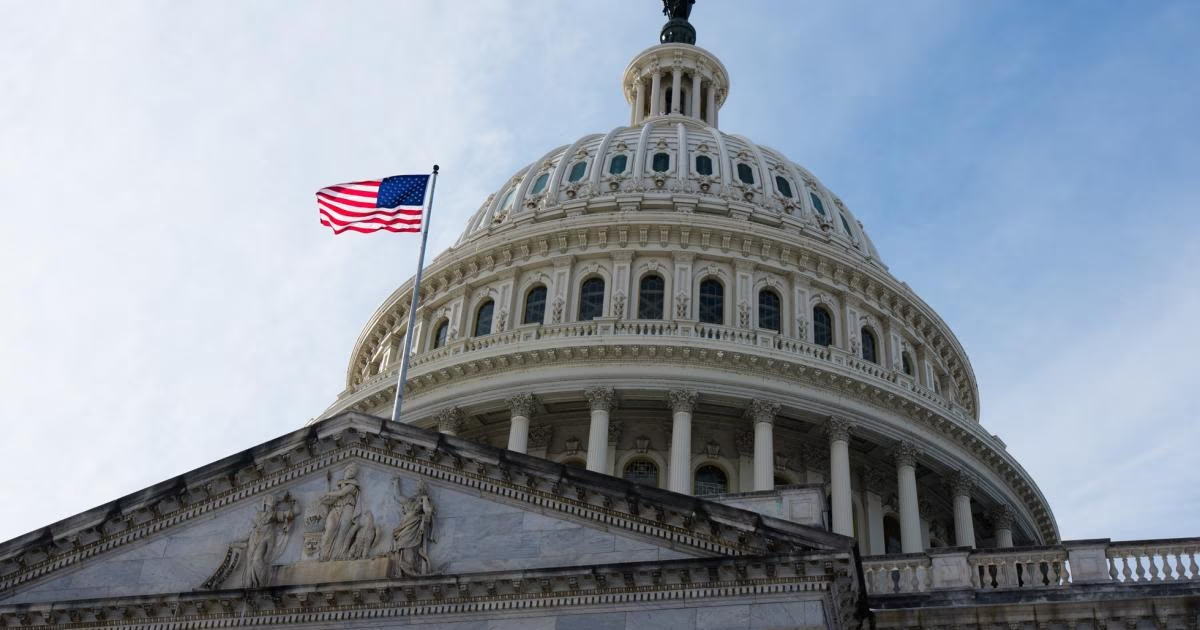
The US House of Representatives, on Wednesday, approved a resolution put forward by the Democratic Party aimed at restricting President Donald Trump's powers in managing military operations against Iran. The resolution stipulates that the US administration must obtain explicit authorization from Congress before engaging in any additional combat operations, reflecting growing opposition within legislative circles to the aggressive policies recently pursued.
The vote result was 215 votes to 208, with the session witnessing a remarkable shift as four Republican representatives joined the Democratic ranks. This move expresses increasing concern within both parties regarding the repercussions of ongoing military escalation in the Middle East and its impact on supreme American interests.
The Democratic Committee, in an official statement via the X platform, described this vote as a firm message from the American people to the White House about the necessity of stopping what it called an 'illegal war.' The statement affirmed that the time has come to end the conflict initiated by Trump with a unilateral decision, emphasizing the importance of Congress reclaiming its constitutional role in declaring wars.
These political developments come in the wake of a widespread military confrontation on February 28, launched by Washington and Tel Aviv against Iranian targets. Tehran responded at the time with a series of attacks targeting Israeli sites and American interests in the region, before a temporary and fragile truce was reached on April 8.
On the ground, tension remains high in vital waterways, as Tehran announced last March the closure of the Strait of Hormuz to international navigation except with prior coordination with it. Iran considered this step a natural response to what it described as American-Israeli aggression that targeted its sovereignty and vital facilities.
In contrast, the United States has continued to impose a strict naval blockade on Iranian ports since mid-April, including those overlooking the Strait of Hormuz. This blockade constitutes enormous economic pressure, given the strategic importance of the strait in securing global energy supplies and stabilizing international oil markets.
Despite the resolution passing in the House of Representatives, observers believe that the move is symbolic for now, as its enforceability requires Senate approval. Lawmakers also need to secure a two-thirds majority in both chambers to override the 'veto' that President Trump has threatened to use against any attempt to restrict his military actions.
For his part, President Donald Trump expressed cautious optimism about the diplomatic path, indicating in statements to reporters at the White House that negotiations are going well. Trump predicted tangible progress in talks with the Iranian side during this weekend, despite the continued blockade and mutual restrictions.
In response to questions about ceasefire violations, Trump downplayed the importance of recent incidents, describing them as 'not a big deal.' He affirmed that American forces dealt with those movements quickly and decisively, stressing that the administration succeeded in containing any field escalation before it worsened.
The US President indicated that Iran is 'very close' to signing a new agreement that ends the current crisis, without revealing details of the proposed terms. These statements come at a time when international parties are seeking mediation to prevent the region from sliding into an all-out war with dire consequences.
Regarding the possibility of separating regional issues, Trump explained that Washington is trying to isolate the issue of opening the Strait of Hormuz from the ongoing conflict in Lebanon and Israeli military operations there. He affirmed that diplomatic efforts are currently focused on securing the vital waterway as a top priority before reaching comprehensive settlements on other fronts.
This vote represents the latest setback for Trump in Congress, as he faces repeated challenges even from within his Republican camp regarding war powers. With continued legislative pressure, the question remains about the US administration's ability to balance military escalation options with internal political pressures.
It's time to end his illegal and unpopular war he chose to wage on Iran.


Share your opinion
US House approves restrictions on Trump's military powers towards Iran