






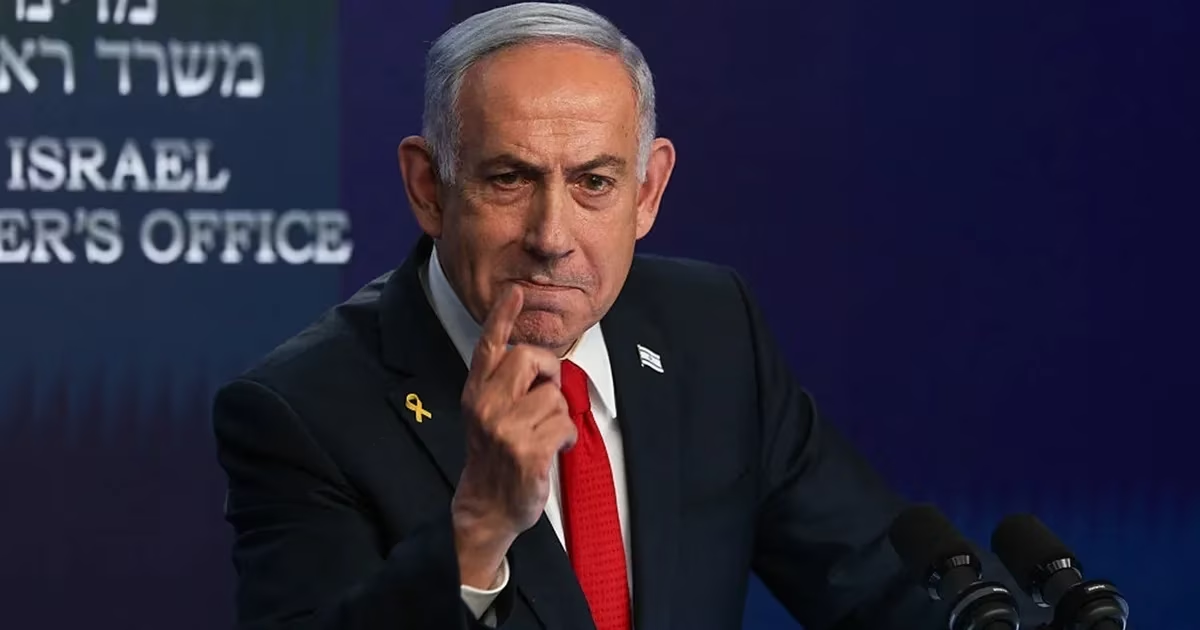
The Lebanese arena is witnessing a radical transformation in field and political equations, driven by explicit Iranian threats that have placed Beirut's southern suburb on par with northern Israeli cities. This threat of displacement for displacement and destruction for destruction has imposed a new reality whose dimensions Israeli Prime Minister Benjamin Netanyahu seems to be reluctantly grasping.
Netanyahu found no escape from responding to US President Donald Trump's pressure to halt widespread threats, despite his previous claims that the decision to escalate had already been made in coordination with the General Staff. Nevertheless, Netanyahu is trying to keep a loophole for limited operations in the suburb while maintaining freedom to bomb in southern Lebanon, in an attempt to save political face.
Political circles realize that Netanyahu is going through a critical phase where electoral calculations intertwine with personal destiny, which pushes him to practice political "foxiness" to try and circumvent the new restrictions. However, the field reality and the deteriorating conditions of his forces in the south have imposed constraints that cannot be easily overcome, especially with the increasing signs of a war of attrition.
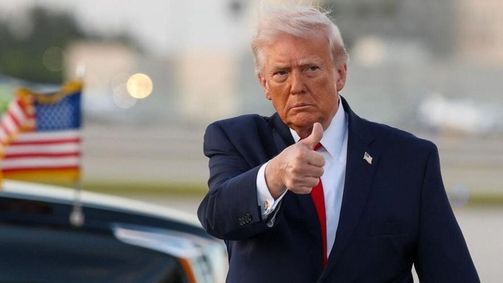
Netanyahu understood well that the new US administration's directions do not necessarily intersect with his military ambitions, as Trump appears ready to freeze the conflict in Lebanon as part of a major deal with Iran. This American approach has caused panic in Israeli circles, especially with reports of contacts between Trump's aides and active Lebanese parties.
At this stage, Netanyahu lost four strategic cards that were cornerstones of his plans. The first was the card of targeting the capital Beirut, which served as a reserve "asset" for pressure when field conditions deteriorated. With Beirut out of the easy bombing equation, the occupation finds itself trapped in a war of attrition with no clear horizon.
The second card that began to fade was the reliance on the role of the official authority in Lebanon or creating an internal Lebanese clash that serves the Israeli strategy. Developments have proven that the active forces on the ground are the ones steering the ship, while the role of official institutions has receded to merely a ceremonial framework that lacks the ability to change the field reality.
The third and decisive card is Hezbollah's establishment of a new engagement equation based on protecting its popular base and civilians in exchange for continued pure military confrontation. If the occupation continues to bomb Lebanese villages, the response will be to target northern settlements, thus preventing the occupation from achieving any security for its settlers.
Netanyahu finds himself facing two bitter choices; either accepting a direct military confrontation with the resistance without the ability to use the weapon of urban destruction, which is what Hezbollah prefers. Or falling under the umbrella of a comprehensive deal that ends the fighting, which observers consider political suicide for Netanyahu, who built his future on the continuation of wars.
Netanyahu's acceptance of the potential US-Iranian deal will not only affect the Lebanese front but will also extend to restrict his movement in the Gaza Strip and the West Bank. This fourth and fatal card is what Netanyahu fears, because it means the end of his political project based on absolute military expansion.
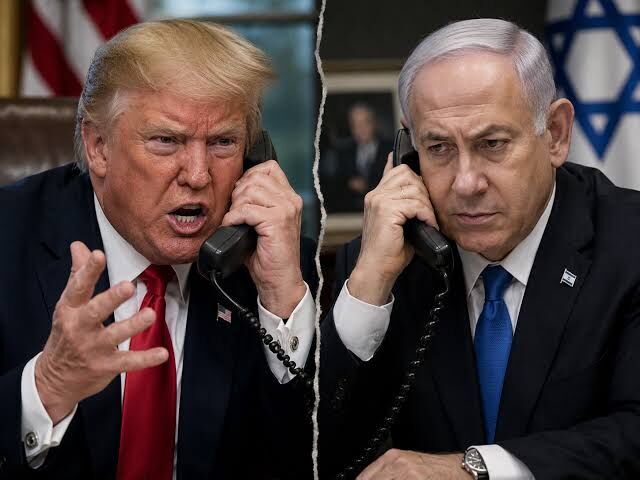
Sources reported that the extent of the reprimand and scolding Netanyahu received from the US administration reflects the depth of the gap in strategic visions between the two sides. Washington seeks regional stability that serves its major interests, while Netanyahu seeks tactical victories that prolong his stay in power.
Given these facts, it appears that Lebanon, which Netanyahu wanted to crush, may turn into the arena that witnesses his resounding political fall. The continuation of a limited and restricted war will inflict heavy costs on Lebanon, but in return, it will exhaust the military and political capabilities of the occupation to the point of collapse.
The new equation imposed by the resistance, supported by changing international circumstances, has taken away Netanyahu's most important weapons: destroying villages and killing civilians for political pressure. Facts have proven that the occupation army has the ability to kill and destroy from the air, but it consistently fails in ground confrontation and direct combat.
If Netanyahu succumbs to the comprehensive deal, he effectively exits the Israeli political equation as a "strong" leader, becoming merely an implementer of international agendas that do not serve his right-wing ambitions. This contradiction between his desires and international reality places him in a narrow corner from which there is no escape but to fall.
In conclusion, the coming days will reveal Netanyahu's ability to withstand these increasing pressures, at a time when the major deal is nearing maturity. Whether he chooses to continue the war of attrition or accept political solutions, the price he will pay will be high on both personal and political levels.
Netanyahu realized that Trump is not currently inclined to be drawn into a war, and that Washington's cards in managing the conflict differ radically from his personal calculations.
Share your opinion
Netanyahu's Predicament in Lebanon: How the US-Iranian Deal Shapes the Fall?