
OPINIONS

Sat 13 Jun 2026 9:04 am - Jerusalem Time

The Dialectic of Dependency and the Erosion of Identity: When the Fear of Freedom Transforms into a Mentality of Enslavement

Ramallah - “Alquds ” dot com

Ramallah - “Alquds ” dot com

Opinion Writer

Dependency, at its core, transcends being merely an unequal political relationship between two parties; it becomes a deeply rooted psychological and philosophical state reflecting a chronic fear of the responsibilities of freedom. Freedom, in reality, is not just glittering slogans, but a heavy burden that demands the ability to face the possibilities of error and failure with full responsibility.

Any political entity or nation that lacks a national project and a scientific planning vision inevitably transforms into a project for exploitation and depletion by others. In this absence, the illusion of dignity derived from ancient narratives is resorted to, to cover up the reality of contemporary triviality and laziness.

The illusion is sold to peoples by reminding them of the glories of ancestors who conquered the world or built the pyramids, while the bitter truth indicates that these nations live in a state of detachment from reality. This glorification of the past does not change the reality of failure in reconstruction or in confronting the corruption, dependency, and destruction that gnaw at the present.

Societies, in moments of historical anxiety, turn to seeking refuge under the shadow of major powers, even if it comes at the expense of their dignity and long-term strategic interests. This unannounced deal provides temporary security akin to money borrowed at usury, where the 'protective master' later demands a doubled and humiliating price.

Dependency is not a biological fate, but a gradual transformation process that begins when humans become accustomed to looking outwards as the sole source of salvation. Over time, individuals lose confidence in themselves and their society, and begin to justify their helplessness under glittering labels such as 'political realism' that perpetuate dependency as a permanent mindset.

The real danger of hegemony lies in its ability to control the intellectual imagination and to disbelieve in personal being, leading to the complete erasure of national identity. And when a nation becomes convinced that its destiny is made in the capitals of others, it automatically stops producing its future and becomes merely a spectator of history.

Historical experiences prove the fragility of relying on external powers, as states always act according to their changing interests, not according to principles of friendship. And when costs or priorities change, the dependent party discovers that it was merely a small tool within a larger geopolitical game that exceeds its capabilities.

The crisis of dependency is not limited to external pressures, but feeds on a prepared internal environment that includes sectarian and tribal divisions and rampant corruption. Fragmented societies become more susceptible to subjugation, because fearful individuals always seek a power to protect them, even if that power is the primary source of their fear.

When the state fails to build a unifying meaning for the nation, individuals return to primitive, declining ties in search of psychological and social security. This return does not produce stability, but leads to further civilizational fragmentation, as small groups are unable to build a broad civil horizon commensurate with the challenges of the age.

The ultimate result of this path is the depletion of massive human and material resources without a clear project guiding them towards real development. Young people find themselves torn between anger and the desire to emigrate, with a growing feeling that history is being made elsewhere and that their role is limited to receiving.

Talk of development and progress under intellectual dependency remains a mere illusion, for nations that shirk their responsibilities do not find a respected place in history. Civilizations are not granted as international rewards, but are built through the ability to face reality with resilience and critical awareness, far from exaggerations.

Facing this reality begins by liberating consciousness from the 'victim complex' and waiting for an external savior who will never come to serve interests other than their own. A society that seeks to restore its sovereignty needs the courage of independent thought and the building of an educational system that produces critical minds that are not afraid of accountability or change.

True independence does not mean isolation from the world or hostility towards it, but rather possessing the ability to deal with international powers from a position of equality and sovereignty. Strong nations are those that have the courage to review their mistakes and correct their course without psychological or moral collapse under pressure.

Ultimately, myths do not save peoples from collapse, but rather realistic humans who build institutions, cultivate the land, and take responsibility for their decisions. As for relying on waiting for a savior, it is merely an acceleration of the process of falling into the abyss of absolute dependency and the erosion of national identity.

Dependency is not merely a power relationship between victor and vanquished, but a much deeper psychological and philosophical state; it is a chronic fear of freedom, which means bearing the consequences of decisions.
ARAB AND WORLD

Sat 13 Jun 2026 9:04 am - Jerusalem Time

Between 'Actuarial Balances' and Trash Cans.. How Do Moroccans Confront Their Government with Sarcasm?

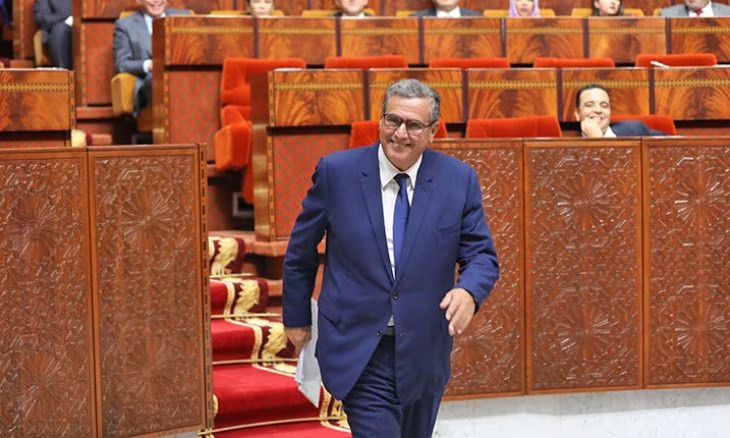
Over the past two weeks, the Moroccan political scene has witnessed a series of events that sparked a widespread wave of sarcasm and ridicule among citizens. Many considered this a form of 'moral revenge' against government policies that some view as biased towards specific groups. The Prime Minister took center stage during his recent appearance in Parliament, where he showed signs of extreme tension in the face of opposition criticism, causing him to lose his composure and direct sharp questions at MPs, reflecting the extent of political pressure he is experiencing as the elections approach.

The sarcasm was not limited to the Prime Minister alone but extended to the new leadership of the leading government party, which appeared on a television talk show with a level that did not meet the expectations of viewers. The party official fell into the trap of complex terms like 'actuarial balances,' which he struggled to pronounce clearly, turning the episode into rich material for mockery across social media platforms, especially with his attempt to paint a rosy picture of the country's living reality that contradicted daily complaints about high prices.

In a related context, the party official's statements about citizens' well-being sparked widespread controversy, especially when he cited the ability of everyone to buy Eid sacrifices by pointing to trash cans overflowing with waste. This approach, described by observers as the 'garbage theory' in sociology, was considered an attempt to escape the difficult economic reality faced by Moroccan families, prompting activists and artists to refute these claims with comedic methods that mimic lived reality.

Regarding young ministers, an incident stood out where a minister claimed that a simple worker in the city of Taroudant could earn 400 dirhams in a few hours of morning work. This was refuted by a comedian from the same city during a theater festival. The artist, in a satirical segment, affirmed that reality dictates that young people work long hours for meager sums not exceeding 20 dirhams, revealing the significant gap between official discourse and the on-the-ground reality experienced by laborers in the provinces.

In conclusion, it seems that black humor has become the most prominent weapon for Moroccans in confronting what they describe as 'political absurdity,' having moved from cafes to the 'blue space' (social media) supported by artificial intelligence technologies. This wave raises fundamental questions about the extent to which officials listen to the pulse of the street, especially since the electronic army mobilized to polish the image of the ruling party seemed unable to withstand the storm of ridicule that swept popular circles ahead of the scheduled September elections.

Is this a new theory in economic sociology that deserves to be called the 'garbage theory'? Or are officials living in a parallel world, far from the pulse of the street?

OPINIONS

Sat 13 Jun 2026 9:04 am - Jerusalem Time

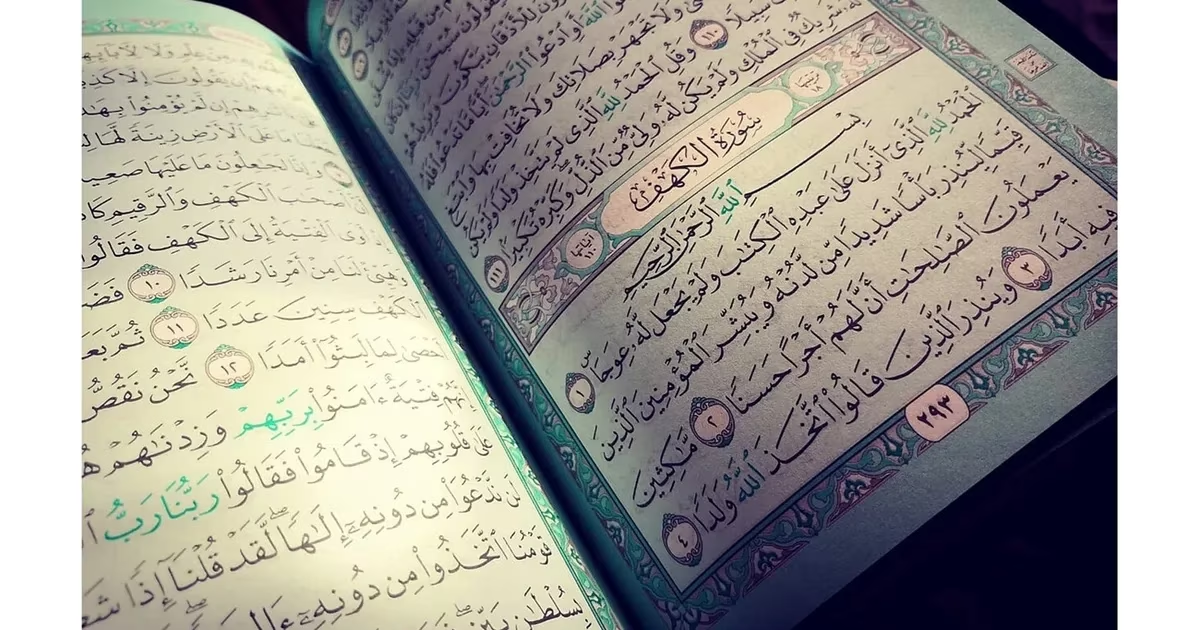
The Architecture of Empowerment in Surah Al-Kahf: From Justificatory Jurisprudence to Nomothetic Proceduralism

Ramallah - “Alquds ” dot com

Ramallah - “Alquds ” dot com

Opinion Writer

Modern intellectual readings raise fundamental questions about the transition from established terms like 'jurisprudence of cosmic laws' to the realms of 'proceduralism' and 'architecture'. The epistemological essence of this shift lies in the distinction between mere awareness of something and the mechanisms of its actual operation in physical reality.

The procedural approach represents the process of strict executive transition from intentions and mental awareness to the material and practical formulation of causes. In this context, Surah Al-Kahf does not offer a cold 'justificatory jurisprudence' that rationalizes a state of weakness, but rather outlines a dynamic guide that connects revelation with reality.

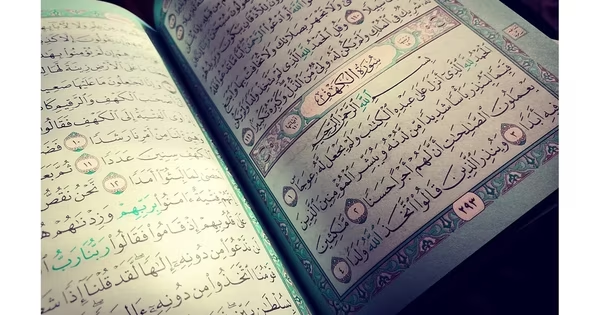
The Quranic text shows great care in helping the contemplator understand how the miracle of protecting the youths was achieved through a precise physical explanation. The verses detailed the movement of the sun and its relationship to the angular space of the cave, in addition to the mechanism of vital movement to prevent tissue damage through continuous turning.

These details confirm that divine providence did not bypass the laws of matter, but managed them with the highest possible physical efficiency. This leads us to procedural thinking, which views divine laws as strict principles that must be dealt with intelligently and with full understanding of their material requirements.

The Surah begins by declaring the authority of revelation as a universal measuring standard that regulates the angles of human movement and protects it from deviation. This governing pattern represents the nomothetic rectitude that establishes a value framework seeing empowerment as the fruit of a correct response to cosmic laws.

The Surah connects the reality of creation with the trial of action, and regulates the relationship between divine will and human kinetic consciousness. The mention of divine will is not intended to disable the future or encourage passive reliance, but rather to regulate the equation of action by exerting maximum physical and mental effort with certainty in divine care.

The architecture of empowerment in the Surah is formed through four structural stages that transition the believing community from weakness to sovereignty. The first stage begins with protecting the solid core, where security awareness and disciplined executive steps are manifested to ensure physical and doctrinal survival.

In the second stage, the economic test emerges through the story of the owner of the two gardens, which presents a precise distributive structure for resources. Despite fulfilling the material causes, separation from the authority of revelation and intellectual arrogance led to the complete destruction of the material structure.

The Surah moves in its third stage to cognitive training through the journey of Moses and Al-Khidr (peace be upon them). Here, the cognitive axis is revealed to regulate the relationship between the apparent judgment and the inner wisdom, where physical causes move under a higher unseen management that limited sight cannot perceive.

In this stage, the concepts of 'preventive management through partial loss' and 'arduous constructive industry' are manifested. The scuttling of the ship was a conscious defect to protect the source of livelihood, and the repair of the wall was a muscular effort to preserve the deposits of the future, connecting human effort with overall unseen engineering.

The architecture reaches its peak in the fourth stage with Dhul-Qarnayn, who applied the law of 'he followed a way' in its most splendid form. He rejected the model of dependency based on 'ready-made tribute', and preferred to build societal self-reliance by transferring technical knowledge and localizing tools of resistance.

Dhul-Qarnayn relied on mobilizing the physical energies of society and transforming them into active partners in the construction process. The outcome was the production of a solid physical barrier of iron and copper, which thwarted the threat of external domination and established comprehensive political and technical empowerment.

The structural approach of the Surah proves that empowerment is an integrated system that begins with safeguarding consciousness and ends with the collective localization of technology. It is a journey that passes through testing and ethically regulating resources, then practicing acceptance of the wisdom of the unseen, leading to resistance built on knowledge and strength.

In conclusion, righteous action merges with sincerity to declare the triumph of insightful response under the banner of monotheism. The Surah confirms in its concluding verses that guidance is inseparable from causality, and that true empowerment is achieved only by exerting all available human effort.

Surah Al-Kahf does not offer a justificatory jurisprudence that rationalizes weakness, but rather alerts us to a dynamic nomothetic guide that is organized within its joints.

PALESTINE

Sat 13 Jun 2026 9:04 am - Jerusalem Time

Tent Farming in Gaza.. Displaced People's Weapon to Confront the War of Starvation and Siege

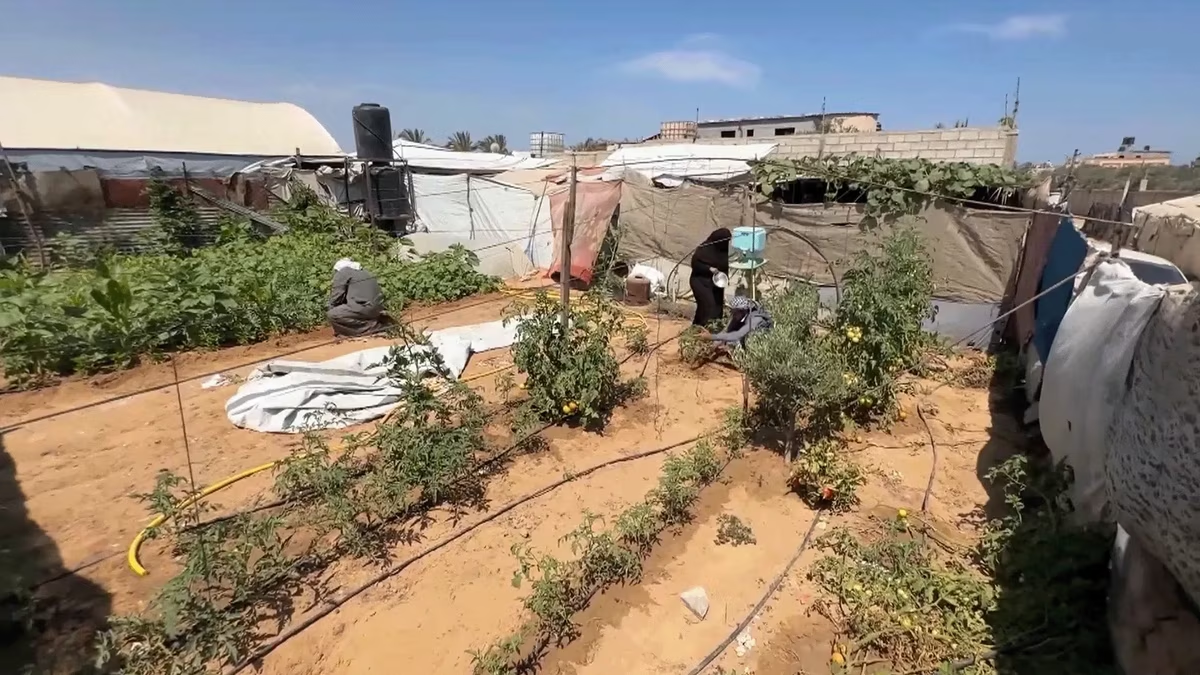
Displaced Palestinians in the camps of the Gaza Strip are fighting a unique battle for survival, as the surroundings of their canvas tents have been transformed into miniature agricultural fields. This step comes as an urgent attempt to secure a minimum amount of food for children, amidst the insane rise in prices of basic commodities and their disappearance from markets due to the strict siege.

Inspiring human stories emerge from the heart of suffering, where citizen Abu Khader and his wife rented a small plot of land adjacent to their tent in the town of Al-Zawaida in the central sector. The family diligently cares for tomato and eggplant seedlings daily, considering that obtaining a few fruits is a victory over hunger and provides a breakfast meal that would have cost exorbitant amounts.

These individual initiatives are not limited to one area but extend to include empty spaces near what is known as the 'Yellow Line'. These dusty patches have been transformed into small green oases producing chard, spinach, and arugula, contributing to feeding families suffering from the قطع of international and supply aid.

Despite the importance of these attempts, they face harsh field challenges, most notably the severe shortage of suitable irrigation water for agriculture and the absence of chemical fertilizers. Displaced farmers are forced to use old local seeds and very primitive equipment to maintain the continuity of these modest crops under the burden of war.

Security concerns cast a shadow over these small fields, as displaced people work in a state of constant fear of advancing military vehicles. Farmers on the ground confirm that they work 'hour by hour,' as they may be forced to displace again at any moment if the occupation approaches their areas, which means losing their efforts and crops.

Officially, the Ministry of Agriculture in Gaza revealed shocking figures reflecting the scale of the disaster that has befallen the food system. Responsible sources in the ministry explained that the occupation currently controls more than 63% of the total agricultural land area in the sector and prevents the entry of any agricultural production supplies through the crossings.

In Gaza City, specifically in the coastal Sheikh Ajlin neighborhood, residents launched initiatives to reclaim vineyards that tanks had repeatedly bulldozed. Farmers return immediately after the withdrawal of military forces to clean the soil and repair destroyed irrigation networks, in a clear insistence on replanting grapes and figs and preserving the historical identity of the land.

Data issued by the Government Media Office indicates that the occupation systematically destroyed about 94% of agricultural land in Gaza, estimated at 178,000 dunams. This destruction led to the collapse of annual agricultural production from 405,000 tons before the war to only about 28,000 tons at present.

The war machine did not stop at bulldozing the soil but extended to uprooting and destroying about 4 million fruit trees, including historical olive groves and citrus fields. This plan aims, according to experts, to impose complete food dependency on the residents of the sector and transform Gaza from a self-sufficient area into a hotbed suffering from real famine.

These local data intersect with international reports issued by the 'FAO' and 'UNRWA' organizations, which confirmed a decrease in arable land to less than 5%. These organizations emphasize that most of the remaining agricultural land is either completely destroyed or located in closed military areas inaccessible to farmers.

If we get three tomatoes every day, they make a salad for the family, and we take one or two eggplants for breakfast.

ARAB AND WORLD

Sat 13 Jun 2026 9:04 am - Jerusalem Time

Challenges of Animated Film Production in the Arab World: Director Sami Faour's Vision

Tunisian director Sami Faour affirmed that the animated film industry in the Arab region still faces fundamental obstacles that prevent it from competing with global markets. He explained during his talk on a specialized podcast platform that this industry requires material and technical capabilities that currently exceed what is available, despite the existence of successful experiences in the context of television series aimed at children.

Faour pointed out that the transition from producing series to feature-length cinematic films represents a qualitative leap that requires huge financial investments and highly advanced technical expertise. He also stressed that these projects need what he described as 'long-term commitment,' as working on a single film can take several years of continuous work before it sees the light in cinemas.

The Tunisian director detailed the complex production stages that an animation film goes through, starting from drafting the story, script, and precise artistic cutting. This stage is followed by preparing the initial animated version, and then moving to sound studios to record the voice acting for the characters, a process that precedes the final animation to ensure lip-sync with the speech.

The 'frame-by-frame' animation process is the most costly and slowest stage in the production path, requiring extreme precision and great patience from the work team. According to Faour, these technical complexities make the cost of producing animated films much higher than traditional narrative films, which deters some producers from undertaking this experience in the absence of profit guarantees.

The director identified the most prominent obstacles facing Arab creators in this field, represented by weak funding allocated to this type of art, and the shortage of specialized human resources in modern animation techniques. He also noted that the absence of developed infrastructure and specialized technical laboratories contributes to slowing down the pace of development of this industry in Arab countries compared to the West.

In conclusion of his vision, Faour stressed that the advancement of the animation sector in the Arab world is possible if there is genuine will and long-term production strategies. He cited major global successes, especially in Hollywood, where animated films top the global box office, affirming that Arab competencies are capable of achieving similar results if provided with suitable conditions and continuous support.

Animated film production in the Arab world remains possible in principle, but it faces significant challenges related to funding, time, and infrastructure.

ARAB AND WORLD

Sat 13 Jun 2026 9:03 am - Jerusalem Time

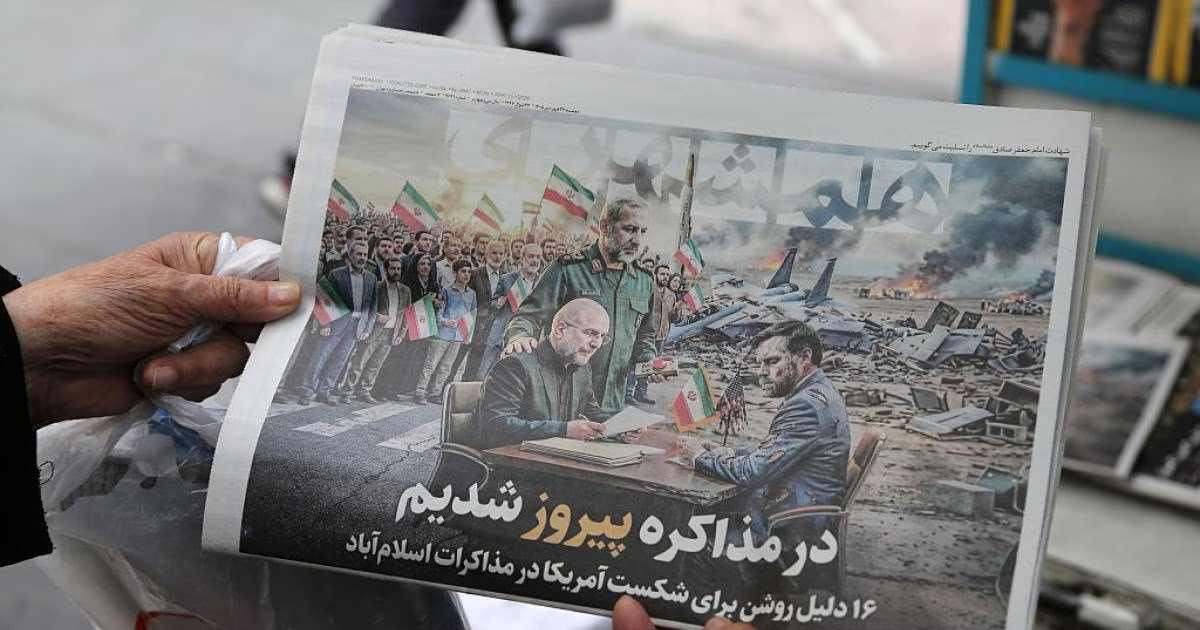
Araghchi reveals features of agreement with Washington: End of war in Lebanon and opening of Strait of Hormuz

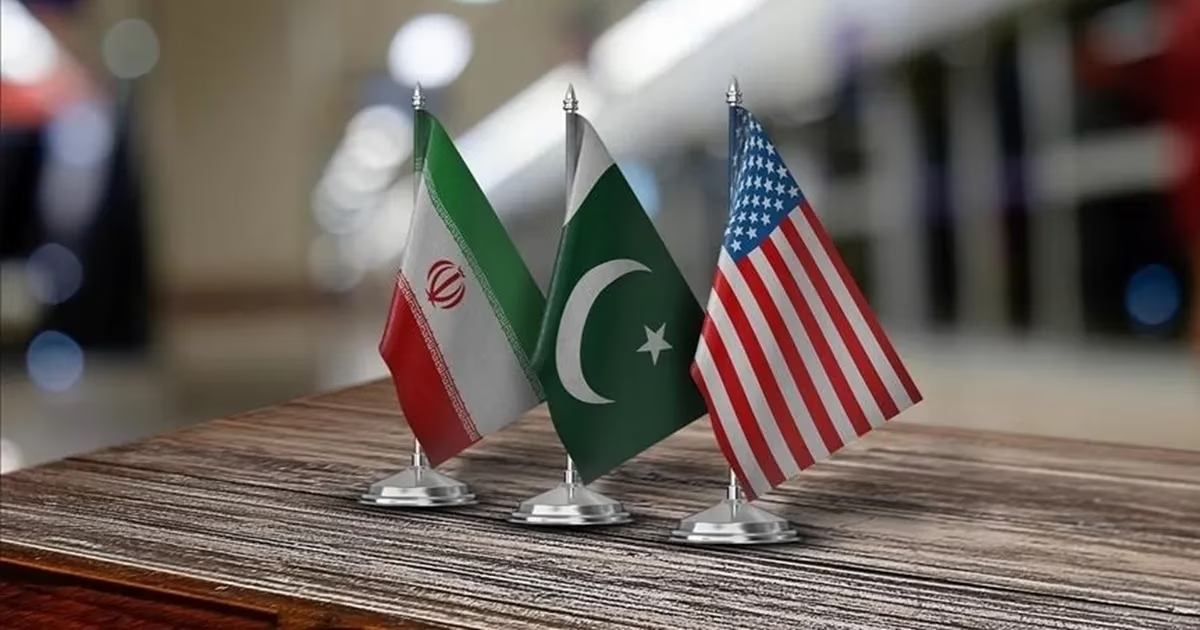
Iranian Foreign Minister, Abbas Araghchi, announced the features of the ongoing draft understanding with the United States, indicating that the interim agreement includes essential provisions to end the American blockade imposed on his country. Araghchi clarified that the understandings include the full reopening of the Strait of Hormuz to international navigation, as part of confidence-building measures between the two parties.

The Iranian minister affirmed that the anticipated memorandum of understanding aims to declare an end to military operations on all active fronts, with a particular focus on the Lebanese arena. He stressed that Tehran would not abandon its allies, asserting that 'Hezbollah' would remain present at the core of any political agreements that guarantee regional stability.

Regarding the timeline for negotiations, Araghchi revealed that the comprehensive sanctions lifting and nuclear program files would be deferred to a second phase of discussions. This additional round is expected to take about 60 days, with Tehran conditioning the continuation of nuclear talks on the success of implementing the provisions of the first interim phase.

Araghchi described Israel as the primary adversary of this agreement, considering that it seeks to obstruct any diplomatic rapprochement that ends the state of tension. He indicated that the strength with which Iran emerged from the recent confrontation with the United States is what imposed this new negotiating path that preserves Tehran's strategic interests.

For his part, the Speaker of the Iranian Parliament and chief negotiator, Mohammad Bagher Ghalibaf, stressed the necessity for all parties to adhere to the commitments made without imposing preconditions or technical excuses. Ghalibaf considered that fulfilling commitments is the only way to complete the deal and ensure its sustainability amidst the current regional complexities.

On the American side, a senior official expressed great optimism about reaching a final agreement soon, estimating the probability of signing within the next few days at over 80%. The official explained that the US administration sees this step as a historic opportunity to contain Iran's nuclear program and secure vital waterways.

According to American sources, the agreement's provisions include an explicit Iranian commitment to dismantle large parts of its nuclear infrastructure and hand over its enriched uranium stockpile. In return, Washington will significantly ease the system of economic sanctions and release frozen Iranian assets in international banks.

The American official indicated that the path of understanding witnessed tangible progress after the two parties agreed on mechanisms for disposing of sensitive nuclear materials. He also noted that the United States observed a decline in the intensity of absolute Iranian control over the Strait of Hormuz, which paved the way for including the navigation file in the deal.

In a related context, informed sources confirmed that the understandings include security arrangements concerning Lebanon, the Gulf states, and Israel alike. The sources mentioned that the agreement grants Israel 'the right to self-defense' if any security breaches threatening its stability are detected, a clause aimed at dispelling security concerns in Tel Aviv.

Pakistani Prime Minister, Muhammad Shahbaz Sharif, had previously announced the reaching of the final text of the peace agreement between Tehran and Washington through international mediation. This announcement reflects the extent of diplomatic efforts made by regional parties to bridge viewpoints and prevent the region from sliding into a comprehensive confrontation.

Despite the prevailing optimism, American officials warned that the historical lack of trust between the two sides still represents an ongoing challenge. They clarified that the remaining 15% of failure probabilities relate to precise logistical details about the place and time of signing, with European capitals being preferred options.

Reports from Tehran indicate that about 75% of Iran's top leadership has approved the provisions of the current agreement. This widespread support within Iranian ruling circles is a strong indicator of the seriousness of the move towards de-escalation and ending the economic isolation imposed by long-standing sanctions.

In a notable development, US President Donald Trump retweeted the Iranian Foreign Minister's statements about the imminent conclusion of the memorandum, which observers considered an implicit sign of support for the diplomatic path. This move enhances the chances of the agreement's success despite the strong opposition expressed by Israeli Prime Minister Benjamin Netanyahu.

Araghchi concluded his statements by emphasizing that the end of the war in Lebanon is linked to the withdrawal of Israeli forces from all recently occupied areas. He stressed that Lebanese sovereignty and the protection of the resistance remain red lines that cannot be crossed in any comprehensive regional settlement with the US administration.

Israel is at the top of the list of enemies of this agreement, and we will not forget Hezbollah in any future understandings.

ARAB AND WORLD

Sat 13 Jun 2026 9:03 am - Jerusalem Time

The truth about the destruction video attributed to Iranian strikes on Israel and developments in negotiations

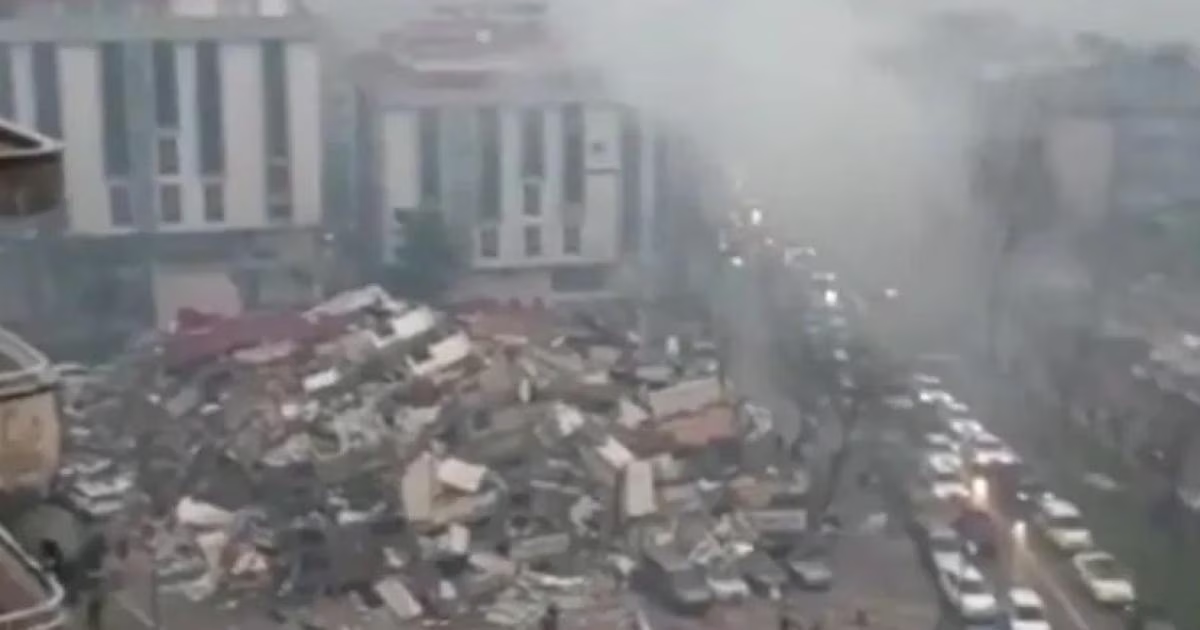
Social media platforms have widely circulated a video that its publishers claimed documented the massive destruction caused by recent Iranian missile barrages inside the occupied territories. Upon tracing the origin of the clip by verification teams, it became clear that the scenes are completely misleading and have no connection to the ongoing events between Tehran and Tel Aviv, but rather belong to a previous catastrophic event that occurred in the region.

Verification results showed that the published video was filmed in February 2023, documenting the devastating effects of the violent earthquake that struck Turkey's Kahramanmaraş province and areas in northern Syria. The intensity of that earthquake at the time reached 7.7 on the Richter scale, leading to the collapse of thousands of residential buildings and the displacement of hundreds of thousands, which explains the extent of the rubble visible in the currently circulating clip.

The circulation of these misleading materials comes amid an unprecedented military escalation, as Iran and Israel exchanged air and missile strikes following a raid that targeted the southern suburbs of Beirut earlier this week. The Iranian response included launching a barrage of missiles, while the Israeli air force carried out raids targeting military sites within the capital Tehran and several other Iranian cities.

On the diplomatic front, international efforts emerged aimed at containing the situation and preventing it from escalating into a comprehensive regional war, with Pakistani Prime Minister Shahbaz Sharif calling for the necessity of investing in the current de-escalation. Sharif pointed to the importance of advancing negotiations between Tehran and Washington, emphasizing that current indicators suggest that reaching a political agreement is closer than ever before.

On the ground, the Israeli army announced the success of its defense systems in intercepting a suicide drone that was heading towards the city of Eilat in the south, indicating that the drone originated from Yemeni territory. This announcement coincided with the continued state of high alert on various fronts, in anticipation of any additional attacks that might be carried out by parties associated with the axis of resistance in the region.

In a related context, US President Donald Trump expressed great optimism about the course of talks with the Iranian side, describing them as having reached their final and decisive stages. Trump explained in press statements that the progress made in the negotiations is very significant, suggesting the possibility of announcing an official and comprehensive agreement within two or three days, which could end the current state of tension.

Negotiations with Iran have entered their final stages, and talks are making significant progress that could lead to an agreement within a few days.

OPINIONS

Sat 13 Jun 2026 9:03 am - Jerusalem Time

World Cup 2026: Have Politics and Borders Overcome the Spirit of Sport in the American Edition?

Ramallah - “Alquds ” dot com

Ramallah - “Alquds ” dot com

Opinion Writer

Football is no longer just a sporting competition within the green rectangle; it has transformed into a mirror reflecting political conflicts and global power balances. With the launch of the American edition of the 2026 World Cup, deep questions arise about the ability of sport to remain a neutral space away from ideological tugs-of-war.

The first weeks of the tournament are witnessing widespread controversy regarding difficulties in obtaining visas, especially for delegations coming from the African continent and the Middle East. These procedures, which American authorities justify on national security grounds, have created an impression that political criteria now precede the spirit of sport.

The very idea of the World Cup is based on breaking down borders and fostering human communication between different races and cultures. But when discussions about border restrictions and passports dominate the atmosphere of the matches, the essential message of the global event is shaken and distorted.

It cannot be definitively stated that there is a systematic racist policy, but the disparity in treatment between different nationalities has sparked widespread international discontent. The impressions left by these obstacles directly affect the image of the United States, which has long presented itself as a model of pluralism and openness.

In contrast, many recall the experience of Qatar 2022, which succeeded in presenting a different cultural narrative despite the media campaigns that preceded it. Doha managed to create an Arab and Islamic space that allowed millions of visitors to discover the values of coexistence without the need for cultural assimilation.

The Qatari edition proved that success is not limited to organizational aspects alone, but extends to breaking the Western narrative's monopoly on the concept of globalism. It presented a model that confirms that the world can meet and celebrate away from the usual cultural centrality in major capitals.

In the current edition, the challenge does not lie in the quality of the stadiums or the advanced infrastructure that the United States possesses. The fundamental question concerns the extent to which the superpower can isolate its internal and external conflicts from the atmosphere of the global tournament.

The case of the Iranian national team embodies this complex intertwining of sport and politics, as the team participated amid extremely complex regional and international circumstances. Every movement or symbol emanating from the Iranian delegation became rich material for intense political and media discussion.

When Iranian players raised symbols referring to war victims, it was a humanitarian cry that transcended the boundaries of the game to reach the conscience of the world. This stance reaffirms that football is not an isolated island, but a natural extension of lived political reality.

Despite the continuous attempts by FIFA to raise the slogan 'No Politics in Sport,' reality proves the impossibility of this separation. How can politics be isolated from an event where the participation of players and fans depends on sovereign decisions related to visas and borders?

What the World Cup is experiencing today is a reflection of major transformations in the international system, which has begun to revert to the language of identities and geopolitical divisions. The World Cup, as the most watched event, has become the ideal stage where these stark contradictions are clearly displayed.

The comparison between the Qatari and American editions confirms that material power and enormous technologies alone are not enough to create a positive image for countries. The feeling of discrimination or exclusion is enough to overshadow any organizational success, no matter how massive and high-quality it may be.

True power in the modern era lies in the ability to persuade and make guests feel welcome regardless of their political or ethnic background. This is the real test facing the United States in organizing this edition of the global tournament.

The question remains open about the final image that will be imprinted in the memory of peoples after the tournament's halfway point and its end. Will it be a story about celebrating sport, or will it remain a memory of a tournament dominated by discussions of borders and sharp political polarization?

True power in our era is no longer just the ability to organize, but the ability to persuade and make guests feel welcome, regardless of their religion or color.

PALESTINE

Sat 13 Jun 2026 9:03 am - Jerusalem Time

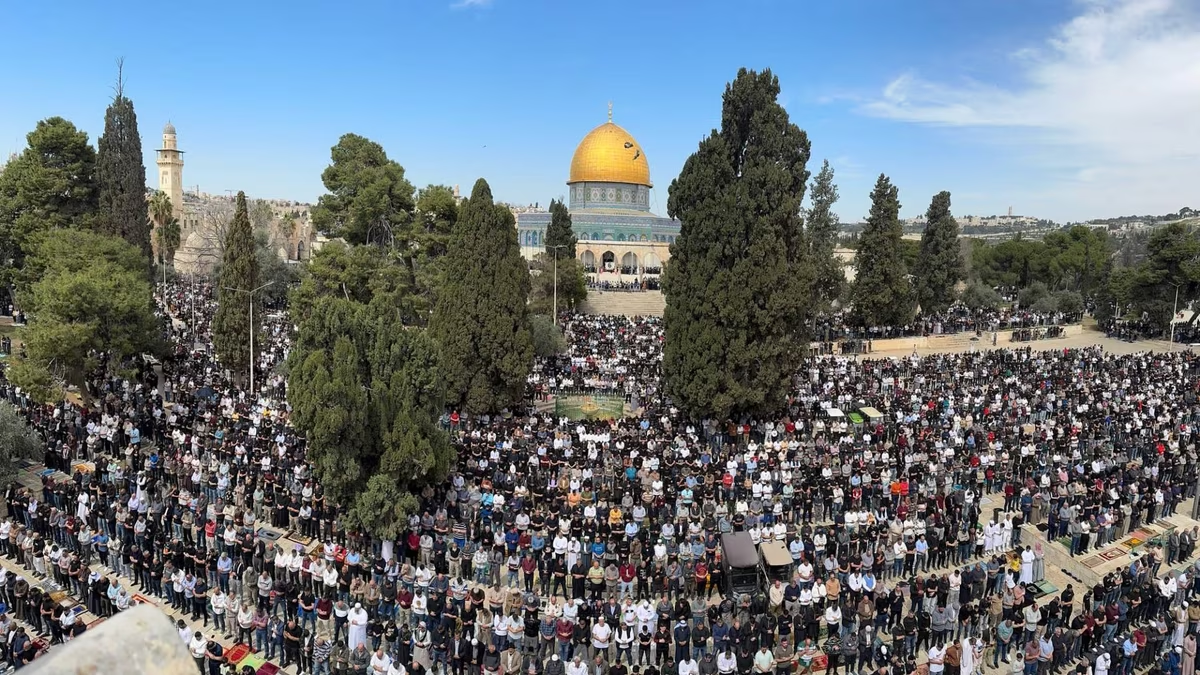
Despite Israeli restrictions.. 60,000 perform Friday prayer in Al-Aqsa Mosque

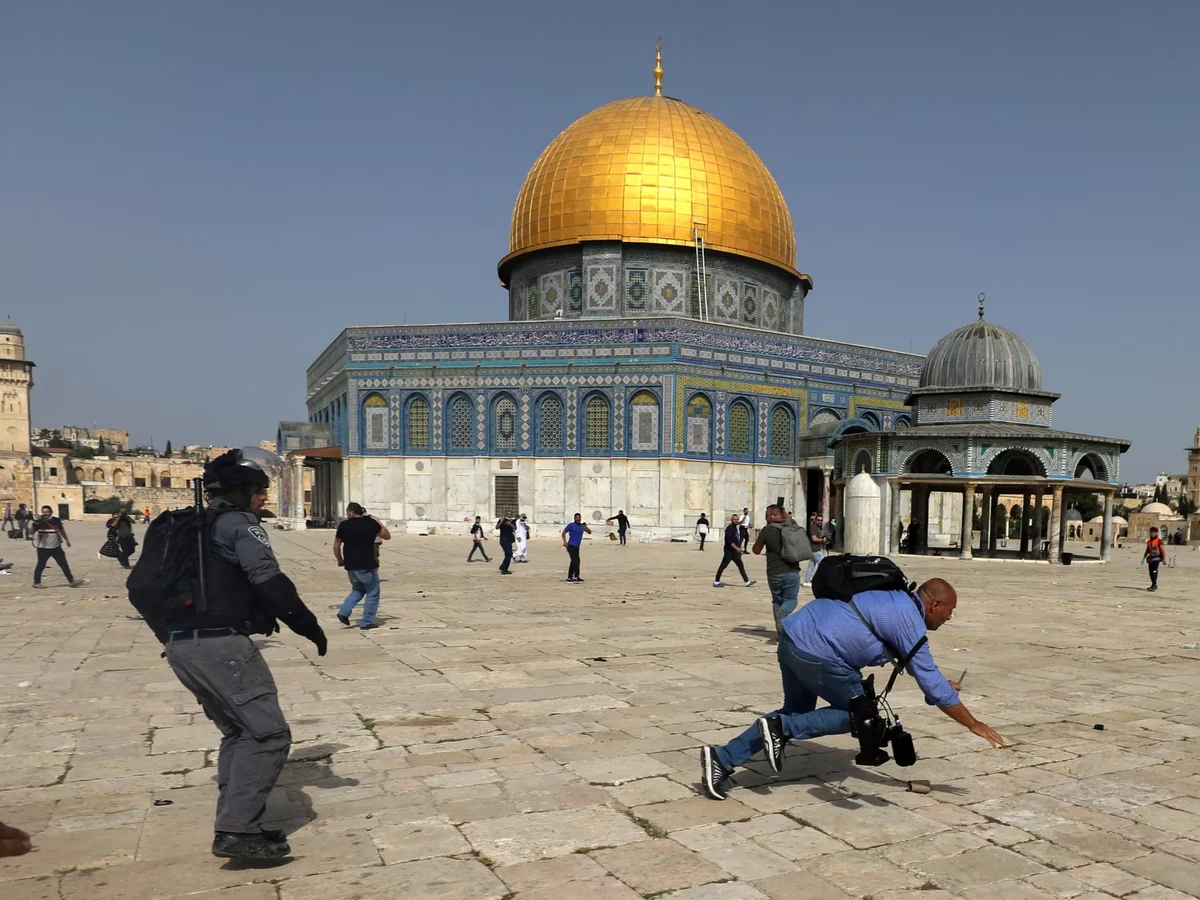
More than 60,000 Palestinian worshipers flocked to the courtyards and prayer halls of the blessed Al-Aqsa Mosque to perform Friday prayer, defying the strict military measures imposed by the Israeli occupation authorities in the vicinity of the Old City and inside occupied Jerusalem.

The Islamic Endowments Department in Jerusalem stated that worshipers began flowing towards Al-Haram Al-Sharif from the early morning hours, where the courtyards were filled with worshipers who came from various neighborhoods of Jerusalem and the occupied territories of 1948, despite attempts to restrict and scrutinize identities at the mosque's gates.

These large numbers come amidst the continued imposition of a strict siege on Al-Aqsa Mosque by the occupation authorities, preventing residents of the West Bank and Gaza Strip governorates from reaching the holy city for prayer for nearly three years, which deprives hundreds of thousands of their right to practice their religious rituals.

More than 60,000 worshipers performed Friday prayer in Al-Aqsa, as tens of thousands of our people flocked to it since the early morning hours.

ARAB AND WORLD

Sat 13 Jun 2026 9:03 am - Jerusalem Time

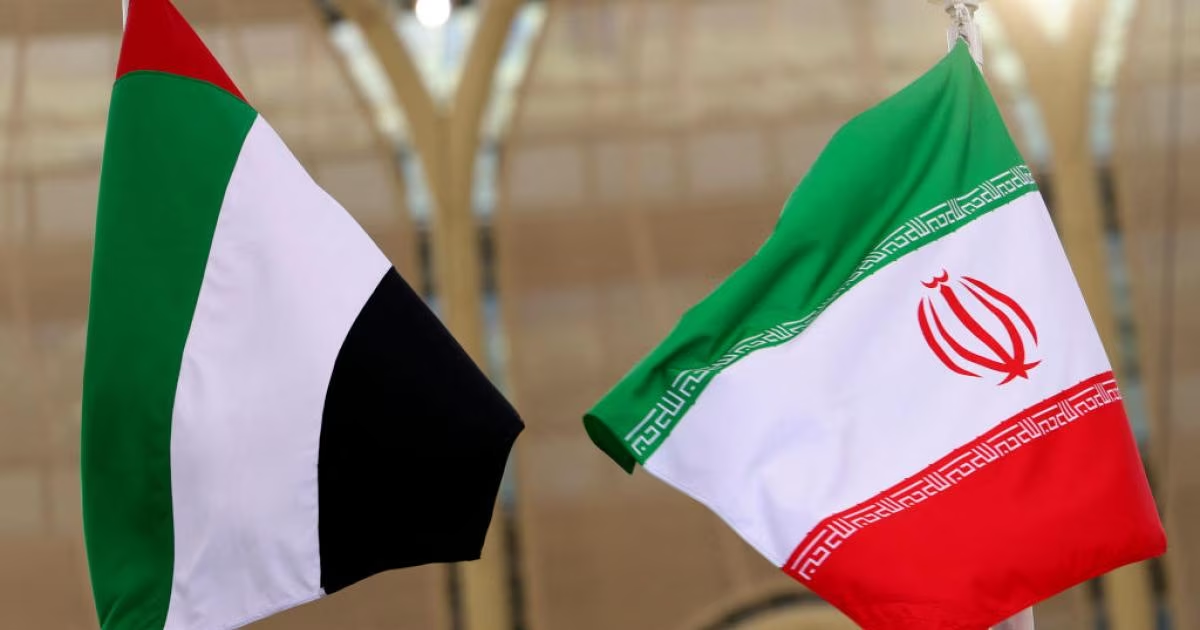
UAE Officially Denies Release of $10 Billion in Frozen Iranian Assets

The United Arab Emirates has categorically refuted reports circulating in some international media outlets, which claimed that Abu Dhabi had released large sums of frozen funds belonging to the Islamic Republic of Iran. The Ministry of Foreign Affairs clarified in an official statement that these allegations are baseless, emphasizing the need for accuracy in reporting news related to the state's financial and diplomatic policies.

The Emirati Foreign Ministry affirmed that reports circulating about the transfer of $3 billion as a first installment of a total of $10 billion are mere fabrications. The Ministry urged all media institutions to obtain information from official and accredited sources, warning against circulating unverified news that could mislead global public opinion on sensitive regional issues.

International press reports had quoted unnamed sources claiming that the UAE had agreed to a financial settlement leading to the unfreezing of billions of dollars in Iranian assets. These sources alleged that this step was part of broader understandings aimed at de-escalating military and security tensions in the region, which the Emirati authorities completely and utterly denied in their latest statement.

These alleged reports linked the release of funds to Tehran's commitment to halt any hostile attacks targeting Emirati territory or the vital interests of the state. The sources cited by international agencies indicated that this supposed agreement would have paved the way for rebuilding bilateral relations and enhancing intelligence and economic cooperation between the two neighboring countries after years of tension.

In a related context, media sources quoted an Emirati official confirming that the state's foreign policy prioritizes de-escalation and achieving lasting peace. The official added that the UAE continuously works to support efforts aimed at protecting the peoples of the region from the repercussions of conflicts, but this is done through official diplomatic channels and not through financial deals outside the framework of international law and existing sanctions.

The press reports claimed that the behind-the-scenes negotiations began several weeks ago and saw a significant acceleration after a high-level Iranian delegation visited the capital, Abu Dhabi. The news alleged that the delegation met with senior Emirati security officials, including National Security Advisor Sheikh Tahnoun bin Zayed Al Nahyan, to discuss technical details related to the mechanism for transferring funds through specific banking channels.

Banks operating in the UAE have held large deposits and financial assets linked to Iranian entities for many years, but these funds are subject to a strict freezing regime. This Emirati commitment is in line with the economic sanctions imposed by the United States on the Iranian financial system, which prevent the transfer of hard currency to Tehran.

It is worth noting that this is not the first time reports have emerged about the imminent release of frozen Iranian funds in countries in the region, as similar claims regarding assets in Qatar appeared last April. At that time, the US administration quickly denied those reports, emphasizing that any such move must be subject to strict oversight and limited to humanitarian purposes only, in accordance with international standards.

The issue of frozen assets remains a key focal point in indirect talks between Washington and Tehran, with the latter seeking to link it to security issues such as ensuring navigation in the Strait of Hormuz. With the latest Emirati denial, uncertainty remains regarding the accuracy of leaks that speak of an imminent financial breakthrough that could change the balance of economic power in the region.

Claims related to the transfer or release of frozen Iranian funds are incorrect and not based on any facts or reliable information.

OPINIONS

Sat 13 Jun 2026 9:03 am - Jerusalem Time

AIPAC and the Losing Influence War: How Israel Contributed to Undermining its Allies within the Democratic Party

Washington Message

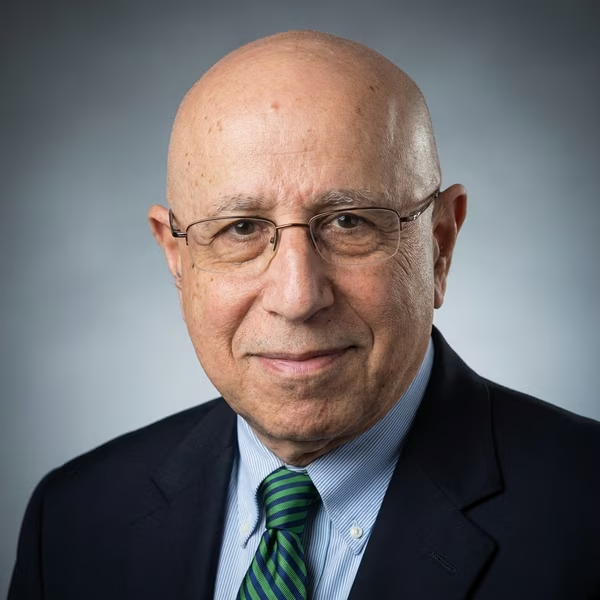
Washington – Said Arikat – 13/6, 2026

News Analysis

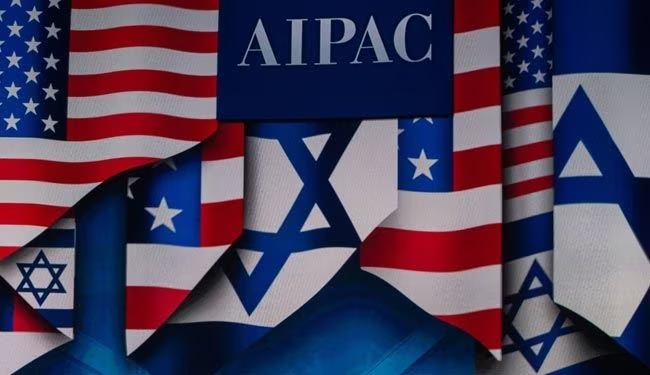
In a new indicator of the profound shifts affecting the American political landscape, the New York Times revealed in an article published on Friday, June 12, that the American Israel Public Affairs Committee (AIPAC), which for decades was the most prominent guardian of American consensus supporting Israel, is now facing a growing rebellion within the Democratic Party itself, to the extent that attacking it electorally has become, in some Democratic circles, a means of gaining votes, not losing them.

This is not merely a fleeting political disagreement or a local electoral competition, but a strategic shift reflecting a broad re-evaluation of the American-Israeli relationship within Democratic circles, especially among younger generations and progressive voters who now view Israel from the perspective of occupation, settlement, and the war on Gaza, rather than from the traditional narrative that prevailed for decades in Washington.

According to the newspaper, AIPAC's name prominently emerged during the Democratic Party primaries in New York, where some candidates made refusing to submit to the organization's influence a central theme of their campaigns. This phenomenon was, until recently, considered a form of political suicide in American public life.

However, the most significant shift lies not in criticizing AIPAC itself, but in the reasons that led to it. The group, which built its influence on the claim that it represents a broad American consensus on Israel, is now accused of using massive political funds to silence dissenting voices, and of defending the policies of the Israeli government, no matter how extreme or contradictory they are to the values upheld by the Democratic Party.

AIPAC's influence for decades was based on a simple idea: that the interests of the United States and Israel are identical, and that supporting Israel is part of American national security. But this premise has suffered successive cracks in recent years, especially with the rise of Israeli right-wing governments led by Benjamin Netanyahu, increasing American criticism of settlements, and then the devastating war on Gaza that caused tens of thousands of Palestinian casualties.

The New York Times indicates that the main turning point began during the battle over the nuclear agreement with Iran during the era of former President Barack Obama. At that time, the Netanyahu government not only opposed the agreement but entered into a direct confrontation with the White House, in an unprecedented scene that culminated when Netanyahu delivered a speech to Congress against the policy of an elected American president.

Since then, Israel has gradually begun to lose its status as an issue enjoying bipartisan consensus, transforming into a divisive partisan issue. Netanyahu, more than any other figure, was responsible for this shift after almost completely betting on an alliance with Republicans and the American right.

In an attempt to contain this decline, AIPAC shifted from traditional lobbying methods to using more aggressive tools, by establishing massive electoral spending committees capable of injecting millions of dollars into primary elections. However, this strategy often produced counterproductive results.

Instead of enhancing the organization's image, the massive funds it spends became additional evidence for its critics of the unbalanced influence it wields within the American political system. Worse still, an increasing number of Democratic candidates began to discover that attacking AIPAC might be more popular among the party's base than aligning with it.

The irony is that the biggest challenge facing the organization does not come from the progressive wing, known for its historical stances toward Israel, but from "moderate" Democratic figures who affirm their support for Israel's existence and security, but refuse to grant Israeli governments absolute political immunity or unconditional military support.

Here lies the real crisis. When critics come from within the pro-Israel camp itself, the effectiveness of traditional accusations of anti-Semitism or political extremism diminishes. It also becomes difficult to portray any criticism of the Israeli government as hostility to Israel or the Jewish people.

What these developments reveal is that the crisis is no longer a public relations crisis for AIPAC, but a crisis of political and moral legitimacy. New generations of Democrats do not view Israel in the way their parents and grandparents did after World War II. Moreover, the scenes of destruction in Gaza and the continuous violations in the occupied Palestinian territories have significantly weakened the traditional discourse that the organization relied on to justify unconditional support for Israel.

Perhaps the cruelest irony is that AIPAC, which was originally established to maintain the strength of the American-Israeli relationship, today appears to be contributing, unintentionally, to accelerating the erosion of that relationship. The more it escalates the confrontation against voices critical of Israel within the Democratic Party, the more intense the debate becomes about the nature, limits, and future of this alliance.

Ultimately, the current battle is not just about AIPAC, but about a larger question that strongly imposes itself within American politics: Will American support for Israel continue as an unquestionable commitment, or will it transform into a relationship subject to accountability and scrutiny like any other relationship between two states? Current indicators suggest that this question is no longer marginal, and the answer to it may redraw the contours of American policy toward Israel for decades to come.

PALESTINE

Sat 13 Jun 2026 9:02 am - Jerusalem Time

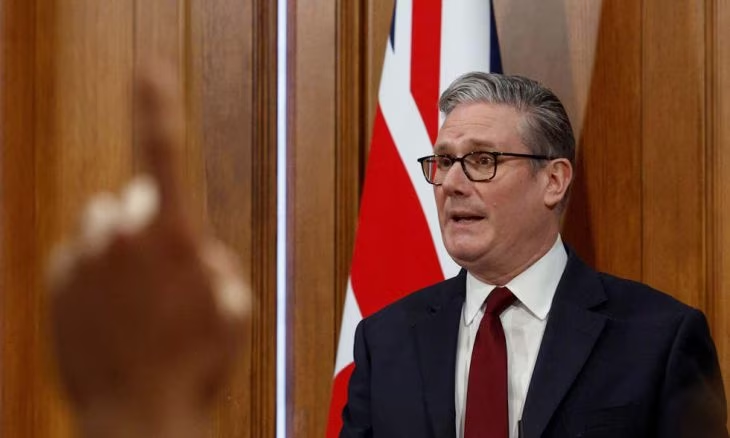
Internal Pressures and Electoral Decline Push British Labour Party Towards a Stricter Stance on Israel

Diplomatic reports indicate that pro-Palestinian activists anticipate fundamental shifts in the policy of the British Labour government led by Keir Starmer. These expectations come amidst the Green Party's victories in local elections based on a program supporting Gaza, which has created direct electoral pressure on the ruling party's leadership.

Recent opinion polls among Labour Party members showed an overwhelming desire for punitive measures against the Israeli occupation. Approximately 87% of members supported banning trade with illegal settlements, while 78% went further, demanding a complete and comprehensive halt to all arms shipments to Israel.

Observers believe that the potential departure of Keir Starmer from the premiership could open the door for more radical leaders in their handling of the Middle East file. Wes Streeting and Andy Burnham emerge as prominent candidates to succeed him, both of whom have previously expressed more sympathetic positions towards the Palestinian cause compared to the current leadership.

Wes Streeting, the former Health Secretary, had earlier described Israel's behavior as resembling that of a 'rogue state,' considering it justification for imposing widespread sanctions. He also accused Israel of committing war crimes in Gaza and circulated medical reports documenting atrocities committed against civilians to cabinet members.

For her part, Emily Thornberry, Chair of the Foreign Affairs Committee, criticized the party's performance, asserting that it had failed the Palestinians at crucial stages. She indicated that British recognition of a Palestinian state last autumn should have been merely a first step, followed by practical steps to halt settlement expansion.

Thornberry questioned the absence of effective government action to end the political stalemate amidst continuous Israeli threats to divide the West Bank. She considered that what is happening within the Gaza Strip cannot be overlooked internationally, demanding a clear timetable for Israeli withdrawal and de-escalation of the crisis.

In a related context, experts believe that the British government lost its diplomatic momentum after the decision to partially suspend arms exports in September 2024. Activists are demanding the full publication of the government's response to the International Court of Justice's decision, which affirmed the illegality of the Israeli occupation of Palestinian territories.

Sources indicate growing frustration within party circles with the policy of 'hollow statements' that merely express concern without taking concrete action. The progressive wing of the party is demanding the adoption of deterrent measures to prevent British companies from participating in major settlement projects such as the (E1) project.

On the ground, the killing of more than 900 Palestinians since the last ceasefire announcement has increased the British government's embarrassment before its voters. The 'Peace Council,' supported by the previous US administration, failed to achieve any significant progress on the ground, reinforcing the conviction that the diplomatic approach needs to change.

Historians and political project managers in London believe that change within the government is imminent and inevitable due to electoral pressures. They see that the disparity in the leadership's handling of the Ukrainian and Palestinian files has eroded the party's credibility in adhering to international law among its youth base.

Former negotiators suggested that Britain should focus its efforts on directly influencing Israel's ability to evade international accountability. They considered that imposing symbolic sanctions on some settlers is not enough; rather, the political leadership that directly legitimizes these violations must be targeted.

Calls have also emerged for Europe to regain the diplomatic initiative in the Palestinian issue after a period of American dominance over resolution paths. Britain, by virtue of its historical relations, is expected to play a leading role in building an international coalition that imposes a trade ban on settlement products.

At the 'British Palestine Project' conference, it was emphasized that Israeli security cannot be achieved through continued military occupation. Participants concluded that practical measures, such as banning goods manufactured in settlements, are the only message that might change public opinion calculations within Israel.

In conclusion, it appears that the Labour Party stands at a historic crossroads, requiring it to balance its foreign relations with its stated principles and the pressures from its popular base. The coming days will reveal the extent to which the potential new leadership can translate electoral promises into tangible foreign policies that uphold Palestinian rights.

There is an imminent radical change within the British government, and it would be surprising if it did not happen because most dynamics are moving in one direction towards supporting Palestinian rights.

ARAB AND WORLD

Sat 13 Jun 2026 9:02 am - Jerusalem Time

Lebanon and the Occupation Negotiations: A Struggle Between Political De-escalation and Field Pressures

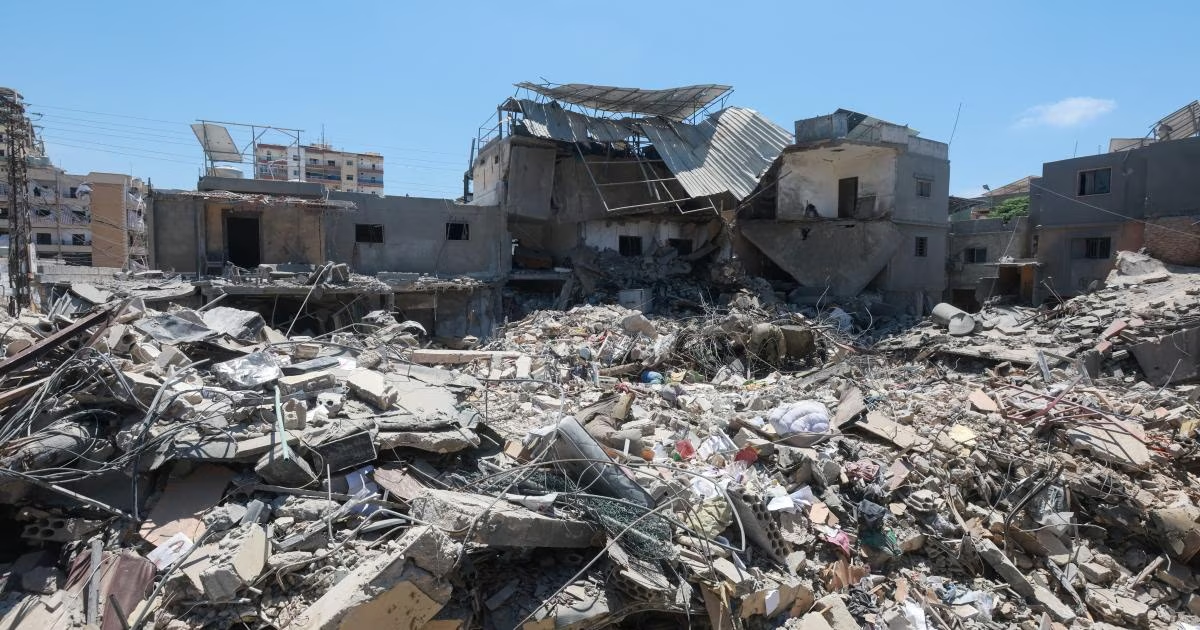
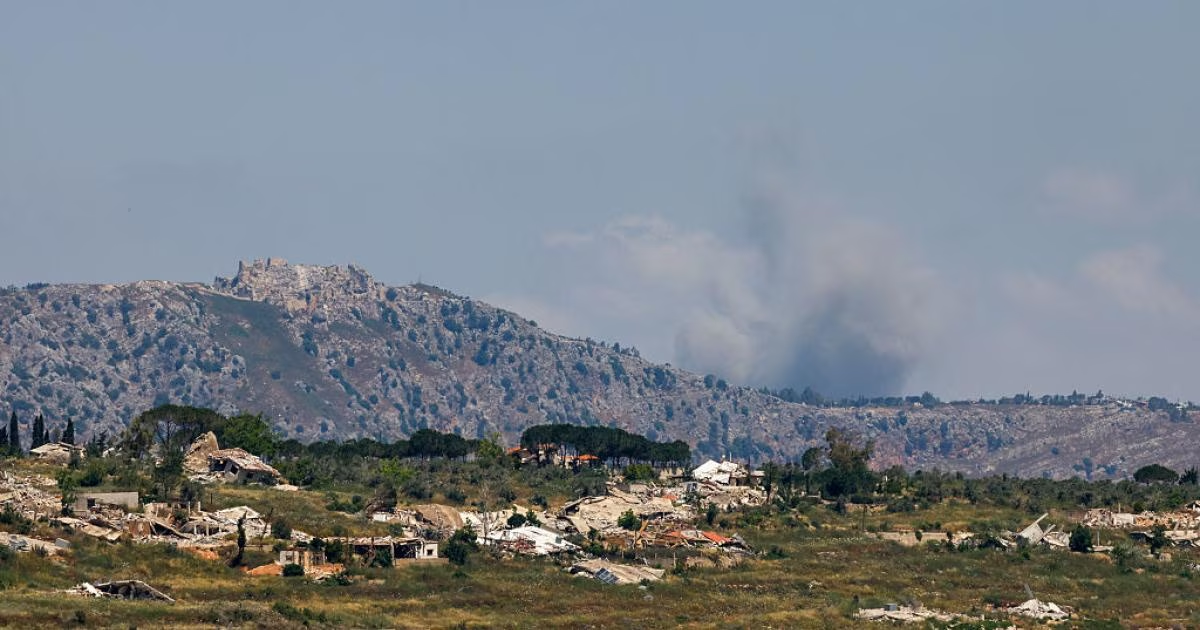
Lebanon is currently experiencing a state of cautious anticipation, as the country sways between the hammer of continuous Israeli raids and the anvil of stalled political negotiations. The occupation forces are drawing new boundaries for engagement in southern Lebanon with iron and fire, by issuing evacuation warnings and carrying out specific military operations that have reached deep into Lebanese territory.

On the political front, the Lebanese government insists on adhering to the negotiation path led by Washington, considering it the only available passage to stop the aggressions and ensure the withdrawal of the occupation forces. Official circles in Beirut believe that diplomatic efforts must continue despite the increasing field complexities and the pressures exerted by international parties.

In contrast, Hezbollah expresses strong reservations about the nature of the ongoing political moves, with sources close to it describing what is happening as an attempt to impose dictates rather than genuine negotiation. The party warned that proceeding on this path could lead to political suicide and increase the severity of internal divisions at a time when the country needs unity.

Mutual accusations about external interventions are emerging, as the Lebanese Prime Minister pointed to a deep Iranian influence that directly affects the independence of national decision-making. This political tug-of-war reflects the size of the gap between the official vision of the state and the vision of the armed forces engaged in direct confrontation with the occupation.

For its part, the American capital, Washington, is preparing to host a new round of talks, amid hopes that this round will be a last chance to establish sustainable de-escalation. Observers believe that the success of this round depends primarily on the ability of international parties to curb Israeli military ambitions and meet minimal Lebanese demands.

In an analysis of the regional situation, sources reported that Iranian policy towards Lebanon has begun to bear fruit through indirect pressure on the American administration. This pressure prompted Washington to exert its influence on Benjamin Netanyahu to announce a ceasefire as an initial step preceding any long-term security arrangements.

Leaked data indicates that Tehran will not give the green light to any framework agreement that does not include a comprehensive and complete ceasefire on all Lebanese fronts. The regional powers supporting the resistance also stipulate clear guarantees that prevent Israel from having freedom of military action or violating Lebanese sovereignty in the future.

Political researchers believe that positive signs have begun to emerge regarding the Iranian nuclear file, which may directly and positively reflect on the Lebanese arena. Experts considered that the stability of the region is organically linked to ending the war in Lebanon, which opens a window of opportunity that the Lebanese must seize to end the suffering.

On the other hand, the issue of disarming Hezbollah remains the most prominent sticking point in the negotiation process, as the Israeli occupation insists on this condition as a guarantee for its northern security. This demand faces outright rejection from the party and its allies, making the issue of the 'day after' the truce a political and security challenge beyond the ability of local parties to resolve.

In conclusion, the fate of the displaced, the return of prisoners, and the reconstruction of what the war destroyed remain unresolved issues awaiting what the coming days will bring in the corridors of international diplomacy. While the cannons continue to speak on the borders, the bet remains on a major regional settlement that puts an end to the cycle of violence plaguing Lebanon.

The equation imposed by Iran, which consists of targeting northern Israel in exchange for the southern suburb, has proven the effectiveness of the current negotiation path.

ARAB AND WORLD

Sat 13 Jun 2026 9:02 am - Jerusalem Time

Imminent Peace Agreement Between Tehran and Washington: Trump Backs Down from Militarily Destroying Iranian Uranium

The past few hours have witnessed dramatic developments in Iranian-American relations, as the US military announced the interception and downing of suicide drones launched by Tehran towards commercial ships in the Strait of Hormuz. Despite this escalation on the ground, the US Central Command affirmed that the strategic waterway remains open to international navigation, noting that Iranian attempts failed to achieve their goals of disrupting trade.

In a related context, Pakistani Prime Minister, Muhammad Shahbaz Sharif, revealed a major diplomatic breakthrough in reaching the final draft of a peace agreement between Washington and Tehran. This announcement culminates a series of secret and public discussions aimed at de-escalating tensions in the region and setting a timeline for resolving long-standing crises between the two parties.

For his part, Iranian Foreign Minister, Abbas Araghchi, affirmed that his country is at the closest possible point to signing a comprehensive memorandum of understanding with the United States. Araghchi explained that the interim agreement includes vital provisions, foremost among them the lifting of the US economic blockade imposed on Iran, and the full reopening of the Strait of Hormuz to navigation, paving the way for a wide-ranging regional de-escalation.

The head of Iranian diplomacy indicated that the anticipated memorandum will not be limited to bilateral relations, but will extend to include an announcement of the cessation of military operations on all active fronts, including the Lebanese arena. This approach reflects a shared desire to contain regional conflicts that threatened to explode comprehensively in recent months, with a focus on political solutions instead of armed confrontations.

Regarding the thorny nuclear file, informed sources clarified that the issues of enrichment and the lifting of comprehensive economic sanctions have been postponed to a second phase of negotiations. This phase is scheduled to last for 60 days, during which the technical and legal details will be discussed to ensure all parties adhere to the terms of the agreement and avoid any breaches that could return the crisis to square one.

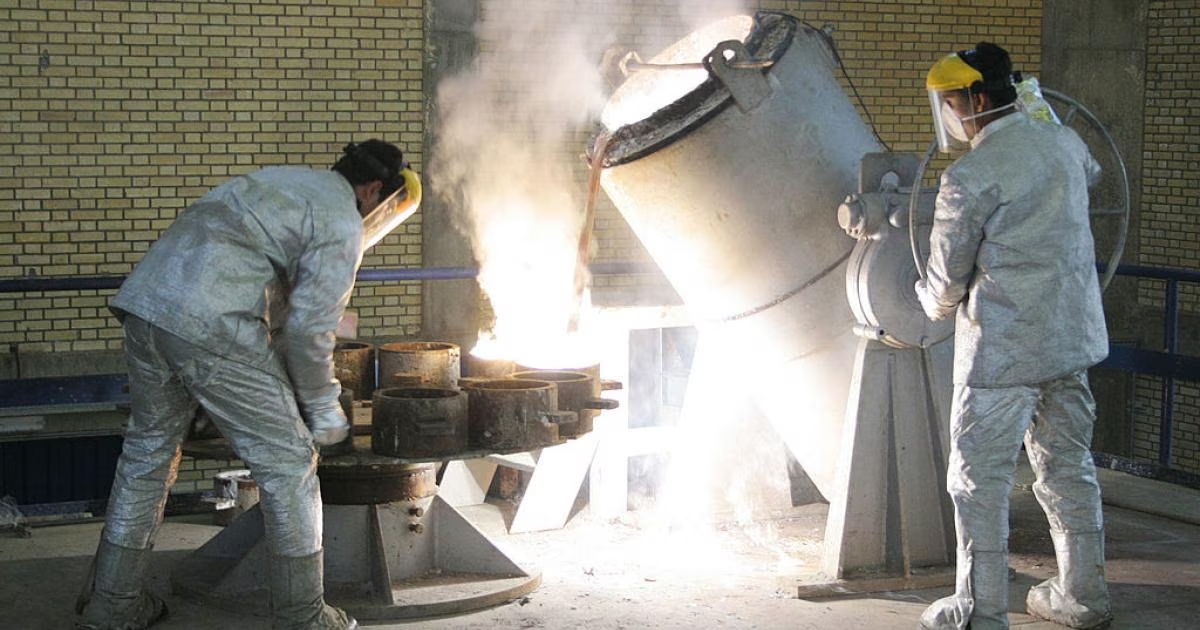
In a remarkable shift in the American position, media sources in Washington reported that the US administration has waived the condition of forcibly acquiring and destroying enriched Iranian uranium. President Donald Trump had previously threatened to seize these materials, whether with Tehran's consent or against its will, but the recent understandings have led to a consensual formula that ensures the disposal of the highly enriched stockpile under international supervision.

American press reports revealed that the White House had prepared a comprehensive military plan to seize uranium stockpiles in Iran, but President Trump issued orders to cancel it at the last minute. Trump justified his decision to back down from the military option by his fear of significant human casualties among US forces, preferring the diplomatic path that ensures close monitoring of nuclear facilities.

Tehran, under the new understandings, pledged to dispose of its highly enriched uranium stockpile during the two-month truce period, while allowing strict monitoring mechanisms. The United States already has advanced surveillance cameras near the storage sites, which will enhance the International Atomic Energy Agency's ability to verify Iran's implementation of its commitments without the need for direct military intervention.

Tehran is closer than ever to reaching a memorandum of understanding that ends the blockade and stops the war on all fronts.

PALESTINE

Sat 13 Jun 2026 9:02 am - Jerusalem Time

Children of Gaza: Forced Labor Under the Weight of War and Deferred Dreams Behind Carts and Stalls

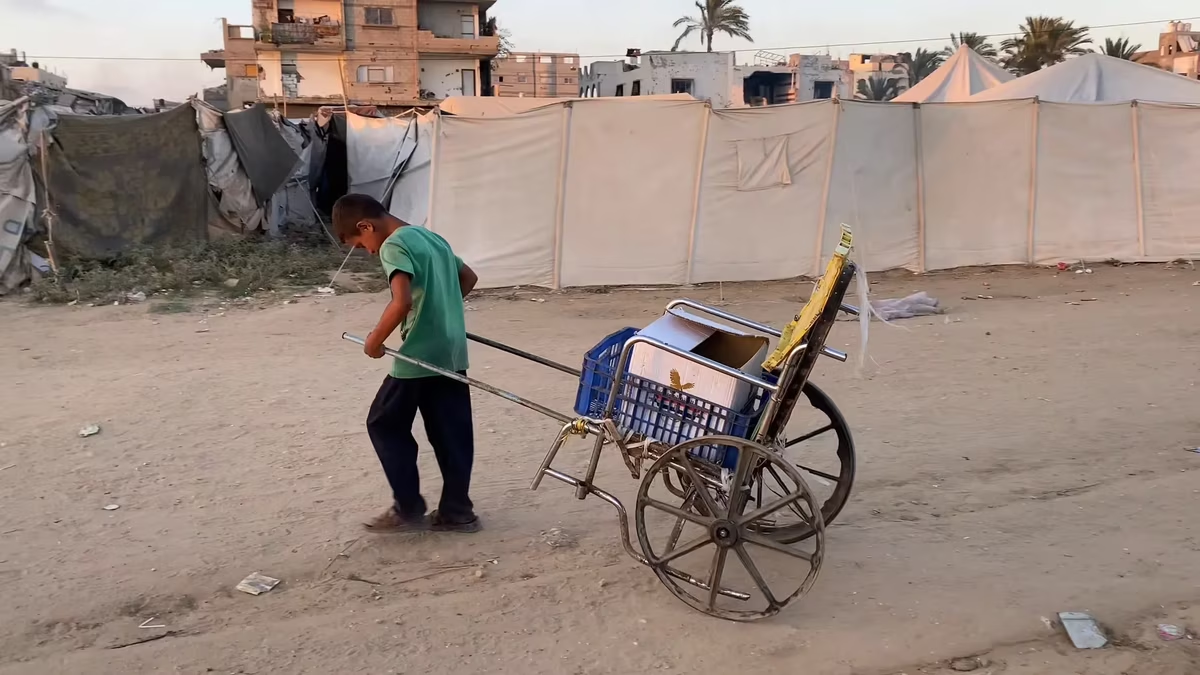
Every morning, Malik Abu Nasr wakes up to begin an arduous journey through the streets of Deir al-Balah, pulling a cart he personally made from the remnants of a dilapidated wheelchair. Malik, who is not yet ten years old, strives to secure daily sustenance for his displaced family, who live in a tattered tent, after his father was killed in an Israeli airstrike that turned their lives into a continuous struggle for survival.

Malik's small dream was to become a dentist in the future, but the war machine forced him to leave school and carry burdens beyond his physical capacity. His family was displaced from Beit Lahia in the northern Gaza Strip after their home was destroyed, settling in a dangerous border area east of Deir al-Balah, where he became the sole support for his mother and three siblings.

Amidst the suffocating transportation crisis and the destruction of infrastructure, Malik's cart has become an essential means of transporting the belongings and needs of displaced people for meager sums. His daily income does not exceed 15 shekels, a very small amount, but it represents the only lifeline for his family, who depend on him to provide the minimum basic necessities amidst exorbitant prices.

His mother, Alaa Abu Nasr, speaks with a mixture of pride and heartbreak about her child, who excelled in his studies and memorized parts of the Holy Quran. She says that worry never leaves her during his hours of absence in the markets, where he faces the dangers of shelling and harsh weather conditions with his tender body, which has been exhausted by hard work prematurely.

The tragedy of early labor is not limited to males; it has extended to girls who find themselves in direct confrontation with the harshness of the streets. Nour Baroud, a thirteen-year-old girl, spends her day behind a stall selling locally produced fuel from burning plastic waste, a job fraught with health and environmental risks.

Nour, who dreamed of studying medicine, is now an expert in alternative fuels that residents resort to due to the fuel blockade and its prevention from entering the Strip. The child confirms that the war has robbed her of her right to play and education, and made her responsible for helping her father secure the family's increasing needs amidst the economic collapse.

From a social perspective, human development specialist Nawal Asqoul believes that child labor in Gaza is no longer just a fleeting phenomenon, but has turned into a forced survival strategy. She explained that children in Gaza have transitioned from being beings who need care to providers for entire families, which creates deep psychological and social gaps whose effects will appear in the future.

Asqoul points to the existence of an 'army of orphans' produced by the war, where thousands of families have lost their primary breadwinners, pushing children into arduous and dangerous professions. This phenomenon affects girls and boys alike, as they roam the streets and rummage through garbage in search of materials that can be sold or used as cooking fuel.

Legally, the director of Al-Dameer Association for Human Rights, Alaa Al-Skafi, describes what is happening as a 'complex crime' committed by the occupation against Palestinian childhood. He affirmed that targeting the educational system and killing fathers forcibly pushes children into the labor market, which falls within policies of destroying Palestinian society entirely or partially.

Al-Skafi explained that depriving children of the right to safety, play, and education is a blatant violation of international conventions, especially given the occupation's deliberate efforts to make life in Gaza impossible. These circumstances force children to perform tasks unsuitable for their age, such as sifting through rubble and working in polluted and dangerous environments.

Official figures issued by the Palestinian Ministry of Social Development reinforce this tragic reality, revealing the presence of more than 64,000 orphans in the Strip. Among these, about 55,000 children have lost one or both parents during the ongoing months of war, placing an enormous burden on already exhausted relief organizations.

These orphaned children live in extremely harsh humanitarian conditions, lacking adequate shelter, healthcare, and regular education. This mass loss of breadwinners has made child labor the only option to avoid hunger and death, amidst the international system's inability to provide them with the necessary protection.

While the world celebrates the International Day Against Child Labor, international slogans seem far removed from the reality of the Gazan child who struggles with death and work simultaneously. The transformation of children's bodies into tools of hardship is the direct result of the policy of siege and systematic shelling that targets the future of coming generations in the Strip.

Malik's and Nour's stories remain examples of thousands of cases that have not been highlighted, where big dreams are lost behind small stalls and handcarts. The continuation of this reality threatens the emergence of an entire generation deprived of education, burdened with psychological and physical scars that may not heal even after the guns fall silent.

Our children have grown up prematurely, bearing responsibilities that will leave long-lasting effects on their mental and physical health; the war has turned their bodies into tools of hardship.

PALESTINE

Sat 13 Jun 2026 9:02 am - Jerusalem Time

With sentences exceeding 20 years.. British judiciary jails 'Palestine Action' activists on terrorism-related charges

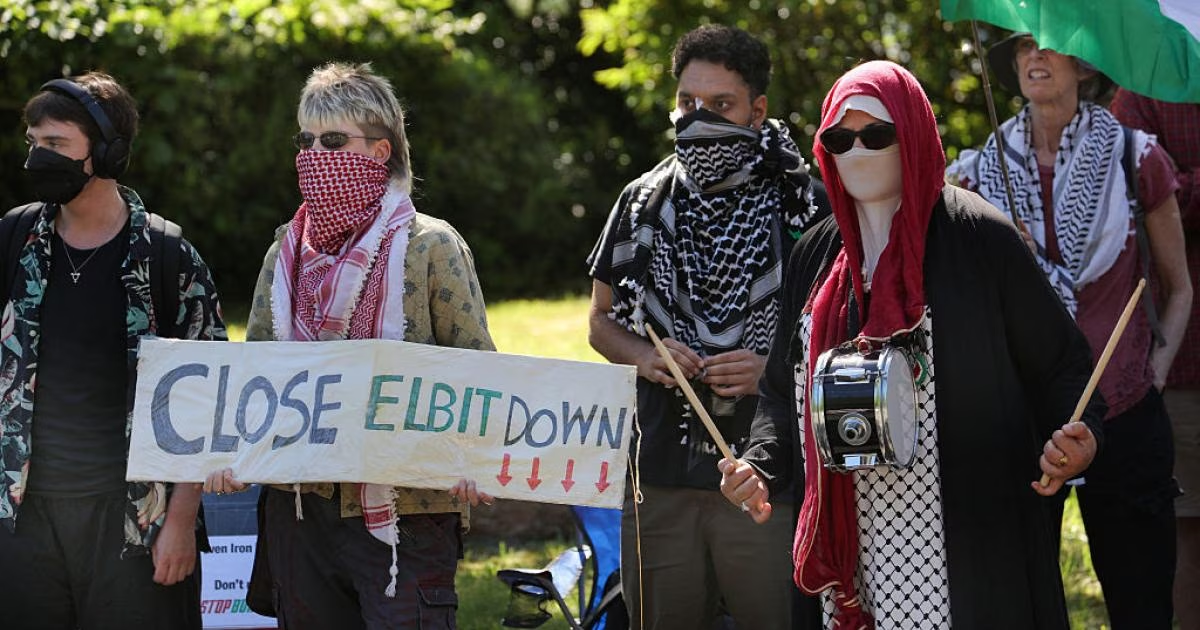
The British 'Woolwich Crown' Court issued harsh prison sentences against four activists from the 'Palestine Action' group, in a case related to a raid on a facility belonging to the Israeli defense industry company 'Elbit Systems'. The total sentences issued against the group exceeded 20 years, in a move described by observers as an unprecedented judicial escalation against pro-Palestinian protest movements in the United Kingdom.

Judge Jeremy Johnson, in his judgment, considered the attack on the company's factory in Bristol to have a 'clear link to terrorism'. The judge explained that this classification was based on the activists' intention to influence the British government's foreign policy towards Israel by causing severe damage to private property, which necessitated the toughening of the penalties imposed on them.

Sentences included imprisoning activist Samuel Corner (23 years old) for seven years and eight months, the longest sentence among the group, after he was convicted of criminal damage and causing serious bodily harm to a police officer. The court rejected defenses related to his health condition, affirming that his use of force was excessive and unjustified during the raid.

The court also sentenced Leona Cameo (30 years old) and Charlotte Head (30 years old) to five years each, while Fatima Zainab Rajwani (21 years old) received a prison sentence of four years and eight months. All convicts are scheduled to undergo strict supervision for a full year after the end of their sentences in British prisons.

Details of the incident date back to 2024, when activists stormed the headquarters of the Israeli company specializing in the production of drone technology and radar systems. Sources reported that the raid resulted in the destruction of sensitive military equipment and computer devices, costing the company material losses estimated at more than 1.2 million British pounds, which were later covered by insurance companies.

For its part, the 'Palestine Action' organization defended its members, affirming that the action was directly aimed at disrupting the Israeli war machine and preventing the flow of weapons used in the 'war of annihilation' against civilians in the Gaza Strip. During the trial sessions, the activists denied any intention to use violence against individuals, emphasizing that their goal was only to destroy instruments of killing.

These sentences sparked a wave of international and local condemnation, with more than 100 prominent figures, including novelist Sally Rooney and Swedish activist Greta Thunberg, signing an open letter warning of a 'miscarriage of justice'. The signatories considered the use of terrorism laws against civilian activists to be a dangerous precedent that threatens the right to peaceful protest and political dissent.

Defense lawyers pointed out that their clients were not originally charged under terrorism law, expressing surprise at the inclusion of this description at the sentencing stage to increase the penalty. The legal team affirmed that the activists acted out of a conscientious motive to stop documented war crimes, which contradicts the definition of a terrorist act in international laws.

These sentences come amidst an ongoing legal battle over the legality of banning the 'Palestine Action' organization in Britain, where the High Court in London had previously deemed the ban decision illegal. However, the organization remains on the banned lists pending the outcome of the appeal filed by the British government, which is expected to be decided soon.

In statements provided to the court, 'Elbit' claimed that the incident had a deep psychological impact on its employees and affected their sense of security within the facility. The company explained that the damages were not limited to material aspects but also included the disruption of supply chains for defensive systems that were under manufacturing, leading to additional operational losses.

Observers believe that the British judiciary, through these sentences, seeks to send a strong deterrent message to groups targeting arms companies linked to Israel. These developments come at a time when British cities are witnessing continuous protests demanding a halt to arms exports to the Israeli occupation amid the ongoing aggression on Gaza.

In conclusion, the 'Palestine Action' activists' case remains open to the possibilities of legal escalation, as the defense intends to appeal the issued sentences. The organization continues to affirm that imprisonment will not deter its members from continuing fieldwork to close all Israeli arms factories on British soil, no matter the legal sacrifices.

The link between the crime and terrorism is considered an aggravating factor for the punishment, as its aim is to influence the British government's policy towards Israel by damaging property.

ARAB AND WORLD

Fri 12 Jun 2026 8:19 pm - Jerusalem Time

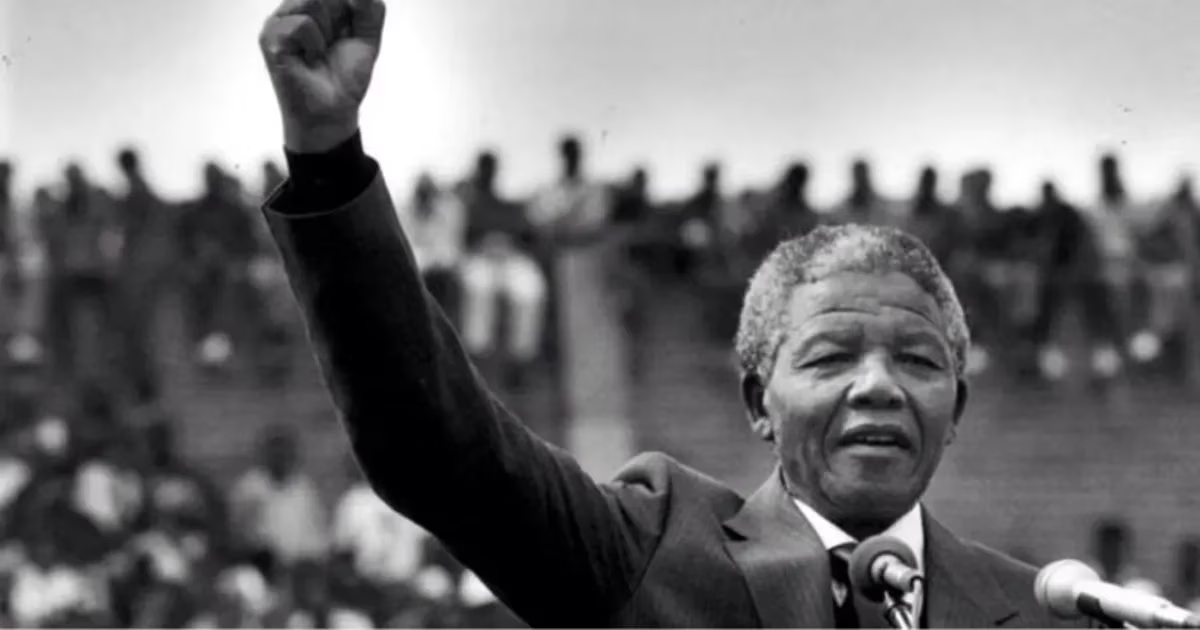
From 'Terrorist' to Freedom Icon: British Documentary Explores Nelson Mandela's Journey

A new British documentary has reopened the files of South African leader Nelson Mandela, shedding light on a historical period when he was viewed as a 'terrorist' and a security threat, before he transformed into one of the most prominent symbols of freedom in the modern era. The report, published by The Guardian coinciding with the screening of the film 'Free Nelson Mandela', revealed the behind-the-scenes political and diplomatic struggle that took place in Western capitals regarding the legitimacy of the African National Congress's struggle.

The documentary, produced by 'Rogan Productions', reviews three decades of intense international activism against the apartheid system. The documentary material traces the long path that began with clandestine work and exile, leading to the historic moment of Mandela's release in 1990, and then his election as president of the country four years after arduous negotiations.

Sources quoted British activist and former minister Peter Hain as saying that the perception of Mandela in the West was not always as rosy as it is today. Former British Prime Minister Margaret Thatcher openly described him as a terrorist, a stance that reflected the views of a wide segment of the Western political elite who feared the actions of the African National Congress during the Cold War era.

Hain explained that activists who opposed the apartheid regime in Britain faced immense security pressures and systematic smear campaigns. The former minister revealed painful personal details, including receiving a letter bomb and attempts to fabricate criminal charges against him, with the aim of deterring him from his political activism supporting the African cause and isolating the racist regime internationally.

The work included live testimonies from Dali Tambo, son of the late leader Oliver Tambo, who lived for many years in exile in London. Tambo recounted how his family lived under the constant fear of assassination by the intelligence agencies of the Pretoria regime, especially after repeated incidents of liquidating opponents abroad, which made his childhood associated with the obsession of security and surveillance.

Tambo pointed out that his father and his comrades in the leadership of the African National Congress worked with the certainty of fighters, although they sometimes did not expect to live long enough to witness the end of the apartheid system. Nevertheless, political and diplomatic work continued from London, which became a global center for mobilizing support against racial discrimination and pressuring hesitant governments.

The report highlighted the pivotal role played by sports and cultural boycotts as an effective pressure tool to isolate South Africa from the international community. Activists led extensive campaigns to prevent tours of South African sports teams, which contributed to moving the battle from the corridors of politics to stadiums and streets, and drew the attention of global public opinion to the justice of the cause.

On the cultural front, the song 'Free Nelson Mandela' became a cross-border anthem, sung by millions around the world to demand the breaking of the jailer's chains. British artists and musicians played a crucial role in mobilizing the masses, especially through major festivals that made Mandela's cause a human issue that could not be divided.

Sources considered the famous Wembley Stadium concert in 1988 to be the major 'turning point' in the international campaign. That event, watched by hundreds of millions on television screens, succeeded in transforming Mandela from a political prisoner behind bars into a global icon whose freedom was demanded by peoples, which put Western governments in an embarrassing position before their own people.

Away from politics, the documentary addressed the human aspects of Mandela's personality, describing him as a man who possessed an innate ability to connect with ordinary people. Despite his towering stature, he remained 'Uncle Nelson' to those close to him, a man whose years in prison did not taint him with the bitterness of revenge, but rather emerged with a spirit calling for reconciliation and building.

Returning to the roots of the struggle, Mandela was born in 1918 in a rural village in the Eastern Cape, and began his life as a lawyer defending the rights of blacks. He joined the ranks of the African National Congress early on, initially believing in peaceful resistance, but a radical transformation occurred after the Sharpeville massacre in 1960, which showed the brutality of the regime in suppressing unarmed demonstrators.

This transformation led Mandela to establish the military wing 'Umkhonto we Sizwe', a decision he made with his comrades after being convinced that peaceful action alone would not overthrow a heavily armed regime. Although the operations targeted government facilities and avoided civilians, they were the pretext used by Western powers to classify him as an extremist for many years.

Mandela spent 27 years in prison, during which he transformed from an isolated prisoner on Robben Island into a symbol of global resilience. Thanks to increasing international pressure and geopolitical changes, the white minority government was forced to negotiate with him, and he was released in 1990 to lead his country towards a democratic transition that spared it the specter of civil war.

Despite the great legacy left by Mandela, the documentary indicates that controversy still exists regarding the results of the political settlement. While he succeeded in legally ending apartheid, South Africa still faces deep economic and social challenges, which opens the door for researchers' questions about the completeness of the dream for which 'Uncle Nelson' fought.

Western public opinion did not treat Mandela as a global hero; rather, he was portrayed as a terrorist until the late 1980s.

ARAB AND WORLD

Fri 12 Jun 2026 8:19 pm - Jerusalem Time

Africa at the Heart of Global Competition: A Reading of 'The Rise of the Black Continent' and Promising Investment Opportunities

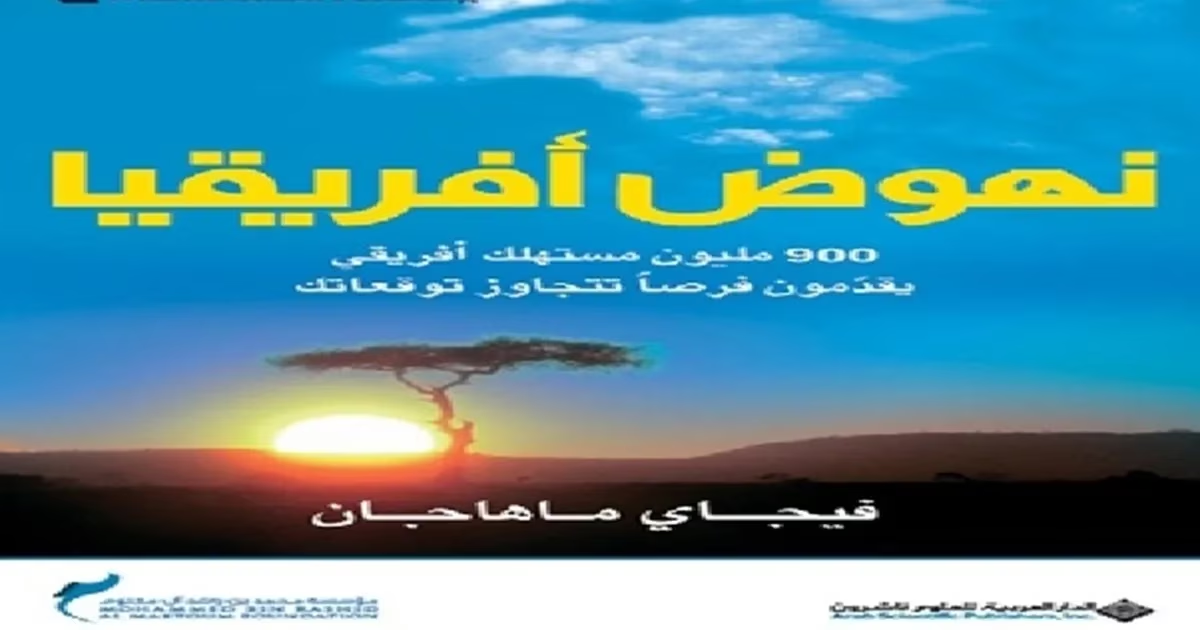
The African continent is rapidly transforming into a major hub for competition among great powers. It is no longer known merely as a source of raw materials but has become a massive consumer market with over 1.2 billion people. Professor Vijay Mahajan, in his book 'Africa Rising,' indicates that the traditional view of the continent as a region of poverty and deficiency has completely changed in the face of an economic reality that strongly asserts itself on the international stage.

The continent is witnessing remarkable demographic growth, with its population expected to double in the next twenty years, making up one-fifth of the world's population. This population explosion is accompanied by rapid growth of the middle class, which now represents one-third of the population, opening up tremendous opportunities for investment in health, education, housing, and modern communications.

China leads the economic scene on the continent with a trade volume exceeding $200 billion, which is double the size of American trade with Africa. This Chinese dominance has prompted Washington to re-evaluate its strategy and attempt to catch up with Beijing by injecting billions of dollars in investments to strengthen its influence in emerging African markets.

Africa possesses vast natural resources that make it a safety valve for global energy, holding about 10% of the world's oil reserves and 15% of its gas reserves. Countries like Nigeria, Angola, and Mozambique stand out as key players in securing energy supplies, especially with Europe's move to reduce reliance on Russian gas and seek stable alternatives.

China's strategy in Africa is characterized by great financial flexibility and the ability to finance massive infrastructure projects through preferential loans and specialized development funds. African leaders see Beijing as a partner who treats them as equals, away from the political pressures that often accompany traditional Western aid and investments.

For its part, Russia seeks to restore its historical influence on the continent through military and political cooperation, leveraging the Soviet Union's legacy of supporting liberation movements. Moscow is currently focused on building strategic partnerships that help it circumvent Western sanctions and open new markets for its military and technological industries.

On the Arab front, Morocco stands out as the largest investor in West African countries, benefiting from its geographical location and political stability to serve as a bridge between the continent and Europe. Egypt also plays a pivotal role in attracting foreign investments thanks to legislative reforms and infrastructure development that have placed it among the leading African nations.

The United Arab Emirates has a strong investment presence outside the continent, reflecting a growing Arab trend towards investing in vital African sectors. However, total Arab investments remain below aspirations compared to the available opportunities and fierce international competition from powers like India, France, and Britain.

Arab-African economic integration represents a historic opportunity to achieve food and water security for both sides, given Africa's vast agricultural lands and enormous fresh water resources. In return, Arab countries possess the expertise, capital, and fertilizer industries necessary to transform these resources into real production that can bridge the food gap in both regions.

Together, Arab and African countries control the most important straits and waterways in the world, giving this alliance a superior ability to influence international trade. Coordination between North Africa, the Gulf states, and the Horn of Africa can establish a geopolitical bloc that controls global power balances.

Africa's mineral wealth is a fundamental pillar of modern technological industries, with the continent producing 80% of the world's platinum and huge quantities of cobalt, gold, and diamonds. These resources make the continent a battleground for technological conflict among major global companies seeking to secure sustainable supply chains for their advanced industries.

Sources reported that the American approach to Africa was historically influenced by the oil lobby, which sought to secure energy needs, especially given the quality of African oil and its low extraction costs. Despite criticisms leveled against successive American administrations, the need to diversify energy sources remains the primary driver of foreign policy on the continent.

Great powers face significant challenges in Africa, including popular rejection of some forms of foreign military presence, as happened with the American 'Africom' project. In contrast, powers that focus on direct economic development and improving the quality of life for local populations succeed in building long-term and stable influence.

In conclusion, Mahajan's book shows that the future of the international system may be drawn in the jungles and deserts of Africa, where economic interests intertwine with geopolitical conflicts. The continent, once described as forgotten, is today 'the land of opportunity' that no global power can ignore if it wants to maintain its position in the 21st century.

I was wrong when I viewed Africa as a case of deficiency and poverty; today it offers market opportunities that exceed expectations.

OPINIONS

Fri 12 Jun 2026 8:18 pm - Jerusalem Time

The Market of Illusory Titles: A Cry Against the 'Privatization' of Knowledge and the Falsification of Competencies

Ramallah - “Alquds ” dot com

Ramallah - “Alquds ” dot com

Opinion Writer

Warnings are escalating about the transformation of academic titles in our societies from a badge of honor bestowed upon innovators and diligent individuals into a packaged 'commodity' sold to those with money but lacking competence. Today, we face what resembles a 'stock market of illusions' that stabs at the heart of every young person who toiled through nights to earn a genuine degree, while others bypass them with titles bought from dubious academic shops.

The current scene depicts a bleak reality where city corners are crowded with 'accreditation' offices that pay bribes instead of asking scientific questions, and offer certificates like goods displayed in markets. These practices are not just simple administrative transgressions; they are a blatant betrayal of the educational landscape and a violation of the citizen's right to deal with honest and reputable institutions.

Across social media platforms, pages promote academic degrees via 'delivery' systems, exploiting big names in misleading advertisements to attract those seeking false social prestige. What is happening in the higher education sector today goes beyond administrative dysfunction, reaching a stage of systematic erosion of trust in science, profession, and national identity alike.

When a forged 'diploma' is equated with a genuine certificate, the difference vanishes between the diligent individual who spent years in research and the one who bought a paper adorned with a fake seal. The cost of this imbalanced equation is not only measured in lost job opportunities but also in the assassination of role models in the souls of rising generations who now see that hard work is futile.

A society that rewards 'appearance' at the expense of 'production' condemns its future to a slow death, where the institutional structure becomes flawed due to weak oversight and the complicity of some parties. It is unacceptable for entities to be granted 'legitimate' status when they award professional doctorates for meager sums without clear academic standards or strict supervision.

The state bears a heavy responsibility for this open market of counterfeit titles, where unqualified individuals infiltrate sensitive state positions based on forged documents. This infiltration leads to incorrect administrative decisions and a massive waste of public and private resources, in addition to deepening the class gap between competence and wealth.

Addressing this phenomenon requires cooperation between the public and the state. It is not enough to blame one party while the system of feigning knowledge continues to expand. The state must enforce strict laws and launch immediate investigations into any administrative complicity that facilitates the issuance of these illegal certificates in training centers and universities.

It is essential today to establish a unified national registry, both manual and electronic, that documents all certificates and academic degrees issued by accredited bodies and is accessible to employers. Linking certificate recognition to transparent and declared rules will render any certificate not matching this registry invalid, and expose its holder and issuer to direct legal accountability.

Criminal penalties must be tightened for providers of fake certificates and for any public official who facilitates their issuance, considering these acts as forgery crimes that cannot be tolerated. Protecting society from 'phantom academics' requires legislative firmness commensurate with the damage inflicted on the country's scientific and professional structure.

In addition to penalties, there is a need for continuous awareness campaigns that explain the true value of practical and research competence, away from the glitter of false titles. The real success stories of scientists and artisans who made genuine efforts must be highlighted to promote a culture of merit instead of a culture of 'trickery' and bought prestige.

We propose forming an independent committee comprising university professors and representatives from unions and civil society to review all professional and honorary degrees issued in the last decade. Any entity proven to be unlicensed or in violation of academic standards must have its certificates immediately revoked and titles granted through it withdrawn to ensure the purification of the scientific arena.

Linking promotions and sensitive positions to objective measures such as peer-reviewed research and documented experience is the only way to end the dominance of the forged 'paper'. A nation that respects truth cannot be built if officials continue to rely on certificates that do not reflect any real capabilities or actual knowledge of their holder.

This cry is not just rhetorical words; it is a final warning to everyone concerned about the future of this nation and its educational institutions, which represent the first line of defense. If we do not end this market now, we will wake up tomorrow to a society that idolizes appearances and luxurious frames while failing to read its reality or correct its course.

In conclusion, we face two choices, no third: either a nation that prides itself on its true scholars and the integrity of its institutions, or a nation where titles are sold on cheap shelves. Vigilance and verification before endorsement are the duty of every zealous citizen, for the nation needs real people of knowledge, not sellers of illusions.

Knowledge that loses the criterion of truth loses its value, and when a certificate becomes merely a paper granted to whoever pays, we are facing an organized crime against the public right.

ARAB AND WORLD

Fri 12 Jun 2026 8:18 pm - Jerusalem Time

Cautious calm in southern Lebanon after escalation affecting 40 towns and fierce clashes in advance axes

A cautious relative calm prevailed over most of the villages and towns of the Tyre and Bint Jbeil districts in the early hours of Friday morning, following a night that witnessed intense military movements. Despite this calm, Israeli warplanes carried out a raid targeting the Arid Debbin area, while a drone strike hit the town of Jebshit in the Nabatieh district.

Field sources reported that the occupation army carried out a large-scale detonation operation in the town of Khiam from the plain side during the late night hours. These movements come after a bloody day that witnessed unprecedented escalation, as Israeli shelling affected more than 40 Lebanese towns through air raids and suicide drone attacks.

Israeli attacks focused violently on the western sector, especially in the Tyre and Abbasiyah areas, leading to the martyrdom of a number of people and injuries among civilians. The town of Deir Qanoun Al-Nahr also suffered a series of raids that left widespread destruction to property and infrastructure in the town.

Regarding ground confrontations, attention is currently focused on the Majdal Zoun – Tayr Harfa axis, where fierce clashes are taking place between Hezbollah fighters and occupation forces. Israeli units are trying to advance towards the eastern neighborhoods of Majdal Zoun under heavy artillery and air cover.

Hezbollah announced in military statements that it carried out a tight ambush against an Israeli force that tried to advance from the Tayr Harfa side towards Wadi Hassan. Sources confirmed that the fighters targeted gatherings of soldiers with direct rocket salvos, forcing the advancing force to retreat and take cover in nearby fortifications.

In the city of Bint Jbeil, an Israeli tank was destroyed after being targeted by a guided missile, which caused it to catch fire and be completely disabled. Following the operation, Hezbollah fighters targeted military vehicles that tried to advance to pull out the destroyed tank, which hampered the evacuation process for several hours.

Field readings indicate that the Israeli army is focusing its efforts on controlling the strategic heights of Majdal Zoun and Mansouri overlooking the Blue Line. The occupation aims, through these movements, to reach the heights of Ali Al-Taher, in an attempt to re-impose a security belt that existed before the withdrawal in 2000.

On the other side of the border, sources confirmed that the pace of Hezbollah attacks remains constant at an average of 15 to 20 attacks daily targeting military sites. Reports from inside the occupied territories speak of daily casualties among soldiers, with the wounded constantly being transferred to Rambam Hospital in Haifa.

In the context of the ground incursion, the Israeli army announced that its forces had reached the Wadi Al-Salouqi area, a complex geographical area through which the occupation seeks to secure overlooking heights. These movements coincide with the sound of sirens in the border settlements as a result of continuous rocket barrages and ground interception operations.

As for the political aspect related to the field, Hebrew media reported a state of dissatisfaction among the American administration regarding field coordination in Lebanon. The Israeli government insists on imposing tangible field conditions and changing the geographical reality on the border before entering into any serious negotiations for a ceasefire.

The occupation seeks to reshape the security belt by controlling strategic heights facing the Blue Line.

ARAB AND WORLD

Fri 12 Jun 2026 8:18 pm - Jerusalem Time

Discovery of a rare rock inscription bearing the name of Caliph Omar ibn al-Khattab in Medina

Cultural authorities in the Kingdom of Saudi Arabia announced a prominent archaeological and historical discovery: a rare rock inscription dating back to the early Islamic era. The Heritage Commission clarified that the discovered inscription bears the name of the second Caliph, Omar ibn al-Khattab, and was found within the scope of Al-Mahd Governorate, which is part of the Medina region.

This announcement followed the conclusion of the first and second phases of the field archaeological survey operations conducted by the Commission in the region. Official sources confirmed that these discoveries highlight the historical and civilizational depth of the region and document an important period of early Islamic history through rock inscriptions and antiquities.

The discovery sparked a wide wave of interaction across social media platforms, where those interested in archaeology and history circulated images of the inscription, considering it a qualitative addition to the Saudi archaeological record. Specialized teams continue to study the site and adjacent inscriptions to decipher them and link them to the historical context of the routes and caravans that once traversed the region.

We have uncovered archaeological sites that tell stories of civilizations that passed through this land.

PALESTINE

Fri 12 Jun 2026 8:18 pm - Jerusalem Time

Imprisonment, Expulsion, and Vague Charges.. How Do Jerusalem Journalists Face the Narrative War?

In the alleys of occupied Jerusalem, the camera transforms from a tool for conveying news into an open front of conflict over narrative and sovereignty. Jerusalemite journalists face a repressive campaign aimed at isolating the holy city and obscuring the facts of what is happening within its walls. These practices come amid an unprecedented escalation targeting freedom of movement and journalistic work, turning the profession into an accusation warranting security and judicial prosecution.

Data from the Palestinian Journalists' Syndicate revealed shocking figures reflecting the extent of the targeting, with recorded violations since October 7, 2023, reaching approximately 3983. These crimes escalated, peaking in 2024 and 2025, while the beginning of the current year 2026 alone recorded about 300 violations, indicating the continuity of the systematic crackdown against media personnel.

In a judicial precedent reflecting the severity of the persecution, occupation courts issued a 20-month actual prison sentence against Jerusalemite journalist Bayan Al-Ja'ba, after she spent about a year and a half under house arrest. This ruling is one of the longest sentences issued against Jerusalemite female journalists recently, leaving severe social and humanitarian impacts on her family and children in Shuafat refugee camp.

The persecution was not limited to judicial rulings; the policy of expulsion emerged as a key tool to restrict journalistic work, especially in Al-Aqsa Mosque and the Old City. Syndicate sources reported 14 cases of journalists being expelled since the beginning of this year, most notably journalist Saif Al-Qawasmi, in an attempt to impose a complete media blackout on field events and religious occasions.

On the digital front, cyberspace has become another arena for pursuit, with journalists' accounts subject to constant monitoring and ready-made charges of 'incitement.' The 'Sada Social' center indicated that about 29% of documented digital violations directly targeted journalists, including account deletion and restricted access to Palestinian content, in addition to hundreds of attempts to hack personal pages.

In a dangerous development, Israeli Defense Minister Yisrael Katz issued a military order in April 2026 classifying five Palestinian media platforms as 'terrorist organizations.' Occupation authorities claim these institutions are linked to resistance groups, a pretext used to legitimize the closure of press offices, confiscation of equipment, and criminalization of their employees under legal cover.

For his part, Bilal Kaswani, head of the Jerusalem Committee in the Journalists' Syndicate, affirmed that 2023 and its aftermath represent the most violent era in the history of Jerusalemite journalism. He explained that the occupation authorities refuse to recognize Palestinian press cards and deliberately target crews during religious occasions, as happened during the last Ramadan with widespread restrictions on media coverage.

Journalist Saif Al-Qawasmi recounts his experience with continuous persecution since 2018, confirming that he was subjected to 12 summons for interrogation and incitement campaigns by settlers. Al-Qawasmi pointed out that the pace of these persecutions sharply escalated after the war on Gaza, with the expanded use of emergency laws and administrative detention to intimidate media professionals and deter them from field coverage.

These pressures also extend to sources of information, as Jerusalemite citizens now fear speaking to the media for fear of security persecution or harm to their livelihoods. This reality has created a significant challenge for journalists in obtaining field testimonies, prompting media institutions to redouble efforts to document daily violations in the city.

In the context of targeting religious institutions, Firas Dibs, former official in the Islamic Endowments, explained that restrictions even affected media employees within Al-Aqsa Mosque. Dibs mentioned that he was expelled from the mosque about 10 times since 2015, the last of which was an expulsion order for six months on charges of incitement, a charge loosely used against anyone who documents attacks.

Field testimonies indicate that interrogations often involve the confiscation of mobile phones, cameras, and professional equipment, which are rarely returned. This measure aims to financially and technically drain journalists, hindering their ability to keep up with rapidly unfolding events in Jerusalem and Al-Aqsa Mosque in particular.

Despite this hostile environment, Jerusalemite journalists affirm their commitment to their professional mission and the necessity of maintaining the presence of the Palestinian narrative in international forums. They believe that attempts at intimidation and arrest will not succeed in obscuring the facts, but rather increase their determination to document what they describe as 'Judaization crimes' and continuous attacks on holy sites.

These developments come at a time when the Palestinian arena has witnessed the martyrdom of 204 journalists during the ongoing war on the Gaza Strip, placing Palestinian journalism before the greatest existential challenge in its history. Professional syndicates and human rights organizations demand the necessity of providing international protection for journalists and ensuring freedom of media work in the occupied territories.

What is happening in Jerusalem today is an attempt to reshape the geographical and demographic reality away from the eyes of cameras, by turning journalistic work into an adventure fraught with arrest or expulsion. Nevertheless, the word and image remain the only weapon left for Jerusalemites in the face of the oppressive machine that seeks to impose silence on the holy city.

The targeting is no longer limited to preventing field coverage, but has extended to expulsion from Al-Aqsa Mosque and the Old City and repeated security summonses.

PALESTINE

Fri 12 Jun 2026 8:18 pm - Jerusalem Time

Occupation admits killing 100 people in Gaza and Lebanon in one week

The Israeli occupation army officially announced the toll of its military operations during the past week, confirming the killing of about 100 people in both the Gaza Strip and Lebanese territories. These admissions come amidst an escalation in the pace of field targeting carried out by the occupation on multiple fronts, under the pretext of pursuing armed faction elements.

Regarding the details of operations inside the Gaza Strip, a statement by the occupation army mentioned that its forces killed 20 Palestinians during the past seven days, claiming that those targeted belonged to the Hamas and Islamic Jihad movements. These assassinations coincide with the ongoing genocide war waged by the occupation on the Strip since October 2023, which has left massive destruction in all aspects of life.

Documented statistics indicate that the ongoing aggression on Gaza has so far led to the martyrdom of about 73,000 Palestinians, while the number of injured has exceeded 173,000. The intense and systematic bombing has also caused the destruction of nearly 90 percent of the civilian infrastructure, making the Strip an uninhabitable area under the tight siege.

As for the occupied West Bank, the occupation forces continued their daily raids and arrest campaigns targeting Palestinian youth. Sources reported that the army arrested about 50 citizens from West Bank cities and villages during the last week, as part of the escalation policy adopted by the occupation to pressure the popular base of the resistance.

On the Lebanese front, the occupation army revealed that it carried out about 310 air raids targeting various areas in southern Lebanon in just one week. The occupation claimed that these attacks targeted military sites and infrastructure, and resulted in the martyrdom of about 80 people whom it described as Hezbollah elements, while field reports confirm the targeting of civilian homes.

Circulated video clips, and others published by the occupation army itself, monitored the deliberate targeting of residential buildings and inhabited homes in Lebanese border villages. The army command claims that these facilities are used for military purposes, which is denied by field facts that show the extent of the destruction inflicted on civilian objects and private property of Lebanese citizens.

According to official data, the Israeli aggression on Lebanon since its beginning last March has resulted in about 3,711 martyrs and more than 11,000 injured. Military operations have also led to the displacement of more than one million people from their villages and towns, amidst difficult humanitarian conditions and widespread destruction of vital facilities in the targeted areas.

Despite talks of a truce that began in mid-April, the occupation continues its daily violations through intense artillery and aerial bombardment. Israeli forces continue to carry out extensive demolition operations of homes in dozens of Lebanese villages, indicating a premeditated intention to impose a new geographical reality and empty border areas of their residents.

The army carried out about 310 raids in southern Lebanon last week, claiming they targeted Hezbollah sites.

ARAB AND WORLD

Fri 12 Jun 2026 8:17 pm - Jerusalem Time

Leaked US-Iran Understanding: Clauses to End War and Lift Oil Sanctions

News is escalating about the United States and Iran nearing a historic agreement to end the state of military tension in the Middle East, amidst conflicting official statements regarding the final timeline. Leaked information indicates that the ongoing understandings aim to formulate a new political and security reality that ensures de-escalation in flashpoints, especially in Lebanon.

According to media sources, the draft understanding includes fundamental American commitments, primarily the lifting of economic sanctions imposed on Tehran and the withdrawal of military forces from areas surrounding the Islamic Republic. The clauses also include the full reopening of the Strait of Hormuz to international navigation and the removal of restrictions on Iranian oil exports.

Reports speak of a clause related to the release of all frozen Iranian funds abroad as part of confidence-building measures between the two parties. These steps aim to put an end to armed conflicts in the region, as this agreement is seen as a key entry point for a ceasefire on multiple fronts witnessing direct or proxy confrontations.

For its part, international press sources suggested that the official signing of the agreement would take place in Geneva, Switzerland, coinciding with the G7 meeting next week. Expectations indicated that Sunday might be the anticipated date for the announcement of the final document that will change the balance of power in the region.

In Tehran, Foreign Ministry spokesman Ismail Baqaei confirmed that the negotiating teams had completed writing most of the agreement's texts, but stressed that the process was not definitively over yet. Baqaei attributed the delay to what he described as the continuous change in American positions, considering that talk of resolving matters is still within the realm of media speculation.

The Iranian spokesman praised the role played by both Qatar and Pakistan in bridging the views between Washington and Tehran through active diplomatic channels. He explained that his country is carefully studying all details to ensure the achievement of its national interests before the final signing of any binding document.

In contrast, US President Donald Trump issued optimistic statements, describing what had been reached as a 'great settlement' that would end decades of hostility. Trump announced that the final document is currently being prepared, noting that he had received positive signals indicating the approval of the Iranian Supreme Leader on the broad outlines of the understanding.

The US President revealed a surprising decision to cancel military strikes that had been scheduled against Iranian targets, as a gesture of goodwill after obtaining initial approvals on contentious points. Sources close to the White House confirmed that Vice President JD Vance might travel to Europe soon to represent Washington at the signing ceremony.

Despite this optimism, concerns arise within political circles in Washington about pressure exerted by Israel's allies to disrupt the diplomatic process. Sources reported that conservative media and political figures have begun to question the feasibility and timing of the agreement, warning against making extensive concessions to Tehran without sufficient security guarantees.

Anticipation remains the dominant sentiment in world capitals, as this agreement, if successful, represents a major turning point in energy and regional security issues. Political circles await what the next few days will bring to determine whether the Middle East is heading towards sustainable calm or whether internal obstacles will derail the understandings at the last minute.

We have reached a great settlement with Iran, and the final document is currently being prepared after the Supreme Leader's approval.

OPINIONS

Fri 12 Jun 2026 8:17 pm - Jerusalem Time

Political Responsibility in Tunisia: A Reading of the Roles of the 'Functional Left' and Post-Revolutionary Transformations

The term 'functional left' emerges in Tunisian political discourse to refer to those forces that placed their human and symbolic capital at the service of the ruling system since nominal independence. Despite this current's subservience to the hard core of power, it played a pivotal role as an ideological reservoir for successive regimes, from Bourguiba's era to current political narratives.

Rentier families and regional loyalties formed the backbone of the economy and decision-making centers in Tunisia, while leftists who abandoned their grand slogans became a human rights and political facade for Ben Ali's regime. This functional role enabled the system to possess ideologically-driven arms capable of marketing its policies and justifying the repression of political opponents under the guise of modernity.

After the events of the revolution, the hard core of the regime succeeded in diverting the primary struggle against the comprehensive corruption system, transforming it into a legal and criminal battle against specific individuals and families. This strategy primarily relied on downplaying the role of the 'functionaries' who were an integral part of the official machine of repression and propaganda.

The dissolution of the dissolved RCD party was considered merely a tactical step to absorb popular anger, while the real goal was to redeploy its cadres under new names. The absence of a political isolation law contributed to enabling these functional bodies to return to the forefront of the political scene and work to demonize the democratic process and its outcomes.

Ennahda Movement bears a significant part of the historical responsibility for this situation, as it participated, through silent or active complicity, in aborting the project of fortifying the revolution. This consensual choice allowed the functional left to shift the conflict from a confrontation with the old system to an identity struggle targeting Ennahda's political existence itself.

The functional left managed to convince broad sectors that the real battle was between 'democratic forces' and Islamists, ignoring its long history of supporting authoritarianism. This shift in the trajectory of the conflict led to the closure of political and moral accountability files for crimes committed against opponents over the past decades.

Questions are raised today about the reason for the silence of the forces harmed by Ben Ali's regime, especially the Ennahda Movement, regarding opening the file of political responsibility of the functional left. The issue is not only about criminal responsibility but also about the active support these currents provided for unpatriotic choices that led to the destruction of the political and social fabric.

Historical readings indicate that the former ruling party was a magnet for Marxist and nationalist leftists who joined the security, media, and educational apparatuses. These formed the 'spearhead' in confronting political Islam during the nineties, which explains the deep-seated animosity that still governs their relationship with the democratic process.

Analysts believe that Ennahda's leaders preferred to close this file not only because of weak power balances but also to avoid opening files of their own responsibility for catastrophic decisions made after 1987. The fear of mutual accountability led to the entrenchment of a state of political impunity, for which thousands of victims from the popular bases paid the price.

While the functional left raises slogans rejecting communication with Ennahda on the pretext of 'blood,' it ignores the blood shed because of it in the dungeons of the former regime. These exaggerations reflect a structural imbalance in the logic of transitional justice, which was corrupted in favor of fragile alliances that did not withstand the first real test.

The file of political assassinations in Tunisia has turned into a tool for political maneuvering instead of a path to uncovering the truth and achieving justice. These issues are exploited to reinforce ideological narratives that serve exclusionary agendas, far from the objective legal evidence and facts imposed by the ethics of political action.

Rewriting the history of the functional left in Tunisia has become an urgent necessity to understand the current reality and build a future based on facts, not illusions. This writing must be free from nationalistic exaggerations and self-serving claims promoted by these currents to cover up their past linked to authoritarian systems.

Experience has proven that the consensual choices adopted by Ennahda were its first victims, as it was overthrown by the same forces it tried to appease. The absence of political accountability allowed the revolution's adversaries to reposition themselves in coup projects targeting the aspirations of the Tunisian people for freedom and dignity.

In conclusion, a true democracy cannot be built under false narratives that ignore the rights of the oppressed and prioritize ideological grudges over national interest. Restoring the correct path requires courage in confronting history and opening all files that were closed by political deals that only complicated and exacerbated the scene.

The dissolution of the RCD without enacting a political isolation law was a necessary step in the old system's strategy to reposition and redeploy itself under the umbrella of the revolution.

ARAB AND WORLD

Fri 12 Jun 2026 8:17 pm - Jerusalem Time

Escalation of Incitement Against Immigrants in Britain Following Belfast Incident and Warnings of 'Transnational Populism'

The British city of Belfast witnessed a state of extreme tension after an immigrant of Sudanese origin attempted to murder an Irish citizen, an incident that the far-right exploited to fuel anti-immigrant sentiment. Despite assurances from the British government that the crime was individual and did not represent a race or religion, social media platforms turned into an arena for mass incitement.

The Sudanese Embassy in the United Kingdom quickly issued an official statement condemning the stabbing incident that occurred on June 8, expressing its full solidarity with the victim. The embassy stressed in its statement its categorical rejection of linking individual crimes to communities, affirming that Sudanese people represent a fundamental pillar in vital sectors such as health and education.

In contrast, observers believe that the far-right is trying to replicate the 'Trumpian experiment' in the British political arena by focusing on the accused's identity and religion. These moves aim to exert political pressure on the government to adopt stricter laws on asylum issues, ignoring the general criminal record in the country.

Amidst this media clamor, the sacrifices of members of the Sudanese community who gave their lives for Britain stand out, especially during major health crises. The British community remembers doctors Amjad Al-Hawrani and Adel Al-Tayyar, who were among the first medical personnel to die while confronting the coronavirus pandemic in public hospitals.

American businessman Elon Musk entered the crisis through a series of controversial posts on the 'X' platform, where he called for what he described as a noisy protest to bring about change. British political circles considered Musk's interventions an attempt to export American populism and pressure for the deportation of immigrants unable to support themselves.

The matter did not stop with Musk but extended to include American political figures such as J.D. Vance, reflecting an undeclared coordination to strengthen anti-minority rhetoric in Europe. Researchers believe that this type of external intervention contributes to poisoning the social atmosphere and exacerbates the division within the single British society.

Right-wing activist Tommy Robinson is leading a parallel campaign targeting Keir Starmer's government, accusing it of being unable to protect borders from what he describes as an 'immigrant invasion.' Robinson relies in his discourse on questioning the credibility of traditional media, presenting himself as the sole alternative to convey what he claims is 'the truth' to his followers.

This incitement directly affected the security of the Muslim community, as the home of Imam Hassan Patel in Bolton was subjected to an arson attack carried out by a masked person. Surveillance cameras recorded the assailant throwing flammable materials and smashing the windows of the house, in an incident that caused widespread panic among local residents and religious institutions.

These attacks come at a time when official data from the British Home Office indicates that the vast majority of those criminally detained are white citizens. Statistics for 2024 and 2025 show that the percentage of detained white Britons reached about 80%, refuting the right-wing's claims of linking crime to immigration.

Economists confirm that immigrants constitute the backbone of the workforce in strategic sectors, and attempts to demonize them may lead to severe crises in the labor market. British hospitals and universities rely heavily on immigrant competencies that contribute to regularly driving the economy and public services.

The policy of generalization and collective punishment promoted by the far-right contradicts British legal values based on individual responsibility for crime. Human rights activists warn that succumbing to this rhetoric could lead to a wave of ethnic violence that would be difficult to control in major diverse cities.

Human rights organizations have called for the activation of anti-hate laws against individuals who use digital platforms to incite violence against minorities. These organizations indicated that silence on the statements of Musk and Robinson gives a green light to extremists to carry out physical attacks on innocent people.

In Belfast, investigations into the stabbing incident are still ongoing, as authorities seek to ensure justice without allowing the case to be used as fuel for sectarian strife. Local police are intensifying patrols around Islamic centers and places of worship to avoid any retaliatory reactions that may affect civilians.

The biggest challenge facing the British government remains balancing the protection of freedom of expression with the prevention of incitement that threatens civil peace. With increasing transnational populist pressures, there appears to be an urgent need for a national discourse that unites Britons of all origins to confront the rising waves of hatred.

No community should be held responsible for the actions of a single individual, as the Sudanese community has a long record of positive contributions to British society.

PALESTINE

Fri 12 Jun 2026 8:17 pm - Jerusalem Time

Lebanon in the Eye of the Regional Confrontation: Is it Paying the Price for the American-Iranian Conflict?

The American-Iranian confrontation is once again dominating the regional scene, placing Lebanon at the heart of a geopolitical equation that exceeds its limited capabilities. The geopolitical nature that has characterized this country has made it a permanent arena for the clash of international interests, posing an existential challenge to protect its sovereignty.

Lebanon enters this critical phase in an unprecedented state of fragility due to accumulated financial and economic crises over many years. The deep social repercussions and the material and human losses in southern Lebanon make any slide towards regional escalation a threat to what remains of the state's foundations.

Domestically, political division remains sharp regarding Hezbollah's position in the regional conflict and its military role. While one current views the party as a cornerstone of deterrence against Israel, other forces demand that the decision of war and peace be confined to the official state institutions.

Despite this political divergence, a common denominator emerges among various Lebanese factions: the categorical rejection of entering a comprehensive war. A society exhausted by monetary and living crises is no longer able to bear new waves of displacement or additional destruction affecting its infrastructure.

In contrast, declared international positions towards Lebanon appear to be below the level of field challenges imposed by rapid developments. Major powers content themselves with verbal statements of support for Lebanese sovereignty without providing real guarantees to prevent repeated Israeli aggressions on Lebanese territories.

Lebanese people feel that the international community's commitment to their country's stability is a theoretical goal lacking effective implementation mechanisms on the ground. This void in international guarantees leaves the Lebanese arena exposed to the security and political calculations of the warring parties in the region.

For its part, Israel deals with regional escalation from a perspective that mixes national security with internal political and electoral calculations. This approach makes Lebanon vulnerable to becoming part of equations that are not necessarily related to what happens on its soil, but rather to what Israeli balances demand.

The complex reality raises a fundamental question about who can extricate Lebanon from its 'hostage' status to conflicting regional projects. The answer to this question seems linked to the extent of the Lebanese people's ability to produce a genuine national consensus on defining the country's supreme interest.

Liberation from the logic of 'open arenas' requires rebuilding Lebanese state institutions and strengthening their ability to manage sovereign files. This also necessitates Arab and international support that goes beyond media statements to tangible economic investments and political guarantees that protect stability.

The fundamental dilemma is that international parties view Lebanon's stability only from the perspective of their own interests. This places the greatest burden on local forces to reduce the ability of external actors to use the Lebanese arena as a platform for settling regional and international scores.

Past decades have depleted Lebanon's human and economic resources as a result of continuous wars and endless conflicts. The country has borne costs beyond its capacity at a time when the region was undergoing major transformations and a comprehensive redrawing of power and influence balances.

The urgent question today is not about Lebanon's ability to withstand a new confrontation, but about the international community's readiness to recognize its right to neutrality. Lebanon has already paid the highest price in terms of its stability and the blood of its children throughout the long years of conflict in the Middle East.

Observers believe that regional stability necessarily requires protecting Lebanon from sliding into the abyss of future wars. Turning the country into a permanent arena of conflict is no longer a sustainable option, especially in light of the economic collapse affecting all aspects of daily life.

Ultimately, Lebanese crises remain closely linked to the roots of the conflict in the region, foremost among them the Palestinian issue. Without addressing these roots, Lebanon will remain vulnerable to the security and political tremors imposed by constantly changing regional balances.

Lebanon has already paid its highest share of the costs of conflicts, and the region's interest requires its neutralization from future wars.

PALESTINE

Fri 12 Jun 2026 8:16 pm - Jerusalem Time

Widespread destruction in Al-Maghazi and Deir al-Balah due to new Israeli raids on Gaza

Israeli occupation aircraft renewed their aerial raids today, Friday, on various areas in the central Gaza Strip, with shelling concentrated on Al-Maghazi camp and the city of Deir al-Balah. Field sources reported that the attacks resulted in the complete destruction of residential blocks and severe damage to infrastructure, a step that represents a new escalation and a violation of the ceasefire agreement in effect since last October.

In Al-Maghazi camp, warplanes launched violent raids that leveled two homes belonging to the Al-Aidi and Al-Khamisi families, after residents received warnings of forced evacuation. Sources stated that the intensity of the explosions left deep craters in the ground and damaged dozens of neighboring homes, forcing families to displace again to safer areas under harsh humanitarian conditions.

Eyewitnesses in the camp described the scene as tragic, with citizens attempting to retrieve their meager belongings from under the rubble using primitive hand tools. Residents indicated that the targeted residential block included about 20 homes inhabited by dozens of families, who are now homeless as a result of the destruction that affected the area surrounding the direct targeting sites.

For his part, citizen Abu Muhammad, one of those affected in Al-Maghazi, recounted the moments of terror his family of ten experienced before their home was destroyed. He explained that three families were living in the targeted building, noting that they were forced to seek refuge in the homes of their relatives after losing everything they owned, stressing that the repeated targeting has made life impossible in those areas.

In the neighboring city of Deir al-Balah, a warplane targeted an empty plot of land next to an inhabited house, causing windows to shatter and walls to crack in the surrounding buildings. Medical sources confirmed that there were no martyrs or injuries in this attack, but a state of panic spread among citizens, especially children and women, due to the sound of violent explosions.

As for the northern Gaza Strip, the occupation artillery continued to target shelters, with a shell directly hitting the 'Abu Hussein' school in Jabalia camp. A source in the medical services of the Ministry of Interior reported that five displaced persons who were using the school as a shelter were injured and were immediately transferred to nearby hospitals for necessary treatment.

These field developments come at a time when reports of the occupation's continuous violations of the truce agreement announced since 2025 are increasing. The Ministry of Health in Gaza clarified that these violations were not limited to material destruction but also led to heavy human losses, with hundreds of Palestinians martyred and thousands injured since the supposed agreement came into effect.

According to official statistics issued by the Ministry of Health, the number of victims of Israeli violations since October 2025 has reached about 981 martyrs and 3111 injured. These figures reflect the extent of the continuous escalation practiced by the occupation army in various governorates of the Strip, amid international silence regarding the targeting of civilians, residential blocks, and displacement centers.

Living conditions have become tragic after homes were destroyed and residents displaced; the army warned us to evacuate before destroying our home, which housed ten people.

ARAB AND WORLD

Fri 12 Jun 2026 8:16 pm - Jerusalem Time

Radical Shift in Slovenia: New Government Lifts Ban on Netanyahu and Resumes Arms Exports to the Occupation

Slovenia's new conservative government, led by Janez Janša, has approved a series of decisions that reflect a complete reversal in the country's foreign policy towards the Israeli occupation. These decisions included lifting the entry ban on Israeli Prime Minister Benjamin Netanyahu, as well as National Security Minister Itamar Ben-Gvir and Finance Minister Bezalel Smotrich, who were previously prohibited from entering Slovenian territory under the previous government's decisions.

Official sources reported that the new direction of Janša's government aims to end the diplomatic coolness that characterized the previous center-left government's era. This was not limited to facilitating the movement of Israeli officials but also extended to lifting trade restrictions imposed on products from Israeli settlements in the occupied Palestinian territories, representing a retreat from previous international commitments.

In a move that drew widespread criticism, Ljubljana decided to resume the export and transit of weapons and military equipment to and from Israel, thereby ending a ban that had been imposed for humanitarian and legal reasons. This step is set to strengthen military cooperation between the two sides at a time when the region is experiencing escalating tensions, indicating the new government's desire to build a close alliance with Tel Aviv.

In 2025, Slovenia had taken a firm stance by linking the ban on Netanyahu's entry to arrest warrants issued by the International Criminal Court, a position that the current government has overturned. The new authorities justified this shift by the necessity of opening direct political communication channels, considering that the previous punitive measures hindered Slovenia's diplomatic role in the European Union.

On a symbolic level, the Slovenian capital witnessed sharp tensions after Janša's government removed the Palestinian flag from above the government building immediately upon taking power. Observers considered this move a clear political message expressing the end of the explicit support for the Palestinian cause pursued by former Prime Minister Robert Golob, who was a staunch critic of Israeli practices.

In contrast, a division emerged within Slovenian state institutions, as the liberal President, Nataša Pirc Musar, responded to the government's actions by re-raising the Palestinian flag above the presidential building. This divergence reflects an internal struggle over the country's foreign policy identity, especially since Slovenia had officially recognized the State of Palestine in 2024 in a historic move that received widespread international welcome.

Janez Janša's government, which came to power after parliamentary elections held last March, seeks to align itself with right-wing policies in Europe that unconditionally support Israel. These decisions are expected to spark legal and political debate within the European Union, particularly regarding adherence to International Criminal Court decisions and unified policies towards illegal settlements.

The new Slovenian government announced the cancellation of punitive measures to open political communication channels with Israel.

ARAB AND WORLD

Fri 12 Jun 2026 8:16 pm - Jerusalem Time

Trump declares 'end of war' with Iran: Details of the anticipated 'Islamabad Agreement' and the fate of sanctions

US President Donald Trump announced that the long confrontation with Iran has come to an end, confirming that Washington has succeeded in extracting a pledge from Tehran not to seek to acquire a nuclear weapon. This surprising announcement came just hours after Trump backed down from a decision to launch widespread military strikes against Iranian targets on Thursday night, indicating a dramatic shift in the course of the crisis.

Trump clarified that the anticipated agreement achieves the primary demand of the United States, which is to ensure that Iran does not develop military nuclear capabilities, considering this clause to be the cornerstone of the new understanding. The US President indicated that intensive diplomatic efforts have led to the drafting of a comprehensive memorandum of understanding that will be signed very soon.

In a related context, media sources revealed American military and logistical movements indicating the seriousness of the arrangements, as four military transport aircraft departed for Europe. These movements are believed to be related to the potential participation of Vice President J.D. Vance in an official signing ceremony that may be hosted in Geneva, Switzerland, in the coming days.

Informed diplomatic sources reported that the final text of the memorandum has been agreed upon between Washington and Tehran, awaiting final ratification by the supreme leaders in both countries. While the American side expressed great optimism, reports indicate that the final decision in Tehran still requires the approval of Supreme Leader Mojtaba Khamenei to enter into official effect.

The agreement, dubbed the 'Islamabad Agreement' in appreciation of the mediating role played by Pakistan alongside Qatar, includes provisions for the immediate reopening of the Strait of Hormuz to international navigation. The agreement also stipulates the cancellation of any additional transit fees and the restoration of normal shipping levels that prevailed before the recent tensions within one month.

In exchange for these navigation facilities, Iran will receive a gradual easing of the harsh US sanctions imposed on it for years. These facilities include granting Tehran temporary exemptions for 60 days, allowing it to resume oil exports to global markets, providing immediate economic relief for the Iranian treasury.

On the ground, the memorandum of understanding stipulates an extension of the current ceasefire for an additional 60 days, with its scope expanded to fully include the Lebanese front. This period aims to provide a calm atmosphere for in-depth and detailed negotiations on Iran's nuclear program and the outstanding regional issues between the two parties.

Regarding the nuclear file, the initial agreement includes a clause to address Iran's enriched uranium stockpile, with the implementation of major practical steps conditional on reaching a second, more detailed agreement. Trump has approved a proposal to reduce high enrichment levels within Iranian facilities, provided that the process takes place under strict supervision by UN inspectors.

As for financial sanctions, diplomats clarified that the easing of restrictions will not be linked to an automatic timeline, but will depend on Iran's commitment to implementing its pledges. Washington will monitor what it described as Iranian 'good faith' during subsequent rounds of negotiations to determine the pace of lifting remaining sanctions on vital sectors.

The fate of billions of frozen Iranian funds abroad remains a point of contention, with Tehran insisting on recovering a portion of them immediately upon initial signing. In contrast, the US administration prefers to link the release of these funds to successive payments reflecting the level of progress made in implementing the provisions of the 'Islamabad Agreement'.

For its part, the Iranian Foreign Ministry maintained caution, with its spokesperson, Esmaeil Baghaei, describing circulating news of a final agreement as media 'speculation'. Baghaei affirmed that his country has not yet finalized its position, noting that continuous adjustments in American positions have hindered reaching a stable formula throughout the negotiation stages.

Despite this Iranian caution, Qatari and Pakistani mediation continues to finalize the draft, a large part of which has already been completed. International circles are awaiting this weekend to see if the signing ceremony will actually take place, which could mark the beginning of a new era in the complex international relations in the Middle East.

The confrontation with Iran has come to an end, and we have received a clear pledge not to seek to acquire a nuclear weapon.