PALESTINE

Wed 18 Mar 2026 12:09 am - Jerusalem Time

Assassination of Larijani and Iranian and Palestinian Leaders in Tehran: Encrypted Messages Behind Netanyahu's Photo

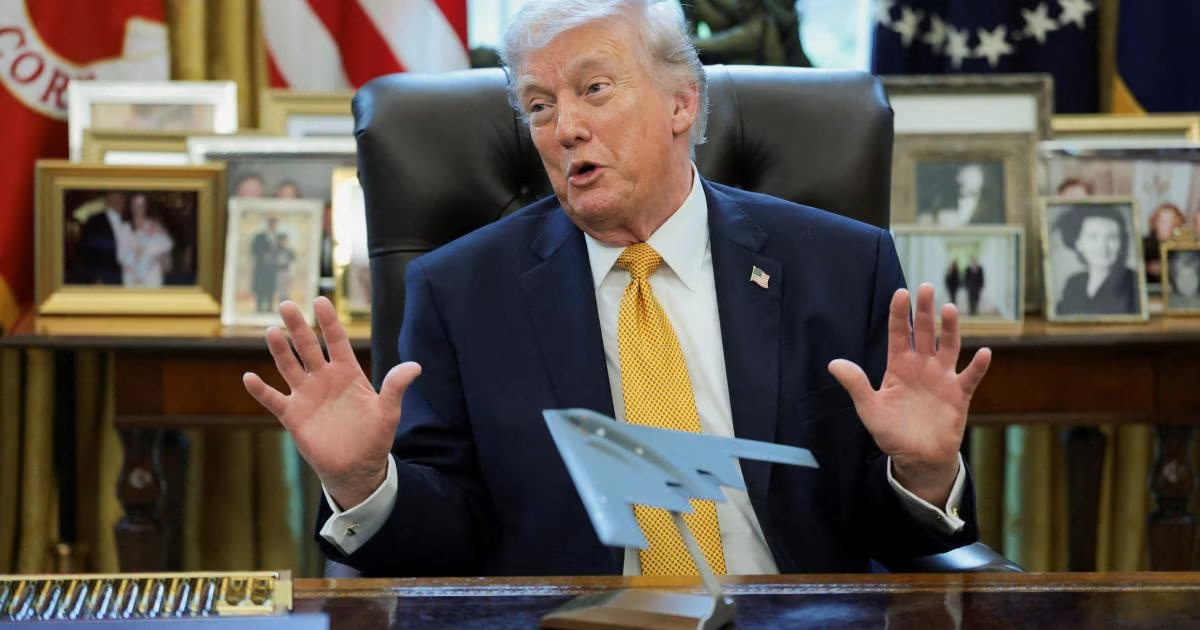
The publication by Israeli occupation Prime Minister Benjamin Netanyahu of an official photo of himself during the moment of approving assassination operations deep inside Iran has sparked a wide wave of political analyses. This controversy arose after a book titled 'Guests of the Ayatollah' was spotted in the background of the photo, which observers considered an indirect political message whose dimensions go beyond merely documenting a military field event.

This symbolic appearance coincided with the announcement by the Israeli occupation Minister of War, Yoav Gallant, of the killing of prominent Iranian official Ali Larijani in intense airstrikes targeting sites in the heart of the capital, Tehran. Reports confirmed that the attack also resulted in the elimination of high-ranking leaders, including Basij Forces Commander Gholamreza Soleimani and his deputy Qassem Qaisari, reflecting the magnitude of the intelligence and military strike.

The targeting was not limited to the Iranian side only but also included the prominent leader of the Islamic Jihad movement, Akram al-Ajouri, who was present in the Iranian capital. These synchronized operations solidify a new reality of direct and open confrontation between the occupation and Tehran, transcending the traditional rules of engagement that prevailed in recent years.

In an analytical reading of what lies behind the photo, media sources indicated that the choice to place the book 'Guests of the Ayatollah' was not accidental but a deliberate act carrying deep historical connotations. The book documents the incident of the storming of the American embassy in Tehran in 1979 and the detention of diplomats, a moment that constituted the major break between Iran and the West and established the legitimacy of the current regime.

Analysts believe that the message Netanyahu wanted to convey lies in linking the current military operations to the roots of the conflict that began with the Iranian Revolution. This اشاره suggests that the current targeting of first-tier leaders may pave the way for a path aimed at bringing about a radical change in the structure of the Iranian political system, by recalling the memory of its initial foundational crises.

It is worth noting that 'Guests of the Ayatollah' by journalist Mark Bowden provides a detailed narrative of the 444 days American hostages spent in captivity, highlighting the ideological shifts in the region. This documentary work has today become a tool in psychological and political warfare, used to indicate that the historical cycle that began in the seventies may be approaching its end.

The appearance of the book 'Guests of the Ayatollah' behind Netanyahu was not a coincidence, but carries deliberate political connotations that require scrutiny to be noticed.

PALESTINE

Wed 18 Mar 2026 12:09 am - Jerusalem Time

Occupation halts 'UNICEF' aid entry to Gaza on pretext of thwarting smuggling attempt

The Israeli occupation authorities announced on Tuesday a decision to suspend the entry of relief aid supervised by the United Nations Children's Fund (UNICEF) from Egyptian territories into the Gaza Strip. This decision came under the pretext of detecting what it described as an attempt to smuggle prohibited materials within humanitarian shipments. The occupation authorities stipulated that the international organization provide the results of an official and detailed investigation before resuming permission for its supplies to pass.

The Coordinator of Government Activities in the Palestinian Territories (COGAT) explained that the measure was taken following allegations of seizing quantities of tobacco and nicotine hidden inside aid shipments coordinated through UNICEF at the Kerem Shalom crossing. This development comes at a sensitive time when the Strip is suffering from a severe shortage of basic materials, exacerbating the humanitarian crisis faced by the besieged population.

For its part, the United Nations Office for the Coordination of Humanitarian Affairs reported that relief movements through the Kerem Shalom crossing face strict restrictions and continuous obstacles that prevent the arrival of essential supplies. UN sources indicated that relief teams have recently been able to bring in only limited quantities of fuel, while the rest of the vital needs remain stalled due to complex Israeli procedures at the only currently available crossing.

Amid the continued closure of the Rafah and 'Zikim' crossings, international pressure on the occupation authorities to open additional crossings and facilitate the flow of urgent humanitarian aid is increasing. International officials warned of the dangers facing civilians as a result of continued shelling and raids on residential areas, emphasizing the need to adhere to international humanitarian law, which mandates the protection of civilian infrastructure and ensuring unimpeded access to relief.

In a related context, UNRWA revealed the deteriorating living conditions of approximately 73,000 Palestinian refugees currently residing in overcrowded shelters belonging to it within the Strip. The agency explained that schools that were not completely destroyed have been converted into temporary shelters for displaced families, forcing educational staff to search for alternative and simple spaces to continue the educational process for children under these harsh conditions.

The ban will continue until the UN organization provides the findings of a comprehensive investigation and an official response regarding this matter.

PALESTINE

Wed 18 Mar 2026 12:09 am - Jerusalem Time

Thousands of Patients in Gaza Await Reopening of Rafah Crossing Amid Warnings of Comprehensive Health Collapse

Anticipation is growing in the Gaza Strip among thousands of injured and sick individuals awaiting the reopening of the Rafah land crossing, following a period of severe closure that has exacerbated the suffering of critical cases. Field estimates indicate that waiting lists include over 20,000 Palestinians in urgent need of travel for treatment abroad, especially with the continued deterioration of security and political conditions that have negatively impacted movement through border crossings.

Informed sources reported that Israeli occupation authorities have expressed their intention to partially reopen the crossing for individual movement starting next Wednesday. Those stranded in the Strip have high hopes that the new mechanism will allow hundreds of cases to exit daily, overcoming previous failures that permitted only a very limited number of passages, disproportionate to the scale of the health catastrophe experienced by the population.

In a related context, cancer and tumor patients in the remaining treatment centers in Gaza suffer from harsh conditions, lacking the most basic medical care, chemotherapy drugs, and supportive services. Field sources confirmed that the health system is in a state of near-total collapse due to continuous targeting and siege, turning medical beds into mere waiting areas without providing real treatment protocols to save the lives of those affected.

Sources quoted patient Manal Zagout, one of the cancer sufferers, as saying that the hope that emerged weeks ago with the opening of the crossing quickly dissipated after the recent military escalation, leading to a decline in chances of survival. Zagout explained that patients are currently forced to use alternative, non-specialized types of medication in a desperate attempt to cope with their pain amid the absence of available treatment options within the besieged Strip.

The continued closure of crossings and the deprivation of Gazans' right to treatment and medicine come as part of the occupation's policy of restriction, which disregards humanitarian obligations and truce requirements. Human rights activists and medical bodies appeal to the international community to pressure for the sustainable flow of medical aid and the exit of the injured, away from military complexities that put the lives of thousands at stake.

Our chances of exiting, whether for survival or treatment, have diminished, and we are classified as life-saving cases in the absence of health services.

ISRAELI AFFAIRS

Wed 18 Mar 2026 12:09 am - Jerusalem Time

Accusations of Misleading Netanyahu: Israel Faces a Gap Between 'Victory Narrative' and Hezbollah Missile Reality

The intensity of criticism directed at the Israeli government, led by Benjamin Netanyahu, has escalated, with observers and military analysts accusing it of launching a systematic misinformation campaign regarding the true military capabilities of Lebanese Hezbollah. These criticisms come at a time when the party continues to launch intensive missile barrages towards northern settlements, disproving the official narrative that promoted the end of the threat.

Security sources reported that the government, which is now run by one person and a group of loyalists, made a grave error in estimating the numbers related to the party's arsenal. The sources clarified that the political leadership chose to present 'half-truths' to the public, focusing on tactical achievements while deliberately concealing the failure to curb the party's rapid recovery capability.

Despite the strong blows Israel dealt to the party's infrastructure in southern Lebanon during 2024, and the assassination of prominent leaders, professional estimates indicate that the organization has not been eliminated. The party still retains thousands of long-range missiles and command and control capabilities that enable it to accurately target the Israeli interior.

Reports indicate that Iran and Hezbollah exploited periods of relative calm to reorganize their ranks and develop new tactics to conceal launch platforms north of the Litani River. This preparation enabled them to launch coordinated attacks, which is currently being translated on the ground through the daily fall of hundreds of missiles on the Galilee and surrounding areas.

Israeli media sources criticized the insistence of political figures on using resonant phrases such as 'absolute victory' and 'decisive blow'. They considered that these terms aim to create a false sense of deterrence capability, while the reality on the ground proves that the party still holds the initiative in the ongoing war of attrition.

It appears that Israeli public opinion has begun to lose confidence in these assessments, especially with Hezbollah's continued ability to launch a heavy barrage of missiles at any time it chooses. Analysts believe that Netanyahu's political interest requires promoting an image of 'the victor' to escape the repercussions of previous failures that occurred in confronting Hamas in the Gaza Strip.

Military sources confirmed that there is a stark contradiction between the government's narrative claiming 'deterring Hezbollah' and the reality that witnesses a gradual paralysis of life in the north. While the party was tactically weakened in border villages, it maintained its strategic capabilities, which pose an existential threat to settlements far from the border.

Professional reading of the scene indicates that the high command in Tel Aviv was aware of the size of the remaining arsenal with the party, but preferred to manage a misleading 'political narrative'. The aim was to show quick achievements to the public and postpone the inevitable confrontation with the bitter truth that the residents of the north live daily.

Observers described the mini-security cabinet as having turned into a mere 'tool' in the hands of the prime minister, where hardly any member dares to express an opinion contrary to the official narrative. This singularity in decision-making led to the creation of a 'virtual reality' that clashed with the rock of complex Lebanese reality and continuous field surprises.

Criticism also extended to the method of budget management, where billions of dollars were allocated for objectives described as 'illusory' and not serving the real war effort. Analysts considered that building strategies on 'self-deception' makes Israel vulnerable to repeated surprises from enemies who still possess the ability to attack.

Israel is currently suffering from the absence of a clear 'exit plan' on any of the ignited fronts, which plunges it into an endless cycle of fighting without specific political goals. This confusion reflects a deliberate detachment from reality by the political leadership that prioritizes its own interests over the security of the settlers.

Experts believe that Israel historically was not prepared to fight long wars of attrition, and always sought to resolve battles quickly and decisively. However, current policies are pushing the state towards long-term attrition that destabilizes internal stability and exhausts both the economy and the army.

External considerations and political pressures within the government coalition have become the primary driver of military decisions, far from accurate intelligence assessments. This approach has led to an erosion of trust between the public and the leadership, especially in light of the continued fall of missiles and the government's failure to return northern residents to their homes.

In conclusion, the question remains about how long this misleading narrative can continue before reality fully imposes itself. Field facts indicate that the confrontation with Hezbollah is far from decisive, and the prices Israel will pay in the future may be very high.

The Israeli government chose to inform the public of only part of the picture, showing achievements and hiding weaknesses in the face of Hezbollah's recovery rate.

PALESTINE

Wed 18 Mar 2026 12:09 am - Jerusalem Time

US proposal to Damascus for military intervention in Lebanon to disarm Hezbollah

International media sources have revealed American diplomatic moves aimed at involving the Syrian state in the process of disarming Hezbollah within Lebanese territory. Reports, citing five informed sources, stated that Washington presented a proposal to Damascus that includes sending Syrian military forces to the eastern Lebanon region to assist in stripping the party of its military arsenal.

Data indicates that the Syrian government is dealing with this American offer with extreme caution, showing clear hesitation to engage directly in this mission. The Syrian leadership fears that this step could draw the country into a broader regional confrontation, or cause an explosion of internal sectarian tensions that are difficult to control at present.

The proposal, conveyed through communication channels between officials from both countries, was first put forward last year before being reactivated with the escalation of military confrontations in the region. Syrian sources and informed officials confirmed that the discussions took place in complete secrecy due to the extreme political sensitivity of the issue and its repercussions on regional alliances.

In a related context, Western intelligence sources confirmed that Washington strongly re-tabled the idea concurrently with the outbreak of direct confrontation between the United States and Israel on one hand, and Iran on the other. This move aims to tighten the noose on Tehran's proxies in the region, foremost among them Hezbollah, which is facing unprecedented pressures at both local and international levels.

On the Lebanese side, the government, headed by Nawaf Salam, took decisive decisions that included an immediate ban on all security and military activities affiliated with Hezbollah. The government decision also obligated the party to hand over its weapons to the state, a step that reflects a radical shift in the official Lebanese stance towards the party's weapons, which has been a subject of controversy for decades.

These political developments came in the wake of a significant field escalation, where Hezbollah launched barrages of rockets and drones towards Israeli targets. This response came after the assassination of Iranian Supreme Leader Ali Khamenei, and the subsequent intensive Israeli raids that targeted various locations deep inside Lebanese territory.

On the ground, the Israeli occupation army continues to launch a series of violent raids that have affected wide areas in Lebanon, causing severe human and material losses. According to data from the Lebanese Ministry of Health, the death toll from the aggression since the beginning of March has risen to hundreds of martyrs and thousands of injured, amidst a severe deterioration in humanitarian conditions.

For its part, a leading source in Hezbollah stated that the party's fighters are engaged in fierce battles on the border using advanced combat methods aimed at depleting the occupation forces. The source explained that the party possesses changing tools in the field confrontation, stressing that any Israeli attempt to expand the military operation will be met with harsh and unexpected responses.

The leading source in the party criticized the recent Lebanese government's directives, considering that the demand for disarmament at this time represents an alignment with the objectives of the aggression. He affirmed that the party categorically rejects the principle of negotiation under military pressure, calling on the Lebanese authorities to uphold the country's rights and demand an immediate cessation of Israeli raids instead of making security concessions.

As part of the new administrative procedures, the Lebanese authorities issued an official decision prohibiting the use of the term 'resistance' to refer to Hezbollah in official correspondence and statements. This measure reinforces the new government approach aimed at ending the party's special military status and integrating all forces under the authority of the state and law.

Negotiating under fire is unacceptable for the party, and the Lebanese state must demand a halt to the aggression instead of making concessions.

ISRAELI AFFAIRS

Wed 18 Mar 2026 12:09 am - Jerusalem Time

Haaretz: Ground operation in Lebanon aims to remove Hezbollah, not stop rockets

Hebrew press reports indicated today, Tuesday, that the ground operation being carried out by the Israeli occupation army in southern Lebanon does not include, among its realistic objectives, completely preventing rocket fire. Sources clarified that the military leadership realizes that the ground maneuver, no matter how extensive, will not end the threat of rocket barrages targeting Israeli territory.

According to "Haaretz" newspaper, the fundamental goal of the ground movement is to remove Hezbollah elements from the border area and dismantle their close-range offensive capabilities. Through this step, the army seeks to thwart any potential plans by the party to carry out ground incursions into the occupied territories or launch anti-tank missiles directly.

These military assessments come at a time when political pressures are escalating within the Knesset and the Israeli government to expand the scope of fighting. Extremist ministers are demanding a comprehensive ground operation that guarantees a complete ceasefire, which the army views as a difficult goal to achieve through military means alone, given the region's geography.

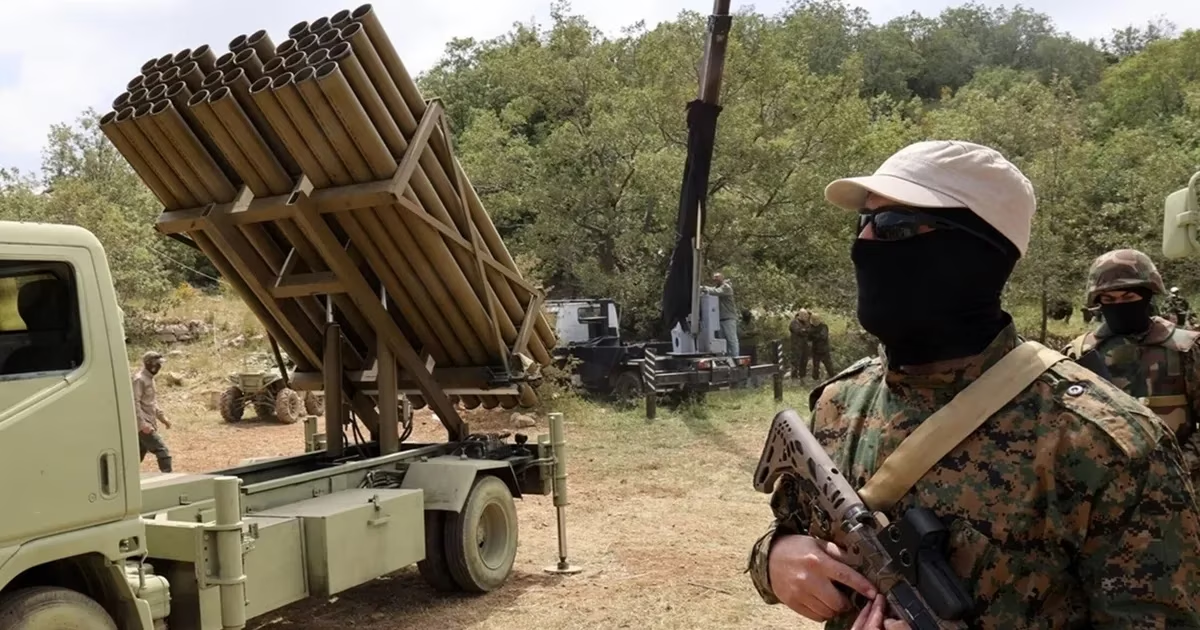
Sources indicated that Hezbollah still maintains a huge military arsenal estimated at about 15,000 rockets and drones, despite intensive strikes. The majority of this arsenal consists of medium-range rockets reaching up to 50 kilometers, in addition to hundreds of high-quality long-range rockets that can threaten all areas.

Regarding field positioning, occupation forces began to penetrate the second line of Lebanese villages located south of the border. This movement aims to destroy the military infrastructure and weapons depots that the party has established over the years in both open and built-up areas.

Estimates within the defense establishment suggest that permanent stability in the north will not be achieved through a long military presence inside Lebanese territory. These circles believe that the only solution lies in a political settlement that includes negotiations with the Lebanese government to strengthen the role of its army in the south.

Despite the occupation's focus on the Iranian front as a primary arena, the army is preparing for the possibility of Lebanon becoming the central arena for fighting. The Northern Command has begun to significantly reinforce its forces in anticipation of the confrontation developing into a long-term war of attrition or a further expansion of operations.

The occupation army is currently seeking to return to the pattern of operations that prevailed before November 2024, where forces operated more freely in areas south of the Litani. This tactic aims to inflict the maximum possible damage on Hezbollah's defense system before entering into any political negotiations.

Reports stressed that the military leadership does not intend, at the current stage, to re-establish a permanent security zone inside Lebanon, as was the case previously. Plans for troop deployment are designed to allow field units to withdraw quickly once a political decision is issued in this regard, to avoid getting bogged down in the Lebanese quagmire.

In a related context, military officials tried to downplay the severity of Army Minister Yisrael Katz's statements in which he spoke of a large-scale operation. Sources clarified that the currently adopted plans remain within the scope of a "limited entry" aimed at protecting border settlements and destroying nearby weapons depots.

The Israeli government faces increasing criticism about the feasibility of the ground operation if it does not lead to the safe return of northern residents to their homes. Observers believe that the continued fall of rockets weakens the official narrative about the success of the military operation in achieving its stated goals for the Israeli public.

Reports also noted that the biggest challenge lies in the anti-tank missiles targeting residential areas near the border fence. The current ground operation is an attempt to create a belt that prevents direct visibility and precise targeting of these communities by Hezbollah fighters.

Tension remains dominant amidst the continued Israeli military buildup on the northern front and ongoing intense air raids. Political circles are awaiting whether these military pressures will actually push the parties towards the negotiating table or lead to a wider regional explosion.

In conclusion, field data confirm that the occupation army balances its desire to deliver a decisive blow to Hezbollah with its fears of getting involved in a long-term occupation. The effectiveness of this strategy remains dependent on the party's ability to withstand and continue launching rocket barrages into the interior.

The army believes that the ground operation may reduce rocket fire, but it will not be able to prevent it completely.

ANALYSIS

Tue 17 Mar 2026 7:40 pm - Jerusalem Time

Director of National Counterterrorism Center Resigns in Protest of War in Iran

Said Erikat

Opinion Writer

Washington – Said Arikat – 3/17/2026

Joe Kent, the director of the National Counterterrorism Center in the United States, announced his immediate resignation from his position in a letter addressed to President Donald Trump, in which he expressed his categorical rejection of the continuation of the American war in Iran, considering it to lack direct security justification and to represent a deviation from the principles upon which the administration's foreign policy was founded.

In his letter, the resigning official stated that he could no longer "in good faith" support the ongoing war, asserting that Iran "did not pose an imminent threat" to the United States. He added that the decision to engage in the war was a result of Israeli pressure and the influence of pro-Israel lobbies within the United States, in an explicit accusation of external factors influencing American decision-making.

He pointed out that he had been a supporter of the policies adopted by Trump during his election campaigns and in his first term, which focused on the principle of "America First" and avoiding entanglement in long wars in the Middle East. He noted that the President, until mid-2025, understood that these wars drained American lives and resources without achieving tangible strategic gains.

The former official reviewed what he considered previous successes of the administration in using military force in a "decisive and limited" manner, citing the operation to kill Iranian Quds Force commander Qassem Soleimani, as well as the defeat of ISIS, as examples of avoiding being drawn into open conflicts.

In a scathing critique, he spoke of a "disinformation campaign" led by high-ranking Israeli officials alongside influential figures in the American media, which he said contributed to undermining the "America First" approach and pushing the administration towards war. He considered this campaign to have portrayed Iran as an imminent threat and promoted the idea of achieving a "quick victory," which he described as "deception" similar to what happened before the Iraq War.

The official affirmed that, as a military serviceman who served in 11 combat missions, and as a husband who lost his wife in a war he described as "fabricated," he cannot support sending a new generation of Americans to a war that does not serve the interests of the American people and does not justify its human cost.

He concluded his letter by calling on the President to reconsider the current course, warning that the continuation of the war could lead the United States towards "decline and chaos," and emphasizing that the decision to change direction still rests with the President.

This resignation reveals a crisis of confidence within American national security institutions regarding the definition of an "imminent threat." This concept has long been used to justify military interventions, but in this case, it is being challenged from within the system itself. This raises questions about the mechanisms of intelligence decision-making and the extent to which they are affected by political considerations or external pressures. It also reflects the division between professional assessment and political decision, a division that could erode the credibility of institutions in the eyes of the public and weaken the administration's ability to rally domestic and international support for any future military action.

The resigning official's reference to the role of Israel and its lobbies opens a sensitive door in the American debate about the influence of allies on sovereign policies. While the American-Israeli partnership is a strategic pillar, such accusations reflect growing concern that this influence is exceeding its natural limits. It also highlights the role of the media in shaping an environment supportive of war, raising questions about the independence of media discourse. This debate could deepen internal divisions and re-raise the question of who determines national security priorities: institutions, allies, or a complex mix of both.

The letter evokes the specter of the Iraq War as a cautionary example against repeating mistakes, a recall with deep political and moral implications. Long wars in the Middle East have had a profound impact on American society, in terms of human losses and economic costs. Re-engaging in a new conflict could reopen these wounds, especially in the absence of a clear national consensus. Furthermore, linking the current decision to past experiences reinforces the narrative of strategic failure and places the administration before a difficult test between continuation or retreat, with all the domestic and foreign consequences that both options entail.

ARAB AND WORLD

Tue 17 Mar 2026 7:39 pm - Jerusalem Time

Trump attacks allies over Strait of Hormuz, Macron affirms: We will not be a party to the conflict

US President Donald Trump expressed his strong displeasure with the stance of the United States' allies in NATO, indicating that Washington had received official notifications from most of them stating their unwillingness to engage in ongoing military operations against Iran. Trump affirmed that this stance extends to other allies outside the Atlantic Alliance, such as Japan, Australia, and South Korea, who in turn rejected American requests for assistance.

In a post on 'Truth Social', Trump downplayed the operational significance of this rejection, claiming that US forces had achieved significant military successes that made them independent of NATO countries' assistance. He clarified that he had not wanted that assistance in the first place, although he later described the allies' stance as unsupportive in subsequent statements from the White House.

The US President described the allies' refusal to secure the Strait of Hormuz, which is suffering from closure due to military tensions and reciprocal attacks, as a 'stupid mistake' that lacks fairness towards the American role. He indicated that he had expected European minesweepers to be sent to contribute to securing the vital waterway, but considered that their absence would not pose a significant obstacle to his plans.

Trump's criticisms were not limited to collective positions but also included a personal attack on British Prime Minister Keir Starmer, expressing his disappointment with London's current direction. Trump noted that bilateral relations between Washington and London were in a much better state before Starmer assumed the premiership of the British government, indicating a growing gap in coordination between the two traditional allies.

For his part, French President Emmanuel Macron quickly denied Trump's claims about Paris's readiness to participate in the military force, affirming that France would not be part of any operations aimed at opening the Strait of Hormuz by force. Macron stressed that his country is not a party to the ongoing armed conflict, and therefore its military involvement in this context is completely out of the question.

Macron's statements contradict what Trump had previously mentioned about French-American understandings, as the US President had given his French counterpart a high rating for his supportive stance. However, Macron clarified during a cabinet meeting that the French position is firm in maintaining neutrality from direct military escalation in the region.

In a related context, responsible sources in Paris revealed French efforts to form an alternative international coalition aimed at securing navigation in the Strait of Hormuz away from American leadership. This proposal aims to create an escort system for commercial vessels once security conditions stabilize and major combat operations cease, reflecting a European desire for independence from Washington's orientations.

The French President concluded his remarks by emphasizing that any future role for France in the region must pass through channels of dialogue and diplomacy, especially with the Iranian side. He considered that assuming responsibility for the international escort system necessarily presupposes calming the field situation first, and conducting comprehensive political discussions that ensure the sustainability of security in international waterways.

Many NATO countries' refusal to assist the United States in securing the Strait of Hormuz is a stupid and unfair mistake.

PALESTINE

Tue 17 Mar 2026 7:39 pm - Jerusalem Time

For the first time since 1967.. The occupation closes Al-Aqsa Mosque and prevents I'tikaf during Ramadan

Sadness cast a pall over the occupied city of Jerusalem during the holy month of Ramadan, after the Israeli occupation authorities completely closed the blessed Al-Aqsa Mosque since the outbreak of the recent military confrontations. The repressive measures allowed only five people to be present inside the mosque to perform prayers: the Imam, the Muezzin, the prayer leader, the pulpit guard, and the mosque director, a scene the holy city had never witnessed before.

The alleys of the Old City surrounding the Noble Sanctuary became like a military barracks, with hundreds of Israeli soldiers and police officers heavily deployed at all entrances and axes. This security mobilization aims to prevent Jerusalemite citizens from reaching Al-Aqsa Mosque, imposing a suffocating siege that isolates the first Qibla of Muslims from its popular and religious surroundings.

Despite these strict restrictions and direct threats from the occupation army, a number of worshipers insisted on reaching the closest possible point to the mosque. Hundreds gathered at the walls of the Old City, where they performed their prayers in the streets and public squares, affirming their adherence to their right to access their holy sites and their rejection of the policy of forced closure.

For its part, the Jerusalem Governorate issued a statement warning of the serious repercussions of this closure, describing it as having political and strategic dimensions aimed at changing the status quo. The Governorate indicated that the occupation authorities, through this step, seek to impose a new reality within the mosque and undermine the powers of the legitimate administration responsible for it.

The Governorate stressed that this is the first time Al-Aqsa Mosque has been closed and I'tikaf prevented during the month of Ramadan by an occupation decision since the occupation of the city in 1967. It considered this measure a blatant assault on freedom of worship and a transgression of all red lines and international conventions that guarantee the protection of holy sites.

In a related context, informed sources reported that the occupation authorities intend to keep the gates of Al-Aqsa Mosque closed even during the blessed Eid al-Fitr days. This decision would deprive tens of thousands of Palestinians from performing Eid prayers in the mosque's courtyards, increasing the state of tension and popular anger in the occupied territories.

On the social media front, digital platforms were abuzz with expressions of dissatisfaction and warnings against Israeli schemes targeting the identity of Al-Aqsa Mosque. Commentators considered that the international community's silence on these violations encourages the occupation to persist in its measures aimed at emptying the mosque of worshipers and facilitating subsequent incursions.

Activists pointed to the great paradox between the millions of people who used to flock to Al-Aqsa in previous years and the forced silence imposed by the occupation today. They affirmed that transforming the mosque from a place bustling with worshipers during the last ten days of Ramadan into deserted squares is a crime against faith and Palestinian history.

Observers warned that closing the mosque under the pretext of security conditions and a state of emergency could be a prelude to more dangerous steps aimed at the temporal and spatial division of the mosque. They called for urgent action at all official and popular levels to break this siege and protect the mosque from ongoing Judaization schemes.

For its part, the Arab League entered the crisis, affirming in an official statement that the occupation has no right to take any measures that prevent Muslims from practicing their religious rituals. The League called on the international community to take a firm and strict stance that obliges Israel to stop its continuous violations against Islamic and Christian holy sites in Jerusalem.

The occupation authorities began implementing this comprehensive closure on February 28, citing the declaration of a state of extreme emergency. This measure coincided with escalating regional tensions, making Al-Aqsa Mosque and the Old City completely isolated areas from the outside world by military decision.

The scene in Jerusalem remains open to all possibilities in light of the occupation's insistence on keeping worshipers away from their mosque, and the Jerusalemites' insistence on staying at the closest possible point. Palestinian calls continue for the necessity of traveling to Al-Aqsa and challenging the occupation's measures to ensure that the call to prayer and prayers remain present in its courtyards.

Closing Al-Aqsa Mosque carries serious political and strategic dimensions, and is an attempt to impose a new reality in the mosque and undermine the legitimate administration.

PALESTINE

Tue 17 Mar 2026 7:39 pm - Jerusalem Time

Ambiguity Surrounds Israeli Objectives as Ground Offensive Expands in Southern Lebanon

The Israeli occupation army continues to escalate its aggression on Lebanese territories, issuing open evacuation orders for residents of southern villages, while avoiding disclosure of a timeline or ultimate goals for the officially announced ground operation. These field movements raise international and local concerns about Israeli intentions to reoccupy parts of southern Lebanon, repeating previous scenarios that ended with withdrawal in 2000.

Israeli Defense Minister, Yoav Gallant, announced the launch of what he described as a new 'ground operation,' claiming it aims to remove threats and secure residents of settlements in the Galilee and the north. This announcement coincided with the deployment of massive military reinforcements, including infantry and armored brigades, towards the northern border, indicating the occupation's intention to expand the scope of confrontation.

In a significant field development, the occupation army confirmed the 36th Military Division's participation in combat operations, indicating the execution of a 'focused' ground activity targeting sites within Lebanese territory. Attacks are currently concentrated on strategic axes, as Israeli forces seek to establish a foothold in the rugged border areas.

Field sources reported that the town of Khiam was subjected to intense and concentrated Israeli artillery shelling, in an attempt to pave the way for advancing forces. The Khiam area is considered a vital stronghold in Lebanese defenses, making the conflict over it extremely fierce from both sides.

For its part, a leading source in Hezbollah stated that fighters are engaged in difficult battles in the Khiam axis, confirming that field movements are subject to assessments of changing combat conditions. The source warned that the occupation's insistence on carrying out a wide-ranging ground operation would open the door to a long-term attrition of its forces, which are now within range of the resistance's fire.

Military analysts in the Hebrew press believe that the immediate goal of the operations is to push Hezbollah forces beyond the Litani River to prevent targeting the Galilee. Analyst Avi Ashkenazi explained that forces have already entered areas such as the Ramim heights, but he noted that there is a state of ambiguity about whether Israel seeks to impose a permanent 'security zone.'

Media reports quoted official sources in Tel Aviv as saying that the battle in Lebanon is not time-limited, neither in its aerial component nor the ongoing ground maneuver. The sources indicated that the political level has given the green light to destroy the first line of homes in border villages, as a tool to pressure the Lebanese government.

In a related context, military analyst Amos Harel doubted the ground attack's ability to achieve the goal of completely eliminating Hezbollah's military capabilities. Harel pointed out that widespread deployment could lead to continuous and ineffective friction, especially since a large part of the missile attacks originate from areas north of the Litani River.

On the diplomatic front, France is leading intensive efforts to reach a settlement that ends the military escalation, amid leaks about proposals that include controversial political clauses. Hebrew media reported that the French proposal might include Lebanese recognition of Israel, which was met with a categorical denial from official circles in Beirut.

A high-ranking Lebanese source affirmed that talk of normalizing relations or recognizing the occupation is premature and not currently on the table. The source stressed that the Lebanese priority is focused exclusively on an immediate ceasefire and the initiation of field steps that guarantee the security of Lebanese sovereignty.

The Lebanese initiative proposed by President Joseph Aoun includes four main points, starting with the declaration of a humanitarian and military truce to pave the way for negotiations. This initiative aims to address outstanding security issues and ensure the implementation of relevant international resolutions, foremost among them Resolution 1701.

On the ground, the occupation continues its scorched-earth policy, with air raids and artillery shelling targeting wide residential areas in the Nabatieh and Sidon districts. These attacks have caused large waves of displacement of residents towards safer areas deep within Lebanese territory.

Statistics issued by the Lebanese Ministry of Health indicate that 912 martyrs have fallen since the start of the widespread aggression on March 2nd. Among the victims are a large number of children and women, reflecting the extent of the systematic targeting of civilians and Lebanese infrastructure.

The scene in southern Lebanon remains open to all possibilities, given the occupation's insistence on continuing its military operations and the resistance's affirmation of its steadfastness. With the continued military buildup on both sides of the border, international circles are awaiting the outcome of diplomatic moves in the coming days.

The battle in Khiam is difficult, and movement is carried out according to field conditions, and the occupation's readiness for a wide operation will open the door to its attrition.

ISRAELI AFFAIRS

Tue 17 Mar 2026 7:39 pm - Jerusalem Time

A Reading on the Repercussions of Larijani's Assassination: Will Israel Succeed in Undermining the Stability of the Iranian Regime?

Israeli circles believe that the assassinations of political and security elites in Tehran aim to deepen divisions within the supreme leadership. However, there is concern that these strikes could backfire by strengthening the grip of the Iranian Revolutionary Guard Corps (IRGC) on state institutions, especially with its consolidating ties with the new Supreme Leader, Mojtaba Khamenei.

Raz Zimmt, director of the Iran program at the Institute for National Security Studies at Tel Aviv University, considered the assassination of Ali Larijani, Secretary of the Supreme National Security Council, and Basij commander Gholamreza Soleimani, as an escalation in the strategy aimed at destabilizing the regime. He pointed out that Larijani was not just an ordinary official, but a fundamental pillar in the governing structure for many years.

Larijani has a rich political history, having headed the Shura Council for eight years, handled the sensitive nuclear negotiations file, and led the Islamic Republic of Iran Broadcasting (IRIB). He is classified within the conservative current that recognized the necessity of adapting revolutionary thought to international changes and contemporary reality, making him a pivotal figure in internal balances.

During his presidency of parliament, Larijani supported the policies of former President Hassan Rouhani, which brought him widespread criticism from radical currents. Despite being excluded from running for presidential elections in two consecutive terms, his political role did not diminish; rather, he continued as one of the close associates of the high decision-making circles.

In late 2024, Larijani's role emerged as a high-level diplomat and special envoy for Supreme Leader Ali Khamenei to Syria and Lebanon before the fall of the Assad regime. He also led an official delegation to Moscow for talks with Russian President Vladimir Putin, reflecting the great trust he enjoyed in managing complex foreign affairs.

Following the June 2025 confrontations, known as the 12-day war, the Supreme Leader reappointed Larijani to the top of the government hierarchy to benefit from his long experience. This step came within the framework of the Iranian leadership's desire to involve seasoned politicians to confront the increasing security challenges and successive Israeli strikes that targeted the first line of leadership.

Sources reported that Larijani was one of the most prominent planners of the Iranian responses during the recent confrontations with Israel. He had expressed in previous statements his commitment to the strategic concepts that Tehran had drawn from that war, emphasizing the need to develop defensive capabilities to confront any future rounds of conflict.

Larijani focused his military vision on addressing the gaps that appeared in Iran's air defense systems during previous attacks. He believed that Iran's possession of strong missile capabilities forced adversaries to accept a ceasefire, calling for strengthening strong points and objectively correcting technical and field failures.

Analysts indicate that Larijani's departure will leave a significant void in the regime's ability to maintain administrative continuity and effective control. The danger of this absence is compounded by its timing, coming after the transfer of power to Mojtaba Khamenei, which could disrupt the command and control system at a critical moment in the Republic's history.

Larijani represented a realistic voice within the Iranian leadership despite his commitment to the principles of the Islamic Revolution. With his absence, observers fear the control of more extremist elements over the decision-making process, which could push Tehran towards adopting more radical policies regarding the nuclear program and regional ambitions.

Security assessments predict that the assassination of the most important political official in Tehran will strengthen the IRGC's influence unprecedentedly. The IRGC, which has close ties with the new Supreme Leader, may find the way paved to impose its hardline vision on the state's military and political doctrine in the coming phase.

The Israeli army described Larijani as the 'de facto guide of the terror regime,' referring to his weight in managing strategic operations. This operation is part of the 'decapitation' strategy adopted by Tel Aviv to disrupt the Iranian system and weaken its ability to coordinate with its allies in the region.

Reports confirm that the strike that targeted Larijani and Soleimani in the heart of Tehran was extremely precise and coincided with heavy shelling. These operations aim to send a clear message that the depth of the Iranian regime is no longer immune, and that the command and control structure is under continuous Israeli intelligence scrutiny.

In light of these developments, the question remains about Iran's ability to replace these leading cadres in a short time. While Tehran possesses pressure tools such as ballistic missiles and control over waterways, the loss of 'masterminds' like Larijani could change the course of the entire regional confrontation.

Larijani's assassination represents another stage in the ongoing efforts to undermine the regime's stability, but it may strengthen the IRGC's position in the absence of realistic figures.

PALESTINE

Tue 17 Mar 2026 7:39 pm - Jerusalem Time

Specter of Famine Threatens Gaza Before Eid: Empty Markets and Astronomical Prices Exhaust Residents

Fears are escalating in the Gaza Strip of the return of the specter of famine to cast a shadow over the lives of citizens as Eid al-Fitr approaches, with supermarket shelves completely empty of basic goods. Residents are helpless in the face of the insane rise in prices, which has deepened the fragility of their living conditions amid continued strict Israeli restrictions on the entry of aid.

Field sources reported that the occupation authorities, since the outbreak of the recent military confrontations, have closed most vital crossings, limiting the movement of goods to only one crossing and in very scarce quantities. This measure has prompted international organizations to warn that the policy of 'trickling' supplies directly aims to reproduce the crisis of acute hunger in all areas of the Strip.

For its part, the Euro-Med Human Rights Monitor warned against Israel's continued use of starvation policies as a weapon within the crime of genocide it is committing against Palestinian civilians. The Monitor explained that the occupation completely controls the quantity and quality of foodstuffs allowed to enter, which reduces the flow of humanitarian and commercial aid to unprecedented levels.

In a recent statement, the Monitor indicated that Israel is exploiting international preoccupation with regional tensions to tighten its siege on Gaza, having completely closed crossings during critical periods before partially reopening them. The statement affirmed that reducing the number of trucks allowed to pass exacerbates the humanitarian catastrophe and entrenches the effects of the widespread destruction witnessed in the Strip for months.

On the ground, social media platforms were flooded with complaints from citizens who confirmed that food prices have soared to levels beyond the purchasing power of any family. Local residents stated that the price of some basic vegetables reached $10, while meat, poultry, and eggs completely disappeared from local markets.

Activists reported painful testimonies of children sleeping on empty stomachs due to the lack of food options, amid a state of complete international silence regarding their suffering. Activists stressed that what is happening is not just a temporary price hike, but a systematic push of an entire city towards the brink of starvation, calling on the world to break the barrier of silence regarding this crime.

Citizens in Gaza described the current situation as 'heart-wrenching oppression,' where fathers find themselves unable to provide even one meal for their hungry children. Testimonies confirmed that goods evaporate from markets as soon as they arrive, and prices have jumped unprecedentedly, making it almost impossible to secure daily sustenance under the current circumstances.

In a related context, economic reports explained that the price explosion is due to a severe shortage of supply against increasing demand as the Eid season approaches, which is imposed by the repeated closure of crossings. Observers agreed that these indicators point to an imminent food catastrophe that could get out of control if the crossings are not opened fully and immediately.

Israeli authorities had reopened the Kerem Shalom crossing on March 3rd, but limited shipments to restricted quantities of fuel and some aid coming through Egypt. In contrast, the transfer of vital aid coming from the West Bank and Jordan remained suspended for long periods, depriving residents of essential resources.

Despite the resumption of some commercial imports through the same crossing, the quantities entered represent only 40% of the share previously agreed upon under ceasefire understandings. This severe shortage keeps markets in a state of permanent paralysis and makes it difficult for traders and citizens to secure the minimum necessities of life.

The residents of the Gaza Strip remain in a daily confrontation with uncertainty and the specter of hunger that harshly knocks on their doors, amid the continued Israeli siege and restrictions. Eyes are turned towards the international community to pressure for the unrestricted entry of humanitarian and commercial aid, to save what can be saved before it is too late and a major humanitarian catastrophe occurs.

The specter of black famine has returned to knock harshly on Gaza's doors, and prices have turned into a monster devouring helpless families.

PALESTINE

Tue 17 Mar 2026 7:39 pm - Jerusalem Time

Hezbollah leader rejects 'negotiating under fire' as occupation escalates raids on Beirut and the South

A leading source in Hezbollah emphasized that the party adopts a military strategy based on evolving tools and methods in border confrontations with the Israeli occupation army. The source clarified that the primary goal of these tactics is to inflict the greatest possible human and material losses on the aggressor forces, asserting that any attempt to expand the military operation will lead to widespread field attrition for the occupation.

Regarding the political track, the leader affirmed that the principle of 'negotiating under fire' is completely unacceptable in the party's calculations. He called on Lebanese state institutions to take a firm stance demanding an immediate cessation of aggression, warning against aligning with Israeli pressures or making political concessions under the weight of the ongoing military escalation on various fronts.

On the ground, the source described the ongoing battles in the town of Khiam as 'difficult' and violent, indicating that the field command manages movements according to the evolving developments and conditions of the battle. These statements come at a time when the southern front is witnessing an unprecedented escalation in the pace of clashes and mutual shelling between the two sides along the Blue Line.

Officially, the Lebanese Army Command announced the martyrdom of three of its personnel due to two airstrikes carried out by the Israeli occupation in two separate areas in the south of the country. Despite targeting army centers, the Israeli army spokesperson claimed that military operations do not directly target the Lebanese armed forces but rather focus on Hezbollah's infrastructure.

Beirut, the capital, witnessed a renewal of violent raids at dawn on Tuesday, targeting the southern suburb, where missiles struck residential buildings and civilian facilities. Local sources also reported that occupation aircraft carried out a raid targeting a town in the Sidon district after issuing evacuation orders for residents, causing panic and forced displacement of the population.

In a significant development, an Israeli raid targeted an area very close to Rafic Hariri International Airport on the airport road, resulting in the martyrdom of one citizen and the injury of nine others with varying degrees of severity. Despite the nearby shelling, the head of the Civil Aviation Regulatory Authority confirmed that the airport is still operating normally and that air navigation and the roads leading to it have not been affected.

The occupation army continued its policy of forced displacement by issuing warnings to residents of large areas south of the Zahrani River to evacuate immediately. According to reports issued by the Norwegian Refugee Council, these orders now cover approximately 14% of the total area of Lebanese territory, exacerbating the humanitarian crisis in the country.

In the town of Aaramoun, airstrikes resulted in the injury of an Ethiopian woman, while the National News Agency continued to monitor the targeting of residential buildings in the town of Arab al-Jall. These attacks are part of a series of continuous day and night raids, which included towns and villages deep in southern Lebanon and the Beqaa.

Politically, there are differences in Lebanese positions, as President Joseph Aoun had proposed an initiative last week calling for direct negotiations with Israel under international auspices. The proposed initiative aims to achieve a comprehensive truce that guarantees a cessation of all Israeli aggressions, which intersects with the complexities on the ground and Hezbollah's rejection of negotiations amidst ongoing shelling.

Finally, the Lebanese Ministry of Public Health revealed tragic statistics for the victims of the ongoing aggression since the beginning of March, with the number of martyrs rising to 912 people. The ministry added in its statement that the number of wounded and injured reached 2221, amidst warnings of a collapse of the health sector if the current pace of escalation continues.

Negotiating under fire is unacceptable to us, and the Lebanese state must demand a cessation of aggression instead of making concessions.

ARAB AND WORLD

Tue 17 Mar 2026 7:38 pm - Jerusalem Time

Dead and wounded in intense Israeli raids targeting the Lebanese army and various areas

The intensity of the Israeli aggression on Lebanese territories escalated on Tuesday, as intense airstrikes resulted in the martyrdom of six people, including a member of the Lebanese army. The attacks focused violently on the Nabatieh Governorate and areas in the South and the capital Beirut. Field sources confirmed that the town of Jmaijmeh witnessed the fall of two martyrs due to a direct targeting, while warplanes continued to bomb civilian homes and infrastructure.

The Lebanese army mourned one of its soldiers who succumbed to severe injuries sustained earlier, following a raid that targeted a vehicle and a motorcycle he was riding with four of his colleagues in the Qaaqaiyet al-Jisr area in the Nabatieh Governorate. This incident joins a series of targetings that have affected the Lebanese military establishment in recent days, leading to human losses among soldiers while performing their duties.

In the city of Bint Jbeil, an airstrike targeting a populated house led to the martyrdom of three citizens and the injury of others with varying degrees of wounds. The bombing also hit a commercial cooperative on the road between Burj Qalaouiyeh and Ghandoorieh. These attacks left widespread destruction of property and residential buildings, amid the continued low-altitude flight of reconnaissance and drone aircraft in the region's skies.

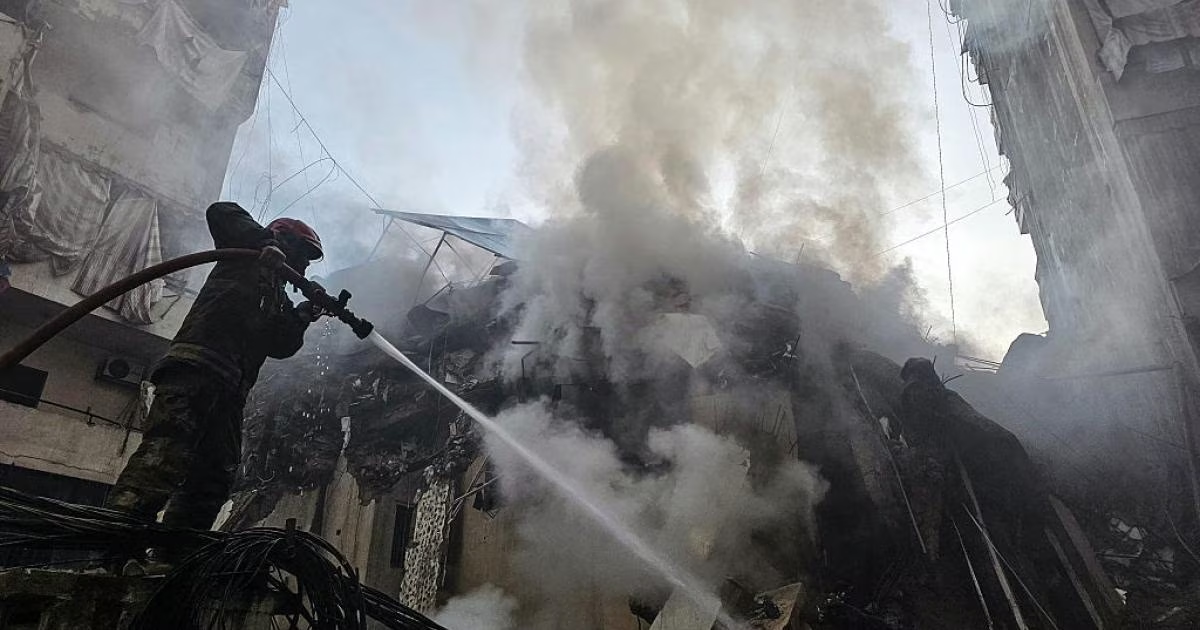
The capital Beirut was not spared from the escalation, as warplanes launched a series of raids on the Southern Suburb, specifically targeting the Jammous and Laylaki areas. The old airport road in the Burj al-Barajneh area also came under a third raid, causing panic among residents and the rise of smoke plumes that covered the sky of the area due to violent explosions.

Local sources reported that Israeli artillery shelling did not stop on the towns of Zibqin, Jabal al-Butm, Arayd, and Marjayoun, in addition to the outskirts of the border town of Ayta al-Shaab. This shelling coincided with airstrikes targeting the towns of Kharayeb, Taybeh, Kafr Tibnit, Ayteet, and Jibshit, which led to the severing of roads between southern villages and isolating some areas from their surroundings.

In another field development, drones carried out precise attacks using guided missiles, targeting a motorcycle at the eastern entrance of the town of Doueir, resulting in the injury of its driver. A similar attack occurred at the Wadi intersection in the town of Deir al-Zahrani, targeting another motorcycle, and ambulance teams transported the injured from the scene to nearby hospitals for treatment.

The areas of Qusaybeh, Abba, and towns surrounding the districts of Tyre and Bint Jbeil witnessed a series of successive raids that led to the complete destruction of buildings and severe material damage to public facilities. Clashes and intermittent shelling continue on the southern and central axes, amid occupation attempts to establish new advanced points within Lebanese territories.

On the military front, the Israeli occupation army announced the deployment of new reinforcements to the northern front, with the 36th military division joining the ongoing ground operations. This move aims to expand the scope of the incursion into southern Lebanon, amid reports indicating that Israeli forces have reached a depth of between 7 and 9 kilometers in some border axes.

This field escalation comes the day after Israel officially announced the start of a new phase of ground operations, which was met with fierce resistance on the ground. These movements coincide with intensified airstrikes that have not spared any area in the South, reaching the Beqaa and the Southern Suburb, in an attempt to exert direct military pressure.

Official statistics issued by the Lebanese authorities indicate that the total toll of the aggression has exceeded 880 martyrs, with thousands of civilians injured since the start of the latest escalation. Military operations have also caused an unprecedented wave of displacement, with more than one million Lebanese forced to leave their homes and seek refuge in safer areas or overcrowded shelters.

Relief and medical teams face extreme difficulties in reaching targeted areas due to continued shelling and targeting of main roads. Humanitarian organizations warned of the worsening living and health crisis amid a severe shortage of basic resources, as Israel continues to target vital and civilian facilities in various Lebanese governorates.

The Lebanese army announced the martyrdom of one of the injured soldiers who succumbed to wounds he sustained with 4 of his colleagues in an Israeli raid in the Qaaqaiyet al-Jisr area.

LATEST NEWS

Tue 17 Mar 2026 7:38 pm - Jerusalem Time

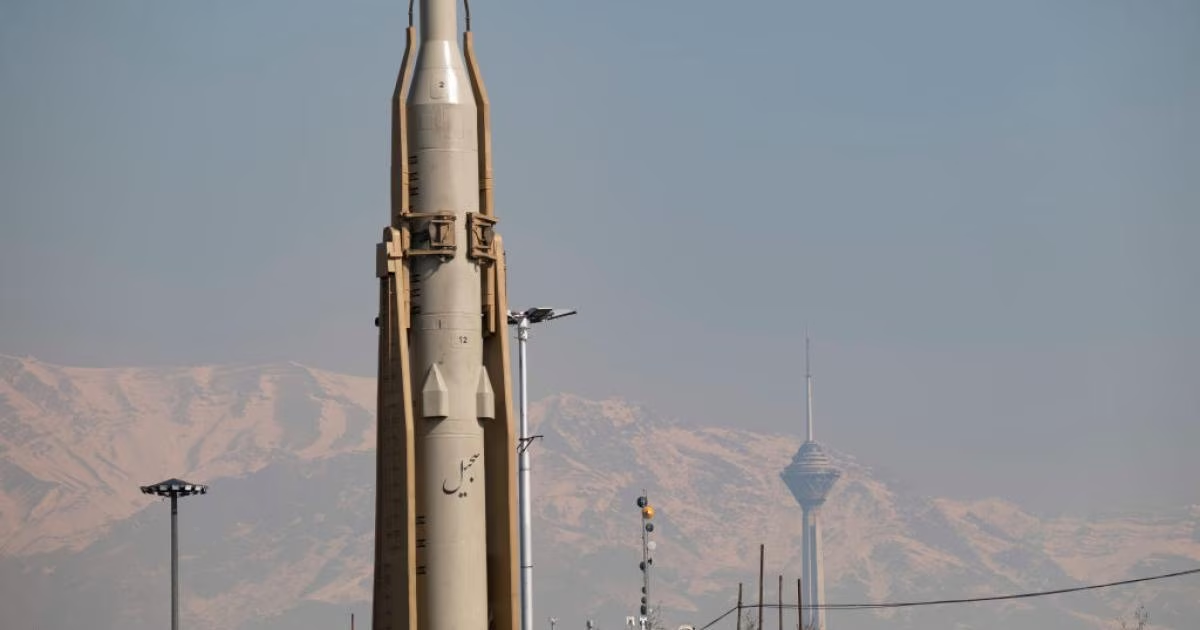
For the first time in the confrontation.. Tehran bombs Israeli targets with "Sejil" ballistic missiles

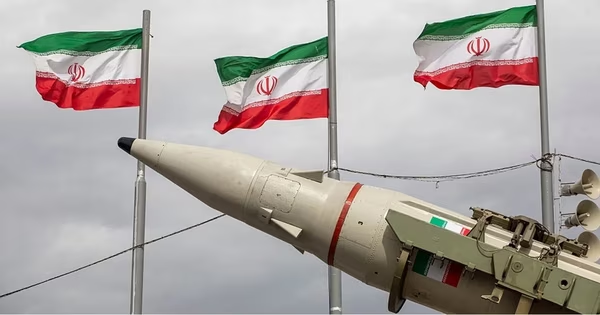
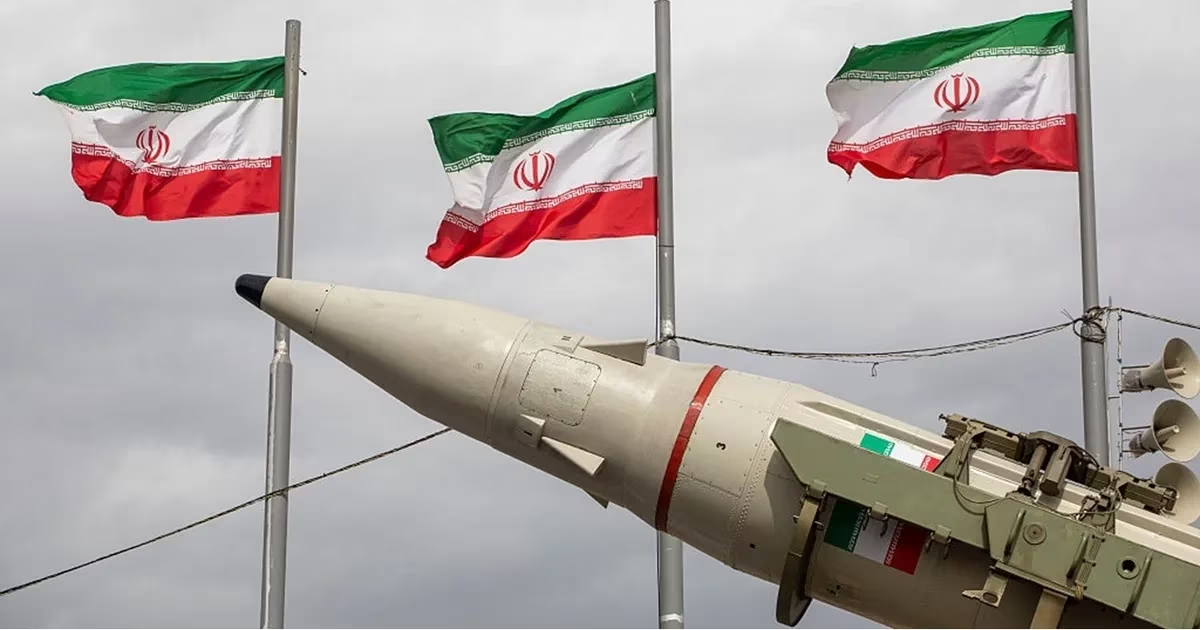
Official sources revealed a prominent field development in the course of ongoing military operations, as the launch of the fifty-fourth wave of "True Promise 4" operation was announced. This phase witnessed the use of the long-range "Sejil" ballistic missile for the first time since the beginning of the confrontation, which represents a shift in the type of weapons used in attacks directed deep into enemy territory.

Military data confirmed that the strikes accurately targeted air operations command centers and decision-making centers of the occupation, in addition to vital facilities in the defense industries sector. The sources explained that the attack also targeted military troop gathering points, indicating that the use of this missile system comes within the strategy of deterrence and expanding the scope of offensive operations.

The "Sejil" missile is classified as one of the most prominent weapons in the Iranian missile arsenal, which is the largest of its kind in the Middle East region. The missile's length reaches about 17.57 meters, while its total weight is 23,000 kilograms, and it is designed to carry heavy warheads weighing about 500 kilograms of highly destructive conventional explosives.

The propulsion technology for this missile relies on a dual propulsion system, where the first stage engine operates on solid fuel, giving it rapid launch speed, while the second stage operates on liquid fuel to ensure accuracy. Technical reports confirm that the missile is capable of flying at an enormous speed exceeding 17,000 kilometers per hour, which makes the task of intercepting it by air defenses extremely complex.

The operational capability of the "Sejil" missile extends to cover distances ranging between 2000 and 2500 kilometers, placing it in the category of cross-border missiles capable of reaching any point in the region. These capabilities raise widespread concern among Western powers, who see the development of these systems as a direct threat to regional stability and military power balances.

It is worth noting that ballistic missiles rely on initial rocket propulsion in their trajectory before following a free-fall path towards their designated targets. Tehran continues to enhance its missile capabilities as part of its defensive doctrine, while international warnings are increasing about the possibility of developing these missiles to become capable of carrying unconventional warheads in the future.

We successfully used strategic Sejil missiles to strike Israeli air operations command centers and troop gathering points.

PALESTINE

Tue 17 Mar 2026 7:38 pm - Jerusalem Time

Under the Cover of Regional Escalation... Settlers Commit Atrocities Against Palestinian Families in the Jordan Valley

Amidst the international community's preoccupation with regional military escalation, Israeli settlers have intensified their systematic attacks against Palestinian communities in the West Bank. Khirbet Humsa, located in the northern Jordan Valley, witnessed a brutal assault by dozens of masked settlers, targeting the Abu al-Kibash family's residential compound in the late hours of the night.

Field sources reported that the attackers deliberately abused family members and foreign volunteers who were present in the area to provide civil protection. Approximately seventeen people, including seven children, were rounded up inside a single tent under threat of weapons and severe beating, in an attempt to terrorize them and force them to leave.

Testimonies documented the settlers' use of plastic handcuffs to restrain both men and women, before proceeding to beat them with batons and knives. The attackers also poured cold water on the restrained victims, a method aimed at physical and psychological humiliation in front of their children, who were forced to watch their relatives being abused.

One of the victims, a 40-year-old citizen, confirmed that settlers surrounded his home at 1 AM and attacked him with sharp objects, causing him cutting injuries. He indicated that the attackers opened the sheep pens and scattered the sheep in the open, which is the family's sole source of livelihood in that arid region.

Crimes were not limited to physical assault but also included explicit threats of killing, burning, and rape if residents continued to remain on their lands. Eyewitnesses stated that some settlers spoke in Arabic to deliver direct threats of burning homes and killing children in future attacks.

For her part, an international activist who was attacked revealed horrific details, including sexual assaults and verbal and physical harassment against those present in the tent. She said that settlers pulled female activists by their hair and shouted vengeful phrases in English, while the Palestinian father was severely beaten, resulting in a serious eye injury.

The activist explained that a state of terror prevailed when settlers began pouring liquids that the victims thought were incendiary materials, before it turned out to be cold water used for torture. This process lasted for more than an hour, during which mobile phones, passports, and sums of money were stolen from the victims and activists.

Four Palestinians and two international volunteers were transferred to the Turkish Governmental Hospital in Tubas for treatment, where their injuries were described as moderate to minor due to direct beating. This incident comes in the context of continuous pressure exerted by settlers with implicit support from the occupation forces to empty the Jordan Valley of its indigenous inhabitants.

Khirbet Humsa is one of the resilient communities that has been subjected to repeated demolition operations since 2021, yet residents insist on staying despite the shrinking grazing areas. Herders in these areas suffer from daily harassment that prevents them from accessing pastures, completely threatening their livelihood.

Reports indicate that these attacks increased after the integration of extremist elements from 'Hilltop Youth' groups into military units that were operating in the West Bank. Despite the official closure of some of these units, the practices of their members shifted to organized militia work under the guise of pastoral settlements.

In recent weeks, this aggressive policy has led to the forced displacement of at least four Palestinian villages, after it became impossible for their residents to secure their lives and the lives of their children. Settlers exploit the absence of international oversight and media preoccupation with other issues to implement plans for the de facto annexation of 'Area C' lands.

The attacks were not limited to physical abuse but also targeted the simple infrastructure of the khirbet, where surveillance cameras and communication devices were destroyed to isolate residents from the world. This systematic sabotage aims to prevent the documentation of crimes committed in the dead of night away from the eyes of human rights organizations.

Observers believe that the international community's silence on these violations gives a green light to settlers to continue the policy of silent 'ethnic cleansing' in the Jordan Valley. The testimonies of children who were heard whispering prayers during the attack remain a stain on the international legal system, which is unable to protect them.

In conclusion, the case of Khirbet Humsa stands out as an example of what dozens of Palestinian communities face as they resist displacement under harsh conditions and incessant attacks. The steadfastness of these families remains the only obstacle to settlement expansion aimed at complete control over Palestine's food basket in the Jordan Valley.

Today we will take your sheep, but next time we will burn homes, kill children, and rape women.

PALESTINE

Tue 17 Mar 2026 7:38 pm - Jerusalem Time

Occupation announces assassination of Ali Larijani and Basij commander in raid on Tehran

The Israeli occupation army announced on Tuesday morning the assassination of Ali Larijani, head of Iran's Supreme National Security Council, and Gholamreza Soleimani, commander of the Basij forces affiliated with the Revolutionary Guard. The military statement clarified that the operation was carried out through a precise aerial raid targeting sites in the capital Tehran yesterday, Monday, describing Larijani as one of the oldest and most prominent leading figures in the Iranian regime and from the close inner circle of the Supreme Leader.

These developments come amidst international press reports indicating that Larijani was playing the role of the de facto leader of the country at the current stage, especially after the assassination of Supreme Leader Ali Khamenei and his son Mojtaba taking the reins. According to military sources, the attack was not limited to Larijani but also included the commander-in-chief of the Basij forces, Gholamreza Soleimani, as part of a broad aerial campaign aimed at undermining the leadership structure of the Revolutionary Guard.

In a related context, informed sources confirmed that the Israeli raids did not stop at the capital Tehran, but extended to include other major cities such as Shiraz and Tabriz, with the participation of dozens of warplanes. These attacks targeted vital military infrastructure, facilities dedicated to developing missiles and drones, as well as headquarters belonging to the Iranian Ministry of Intelligence, amidst the sound of violent explosions shaking parts of the capital.

Before his assassination was announced, Ali Larijani had sent a harsh message to the Islamic world, accusing the United States and the Israeli occupation of launching a deceptive aggression aimed at dismantling the Iranian state. In his message, Larijani criticized the silence of many Islamic countries, considering their stance to be contrary to the prophetic principles calling for supporting Muslims, and indignantly questioned the nature of Islam followed by those countries while Tehran was subjected to aggression.

Larijani also touched in his recent statements on the issue of using American bases in neighboring countries to attack Iranian territory, questioning which side those countries stood on. He affirmed that Iran does not seek to dominate its neighbors, but rather defends its sovereignty against a coalition led by Washington and Tel Aviv, calling on the peoples of the region to reflect on their future in light of the common threats posed by the occupation.

For his part, the Chief of Staff of the occupation army, Eyal Zamir, affirmed that Israeli forces continue to carry out assassinations described as important and sensitive deep inside Iran. Hebrew media reports circulated claims about attempts to target prominent Palestinian leaders in the city of Qom, including Akram al-Ajouri and Mohammed al-Hindi from the Islamic Jihad movement, as part of expanding the circle of confrontation that began in late February.

As of this moment, no official comment has been issued by the authorities in Tehran to confirm or deny the occupation's claims regarding the fate of Larijani and Soleimani, despite Larijani's office previously announcing an anticipated message. The comprehensive military confrontation between the two sides continues, with Iran continuing its daily missile responses targeting strategic interests, while the field is witnessing an unprecedented escalation that threatens to drag the region into a comprehensive regional war.

Is Iran expected to stand idly by while American bases in your countries are used to attack it?

PALESTINE

Tue 17 Mar 2026 7:38 pm - Jerusalem Time

UN warnings of 'unprecedented' forced displacement of Palestinians in the West Bank

The United Nations has issued strong warnings regarding the deteriorating humanitarian and human rights situation in the occupied West Bank, demanding that Israeli occupation authorities immediately cease all settlement activities. The international organization affirmed that the accelerating pace of settlement construction fuels fears of widespread forced displacement operations against the Palestinian population, threatening the fragile stability in the region.

A report issued by the UN High Commissioner for Human Rights, covering the period up to the end of October 2025, revealed the displacement of more than 36,000 Palestinians in just one year. The report described this wave of displacement as representing forced displacement on an unprecedented scale, indicating the possibility of a systematic Israeli policy aimed at the mass forced transfer of indigenous populations.

The UN Commission expressed its grave concern that these practices may amount to 'ethnic cleansing,' in light of the frantic settlement expansion witnessed in the occupied territories. The report clarified that Israeli authorities approved the construction of approximately 37,000 housing units in East Jerusalem, in addition to more than 27,000 other units distributed across various areas of the West Bank.

In a related context, international sources monitored the establishment of 84 new settlement outposts during the reporting period, a record number not previously recorded in similar timeframes. This increased the total number of settlement outposts in the West Bank to more than 300, tightening the noose on Palestinian communities and increasing the frequency of daily friction and attacks.

Statistics indicate that the West Bank is home to about three million Palestinians living in the face of continuous expansion by more than half a million settlers residing in facilities considered illegal internationally. These areas have witnessed a sharp escalation in violence since the start of the aggression on the Gaza Strip in October 2023, with an increase in organized attacks carried out by settlers under military protection.

Medical and human rights sources reported that the number of martyrs in the West Bank since the outbreak of the war has exceeded 1045 Palestinians, who fell by the bullets of the occupation forces or during settler attacks. Reports also noted the killing of six Palestinians since the beginning of March, a clear indication of the continued field escalation and direct targeting of civilians in their villages and towns.

The UN report concluded that the continuation of these settlement and displacement policies undermines any future opportunities for achieving peace or establishing a geographically contiguous Palestinian state. The United Nations stressed the need for international community intervention to put an end to these violations that contravene international humanitarian law and push the region towards further explosion and mass displacement.

This displacement represents forced displacement of Palestinians on an unprecedented scale, and may reflect a coordinated Israeli policy of mass transfer.

PALESTINE

Tue 17 Mar 2026 11:23 am - Jerusalem Time

After a year of detention.. US authorities release Palestinian activist Liqa Kurdi on bail

US authorities have ended the detention of Palestinian activist Liqa Kurdi, 33, after a judicial decision to release her on financial bail from an immigrant detention center in Texas. Kurdi is the last of the pro-Palestinian activists who remained in detention as part of a widespread campaign targeting participants in protests against the Israeli war on the Gaza Strip.

The legal team for the Palestinian citizen, whose origins are from the occupied West Bank, confirmed that she left the 'Pryorland' detention center in Alvarado on Monday. Liqa is scheduled to travel to New Jersey to reunite with her family after a forced absence of more than twelve months behind bars.

The details of the case date back to 2024, when US police arrested Liqa Kurdi while she was participating in a student sit-in at Columbia University condemning the Israeli aggression. Although immigration authorities claimed she overstayed her study visa, her lawyer stressed that she was in the process of obtaining permanent residency before her arrest.

During a brief press conference after her release, Kurdi expressed her overwhelming joy at freedom with a smile that never left her face, noting the difficulty of the experience she went through. She said that her feeling of freedom is indescribable after spending a full year in harsh detention conditions, affirming her steadfastness despite all the pressures exerted against her.

For its part, Amnesty International revealed a humanitarian tragedy that compounded the suffering of the Palestinian activist, as she lost 175 members of her family due to continuous Israeli raids on Gaza since October 2023. Her case has garnered widespread sympathy, with members of Congress and human rights organizations demanding an end to her arbitrary detention.

The release decision issued by the immigration judge last Friday was conditional on the payment of a financial bail of $100,000, with the consideration of her deportation case ongoing. In her ruling, the judge described the arguments presented by the US government to prevent her release as 'deceptive' and not based on solid legal grounds.

Liqa's health had significantly deteriorated last month, as she was transferred to the hospital after suffering an epileptic seizure resulting from psychological stress and ill-treatment. The Palestinian activist described the detention environment as 'dirty and inhumane,' which prompted political figures such as the Mayor of New York to intervene directly with the US administration.

This incident comes in the context of a broader repressive campaign launched by President Donald Trump's administration against the student and popular movement supporting Palestine in American universities. This campaign included threats to deport foreign protesters and withdraw funding from educational institutions, under claims of combating 'anti-Semitism,' which activists see as an attempt to silence critics of the occupation.

I don't know what to say.. I am finally free after a full year of detention.

OPINIONS

Tue 17 Mar 2026 11:23 am - Jerusalem Time

Hormuz.. The Strait and the Predicament!

Dr. Ibrahim Melhem

Editor-in-Chief

The least of words can relieve distress, and for it and because of it, wars ignite, so calamities crowd in a "deep sea covered by waves, above which are waves, above which are clouds, darknesses one above another," and the world chokes, markets are disturbed, supplies dwindle, and Trump, who entered the war without calculations, wishes for countries to extend a helping hand to him to ensure the flow of movement in the waters of the strait, which looks like a bottleneck, to which ships flock from every deep ravine, awaiting a traffic signal.Alongside "Hormuz," which connects the Arabian Gulf and the Arabian Sea, two other straits in the region are no less important; the Bab al-Mandab Strait, which connects the Red Sea to the Gulf of Aden, and the Strait of Gibraltar, which connects the Atlantic Ocean and the Mediterranean Sea.Trump does not seem to be bothered by the closure of the strait, perhaps the opposite, as he considers the closure of Hormuz to hit the Chinese economy, which relies on about 40% of Iranian oil supplies, while the United States has large quantities of oil produced from its fields in Alaska and elsewhere, as well as what it gets from its neighbor Canada, in addition to Venezuelan oil which is now under its control.Trump goes to strike "Kharg" Island in response to the closure of Hormuz, while he vainly tries to form the nucleus of an international alliance to help him open the strait, which seems to be Iran's strong card to expand the area of impact and double the costs on global markets, to push affected countries to pressure Trump to end the war.Striking "Kharg" Island brings to mind the tanker war during the Iran-Iraq War in the 1980s, which would push everyone to look for an emergency exit to limit the repercussions of the war.When the waters in Hormuz are disturbed, the passages in Bab al-Mandab and Gibraltar tremble, for geography is indivisible in the calculations of the "arc of fire" open to more destruction.

ARAB AND WORLD

Tue 17 Mar 2026 11:23 am - Jerusalem Time

Shadow Alliance: How Russian Intelligence Boosts Iran's Military Capabilities Against Washington?

Recent international reports have revealed a striking escalation in military cooperation between Moscow and Tehran, with Russia emerging as a key strategic supporter of Iran amidst rising tensions in the Middle East. Informed sources indicated that the Kremlin has begun providing the Iranian side with sensitive intelligence and precise satellite imagery related to American military movements in the region.

This technical support includes sharing real-time field data on the locations of US warships and aircraft, enhancing Tehran's monitoring and tracking capabilities. The sources clarified that this coordination is not new but rather the result of ongoing cooperation that has deepened since the recent confrontations in the region, aimed at undermining American influence.

Russian space capabilities play a pivotal role in this alliance, with Moscow placing advanced surveillance systems at the service of Iranian objectives, most notably the satellite known as 'Khayyam'. This system provides high-resolution optical and radar images, allowing Tehran to pinpoint the locations of American and Israeli military assets with unprecedented accuracy.

In addition to informational support, Russia has transferred its field expertise gained from the war in Ukraine to the Iranian Revolutionary Guard, especially concerning drone tactics. These consultations include how to launch synchronized swarms of drones and alter their trajectories to deceive advanced air defense systems, which explains the high precision of recent Iranian strikes.

In a related context, reports indicated that the United States has taken steps to ease some restrictions on Russian oil sales in an attempt to control global energy prices. However, this move faced sharp criticism from Washington's allies, who warned that increased financial revenues for Moscow would directly contribute to funding its ongoing military operations.

For his part, Ukrainian President Volodymyr Zelensky warned of the danger of this alliance, noting that Russian support for Iran might not stop at information and drones. Zelensky suggested that cooperation could extend to providing Tehran with ballistic missiles and advanced air defense systems, fundamentally altering the balance of power in the region.

Despite this extensive support, military experts believe that Moscow still prefers to avoid direct involvement in Middle East combat for now. However, statements by Russian officials indicate a clear bias, with the Russian ambassador in London asserting that his country is not neutral in the ongoing conflict.

Analysts believe that the precision demonstrated by recent Iranian attacks on command centers and radars is directly attributable to the 'comprehensive effort' by Russian intelligence. This technical cooperation has enabled Iran to overcome its previous technological shortcomings and achieve an advanced level of precise targeting strategies adopted by major armies.

Economically, the rise in oil prices resulting from instability in the Middle East benefits the Russian treasury, providing it with financial cover to counter Western sanctions. European capitals are closely monitoring this economic and military overlap, considering that any leniency in pressuring Moscow will prolong conflicts on multiple fronts.

In this regard, Britain and France expressed firm stances rejecting the easing of sanctions on Russia, emphasizing that Moscow's exploitation of regional crises threatens international security. Paris stressed that threats related to international waterways, such as the Strait of Hormuz, should not be a pretext for making political or economic concessions to the Kremlin.

The German Chancellor also considered any easing of restrictions at this time to be a 'wrong step,' warning against Russia's exploitation of the war in the Middle East to weaken Ukraine's position. This view aligns with the concerns of Western intelligence agencies that see Russian-Iranian coordination as a serious attempt to reshape the international order and challenge Western hegemony.

Field data indicates that Russia has evolved its support from mere general information exchange to a strategic level involving joint operational planning. This development reflects Putin's desire to engage the United States on multiple fronts, reducing Washington's focus and military support for Kyiv in its war, which has entered its fifth year.

Amidst these developments, Russian President Vladimir Putin announced his full support for the leadership in Tehran, describing his country as a 'reliable partner' that does not abandon its allies in crises. This statement reinforces the hypothesis of undeclared defense agreements ensuring the continued flow of Russian military technology into Iran in exchange for continued cooperation on other issues.

In conclusion, observers believe that the world is approaching a phase of broader conflict where regional and international alliances are intertwined in an unprecedented way. The increasing coordination between Moscow and Tehran presents the international community with complex security challenges, as wars are no longer separate but have become interconnected arenas where Russian technology influences Iranian decisions.

Moscow is not neutral in this conflict, and Russian space capabilities have provided Tehran with targeting precision previously unavailable to it.

ARAB AND WORLD

Tue 17 Mar 2026 11:23 am - Jerusalem Time

Scenario for Controlling Kharg Island: Will Trump Fulfill His Old Threat Against Iran's 'Crown Jewel'?

The recent American bombing of Iran's Kharg Island has revived an old threat made by President Donald Trump nearly four decades ago, with the island emerging as a strategic target that could determine the course of the current confrontation. Control of this coral island is seen as the most realistic option to undermine the Iranian regime's financial resources, despite the risks of sliding into a direct ground confrontation.

Kharg Island holds immense importance as the main engine of the Iranian economy, with approximately 90% of the country's oil exports flowing through it to global markets. The island is located 25 kilometers off the Iranian coast, making it a vital pivot point for controlling Tehran's financial revenues and its ability to fund its military institutions and allies abroad.

Historically, Trump stated in an interview with 'The Guardian' in 1988 that he would strike Kharg Island and assert control over it if he were the decision-maker in Washington at the time. It appears that the American president has begun to partially fulfill this promise, having recently announced the destruction of military targets on the island, describing it as the 'crown jewel' that must be dealt with decisively.

Sources reported that the recent attacks focused precisely on air defenses, the 'Joshan' naval base, and airport facilities, while avoiding targeting oil infrastructure at this stage. Trump clarified via his 'Truth Social' platform that not destroying oil facilities was an optional decision, but he hinted at doing so if Tehran threatened the safety of navigation in the Strait of Hormuz.

For its part, Tehran increased its oil exports from the island to record levels before the attack, with banking memos revealing the shipment of more than three million barrels per day. These moves reflect the Iranian regime's sensing of imminent danger and its attempt to secure as much cash as possible before the vital port is disrupted by ongoing military operations.

Iran's reaction was sharp, with the military leadership vowing to turn American oil interests in the region to ashes if oil facilities in Kharg were touched. The spokesman for the 'Khatam al-Anbiya Headquarters' affirmed that any aggression against energy infrastructure would be met with a devastating response that would extend beyond Iran's geographical borders to include Washington's allies in the region.

Analysts believe that ground control of the island could be an alternative to destroying it, with the aim of financially suffocating the regime without causing an environmental catastrophe or a crazy jump in global oil prices. However, this option faces opposition within American decision-making circles that fear a repeat of 'quagmire' scenarios in Iraq and Afghanistan, especially given the island's proximity to sensitive nuclear facilities.

Statements from the Trump administration regarding sending ground troops are contradictory, with the president describing the matter on occasions as a 'waste of time' given the dilapidated state of the Iranian navy. But he later affirmed in other statements his readiness to deploy soldiers 'if necessary' to monitor uranium stockpiles or secure strategic points, reflecting a state of strategic hesitation regarding ground intervention.

US Secretary of Defense Pete Hegseth tried to distinguish between the current war and previous wars, noting that Washington does not seek to build democracy in Iran or engage in 'stupid rules of engagement'. Hegseth affirmed that the goal is to achieve specific military objectives related to American national security and protecting international navigation, far from costly nation-building projects.

Economic reports indicate that the fall of Kharg Island into the hands of American forces would immediately lead to a halving of Iranian oil production and a complete halt to exports. This scenario could push Tehran to carry out its threats to close the Strait of Hormuz, which would ignite an unprecedented global energy crisis and put the international economy on the brink of collapse.

Kharg Island, originally built by the American company 'Amoco' decades ago, remains the fatal weakness in the Iranian body and the most tempting target for military planners in Washington. While air strikes continue, the question remains whether these operations are a prelude to a limited naval invasion that would seize Iran's lifeline.

Trump has set four main objectives for his military campaign, including destroying missile and nuclear capabilities and preventing the funding of 'terrorist armies' in the region. Observers believe that achieving these goals may not require a full occupation of Iran, but rather control of vital economic and military hubs such as Kharg Island to impose surrender terms on Tehran.

Given the cohesion of the Iranian leadership hierarchy after the selection of a new supreme leader, the American bet on a rapid internal collapse of the regime may be delayed, increasing the likelihood of military escalation. 'Kharg' remains the trump card that Trump is waving to pressure the Iranian leadership to back down from its rigid positions and enter into negotiations under fire.

In conclusion, the coming days will reveal the seriousness of American threats to move to the ground phase on Kharg Island, amid international anticipation of the repercussions on Gulf security. The transformation of the island from an oil hub to a direct confrontation arena places the entire region at a historical turning point that could redraw the map of influence in the Middle East for many years to come.

I will reconsider destroying the oil infrastructure if Iran does anything that obstructs the safety of navigation in the Strait of Hormuz.

OPINIONS

Tue 17 Mar 2026 11:23 am - Jerusalem Time

From the Iran War to the Reshaping of the Middle East... Do Palestinians Have the Ability to Seize the Moment?

The war on Iran is not just a military confrontation between two states or axes, but a pivotal event that could reshape the structure of balances in the Middle East, and perhaps also leave its mark on the trajectory of ongoing transformations in the international system. This war, with its intertwining of regional geopolitics and the global struggle for influence, opens the door to multiple scenarios: from the re-establishment of American-Israeli hegemony, to the region sliding into extended chaos, or the emergence of new balances under an international system gradually moving towards greater multipolarity. Israel between the Superiority of Power and the Erosion of Legitimacy. In one of the potential scenarios, Israel may emerge from the war more confident in its ability to impose its military will on the region. Weakening Iran, whether by striking its nuclear capabilities or undermining its military structure, could strengthen Israel's position as the most militarily superior power in the Middle East, and solidify its role as the primary pillar of American strategy in the region. However, this military superiority intersects with negative internal transformations within Israeli society itself. The deep polarization between extremist religious nationalist currents and liberal currents now reflects a struggle over the state's identity and the limits of using force. Consecutive wars in the region, including the genocidal war on the Gaza Strip, have revealed that tactical military achievements may be accompanied by an increasing strategic cost, whether in the form of growing political isolation or the erosion of Israel's standing among broad sectors of global public opinion, including within the United States itself. Thus, Israel may find itself facing a complex paradox: increasing military superiority countered by a decline or even degradation in its standing on the international stage. The Gulf between Security and Strategic Hedging. Gulf states stand at the heart of this complex equation. If the war leads to a decisive weakening of Iran, some of these states may tend to strengthen their ties to the American security umbrella, and perhaps engage to varying degrees in new regional security arrangements that Israel might be a part of. But the region's experience over the past decades has shown that regional imbalances do not necessarily lead to stability, but may open the door to new waves of uncertainty. Therefore, some Gulf states may seek to maintain a wider margin of maneuver, by balancing their relations between Washington and rising international powers, especially China. The United States between Re-establishing Influence and the Risks of Exhaustion. For Washington, the war on Iran represents an attempt to re-establish its leading position in the Middle East after years of relative decline. Success in weakening Iran could provide it with an opportunity to rearrange the region in accordance with its interests and those of its allies. However, historical experience also indicates that military victories, if they occur, do not always translate into political stability. The possibility of the war sliding into a long or multi-front conflict could turn it into a new factor of exhaustion for American influence, rather than an entry point for restoring hegemony. China and the Transforming International System. In contrast, China views the Middle East from a different angle. It is not concerned with direct military involvement in the region's conflicts, but sees it as a vital space for its economic interests and energy security. Hence, Beijing may seek to capitalize on any decline in Washington's ability to manage regional balances to strengthen its economic and diplomatic presence, in a broader context that reflects the gradual transition of the international system towards greater multipolarity in centers of power. Iran between Strike and Repositioning. Even if Iran suffers severe blows, it is unlikely to disappear from the power equation in the region. Iran is a country with significant geographical and human depth, and possesses a wide network of regional influence tools. Therefore, militarily weakening it may lead to the conflict shifting from direct confrontation to more complex forms of asymmetric conflicts, thereby reshaping the maps of influence in the region instead of ending them. Lebanon: Fragile Balances Amidst Transformations. Lebanon remains one of the most sensitive arenas to the outcomes of the war. If the confrontation leads to a regional weakening of Iran, it is likely to be reflected in the internal balance of power, especially concerning the influence of forces associated with its axis. However, the sectarian nature of the Lebanese system, in addition to its deep economic fragility, makes any sharp shift in these balances fraught with risks of instability. Therefore, the most likely scenario may remain the continuation of Lebanon as an arena of delicate balances between multiple internal and regional forces, with renewed discussion about the future of its political system and the limits of the sectarian formula upon which the state was founded. Turkey, Europe, and Emerging Regional Axes. In this changing context, Turkey may seek to expand its margin of movement as a regional power capable of maneuvering between East and West. Ankara, which combines its NATO membership with its regional ambitions, may see the ongoing transformations as an opportunity to strengthen its political and economic role in the Arab Levant. This may be accompanied by a gradual rapprochement between it and some major Sunni Arab powers. Although such an axis, if formed, will remain constrained by differences in interests and visions, it may reflect an attempt to reformulate the balance of power in the region outside the traditional polarization between Iran and Israel. As for Europe, which has appeared as a hesitant player in the Middle East in recent years, it may find itself compelled to engage more actively in managing the repercussions of these transformations. The stability of the region is directly linked for it to energy security, the reduction of migration waves, and the stability of its southern neighborhood. This may push some European countries to play a more active diplomatic role in managing regional crises, and perhaps also in re-proposing the political path for the Palestinian issue, especially with growing criticism within European public opinion of Israeli policies. The Arab League: Absence and Erosion. Amidst these major transformations, the Arab League appears more like a symbolic framework than an institution capable of managing regional crises. The deep disparities between Arab states, and the reliance of many of them on bilateral or narrow regional alliances, have greatly limited its ability to influence the ongoing transformations in the region. A Major Regional Moment... And the Palestinian Question. The outcomes of the war on Iran may not only determine the shape of the Middle East but may also contribute to accelerating the ongoing transformations in the international system. The region stands today at the intersection of two intertwined conflicts: a regional struggle for influence and the redrawing of power balances, and a broader global struggle over the shape of the international system in the twenty-first century. From this perspective, the Palestinian issue may re-emerge as one of the central knots of regional instability, especially with increasing global criticism of Israeli policies. However, such a possibility does not materialize automatically. History shows that major international moments do not turn into political opportunities unless a national condition capable of reading them and formulating a comprehensive project to invest in them emerges. Here arises the most pressing question: Do Palestinians, amidst deep division and the erosion of the legitimacy of their institutions, have the ability to deal with the requirements of such a historical moment? Or does the magnitude of the ongoing transformations necessitate, above all else, the rebuilding of the political and social foundations of the Palestinian national project itself? The answer to this question is no longer merely an internal Palestinian matter, but has become part of a broader equation related to the Palestinians' ability to transform the ongoing global variables into a historical opportunity. Without restoring the national capacity for political action, and what that requires in terms of rebuilding the entire political system, these transformations may pass as previous pivotal moments in the region's history; moments that open doors of possibilities, but the key question awaits someone who has the ability to seize it and formulate it into a national 'socio-political' project that moves us into the future, starting from networks and initiatives to frame different social groups and involve them in meeting their daily needs, enabling them to survive and endure, and at the same time capable of addressing the world without arrogance or inferiority.

ARAB AND WORLD

Tue 17 Mar 2026 11:22 am - Jerusalem Time

Unprecedented Escalation in Iraq: Intense Drone Attack Targets US Embassy and Baghdad

The US Embassy complex in Baghdad's Green Zone was subjected to a large-scale aerial attack by suicide drones early Tuesday morning. Security sources reported that air defense systems successfully intercepted and shot down three drones in the embassy's airspace, while a fourth drone fell in a nearby area, triggering a state of maximum security alert in the fortified zone.

Field sources and eyewitnesses reported that one of the drones managed to penetrate the airspace and actually fell inside the embassy complex, where columns of smoke and flames were seen rising from the site. Security observers described this attack as the most intense and dangerous since the recent military confrontations erupted in the region, indicating a qualitative shift in the nature of mutual targeting between armed factions and US forces.

In a related development to the field escalation, five people were killed as a result of an airstrike targeting a residential house in the Jadriyah area in the heart of Baghdad. Civil defense teams and police forces rushed to the scene to control the massive fire that broke out in the targeted house, amid a state of panic among local residents who tried to assist in extinguishing and rescue operations.

The attacks were not limited to the Green Zone and Jadriyah; other drones targeted the logistical support camp near Baghdad International Airport, in addition to targeting the vicinity of the Al-Rashid Hotel. Initial reports confirmed that these strikes did not result in human casualties or significant material damage, but they reflect the widening scope of targeting within the Iraqi capital and the multiplicity of vital targets.

In the provinces, sites belonging to the Popular Mobilization Forces and armed factions were subjected to a series of concentrated airstrikes in various areas. These strikes included a military headquarters in the Jurf al-Sakhar area north of Babil province, as well as a security checkpoint in the border city of Al-Qaim in the west of the country, resulting in injuries and damage to the infrastructure of those sites.

In the Kurdistan Region, international coalition defenses announced the thwarting of similar drone attacks targeting Erbil city and its international airport. Defensive systems confronted hostile targets before they reached the airport premises, a move that coincided with the attacks witnessed in Baghdad, suggesting broad coordination in the military operations currently taking place in the Iraqi arena.

This escalation comes a day after Kata'ib Hezbollah in Iraq announced the killing of its prominent security official, Abu Hussein al-Hamidawi, known as 'Abu Ali al-Askari'. The Popular Mobilization Forces had earlier mourned eight of its members who were killed in an airstrike targeting a security site in Al-Qaim district in Anbar province, holding the Israeli occupation responsible for this attack.

The region has been in a state of military turmoil since late February, with regionally supported armed factions exchanging strikes with American and Israeli interests. Sources confirm that the pace of current operations warns of an open confrontation, especially with the continued mutual shelling that has targeted command and control centers and diplomatic representations in various Iraqi cities.

The attack is the most intense since the start of direct confrontation on February 28.

OPINIONS

Tue 17 Mar 2026 11:22 am - Jerusalem Time

The Struggle for Existence in the Middle East: A Reading of the Intersection of Interests and Confrontation Between the Three Poles

Ramallah - "Al-Quds" Dot Com

Ramallah - "Al-Quds" Dot Com

Opinion Writer

The Middle East region is currently witnessing an intense struggle between three main entities, each seeking to assert its existence by attempting to exclude the other. This conflict, which transcends traditional political boundaries, combines the legacy of ancient Persian civilization, the emergent occupying entity in the region, and the rising political and ideological components that reject Western hegemony.

Iran considers itself the heir to a civilization deeply rooted in history, basing its current stance on an ideological vision that places the liberation of Jerusalem and Palestine at the top of its priorities. Tehran believes that its role in the region extends beyond political empowerment to religious empowerment, especially in light of the division experienced by the official Arab system regarding the Palestinian issue.

In contrast, the Israeli occupation views the growing Iranian power as an existential threat that cannot be coexisted with, which has led it to strengthen its international alliances, particularly with the United States. This entity seeks to exploit American support to undermine Iranian influence before it becomes an uncontrollable force in the near future.

The current Israeli vision is characterized by the dominance of the religious right, which blends politics with biblical prophecies, promoting the idea of a holy war against adversaries. This approach finds wide resonance among evangelical currents in the West, transforming the conflict from a geopolitical competition into a zero-sum confrontation based on the principle of 'us or them'.

The third party in this equation is Hezbollah in Lebanon, which has found itself involved in the heart of this existential confrontation. Despite attempts at deterrence and containment, it has managed to emerge from international and local pressures to redefine its role as an effective military and political force in confronting Israeli ambitions.

Observers believe that Hezbollah fully realizes that the current battle is not only about geographical borders but about its existence as an ideological entity targeted for annihilation. Therefore, its involvement in fighting alongside its allies comes as a preemptive step to protect its political and military gains in the Lebanese and regional arenas.

The complexity of the current scene stems from the intertwining of historical dimensions with religious myths and contemporary strategic interests. With each party insisting on eliminating the other, the Middle East remains an open arena for a major struggle of wills whose outcomes will shape the political map of the region for decades to come.

The occupation knows today that its time has come according to its biblical prophecies, and therefore fights fiercely in a war it considers existential and holy.

OPINIONS

Tue 17 Mar 2026 11:15 am - Jerusalem Time

Seizing Iran’s Enriched Uranium Is A Dangerous Fantasy

By: Said Arikat


March 17, 2026


News Analysis


Washington, D.C- On Sunday’s appearance on the CBS program Face the Nation with Margaret Brennan, Iranian Foreign Minister Abbas Araghchi offered a revealing comment about the aftermath of last summer’s strikes on Iran’s nuclear facilities. A significant portion of Iran’s stockpile of uranium enriched to roughly sixty percent purity, he said, was not destroyed. Instead, the material remains buried beneath the wreckage of the bombed sites.


By saying the uranium was “still under the rubble,” Araghchi underscored that the material had neither been removed nor surrendered after the attacks. It is physically trapped beneath collapsed buildings, twisted steel, and shattered concrete. Because Iran has not granted the International Atomic Energy Agency full access to inspect the damaged locations, officials in Tehran say they cannot yet determine how much of the stockpile survived intact.


What Araghchi emphasized, in effect, was uncertainty. The uranium has not been recovered, but neither has it been definitively destroyed. It may be contaminated, damaged, or perfectly usable; no one outside Iran can yet say. For now, the material simply lies somewhere beneath the debris of facilities that once formed the core of the country’s enrichment program.


That ambiguity is not accidental. In nuclear politics, uncertainty can function as a form of leverage. By leaving open the question of how much enriched uranium survived the strikes, Tehran preserves both deterrence and negotiating space. Adversaries must assume that at least some of the material remains recoverable.


Yet Araghchi’s remarks also illuminate a deeper strategic dilemma for policymakers in Washington and elsewhere. Destroying nuclear infrastructure is one challenge; accounting for nuclear material is another entirely. Bombs can demolish centrifuge halls, laboratories, and support buildings, but uranium enriched to sixty percent purity does not simply disappear when structures collapse.


Typically stored in reinforced cylinders, enriched uranium can survive even severe structural damage. If later retrieved, material already enriched to sixty percent can be brought to weapons grade, around ninety percent purity, far faster than uranium starting from its natural state. This technical fact shapes the debate now unfolding among security analysts.


Before the strikes, international inspectors believed Iran possessed hundreds of kilograms of uranium enriched to that level. In theory, such quantities could be further processed to produce material for several nuclear weapons. Even smaller amounts matter: roughly forty two kilograms enriched to sixty percent could ultimately yield enough weapons grade uranium for a single bomb.


The implication is stark. Airstrikes may delay Iran’s nuclear program by damaging equipment and facilities, but they may leave the most critical element untouched. As long as a stockpile of highly enriched uranium exists, the possibility of renewed enrichment and weaponization cannot be entirely dismissed.


This reality has led some commentators to discuss what they call the ultimate endgame: physically seizing Iran’s enriched uranium and removing it from the country. In theory the idea appears simple. If the material itself disappears, the most direct route to a nuclear weapon disappears with it.


In practice, however, such proposals verge on fantasy. Recovering nuclear material inside Iran would demand far more than a limited military strike. It would require forces on the ground, including specialized units capable of locating, securing, packaging, and transporting radioactive material under hostile conditions.


The logistical difficulties alone would be formidable. Nuclear material cannot simply be loaded onto a truck and driven away. It must be handled by trained technicians, sealed in specialized containers, and moved with extraordinary caution to avoid contamination, accidents, or proliferation risks.


More importantly, any such mission would require penetrating one of the most heavily defended states in the Middle East. Iran’s nuclear infrastructure is dispersed across numerous locations, some buried deep underground and protected by hardened bunkers, air defenses, and layers of security.


Attempting to seize uranium from these sites would almost certainly trigger direct military confrontation. At that point the operation would no longer resemble a limited strike; it would begin to look like a full scale invasion.


Even then success would remain uncertain. Intelligence about the precise location of nuclear material is rarely complete. Some stockpiles may have been moved before the strikes occurred, while others could be hidden at undisclosed sites beyond the reach of inspectors or satellites.


A mission intended to eliminate every gram of enriched uranium could therefore fail while simultaneously igniting a wider regional war. The risks would be immense, and the outcome far from assured.


For Tehran, meanwhile, the uncertainty surrounding the buried uranium serves a clear strategic purpose. By neither confirming nor denying how much material survived, Iranian leaders preserve a measure of deterrence. Adversaries must weigh the possibility that usable enriched uranium still lies beneath the ruins.


Araghchi’s statement therefore carries significance beyond a simple description of damaged facilities. It signals resilience, hints at retained capability, and reinforces the ambiguity that has long surrounded Iran’s nuclear posture. In the language of strategy, uncertainty itself becomes leverage.


For policymakers in Washington and other capitals, the lesson is sobering. Military strikes can damage infrastructure and delay progress, but they cannot easily erase nuclear knowledge, industrial capacity, or material already produced. The debate over seizing Iran’s uranium should therefore be approached with extreme caution.


What appears decisive on paper could in reality prove dangerously reckless. Efforts to remove the uranium might transform a contained confrontation into a broader conflict whose consequences would be impossible to control.


Beneath the rubble lies uranium and a still unresolved dilemma.

ANALYSIS

Tue 17 Mar 2026 4:27 am - Jerusalem Time

Poll: Significant Shift in American Voters' Attitudes Towards Israel

Said Erikat

Opinion Writer

Washington – Said Arikat - 3/17/2026

A poll published by NBC News on Monday revealed a striking shift in public opinion among registered American voters towards Israel, with negative views now clearly outweighing positive views for the first time in recent years.

According to the poll results, 39 percent of registered American voters currently view Israel negatively, compared to only 32 percent who hold a positive view. This shows a significant decline compared to 2023, when 47 percent of opinions were positive versus 24 percent negative.

This shift is particularly evident among independent voters, who represent an influential voting bloc in American elections and played a significant role in Donald Trump's election to the White House in the 2024 presidential election.

In 2023, 40 percent of this group held a pro-Israel view, compared to only 22 percent with a negative view. But by 2026, negative attitudes had almost doubled to 48 percent, while positive attitudes dropped to only 21 percent.

This shift comes in the context of the dramatic developments in the Middle East conflict since October 7, 2023, when "Hamas" launched an attack on southern Israel that killed about 1,200 people, according to claims by the Israeli government. Israel responded with a war that lasted more than two years on Gaza until the ceasefire on October 10, 2025, resulting in the deaths of more than 72,000 Palestinians, according to estimates circulated in international reports. The United Nations, a number of human rights experts, and international leaders have concluded that the Israeli war may have included acts that could be classified as genocide.

It is worth noting that Israel continues its aggression on Gaza, having killed more than 800 citizens in the besieged strip since then.

The war in Gaza was accompanied by a broader regional escalation, including Israeli attacks in Lebanon and Syria, in addition to aggression against Qatar with the aim of assassinating Hamas leaders in Qatar. The United States and Israel also waged a devastating war on Iran that is still ongoing, harming neighboring Arab countries.

Rising Sympathy for Palestinians

In parallel with the decline in Israel's image among American voters, the poll shows a clear increase in levels of sympathy for Palestinians.

The results showed that 40 percent of participants said they sympathize with Palestinians, compared to 39 percent who expressed sympathy for Israel in the context of the Israeli-Palestinian conflict.

This represents a significant shift compared to 2013, when the same network, NBC News, conducted the first similar poll among registered voters; at that time, the percentage of those sympathetic to Palestinians did not exceed 13 percent.

The shift appears even clearer among American Democrats, where 67 percent of registered Democratic voters said they stand with Palestinians, compared to only 18 percent in 2013. In contrast, only 17 percent of registered Democrats now declare their support for Israel.

Among Republicans, support for Israel remains relatively strong, at 67 percent, a figure close to the 69 percent recorded in 2013. However, other polls indicate a growing gap between young and older Republicans in their assessment of Israel. A poll conducted by the Pew Research Center and published in April 2025 showed that 50 percent of Republicans under the age of 50 are now inclined to adopt a less supportive stance towards Israel.

Sharp Decline Among Young Voters

This trend is reinforced by the NBC News poll, which indicates a significant decline in the level of support for Israel among young voters in the United States.

The poll showed that only 13 percent of voters aged 18 to 34 hold a positive view of Israel, while 63 percent view it negatively. In 2023, 37 percent of this group held a negative view, compared to 26 percent positive, while 37 percent remained neutral.

The decline is not limited to young people alone, as a decrease in positive views was recorded across different age groups. The most significant decline was among voters aged 50 to 64; where the percentage of positive views decreased from 58 percent in 2023 to 37 percent in 2026, while the percentage of negative views almost doubled from 15 percent to 30 percent.

These indicators suggest that the shift in American public sentiment towards Israel is no longer just a temporary reaction to specific political or military events, but rather appears to be gradually moving towards a more entrenched pattern over time. A comparison between 2013, 2023, and 2026 data reveals a cumulative trajectory of increasing sympathy for Palestinians versus a decline in positive views of Israel. This trajectory reflects the impact of multiple factors, including the spread of information through social media, the growing presence of human rights discourse in American political discussions, in addition to demographic shifts within electoral blocs.

The data also suggests that the ongoing change is not confined to one political category, but is gradually extending across the American partisan spectrum, albeit to varying degrees. While support for Israel remains strong among Republicans, polls reveal a widening age gap within the party itself, with younger voters showing an increasing tendency to criticize Israeli policies. As this intergenerational gap continues, this trend may become a long-term factor reshaping the nature of American political attitudes towards the Middle East conflict over the next decade.

From a broader perspective, these results can be interpreted as part of a deeper cultural and political transformation within American society, where human rights and international justice issues have become more prominent in shaping public opinion. With the increasing direct and immediate coverage of conflicts through digital media, images of wars and their humanitarian consequences are having a greater impact on public perception. If these dynamics continue, the change in attitudes towards the Palestinian-Israeli conflict is likely to become more pronounced and stable over time.

PALESTINE

Tue 17 Mar 2026 4:27 am - Jerusalem Time

Two Dead by Occupation Bullets in Ramallah and Nablus, and Attacks on Worshippers in Jerusalem

Palestinian medical and official sources announced the martyrdom of the 17-year-old boy, Salim Sami Salim Faqha, after occupation forces opened fire on him near the town of Sinjil, north of Ramallah. The General Authority for Civil Affairs confirmed that the occupation authorities detained the martyr's body, while another citizen was moderately wounded during the same incident.

In a simultaneous field escalation, local sources reported that the occupation army deployed large military reinforcements to the town of Sinjil, where soldiers began raiding and searching a number of homes and commercial shops. Occupation forces prevented Palestinian Red Crescent Society teams from reaching the injured near the town's intersection, hindering the provision of necessary first aid.

The bloodshed did not stop in Ramallah, as official bodies announced the martyrdom of the 16-year-old boy, Nidal Wael Abdul Karim Shaghnoubi, by occupation army bullets in the town of Burqa, Nablus Governorate. The targeting of Shaghnoubi occurred during an incursion carried out by occupation forces into the area on Monday evening, amidst intense firing of live and rubber-coated bullets.

Nablus city witnessed other incursions into the Old Askar refugee camp, where a foot patrol raided the camp's alleys and stormed residential homes, causing panic among residents. A citizen was also hit by a rubber-coated metal bullet in the head, and others suffered severe suffocation due to inhaling toxic gas during confrontations in the Khallat al-Amoud area.
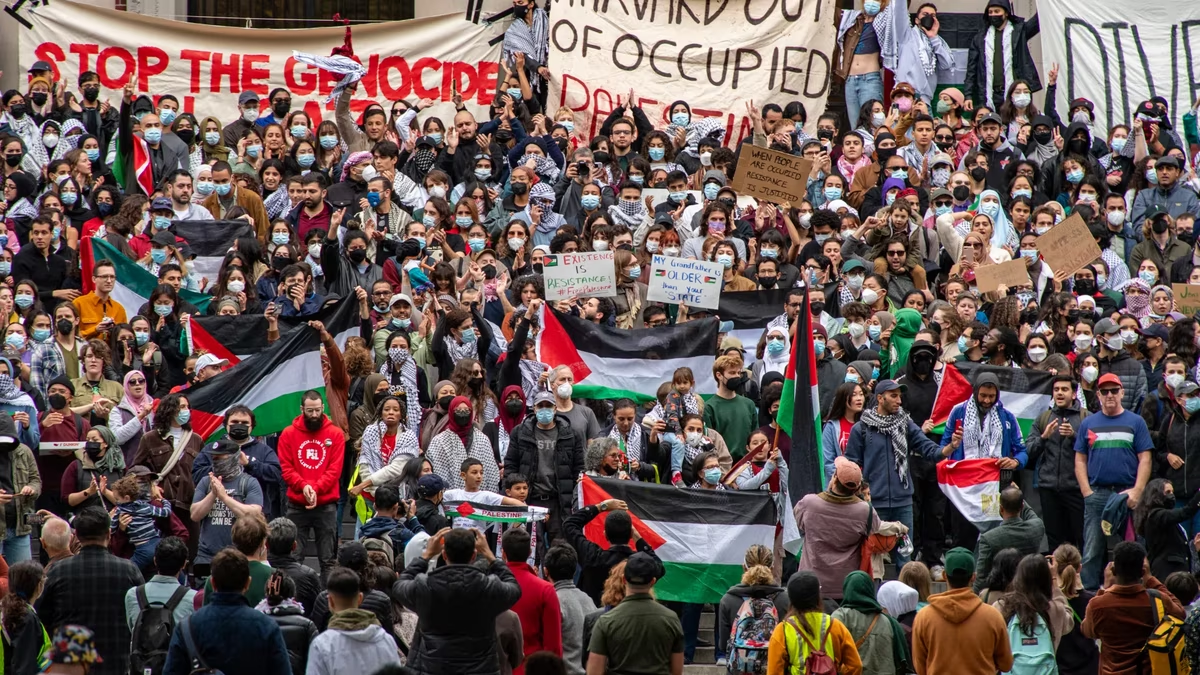
In occupied Jerusalem, occupation forces escalated their repressive measures against worshippers around Bab al-Sahira, coinciding with the evening and Tarawih prayers. Jerusalemite sources reported that occupation soldiers fired sound and gas bombs at groups present in the area and carried out an arrest campaign targeting a number of Palestinian youths.

As part of the policy of restricting Al-Aqsa Mosque guards, the occupation authorities issued a decision to remove guard Ahmed Al-Awar from his workplace in the mosque for a week, renewable. This decision comes in the context of a systematic targeting of personnel working in Al-Aqsa to reduce the official and popular Palestinian presence within the blessed mosque's courtyards.

In a move targeting Ramadan charitable work, the occupation authorities threatened to close 'Al-Nasr Restaurant' located in Khan al-Zeit market in the Old City. Occupation forces prevented the restaurant owner from preparing and distributing hot meals provided by donors to residents and passersby in the Bab al-Amoud area, a solidarity initiative that Jerusalemites are accustomed to during the holy month.

The occupation authorities continue to completely close the blessed Al-Aqsa Mosque for the seventeenth consecutive day, preventing thousands of worshippers from reaching it under security pretexts. The occupation links these strict measures to the regional tension and the ongoing war, which has led to the emptying of the mosque of its worshippers during the holiest days of the year for Muslims.

Reports indicate that this ban is a historical precedent that has not occurred since 1967, as worshippers were forcibly absent from performing the last Friday prayer of Ramadan. Palestinians were also deprived of observing Laylat al-Qadr and performing I'tikaf in the precincts of Al-Aqsa Mosque, after the city of Jerusalem and its Old City surroundings were transformed into a closed military barracks.

The Jerusalem Governorate warned of the seriousness of these measures, which coincide with the escalation of rhetoric from extremist organizations targeting the status quo in Al-Aqsa Mosque. Sources confirmed that the continued siege imposed on the holy sites aims to impose a new reality that changes the Arab and Islamic identity of the holy city, amidst international silence regarding these violations.

Occupation forces prevented ambulance crews from reaching the injured near the Sinjil intersection and detained the martyr's body.

PALESTINE

Tue 17 Mar 2026 4:27 am - Jerusalem Time

Occupation authorities release a group of child prisoners from 'Ofer' prison

Field sources reported that the Israeli occupation authorities released, early Monday morning, a new batch of Palestinian prisoners classified as 'cubs'. The release took place through the gate of the Ofer military detention center, located on the lands of Beitunia city, west of Ramallah and Al-Bireh Governorate in the occupied West Bank.

The area around the detention center witnessed a gathering of dozens of citizens and families of the prisoners who waited for long hours to receive their liberated children. Despite the strict security restrictions imposed by the occupation forces around the prison, the families were able to meet their children amidst an atmosphere of joy mixed with concern for the rest of the detainees.

This step comes at a time when warnings are escalating about the difficult detention conditions faced by prisoners inside occupation prisons, especially the young ones. International human rights organizations continue to issue repeated demands for the necessity of ending the detention of children and women, and stopping the systematic violations practiced against them behind bars.

Ofer prison is considered one of the largest detention centers used by the occupation to imprison hundreds of Palestinian children from various areas of the West Bank. These minors face military trials that lack the simplest international standards of justice, as they are dealt with within a judicial system belonging to the occupation army that lacks integrity.

It is worth noting that the issue of child prisoners represents one of the most sensitive issues in the Palestinian street, given the psychological and physical abuse they are subjected to during their detention. Human rights institutions confirm that the continued detention of minors violates all international conventions and laws that guarantee special protection for children in conflict and occupation zones.

These releases come amid harsh conditions experienced by prisoners inside prisons, with continuous international human rights demands for the release of all child and women prisoners.

ARAB AND WORLD

Tue 17 Mar 2026 4:27 am - Jerusalem Time

Araghchi Denies Contact with Washington and Reveals Features of Iran's Exhaustion Strategy

Iranian Foreign Minister Abbas Araghchi categorically denied reports of direct communication channels with the United States since the latest military escalation began on February 28. Araghchi clarified that claims promoted by Western media about an exchange of messages with the American side are unfounded and aim to manipulate global energy markets and mislead international public opinion.

In official statements, the Iranian minister indicated that the last contact with US envoy Steve Witkoff preceded the US administration's decision to launch what he described as illegal military attacks against Iranian territory. Araghchi considered this military attack a death blow to the diplomatic efforts that had been made in previous periods, emphasizing that his country does not negotiate under the weight of ongoing aggression.

In contrast, American media sources, quoting informed officials, revealed that Washington had received text messages from the Iranian side centered on mechanisms to end the ongoing war. These sources claimed that US President Donald Trump is open to reaching a comprehensive deal that would allow Tehran to reintegrate economically into the international community and benefit from its oil revenues in exchange for specific conditions.

Despite these American claims, informed sources in Tehran confirmed that the initiative for messaging came from US envoy Steve Witkoff, but the Iranian leadership made an official decision to ignore those messages and not respond to them. The sources stressed that Tehran also received messages from the White House through international mediators, but the Iranian position remained firm in rejecting any direct dialogue under the current circumstances.

Iranian sources explained that the window for direct negotiations with Washington has been completely closed by a decision from the country's supreme authorities, noting that any talk of a ceasefire is the exclusive prerogative of the Supreme Leader. They affirmed that the foreign minister or any other government official does not have the authority to make strategic decisions of this magnitude without referring to the supreme leadership that manages the confrontation file.

Regarding the field situation, Tehran informed countries that attempted to mediate for de-escalation that it would not accept any agreement that does not guarantee a complete and comprehensive cessation of American and Israeli attacks on its sovereignty. It stressed that any settlement must ensure that aggressions are not repeated, considering that current proposals do not meet the minimum legitimate Iranian demands for self-defense.

Iran is currently adopting a military strategy based on diversifying confrontation fronts and carrying out qualitative operations against American and Israeli interests over a long and unspecified period. This plan, according to sources close to decision-making circles, aims to gradually exhaust the enemy's capabilities and drain its military and economic resources through scattered and effective strikes in various spheres of influence.

The Iranian leadership believes that continuing the approach of armed resistance and directing precise strikes at the vital interests of adversaries is the only way to create suitable conditions for imposing a sustainable and just ceasefire. Tehran affirms that field pressure is the trump card that will force other parties to retreat from the policy of military escalation and recognize Iranian rights in the region.

For his part, US President Donald Trump stated that Iran appears willing to end the conflict and reach an agreement, but he expressed his confusion about who currently represents the actual decision-making authority in Tehran. Trump affirmed that the United States will not negotiate from a position of weakness and will not back down from the strategic goals that led it to enter this direct military conflict.

It is worth noting that the region has witnessed an unprecedented escalation since late February, where mutual military operations have resulted in hundreds of casualties, amid Tehran's continued use of ballistic missiles and drones to target what it describes as hostile sites. Arab countries accuse Tehran of targeting civilian objects and vital installations on their territories, which has further complicated the regional and international scene.

Any claims of communication are only intended to mislead oil traders and deceive public opinion, and the last contact with the US envoy was before the decision to launch the illegal military attack on Iran.