






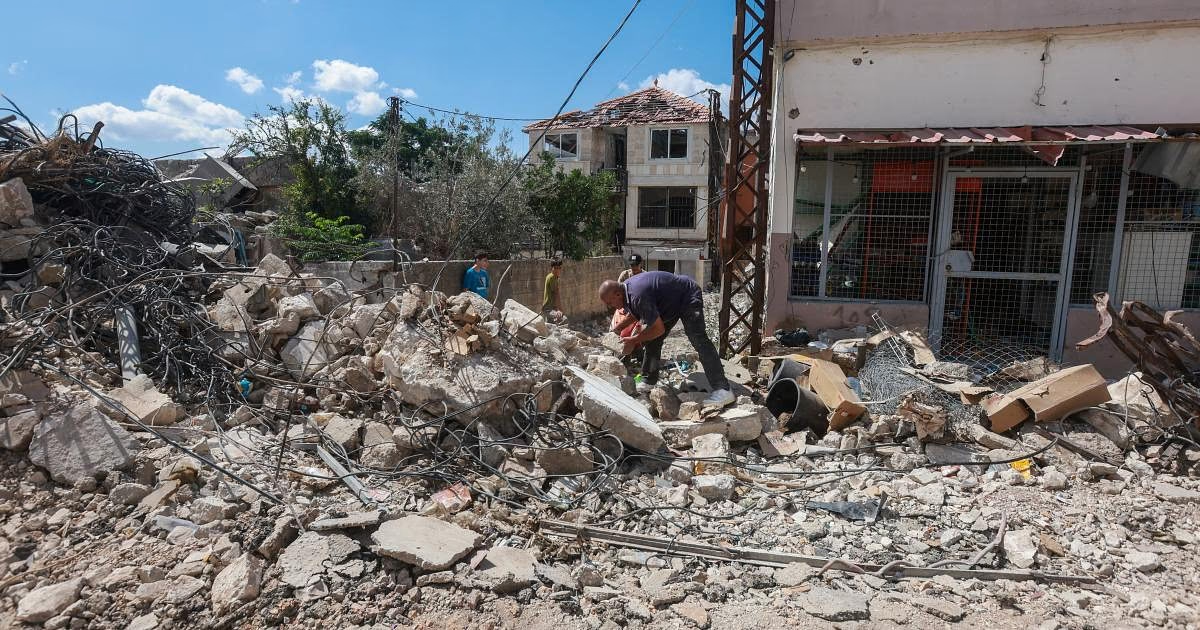
The signs of a humanitarian and urban catastrophe began to unfold in the town of Zawtar Al-Gharbia, part of the Nabatieh district, following the withdrawal of Israeli occupation forces and the entry of Lebanese Army units as part of the deployment understandings in the South. The Lebanese military establishment opened the way for media outlets to document the extent of the devastation that affected infrastructure and private property, as the town's streets and public squares appeared completely destroyed due to systematic shelling and bulldozing operations.
Municipal sources in Zawtar Al-Gharbia reported that initial statistics indicate the occupation destroyed approximately 250 homes, representing 50% of the total residential units in the town, which comprises 500 homes. This widespread destruction affected residences that housed about 5,000 people, leaving half of the town's residents truly homeless amidst harsh conditions left by the recent military operations.
The destruction was not limited to buildings but also extended to the agricultural sector, which is a fundamental pillar of the livelihoods of the region's residents, as occupation bulldozers cleared vast areas of agricultural land. Lebanese Army vehicles are currently working to remove rubble and open road paths whose features have completely changed, in an attempt to facilitate movement within the affected neighborhoods.
Despite the absence of basic services and the lack of decent living conditions, the people of Zawtar Al-Gharbia showed remarkable attachment to their land, with dozens of them beginning to return and inspect the ruins of their homes. A number of returnees affirmed their determination to stay in their town even if they had to live in temporary tents over the rubble of their homes, considering that the presence of the Lebanese Army in the area gives them a sense of security lost since the escalation began.
In field testimonies, one of the women whose homes were burned by the occupation said that she makes sure to come to the town daily since the army entered to spend the daylight hours in what remains of her home. She explained that she is forced to leave in the evening because the place is not suitable for habitation, but she stressed that the connection to the land is stronger than the attempts of forced displacement practiced by the occupation through the scorched-earth policy.
For its part, the Lebanese Army issued a statement affirming that the practices of the Israeli occupation constitute a blatant violation of international understandings and humanitarian laws, especially regarding the deliberate destruction of residential areas. The statement indicated that these continuous aggressions aim to obstruct the completion of the deployment of Lebanese armed forces in border villages and create obstacles to the safe return of displaced persons to their homes.
Engineering and logistical teams continue to try to reconnect the town with its surroundings, amidst significant challenges related to the amount of rubble and the spread of war remnants. Zawtar Al-Gharbia is one of the villages that witnessed violent confrontations and is today considered a model for the scale of challenges facing the Lebanese state in rebuilding what the Israeli war machine destroyed in the South.
The Israeli occupation continues to violate understandings and international laws through systematic destruction of homes, which hinders the completion of troop deployment in the South.


Share your opinion
Massive destruction in Zawtar Al-Gharbia: Occupation crushes half of the town's homes, Lebanese Army begins opening roads