






The Egyptian Military Academy recently witnessed a striking political paradox, as Sheikh Rifa'a al-Tahtawi, a pioneer of enlightenment, was celebrated during the graduation ceremony of the third batch of preachers, attended by the Egyptian President. The graduates' joint research discussed al-Tahtawi's reformist project, in a move reflecting the authority's desire to adopt his cultural and civilizational legacy.
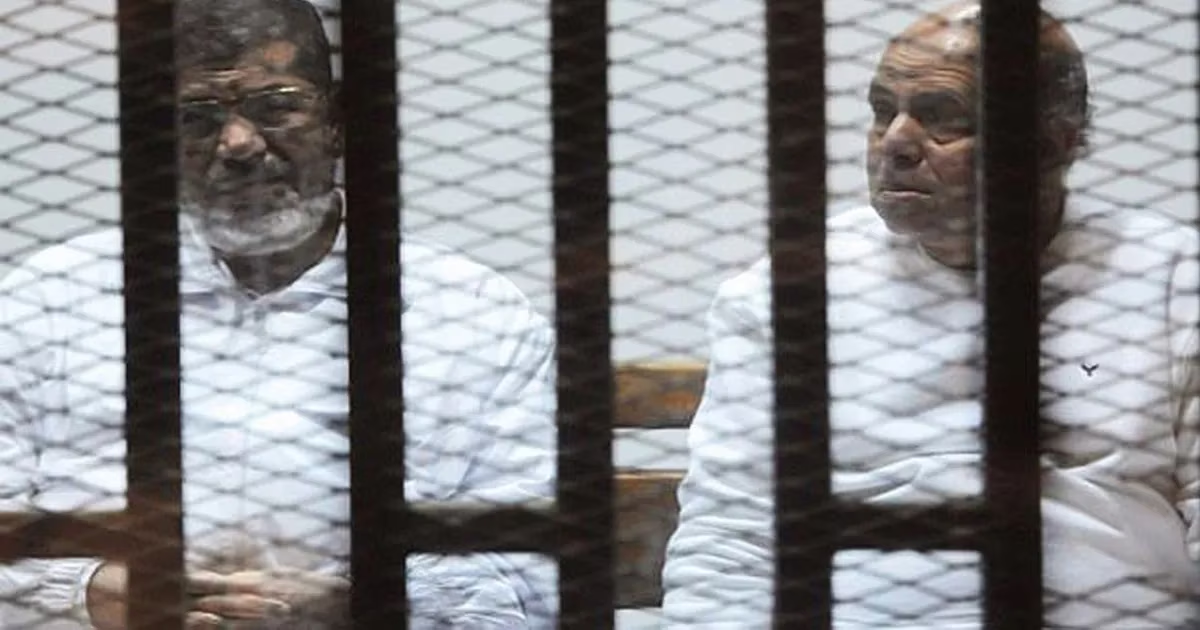
In contrast, the Sheikh's grandson, Ambassador Mohamed Rifa'a al-Tahtawi, remains behind bars in Badr Prison, where he faces harsh detention conditions. The grandson, who served as chief of staff to the former president, has been imprisoned since the events of July 3, 2013, with no signs of an imminent breakthrough in his case.
Human rights reports confirm that Ambassador al-Tahtawi has already completed all sentences issued against him, totaling ten years in prison. However, instead of being released in 2023, he was 'recycled' into a new case on charges related to funding and joining a banned group.
These new charges raise broad legal and human rights questions, especially since al-Tahtawi has been deprived of contact with the outside world or receiving visits for years. Human rights sources emphasize the impossibility of a detainee in complete isolation managing funding operations or organizational communication from within his high-security prison.
Ambassador al-Tahtawi's family revealed that they have been denied visits since March 2018, meaning direct contact with him has been cut off for more than seven consecutive years. All legal efforts and appeals submitted to the Public Prosecutor have failed to enable the family to exercise their legal right to check on him.
As a result of these violations, al-Tahtawi went on a hunger strike alongside a number of political prisoners in Wing 2 of Badr 3 Prison. This protest aims to draw attention to their suffering and demand improved detention conditions and an end to the abuses committed against them.
Ambassador al-Tahtawi leaked a message appealing to international bodies to form a fact-finding committee to visit Egyptian prisons and submit reports to the High Commissioner for Human Rights. Al-Tahtawi proposed names of national and international figures to participate in this committee, reflecting his desire for impartial legal oversight.
The proposal submitted by al-Tahtawi revealed his complete isolation from external reality, as his proposed list included figures who had already passed away. This clearly indicates the extent of the cognitive and informational disconnect experienced by detainees in high-security Egyptian prisons.
Ambassador al-Tahtawi's professional history is rich with diplomatic service, having represented Egypt in Tehran during critical periods of bilateral relations. He was known for his high competence and extensive culture, which enabled him to improve Egypt's diplomatic image in the international forums where he worked.
Before joining the presidency, al-Tahtawi served as an advisor to the Grand Imam of Al-Azhar and the official spokesperson for the Grand Imamate, a position requiring high-level security clearance. He resigned from his post with the outbreak of the January Revolution to join the demonstrators in Tahrir Square, expressing his alignment with popular demands.
Observers believe that al-Tahtawi's continued imprisonment has a retaliatory character due to his political stance rejecting the departure of former President Mohamed Morsi at the time of the coup. Despite offers reportedly made to him to leave peacefully, he chose to maintain his position, which cost him many years in prison.
This case coincides with the International Day in Support of Victims of Torture, placing the issue of Egyptian prisons under the scrutiny of international and UN organizations. Calls are growing for the activation of international protocols that allow regular visits by national and international preventive mechanisms to places of detention.
Egypt's commitment to international agreements obliges it to allow independent committees to inspect the conditions of those deprived of their liberty and to submit their recommendations. These demands cannot be considered interference in internal affairs; rather, they are legal entitlements resulting from Egypt's membership in these international mechanisms.
The case of Ambassador Rifa'a al-Tahtawi remains a true test of the authorities' seriousness in turning a new page with political opponents. The moral honoring of grandfathers is inconsistent with the persecution of grandsons who served the state in high diplomatic and human rights positions throughout their careers.
The true honoring of Rifa'a al-Tahtawi would be the release of his grandson, the Ambassador, who carried his name and legacy, not his continued disappearance in prisons.
Share your opinion
Between the Authority's Celebration of the Grandfather and its Persecution of the Grandson: The Story of Ambassador Rifa'a al-Tahtawi in Egyptian Prisons