







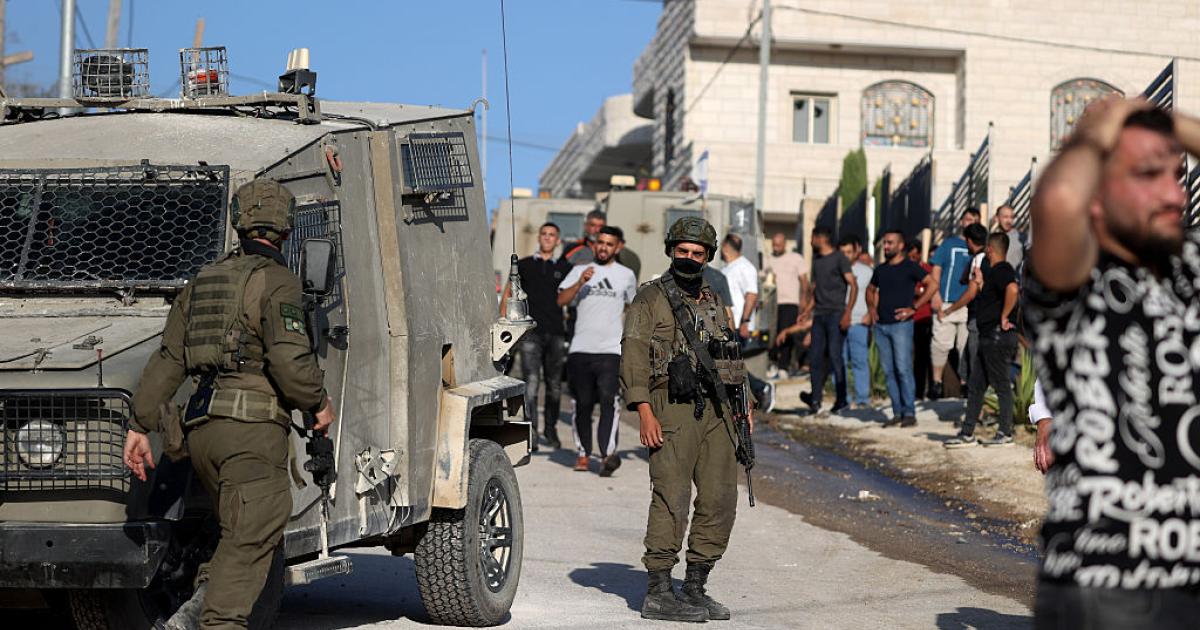
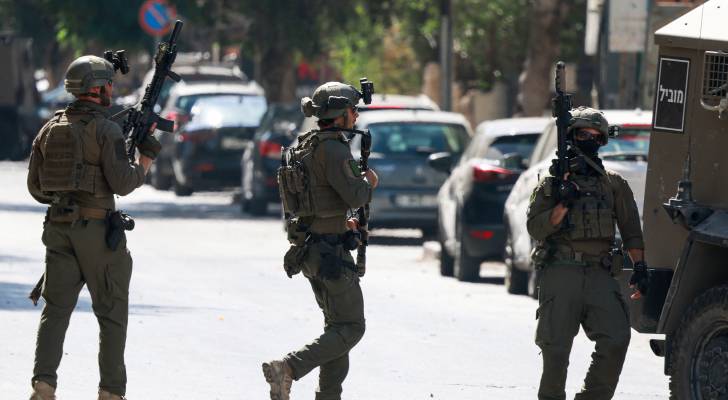
The pace of security pursuits carried out by the Israeli occupation army against candidates for local council elections in the West Bank has escalated, coinciding with the approaching polling date scheduled for next Saturday. Field sources reported that raids included several cities and towns, where dozens of candidates underwent harsh field interrogations accompanied by direct threats of prolonged detention or physical liquidation if they continued in the electoral race.
In the town of Balaa, northeast of Tulkarm, occupation forces carried out a wide-ranging military operation targeting about 33 citizens, most of whom were involved in electoral lists. Bilal Jitawi, a candidate from the 'Al-Wefaq' list, recounted details of his ten-hour detention, during which Israeli intelligence officers tried to force him to withdraw, claiming he received support from the Hamas movement, despite his insistence on the independence of his candidacy.
Jitawi confirmed that the investigation focused entirely on the details of the electoral process and voting mechanisms, where the interrogator sent him a clear message about the necessity of withdrawal to prevent any organizationally supported figures from reaching municipal councils. The candidate considered these practices a blatant interference in the political rights of the Palestinian people and their ability to freely choose their representatives.
For his part, the current mayor of Balaa, Mohammed Suleiman, explained that the occupation still detains two prominent figures from the town who support the electoral lists, which has caused a state of apprehension and concern among the residents. He pointed out that these pressures led to a reduction in propaganda activities and family gatherings for fear of pursuit, which serves the occupation's efforts to thwart the entire electoral process.
In another testimony, released prisoner Bahaa Abu Setta stated that he was subjected to detention and abuse along with a group of candidates, where they were handcuffed and blindfolded for long hours. He added that the intelligence officer threatened him with returning to prison if he went to polling stations or cast his vote for any list, in a clear attempt to reduce the rate of popular participation.
These violations were not limited to Tulkarm but extended to Nablus Governorate, specifically in the town of Asira al-Shamaliya, where the occupation arrested 12 cadres from the Popular Front for the Liberation of Palestine. Sources reported that the detainees were subjected to humiliating conditions and interrogations focused on the nature of the lists they support, with explicit threats to liquidate independent candidates who enjoy factional support.
These security threats prompted the residents of Asira al-Shamaliya to make an exceptional decision to abandon competing lists and resort to the 'acclamation' option to elect municipal council members. This measure aims to protect candidates from direct Israeli targeting, after political forces withdrew their public support to spare independent figures the risk of pursuit or assassination.
Official statistics indicate that 365 lists are competing in 183 local bodies in the West Bank, comprising more than 2,700 candidates who aspire to serve their local communities. However, Israeli interventions are now threatening the legitimacy of these elections and their ability to produce strong local leaders capable of facing the increasing challenges under occupation.
Observers believe that through this campaign, the occupation seeks to entrench a model of 'family administration' instead of political organizations and national institutions. This approach aims to fragment the Palestinian situation and weaken political authorities, making local bodies mere service tools isolated from their national and general political context.
These developments come amid complex security and economic conditions in the West Bank, especially with the ongoing war on the Gaza Strip and daily incursions into major cities. These conditions have reflected on the momentum of election campaigning, which has significantly receded in public streets and moved to digital platforms and social media.
Political analyst Suleiman Basharat considered that Israel is following a systematic strategy to make Palestinians feel that all details of their lives are under its direct control. He stressed that interference in elections, whether by disruption or pursuit, aims to empty Palestinian institutions of their competencies and link their success to the satisfaction of the occupation's security apparatus.
Basharat added that the occupation is trying to create a gap between citizens and their institutions by absenting the institutional and national dimension, and pushing society towards tribalism and narrow family ties. This approach ensures the occupation's ease of control and dominance, and prevents the formation of any unified institutional front capable of making independent developmental or political decisions.
On the factional level, positions remain divergent regarding participation in these elections, with the Islamic Jihad movement boycotting the entire process, while Hamas set conditions related to adherence to national programs. Amidst these complexities, the independent candidate finds himself in direct confrontation with the Israeli repressive machine that does not differentiate between one affiliation and another.
In conclusion, Palestinian circles are awaiting the results of the polls amidst these pressures, with questions about the ability of the upcoming local councils to withstand the occupation's attempts to impose a new political reality. The biggest challenge remains to preserve the national character of these institutions and prevent their transformation into fragile entities managed by intimidation and threats.
The occupation is trying to obscure the institutional dimension in the Palestinian situation, and empty it of the elements of success and efficiency, to reinforce weakness and entrench reliance on families instead of institutions.
Share your opinion
Israeli Intimidation Campaign Targets Local Election Candidates in West Bank