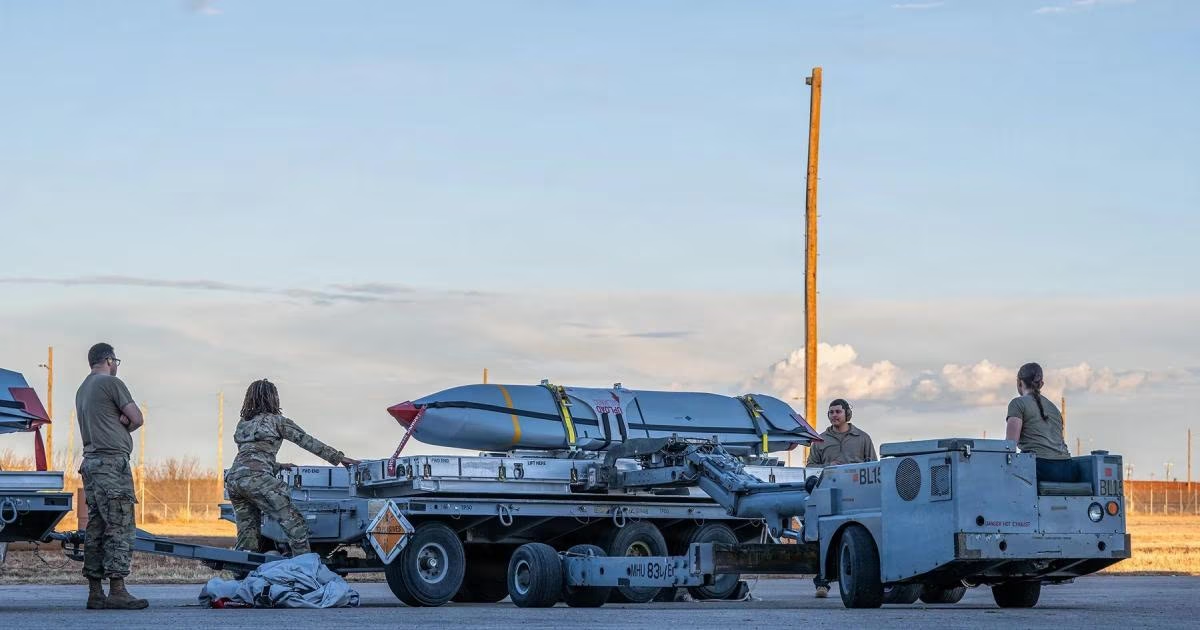







Informed sources reported that the US administration has effectively begun implementing a broad plan to withdraw the bulk of its strategic inventory of extended-range JASSM-ER stealth missiles. This move aims to reallocate these advanced weapons to support ongoing military operations in the Middle East, specifically in the context of the escalating confrontation with Iran.
Leaked information indicates that the transfers included withdrawing missiles from vital depots in the Pacific region, as well as from military sites within US territory. These shipments have been directed to bases belonging to the US Central Command, in addition to reinforcing Fairford Air Base in the United Kingdom to serve as a potential launch point for operations.
The US inventory of these precision missiles faces a real crisis, as statistics show a sharp decline in available numbers since the outbreak of confrontations. Of the 2,300 missiles Washington possessed before the war, only about 425 missiles remain suitable for direct use, while dozens of others have been decommissioned due to technical malfunctions.
Military experts believe that the remaining number of these missiles is barely enough to carry out a single combat mission for a limited number of strategic bombers. This rapid depletion places immense pressure on military planners at the Pentagon, especially with over 1,000 of these missiles consumed in just the first few weeks of operations.
JASSM-ER missiles are characterized by their superior ability to evade radar and hit targets with extreme precision at ranges exceeding 600 miles. This feature allows US aircraft to launch their missile payload from safe distances outside the range of enemy air defenses, reducing direct risks to pilots.
Military analysts believe that the transfer of these strategic capabilities from the Pacific to the Middle East is primarily aimed at strengthening deterrence against Tehran. These missiles are likely to be used to target vital facilities, including power stations, oil installations, and the remaining infrastructure associated with Iran's nuclear program.
Despite American and Israeli claims of success in destroying large parts of Iran's air defense network, serious risks remain. This situation has led Washington to consider using less expensive munitions, such as JDAM guided bombs, to conserve stealth missiles for more fortified and complex targets.
In a related context, US air defense systems such as Patriot and THAAD are facing increasing pressure due to the intensity of Iranian missile fire. Tehran has launched thousands of ballistic and cruise missiles, necessitating the consumption of huge numbers of interceptor missiles that are difficult to replace in a short time at current production rates.
The depletion is not limited to air-launched missiles but also extends to Tomahawk cruise missiles, which are launched from ships and submarines at high intensity. Concerns are emerging about the widening gap between field consumption rates and the production capacity of US military factories, which could affect readiness in other operational theaters.
This strategic shift in missile power distribution reflects the magnitude of the challenges facing the United States in balancing multiple fronts. While its military weight is currently focused on the Middle East, concerns are growing about the erosion of its deterrent capabilities in other sensitive regions, especially amid escalating military competition with major powers like China.
The US inventory of JASSM-ER missiles has seen a significant decline, with only about 425 usable missiles remaining out of 2,300.




Share your opinion
Depletion of US Arsenal: Washington Moves Stealth Missiles from Pacific to Middle East