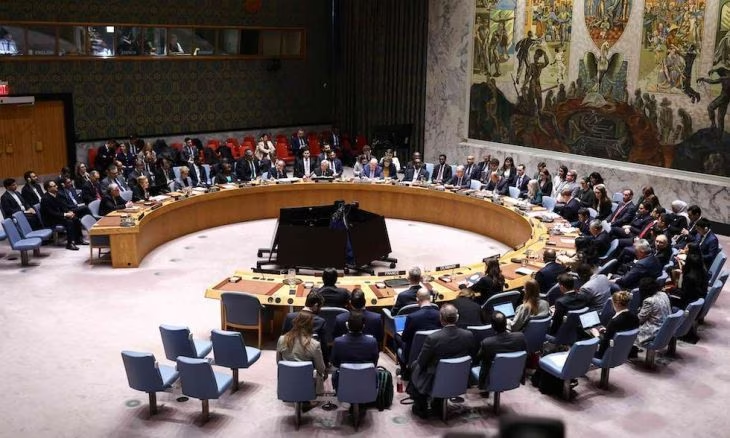







Diplomatic sources at the United Nations revealed a new Russian move within the corridors of the Security Council, aimed at curbing the accelerating military escalation in the Middle East region. The Russian mission has distributed a draft resolution to member states, explicitly calling for a halt to all combat activities and armed operations that currently threaten regional and international stability.
This Russian step comes amid growing concern over the expansion of the conflict, with the draft emphasizing the necessity of adhering to the purposes and principles of the United Nations Charter. The document specifically referred to Article Two, which prohibits the use or threat of force against the territorial integrity or political independence of states, reflecting Moscow's desire to establish the rules of international law in dealing with current crises.
The Russian draft resolution includes a strong condemnation of all attacks targeting civilians or civilian facilities and infrastructure in the region. The text demands the necessity of providing full protection for populations not involved in hostilities, stressing that all parties are obligated to comply with international humanitarian law and the relevant Geneva Conventions on the protection of civilians during armed conflicts.
The diplomatic proposal also focuses on the importance of ensuring the security of all states in the Middle East without exception, warning of the catastrophic consequences of continued military operations. The draft calls on the concerned parties to exercise maximum restraint and refrain from any additional escalatory steps that could lead the region into a comprehensive confrontation whose outcomes cannot be controlled.
On the political side, the Russian draft resolution encourages all warring parties to return to the negotiating table without any delay or preconditions. The text emphasizes the necessity of activating diplomatic and political means as the sole way to resolve existing differences, considering that military solutions will only lead to further destruction and tragic human losses that the region has recently witnessed.
Procedurally, the draft resolution is scheduled to undergo a series of deliberations and technical discussions among Security Council members before being officially put to a vote. These sessions are expected to witness sharp tug-of-war, as some countries seek to introduce amendments to the wording to align with their political vision of current events in the region, especially regarding the determination of responsibilities for the escalation.
Diplomatic estimates indicate that the draft resolution may face a veto by the United States of America, which often opposes Russian moves on this issue. Observers also believe that the draft may fail to obtain the minimum required votes, which is nine votes, if Washington pressures member states to abstain from voting or reject the proposal.
The Russian move in the Security Council remains a new test of international will in confronting the explosive crises in the Middle East. If the resolution is passed or even widely discussed, it will re-highlight the role of the United Nations in maintaining international peace and security, at a time when criticism of the international organization's inability to stop the bloodshed on several inflamed fronts is increasing.
The draft resolution urges all parties to immediately cease their military activities and refrain from any further escalation in the Middle East and beyond.
Share your opinion
Russian move in the Security Council to impose a comprehensive cessation of military activities in the Middle East