







Al-Zaytouna Centre for Studies and Consultations issued a summary of its periodic Palestinian Strategic Report for the years 2024-2025, which serves as an in-depth research reference co-authored by 15 specialized researchers. This edition comes at a pivotal historical moment following the Al-Aqsa Flood battle, to monitor the structural transformations that have occurred in the general Palestinian scene.
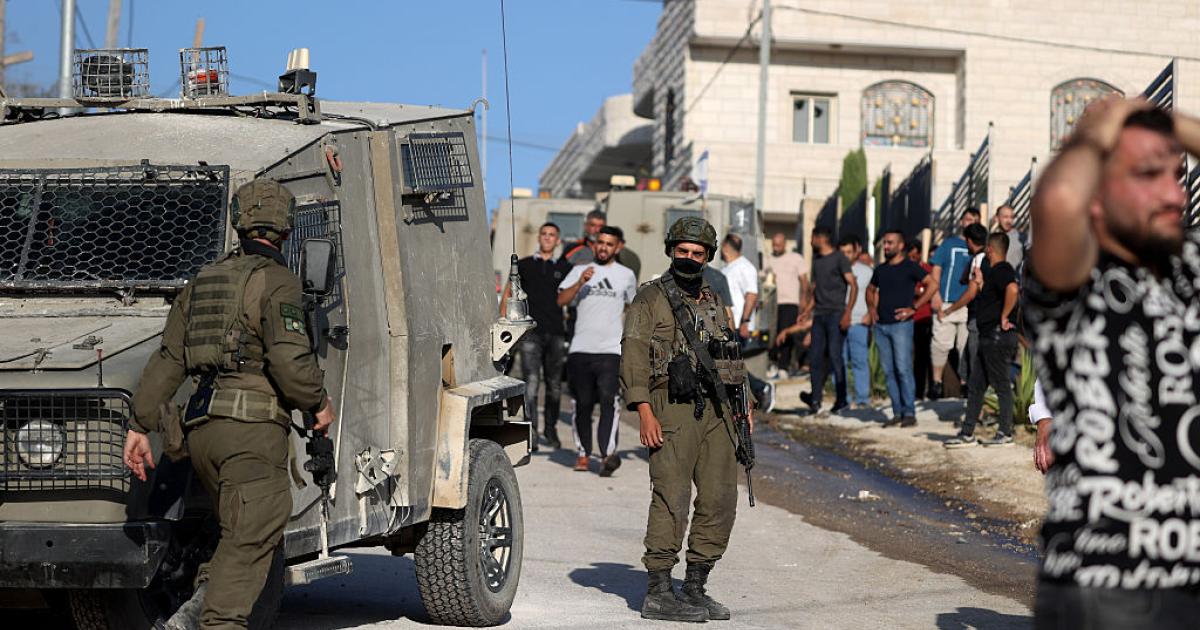
The report paints a complex picture of the internal Palestinian scene, where popular criticism of the Palestinian Authority's performance is escalating amid continued aggression and worsening violations in the West Bank. It also points to a deep crisis of confidence afflicting the political system, coinciding with controversial decisions related to allocations for prisoners and martyrs and the rearrangement of leadership.
Regarding the post-war management of the Gaza Strip, the study observed a divergence in visions between the Authority's readiness to assume tasks and Hamas's flexibility towards forming a community support committee. However, complexities remain, especially concerning the resistance's weaponry, which faces intense external pressure to end its military presence.
Demographically, statistics revealed that the number of Palestinians worldwide reached 15.5 million by the end of 2025, with more than half of them living in the diaspora. Estimates indicate that the Palestinian presence within historical Palestine has surpassed the number of Jews, with expectations of this gap widening by 2030.
The report documented massive human losses in the Gaza Strip, where the number of martyrs was estimated at about 77,000 over two years, in addition to 170,000 others suffering various injuries. Sources confirmed that the Strip lost about 10.6% of its population due to direct killing, forced displacement, and the deadly living conditions imposed by the occupation.
In occupied Jerusalem, Judaization operations have moved to unprecedented stages through intensified incursions into Al-Aqsa Mosque, exceeding 73,000 infiltrators in 2025. Through these policies, along with the demolition of homes in Sheikh Jarrah and Silwan, the occupation aims to alter the demographic balance in favor of the settlers.
The aggressions were not limited to residential areas but extended to religious and historical identity, as the occupation army destroyed 93% of Gaza Strip mosques and two-thirds of existing cemeteries. Historical churches were also directly targeted, in a clear attempt to erase the civilizational memory of the Palestinian people in the afflicted Strip.
Economically, Palestinians are experiencing a state of near-total collapse, especially in Gaza, where its GDP contracted by 84%, and unemployment rates reached 78%. In the West Bank, the situation was not much better, with the economy declining by 13% and a significant increase in the ranks of the unemployed.
The report clarified that the Palestinian Authority's budget remains hostage to political pressures, as it relies 84% on clearance funds and international grants. The occupation also controls the joints of foreign trade, as trade exchange with the Israeli side accounts for more than 60% of the total Palestinian trade movement.
On the ground, military confrontation continued with high intensity during 2024 and 2025, as the occupation army carried out thousands of airstrikes targeting infrastructure and civilians. In contrast, the Palestinian resistance maintained its operational capabilities in Gaza and the West Bank, despite the heavy human and material cost paid by the Palestinian people.
Data indicated the occupation's failure to achieve its declared strategic goals despite the extent of destruction, as resistance cells remained capable of carrying out qualitative operations. Sources recorded thousands of operations in the West Bank, reflecting the continuity of popular and armed confrontation against settlement expansion and daily aggressions.
Diplomatically, Palestine achieved progress in gaining international recognition, with the number of recognizing states reaching 159, despite Israeli intransigence and American reservations. The 'Beijing Declaration' emerged as one of the serious attempts to unify the Palestinian ranks, although it faced implementation obstacles related to the political program and international community conditions.
The report anticipates a future dominated by internal polarization and continuous economic pressures, with expectations of living conditions remaining fragile and linked to the extent of calm stability. Researchers believe that the occupation will continue its attempts to impose new geographical realities in Jerusalem and the West Bank to undermine any opportunity for establishing a contiguous Palestinian state.
In conclusion, the report emphasizes that these figures and statistics reflect a tragic reality but at the same time confirm the dynamism of Palestinian steadfastness. The center called for the necessity of adopting comprehensive strategic readings based on scientific data to confront the existential challenges facing the Palestinian cause at this stage.
No matter how accurate, numbers do not encapsulate the extent of human suffering, nor do they summarize the dynamics of steadfastness and resistance in the face of attempts to erase identity.



Share your opinion
Strategic Report Monitors Transformations in the Palestinian Cause: 15.5 Million Palestinians Worldwide and Severe Economic Collapse in Gaza