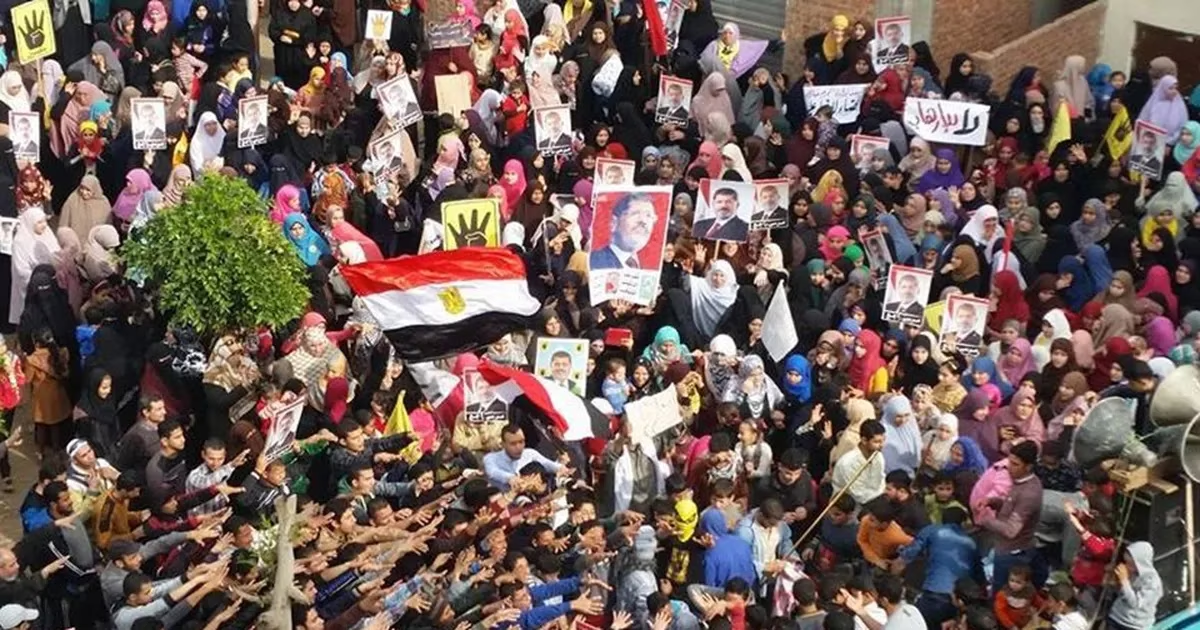







The Islamic phenomenon is currently facing the peak of systematic marginalization and distortion attempts, which have moved from the political sphere to the realm of legal criminalization and judicial fabrication. These accumulated operations have led to the invocation of models of military coups and internal conflicts in countries that witnessed revolutionary movements, with the aim of besieging the aspirations of peoples for change.
Anti-revolutionary forces have managed to coordinate their efforts in a collective action that not only exhausted protest movements but also seriously sought to abort them completely. Despite this siege, protest waves continue to express the aspirations and hopes of peoples for democratic transformation, creating a state of continuous conflict between the camps of change and stagnation.
The conditions for the coming change necessitate internalizing the lessons learned, away from wishful thinking or personal desires. This requires actual preparation based on the laws of social interaction and understanding the entry points of effectiveness and influence in the complex political reality, which necessitates an integrated research project that studies the joints of this phenomenon.
The concept of "Political Islam" stands out as one of the most controversial issues, especially concerning the stance of Islamists on the escalating Arab revolutions. This debate has directly affected the role of these movements during transitional periods, where they faced the challenges of sharp polarization and difficult demands for political consensus.
The issue of governance is considered the true test for Islamic movements, as their ideas and theoretical perceptions were placed under the microscope of practical application. After gaining the trust of the masses at the ballot box, these movements found themselves in direct confrontation with deep state forces and counter-alliances that exploited every loophole to pounce on the experience.
The relationship between the Islamic current and democracy is no longer a mere intellectual luxury or a discussion in university corridors; it has transformed into a direct social issue. Experience reveals that most political forces, not just Islamists, were not adequately prepared for the requirements of democratic transition, which exacerbated the severity of divisions.
Islamists today live under the weight of harsh accusations that have reached the point of demonization and absolute criminalization a decade after the revolutions began. This climate has led to the dispersal of cadres between exiles and prisons, and the role of movements has shifted from political action to an attempt to preserve their entity and survive.
Secular elites and some authoritarian regimes contributed to fueling hate speech, creating a legally and practically restrictive environment for Islamic movements. Counter-revolutions exploited this polarization to pass military coups, benefiting from regional and international support fueled by the phenomenon of "Islamophobia."
The Egyptian model after the July events represents a turning point in the strategy of manufacturing hatred and fabricating accusations against the Islamic current. The media and security apparatus were used to justify arrests, persecutions, and extrajudicial assassinations, under the guise of fighting "people of evil."
In the face of this bitter reality, the importance of reviews and self-criticism emerges as a vital necessity not only for Islamists but for all revolutionary forces. Reviewing the performance of the elite during the years of activism is the first step towards overcoming fragmentation and reaching a political consensus strategy that protects popular gains.
Islamic movements suffer from internal cracks and divisions as a result of external pressures and systematic image distortion operations. Therefore, rebuilding trust with the popular bases and accurately understanding the challenges is an essential condition for restoring effectiveness in the future political scene.
Studying the future of the Islamic project requires disassociating from the negative memory of the relationship with the state and authority. These movements must present new roles that ensure the protection of their entities from fracturing, while simultaneously building bridges of trust with the communities to which they belong.
Younger generations within Islamic movements appear as a crucial element, expressing fundamental reservations about the performance of traditional leaders in the fields of revolution. This generation looks forward to forming new elites capable of restoring the revivalist path and preparing for upcoming waves of change with a more modern and realistic vision.
In conclusion, "nurseries of change" still need intellectual and methodological care that transcends repeated errors in positions and policies. The ability to interact with the revolutionary situation flexibly and effectively is what will determine the outcomes of the Islamic phenomenon and its ability to lead the nation towards a future of greater freedom and dignity.
The issue of the relationship between Islamists and the democratic system is no longer a theoretical matter; it has become a political and social touchstone subject to excellent testing.
Share your opinion
The Future of the Islamic Phenomenon: Between the Hammer of Criminalization and the Challenges of Revolutionary Review