







Media sources reported that decision-making circles in Tel Aviv see a strategic interest in Israel taking responsibility for funding and leading debris removal operations in the Gaza Strip. This perspective stems from a security conviction linking the removal of rubble with the ability to access and permanently destroy the complex tunnel network, in addition to neutralizing the threat of unexploded ordnance.
Reports quoted sources from the 'Peace Council' stating that the Israeli side considers itself the only entity with the technical and field capabilities to dismantle the underground military infrastructure at the required speed. The source clarified that this approach is not solely driven by humanitarian motives, but represents a supreme military and political interest aimed at ensuring that Palestinian factions do not regain their fighting capabilities in the future.
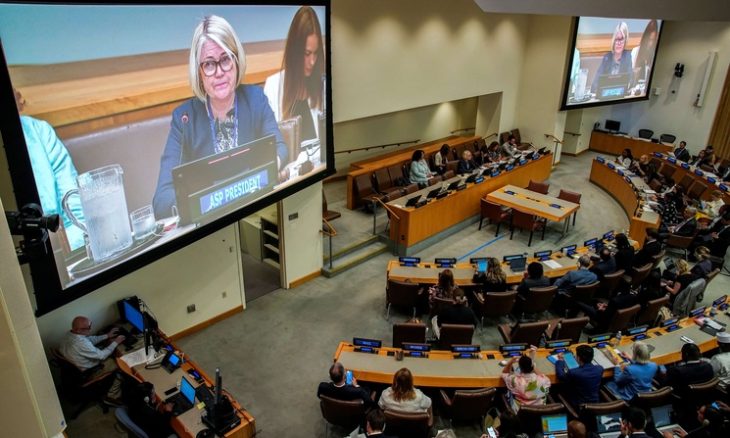
In a related context, a Peace Council conference was held in the American capital, Washington, which resulted in the announcement of initial financial pledges for the reconstruction of the Strip, amounting to approximately $17 billion. The United States topped the list of donors with $10 billion, although there are indications that President Donald Trump has not yet finalized the decision to allocate this entire amount for direct construction and reconstruction operations.
Arab and regional countries also contributed to these pledges, with Qatar, Saudi Arabia, UAE, Bahrain, and Kuwait, in addition to Uzbekistan and Azerbaijan, announcing total contributions of up to $7 billion. These funds are expected to be subject to international coordination mechanisms to ensure they reach the targeted projects, amid anticipation for the actual start dates of financial transfers.
Regarding international organizations, Trump announced that the United Nations would allocate $2 billion to provide urgent humanitarian aid, under the direct supervision of the Peace Council. In a notable move, the President of the International Federation of Association Football (FIFA) revealed a plan to raise $75 million dedicated to supporting sports and football projects in the afflicted Strip, as part of efforts to restore normal life.
Reconstruction efforts face enormous logistical challenges, as UN estimates indicate there are approximately 60 million tons of rubble in various areas of the Strip. Statistics show that this massive quantity is equivalent to the cargo of thousands of ships, meaning there are about 30 tons of rubble for every Palestinian citizen in Gaza, which will require many years of continuous work to remove.
Data issued by international bodies indicates that the percentage of total and partial destruction in the Gaza Strip reached 84%, while in Gaza City alone it was about 92%. With the total cost of reconstruction estimated at around $70 billion, the question remains about the sufficiency of current pledges and the ability of international parties to implement their plans amidst ongoing field complexities.
Israel is the only party capable of destroying tunnels at the required speed, and this constitutes a pure military and political interest for it.




Share your opinion
Israeli Motives to Handle Debris Removal in Gaza and International Pledges of $17 Billion