







The Israeli occupation authorities recently launched a series of escalating measures in the occupied West Bank, aimed at changing the legal and political status quo that has existed for decades. These steps seek to extend control over vast areas of land classified within Areas (A) and (B), which were administratively under the Palestinian Authority according to signed agreements.
The new decisions included allowing settlers to directly own land in those areas, while abolishing the Jordanian legislation that previously regulated land ownership. Observers and Palestinians describe these moves as a 'creeping annexation' process aimed at imposing full Israeli sovereignty over what remains of the Palestinian geography in the West Bank.
Earlier this week, the Israeli government approved the expansion of oversight and enforcement powers to include Areas (A) and (B), giving its agencies the green light to carry out demolition and confiscation operations. This measure is a clear violation of the 'Oslo II' agreement signed in 1995, which granted Palestinians full or civil control over these areas.
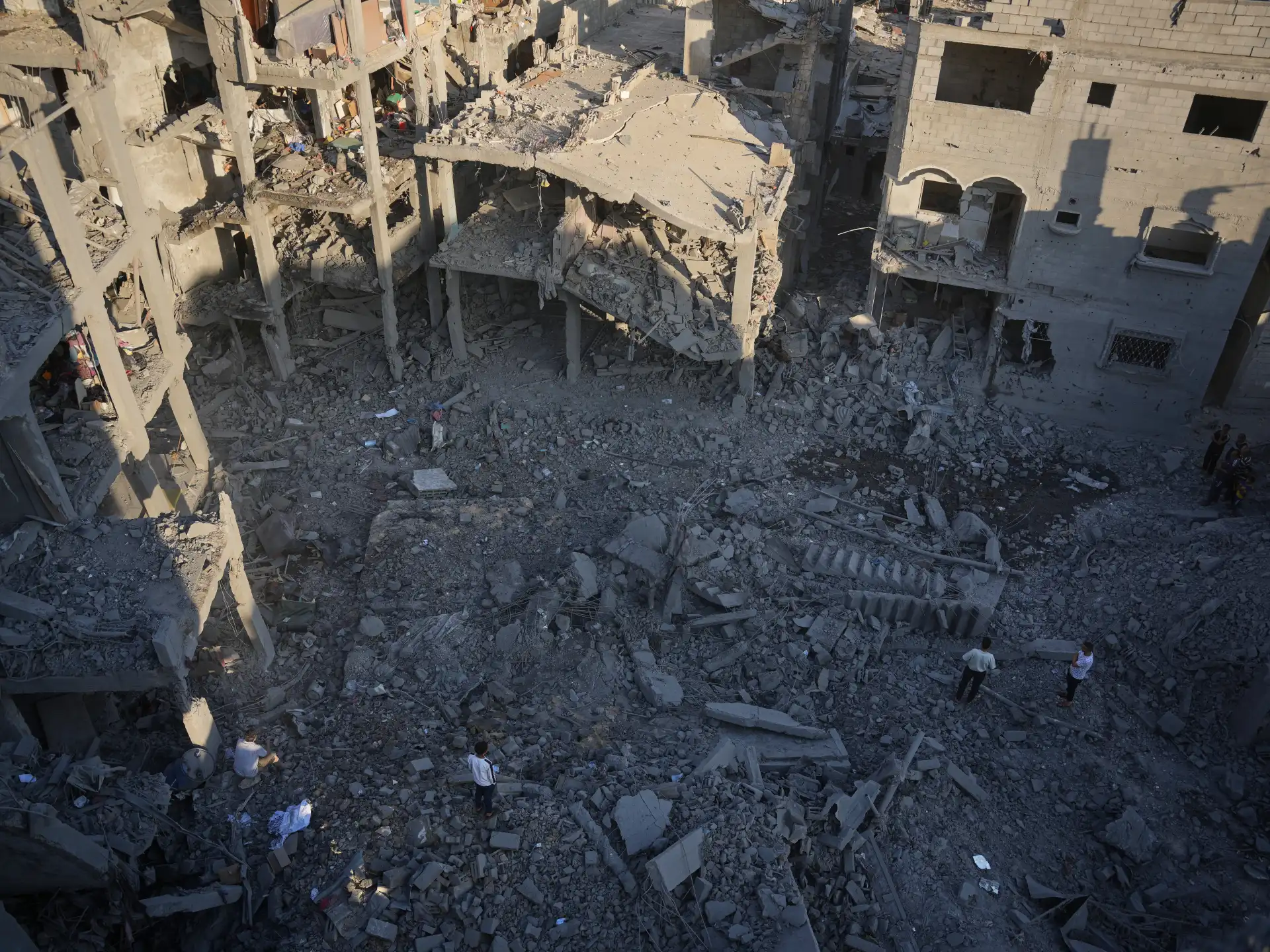
Field data indicates that the occupation has exploited the international community's preoccupation with the ongoing war of extermination in the Gaza Strip since October 7, 2023, to intensify its aggressions. These aggressions varied between unprecedented settlement expansion, forced displacement operations, and the killing and arrest of citizens in various cities and villages of the West Bank.
For his part, the head of the Wall and Settlement Resistance Commission, Moayad Shaaban, affirmed that these decisions represent a radical coup against all previous international understandings. He explained in press statements that Benjamin Netanyahu's government seeks to fire the 'last bullet' at the Palestinian state project by destroying the foundations upon which the Oslo agreement was built.
Shaaban pointed out that the occupation has already begun direct intervention in archaeological sites located within Areas (A) and (B), attempting to annex them to the 'Israeli Antiquities Authority'. This trend means that waves of demolition and confiscation will no longer be limited to Area (C), but will extend deep into crowded Palestinian cities and towns.
The Palestinian official stressed that the ruling right-wing coalition in Israel has set a clear plan based on three axes: expanding settlements, legalizing illegal outposts, and giving Palestinians the choice between death or expulsion. He considered that international silence towards these practices encourages the occupation to proceed with its alleged biblical project.
In a related context, Khalil Tafakji, an expert in settlement affairs, explained that the current Israeli policy strategically aims to prevent the establishment of any independent Palestinian entity. He indicated that Israel has set aside the transitional provisions in Oslo and used administrative divisions as a tool to expand the influence of settlements.
Tafakji clarified that there is a huge gap between the built-up area of settlements and their 'sphere of influence' controlled by the occupation forces, with the latter exceeding 60% of the West Bank's area. He stressed that Palestinian popular steadfastness, despite its importance, needs clear political plans to confront this settlement encroachment that does not want any Palestinian presence.
As for political science professor Ali Al-Jarbawi, he presented a different reading of the fate of the Palestinian Authority, considering that Israel does not seek to completely end the Authority at the present time. Al-Jarbawi believes that the Israeli goal is to 'undermine' the Authority and turn it into an administrative tool that provides services to the population without having any sovereignty over the land.
Al-Jarbawi added that the occupation adopts a strategy of 'legal expulsion' when it is unable to carry out physical expulsion, by confining Palestinians to geographically fragmented enclaves. This plan aims to legally separate the population from the land and prevent any possibility of claiming political rights within one or two states.
Analyzes indicate that the recent Israeli decisions in the city of Hebron, and the transfer of municipal powers to the so-called 'Civil Administration', are a model for what will be generalized. Palestinian institutions are gradually being stripped of their powers in favor of settlers and Israeli military bodies, in an actual annexation process that does not await an official announcement.
Experts and officials called for the necessity of launching a comprehensive national dialogue that brings together all Palestinian forces to formulate a unified strategy away from traditional divisions over the feasibility of old agreements. The new reality imposed by Israel requires confrontation tools commensurate with the magnitude of the existential threat facing the Palestinian cause.
Sources concluded that Israel considers the West Bank to be the 'real arena of conflict', and deals with it as part of the alleged 'Kingdom of Judea and Samaria'. Accordingly, the legal and civil measures taken recently are not just fleeting decisions, but rather a decisive resolution of the conflict over the land and a final liquidation of any political horizon.
What is happening represents an actual coup and the firing of the last bullet at the Oslo agreement by targeting the areas that were described as Palestinian sovereignty.


Share your opinion
Coup against Oslo: New Israeli measures to impose sovereignty over Areas (A) and (B) in the West Bank