







Dr. Omar Rahal: The bombing, simultaneous with the opening of the crossing, is a pressure message to Gazans that the option of leaving is available as a form of forced displacement.
Nevin Abdel Hadi: The escalation will have a negative impact on the work of the technocrat committee, the post-war phase, reconstruction, and the flow of aid.
Talal Awkal: Israel's handling of the second phase provisions reflects its intention to continue the war on the Strip, driven by internal political and electoral considerations.
Dr. Saad Nimer: The future work of the technocrat committee will remain contingent on Israel's approval of various sectors, which allows it to easily obstruct its work.
Samah Khalifa: Any active movement at the crossing or the return of a committee with national symbolism is an implicit recognition of a Palestinian entity, which Israel rejects.
Daoud Kuttab: The escalation reflects a political and military direction by Netanyahu, linked to his desire to change the course of the proposed arrangements regarding the future of Gaza.
Ramallah – Exclusive to "Al-Quds" – The Israeli escalation on the Gaza Strip continues at a highly sensitive time, coinciding with the opening of the Rafah crossing and the anticipation of the return of the technocrat committee to manage civil affairs in the Strip, in a scene that reflects a political and security complexity beyond the military dimension, to impose a political scene consistent with the Israeli vision for controlling the Gaza Strip.
Writers, political analysts, and university professors, in separate interviews with "Al-Quds", believe that the renewed raids, and the resulting martyrs and injuries, reaffirm that the ceasefire is still fragile, and that the field is being used as a tool to impose new realities on the ground.
The writers, analysts, and university professors believe that the bombing, simultaneous with the opening of the Rafah crossing, carries direct pressure messages to the people of the Strip, by linking movement and travel to the forced option of displacement, within the framework of policies that restrict return and impose strict measures on those crossing.
They point out that these developments are seen as an attempt to empty any civil arrangements of their content, and to keep the crossing a tool of control rather than a humanitarian outlet, while they believe that the work of the technocrat committee faces increasing obstacles, whether through Israeli conditions or objections to its symbols and role, which threatens to disrupt its tasks and delay the entry of aid and reconstruction, and makes the future of Gaza's administration dependent on security and political considerations imposed by Tel Aviv, in the absence of effective international pressure.
Continuous Military Approach Since the Beginning of the War
Writer and political analyst Dr. Omar Rahal believes that the renewed Israeli raids on the Gaza Strip and the accompanying martyrs and injuries reflect a continuous military approach that has not ceased since the beginning of the war, stressing that the occupation state "will not stop targeting civilians and innocents," and that this escalation was expected within Israel's endeavor to maintain the upper hand militarily and impose new equations in the Strip.
Rahal explains that Israel, through the renewed strikes, seeks to establish itself as a party that determines the rules of the game and the rules of engagement, and to send a message that it is capable of reaching any target inside Gaza.
Attempt to Extract Political Gains
Rahal considers that these operations are inseparable from an attempt to extract political gains that Tel Aviv could not achieve through the negotiating track, whether direct or indirect, pointing out that the use of military force comes as an alternative to political setbacks at the negotiating table.
Rahal affirms that the escalation is also linked to Israel's continued attempt to "restore deterrence" after its military and security image was shaken following the events of October 7, 2023.
Rahal explains that the Israeli government, led by Benjamin Netanyahu, has not achieved its declared political goals of the war, except for the continued targeting of civilians and the destruction of civilian objects, which pushes it to intensify its operations to demonstrate its ability to act and decide.
Rahal points out that these operations have an internal Israeli dimension, in light of the approaching elections, where Netanyahu sends messages to his coalition partners, political opponents, and his public, indicating that he is still capable of managing the confrontation.
These moves also carry, according to Rahal, regional messages to mediators and international parties that Israel is moving according to its own vision and that its ability to escalate faces no real restrictions.
In the field context, Rahal notes that Israel views with concern what it considers to be the reorganization and administration of civil and security affairs within Gaza by the Hamas movement, including the appearance of armed elements, which pushes it to try to prevent any civil or administrative presence attributed to the resistance, as this factor constitutes one of the motives for the current escalation.
Rafah Crossing and Forms of Forced Displacement
Rahal expects that the escalation will have direct repercussions on the Rafah crossing, predicting an increase in displacement through it and a delay in the return of the technocrat committee tasked with managing the crossing.
Rahal believes that the opening of the crossing is practically taking place under Israeli conditions, and that the bombing, simultaneous with the opening of the crossing, carries a pressure message to the people of Gaza that the option of leaving is now available, describing this as a form of forced displacement under the weight of military operations.
Rahal explains that the return of citizens to the Strip will not be smooth, expecting the imposition of strict Israeli restrictions and procedures, which may include obstacles, arrests, and selectivity in the numbers and categories allowed to return.
Rahal believes that this policy reflects an endeavor to impose a new reality on the ground that restricts the movement of the population and subjects it to Israeli security and political considerations.
Netanyahu and the Intensification of Conditions
Rahal affirms that Netanyahu adopts the method of intensifying conditions and procedural details to slow down the implementation of any understandings, so that all issues remain open for political bargaining.
Rahal points out that Israel's objections may extend to formal details related to the work of the technocrat committee, which portends great difficulties for its movement and the entry of aid or access to different areas within the Strip.
Rahal affirms that everything related to the administration of the Gaza Strip and the work of civil committees will remain, in the coming phase, subject to strict Israeli supervision and control, and that the continuation of conditions reflects a tendency to keep the humanitarian and political file in Gaza a permanent pressure card on the conflict table.
The Agreement Remaining a Pipe Dream That Has Not Come True
Writer Nevin Abdel Hadi, managing editor at the Jordanian Al-Dustour newspaper, explains that the Gaza agreement, signed in Sharm El Sheikh at the suggestion of US President Donald Trump, created a global moment of optimism that the war on the Gaza Strip had ended, especially since it explicitly stipulated its cessation, along with post-war arrangements. However, what happened on the ground, according to Abdel Hadi, proved that this agreement remained a pipe dream that did not come true, but rather turned into a political illusion that quickly collided with the reality of continued Israeli aggression.
Abdel Hadi explains that the war on Gaza has not stopped since the signing of the agreement, but has continued in various forms of genocide and assassinations, in addition to preventing the entry of food, water, and medicine, in a scene that reflects that what is called global peace does not mean Israel, which acts as if it is not a party to any agreement or commitment.
Abdel Hadi affirms that the continuous Israeli raids aim to maintain a dangerous state of escalation and instability, not only in Gaza, but also Palestinian, Arab, and international.
Entrenching Violence and Killing Peace Opportunities
Abdel Hadi points out that the renewed raids in continuous scenes of genocide cannot be separated from a clear Israeli endeavor to entrench more violence and kill any opportunity for achieving a just and comprehensive peace.
Abdel Hadi believes that what Israel is doing makes peace impossible, and undermines any possibility of moving to the post-war phase or starting reconstruction, in light of flagrant violations of international law and turning a blind eye to all efforts aimed at calming the situation in Gaza and the region.
Abdel Hadi affirms that Israel, historically and currently, does not seek peace and does not recognize itself as an occupying power, but rather imposes its presence by military force and the fires of wars, whether in Gaza, the West Bank, or occupied Jerusalem.
Abdel Hadi notes that this insistence on violence and rejection of any agreements or peace visions puts the region in a continuous spiral of genocide and instability.
International Community's Silence and the Belief That the War Has Ended
Abdel Hadi questions the position of the international community, which chose silence regarding what Israel is committing, believing that the war ended as soon as the Gaza agreement was announced and talks about its second phase began. Abdel Hadi points out that this silence made international reactions fall into the category of "inaction," while the burden of political and diplomatic confrontation remained confined to Arab countries, primarily Jordan and Egypt, which formed a solid dam against Israel's plans, especially those related to displacement.
Abdel Hadi stresses that the martyrs of Gaza are not just numbers, but that a return to daily statistics reveals the scale of the catastrophe.
Abdel Hadi explains that, according to the daily statistical report, the number of martyrs and injured due to Israeli bombing and targeting since the ceasefire last October until Thursday evening, February 5, reached 574 martyrs and 1518 injured. Abdel Hadi describes these statistics as dangerous, given what they indicate about the scale of the tragedy and the crimes committed, stressing that they require an immediate reaction from the international community and the United States, as a witness to the violation of peace agreements and their emptying of content.
Impact of Escalation on the Technocrat Committee
Abdel Hadi believes that the ongoing escalation in the Gaza Strip will affect the work of the technocrat committee, and the possibility of its return or delay, and will affect the post-war phase, reconstruction, the flow of humanitarian aid, and the return of movement to the Rafah crossing, stressing that all these files will be negatively affected as long as the war has not actually stopped, and peace remains elusive.
Abdel Hadi considers that the reality imposed by Israel, through its intransigence, renewed raids, rising number of martyrs, disruption of basic life necessities, and obstruction of humanitarian aid entry, imposes a great deal of gloom.
Abdel Hadi points out that the absence of real international pressure on Israel to implement the Gaza agreement and seriously enter its second phase has kept the agreement frozen and needs someone to "break the ice" to revive it.
Technocrat Committee and Fear of the War Ending
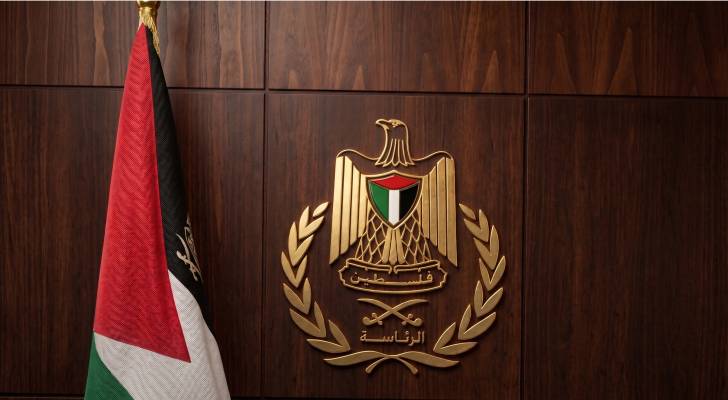
Regarding the technocrat committee, Abdel Hadi notes Israeli Prime Minister Benjamin Netanyahu's objection to the committee's emblem, which includes an eagle and the colors of the Palestinian flag, considering this objection expected, as the committee is Palestinian and it is natural for it to carry national symbols.
Abdel Hadi believes that Netanyahu's objection reflects a fear that the committee's work will mark the beginning of the end of the war on Gaza, and the beginning of a new phase that makes peace possible and reconstruction a reality, stressing that this objection should not be given any political importance.
Israeli Tendency to Thwart Trump's Plan
Writer and political analyst Talal Awkal confirms that Israeli behavior since the presentation of US President Donald Trump's plan, which became clearly evident after the handover of Israeli prisoners and bodies, indicates a clear Israeli tendency to thwart the plan unless it fully meets the conditions set by the Israeli government.
Awkal explains that Israeli handling of the provisions of the second phase of the plan reflects an intention to continue the war on the Gaza Strip, albeit at a less intense pace, driven by internal political and electoral considerations related to the prime minister and his government.
Awkal points out that what encourages Israel to continue this approach is the silence of the US administration and indirect complicity, in addition to Washington's reduced focus on the Gaza file amidst the multiple crises it faces and the prioritization of other files, especially the Iranian file, as political priorities.
Awkal notes a noticeable decline in the role of regional and international mediators, who are now content with demands and condemnations without exerting effective pressure capable of changing Israeli behavior.
Fragility of the Palestinian Situation and Limited Options
Awkal explains that Israel is aware of the fragility of the Palestinian situation and the limited options available, which pushes it to continue pressuring the residents of the Strip through multiple means, including repeated bombing and preventing the entry of tents, caravans, vehicles, and everything that would improve living conditions. Awkal believes that these policies aim to spread chaos and incite internal rebellion, leading to the creation of a conviction among the residents that emigration may become the only option in light of Israel's endeavor to make the Strip an uninhabitable place at its minimum.
Awkal addresses the Israeli measures related to movement through the Rafah crossing, describing them as carrying a clear message to those returning not to return, by subjecting them to humiliating interrogation procedures, in contrast to relative facilities for those leaving.
Technocrat Committee Subject to Israeli Procedures
Awkal points out that the message also extends to the administrative committee expected to return to resume its work, as it too is subject to harsh Israeli procedures despite being a committee that received official cover and Arab approval.
Awkal believes that the committee may return after additional interventions, but this will not change the nature of Israeli dealings with the existing reality in the Gaza Strip.
Granting Israel Room to Maneuver and Carry Out Strikes
Dr. Saad Nimer, Professor of Political Science at Birzeit University, believes that the renewed Israeli raids on the Gaza Strip reflect a reality that has existed since the signing of the ceasefire agreement, which is the continued targeting of Palestinians, especially civilians, as part of Israeli efforts to establish a new security situation that places security control over the Strip in the hands of the occupation.
Nimer explains that this model is very similar to what exists in other arenas, such as the Lebanese model, where a ceasefire does not constitute an obstacle to limited military interventions.
Nimer points out that this reality is based on an American-Israeli understanding that grants Israel room to maneuver and carry out limited strikes against elements or leaders of the Hamas movement during the ceasefire period. Nimer believes that this practically means the continuation of Israeli security control over the Strip, despite the agreement, noting that Israel has not adhered to a number of the first phase provisions, including the entry of humanitarian aid, the opening of the Rafah crossing, and allowing the entry of medicines and basic needs.
Nimer believes that the continued targeting makes the ceasefire closer to being unilateral, in light of Israel's endeavor to establish an equation in which the Gaza Strip is considered an affair subject to the authority of its army.
Absence of Detailed Texts from Trump's Plan
Regarding the Rafah crossing, Nimer explains that the main problem is that the plan proposed by US President Donald Trump's administration, which included a clause to open the crossing after the ceasefire, lacked executive details. It was supposed, according to Nimer, that these details would be discussed within security committees or through the guarantor states of the agreement, namely Qatar, Egypt, and Turkey, but the absence of details allowed Israel to impose its own arrangements, including the establishment of a new crossing known as "Ra'afim," which it uses to inspect travelers, arrest whomever it wishes, and control entry and exit movement and determine the allowed numbers.
Nimer affirms that the lack of objection from the sponsoring states to this scenario is due to the absence of clear detailed texts in the original plan, considering that the Israeli goal of controlling entry through the crossing is to regulate the entry of Palestinians into the Strip and push them to leave it.
Israeli Rejection of Granting the Committee Any Political Dimension
Nimer addresses the file of the technocratic administrative committee for managing the Gaza Strip, pointing out that Israel refuses to grant this committee any political dimension, and insists on limiting its role to civil aspects such as education, health, and reconstruction.
Nimer notes that Israel even objected to changing the committee's emblem, which included a design similar to the Palestinian Authority's emblem, considering this an attempt to pave the way for the Authority's entry into the Strip, which it categorically rejects as part of its endeavor to separate Gaza from the West Bank.
Nimer explains that the future work of the committee will remain contingent on Israeli approvals for various sectors, from the entry of aid and building materials to the management of basic services, which gives Tel Aviv the ability to easily obstruct its work by restricting supplies.
Nimer points out that the committee is linked, in one way or another, to structures established by the American plan, such as the so-called "Peace Council" and its associated executive body, ensuring the continuation of Israeli hegemony.
Nimer believes that Israel will reject any attempt to give the committee a political character or link it to the Palestinian National Authority.
Preventing the Emergence of a Palestinian Entity with Sovereign Characteristics
Writer and political analyst Samah Khalifa believes that the renewed Israeli raids on the Gaza Strip, within the return of scenes of genocide, carry deep political implications that go beyond the direct military dimension, and reflect Israel's insistence on preventing the emergence of any Palestinian entity with sovereign characteristics, even if it comes under the name of a technocratic administration.
Khalifa explains that the main message Israel seeks to convey is to thwart the symbolism of the Palestinian state and undermine any sovereign appearance that could be formed in the Strip.
Khalifa affirms that what is happening in Gaza cannot be considered a passing military escalation or merely a security reaction, but rather a central political act in which Israel uses military force as a tool to reshape the Palestinian and regional scene.
"Maximum Pressure" Strategy
Khalifa points out that the return of violent raids since February 2026, despite talks of de-escalation efforts, falls within the "maximum pressure" strategy adopted by Benjamin Netanyahu's government to achieve specific internal and external goals.
Khalifa explains that the Israeli government employs the continuation of the war internally in light of a deep political crisis facing Netanyahu, by keeping Israel in a permanent state of emergency in which accountability is suspended and political entitlements are postponed.
Externally, which is the most important dimension according to Khalifa, Israel aims to establish an equation that any resistance path, whether military or political, will cost the human existence of Palestinians, and not just the organizational structure of factions.
Khalifa explains that Israel seeks, through military pressure and scenes of destruction, to force Palestinian parties to make fundamental concessions in the disarmament and administration of the Strip files, with the aim of improving negotiation conditions, and also works to impose a new security reality by establishing buffer zones and security lines that ensure full Israeli sovereignty, and prevent the reconstruction of the military capabilities of factions before moving to the next phase of the proposed peace plan.
Khalifa believes that these policies also aim to eliminate any possibility of a unified Palestinian administration with national authority, and to reproduce a politically exhausted and susceptible to security pressure Strip, making it unqualified to be a partner in any future settlement.
The Crossing and the Fear of It Turning into a Tool for "Soft Displacement"
Regarding the Rafah crossing in light of this escalation, Khalifa believes that its partial opening, the delayed arrival of the technocrat committee, and the associated Israeli interventions reflect an identity and sovereignty crisis.
Despite the partial reopening of the crossing in early February 2026, Khalifa explains that movement through it is still restricted by strict Israeli security conditions that allow only about fifty people to pass daily.
Khalifa points out that the current escalation reinforces fears that the crossing will turn into a tool for "soft displacement" under humanitarian cover, instead of being a lifeline to alleviate the suffering of the Strip's residents.
Khalifa affirms that Israel deals with the crossing as a sovereign tool and a political symbol, as any active movement through it or the return of a Palestinian committee with national symbolism is considered, from its point of view, an implicit recognition of the existence of an independent Palestinian administrative entity in Gaza, which Israel rejects.
"The Day After" and Submission to Israeli Standards
Khalifa notes that Netanyahu's objection to the committee's emblem, which includes an eagle symbol similar to the Palestinian Authority's emblem, reflects the essence of the political conflict, as Israel sees the use of Palestinian flag colors as an attempt to link Gaza to the West Bank politically.
Khalifa explains that this symbolic clash has effectively disrupted the tasks of the national committee for managing Gaza, as Israeli insistence on removing any Palestinian sovereign symbolism has delayed its assumption of its civil tasks, while Israel stipulates that the administration must be purely local and stripped of any political or national dimension.
Khalifa affirms that Israel uses military force to dismantle any emerging Palestinian sovereign structure, while employing the crossing file and the symbols crisis as pressure tools to ensure that "the day after" in Gaza is fully subject to its security standards, far from any unified national representation, with the continued obstruction of the committee's return and the postponement of operational understandings until the form of a security-restricted administration, devoid of national symbols and subject to strict international supervision, becomes clear.
Israel's Dissatisfaction with Trump's Plan
Writer and political analyst Daoud Kuttab believes that the renewed Israeli raids on the Gaza Strip, in scenes that recall images of genocide, reflect a political and military direction by Benjamin Netanyahu's government that goes beyond field responses, and is linked to its desire to change the course of the proposed arrangements regarding the future of the Strip.
Kuttab explains that the Israeli government appears dissatisfied with the plan proposed by US President Donald Trump's administration, and remains displeased with Washington's attempts to make unilateral decisions.
Kuttab points out that Israeli military superiority pushes Netanyahu to escalate the situation with the aim of re-occupying the remainder of the Gaza Strip and imposing new realities on the ground.
Seeking to Create a System Completely Subordinate to Israel
Kuttab affirms that Netanyahu's objection to the technocrat committee's emblem, due to its containing an eagle and the colors of the Palestinian flag, reflects a striking paradox that reveals the nature of the Israeli project in Gaza, which is to seek to create a system completely subordinate to Israel.
Kuttab believes that the extremist Israeli government deliberately fabricates justifications for not adhering to the second phase of understandings, and shows a clear desire to thwart Trump's agreement and the proposed administrative committee, in addition to its rejection of any foreign military presence entering the Strip, thereby entrenching its continued direct control over affairs.
Share your opinion
The New Escalation.. An Attempt to Shuffle the Cards and Resume the Genocide