






Cross-referenced information attributed to various diplomatic sources in the American capital, Washington, indicates that the administration of US President Donald Trump is conducting a sensitive review of the concept of Israel's "qualitative military edge," in the context of its preparations to conclude major arms deals with Gulf states, primarily the Kingdom of Saudi Arabia and Qatar. This review comes at a moment of extreme regional turmoil, where considerations of deterrence, alliances, and commercial interests intersect, in a scene that revives old questions about the limits of American commitment to Israel's security.
According to the sources, a high-level official from the Bureau of Political-Military Affairs at the US Department of State visited Israel last week, where he held talks described as partly aimed at addressing Israel's growing concerns. At the same time, American military officials held closed meetings in the Capitol building (Congress) with members of Congress, during which briefings were presented on potential defense deals and their implications for the military balance in the Middle East.
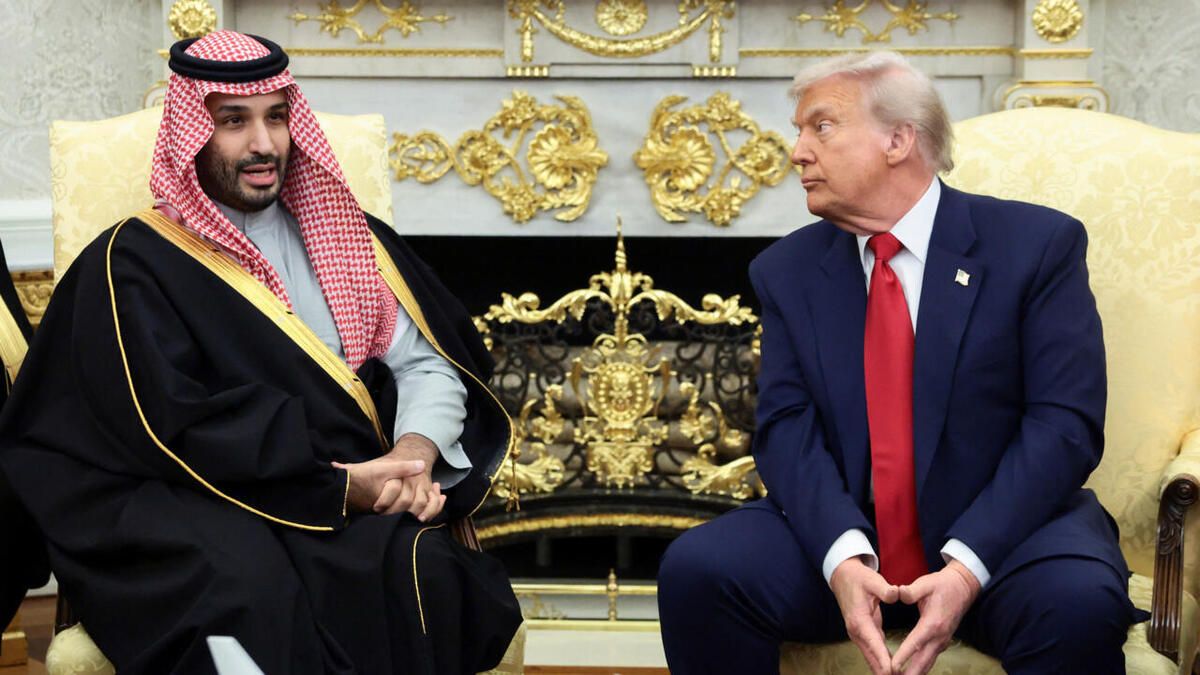
These discussions have been ongoing since the visit of Saudi Crown Prince Prince Mohammed bin Salman to Washington last November, which brought back to the forefront the file of advanced arms sales to Gulf countries. According to informed sources, the Trump administration is not only reviewing specific deals, but is also reconsidering the conceptual framework that has governed Israel's military superiority policy for decades.
An informed source told Al-Quds newspaper correspondent that this review reflects a gradual shift in American strategic thinking, where Israel's military superiority is no longer treated as a fixed given, but as an adaptable element within a broader equation that includes international competition, ensuring the loyalty of Gulf allies, and maximizing economic returns. The source, who requested anonymity, added that "this does not mean Washington is abandoning Israel by any standard, but rather redefining its position within a regional system whose balances are managed in the language of changing interests."
The Trump administration, according to informed sources, is seeking to formulate points of understanding before the end of the year, coinciding with the anticipated meeting between Trump and Israeli Prime Minister Benjamin Netanyahu on December 29, 2025. However, other sources express skepticism about the possibility of reaching a final formula at this time, given the complexities of the file and its sensitivity within the political and legislative institutions in the United States.
The discussions in Congress included members of the Senate Foreign Relations Committee and the House Armed Services Committee, and Senator Republican Lindsey Graham (from South Carolina) met with Israeli Prime Minister Benjamin Netanyahu at the beginning of this week, limiting his public statements to noting his awareness of data related to the rearming of Hamas and Hezbollah, in addition to Iran's ballistic missile program, without directly addressing the file of Gulf arms deals.
Graham's avoidance of publicly delving into the sales file reflects an awareness of its political sensitivity, not an absence of disagreement. Congress, despite Trump's repeated attempts to sideline it on military issues, still possesses effective tools to obstruct or delay arms deals. This makes any understanding with Israel insufficient unless it enjoys broad legislative coverage, especially amid growing divisions over American foreign policy.
According to leaked information, the Trump administration is studying two main deals: the first with Saudi Arabia, including the sale of F-35 fighters, and the second with Qatar within similar talks. Trump had publicly announced, during his meeting with Mohammed bin Salman (last November at the White House), his intention to sell these aircraft to the Kingdom, acknowledging that Israel is pressuring for Saudi Arabia to be provided with a less advanced version. However, the American president hinted at rejecting this proposal, affirming that both countries "are at a level that qualifies them to obtain the latest aircraft."
In contrast, Israel shows increasing concern that the influx of advanced weapons to Arab countries will lead to the erosion of its qualitative military superiority. This concern is inseparable from recent regional tensions, including Israel's targeting of Hamas negotiators in Doha, and Netanyahu's public opposition to selling F-35 fighters to Saudi Arabia.
The paradox is that Israel, which has built its security strategy for decades on monopolizing military superiority, today faces a more fluid regional environment, where power is measured by the ability to build flexible alliances, not by technological superiority alone. With Gulf countries seeking to expand their defense partnerships with Washington, maintaining Israel's superiority becomes a political negotiation matter, not an automatic guarantee.
The concept of Israel's qualitative military edge dates back to the Cold War era, when the United States was keen to ensure Israel's superiority over its Arab neighbors, especially after signing the peace treaty with Egypt in 1979. This concept was legally enshrined in 2008, with the obligation on the American administration to conduct periodic assessments of any arms sales to the Middle East.
Israel is the only country that enjoys an unprecedented right to modify American weapons systems, including F-35 fighters, in terms of software, stealth systems, and radar. However, these privileges, which have long formed the cornerstone of Israel's superiority, now appear to be subject to re-testing amid accelerating regional and international changes.


Share your opinion
Trump Administration Re-tests Israel's Military Superiority Equation in the Middle East