





In light of the escalating challenges faced by our people on the ground, the presidency's statement the day before yesterday presents a clear roadmap that balances steadfastness on rights with institutional building, and it deserves support and action for the following reasons:
1. Commitment to international legitimacy and the democratic path
The statement demonstrates a firm commitment to the democratic path through the pledge to hold general elections within a year of the end of the war. This position affirms that the Palestinian leadership places democracy at the core of its national project and rejects any tyranny or monopoly on power. Elections are not merely a formal procedure; they are a genuine message to the people and the international community about the commitment to democracy, and they will grant Palestinians a real voice in determining their future and participating in building their institutions.
2. The temporary constitution: The most important foundations of the state
The decision to prepare a temporary constitution within three months represents a qualitative leap in the Palestinian national project and reflects the readiness of Palestinians to assume their national responsibilities. This constitution will form:
• A solid legal basis for transitioning from an authority to a fully sovereign state.
• A guarantee of fundamental rights and freedoms.
• A regulatory framework for national institutions.
• A clear message to the international community about the readiness of Palestinians to manage their state democratically and civilly.
3. Clear criteria for political participation
Setting conditions for candidacy in elections obliges everyone to adhere to the political program of the Palestine Liberation Organization and the two-state solution, which is a wise and necessary stance because it:
• Prevents the exploitation of the democratic process by forces that do not accept international legitimacy and its resolutions, which are considered the basis for state formation and upon which state recognition is based.
• Protects the national project from deviating from its objectives.
• Ensures the unity of the Palestinian position in international negotiations regardless of the election results.
• Enhances Palestine's credibility as a reliable partner for peace.
4. Educational reform: An investment in the future
Developing curricula according to UNESCO standards while preserving national identity reflects a wise balance between:
• Openness to international standards and modernity.
• Adherence to national constants and Palestinian heritage.
• Preparing a generation capable of building a modern state.
• Rejecting violence and incitement while preserving the right to legitimate resistance and the foundations of steadfastness on the ground.
Investing in education is an investment in the future of the state and the next generation of leaders and citizens.
5. Social justice and financial transparency
Reforming the system of care for the families of martyrs and prisoners through Law No. (4) of 2025 demonstrates:
• A commitment to international standards in social protection.
• A concern for improving the level of services provided to deserving groups.
• Transparency in financial management that cuts off criticism.
• Respect for the sacrifices of martyrs and prisoners with better organization of support.
6. Resilience in the face of major challenges
The statement acknowledges the tragic reality in Gaza and the West Bank, but it transforms this reality into a motive to move forward towards:
• Enhancing international recognition of the Palestinian state.
• Full membership in the United Nations.
• Confronting attempts at displacement and annexation and strengthening the resilience of citizens on their land.
• Preserving holy sites and land.
7. Balance between struggle, resilience, and institutional building
The statement succeeds in combining:
• Honoring the resilience and sacrifices of the people.
• Working to build modern and effective state institutions.
• Upholding non-negotiable national rights.
• Striving to achieve these rights through diplomatic and legal avenues.
Realistic implementation challenges
Despite the advanced vision and clear roadmap presented in the statement, its implementation faces a number of objective challenges, the most prominent of which are:
• The internal Palestinian division that may hinder the holding of elections or the approval of the temporary constitution unless a comprehensive national consensus is achieved, in addition to the feasibility of holding elections in Gaza and East Jerusalem, which were the reason for the cancellation of the previously announced elections in 2021 due to the occupation's prevention of their implementation there. The division that has lasted for years has posed an obstacle to the unity of the national position and requires sincere consensus to succeed in any political step.
• The Israeli position rejecting any political path leading to an independent Palestinian state, and the continuation of occupation and annexation policies that may empty commitments of their substance. It cannot be denied that the continuation of occupation policies imposes significant pressures on any Palestinian path

OPINIONS
Sun 05 Oct 2025 10:33 am - Jerusalem Time
A comprehensive strategic vision towards building the state
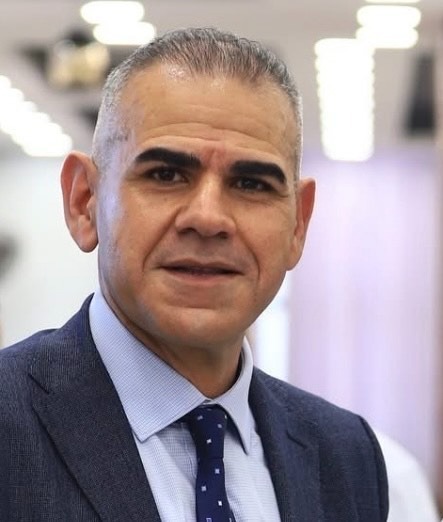
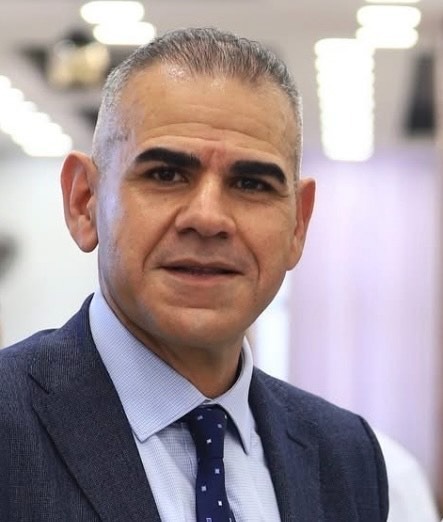
Dr. Anas Salahat
Opinion Writer
Share your opinion
A comprehensive strategic vision towards building the state