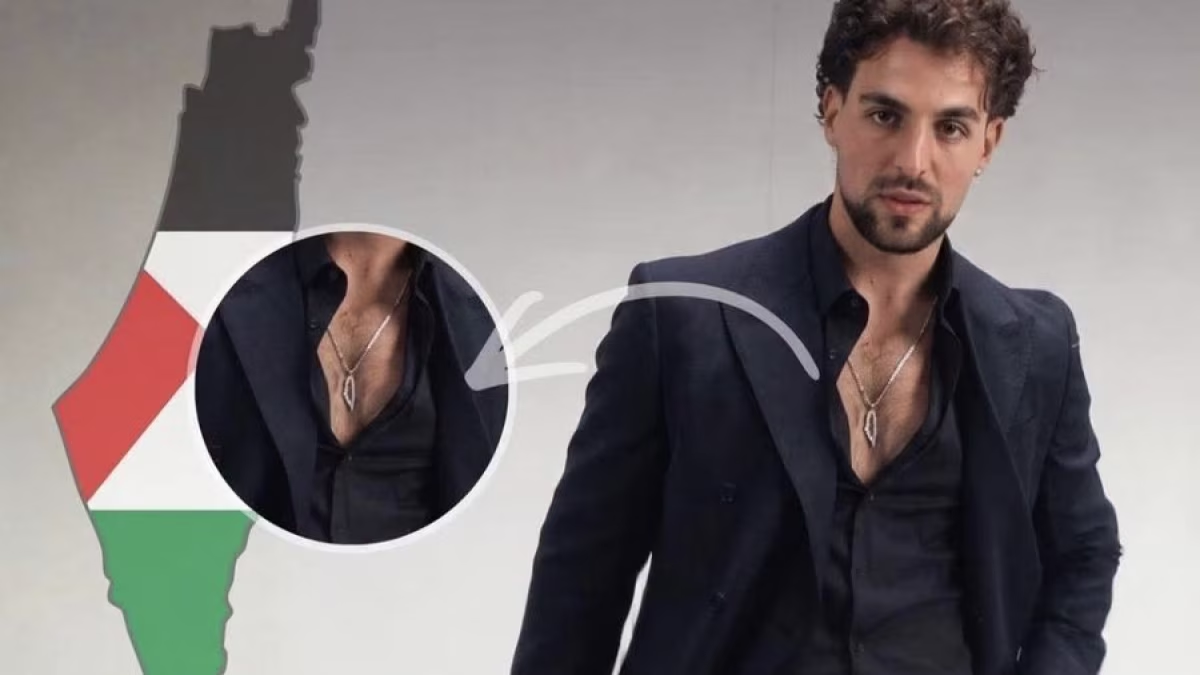







Social media platforms witnessed a widespread wave of attacks targeting the famous Italian fashion house 'Prada', following the appearance of Palestinian singer Marwan Abdelhamid, known as 'Saint Levant', as an advertising face and ambassador for the brand. This tension arose after the company's official account posted a video of the artist during the men's fashion show in Milan, where he appeared wearing a necklace depicting the historical map of Palestine.
Accounts supportive of the Israeli occupation considered the appearance of the necklace to be a political message calling for what they described as 'the erasure of Israel', claiming that the map, which includes the land from the river to the sea, constitutes direct incitement. The campaign was not limited to criticizing the visual symbol but extended to accusations against the global brand of adopting anti-Semitic political stances and explicit calls to boycott its products.
Monitoring sources reported that the controversy began immediately after the launch of the Spring/Summer 2027 fashion show hashtag, with Hebrew and English comments focusing on the details of Saint Levant's appearance. These accounts claimed that Prada was promoting a product bearing a 'fake map', which they considered a 'punch in the gut' and a deep disappointment for occupation supporters around the world.
The digital campaign escalated, with influential figures demanding that 'Prada' clarify its official position on choosing a Palestinian artist as its ambassador. Some posts went as far as to consider this step an explicit declaration of the company's leanings, leading to a wave of interactions that ended with farewell phrases to the brand as a form of consumer protest.
The pressure did not stop at the necklace; the inciting accounts brought up previous stances of the artist Marwan Abdelhamid regarding the Gaza Strip and the Palestinian cause. The instigators tried to link the artist's name to the Amsterdam events that occurred in late 2024, in an attempt to frame his global appearance as support for what they describe as violence or hostility towards Jews.
The former spokesperson for the Israeli government, Eylon Levy, participated in the incitement campaign by reposting photos of the artist with a sarcastic comment inspired by a famous movie, saying: 'The devil wears Prada sometimes.' This type of discourse aims to exert moral and political pressure on global companies to deter them from cooperating with influential Palestinian figures.
A technical analysis of the interaction network showed that the campaign was not spontaneous but was led by organized accounts active in monitoring what they call 'anti-Semitism'. These accounts were distributed across several languages, including Italian, German, and Hebrew, indicating an attempt to internationalize pressure on the Italian company in its main European markets.
In Italy, posts in the local language accused 'Prada' of promoting political symbols calling for the removal of Israel through its new ambassador. In Germany, the same narrative was repeated, considering the historical map of Palestine an unacceptable symbol in international forums, demanding that the company immediately review its advertising contracts.
Open-source data revealed that 'Prada's' official account became the largest node in the interaction network, not as a participating party but as a direct target for thousands of replies and quotes. This digital tactic aims to flood the brand's accounts with criticism to push it towards issuing an apology or canceling cooperation with the Palestinian artist.
Names like 'Hen Mazzig' and 'Heidi Bachram' emerged as active elements in pushing this narrative and expanding its reach among Western followers. These accounts worked to transform a minor detail in a fashion show into an international public opinion issue related to the conflict in the Middle East, warning of the consequences of 'politicizing fashion'.
Artist Saint Levant, born in Jerusalem and of Gazan and Jordanian descent, is known for his clear stances supporting the rights of the Palestinian people in his songs and statements. It appears that his arrival on a global platform like 'Prada' has provoked the circles supportive of the occupation, which seek to obscure the Palestinian narrative from cultural and aesthetic spaces.
The campaign, which included more than 2,800 posts, attempted to exert 'intellectual terrorism' on brands that provide space for Palestinian creators. The interactions included direct messages to international organizations demanding their intervention against what they described as 'promoting extremist agendas' through the facade of high fashion.
Despite significant pressure, 'Prada' has not yet issued an official statement retracting the choice of Saint Levant, which Palestinian activists considered a stand against cancellation attempts. Observers confirm that this campaign reflects growing Israeli concern about the infiltration of Palestinian national symbols into global popular culture.
The 'historical Palestine' necklace remains a symbol of identity for millions of Palestinians and supporters of their cause around the world, despite attempts to criminalize it. This incident reveals the extent of the challenges faced by Palestinian artists in the international arena, where political accusations pursue them even in the fields of art and fashion.
Sometimes the devil wears Prada... a sarcastic comment from Eylon Levy attempting to link the brand to political stances hostile to the occupation.


شارك برأيك
Israeli Incitement Campaign Targets 'Prada' Brand and its Palestinian Ambassador Over 'Palestine Map' Necklace