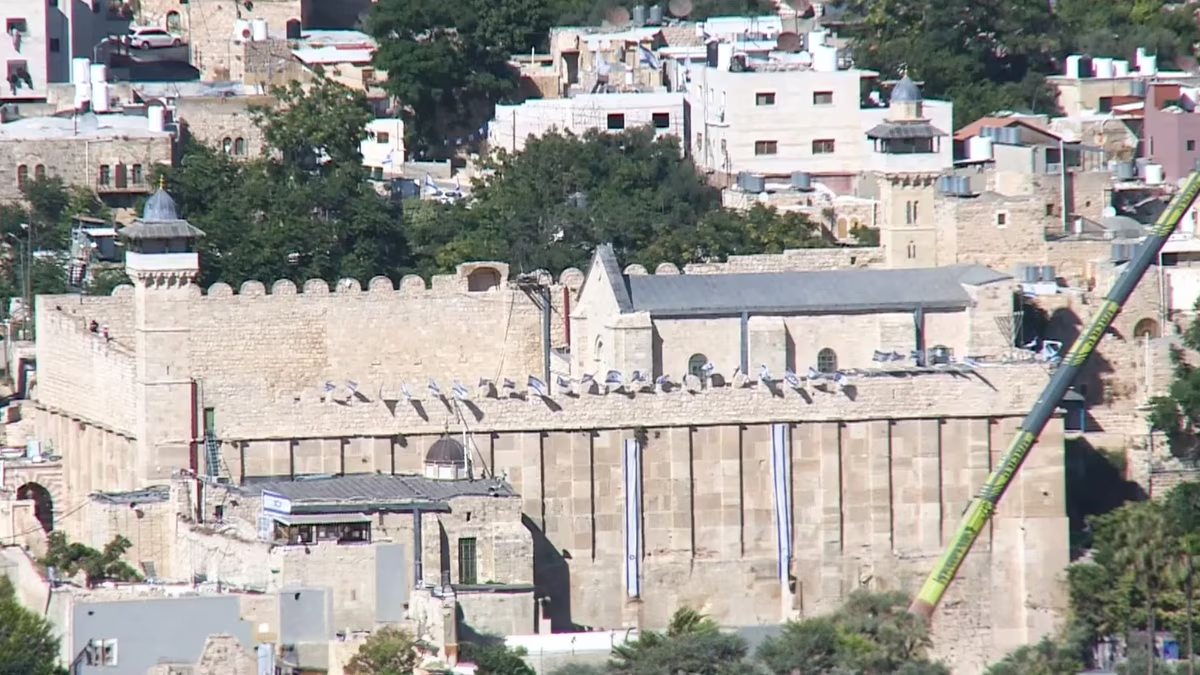







The Ibrahimi Mosque in Hebron is facing a new and dangerous chapter in attempts to alter its historical features and Islamic architectural identity. The Israeli occupation authorities have actually begun constructing a massive iron roof over the open area of the mosque, known as the 'courtyard of the sanctuary,' using heavy machinery and cranes that were brought into the courtyards simultaneously with repressive measures that included preventing the call to prayer.
Field sources reported that these moves aim to impose a new reality on the religious and historical landmark, amidst growing fears from the Palestinian Endowments and Hebron Municipality. These measures are intended to strip national bodies of their legal and administrative powers, and to cancel their original role in managing and maintaining the sanctuary in favor of expanding the surrounding settlement outposts in the heart of the Old City.
For his part, the Mayor of Hebron, Yousef Al-Ja'bari, affirmed that the warnings previously issued by the municipality regarding the withdrawal of powers have now become a tangible reality. Al-Ja'bari explained that the roofing of the courtyard represents a blatant assault on the historical powers of the Endowments and the Municipality, and a deliberate step to erase the Islamic architectural art that has distinguished the sanctuary for many centuries.
In the context of technical warnings, Tawfiq Jahshan, head of the legal department at the Hebron Rehabilitation Committee, pointed to the significant structural risks posed by the roofing project. He explained that the open courtyard represents the natural breathing and ventilation lung for the ancient archaeological building, and that its closure will inevitably lead to moisture retention within the historical walls and erosion of its stones, which could cause dangerous cracks that threaten the safety of the mosque.
This step was not accidental, but rather the culmination of an escalating process that began early this year under the direct patronage of Israeli Finance Minister Bezalel Smotrich. Last January, the so-called Higher Planning Council of the Civil Administration approved the withdrawal of planning powers related to the sanctuary from the Hebron Municipality, in order to bypass the municipality's repeated refusal to grant licenses for Judaization projects inside the mosque.
These measures were reinforced last February by decisions from the mini-cabinet 'Kabinett,' which included the annulment of historical laws that regulated land ownership in the West Bank. This was followed by the transfer of all building permit powers in Hebron from the Palestinian Municipality to the Israeli Civil Administration, in a step aimed at legitimizing settlement expansion within Arab neighborhoods.
By mid-June, Smotrich officially announced the completion of procedures for transferring planning responsibility entirely to the Israeli side, considering it part of a plan to impose field sovereignty. Israeli machinery began on the twenty-third of the same month to remove the historical canopy in the courtyard, as a preliminary step to install the new iron roof that changes the features of the place.
This Israeli move represents a blatant violation of the 'Hebron Protocol' signed in 1997 between the Palestine Liberation Organization and Israel, which divided the city into two security zones. Despite the sanctuary being located within the Israeli security control area 'H2,' the agreement explicitly stipulated that civil powers, including planning, construction, and infrastructure, would remain in the hands of the Palestinian Hebron Municipality.
The occupation seeks through its recent decisions to permanently cancel this legal clause, as it approved the construction of a Jewish religious school with an area of up to one thousand square meters near the 'Beit Romano' settlement. These constructions are taking place without any coordination or approval from the relevant Palestinian authorities, reflecting the occupation's desire to reduce the role of Palestinian national institutions to their lowest levels.
Palestinian officials warn that these changes aim to place the Ibrahimi Mosque, listed on UNESCO's World Heritage in Danger list since 2017, in a direct threat circle. The architectural change not only affects the religious sanctity of the place but also disregards international laws that protect archaeological and historical sites in occupied territories.
The roots of this Judaization plan date back to 1994, following the horrific massacre committed by a settler inside the sanctuary that led to the martyrdom of 29 worshippers, where the occupation exploited the incident to divide the mosque temporally and spatially. Since then, measures have continued to tighten the noose on worshippers by deploying more than 120 military checkpoints and inspection points surrounding the Old City and preventing freedom of worship.
Observers believe that the transfer of planning powers to the religious council of the 'Kiryat Arba' settlement represents the final stage in the plan to isolate the Ibrahimi Mosque from its Palestinian surroundings. This policy aims to transform the mosque into a Jewish synagogue by imposing full constructional and administrative control, intensifying electronic barriers to restrict Palestinian access, and securing settlement expansion in the heart of Hebron.
What the municipality previously warned about regarding the withdrawal of powers is now being implemented through the roofing of the courtyard to erase the Islamic architectural features of the sanctuary.
شارك برأيك
Occupation begins roofing the courtyard of the Ibrahimi Mosque: A plan to erase landmarks and threaten the safety of the historical structure