






The past few hours have witnessed a significant escalation on the ground following official Iranian sources announcing the launch of successive waves of missiles towards Israeli targets. These barrages come as part of what Tehran described as a continuous response to attacks on its territory, confirming that the operation falls under the name 'True Promise 4', directly targeting the Israeli interior.
Inside Israel, medical sources confirmed that seven people were transferred to hospitals in the coastal city of Eilat for treatment due to the impact of Iranian missiles. Field reports indicated that one of these injuries was described as serious, while a state of panic prevailed among settlers following the sound of violent explosions that shook the southern city.
The state of alert extended to include the occupied city of Jerusalem, where sirens blared throughout the city and its surrounding areas, prompting residents to seek shelter. Local sources reported hearing massive explosions in the city's sky resulting from attempts to intercept incoming missiles, while shrapnel fell in various areas.
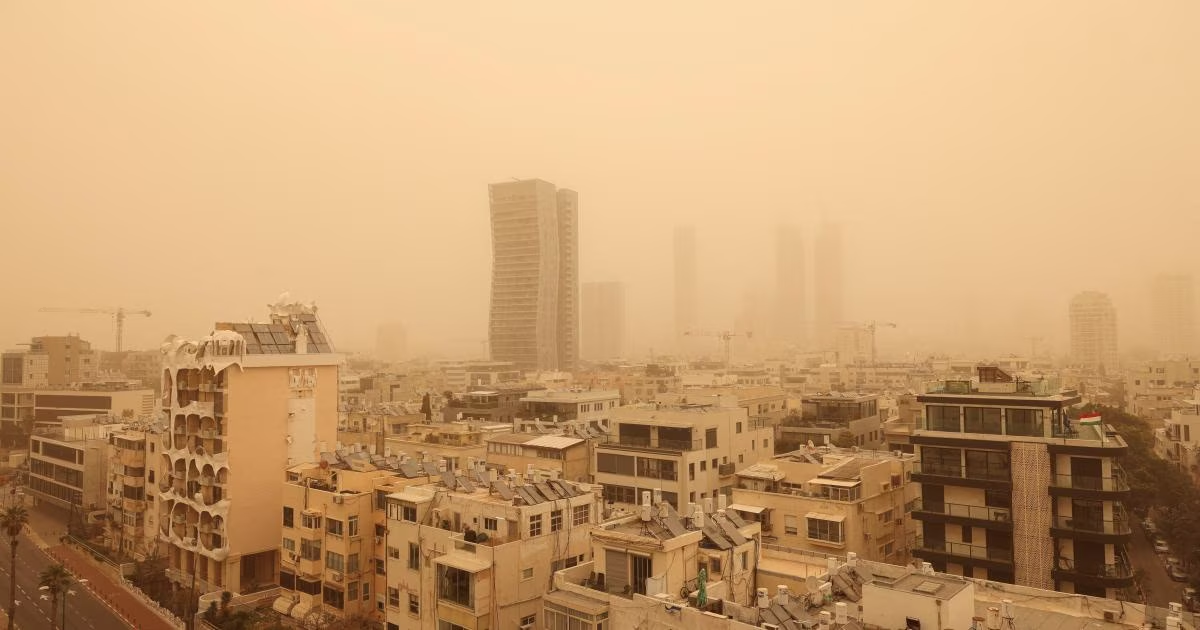
In the greater Tel Aviv area, media outlets reported a missile falling in an open area, causing traffic disruption and halting movement in some facilities. Several sites in central Israel were also damaged by the latest missile barrage, with material damage recorded to infrastructure and buildings near the impact sites.
Regarding the reasons for the change in bombing tactics, informed sources explained that the reduced number of missiles launched in this phase does not mean a decline in capabilities, but rather is the result of a specific military strategy. The first phase of the attacks focused on neutralizing and destroying radars and air defense systems belonging to American and Israeli bases in the region.
This prior neutralization of air defenses made it easier and more effective for missiles to reach their targets than before, reducing the need to launch hundreds of missiles at once to overwhelm the systems. Military leaders believe that a limited number of missiles is now sufficient to achieve direct hits after the decline in interception efficiency on the other side.
In terms of technological development, Iranian forces have begun using the third and fourth generations of their ballistic missiles, which are models characterized by high accuracy and double destructive power. These missiles rely on modern guidance technologies that make them difficult to detect or shoot down before reaching their designated ground zero.
The greatest danger lies in the cluster warheads carried by these missiles, where a single warhead weighs more than a ton of explosives. As the missile approaches its target, the main warhead explodes, fragmenting into more than 80 smaller missiles, ensuring a wide area of destruction and complicating the tasks of rescue and firefighting teams.
In the Western Galilee region, sirens continued to operate for long periods in anticipation of missiles or suicide drones that might enter the airspace from different fronts. The field situation remains prone to further escalation amid the continued Iranian missile barrages and the occupation's vow to respond to these unprecedented attacks.
Iran has started using third and fourth-generation missiles, which are more advanced and accurate and possess cluster warheads that fragment upon reaching the target.
شارك برأيك
Injuries and widespread damage in an Iranian missile attack targeting Eilat and Tel Aviv