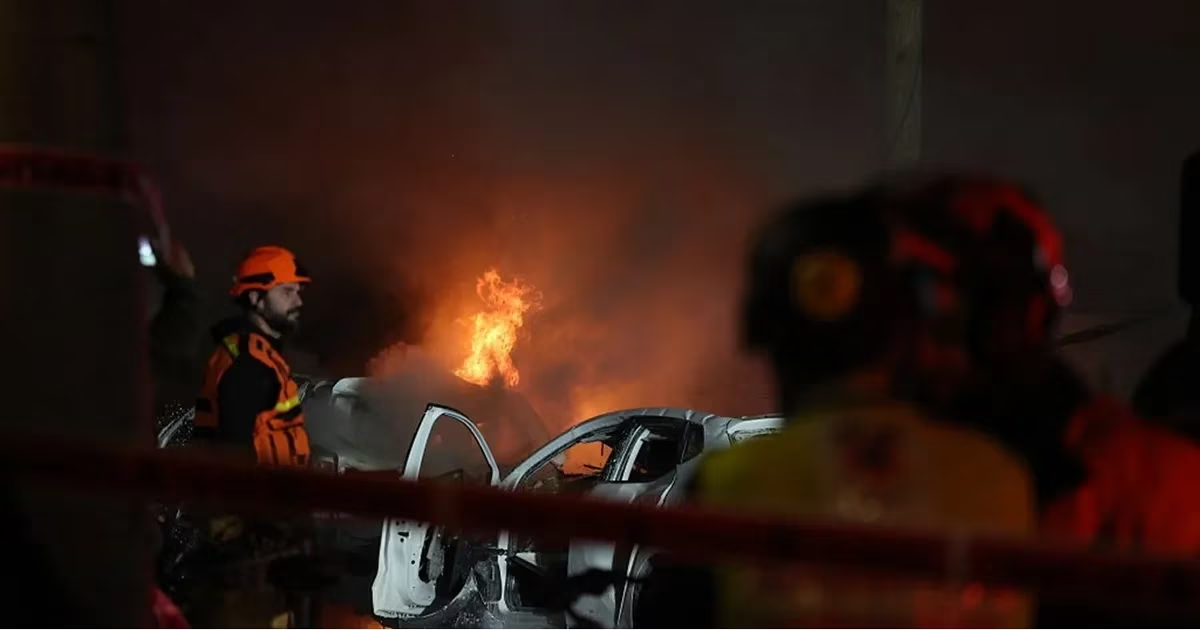







The Israeli economy is facing its toughest test in decades, as hopes for stability recorded at the beginning of 2026 vanished with the outbreak of direct military confrontation with Iran. The economy, which was a cornerstone of the Zionist project, has turned into a continuous drain to finance a broad aggression strategy that includes multiple fronts.
Financial sources reported that the war, which began on February 28, imposed immediate financial burdens that exceeded the capacity of traditional budgets. According to Ministry of Finance estimates, the direct cost of military operations and ammunition amounts to about three billion dollars per week, a figure likely to rise with the continuation of mutual shelling.
The losses are not limited to the purely military aspect but extend to include a near-complete paralysis of commercial and service activity within major cities. These figures reflect the nature of modern wars that strike the joints of the local economy and abruptly halt production in vital sectors.
The call-up of about 100,000 reserve soldiers is a devastating blow to the labor market, as the most productive segments have been withdrawn and turned into a budget-consuming force. This measure has raised overall operating costs to unprecedented levels, with these soldiers currently making no contribution to the GDP.
This financial crisis is being managed amidst a dangerous financial constitutional vacuum, as the general budget for 2026 has not yet been approved. This confusion has led to a funding gap estimated at about 18 billion dollars, complicating the task of the Netanyahu government in managing both war and state affairs.
Economic circles are anxiously awaiting reports from international credit rating agencies such as 'Moody's' and 'Standard & Poor's'. Sources indicated that any new downgrade of the sovereign rating would mean an immediate increase in the 'risk premium' on Israeli debt, diverting resources from developmental spending to debt servicing.
The high-tech sector, which represents the core of economic growth, is suffering from capital flight due to a lack of stability. As this sector is considered 'fickle capital,' the continuation of military operations is pushing international companies and investors to seek safer environments away from the conflict zone.
Geopolitical tensions have contributed to a global rise in oil prices to $80 per barrel, which directly translated into imported inflation. The final Israeli consumer is currently bearing the additional costs of transportation, production, and essential goods affected by rising energy prices.
On the ground, the war continues on its eighth day with thousands of airstrikes targeting Iranian depth, while Tehran responds by targeting vital bases and facilities. Reports reveal the exorbitant cost of air defenses, with a single 'Patriot' missile costing 3 million dollars to counter inexpensive drones.
These economic pressures coincide with escalating internal tensions, as police dispersed demonstrations in Tel Aviv, Haifa, and West Jerusalem rejecting the continuation of the war. Protesters raised slogans holding Netanyahu responsible for the failure, describing his government as the 'October 7th government' leading the country to ruin.
The occupied West Bank is also witnessing parallel escalation, with settler attacks increasing by 25% since the start of the war on Iran. These attacks have led to the martyrdom of Palestinians in Qaryout, further complicating the security and political landscape for the Israeli government.
Analysts believe that economic repercussions will be the main driver for Israeli voters in the general elections scheduled for next October. The cost of living and rising prices are expected to lead to changes in the party map and electoral slogans that will attempt to appeal to the angry public.
Benjamin Netanyahu may find himself unable to return to power despite his attempts to export 'military victories.' The voter who bears the exorbitant costs of war may prefer political change over the continuation of the financial and human bleeding caused by extensive military adventures.
Ultimately, the Israeli economy appears as a soft underbelly in the face of a long-term regional war for which financial calculations were unprepared. With continued shelling and destruction, the question remains about the ability of financial institutions in Tel Aviv to withstand a budget deficit that worsens day by day.
The direct weekly losses of the war exceed three billion US dollars, imposing a financial burden that goes beyond the capacity of the emergency budget.
شارك برأيك
Billions Bleeding: War with Iran Pushes Israeli Economy to the Brink of Collapse