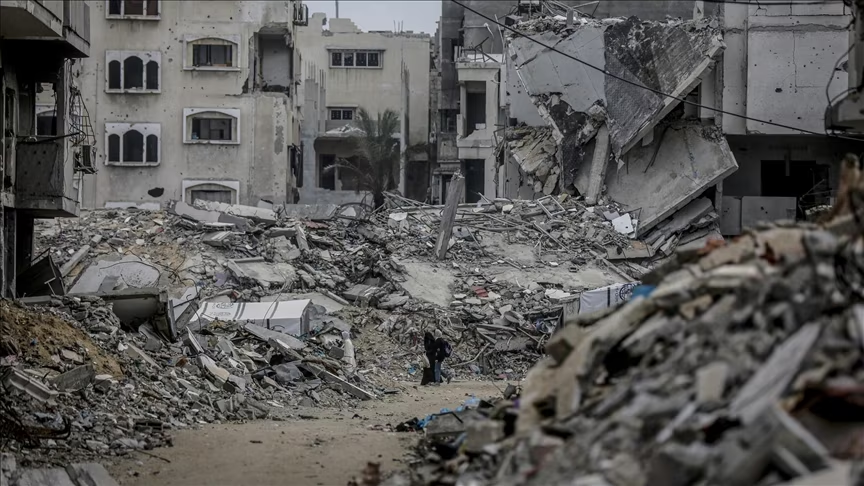







On Saturday evening, a dilapidated residential building collapsed in the Jabalia al-Nazla neighborhood north of the Gaza Strip, which had previously been bombed by Israel during the genocide war.
Civil Defense spokesperson Mahmoud Basil clarified that the building belonging to the "Al-Tayeb" family collapsed near the Al-Nazla intersection north of Gaza City, noting that no injuries were recorded.
According to eyewitnesses, the house was bombed by Israel during the genocide war that lasted two years, where the ceasefire came into effect on October 10 last year.
With the agreement taking effect, some Palestinians returned to live in their destroyed homes or on their ruins, amid the lack of alternatives, especially mobile homes.
Despite the great dangers, Palestinians prefer to live inside the bombed houses over staying in tents that cannot protect them from rain or cold.
A low-pressure system caused the collapse of at least 13 homes in the Gaza Strip, all of which had been previously bombed, according to the government media office.
During the genocide war, the northern Gaza governorate was subjected to a "city eradication" policy, leading to widespread destruction of homes and infrastructure.
Palestinian officials warned of the dangers of living in dilapidated homes, where there are no alternatives due to Israeli restrictions on the entry of temporary homes.
Several bombed buildings collapsed in various areas of Gaza, resulting in the death and injury of many Palestinians.
Despite the end of the war, the living reality in Gaza has not improved due to Israeli restrictions on the entry of aid, which violates humanitarian protocols.
The Israeli genocide war that began on October 8, 2023, resulted in more than 70,000 killed and 171,000 injured, most of them children and women.
Living in the bombed-out houses remains less harsh than staying in tents made of worn-out fabrics.

شارك برأيك
Collapse of a residential building in Jabalia after previous Israeli bombing