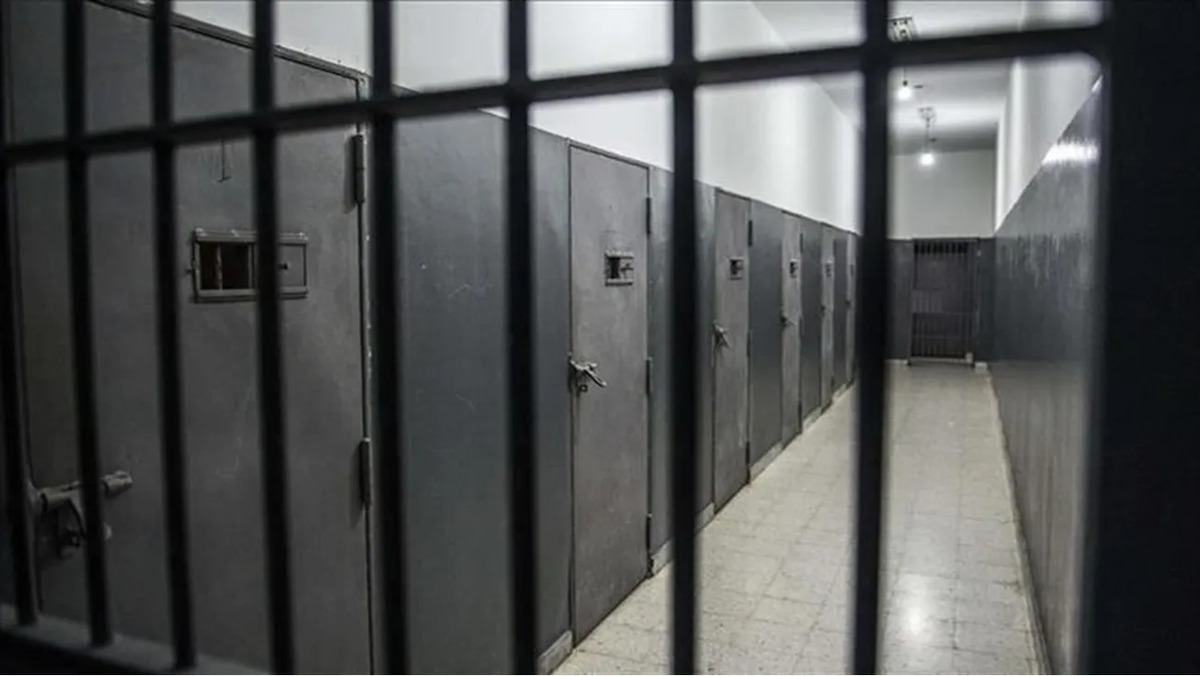







N.A., who is 42 years old, concludes her testimony to the Palestinian Center for Human Rights by saying: "On this day, I was raped twice. I was left for a whole day without clothes in the room where I stayed for three days. On the first day, I was raped twice, on the second day twice, and on the third day I remained without clothes while they looked at me through the door and filmed me. One of the soldiers told me: 'We will publish your pictures on social media.' During my time in the room, I got my period, so I was asked to wear clothes and then transferred to another room."
In another testimony, A.A., a 35-year-old Palestinian man and father, recounts his arrest from Al-Shifa Hospital in March 2024, detailing 19 months of torture: stripping, foul insults, threats of rape against him and his family, culminating in his rape by a trained dog inside the Sdeh Teyman military detention center.
Who are these soldiers behind these testimonies? What values and morals do they belong to? What is the stance of the relevant international institutions regarding this type of crime against prisoners? And why, when similar crimes occur in Africa or Syria or against Yazidis in Iraq, are conferences held and attention drawn, while the voice is swallowed when the victims are Palestinians?
Does the world consider what is happening in Palestine merely "side effects of the conflict," or have the scenes of killing, destruction, displacement, and starvation overshadowed everything else, drawing the curtain of forgetfulness over the sexual crimes in the cells? The testimonies documented by the Palestinian Center for Human Rights reveal the commission of rape and sexual torture crimes behind iron bars and soundproof walls where screams suffocate.
In prisons run under the authority of the extremist Ben Gvir, the occupation practices a series of atrocities that are no less brutal than massacres. These testimonies burden the human conscience with the weight of broken dignity and shattered humanity.
On the other hand, the military prosecutor at Sdeh Teyman prison is being pursued for allowing the leak of a video showing a soldier committing a forced sexual act against a prisoner from Gaza. The crime itself does not shake the occupation system, while criticism is directed at those who exposed it! This paradox alone is enough to expose the logic of the military institution governing the prisons.
The center has documented cases of rape, sexual harassment, and physical humiliation from the mouths of survivors, despite the fact that the norm does not lean towards disclosing such shameful crimes, for reasons related to Palestinian cultural privacy, while the occupation authorities turn the bodies of prisoners into tools for revenge and breaking will.
This aligns with the expansion announced by UN Secretary-General Antonio Guterres to define sexual violence related to armed conflict, including occupation, as a crime in itself and relevant to the conflict itself, rather than "collateral damage of war."
Torture in the occupation's prisons is neither random nor individual. It is a systematic, planned mechanism aimed at dismantling the Palestinian identity. The occupation does not stop at killing outside the prison; it continues inside the cells with a method of body occupation and stripping away humanity, within a tightly controlled system of humiliation and dominance, closed off from view.
What should we do? It is not enough to publish a report from the Human Rights Council; rather, it must be transformed into an open battle to isolate the occupation until the end and the last point in the lines of the documents and testimonies presented.
National and international campaigns are needed to shed light on these crimes, to communicate with international organizations and media, to push the United Nations to open investigations, to convert testimonies into legal files presented to international courts, and to pursue every responsible party for the crime, preventing them from escaping punishment, because silence is complicity, and anyone who remains silent is a partner.
Waiting gives the occupation a green light to continue. All this happens and is publicized, while the world continues to attempt to sell us plans that carry the title of peace, which keeps the occupation close to the trap.
It is not enough to read the testimonies; rather, the stories of prisoners and their sufferings should be transformed into media and cinematic material that shows the world that the crimes of the occupation do not only occur in open killing fields, but in the closed corridors of prisons where unseen atrocities are committed.
And I conclude with what one of the detainees said in her testimony, to serve as a motivation to raise the voice of prisoners: "I was violated several times. No one hears. No one sees. Everything starts like an ordinary day, then turns into an unbearable night. This is not an imagined narrative, but a reality recorded in
شارك برأيك
Crimes in the Occupation's Prisons