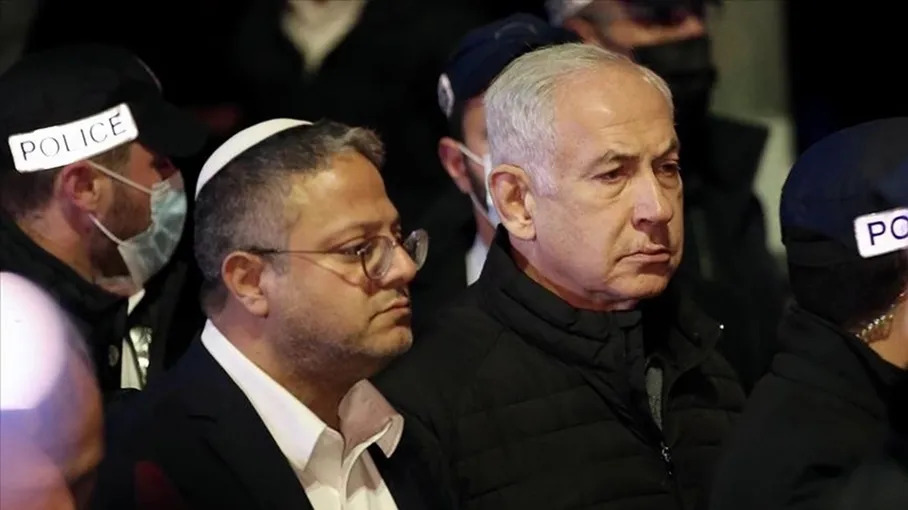







The British magazine "The Economist" discussed in its extensive report on Israeli Prime Minister Benjamin Netanyahu how his political tactics aim solely to prolong his stay in power, even at a high cost to the residents of Gaza and Israeli prisoners. Six months after taking office, the new Chief of Staff of the Israeli army, Eyal Zamir, publicly contradicted Netanyahu's government policies, showing a clear divergence in strategies.
On August 24, during his visit to a naval base, Zamir indicated that the army had prepared the conditions for the release of prisoners, reflecting direct messages to Netanyahu. Zamir opposes Netanyahu's plan to completely occupy the city of Gaza, considering a ceasefire to be the most viable option, but he is compelled to carry out political orders.
The absence of a clear strategy from the occupying government has created rising tension between the military establishment and Netanyahu's government, reflecting a state of internal instability. The magazine noted that Netanyahu's evasions have reached unprecedented levels, exacerbating the suffering of Gaza's residents and threatening the lives of Israeli prisoners.
Last July, Netanyahu asked the army to prepare a plan to establish a detention camp in southern Gaza to gather the sector's population, but the army rejected the plan as impractical, prompting Netanyahu to narrow it down to a more focused goal centered on the city of Gaza.
On a humanitarian level, the occupying government prevented the entry of aid into Gaza for more than two months, before later allowing minimal amounts through convoluted channels, resulting in the deaths of hundreds of Gazans from starvation while trying to reach food distribution centers.
The report indicates that large parts of Gaza have been classified as being in a state of famine, which the occupation denies. Diplomatically, the occupying state continues indirect talks with Hamas regarding a prisoner exchange agreement, but Netanyahu rejects any agreement that does not align with his conditions.
Netanyahu's strategy relies on maintaining his far-right coalition and attempting to market a military "victory" in Gaza to regain the trust of the Israeli street. However, opinion polls indicate a significant decline in his popularity, placing him in a weak position.
Three-quarters of Israelis support a prisoner exchange deal that includes ending the war, while hundreds of thousands take to the streets to demand it. Nevertheless, Netanyahu continues to ignore these voices, clinging to a war rhetoric.
The magazine points out that Netanyahu believed his military operations against Hezbollah and the brief war with Iran would enhance his image as a leader, but the results were the opposite, revealing his government's failure to decisively confront Hamas.
As the occupying state approaches scheduled elections in October 2026, forecasts indicate a decline in his popularity, but he bets on weakening the opposition to prevent the formation of a cohesive political alternative.
The Economist sees that these maneuvers may benefit him tactically, but they are fraught with strategic risks, especially since the urgent humanitarian priorities in Gaza and the conditions of the prisoners remain outside his calculations.
Netanyahu's continued evasion reflects his insistence on maintaining his position at the expense of civilian lives.

شارك برأيك
Economist: Netanyahu continues to maneuver to stay in power at the expense of Gaza's blood.