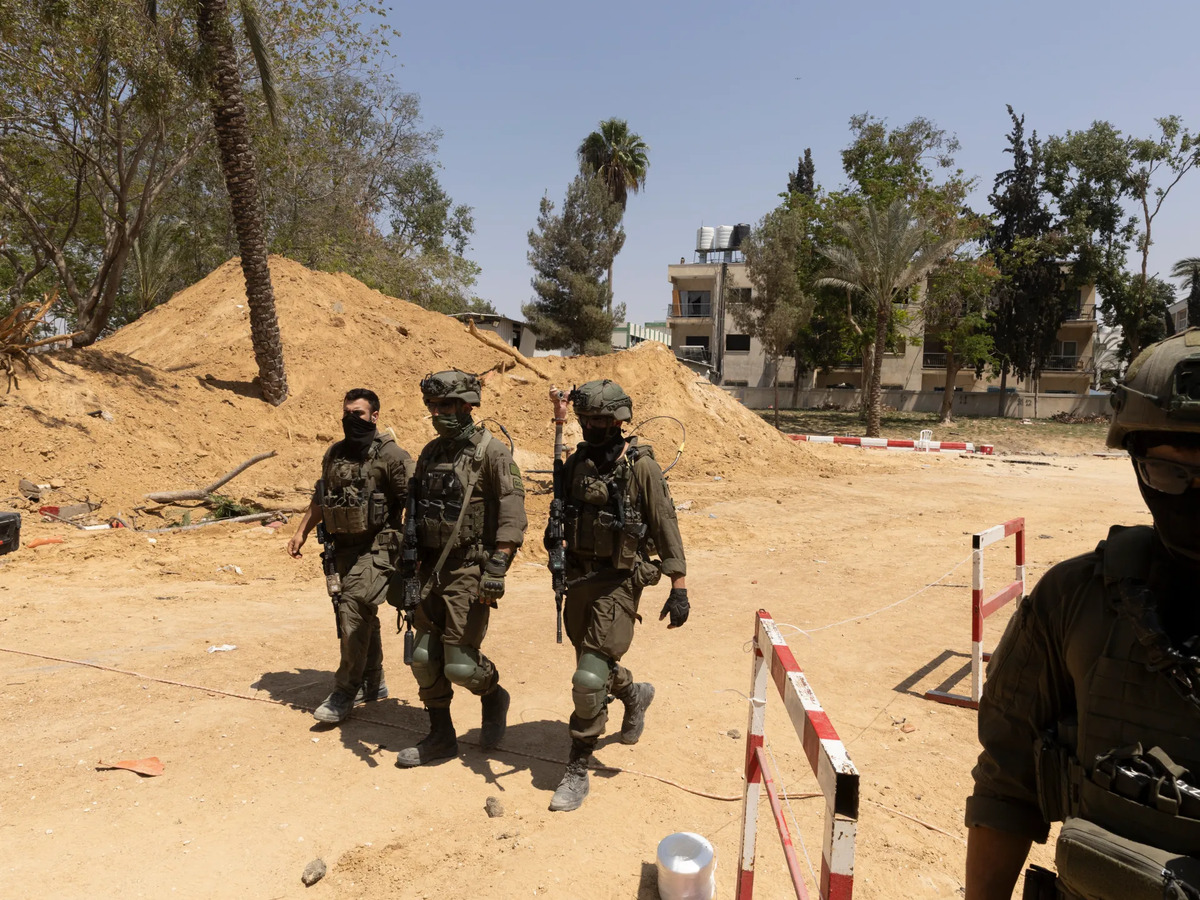







Tzvi Barel, a Middle East affairs analyst, believes that Israel's decision to adopt the option of full occupation of the Gaza Strip represents a significant shift in the course of the war, as the issue of prisoners has been marginalized in favor of the larger goal of eliminating Hamas's rule.
The decision issued by the Israeli security cabinet last Friday has turned the goal of freeing prisoners into a marginal objective, reflecting the Israeli leadership's conviction that direct military control is the only way to ensure that Hamas does not return to power.
Barel believes that this control will not be limited to security aspects but will impose on Israel broad legal and humanitarian responsibilities under international law, including the reconstruction of governance and services in Gaza, which have been completely destroyed.
If occupation is not achieved, the mere threat of it is intended to be a 'doomsday weapon' that destroys all forms of life in the besieged sector, showing Hamas that it may lose control over the land and sources of income.
Barel points out that this threat negates the previous assumption that prisoners represent a 'strategic value' in Hamas's hands, as there is no longer a need to negotiate their release in light of the option of occupation.
The current situation is fundamentally different from the period before the withdrawal in 2005, when there was an existing administrative and economic structure in the West Bank and Gaza, which facilitated the management of the withdrawal. Today, Hamas's civil institutions are collapsed, meaning that Israel will have to re-establish sectors of education, health, and services.
This path entails strategic risks, as the occupation will face a devastated population that holds Israel responsible for its tragedy, which could lead to the emergence of a new generation of armed resistance.
Without a comprehensive political solution, this generation may not seek goals beyond the borders of the sector but will find them close in the Israeli forces and the military government.
Barel warns that the experience of the American occupation of Iraq could be repeated in Gaza, where tens of thousands who worked under Hamas's rule cannot simply be excluded due to the absence of a qualified alternative.
Ultimately, the author sees that Israel is faced with a highly complex equation; the military overthrow of Hamas does not guarantee stability but may open the door to a long-term conflict unless this step is accompanied by a genuine political path.
The military overthrow of Hamas does not necessarily guarantee stability or security, but may open the door to a long-term conflict.
شارك برأيك
Article in Haaretz: Israel plans to occupy Gaza but does not want to bear the responsibility for its decision.