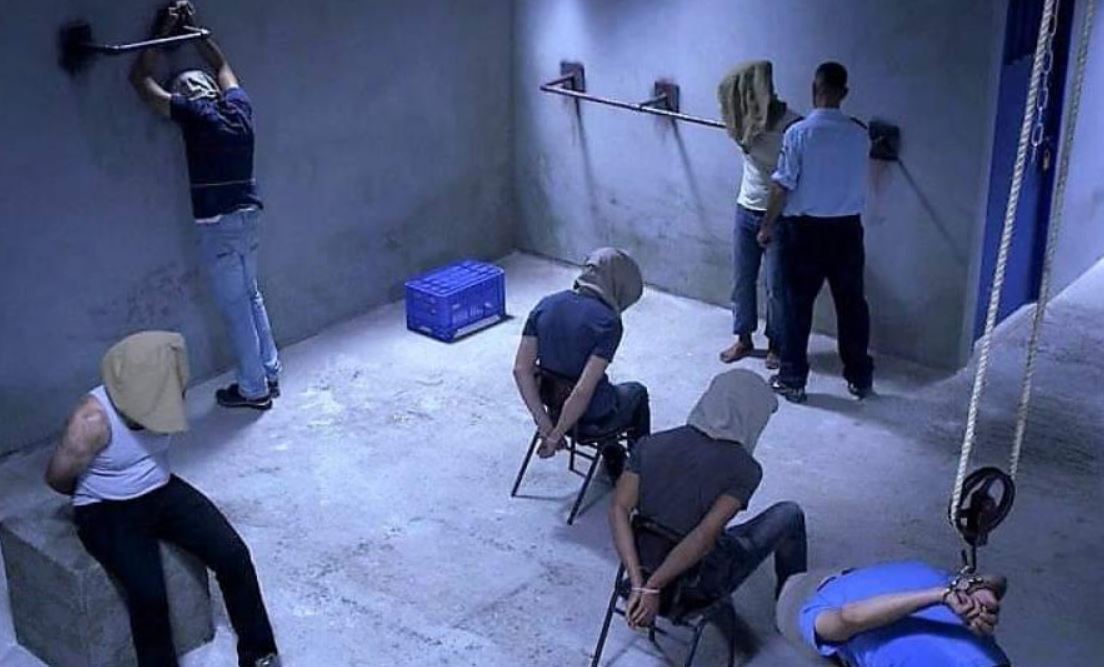







Palestinian prisoners, a large proportion of whom are minors, in Israeli prisons, particularly at Megiddo Prison, suffer from a deliberate policy pursued by the Prison Service that results in famine and the spread of epidemics, leading to weight loss, emaciated bodies, and, in some cases, the deaths of prisoners. Prisoners also suffer from ongoing torture and violent practices by jailers.
One such case occurred last March, when 17-year-old prisoner Walid Ahmed collapsed in the Megiddo prison yard and died. A report written by a doctor commissioned by the family of the deceased prisoner, who attended the autopsy, revealed that Walid's body was almost devoid of fatty tissue—a fatty tissue the human body cannot survive without, as it stores energy, insulates heat, cushions organs, and is involved in the production and regulation of hormones. He also suffered from two epidemics prevalent in the prison: scabies and enteritis.
However, Israeli authorities did not investigate Walid's death. According to a comment from the Israeli Ministry of Health, "According to the law, unusual findings (of an autopsy) are transferred to the relevant authorities." The police's prisoner investigations unit also did not investigate Walid's death, according to Haaretz newspaper on Friday.
The human rights organization Physicians for Human Rights reported last month that scabies was also widespread in the Ketziot (Negev desert prison), Ganot (southern Negev), and Ayalon (Ramle prison), where Palestinian prisoners are held. In a statement submitted by the organization as part of a petition to reduce food supplies to prisoners, the prisoners reported significant weight loss. The newspaper quoted lawyers as saying that the worst conditions were experienced by prisoners at Megiddo Prison.
Since the beginning of the war on Gaza, five prisoners have been martyred in Megiddo Prison and seven in the Negev Desert Prison. The Palestinian Prisoners' Club reported that 73 prisoners have been martyred in Israeli prisons. The bodies of two prisoners bore signs of torture and severe violence. Prisoners reported that prison guard violence is common in prisons.
The newspaper quoted a freed minor prisoner from Nablus as saying, "No one gets enough in prison. The jailers would bring a plate of rice for ten people in the cell. That's enough for one person, but we all shared it."
He added that this was a lunch, but the other meals were also very small, noting that a piece of cheese "was not enough to cover a piece of bread." The jailers never responded to a family's requests for more food. The minor prisoner confirmed that he "went to bed hungry every day" he spent in prison.
Other prisoners reported that the quality of food in Megiddo Prison was extremely poor, with "the salad sometimes being rotten and the rice not being cooked," and they told their lawyers that the amount served to prisoners in the cell was "two or three spoonfuls per meal."
The newspaper added that these practices against prisoners are the result of the policies of National Security Minister Itamar Ben-Gvir, who ordered a dramatic change in the living conditions of Palestinian prisoners after the start of the war on Gaza. These changes included preventing prisoners from going to the canteen (prison store), removing cooking utensils and appliances from their cells, and reducing food intake to the minimum required by law.
In response to a petition submitted by the Association for Civil Rights in Israel, the Prison Service claimed to have increased the amount of food provided. It attached a list of the food items provided to Palestinian prisoners compared to the food provided to criminal prisoners. The list showed that prisoners receive half the amount of meat provided to criminal prisoners, and that prisoners receive no fruit or sweets at all, unlike criminal prisoners.
However, the testimony of two minor Palestinian prisoners revealed that, until the beginning of this year, they had not received the meager food menu the Prison Service had promised the court. The testimony of all the Palestinian prisoners also confirmed that they were constantly hungry.
A large number of prisoners were afflicted with scabies and gastroenteritis, leaving them unable to get out of bed, even to go to the bathroom. Several reported that "medics would come to the cell, look out the window, give us Acamol, and tell us to eat rice and bread, nothing else."
At the end of last year, the Israeli Prison Service announced, in response to a petition, that approximately 2,800 Palestinian prisoners had contracted the contagious scabies epidemic. Human rights organizations reported that many prisoners suffered from both scabies and gastroenteritis simultaneously.
Clinical microbiologist Professor Amos Adler wrote in a memorandum submitted by Physicians for Human Rights to the Prison Service regarding the outbreak of gastroenteritis, that "the possible causes of the outbreak are overcrowding, malnutrition, and poor hygiene."




شارك برأيك
Starvation and epidemics in Megiddo prison: The body of a martyred prisoner lacks fatty tissue.