






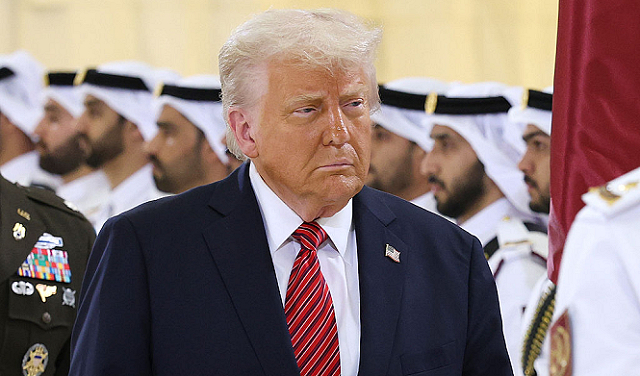
US President Donald Trump announced on Thursday a new travel ban targeting citizens of 12 countries, along with restrictions on entry for citizens of seven other countries, under the pretext of "protecting Americans from foreign terrorists," as he put it.
According to a statement issued by the White House, this decision will take effect on June 9, and the complete ban includes citizens of Afghanistan, Burma, Chad, the Republic of the Congo, Equatorial Guinea, Eritrea, Haiti, Iran, Libya, Somalia, Sudan, and Yemen.
Countries that have imposed partial restrictions on their citizens include: Burundi, Cuba, Laos, Sierra Leone, Togo, Turkmenistan, and Venezuela.
The Trump administration justified this move by citing weak governance in these countries and the frequent cases of their citizens remaining in the United States after their visas expired. Iran was specifically designated for its "support for terrorism," according to the statement.
These restrictions exclude certain visa categories and individuals whose travel is in the US "national interest," including athletes participating in international events such as the 2026 World Cup and the 2028 Los Angeles Olympic Games.
For its part, Venezuela condemned the decision, describing travel to the United States as "highly dangerous." Jamal Abdi, president of the National Iranian American Council, expressed his regret, saying the ban "will not enhance America's security but will increase the suffering of Americans, especially those of Iranian origin."
Trump cited the recent attack in Boulder, Colorado, in which a man of Egyptian descent threw Molotov cocktails at pro-Israel protesters, chanting "Free Palestine," injuring 12 people. The attacker has been charged with attempted murder and a hate crime and is scheduled to appear in court soon.
Although the attacker was Egyptian—a country not covered by the ban—Trump noted that the incident highlights the danger posed by foreigners entering the country "without vetting," especially from countries whose systems cannot be trusted.
He considered this decision a continuation of the restrictions he imposed during his first term, which included Muslim-majority countries, claiming that they contributed to protecting the country from attacks similar to those that occurred in Europe.
He concluded by saying, "We will not allow what happened in Europe to become a reality in America. We cannot accept immigrants from anywhere unless we are able to securely and accurately verify their identities."
شارك برأيك
Trump bans entry to citizens of 12 countries, including Libya, Sudan, Yemen, and Iran.