






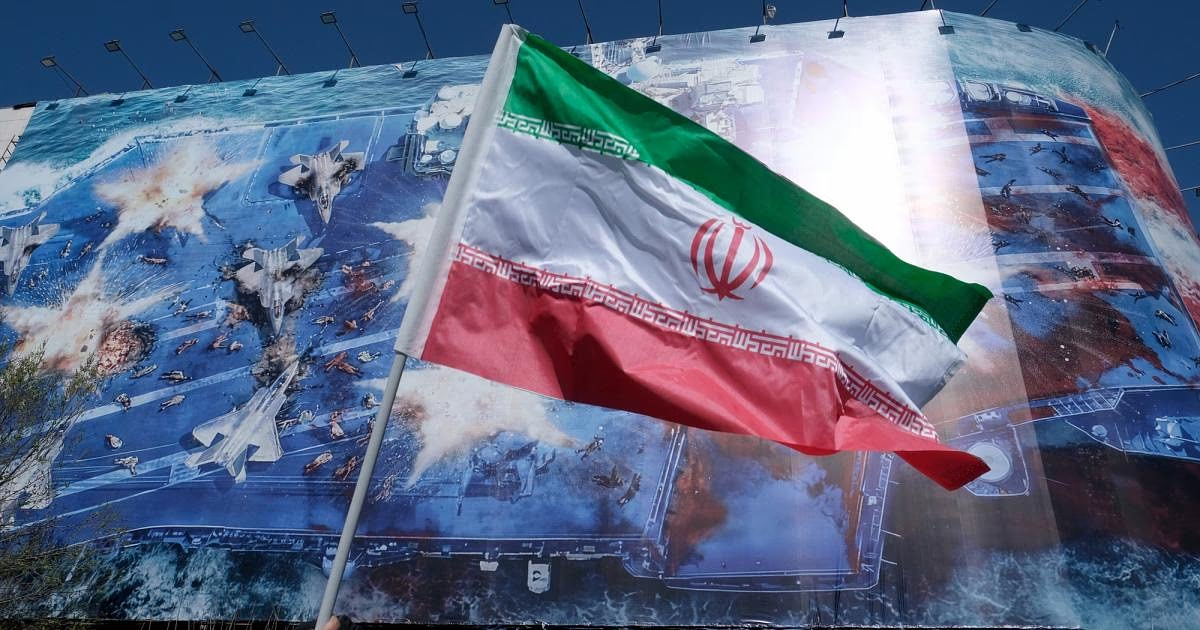
Iranian authorities confirmed today, Monday, that the naval blockade imposed by the United States constitutes a dangerous escalation and a direct expansion of the war in the region. The command of the 'Khatam al-Anbiya' Central Headquarters, responsible for military operations, clarified that recent American movements directly target the stability of regional navigation.
An Iranian military command statement indicated that US forces issued explicit threats to commercial vessels and oil tankers while they were transiting in the territorial and coastal waters of the Islamic Republic over the past three days. Tehran considered these practices to contribute to the exacerbation of maritime insecurity and push the region towards a broader confrontation.
In contrast, the US Central Command (CENTCOM) revealed strict field measures, announcing the rerouting of 17 commercial vessels to ensure compliance with the imposed blockade. US sources also confirmed the decommissioning of two ships and the execution of thorough boarding and inspection operations on other vessels as part of what it described as enforcing maritime discipline.
These developments come after a period of cautious calm that followed two weeks of mutual military escalation, during which Washington launched attacks on Iranian targets, to which Tehran responded by targeting US military installations in several Arab countries. Anticipation now prevails regarding the outcome of the intensive diplomatic efforts taking place behind the scenes.
For his part, the spokesperson for the Iranian Ministry of Foreign Affairs, Ismail Baqaei, stated that his country would not allow the United States to impose its agenda regarding the timing of war or peace. Baqaei stressed that Tehran possesses the necessary tools, both defensive and diplomatic, to respond to any developments imposed by the current phase.
Regarding the strategic Strait of Hormuz, the Iranian spokesperson clarified that the waterway remains closed to maritime traffic so far. He noted that there are positive consultations with a delegation from the Sultanate of Oman regarding the regulation of navigation, while denying any direct negotiations with the American side at present.
On the American side, President Donald Trump announced his decision to temporarily suspend military strikes against Iranian targets. Trump explained that this decision was made to give diplomatic efforts a new opportunity to reach understandings that would end the existing crisis, in response to requests from active mediating countries in the matter.
The US President threatened to return to the option of strong and extensive military action if the current negotiation path fails. Trump affirmed in press statements that negotiations are primarily focused on reopening the Strait of Hormuz and reaching a comprehensive agreement regarding the Iranian nuclear program, stressing that the time allotted for diplomacy will not be long.
Trump mentioned that the temporary ceasefire decision he made last Friday contributed to calming global markets, as oil prices fell and stock markets experienced a significant recovery. He expressed his belief that the Iranian leadership has a genuine desire to reach an agreement that ends the state of direct military confrontation.
The roots of the recent escalation date back to last February, when US and Israeli military operations against Iran began, resulting in thousands of casualties according to Iranian estimates. This was followed by military responses from Tehran targeting American and Israeli interests, leading to an unprecedented exacerbation of the regional crisis.
Washington and Tehran had signed a memorandum of understanding last June as a first step towards a final agreement, but deep disagreements prevented its completion. The main points of contention revolve around guarantees of freedom of navigation in the Strait of Hormuz, which is the main lifeline for global energy supplies and international trade.
The situation in the region remains suspended between the options of comprehensive military escalation or reaching a diplomatic settlement that guarantees the interests of all parties. International and regional powers are cautiously monitoring the results of the ongoing negotiations, amidst warnings that any failure could lead to an uncontrollable explosion of the situation.
Washington has threatened commercial vessels and oil tankers sailing in Iranian territorial and coastal waters over the past three days, and this step increases insecurity and expands the scope of the war.
שתף את דעתך
Tehran warns of 'war expansion' due to US naval blockade, Trump conditions escalation on successful negotiations