






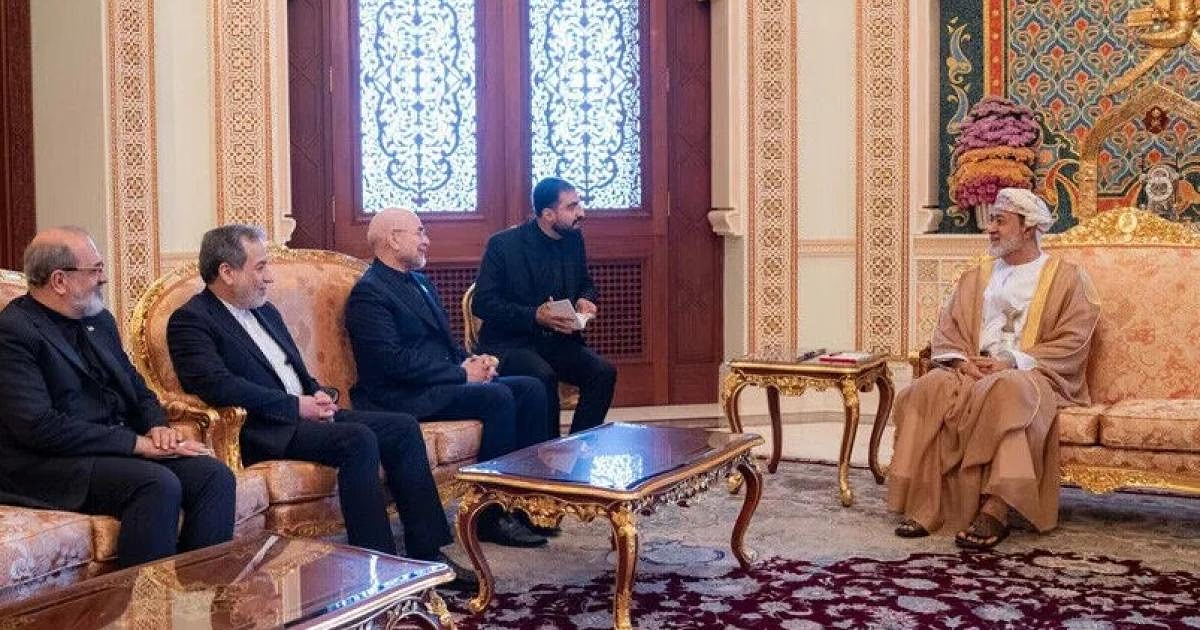
The Iranian Ministry of Foreign Affairs announced significant progress in the latest round of talks held with a delegation from the Sultanate of Oman, describing the results as fruitful. The discussions primarily focused on formulating joint mechanisms for managing navigation in the Strait of Hormuz, ensuring mutual interests and preserving stability in the vital region.
Informed sources confirmed that technical and political consultations between Tehran and Muscat are still ongoing, as both sides seek to reach final understandings regarding the governing principles of the international waterway. These moves come amidst a clear Iranian desire to assert its full sovereignty over the strait as part of its national security.
Data indicates that the Omani delegation may carry Iranian promises to make tactical concessions aimed at satisfying the American side, without compromising the red lines set by the leadership in Tehran. This step aims to find common ground that allows for a return to direct or indirect negotiation with Washington.
For its part, Tehran stresses that it has never closed the doors to diplomatic work, but it stipulates that negotiations must be based on respect for Iranian sovereignty and recognition of the new balance of power. The Iranian leadership believes that its strong military presence in recent conflicts gives it strong leverage to achieve its political demands.
Domestically in Iran, there is a divergence of views; Foreign Minister Abbas Araghchi advocates for prioritizing political solutions and considering war as a last resort. In contrast, Supreme Leader Mojtaba Khamenei expresses reservations about American intentions, but he grants the government sufficient space to test the diplomatic path and achieve national interests.
On the ground, the past few days have witnessed a remarkable escalation, as sources reported that attacks targeting US forces' positions resulted in injuries and deaths. While Tehran speaks of significant human losses among American soldiers, the official narrative from Washington indicates that the death toll did not exceed 16 soldiers during two weeks of tension.
Against the backdrop of this escalation, press reports, citing informed sources, revealed that US President Donald Trump issued clear instructions to the military to halt any new offensive operations against Iranian targets. This directive aims to allow mediators, led by the Sultanate of Oman, to complete their efforts in de-escalation.
Observers believe that Trump's decision to de-escalate may be due to military and technical reasons, related to concerns about the depletion of American interceptor missile stockpiles in the region. This military concern prompted the White House to reassess the situation and prefer the political path for now to avoid a widespread war.
Through this cautious diplomatic opening, the United States is trying to explore the seriousness of Tehran in making concessions regarding its regional and nuclear program. In return, Iran insists that any future agreement must guarantee the lifting of economic sanctions and recognition of its role as an indispensable regional power.
All eyes remain on Muscat, which plays the role of a vital bridge between the two arch-rivals, in an attempt to prevent the region from sliding into a comprehensive confrontation. The coming days will reveal the extent of Omani mediation's ability to transform these initial understandings into framework agreements that end the ongoing state of tension.
Iran has not closed the door to diplomacy with the United States, but it seeks Washington's recognition of its sovereignty and influential regional power.
שתף את דעתך
Omani Mediation to Break the Deadlock Between Tehran and Washington: Will Diplomacy Succeed in Defusing the Confrontation?