






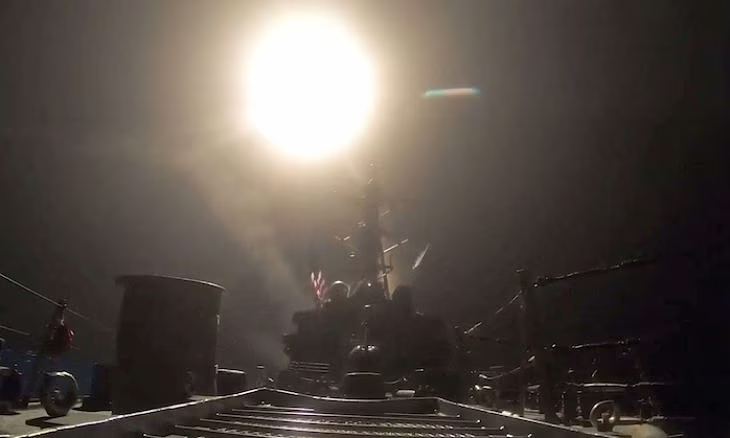
US President Donald Trump has intensified the pace of airstrikes on Iranian targets, threatening to expand military operations to include strategic and vital targets. These moves come amid a lack of clear indications that the current strategy is succeeding in extracting political concessions from Tehran, which continues to defy increasing American pressure.
With the announcement of the collapse of the temporary ceasefire agreement, which lasted no more than a month, the White House finds itself in direct confrontation to break Iranian influence over the Strait of Hormuz. Trump is trying to impose his will on Tehran at a time when he is unable to withdraw American forces from a military conflict that has significantly lost popularity domestically.
The rapid developments on the ground have dashed hopes for an early diplomatic solution to the crisis, negatively impacting global financial markets. Oil prices have seen new increases due to fears of supply disruptions, especially with the continued wave of mutual attacks for the sixth consecutive day between the two sides.
For its part, Tehran has brandished a new pressure card through its Houthi allies in Yemen, threatening to close the Bab el-Mandeb Strait at the entrance to the Red Sea. This threat comes as a preemptive response should Washington carry out its promise to strike energy sector infrastructure within Iranian territory, which could paralyze international shipping.
Informed sources revealed that Trump discussed unprecedented military options with his aides, including striking power generation stations and vital bridges. The deliberations also included the possibility of a ground landing to seize Kharg Island, which is the main center for Iranian oil exports, in addition to targeting the fortified underground nuclear site 'Jabal al-Faas'.
Observers believe that some of these options may face major logistical and political obstacles due to the geopolitical risks involved. Although Trump has issued similar threats in the past and backed down, the intensity of the current rhetoric indicates a desire to change the rules of engagement that have been in place for months.
Military analysts believe that any widespread American escalation, unless it reaches the point of a comprehensive ground invasion, will not succeed in changing Tehran's political course. Previous strikes targeting senior leaders and military facilities did not lead to Iran backing down from its positions, but rather increased its determination to confront external pressures.
In this context, Jonathan Panikoff, a former US intelligence official, indicated that the recent attacks may be completely counterproductive. He explained that intense military pressure could push the Iranian leadership to adopt more radical and rigid positions in any future negotiations regarding its nuclear program or regional influence.
Trump faces increasing political pressure with the approaching congressional midterm elections in November, where voters are demanding an end to involvement in costly wars. The ongoing four-and-a-half-month war has caused devastating human and economic losses, particularly in Iran and Lebanon, affecting the president's popularity in opinion polls.
On the diplomatic front, conflicting reports emerged regarding the prisoner file, with Trump welcoming what he described as the release of an American citizen as a gesture of goodwill. However, judicial authorities in Tehran quickly denied these reports, confirming that no exchanges or releases of detainees had occurred at present.
The roots of the current conflict revolve around the dispute over the management of international waterways, with Iran insisting on its right to supervise the Strait of Hormuz and impose transit fees. In contrast, the United States and its allies in the region insist on the necessity of ensuring freedom of navigation without any restrictions or preconditions from the Iranian side.
Recent American responses included reimposing a naval blockade on Iranian ports after Tehran resumed its attacks on commercial vessels. The White House considered these Iranian moves a clear violation of previously reached understandings, necessitating a firm military and economic response.
Intelligence reports indicate that the current wave of American strikes may be merely 'preparatory operations' aimed at destroying Iranian defensive capabilities. This tactic aims to give the US administration broader options should it decide to move to a phase of comprehensive confrontation or directly target nuclear facilities.
In contrast, Tehran warned that it possesses a massive arsenal of ballistic missiles and drones capable of reaching civilian and vital targets in neighboring countries. Sources confirmed that Iran is prepared to expand the scope of the conflict to include the facilities of Washington's allies in the Gulf if its oil interests are threatened.
There is no reason to believe that this latest series of attacks will force the Iranians to change their way of thinking; rather, it is likely to lead to a hardening of their stance.
שתף את דעתך
Trump threatens comprehensive military escalation against Iran amid collapse of de-escalation and threats to close waterways