






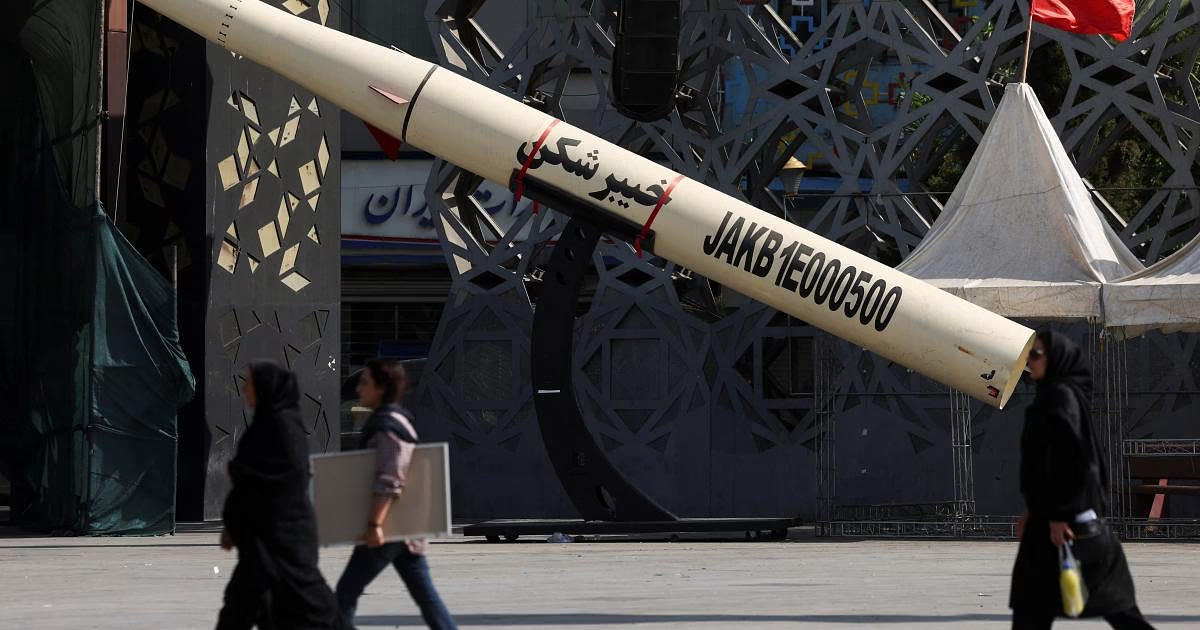
The military escalation between the United States and Iran entered a new phase of direct confrontation on Thursday, as the two sides exchanged strikes and threats in the vicinity of the strategic Strait of Hormuz. These field developments come despite a memorandum of understanding signed last June to end the state of hostility, yet the current round of fighting has entered its sixth day amid Iranian warnings of targeting regional infrastructure.
The US Central Command (CENTCOM) announced a series of air and missile attacks targeting military sites within Iranian territory, primarily concentrated in the city of Bandar Abbas on the Gulf. US military sources clarified that these operations are directly aimed at undermining Tehran's ability to threaten the security of international navigation in vital waterways.
In contrast, official Iranian sources confirmed that sites near Qeshm Island and Hormozgan Province were subjected to intense American missile bombardment, with several projectiles falling in strategic areas. Reports from Tehran indicated that local authorities are closely monitoring the extent of the damage resulting from these attacks, which targeted military installations belonging to the army and the Revolutionary Guard.
The state of alert extended to the Iranian capital, Tehran, where air defense systems were activated after explosions were heard in various areas, including Lorestan and Semnan provinces. The Iranian Foreign Ministry accused the American side of imposing an illegal naval blockade, considering these actions a blatant violation of recently signed agreements between the two countries.
On the naval front, the US military revealed that an empty oil tanker was targeted and disabled after it attempted to break the naval blockade imposed on Iranian ports. This step comes as part of tightening US military control over the movement of ships entering and leaving Iran to prevent any security or economic breaches amid the ongoing tension.
Media sources in Tehran reported that American strikes in recent hours focused on the cities of Bandar Abbas, Sirik, and Jask, which are areas of significant military weight. Despite the intensity of the bombardment, the governor of Hormozgan stated that no civilian casualties or destruction of vital public facilities were recorded, indicating the precision of the selected military targets.
The repercussions of the confrontation were not limited to inside Iran but extended to neighboring countries, as the Bahrain Defense Force announced the interception of Iranian air attacks in the skies of Manama. Bahraini authorities activated air raid sirens early Thursday as a precautionary measure, amid a state of maximum alert among the armed forces to confront any cross-border threats.
In Kuwait, the army announced that its air defense systems intercepted drone attacks for the second time in a short period, confirming the readiness of the forces to protect national airspace. Residents of nearby areas heard explosion sounds resulting from the successful interception operations of drones that attempted to penetrate Kuwaiti airspace concurrently with the regional escalation.
In the city of Dubai in the United Arab Emirates, a loud explosion was heard in the city center, with no immediate official statements clarifying the nature or source of the incident. Concerns are growing about the region sliding into a full-scale war that would affect major economic centers in the Gulf, especially with the continued exchange of violent military messages between Washington and Tehran.
In Iraq, security sources reported that a cargo ship loaded with American cars coming from the UAE was attacked by a drone near the Basra oil port. This attack represents a dangerous development in targeting American commercial interests in Iraqi territorial waters, further complicating the security situation in the south of the country.
Field data indicates that the United States, through this round, seeks to impose a new military reality that permanently limits Iran's naval influence. In contrast, Tehran is threatening to use regional pressure cards, including its allies in the region, to strike American interests and its allies, putting the previous memorandum of understanding at risk.
The Strait of Hormuz remains the primary flashpoint of the conflict, as a large portion of global energy supplies pass through it, making any confrontation there of international dimensions that transcend the bilateral conflict. International political circles are awaiting what the coming hours will bring, amid the insistence of both parties to continue military operations until their stated objectives are achieved.
Military operations aim to reduce Iran's ability to threaten navigation in the Strait of Hormuz.
שתף את דעתך
Widespread Military Escalation Between Washington and Tehran: American Strikes Target Bandar Abbas and Iranian Defenses Respond