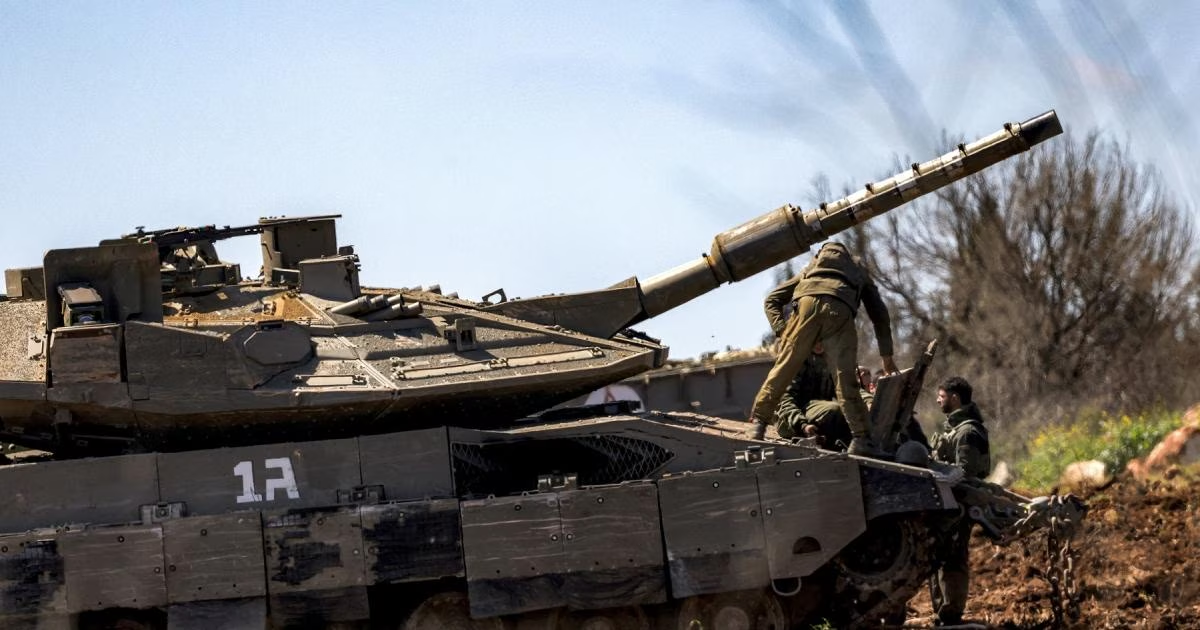







South Lebanon is experiencing a highly complex field and political phase, where diplomatic movements intertwine with ongoing Israeli violations on the ground. Despite reaching a US-sponsored framework agreement, the implementation of the Israeli withdrawal remains postponed, raising serious questions about the future of de-escalation and stability in the border areas.
Field data indicates that the occupation authorities are linking the start of a gradual withdrawal to additional security arrangements and specific American guarantees. This delay exacerbates the suffering of residents in border villages who await the removal of security restrictions and the return of normal life to their towns, which have been damaged by continuous military operations.
For his part, President Joseph Aoun stressed that the full extension of Lebanese sovereignty begins with the withdrawal of occupation forces from all occupied territories. Aoun affirmed that the Lebanese Army is the sole force authorized to protect the borders, considering the continued presence of Israeli forces as an impediment to the military institution's deployment and an undermining of the official state's authority.
In the context of political escalation, Israeli Prime Minister Benjamin Netanyahu's claims regarding the desire of Christian border villages to join Israel sparked widespread anger. Local figures and mukhtars in these villages swiftly denied these allegations outright, emphasizing their absolute adherence to Lebanese national identity.
Speaker of Parliament Nabih Berri entered the political fray, commending the stances of the residents of the border villages who set an example of steadfastness and attachment to their land. Berri warned against falling for misleading Israeli narratives aimed at undermining Lebanese internal unity and dismantling the social fabric in the South.
On the regional level, the Iranian position emerged through statements by Parliament Speaker Mohammad Bagher Ghalibaf, who affirmed that any peace equation in the region cannot bypass Tehran's role. Ghalibaf clarified that Lebanon and the resistance front represent red lines in any negotiations his country conducts with international powers, especially the United States.
An analytical reading of the scene reveals three conflicting visions; while Israel sets complex security conditions for withdrawal, the Lebanese state insists on a complete withdrawal as a prerequisite for stability. In contrast, Iran views the Lebanese file as closely linked to major regional balances and its role in the region.
In this context, media sources indicated that Beirut is awaiting the arrival of a US military delegation in the coming days to discuss mechanisms for implementing what is known as 'experimental zones.' The delegation aims to convey Israeli responses to Lebanese demands previously submitted to the American mediator, amidst an atmosphere of caution and anticipation.
Observers believe that the current framework agreement appears suspended and not practically implementable in the absence of broad internal political consensus around it. Furthermore, the retreat of some official parties from fully adopting the agreement reflects the extent of pressures and complexities surrounding the proposed understanding's provisions.
On the other hand, specialized analyses of Israeli affairs indicate that the Netanyahu government used the agreement as political cover for a ceasefire without making substantial concessions. This move aims to present de-escalation as a diplomatic achievement with the Lebanese government, to avoid appearing to align with other regional agendas.
Despite initial Israeli celebration of the agreement, subsequent assessments within Tel Aviv downplayed the significance of this 'achievement,' considering that actual implementation is linked to complex field positions. Analysts confirm that Netanyahu is trying to market an image of victory to his domestic society, despite not achieving the declared strategic goals of the war.
Civilians in the border villages remain the weakest link in this ongoing conflict, living amidst the rubble of destruction and awaiting the unknown. Daily Israeli violations make a safe return difficult to achieve, and further complicate efforts to rebuild and resettle residents in their lands.
Successive developments indicate that the crisis will remain open to multiple scenarios, awaiting the outcome of international pressures and ongoing negotiations. Between field conditions and sovereign demands, the framework agreement remains mere ink on paper unless there is a genuine will to end the occupation and stop the violations.
In conclusion, the unified Lebanese stance behind the army and official institutions represents the first line of defense against Israeli attempts to impose a new reality on the borders. With diplomatic activity continuing, the bet remains on the Lebanese state's ability to fully reclaim its sovereign rights without any security conditions that diminish its national dignity.
The continued Israeli presence undermines state authority and hinders the army's deployment along the entire southern border, and negotiation has become the only path.
שתף את דעתך
South Lebanon: Framework Agreement Implementation Stalled Amidst Israeli Violations and Political Tensions