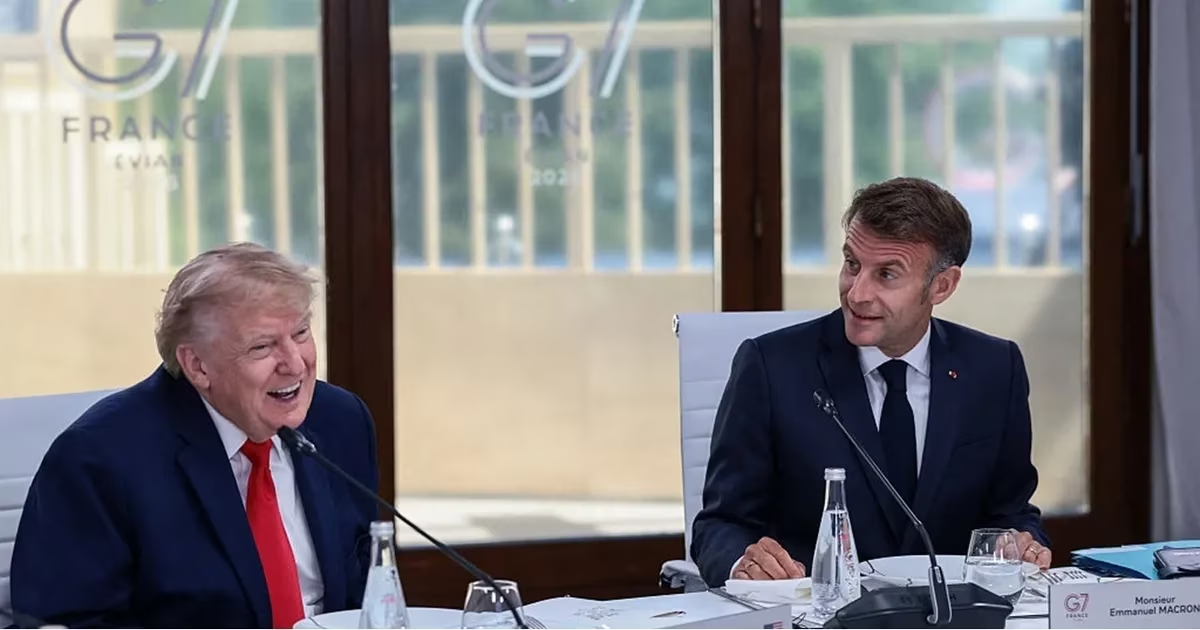







The behind-the-scenes of G7 meetings are filled with details that may seem marginal or amusing on the surface, but they conceal a bitter reality witnessed by the world outside the borders of the seven major countries. While leaders are preoccupied with protocols of flattery towards the White House occupant or following global sporting events, economic policies are being drawn up that deepen the gap between the North and the South and entrench the dominance of traditional powers over the destinies of poor nations.
Data from the international organization 'Oxfam' revealed shocking figures reflecting the priorities of these powers, with reductions in development aid budgets for low-income countries reaching approximately $49 billion between 2024 and 2025. The irony is that this enormous sum is equivalent to the wealth accumulated by the group's billionaires in just nine days, revealing a structural imbalance in global wealth distribution.
The ethical gap in the group's policies is evident when comparing military spending with humanitarian aid, as development budgets for 2025 did not exceed 0.75% of the group's total military spending. This trend reflects a clear desire to strengthen war arsenals at the expense of combating hunger and poverty in the most needy regions around the world.
In the energy sector, oil giants within the group's countries benefited from international crises and wars, achieving astronomical profits averaging $400 million per day. These profits did not come from nothing; rather, they were reaped from the wealth of nations and from the pockets of taxpayers who suffer from rising fuel prices at distribution stations within the group's own communities.
The damage did not stop at the energy sector but extended to global food security, with basic commodity prices rising by 3 to 4 times within a few months. These price jumps, driven by monopoly policies and wars, pushed more than 32 million people to the brink of extreme poverty, threatening global social stability.
Some European powers, led by France, try to purify the summit agendas of issues that might provoke the ire of the American administration, fearing sharp diplomatic reactions. Nevertheless, American nightmares continue to haunt European leaders, starting from tariffs and policies towards Ukraine, to continuous pressure to increase financial contributions to the Atlantic Alliance.
The Chinese specter emerges as the biggest existential challenge facing the G7, as the Asian giant no longer competes only in traditional markets but also offers an independent economic model. Unlike Russia, whose membership was previously frozen, China has the world's second-largest economy, and it moves freely in historical spheres of influence for the group, especially in the African continent.
When deliberations concern thorny issues such as war crimes in the Gaza Strip or violations in the West Bank and Lebanon, the group resorts to using wooden language characterized by ambiguity and diplomatic stammering. This evasion of moral and political responsibility makes the summit statements mere empty slogans that do not translate into real pressure to stop conflicts or hold transgressors accountable.
Crucial statistics indicate a decline in the group's actual influence, as its share of global GDP decreased from 60.5% in 2018 to about 44.1% currently. This decline is accompanied by a decrease in demographic weight, raising major questions about the group's legitimacy in continuing to represent the world's economy and make its fateful decisions.
Ultimately, G7 summits remain true to their historical approach of prioritizing the interests of the powerful at the expense of the rest of the world's peoples, who are forced to pay exorbitant prices. The international economy remains ailing due to these policies that transform the resources of developing countries into mere raw material mines and consumer markets, without offering real solutions to the structural crises plaguing the world.
The international economy is ailing from head to toe because of the group's own countries, which only want the victim to remain captive to offering more sacrifices.
שתף את דעתך
G7 Summits: Entrenching Global Economic Malady and Demanding Sacrifices from Peoples