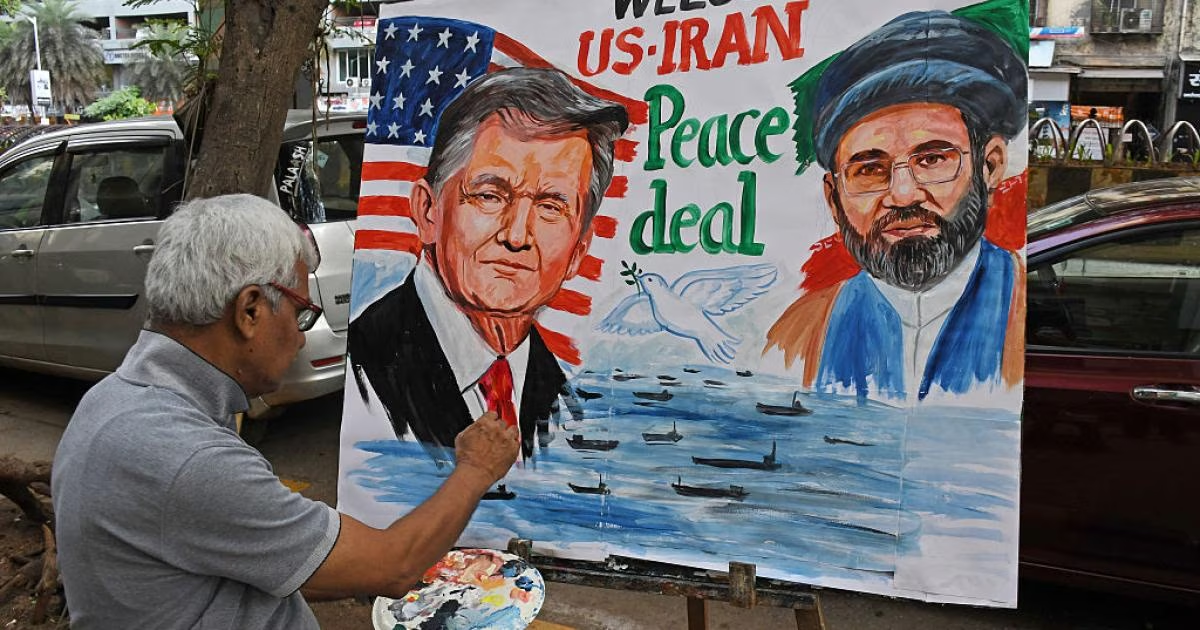







The United States and Iran have entered a new and critical phase of negotiations following the signing of a memorandum of understanding in Switzerland, aiming to establish a 60-day timeframe for reaching a comprehensive agreement. Although this step has eased military tensions, observers doubt the ability of both parties to overcome the thorny issues inherited from years of conflict and recent aggression.
The nuclear file stands out as the biggest challenge facing President Donald Trump's administration, with the dispute centering on Iran's stockpile of highly enriched uranium. While Washington insists on destroying this stockpile or transferring it out of the country, Tehran shows only limited flexibility in reducing concentration levels without giving up the material itself.
Tehran adheres to what it describes as its 'sovereign right' to enrich uranium in the future, which the United States rejects, having previously demanded a complete halt to enrichment operations. Sources indicate that current discussions may lead to a temporary halt ranging from 5 to 20 years, but reaching a final formula remains elusive.
The issue of international oversight represents another knot, as the question arises about Iran's acceptance of the return of strict inspection levels stipulated in the 2015 agreement. Trump had withdrawn from that agreement in 2018, creating a significant trust gap between the International Atomic Energy Agency and Iranian authorities.
On the economic and navigational front, the memorandum of understanding stipulates the reopening of the Strait of Hormuz to global shipping traffic after a period of de facto closure. This passage is vital for global energy supplies, with about one-fifth of internationally consumed oil passing through it, making its reopening a top priority to calm markets.
Iran demands a fundamental role in managing the strategic waterway, leveraging the influence it gained during the recent conflict. In contrast, the United States insists that passage be free and without fees, amid extreme caution from global shipping companies awaiting tangible security guarantees.
Frozen Iranian funds abroad represent an additional stumbling block, as Tehran seeks an immediate lifting of sanctions and access to billions of dollars. The US administration believes that sanctions relief must be gradual and linked to Iran's full compliance with the terms of the final agreement, which irritates hardliners on both sides.
President Trump faces internal pressures due to rising fuel prices and the decline of the US strategic reserve to its lowest levels since 1983. The war in the Middle East consumed about 172 million barrels of oil, making the acceleration of the memorandum's signing an economic necessity for his administration before the upcoming elections or political deadlines.
In contrast, the Israeli position emerges as an external obstructive factor, with Prime Minister Benjamin Netanyahu insisting that Tel Aviv is not bound by any understandings between Washington and Tehran. Netanyahu affirms that military operations in Lebanon and the region will continue separately from the path of nuclear or political negotiations.
Iran stipulates that a comprehensive de-escalation requires the agreement to include a ceasefire in Lebanon, which Israel has so far rejected. Washington is pressuring Tel Aviv to withdraw from Lebanese territories to ensure the success of the memorandum of understanding, but any new field escalation could completely undermine diplomatic efforts.
The negotiation styles between the two teams differ radically, with Trump's team, including J.D. Vance and Jared Kushner, tending to seek quick and impressive results. Meanwhile, Iranian negotiators are known for their high ability to prolong complex technical discussions, making the 60-day deadline seem very short.
The crisis of trust casts a shadow over the negotiating table, especially after the mutual military attacks over the past year. Washington views with caution the tendencies of the new Supreme Leader Mojtaba Khamenei, who took power under tragic family circumstances following an airstrike, and is known for his more radical stances towards the West.
Trump's aides warn against Tehran resorting to a stalling strategy to gain time and alleviate economic pressures without making substantial concessions. At the same time, the Iranian side fears Trump's fluctuating positions or his succumbing to pressure from hardliners in Washington who oppose any rapprochement with the 'axis of resistance'.
The possibility of failure remains if the language of violent threats returns to dominate the scene again, or if interpretations of the memorandum of understanding conflict. If a comprehensive settlement is not reached, both parties may settle for a limited agreement that prevents a slide into all-out war, with the fuse of tension remaining lit in the region.
The fate of the Iranian nuclear program is the factor that carries the greatest risk for the final negotiations.
שתף את דעתך
60-Day Challenges: Thorny Issues Threaten the Path of US-Iranian Negotiations After the Memorandum of Understanding