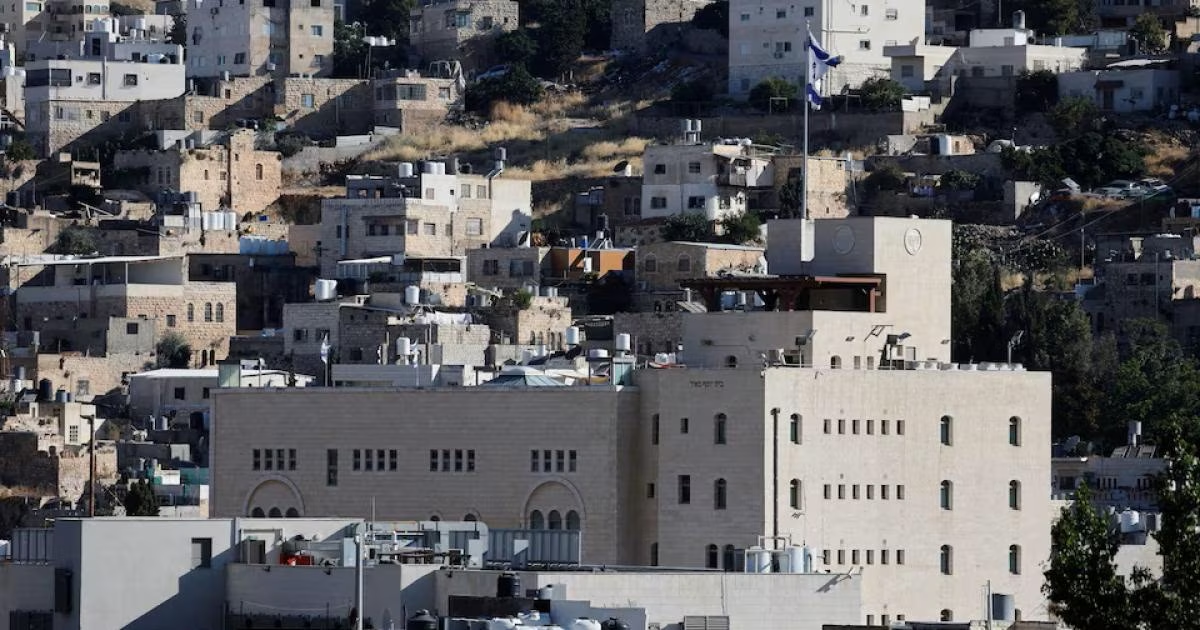







On Wednesday, the Israeli occupation authorities gave the green light to begin massive expansion work for a religious school belonging to settlers located in the heart of the occupied city of Hebron. This step comes in the context of an escalating settlement drive aimed at strengthening Israeli control over the city's historic center, amidst warnings of its repercussions on the Palestinian presence.
Israeli Finance Minister Bezalel Smotrich announced that the project includes the construction of a new building spanning approximately one thousand square meters for the religious school. Smotrich affirmed in an official statement that this decision falls within the government's policy aimed at imposing new realities on the ground and consolidating the settlement presence in the West Bank in general and in Hebron in particular.
This announcement coincided with another decision issued by Smotrich to cancel the administrative arrangements that granted the Hebron Municipality planning and construction powers in the vicinity of the Old City. This cancellation includes all areas surrounding the holy Ibrahimi Mosque, which means the complete transfer of engineering and administrative supervision to the occupation authorities, thus ending the role of Palestinian national institutions in managing the city's affairs.
Palestinian observers believe that these measures represent a blatant violation of the Hebron Agreement signed in 1997, which regulated security and civil powers in the divided city. The agreement granted the municipality a pivotal role in construction and renovation operations, but the new decisions disregard all previous international and local understandings.
Currently, more than a thousand settlers reside in fortified settlement outposts around the Ibrahimi Mosque, where they live under strict military protection amidst tens of thousands of Palestinian citizens. These new expansions lead to increased daily friction and tighten the noose on the indigenous population who face strict restrictions on their movement and urban development.
For his part, Palestinian activist Issa Amro warned of the danger of reducing the municipality's powers, stressing that the ultimate goal is to deteriorate basic services provided to Palestinians to push them towards forced displacement. Amro explained that what is happening is a silent displacement process and a systematic demographic change aimed at Judaizing the heart of Hebron completely by isolating the Ibrahimi Mosque from its Arab surroundings.
On the other hand, the decision was widely welcomed by settler leaders in Hebron, who considered that the cancellation of the Palestinian municipality's powers removes administrative obstacles that had hindered their projects. An official in the Settlers' Council stated that this step represents the inauguration of a new phase of urban settlement expansion that will witness an accelerated pace in the coming years.
These developments come in light of the current Israeli government's directives to strengthen settlement deep in the West Bank by facilitating land purchase procedures and granting extensive powers to the Civil Administration affiliated with the occupation army. These decisions reflect an insistence on undermining any possibility of future Palestinian sovereignty in the areas classified as 'H2' according to the Hebron Agreement divisions.
This step comes as part of consolidating the Israeli presence in the region and imposing facts on the ground.
שתף את דעתך
The occupation approves settlement expansion in Hebron and cancels municipal powers around the Ibrahimi Mosque