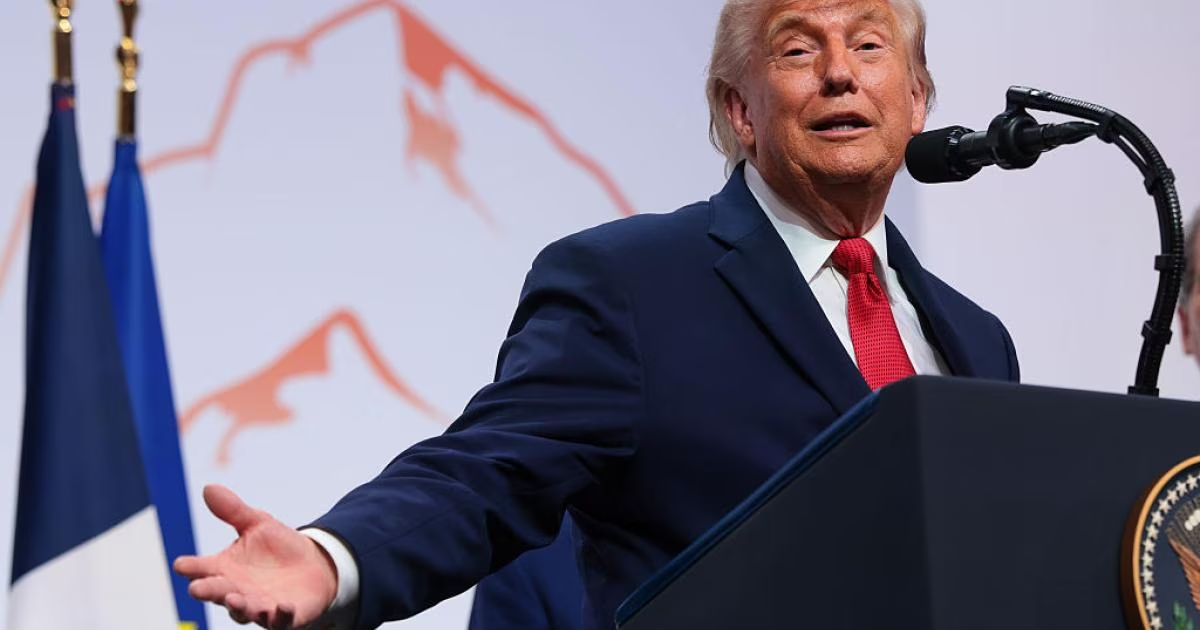







US President Donald Trump announced that the United States has successfully reached a formal memorandum of understanding with the Islamic Republic of Iran, considering this step a cornerstone of what he described as the anticipated 'major deal' in the Middle East. Trump clarified that his country has achieved its strategic goals and ended the current conflict, noting that positive statements from Tehran were immediately and tangibly reflected in the stability of global financial and stock markets.
The US President revealed a strict timeline within the memorandum, granting the parties a period not exceeding 60 days to reach a final and comprehensive settlement for all outstanding issues. Trump warned in a stern tone that the military option remains on the table, emphasizing the possibility of returning to bombing operations if negotiations fail to reach a final agreement within the specified timeframe.
In the context of regional coordination, Trump affirmed that the Israeli government received a full copy of the memorandum of understanding to review its provisions, stressing that Washington would not act independently of its allies. He added that the US administration intends to work closely with Arab Gulf states through a parallel diplomatic and security track, primarily aimed at addressing the ballistic missile and non-nuclear weapons issues that concern the region.
Regarding the issue of frozen Iranian funds, Trump acknowledged that the United States had previously confiscated large sums of Iranian assets, and that Washington would have to return them at a certain time as part of the understandings. However, the US President preempted speculation about direct support, affirming that his country would not provide any financial grants or make direct investments within Iranian territory at this time.
A senior White House official stated that the meeting scheduled to be held in Switzerland at the end of this week will be a crucial stage for assessing the seriousness and progress of direct talks with the Iranian side. The official explained that the memorandum explicitly stipulates the immediate lifting of the US naval blockade on Iran upon official signing, paving the way for the restoration of normal maritime trade.
As part of mutual commitments, Tehran pledged under the memorandum to ensure safe and free passage for all commercial vessels through the strategic Strait of Hormuz without imposing any fees for 60 days. Iran will also engage in consultations with the Sultanate of Oman and other Gulf states to draft a long-term security and navigation agreement to ensure the stability of navigation in the strait, which is a global energy lifeline.
On the Iranian side, Foreign Ministry spokesman Ismail Baghaei affirmed that the option of signing a direct memorandum of understanding between the presidents of the two countries is strongly on the table for diplomatic discussions. Baghaei indicated that Iran's plans for the anticipated meeting in Geneva have not changed, reflecting Tehran's desire to move forward with the negotiation process to end its international isolation.
Tehran places the issue of recovering frozen funds at the top of its priorities at this stage, not only demanding the release of assets but also insisting on technical guarantees that allow their transfer and utilization domestically. Informed sources reported that the total value of these funds could reach 100 billion dollars, with reports indicating the possibility of releasing approximately 24 billion dollars as a first installment within the next two months.
In addition to the financial file, Iranian negotiations focus on lifting customs restrictions and obstacles imposed on the maritime transport sector, seeking to enable Iranian shipping institutions to provide their services to passing vessels. Tehran aspires to transform these services into a sustainable source of income by collecting fees related to environmental services and ensuring the safety of international waterways in the region.
In Washington, caution prevails regarding the final drafts of the circulated documents, with sources reporting that no full official recognition of all leaked provisions has been issued by either party so far. Nevertheless, attention is largely focused on a clause revealed by media reports concerning the establishment of an international fund for the rehabilitation and reconstruction of Iran with massive funding that could reach 300 billion dollars.
Technical and executive committees are scheduled to discuss the precise details of establishing this funding fund during the first sixty days, which are described as the transitional phase. This fund, if approved, aims to modernize Iran's dilapidated infrastructure resulting from years of sanctions, in exchange for strict Iranian commitments on security and nuclear issues that concern the international community.
In conclusion, observers believe that these moves represent a dramatic shift in the Trump administration's policy towards Tehran, moving from 'maximum pressure' to 'direct negotiation.' The coming weeks will reveal the extent to which the two parties can overcome the deep trust deficit and transform the initial memorandum of understanding into a sustainable peace agreement that changes the balance of power in the Middle East.
This memorandum is the beginning of a major deal in the Middle East, and we have achieved our goals and ended the current conflict, but we may return to bombing if we do not reach a settlement within 60 days.
שתף את דעתך
Trump Announces Memorandum of Understanding with Iran: Beginning of a 'Major Deal' and 60-Day Deadline for Settlement